Balancing Innovation and Ethics: A Comprehensive Guide to Biomedical Data Security and Privacy
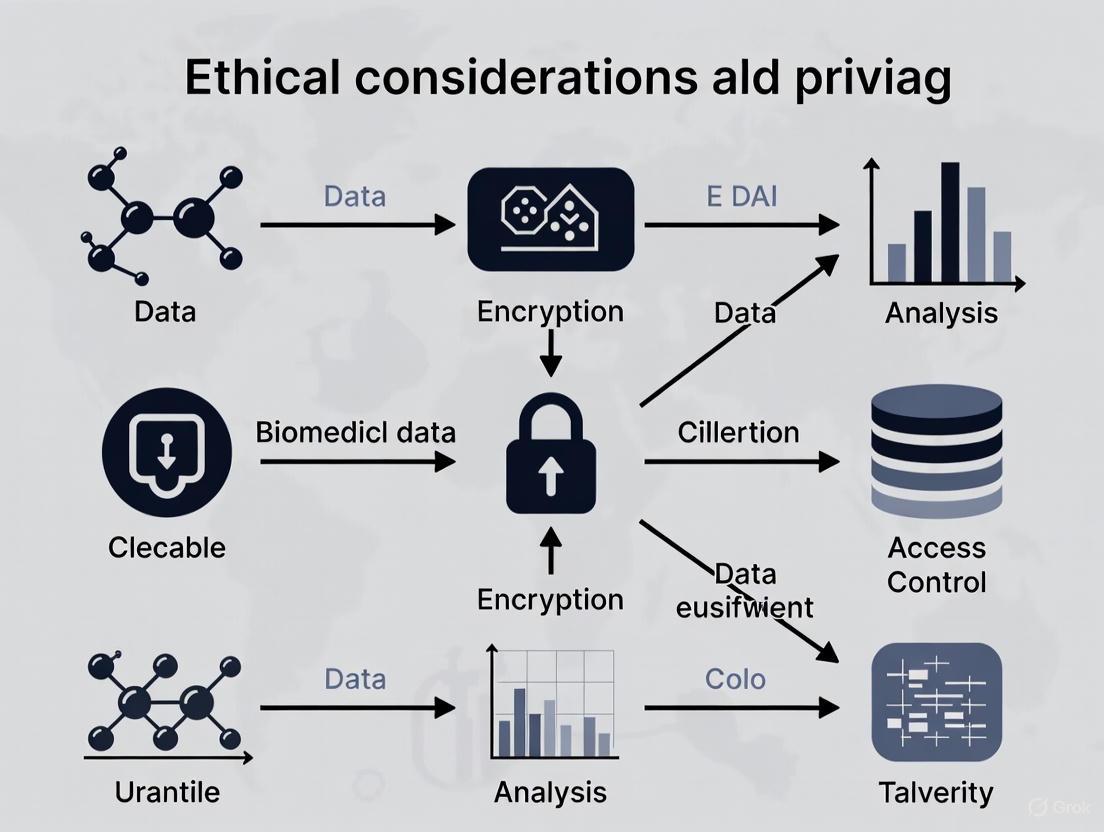
This article provides a detailed examination of the ethical, legal, and technical dimensions of biomedical data security and privacy for researchers and drug development professionals.
Balancing Innovation and Ethics: A Comprehensive Guide to Biomedical Data Security and Privacy
Abstract
This article provides a detailed examination of the ethical, legal, and technical dimensions of biomedical data security and privacy for researchers and drug development professionals. It explores the foundational ethical principles and regulatory landscape, including HIPAA and the GDPR. The piece delves into advanced Privacy-Enhancing Technologies (PETs) like federated learning and homomorphic encryption, addresses practical implementation challenges and optimization strategies, and evaluates frameworks for validating data utility and privacy guarantees. By synthesizing these areas, the article aims to equip professionals with the knowledge to advance biomedical research while rigorously safeguarding participant privacy.
The Ethical and Regulatory Bedrock of Biomedical Data Protection
For researchers, scientists, and drug development professionals, handling biomedical data involves navigating a complex landscape of ethical obligations. Your work in unlocking the potential of this data must be balanced with a firm commitment to protecting patient rights and privacy. The core ethical principles of autonomy (respecting the individual's right to self-determination), beneficence (acting for the benefit of patients and research), and justice (ensuring fair and equitable treatment) provide a foundational framework for this effort [1] [2].
This technical support center is designed to help you integrate these principles directly into your daily research practices, from experimental design to data sharing. The following guides and FAQs address specific, common challenges you might encounter during your experiments, offering practical methodologies and solutions grounded in both ethics and current technical standards.
Troubleshooting Guides
Guide 1: Resolving Conflicts Between Data Utility and Participant Privacy (Beneficence vs. Autonomy)
Problem Statement: A researcher needs to use a rich clinical dataset for a genome-wide association study (GWAS) but is concerned that maximizing data utility could compromise participant privacy and autonomy.
Application of Ethics:
- Beneficence: The potential benefit of the research is a new disease treatment.
- Autonomy: The obligation to respect participants' privacy and the terms of their informed consent.
Step-by-Step Resolution:
- Conduct a Risk-Benefit Analysis: Systematically weigh the potential benefits of the research against the risks of participant re-identification. Document this analysis as part of your study protocol [1].
- Implement Privacy-Preserving Technologies: Before pooling or analyzing data, apply robust technical controls to protect privacy.
- Consider Synthetic Data Generation: For preliminary testing and development, use synthetic datasets that mimic the statistical properties of the real data without containing actual patient information [3].
- Utilize Federated Analysis or Secure Multi-Party Computation (SMC): Analyze data from multiple sources (e.g., different biobanks) without centralizing it or exposing the underlying raw data. This allows for cross-repository analysis while honoring the data use agreements made with participants [4] [3].
- Apply Differential Privacy: For publicly shared results or statistics, use differential privacy. This is a strong mathematical guarantee that the presence or absence of any single individual in the dataset will not significantly affect the outcome of the analysis, achieved by carefully adding calibrated noise to the results [3].
- Validate Data Quality: Ensure that the chosen privacy methods do not introduce bias or undermine the data's integrity, which is essential for the beneficence of the research.
- Review and Approve: Have the final research plan, including all privacy safeguards, reviewed and approved by an Institutional Review Board (IRB) or Ethics Committee.
Guide 2: Ensuring Equity in Data Representation (Justice)
Problem Statement: A research model for a new drug shows high efficacy but was trained on genomic data from a population with limited ethnic diversity, risking unequal health outcomes across demographic groups.
Application of Ethics:
- Justice: The obligation to ensure fair distribution of research benefits and burdens, and to avoid discrimination.
Step-by-Step Resolution:
- Audit Dataset Composition: Quantitatively assess the demographic makeup (e.g., ethnicity, sex, age) of your training data.
- Identify Underrepresented Cohorts: Identify which demographic groups are absent or poorly represented. The table below summarizes common metrics to analyze.
- Develop a Recruitment and Sourcing Strategy: Actively seek to include data from underrepresented groups. This may involve collaborating with research networks that serve diverse populations or utilizing federated tools to analyze data from multiple, diverse repositories without violating privacy [4] [5].
- Benchmark Performance Across Groups: Routinely test and validate your model's performance metrics separately for different demographic subgroups to ensure efficacy is equitable.
- Report Transparently: Clearly document the demographics of your training data and the results of your subgroup analyses in all publications and reports.
Table: Key Metrics for Auditing Dataset Equity
| Metric | Description | Target / Best Practice |
|---|---|---|
| Cohort Demographics | Breakdown of dataset by ethnicity, sex, age, socioeconomic status, etc. | Proportionate to the disease prevalence in the general population or the target population for the intervention. |
| Model Performance Variance | Difference in model accuracy, precision, and recall across demographic subgroups. | Performance metrics should be statistically equivalent across all relevant subgroups. |
| Data Completeness | The rate of missing data values for key predictive features across subgroups. | Minimal and equivalent rates of missingness across all subgroups to prevent bias. |
Frequently Asked Questions (FAQs)
Q1: What is the practical difference between de-identified and anonymous data? A1: This distinction is critical for understanding your ethical and legal obligations.
- Anonymous Data: Data is anonymous when no one, including the researcher, can link the information back to the individual who provided it. No identifiers are collected at all [6]. The risk of privacy breach is virtually zero, which strongly upholds the principle of autonomy.
- De-identified Data: Data is de-identified when direct and indirect identifiers have been removed from the dataset. However, a code key may exist that can potentially relink the data. Because re-identification is possible (e.g., through data linkage attacks [4] [3]), this data is still considered sensitive and must be protected with robust security measures (nonmaleficence) [6].
Q2: How can I honor the principle of justice when sourcing data from isolated repositories? A2: Silos in biomedical data can exacerbate health disparities. To promote justice:
- Utilize Emerging Cross-Biobank Tools: Employ cryptographic and computational tools that enable federated genome-wide association studies. These systems allow you to analyze genetic variants across multiple, separate biobanks without physically pooling the raw data, thus uncovering patterns that may be invisible in a single, potentially homogenous repository [4].
- Prioritize Diverse Datasets: Make a conscious effort to include data from repositories known to serve diverse populations or that are focused on underrepresented groups in your federated analyses.
Q3: My research requires collecting data via mobile apps. How do I apply the principle of autonomy in this context? A3: Autonomy requires meaningful informed consent and ongoing transparency.
- Granular Consent and Control: Where feasible, implement systems that give users (patients) control over who can access their information and for what purposes [7]. This moves beyond a one-time consent form.
- Clear, Layered Privacy Policies: Provide clear, accessible privacy policies that explain data collection, usage, and sharing methods in plain language. Avoid legalese [8].
- Robust Technical Safeguards: Protect data both in transit and at rest using encryption, especially on portable devices. Ensure all data collection devices are password-protected and adhere to secure computer management standards [6].
The Scientist's Toolkit: Research Reagent Solutions for Ethical Data Handling
Table: Essential Tools and Technologies for Secure and Ethical Research
| Tool / Technology | Function in Ethical Research | Key Ethical Principle Addressed |
|---|---|---|
| Homomorphic Encryption (HME) [4] [3] | Allows computation on encrypted data without decrypting it first, enabling analysis while preserving confidentiality. | Autonomy, Nonmaleficence |
| Secure Multi-Party Computation (SMC) [4] [3] | Enables multiple parties to jointly compute a function over their private inputs without revealing those inputs to each other. | Autonomy, Justice (enables collaboration without sharing) |
| Differential Privacy (DP) [3] | Provides a mathematical guarantee of privacy by adding calibrated noise to query results, minimizing the risk of re-identification. | Autonomy |
| Synthetic Data Generation [3] | Creates artificial datasets that retain the statistical properties of real data but contain no actual patient records, useful for software testing and method development. | Beneficence, Autonomy (enables research while minimizing risk) |
| Federated Analysis Systems [4] | Allows for the analysis of data across multiple decentralized locations without exchanging the data itself, overcoming silos. | Justice, Autonomy |
| Data Use Agreements (DUAs) | Legal contracts that define the scope, privacy, and security requirements for using a shared dataset, ensuring compliance with informed consent. | Autonomy, Justice |
Experimental Protocol: Implementing a Federated GWAS with Privacy Guarantees
Objective: To perform a genome-wide association study across multiple data repositories to identify genetic links to a rare disease without centralizing the raw genomic data, thereby respecting participant autonomy and promoting justice by enabling the study of rare conditions.
Detailed Methodology:
Collaboration and Agreement:
- Establish a collaboration with multiple biobanks or research institutions that hold relevant genomic and phenotypic data.
- Define the research question and analysis plan jointly. All parties must agree on the specific GWAS model and the summary statistics to be computed.
System Setup and Tool Selection:
Secure Computation Execution:
- Each participating repository (e.g., Repository A, B, C) runs the agreed-upon computations locally on its own dataset.
- Using the SMC protocol, the repositories securely combine their intermediate results (e.g., summary statistics like p-values, allele frequencies). At no point is individual-level, raw genomic data shared or exposed to other parties.
Result Aggregation and Validation:
- The final, aggregated results are computed and made available to the researchers.
- Researchers validate the findings, ensuring that the federated process did not introduce errors and that the results are statistically sound, upholding the principle of beneficence through rigorous science.
For researchers handling biomedical data, navigating the overlapping requirements of HIPAA, GDPR, and the Common Rule is a critical ethical and legal challenge. This technical support center provides targeted guidance to help you implement compliant data security protocols, troubleshoot common issues, and uphold the highest standards of data privacy in your research.
Regulatory Frameworks at a Glance
The following table summarizes the core attributes of the three key regulatory frameworks governing biomedical data privacy and security.
| Feature | HIPAA (Health Insurance Portability and Accountability Act) | GDPR (General Data Protection Regulation) | Common Rule (Federal Policy for the Protection of Human Subjects) |
|---|---|---|---|
| Core Focus | Protection of Protected Health Information (PHI) in the U.S. healthcare system [9] [10] | Protection of all personal data of individuals in the EU/EEA, regardless of the industry [9] [11] | Ethical conduct of human subjects research funded by U.S. federal agencies [12] |
| Primary Applicability | U.S. Covered Entities (healthcare providers, plans, clearinghouses) & their Business Associates [9] [10] | Any organization processing personal data of EU/EEA individuals, regardless of location [9] [11] [13] | U.S. federal departments/agencies and institutions receiving their funding for human subjects research [12] |
| Key Data Scope | Individually identifiable health information (PHI) [9] | Any information relating to an identified or identifiable natural person (personal data) [11] | Data obtained through interaction with a living individual for research purposes |
| Geographic Scope | United States [14] | Extraterritorial, applies globally if processing EU data [11] [14] | United States |
| Core Security Principle | Safeguards for electronic PHI (ePHI) via Administrative, Physical, and Technical Safeguards [15] [10] | "Integrity and confidentiality" principle, requiring appropriate technical/organizational security measures [11] [13] | Protections must be adequate to minimize risks to subjects |
| Consent for Data Use | Consent not always required for treatment, payment, and healthcare operations (TPO); authorization needed for other uses [9] [14] | Requires a lawful basis for processing, with explicit consent being one of several options [11] [13] | Informed consent is a central requirement, with IRB approval of the consent process |
| Individual Rights | Rights to access, amend, and receive an accounting of disclosures of their PHI [12] | Extensive rights including access, rectification, erasure ("right to be forgotten"), portability, and objection [11] [14] [13] | Rights grounded in the informed consent process, including the right to withdraw |
| Breach Notification | Required without unreasonable delay, max. 60 days to individuals and HHS; for >500 individuals, also notify HHS and media within 60 days [9] [10] | Mandatory notification to supervisory authority within 72 hours of awareness, unless risk is remote; to individuals if high risk [9] [11] [13] | Must be reported to the IRB and relevant agency; specific timelines can vary |
| Penalties for Non-Compliance | Fines from $100 to $1.5 million per violation tier per year [14] [10] | Fines up to €20 million or 4% of global annual turnover, whichever is higher [9] [11] [10] | Suspension or termination of research funding; corrective actions |
Experimental Protocols for Data Security
Protocol for De-identifying Data under HIPAA "Safe Harbor"
This methodology outlines the steps for creating a de-identified dataset in accordance with the HIPAA Privacy Rule, allowing for the use of health information without individual authorization.
Methodology:
- Step 1 - Data Inventory: Identify all fields in the dataset containing Protected Health Information (PHI).
- Step 2 - Apply Removal Criteria: Remove the following 18 identifiers related to the individual or their relatives, employers, or household members [12]:
- Names
- All geographic subdivisions smaller than a state
- All elements of dates (except year) directly related to an individual
- Telephone numbers
- Vehicle identifiers
- Fax numbers
- Device identifiers and serial numbers
- Email addresses
- Web Universal Resource Locators (URLs)
- Social Security numbers
- Internet Protocol (IP) addresses
- Medical record numbers
- Biometric identifiers
- Health plan beneficiary numbers
- Full-face photos
- Account numbers
- Any other unique identifying number, characteristic, or code
- Certificate/license numbers
- Step 3 - Documentation and Verification: The de-identification process must be formally documented, and the researcher must not have actual knowledge that the remaining information could be used alone or in combination to identify an individual.
Protocol for Implementing Core GDPR Technical Safeguards
This protocol describes the implementation of key technical measures required to protect personal data under the GDPR's "integrity and confidentiality" principle.
Methodology:
- Step 1 - Data Mapping and Classification: Create a detailed record of processing activities (Article 30) to identify what personal data you collect, where it is stored, how it flows, and who has access [11] [13]. Classify data, paying special attention to "special category" (sensitive) data like health information.
- Step 2 - Implement Access Controls and Encryption:
- Step 3 - Establish Processes for Data Subject Rights:
- Step 4 - Vulnerability Management:
- Perform vulnerability scans every six months and annual penetration tests to identify and remediate security weaknesses [15].
Protocol for Ethical Data Sourcing and Informed Consent Alignment
This protocol ensures that the sourcing of human data aligns with the ethical principles of the Common Rule and satisfies key requirements of HIPAA and GDPR.
Methodology:
- Step 1 - Determine the Lawful Basis and Obtain Consent/Ethical Approval:
- For GDPR: Determine and document the lawful basis for processing (e.g., explicit consent, public interest) [11]. If relying on consent, it must be freely given, specific, informed, and unambiguous [13].
- For the Common Rule: Submit the research protocol to an Institutional Review Board (IRB). Obtain and document informed consent from participants, ensuring they understand the research purpose, risks, benefits, and alternatives.
- For HIPAA: For uses beyond treatment, payment, and operations (TPO), obtain a valid Authorization that meets specific core elements [12].
- Step 2 - Conduct a Data Protection Impact Assessment (DPIA):
- As required by GDPR for high-risk processing and as a best practice for all research, conduct a DPIA. This assessment systematically describes the processing, assesses its necessity, evaluates risks to individuals, and identifies mitigating measures [13].
- Step 3 - Implement Data Minimization and Retention Policies:
Troubleshooting Guides & FAQs
Data Sharing and Transfer Issues
Q: Our multi-institutional research project involves transferring genomic data from the EU to the U.S. What is the primary legal mechanism to ensure compliant data transfer under GDPR?
A: The primary mechanism is the use of EU Standard Contractual Clauses (SSCs). These are pre-approved contractual terms issued by the European Commission that you must incorporate into your data sharing or processing agreement with the recipient in the U.S. They legally bind the non-EU recipient to provide GDPR-level protection for the personal data [11] [13].
Q: A collaborating researcher requests a full dataset for a joint study. Under HIPAA, can I share this data if it contains Protected Health Information (PHI)?
A: You may share the dataset if one of the following is true:
- You have obtained a valid HIPAA Authorization from the individuals that specifically permits this disclosure for research.
- The data has been de-identified according to the HIPAA "Safe Harbor" method.
- Your institution's IRB or Privacy Board has granted a partial waiver of Authorization under the HIPAA Privacy Rule, allowing the use/disclosure of PHI for research recruitment or preparatory activities without individual consent.
Consent and Individual Rights
Q: A research participant from the EU exercises their "right to be forgotten" (erasure) under GDPR and demands their data be deleted. However, our research protocol, approved by the IRB, requires data retention for 10 years for longitudinal analysis. What should we do?
A: The right to erasure is not absolute. You can refuse the request if the processing is still necessary for the performance of a task carried out in the public interest or for scientific research (provided there are appropriate technical and organizational measures in place, like pseudonymization). You must inform the participant of this reasoning and that you will retain the data for the originally stated and justified research purpose [11].
Q: Our research uses a broad consent form approved by our IRB under the revised Common Rule. Does this automatically satisfy GDPR's requirements for lawful processing?
A: No, not automatically. While the Common Rule's broad consent may be a component, GDPR has very specific requirements for consent to be valid. It must be "freely given, specific, informed, and unambiguous" [13]. GDPR also requires that participants can withdraw consent as easily as they gave it. You must ensure your consent form and processes meet the stricter standard of the GDPR if you are processing data of EU individuals. For research, relying on the "public interest" or "scientific research" lawful basis may sometimes be more appropriate than consent under GDPR [11].
Security and Breach Management
Q: We suspect a laptop containing pseudonymized research data has been stolen. What are our immediate first steps from a compliance perspective?
A:
- Containment: Immediately disconnect the device from any networks and revoke its access credentials.
- Internal Reporting: Notify your organization's Data Protection Officer (DPO), security team, and legal/compliance department immediately.
- Assessment: Work with the security team to determine the scope of the incident and the types of data involved (e.g., Was it encrypted? Does it contain personal data or PHI?).
- Formal Notification:
- Under GDPR: If the breach is likely to risk individuals' rights and freedoms, you must notify your lead supervisory authority within 72 hours of becoming aware of it [9] [11].
- Under HIPAA: If unsecured PHI is involved, notify affected individuals and the U.S. Department of Health and Human Services (HHS) without unreasonable delay and no later than 60 days after discovery [9] [10].
Q: The 2025 HIPAA updates emphasize new technical safeguards. What is the most critical change we need to implement for our research database?
A: The most critical changes involve strengthening access security and data protection. You must implement:
- Mandatory Encryption: Encryption of electronic Protected Health Information (ePHI) both at rest and in transit is no longer an "addressable" (optional) specification but is now a required safeguard [15].
- Universal Multi-Factor Authentication (MFA): MFA is required for all system access points involving ePHI, not just for remote access [15].
Research Reagent Solutions: Data Security & Compliance Tools
The following table lists essential tools and resources for implementing the technical and organizational measures required for compliant biomedical data research.
| Tool Category | Primary Function | Key Features for Compliance |
|---|---|---|
| Data Mapping & Inventory Software | To identify and document all personal/health data flows within the organization. | Creates Article 30 (GDPR) records of processing activities; essential for demonstrating accountability and conducting risk assessments [16] [13]. |
| Consent Management Platforms (CMPs) | To manage participant consent preferences in a granular and auditable manner. | Helps capture and store explicit consent, manage withdrawals, and prove compliance with GDPR and Common Rule consent requirements [11] [16]. |
| Encryption & Pseudonymization Tools | To render data unintelligible to unauthorized parties. | Provides encryption for data at rest and in transit; pseudonymization tools replace direct identifiers with reversible codes, supporting data minimization and security under all frameworks [11] [15] [13]. |
| Access Control & Identity Management Systems | To ensure only authorized personnel can access specific data. | Enforces role-based access control (RBAC), multi-factor authentication (MFA), and the principle of least privilege, a core requirement of HIPAA and GDPR [15] [10]. |
| Vulnerability Management & Penetration Testing Services | To proactively identify and remediate security weaknesses in systems. | Automates regular vulnerability scans and provides certified professionals for penetration tests, addressing ongoing risk management requirements [15]. |
| Data Processing Agreement (DPA) & Business Associate Agreement (BAA) Templates | To legally define and secure relationships with third-party data processors. | Pre-vetted contractual clauses that ensure vendors (e.g., cloud providers) meet their obligations under GDPR (as processors) and HIPAA (as business associates) [9] [10]. |
Data Security Protocol Implementation Workflow
The following diagram visualizes the logical workflow for implementing a core data security protocol that aligns with requirements across HIPAA, GDPR, and the Common Rule.
In the era of data-driven medicine, biomedical researchers have access to unprecedented amounts of genomic, clinical, and phenotypic data. While this data holds tremendous potential for scientific discovery and personalized medicine, it also introduces significant privacy risks that must be carefully managed. This technical support center document addresses the core privacy challenges of re-identification, data linkage, and phenotype inference within the ethical framework of biomedical data security research. Understanding these risks and implementing appropriate safeguards is essential for maintaining public trust and complying with evolving regulatory standards while advancing scientific knowledge.
Frequently Asked Questions (FAQs)
Q1: What is the fundamental difference between data confidentiality and data privacy in biomedical research?
A1: Data confidentiality focuses on keeping data secure and private from unauthorized access, ensuring data fidelity during storage or transfer. Data privacy concerns the appropriate use of data according to intended purposes without violating patient intentions. Strong data privacy requires appropriate confidentiality protection, but confidentiality alone doesn't guarantee privacy if authorized users attempt to re-identify patients from "de-identified" datasets [17].
Q2: What are the main techniques attackers use to re-identify supposedly anonymous health data?
A2: The three primary re-identification techniques are:
- Insufficient de-identification: When direct or indirect identifiers inadvertently remain in a publicly available dataset [18].
- Pseudonym reversal: When the mapping between pseudonyms and real identities is compromised through key exposure, pattern recognition, or method discovery [18].
- Combining datasets: Linking two or more anonymized datasets containing the same individuals to destroy anonymity through cross-referencing [18].
Q3: How do genotype-phenotype studies create unique privacy concerns in rare disease research?
A3: Genotype-phenotype studies require linking genetic data with clinical manifestations, creating rich profiles that can be highly identifying due to the uniqueness of rare conditions. This creates a tension between the research need to identify individuals across datasets for meaningful discovery and the obligation to protect patient privacy. Rare disease patients may be uniquely identifiable simply by their combination of rare genetic variants and clinical presentations [19].
Q4: What technical solutions enable privacy-preserving genomic data analysis across multiple institutions?
A4: Modern approaches include:
- Homomorphic encryption: Allows mathematical computations directly on encrypted data [4].
- Secure multi-party computation: Enables multiple parties to combine their data without sharing access [4].
- Differential privacy: Adds carefully calibrated noise to protect individual privacy while maintaining dataset utility [17].
- Unique encrypted identifiers (GUIDs): Allow tracking of individual patients across studies without exposing personally identifiable information [19].
Q5: What is the practical re-identification risk for health data based on empirical evidence?
A5: A systematic review of re-identification attacks found that approximately 34% of records were successfully re-identified in health data attacks on average, though confidence intervals were wide (95% CI 0–0.744). Only two of fourteen attacks used data de-identified according to existing standards, with one health data attack achieving a success rate of just 0.00013 when proper standards were followed [20].
Troubleshooting Guides
Problem: Unexpectedly High Re-identification Risk in Genomic Dataset
Symptoms:
- High uniqueness of records in your dataset
- Successful linkage attacks using basic demographic information
- Concerns about attribute disclosure from summary statistics
Diagnosis Steps:
- Assess uniqueness: Calculate the proportion of unique records using combinations of quasi-identifiers (e.g., diagnosis codes, year of birth, gender, ethnicity) [21].
- Evaluate perturbation impact: Test whether simple random offsets or expert-derived clinical meaning-preserving models maintain data utility while reducing uniqueness [21].
- Check for residual identifiers: Scan for inadvertently remaining direct or indirect identifiers in both structured and unstructured data [18].
Solutions:
- Implement expert-derived perturbation algorithms that affect only 4% of test results clinically versus 26% with simple perturbation [21].
- Apply formal privacy protection models like differential privacy with privacy budgets calibrated to sensitivity [17].
- Establish data governance committees to evaluate sharing requests and implement contractual protections [18].
Problem: Privacy-Preserving Linkage of Genotype and Phenotype Data Across Institutions
Symptoms:
- Inability to combine genomic data from sequencing facilities with EHR phenotypes without privacy compromises
- False positives from incorrect linkage of vertically partitioned datasets
- Hesitancy from institutions to share sensitive personal health information
Diagnosis Steps:
- Identify data partitioning: Determine if datasets are vertically partitioned (different information about the same individual stored separately) [17].
- Evaluate linkage methods: Assess whether deterministic (using explicit identifiers) or probabilistic (weighting discriminative variables) approaches are more appropriate [17].
- Analyze cross-institutional constraints: Review data use agreements and institutional policies governing data sharing [4].
Solutions:
- Implement privacy-preserving record linkage tools using cryptographic techniques [17].
- Utilize secure multi-party computation for genome-wide association studies across multiple repositories [4].
- Deploy systems that can analyze data from six repositories with 410,000 individuals in days rather than months [4].
Problem: Phenotype Inference from Genomic Data Raising Privacy Concerns
Symptoms:
- Ability to infer sensitive phenotypic information (e.g., disease predispositions) from genomic data
- Concerns about unauthorized inference of clinical conditions from research data
- Potential for discrimination based on inferred phenotypes
Diagnosis Steps:
- Map inference pathways: Identify how phenotypic information can be statistically inferred from genomic data through known associations [22].
- Assess clinical sensitivity: Determine which inferable phenotypes carry the highest sensitivity and potential for harm [19].
- Evaluate correlation strength: Analyze the strength of genotype-phenotype relationships that enable inference [23].
Solutions:
- Implement inference control mechanisms that limit the types of queries allowed on genomic data [17].
- Develop methods like InPheRNo that focus on phenotype-relevant transcriptional regulatory networks without unnecessary data exposure [22].
- Utilize two-dimensional enrichment analysis (2DEA) that works with encrypted or privacy-protected data [24].
Quantitative Risk Assessment Data
Table 1: Re-identification Success Rates Across Different Data Types and Attacks
| Data Type | Attack Method | Average Re-identification Rate | Notes |
|---|---|---|---|
| Health Data | Various Attacks | 34% (95% CI 0–0.744) | Based on systematic review of multiple studies [20] |
| Laboratory Results | Rank-based Algorithm | Variable | Depends on number of test results available (5-7 used as search key) [21] |
| Genomic Data | Surname Inference | ~50 individuals | Re-identified in 1000 Genomes Project using online genealogy database [17] |
| All Data Types | All Attacks | 26% (95% CI 0.046–0.478) | Overall success rate across all studied re-identification attacks [20] |
| DNA Methylation Profiles | Genotype Matching | 97.5%–100% | Success rate for databases of thousands of participants [23] |
| Transcriptomic Profiles | Genome Database Matching | 97.1% | When matching to databases of 300 million genomes [23] |
Table 2: Comparison of Privacy Protection Technologies for Biomedical Data
| Technology | Primary Use Case | Strengths | Limitations |
|---|---|---|---|
| Differential Privacy | Aggregate statistics/data disclosure | Formal privacy guarantees, privacy budget control | Utility loss due to noise addition [17] |
| Homomorphic Encryption | Data analysis in untrusted environments | Computation on encrypted data | Historically impractical runtimes (months), now reduced to days [4] |
| Secure Multi-party Computation | Cross-institutional collaboration | Multiple parties can compute joint functions without sharing data | Requires sophisticated implementation [4] |
| Expert-Derived Perturbation | Laboratory test data sharing | Maintains clinical meaning (affects only 4% of results) | Requires domain expertise to develop [21] |
| Unique Encrypted Identifiers (GUIDs) | Rare disease research across sites | Enables data linkage while protecting identity | Potential social/cultural sensitivities in identifier collection [19] |
Experimental Protocols & Methodologies
Protocol 1: Assessing Re-identification Risk Using Rank-Based Algorithm
Purpose: Evaluate the risk that specific laboratory test patterns can re-identify individuals in a biomedical research database [21].
Materials:
- De-identified biomedical research database with laboratory results
- Known laboratory test results for specific patients (5-7 tests)
- Normal reference ranges for each laboratory test
Methodology:
- For each laboratory test type in the research database, sort all results into ascending rank order.
- For the search key (known patient tests), determine a vector comprising the relative rank of each search key test result within the corresponding dataset ranked results.
- Identify potential dataset matches that come closest in rank to ranks in the search key.
- Normalize both search key and candidate match values by expressing each result as a multiple of the stated normal value for the test.
- Compute Euclidean (root mean square) distances between the normalized search key and normalized candidate match values.
- Evaluate candidate matches based on smallest distances.
Interpretation: Smaller distances indicate higher risk of successful re-identification.
Protocol 2: Privacy-Preserving GWAS Across Multiple Biobanks
Purpose: Perform genome-wide association studies across multiple institutions without sharing individual-level data [4].
Materials:
- Genomic and phenotypic data distributed across multiple repositories
- Secure computation infrastructure
- Homomorphic encryption and secure multi-party computation tools
Methodology:
- Implement homomorphic encryption to allow mathematical computations directly on encrypted genetic data.
- Utilize secure multi-party computation protocols enabling multiple biobanks to combine data without sharing access.
- Adapt cryptographic techniques to support common GWAS approaches without compromising individual privacy.
- Execute distributed analysis across multiple repositories (demonstrated with 410,000 individuals from 6 repositories).
- Return aggregated results without exposing individual-level data.
Interpretation: This approach reduces analysis time from months/years to days while maintaining privacy.
The Scientist's Toolkit: Research Reagent Solutions
Table 3: Essential Tools for Privacy-Preserving Biomedical Research
| Tool/Technology | Function | Application Context |
|---|---|---|
| Differential Privacy Framework | Provides formal privacy guarantees by adding calibrated noise | Releasing aggregate statistics from genomic studies [17] |
| Homomorphic Encryption Libraries | Enable computation on encrypted data | Analyzing sensitive genetic data in untrusted cloud environments [4] |
| Secure Multi-party Computation Platforms | Allow joint computation without data sharing | Cross-institutional genotype-phenotype association studies [4] |
| Unique Identifier Generation Systems (GUID) | Create persistent, encrypted patient identifiers | Linking patient data across studies and sites in rare disease research [19] |
| Clinical Meaning-Preserving Perturbation Algorithms | Reduce re-identification risk while maintaining clinical utility | Sharing laboratory test results in research databases [21] |
| Phenotype-Relevant Network Inference Tools (InPheRNo) | Identify phenotype-relevant transcriptional regulatory networks | Analyzing transcriptomic data while focusing on biologically relevant signals [22] |
Diagrams and Workflows
Re-identification Attack Pathways
Privacy-Preserving Data Analysis Workflow
Data Linkage Risk Relationships
Biopharmaceutical innovation is fundamentally dependent on access to vast amounts of sensitive health data for drug discovery, clinical trial design, and biomarker validation. However, the implementation of strict data protection regulations like the European Union's General Data Protection Regulation (GDPR), South Korea's Personal Information Protection Act (PIPA), and Japan's Act on the Protection of Personal Information (APPI) has created substantial challenges for research and development (R&D) activities [25]. Recent empirical evidence demonstrates that these regulations impose significant compliance costs and operational constraints that ultimately reduce R&D investment in the biopharmaceutical sector [25] [26]. A working paper from the Research Institute of the Finnish Economy (ETLA) reveals that four years after implementation of strict data protection laws, pharmaceutical and biotechnology firms reduced their R&D spending by approximately 39% relative to pre-regulation levels [25] [26].
The impact of these regulations is not uniform across organizations. Small and medium-sized enterprises (SMEs) experience disproportionately greater effects, reducing R&D spending by about 50% compared to 28% for larger firms [25]. Similarly, companies limited to domestic operations saw R&D investments fall by roughly 63%, while multinational corporations with ability to relocate data-sensitive operations experienced a 27% decline [25]. This disparity highlights how regulatory complexity creates competitive advantages for larger, geographically diversified players while constraining innovation capacity among smaller domestic firms.
Beyond economic impacts, ethical challenges in healthcare data mining include significant privacy risks, with 725 reportable breaches in 2023 alone exposing over 133 million patient records in the United States, representing a 239% increase in hacking-related breaches since 2018 [27]. Algorithmic bias also presents substantial ethical concerns, as models trained on historically prejudiced data can perpetuate and amplify health disparities across protected demographic groups [27]. These challenges necessitate a balanced approach that safeguards patient privacy while enabling legitimate medical research through technical safeguards, governance frameworks, and policy reforms that support responsible data sharing for biomedical innovation.
Quantitative Impact of Data Regulations on R&D Investment
Regulatory Impact Analysis
Recent empirical research provides compelling evidence of how stringent data protection regulations affect biopharmaceutical R&D investment patterns. The following table summarizes key findings from the ETLA study on the effects of major data protection laws:
Table 1: Impact of Data Protection Regulations on Biopharmaceutical R&D Investment [25]
| Metric | Impact Measurement | Timeframe | Regulations Studied |
|---|---|---|---|
| Overall R&D Spending Decline | Approximately 39% reduction | 4 years post-implementation | GDPR, PIPA, APPI |
| Domestic-Only Firms | ~63% reduction in R&D spending | 4 years post-implementation | GDPR, PIPA, APPI |
| Multinational Corporations | ~27% reduction in R&D spending | 4 years post-implementation | GDPR, PIPA, APPI |
| Small and Medium Enterprises (SMEs) | ~50% reduction in R&D spending | 4 years post-implementation | GDPR, PIPA, APPI |
| Large Enterprises | ~28% reduction in R&D spending | 4 years post-implementation | GDPR, PIPA, APPI |
Compliance Cost Distribution
The mechanisms through which data protection regulations impact R&D investment are multifaceted. Compliance requirements divert resources directly from research activities to administrative functions, creating substantial opportunity costs. Companies must redirect financial and human resources toward meeting regulatory requirements rather than funding innovative research programs [25]. Additionally, project delays introduced by regulatory complexity extend development timelines and increase costs, particularly for data-intensive research areas like genomic studies and AI-driven drug discovery [25]. The constraints on data access also fundamentally impair research capabilities by limiting the breadth and quality of data available for training AI systems, validating biomarkers, and identifying new drug targets [25].
Technical Support Center: FAQs & Troubleshooting Guides
Data Security & Compliance Protocols
Q: What are the essential elements for ensuring ethical compliance when using patient data in research? A proper ethical framework for using patient data in research requires multiple complementary approaches. Institutional Review Board (IRB) oversight is crucial for protecting participants' rights and welfare, even when using deidentified data [28]. Transparency must be implemented at three levels: comprehensive dataset documentation through "datasheets," model-cards that disclose fairness metrics, and continuous logging of predictions with LIME/SHAP explanations for independent audits [27]. Technical safeguards should include differential privacy with empirically validated noise budgets, homomorphic encryption for high-value queries, and federated learning approaches that maintain the locality of raw data [27]. Additionally, governance frameworks must mandate routine bias audits and harmonized penalties for non-compliance [27].
Q: How can researchers properly handle deidentified data to avoid re-identification risks? So-called "anonymized" data often carries significant re-identification risks. A 2019 European re-identification study demonstrated 99.98% uniqueness with just 15 quasi-identifiers [27]. Researchers should implement differential privacy techniques that add carefully calibrated noise to query results, ensuring mathematical guarantees against re-identification while preserving data utility for analysis [25] [27]. Secure enclaves provide controlled environments for analyzing sensitive data without exporting it, while synthetic data generation techniques can create statistically equivalent datasets without any real patient information [25]. When sharing datasets, researchers should conduct thorough re-identification risk assessments using modern attack simulations before determining appropriate sharing mechanisms.
Q: What are the common pitfalls in privacy policy implementation for digital health research? Several misconceptions frequently undermine effective privacy policy implementation. First, companies often mistakenly believe that deidentified data can be shared with third parties without informing users, but ethical practice requires proper anonymization verification, clear data use agreements, and secure handling protocols [28]. Second, organizations may incorrectly assume that a privacy policy alone grants permission to use data for any research purpose, when in fact explicit consent for specific research uses is often necessary [28]. Third, there is a common misconception that a privacy policy stating data may be used "for research purposes" eliminates the need for additional approvals, when IRB review is still typically required for publication and ethical compliance [28].
Experimental Protocol Troubleshooting
Q: How can researchers troubleshoot weak or absent signals in ELISA experiments? Several technical issues can cause signal problems in ELISA. If experiencing no signal or weak signal, verify that all reagents were added in the correct order and prepared according to protocol specifications [29]. Check antibody concentrations and consider increasing primary or secondary antibody concentration or extending incubation time to 4°C overnight [29]. Ensure primary and secondary antibodies are compatible, confirming the secondary antibody was raised against the species of the primary antibody [29]. For sandwich ELISA, verify that the capture antibody or antigen properly adhered to the plate by using a validated ELISA plate (not tissue culture plates) and potentially extending the coating step duration [29]. Also examine whether capture and detection antibodies recognize the same epitope, which would interfere with sandwich ELISA functionality [29].
Q: What solutions address high background noise in ELISA results? High uniform background typically stems from insufficient washing or blocking procedures. Increase the number and/or duration of washes, and consider increasing blocking time and/or concentration of blockers like BSA, casein, or gelatin [29]. Add detergents such as Tween-20 to wash buffers at concentrations between 0.01-0.1% to reduce non-specific binding [29]. Evaluate whether antibody concentration is too high and titrate if necessary [29]. For colorimetric detection using TMB, ensure substrate solution is mixed immediately before adding to the plate, and read the plate immediately after adding stop solution [29]. Also check that HRP reagent is not too concentrated and ensure all plastics and buffers are fresh and uncontaminated [29].
Q: How can researchers resolve non-specific amplification in PCR experiments? Non-specific amplification in PCR can be addressed through multiple optimization approaches. Increase the annealing temperature (Tm) gradually to enhance specificity [30]. Reevaluate primer design to avoid self-complementary sequences within primers and stretches of 4 or more of the same nucleotide or dinucleotide repeats [30]. Reduce primer concentration and decrease the number of amplification cycles [30]. If observing amplification in negative controls, replace all reagents (particularly buffer and polymerase) with fresh aliquots, as "homemade" polymerases often contain genetic contaminants [30]. Ensure use of sterile tips and work in a clean environment to prevent cross-contamination between samples [30].
Ethical Framework for Biomedical Data Security
Core Ethical Challenges
The expanding use of data mining in healthcare presents multilayered ethical challenges that extend beyond privacy considerations alone. These challenges create significant implications for how biopharmaceutical research can be conducted under evolving regulatory frameworks:
Privacy and Consent Complexities: Healthcare data contains exceptionally sensitive information about patients' medical conditions, treatments, and genetic makeup [27]. Traditional anonymization techniques provide insufficient protection, as advanced data mining methods can re-identify individuals from supposedly anonymized datasets [27]. The consent process is particularly problematic in healthcare contexts, where patients may not fully understand how their data will be used in research, even when providing general consent for data use [27].
Algorithmic Bias and Equity Concerns: Data mining algorithms can inadvertently perpetuate or amplify biases present in historical healthcare data, particularly regarding sensitive attributes like race, gender, or socioeconomic status [27]. When algorithms trained on historically prejudiced data inform healthcare decisions, they can reinforce existing health disparities across protected demographic groups [27]. This creates ethical imperatives to implement rigorous fairness testing and bias mitigation strategies throughout the research lifecycle.
Transparency and Accountability Deficits: Many advanced data mining algorithms function as "black boxes" with obscure internal decision-making processes [27]. In healthcare applications, this lack of transparency is particularly problematic when these systems influence medical decisions affecting patient health outcomes [27]. Establishing clear accountability frameworks becomes essential for determining responsibility when data mining leads to adverse patient outcomes.
Security Vulnerabilities in Expanding Infrastructure: The proliferation of Internet of Medical Things (IoMT) devices and cloud-based health platforms has created expanded attack surfaces for cybersecurity threats [27]. Healthcare data represents a valuable target for cybercriminals, with insider threats posing additional risks to patient data confidentiality and research integrity [27].
Regulatory Framework Analysis
The current regulatory landscape for health data protection varies significantly across jurisdictions, creating a complex environment for global biopharmaceutical research:
Table 2: Comparative Analysis of Data Protection Frameworks Impacting Medical Research
| Regulatory Framework | Key Characteristics | Impact on Research | Geographic Applicability |
|---|---|---|---|
| Health Insurance Portability and Accountability Act (HIPAA) | Sector-specific federal law; allows de-identified data sharing; "minimum necessary" disclosure requirement [25] | Creates hurdles for large-scale data collection; insufficient mechanisms for modern AI research [25] | United States |
| General Data Protection Regulation (GDPR) | Comprehensive data protection; strict consent requirements; significant compliance burden [25] | Substantial decline in R&D investment; particularly challenging for longitudinal studies [25] | European Union |
| U.S. State-Level Laws | Growing patchwork of comprehensive and sector-specific laws [25] | High compliance costs for firms operating across multiple states; regulatory complexity [25] | Various U.S. States |
| Personal Information Protection Act (PIPA) | Comprehensive data protection framework; strict enforcement [25] | Contributed to observed declines in pharmaceutical R&D investment [25] | South Korea |
| Act on the Protection of Personal Information (APPI) | Comprehensive data protection; evolving implementation [25] | Contributed to observed declines in pharmaceutical R&D investment [25] | Japan |
Pathway Visualization: Regulatory Impact on Drug Development
The following diagram illustrates how data protection regulations influence the biopharmaceutical R&D pipeline, from initial discovery through clinical development:
Diagram 1: Impact of Data Regulations on Drug Development Pipeline
Research Reagent Solutions for Data-Intensive Experiments
The following table outlines essential research tools and technologies that support data-intensive biomedical research while addressing privacy and security requirements:
Table 3: Essential Research Reagent Solutions for Data-Intensive Biomedical Research
| Technology Category | Specific Solutions | Research Applications | Privacy/Security Benefits |
|---|---|---|---|
| Privacy-Enhancing Technologies (PETs) | Differential privacy, federated learning, homomorphic encryption, secure multi-party computation [25] [27] | Multi-center clinical trials, genomic analysis, AI model training | Enables data analysis without exposing raw personal information; supports compliance with data protection laws [25] |
| Lyophilized Assays | Lyo-ready qPCR mixes, stable reagent formulations [31] | Genetic analysis, biomarker validation, diagnostic development | Enhanced stability reduces supply chain dependencies; standardized formulations improve reproducibility |
| Advanced Cloning Systems | Multi-fragment cloning kits, site-directed mutagenesis systems [31] | Vector construction, protein engineering, functional genomics | Streamlined workflows minimize data generation errors; standardized protocols enhance reproducibility |
| RNA Sequencing Tools | RNA stabilization reagents, library preparation kits [31] | Transcriptomic studies, biomarker discovery, therapeutic development | High-quality data generation reduces need for sample repetition; optimized protocols minimize technical variability |
| Cell Isolation Technologies | Magnetic selection kits, FACS sorting reagents [32] | Single-cell analysis, immune cell studies, stem cell research | Reproducible cell populations enhance data quality; standardized protocols facilitate cross-study comparisons |
Policy Recommendations & Future Directions
Evidence-Based Policy Reform
Based on the documented impacts of data protection regulations on biopharmaceutical innovation, several policy reforms could help balance privacy protection with research advancement:
Modernize HIPAA for Research Contexts: Regulatory frameworks should be updated to better facilitate data-driven medical research [25]. Specific improvements include creating simpler rules for sharing de-identified data, implementing mechanisms for broader consent that cover future research questions to enable large-scale longitudinal studies, and providing better regulatory clarity regarding "minimum necessary" disclosures for AI training applications [25]. Additionally, promoting model data use agreements and increased use of single institutional review boards for multi-site studies would significantly reduce compliance complexity [25].
Develop Innovation-Friendly Federal Privacy Legislation: Congress should pass federal data privacy legislation that establishes basic consumer data rights while preempting state laws to create regulatory consistency [25]. Such legislation should ensure reliable enforcement, streamline regulatory requirements, and specifically minimize negative impacts on medical research [25]. Importantly, this legislation should create clear pathways for patients to donate their medical data for research purposes, potentially through mechanisms as straightforward as organ donor registration [25].
Accelerate Adoption of Privacy-Enhancing Technologies: Policymakers should support research, development, and deployment of privacy-enhancing technologies (PETs) through targeted funding and regulatory guidance [25]. These technologies—including differential privacy, federated learning, homomorphic encryption, secure enclaves, and secure multi-party computation—can enable robust scientific collaboration while maintaining privacy protections [25]. By making PETs more accessible and cost-effective for routine research applications, policymakers can help create technical pathways for compliance that don't compromise research capabilities.
Ethical Implementation Framework
Successfully navigating the tension between privacy protection and research innovation requires systematic implementation of ethical practices throughout the research lifecycle:
Strengthen Institutional Review Mechanisms: Digital health companies and research institutions should implement robust IRB oversight even when not legally required, particularly for research involving sensitive health data [28]. Organizations can develop streamlined IRB protocols that cover regularly collected data types, creating efficiency while maintaining ethical standards [28]. IRB review should specifically address issues of algorithmic fairness, re-identification risks, and appropriate consent mechanisms for data reuse.
Implement Multi-Layered Transparency Practices: Researchers should adopt comprehensive transparency measures spanning three critical levels: thorough dataset documentation through "datasheets," standardized reporting of model fairness metrics via "model cards," and continuous logging of predictions with explanation methods like LIME/SHAP for independent auditing [27]. These practices make algorithmic reasoning and failures traceable, addressing critical accountability challenges in data-driven research.
Develop Dynamic Consent Frameworks: Moving beyond static "consent-by-default" models, researchers should implement fine-grained dynamic consent mechanisms that give patients meaningful control over how their data is used in research [27]. These systems should enable patients to specify preferences for different research types, receive updates about study outcomes, and modify consent choices over time as research priorities evolve.
Establish Cross-Domain Governance Frameworks: The complex ethical challenges in healthcare data mining necessitate governance approaches that blend technical safeguards with enforceable accountability mechanisms across research domains [27]. These frameworks should mandate routine bias and security audits, harmonized penalties for non-compliance, and regular reassessments of ethical implications as technologies and research methods evolve [27].
Patient Perspectives and the Importance of Trust in Biomedical Research
In biomedical research, trust is not a peripheral concern but a fundamental prerequisite that enables the entire research enterprise to function. It is the critical bridge between the patients who contribute their data and biospecimens and the researchers who use these materials to advance human health. Unlike simple reliance on a system, trust involves a voluntary relationship where patients make themselves vulnerable, believing that researchers and institutions have goodwill and will protect their interests [33]. When this trust is violated—through privacy breaches, unethical practices, or opaque processes—the consequences extend beyond individual studies to jeopardize public confidence in biomedical research as a whole [34]. This guide provides researchers with practical frameworks for building and maintaining this essential trust, with a specific focus on understanding patient perspectives and implementing robust data privacy and security measures.
Patient Perspectives on Data Sharing
Understanding what patients think about data sharing is the first step in building trustworthy research practices. Contrary to researcher assumptions, most patients are generally willing to share their medical data and biospecimens for research, but their willingness is highly dependent on specific conditions and contexts.
Key Findings from Patient Studies
A comprehensive 2019 survey study of 1,246 participants revealed critical insights into patient decision-making around data sharing [35]:
- Most patients are willing to share: 67.1% of participants indicated they would share all their data and biospecimens with researchers from their home institution.
- Sharing decreases with external entities: Only 3.7% declined sharing with their home institution, but this increased to 28.3% for non-profit institutions and 47.4% for for-profit institutions.
- Interface design matters profoundly: When comparing opt-out with opt-in interfaces, 100% of the 59 sharing choice variables were associated with the sharing decision, indicating that how consent is requested significantly impacts participation rates.
What These Findings Mean for Researchers
Table: Patient Willingness to Share Health Data by Recipient Type
| Data Recipient | Percentage of Patients Willing to Share | Key Considerations for Researchers |
|---|---|---|
| Home Institution | 96.3% | Patients show highest trust in their direct healthcare providers |
| Non-profit Institutions | 71.7% | Transparency about research goals is crucial |
| For-profit Institutions | 52.6% | Requires clearer justification and benefit sharing |
These findings suggest that researchers must recognize that patients make granular decisions about their data based on who will use it and for what purpose. The practice of obtaining "broad consent" for unspecified future research, while efficient, may not align with patient preferences for maintaining control over how and with whom their sensitive information is shared [35].
Troubleshooting Guide: Common Trust Challenges in Research
This section addresses specific trust-related challenges that researchers may encounter, with evidence-based solutions.
Challenge 1: Low Patient Recruitment and Retention
Problem: Difficulty finding and retaining relevant patients for studies, particularly at the beginning of research projects [36].
Root Cause: Patients may be hesitant to participate due to:
- Lack of transparency about how their data will be used
- Concerns about privacy and potential misuse of sensitive health information
- Perceived risks outweighing potential benefits
Solutions:
- Implement dynamic consent models that allow patients ongoing control over their participation and data use [27]
- Develop clear, concise communication materials that explain research goals in accessible language
- Create transparent data governance frameworks that show patients exactly how their information will be protected
- Engage patient advocates early in study design to identify and address potential concerns
Challenge 2: Public Skepticism and Distrust
Problem: Growing public skepticism about biomedical research integrity, particularly following well-publicized research controversies [34].
Root Cause: Historical failures and ongoing concerns about:
- Financial conflicts of interest that may influence research outcomes
- Inadequate oversight and accountability mechanisms
- Research that does not address socially important questions
Solutions:
- Proactively manage financial conflicts with transparent disclosure policies
- Implement robust accountability frameworks with independent oversight
- Prioritize research questions that address genuine patient and community health needs
- Engage with community stakeholders throughout the research process
Challenge 3: Ethical Data Management Concerns
Problem: Patient concerns about how their sensitive health data is stored, used, and shared [27] [37].
Root Cause: Increasing awareness of data vulnerabilities and high-profile breaches:
- 725 reportable healthcare data breaches in 2023 alone exposed over 133 million patient records [27]
- Hacking-related health data breaches increased by 239% since 2018 [27]
- Limitations of traditional anonymization techniques against re-identification
Solutions:
- Adopt privacy-enhancing technologies such as differential privacy and homomorphic encryption
- Implement comprehensive security measures including encryption both in transit and at rest
- Conduct regular security risk assessments to identify and address vulnerabilities
- Provide clear opt-out mechanisms for patients uncomfortable with data sharing
Frequently Asked Questions (FAQs) on Data Privacy and Trust
Table: Regulatory Frameworks Governing Health Research Data
| Regulation/Law | Key Privacy Provisions | Limitations & Challenges |
|---|---|---|
| HIPAA Privacy Rule | Requires de-identification of Protected Health Information (PHI) via "expert determination" or "safe harbor" methods [38] | Limited scope to "covered entities"; doesn't cover many digital health technologies and apps [39] |
| Revised Common Rule | Allows broader consent for future research use of data/biospecimens; requires simplified consent forms [38] | Variations in interpretation and implementation across institutions [38] |
| State Health Data Laws (e.g., NY HIPA) | Broader definition of health data; covers non-traditional entities like health apps and wearables [39] | Creates fragmented compliance landscape across different states [39] |
Q1: What are the most effective methods for de-identifying patient data to protect privacy while maintaining research utility?
A: Under HIPAA, the two primary methods are expert determination and safe harbor [38]. Safe harbor requires removal of 18 specific identifiers but may significantly reduce data utility. Expert determination involves a qualified statistician certifying very small re-identification risk. Emerging approaches include differential privacy, which adds calibrated noise to datasets, and synthetic data generation, though these present trade-offs between privacy protection and data usefulness [27].
Q2: How can researchers address algorithmic bias in healthcare data mining to ensure equitable outcomes?
A: Addressing algorithmic bias requires a multi-faceted approach [27] [40]:
- Use representative training data that includes diverse demographic groups
- Implement continuous monitoring of AI outputs for disparate impacts across populations
- Employ algorithmic fairness metrics during model development and validation
- Conduct regular audits using tools like LIME/SHAP explanations to interpret model decisions
- Include diverse perspectives in development teams to identify potential biases
Q3: What are the essential elements for building and maintaining patient trust in longitudinal studies?
A: Successful longitudinal trust-building involves [36] [35] [34]:
- Transparent communication about study progress and findings, even when results are negative
- Ongoing consent processes that allow participants to adjust their involvement over time
- Robust data security measures that evolve to address emerging threats
- Recognition of participant contributions, potentially including co-authorship for appropriate levels of involvement [36]
- Demonstrable impact showing how participant involvement contributes to research advances
Q4: How can researchers effectively navigate the fragmented landscape of state and federal health data privacy regulations?
A: With 19 states having comprehensive privacy laws and others considering health-specific legislation [39], researchers should:
- Conduct regular regulatory mapping to identify all applicable laws based on where participants reside
- Implement modular consent processes that can accommodate different regulatory requirements
- Adopt privacy-by-design principles in study development to build in flexibility
- Consult legal and ethics experts early in study design to anticipate compliance challenges
- Consider adopting the strictest applicable standards as a baseline to simplify compliance
Experimental Protocols for Trust-Building Research
Protocol 1: Implementing Patient Involvement in Research Design
Background: Researchers have expressed positive feelings about patient involvement, noting it provides valuable insights that enhance study design, relevance, and implementation [36]. However, many report challenges with the process being time-consuming and difficulty finding relevant patients at the beginning of studies [36].
Methodology:
- Stakeholder Mapping: Identify potential patient participants through clinical networks, patient advocacy groups, and existing research registries
- Compensation Framework: Establish transparent compensation for patient partners that recognizes their expertise and time commitment
- Training Materials: Develop accessible training for both researchers and patient partners on effective collaboration
- Co-Design Workshops: Facilitate structured workshops where patients and researchers jointly refine study protocols, consent forms, and outcome measures
- Feedback Integration: Create formal mechanisms for incorporating patient feedback into study design decisions
Evaluation Metrics:
- Participant recruitment and retention rates compared to studies without patient involvement
- Protocol modifications resulting from patient input
- Patient partner satisfaction with the research process
- Research outcome relevance to patient community needs
Protocol 2: Privacy-Preserving Data Analysis Techniques
Background: With hacking-related health data breaches surging 239% since 2018 [27], implementing robust privacy-protecting analytical methods is essential for maintaining trust.
Methodology:
- Data Minimization: Collect only essential data elements required to answer research questions
- De-identification Strategy: Apply HIPAA-compliant de-identification methods supplemented with additional privacy protections where appropriate [38]
- Privacy-Enhancing Technologies: Implement appropriate technical safeguards based on data sensitivity:
- Re-identification Risk Assessment: Conduct formal assessment of potential re-identification risks before data sharing
- Data Use Agreements: Establish clear restrictions on data use, redistribution, and retention
Validation Approach:
- Stress-test de-identified datasets against known re-identification attacks
- Measure utility loss from privacy protections through statistical comparisons
- Conduct third-party security audits of data storage and analysis environments
Research Reagent Solutions: The Trust-Building Toolkit
Table: Essential Tools for Ethical Biomedical Research
| Tool/Category | Function/Purpose | Examples/Specific Applications |
|---|---|---|
| Dynamic Consent Platforms | Enable ongoing participant engagement and choice management | Electronic systems allowing participants to adjust consent preferences over time [27] |
| Privacy-Enhancing Technologies (PETs) | Protect patient privacy during data analysis | Differential privacy, federated learning, homomorphic encryption [27] |
| Algorithmic Bias Detection Tools | Identify and mitigate unfair outcomes in data mining | AI fairness toolkits, disparate impact analysis, fairness metrics [27] [40] |
| Transparency Documentation | Create explainable AI and reproducible research | Model cards, datasheets for datasets, algorithm fact sheets [27] |
| Data Governance Frameworks | Establish accountability for data management | Data use agreements, access controls, audit trails [38] [37] |
Workflow Diagrams for Trust-Based Research
Diagram 1: Patient-Informed Research Design Workflow
Patient-Informed Research Design Workflow: This process illustrates the integration of patient perspectives throughout research development, from initial question formation through ongoing study adjustments.
Diagram 2: Privacy-Preserving Data Analysis Protocol
Privacy-Preserving Data Analysis Protocol: This workflow demonstrates a comprehensive approach to analyzing sensitive health data while implementing multiple layers of privacy protection.
Trust in biomedical research must be earned through demonstrable actions, not merely expected as a default. As the search results consistently show, this requires moving beyond regulatory compliance to embrace genuine partnership with patients, robust data protection that exceeds minimum requirements, and transparent practices that allow public scrutiny [34]. The technical solutions and protocols outlined in this guide provide a roadmap for researchers to build this essential trust. By implementing these practices, the biomedical research community can work toward a future where Paul Gelsinger's lament that "the system's not trustworthy yet" [34] is finally answered with evidence that the system has transformed to genuinely deserve the public's trust.
Implementing Privacy-Enhancing Technologies (PETs) in Research Workflows
Frequently Asked Questions (FAQs)
FAQ 1: What is the core difference between the Safe Harbor and Expert Determination methods?
The core difference lies in their approach. Safe Harbor is a prescriptive, checklist-based method that requires the removal of 18 specific identifiers from a dataset for it to be considered de-identified [41] [42]. Expert Determination is a flexible, risk-based method where a qualified expert applies statistical or scientific principles to determine that the risk of re-identification is very small [43] [42].
FAQ 2: When should I choose the Safe Harbor method for my research?
Choose Safe Harbor when your research can tolerate the removal of all 18 specified identifiers and you need a straightforward, legally certain method. It is ideal for situations where the removal of specific dates and detailed geographic information will not significantly impact the utility of the data for your analysis [44] [42].
FAQ 3: What are the main advantages of the Expert Determination method?
Expert Determination offers greater flexibility, often resulting in higher data utility. It allows for the retention of certain identifiers (e.g., partial dates or specific geographic information) that would be prohibited under Safe Harbor, provided the expert validates that the re-identification risk remains acceptably low. This makes it particularly valuable for complex research, clinical trials, and public health studies where data granularity is critical [43] [42].
FAQ 4: Who qualifies as an "expert" for the Expert Determination method?
A qualified expert must possess appropriate knowledge of and experience with generally accepted statistical and scientific principles and methods for rendering information not individually identifiable. This typically involves demonstrated expertise in data privacy, statistical methods, and HIPAA requirements [43]. The expert documents their methods and determination in a formal report.
FAQ 5: Can de-identified data under these methods ever be re-identified?
Yes, re-identification remains a possible risk with any de-identified dataset. Advances in data mining and the increasing availability of auxiliary information from other sources can be used to link and re-identify individuals [23] [42]. Both HIPAA methods are designed to minimize this risk, but it cannot be completely eliminated. For this reason, the Safe Harbor method requires that the covered entity has no actual knowledge that the remaining information could be used for re-identification [44].
Troubleshooting Common Scenarios
Scenario 1: My research requires specific patient ages and admission dates, which Safe Harbor removes. What should I do?
Solution: The Expert Determination method is designed for this scenario. Under this method, a qualified expert can assess whether the dataset, which retains these specific dates and ages, still presents a very low risk of re-identification. The expert may apply additional techniques like generalization or suppression to specific records to mitigate risk while preserving the overall utility of the date and age fields for your analysis [42].
Scenario 2: I need to share data with a research partner, but I'm unsure if our de-identified dataset is fully compliant.
Solution:
- If using Safe Harbor: Use the provided table of 18 identifiers as a checklist. Verify that every identifier has been removed from the dataset. Document this process for audit purposes [41].
- If using Expert Determination: Ensure you have the formal, written documentation from the qualified expert that states the methods used and certifies that the risk of re-identification is very small. Share this documentation with your research partner to demonstrate compliance [43].
Scenario 3: I am working with a small patient population, making re-identification easier. How can I safely use this data?
Solution: For small or rare populations, the Safe Harbor method may be insufficient as the removal of specific identifiers may not adequately protect privacy. In this case, the Expert Determination method is strongly recommended. The expert can perform a more nuanced risk assessment and may recommend and implement additional privacy-enhancing techniques, such as data aggregation or the application of differential privacy, to ensure the risk is appropriately managed before the data is used or shared [7] [23].
Quantitative Data Reference
The 18 HIPAA Identifiers for Safe Harbor
The table below details all identifiers that must be removed to satisfy the Safe Harbor standard [41] [44].
| Category | Identifiers to Remove |
|---|---|
| Personal Details | Names (full or last name), Social Security numbers, telephone numbers, fax numbers, email addresses. |
| Location Data | All geographic subdivisions smaller than a state (e.g., street address, city, county, ZIP code).* |
| Dates & Ages | All elements of dates (except year) directly related to an individual (e.g., birth, admission, discharge dates); all ages over 89. |
| Identification Numbers | Medical record numbers, health plan beneficiary numbers, account numbers, certificate/license numbers (e.g., driver's license). |
| Vehicle & Device IDs | Vehicle identifiers and serial numbers (including license plates), device identifiers and serial numbers. |
| Digital Identifiers | Web URLs, Internet Protocol (IP) addresses. |
| Biometrics & Media | Biometric identifiers (fingerprints, voiceprints), full-face photographs and comparable images. |
| Other | Any other unique identifying number, characteristic, or code. |
Note: The first three digits of a ZIP code can be retained if the geographic area formed by those digits contains more than 20,000 people [41] [44].
Comparison: Safe Harbor vs. Expert Determination
This table provides a direct comparison of the two de-identification methods to help you select the appropriate one for your project [43] [42].
| Feature | Safe Harbor Method | Expert Determination Method |
|---|---|---|
| Core Approach | Checklist-based removal of 18 specified identifiers. | Risk-based assessment by a qualified expert. |
| Key Requirement | Remove all 18 identifiers; have no knowledge data can be re-identified. | Expert must certify re-identification risk is "very small." |
| Flexibility | Low. Strict, one-size-fits-all. | High. Tailored to the specific dataset and use case. |
| Data Utility | Can be lower due to required removal of specific data points. | Typically higher, as it can retain more data if risk is low. |
| Best For | Straightforward projects where removing identifiers does not harm data utility; when legal simplicity is valued. | Complex research, rare populations, or when specific identifiers (e.g., dates, locations) are needed for analysis. |
| Documentation | Checklist showing removal of all 18 identifiers. | Formal report from the expert detailing the methodology and justification. |
Methodologies and Workflows
Workflow 1: Choosing a De-identification Method
This diagram outlines the decision-making process for selecting between Safe Harbor and Expert Determination.
Workflow 2: The Expert Determination Process
This diagram details the multi-step process involved in the Expert Determination method.
The Scientist's Toolkit: Research Reagent Solutions
The following table lists key conceptual and technical "reagents" essential for implementing robust de-identification protocols.
| Tool / Solution | Function in De-identification |
|---|---|
| Formal Risk Assessment Models | Provides a quantitative or qualitative framework for experts to systematically evaluate the probability and impact of re-identification, which is central to the Expert Determination method [43]. |
| Statistical Disclosure Control (SDC) | A suite of techniques (e.g., suppression, generalization, noise addition) used by experts to treat data and reduce re-identification risk while preserving statistical utility [42]. |
| Data Use Agreements (DUAs) | Legal contracts that define the permissions, constraints, and security requirements for using a shared dataset, providing an additional layer of protection even for de-identified data. |
| Automated De-identification Software | Tools that use natural language processing (NLP) and pattern matching to automatically find and remove or mask protected health information (PHI) from unstructured text, such as clinical notes [43]. |
| Attribute-Based Access Control (ABAC) | An advanced security model that dynamically controls access to data based on user attributes, environmental conditions, and data properties, helping to enforce the principle of least privilege for de-identified datasets [43]. |
FAQs: Privacy-Enhancing Technologies in Biomedical Research
What are Privacy-Enhancing Technologies (PETs) and why are they critical for biomedical research?
Privacy-Enhancing Technologies (PETs) are a family of technologies, tools, and practices designed to protect personal data during storage, processing, and transmission by minimizing personal data use and maximizing data security [45] [46]. In biomedical research, they are essential because they enable scientists to unlock insights from sensitive health data—such as genomic sequences and patient health records—while upholding ethical agreements with data subjects, complying with regulations, and protecting individuals from privacy harms like re-identification through data linkage [4].
How do PETs move beyond simple de-identification?
Simple de-identification, such as removing obvious identifiers from a dataset, is often insufficient for biomedical data. It provides a false sense of security, as sophisticated actors can often re-identify individuals by linking the dataset with other available information [47]. PETs provide a more robust, spectral approach to privacy. They employ advanced cryptographic and statistical techniques to allow useful analysis and collaboration on data without ever exposing the underlying raw, sensitive information, thus moving beyond the all-or-nothing paradigm of traditional de-identification [47].
What are the main types of PETs relevant to drug development and research?
The following table summarizes key PETs and their applications in biomedicine [45] [46] [4]:
| PET | Core Function | Common Biomedical Research Applications |
|---|---|---|
| Homomorphic Encryption (HE) | Enables computation on encrypted data without decrypting it. | Secure analysis of genomic data; running queries on sensitive patient records in the cloud. |
| Secure Multi-Party Computation (SMPC) | Allows multiple parties to jointly compute a function while keeping their individual inputs private. | Collaborative genome-wide association studies (GWAS) across multiple institutions without sharing raw data [4]. |
| Federated Learning | Trains machine learning models across decentralized devices/servers; only model updates are shared. | Developing diagnostic AI models across multiple hospitals without centralizing patient data [45]. |
| Differential Privacy | Adds calibrated mathematical noise to query results to prevent identifying any single individual. | Releasing public-use datasets from clinical trials or biobanks for broader research community use. |
| Synthetic Data | Generates artificial datasets that mimic the statistical properties of real data without containing real personal information. | Creating datasets for software testing, model development, or sharing for preliminary research. |
| Trusted Execution Environments (TEEs) | Provides a secure, isolated area in hardware for processing sensitive code and data. | Securely processing patient data in a cloud environment, protecting it even from the cloud provider. |
What are common challenges when implementing PETs in experimental workflows?
Researchers often face several hurdles:
- Performance Overhead: Cryptographic techniques like Homomorphic Encryption and SMPC can be computationally intensive, potentially slowing down analysis. However, recent advances have reduced runtimes from months to days for complex tasks like cross-biobank GWAS [4].
- Privacy-Utility Trade-off: Techniques like Differential Privacy and Synthetic Data require careful calibration. Too much noise or distortion protects privacy but renders the data useless for meaningful analysis [47].
- Complexity and Expertise: Successfully implementing PETs requires deep interdisciplinary knowledge in both cryptography and the target biomedical application [4].
- System Integration: PETs are most effective as integrated components of a broader data infrastructure, not as standalone silver bullets. They require a sound data foundation with strong controls over data processing [47].
Troubleshooting Common PETs Implementation Issues
Issue 1: Federated Learning Model Failing to Converge
- Problem: The global model shows poor performance or fails to improve across training rounds.
- Diagnosis: This is often caused by statistical heterogeneity across the data held by different participating nodes (e.g., different hospitals have patient populations with varying demographics or disease prevalences).
- Solution:
- Implement Advanced Aggregation Algorithms: Move beyond simple averaging. Use techniques like Federated Averaging (FedAvg) with client-specific weighting or more robust aggregation rules that can handle non-IID (Independently and Identically Distributed) data.
- Pre-process Local Data: Encourage participants to perform local data normalization or stratification to reduce local bias before training.
- Validate Local Models: Introduce a validation step to screen participant model updates for quality or potential adversarial contributions before aggregating them into the global model.
Issue 2: Excessive Noise in Differentially Private Results
- Problem: The output of a differentially private query is too noisy to be scientifically useful.
- Diagnosis: The privacy budget (epsilon) is set too low, or the noise is being added to an overly granular query.
- Solution:
- Optimize the Privacy Budget: Carefully allocate a larger epsilon (ε) value for the specific query, understanding that this slightly reduces the privacy guarantee. Use techniques like budget composition to manage the total spend across multiple queries.
- Reformulate the Query: Broaden the query to be more aggregate. Instead of querying counts for very specific subgroups, try to bin data or ask questions about larger populations. The noise magnitude is independent of the dataset size, so results are more accurate for larger groups.
- Use Private Pre-processing: Apply techniques like microaggregation or rounding to the data before applying the differential privacy mechanism.
Issue 3: Performance Bottlenecks in Secure Multi-Party Computation
- Problem: An SMPC protocol is running unacceptably slow for a large-scale genomic analysis.
- Diagnosis: The communication overhead between parties or the complexity of the computed circuit is too high.
- Solution:
- Profile the Computation: Identify which part of the secure computation is the bottleneck. For biomedical analyses, certain linear algebra operations can be optimized.
- Leverage Hybrid Approaches: Combine SMPC with other PETs. For example, use SMPC for the most sensitive parts of the calculation (e.g., combining summary statistics) and switch to a more efficient technique like Federated Learning for other parts.
- Utilize Improved Frameworks: Explore newer, optimized SMPC frameworks and libraries designed for specific tasks like privacy-preserving GWAS, which can offer significant performance improvements over general-purpose implementations [4].
Experimental Protocol: A Cross-Biobank Genome-Wide Association Study (GWAS) Using PETs
The following workflow diagram illustrates a secure, multi-institutional GWAS using a combination of PETs, enabling the discovery of genetic variants associated with diseases without any institution revealing its private patient data.
Secure Cross-Biobank GWAS Workflow
Objective: To identify statistically significant associations between genetic markers and a specific disease phenotype by pooling data from multiple independent biobanks (A, B, C) without centralizing or sharing the raw genomic and phenotypic data.
Materials (The Scientist's Toolkit):
| Research Reagent / Tool | Function in the Experiment |
|---|---|
| Genomic & Phenotypic Data | The sensitive input from each institution (e.g., patient genotypes and disease status). This data never leaves its source institution in raw form. |
| Secure Multi-Party Computation (SMPC) Protocol | The cryptographic framework that allows the institutions to collaboratively compute the GWAS statistics. It ensures no single party sees another's data [4]. |
| Homomorphic Encryption (HE) Scheme | An alternative or complementary method to SMPC that allows computations to be performed directly on encrypted data [4]. |
| Coordinating Server | A neutral party (potentially implemented with TEEs) that facilitates the communication and computation between the institutions without having access to the decrypted data. |
| GWAS Statistical Model | The specific mathematical model (e.g., logistic regression for case-control studies) that is to be computed securely across the datasets. |
Methodology:
- Problem Formalization: All participating institutions agree on the precise GWAS model and the statistical measures to be computed (e.g., p-values, odds ratios).
- Local Data Preparation: Each institution (A, B, C) pre-processes its own genomic and phenotypic data according to the agreed-upon standards (quality control, normalization).
- Secure Computation Setup: The chosen PET (e.g., a combination of SMPC and Homomorphic Encryption) is initialized. This involves establishing secure communication channels and encrypting or secret-sharing the necessary parameters.
- Joint Computation: The institutions engage in the cryptographic protocol. In this phase, they work together to compute the GWAS statistics. Throughout this process, they only exchange encrypted or intermediary values that do not reveal any individual's data [4].
- Result Aggregation & Release: The final step of the protocol reveals only the final aggregated result—the genome-wide association statistics. No institution learns anything about the raw data of any other institution beyond what can be inferred from this final output [4].
Ethical Justification: This protocol directly addresses key ethical considerations in biomedical data security. It honors the informed consent and data use agreements made with patients by keeping their data within the original institution. It minimizes the risk of privacy breaches and data re-identification, thereby fostering trust and potentially encouraging wider participation in research. This approach enables the study of rare diseases or underrepresented demographic groups that would be statistically underpowered in any single biobank [4].
Federated Learning (FL) represents a paradigm shift in machine learning, enabling multiple entities to collaboratively train a model without centralizing their raw, sensitive data. This approach is particularly vital in biomedical research, where protecting patient privacy is both an ethical imperative and a legal requirement, governed by regulations like HIPAA and GDPR [48] [49]. Instead of moving data to the model, FL moves the model to the data. Each participant trains the model locally on their own dataset and shares only the model updates (e.g., weights or gradients) with a central aggregator. These updates are then combined to improve the global model [50]. This process helps to mitigate, though not fully eliminate, privacy risks associated with data pooling, thereby aligning with the core ethical principle of preserving patient confidentiality in biomedical data research [50].
Technical Support Center
This section provides practical guidance for researchers implementing federated learning in biomedical settings, addressing common technical challenges and questions.
Troubleshooting Guides
Table: Common Federated Learning Technical Issues and Solutions
| Issue Category | Specific Problem | Possible Cause | Recommended Solution |
|---|---|---|---|
| Connection & Networking | Collaborators cannot connect to the aggregator node [51]. | Incorrect Fully Qualified Domain Name (FQDN) in the FL plan; aggregator port is blocked by firewall [51]. | Verify agg_addr in plan.yaml is externally accessible. Manually specify agg_port in the FL plan and ensure it is not blocked [51]. |
| Security & Certificates | "Handshake failed with fatal error SSLERRORSSL" [51]. | A bad or invalid certificate presented by the collaborator [51]. | Regenerate the collaborator certificate following the framework's security protocols [51]. |
| Performance & Resource Management | Silent failures or abrupt termination during training [51]. | Out-of-Memory (OOM) errors, often due to suboptimal memory handling in older PyTorch versions [51]. | Upgrade PyTorch to version >=1.11.0 for better memory management [51]. |
| Debugging & Logging | An unexplained error occurs during an experiment [51]. | Insufficient logging detail to diagnose the root cause [51]. | Restart the aggregator or collaborator with verbose logging using fx -l DEBUG aggregator start [51]. |
Frequently Asked Questions (FAQs)
Q1: Does Federated Learning completely guarantee data privacy? No. While FL avoids raw data sharing, the exchanged model updates can potentially leak information about the underlying training data through inference attacks [50] [52]. Therefore, FL should be viewed as a privacy-enhancing technology, not a privacy-guaranteeing one. For stronger guarantees, mitigation techniques like Differential Privacy or Secure Multi-Party Computation must be integrated into the FL workflow [50] [53].
Q2: What are the main technical challenges when deploying FL in real-world biomedical research? Key challenges include:
- Statistical Heterogeneity: Data across different hospitals or labs are typically non-IID (not Independently and Identically Distributed), which can slow down convergence and harm final model performance [52].
- Systems Heterogeneity: Devices and servers across institutions have varying computational, storage, and network capabilities, leading to stragglers in the training process [52].
- Communication Bottlenecks: Coordinating updates across many participants can be slow and expensive, making communication efficiency a primary concern [52].
Q3: How can we improve model performance when data is non-IID across clients? Advanced aggregation algorithms beyond basic Federated Averaging (FedAvg) are often necessary. For instance, the FedProx algorithm introduces a proximal term to the local loss function to handle systems and statistical heterogeneity more robustly [52]. Another approach is q-FFL, which prioritizes devices with higher loss to achieve a more fair and potentially robust accuracy distribution [52].
Q4: What is an example of a modern FL aggregation method? Recent research has proposed dynamic aggregation methods. One such novel approach is an adaptive aggregation method that dynamically switches between FedAvg and Federated Stochastic Gradient Descent (FedSGD) based on observed data divergence during training rounds. This has been shown to optimize convergence in medical image classification tasks [54].
Experimental Protocols and Workflows
This section outlines a standard FL workflow and a specific experimental methodology for biomedical data.
Standard Federated Learning Workflow
The following diagram illustrates the core process of federated learning, which forms the basis for most experimental protocols.
FL Collaborative Training Process
Detailed Methodology: Medical Image Classification with Dynamic Aggregation
This protocol is based on a 2025 study that integrated transfer learning with FL for privacy-preserving medical image classification [54].
- Objective: To train highly accurate image classification models for diseases (e.g., from TB chest X-rays, brain tumor MRIs) across multiple medical institutions without sharing patient data.
- Datasets: Use specialized, de-identified medical image datasets (e.g., TB chest X-rays, brain tumor MRI scans, diabetic retinopathy images).
- Model Selection & Initialization:
- Select pre-trained deep learning models (e.g., GoogLeNet, VGG16, EfficientNetV2, ResNet-RS) on a general image dataset like ImageNet.
- The central aggregator initializes the global model with these pre-trained weights.
- Federated Training Loop:
- Step 1: The aggregator distributes the current global model to all participating client institutions.
- Step 2: Each client fine-tunes the model on its local medical image dataset for a set number of epochs.
- Step 3: Clients send their local model updates (weight differences or gradients) back to the aggregator. Raw data never leaves the local site.
- Step 4: The aggregator employs a dynamic aggregation method:
- It monitors data divergence among clients.
- It dynamically alternates between Federated Averaging (FedAvg) and Federated Stochastic Gradient Descent (FedSGD) based on the observed divergence to optimize convergence speed and stability [54].
- Step 5: The updated global model is sent back to clients, and the process repeats from Step 1 until the model converges.
- Evaluation: The final global model is evaluated on held-out test sets from each institution to assess its generalizability and accuracy.
The Scientist's Toolkit
Table: Essential Research Reagents and Solutions for Federated Learning Experiments
| Item | Function in FL Experiments | Example/Note |
|---|---|---|
| FL Framework | Provides the software infrastructure for orchestrating the FL process (aggregation, communication, client management). | OpenFL [51], Leaf [52]. |
| Deep Learning Models | The core statistical model being trained collaboratively. Pre-trained models can boost performance. | GoogLeNet, VGG16 [54]; EfficientNetV2, ResNet-RS for modern tasks [54]. |
| Medical Datasets | Non-IID, decentralized data used for local training on each client. Represents the real-world challenge. | TB chest X-rays, Brain tumor MRI scans, Diabetic retinopathy images [54]. |
| Aggregation Algorithm | The method used to combine local updates into a improved global model. | FedAvg, FedSGD; Advanced: FedProx [52], Dynamic Aggregation [54]. |
| Privacy-Enhancing Technology (PET) | Techniques added to the FL pipeline to provide formal privacy guarantees against inference attacks. | Differential Privacy [50] [53], Secure Multi-Party Computation [50]. |
Researcher's Technical Support Center
Frequently Asked Questions (FAQs)
Q1: What is the fundamental practical difference between Homomorphic Encryption (HE) and Secure Multi-Party Computation (MPC) for a biomedical researcher?
A: The core difference lies in the data custody model during computation.
- Homomorphic Encryption (HE) allows you to perform computations on encrypted data without ever decrypting it. In a typical scenario, you would send your encrypted biomedical data to a cloud server, the server performs analysis on the encrypted data, and returns an encrypted result that only you can decrypt [55] [56]. This is ideal for secure outsourcing of computations to a single, potentially untrusted, party.
- Secure Multi-Party Computation (MPC) enables multiple parties (e.g., different hospitals or research institutions), each holding their own private data, to jointly compute a function over their inputs while keeping those inputs private from each other [57] [58]. No single party ever has access to the complete, unencrypted dataset. This is ideal for collaborative studies without sharing raw patient data.
Q2: Our institution wants to collaborate on a joint drug discovery project using private compound libraries. Which secure computation technique is more suitable?
A: For multi-institutional collaboration where no single party should see another's proprietary data, MPC is often the recommended approach. It is specifically designed for scenarios where multiple entities, each with their own private input, wish to compute a common function [58]. Research has demonstrated specific MPC algorithms (e.g., QSARMPC and DTIMPC) for quantitative structure-activity relationship (QSAR) and drug-target interaction (DTI) prediction that enable high-quality collaboration without divulging private drug-related information [58].
Q3: We are considering using Homomorphic Encryption for analyzing encrypted genomic data in the cloud. What is the most significant performance bottleneck we should anticipate?
A: The primary bottleneck is computational overhead and speed. Fully Homomorphic Encryption (FHE) schemes, while powerful, can be significantly slower than computations on plaintext data, with some estimates suggesting a time overhead factor of up to one million times for non-linear operations [56]. This requires careful planning regarding the complexity of the computations and the cloud resources required. Performance is an active area of research and improvement.
Q4: In an MPC protocol for a clinical trial, what happens if one of the participating sites behaves dishonestly or goes offline?
A: The impact depends on the security model of the specific MPC protocol you implement.
- Semi-Honest (Honest-but-Curious) Model: This model assumes all parties will follow the protocol but may try to learn extra information from the data they receive. It is more efficient but offers no protection against a party that actively deviates from the protocol [59].
- Malicious Model: This stronger model protects against parties that may arbitrarily deviate from the protocol to sabotage the computation or learn other parties' secrets. Protocols under this model are more secure but also more computationally expensive [59]. For critical applications, choosing a protocol with security against malicious adversaries is crucial. Furthermore, using threshold schemes can provide redundancy; for example, in a (3,5)-threshold scheme, the computation can proceed and be verified even if one or two parties are offline or malicious [59].
Q5: How do these technologies help our research comply with ethical data handling regulations like HIPAA?
A: Both HE and MPC are powerful tools for implementing the "Privacy by Design" framework mandated by regulations.
- HE can enable "privacy-first analytics," allowing researchers to gain insights from data (e.g., for research and operations) without exposing patient information, thus helping to fulfill the HIPAA requirement for data protection in use [55] [60].
- MPC allows for collaborative analysis across institutions without exchanging identifiable raw data. This can facilitate research using data from multiple sources while minimizing the privacy footprint and adhering to the minimum necessary use and data minimization principles [7] [58].
Troubleshooting Guides
Issue 1: Poor Performance with Homomorphic Encryption
| Potential Cause | Diagnostic Steps | Solution |
|---|---|---|
| Complex Computation Circuit | Profile your computation to identify the parts with the highest multiplicative depth. | Simplify the model or algorithm. Use techniques like polynomial approximations for complex functions (e.g., activation functions). |
| Incorrect Parameter Sizing | Verify that the encryption parameters (e.g., polynomial degree, ciphertext modulus) are appropriate for the computation's depth and security level. | Re-configure the HE scheme with larger parameters that support deeper computations, acknowledging the performance trade-off. |
| Lack of Hardware Acceleration | Monitor system resource utilization (CPU, memory) during homomorphic evaluation. | Utilize specialized FHE hardware accelerators or libraries (e.g., Microsoft SEAL, PALISADE) that are optimized for performance [55]. |
Issue 2: Network Latency or Party Failure in MPC Setups
| Potential Cause | Diagnostic Steps | Solution |
|---|---|---|
| Unreliable Network Connections | Use network diagnostics tools (ping, traceroute) to check for packet loss and latency between participating parties. |
Implement MPC protocols with robust communication layers that can handle packet loss and re-connection. |
| Failure of a Participating Party | Establish a "heartbeat" mechanism to monitor the online status of all parties in the computation. | Design the MPC system using a (t,n)-threshold scheme. This ensures the computation can complete successfully as long as a pre-defined threshold (t) of parties remains online and responsive, providing fault tolerance [59]. |
Issue 3: Integrity of Computation Results
| Potential Cause | Diagnostic Steps | Solution |
|---|---|---|
| Malicious Cloud Server (HE) | The user suspects the cloud provider has not performed the computation correctly. | In outsourcing scenarios, the computation can be publicly rerun and verified by a trusted third party to detect dishonest execution [56]. |
| Malicious Participant (MPC) | A participating entity in an MPC protocol actively tries to corrupt the result. | Choose an MPC protocol with security against malicious adversaries. These protocols include mechanisms to verify that all parties are following the protocol correctly, ensuring the correctness of the final output [59]. |
Experimental Protocols & Methodologies
Protocol 1: Privacy-Preserving Drug Discovery using MPC (QSARMPC)
This protocol is adapted from a study demonstrating MPC for quantitative structure-activity relationship (QSAR) prediction [58].
1. Objective: To enable multiple pharmaceutical institutions to collaboratively build a higher-quality QSAR prediction model without sharing their private chemical compound data and associated assay results.
2. Materials/Reagents:
- Input Data: Proprietary chemical structures (e.g., in SMILES format) and corresponding biological activity values from each institution.
- Software: MPC framework (e.g., the source code from
github.com/rongma6/QSARMPC_DTIMPC[58]). - Infrastructure: Secure communication channels between all participating institutions' servers.
3. Methodology:
- Step 1 - Feature Alignment: All parties agree on a common feature representation for the chemical compounds (e.g., a unified fingerprint definition).
- Step 2 - Local Feature Calculation: Each party locally computes the feature vectors for their own private compounds.
- Step 3 - Secure Model Training: The parties engage in the QSARMPC protocol. Using MPC, they jointly train a neural network model. The computations for forward propagation, loss calculation, and backward propagation for gradient updates are all performed distributively on the secret-shared data. No single party sees the features or activity data of the others.
- Step 4 - Prediction: The jointly trained model can now be used to make predictions on new, private compounds held by any single party, leveraging the knowledge learned from the collective dataset.
4. Workflow Diagram: The following diagram illustrates the secure collaborative training process.
Protocol 2: Secure Medical Inference using Homomorphic Encryption
This protocol is based on frameworks like "SecureBadger" for secure medical inference [61].
1. Objective: To allow a healthcare provider to send encrypted patient data to a cloud-based AI model for inference (e.g., disease diagnosis prediction) without the cloud service being able to decrypt the patient's data.
2. Materials/Reagents:
- Input Data: Patient health records or medical sensor data.
- Software: Homomorphic Encryption library (e.g., Microsoft SEAL [55]), a pre-trained machine learning model (e.g., a neural network).
- Infrastructure: Client machine (data owner) and a powerful cloud server.
3. Methodology:
- Step 1 - Client Setup: The client (hospital/researcher) generates a public key (PK) and a secret key (SK) for the FHE scheme. The public key is shared with the cloud server.
- Step 2 - Data Encryption: The client encrypts their sensitive patient data using the PK, resulting in ciphertexts. These ciphertexts are uploaded to the cloud server.
- Step 3 - Secure Homomorphic Evaluation: The cloud server, which hosts the pre-trained AI model, executes the model directly on the encrypted ciphertexts. All operations (additions, multiplications, activation functions) are performed homomorphically. The server has the evaluation key but cannot decrypt the data.
- Step 4 - Result Decryption: The server returns the encrypted inference result (e.g., an encrypted classification score) to the client. The client uses their secret key (SK) to decrypt the result and obtain the plaintext prediction.
4. Workflow Diagram: The following diagram illustrates the flow of encrypted data for secure medical inference.
Comparative Analysis & Data Tables
Table 1: Comparative Analysis of HE and MPC
| Feature | Homomorphic Encryption (HE) | Secure Multi-Party Computation (MPC) |
|---|---|---|
| Core Principle | Computation on encrypted data [55]. | Joint computation with private inputs [57]. |
| Trust Model | Single untrusted party (e.g., cloud server). | Multiple parties who do not trust each other with their raw data. |
| Data Custody | Data owner sends encrypted data to a processor. | Data remains distributed with each party; no raw data is pooled. |
| Primary Performance Limitation | High computational overhead, especially for complex non-linear functions [56]. | High communication overhead between parties, which can become a bottleneck. |
| Ideal Biomedical Use Case | Securely outsourcing analysis of genomic data to a public cloud [55]. | Multi-institutional drug discovery or cross-hospital research studies [58]. |
Table 2: The Scientist's Toolkit: Key Research Reagents & Solutions
| Item | Function in Secure Computation | Example Use in Biomedical Research |
|---|---|---|
| Microsoft SEAL | An open-source HE library that implements the BFV and CKKS encryption schemes. | Performing encrypted statistical analysis on clinical trial data in the cloud [55]. |
| MPC Frameworks (e.g., from QSARMPC) | Specialized software to implement MPC protocols for specific tasks. | Enabling privacy-preserving collaboration on drug-target interaction (DTI) predictions [58]. |
| Post-Quantum Cryptography (PQC) | Next-generation cryptographic algorithms resistant to attacks from quantum computers. | Future-proofing the encryption of stored biomedical data that has long-term confidentiality requirements [60]. |
| Trusted Execution Environments (TEEs) | Hardware-isolated enclaves (e.g., Intel SGX) for secure code execution. | An alternative to FHE for secure outsourcing, though based on hardware trust rather than pure cryptography [56]. |
| Zero-Knowledge Proofs (ZKPs) | A cryptographic method to prove a statement is true without revealing the underlying data. | Allowing a researcher to prove they have a certain credential or that data meets specific criteria without revealing the data itself. |
Synthetic Data Generation using Deep Learning for Privacy-Preserving Data Sharing
This technical support center is designed to assist researchers and scientists in navigating the practical challenges of generating synthetic biomedical data using deep learning. The content is framed within a broader thesis on ethical data security and privacy, providing troubleshooting guides and FAQs to help you implement these technologies responsibly. The guidance below addresses common technical hurdles, from model selection to ethical validation, ensuring your synthetic data is both useful and privacy-preserving.
★ Core Concepts & Ethical Framework
What is synthetic data in a biomedical context? Synthetic data is artificially generated information that replicates the statistical properties and complex relationships of a real-world dataset without containing any actual patient measurements [62]. In healthcare, it is strategically used to create realistic, privacy-preserving stand-ins for sensitive data like Electronic Health Records (EHRs) [63].
Why is this approach critical for ethical research? Synthetic data helps resolve the fundamental dilemma between the need for open science and the ethical imperative to protect patient privacy [64]. By providing a viable alternative to real patient data, it can widen access for researchers and trainees, foster reproducible science, and help mitigate cybersecurity risks associated with storing and sharing sensitive datasets [62].
Frequently Asked Questions (FAQs)
FAQ 1: What are the main types of synthetic data, and which should I choose for my project?
Synthetic data can be broadly classified. Your choice involves a direct trade-off between data utility and privacy protection [65] [63].
- Fully Synthetic Data: This data is completely fabricated by a model and contains no real patient records. It offers the strongest privacy guarantees but may have lower analytical utility because it can fail to replicate all complex patterns of the original data [63].
- Partially Synthetic Data: In this approach, only the values considered sensitive or high-risk for patient re-identification are replaced with synthetic values. It maintains higher analytical utility but carries a higher disclosure risk than fully synthetic data [65] [63].
FAQ 2: My synthetic EHR data looks statistically plausible, but how can I be sure it's clinically valid?
Statistical similarity is not the same as clinical coherence. To ensure validity:
- Involve Domain Experts: Clinicians and biomedical researchers should review the synthetic records to identify any relationships or patient trajectories that "don't make clinical sense" [66].
- Benchmark Performance: Train your target AI model on the synthetic data and then test it on a small, held-out set of real data. A significant performance drop indicates the synthetic data may lack critical real-world nuances [66].
- Check for "Too-Clean" Data: Real clinical data is messy. Be suspicious of synthetic notes that are overly grammatical or lack the abbreviations and irregular phrasing typical of real EHRs [66].
FAQ 3: Can I use commercial Large Language Models (LLMs) like ChatGPT to generate synthetic tabular patient data?
Proceed with caution. While LLMs are powerful, a recent 2025 study found they struggle to preserve realistic distributions and correlations as the number of data features (dimensionality) increases [67]. They may work for generating data with a small number of features but often fail to produce datasets that generalize well across different hospital settings or patient populations [67].
FAQ 4: What is the "circular training" problem, and why is it a major risk?
The circular training problem, or model collapse, is an insidious risk. It occurs when you use a generative AI model (like ChatGPT) to create synthetic data, and then use that same synthetic data to train another—or the same—AI model [66]. This creates a feedback loop where each generation of data reinforces the previous model's limitations and errors. Clinical nuance and diversity systematically disappear from the generated data, leading to models that are overconfident and narrow in their understanding [66].
Troubleshooting Guides
Problem: Synthetic data is amplifying biases present in my original dataset.
- Explanation: Generative models learn from the data they are trained on. If your original patient records under-represent certain demographics (e.g., age, ethnicity) or over-represent certain diagnoses, the synthetic data will replicate and often amplify these biases [66] [62].
- Solution:
- Audit Your Source Data: Before generation, perform a thorough bias audit of your original dataset to understand its demographic and clinical limitations.
- Use Fairness-Aware Models: Employ generative models specifically designed to improve fairness, such as DECAF, which focuses on generating high-fidelity and fair synthetic tabular data [67].
- Actively Balance Datasets: Use synthetic generation techniques to intentionally augment underrepresented patient subgroups in your data, helping to create a more balanced dataset [62].
Problem: Struggling to choose the right deep learning architecture for my data type.
- Explanation: Different generative architectures are suited to different types of biomedical data. Selecting the wrong one can lead to poor quality data.
- Solution: Refer to the following table for a structured overview of common models and their applications.
Table 1: Deep Learning Architectures for Synthetic Biomedical Data
| Data Type | Recommended Model(s) | Key Strengths | Notable Examples |
|---|---|---|---|
| Tabular EHR Data | CTGAN, Tabular GAN (TGAN) [65], TimeGAN [68] | Handles mixed data types (numeric, categorical), models time-series [65]. | PATE-GAN (adds differential privacy) [68]. |
| Medical Images (MRI, X-ray) | Deep Convolutional GAN (DCGAN) [65], Conditional GAN (cGAN) [65] | Generates high-quality, high-resolution images; cGAN can generate images with specific pathologies [65]. | CycleGAN (for style transfer, e.g., MRI to CT) [65] [68]. |
| Bio-Signals (ECG, EEG) | TimeGAN [65], Variational Autoencoder (VAE) [65] | Effectively captures temporal dependencies in sequential data [65]. | |
| Omics Data (Genomics) | Sequence GAN [65], VAE-GAN [65] | Capable of generating synthetic DNA/RNA sequences and gene expression profiles [65]. |
Problem: Concerned about privacy leakage from a fully synthetic dataset.
- Explanation: Even fully synthetic data can leak information about the real data it was trained on, especially if the generative model overfits or if the dataset is used to make inferences about small subgroups [62].
- Solution:
- Apply Differential Privacy (DP): Use frameworks like PATE-GAN that incorporate DP during the training process. This adds calibrated noise to the model's updates, making it mathematically harder to determine if any individual's data was used in training [68].
- Conduct Disclosure Risk Assessments: Before sharing synthetic data, perform rigorous tests to see if an adversary could re-identify individuals or infer sensitive attributes using the synthetic data alone or by linking it with other public datasets [62].
- Avoid Replica-Level Synthesis: On the synthetic data spectrum, avoid creating datasets that are near-perfect replicas of the original, as they carry the highest disclosure risk [62].
Experimental Protocols & Workflows
Detailed Protocol: Generating Synthetic EHR Data with GANs
This protocol outlines the key steps for generating synthetic tabular Electronic Health Record data using a Generative Adversarial Network framework, incorporating critical privacy checks.
Table 2: Key Reagents and Computational Tools
| Item Name | Function / Explanation | Example Tools / Libraries |
|---|---|---|
| Real EHR Dataset | The source, sensitive dataset used to train the generative model. Must be de-identified. | MIMIC-III, eICU [67] [68] |
| Generative Model | The core algorithm that learns the data distribution and generates new samples. | CTGAN, GANs with DP (e.g., PATE-GAN) [65] [68] |
| Privacy Meter | Tools to quantify the potential privacy loss or risk of membership inference attacks. | Python libraries for differential privacy analysis |
| Validation Framework | A suite of metrics and tests to evaluate the fidelity and utility of the synthetic data. | SDV (Synthetic Data Vault), custom statistical tests |
The workflow for generating and validating synthetic data involves multiple stages to ensure both utility and privacy, as illustrated below.
Detailed Protocol: Validating Synthetic Data Utility and Privacy
Objective: To rigorously assess whether the generated synthetic data is both useful for research and privacy-preserving.
Utility Evaluation:
- Train on Synthetic, Test on Real (TSTR): Train a standard predictive model (e.g., XGBoost) on the synthetic data. Test its performance on a held-out set of real data. Performance close to a model trained directly on real data indicates high utility [67].
- Statistical Similarity Checks: Compare the distributions, correlations, and marginal statistics (means, variances) of the synthetic data with the original data. Use metrics like Population Stability Index (PSI) [63].
- Coverage and Boundary Check: Ensure that the synthetic data covers the same range of values as the real data and that it does not generate impossible or clinically nonsensical values (e.g., a systolic blood pressure of 3000 mmHg) [66].
Privacy Evaluation:
- Membership Inference Attack (MIA): Simulate an attack where an adversary tries to determine whether a specific individual's record was part of the model's training data. A low success rate indicates stronger privacy protection [62].
- Attribute Disclosure Risk: Assess the probability that a sensitive attribute of an individual (e.g., a specific diagnosis) can be inferred from the synthetic data, especially when combined with other publicly available information [62].
- Distance-Based Metrics: Calculate the nearest neighbor distance between synthetic records and real records in the training set. A higher average distance suggests a lower risk of one-to-one replication [63].
The Scientist's Toolkit
Table 3: Essential Resources for Synthetic Data Generation
| Category | Tool / Resource | Description & Purpose |
|---|---|---|
| Software & Libraries | Synthpop (R) [63] | A comprehensive R package for generating fully or partially synthetic data using a variety of statistical methods. |
| Synthea [63] | An open-source, rule-based system for generating synthetic, realistic longitudinal patient health records. | |
| SDV (Synthetic Data Vault) | A Python library that provides a single API for working with multiple synthetic data generation models. | |
| Synthetic Datasets | eICU Collaborative Research Database [67] | A multi-center ICU database that can be used as a benchmark for training and validating synthetic data models. |
| MIMIC-III [68] | A widely used, de-identified EHR database from a critical care unit, often used in synthetic data research. | |
| Validation & Metrics | XGBoost [67] | A powerful machine learning model frequently used in the TSTR (Train on Synthetic, Test on Real) validation paradigm. |
| Differential Privacy Libraries | Python libraries (e.g., TensorFlow Privacy, PyTorch DP) that help add formal privacy guarantees to models. |
Differential Privacy (DP) is a rigorous, mathematical framework for quantifying and managing the privacy guarantees of data analysis algorithms. It provides a proven standard for sharing statistical information about a dataset while protecting the privacy of individual records. This is achieved by introducing carefully calibrated noise into computations, ensuring that the output remains statistically useful but makes it virtually impossible to determine whether any specific individual's information was included in the input data [69] [70].
In the context of biomedical research, where datasets containing genomic, health, and clinical information are immensely valuable but also highly sensitive, differential privacy offers a pathway to collaborative innovation without compromising patient confidentiality or violating data-sharing agreements [4] [71]. It shifts the privacy paradigm from a binary notion of data being "anonymized" or not to a measured framework of "privacy loss," allowing researchers to make formal guarantees about the risk they are willing to accept [72].
Core Concepts & Definitions
Understanding the following key concepts is essential for implementing differential privacy correctly.
ε-Differential Privacy (Pure DP): This is the original and strongest definition. An algorithm satisfies ε-differential privacy if the presence or absence of any single individual in the dataset changes the probability of any output by at most a factor of e^ε. The parameter ε (epsilon) is the privacy budget, which quantifies the privacy loss. A lower ε provides stronger privacy protection but typically requires adding more noise, which can reduce data utility [69].
(ε, δ)-Differential Privacy (Approximate DP): This definition relaxes the pure DP guarantee by introducing a small δ (delta) term. This represents a tiny probability that the pure ε-privacy guarantee might fail. This relaxation often allows for less noise to be added, improving utility for complex analyses like training machine learning models, while still providing robust privacy protection [69].
Sensitivity: The sensitivity of a function (or query) measures the maximum amount by which its output can change when a single individual is added to or removed from the dataset. Sensitivity is a crucial parameter for determining how much noise must be added to a computation to achieve a given privacy guarantee. Functions with lower sensitivity require less noise [69].
Privacy Budget (ε): The privacy budget is a cap on the total amount of privacy loss (epsilon) that can be incurred by an individual when their data is used in a series of analyses. Once this budget is exhausted, no further queries on that data are permitted. Managing this budget is a critical task in DP implementation [73] [70].
Composition: Composition theorems quantify how privacy guarantees "add up" when multiple differentially private analyses are performed on the same dataset. Sequential composition states that the epsilons of each analysis are summed for the total privacy cost. Parallel composition, when analyses are performed on disjoint data subsets, allows for a more favorable privacy cost, taking only the maximum epsilon used [69].
Differential Privacy Mechanisms
Different mechanisms are used to achieve differential privacy, depending on the type of output required.
The following table summarizes the most common mechanisms:
| Mechanism | Primary Use Case | How It Works | Key Consideration |
|---|---|---|---|
| Laplace Mechanism [69] [70] | Numerical queries (e.g., count, sum, average). | Adds noise drawn from a Laplace distribution. The scale of the noise is proportional to the sensitivity (Δf) of the query divided by ε. | Well-suited for queries with low sensitivity. |
| Gaussian Mechanism [70] | Numerical queries, particularly for larger datasets or complex machine learning. | Adds noise drawn from a Gaussian (Normal) distribution. Used for (ε, δ)-differential privacy. | Allows for the use of the relaxed (ε, δ)-privacy definition. |
| Exponential Mechanism [70] | Non-numerical queries where the output is a discrete object (e.g., selecting the best model from a set, choosing a category). | Selects an output from a set of possible options, where the probability of selecting each option is exponentially weighted by its "quality" score and the privacy parameter ε. | Ideal for decision-making processes like selecting a top candidate. |
| Randomized Response [70] | Collecting data directly from individuals (surveys) in a private manner. | Individuals randomize their answers to sensitive questions according to a known probability scheme before submitting them. | A classic technique that is a building block for local differential privacy. |
Differential Privacy High-Level Process
Implementing DP: A Researcher's Guide
Step-by-Step Methodology
Implementing differential privacy in a biomedical research workflow involves several key stages.
DP Implementation Workflow
Define the Analysis and Calculate Sensitivity (Δf):
- Precisely define the statistical query or analysis to be performed (e.g., "What is the average cholesterol level for patients with genotype X?").
- Mathematically determine the sensitivity (Δf) of this query. This is the maximum influence any single individual's data can have on the result. For a simple count, Δf=1. For an average, you must establish bounds (min/max) for the data to make sensitivity calculable [69].
Set the Privacy Parameters (ε and δ):
- Establish a global privacy budget (ε) for the entire project or dataset. Values of ε are typically small, often less than 1.0, with lower values indicating stronger privacy.
- If using approximate DP, choose a very small δ, significantly smaller than 1/n, where n is the dataset size (e.g., δ < 10⁻⁹). This parameter should represent a negligible probability of failure [69] [73].
Choose the Appropriate DP Mechanism:
- Select the mechanism based on your output type (see Table 1).
- For a GWAS study, which looks for genetic variants linked to health conditions, this might involve using the Laplace mechanism to release noisy allele frequencies or the exponential mechanism to select the most significant genetic markers [4].
Implement Noise Injection:
- Using the chosen mechanism, sensitivity, and privacy parameters, generate the correct amount of random noise.
- Integrate this noise injection step into your data processing pipeline. For example, when a query is run, the system should automatically intercept the true result, add the calibrated noise, and then return the noisy result.
Execute the Query and Release the Output:
- Run the analysis and release the differentially private result. Due to the noise, the result will be an approximation, but it will be a statistically useful one that protects individual privacy.
Track the Privacy Budget:
- Maintain a running tally of the epsilon consumed by each query against the dataset. Once the pre-defined global privacy budget is exhausted, block any further queries to prevent excessive privacy loss [73].
Researcher's Toolkit: DP Software Solutions
Several open-source libraries and frameworks can help researchers implement differential privacy without being cryptography experts. The table below compares some prominent tools.
| Tool | Type | Key Features | Best For |
|---|---|---|---|
| OpenDP [72] [73] | Library / Framework | Feature-rich, built on a modular and extensible core (Rust with Python bindings). Part of the Harvard IQSS ecosystem. | Researchers needing a flexible, powerful framework for a wide range of analyses. |
| Tumult Analytics [73] | Framework | User-friendly APIs (Pandas, SQL, PySpark), scalable to very large datasets (100M+ rows). Developed by Tumult Labs. | Production-level analyses on big data, especially with familiar DataFrame interfaces. |
| PipelineDP [73] | Framework | Backend-agnostic (Apache Beam, Spark). Jointly developed by Google and OpenMined. | Large-scale, distributed data processing in existing pipeline environments. (Note: Was experimental as of the source material). |
| Diffprivlib [73] | Library | Comprehensive library with DP mechanisms and machine learning models (like Scikit-learn classifiers). Developed by IBM. | Machine learning experiments and those who prefer a simple library interface. |
| Gretel [70] | SaaS Platform | Combines DP with synthetic data generation. Uses DP-SGD to train models. | Generating entirely new, private synthetic datasets that mimic the original data's properties. |
Troubleshooting & FAQs
Q1: My differentially private results are too noisy to be useful. What can I do?
- Check your privacy parameters: You may be using an epsilon (ε) that is too low. Consider whether a slightly higher epsilon, still within acceptable risk limits, would provide a better utility-privacy trade-off.
- Reduce query sensitivity (Δf): Re-formulate your analysis to have lower sensitivity. This is often the most effective way to reduce noise. For example, ensuring your data is bounded (clipping extreme values) before calculating an average can dramatically lower the required noise [69] [73].
- Use the relaxed (ε, δ) definition: Switching from pure DP to approximate DP with a very small, safe δ can allow for the use of the Gaussian mechanism, which may add less noise for the same epsilon on large datasets [69].
- Leverage composition wisely: Use parallel composition by running queries on disjoint subsets of your data where possible, as this is more privacy-efficient than sequential composition [69].
Q2: How do I set a reasonable value for the privacy budget (ε)? There is no universal "correct" value for ε. The choice is a policy decision that balances the value of the research insights against the risk to individuals. Consider the sensitivity of the data (e.g., genomic data may warrant a lower ε than movie ratings), the potential for harm from a privacy breach, and the data's context. Start with values cited in literature for similar studies (often in the range of 0.01 to 10) and conduct utility tests to evaluate the impact. The U.S. Census Bureau used an epsilon of 19.61 for the 2020 Census redistricting data, which sparked debate, indicating that this is an active area of discussion [73] [70].
Q3: Can differential privacy protect against all attacks, including those with auxiliary information? Yes, this is one of its key strengths. Unlike anonymization, which can be broken by linking with other datasets, differential privacy provides a robust mathematical guarantee that holds regardless of an attacker's auxiliary information. The guarantee is not that an attacker learns nothing, but that they cannot learn much more about an individual than they would have if that individual's data had not been in the dataset at all [72] [69].
Q4: We want to perform a Genome-Wide Association Study (GWAS) across multiple biobanks without pooling data. Is this possible with DP? Yes. Research has demonstrated that secure, multi-party computation combined with differential privacy allows for federated GWAS analyses. In this setup, each biobank holds its own data, and the analysis is performed via a secure protocol that reveals only the final, noisy aggregate statistics (e.g., significant genetic variants), not the underlying individual-level data. This honors data-sharing agreements and protects privacy while enabling large-scale studies on rare diseases [4].
Q5: What are floating-point vulnerabilities, and how can I ensure my implementation is secure? Computers represent real numbers with finite precision (floating-point arithmetic), which can cause tiny rounding errors. In differential privacy, an attacker could potentially exploit these errors to learn private information, as the theoretical noise calculation might be slightly off in practice. To mitigate this:
- Use a well-established DP library like OpenDP or Tumult, which are actively developed to address these vulnerabilities [73].
- Avoid implementing core DP noise mechanisms yourself from scratch, as it is easy to introduce subtle flaws.
Application in Biomedical Research: An Ethical Framework
Differential privacy aligns with core ethical principles for biomedical data security research by providing a technical means to achieve ethical goals.
- Beneficence and Justice: DP enables the societal benefit of medical research (e.g., studying rare diseases across biobanks) while protecting individuals. It can help democratize data access responsibly, allowing a wider range of researchers to work with sensitive data without requiring direct access, thus promoting fairness and access to research tools [4] [71].
- Respect for Autonomy (Informed Consent): While not a replacement for informed consent, DP offers a strong safeguard for data use in secondary research that may not have been explicitly contemplated during the initial consent process. It provides a "privacy floor" that reduces the risk of re-identification, honoring the spirit of the consent agreement [4] [74].
- Non-maleficence (Avoiding Harm): By providing mathematical guarantees against re-identification, DP directly mitigates the risk of harm—such as discrimination or stigma—that could result from the exposure of sensitive health information [4] [75].
Bridging Ethics and Technology with DP
Overcoming Practical Hurdles and Optimizing the Privacy-Utility Balance
Common Pitfalls in Data Anonymization and How to Avoid Them
FAQs: Understanding Data Anonymization
What is the core difference between anonymization and pseudonymization?
Answer: The key difference lies in reversibility. Anonymization is an irreversible process that permanently severs the link between data and individuals, while pseudonymization is reversible because the original data can be recovered using a key or additional information [76] [77].
Under regulations like the GDPR, anonymized data is no longer considered personal data and falls outside the regulation's scope. In contrast, pseudonymized data is still considered personal data because the identification risk remains [77] [78]. A common mistake is keeping the original data after "anonymization," which actually means the data has only been pseudonymized and is still considered identifiable personal information [76].
Why is removing obvious personal identifiers like names often insufficient?
Answer: Identification often occurs through indirect identifiers or a combination of data points, not just direct personal identifiers [79].
For example, Netflix removed usernames and randomized ID numbers from a released dataset, but researchers were able to match the anonymized data to specific individuals on another website by comparing their movie rating patterns [76]. Similarly, in 2006, AOL released "anonymized" search queries. Reporters identified an individual by combining search terms that included a name, hometown, and medical concerns [79].
This demonstrates that data points like ZIP codes, job titles, timestamps, or even movie ratings can be combined to re-identify individuals [79].
What are the practical consequences of failed anonymization?
Answer: The impact is multi-faceted and severe [79]:
- Legal and Financial: Organizations can face massive fines for non-compliance with regulations like GDPR or HIPAA. GDPR penalties can reach into the hundreds of millions of euros [79].
- Reputational Damage: Trust with patients, customers, and partners erodes quickly when a privacy breach occurs and is difficult to rebuild [79] [7].
- Research Compromise: Failed anonymization can violate the agreements made with data subjects who consented to share their information for research, potentially undermining future research participation and scientific progress [4].
Troubleshooting Guides
Problem: Re-identification via Dataset Linkage
Scenario: You've provided an anonymized dataset to a third party for analysis. However, this dataset shares some common attributes (e.g., demographic or diagnostic codes) with another dataset your organization has shared elsewhere. A malicious actor could combine these datasets to re-identify individuals.
Solution:
- Anonymize All Related Datasets: To minimize linkage risk, anonymize all datasets available to the same third party, not just the one in immediate use [76].
- Apply k-Anonymity: Use the k-anonymity model to ensure that each record in your dataset is indistinguishable from at least k-1 other records concerning the "quasi-identifiers" (e.g., ZIP code, birth date, gender). This makes it much harder to single out an individual [79] [80].
- Use Differential Privacy: For advanced protection, implement differential privacy. This mathematically proven technique adds a controlled amount of statistical "noise" to query results or the dataset itself. This noise is large enough to hide any one individual's contribution but small enough to preserve the accuracy of overall trends and patterns for analysis [76] [81].
Problem: Loss of Data Utility for Analysis
Scenario: The anonymization process has overly distorted the data, making it useless for the statistical analyses or research studies it was intended for.
Solution:
- Choose the Right Technique for the Task:
- For development and testing, use synthetic data generation. This creates entirely artificial datasets that mimic the statistical properties and relationships of the original data, preserving utility without using any real personal information [81] [77].
- For research and analytics, use generalization. Replace specific values with broader categories (e.g., replacing a specific age like "33" with an age range like "30-39") [77] [80].
- For collaborative research on sensitive data, explore homomorphic encryption. This cutting-edge cryptographic method allows computations to be performed directly on encrypted data without first decrypting it, enabling analysis while the data remains protected [4] [81].
- Explore Federated Learning: If you are training AI models, use federated learning. This approach trains an algorithm across multiple decentralized devices or servers holding local data samples without exchanging them. Only the model insights (updates) are shared, not the raw data itself [81].
Problem: Inconsistent Anonymization Across a Complex Data Landscape
Scenario: Your organization uses multiple databases and platforms. Manually applying anonymization is inconsistent, error-prone, and doesn't scale.
Solution:
- Implement a Centralized Anonymization Tool: Utilize enterprise-grade data anonymization tools that can be integrated across your data environment. Look for tools that offer:
- Establish and Enforce a Data Governance Policy: Define clear protocols for which anonymization techniques should be applied to different types of data and for various purposes (e.g., testing, internal analytics, external sharing). The right tool can then help enforce these policies automatically [80].
Data Anonymization Techniques at a Glance
The table below summarizes common techniques, their best uses, and key considerations for biomedical researchers.
| Technique | Best For | Key Considerations |
|---|---|---|
| Data Masking [77] [80] | Creating safe data for software testing and development. | Often reversible; best for non-production environments. Does not protect against all re-identification risks [79]. |
| Synthetic Data Generation [76] [81] [77] | AI model training, software testing, and any situation where realistic but fake data is sufficient. | The quality of the synthetic data is critical; it must accurately reflect the statistical patterns of the original to be useful for research [76]. |
| Generalization [77] [80] | Publishing research data or performing population-level analyses. | Involves a trade-off: broader categories protect privacy better but can reduce the granularity and analytical value of the data [77]. |
| k-Anonymity [79] [80] | Adding a measurable layer of protection against re-identification via linkage attacks. | On its own, may not protect against attribute disclosure if sensitive attributes in an "equivalence class" (group of k individuals) lack diversity [79]. |
| Differential Privacy [76] [81] | Providing a rigorous, mathematical guarantee of privacy when sharing aggregate information or statistics. | Can be computationally complex to implement. The amount of noise added affects the balance between privacy and data accuracy [76]. |
| Homomorphic Encryption [4] [81] | Enabling secure analysis (e.g., GWAS studies) on encrypted data across multiple repositories without sharing raw data. | Historically slow, but modern implementations have made it feasible for specific applications like cross-institutional biomedical research [4]. |
The Scientist's Toolkit: Essential Solutions for Secure Data Analysis
| Tool / Solution Category | Function in Biomedical Research |
|---|---|
| k-Anonymity & l-Diversity Models [79] [80] | Provides a formal model for protecting genomic and health data from re-identification by ensuring individuals blend in a crowd. |
| Differential Privacy Frameworks (e.g., TensorFlow Privacy) [81] [80] | Allows researchers to share aggregate insights from biomedical datasets (e.g., clinical trial results) with a mathematically proven privacy guarantee. |
| Homomorphic Encryption (HE) Libraries [4] [81] | Enables privacy-preserving collaborative research (e.g., multi-site GWAS) by allowing computation on encrypted genetic and health data. |
| Federated Learning Platforms [81] | Facilitates the development of machine learning models from data distributed across multiple hospitals or biobanks without centralizing the raw, sensitive data. |
| Synthetic Data Generation Tools [81] [77] [80] | Generates artificial patient records for preliminary algorithm testing and method development, avoiding the use of real PHI until necessary. |
Experimental Protocol: A Workflow for Secure Cross-Biobank Analysis
This protocol is adapted from recent research on privacy-preserving Genome-Wide Association Studies (GWAS) [4].
Title: Secure Multi-Party GWAS Workflow
Objective: To identify genetic variants associated with a health condition by analyzing data from multiple biobanks (e.g., 410,000 individuals across 6 repositories) without any site revealing its raw genomic or clinical data to the others [4].
Methodology:
- Local Encryption: Each participating biobank encrypts its genetic and phenotypic data locally using homomorphic encryption schemes [4].
- Secure Multi-Party Computation (MPC): The encrypted data is then used in a secure computation protocol. This protocol allows mathematical operations to be performed across the encrypted datasets, computing the required association statistics for the GWAS without ever decrypting the sensitive underlying data [4].
- Result Aggregation and Decryption: The final output of the computation—typically the aggregate association statistics—is decrypted and shared among the researchers. The raw individual-level data remains encrypted and private at all times [4].
Key Tools & Techniques:
- Homomorphic Encryption (HE): Allows computation on ciphertexts [4] [81].
- Secure Multi-Party Computation (MPC): Enables joint computation by multiple parties on their private inputs [4].
- Cryptographic Libraries: Specialized software libraries that implement HE and MPC protocols.
Significance: This protocol overcomes a major hurdle in biomedical research by enabling large-scale studies on rare diseases or underrepresented demographics that are difficult to conduct with any single, isolated data repository [4].
Troubleshooting Guides and FAQs
Frequently Asked Questions
Q1: What is the fundamental privacy-utility trade-off in biomedical data analysis? The privacy-utility trade-off describes the inherent tension between protecting individual privacy in a dataset and preserving the dataset's analytical value or utility. Techniques that strongly protect privacy (like adding significant noise to data) often reduce its accuracy and usefulness for research. Conversely, using data with minimal protection maximizes utility but exposes individuals to potential re-identification and privacy breaches [82].
Q2: What are the main technical approaches to achieving this balance? Several technical methodologies are employed, each with different strengths:
- De-identification: Modifies or removes identifying information using models like K-anonymity, L-diversity, and T-closeness to reduce re-identification risk [82].
- Differential Privacy: A mathematical framework that adds a controlled amount of random noise to query results or the dataset itself, providing a provable privacy guarantee [83].
- Cryptographic Techniques: Methods like Homomorphic Encryption allow computations to be performed directly on encrypted data without decrypting it, and Secure Multi-Party Computation enables multiple parties to jointly analyze their data without sharing the raw data with each other [4].
Q3: Our analysis results became inaccurate after de-identifying a dataset. What went wrong? This is a common challenge. De-identification processes, such as generalization and record suppression, can alter variable distributions and lead to information loss, which in turn affects the accuracy of analytical models like logistic regression or random forests [82]. To troubleshoot:
- Diagnosis: Compare variable distributions and prediction results between your original and de-identified datasets.
- Solution: Adjust your de-identification configuration. You may need to relax the privacy parameters (e.g., a lower
Kin K-anonymity) to retain more utility. The goal is to find the most stringent privacy setting that does not unacceptably degrade your analysis results [82].
Q4: How can we perform a genome-wide association study (GWAS) across multiple biobanks without pooling raw data? You can use a combination of cryptographic techniques. A proven method involves adapting homomorphic encryption and secure multi-party computation. This allows you to simultaneously analyze genetic data from several repositories, uncovering genetic variants linked to health conditions without any institution having to disclose its raw, individual-level data [4].
Q5: What ethical considerations are most critical when designing a privacy-preserving system? Ethical guidelines for statistical practice emphasize several key responsibilities [84]:
- Protect Privacy: Safeguard the confidentiality of data concerning individuals and use data only as permitted by their consent.
- Ensure Transparency: Be transparent about assumptions, methodologies, and limitations of the statistical practices used.
- Prevent Harm: Do not conduct statistical practices that exploit vulnerable populations or create unfair outcomes.
- Uphold Data Integrity: Communicate data sources, fitness for use, and any processing procedures honestly.
Troubleshooting Common Experimental Issues
Table 1: Common Problems and Solutions in Privacy-Preserving Data Analysis
| Problem | Possible Cause | Solution | Ethical Principle Upheld |
|---|---|---|---|
| High re-identification risk after de-identification [82] | Quasi-identifiers (e.g., rare diagnosis, specific age) are not sufficiently transformed. | Apply stricter generalization or suppression to quasi-identifiers. Re-evaluate using K-anonymity (e.g., K=3 or higher). | Privacy protection, Responsible data handling [84] |
| Loss of predictive accuracy in models built on de-identified data [82] | Excessive information loss from aggressive data masking/transformation. | Iteratively adjust de-identification parameters to find a balance; consider alternative methods like differential privacy. | Integrity of data and methods, Accountability [84] |
| Inability to collaborate across secure data repositories [4] | Restrictions on sharing raw individual-level data due to privacy agreements. | Implement cryptographic tools like secure multi-party computation or homomorphic encryption for federated analysis. | Responsibilities to collaborators, Confidentiality [84] |
| Algorithmic bias in models, leading to unfair outcomes for specific groups [85] | Biased training data or flawed algorithm design that perpetuates existing inequalities. | Audit training data for representativeness; use diverse test groups; implement bias detection and mitigation techniques. | Fairness and non-discrimination, Preventing harm [84] [85] |
Experimental Protocols for Key Methodologies
Protocol 1: Evaluating De-identification Methods with ARX
This protocol provides a methodology for assessing how different de-identification settings affect data utility, using a clinical prediction model as a use case [82].
- Define Analysis Use Case: Select a specific analytical task, such as predicting emergency department length of stay (LOS) using logistic regression [82].
- Data Extraction: Extract the necessary dataset from your clinical data warehouse, including variables like patient demographics, clinical details, and outcome measures [82].
- Identify Key Variables:
- Generate De-identified Datasets: Use a tool like ARX, an open-source data anonymization tool, to create multiple de-identified versions of your original dataset [82].
- Apply different configurations of K-anonymity, L-diversity, and T-closeness.
- Use techniques like generalization (e.g., aggregating age into intervals) and micro-aggregation on the quasi-identifiers.
- Evaluate Utility Loss: Compare the de-identified datasets to the original.
- Analyze changes in variable distributions.
- Re-run the LOS prediction model on each de-identified dataset and compare accuracy, sensitivity, and other performance metrics against the model trained on the original data [82].
- Select Optimal Configuration: Choose the de-identification scenario that offers the highest level of privacy protection while maintaining acceptable model performance for your research question [82].
Protocol 2: Implementing a Federated GWAS using Cryptography
This protocol enables a privacy-preserving genome-wide association study across multiple data repositories without sharing raw genomic data [4].
- Collaboration Setup: Establish a consortium of biobanks or research institutions holding genomic and phenotypic data for the study.
- Define Common Model: All parties agree on the unified GWAS model and the genetic variants to be analyzed.
- Secure Computation Setup: Implement a system based on secure multi-party computation and homomorphic encryption [4].
- This allows each party to perform local computations on their own encrypted data.
- Encrypted Computation: Each site processes its data according to the agreed model under encryption.
- Secure Aggregation: The encrypted partial results from all participating sites are securely combined. The cryptographic protocol ensures that only the final, aggregated result (e.g., association p-values) is revealed, and no individual site's data is exposed [4].
- Result Decryption & Analysis: The aggregated results are decrypted and analyzed to identify statistically significant genetic associations across the entire federated dataset [4].
Workflow and Strategy Visualization
The following diagram illustrates the high-level logical workflow for selecting and applying a privacy-preserving strategy based on your research needs.
Research Reagent Solutions: A Technical Toolkit
Table 2: Essential Tools and Techniques for Privacy-Preserving Research
| Tool/Technique | Primary Function | Key Considerations |
|---|---|---|
| ARX | An open-source software for de-identifying sensitive personal data using methods like K-anonymity [82]. | Supports various privacy models and data transformation techniques; useful for evaluating utility loss from de-identification [82]. |
| Homomorphic Encryption (HE) | A cryptographic method that allows computation on encrypted data without decryption [4]. | Maintains confidentiality during analysis; can be computationally intensive but advances are improving speed [4] [82]. |
| Secure Multi-Party Computation (SMPC) | A cryptographic protocol that enables multiple parties to jointly compute a function over their inputs while keeping those inputs private [4]. | Enables cross-institutional collaboration without sharing raw data; performance can be a challenge for very large datasets [4]. |
| Differential Privacy (DP) | A mathematical framework that provides a rigorous, quantifiable privacy guarantee by adding calibrated noise to data or queries [83]. | Provides strong privacy guarantees; requires careful tuning of the privacy budget (epsilon) to balance noise and utility [83] [82]. |
| Synthetic Data Generation | Creates artificial datasets that mimic the statistical properties of the original data without containing any real individual records. | Not directly covered in results, but a prominent method. Can be used for software testing and model development while mitigating privacy risks. |
Addressing Compliance Challenges in Multi-Jurisdictional Studies
For researchers conducting multi-jurisdictional studies, navigating the complex web of ethical and legal requirements presents significant challenges. The global regulatory landscape for biomedical data protection is characterized by constant evolution, significant inconsistencies between regions, and steep penalties for non-compliance [86]. In 2025, research teams must balance these compliance demands with the scientific necessity of sharing and analyzing data across borders to advance medical knowledge [87].
The core tension lies in reconciling open science principles that enable reproducible research with the ethical obligation to protect participant privacy and adhere to varying regional regulations [87]. This technical support center provides practical guidance to help researchers, scientists, and drug development professionals address these challenges while maintaining rigorous ethical standards for biomedical data security and privacy research.
Frequently Asked Questions (FAQs)
Q1: What are the most critical compliance challenges when sharing research data across international borders?
The primary challenges include:
- Regulatory Inconsistencies: Different jurisdictions have varying rules for data protection, consent requirements, and data transfer mechanisms, making uniform compliance difficult [86] [88]. For example, the EU's GDPR and California's CCPA have distinct requirements for handling personal data [89].
- Transfer Restrictions: Some countries restrict cross-border data transfers of sensitive health information, requiring specific legal mechanisms or local storage [86].
- Evolving Regulations: Compliance frameworks are constantly changing, with updates to HIPAA for telehealth and reproductive health data, and new frameworks like the European Health Data Space (EHDS) [75].
- Ethical Consent Mismatches: Data collected under one consent framework may not comply with requirements in another jurisdiction, creating ethical and legal dilemmas [87] [90].
Q2: What technical safeguards can help maintain privacy when analyzing data from multiple jurisdictions?
Several advanced privacy-enhancing technologies can facilitate cross-jurisdictional research:
- Federated Learning: This approach allows model training across decentralized data sources without sharing raw data between jurisdictions [87]. Researchers bring the analysis to the data instead of moving data to a central repository.
- Homomorphic Encryption: Enables computation on encrypted data without decryption, allowing researchers to perform analyses while maintaining data confidentiality [4] [89].
- Secure Multi-Party Computation: Allows multiple parties to jointly compute a function over their inputs while keeping those inputs private [4]. This is particularly useful for collaborative studies across institutions in different regions.
- Synthetic Data Generation: Creates artificial datasets that maintain the statistical properties of the original data without containing actual patient information, useful for method development and preliminary analyses [71].
Q3: How should our consent forms address future unspecified research to comply with multiple regulatory frameworks?
Modernizing consent approaches is essential for multi-jurisdictional compliance:
- Tiered Consent: Offer participants options ranging from specific use-only to broad consent for future research, with clear explanations of each option [90].
- Dynamic Consent: Implement ongoing participant engagement through digital platforms that allow individuals to adjust their preferences over time [71].
- Transparent Language: Clearly explain how data might be shared internationally, what protections will be implemented, and potential privacy risks [91] [90].
- Governance Disclosure: Inform participants about the oversight structures governing data use, including Ethics Committee or Institutional Review Board (IRB) supervision [91].
Q4: What are the key documentation requirements for demonstrating compliance during audits?
Maintain comprehensive records including:
- Data Transfer Agreements: Legal documents authorizing cross-border data transfers with appropriate safeguards [86] [92].
- Risk Assessments: Documentation of privacy impact assessments and security risk analyses [89] [75].
- IRB Approval Evidence: Copies of approved protocols from all relevant jurisdictions [87] [91].
- Data Processing Records: Audit trails showing who accessed data, when, and for what purpose [92].
- Security Incident Response Plans: Documentation of procedures for handling data breaches [75].
Troubleshooting Common Scenarios
Scenario 1: Regulatory Divergence Blocking Collaborative Research
Problem: Differing regulatory interpretations prevent data sharing between research partners in different countries.
Solution: Implement a federated analysis system where algorithms are shared between sites rather than transferring sensitive data [4] [87]. Develop a joint data governance framework approved by all institutional review boards involved, establishing common standards while respecting jurisdictional differences [90].
Implementation Steps:
- Conduct a comparative analysis of regulatory requirements across all involved jurisdictions
- Develop a minimum-common-denominator protocol that satisfies all regulatory frameworks
- Implement technical infrastructure for federated analysis
- Obtain approval from all relevant ethics committees
Scenario 2: Re-identification Risk in Shared Genomic Data
Problem: Genomic data shared across jurisdictions carries re-identification risks even when identifiers are removed.
Solution: Apply a multi-layered de-identification approach combining:
- Formal anonymization techniques meeting the highest jurisdictional standard [87]
- Data use agreements with contractual prohibitions against re-identification attempts [90]
- Technical safeguards that limit query results to prevent inference attacks [4]
Implementation Steps:
- Perform re-identification risk assessment using the strictest jurisdictional standard
- Implement appropriate de-identification techniques (k-anonymity, differential privacy)
- Establish data use agreements with security requirements and breach penalties
- Deploy controlled analysis environments with output review
Scenario 3: Managing Evolving Consent Requirements
Problem: Historical data collections have consent forms that don't meet current international standards for future use.
Solution: Implement a graded data access system where data sensitivity matches consent specificity [87] [90]. For data with narrow consent, consider:
- Return to participants for re-consent using modern standards
- Ethics committee review for specific proposed uses
- Use of data only in highly secure, controlled environments
Implementation Steps:
- Catalogue existing datasets by consent specificity and data sensitivity
- Develop a matrix matching data types to appropriate uses based on consent
- Seek ethics committee approval for use of legacy data with limited consent
- Implement technical controls enforcing consent limitations
Key Regulations and Compliance Frameworks
Table: Major Regulatory Frameworks Impacting Multi-Jurisdictional Biomedical Research
| Regulation | Jurisdictional Scope | Key Requirements | Penalties for Non-Compliance |
|---|---|---|---|
| GDPR [86] [89] | European Union | Explicit consent, data minimization, privacy by design, breach notification | Up to €20 million or 4% of global annual turnover |
| HIPAA/HITECH [89] | United States | Safeguards for Protected Health Information (PHI), patient access rights | Civil penalties up to $1.5 million per violation category per year |
| CCPA/CPRA [89] | California, USA | Consumer rights to access, delete, and opt-out of sale of personal information | Statutory damages between $100-$750 per consumer per incident |
| Corporate Transparency Act [86] | United States | Reporting beneficial ownership information | Civil penalties of $591 per day, criminal penalties up to 2 years imprisonment |
| EU AI Act [88] | European Union | Risk-based approach to AI regulation, with strict requirements for high-risk applications | Up to €35 million or 7% of global annual turnover |
Research Reagent Solutions for Compliance and Data Security
Table: Essential Tools for Secure Multi-Jurisdictional Research
| Tool Category | Specific Solutions | Function in Compliance |
|---|---|---|
| Entity Management Platforms [86] | Athennian, Comply Program Management | Automates compliance tracking across jurisdictions, maintains corporate records as strategic assets |
| Privacy-Enhancing Technologies [4] [89] | Homomorphic encryption, secure multi-party computation | Enables analysis of sensitive data without exposing raw information, maintaining confidentiality |
| Federated Learning Systems [87] | TensorFlow Federated, Substra | Allows model training across decentralized data sources without transferring raw data between jurisdictions |
| Data Anonymization Tools [87] | ARX Data Anonymization, Amnesia | Implements formal anonymization methods (k-anonymity, l-diversity, differential privacy) to reduce re-identification risk |
| Consent Management Platforms | Dynamic consent platforms, electronic consent systems | Manages participant consent across studies and jurisdictions, enables preference updates |
Data Security and Compliance Workflows
Multi-Jurisdictional Study Compliance Workflow
This workflow illustrates the end-to-end process for maintaining compliance across all stages of a multi-jurisdictional study, highlighting key decision points and requirements at each phase.
Data Transfer Assessment Methodology
Data Transfer Decision Framework
This decision framework provides a systematic approach to evaluating data transfer requests between jurisdictions, ensuring all ethical, legal, and technical requirements are satisfied before proceeding.
Managing Computational Overhead and Cost of PETs Implementation
Technical Support Center
Frequently Asked Questions (FAQs)
FAQ 1: What are the most common causes of high computational overhead when implementing PETs, and how can we mitigate them? High computational overhead typically arises from the fundamental operations of specific PETs. Homomorphic Encryption (FHE) requires performing mathematical operations on ciphertext, which is inherently more intensive than on plaintext. Secure Multi-Party Computation (MPC) involves constant communication and coordination between distributed nodes, creating network and computation latency. Mitigation strategies include using hybrid PET architectures (e.g., combining TEEs with MPC), applying PETs selectively only to the most sensitive data portions, and leveraging hardware acceleration where possible [93] [94].
FAQ 2: Our federated learning model is not converging effectively. What could be the issue? Poor convergence in federated learning can stem from several factors. The most common is statistical heterogeneity across data silos, where local data is not independently and identically distributed (non-IID). This can cause local models to diverge. Furthermore, the chosen aggregation algorithm (like Federated Averaging) may be too simple for the task's complexity. To troubleshoot, first analyze the data distribution across participants. Then, consider advanced aggregation techniques or introduce a small amount of differential privacy noise, which can sometimes improve generalization, though it may slightly reduce accuracy [93].
FAQ 3: How do we balance the trade-off between data utility and privacy protection, especially with Differential Privacy? The trade-off between utility and privacy is managed by tuning the privacy budget (epsilon). A lower epsilon offers stronger privacy guarantees but adds more noise, potentially degrading model accuracy. A higher epsilon preserves utility but offers weaker privacy. Start with a higher epsilon value for initial development and testing. Then, systematically lower it while monitoring key performance metrics (e.g., accuracy, F1-score) on a hold-out test set. The goal is to find the smallest epsilon that maintains acceptable utility for your specific application [93].
FAQ 4: We are experiencing unexpected performance bottlenecks in our data pipeline after implementing PETs. How should we diagnose this? Begin by profiling your application to identify the exact bottleneck.
- If the bottleneck is CPU load, it is likely due to cryptographic computations from FHE or MPC. Consider offloading these to specialized hardware or using a more efficient PET for that specific computation.
- If the bottleneck is network latency, it is often a symptom of MPC's communication overhead or federated learning's model aggregation step. Optimize network infrastructure and consider the geographical distribution of parties.
- If the bottleneck is memory, check for large-scale synthetic data generation or the memory footprint of encrypted data structures [93].
FAQ 5: What are the key cost drivers when deploying PETs in a cloud environment, and how can they be controlled? The primary cost drivers are:
- Compute Resources: Cryptographic operations require powerful VMs or GPU instances, which are expensive.
- Data Egress: Federated learning and MPC can generate significant traffic between cloud regions or to on-premise systems, incurring fees.
- Storage: Storing large, encrypted datasets or synthetic data can increase costs. Control measures include selecting cloud instances optimized for compute-intensive workloads, architecting systems to minimize data movement, and implementing lifecycle policies to archive infrequently accessed encrypted data to cheaper storage tiers [93].
Troubleshooting Guides
Issue: Rapidly Inflating Cloud Costs After PET Integration Symptoms: Unanticipated high bills from your cloud provider, primarily from compute and network services. Diagnosis Steps:
- Use the cloud provider's cost management tools to pinpoint the specific services driving costs (e.g., a particular VM type or data transfer).
- Correlate cost spikes with specific PET-related jobs or data processing batches.
- Review your application logs for increased computation times or data transfer volumes. Resolution:
- Right-size Resources: Switch to compute-optimized or GPU instances for cryptographic work, but scale them down when not in use.
- Optimize Data Flow: Re-architect your pipeline to perform more data pre-processing locally before applying PETs to reduce the volume of data handled in the cloud.
- Hybrid Approach: Consider a hybrid PET model where only the most sensitive data uses the most expensive PET (like FHE), and less sensitive data uses a lighter-weight option (like Differential Privacy) [93].
Issue: Model Accuracy Drops Significantly with Differential Privacy Symptoms: A well-performing model experiences a substantial decrease in accuracy after the introduction of differential privacy. Diagnosis Steps:
- Confirm that the drop is consistent across training and validation sets to rule out overfitting.
- Check the value of your epsilon (ε) parameter; a very low value adds excessive noise.
- Verify the implementation of the noise-adding mechanism (e.g., Gaussian vs. Laplace) and its scale. Resolution:
- Adjust Epsilon: Gradually increase the epsilon value and observe the accuracy trade-off until you find an acceptable balance.
- Tune Noise Application: Explore applying noise only to the most sensitive layers or parameters of the model rather than uniformly.
- Algorithm Selection: Ensure you are using a DP variant designed for machine learning, such as DP-SGD (Differential Privacy-Stochastic Gradient Descent) [93] [40].
Quantitative Data on Privacy-Enhancing Technologies
The following table summarizes the key performance and cost characteristics of major PETs, crucial for planning and resource allocation.
Table 1: Computational Overhead and Cost Profile of Common PETs
| Privacy-Enhancing Technology | Computational Overhead | Primary Cost Drivers | Data Utility | Typical Use Cases in Biomedicine |
|---|---|---|---|---|
| Fully Homomorphic Encryption (FHE) [93] | Very High | Specialized hardware (GPUs), prolonged VM runtime for computations | Encrypted data retains functionality for specific operations | Secure analysis of genomic data on untrusted clouds |
| Secure Multi-Party Computation (SMPC) [93] | High | Network bandwidth, coordination logic between nodes | Exact results on private inputs | Privacy-preserving clinical trial data analysis across institutions |
| Federated Learning [93] | Moderate | Central server for aggregation, local device compute resources | Model performance may vary with data distribution | Training AI models on decentralized hospital data (e.g., medical imaging) |
| Differential Privacy [93] | Low to Moderate | Cost of accuracy loss, potential need for more data | Controlled loss of accuracy for privacy | Releasing aggregate statistics from patient databases (e.g., disease prevalence) |
| Trusted Execution Environments (TEEs) [94] | Low | Cost of certified hardware (e.g., Intel SGX), potential vulnerability to side-channel attacks | Full utility on data inside the secure enclave | Protecting AI model weights and input data during inference |
Experimental Protocols for PET Evaluation
Protocol 1: Benchmarking Computational Overhead Objective: To quantitatively measure the performance impact of implementing a specific PET on a standard biomedical data analysis task. Methodology:
- Baseline Establishment: Run a control experiment (e.g., training a machine learning model for disease prediction) on a plaintext dataset. Record execution time, CPU/GPU utilization, and memory usage.
- PET Implementation: Integrate the chosen PET (e.g., apply Differential Privacy to the training process or use FHE for specific computations).
- Measurement: Run the same analysis task with the PET active. Precisely measure the same resources as in the baseline, noting the increase in execution time and resource consumption.
- Analysis: Calculate the overhead as a percentage increase relative to the baseline. This provides a clear metric for the performance cost of the privacy guarantee [93].
Protocol 2: Utility-Privacy Trade-off Analysis for Differential Privacy Objective: To empirically determine the optimal privacy budget (ε) that balances data utility with privacy protection. Methodology:
- Define Metrics: Select a primary utility metric (e.g., accuracy, F1-score, mean squared error) for your data analysis task.
- Parameter Sweep: Conduct a series of experiments with a geometrically spaced sequence of epsilon values (e.g., 0.01, 0.1, 1.0, 10.0).
- Execute and Record: For each epsilon value, run the analysis task and record both the resulting utility metric and the epsilon.
- Visualization and Selection: Plot a curve of utility (y-axis) versus epsilon (x-axis). The "knee" of this curve often represents a good trade-off, where utility is still high but privacy is substantially enhanced compared to a non-private baseline [93] [40].
PET Implementation Workflow and Architecture
The following diagram illustrates the logical workflow and architectural relationships involved in selecting and integrating PETs into a biomedical research pipeline.
The Scientist's Toolkit: Research Reagent Solutions
This table details key software and libraries, the modern "research reagents," essential for experimenting with and deploying PETs.
Table 2: Essential Tools and Libraries for PET Implementation
| Tool / Library Name | Primary Function | Application in PETs Research | Key Consideration |
|---|---|---|---|
| PySyft [93] | A library for secure, private Deep Learning. | Enables MPC and Federated Learning experiments in Python, compatible with PyTorch and TensorFlow. | Good for prototyping; production deployment requires significant engineering. |
| Google DP Library | An open-source library for differential privacy. | Provides ready-to-use functions for applying differential privacy to datasets and analyses. | Requires careful parameter tuning (epsilon) to balance utility and privacy. |
| Microsoft SEAL | A homomorphic encryption library. | Allows researchers to perform computations on encrypted data without decryption. | Steep learning curve; significant computational resources required for practical use. |
| OpenMined | An open-source community focused on PETs. | Provides educational resources, tools, and a platform for learning about and developing PETs. | A resource for getting started and collaborating, rather than a single tool. |
| Intel SGX SDK | Software Development Kit for Intel SGX. | Allows developers to create applications that leverage TEEs for protected code and data execution. | Ties the solution to specific hardware, creating vendor dependency [94]. |
Optimizing Informed Consent for Future Research and Data Reuse
Frequently Asked Questions (FAQs)
General Principles
What is the core ethical challenge in obtaining consent for future data reuse? The primary challenge is the inherent tension between enabling broad data sharing to accelerate scientific discovery and protecting the autonomy and privacy of research participants. It is often impossible to conceive of all future research uses at the time of initial consent, making truly "informed" consent difficult [95].
What is the difference between viewing consent as a process versus a one-time event? Informed consent should be viewed as an ongoing process, not merely a bureaucratic procedure aimed at obtaining a signature. This process begins the moment a potential participant receives information and continues until the study is completed, ensuring continuous communication and participant understanding [96].
How do "opt-in" and "opt-out" consent models differ in practice?
- Opt-in: Individuals must actively provide affirmative consent for their data to be reused.
- Opt-out: An individual's data is presumed to be available for reuse unless they actively refuse.
Evidence shows these models have significant practical differences, as summarized below [97]:
| Consent Model | Average Consent Rate | Common Characteristics of Consenting Participants |
|---|---|---|
| Opt-in | 21% - 84% | Often higher education levels, higher income, higher socioeconomic status, and more likely to be male. |
| Opt-out | 95.6% - 96.8% | More representative of the underlying study population. |
Implementation and Protocol Design
What key information must be included in an informed consent form? A compliant informed consent form should clearly communicate [98] [99]:
- That the project is for research and participation is voluntary.
- A summary of the research purpose, duration, and procedures.
- Reasonable risks, discomforts, and potential benefits.
- How participant privacy and confidentiality will be protected.
- The participant's right to withdraw without penalty.
- Contact information for the researcher and the Institutional Review Board (IRB).
What are common mistakes in the consent process identified in IRB audits? Common pitfalls include [98]:
- Inadequate description of procedures, risks, and discomforts.
- Rushing the consent process or using non-approved personnel.
- Failing to ensure voluntary participation and adequate privacy.
- Losing consent forms or failing to document the process properly.
- Implementing revised consent forms without prior IRB approval and participant re-consent.
What are the best practices for tailoring the consent process to participants? Best practices involve adapting the process to the preferences and needs of the target population [96]:
- Involve Participant Representatives: Engage the target population in co-creating and designing consent documents and processes.
- Use Layered Information: Provide key information first, with additional layers available for those who want more detail.
- Employ Multiple Formats: Use a variety of formats (e.g., text, multimedia, infographics) to cater to different needs and improve understanding.
- Ensure Readability: Write consent forms at an 8th-grade readability level or lower, using clear, concise language [98].
Troubleshooting Guides
Problem: Low or Non-Representative Consent Rates
Issue: Participants are not agreeing to have their data reused, or those who consent are not representative of the overall study population, leading to consent bias.
Solution Steps:
- Evaluate the Consent Model: If an opt-in procedure is causing low or biased participation, consider justifying a switch to an opt-out procedure where legally permitted. This is often allowed if an opt-in procedure would lead to a low or selective response rate that cannot be statistically corrected [97].
- Implement a Comprehensive Communication Strategy: Use the "consent-as-a-process" approach. Develop a multi-stage plan that provides information over time, uses different formats (videos, graphics, text), and creates opportunities for participants to ask questions [96].
- Simplify the Language: Audit your consent documents to ensure they do not exceed an 8th-grade reading level. Replace technical jargon with plain language to improve comprehension [98].
Problem: Ensuring Data Privacy and Security for Future Uses
Issue: Participants and ethics boards are concerned about protecting data privacy when data is reused or shared in future, unanticipated studies.
Solution Steps:
- Adopt Technical Safeguards: Implement and describe robust privacy-preserving technologies in your data management plan. These can include:
- Homomorphic Encryption: Allows researchers to perform computations on encrypted data without decrypting it, preserving confidentiality during analysis [4] [89].
- Secure Multi-Party Computation (SMPC): Enables multiple repositories to collaboratively analyze their combined data without any party having to share or see the raw data from the others [4].
- Provide Clear Descriptions of Protections: In the consent form, clearly explain the technical and organizational measures (e.g., data de-identification, pseudonymization, access controls) that will be used to protect participant data [100] [95].
- Follow FAIR Principles: Manage data according to the FAIR Guiding Principles—making it Findable, Accessible, Interoperable, and Reusable. This enhances data utility while requiring careful attention to data annotation and security protocols [95].
Problem: Navigating Regulatory Requirements for Data Sharing
Issue: Confusion about how to comply with funder data-sharing policies (like the NIH Data Management and Sharing Policy) and regulations (like GDPR or the Revised Common Rule) while respecting the boundaries of participant consent.
Solution Steps:
- Review the Original Consent: Confirm that the planned data sharing is consistent with the language in the participant's original informed consent form. The NIH requires institutions to perform this check before sharing data [95].
- Incorporate Mandatory Consent Statements: Ensure your consent form contains one of the two statements required by the Revised Common Rule regarding future use of de-identified data [95]:
- Statement A: Identifiers might be removed and the de-identified data/biospecimens may be used for future research without additional consent.
- Statement B: The data/biospecimens will not be used or distributed for future research studies.
- Plan for Data Management Early: During research proposal development, create a detailed plan and budget for the long-term storage, maintenance, and sharing of data in a way that protects participants [95].
The Scientist's Toolkit: Research Reagent Solutions
The following table details key methodological and technical solutions for implementing secure and ethical data reuse protocols.
| Item/Concept | Function in Ethical Data Reuse |
|---|---|
| Homomorphic Encryption | A cryptographic technique that allows mathematical computations to be performed directly on encrypted data, enabling analysis without ever exposing raw, identifiable participant information [4] [89]. |
| Secure Multi-Party Computation (SMPC) | A cryptographic method that allows a group of distinct data repositories to jointly analyze their combined datasets (e.g., for a genome-wide association study) without any party sharing its raw data with the others [4]. |
| FAIR Guiding Principles | A set of principles to make data Findable, Accessible, Interoperable, and Reusable. They serve as a framework for managing data to enable maximum legitimate reuse while ensuring proper annotation and control [95]. |
| eConsent Platforms | Digital systems used to administer the informed consent process. They can improve understanding through multimedia, document the entire process for audit trails, and simplify the management of form revisions and re-consent [96] [98]. |
| Zero Trust Architecture (ZTA) | A security framework that requires continuous verification of every user and device attempting to access data. It operates on a "never trust, always verify" model to protect sensitive datasets [89]. |
Experimental and Data Management Workflows
Informed Consent Process Optimization
Secure Cross-Repository Data Analysis
This diagram illustrates a privacy-preserving methodology for analyzing data from multiple isolated biobanks without pooling raw, identifiable data.
Evaluating and Choosing the Right Privacy Frameworks and Technologies
Troubleshooting Guides and FAQs
Frequently Asked Questions (FAQs)
Q1: Our Federated Learning (FL) model performance has degraded significantly. What could be the cause? A: Performance degradation in FL is often due to non-IID (Independent and Identically Distributed) data across participants. When local data distributions vary widely, the global model can struggle to converge effectively. To troubleshoot:
- Verify Data Distribution: Perform a statistical analysis (e.g., using Kullback–Leibler divergence) to quantify differences in feature distributions across client datasets.
- Adjust the Algorithm: Implement strategies to compensate for non-IID data, such as Federated Averaging (FedAvg) with client-specific weighting or using control variates to correct client drift [101] [102].
Q2: The computational overhead for Homomorphic Encryption (HE) is prohibitive for our large datasets. Are there any practical workarounds? A: Yes, full homomorphic encryption is computationally intensive. Consider these approaches:
- Hybrid Models: Use HE only for the most sensitive parts of the computation. For example, encrypt only the model's input features or the final classification layer, while performing the bulk of internal computations on plaintext or pseudonymized data.
- Leverage Hardware Acceleration: Utilize hardware with support for Trusted Execution Environments (TEEs) like Intel SGX to offload sensitive computations, which can be more efficient than pure HE for many operations [102].
- Explore Leveled HE: If your application allows, use a "leveled" HE scheme that supports a limited number of multiplications, which is faster than a "fully" homomorphic scheme [101].
Q3: How can we determine if our data has been sufficiently anonymized to fall outside GDPR scope? A: True anonymization under the GDPR must be irreversible. A common pitfall is confusing pseudonymization with anonymization.
- Test for Re-identification Risk: Conduct a rigorous re-identification attack assessment. This involves attempting to link the anonymized dataset with other publicly available datasets to reconstruct personal identifiers.
- Use Differential Privacy: For analytical tasks, employing Differential Privacy provides a mathematically provable guarantee of privacy. You can adjust the privacy budget (epsilon) to balance the utility of the data with the level of privacy protection, making it a robust and verifiable method for anonymization [101] [102].
Q4: We are encountering high network latency during the model aggregation phase of Federated Learning. How can this be optimized? A: High latency is a common bottleneck in FL.
- Reduce Communication Frequency: Instead of updating the global model after every local epoch, allow clients to perform more local computation before communicating. This is a core principle of the FedAvg algorithm.
- Model Compression: Use techniques like quantization (reducing the numerical precision of model weights) or pruning (removing insignificant weights) before transmitting updates to the server.
- Strategic Server Placement: For multi-national studies, consider a multi-node FL architecture with aggregation servers located in geographically strategic locations to minimize average latency for all participants [101].
Key Experimental Protocols
Protocol 1: Benchmarking Computational Overhead of PETs
This protocol provides a standardized method to measure the performance impact of different PETs on a typical machine learning task.
- Objective: To quantitatively compare the computational overhead introduced by Homomorphic Encryption (HE), Secure Multi-Party Computation (MPC), and a Federated Learning baseline against a plaintext model.
- Setup:
- Hardware: A standard server with Xeon CPU, 64GB RAM, and a NVIDIA T4 GPU.
- Software: Libraries such as TenSEAL (for HE) or TF-Encrypted (for MPC).
- Dataset: Use a standardized biomedical dataset (e.g., a curated subset of MIMIC-III) and a simple neural network model (e.g., a 3-layer Multi-Layer Perceptron).
- Methodology:
- Baseline Measurement: Train and perform inference on the model with plaintext data. Record the total time-to-accuracy (time to reach 95% of maximum accuracy) and inference latency.
- PET Implementation: Integrate each PET into the pipeline:
- HE: Encrypt the input data, perform inference on the encrypted data, and decrypt the results.
- MPC: Simulate a 3-party computation for model inference.
- Federated Learning: Simulate 10 clients with a non-IID data split and run the FedAvg algorithm for 50 rounds.
- Metrics: For each PET, measure and record:
- Training Time (or, for FL, convergence time)
- Inference Latency
- Memory Usage
- Network Bandwidth Used (for FL/MPC)
- Final Model Accuracy
- Analysis: Compare all metrics against the plaintext baseline to calculate the relative overhead for each PET [101] [102].
Protocol 2: Evaluating Privacy-Utilty Trade-off in Differential Privacy
This protocol outlines how to empirically determine the optimal privacy budget for a data analysis task.
- Objective: To analyze the impact of the epsilon (ε) parameter in Differential Privacy on the utility of a statistical analysis of clinical trial data.
- Setup:
- Dataset: A synthetic dataset mimicking real patient records, containing attributes like age, diagnosis codes, and treatment outcomes.
- Tool: A DP library such as Google DP or OpenDP.
- Methodology:
- Query Definition: Define a set of common statistical queries (e.g., average age, prevalence of a condition, average treatment response).
- Noise Injection: Execute each query multiple times on the dataset while applying DP with progressively smaller epsilon values (e.g., ε = 10, 1.0, 0.1, 0.01).
- Utility Measurement: For each epsilon value, calculate the mean squared error (MSE) between the noisy query results and the true results.
- Analysis: Plot epsilon against MSE. This curve will visually represent the privacy-utility trade-off, allowing researchers to select an epsilon value that provides an acceptable level of utility without compromising privacy [101] [102].
Performance and Overhead Data
Quantitative Performance Comparison of PETs
The following table summarizes the typical performance characteristics of major PETs based on current implementations. These are generalized findings and actual performance is highly dependent on the specific use case, implementation, and infrastructure.
Table: Comparative Analysis of Privacy-Enhancing Technologies
| Technology | Primary Privacy Guarantee | Computational Overhead | Communication Overhead | Data Utility | Best-Suited Use Cases |
|---|---|---|---|---|---|
| Federated Learning | Data remains on local device; only model updates are shared. | Low (on server) to Moderate (on client) | Very High (iterative model updates) | High (minimal impact on final model accuracy) | Training ML models across multiple hospitals or institutions [101] [102]. |
| Homomorphic Encryption | Data is encrypted during computation. | Extremely High (can be 100-10,000x slower) | Low | High (exact computation on ciphertext) | Secure outsourcing of computations on sensitive genetic data to the cloud [101] [102]. |
| Differential Privacy | Mathematical guarantee against re-identification. | Low (adds noise during querying) | Low | Low to Moderate (noise reduces accuracy) | Releasing aggregate statistics (e.g., clinical trial results) for public research [101] [102]. |
| Secure Multi-Party Computation | Data is split among parties; no single party sees the whole. | High | Very High (continuous communication between parties) | High (output is as accurate as plaintext) | Secure genomic sequence matching between two research labs [102]. |
| Trusted Execution Environments | Data is processed in a secure, isolated CPU environment. | Moderate (due to context switching) | Low | High (computation in plaintext within enclave) | Protecting AI algorithms and patient data in cloud environments [102]. |
Detailed Methodologies for Key Experiments
Experiment 1: Benchmarking PETs for a Biomedical Classification Task
- Objective: To compare the performance and resource consumption of Federated Learning (FL), Homomorphic Encryption (HE), and a TEE for a patient diagnosis prediction model.
- Dataset: A federated version of the eICU Collaborative Research Database, split across 5 simulated hospital servers.
- Model: A lightweight Transformer model for time-series classification.
- Procedure:
- Baseline: Train the model on a centralized, plaintext version of the dataset.
- FL Setup: Implement FL using the Flower framework. Run FedAvg for 100 communication rounds.
- HE Setup: Use the TenSEAL library to perform encrypted inference on a hold-out test set. The model is trained centrally, then the weights and test data are encrypted.
- TEE Setup: Package the inference engine into a Gramine-SGX enclave and run inference on the same test set.
- Metrics: Record accuracy, F1-score, total computation time, memory footprint, and network traffic.
Experiment 2: Measuring the Privacy-Utility Trade-off in a GWAS
- Objective: To determine the impact of Differential Privacy (DP) on the accuracy of a Genome-Wide Association Study (GWAS).
- Dataset: A synthetic genome dataset with 10,000 individuals and 500,000 SNPs.
- Method:
- Perform a standard chi-squared test on the plaintext data to establish baseline p-values for SNP-trait associations.
- Apply a DP mechanism (e.g., the Laplace mechanism) to the contingency tables used in the chi-squared test. This is done for a range of epsilon values (ε = 10.0, 1.0, 0.1).
- For each epsilon, calculate the noisy p-values.
- Analysis:
- Calculate the False Discovery Rate (FDR) at each epsilon level by comparing the list of significant SNPs from the noisy analysis to the baseline.
- Plot epsilon against FDR and the number of significant SNPs discovered. This visually demonstrates the loss of statistical power as privacy guarantees are strengthened.
Visualizations
PET Selection Workflow
Federated Learning Architecture
The Scientist's Toolkit: Key Research Reagent Solutions
Table: Essential Tools and Libraries for PETs Research
| Tool/Library Name | Primary Function | Use Case Example in Biomedicine |
|---|---|---|
| Flower | A framework for Federated Learning. | Enabling multiple research institutions to collaboratively train a cancer detection model without sharing patient MRI data [101]. |
| TenSEAL | A library for Homomorphic Encryption operations. | Allowing a cloud service to perform risk analysis on encrypted patient genomic data without decrypting it [101] [102]. |
| OpenDP | A library for building applications with Differential Privacy. | Safely releasing aggregate statistics about the side effects of a new drug from a clinical trial dataset [102]. |
| TF-Encrypted | A framework for Secure Multi-Party Computation integrated with TensorFlow. | Allowing two pharmaceutical companies to confidentially compute the similarity of their molecular compound datasets for potential collaboration [102]. |
| Gramine (w/ Intel SGX) | A library OS for running applications in TEEs. | Securing a proprietary drug discovery algorithm and the sensitive chemical data it processes on a shared cloud server [102]. |
Frequently Asked Questions
This section addresses common challenges researchers face when evaluating synthetic data for biomedical applications.
FAQ 1: Why is my synthetic data failing privacy evaluations despite high utility?
This common issue often stems from an over-reliance on similarity-based metrics for both utility and privacy, creating a direct conflict. To resolve this:
- Problem Detail: Many evaluation frameworks use metrics like distance-to-real-data to assess both utility (where low distance is good) and privacy (where high distance is good). This creates an inherent, often unmanaged, trade-off [103].
- Solution: Adopt a multi-dimensional evaluation framework that uses distinct, non-conflicting metrics for each dimension.
- For privacy, move beyond simple similarity checks. Implement robust privacy attacks to measure specific risks, such as:
- For utility, use a combination of broad utility (general statistical similarity) and narrow utility (performance on specific downstream tasks) metrics [103]. This separation provides a clearer picture of the data's usefulness.
- Prevention: Select a generation method that incorporates Privacy-by-Design principles, such as differential privacy, which provides a mathematical guarantee of privacy and helps navigate this trade-off more effectively [105] [106].
FAQ 2: How can I demonstrate that my synthetic data is clinically relevant for regulatory submissions?
Demonstrating clinical relevance is critical for regulatory acceptance in drug development.
- Problem Detail: Synthetic data may replicate statistical properties but fail to reproduce clinically meaningful relationships or trial endpoints.
- Solution: Your evaluation protocol must directly link to clinical outcomes.
- Replicate Published Findings: Use the synthetic data to re-run the analysis of a known clinical trial. The synthetic data should produce effect estimates for primary and secondary endpoints that are within the reported 95% confidence intervals and maintain the same statistical significance as the original publication [105].
- Align with Regulatory Contexts of Use: Frame your evaluation around the specific regulatory question. The FDA emphasizes a "context of use" (COU) for evaluating AI/ML models. Clearly define how the synthetic data will be used (e.g., to augment a control arm, for model pre-training) and tailor your validation to that context [107] [108].
- Prevention: Engage with regulatory bodies early in the development process. Propose a validation plan that includes the replication of clinical trial endpoints and a thorough assessment of fidelity for clinically critical variables [105] [109].
FAQ 3: What are the most critical, non-negotiable privacy metrics I should report?
Expert consensus indicates that certain privacy disclosures must be evaluated to claim robust privacy protection.
- Problem Detail: Many studies either omit privacy evaluation or use invalid proxies, such as record-level similarity, which does not accurately measure identity disclosure risk [103] [104].
- Solution: Your privacy evaluation must, at a minimum, report on two key disclosure risks:
- Membership Disclosure Risk: The risk that an adversary can infer whether an individual's data was part of the model's training set. This is considered a fundamental metric and is often the hardest to protect against [104] [105].
- Attribute Disclosure Risk: The risk that an adversary can infer new, sensitive information about an individual that was not explicitly present in the original data [104].
- Prevention: Follow emerging consensus frameworks that explicitly recommend against using simple similarity metrics as a proxy for identity disclosure. Instead, dedicate a section of your evaluation to quantifying these inference attacks [104].
Experimental Protocols & Metrics
This section provides detailed methodologies and standardized metrics for a comprehensive evaluation of synthetic health data.
Core Evaluation Framework
A robust evaluation should simultaneously assess Fidelity, Utility, and Privacy. The table below summarizes a minimal, robust set of metrics for each dimension [106].
- Table 1: Standardized Metrics for Synthetic Data Evaluation
| Evaluation Dimension | Metric Name | Purpose & Interpretation | Ideal Value |
|---|---|---|---|
| Fidelity (Similarity to real data) | Hellinger Distance [106] | Measures similarity of univariate distributions for numerical/categorical data. Bounded [0,1]. | Close to 0 |
| Pairwise Correlation Difference (PCD) [106] | Quantifies how well correlations between variables are preserved. | Close to 0 | |
| Utility (Usability for tasks) | Broad Utility: Machine Learning Efficacy [103] [106] | Train ML models on synthetic data, test on real holdout data. Compare performance (e.g., AUC, accuracy). | Small performance gap |
| Narrow Utility: Statistical Comparison [103] | Compare summary statistics, model coefficients, or p-values from analyses on real vs. synthetic data. | Minimal difference | |
| Privacy (Protection of sensitive info) | Membership Inference Attack Risk [103] [104] | Measures the ability of an adversary to identify training set members. | Low success rate |
| Attribute Inference Attack Risk [103] [104] | Measures the ability of an adversary to infer unknown sensitive attributes. | Low success rate |
Protocol: Evaluating Clinical Relevance for Drug Development
This protocol is designed to validate synthetic data for use in contexts like generating external control arms (ECAs).
- Objective: To verify that synthetic data can replicate the findings of a published randomized clinical trial (RCT) for a specified disease area [105].
- Materials:
- Source Data: De-identified individual patient data (IPD) from one or more completed RCTs.
- Synthetic Data Generator: A chosen generative model (e.g., GAN, VAE, statistical method).
- Validation Benchmark: The published results (point estimates, 95% CIs, p-values) for primary and secondary efficacy endpoints from the source RCT.
- Methodology:
- Data Synthesis: Generate a synthetic dataset from the source RCT IPD.
- Endpoint Recalculation: Using the identical statistical analysis plan from the original publication, re-calculate all primary and secondary efficacy endpoints using the synthetic data.
- Comparison & Success Criteria:
- The direction of the treatment effect (e.g., beneficial/harmful) must be the same [105].
- The point estimate from the synthetic data should fall within the 95% confidence interval reported in the original publication [105].
- The statistical significance (e.g., p < 0.05) of the endpoints should be consistent [105].
- Fidelity Check: Perform a fidelity analysis (see Table 1) on key baseline clinical variables (e.g., age, disease severity, biomarkers) to ensure the synthetic cohort is clinically plausible.
Protocol: Conducting a Privacy Risk Assessment
This protocol outlines steps to empirically test for common privacy vulnerabilities.
- Objective: To quantify the resistance of a synthetic dataset against membership and attribute inference attacks [103] [104].
- Materials:
- Real Dataset (R): The original sensitive dataset.
- Synthetic Dataset (S): The dataset generated from R.
- Holdout Dataset (H): A dataset from the same population but not used to train the generative model.
- Methodology for Membership Inference Attack:
- Create Labeled Set: Combine records from R (label as "in") and H (label as "out").
- Train Attack Model: Train a binary classifier (the attacker) on this labeled set to distinguish "in" from "out".
- Evaluate Attack: Test the classifier's ability to identify records from R in the synthetic dataset S. The attack model's accuracy and precision indicate the membership disclosure risk. A performance near 50% (random guessing) indicates strong protection [103].
- Methodology for Attribute Inference Attack:
- Select Target Attribute: Choose a sensitive attribute (e.g., genetic disease status) to be the attack target.
- Train Attack Model: On the real data R, train a model to predict the target attribute using all other non-target attributes.
- Evaluate Attack: Apply this model to the synthetic data S. The model's success in predicting the sensitive attribute for individuals in S indicates the attribute disclosure risk [104].
The Scientist's Toolkit: Key Research Reagents & Solutions
This table lists essential software and platforms for generating and evaluating synthetic data in biomedical research.
- Table 2: Key Tools for Synthetic Data Generation and Evaluation
| Tool Name | Type | Primary Function | Key Consideration |
|---|---|---|---|
| CTGAN & TVAE [108] | Generative Model (Deep Learning) | Generates synthetic tabular data using Generative Adversarial Networks and Variational Autoencoders. | Can capture complex relationships but may require significant data and computational resources. |
| Synthpop [103] | Generative Model (Statistical) | R package that uses sequential decision trees and regression models to generate fully synthetic data. | More transparent and easier to interpret than some deep learning models. |
| PrivBayes [110] | Generative Model (Privacy-Focused) | Generates synthetic data using a Bayesian network with differential privacy guarantees. | Designed with built-in privacy protection, but utility may be reduced. |
| Synthetic Data Vault (SDV) [103] [106] | Evaluation & Generation Framework | Open-source Python library offering multiple synthetic data models and a suite of evaluation metrics. | Provides a unified interface for benchmarking and simplifies the evaluation process. |
| synthcity [103] | Evaluation & Generation Framework | Python library for validating and benchmarking synthetic data generation methods, with a focus on healthcare data. | Includes specialized metrics for evaluating utility on healthcare-specific tasks. |
The healthcare sector is a prime target for cyberattacks, consistently experiencing some of the highest volumes and most costly data breaches across all industries [111]. Protected Health Information (PHI) is particularly lucrative on the black market, often fetching a higher price than other types of personally identifiable information, which, combined with the sector's historical challenges in achieving high cyber maturity, creates a perfect storm of risk [111]. In 2023 alone, 725 reportable breaches exposed more than 133 million patient records, representing a 239% increase in hacking-related breaches since 2018 [27]. The consequences of these breaches extend far beyond financial penalties, eroding patient trust and potentially leading to privacy-protective behaviors where individuals avoid seeking care to protect their confidentiality [7]. This article establishes a technical support framework to help researchers and biomedical professionals navigate this complex environment, providing actionable troubleshooting guides and mitigation strategies grounded in the latest evidence and ethical principles.
Troubleshooting Guides & FAQs
FAQ: Data Breach Response
Q: Our research database has been hacked. What are the immediate first steps? A: Immediately isolate the affected systems to prevent further data exfiltration. Activate your incident response team and begin forensic analysis to determine the scope. Notify your legal and compliance departments to fulfill regulatory reporting obligations, which typically have strict timelines (e.g., under HIPAA). Simultaneously, preserve all logs for the subsequent investigation [112] [113].
Q: We suspect our anonymized dataset has been re-identified. How can we verify this and prevent it in the future? A: A 2019 European study demonstrated that 99.98% of individuals could be uniquely identified with just 15 quasi-identifiers [27]. To verify re-identification risk, conduct a risk assessment using k-anonymity or similar models. For future mitigation, implement technical safeguards like differential privacy, which adds calibrated noise to query results, or use synthetic data generation for development and testing tasks [27].
Q: A data mining model we are training is showing signs of algorithmic bias. How can we diagnose and correct this? A: Begin by auditing your training data for representativeness across protected groups like race, gender, and socioeconomic status [27]. Utilize model-card documentation that discloses fairness metrics. Techniques such as re-sampling the training data or applying fairness-aware algorithms can help mitigate bias. Continuous monitoring and audit logging post-deployment are essential to ensure model fairness over time [27].
Guide 1: Troubleshooting a Major Data Breach
- Problem Identified: A network server containing the protected health information (PHI) of several million individuals has been compromised in a ransomware attack [113] [111].
- List All Possible Explanations:
- Exploited Software Vulnerability: Unpatched vulnerability in the server operating system or application software.
- Phishing Attack: An employee with system access was tricked into revealing credentials via a phishing email [112].
- Weak Access Controls: Lack of multi-factor authentication (MFA), allowing stolen credentials to be used easily [111].
- Third-Party Vendor Compromise: The breach originated from a business associate or vendor with network access [111].
- Insider Threat: A malicious or negligent insider provided access or exfiltrated data [27].
- Collect Data & Eliminate Explanations:
- Review system access logs for unusual login times, locations, or patterns of data access.
- Analyze network traffic logs for connections to known malicious IP addresses.
- Interview the team to identify any reported phishing attempts.
- Audit accounts with privileged access and verify the security status of all connected third-party vendors.
- Check with Experimentation (Containment & Eradication):
- While the investigation is ongoing, contain the threat by isolating the compromised server, resetting credentials, and applying available security patches.
- Deploy endpoint detection and response (EDR) tools to identify and remove persistent threats.
- Identify the Cause & Implement a Fix:
- The investigation reveals the root cause was a combination of an unpatched vulnerability and a lack of multi-factor authentication. The fix involves a mandatory, organization-wide patch deployment, enforcing MFA for all system access, and enhanced security training to recognize phishing attempts.
Guide 2: Troubleshooting Algorithmic Bias in a Predictive Model
- Problem Identified: A predictive model for allocating clinical trial resources is performing significantly worse for a specific demographic group, potentially reinforcing health disparities [27].
- List All Possible Explanations:
- Unrepresentative Training Data: The historical data used to train the model under-represents the demographic group in question [27].
- Proxy Discrimination: The model is using a variable (e.g., zip code) that acts as a proxy for a protected attribute (e.g., race).
- Label Bias: The historical outcomes used as training labels are themselves biased due to past inequities in care [27].
- Feature Selection: The chosen features are not equally predictive across different subgroups.
- Collect Data & Eliminate Explanations:
- Use fairness metrics (e.g., demographic parity, equalized odds) to quantify the performance disparity across groups.
- Analyze the distribution of the training data across sensitive attributes.
- Perform feature importance analysis to see if proxies for protected attributes are heavily weighted.
- Check with Experimentation (Mitigation):
- Re-train the model on a more balanced dataset or use algorithmic fairness techniques like adversarial de-biasing or re-weighting.
- Remove or mitigate the influence of identified proxy variables.
- Identify the Cause & Implement a Fix:
- The bias is traced to a training dataset that lacked sufficient diversity. The solution is to augment the dataset with more representative data, implement "model cards" to disclose known limitations, and establish a schedule for routine bias audits [27].
Guide 3: Troubleshooting Inadequate Data Anonymization
- Problem Identified: A dataset intended for public release is found to be susceptible to re-identification attacks, violating privacy promises [27] [7].
- List All Possible Explanations:
- Insufficient k-Anonymity: Too few individuals share the same combination of quasi-identifiers (e.g., birth date, zip code).
- High Uniqueness: The dataset contains many rare combinations of attributes that make individuals easy to single out [27].
- Linkage Vulnerability: The dataset can be easily cross-referenced with external public data (e.g., voter registration lists) to re-identify individuals.
- Collect Data & Eliminate Explanations:
- Run statistical tests on the dataset to calculate its k-anonymity value.
- Assess the number of unique records and the distribution of quasi-identifiers.
- Check with Experimentation (Mitigation):
- Apply generalization (e.g., converting a precise age to an age range) and suppression (removing certain data points) to achieve a robust k-anonymity standard (e.g., k=10 or higher).
- Implement differential privacy with a scientifically validated noise budget to provide a provable privacy guarantee [27].
- Identify the Cause & Implement a Fix:
- The dataset failed because it contained too many precise quasi-identifiers. The fix involves applying a combination of generalization, suppression, and potentially transitioning to a differentially private data release mechanism for certain types of queries.
Quantitative Data on Healthcare Data Breaches
Largest Healthcare Data Breaches of All Time
Table 1: The largest healthcare data breaches reported in the United States, based on the number of individuals affected.
| Name of Entity | Year | Individuals Affected | Type of Breach | Entity Type |
|---|---|---|---|---|
| Change Healthcare, Inc. [111] | 2024 | 192,700,000 | Hacking/IT Incident | Business Associate |
| Anthem Inc. [113] [111] | 2015 | 78,800,000 | Hacking/IT Incident | Health Plan |
| Welltok, Inc. [113] [111] | 2023 | 14,782,887 | Hacking/IT Incident | Business Associate |
| Kaiser Foundation Health Plan, Inc. [111] | 2024 | 13,400,000 | Unauthorized Access/Disclosure | Health Plan |
| HCA Healthcare [113] [111] | 2023 | 11,270,000 | Hacking/IT Incident | Healthcare Provider |
2025 Healthcare Data Breach Trends (as of August 31, 2025)
Table 2: Summary of healthcare data breach statistics for the 2025 calendar year, showing ongoing trends [111].
| Metric | YTD Figure |
|---|---|
| Breaches of 500+ Records Reported | Nearly 500 |
| Total Individuals Affected | Over 37.5 Million |
| Average Individuals Affected Per Breach | 76,000 |
| Most Common Breach Type | Hacking/IT Incident (78%) |
| Most Common Entity Type Breached | Healthcare Providers (76%) |
| Breaches Involving a Business Associate | 37% |
Experimental Protocols & Workflows
Protocol for a Post-Breach Forensic Analysis
Objective: To systematically identify the root cause, scope, and impact of a data security breach.
- Isolation & Preservation: Immediately isolate affected systems to prevent further damage but do not power them down. Create forensic images of volatile memory and hard drives for analysis.
- Log Aggregation: Collect logs from all relevant systems, including firewalls, servers, endpoints, and authentication servers. Centralize them in a secure, isolated environment.
- Timeline Construction: Correlate logs to build a detailed timeline of the attack, from initial compromise to data exfiltration or encryption.
- Indicator of Compromise (IoC) Extraction: Identify malicious IP addresses, file hashes, and patterns of behavior that signify the attack.
- Impact Assessment: Determine precisely which data sets were accessed and/or exfiltrated, and which individuals are affected.
- Reporting: Document all findings for internal stakeholders, legal counsel, and regulatory bodies.
Protocol for a Bias Audit of a Data Mining Model
Objective: To empirically assess and document the fairness of a predictive algorithm across different demographic groups.
- Define Protected Groups: Identify the sensitive attributes (e.g., race, gender, age) against which to test for fairness.
- Select Fairness Metrics: Choose appropriate quantitative metrics, such as:
- Demographic Parity: Does the model predict positive outcomes at the same rate for all groups?
- Equalized Odds: Does the model have similar true positive and false positive rates for all groups?
- Run Model on Test Data: Generate predictions for a labeled test dataset that includes the protected attributes.
- Calculate Metric Scores: Compute the chosen fairness metrics for each protected group.
- Statistical Testing: Perform hypothesis tests to determine if observed performance disparities are statistically significant.
- Documentation: Create a "model card" or similar artifact that clearly reports the model's performance and fairness metrics, making its limitations transparent [27].
Data Flow & Security Relationship Diagrams
Data Privacy Lifecycle Zones
The Scientist's Toolkit: Research Reagent Solutions
Table 3: Essential tools and methodologies for securing biomedical data in research contexts.
| Tool / Technology | Function | Key Consideration |
|---|---|---|
| Differential Privacy [27] | Provides a mathematically provable guarantee of privacy by adding calibrated noise to data or query outputs. | Protects individual records while permitting aggregate-level analysis. Requires tuning the "privacy budget" (epsilon) to balance utility and privacy. |
| Federated Learning [27] | A decentralized machine learning approach where the model is sent to the data (e.g., on local devices or servers) for training, and only model updates are shared. | Raw data never leaves its original location, significantly reducing privacy risks. Can be computationally complex to implement. |
| Homomorphic Encryption [27] | Allows computation to be performed directly on encrypted data without needing to decrypt it first. | Enables secure analysis by third parties who should not see the raw data. Currently remains computationally expensive for large-scale routine use. |
| Synthetic Data Generation | Creates artificial datasets that mimic the statistical properties of a real dataset but contain no actual patient records. | Useful for software testing, model development, and sharing data for reproducibility without privacy risk. Quality depends on the fidelity of the generative model. |
| Model Cards & Datasheets [27] | Standardized documentation for datasets and machine learning models that detail their characteristics, intended uses, and fairness metrics. | Promotes transparency, accountability, and informed use of models and data by explicitly stating limitations and performance across groups. |
Regulatory Comparison Tables
Table 1: Core Definitions and Scope
| Feature | GDPR | CCPA/CPRA | HIPAA |
|---|---|---|---|
| Full Name | General Data Protection Regulation | California Consumer Privacy Act / California Privacy Rights Act | Health Insurance Portability and Accountability Act |
| Jurisdiction | European Union and European Economic Area [114] | State of California, USA [114] [115] | United States (Federal Law) [114] |
| Primary Focus | Comprehensive data privacy and protection law [114] | Consumer privacy and rights, with elements of consumer protection law [114] | Healthcare sector law covering privacy, security, and administrative standards [114] |
| Protected Data | Personal data (any information relating to an identifiable person) [116] | Personal information of consumers [115] | Protected Health Information (PHI) held by covered entities [114] |
| Key Scope Criteria | Applies to all processing of personal data, with a household exemption [114] | Applies to for-profit businesses meeting specific revenue, data volume, or revenue-from-data-sales thresholds [114] [115] | Applies to "covered entities" (healthcare providers, plans, clearinghouses) and their "business associates" [114] [117] |
Table 2: Key Researcher Responsibilities
| Responsibility | GDPR | CCPA/CPRA | HIPAA |
|---|---|---|---|
| Legal Basis for Processing | Required (e.g., consent, legitimate interest) [114] | Not always required for collection; opt-out required for sale/sharing [114] | Permitted for treatment, payment, healthcare operations; otherwise, often requires written authorization [114] |
| Informed Consent | Required for processing; must be explicit, specific, and unambiguous for sensitive data [116] | Opt-out consent is sufficient for sale/sharing of personal information; opt-in for minors [116] | Required for certain disclosures; the Privacy Rule mandates patient written consent for many uses of PHI [114] |
| Individual Rights | Access, rectification, erasure, restriction, portability, object [116] | Right to Know, Delete, Correct, Opt-out of Sale/Sharing, Limit use of Sensitive Information, and Non-discrimination (LOCKED) [115] | Access, amendment, accounting of disclosures, request restrictions, confidential communications [117] |
| Data Security | Requires appropriate technical and organizational measures [118] | Requires "reasonable security procedures" [119] | Requires administrative, physical, and technical safeguards per the Security Rule [117] |
| Breach Notification | Mandatory to authorities and, in high-risk cases, to individuals [117] | Mandatory notification to consumers and the attorney general under California law [119] | Mandatory to individuals, HHS, and sometimes media [117] |
Table 3: Enforcement and Penalties
| Aspect | GDPR | CCPA/CPRA | HIPAA |
|---|---|---|---|
| Enforcing Body | Data Protection Authorities (DPAs) [114] | California Privacy Protection Agency (CPPA) and Attorney General [114] [115] | Department of Health and Human Services' Office for Civil Rights [114] |
| Fines/Penalties | Up to €20 million or 4% of global annual turnover [120] | Up to $2,500 per unintentional violation; $7,500 per intentional violation [119] | Fines up to $1.5 million per year per violation tier; criminal charges possible [117] |
| Private Right of Action | Limited | Yes, for certain data breaches [119] | No private right of action |
Frequently Asked Questions (FAQs) for Researchers
Q1: Our university is conducting a global health study. Do we need to comply with all three regulations? Yes, compliance is typically determined by the location of your research subjects and the type of data you collect. If your study includes participants in the EU and California, and involves health data, you will likely need to adhere to all three frameworks. Your institution's legal or compliance office must be consulted to determine the exact applicability [118].
Q2: For our clinical trial, we need to share coded patient data with an international collaborator. Under HIPAA, is this considered "de-identified" data? Not necessarily. HIPAA has specific standards for de-identification. If the collaborator does not have the key to re-identify the data and you have removed the 18 specified identifiers, it may be considered de-identified. However, if you retain the key, the data is still considered PHI, and a Business Associate Agreement (BAA) is required before sharing. GDPR and CCPA may also have differing definitions of anonymized data, so a multi-regulatory review is essential [114] [117].
Q3: A research participant in California has exercised their "Right to Delete" under the CCPA. Must we delete all their data, including data already used in published analyses? The CCPA provides a right to deletion, but it is not absolute. Several exceptions apply, including when the information is necessary to complete a transaction for which it was collected, or to enable internal uses that are reasonably aligned with the expectations of the consumer. You should review the specific exceptions and consult with your legal counsel. For scientific research, maintaining data integrity for published results may be a valid consideration, but this must be clearly stated in your participant consent forms and privacy policy [115] [119].
Q4: What are the most common pitfalls for researchers when obtaining valid consent under GDPR? The most common pitfalls are:
- Pre-ticked Boxes: Consent must be an active, affirmative action. Pre-checked boxes are invalid [116].
- Vagueness: The purpose for data processing must be specific and explained in clear, plain language. You cannot have a blanket consent for "research" [116].
- Lack of Granularity: If you have multiple processing purposes, consent should be obtained separately for each where feasible [116].
- Withdrawal Difficulties: It must be as easy to withdraw consent as it is to give it [118].
Q5: Our lab uses a cloud-based service for genomic data analysis. What should we verify to ensure HIPAA and GDPR compliance? You must ensure the service provider is a compliant partner:
- For HIPAA: A signed Business Associate Agreement (BAA) is mandatory. The provider must attest to implementing the required physical, network, and process security safeguards [117].
- For GDPR: The provider is a "data processor." You must have a Data Processing Agreement (DPA) in place that outlines their responsibilities for securing the data. You should also verify where the data will be stored and processed, as transfers outside the EU/EEA are restricted [118].
Experimental Protocols and Workflows
Protocol 1: Data Classification and Regulatory Mapping
Objective: To systematically classify research data at the point of collection to determine applicable regulatory frameworks and compliance requirements.
Methodology:
- Data Identification: Catalog all data elements to be collected in the study (e.g., name, email, medical history, genetic sequences, device identifiers).
- Classification: Tag each data element based on sensitivity and regulatory definitions:
- Personal Data (GDPR): Any information relating to an identified or identifiable natural person [116].
- Sensitive Personal Data (GDPR): Special categories including health, genetic, and biometric data [114].
- Personal Information (CCPA): Information that identifies, relates to, or could reasonably be linked to a particular consumer or household [115].
- Sensitive Personal Information (CCPA): Includes SS numbers, financial account info, precise geolocation, contents of mail/email/text, genetic data, and health information [115].
- Protected Health Information (HIPAA): Individually identifiable health information held by a covered entity [114].
- Jurisdiction Mapping: Map the classified data to the geographic location of the data subjects (research participants).
- Regulatory Overlay: Create a matrix to visualize which regulations (GDPR, CCPA, HIPAA) apply to which data subsets based on classification and jurisdiction.
This protocol's logical flow is depicted in the diagram below.
Protocol 2: Integrated Compliance Workflow for Research Data Lifecycle
Objective: To embed compliance checkpoints into each stage of the research data lifecycle, from proposal to destruction.
Methodology: This protocol outlines the key actions and compliance verifications required at each phase of a research project.
Detailed Steps:
- Phase 1: Proposal & Design
- Conduct a Data Protection Impact Assessment (DPIA) for high-risk processing under GDPR [118].
- Define the legal basis for processing for each data category (e.g., consent, public interest) [114].
- Obtain IRB/ethics approval, ensuring the protocol addresses all applicable regulatory requirements [118].
- Phase 2: Data Collection & Consent
- Phase 3: Storage & Analysis
- Phase 4: Data Sharing & Publication
- Use Data Use Agreements (DUA) or BAAs with collaborators and service providers [118].
- For publication, use anonymized or aggregated datasets where possible to reduce regulatory scope.
- Phase 5: Retention & Destruction
- Adhere to the data retention period defined in the research protocol.
- Securely destroy data per institutional policy (e.g., secure deletion, physical destruction) once the retention period expires or upon valid participant request, subject to legal exceptions [119].
The Scientist's Toolkit: Essential Research Reagent Solutions
Table 4: Compliance and Security Tools for Data Research
| Tool / Solution | Function in Research | Key Regulatory Alignment |
|---|---|---|
| Informed Consent Management Platform | Digitizes the consent process, ensures version control, records participant affirmations, and facilitates withdrawal of consent. | GDPR (explicit consent), CCPA (right to opt-out), HIPAA (authorization) [116] |
| Data Classification Software | Automatically scans and tags data based on pre-defined policies (e.g., PII, PHI). Enforces access controls and data handling rules. | All three frameworks by enabling appropriate safeguards based on data sensitivity [119] |
| Encryption Solutions (at-rest & in-transit) | Protects data confidentiality by rendering it unreadable without a key. Essential for secure storage and transfer of datasets. | HIPAA Security Rule (addressable), GDPR (appropriate security), CCPA (reasonable security) [119] [117] |
| Business Associate/Data Processing Agreement (BAA/DPA) | A legal contract that obligates third-party vendors (e.g., cloud providers) to protect data to the required standard. | HIPAA (BAA), GDPR (DPA) [117] [118] |
| Data De-identification & Anonymization Tools | Applies techniques (e.g., k-anonymity, generalization) to remove identifying information, potentially reducing data's regulatory scope. | HIPAA Safe Harbor method, GDPR anonymization standards [114] |
| Secure Data Storage Environment | A dedicated, access-controlled, and audited computing environment (e.g., virtual private cloud, secure server) for housing sensitive research data. | Core requirement under all three frameworks for protecting data integrity and confidentiality [118] |
Validation Frameworks for Assessing Re-identification Risk
## Frequently Asked Questions (FAQs)
1. What is re-identification risk in the context of biomedical data?
Re-identification risk refers to the likelihood that anonymized or de-identified data can be linked back to specific individuals by matching it with other available data sources [121]. In biomedical research, this process directly challenges the privacy protections applied to sensitive patient information, such as clinical records or genomic data, and can undermine the ethical assurances made when data is shared for research [121].
2. What are the primary methods through which re-identification occurs?
Re-identification can happen through several pathways [122]:
- Public Data Matching: Quasi-identifiers (e.g., ZIP code, birth date, gender) in an anonymized dataset can be matched against public records like voter registrations or census data [122].
- Small Cohort Exposure: Individuals can be identified if they possess a rare combination of attributes, such as a rare disease diagnosis in a specific geographic area with a low population density [122].
- Pattern Recognition: Temporal and behavioral data, such as sequences of transactions or clinical visits, can create unique "fingerprints" that identify an individual [122].
3. What are the consequences of a re-identification event?
The consequences are severe and far-reaching [121]:
- Privacy Violations: Patients' confidential health information can be exposed, potentially leading to discrimination or other harms.
- Regulatory Fines: Organizations may face significant penalties for non-compliance with data protection laws like HIPAA or GDPR [121].
- Loss of Trust: A re-identification breach can damage an organization's reputation and erode the trust of patients, research participants, and the public [121].
4. What is the difference between anonymization and pseudonymization?
- Anonymization is the process of irreversibly removing all identifying information, making re-identification virtually impossible [121].
- Pseudonymization replaces direct identifiers with artificial values (e.g., a random code) but retains a way to reverse the process using a key, which may still carry a re-identification risk if the key is exposed [121].
5. How can AI and machine learning impact re-identification risk?
Advanced machine learning algorithms can analyze complex patterns and combine datasets more effectively than traditional methods, increasing the likelihood of successfully re-identifying individuals from data that was previously considered safe [121].
## Troubleshooting Common Risk Assessment Issues
Problem: High re-identification risk score even after removing direct identifiers.
- Cause: The dataset likely contains quasi-identifiers that, in combination, create unique profiles. For example, a dataset might contain a rare diagnosis code, a specific provider specialty, and a 3-digit ZIP code, which together could identify a very small group of patients [122].
- Solution: Apply statistical de-identification techniques such as generalization (e.g., bucketing precise ages into 10-year ranges) or suppression (removing data for high-risk outliers) to achieve k-anonymity, where each record is indistinguishable from at least k-1 others in the dataset [122] [121].
Problem: Difficulty balancing data utility with privacy protection.
- Cause: Overly aggressive de-identification can strip away details crucial for meaningful research, such as precise dates or geographic locations.
- Solution: Adopt a risk-based approach guided by the HIPAA Expert Determination method [123] [121]. A qualified statistician or expert can formally assess and certify that the risk of re-identification is very small, allowing for the use of more nuanced techniques than the blunt "Safe Harbor" method. Utilizing risk-scoring tools can help quantify this balance [121].
Problem: Uncertainty about which data elements pose the greatest risk.
- Cause: A lack of systematic data discovery and classification means that key and quasi-identifiers are not fully understood.
- Solution: Implement a data discovery tool that can automatically scan datasets—including structured, semi-structured, and unstructured sources—to classify both direct and indirect identifiers [121]. This provides a clear map of the data landscape and its associated risks.
## Experimental Protocols for Risk Assessment
Protocol 1: Token Frequency Analysis for PPRL Validation
This methodology estimates the privacy impact of hashed tokens shared for privacy-preserving record linkage (PPRL), a common technique for linking patient records across institutions without exposing identities [124].
- Objective: To evaluate the re-identification risk of a PPRL software that transforms patient identifiers into cryptographically secure hashed tokens [124].
- Data Source: Use a publicly available dataset commonly used for re-identification attacks, such as a state-level voter registration database [124].
- Method:
- Process the dataset through the PPRL software to generate the hashed tokens.
- Perform a token frequency analysis to estimate how unique each token is within the dataset.
- Analyze the risk under various scenarios, adjusting factors like the total dataset size and the "group size" parameter (
k), which defines the minimum group size below which an adversary can claim successful re-identification [124].
- Output: An empirical re-identification risk score. One study found a risk of approximately 0.0002 (2 in 10,000 patients) with a group size of k=12 and a dataset of 400,000 records [124].
Protocol 2: k-Anonymity Assessment via Quasi-Identifier Analysis
This protocol tests whether a dataset meets the k-anonymity privacy standard.
- Objective: Ensure every individual in a released dataset is indistinguishable from at least k-1 other individuals based on their quasi-identifiers [122] [121].
- Data Preparation: Identify all quasi-identifiers in the dataset (e.g., 5-digit ZIP code, exact date of birth, gender).
- Method:
- Use a risk-scoring tool or script to analyze the combination of quasi-identifiers for each record.
- The tool will identify the smallest group size for each record and report the global
k-value for the dataset—the minimum group size found. - If the dataset does not meet the target
k-value (e.g., k=10), apply generalization or suppression to the quasi-identifiers and re-run the analysis [121].
- Output: A report confirming the achieved k-anonymity level and identifying any records that require further de-identification.
The following table summarizes key quantitative findings and requirements from re-identification risk research.
Table 1: Quantitative Benchmarks in Re-identification Risk
| Metric / Requirement | Value | Context & Explanation |
|---|---|---|
| Re-identification Risk (Empirical) | 0.0002 (0.02%) | Risk found for NCI's PPRL method with k=12 and dataset size of 400,000 patients [124]. |
| Minimum Group Size (k) | Varies (e.g., 10, 12, 25) | A key parameter for k-anonymity and statistical risk assessment; a higher k indicates stronger privacy protection [124] [121]. |
| WCAG Color Contrast (Large Text) | 3:1 | Minimum contrast ratio for accessibility, ensuring visualizations are readable by those with low vision or color deficiency [125]. |
| WCAG Color Contrast (Small Text) | 4.5:1 | A higher minimum contrast ratio for standard-sized text to meet web accessibility guidelines [125]. |
| High-Risk Combination | 3-4 data points | Research shows 87% of Americans can be uniquely identified with just ZIP code, birth date, and gender; 4 credit card transactions can identify 87% of individuals [122]. |
## Visual Workflows and Relationships
Re-identification Risk Assessment Workflow
Relationship Between Data Attributes and Risk
## The Scientist's Toolkit: Research Reagent Solutions
Table 2: Essential Tools for Re-identification Risk Assessment
| Tool / Technique | Function | Key Features & Applications |
|---|---|---|
| IRI FieldShield | A data masking and de-identification tool for structured data. | Performs PII/PHI discovery, data masking, generalization, and provides statistical re-ID risk scoring to support HIPAA Expert Determination [121]. |
| k-Anonymity Model | A privacy model that ensures an individual cannot be distinguished from at least k-1 others. | Used to assess and mitigate risk from quasi-identifiers by generalizing or suppressing data until the k-anonymity property is achieved [122] [121]. |
| Token Frequency Analysis | A novel analysis method for Privacy-Preserving Record Linkage (PPRL) tools. | Estimates re-identification risk by analyzing the frequency and uniqueness of hashed tokens in a dataset, providing an empirical risk score [124]. |
| Differential Privacy | A system for publicly sharing information about a dataset by adding calibrated noise. | Provides a mathematically rigorous privacy guarantee; used when releasing aggregate statistics or data summaries to prevent inference about any individual [122]. |
| Data Use Agreement (DUA) | A legal and governance control, not a technical tool. | A contract that legally binds data recipients to prohibit re-identification attempts and defines acceptable use, providing a critical enforcement layer [122] [123]. |
Conclusion
Safeguarding biomedical data privacy is not an impediment to research but a fundamental prerequisite for sustainable and ethical innovation. Success hinges on a multifaceted approach that integrates evolving ethical principles, robust regulatory compliance, and the strategic adoption of Privacy-Enhancing Technologies. Moving forward, the field must prioritize the development of more efficient and accessible PETs, foster international regulatory harmonization to simplify cross-border research, and establish clearer standards for validating privacy and utility. By proactively addressing these challenges, researchers and drug developers can continue to unlock the vast potential of biomedical data, accelerating discoveries and improving human health while maintaining the sacred trust of research participants and the public.
References
- 1. Principles of Clinical Ethics and Their Application to Practice [https://pmc.ncbi.nlm.nih.gov/articles/PMC7923912/]
- 2. Medical ethics [https://en.wikipedia.org/wiki/Medical_ethics]
- 3. Big Data Privacy in Biomedical Research - PMC [https://pmc.ncbi.nlm.nih.gov/articles/PMC7258042/]
- 4. Harnessing the Power of Biomedical Data While Protecting ... [https://medicine.yale.edu/news-article/harnessing-the-power-of-biomedical-data-while-protecting-privacy/]
- 5. Addressing biomedical data challenges and opportunities ... [https://www.nature.com/articles/s41598-025-90453-x]
- 6. Data Security Guidelines for Research [https://www.ohio.edu/oit/security/researchers/data-security-guidelines-research]
- 7. Biomedical data privacy: problems, perspectives, and ... [https://pmc.ncbi.nlm.nih.gov/articles/PMC3555341/]
- 8. Data Security in 2025: FAQ + Best Practices [https://www.coursera.org/articles/data-security]
- 9. HIPAA vs. GDPR Compliance: What's the Difference? | Blog [https://www.onetrust.com/blog/hipaa-vs-gdpr-compliance/]
- 10. HIPAA, GDPR & GLBA: Key Data Compliance Regulations ... [https://www.waferwire.com/blog/gdpr-vs-hipaa-compliance]
- 11. Complete GDPR Compliance Guide (2025 Update) [https://secureprivacy.ai/blog/complete-gdpr-compliance-guide-2025]
- 12. HIPAA Updates and HIPAA Changes in 2025 [https://www.hipaajournal.com/hipaa-updates-hipaa-changes/]
- 13. The GDPR compliance framework: What you need to know ... [https://auditboard.com/blog/gdpr-compliance-framework]
- 14. GDPR Vs HIPAA Compliance - Difference 2025 : Aalpha [https://www.aalpha.net/blog/gdpr-vs-hipaa-compliance-differences/]
- 15. HIPAA Technical Safeguards 2025: A Guide for Healthcare ... [https://www.rhythm360.io/blog/technical-safeguards-hipaa]
- 16. GDPR compliance solutions: The Complete 2025 Guide [https://www.pii.ai/blog/gdpr-compliance-solutions-the-complete-2025-guide]
- 17. Genome privacy: challenges, technical approaches to ... [https://pmc.ncbi.nlm.nih.gov/articles/PMC5266631/]
- 18. Understanding data re-identification in healthcare [https://www.paubox.com/blog/understanding-data-re-identification-in-healthcare]
- 19. The risk of re-identification versus the need to identify ... [https://www.nature.com/articles/ejhg201652]
- 20. A Systematic Review of Re-Identification Attacks on Health ... [https://pmc.ncbi.nlm.nih.gov/articles/PMC3229505/]
- 21. Reducing patient re-identification risk for laboratory results ... [https://pmc.ncbi.nlm.nih.gov/articles/PMC3555327/]
- 22. Inference of phenotype-relevant transcriptional regulatory ... [https://pmc.ncbi.nlm.nih.gov/articles/PMC7870953/]
- 23. Biomedical data, navigating between public health ... [https://www.datascience.ch/articles/biomedical-data-public-health-advancements-privacy-challenges]
- 24. Network- and enrichment-based inference of phenotypes ... [https://www.nature.com/articles/s41540-022-00222-z]
- 25. New Research Shows How Strict Data Regulations ... [https://itif.org/publications/2025/10/10/the-relationship-between-data-protection-regulation-and-biopharmaceutical-r-and-d/]
- 26. Study finds GDPR impacts pharmaceutical innovation [https://www.freevacy.com/news/itif/study-finds-gdpr-impacts-pharmaceutical-innovation/6826]
- 27. The ethics of data mining in healthcare: challenges, ... [https://pmc.ncbi.nlm.nih.gov/articles/PMC12255135/]
- 28. Understanding the Role of Privacy Policies and Institutional ... [https://www.jmir.org/2025/1/e70711]
- 29. ELISA Troubleshooting Guide [https://www.bio-techne.com/resources/protocols-troubleshooting/elisa-troubleshooting]
- 30. PCR Troubleshooting Guide & Solutions [https://www.bosterbio.com/protocol-and-troubleshooting/pcr-troubleshooting?srsltid=AfmBOooEwrRE_wyw_M8zOPs3cIGYlDvHLr0phGOYgFT7fyjDt2EA1PY9]
- 31. Tips and troubleshooting [https://www.takarabio.com/about/bioview-blog/tips-and-troubleshooting?category=21217&srsltid=AfmBOopT2XO2WDhH-icC-g8dUwC7FCGq_FqZIwlRJSrWBNxcyAg56X3n]
- 32. Protocols & Troubleshooting Guides [https://www.rndsystems.com/resources/protocols-troubleshooting-guides]
- 33. Trust me, I'm a researcher!: The role of trust in biomedical ... [https://pmc.ncbi.nlm.nih.gov/articles/PMC5318478/]
- 34. Why too much biomedical research is often undeserving of ... [https://www.frontiersin.org/journals/genetics/articles/10.3389/fgene.2025.1587616/full]
- 35. Patient Perspectives About Decisions to Share Medical Data ... [https://pubmed.ncbi.nlm.nih.gov/31433479/]
- 36. Perspectives on Patient Involvement from Biomedical ... [https://dr.clintile.com/article/doi/10.54457/DR.202501001]
- 37. 7 Common Questions on Data Privacy in Healthcare I Cassie [https://syrenis.com/resources/blog/7-most-frequently-asked-questions-about-data-privacy-in-healthcare/]
- 38. Privacy Policy and Technology in Biomedical Data Science [https://pmc.ncbi.nlm.nih.gov/articles/PMC6497413/]
- 39. Digital Diagnosis: Health Data Privacy in the U.S. [https://law.stanford.edu/2025/02/26/digital-diagnosis-health-data-privacy-in-the-u-s/]
- 40. Ethics of AI in Healthcare: Addressing Privacy, Bias & Trust ... [https://www.alation.com/blog/ethics-of-ai-in-healthcare-privacy-bias-trust-2025/]
- 41. Identifiers Explained: PHI, PII, Risks & Compliance HIPAA [https://www.uprootsecurity.com/blog/hipaa-identifiers-phi-pii-compliance-guide]
- 42. Understanding Safe and Harbor in Healthcare... Expert Determination [https://www.linkedin.com/pulse/understanding-safe-harbor-expert-determination-healthcare-bpfef]
- 43. HIPAA Expert Determination: Everything You Need to Know [https://www.immuta.com/guides/data-security-101/hipaa-expert-determination-everything-you-need-to-know/]
- 44. What is the HIPAA Safe Harbor Provision? | De-identified PHI [https://compliancy-group.com/what-is-the-hipaa-safe-harbor-provision/]
- 45. What are privacy-enhancing technologies? [https://www.decentriq.com/article/what-are-privacy-enhancing-technologies]
- 46. Privacy-enhancing technologies [https://en.wikipedia.org/wiki/Privacy-enhancing_technologies]
- 47. Privacy-Enhancing Technologies (PETs): An adoption guide [https://blog.palantir.com/privacy-enhancing-technologies-pets-an-adoption-guide-palantir-rfx-blog-series-6-b02dad56e9da]
- 48. Data privacy in healthcare: Global challenges and solutions [https://pmc.ncbi.nlm.nih.gov/articles/PMC12138216/]
- 49. Data Privacy Regulations 2025: Ultimate Guide [https://lifebit.ai/blog/data-privacy-regulations/]
- 50. Privacy preservation for federated learning in health care - PMC [https://pmc.ncbi.nlm.nih.gov/articles/PMC11284498/]
- 51. OpenFL Troubleshooting — OpenFL 2024.10 documentation [https://openfl.readthedocs.io/en/v1.6/developer_ref/troubleshooting.html]
- 52. Federated Learning: Challenges, Methods, and Future ... [https://blog.ml.cmu.edu/2019/11/12/federated-learning-challenges-methods-and-future-directions/]
- 53. Issues in federated learning: some experiments and ... [https://www.nature.com/articles/s41598-024-81732-0]
- 54. Privacy-preserving federated learning for collaborative ... [https://www.nature.com/articles/s41598-025-97565-4]
- 55. Homomorphic Encryption Use Cases [https://digitalprivacy.ieee.org/publications/topics/homomorphic-encryption-use-cases/]
- 56. Fully Homomorphic Encryption: Introduction and Use-Cases [https://cryptographycaffe.sandboxaq.com/posts/fhe-01/]
- 57. A Deep Dive Into Secure Multi-Party Computation (MPC) [https://blog.pantherprotocol.io/a-deep-dive-into-secure-multi-party-computation-mpc/]
- 58. Secure multiparty computation for privacy-preserving drug ... [https://pubmed.ncbi.nlm.nih.gov/31950974/]
- 59. Overview, Applications, and Use Cases of Multi-Party ... [https://medium.com/finema/overview-applications-and-use-cases-of-multiparty-computation-mpc-for-key-management-5f1dd029805e]
- 60. Top 7 Cloud Encryption Trends in Healthcare 2025 [https://censinet.com/perspectives/top-7-cloud-encryption-trends-in-healthcare-2025]
- 61. a Homomorphic Encryption-based framework for secure ... [https://www.sciencedirect.com/science/article/pii/S2352864825001312]
- 62. Synthetic Health Data: Real Ethical Promise and Peril - PMC [https://pmc.ncbi.nlm.nih.gov/articles/PMC11555762/]
- 63. Synthetic data in health care: A narrative review - PMC [https://pmc.ncbi.nlm.nih.gov/articles/PMC9931305/]
- 64. Balancing ethical data sharing and open science for ... [https://www.sciencedirect.com/science/article/pii/S2666379125001533]
- 65. Synthetic data generation: a privacy-preserving approach ... [https://www.frontiersin.org/journals/digital-health/articles/10.3389/fdgth.2025.1563991/full]
- 66. Synthetic Data in Healthcare: When It Works & When It Fails [https://www.invene.com/blog/synthetic-data-healthcare]
- 67. A Case Study Exploring the Current Landscape of ... [https://arxiv.org/html/2504.14657v1]
- 68. Machine Learning for Synthetic Data Generation: A Review [https://arxiv.org/html/2302.04062v8]
- 69. Differential privacy [https://en.wikipedia.org/wiki/Differential_privacy]
- 70. What is Differential Privacy? Definition and FAQs | Gretel [https://gretel.ai/technical-glossary/what-is-differential-privacy]
- 71. The privacy tension driving the medical data shift nobody ... [https://www.helpnetsecurity.com/2025/11/24/medical-data-stewardship-privacy/]
- 72. Differential Privacy [https://privacytools.seas.harvard.edu/differential-privacy]
- 73. Practitioners' Guide to Accessing Emerging Differential ... [https://medium.com/dsaid-govtech/practitioners-guide-to-accessing-emerging-differential-privacy-tools-861acddb2a44]
- 74. Ethics of Data Sharing and Digital Privacy [https://vce.usc.edu/volume-7-issue-2/ethics-of-data-sharing-and-digital-privacy/]
- 75. Why Healthcare Data Privacy Is Facing New Challenges In ... [https://www.healthcarebusinesstoday.com/why-healthcare-data-privacy-is-facing-new-challenges-in-2025/]
- 76. 8 Fundamental Data Anonymization Mistakes That Could ... [https://www.cloverdx.com/blog/data-anonymization-mistakes]
- 77. What Are the Top Data Anonymization Techniques? [https://www.immuta.com/blog/data-anonymization-techniques/]
- 78. Choosing the Best Data Anonymization Tool in 2025 [https://gallio.pro/blog/choosing-the-best-data-anonymization-tool-in-2025-criteria-and-solutions-comparison/]
- 79. The Hidden Risks Of Poor Data Anonymization | Sigma [https://www.sigmacomputing.com/blog/data-anonymization]
- 80. 7 Best Data Anonymization Tools for 2025 [https://www.velotix.ai/resources/blog/best-data-anonymization-tools/]
- 81. Cutting-Edge Data Anonymization Techniques ... [https://cascadebusnews.com/cutting-edge-data-anonymization-techniques-transforming-2025/]
- 82. Exploring the tradeoff between data privacy and utility with a ... [https://bmcmedinformdecismak.biomedcentral.com/articles/10.1186/s12911-024-02545-9]
- 83. Privacy-Preserving Biomedical Database Queries ... - PubMed [https://pubmed.ncbi.nlm.nih.gov/32359425/]
- 84. Ethical Guidelines for Statistical Practice [https://www.amstat.org/your-career/ethical-guidelines-for-statistical-practice]
- 85. 5 Principles of Data Ethics for Business - HBS Online [https://online.hbs.edu/blog/post/data-ethics]
- 86. Mastering Multi-Jurisdictional Compliance [https://www.athennian.com/post/mastering-multi-jurisdictional-compliance-gc-guide-2025]
- 87. Balancing ethical data sharing and open science for ... [https://pmc.ncbi.nlm.nih.gov/articles/PMC12047515/]
- 88. Top 10 Compliance Challenges in 2025 [https://www.skillcast.com/blog/top-10-compliance-challenges-2025]
- 89. Healthcare Data Privacy and Security Evolution in 2025 [https://www.waferwire.com/blog/data-privacy-healthcare-security-evolution]
- 90. Ethical Considerations for Health Research Data ... [https://www.intechopen.com/chapters/83272]
- 91. The importance of ethical considerations in research and ... [https://lpsonline.sas.upenn.edu/features/importance-ethical-considerations-research-and-clinical-trials]
- 92. How to Navigate Multi-Jurisdictional Compliance Challenges [https://www.comply.com/resource/how-to-navigate-multi-jurisdictional-compliance-challenges/]
- 93. Combine PETs for the Success of Your ML/AI Projects [https://www.apheris.com/resources/blog/privacy-enhancing-technologies]
- 94. Privacy 2.0: The Present State of the Programmable ... [https://www.archetype.fund/media/privacy-2-0-the-present-state-of-the-programmable-privacy-stack]
- 95. Obtaining Informed Consent for Future Reuse of Patient Data [https://www.appliedclinicaltrialsonline.com/view/obtaining-informed-consent-for-future-reuse-of-patient-data]
- 96. Keys to improving the informed consent process in research [https://pmc.ncbi.nlm.nih.gov/articles/PMC9327854/]
- 97. Opt-In and Opt-Out Consent Procedures for the Reuse of ... [https://pmc.ncbi.nlm.nih.gov/articles/PMC10015347/]
- 98. The 8 Common Informed Consent Form Mistakes on IRB ... [https://www.5thport.com/the-8-common-informed-consent-form-mistakes-on-irb-audits/]
- 99. Research Ethics and Informed Consent [https://researchbasics.education.uconn.edu/ethics-and-informed-consent/]
- 100. Ethical considerations for real-world evidence studies - PMC [https://pmc.ncbi.nlm.nih.gov/articles/PMC11318787/]
- 101. Evaluation and utilisation of privacy enhancing ... [https://www.sciencedirect.com/science/article/pii/S2352340924005274]
- 102. How Privacy Enhancing Technologies (PETs) Can Help Orgs [https://techgdpr.com/blog/discover-how-privacy-enhancing-technologies-pets-help-organizations-achieve-gdpr-compliance-by-safeguarding-personal-data-reducing-risks-and-enhancing-confidentiality-through-encryption-anonymiza/]
- 103. A scoping review of privacy and utility metrics in medical ... [https://www.nature.com/articles/s41746-024-01359-3]
- 104. A consensus privacy metrics framework for synthetic data [https://www.sciencedirect.com/science/article/pii/S2666389925001680]
- 105. Privacy-by-Design Approach to Generate Two Virtual ... [https://pubmed.ncbi.nlm.nih.gov/41032725/?fc=20240915071900&ff=20251002012825&v=2.18.0.post9+e462414]
- 106. Comprehensive evaluation framework for synthetic tabular ... [https://www.frontiersin.org/journals/digital-health/articles/10.3389/fdgth.2025.1576290/full]
- 107. Regulating the Use of AI in Drug Development: Legal ... [https://www.fdli.org/2025/07/regulating-the-use-of-ai-in-drug-development-legal-challenges-and-compliance-strategies/]
- 108. Synthetic Data in Healthcare and Drug Development [https://pmc.ncbi.nlm.nih.gov/articles/PMC12072219/]
- 109. The 2025 Guide to Ethical Standards in Personalized ... [https://www.laboratoriosrubio.com/en/ethical-personalized-medicine/]
- 110. Synthetic data in medical imaging within the EHDS [https://www.frontiersin.org/journals/digital-health/articles/10.3389/fdgth.2025.1620270/full]
- 111. What 2025 Healthcare Data Breaches & Biggest of All Time ... [https://secureframe.com/blog/healthcare-data-breaches]
- 112. Top 5 Essential Strategies to Mitigate IT/OT Cybersecurity ... [https://www.txone.com/blog/top-5-essential-strategies-to-mitigate-it-ot-cybersecurity-risks-in-healthcare/]
- 113. Healthcare Data Breach Statistics [https://www.hipaajournal.com/healthcare-data-breach-statistics/]
- 114. How does the HIPAA compare to the CCPA and GDPR? [https://www.simpleanalytics.com/blog/hipaa-ccpa-gdpr]
- 115. Frequently Asked Questions (FAQs) - California Privacy ... [https://cppa.ca.gov/faq.html]
- 116. User Researchers' Guide to Data Privacy Regulations [https://www.userinterviews.com/blog/the-user-researchers-guide-to-gdpr]
- 117. HIPAA Training Essentials for Researchers: A Comprehensive ... [https://askfeather.com/resources/hipaa-training-for-researchers]
- 118. GDPR Guidelines - Office of Research and Innovation [https://research.utdallas.edu/ethics-compliance/research-security/gdpr-guidelines]
- 119. A Step-By-Step Guide to California Consumer Privacy Act ... [https://www.varonis.com/blog/ccpa-compliance]
- 120. How GDPR, CCPA, HIPAA, and Other Data Privacy Standards Safeguard Our Digital Lives - Plurilock [https://plurilock.com/blog/how-gdpr-ccpa-hipaa-and-other-data-privacy-standards-safeguard-our-digital-lives/]
- 121. What is Re-Identification Risk? | Data Education Center [https://www.iri.com/support/data-education-center/what-is-re-identification-risk]
- 122. A Pocket Guide to Re-identification Risk Management - Integral [https://www.useintegral.com/blog-posts/navigating-quasi-identifiers-a-pocket-guide-to-re-identification-risk-management-2]
- 123. De- identified clinical data repository: Powering Secure Research 2025 [https://lifebit.ai/blog/de-identified-clinical-data-repository/]
- 124. A novel analysis methodology for assessment of re - identification ... [https://pubmed.ncbi.nlm.nih.gov/41144319/]
- 125. Check Text and Background for Sufficient Color Contrast [https://dequeuniversity.com/tips/color-contrast]