Bioengineering vs. Biomedical Engineering: A Career Guide for Researchers & Drug Developers on Core Educational Paths
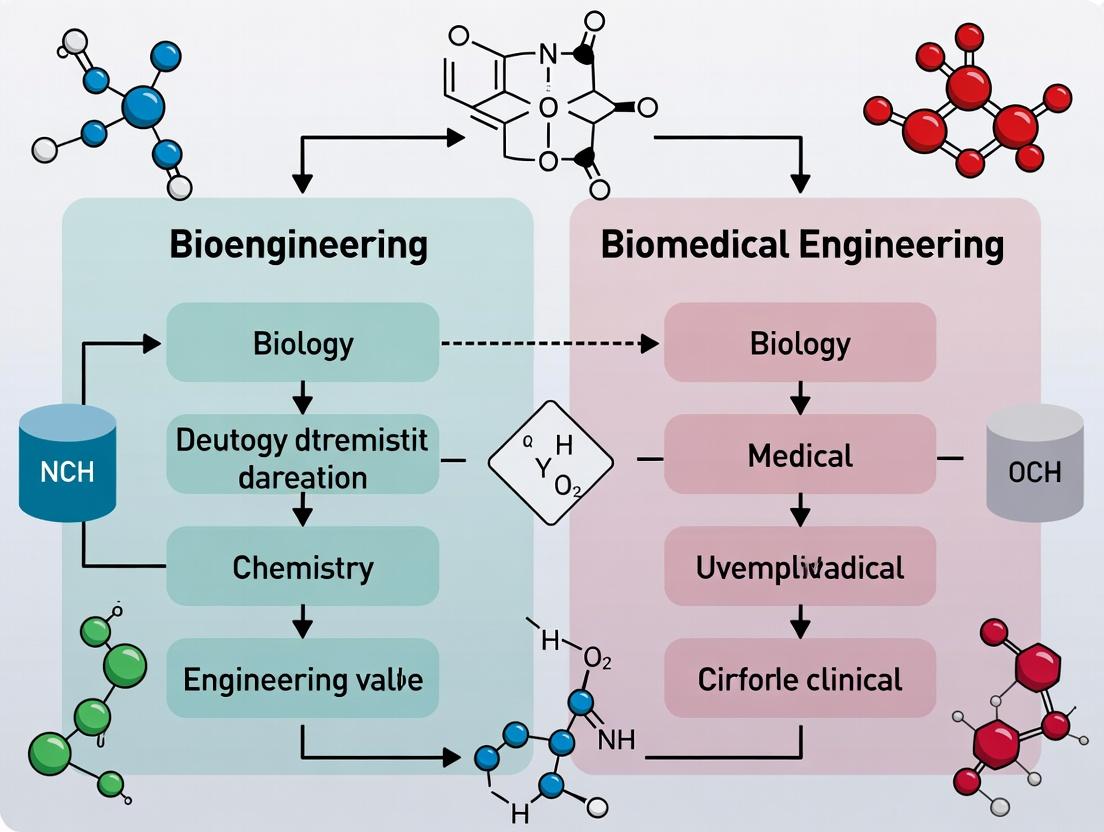
This article provides a detailed, comparative analysis of the educational requirements and academic pathways for bioengineering and biomedical engineering.
Bioengineering vs. Biomedical Engineering: A Career Guide for Researchers & Drug Developers on Core Educational Paths
Abstract
This article provides a detailed, comparative analysis of the educational requirements and academic pathways for bioengineering and biomedical engineering. Designed for researchers, scientists, and drug development professionals, it explores foundational distinctions, curricular focus areas from bachelor's to doctorate levels, and how these align with specific industry and research roles. It also addresses common academic and career challenges, offers validation frameworks for program selection, and concludes with strategic insights for navigating these complementary yet distinct fields in the context of biomedical innovation.
Bioengineering vs. Biomedical Engineering: Defining Two Distinct Academic Paradigms
The fields of bioengineering and biomedical engineering, while often conflated, are underpinned by a fundamental philosophical and historical divergence: Engineering Life versus Engineering for Life. This distinction is critical in shaping educational curricula, research paradigms, and professional outcomes.
- Engineering Life (Core to Bioengineering) adopts a foundational, first-principles approach. It seeks to understand, design, and construct novel biological parts, devices, and systems, or to re-design existing, natural biological systems for useful purposes. Its paradigm is synthetic and constructive.
- Engineering for Life (Core to Biomedical Engineering) is an application-driven, integrative approach. It applies engineering principles and design concepts to medicine and biology for healthcare purposes (diagnostic, therapeutic, monitoring). Its paradigm is analytical and problem-solving.
This whitepaper posits that the educational requirements for research in these two domains must reflect this core divergence, emphasizing distinct foundational knowledge, laboratory skill sets, and design philosophies.
Historical Trajectory & Philosophical Underpinnings
The historical development of these fields reveals their separate origins and converging modern applications.
| Era | Engineering Life (Bioengineering) | Engineering for Life (Biomedical Engineering) |
|---|---|---|
| Pre-20th Century | Roots in agriculture, selective breeding (applied genetics). | Roots in prosthetics (wooden legs, glass eyes) and basic medical instruments. |
| Early-Mid 20th Century | Development of fermentation technology, penicillin production; birth of molecular biology. | Application of engineering physics to medicine: X-rays, EEG, cardiopulmonary bypass, artificial organs. |
| Late 20th Century | Recombinant DNA technology (1970s), birth of synthetic biology (2000s). Systems biology emerges. | Proliferation of medical devices (pacemakers, MRI), biomaterials, and diagnostic imaging. |
| 21st Century | CRISPR-Cas9 gene editing, DNA synthesis, metabolic engineering, engineered cell therapies. | Convergence with IT: wearable sensors, telehealth, AI-assisted diagnostics, advanced prosthetics. |
Philosophical Core: Bioengineering is fundamentally creative and synthetic, asking "What novel biological function can we build?" Biomedical engineering is fundamentally diagnostic and restorative, asking "How can we solve this clinical problem using engineering?"
Educational Requirements for Research: A Comparative Analysis
The educational pipeline for researchers in each field must cater to its distinct philosophical goals.
| Curriculum Component | Bioengineering Research Focus (Engineering Life) | Biomedical Engineering Research Focus (Engineering for Life) |
|---|---|---|
| Core Engineering | Chemical engineering principles, thermodynamics, kinetics, transport phenomena, control theory. | Electrical engineering (circuits, signals), mechanical engineering (statics, dynamics, fluids), materials science. |
| Core Biological Sciences | Molecular biology, genetics, biochemistry, cellular physiology, systems biology, microbiology. | Human anatomy & physiology, pathophysiology, cell biology, basic immunology. |
| Quantitative & Computational | Bioinformatics, computational biology, stochastic modeling, algorithm design for synthetic biology. | Biomechanics, bioinstrumentation, medical imaging processing, statistical analysis of clinical data. |
| Design & Laboratory Focus | Synthetic biology, genetic circuit design, metabolic pathway engineering, protein engineering labs. | Medical device design, biomaterials characterization, tissue engineering, clinical immersion/design projects. |
| Ethics & Regulatory | Biosecurity, dual-use research, environmental release of engineered organisms, intellectual property in synthetic biology. | Human subjects research, FDA device/drug approval pathways, clinical trial design, patient privacy (HIPAA). |
Experimental Paradigms: Illustrative Protocols
Protocol for Engineering Life: Constructing a Synthetic Genetic Oscillator
Aim: To design and implement a repressor-based gene network in E. coli that produces periodic oscillations in GFP expression. Methodology:
- Design & In Silico Modeling:
- Design a three-gene repressilator network: Gene A (LacI) represses promoter of Gene B (TetR); Gene B represses promoter of Gene C (cI); Gene C represses promoter of Gene A.
- Fuse GFP to Gene C (cI) reporter.
- Model network dynamics using coupled ordinary differential equations (ODEs) to predict oscillation period and damping.
- DNA Construction:
- Assemble the genetic circuit using Golden Gate or Gibson Assembly from standardized BioBrick parts.
- Clone final construct into a medium-copy plasmid with an inducible promoter (e.g., araBAD) to initiate network expression.
- Transformation & Culturing:
- Transform assembled plasmid into appropriate E. coli strain.
- Plate on selective media and incubate.
- Data Acquisition & Analysis:
- Inoculate single colonies into liquid culture with inducer.
- Load culture into a microfluidic plate or multi-well plate for time-lapse imaging.
- Measure GFP fluorescence (Ex/Em ~488/509 nm) and phase-contrast images every 10-20 minutes for 12-24 hours using a plate reader or automated microscope.
- Analyze fluorescence trajectories for individual cells using time-series analysis (FFT, autocorrelation) to quantify oscillation period, amplitude, and coherence.
Protocol for Engineering for Life: Developing a Nanoparticle-Based Targeted Drug Delivery System
Aim: To synthesize, characterize, and test the efficacy of ligand-functionalized polymeric nanoparticles for targeted cancer cell killing. Methodology:
- Nanoparticle Synthesis & Functionalization:
- Synthesize poly(lactic-co-glycolic acid) (PLGA) nanoparticles encapsulating a chemotherapeutic (e.g., doxorubicin) using a single or double emulsion-solvent evaporation technique.
- Conjugate a targeting ligand (e.g., an anti-EGFR antibody fragment, folic acid) to the nanoparticle surface via PEG spacers using carbodiimide chemistry.
- Physicochemical Characterization:
- Size & Zeta Potential: Use Dynamic Light Scattering (DLS) to measure hydrodynamic diameter and polydispersity index (PDI). Use Laser Doppler Velocimetry to measure zeta potential.
- Drug Loading & Encapsulation Efficiency: Lyse nanoparticles and quantify drug content via HPLC or UV-Vis spectroscopy.
- Morphology: Visualize using Transmission Electron Microscopy (TEM).
- In Vitro Biological Testing:
- Cellular Uptake: Incurate targeted and non-targeted nanoparticles with cancer cells (EGFR+) and control cells (EGFR-). Use flow cytometry and confocal microscopy to quantify and visualize internalization.
- Cytotoxicity Assay: Treat cells with free drug, targeted NPs, and non-targeted NPs across a range of concentrations. After 48-72 hours, assess cell viability using MTT or CellTiter-Glo luminescent assay.
- Specificity/Binding Assay: Perform competitive inhibition by pre-incubating cells with free ligand to block receptors, then adding targeted NPs. Measure reduced uptake or cytotoxicity.
The Scientist's Toolkit: Essential Research Reagents & Materials
| Item | Function | Primary Field of Use |
|---|---|---|
| CRISPR-Cas9 Ribonucleoprotein (RNP) Complex | Enables precise, template-free gene knockouts or, with a donor template, targeted gene edits. | Engineering Life (Genome engineering, synthetic circuits) |
| Standardized Biological Parts (BioBricks) | DNA sequences with standardized endpoints for modular assembly of genetic circuits. | Engineering Life (Synthetic biology) |
| Inducible Promoter Systems (Tet-On/Off, araBAD) | Allows precise temporal control of gene expression in engineered organisms. | Engineering Life (Dynamic pathway control) |
| Poly(lactic-co-glycolic acid) (PLGA) | Biocompatible, biodegradable polymer used as a core material for drug delivery nanoparticles and scaffolds. | Engineering for Life (Drug delivery, tissue engineering) |
| PEGylation Reagents (e.g., mPEG-NHS) | Used to conjugate polyethylene glycol (PEG) to molecules or nanoparticles, reducing immunogenicity and improving circulation time. | Engineering for Life (Therapeutic formulation) |
| Extracellular Matrix Proteins (Collagen I, Matrigel) | Provide a biomimetic 3D environment for cell culture, essential for realistic tissue engineering and cell migration studies. | Engineering for Life (Tissue engineering, in vitro models) |
| Fluorescent Reporters (GFP, mCherry) & Antibody Conjugates | Enable visualization and quantification of gene expression, protein localization, and cellular processes. | Both Fields |
| Next-Generation Sequencing (NGS) Services | For whole-genome sequencing, RNA-Seq (transcriptomics), and ChIP-Seq to assess genetic edits or global cellular responses. | Both Fields |
Visualizations
Synthetic vs. Problem-Solving Paradigms (89 chars)
Synthetic Oscillator R&D Cycle (74 chars)
Targeted Nanoparticle Mechanism (70 chars)
This whitepaper examines the distinct ABET (Accreditation Board for Engineering and Technology) accreditation criteria, specifically comparing the Canadian Engineering Accreditation Board (CEAB) requirements to the Biomedical Engineering (BME) and General Engineering criteria. This analysis is framed within the broader thesis of defining the educational requirements that best prepare graduates for bioengineering versus biomedical research and drug development. The fundamental divergence lies in CEAB's prescriptive, outcomes-based engineering science core versus the more flexible, design-focused BME criteria, which directly impacts the research readiness of graduates.
Criteria Breakdown & Quantitative Comparison
The core accreditation requirements are quantified and compared in the following tables.
Table 1: Curriculum Content Requirements Comparison
| Criterion Area | CEAB (Mandatory Minimum Hours) | ABET BME Criterion (BMB) | ABET General Criterion (EAC) |
|---|---|---|---|
| Mathematics & Basic Sciences | 195 hours (min.) | 1 year (college-level) | 1 year (college-level) |
| Engineering Science | 585 hours (min.) | Not explicitly quantified | Not explicitly quantified |
| Engineering Design | 195 hours (min.) | 1.5 years (incl. math, science, eng.) | 1.5 years (incl. math, science, eng.) |
| Complementary Studies | 195 hours (min.) | 0.5 year | 0.5 year |
| Disciplinary Core (BME) | Not Applicable | Curriculum must prepare for BME practice | Not Applicable |
| Program-Specific Content | Defined by program | Integration of engineering, bio, medical sciences | Engineering topics specific to program |
Table 2: Student Outcome & Graduate Attribute Alignment
| Attribute / Outcome | CEAB Graduate Attributes (12) | ABET Student Outcomes (1-7) | BME-Specific Additions (BMB Criteria) |
|---|---|---|---|
| Engineering Design | GA #4: Design | SO #2: Design | Must include biomedical engineering design. |
| Problem Analysis | GA #2, #3: Analysis & Investigation | SO #1: Engineering Problems | Application to living systems & biology. |
| Communication | GA #10: Communication | SO #3: Communication | Often includes communication with clinicians. |
| Ethics & Professionalism | GA #1, #8: Knowledge Base & Ethics | SO #4: Ethics | Specific emphasis on bioethics & regulatory. |
| Biology Integration | Implicit in program content | Not in General Criteria | Explicit Requirement (BMB Criterion 3): Integration of engineering & biological sciences. |
| Teamwork | GA #11: Teamwork | SO #5: Team Function | Often interdisciplinary (bio, med, eng). |
Experimental Protocols: Assessing Graduate Research Preparedness
To empirically evaluate the impact of these educational frameworks on research competency, the following methodologies can be employed.
Protocol 1: Longitudinal Cohort Study of Graduate Research Output
- Population Definition: Identify two matched cohorts of graduates: one from a CEAB-accredited bioengineering program and one from an ABET BME-accredited program.
- Variable Definition:
- Independent Variable: Accreditation paradigm (CEAB vs. ABET BME).
- Primary Dependent Variables: Time to first-author publication (in months post-B.Sc.), grant funding success rate (as a graduate researcher), innovation metrics (patents, disclosures).
- Control Variables: Undergraduate GPA, research experience prior to graduation, graduate institution tier.
- Data Collection: Track cohorts for 5-7 years post-baccalaureate using publication databases (Scopus, PubMed), grant databases, and surveys.
- Analysis: Perform multivariate regression analysis to isolate the effect of the accreditation paradigm on dependent variables, controlling for co-variates.
Protocol 2: Simulated Research Problem-Solving Assessment
- Task Design: Develop a timed, complex research problem requiring integration of engineering principles (e.g., fluid mechanics, transport phenomena) with biological knowledge (e.g., cell signaling, physiology) to design an experiment or device.
- Participant Recruitment: Recruit final-year students or recent graduates from CEAB and ABET BME programs.
- Assessment Execution: Administer the task in a controlled environment. Record all work.
- Evaluation Rubric: Score solutions based on:
- Technical Depth of engineering analysis.
- Biological Fidelity and accuracy.
- Innovation & Feasibility of the proposed approach.
- Experimental Design rigor.
- Statistical Comparison: Use blinded scoring and compare mean scores between groups using an appropriate statistical test (e.g., t-test).
Visualizing the Educational Pathways and Outcomes
Diagram Title: Educational Pathway Comparison: CEAB vs ABET BME
The Scientist's Toolkit: Key Reagents for Translational BME Research
The following table details essential materials for a foundational experiment in biomaterial-tissue interaction, a common research area bridging both educational backgrounds.
Table 3: Research Reagent Solutions for Biomaterial-Cell Interaction Studies
| Item | Function/Description | Example Vendor/Catalog |
|---|---|---|
| Poly(lactic-co-glycolic acid) (PLGA) | Biodegradable, biocompatible polymer for scaffold fabrication; hydrolysis rate tunable by lactic:glycolic ratio. | Sigma-Aldrich (e.g., 719900) |
| Dulbecco's Modified Eagle Medium (DMEM) | Cell culture medium providing essential nutrients, vitamins, and salts for in vitro mammalian cell growth. | Thermo Fisher Scientific (11965092) |
| Fetal Bovine Serum (FBS) | Complex supplement for cell culture media providing growth factors, hormones, and attachment factors. | Atlanta Biologicals (S11150) |
| Live/Dead Viability/Cytotoxicity Kit | Two-color fluorescence assay (Calcein-AM for live cells, Ethidium homodimer-1 for dead cells) to assess scaffold cytotoxicity. | Thermo Fisher Scientific (L3224) |
| Phalloidin (e.g., Alexa Fluor 488 conjugate) | High-affinity actin filament stain used in immunofluorescence to visualize cytoskeletal organization and cell morphology on materials. | Thermo Fisher Scientific (A12379) |
| AlamarBlue (Resazurin) Cell Viability Reagent | Metabolic assay; viable cells reduce resazurin to fluorescent resorufin, providing quantitative proliferation data over time. | Bio-Rad Laboratories (BUF012A) |
| RNeasy Mini Kit | Silica-membrane based system for rapid purification of high-quality total RNA from cells on scaffolds for downstream gene expression analysis (qRT-PCR). | Qiagen (74104) |
| Recombinant Human Fibronectin | Extracellular matrix protein used to coat biomaterial surfaces to enhance cell adhesion and spreading via integrin binding. | Corning (354008) |
This technical guide, framed within a broader thesis on educational requirements for bioengineering versus biomedical engineering research, examines the foundational undergraduate curricula for these converging yet distinct fields. For researchers, scientists, and drug development professionals, understanding the educational pipeline is critical for shaping interdisciplinary teams and future innovation. This analysis is based on a review of current program requirements from leading ABET-accredited institutions.
Common Core Prerequisites
The first two years of study for both bioengineering (BioE) and biomedical engineering (BME) are heavily aligned, establishing a rigorous foundation in mathematics, physical sciences, and introductory engineering principles. This common core is designed to equip all students with the necessary analytical and technical language.
Table 1: Common Prerequisite Coursework (Typical First 4 Semesters)
| Category | Specific Course | Credit Hours (Typical) | Relevance to Research |
|---|---|---|---|
| Mathematics | Calculus I-III, Differential Equations, Linear Algebra | 16-20 | Modeling biological systems, signal processing, computational analysis. |
| Physical Sciences | General Chemistry I & II, Physics (Mechanics, E&M) | 12-16 | Understanding material properties, fluid dynamics, electrochemical sensors. |
| Foundational Engineering | Statics, Dynamics, Circuits, Programming (Python/Matlab) | 12-14 | Systems analysis, device design, data acquisition, and algorithm development. |
| Biological Sciences | Introductory Biology, Cell Biology | 6-8 | Foundational knowledge of cellular structure, genetics, and molecular processes. |
Point of Divergence: Specialized Tracks
Divergence typically begins in the junior year, guided by program philosophy. Bioengineering degrees, often housed in Chemical Engineering or Agriculture departments, emphasize the application of engineering principles to biological systems at a molecular or cellular level (e.g., biomaterials, synthetic biology, biocatalysis). Biomedical Engineering degrees, often aligned with Electrical or Mechanical Engineering and medicine, focus on the application of engineering principles to solve problems in human health and medicine (e.g., imaging, prosthetics, medical devices).
Table 2: Upper-Division Coursework Divergence
| Bioengineering (BioE) Focus | Biomedical Engineering (BME) Focus |
|---|---|
| Core Courses: Biochemical Engineering, Biomaterials, Thermodynamics of Biological Systems, Metabolic Engineering. | Core Courses: Biomechanics, Biomedical Instrumentation, Biosignal Processing, Medical Imaging Fundamentals. |
| Technical Electives: Bioprocess Design, Protein Engineering, Nanobiotechnology, Environmental Microbiology. | Technical Electives: Rehabilitation Engineering, Clinical Engineering, Medical Device Design, Cardiovascular Mechanics. |
| Capstone Context: Bioreactor optimization, enzyme immobilization systems, lab-on-a-chip diagnostic development. | Capstone Context: Assistive technology design, MRI coil improvement, prosthetic limb prototype. |
Experimental Protocol: Illustrative Case Studies
The following protocols exemplify the distinct laboratory skills emphasized in each track's upper division.
Protocol 1: Bioengineering - Recombinant Protein Expression & Purification
- Objective: To produce and purify a target protein (e.g., a therapeutic enzyme) from E. coli.
- Methodology:
- Cloning & Transformation: Insert gene of interest into an expression plasmid (e.g., pET vector). Transform into competent E. coli BL21(DE3).
- Expression: Inoculate a high-density culture. Induce protein expression with Isopropyl β-d-1-thiogalactopyranoside (IPTG) at optimal temperature (often 18-37°C) and duration.
- Lysis: Harvest cells by centrifugation. Lyse using mechanical (sonication) or chemical (lysis buffer) methods.
- Purification: Clarify lysate by centrifugation. Purify via affinity chromatography (e.g., His-tag using Ni-NTA resin). Elute with imidazole buffer.
- Analysis: Assess purity and yield via SDS-PAGE and Bradford assay.
Protocol 2: Biomedical Engineering - Electromyography (EMG) Signal Acquisition for Prosthetic Control
- Objective: To acquire and process surface EMG signals to classify intended hand movements.
- Methodology:
- Sensor Placement: Clean skin and place bipolar surface electrodes on the forearm over the bellies of the flexor digitorum profundus and extensor digitorum.
- Signal Acquisition: Connect electrodes to a differential amplifier (gain ~1000). Use a data acquisition system (e.g., National Instruments DAQ) to sample at ≥1 kHz. Apply a band-pass filter (10-500 Hz) in hardware/software.
- Movement Protocol: Record EMG activity during specific, isolated hand movements (e.g., hand open, hand close, wrist flexion).
- Signal Processing: Offline, apply a 50/60 Hz notch filter. Rectify the signal and compute features (e.g., mean absolute value, zero crossings) over sliding windows.
- Classification: Use a machine learning classifier (e.g., linear discriminant analysis) trained on the extracted features to predict movement intent.
The Scientist's Toolkit: Key Research Reagent Solutions
Table 3: Essential Materials for Featured Experiments
| Item | Function | Example Experiment |
|---|---|---|
| Ni-NTA Agarose Resin | Affinity chromatography matrix for purifying polyhistidine-tagged recombinant proteins. | BioE Protein Purification |
| IPTG (Isopropyl β-D-1-thiogalactopyranoside) | A molecular biology reagent used to induce protein expression in bacterial systems. | BioE Protein Expression |
| Surface EMG Electrodes (Ag/AgCl) | Disposable electrodes for non-invasive detection of electrical potentials generated by muscle fibers. | BME Signal Acquisition |
| Differential Amplifier | Amplifies the voltage difference between two input signals while rejecting common-mode noise. | BME Signal Acquisition |
| Bradford Reagent | Colorimetric assay solution containing Coomassie Brilliant Blue G-250 for quantifying protein concentration. | BioE Protein Analysis |
| DAQ (Data Acquisition) System | Hardware and software package for converting analog signals (e.g., EMG) into digital data for computer analysis. | BME Signal Processing |
Visualization of Educational Pathways and Technical Concepts
Title: Undergraduate Pathway Divergence for BioE and BME
Title: Contrasting Core Experimental Workflows
The foundational bachelor's degree pathways for bioengineering and biomedical engineering share a substantial common core of mathematical and scientific prerequisites, enabling a shared language among professionals. The critical divergence occurs at the upper-division level, where bioengineering curricula delve into molecular-scale process and design, while biomedical engineering emphasizes system-level and clinical application. For research and drug development, this translates to BioE graduates often excelling in upstream bioprocess and therapeutic discovery roles, while BME graduates are specialized in downstream diagnostic, delivery, and monitoring technology. Understanding this educational scaffolding is essential for effective team building and project leadership in the interdisciplinary life sciences arena.
1. Introduction: Nomenclature as a Map for Research Trajectories
Within the academic ecosystem, the naming conventions of university departments and degree programs are not arbitrary. They serve as primary signals of institutional identity, research emphasis, and pedagogical philosophy. This distinction is particularly critical at the interdisciplinary nexus of engineering and the life sciences, where the fields of "Bioengineering" (BioE) and "Biomedical Engineering" (BME) are often conflated. Understanding this nomenclature is essential for researchers, scientists, and drug development professionals seeking collaborators, graduate training, or insights into where foundational vs. translational research is emphasized. This analysis frames departmental naming within the broader thesis of divergent educational requirements for research in BioE versus BME.
2. Quantitative Analysis of Departmental Nomenclature and Focus
A survey of top-ranked U.S. programs reveals a correlation between departmental title, administrative home, and core curricular requirements. Data was compiled from program websites, required course listings, and research area descriptions.
Table 1: Departmental Nomenclature and Associated Characteristics
| Department Name | Typical College/School Home | Primary Research Focus Signal | Core Course Emphasis |
|---|---|---|---|
| Bioengineering | Engineering; Sometimes Arts & Sciences | Foundational principles: biomaterials, synthetic biology, cellular engineering, computational biomodeling. | Advanced mathematics, thermodynamics, transport phenomena, molecular cell biology. |
| Biomedical Engineering | Engineering; Often affiliated with Medical School | Applied & clinical problems: medical devices, imaging, biomechanics, tissue engineering for repair. | Anatomy & physiology, signals & systems, biomechanics, design controls. |
| Both Terms Used | Independent Institute or Dual-Department | Broad spectrum, from molecular to systems-level. | Hybrid curriculum balancing foundational and applied. |
Table 2: Analysis of Required Foundational Courses (Sample of 20 Top Programs)
| Course Category | Percentage of Programs Requiring in BioE (n=10) | Percentage of Programs Requiring in BME (n=10) | Implied Educational Requirement |
|---|---|---|---|
| Transport Phenomena | 90% | 30% | BioE requires deep integration of chemical engineering principles. |
| Systems Physiology/Anatomy | 20% | 100% | BME requires extensive mammalian physiological context. |
| Advanced Biochemistry | 80% | 40% | BioE leans toward molecular-scale analysis and manipulation. |
| Medical Device Standards/Regulation | 10% | 70% | BME incorporates translational and regulatory frameworks early. |
3. Experimental Paradigms Illustrating Divergent Foci
The following protocols exemplify research questions typically pursued within each named discipline, highlighting the differing technical and conceptual foundations required.
Protocol 1: Bioengineering-Centric – Developing a CRISPRa-Based Synthetic Gene Circuit for Metabolic Flux Control.
- Aim: To engineer a prokaryotic cell to dynamically reroute central carbon metabolism in response to a novel input signal.
- Methodology:
- Circuit Design: Use computational modeling (e.g., in COPASI) to design a synthetic promoter responsive to a benzoate-derived inducer. The promoter drives expression of dCas9-activator fusion proteins targeted to endogenous metabolic gene promoters.
- DNA Assembly: Construct plasmid vectors via Golden Gate assembly. Include a reporter (YFP) under control of the synthetic promoter for characterization.
- Characterization: Transform constructs into E. coli ΔpykF strain. Perform dose-response assays with inducer, measuring YFP fluorescence (circuit activity) and growth rate (host burden).
- Metabolic Phenotyping: In the final strain, cultivate cells with and without inducer in controlled bioreactors. Measure extracellular metabolites via LC-MS and calculate intracellular flux distributions using (^{13})C metabolic flux analysis (MFA).
- Validation: Compare flux maps to model predictions. Statistically significant redirection of flux from acetate production to TCA cycle intermediates confirms circuit efficacy.
Protocol 2: Biomedical Engineering-Centric – Evaluating the In Vivo Performance of a Drug-Eluting Electrospun Vascular Graft.
- Aim: To assess the patency, biocompatibility, and controlled release kinetics of an implantable graft in a murine model.
- Methodology:
- Graft Fabrication: Co-electrospin a blend of polycaprolactone (PCL) and poly(lactic-co-glycolic acid) (PLGA) with encapsulated heparin onto a rotating mandrel. Sterilize via ethylene oxide.
- In Vitro Release Kinetics: Immerse graft segments (n=5) in PBS at 37°C. Sample supernatant at predetermined time points. Quantify heparin release via a chromogenic anti-factor Xa assay. Fit data to a Higuchi model.
- Surgical Implantation: Perform interposition grafting of a 5mm segment into the infrarenal aorta of anesthetized C57BL/6 mice (IACUC-approved). Use a sham-operated group as control.
- Longitudinal Monitoring: Track graft patency weekly via ultrasound Doppler imaging for 8 weeks. Measure blood flow velocity and vessel diameter.
- Ex Vivo Analysis: At endpoint, explant grafts. Perform histological staining (H&E, Masson's Trichrome) for inflammation and neointimal hyperplasia. Immunostain for CD31 (endothelialization) and α-SMA (smooth muscle cell ingrowth). Quantify stenosis from cross-sectional images.
4. Visualization of Core Concepts and Workflows
Diagram 1: Contrasting research pathways in BioE vs. BME.
Diagram 2: Synthetic biology workflow common in BioE.
5. The Scientist's Toolkit: Essential Research Reagent Solutions
Table 3: Key Reagents and Materials for Featured Protocols
| Reagent/Material | Function | Example (Research-Use) | Primary Protocol |
|---|---|---|---|
| dCas9 Activator Fusion Protein | Enables targeted transcriptional upregulation without DNA cleavage. | dCas9-p65AD/VP64 expressed from a plasmid. | 1 (BioE) |
| Golden Gate Assembly Mix | Modular, scarless assembly of multiple DNA fragments. | BsaI-HFv2 or Esp3I restriction enzyme with T4 DNA Ligase. | 1 (BioE) |
| 13C-Labeled Carbon Source | Tracer for elucidating intracellular metabolic pathway fluxes. | [1-13C] Glucose or [U-13C] Glutamine. | 1 (BioE) |
| Biocompatible Polymer | Base material for fabricating scaffolds with tunable properties. | Medical-grade Polycaprolactone (PCL), PLGA. | 2 (BME) |
| Chromogenic Anti-Factor Xa Assay Kit | Quantifies heparin concentration in solution by enzymatic activity. | Commercially available kit (e.g., from ThermoFisher). | 2 (BME) |
| CD31 (PECAM-1) Antibody | Immunohistochemical marker for vascular endothelial cells. | Rat anti-mouse CD31 monoclonal antibody. | 2 (BME) |
6. Conclusion: Nomenclature Informs Collaboration
Departmental titles—Bioengineering versus Biomedical Engineering—serve as efficient heuristics for the underlying scientific culture, core engineering principles, and proximity to clinical translation. For the drug development professional, a Bioengineering department may offer deeper expertise in novel molecular entity design and cellular system modeling, while a Biomedical Engineering department may provide stronger translational insights into delivery platforms and in vivo performance. Discerning this signal allows for more strategic collaboration and talent acquisition, aligning research questions with the institutional environments best equipped to solve them.
This technical guide defines and elaborates on four core pillars of biomedical and bioengineering research: Biomaterials, Biomechanics, Bioprocesses, and Clinical Systems. The educational requirements for bioengineering (BE) and biomedical engineering (BME) diverge in their emphasis on these areas, with BE curricula typically stronger in bioprocesses and biomaterials synthesis, while BME programs often have deeper integration with clinical systems and biomechanics of human physiology. This distinction shapes the research trajectories and methodological approaches within each field.
Biomaterials
Biomaterials are substances engineered to interact with biological systems for a medical purpose, either diagnostic or therapeutic. They form the foundation of implants, tissue scaffolds, and drug delivery systems.
Core Educational Focus
- Bioengineering: Emphasizes polymer chemistry, material synthesis, degradation kinetics, and scalable fabrication (e.g., 3D bioprinting).
- Biomedical Engineering: Focuses on biocompatibility testing, host-response evaluation, and regulatory pathways for clinical translation.
Key Experimental Protocol:In VitroCytocompatibility Assay (ISO 10993-5)
- Material Extraction: Sterilize the test biomaterial. Prepare an extraction medium using serum-supplemented cell culture medium (e.g., DMEM + 10% FBS) at a surface area-to-volume ratio of 3 cm²/mL. Incubate at 37°C for 24±2 hours.
- Cell Seeding: Seed a relevant cell line (e.g., L929 fibroblasts, MG-63 osteoblasts) in a 96-well plate at a density of 1 x 10⁴ cells/well. Culture for 24 hours to achieve ~80% confluence.
- Exposure: Aspirate the culture medium from the wells. Add the material extract to test wells. Include negative control (culture medium only) and positive control (e.g., 1% Triton X-100) wells.
- Incubation: Incubate the plate for 24±2 hours at 37°C in a humidified 5% CO₂ atmosphere.
- Viability Assessment: Perform an MTT assay. Add MTT reagent (0.5 mg/mL) to each well. Incubate for 2-4 hours. Solubilize the formed formazan crystals with isopropanol. Measure absorbance at 570 nm with a reference at 650 nm.
- Analysis: Calculate cell viability as a percentage relative to the negative control. A viability >70% is typically considered non-cytotoxic.
Research Reagent Solutions Toolkit
| Item | Function |
|---|---|
| Dulbecco's Modified Eagle Medium (DMEM) | A standard cell culture medium providing essential nutrients for mammalian cell growth. |
| Fetal Bovine Serum (FBS) | Provides growth factors, hormones, and proteins necessary for cell adhesion and proliferation. |
| MTT (3-(4,5-Dimethylthiazol-2-yl)-2,5-diphenyltetrazolium bromide) | A yellow tetrazole that is reduced to purple formazan in metabolically active cells, enabling quantification of viability. |
| Triton X-100 | A non-ionic surfactant used as a positive control to induce complete cell lysis and death. |
| Alginic Acid (Sodium Alginate) | A natural polysaccharide used extensively for hydrogel formation and encapsulation in tissue engineering. |
Title: Biomaterial Development Pipeline
Biomechanics
Biomechanics applies mechanical principles to biological systems to understand movement, material properties of tissues, and forces in physiological and pathological states.
Core Educational Focus
- Bioengineering: Strong focus on continuum mechanics, computational fluid dynamics (CFD), and multi-scale modeling.
- Biomedical Engineering: Applied emphasis on gait analysis, orthopedic biomechanics, cardiovascular flow, and prosthetic/orthotic design.
Key Experimental Protocol: Uniaxial Tensile Testing of Soft Tissue
- Sample Preparation: Excise tissue specimen (e.g., tendon, skin) into a standardized dog-bone shape to ensure failure occurs in the gauge region. Hydrate in physiological saline (0.9% NaCl) during preparation.
- Measurement: Use digital calipers to precisely measure the cross-sectional area and gauge length of the sample.
- Mounting: Secure the sample in the grips of a mechanical testing system (e.g., Instron, Bose ElectroForce). Ensure proper alignment to avoid shear forces.
- Pre-conditioning: Apply 10-15 cycles of a low-load strain (e.g., 2-5%) to achieve a repeatable mechanical response.
- Testing: Conduct a tensile test to failure at a constant strain rate (e.g., 0.1-1% strain per second for soft tissues). Simultaneously record force (N) and displacement (mm).
- Data Analysis: Convert force-displacement data to engineering stress (Force/Initial Area) vs. strain (ΔLength/Initial Length). Calculate parameters: Elastic (Young's) Modulus (slope of linear region), Ultimate Tensile Stress (peak stress), and Failure Strain.
Key Quantitative Data: Mechanical Properties of Biological Tissues
| Tissue Type | Young's Modulus (MPa) | Ultimate Tensile Strength (MPa) | Failure Strain (%) | Source/Notes |
|---|---|---|---|---|
| Cortical Bone | 15,000 - 20,000 | 50 - 150 | 1 - 3 | Highly anisotropic; longitudinal direction. |
| Articular Cartilage | 0.7 - 15 | 5 - 25 | 60 - 120 | Depends on location, depth, and testing rate. |
| Tendon (Human) | 500 - 1,200 | 50 - 100 | 10 - 15 | Strain rate dependent. |
| Skin (Human) | 0.1 - 2 | 5 - 30 | 35 - 115 | Highly viscoelastic and non-linear. |
| Artery (Coronary) | 0.5 - 1.0 | 0.5 - 2.0 | 45 - 90 | Non-linear stress-strain curve. |
Title: Phases of Soft Tissue Deformation
Bioprocesses
Bioprocesses involve the use of complete living cells or their components (e.g., enzymes) to achieve desired physical or chemical transformations, central to industrial biotechnology and therapeutic production.
Core Educational Focus
- Bioengineering: Core discipline covering bioreactor design, downstream processing, metabolic engineering, and process optimization for scale-up.
- Biomedical Engineering: Often an elective focus, applied to cell therapy manufacturing or diagnostic assay development.
Key Experimental Protocol: Monoclonal Antibody Production via Hybridoma Culture
- Immunization & Fusion: Immunize a mouse with the target antigen. Isolate splenic B-cells and fuse them with immortal myeloma cells (e.g., SP2/0) using polyethylene glycol (PEG).
- Selection & Screening: Culture fused cells in HAT (Hypoxanthine-Aminopterin-Thymidine) selection medium. Screen surviving hybridoma colonies for antigen-specific antibody secretion using ELISA.
- Clone Expansion: Isolate and subclone positive hybridomas by limiting dilution to ensure monoclonality.
- Bioreactor Cultivation: Scale-up the selected clone. Inoculate into a stirred-tank bioreactor with controlled parameters: pH (7.0-7.4), dissolved oxygen (20-50% air saturation), temperature (37°C), and agitation (50-100 rpm). Use a serum-free or low-serum medium.
- Harvest & Purification: After 7-14 days, separate cells from the culture supernatant by centrifugation and depth filtration. Purify the antibody from the supernatant using Protein A or G affinity chromatography, followed by ion-exchange and/or size-exclusion chromatography.
- Formulation & Analysis: Concentrate and formulate the purified antibody into a stable buffer (e.g., PBS). Analyze purity via SDS-PAGE, concentration via UV A280, and activity via binding ELISA.
Title: Bioprocess Workflow for mAb Production
Clinical Systems
Clinical Systems refer to the integrated technologies, devices, and data analysis platforms used in direct patient care, diagnostics, and healthcare delivery.
Core Educational Focus
- Biomedical Engineering: Central pillar covering medical device design, imaging systems (MRI, CT), physiological signal processing (ECG, EEG), and human factors engineering.
- Bioengineering: Often relates to the development of point-of-care diagnostic devices and biosensors that integrate with clinical workflows.
Key Quantitative Data: Performance Metrics of Diagnostic Imaging Systems
| Modality | Spatial Resolution | Temporal Resolution | Key Clinical Use | Approximate Cost (USD) |
|---|---|---|---|---|
| X-ray Radiography | 0.1 - 0.2 mm | <100 ms | Bone fracture, chest imaging | 50,000 - 300,000 |
| Computed Tomography (CT) | 0.5 - 1.0 mm | 0.2 - 1.0 s | Trauma, oncology, detailed anatomy | 250,000 - 1,500,000 |
| Magnetic Resonance Imaging (MRI) | 0.5 - 2.0 mm | 20 ms - 2 s | Soft tissue, brain, musculoskeletal | 500,000 - 3,000,000 |
| Ultrasound (US) | 0.5 - 2.0 mm | 10 - 50 ms | Obstetrics, cardiology, guided procedures | 20,000 - 200,000 |
| Positron Emission Tomography (PET) | 4 - 6 mm | 30 - 60 s | Cancer staging, metabolic activity | 1,000,000 - 2,500,000 |
Research Reagent Solutions Toolkit (Clinical Assay Development)
| Item | Function |
|---|---|
| Recombinant Antigens | Highly pure proteins used as standards or capture agents in immunoassay development (e.g., ELISA, lateral flow). |
| Monoclonal Antibody Pairs | Matched capture and detection antibodies for developing sensitive, specific sandwich immunoassays. |
| CRISPR-Cas12/13 Enzymes | Used in next-generation molecular diagnostics for specific nucleic acid detection with reporter cleavage. |
| Luminescent/Optical Reporters | Luciferase or fluorescent proteins used as labels in in vitro diagnostic assays for high-sensitivity detection. |
| Microfluidic Chip Substrates (PDMS, COP) | Polymers for fabricating lab-on-a-chip devices for point-of-care testing with minimal sample volume. |
Title: Clinical Systems Data Pathway
Synthesis and Educational Implications
The integration of these four pillars defines modern bio/biomedical engineering research. While there is substantial overlap, the core educational divergence lies in emphasis: Bioengineering programs provide a deeper foundation in the creation and scale-up of biomaterials and bioprocesses, grounded in chemical engineering and biology principles. Biomedical Engineering programs provide more intensive training in the application and integration of biomechanics and clinical systems within a medical context, grounded in electrical and mechanical engineering principles. Successful interdisciplinary research requires fluency across all four terminological domains, regardless of primary degree.
Curriculum Deep Dive: Core Courses, Specializations, and Research Methodologies
Within the evolving landscape of life sciences research, the distinction in educational foundations between bioengineering (BioE) and biomedical engineering (BME) is critical. This whitepaper details the technical core of a modern BioE curriculum, emphasizing its unique integration of chemical engineering principles, dynamic bioprocess control, and cellular metabolic engineering. This triad forms the essential toolkit for researchers and drug development professionals focused on the scalable and precise engineering of biological systems for therapeutic and industrial applications, contrasting with BME's stronger emphasis on medical devices and physiological systems.
Chemical Engineering Foundations in Bioengineering
The application of chemical engineering principles is fundamental to translating laboratory-scale biological discoveries into robust, large-scale processes.
Core Quantitative Principles:
| Principle | Mathematical Formulation | Key Application in BioE |
|---|---|---|
| Mass Balance | Accumulation = Input - Output + Generation - Consumption |
Modeling substrate consumption & product formation in bioreactors. |
| Energy Balance | ΔU = Q - W + Σ (H_in - H_out) |
Bioreactor heating/cooling, sterilization (autoclaving) design. |
| Momentum Transport | Navier-Stokes Equations, τ = -μ (dv/dy) |
Design of agitation systems, perfusion bioreactors, and downstream filtration. |
| Mass Transport | Fick's Law, J = -D (dC/dx) |
Nutrient diffusion in cell aggregates, membrane separation processes. |
| Reaction Kinetics | Monod Equation: μ = μ_max * [S]/(K_s + [S]) |
Modeling microbial growth and optimal feed strategies. |
Experimental Protocol: Determination of Oxygen Transfer Coefficient (kLa)
- Objective: Quantify the rate of oxygen mass transfer in a bioreactor, a critical parameter for aerobic cultures.
- Materials: Bioreactor system, dissolved oxygen (DO) probe, data acquisition system, nitrogen gas, air sparger.
- Method:
- Calibrate the DO probe to 0% (under nitrogen sparging) and 100% (under air saturation at operating conditions).
- With the bioreactor containing culture medium at the desired operating temperature, agitation, and aeration, sparge with nitrogen to deplete oxygen (DO ~0%).
- Switch the gas supply to air at the set flow rate and record the increase in DO percentage over time until saturation.
- Plot
ln(1 - (C/C*))versus timet, whereCis the DO concentration andC*is the saturation DO. The slope of the linear region is-kLa.
- Analysis: The calculated
kLais used to scale up processes and ensure adequate oxygen supply to prevent anoxia.
Bioprocess Control and Automation
Advanced control strategies are essential for maintaining optimal process parameters, ensuring product quality, and meeting regulatory standards.
Key Control Strategies & Performance Metrics:
| Control Strategy | Key Variables (Measured/Controlled) | Typical Setpoint Ranges (Mammalian Cell Culture) | Application Goal |
|---|---|---|---|
| PID Feedback | pH, Temperature, Dissolved Oxygen (DO) | pH: 7.0-7.4; Temp: 36.5-37.0°C; DO: 30-50% air sat. | Maintain homeostatic culture environment. |
| Feedforward Control | Nutrient Feed Rate (based on OUR) | Glucose feed to maintain 2-6 mM | Anticipate and prevent nutrient depletion. |
| Cascade Control | DO (Primary: gas flow/agitation; Secondary: O2/N2/air blend) | Inner loop: gas mix valve; Outer loop: DO at 40% | Improve response time to DO disturbances. |
| Model Predictive Control (MPC) | Metabolite concentrations, Cell density | Varies with process model | Optimize trajectory to maximize titer or yield. |
Experimental Protocol: Implementation of a PID Feedback Loop for pH Control
- Objective: Automatically maintain culture pH within a narrow range using acid/base addition.
- Materials: Bioreactor with pH probe, peristaltic pumps for acid (e.g., CO2 or 0.1M HCl) and base (e.g., 0.1M NaOH), PID controller (software or hardware).
- Method:
- Calibrate pH probe using standard buffers (e.g., 4.0, 7.0, 10.0).
- Set the pH setpoint (e.g., 7.2) and define the controller parameters (Proportional gain
K_c, Integral timeτ_I, Derivative timeτ_D). Start with conservative values. - Define the deadband (e.g., ±0.05 pH units) to prevent pump chatter.
- Activate the control loop. The controller calculates the error
e(t) = setpoint - measured pHand adjusts the pump output:Output = K_c [e(t) + (1/τ_I)∫e(t)dt + τ_D (de/dt)]. - Monitor control performance and fine-tune parameters to minimize oscillation.
- Analysis: Effective control is assessed by integral absolute error (IAE) and time within setpoint bounds.
Metabolic Engineering for Bioproduction
Metabolic engineering involves the directed modification of cellular metabolism to optimize the production of target compounds.
Core Analytical Techniques for Metabolic Flux Analysis (MFA):
| Technique | Measured Outputs | Key Information Derived | Throughput |
|---|---|---|---|
| GC-MS | Mass isotopomer distribution of metabolites from ¹³C-labeled substrates | Quantitative intracellular flux map (steady-state MFA) | Medium |
| LC-MS/MS | Absolute concentrations of central carbon metabolites (e.g., ATP, NADH, organic acids) | Metabolite pool sizes, energy charge | High |
| RNA-Seq | Transcript abundances | Global view of gene expression changes in engineered strain | Very High |
| CRISPRi/a Screening | Fitness or product titer of guide RNA library | Identification of gene knockdown/activation targets for improved production | High |
Experimental Protocol: ¹³C-Based Metabolic Flux Analysis (MFA)
- Objective: Quantify in vivo reaction rates in a central metabolic network.
- Materials: Defined medium with ¹³C-labeled substrate (e.g., [U-¹³C] glucose), bioreactor or controlled cultivation system, quenching solution (cold methanol), extraction solvent, GC-MS system.
- Method:
- Cultivate the engineered strain in a steady-state chemostat or exponential batch phase.
- Rapidly switch feed to an identical medium containing the ¹³C-labeled substrate.
- After metabolic steady-state is reached (determined by prior kinetics), rapidly sample and quench metabolism.
- Extract intracellular metabolites and derivatize for GC-MS analysis (e.g., TBDMS for amino acids).
- Measure the mass isotopomer distributions (MIDs) of proteinogenic amino acids, which reflect labeling patterns in their precursor metabolites.
- Use computational software (e.g., COBRApy, INCA) to fit a stoichiometric metabolic model to the experimental MIDs, iteratively adjusting fluxes to achieve the best fit.
- Analysis: The output is a quantitative flux map identifying major pathway activities, redundant routes, and thermodynamic constraints.
Visualizations
Diagram 1: ChE Principles Enable Scalable BioE Processes
Diagram 2: Bioprocess Feedback Control Loop
Diagram 3: Metabolic Engineering DBTL Cycle
The Scientist's Toolkit: Key Research Reagent Solutions
| Category | Item / Reagent | Primary Function in BioE Core |
|---|---|---|
| Bioprocess Media & Supplements | Chemically Defined Medium (CDM) | Provides reproducible, animal-component-free nutrient base for cultivation. |
| ¹³C-labeled Glucose (e.g., [U-¹³C₆]) | Tracer substrate for Metabolic Flux Analysis (MFA) to determine intracellular reaction rates. | |
| Anti-foam Emulsions (e.g., polypropylene glycol-based) | Controls foam formation in aerated bioreactors to prevent probe fouling and cell loss. | |
| Process Monitoring & Control | Sterilizable pH and DO Probes (e.g., electrochemical) | In-situ real-time monitoring of critical process parameters (CPPs). |
| Automated Bioreactor Control Software (e.g., DASware, BioCommand) | Integrates sensor data, implements control algorithms, and logs all process data. | |
| Metabolic Analysis | Quenching Solution (60% cold methanol) | Instantly halts cellular metabolism for accurate snapshot of intracellular metabolites. |
| Derivatization Reagents (e.g., MSTFA for GC-MS) | Chemically modifies metabolites to make them volatile for gas chromatography analysis. | |
| Genetic Toolkits | CRISPR-Cas9 Plasmid Systems (e.g., px458) | Enables precise genome editing for metabolic pathway knockout/insertion. |
| Inducible Promoter Systems (e.g., Tet-On, T7) | Allows controlled, tunable expression of pathway genes to optimize flux. | |
| Downstream Analytics | HPLC/UPLC Columns (e.g., C18 reverse-phase) | Separates complex mixtures of substrates, products, and metabolites for quantification. |
| ELISA Kits / Protein A/G Assays | Quantifies specific therapeutic protein titers and monitors aggregation/quality. |
The Bioengineering core—grounded in chemical engineering, advanced bioprocess control, and systems-level metabolic engineering—provides a distinct and rigorous framework for research and development. This educational foundation equips professionals with the quantitative and integrative skills necessary to design, control, and optimize biological systems from the cellular to the manufacturing scale. This stands in contrast to the biomedical engineering focus, which often emphasizes the interface with medical devices and human physiology. For drug development, the BioE core is indispensable for advancing the next generation of biologics, cell therapies, and engineered living medicines.
The educational trajectory for Bioengineering (BE) versus Biomedical Engineering (BME) research is a subject of ongoing refinement, driven by the field's rapid evolution. A core thesis posits that while BE curricula often emphasize molecular and cellular-scale engineering principles (e.g., synthetic biology, biomaterials), BME programs traditionally anchor their research readiness on a triad of applied human-centric pillars: integrated Anatomy & Physiology (A&P), Medical Device Design, and Biosignal Processing. This guide details these technical cores, providing the experimental and methodological toolkit essential for researchers, scientists, and drug development professionals interfacing with BME-driven translational research.
Core Pillar I: Anatomy & Physiology as a Quantitative Framework
Modern BME research requires moving beyond descriptive A&P to a quantitative, systems-level understanding. This is critical for creating accurate in silico models, designing implants, and interpreting biosignals.
Key Quantitative Parameters & Data
Table 1: Key Quantitative Physiological Parameters for BME Modeling
| System | Parameter | Typical Range (Adult) | BME Research Relevance |
|---|---|---|---|
| Cardiovascular | Heart Rate | 60-100 bpm | Pacemaker design, hemodynamic modeling |
| Systolic/Diastolic BP | 120/80 mmHg | Device compliance testing, sensor calibration | |
| Cardiac Output | 4-8 L/min | Ventricular assist device (VAD) design | |
| Respiratory | Tidal Volume | 500 mL | Ventilator design, gas exchange modeling |
| Respiratory Rate | 12-20 breaths/min | Monitoring algorithm development | |
| Neuromuscular | Nerve Conduction Velocity | 50-60 m/s (motor) | Neuroprosthetic interface design |
| EMG Signal Amplitude | 0.1-5 mV | Myoelectric control algorithms |
Experimental Protocol: Isolated Tissue Biomechanics Testing
- Objective: To determine the stress-strain relationship of arterial tissue for stent design.
- Materials: Porcine or human arterial segment (fresh or properly preserved), physiological saline solution, tensile testing machine (e.g., Instron), environmental chamber, calipers.
- Methodology:
- Tissue Preparation: Section artery into uniform ring or rectangular strips. Measure cross-sectional area and gauge length precisely.
- Mounting: Secure ends in the testing machine's grips within a bath of oxygenated, warmed (37°C) physiological saline.
- Pre-conditioning: Apply 10-15 cycles of low-load strain to achieve reproducible mechanical response.
- Testing: Apply uniaxial tension at a constant strain rate (e.g., 1 mm/s) until failure.
- Data Analysis: Record force and displacement. Convert to engineering stress (Force/Initial Area) and strain (ΔLength/Initial Length). Plot stress-strain curve to identify linear (elastic) modulus, yield point, and ultimate tensile strength.
Core Pillar II: Medical Device Design – From Concept to Validation
The design process is a structured, iterative framework central to BME research translation.
The Design Control Workflow
Diagram Title: Medical Device Design Control Workflow
The Scientist's Toolkit: Medical Device Prototyping
Table 2: Essential Research Reagent Solutions for Device Prototyping
| Item / Reagent | Function / Purpose |
|---|---|
| Polydimethylsiloxane (PDMS) | Silicone-based elastomer for rapid prototyping of microfluidic chips and soft device components. |
| Poly(lactic-co-glycolic acid) (PLGA) | Biodegradable polymer for creating temporary implants or drug-eluting scaffolds. |
| Cytocompatibility Test Kit (ISO 10993-5) | Standardized assays (e.g., MTT, Live/Dead) to assess material toxicity in vitro. |
| 3D Bioprinter & Bioink | Enables additive manufacturing of tissue scaffolds or constructs with living cells. |
| Accelerated Aging Chamber | Simulates long-term shelf-life effects on device materials (per ASTM F1980). |
Core Pillar III: Biosignal Processing – From Noise to Feature
Biosignals are noisy, non-stationary, and require sophisticated processing to extract clinically relevant information.
Generalized Biosignal Processing Pipeline
Diagram Title: Generalized Biosignal Processing Pipeline
Experimental Protocol: ECG Feature Extraction for Arrhythmia Detection
- Objective: To detect QRS complexes and compute Heart Rate Variability (HRV) from a single-lead ECG.
- Materials: Public ECG dataset (e.g., MIT-BIH Arrhythmia Database), MATLAB/Python with SciPy/NeuroKit2, digital filter design tools.
- Methodology:
- Pre-processing: Apply a 5-15 Hz bandpass Butterworth filter to suppress baseline wander and high-frequency noise. Optionally apply a 50/60 Hz notch filter.
- QRS Detection: Use the Pan-Tompkins algorithm:
- Apply a derivative filter to highlight slopes.
- Square the signal to make all values positive.
- Apply a moving window integrator.
- Use adaptive thresholding to identify R-peaks.
- Feature Extraction:
- Temporal: Calculate RR intervals. Compute HRV metrics like SDNN (standard deviation of NN intervals) and RMSSD (root mean square of successive differences).
- Morphological: For each QRS complex, extract amplitude, width, and area under the curve.
- Validation: Compare detected R-peak locations with expert annotations from the database. Calculate sensitivity and positive predictive value.
Synthesis: Interdependence in BME Research
The core's power is in its integration. Designing a closed-loop neural stimulator (Device) requires precise knowledge of dorsal root ganglion anatomy (A&P) to interpret recorded electroneurography signals (Biosignal) and deliver appropriate feedback stimulation. This integrative, systems-focused approach distinguishes the BME research paradigm and informs its distinct educational requirements, which prioritize depth in human systems and translational engineering over purely molecular-scale manipulation.
Table 3: Comparison of Educational Emphasis in Research-Focused Curricula
| Core Topic | Bioengineering (BE) Research Focus | Biomedical Engineering (BME) Research Focus |
|---|---|---|
| Anatomy & Physiology | Often organellar/cellular (e.g., cytoskeleton, membrane dynamics). | Macro- to micro-scale systems (e.g., musculoskeletal, cardiovascular, neuroanatomy). |
| Design Paradigm | Molecule/Pathway engineering (e.g., biosensors, engineered phages). | Medical Device/System design (e.g., implants, diagnostic instruments, imaging systems). |
| Signal Focus | Molecular signals (e.g., fluorescence, mass spectrometry, genetic circuits). | Biophysical signals (e.g., ECG, EEG, EMG, imaging data) from intact organisms. |
| Primary Validation Model | In vitro assays, cell culture, animal models early stage. | In silico modeling, bench testing, animal models, leading to human clinical trials. |
This whitepaper details the core technical aspects of two principal graduate-level specializations: Synthetic Biology & Tissue Engineering, often housed in Bioengineering (BioE) departments, and Neuroengineering & Imaging, a cornerstone of Biomedical Engineering (BME). The distinction is framed within a thesis on educational requirements. BioE curricula traditionally emphasize foundational engineering principles (e.g., thermodynamics, transport, kinetics) applied to biological design and synthesis, preparing graduates for creation of novel biological systems or constructs. In contrast, BME curricula often integrate deeper physiological and medical systems knowledge with advanced measurement and analysis techniques, preparing graduates for interrogation and interfacing with complex physiological systems, particularly the nervous system.
Core Technical Domains & Educational Requirements
The following table summarizes the focal points and associated educational prerequisites for each specialization.
Table 1: Specialization Comparison - Focus & Educational Requirements
| Aspect | Synthetic Biology/Tissue Engineering (BioE) | Neuroengineering/Imaging (BME) |
|---|---|---|
| Primary Goal | Design & construct novel biological parts/devices/systems; Engineer functional tissue constructs. | Interface with, measure, modulate, and model the nervous system; Develop diagnostic & therapeutic imaging. |
| Core Disciplines | Molecular biology, genetic engineering, systems biology, material science, fluidics, mechanobiology. | Neuroscience, electrophysiology, signal processing, optics, image analysis, computational modeling. |
| Key Math & Computation | Ordinary/Partial Differential Equations (kinetics), stochastic modeling, control theory, CAD for biological design. | Linear algebra (for signal/image processing), transform methods (Fourier, Wavelet), statistical inference, machine learning. |
| Typical Lab Skills | Molecular cloning (Golden Gate, Gibson Assembly), CRISPR editing, biomaterial synthesis (hydrogels), 3D bioprinting. | Electrophysiology (patch clamp, EEG), microscopy (2P, TIRF), MRI/fNIRS operation, neural data analysis (Spike sorting). |
| Central Hypothesis Tested | "Can we program cellular behavior to perform a novel function or assemble into a functional tissue?" | "Can we decode neural activity to understand/restore function or visualize pathological biomarkers in vivo?" |
Synthetic Biology & Tissue Engineering: Technical Guide
Core Paradigm: The Design-Build-Test-Learn (DBTL) Cycle
The field operates on an iterative DBTL cycle. Design uses computational tools to plan genetic circuits or tissue scaffolds. Build employs high-throughput molecular biology. Test assays function via reporters and omics. Learn uses data to refine models for the next cycle.
Detailed Experimental Protocol: Fabrication of a Vascularized Tissue Construct via 3D Bioprinting
Aim: To engineer a 3D cardiac tissue patch with embedded endothelial networks.
Protocol:
- Cell Preparation: Isolate human induced pluripotent stem cell-derived cardiomyocytes (iPSC-CMs) and human umbilical vein endothelial cells (HUVECs). Culture separately.
- Bioink Formulation:
- Bioink A (Cell-laden): Mix iPSC-CMs (5x10^6 cells/mL) with fibrinogen (10 mg/mL), hyaluronic acid (2 mg/mL), and gelatin (5 mg/mL) in PBS.
- Bioink B (Sacrificial): Prepare a Pluronic F-127 ink (30% w/v) for printing temporary vascular channels.
- 3D Bioprinting:
- Use a coaxial extrusion printhead.
- Print a 10x10x2 mm lattice structure layer-by-layer: Deposit Bioink A as the core matrix, simultaneously printing Bioink B as a fugitive ink in a predefined branching pattern.
- Maintain stage at 15°C during printing.
- Crosslinking & Sacrificial Removal:
- Immerse construct in a thrombin solution (2 U/mL) for 30 min to crosslink fibrin.
- Incubate at 37°C for 24h; the Pluronic F-127 ink liquefies and is evacuated, leaving perfusable channels.
- Perfusion & Maturation:
- Seed HUVECs (1x10^6 cells/mL) into the channels via perfusion. Allow adhesion for 4h.
- Connect construct to a bioreactor providing pulsatile flow of medium (1 mL/min, 1 Hz cyclic strain).
- Culture for 14 days, assessing function.
Signaling Pathway: Engineered GPCR Cascade for Synthetic Morphogenesis
The Scientist's Toolkit: Key Reagents for Synthetic Biology
Table 2: Research Reagent Solutions - Synthetic Biology/Tissue Engineering
| Reagent/Material | Function & Explanation |
|---|---|
| CRISPR-Cas9 Ribonucleoprotein (RNP) | Pre-complexed Cas9 protein and guide RNA. Enables precise, high-efficiency gene editing with reduced off-target effects compared to plasmid delivery. |
| Type IIS Restriction Enzymes (BsaI, BbsI) | Core enzymes for Golden Gate Assembly. Their non-palindromic cleavage sites outside recognition sequences enable seamless, scarless assembly of multiple DNA fragments. |
| Photo-crosslinkable Gelatin Methacryloyl (GelMA) | A bioink hydrogel precursor. Provides natural cell-adhesive motifs (RGD), crosslinks under UV light for layer-by-layer 3D structuring, and supports cell viability. |
| Microfluidic PDMS Chips | Polydimethylsiloxane devices with micron-scale channels. Used for high-throughput screening of genetic circuits, single-cell analysis, and organ-on-a-chip models. |
| Quorum Sensing Molecules (e.g., AHL) | Small diffusible autoinducers. Used as inter-cellular signaling molecules in engineered synthetic microbial consortia to coordinate population-level behaviors. |
Neuroengineering & Imaging: Technical Guide
Core Paradigm: The Measure-Model-Modulate Loop
This field iterates on: Measure neural activity/structure via electrophysiology or imaging. Model the data to extract features or infer system states. Modulate the system via electrical, optical, or pharmacological intervention based on the model.
Detailed Experimental Protocol: Two-Photon Calcium Imaging of Cortical Circuit DynamicsIn Vivo
Aim: To record population neuronal activity in mouse primary visual cortex (V1) during visual stimulus presentation.
Protocol:
- Surgical Preparation:
- Anesthetize and head-fix a transgenic mouse expressing GCaMP6f in excitatory neurons.
- Perform a craniotomy (∼3 mm diameter) over V1 (coordinates from Bregma: -3.5 mm AP, +2.5 mm ML).
- Implant a sterile glass cranial window and secure with dental acrylic.
- Microscope Setup:
- Use a resonant-galvo scanning two-photon microscope with a Ti:Sapphire laser tuned to 920 nm.
- Align laser path and calibrate detectors (GaAsP PMTs) using a fluorescent slide.
- Use a 16x, 0.8 NA water-immersion objective.
- Image Acquisition:
- Lightly anesthetize or head-fix awake, habituated mouse under the objective.
- Identify a field of view (FOV) with sparse, labeled neurons ∼150-300 µm below the pia.
- Define a scan region at 512x512 pixels, achieving ∼30 Hz frame rate.
- Present visual stimuli (drifting gratings of varying orientations) on a monitor facing the mouse using PsychToolbox.
- Acquire movies for 10 trials per stimulus condition (5s stimulus, 15s inter-trial interval).
- Data Processing & Analysis:
- Motion Correction: Align frames using a rigid-body registration algorithm (e.g., TurboReg).
- Source Extraction: Use constrained non-negative matrix factorization (CNMF-E) to extract spatial footprints (ΔF/F) and deconvolved spike probabilities for each neuron.
- Tuning Analysis: Compute the average response trace for each neuron per stimulus orientation. Fit with a von Mises function to determine preferred orientation and tuning width.
Workflow: From Neural Signal to Decoded Output
The Scientist's Toolkit: Key Reagents for Neuroengineering
Table 3: Research Reagent Solutions - Neuroengineering/Imaging
| Reagent/Material | Function & Explanation |
|---|---|
| Genetically Encoded Calcium Indicators (GECIs - e.g., GCaMP6/7) | Fluorescent protein-calmodulin fusions. Bind Ca²⁺ upon neuronal spiking, causing fluorescence increase (ΔF/F), enabling optical recording of population activity. |
| Channelrhodopsin-2 (ChR2) | A light-gated cation channel. The primary optogenetic actuator for precise, millisecond-timescale excitation of specific neuron populations with blue light (∼470 nm). |
| Neurotracer Viruses (AAV, Lentivirus) | Viral vectors for delivering transgenes (e.g., GECIs, opsins). Adeno-associated virus (AAV) offers cell-type-specific targeting via promoters and safe, long-term expression. |
| Multi-electrode Arrays (MEAs) | Planar or penetrating arrays of microelectrodes (e.g., Utah Array, Neuropixels). Enable simultaneous extracellular recording from hundreds to thousands of neurons. |
| Gadolinium-Based MRI Contrast Agents | Paramagnetic compounds that shorten T1 relaxation time of nearby water protons. Used to enhance contrast in perfusion imaging or to mark blood-brain barrier leakage. |
Table 4: Quantitative Benchmarks & Data Comparison
| Parameter | Synthetic Biology/Tissue Engineering | Neuroengineering/Imaging |
|---|---|---|
| Typical Temporal Resolution | Minutes to hours (gene expression, tissue maturation). | Milliseconds (spikes) to seconds (fMRI BOLD). |
| Spatial Resolution | Nanometers (DNA) to millimeters (tissue constructs). | Microns (microscopy) to millimeters (clinical MRI). |
| Typical Throughput (Screening) | 10^4 - 10^6 variants via FACS or microfluidics. | 10^2 - 10^3 neurons/electrodes simultaneously. |
| Key Quantitative Metrics | Transcripts/cell-hour (kinetics), elastic modulus (kPa), shear stress (dyne/cm²). | Spike rate (Hz), local field potential (µV), ΔF/F (%), BOLD signal (% change). |
| Common Software/Tools | Cello, TASBE, ImageJ (FIJI), COMSOL. | Bonsai, DeepLabCut, Brainstorm, FSL, PCLAMP. |
Within bioengineering and biomedical engineering (BME) education, capstone projects crystallize theoretical knowledge into applied research. The distinction in laboratory requirements between Bioreactor Design (often a bioengineering focus on fundamental in vitro systems) and Clinical Prototype Development (a BME focus on translational, patient-ready devices) underscores a broader thesis: bioengineering curricula emphasize quantitative, process-oriented biology, while BME programs integrate rigorous design controls and regulatory pathways for human use. This guide details the technical and procedural requirements for each domain.
Bioreactor Design: Core Requirements & Protocols
Bioreactor design projects focus on creating controlled environments for cell cultivation, emphasizing mass transfer, kinetics, and scalability.
2.1 Key Experimental Protocol: Perfusion Bioreactor Run for Stem Cell Expansion
- Objective: Maintain high cell densities (>10⁷ cells/mL) of human mesenchymal stem cells (hMSCs) over 14 days.
- Materials: Single-use, stirred-tank bioreactor (500 mL working volume), perfusion manifold, spin filter (100 µm pore size), pH and dissolved oxygen (DO) probes, basal medium, growth factor supplements.
- Methodology:
- Setup & Calibration: Assemble bioreactor vessel, autoclave non-disposable parts. Calibrate pH and DO probes in situ.
- Inoculation: Seed hMSCs at 2x10⁵ cells/mL in 300 mL medium.
- Batch Phase (Days 0-3): Operate in batch mode. Setpoint: 37°C, pH 7.2 (controlled via CO₂ sparging and base addition), DO at 40% (via cascaded O₂ sparging and agitation from 50-150 rpm).
- Perfusion Initiation (Day 4): Initiate medium perfusion at a rate of 1 vessel volume per day. Retain cells via spin filter.
- Monitoring & Sampling: Daily offline assays: cell count (viability target >95%), glucose/lactate measurement, metabolite analysis.
- Harvest (Day 14): Stop perfusion, dissociate cells, and perform final analysis (flow cytometry for surface markers, differentiation assays).
2.2 The Scientist's Toolkit: Bioreactor Design
| Research Reagent / Material | Function |
|---|---|
| Single-Use Bioreactor Vessel | Provides sterile, scalable culture environment; eliminates cleaning validation. |
| pH & Dissolved Oxygen Probes | Real-time monitoring of critical process parameters (CPPs). |
| Spin Filter or Acoustic Settler | Cell retention device for perfusion cultures. |
| Defined, Xeno-Free Medium | Ensures reproducibility and safety for potential therapeutic use. |
| Metrohm or Cedex Bio HT Analyzer | Automated analyzers for offline nutrient and metabolite quantification. |
2.3 Quantitative Data: Bioreactor Performance Metrics Table 1: Comparative Output of Bioreactor Modifications for hMSC Expansion
| Bioreactor Mode | Max. Cell Density (cells/mL) | Volumetric Productivity (cells/L/day) | Lactate Yield (mol/mol glucose) | Key Advantage |
|---|---|---|---|---|
| Batch | 3.2 x 10⁶ | 2.1 x 10⁸ | 1.8 | Simplicity |
| Fed-Batch | 8.5 x 10⁶ | 5.7 x 10⁸ | 1.5 | Extended culture |
| Perfusion | 4.1 x 10⁷ | 2.9 x 10⁹ | 1.2 | High density, steady state |
Clinical Prototype Development: Core Requirements & Protocols
This domain focuses on developing a device adhering to regulatory standards (e.g., ISO 13485, FDA QSR), requiring integration of engineering, biological validation, and risk management.
3.1 Key Experimental Protocol: In Vitro Hemocompatibility Testing per ISO 10993-4
- Objective: Evaluate blood-contacting properties of a novel hemodialysis membrane prototype.
- Materials: Prototype membrane modules, fresh human whole blood (anti-coagulated with sodium citrate), platelet-poor plasma (PPP), thrombin, CaCl₂ solution, dynamic flow loop system, platelet counter, ELISA reader.
- Methodology:
- Setup: Sterilize prototype. Assemble a closed-loop flow system with the membrane in the test chamber. Preheat to 37°C.
- Blood Incubation: Fill the system with whole blood. Circulate at a shear rate of 100 s⁻¹ for 2 hours.
- Sampling: Collect blood samples (pre- and post-contact at 5, 30, 60, 120 min) from a designated port.
- Assays:
- Platelet Activation: Measure CD62P expression via flow cytometry.
- Thrombus Formation: Weigh the membrane pre- and post-test; quantify fibrinogen adsorption via ELISA.
- Coagulation: Measure prothrombin time (PT) and activated partial thromboplastin time (aPTT) in plasma samples.
- Analysis: Compare results against a negative control (medical-grade silicone) and positive control (glass).
3.2 The Scientist's Toolkit: Clinical Prototype Development
| Research Reagent / Material | Function |
|---|---|
| Medical-Grade Polymer (e.g., Pellethane 2363) | Thermoplastic polyurethane with proven biocompatibility for implants. |
| Sterilization Pouches (Tyvek/PE) | Allows sterilization (EtO, gamma) while maintaining sterility barrier. |
| Dynamic Blood Flow Loop | Simulates in vivo hemodynamics for hemocompatibility testing. |
| CD62P (P-Selectin) Antibody | Marker for activated platelets in flow cytometry. |
| Prothrombin Time (PT) Test Kit | Evaluates the extrinsic coagulation pathway activation. |
3.3 Quantitative Data: Prototype Testing Outcomes Table 2: Hemocompatibility Test Results for Prototype Membrane
| Test Parameter | Negative Control | Prototype A | Positive Control | ISO 10993-4 Pass/Fail Criteria |
|---|---|---|---|---|
| Platelet Activation (% CD62P+) | 4.2% | 8.7% | 95.1% | <20% (vs. negative control) |
| Fibrinogen Adsorption (ng/cm²) | 120 | 310 | 850 | <500 ng/cm² |
| aPTT Prolongation (seconds) | +0.5 | +2.1 | +30.0 | Not clinically significant |
Comparative Workflow & Regulatory Pathways
The fundamental divergence lies in the endpoint and governing logic. Bioreactor development follows an iterative design-build-test cycle driven by biological performance metrics. Clinical prototype development is embedded within a stage-gated design control framework, where each experimental phase feeds into a regulatory submission risk assessment.
Biological Performance Feedback Loop
Design Control & Risk Management Pathway
The laboratory and capstone requirements for Bioreactor Design and Clinical Prototype Development serve as microcosms of their respective fields. The former prioritizes the mastery of biological system dynamics and scalable engineering principles. The latter mandates a parallel mastery of biological interface science, rigorous verification/validation protocols, and integrated risk management within a regulatory framework. Educational programs must equip students with these distinct, yet complementary, toolkits to advance both fundamental bioprocess engineering and translational medical device innovation.
Aligning Graduate Research (MS/PhD) with Drug Development Pipelines and Medical Technology Innovation
The strategic alignment of graduate research with industry pipelines is critical for accelerating translational outcomes. This alignment is fundamentally shaped by the distinct educational requirements of bioengineering (BE) and biomedical engineering (BME). While curricula often overlap, the core thesis is that bioengineering education emphasizes foundational engineering and quantitative sciences (e.g., molecular biology, thermodynamics, transport phenomena) applied to a broad range of biological systems, including plants, microbes, and biomaterials. In contrast, biomedical engineering education is more explicitly oriented toward the direct application of engineering principles to human health and clinical medicine, with stronger integration of physiology and anatomy.
This distinction informs how graduate research projects are scoped. BE research often delves into platform technologies (e.g., gene editing tools, synthetic biology circuits, novel biomaterials) with potential applications across multiple pipeline stages. BME research frequently focuses on applied problems closer to the clinical end of the spectrum (e.g., medical device design, diagnostic imaging, tissue engineering for specific organ systems). Successful pipeline alignment requires students in both tracks to consciously bridge their core training with the structured phases of drug and device development.
Mapping Research Themes to Pipeline Stages
Graduate research must be designed with a clear understanding of the translational pathway. The following table maps common BE/BME research themes to specific stages of the drug development and medical technology innovation pipelines.
Table 1: Alignment of Graduate Research Themes with Development Pipelines
| Pipeline Stage | Primary Objectives | Relevant Bioengineering (BE) Research Themes | Relevant Biomedical Engineering (BME) Research Themes | Key Outputs for Thesis |
|---|---|---|---|---|
| Discovery & Target ID | Identify novel therapeutic targets or diagnostic biomarkers. | Functional genomics, proteomics, computational modeling of signaling networks, synthetic biology biosensors. | Medical imaging analytics, biomarker discovery from physiological signals, computational physiology. | Validated target in vitro; novel screening assay; predictive model. |
| Preclinical Development | Demonstrate proof-of-concept efficacy and safety in models. | Organ-on-a-chip development, engineered therapeutic microbes, drug delivery nanoparticle synthesis & characterization. | In vivo efficacy testing of devices, preclinical animal models for implants, biocompatibility testing of materials. | In vivo proof-of-concept data; prototype device; safety/toxicity initial dataset. |
| Process Development & Scaling | Transition from lab-scale to manufacturable processes. | Bioreactor optimization for cell/gene therapies, purification process development, scaffold fabrication scale-up. | Medical device manufacturing processes, sterilization validation studies, quality control test development. | Scalable synthesis/fabrication protocol; CMC (Chemistry, Manufacturing, Controls) relevant data. |
| Translational & Clinical | Bridge to human trials and regulatory approval. | Companion diagnostic co-development, clinical trial assay development, real-world data integration platforms. | Clinical prototype refinement, human factors engineering, regulatory strategy analysis (e.g., FDA 510(k) vs. PMA). | Clinical validation plan; regulatory submission analysis; IDE/IND-enabling data package. |
Foundational Experimental Methodologies
To contribute meaningfully, graduate research must employ robust, industry-relevant protocols. Below are detailed methodologies for key experiments spanning the pipeline.
Protocol: High-Throughput Target Validation Using CRISPR-Cas9 Screening
Objective: To identify genes essential for cancer cell survival in a specific genetic background, validating a potential therapeutic target. Materials: Target cancer cell line, lentiCRISPRv2 library (e.g., GeCKO), polybrene, puromycin, tissue culture reagents, next-generation sequencing (NGS) platform. Procedure:
- Library Amplification & Titer: Amplify the lentiviral CRISPR library in E. coli and prepare high-titer lentiviral supernatant.
- Cell Infection: Infect cells at a low MOI (0.3-0.5) with >500x library coverage. Include non-targeting control guides.
- Selection: Treat cells with puromycin (2 µg/mL) for 7 days to select successfully transduced cells.
- Phenotypic Challenge: Passage cells under normal conditions or with a drug treatment for 14-21 days.
- Genomic DNA Extraction & Sequencing: Harvest cells at initial (T0) and final (Tf) time points. Extract gDNA. Amplify integrated guide RNA sequences via PCR and prepare libraries for NGS.
- Bioinformatic Analysis: Align sequences to the reference library. Use MAGeCK or similar algorithm to identify guides significantly depleted or enriched in Tf vs T0, indicating essential genes.
Protocol:In VivoEfficacy and Pharmacokinetics/Pharmacodynamics (PK/PD) of a Novel Drug Delivery System
Objective: To evaluate the tumor accumulation and therapeutic efficacy of an engineered nanoparticle. Materials: Nanoparticle formulation, fluorescent dye (e.g., DiR) or radiolabel, mouse xenograft model (e.g., subcutaneous tumor), IVIS imaging system or gamma counter, therapeutic payload (e.g., chemotherapeutic). Procedure:
- Formulation & Labeling: Prepare nanoparticles loaded with both a payload and a traceable label.
- Animal Model: Establish xenograft tumors in immunocompromised mice (n=8-10 per group).
- Dosing: Administer nanoparticles intravenously via tail vein at a defined dose (e.g., 5 mg/kg payload). Control groups: saline, free payload.
- PK/PD Analysis:
- Imaging: At set time points (1, 4, 24, 48h), image animals using IVIS to quantify fluorescence in tumor vs. organs.
- Biodistribution: At terminal time points, harvest tumors and major organs, homogenize, and quantify label signal.
- Efficacy: Monitor tumor volume and body weight 3x/week for 4 weeks. Calculate tumor growth inhibition.
- Endpoint Analysis: Perform histology (H&E, TUNEL) on tumors to assess apoptosis and necrosis.
Visualizing Key Pathways and Workflows
Research Alignment in BE vs BME Pathways
Oncogenic Signaling Pathway & Therapeutic Inhibition
The Scientist's Toolkit: Research Reagent Solutions
Table 2: Essential Reagents for Pipeline-Aligned Research
| Reagent/Material | Supplier Examples | Function in Pipeline Research |
|---|---|---|
| CRISPR-Cas9 Libraries | Addgene, Sigma-Aldrich (MilliporeSigma), Horizon Discovery | Enables genome-wide functional screens for target identification and validation in Discovery stage. |
| Recombinant Proteins & Antibodies | R&D Systems, Bio-Techne, Abcam, Cell Signaling Technology | Critical for assay development, target protein detection, and mechanistic studies across all stages. |
| Organ-on-a-Chip Platforms | Emulate, Inc., Mimetas, CN Bio | Provides human-relevant, microphysiological systems for preclinical efficacy and toxicity testing. |
| Polymeric Nanoparticle Kits | PolySciTech, Sigma-Aldrich, Creative PEGWorks | Accelerates formulation of drug delivery systems for preclinical PK/PD and efficacy studies. |
| LC-MS/MS Grade Solvents & Columns | Thermo Fisher, Waters, Agilent | Essential for analytical method development and bioanalysis required for pharmacokinetic studies. |
| GMP-Grade Cytokines/Growth Factors | PeproTech, Lonza | Necessary for transitioning cell therapy processes from research to clinical-scale manufacturing. |
| Clinical Sample Biorepositories | ATCC, Discovery Life Sciences, Proteogenex | Provides well-annotated human specimens for translational biomarker and diagnostic assay validation. |
Navigating Academic Crossroads: Common Challenges and Strategic Program Selection
Within the academic and professional discourse on bioengineering (BE) and biomedical engineering (BME) research, a persistent challenge is the perceived trade-off between breadth of interdisciplinary knowledge and depth in a core discipline. This whitepaper examines this dilemma through the lens of educational requirements, positing that targeted experimental and computational methodologies can bridge these gaps to advance drug development and therapeutic innovation.
Educational Foundations: A Comparative Analysis
The following table summarizes core educational requirements and common perceived gaps for BE and BME graduate programs, based on current accreditation guidelines and program curricula.
| Aspect | Bioengineering (BE) Focus | Biomedical Engineering (BME) Focus | Common Perceived Gap |
|---|---|---|---|
| Primary Foundation | Engineering principles applied to biological systems (e.g., kinetics, transport, thermodynamics). | Application of engineering to medicine and healthcare; often closer to medical devices and physiology. | BE: Insufficient deep biological context for complex disease models. BME: Limited fundamental engineering rigor for novel tool development. |
| Core Biology Depth | Molecular/cellular biology, biochemistry. Often systems-level integration. | Anatomy, physiology, biomaterials, biomechanics. | BE: May lack detailed pathophysiology. BME: May lack cutting-edge molecular/cellular mechanistic insight. |
| Core Engineering Depth | Advanced mathematics, transport phenomena, control theory, quantitative modeling. | Instrumentation, signal processing, mechanical/electrical engineering fundamentals applied to biology. | BE: Can be too abstract without direct clinical/physiological translation. BME: Can be siloed in traditional engineering domains. |
| Typical Research Output | Novel synthetic biological circuits, quantitative models of cellular networks, foundational platforms. | Improved medical devices, diagnostic sensors, tissue engineering scaffolds, clinical instrumentation. | Translation between foundational discovery and applied clinical solution can be hindered. |
Bridging the Gap: An Integrated Experimental Protocol
To address the depth gap in fundamental biology for engineers, a core experimental workflow is provided for studying a canonical signaling pathway (e.g., MAPK/ERK) relevant to cancer drug development. This protocol requires integration of engineering rigor with biological depth.
Protocol: Quantitative Analysis of MAPK/ERK Signaling Dynamics in Response to Targeted Inhibition
Objective: To measure the temporal phosphorylation dynamics of ERK in a cancer cell line under stimulation and targeted inhibitor treatment, quantifying signal transduction efficiency.
Materials & Reagents (The Scientist's Toolkit):
| Reagent/Material | Function & Rationale |
|---|---|
| Recombinant EGF | Ligand to stimulate the EGFR→Ras→MAPK pathway; provides a controlled, quantifiable input signal. |
| Phospho-ERK1/2 (Thr202/Tyr204) Antibody | Specific detection of the active, dual-phosphorylated form of ERK; primary antibody for immunoblot or flow cytometry. |
| Small-Molecule MEK Inhibitor (e.g., Trametinib) | Allosteric inhibitor of MEK1/2, the kinase directly upstream of ERK; allows perturbation of pathway flux. |
| Cell Line with RAS Mutation (e.g., A549 NSCLC) | Provides a genetically defined system with constitutive pathway activation, mimicking an oncogenic driver. |
| Microfluidic Perfusion System | Enables precise temporal control of stimulus and inhibitor delivery, an engineering tool for high-temporal-resolution biology. |
| Mass Spectrometry-Grade Trypsin | For preparation of samples for phosphoproteomic analysis, enabling global, unbiased signaling assessment. |
| FRET-based ERK Biosensor (e.g., EKAR) | Genetically encoded biosensor for live-cell, real-time monitoring of ERK activity dynamics in single cells. |
Methodology:
- Cell Culture & Preparation: Culture A549 cells in standard DMEM + 10% FBS. Seed cells for the intended assay (e.g., in microfluidic channels, 6-well plates for immunoblot, or glass-bottom dishes for live imaging).
- Stimulation & Inhibition Regime:
- Control: Serum-starve cells for 4-6 hours to reduce basal activity. Stimulate with 100 ng/mL EGF.
- Inhibitor Treatment: Pre-treat cells with a titration of MEK inhibitor (e.g., 0, 10, 100 nM Trametinib) for 1 hour prior to EGF stimulation.
- Use microfluidic valves to perfuse solutions, enabling rapid switching (<30 sec) between conditions.
- Sample Lysis & Collection: At defined time points (e.g., 0, 2, 5, 10, 30, 60 min post-stimulation), rapidly lyse cells using RIPA buffer with phosphatase/protease inhibitors. Collect lysates for immunoblot.
- Quantitative Readouts:
- Immunoblot: Resolve proteins by SDS-PAGE, transfer, and blot with anti-phospho-ERK and total-ERK antibodies. Use chemiluminescent imaging with a CCD camera for linear quantitation. Normalize pERK signal to total ERK.
- Live-Cell Imaging: For cells transfected with EKAR biosensor, image FRET ratio (YFP/CFP emission) over time using a confocal microscope with environmental control. Plot normalized FRET ratio vs. time.
- Data Modeling: Fit time-course data to a ordinary differential equation (ODE) model of the core MAPK cascade (e.g., a simplified Huang-Ferrell model). Estimate rate constants for phosphorylation/dephosphorylation events and inhibitor binding kinetics.
Visualizing the Integrated Workflow and Pathway
The following diagrams illustrate the core signaling pathway under study and the integrated experimental workflow bridging engineering and biology.
Diagram Title: MAPK/ERK Pathway with MEK Inhibition
Diagram Title: Integrated Bioengineering Research Workflow
The breadth vs. depth dilemma in BE/BME education is not an insurmountable barrier but a framework for structured integration. By employing rigorous engineering tools—such as microfluidic control, quantitative imaging, and computational modeling—to investigate fundamental biological pathways, researchers can achieve the necessary depth in context. The proposed experimental protocol and conceptual workflow provide a template for designing research that inherently bridges the educational gap, fostering the development of therapeutics grounded in both mechanistic biological understanding and engineering precision.
Within the context of a broader thesis on educational requirements, it is critical to distinguish between bioengineering (BE) and biomedical engineering (BME). While often used interchangeably, bioengineering is a broader discipline applying engineering principles to a wide range of biological systems, from agriculture to biomolecules. Biomedical engineering is a subset focused specifically on human health and medical applications. The core educational requirement for research in both fields is a deep grounding in quantitative sciences, physiology, and design. However, the translational pathway from laboratory discovery to clinical impact presents significant gaps. This whitepaper argues that strategic dual-degree or certificate programs in Business (MBA) or Regulatory Affairs are essential to bridge these gaps, equipping researchers to navigate the commercialization and regulatory landscape of drug and device development.
Quantitative Analysis of Educational Gaps and Program Outcomes
A live search of current data from the U.S. Bureau of Labor Statistics (BLS), National Center for Education Statistics (NCES), and university program outcomes reveals clear trends.
Table 1: Core Educational Requirements for BE/BME Research Roles
| Competency Area | Bioengineering Research | Biomedical Engineering Research | Primary Gap Addressed |
|---|---|---|---|
| Engineering Depth | Broad: Bioprocess, biomolecular, environmental | Focused: Biomechanics, biomaterials, medical devices | - |
| Biological Science | Molecular & cellular biology, biochemistry | Human physiology, anatomy, systems biology | - |
| Quantitative Analysis | Advanced calculus, systems modeling, thermodynamics | Statistics, signal/image processing, transport phenomena | - |
| Translational Skills | Limited in standard curriculum | Limited in standard curriculum | Commercialization & Regulation |
Table 2: Impact of Supplementary Degrees/Certificates (Representative Data)
| Program Type | Avg. Time Added | Reported Salary Premium* | Key Bridged Gap | Common Career Pivot |
|---|---|---|---|---|
| BE/BME + MBA | 2-3 years | 35-50% | Product strategy, market analysis, venture funding | Project/Product Manager, Entrepreneur, Biz Dev |
| BE/BME + MS Regulatory Affairs | 1-1.5 years | 25-40% | FDA/EU regulatory pathways, quality systems, clinical trials | Regulatory Affairs Specialist, Quality Engineer |
| Graduate Certificate (RegSci) | 0.5-1 year | 15-25% | Specific regulatory knowledge (e.g., IVD, implants) | Research Scientist -> Regulatory Scientist |
Note: Salary premium estimates are based on aggregated post-graduation survey data from multiple university career centers and industry reports (e.g., MedReps, Indeed) and are relative to baseline MS/PhD roles in R&D.
Experimental Protocols: Validating the Impact of Integrated Training
The efficacy of dual-degree strategies can be assessed through longitudinal cohort studies. Below is a detailed methodology for such an investigation.
Protocol: Longitudinal Cohort Study on Career Trajectory Impact
Objective: To quantitatively assess the impact of dual-degree (BE/BME + MBA or RA) versus traditional single-degree training on career progression, translational output, and compensation in the biotech/pharma sector.
Study Design: Prospective, matched-cohort, observational study.
Methodology:
- Participant Recruitment & Cohort Definition:
- Intervention Cohort (n=150): Graduates from accredited BE/BME Master's or PhD programs who concurrently or sequentially completed a university-affiliated MBA or MS in Regulatory Affairs.
- Control Cohort (n=150): Graduates matched for baseline characteristics (undergraduate GPA, research institution ranking, primary degree type, graduation year) who completed only the BE/BME terminal degree.
- Recruitment via alumni associations and professional networks (LinkedIn).
Data Collection Points (T0, T1, T2):
- T0 (Baseline): At primary degree graduation. Collect demographic data, academic metrics, and initial career intent.
- T1 (3 Years Post-Graduation): Administer structured survey. Metrics: Job title, employer type (e.g., startup, large pharma, CRO), self-reported compensation (base salary), number of patents filed/disclosed, number of regulatory submissions (e.g., IDE, IND) contributed to, leadership role (Y/N).
- T2 (7 Years Post-Graduation): Repeat T1 survey. Additional metric: Time-to-promotion to managerial/director-level position.
Statistical Analysis:
- Use propensity score matching to ensure cohort comparability.
- Primary endpoints: Compensation at T2, odds of holding a leadership position at T2.
- Secondary endpoints: Rate of patent generation, involvement in regulatory submissions, career satisfaction score (5-point Likert scale).
- Analytical tests: Multivariate regression analysis, Kaplan-Meier analysis for time-to-promotion, chi-square tests for proportional differences.
Visualizing the Educational and Translational Pathway
Title: Bridging the Translational Gap with Supplementary Education
The Scientist's Toolkit: Essential Reagents for Translational Research
Beyond wet-lab reagents, the "toolkit" for a researcher aiming to bridge these gaps includes key knowledge resources and strategic materials.
Table 3: Research Reagent Solutions for Translational Development
| Item / Resource | Function / Purpose | Example in Context |
|---|---|---|
| FDA Guidance Documents | Provide the regulatory agency's current thinking on product development and submission requirements. | Used when designing the verification/validation protocol for a new Class II medical device to ensure compliance with 21 CFR 820. |
| ISO 13485:2016 Standard | Specifies requirements for a Quality Management System (QMS) for medical device manufacture. | The foundational document for establishing a compliant QMS in a startup developing an in vitro diagnostic (IVD). |
| Clinical Evaluation Plan (CEP) | A systematic and planned process to continuously generate, collect, analyze, and assess clinical data for a device. | Created post-prototype to outline the clinical strategy needed for CE marking in the EU and PMA submission to FDA. |
| Business Model Canvas | A strategic management template for developing new or documenting existing business models. | Used by a PhD/MBA team to visualize key partnerships, cost structure, and value proposition for a new tissue engineering platform. |
| Market Assessment Report | Analyzes the size, trends, segmentation, and competitive landscape of a target market. | Critical for securing seed funding; determines the "addressable market" for a novel drug-eluting stent. |
| Intellectual Property (IP) Landscape Analysis | A report mapping existing patents and freedom-to-operate (FTO) in a specific technology area. | Conducted prior to major R&D investment to avoid infringement and identify licensing opportunities. |
| Investigational Device Exemption (IDE) Template | The formal application to FDA to conduct a clinical study of an unapproved medical device. | The key deliverable from the RA team to initiate a pivotal trial for a novel neurostimulation device. |
A precise understanding of a graduate program's research strength is critical for aspiring scientists. This evaluation must be framed within the distinct educational paradigms of bioengineering (BioE) and biomedical engineering (BME). While often conflated, the fields have divergent intellectual roots and objectives. Bioengineering applies engineering principles broadly to biological systems, often for fundamental discovery or technology development (e.g., synthetic biology, biomaterials, systems biology). Biomedical engineering is more specifically focused on the application of engineering to solve problems in human medicine and clinical care (e.g., medical devices, imaging, tissue engineering).
Consequently, a strong BioE program's strength may be demonstrated through foundational discovery and tool-building, often funded by the NSF, while a top BME program may exhibit deep integration with clinical translation and NIH-funded pathophysiology research. This guide provides a technical framework for quantitatively deconstructing program strength across three pillars: faculty portfolios, industry linkages, and grant funding.
Pillar I: Deconstructing Faculty Research Portfolios
Methodology for Portfolio Analysis:
- Faculty List Compilation: Extract the core faculty list from the program's website, typically from "People" or "Faculty" sections, filtering for primary appointments.
- Publication Data Mining: For each faculty member, perform an author search on PubMed and Scopus. Use precise queries (Last Name F, Last Name FS) and institutional affiliation filters.
- Journal Categorization: Map each publication's journal to its core focus using the NIH MeSH terms or journal categorization (e.g., Nature Biotechnology → BioE/Tools; Circulation → BME/Clinical).
- Citation & H-index Extraction: Record the Scopus h-index and total citations for each faculty member. Normalize by years since first publication to estimate productivity trajectory.
- Co-authorship Network Analysis: Use tools like VOSviewer on exported Scopus data to visualize collaboration clusters (intra-departmental, inter-institutional, industry).
Quantitative Data Summary:
Table 1: Faculty Portfolio Metrics for Hypothetical Programs A (BioE-leaning) and B (BME-leaning)
| Metric | Program A (BioE) | Program B (BME) | Data Source & Measurement Period |
|---|---|---|---|
| Avg. Publications/Faculty | 72 | 68 | Scopus, Career-to-date |
| Avg. H-index | 28 | 31 | Scopus |
| % Pubs in Clinical Journals | 22% | 58% | Journal-based classification |
| % Pubs in Engineering/Tools Journals | 65% | 28% | Journal-based classification |
| Avg. Industry Co-authored Pubs/Faculty | 9.4 | 12.1 | Scopus, Last 10 years |
| Primary Research Themes | Synthetic Biology, Microfluidics, Computational Modeling | Cardiovascular Implants, Neuroimaging, Cartilage Tissue Engineering | Text analysis of publication keywords |
Faculty Analysis Workflow
Pillar II: Analyzing Industry Partnerships
Industry collaboration is a key indicator of translational potential and resource access.
Experimental Protocol for Partnership Auditing:
- Public Disclosure Review: Scrape university press releases and news articles (last 5 years) for announcements of partnerships, consortia, and gifts.
- Sponsored Research Agreement (SRA) Analysis: Review public university research administration reports for listed industrial sponsors and total SRA funding.
- Clinical Trial Analysis: Search ClinicalTrials.gov using the university/organization name and filter for studies with a "Industry" collaborator or funder.
- Start-up Formation Tracking: Utilize databases like Crunchbase or PitchBook to identify faculty-founded startups, their funding stages (Seed, Series A, B), and acquisition/IPO events.
Quantitative Data Summary:
Table 2: Industry Partnership Metrics (Hypothetical Data)
| Partnership Type | Program A (BioE) | Program B (BME) | Data Source |
|---|---|---|---|
| Active Sponsored Research Agreements (#) | 15 | 24 | University Annual Report |
| Total Industry Research Funding (5Y, $M) | $18.5 | $42.3 | University Annual Report |
| Faculty-Founded Startups (10Y, #) | 11 | 8 | Crunchbase/PitchBook |
| Industry-Co-authored Clinical Trials (#) | 7 | 29 | ClinicalTrials.gov |
| Consortium Membership (e.g., BMES, PPPs) | Synthetic Biology Eng. Center | Medical Device Innovation Consortium | Public Press |
Partnership Pathways
Pillar III: Interpreting NIH/NSF Funding Portfolios
Grant funding is the most direct metric of peer-reviewed research strength.
Methodology for Grant Portfolio Analysis:
- NIH RePORTER Query: Use the Advanced Search. Set "Organization" to the university. Use "Department" or "PI Name" filters for precision. Export data for R01, R21, U01, P41, T32, and F31/F32 grants.
- NSF Award Search Query: Use the Award Search with "Organization" and "Program Element" filters (e.g., CBET - Eng. of Biomed. Systems, EFRI). Focus on CAREER awards as indicators of junior faculty strength.
- Data Aggregation & Categorization: Aggregate total dollars by grant mechanism and research category. For NIH, use the "IC" (Institute/Center) to infer focus: NIBIB (tools), NHLBI (cardiovascular), NCI (oncology), etc.
- Per-Capita Normalization: Divide total funding by the number of research-active faculty to compare programs of different sizes.
Quantitative Data Summary:
Table 3: Comparative NIH/NSF Funding Profile (FY 2023 Illustrative Data)
| Funding Source & Type | Program A (BioE) | Program B (BME) | Implication for Educational Focus |
|---|---|---|---|
| NIH Total (Annual, $M) | $14.2 | $36.7 | BME has stronger clinical/translational tie. |
| Primary NIH Institute | NIBIB (62%) | NHLBI (38%) | Tools vs. Disease focus. |
| NSF Total (Annual, $M) | $8.9 | $3.1 | BioE has stronger foundational engineering. |
| Primary NSF Directorate | ENG/CBET (81%) | ENG/EFMA (44%) | Bioengineering tech vs. interdisciplinary. |
| CAREER Awards (5Y, #) | 7 | 3 | BioE investment in junior faculty. |
| Training Grants (T32, #) | 1 | 2 | BME emphasis on structured clinical research training. |
The Scientist's Toolkit: Research Reagent Solutions
Table 4: Essential Reagents for Core BioE/BME Methodologies
| Reagent/Material | Function & Application | Example Vendor(s) |
|---|---|---|
| Lenti-/Adeno-viral Vectors | Stable or transient gene delivery for cellular engineering and gene therapy models. | VectorBuilder, Addgene |
| CRISPR-Cas9 Nucleases & gRNAs | Precise genome editing for creating disease models or engineering cell lines. | IDT, Synthego |
| PEG-based Hydrogels | Tunable, biocompatible scaffolds for 3D cell culture and tissue engineering. | Cellendes, Sigma-Aldrich |
| Fluorescent Cell Barcoding Kits | Multiplexed high-throughput screening of drug or genetic perturbations. | BD Biosciences |
| MSD or Luminex Assay Kits | Multiplexed, high-sensitivity quantification of protein biomarkers (cytokines, phospho-proteins). | Meso Scale Discovery, Luminex Corp |
| Organ-on-a-Chip Microfluidic Devices | Physiologically relevant models of human tissues for drug toxicity and efficacy testing. | Emulate, Mimetas |
| PDMS (Polydimethylsiloxane) | Elastomer for rapid prototyping of microfluidic and biomedical device components. | Dow Sylgard, Ellsworth Adhesives |
Funding Logic Tree
A rigorous, data-driven evaluation of these three pillars reveals a program's authentic orientation. A BioE-strong program will exhibit faculty publishing in engineering and tools journals, significant NSF/CBET funding, and industry partnerships with biotech tool companies and agile startups. A BME-strong program will show deep NIH funding from disease-specific institutes, high clinical trial and medical device industry engagement, and faculty publishing in clinically relevant journals.
Prospective researchers must align their educational goals—whether towards fundamental biological engineering or applied clinical problem-solving—with the quantitative profile of the program, ensuring their training will be supported by the appropriate intellectual, collaborative, and financial ecosystem.
The pivot between bioprocess research and medical device development represents a tangible manifestation of the distinct yet overlapping educational frameworks of bioengineering and biomedical engineering. While bioengineering curricula traditionally emphasize the application of engineering principles to biological systems at a molecular or cellular scale (e.g., bioreactor design, metabolic engineering), biomedical engineering education focuses more on the interface of engineering with human physiology and clinical medicine (e.g., implant design, diagnostic instrumentation). This guide provides a technical roadmap for professionals navigating this interdisciplinary boundary, grounded in current market data and experimental methodologies.
Quantitative Analysis of Role Requirements
A live search of current job postings and industry surveys reveals distinct skill set emphases. The following tables summarize key quantitative differences.
Table 1: Core Competency & Educational Emphasis Comparison
| Competency Area | Bioprocess Research (Bioengineering Roots) | Medical Device R&D (Biomedical Engineering Roots) |
|---|---|---|
| Primary Regulatory Framework | cGMP (21 CFR 210, 211), ICH Guidelines | Quality System Regulation (21 CFR 820, ISO 13485) |
| Core Technical Skills | Up/downstream processing, fermentation kinetics, cell culture scale-up, PAT (Process Analytical Technology) | Design Controls, Risk Management (ISO 14971), Solidworks/CAD, Finite Element Analysis, Biomechanics |
| Typical Advanced Degree | Ph.D. in Bioengineering, Chemical Engineering, Biotechnology | M.S./Ph.D. in Biomedical Engineering, Mechanical Engineering, Materials Science |
| Key Analytical Methods | HPLC, GC-MS, Bioreactor metabolite analysis, ELISA, qPCR | Mechanical testing (tensile/compression), Accelerated aging, Biocompatibility testing (ISO 10993), Electrophysiological validation |
Table 2: Salary & Market Data (US, 2024 Estimates)
| Role | Median Base Salary (Range) | Typical Industry Sector | Projected Growth (2023-2033)* |
|---|---|---|---|
| Bioprocess Scientist | $98,000 ($78k - $135k) | Pharma, Biotech, CDMOs | 7% (Faster than average) |
| Medical Device Engineer | $92,000 ($75k - $125k) | Medical Device OEMs, Start-ups | 10% (Much faster than average) |
| Upstream Process Development | $105,000 ($85k - $145k) | Cell/Gene Therapy, Vaccine Production | 9% (Much faster than average) |
| R&D Engineer (Implants) | $110,000 ($88k - $150k) | Orthopedics, Cardiovascular | 8% (Faster than average) |
Source: Compiled from BLS and industry compensation reports.
Technical Cross-Training: Essential Experimental Protocols
Protocol for a Bioprocess Researcher: Mastering a Key Medical Device Test
Experiment Title: In Vitro Cytotoxicity Testing per ISO 10993-5 (Direct Contact Method)
Objective: To assess the cytotoxic potential of a polymer material intended for a medical device, providing a bridge to biocompatibility evaluation.
Materials & Reagents:
- Test material (e.g., polymer disc, sterilized)
- Negative Control: High-density polyethylene (USP)
- Positive Control: Latex or organotin-stabilized PVC
- L929 mouse fibroblast cell line (ATCC CCL-1)
- Cell culture medium (e.g., DMEM + 10% FBS)
- Reagents for cell viability endpoint: MTT (3-(4,5-dimethylthiazol-2-yl)-2,5-diphenyltetrazolium bromide) or PrestoBlue.
- Incubator (37°C, 5% CO₂)
- Multi-well plate reader (spectrophotometer or fluorometer)
Methodology:
- Cell Seeding: Culture L929 fibroblasts to ~80% confluence. Harvest and seed cells into a 24-well plate at a density of 1 x 10⁵ cells/well in 1 mL medium. Incubate for 24 hrs to form a near-confluent monolayer.
- Sample Application: Aseptically place a flat, sterile test article (and controls) directly onto the cell monolayer. Ensure intimate contact. For materials that float, use a weighted, sterile inert ring.
- Incubation: Incubate the plate for 24 ± 2 hours under standard conditions (37°C, 5% CO₂).
- Viability Assessment (MTT Assay): a. Carefully remove the test samples and culture medium from each well. b. Add MTT reagent (0.5 mg/mL in fresh medium) to each well. c. Incubate for 2 hours to allow viable mitochondria to reduce MTT to purple formazan crystals. d. Aspirate MTT solution and solubilize crystals with isopropanol or DMSO. e. Transfer aliquots to a 96-well plate and measure absorbance at 570 nm (reference ~690 nm).
- Data Analysis: Calculate relative cell viability (%) as (Absorbance of test sample / Absorbance of negative control) x 100. A reduction in viability by >30% is considered a cytotoxic response per ISO 10993-5.
Protocol for a Medical Device Engineer: Mastering a Key Bioprocess Assay
Experiment Title: Determination of Specific Growth Rate (µ) and Metabolite Analysis in a Batch Bioreactor
Objective: To characterize the growth kinetics and metabolic profile of a microbial or mammalian cell culture, fundamental to upstream process development.
Materials & Reagents:
- Bioreactor (bench-top, 1-5 L working volume)
- Cell line or microbial strain (e.g., CHO-K1, E. coli BL21)
- Proprietary or defined growth medium
- Base (e.g., 1M NaOH) and acid (e.g., 1M HCl) for pH control
- Antifoam agent
- Sampling syringe/port
- Analytical tools: Hemocytometer or automated cell counter, HPLC system with refractive index (RI) or UV detector, Bioanalyzer or Nova for metabolites, pH and DO probes.
Methodology:
- Bioreactor Setup & Inoculation: Calibrate pH and dissolved oxygen (DO) probes. Add sterilized growth medium to the vessel. Inoculate with a seed culture to an initial viable cell density (VCD) of ~0.3 x 10⁶ cells/mL or an OD600 of ~0.1 for microbes.
- Process Parameter Control: Set temperature (e.g., 37°C), pH (e.g., 7.2), and DO (e.g., 40% air saturation) to setpoints. Agitation and gas flow rates are adjusted to maintain DO.
- Scheduled Sampling: Aseptically withdraw 5-10 mL samples at defined intervals (e.g., every 12 hours).
- Growth Kinetics Analysis: a. Cell Counting: Use trypan blue exclusion and a hemocytometer or automated counter to determine total and viable cell density. b. Specific Growth Rate (µ) Calculation: During the exponential growth phase, µ is calculated as: µ = (ln(X₂) - ln(X₁)) / (t₂ - t₁), where X is VCD at times t₁ and t₂. The doubling time (t_d) = ln(2) / µ.
- Metabolite Analysis (e.g., Glucose/Lactate by HPLC): a. Centrifuge samples, filter supernatant (0.22 µm). b. Inject onto an HPLC with an ion-exchange or HPLC column (e.g., Aminex HPX-87H). c. Use isocratic elution with 5 mM H₂SO₄ as mobile phase. d. Quantify glucose and lactate concentrations against standard curves via RI detection. e. Calculate specific consumption/production rates (mmol/cell/day).
Visualizing Knowledge Transfer Pathways
Diagram 1: Core Skills Transfer Between Domains
Diagram 2: Career Transition Action Workflow
The Scientist's Toolkit: Essential Research Reagent Solutions
Table 3: Key Reagents & Materials for Featured Experiments
| Item Name | Category | Function in Experiment | Example Supplier(s) |
|---|---|---|---|
| L929 Fibroblast Cell Line | Cell Biology | Standardized model for cytotoxicity testing per ISO 10993-5. | ATCC, ECACC |
| MTT Reagent | Cell Viability Assay | Yellow tetrazolium salt reduced to purple formazan by mitochondrial enzymes in viable cells; quantifies cytotoxicity. | Thermo Fisher, Sigma-Aldrich |
| PrestoBlue / AlamarBlue | Cell Viability Assay | Resazurin-based fluorogenic/colorimetric indicator for real-time, non-destructive monitoring of cell health. | Thermo Fisher |
| High-Density Polyethylene (USP) | Reference Material | Non-cytotoxic negative control material for biocompatibility testing. | USP, Zimmer Biomet |
| CHO-K1 Cell Line | Bioprocessing | Industry-standard mammalian host for recombinant protein production in upstream development. | ATCC |
| CD CHO Medium | Cell Culture | Chemically defined, animal-component-free medium for consistent, scalable CHO cell culture. | Thermo Fisher, Cytiva |
| Aminex HPX-87H Column | Chromatography | HPLC column for separation and quantification of sugars, acids, and alcohols in fermentation broth. | Bio-Rad |
| Trypan Blue Stain | Cell Counting | Vital dye that selectively stains dead cells blue, enabling viable vs. non-viable cell enumeration. | Thermo Fisher, Sigma-Aldrich |
Successful pivoting hinges on strategically mapping one's deep disciplinary knowledge (from either bioengineering or biomedical engineering education) onto the regulatory, design, and analytical frameworks of the adjacent field. The protocols, data, and tools outlined here provide a concrete foundation for researchers and engineers to demonstrate translational competence, thereby bridging the gap between bioprocess science and medical device innovation.
The evolving complexity of pharmaceutical R&D demands a sophisticated, integrated skill stack. This requirement sits at the intersection of two distinct but related educational paradigms: bioengineering and biomedical engineering research. Bioengineering programs typically emphasize the design and building of novel tools, devices, and processes (e.g., high-throughput screening platforms, bioreactors, diagnostic sensors) from an engineering-first perspective. In contrast, biomedical engineering research curricula often focus on the application of engineering principles to understand and solve problems in biology and medicine (e.g., tissue mechanics, biomaterials, physiological systems modeling). For Pharma R&D, the optimal professional profile synthesizes the tool-building rigor of bioengineering with the context-driven, problem-solving approach of biomedical research. This guide details the three critical pillars—Computational Modeling, GLP/GMP Compliance, and Translational Medicine—that constitute this optimized skill stack.
Pillar 1: Computational Modeling & Informatics
Computational modeling is the cornerstone of modern drug discovery, enabling in silico hypothesis testing and de-risking experiments.
Key Methodologies and Protocols:
Molecular Dynamics (MD) Simulation for Target-Ligand Binding:
- Protocol: Begin with a prepared protein structure (PDB ID). Protonate residues using a tool like H++ or PROPKA at physiological pH. Dock a ligand library using AutoDock Vina or Glide. For top poses, solvate the protein-ligand complex in a TIP3P water box with 10 Å padding. Add ions to neutralize system charge. Energy minimization is performed using the steepest descent algorithm (5000 steps). Equilibrate in NVT and NPT ensembles for 100 ps each. Finally, run a production MD simulation for 100-200 ns using AMBER, CHARMM, or GROMACS. Analyze trajectories for root-mean-square deviation (RMSD), binding free energy (MM/PBSA or MM/GBSA), and hydrogen bond occupancy.
- Quantitative Output: Binding free energy (ΔG) in kcal/mol, RMSD (Å), hydrogen bond count.
Pharmacokinetic/Pharmacodynamic (PK/PD) Modeling:
- Protocol: Collect in vivo time-course data for plasma drug concentration (PK) and a relevant biomarker or efficacy measure (PD). Using software like NONMEM, Monolix, or R/PKPDsim, structure a compartmental model (e.g., two-compartment PK linked to an indirect response PD model). Estimate parameters (clearance, volume, EC50, Emax) via maximum likelihood estimation or Bayesian approaches. Validate the model using visual predictive checks and bootstrap analysis.
Table 1: Comparative Analysis of Computational Modeling Techniques
| Technique | Primary Use Case | Typical Software Tools | Key Output Metrics | Time Scale |
|---|---|---|---|---|
| Molecular Dynamics | Protein folding, ligand binding stability | GROMACS, AMBER, NAMD | ΔG (kcal/mol), RMSD (Å), H-bond occupancy | Nanoseconds to Microseconds |
| Quantitative Structure-Activity Relationship (QSAR) | Predict activity of novel compounds | RDKit, Schrödinger, MOE | pIC50, pKi, ADMET properties | Minutes to Hours |
| PK/PD Modeling | Predict dose-response in humans | NONMEM, Monolix, Winnonlin | Clearance (L/hr), Volume (L), EC50 (ng/mL) | Days to Weeks |
| Systems Biology | Pathway analysis, target identification | COPASI, CellCollective, Virtual Cell | Pathway flux, sensitivity coefficients | Variable |
Diagram 1: Computational modeling workflow in early discovery.
Research Reagent & Toolkit - Computational Modeling:
- High-Performance Computing (HPC) Cluster/Cloud (AWS, GCP, Azure): Provides the necessary computational power for MD simulations and large-scale data analysis.
- Commercial Software Suites (Schrödinger, BIOVIA): Integrated platforms for molecular modeling, simulation, and informatics.
- Open-Source Libraries (RDKit, BioPython): Essential for custom script development and pipeline automation in cheminformatics.
- Curated Biological Databases (PDB, PubChem, ChEMBL): Sources of reliable protein structures and compound bioactivity data.
- Statistical Software (R, Python with NumPy/SciPy): For data analysis, visualization, and PK/PD model building.
Pillar 2: GLP & GMP Compliance
Regulatory rigor ensures data integrity and product safety, bridging research to clinical application.
Key Methodologies and Protocols:
Validated Analytical Method for Drug Substance Purity (GMP):
- Protocol: Based on ICH Q2(R1). Develop a HPLC-UV method. Perform specificity testing by injecting placebo, excipients, and stressed samples (heat, light, acid/base) to show separation from degradants. Linearity is assessed with 5 concentrations (80-120% of target). Accuracy is determined via spike recovery (98-102%). Precision includes repeatability (6 injections, RSD<2%) and intermediate precision (different day/analyst). Determine Limit of Detection (LOD) and Quantitation (LOQ) via signal-to-noise. Robustness is tested by varying flow rate, column temperature, and mobile phase pH.
GLP-Compliant In Vivo Pharmacokinetics Study:
- Protocol: The study protocol, amendments, and raw data must be approved and archived. Animals are assigned unique IDs via a randomization schedule. Test article is administered (e.g., IV bolus). Blood samples are collected at pre-defined times into labeled, pre-chilled tubes. Sample analysis uses a previously validated bioanalytical method. All procedures are documented in real-time with any deviations noted. The final report is signed by the Study Director, who bears full responsibility.
Table 2: Core Requirements of GLP vs. GMP in Pharma R&D
| Aspect | Good Laboratory Practice (GLP) | Good Manufacturing Practice (GMP) |
|---|---|---|
| Primary Scope | Non-clinical laboratory studies (safety, PK) | Production and testing of products for human use |
| Key Focus | Integrity and traceability of research data | Consistent quality, identity, and strength of the final product |
| Governed By | FDA 21 CFR Part 58, OECD Principles | FDA 21 CFR Parts 210 & 211, EU EudraLex Vol 4 |
| Critical Role | Study Director (ultimate responsibility) | Qualified Person (QP) / Responsible Person (RP) |
| Documentation | Study Plan, Raw Data, Final Report | Batch Record, Standard Operating Procedures (SOPs) |
| Facility | Dedicated animal labs, secure archives | Classified cleanrooms, production suites |
Diagram 2: GLP to GMP transition in the drug development pathway.
Research Reagent & Toolkit - GLP/GMP:
- Electronic Lab Notebook (ELN) & LIMS: For immutable, timestamped data recording and sample tracking (e.g., Benchling, LabVantage).
- Validated Analytical Instruments (HPLC/UPLC, MS): Qualified for Installation (IQ), Operational (OQ), and Performance (PQ).
- Reference Standards (USP, EP, Certified): For assay calibration and system suitability tests.
- Stability Chambers: ICH-compliant chambers for long-term and accelerated stability studies of drug substance and product.
- Standard Operating Procedures (SOPs): Documented, approved instructions for every critical process.
Pillar 3: Translational Medicine
Translational medicine is the engineered bridge between discovery and clinical utility, requiring a blend of clinical insight and quantitative biology.
Key Methodologies and Protocols:
Development of a Pharmacodynamic Biomarker Assay:
- Protocol: Identify a candidate biomarker (e.g., phosphorylated protein in a signaling pathway). Develop a quantitative assay (e.g., ELISA, MSD, or LC-MS/MS). Establish a standard curve using recombinant protein in relevant matrix (e.g., serum, tumor lysate). Determine assay range, precision, and accuracy. Test biomarker modulation in a relevant animal model post-treatment. Validate the assay for clinical use by testing in healthy human and patient samples to establish a reference range and confirm target engagement in Phase I trials.
Patient-Derived Xenograft (PDX) Study for Efficacy:
- Protocol: Fresh tumor tissue is implanted subcutaneously or orthotopically into immunodeficient mice. At passage 2-3, when tumors are established, mice are randomized into treatment and control groups. Test article is administered per clinical route. Tumors are measured 2-3 times weekly. Endpoints include tumor growth inhibition (TGI%), regression, and time-to-progress. Tumors are harvested for biomarker analysis (IHC, RNA-seq) to correlate response with molecular characteristics.
Table 3: Quantitative Translational Readouts from Pre-clinical to Clinical Stages
| Stage | Model System | Primary Quantitative Readouts | Translational Goal |
|---|---|---|---|
| Discovery | Cell Lines (2D/3D) | IC50 (nM), Selectivity Index, MoA markers | Prioritize lead series |
| Pre-Clinical | PDX/CDX Models | TGI% (Tumor Growth Inhibition), PK/PD linkage | Predict human efficacious dose |
| Phase I | Healthy Volunteers / Patients | MTD (Max Tolerated Dose), Cmax, AUC, Target Engagement (Biomarker) | Establish safety & PK, confirm MoA |
| Phase II | Patient Cohort | ORR (Objective Response Rate), PFS (Progression-Free Survival) | Proof-of-concept efficacy |
| Phase III | Large Patient Population | OS (Overall Survival), HR (Hazard Ratio) | Confirm clinical benefit |
Diagram 3: Translational medicine bridges discovery with clinical trials.
Research Reagent & Toolkit - Translational Medicine:
- Patient-Derived Models (PDX, Organoids): Maintain genetic and phenotypic heterogeneity of human tumors for predictive efficacy testing.
- Multiplex Immunoassay Platforms (MSD, Luminex): For simultaneous quantification of multiple soluble biomarkers from limited sample volumes.
- Digital Pathology Scanners & Analysis Software: Enable quantitative analysis of tissue-based biomarkers (IHC, H&E).
- Next-Generation Sequencing (NGS): For patient stratification (genomics) and understanding resistance mechanisms (transcriptomics).
- Clinical Data Management Systems (CDMS): For secure and structured collection of patient data during trials.
The future of Pharma R&D belongs to professionals who can fluidly operate across the computational, regulatory, and translational continuum. This requires an educational foundation that merges the design-oriented, quantitative toolkit of bioengineering with the hypothesis-driven, systems-level understanding of biomedical engineering research. Mastery of computational modeling provides predictive power, GLP/GMP ensures rigor and reproducibility, and translational medicine grounds all efforts in clinical reality. Optimizing this tripartite skill stack is no longer optional; it is the critical path for accelerating the delivery of safe and effective therapies.
Outcome Analysis: Career Trajectories, Licensing, and Impact in Biomedical Research
This analysis is framed within a broader thesis on the distinct educational requirements for bioengineering (BioE) versus biomedical engineering (BME) research. Bioengineering curricula are heavily oriented towards molecular- and cellular-level manipulation, emphasizing biochemistry, genetic engineering, and bioprocess engineering. In contrast, biomedical engineering programs focus on the application of engineering principles to medicine and biology for healthcare purposes, with strong emphasis on instrumentation, biomaterials, imaging, and biomechanics. This foundational difference directs graduates into divergent industry sectors.
Quantitative Employment Data Analysis
Current data (2024-2025) reveals distinct employment concentrations for graduates of these closely related fields.
Table 1: Primary Industry Employment Concentration (%)
| Sector | Bioengineering (BioE) Graduates | Biomedical Engineering (BME) Graduates |
|---|---|---|
| Biotechnology & Pharmaceutical (Therapeutics) | 68% | 22% |
| Medical Technology & Diagnostics | 18% | 65% |
| Academic/Government Research | 9% | 8% |
| Other Industries (e.g., Consulting, Finance) | 5% | 5% |
Table 2: Common Job Functions and Required Skills
| Job Function | Typical in BioE/Pharma | Typical in BME/MedTech | Key Educational Prerequisites |
|---|---|---|---|
| R&D: Discovery | Target identification, assay development | Biomaterial design, sensor development | BioE: Molecular Bio, Chem. BME: Materials Sci., Signals |
| R&D: Process/Product Dev | Upstream/Downstream bioprocessing, formulation | Prototype design, mechanical testing, electrical safety | BioE: Bioreactor Design, Sep. Purif. BME: CAD/FEA, Circuits |
| Quality & Regulatory | cGMP compliance for biologics/small molecules | ISO 13485, FDA Class I-III device compliance | BioE: cGMP/GLP. BME: ISO 13485, FDA 21 CFR 820 |
Experimental Protocols Reflective of Industry Focus
BioE/Pharma: Protocol for Monoclonal Antibody Production via CHO Cell Culture
Objective: To produce and harvest a therapeutic monoclonal antibody using Chinese Hamster Ovary (CHO) cells in a bioreactor. Methodology:
- Cell Expansion: Thaw CHO cell line engineered to express target mAb. Expand in T-flasks using serum-free medium in a humidified 37°C, 5% CO2 incubator.
- Bioreactor Inoculation: Seed a 5L stirred-tank bioreactor at a density of 0.5 x 10^6 cells/mL. Set parameters: pH 7.2 (controlled with CO2 and NaHCO3), dissolved oxygen at 40% (via sparging), temperature 37°C, agitation at 150 rpm.
- Fed-Batch Cultivation: Run a 14-day fed-batch process. Feed with concentrated nutrient solutions daily starting at Day 3. Monitor glucose and metabolite levels (lactate, ammonia) daily.
- Harvest: On Day 14, separate cells from culture broth via centrifugation at 4,000 x g for 20 minutes, followed by depth filtration (0.2 µm).
- Initial Purification: Capture antibody from clarified harvest using Protein A affinity chromatography (ÄKTA system). Elute at low pH, immediately neutralize, and buffer exchange into PBS.
- Titer Analysis: Quantify antibody concentration using Protein A HPLC or ELISA.
BME/MedTech: Protocol for In-Vitro Hemocompatibility Testing per ISO 10993-4
Objective: To evaluate the hemolytic potential of a novel polymeric biomaterial intended for blood contact. Methodology:
- Sample Preparation: Extract test material in saline at 37°C for 72 hours at a surface area-to-volume ratio of 3 cm²/mL. Prepare negative (medical-grade silicone) and positive (distilled water) controls.
- Blood Collection: Draw fresh human whole blood (with anticoagulant, e.g., sodium citrate) from a healthy donor.
- Incubation: Dilute blood 1:10 in saline. Combine 1 mL of diluted blood with 1 mL of each sample extract, negative control, and positive control in separate tubes. Incubate all tubes at 37°C for 3 hours with gentle agitation.
- Centrifugation: Centrifuge all tubes at 800 x g for 15 minutes to pellet intact red blood cells and cellular debris.
- Spectrophotometric Analysis: Transfer 200 µL of supernatant from each tube to a 96-well plate. Measure absorbance of hemoglobin at 540 nm using a plate reader.
- Calculation: Calculate the percent hemolysis for the test material extract using the formula:
% Hemolysis = [(Abs_sample - Abs_negative) / (Abs_positive - Abs_negative)] * 100. Per ISO standards, a value <5% indicates acceptable hemocompatibility.
Signaling Pathway & Workflow Visualizations
Diagram 1: Therapeutic mAb Mode of Action (Oncology)
Diagram 2: Lateral Flow Diagnostic Assay Workflow
The Scientist's Toolkit: Key Research Reagent Solutions
Table 3: Essential Materials for Featured Protocols
| Item | Function | Primary Field |
|---|---|---|
| CHO-K1 GS Knockout Cell Line | Industry-standard mammalian host for recombinant protein production; gene-edited for glutamine synthetase selection. | BioE/Pharma |
| Protein A Agarose Resin | Affinity chromatography medium for high-purity capture of antibodies from complex culture harvest. | BioE/Pharma |
| cGMP-grade Cell Culture Media | Chemically defined, animal component-free media ensuring consistent, regulatory-compliant bioprocesses. | BioE/Pharma |
| Medical-Grade Polydimethylsiloxane (PDMS) | A negative control/reference material for hemocompatibility testing due to its known inert properties. | BME/MedTech |
| Sheep/Defibrinated Sheep Blood | Standardized blood source for in-vitro hemolysis testing, ensuring reproducibility across labs. | BME/MedTech |
| Nitrate Cellulose Membrane Strips | Porous substrate for capillary flow and immobilization of capture antibodies in lateral flow assays. | BME/MedTech |
| Colloidal Gold or Latex Beads | Nanoparticle labels conjugated to detection antibodies for visual signal generation in rapid diagnostics. | BME/MedTech |
Introduction Within the broader thesis examining the divergent educational requirements for bioengineering versus biomedical engineering research, the pathway to licensure as a Professional Engineer (PE) represents a critical point of demarcation. This guide analyzes the relevance, prerequisites, and procedural requirements for obtaining a PE license in these convergent yet distinct fields. For researchers, scientists, and drug development professionals, understanding this licensed engineering pathway is essential for collaborative work in regulated environments, particularly in medical device development and manufacturing.
Relevance of PE Licensure in Bio/Biomedical Fields The relevance of a PE license is highly context-dependent on the sub-discipline and professional role.
Table 1: Relevance of PE Licensure by Field Focus
| Field Focus | Typical Industry Roles | PE License Relevance | Primary Justification |
|---|---|---|---|
| Bioengineering (Traditional) | Process engineer in biomanufacturing; Civil/environmental engineer in bioremediation; Biomaterials production. | High | Work often involves public safety, infrastructure (e.g., bioreactors, waste systems), and adheres to building codes and environmental regulations requiring a PE seal. |
| Biomedical Engineering (Devices & Instruments) | Medical device design engineer (implants, diagnostic machines); Systems validation engineer. | Moderate to High | Critical for engineers who "sign off" on final device design specifications, manufacturing processes, or facility systems for FDA-regulated products. Often required for consulting. |
| Biomedical Research (Therapeutic & Basic Science) | Lab-based researcher in academia or pharma; Drug discovery scientist; Cellular/tissue engineer in R&D. | Low | Work is governed by scientific protocol, IRBs, and FDA clinical trial regulations, but not by engineering statutes. Career advancement is based on research output, not licensure. |
Pathway Requirements: A Comparative Analysis The pathway to PE licensure is standardized nationally but administered by individual state boards. The core sequence is: 1) Earn an ABET-accredited engineering degree, 2) Pass the Fundamentals of Engineering (FE) exam, 3) Gain qualified work experience under a PE, 4) Pass the Principles and Practice of Engineering (PE) exam.
Table 2: Key Requirements for PE Licensure Pathway
| Requirement | Specifics for Bio/Biomedical Engineers | Typical Timeline Post-BS |
|---|---|---|
| ABET-Accredited Degree | Critical. Most states mandate this. "Bioengineering" and "Biomedical Engineering" ABET programs are both accepted. Degrees labeled as "Engineering Science" or "Biotechnology" may require additional review. | 4-5 years (undergraduate) |
| Fundamentals of Engineering (FE) Exam | Bioengineers typically take the FE Other Disciplines exam. Biomedical engineers may choose FE Other Disciplines or FE Electrical and Computer, depending on specialization. | 0-1 years after degree |
| Supervised Work Experience | Requires 4 years (minimum) of progressive engineering experience under a licensed PE. A key challenge in R&D-heavy sectors is finding supervisory PEs. Industry roles in design, testing, quality, or process development best fulfill this. | 4+ years |
| Principles and Practice of Engineering (PE) Exam | There is no dedicated "Biomedical" PE exam. The most common choice is the PE Chemical exam, especially for bio-process roles. Others may qualify via PE Mechanical, Electrical, or Environmental. Exam selection must align with work experience. | After experience requirement |
Experimental Protocol: Validating a Medical Device Manufacturing Process (A Typical PE-Relevant Activity) A PE may be required to design, approve, or seal documentation for a manufacturing process validation, a regulatory requirement for Class II/III medical devices.
Protocol Title: Protocol for Installation, Operational, and Performance Qualification (IQ/OQ/PQ) of an Automated Drug-Eluting Stent Coating System.
1.0 Objective: To establish and document evidence that the coating system consistently produces stent coatings meeting all predefined critical quality attributes (CQA) within specified operational parameters.
2.0 Methodology:
- 2.1 Installation Qualification (IQ): Verify equipment is installed correctly per manufacturer specs. Document model numbers, utilities (compressed air, HVAC), and software versions.
- 2.2 Operational Qualification (OQ): Challenge the system's operational limits. Define and test critical parameters (e.g., nozzle spray rate, stage rotational speed, drying air temperature) across allowable operating ranges using designed experiments (e.g., factorial designs).
- 2.3 Performance Qualification (PQ): Execute at least three consecutive, successful production runs under standard operating procedures (SOPs). Using the parameters validated in OQ, coat stents and test final product CQAs.
- 2.3.1 Coating Thickness: Measure via scanning electron microscopy (SEM) on cross-sectioned samples (n=30 per run). Acceptance: 80 ± 10 µm.
- 2.3.2 Drug Content Uniformity: Use high-performance liquid chromatography (HPLC) to assay drug mass per stent (n=10 per run). Acceptance: 95-105% of target load.
- 2.3.3 Coating Adhesion: Perform a standardized tensile pull-off test (e.g., ASTM F2458). Acceptance: Adhesion strength ≥ 2.0 MPa.
3.0 Data Analysis: Use statistical process control (SPC) charts for all PQ data. Process capability indices (Cp, Cpk) must be calculated and exceed 1.33 for critical attributes.
4.0 Reporting: Compile a final validation report signed and sealed by the responsible Professional Engineer, affirming the process is fit for intended use.
The Scientist's Toolkit: Key Reagents & Materials for Stent Coating Validation Table 3: Essential Research Reagent Solutions for Coating Validation
| Item | Function in Protocol |
|---|---|
| Poly(lactic-co-glycolic acid) (PLGA) | Biodegradable polymer matrix for controlled drug elution. Solubilized in solvent to form coating solution. |
| Sirolimus (or analogous therapeutic) | Active pharmaceutical ingredient (API) eluted from stent to inhibit restenosis. |
| Dimethyl Sulfoxide (DMSO) / Tetrahydrofuran (THF) | Organic solvent system for dissolving polymer and drug to create a homogeneous coating solution. |
| Phosphate-Buffered Saline (PBS) | Elution medium for in vitro drug release studies, simulating physiological pH and ionic strength. |
| HPLC Calibration Standards | Certified reference standards of the drug for quantifying drug content and release kinetics. |
| Scanning Electron Microscopy (SEM) Stubs & Conductive Tape | Sample mounting hardware for high-resolution imaging of coating morphology and thickness. |
Visualization: PE Licensure Pathway & Validation Workflow
Conclusion The PE license remains a cornerstone for engineering practice that directly impacts public health and safety in specific sectors of bioengineering and biomedical engineering. For the research scientist focused on discovery biology or novel therapeutic mechanisms, its relevance is minimal. However, for the engineer translating a prototype into a reliably manufactured, regulated medical product, the licensure pathway provides the credentialed authority and legal responsibility that underpins the safety and efficacy of the final device. This distinction is a fundamental component in understanding the educational and professional trajectory bifurcation within these interdisciplinary fields.
The fields of bioengineering (BE) and biomedical engineering (BME) are central to modern therapeutic and diagnostic innovation. While often used interchangeably, a critical thesis distinguishes them: Bioengineering applies engineering principles broadly to biological systems (e.g., biofuels, biomaterials, synthetic biology). Biomedical Engineering is a subset focused explicitly on human health and medicine (e.g., medical devices, tissue engineering, clinical instrumentation). This distinction underpins the choice of advanced, interdisciplinary education pathways for professionals aiming to translate laboratory research into clinical products. This guide analyzes three dominant further-education trajectories: Medical School (for BMEs), Patent Law, and Regulatory Science.
Quantitative Analysis of Pathway Trends
Data gathered from recent association reports, university statistics, and employment surveys indicate clear trends in enrollment, duration, and outcomes.
Table 1: Comparative Analysis of Advanced Degree Pathways
| Metric | Medical School (MD) | Law School (JD) with Patent Focus | Regulatory Science (MS/PhD) |
|---|---|---|---|
| Typical Prerequisite Degree | B.S. in BME (with pre-med courses) | B.S. in BE/BME or related engineering | B.S./M.S. in BE/BME, Biology, Chemistry |
| Program Duration | 4 years + 3-7+ years residency/fellowship | 3 years | 1-2 years (MS), 4-5 years (PhD) |
| Median Time to Full Licensure/Certification | 7-12 years post-baccalaureate | 4 years (inc. bar & patent bar exam) | 1-3 years post-degree (experience-dependent) |
| Key Certification/License | State Medical License, Board Certification | State Bar, USPTO Patent Bar (Registration No.) | RAC (Regulatory Affairs Certification) optional |
| Approx. Annual Admissions (US, Field-Specific) | ~22,000 (all MD) [~15-20% from STEM] | ~1,200 JD grads take Patent Bar annually | ~2,000 specialized MS graduates annually |
| Primary Career Outcome | Physician-Scientist, Clinical Researcher | Patent Agent/Attorney, IP Counsel | Regulatory Affairs Specialist/Manager, CMC Lead |
| Median Salary (Early Career, US) | $60k-$70k (Resident); >$200k (Attending) | $130k - $160k | $90k - $120k |
Table 2: Core Educational Requirement Alignment with Thesis
| Discipline | Focus per Thesis | Medical School Relevance | Patent Law Relevance | Regulatory Science Relevance |
|---|---|---|---|---|
| Bioengineering (BE) | Broad biological systems | Moderate (Foundational biology) | High (Claims drafting for diverse tech) | Moderate (Process development, CMC) |
| Biomedical Engineering (BME) | Human health & medicine | Very High (Direct clinical application) | High (Medical devices, diagnostics) | Very High (Clinical evidence, safety) |
Pathway Deep Dive: Protocols and Methodologies
Medical School Pathway for the BME Researcher
This pathway integrates engineering design with clinical practice. A key experimental paradigm is Translational Device Development.
Protocol: Pre-Clinical Validation of a Novel Biomedical Sensor
- Objective: To validate the in-vivo performance and biocompatibility of a BME-developed continuous glucose monitor (CGM) prior to human trials.
- Materials: Prototype CGM sensor, percutaneous implantation kit, diabetic animal model (e.g., swine), wireless data receiver, clinical glucose analyzer (reference), histopathology kit.
- Methodology:
- Implantation: Aseptically implant the sensor subcutaneously in the animal model under general anesthesia. Place a control sham incision.
- Function Monitoring: Continuously record sensor telemetry for 14-28 days. Perform periodic blood draws to measure reference glucose via clinical analyzer.
- Data Correlation: Calculate MARD (Mean Absolute Relative Difference) between sensor readings and reference values daily. Perform Clarke Error Grid analysis.
- Biocompatibility Assessment: Euthanize at endpoint. Excise tissue surrounding sensor and sham site. Process for H&E staining.
- Histopathology Scoring: A blinded pathologist scores sections for inflammation, fibrosis, and necrosis on a standardized scale (e.g., 0-4).
- Outcome: Successful validation requires MARD <10%, >99% of data points in Clarke Error Grid Zones A/B, and histopathology scores not significantly worse than sham.
Diagram 1: Pre-Clinical Validation Workflow for a BME Medical Device
Patent Law Pathway for the Bioengineer
This pathway protects intellectual property. The core "experiment" is Prior Art Analysis and Claim Drafting.
Protocol: Conducting a Patentability Search and Drafting a Claim Set
- Objective: To determine the novelty/non-obviousness of a new CRISPR-based gene editing tool and draft a foundational patent claim.
- Materials: USPTO databases (PatFT, AppFT), commercial search tools (Derwent, Lens.org), scientific literature databases (PubMed, IEEE), claim drafting software.
- Methodology:
- Invention Disclosure: Interview inventors to map core innovation, embodiments, and advantages.
- Keyword & Classification Mining: Identify relevant IPC/CPC codes (e.g., C12N15/113 for guide RNAs). Generate synonym lists.
- Iterative Search: Execute Boolean searches across patent and non-patent literature. Use citations to find related art.
- Claim Charting: Map elements of the invention against closest prior art references to isolate novel combinations.
- Independent Claim Drafting: Draft broad claim 1 in "comprising" language, capturing the novel core: "A engineered Cas9 variant comprising mutations at residues A, B, and C, wherein said variant exhibits reduced off-target cleavage compared to wild-type."
- Dependent Claim Drafting: Add claims specifying guide RNA modifications, delivery vectors, or therapeutic uses.
Diagram 2: Patent Prosecution Workflow from Invention to Filing
Regulatory Science Pathway
This pathway ensures safety and efficacy. A core methodological framework is CMC (Chemistry, Manufacturing, Controls) Strategy for a Biologic.
Protocol: Developing a Control Strategy for a CAR-T Cell Therapy
- Objective: To define critical quality attributes (CQAs) and establish a control strategy for a lentivirally-transduced CAR-T product.
- Materials: Flow cytometer, qPCR equipment, cytotoxicity assays (e.g., luciferase-based), endotoxin/PCR mycoplasma kits, process intermediates, final drug product.
- Methodology:
- Risk Assessment: Use ICH Q9 principles to identify potential process and product risks (e.g., vector copy number, transduction efficiency, sterility).
- CQA Identification: Define measurable attributes impacting safety/efficacy: %CAR+ T-cells, vector copy number (VCN), potency (specific cytotoxicity), sterility (endotoxin, mycoplasma), viability.
- Design Space Definition (if applicable): Through DOE, establish acceptable ranges for critical process parameters (e.g., MOI, stimulation time).
- Control Strategy Implementation:
- In-process Controls: Monitor transduction efficiency at day 2.
- Release Testing: Assay final product for CQAs against pre-set specifications (e.g., >30% CAR+, VCN 1-3, potency >20% lysis).
- Characterization: Perform extended analytics (identity, purity) for regulatory filings.
Diagram 3: CMC Control Strategy Development for a Cell Therapy
The Scientist's Toolkit: Essential Research Reagents & Materials
Table 3: Key Reagent Solutions for Featured Experiments
| Reagent/Material | Function in Protocol | Supplier Examples | Critical Parameters |
|---|---|---|---|
| Diabetic Swine Model | In-vivo physiological model for glucose sensor validation. | Sinclair Bio, Marshall BioResources. | Controlled glycemic state, age/weight uniformity, immune status. |
| Lentiviral Vector (VSV-G pseudotyped) | Gene delivery vehicle for CAR gene insertion into T-cells. | Takara Bio, Oxford Biomedica. | Functional titer (TU/mL), biosafety level, insert sequence fidelity. |
| Anti-CD3/CD28 Activation Beads | Polyclonal T-cell stimulator for ex-vivo expansion. | Thermo Fisher (Dynabeads), Miltenyi Biotec. | Bead-to-cell ratio, consistency of antibody coupling. |
| Reference Glucose Analyzer (YSI) | Gold-standard method for blood glucose measurement. | Nova Biomedical (StatStrip). | Measurement accuracy (CV <2%), correlation to central lab. |
| Flow Cytometry Antibody Panel | Quantifies %CAR+ T-cells and immunophenotype. | BioLegend, BD Biosciences. | Fluorochrome brightness/compensation, clone specificity, validation. |
| qPCR Assay for Vector Copy Number | Quantifies lentiviral integration events per genome. | Applied Biosystems (TaqMan). | Primer/probe specificity, sensitivity (detection limit), standard curve linearity. |
| Patent Prior Art Database | Commercial search engine for global patent literature. | Clarivate (Derwent), Orbit. | Coverage, indexing quality (manual vs. auto), search algorithm. |
| Endotoxin Detection Kit (LAL) | Detects bacterial endotoxins for sterility release. | Lonza, Charles River. | Sensitivity (e.g., 0.01 EU/mL), inhibition/enhancement testing. |
The optimal advanced degree pathway is fundamentally shaped by the core thesis distinction. The BME researcher focused on human health applications finds a natural extension in Medical School, enabling direct clinical translation and patient-oriented research. The Bioengineer working on broad platform technologies is exceptionally well-positioned for Patent Law, where protecting fundamental methodologies is paramount. Regulatory Science serves as the essential bridge for both, requiring deep technical understanding of either BE or BME outputs to shepherd them through the complex approval landscape. The convergence of these fields underscores the need for interdisciplinary literacy among all professionals driving biomedical innovation.
Salary and Career Progression Benchmarks for R&D Scientists in Both Domains
Within the broader thesis on educational requirements for bioengineering versus biomedical engineering research, understanding the resulting career trajectories is paramount. This technical guide provides an in-depth analysis of salary benchmarks and progression pathways for R&D scientists in these interrelated yet distinct domains. It is designed to inform researchers, scientists, and drug development professionals about the professional and financial landscape shaped by their educational foundations.
Educational Pathways & Their Impact on Career On-Ramps
Bioengineering (BE) education emphasizes the application of engineering principles to biological systems, with a strong focus on quantitative analysis, systems modeling, and novel technology development (e.g., biomaterials, synthetic biology). Biomedical Engineering (BME) curricula traditionally focus more closely on the intersection of engineering and human health, with deeper coursework in physiology, medical devices, and clinically applied diagnostics/therapeutics.
This foundational divergence influences initial roles:
- Bioengineering Graduates: Often enter R&D in agritech, industrial biotechnology, biomaterials, or computational biology roles.
- Biomedical Engineering Graduates: More frequently enter R&D in medical device companies, diagnostic firms, or therapeutic-focused biotech, often in applications-oriented roles.
Quantitative Salary Benchmarks (2023-2024 Data)
Data aggregated from U.S. Bureau of Labor Statistics, professional society surveys (e.g., BMES), and industry compensation reports.
Table 1: Entry-Level (0-3 Years Experience) R&D Scientist Salaries
| Domain | Median Base Salary (USD) | Common Job Titles | Primary Industry Sectors |
|---|---|---|---|
| Bioengineering | $82,000 - $95,000 | Associate Scientist, Research Engineer, Process Development Scientist | Industrial Biotech, Agri-Tech, Biofuels, Bioinstrumentation |
| Biomedical Engineering | $78,000 - $92,000 | Associate Scientist, R&D Engineer I, Validation Engineer | Medical Devices, Diagnostic Equipment, Prosthetics/Implants |
Table 2: Mid-Career (4-10 Years Experience) R&D Scientist Salaries
| Domain | Median Base Salary (USD) | Common Job Titles | Key Advancement Factors |
|---|---|---|---|
| Bioengineering | $105,000 - $135,000 | Scientist, Senior Research Engineer, Project Lead | Grant/funding acquisition, patent authorship, successful platform development |
| Biomedical Engineering | $102,000 - $130,000 | Scientist, Senior R&D Engineer, Staff Engineer | Regulatory (FDA) submission experience, successful product iteration, clinical trial support |
Table 3: Senior-Level (10+ Years Experience) & Leadership Salaries
| Domain | Median Base Salary (USD) | Common Job Titles | Non-Salary Compensation Notes |
|---|---|---|---|
| Bioengineering | $140,000 - $195,000+ | Principal Scientist, R&D Director, VP of Technology | Significant equity in tech-startups is common. |
| Biomedical Engineering | $135,000 - $185,000+ | Principal Scientist, R&D Director, VP of Engineering | Bonus tied to regulatory milestones and product launch. |
Career Progression Pathways & Critical Experiments
Career advancement is often tied to the execution and leadership of pivotal experiments. Below are exemplar protocols from each domain.
Bioengineering Protocol: Development of a Novel Enzyme-Based Biosensor
Objective: To engineer and characterize a fusion protein for real-time metabolite detection.
Detailed Methodology:
- Gene Construct Design: Using Gibson assembly, fuse the gene of interest (e.g., lacZ) to a circularly permuted green fluorescent protein (cpGFP) gene via a flexible linker. Cloning is performed into a pET-28a(+) expression vector.
- Protein Expression & Purification: Transform the construct into E. coli BL21(DE3). Induce expression with 0.5 mM IPTG at 18°C for 16 hours. Lyse cells via sonication and purify the His-tagged fusion protein using Ni-NTA affinity chromatography.
- In Vitro Characterization: Perform a fluorescence-based kinetic assay. In a 96-well plate, add 100 nM purified biosensor to assay buffer. Using a microplate reader, monitor fluorescence emission at 510 nm (excitation 480 nm) while titrating in the target metabolite (0-100 µM). Calculate the dissociation constant (Kd) by fitting data to a one-site binding model.
- Validation in Cell Lysate: Spike the biosensor into complex mammalian cell lysate. Measure fluorescence response upon addition of the target metabolite versus control to assess interference.
Biomedical Engineering Protocol: Biocompatibility & Osteointegration Testing of a Novel Implant Coating
Objective: To evaluate the in vitro and in vivo integration potential of a hydroxyapatite-polymer composite coating.
Detailed Methodology:
- In Vitro Cytocompatibility (ISO 10993-5):
- Seed MC3T3-E1 osteoblast precursor cells at 10,000 cells/cm² on coated and uncoated (control) titanium discs in 24-well plates.
- Culture for 1, 3, and 7 days. At each endpoint, assay cell viability using the MTT assay: add 0.5 mg/mL MTT reagent, incubate for 4 hours, solubilize formazan crystals with DMSO, and measure absorbance at 570 nm.
- In Vitro Osteogenic Differentiation:
- Culture cells on test substrates in osteogenic media (containing β-glycerophosphate and ascorbic acid) for 21 days.
- Fix cells and stain for alkaline phosphatase (ALP) activity (Day 7) and calcium deposits using Alizarin Red S (ARS) (Day 21). Quantify ARS by elution with 10% cetylpyridinium chloride and measuring absorbance at 562 nm.
- In Vivo Rat Femur Implantation (Preclinical Model):
- Surgically implant coated and uncoated titanium pins into bilateral femoral condyles of Sprague-Dawley rats (n=8 per group).
- After 4 and 12 weeks, euthanize animals and harvest femurs for micro-computed tomography (µCT) analysis to quantify bone volume/total volume (BV/TV) around the implant.
- Process histological sections for staining (e.g., Hematoxylin & Eosin, Masson's Trichrome) to evaluate direct bone-to-implant contact.
Visualizing Key Experimental Workflows
Title: Biosensor Development & Validation Workflow
Title: Implant Biocompatibility Testing Pathway
The Scientist's Toolkit: Key Research Reagent Solutions
Table 4: Essential Reagents for Featured Protocols
| Item Name | Function & Application | Example Vendor/Cat. # (Illustrative) |
|---|---|---|
| Ni-NTA Agarose Resin | Affinity purification of polyhistidine (His)-tagged recombinant proteins. | Qiagen, 30210 |
| cpGFP Gene Construct | Template for creating biosensor fusion proteins; provides fluorescence signal. | Addgene, # 139799 |
| MTT Cell Proliferation Kit | Colorimetric assay to measure cell viability and cytocompatibility. | Thermo Fisher, M6494 |
| Osteogenesis Assay Kit | Contains reagents (β-glycerophosphate, ascorbic acid) to induce and stain for osteogenic differentiation. | MilliporeSigma, SCR066 |
| µCT Calibration Phantom | Ensures accurate and quantitative bone mineral density measurement in 3D. | Scanco Medical, BMD Phantom |
| Histology Embedding Media (MMA) | For hard tissue sectioning of undecalcified bone-implant samples. | Technovit 7200 VLC |
| Gibson Assembly Master Mix | Enzymatic mix for seamless, single-tube assembly of multiple DNA fragments. | NEB, E5510S |
| Hydroxyapatite Nanopowder | Key component for creating osteoconductive implant coatings. | Sigma-Aldrich, 677418 |
Within the broader thesis on educational requirements for bioengineering versus biomedical engineering research, two distinct career tracks emerge: biologics manufacturing and implantable sensor development. Bioengineering typically emphasizes the application of engineering principles to biological systems for manufacturing (e.g., bioreactors), while biomedical engineering often focuses on research and development of medical devices and diagnostic systems. This whitepaper provides an in-depth technical comparison of the educational pathways, core competencies, and experimental protocols required for these two specializations.
Educational Pathways & Core Coursework
Table 1: Comparison of Core Educational Requirements
| Competency Area | Biologics Manufacturing (Bioengineering Focus) | Implantable Sensor Development (Biomedical Engineering Focus) |
|---|---|---|
| Core Engineering | Transport Phenomena, Kinetics, Bioprocess Engineering, Control Systems | Circuit Theory, Signal Processing, Solid Mechanics, Biomechanics |
| Core Biology/Chemistry | Biochemistry, Metabolic Engineering, Cell Culture Techniques, Protein Chemistry | Physiology, Cell Biology, Biomaterials, Electrochemistry |
| Specialized Topics | cGMP/Regulatory Affairs, Scale-up/Process Validation, Downstream Processing, Microbial & Mammalian Bioreactor Operations | Microfabrication (MEMS), Biosensor Principles, Wireless Telemetry, Biocompatibility & Degradation |
| Capstone/Design | Pilot-scale bioreactor optimization, Purification process design | Fully functional sensor prototype with in vitro or in vivo testing |
| Typical Degrees | BS/MS in Bioengineering, Chemical Engineering; Professional Science Master's in Biomanufacturing | BS/MS/PhD in Biomedical Engineering, Electrical Engineering, Materials Science & Engineering |
Key Experimental Protocols
Biologics Manufacturing: Monoclonal Antibody (mAb) Production & Titer Analysis
Objective: To produce a monoclonal antibody using Chinese Hamster Ovary (CHO) cells in a bioreactor and quantify the product titer.
Detailed Protocol:
- Cell Expansion: Thaw CHO cell line expressing target mAb. Expand in serum-free medium in shake flasks at 37°C, 5% CO₂, 120 rpm.
- Bioreactor Inoculation: Transfer cells to a 5L stirred-tank bioreactor. Set parameters: pH 7.0 (±0.1, controlled with CO₂ and Na₂CO₃), dissolved oxygen (DO) at 40% (controlled via sparging with air/O₂/N₂ blend), temperature 37°C.
- Fed-Batch Process: Run a 14-day fed-batch culture. Feed with concentrated nutrient solutions (e.g., glucose, amino acids) based on daily metabolite analysis (Nova Bioprofile).
- Harvest: Separate cells from culture broth via continuous centrifugation (e.g., 10,000 x g).
- Titer Analysis:
- Protein A HPLC: Clarified supernatant is injected onto a Protein A affinity column. Bound mAb is eluted with low-pH buffer, and concentration is calculated from UV absorbance (280 nm) against a standard curve.
- ELISA: Coat 96-well plate with anti-human IgG capture antibody. Add samples and standards. Detect with enzyme-linked detection antibody and substrate. Measure absorbance to determine concentration.
Implantable Sensor Development: Continuous Glucose Monitor (CGM)In VitroCharacterization
Objective: To characterize the sensitivity, selectivity, and stability of an enzyme-based glucose sensor.
Detailed Protocol:
- Sensor Fabrication: Fabricate platinum working electrode on flexible polyimide substrate via photolithography. Deposit Ag/AgCl reference electrode.
- Enzyme Immobilization: Electro-polymerize a layer of polypyrrole on the working electrode. Co-immobilize glucose oxidase (GOx) and a mediator (e.g., osmium complex) within a hydrogel matrix (e.g., poly(ethylene glycol) diacrylate) onto the polymer layer.
- In Vitro Calibration: Place sensor in phosphate-buffered saline (PBS) at 37°C. Use a potentiostat to apply +0.4V (vs. Ag/AgCl). Record background current (I_bg).
- Glucose Challenge: Sequentially add glucose stock to the PBS to achieve concentrations from 0 to 400 mg/dL. Allow current to stabilize (2-3 min) at each step. Record current (I_total).
- Data Analysis: Plot net current (Inet = Itotal - I_bg) vs. glucose concentration. Fit to a linear model. Calculate sensitivity (nA/(mg/dL)), linearity (R²), and limit of detection.
- Interference Test: Repeat with potential interferents (acetaminophen, ascorbic acid) at physiological concentrations.
Visualizing Core Concepts & Workflows
Title: Biologics Manufacturing Process Workflow
Title: Implantable Biosensor Signal Chain
The Scientist's Toolkit: Key Research Reagent Solutions
Table 2: Essential Research Materials and Reagents
| Field | Item | Function & Brief Explanation |
|---|---|---|
| Biologics Manufacturing | CHO Cell Line | Genetically engineered host cell for consistent, high-yield production of complex therapeutic proteins (e.g., mAbs). |
| Chemically Defined Media | Serum-free growth medium with known composition; ensures reproducibility, reduces contamination risk, and supports regulatory compliance. | |
| Protein A Resin | Affinity chromatography resin specifically binds the Fc region of antibodies; primary capture step in downstream purification. | |
| Bioanalyzers (e.g., Nova, Cedex) | Automated analyzers for rapid, precise measurement of critical process parameters (cell count, viability, metabolites). | |
| Implantable Sensor Dev. | Glucose Oxidase (GOx) | Enzyme used as biorecognition element; catalyzes oxidation of glucose to gluconolactone, producing H₂O₂ for amperometric detection. |
| Polypyrrole | Conducting polymer used for electrode modification; provides a matrix for enzyme immobilization and can enhance electron transfer. | |
| Mediators (e.g., Osmium Complex) | Redox-active molecules that shuttle electrons from enzyme's active site to the electrode surface, lowering operating voltage and reducing interference. | |
| Potentiostat/Galvanostat | Electronic instrument that controls voltage/current applied to an electrochemical cell and measures the resulting current/voltage; core of sensor testing. |
Quantitative Data Comparison
Table 3: Key Performance & Educational Metrics
| Metric | Biologics Manufacturing Pathway | Implantable Sensor Development Pathway |
|---|---|---|
| Typical Time-to-Training Competence | 2-3 years (M.S. + internship) for process scientist role. | 4-5 years (Ph.D.) for independent R&D role on novel sensors. |
| Key Industry Benchmarks | Volumetric Productivity: 2-5 g/L for mAbs. Cell Density: 10-30 x 10⁶ cells/mL (perfusion). | Sensor Sensitivity: 1-10 nA/(mg/dL) for glucose. In Vivo Lifetime: 7-14 days for current CGM. |
| Core Skill Demand (Industry Survey 2023) | 65% Process Analytics, 58% Regulatory Knowledge, 52% Data Science/ML for PAT. | 72% Microfabrication, 68% Electrochemistry, 61% Wireless Power/Data Transmission. |
| Representative Journal Impact Factor | Biotechnology and Bioengineering (IF: 4.4) | Biosensors and Bioelectronics (IF: 12.6) |
The educational pathways for biologics manufacturing and implantable sensor development diverge significantly, reflecting their origins in bioengineering and biomedical engineering, respectively. Biologics manufacturing requires deep integration of biological science with large-scale process engineering, control, and regulatory frameworks. In contrast, implantable sensor development demands a convergence of micro-scale fabrication, electrochemistry, materials science, and physiology. Both fields require rigorous, hands-on experimental training, but the core protocols—from bioreactor operations to electrochemical characterization—define distinct toolkits and mindsets for the researcher or professional.
Conclusion
Bioengineering and biomedical engineering, while synergistic, demand distinct educational investments rooted in their core paradigms: one in applying engineering principles to biological systems for creation and scale, the other in solving clinical problems through engineered solutions. For the research and drug development professional, the choice hinges on whether the primary goal is to *manipulate biology* (e.g., gene editing, biomanufacturing) or to *interface with it* (e.g., diagnostics, therapeutic devices). Successful navigation requires strategic curriculum selection, proactive specialization, and an understanding of the complementary roles these disciplines play. The future of biomedical innovation lies at their convergence, demanding professionals who can bridge these educational cultures—whether through interdisciplinary collaboration or hybrid expertise—to accelerate the translation of fundamental discovery into clinical impact.