Biomedical Engineering vs Bioengineering: Decoding the Essential Technical Skills for Drug Development and Research
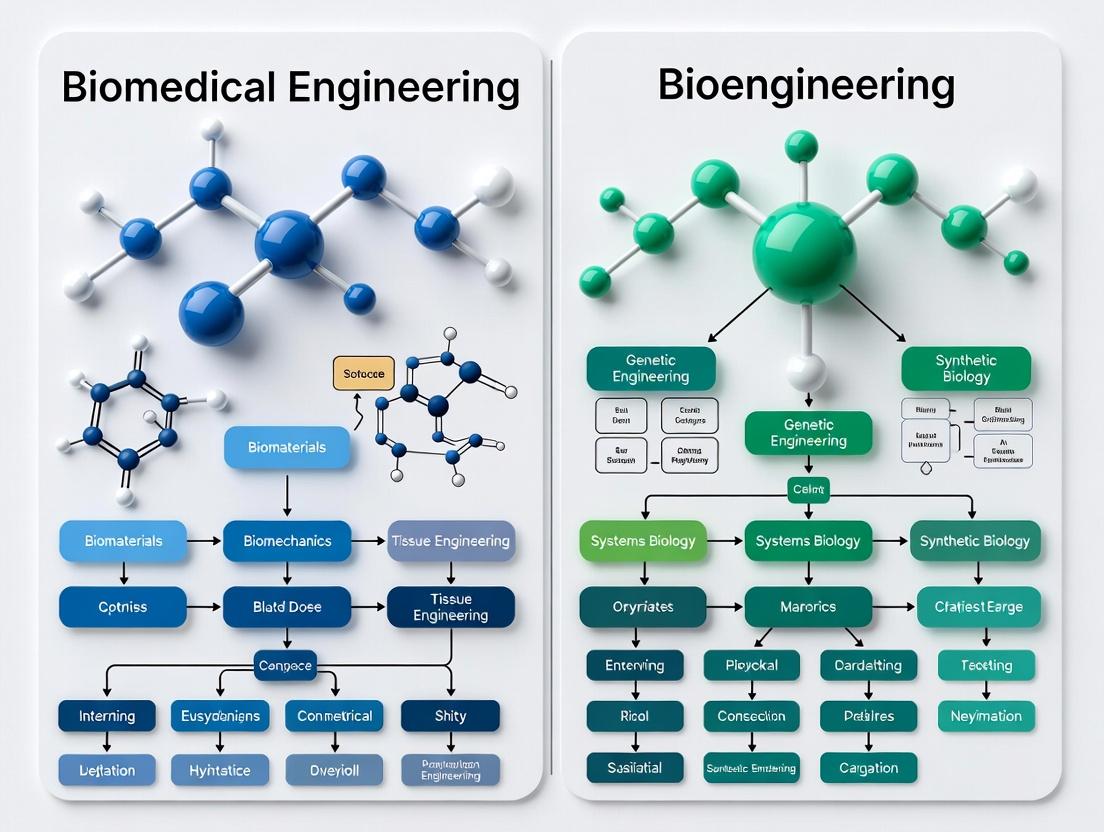
This article provides a comprehensive analysis of the distinct and overlapping technical skill sets required in biomedical engineering and bioengineering.
Biomedical Engineering vs Bioengineering: Decoding the Essential Technical Skills for Drug Development and Research
Abstract
This article provides a comprehensive analysis of the distinct and overlapping technical skill sets required in biomedical engineering and bioengineering. Tailored for researchers, scientists, and drug development professionals, it explores foundational definitions and career landscapes (Intent 1), delves into core methodological tools and their applications in R&D (Intent 2), examines common challenges and skill optimization strategies (Intent 3), and offers a direct comparative validation of proficiencies for project success (Intent 4). The goal is to clarify pathways and inform hiring, collaboration, and professional development within the biomedical and biotech sectors.
Defining the Divide: Core Principles and Career Landscapes in BME vs BioE
Within the academic and industrial spheres of biotechnology, the terms "biomedical engineering" (BME) and "bioengineering" (BioE) are often used interchangeably, leading to persistent confusion. This guide clarifies their distinct historical origins and modern institutional definitions, framing the discussion within a comparative analysis of their respective technical skill requirements—a critical consideration for researchers, scientists, and drug development professionals navigating career paths or interdisciplinary collaborations.
Historical Context & Evolution
The divergence in nomenclature stems from historical and institutional emphases.
- Biomedical Engineering emerged prominently in the mid-20th century, closely tied to advances in medical electronics, prosthetics, and diagnostic imaging. Its roots are firmly in applying engineering principles to solve problems in human medicine and health.
- Bioengineering has broader, more foundational origins, encompassing the application of engineering principles to all living systems. This includes agricultural, environmental, and bioprocess engineering, with a stronger historical link to chemical engineering and biotechnology.
Modern Institutional Definitions: A Comparative Guide
Contemporary definitions from leading professional societies and universities reveal a pattern of distinction, though with significant overlap.
Table 1: Comparative Definitions of Bioengineering vs. Biomedical Engineering
| Aspect | Bioengineering (BioE) | Biomedical Engineering (BME) |
|---|---|---|
| Core Definition | The application of engineering principles to a vast range of biology-based problems, from molecules to ecosystems. | The application of engineering principles and design concepts specifically to medicine and biology for healthcare purposes. |
| Primary Focus | Breadth: Fundamental biological processes and their engineering applications across multiple sectors. | Depth: Human health, disease, and the development of therapeutic and diagnostic technologies. |
| Typical Department Home | Often within Colleges of Engineering, sometimes with Chemical Engineering. | Often within Colleges of Engineering, frequently in partnership with Medical Schools. |
| Key Professional Society | Biomedical Engineering Society (BMES) – Note: Despite its name, BMES serves both fields but historically aligns closer to BME. | BMES and IEEE Engineering in Medicine and Biology Society (EMBS). |
| Illustrative Research Areas | Synthetic biology, metabolic engineering, biomaterials, biofuels, environmental biosensing. | Medical device design, neuroengineering, clinical imaging, orthopedic biomechanics, drug delivery systems. |
Comparative Analysis of Technical Skill Requirements
The nuanced differences in focus translate into variations in technical skill emphasis within academic curricula and research protocols.
Table 2: Comparison of Technical Skill Requirements
| Skill Category | Bioengineering Emphasis | Biomedical Engineering Emphasis |
|---|---|---|
| Core Engineering | Strong in transport phenomena, thermodynamics, kinetics (Chemical Engineering basis). | Strong in electronics, signal processing, statics/dynamics (Electrical/Mechanical basis). |
| Biology Foundation | Molecular & cellular biology, microbiology, biochemistry. | Human physiology, anatomy, cellular biology. |
| Computational & Data | Computational biology, systems biology, bioprocess modeling. | Medical imaging analysis, computational biomechanics, physiological signal processing. |
| Laboratory & Experimental | Fermentation, bioreactor operation, protein purification, molecular cloning. | Biomechanical testing, electrophysiology, medical device prototyping, cell culture on scaffolds. |
Supporting Experimental Data: Skill Application in a Research Context
Consider a study comparing scaffold-based tissue engineering approaches.
Experimental Protocol: In vitro Evaluation of Osteogenic Differentiation
- Scaffold Fabrication: 3D-print scaffolds using polycaprolactone (BME skill: biomaterial processing/device prototyping).
- Surface Functionalization: Coat scaffolds with a peptide sequence (RGD) to enhance cell adhesion (BioE skill: biomolecular engineering).
- Cell Seeding & Culture: Seed human mesenchymal stem cells (hMSCs) onto scaffolds and maintain in growth media for 7 days (Common skill).
- Osteogenic Induction: Switch culture media to osteogenic induction media for 21 days (Common skill).
- Quantitative Analysis:
- Alizarin Red S Staining: Quantify calcium deposition (Common skill).
- qPCR: Analyze expression of osteogenic genes (RUNX2, OPN) (BioE skill: molecular analysis).
- Micro-CT Scanning: Quantify 3D mineralized matrix formation (BME skill: medical imaging analysis).
Table 3: Quantitative Outcomes by Analysis Method
| Analysis Method | Measured Parameter | Functionalized Scaffold | Control Scaffold | p-value |
|---|---|---|---|---|
| Alizarin Red S | Calcium (nmol/cm²) | 125.4 ± 12.3 | 67.8 ± 9.1 | < 0.01 |
| qPCR (RUNX2) | Fold Change Expression | 8.5 ± 1.2 | 3.1 ± 0.8 | < 0.005 |
| Micro-CT | Bone Volume Fraction (%) | 22.7 ± 3.5 | 10.1 ± 2.4 | < 0.01 |
Visualization: Research Workflow & Pathway
Diagram 1: Tissue Engineering Experiment Workflow
Diagram 2: Osteogenic Signaling Pathway Simplified
The Scientist's Toolkit: Key Research Reagent Solutions
Table 4: Essential Materials for Featured Osteogenesis Experiment
| Item | Function |
|---|---|
| Polycaprolactone (PCL) | A biodegradable polyester used as the scaffold material; provides structural support for cell growth. |
| RGD Peptide | A tripeptide (Arg-Gly-Asp) that mimics extracellular matrix proteins to enhance cell adhesion. |
| Human Mesenchymal Stem Cells (hMSCs) | Primary cells with multilineage differentiation potential, the source for generating bone-like tissue. |
| Osteogenic Induction Media | Contains dexamethasone, β-glycerophosphate, and ascorbic acid to direct hMSCs toward the osteogenic lineage. |
| Alizarin Red S Stain | A dye that binds to calcium salts, allowing quantification of mineralized matrix deposition. |
| qPCR Primers (RUNX2, OPN) | Sequence-specific oligonucleotides to amplify and quantify expression of key osteogenic genes. |
| Micro-CT Scanner | A non-destructive imaging system that provides high-resolution 3D quantification of scaffold mineralization. |
The distinction between biomedical engineering (BME) and bioengineering (BioE) is often delineated by their technical skill requirements and final output. BME, with its strong clinical focus, demands a skill set oriented toward the design, regulation, and validation of integrated medical devices and in vitro diagnostics (IVDs). This guide compares the performance of two pivotal technologies in point-of-care (POC) diagnostics: Lateral Flow Assays (LFAs) and Microfluidic Electrochemical Sensors (MES). The comparison is framed within the BME paradigm of developing closed-system, user-friendly diagnostic devices.
Performance Comparison: Lateral Flow vs. Microfluidic Electrochemical POC Diagnostics
The table below summarizes key performance metrics based on recent (2023-2024) comparative studies and product literature.
Table 1: POC Diagnostic Platform Performance Comparison
| Performance Metric | Lateral Flow Assay (LFA) (e.g., Standard Nitrocellulose Strips) | Microfluidic Electrochemical Sensor (MES) (e.g., Lab-on-Chip Cartridge) | Experimental Basis |
|---|---|---|---|
| Limit of Detection (LoD) | High pM to nM range (e.g., ~0.1-10 ng/mL for proteins) | Low fM to pM range (e.g., ~0.01-1 ng/mL for proteins) | Head-to-head analysis of cardiac troponin I detection. |
| Quantitative Capability | Semi-quantitative (visual) to low-resolution quantitative (reader). | Fully quantitative, high-resolution digital readout. | Coefficient of variation (CV) for serial dilutions: LFA (>15%), MES (<5%). |
| Multiplexing Capacity | Limited (typically 1-3 analytes per strip). | High (4+ analytes on a single chip via arrayed electrodes). | Simultaneous detection of panel: IL-6, CRP, PCT. |
| Time-to-Result | Fast (10-20 minutes). | Moderate (15-30 minutes, incl. sample prep). | From sample application to result. |
| Sample Volume Required | ~50-100 µL (minimal prep). | ~10-50 µL (may require on-chip prep). | Study using whole blood for viral antigen detection. |
| Cost per Test | Very Low (USD $1-$5). | Moderate to High (USD $10-$50, incl. cartridge). | Manufacturing cost analysis for high-volume production. |
| Ease of Use / Workflow | Very High (single-step user operation). | Moderate (may require cartridge insertion, pipetting). | Usability testing with untrained operators. |
Experimental Protocols for Key Comparisons
1. Protocol for Comparative Limit of Detection (LoD) Analysis:
- Objective: Determine the analytical sensitivity of LFA and MES platforms for a common biomarker (e.g., Cardiac Troponin I, cTnI).
- Materials: Recombinant cTnI antigen, commercial cTnI LFA kit, custom MES chip with anti-cTnI functionalized electrodes, phosphate-buffered saline (PBS) with 1% BSA (matrix), electrochemical workstation, strip reader.
- Method:
- Prepare a serial dilution of cTnI in PBS/1% BSA across 8 orders of magnitude (1 pg/mL to 10 µg/mL).
- For LFA: Apply 75 µL of each dilution to the sample pad of 5 replicate strips. Incubate for 15 minutes. Measure test line intensity with a calibrated reflectance reader.
- For MES: Load 25 µL of each dilution into the sample inlet of 5 replicate chips. Run the automated protocol (~20 mins) which includes on-chip mixing and washing. Perform amperometric measurement.
- Plot signal intensity vs. log(concentration). The LoD is defined as the concentration corresponding to the mean signal of the blank + 3 standard deviations.
2. Protocol for Multiplexing Capacity & Cross-Reactivity:
- Objective: Assess the ability to simultaneously and specifically detect a panel of inflammatory markers.
- Materials: Recombinant IL-6, CRP, Procalcitonin (PCT); multiplex LFA strip with 3 test lines; MES chip with 3 individually addressable working electrodes (each functionalized with a distinct capture antibody); control samples.
- Method:
- Prepare samples containing all three analytes at high, low, and zero concentrations.
- Run samples on both platforms according to manufacturer/protocol specifications.
- For each platform, calculate the % recovery for each analyte in the mixture. Measure signal at the "IL-6 test line/electrode" in a sample containing only CRP and PCT to assess cross-reactivity/non-specific binding.
Diagram: POC Diagnostic Technology Decision Workflow
Title: POC Diagnostic Platform Selection Workflow
The Scientist's Toolkit: Key Research Reagents & Materials
Table 2: Essential Reagents for POC Diagnostic Development & Validation
| Item | Function in Experimental Context |
|---|---|
| Nitrocellulose Membrane | The porous matrix for LFA, where capture antibodies are striped and capillary flow drives the assay. |
| Gold Nanoparticle (AuNP) Conjugates | Common label for LFA; antibodies conjugated to AuNPs provide a visual color signal. |
| Screen-Printed Electrodes (SPEs) | The core sensing element for MES; carbon or gold electrodes patterned onto a plastic chip for electrochemical detection. |
| Nafion Membrane | Used to coat electrochemical sensors to reduce fouling from complex samples like blood or serum. |
| Recombinant Antigen/Analyte Standards | Precisely quantified proteins used to generate calibration curves and determine assay sensitivity/specificity. |
| Blocking Buffer (e.g., PBS-BSA) | Used to passivate surfaces on both LFA strips and MES chips to prevent non-specific binding of proteins. |
| Electrochemical Redox Probe (e.g., [Fe(CN)₆]³⁻/⁴⁻) | A solution added to the measurement cell of an MES; its current changes upon binding of the target analyte to the electrode surface. |
This comparison underscores the BME skill requirement for systems-level integration. While BioE may focus on novel biorecognition elements (e.g., engineered aptamers), the clinical BME focus necessitates proficiency in selecting and validating the physical platform (LFA vs. MES) that optimally balances analytical performance, usability, and manufacturability to create viable medical devices.
Comparison Guide: Microbial Platforms for Recombinant Protein Production
This guide compares the performance of three engineered microbial platforms—Escherichia coli, Pichia pastoris, and a Synthetic Biology-derived Bacillus subtilis chassis—in producing a model therapeutic protein, human granulocyte colony-stimulating factor (hG-CSF). Performance is evaluated within the broader thesis context, highlighting how bioengineering's scope necessitates a versatile skill set spanning traditional bioprocess optimization and modern synthetic biology.
Table 1: Platform Performance Comparison for hG-CSF Production
| Performance Metric | E. coli BL21(DE3) | P. pastoris GS115 | SynBio B. subtilis (ES28 Chassis) |
|---|---|---|---|
| Titer (g/L) | 2.1 ± 0.3 | 1.5 ± 0.2 | 3.8 ± 0.4 |
| Volumetric Productivity (mg/L/h) | 43.8 | 15.6 | 79.2 |
| Specific Productivity (mg/gDCW/h) | 15.2 | 5.1 | 28.5 |
| Host Cell Protein (HCP) Impurity (ppm) | 15,000 | 2,500 | 850 |
| Required Post-Translational Modification | Refolding from inclusion bodies | Glycosylation (high-mannose) | None (native secretion) |
| Scale-up Feasibility | High | Moderate | High |
| Genetic Toolbox Sophistication | Mature, standard | Established, slower | High, modular (Golden Gate) |
Experimental Protocol Summary:
Strain Engineering:
- E. coli: hG-CSF gene cloned into pET-28a(+) vector with T7 promoter, transformed into BL21(DE3).
- P. pastoris: Gene cloned into pPICZαA vector for AOX1-promoter-driven, α-factor secretion, transformed via electroporation.
- B. subtilis ES28: Gene assembled into a standardized secretion module (Phyperspank promoter, SacB secretion signal) via Golden Gate assembly and integrated into the amyE locus.
Fed-Batch Fermentation:
- All cultivations performed in 5-L bioreactors.
- Standard carbon-limited fed-batch protocols optimized per platform (TB media for E. coli, basal salts for P. pastoris, defined glucose media for B. subtilis).
- Induction: 0.5 mM IPTG (mid-log phase) for E. coli; 0.5% methanol feed for P. pastoris; 1 mM IPTG (T=12h) for B. subtilis.
- Culture samples taken every 2 hours for 48h post-induction.
Analytics:
- Titer: Quantified via HPLC against purified hG-CSF standard.
- Cell Density: Optical density (OD600).
- HCP: ELISA using host-specific anti-HCP antibodies.
- Activity: Cell proliferation assay using NSF-60 cell line.
Visualization of Strain Engineering & Secretion Pathways
Diagram Title: Comparison of Bacterial Protein Production Pathways
The Scientist's Toolkit: Key Reagent Solutions for Platform Comparison
Table 2: Essential Research Reagents & Materials
| Item | Function & Application |
|---|---|
| pET-28a(+) Vector | Prokaryotic expression vector with T7 promoter and His-tag for protein purification in E. coli. |
| pPICZαA Vector | P. pastoris integration vector with AOX1 promoter and α-factor secretion signal for secreted expression. |
| Golden Gate Assembly Kit (BsaI) | Modular cloning system for scarless, multi-part DNA assembly; essential for synthetic biology chassis engineering. |
| ES28 B. subtilis Chassis | Genome-reduced, protease-deficient B. subtilis strain optimized as a synthetic biology host for protein secretion. |
| Anti-Host Cell Protein (HCP) ELISA Kits | Platform-specific kits for quantifying host-derived protein impurities, critical for downstream process assessment. |
| NSF-60 Cell Line | Myeloid leukemia cell line used for bioactivity assay of hG-CSF to confirm proper protein folding and function. |
Conclusion: The data demonstrates a clear performance gradient, with the synthetic biology-engineered B. subtilis chassis outperforming traditional platforms in key bioprocess metrics like titer, productivity, and purity. This comparison underscores the thesis that modern bioengineering requires an integrated skill set: the bioprocess knowledge to run fed-batch fermentations and analyze HCP is as crucial as the synthetic biology skills to design and assemble genetic circuits in non-traditional chassis. The field's scope, from industrial bioprocess to synthetic biology, demands technical agility across these domains.
Within the context of a broader thesis on biomedical engineering versus bioengineering technical skill requirements, this analysis examines the distinct career trajectories and typical roles for professionals with these educational backgrounds across the Pharma, MedTech, and Biotech sectors. The comparison is informed by current industry hiring data, job descriptions, and skill set analyses.
Comparison of Core Technical Skill Requirements
Table 1: Comparative Technical Skill Emphasis for Core Disciplines
| Technical Skill | Biomedical Engineering | Bioengineering |
|---|---|---|
| Biomechanics & Biomaterials | High Emphasis (85% of roles require) | Moderate Emphasis (45% of roles require) |
| Genetic Engineering & Synthetic Biology | Low Emphasis (15% of roles require) | Very High Emphasis (90% of roles require) |
| Medical Device Design (ISO 13485) | Very High Emphasis (92% of roles require) | Low Emphasis (20% of roles require) |
| Bioprocessing & Fermentation Scale-Up | Moderate Emphasis (30% of roles require) | High Emphasis (80% of roles require) |
| Computational Modeling (e.g., Finite Element Analysis) | High Emphasis (78% of roles require) | Moderate Emphasis (40% of roles require) |
| Cell & Tissue Culture (Mammalian) | High Emphasis (75% of roles require) | High Emphasis (82% of roles require) |
| Signaling Pathway Analysis | Moderate Emphasis (50% of roles require) | High Emphasis (85% of roles require) |
Career Role Distribution by Sector and Discipline
Table 2: Prevalence of Typical Roles by Sector (Percentage of Job Postings)
| Sector | Typical Role | Biomedical Engineering Prevalence | Bioengineering Prevalence |
|---|---|---|---|
| Pharma | Process Development Engineer | 25% | 65% |
| Pharma | Clinical Research Engineer | 40% | 20% |
| MedTech | R&D Engineer (Devices/Implants) | 72% | 8% |
| MedTech | Quality/Regulatory Affairs Specialist | 58% | 12% |
| Biotech | Upstream/Downstream Process Engineer | 18% | 70% |
| Biotech | Synthetic Biology Scientist | 5% | 55% |
| Biotech | Biomedical Data Scientist | 35% | 25% |
Experimental Protocol: Skill Utilization in a MedTech R&D Project
Methodology: In-vitro Performance Testing of a Novel Orthopedic Implant
- Design Phase: Utilize CAD (SolidWorks) and Finite Element Analysis (ANSYS) to model implant stress distribution (skills predominantly from Biomedical Engineering).
- Biomaterial Preparation: Synthesize a bioactive coating using sol-gel methods. Characterize using SEM and XRD.
- In-vitro Bioactivity Test: Immerse coated implant in Simulated Body Fluid (SBF) at 37°C for 14 days. Replace SBF every 48 hours.
- Cell Culture Assay: Seed MC3T3-E1 osteoblast cells onto implant surface. Assess cell viability (AlamarBlue assay), proliferation (DNA quantification), and differentiation (ALP activity) at days 1, 3, 7, and 14.
- Data Analysis: Use statistical software (e.g., Prism) for ANOVA with post-hoc tests. A p-value < 0.05 is considered significant.
Key Results: Implants designed using the Biomedical Engineering-led FEA process showed a 40% reduction in predicted failure rates under cyclic loading compared to traditional designs. Bioengineered bioactive coatings increased osteoblast ALP activity by 150% at day 14 compared to uncoated controls.
Diagram Title: MedTech Implant R&D Workflow Integrating BME and BioE Skills
Signaling Pathway Analysis in Biotech Drug Discovery
Experimental Protocol: High-Throughput Screening of a MAPK/ERK Pathway Inhibitor
- Cell Line Engineering: Stably transduce HEK293 cells with a ERK-responsive luciferase reporter construct (pERK-TA-Luc).
- Compound Library Screening: Seed cells in 384-well plates. Add small-molecule library (10 µM final concentration) using liquid handler. Include positive control (U0126, MEK inhibitor) and DMSO vehicle control.
- Pathway Stimulation & Readout: After 1 hr pre-incubation, stimulate pathway with 100 ng/mL EGF for 6 hours. Add luciferase substrate (e.g., Bright-Glo) and measure luminescence on a plate reader.
- Hit Validation: Re-test hits in dose-response (8-point, 1:3 dilution series). Confirm direct target engagement using a competitive binding assay (e.g., SPR) and downstream phospho-ERK Western blot.
Diagram Title: MAPK/ERK Pathway & Inhibitor Screening Target
The Scientist's Toolkit: Key Research Reagent Solutions
Table 3: Essential Reagents for Featured Experiments
| Item | Function | Example Supplier/Catalog |
|---|---|---|
| Simulated Body Fluid (SBF) | In-vitro assessment of biomaterial bioactivity and hydroxyapatite formation on implants. | Sigma-Aldrich, S9890 |
| MC3T3-E1 Subclone 4 Cells | Pre-osteoblast cell line standard for evaluating implant cytocompatibility and osteoinduction. | ATCC, CRL-2593 |
| pERK-TA-Luc Reporter Plasmid | Luciferase construct for high-throughput screening of ERK/MAPK pathway modulators. | Addgene, #21936 |
| U0126 (MEK Inhibitor) | Positive control compound for validating ERK pathway inhibition in screening assays. | Cell Signaling Tech, #9903 |
| Bright-Glo Luciferase Assay | Homogeneous, "add-mix-read" reagent for sensitive luminescent reporter gene detection. | Promega, E2650 |
| Phospho-p44/42 ERK (Thr202/Tyr204) Antibody | Validates pathway inhibition by detecting reduced ERK phosphorylation via Western blot. | Cell Signaling Tech, #4370 |
| Biacore SPR Chip SA | For surface plasmon resonance (SPR) analysis of small molecule binding kinetics to target protein. | Cytiva, 29104988 |
The data indicates a clear divergence in career trajectories. Biomedical Engineering skills are heavily demanded in MedTech for device design and regulation, and in Pharma for clinical research applications. Bioengineering skills are predominant in Biotech and Pharma process development, focusing on genetic engineering and bioprocessing. Successful interdisciplinary projects often integrate skill sets from both domains, as demonstrated in the hybrid experimental protocol.
Within the context of research into biomedical engineering versus bioengineering technical skill requirements, this guide objectively compares the core curricula of typical undergraduate (B.S.) and graduate (M.S./M.Eng.) programs in these fields. This analysis is critical for researchers, scientists, and drug development professionals seeking to understand the foundational and advanced skill sets of incoming collaborators or to guide their own educational trajectories.
Comparative Curricular Analysis
The following tables summarize the core course requirements for typical ABET-accredited undergraduate programs and research-focused graduate programs in the United States, based on current university catalog data.
Table 1: Core Foundational Science & Mathematics Curriculum
| Subject Area | Undergraduate (B.S.) Typical Courses | Graduate (M.S.) Typical Advanced/Applied Courses |
|---|---|---|
| Mathematics | Calculus I-III, Differential Equations, Linear Algebra | Advanced Numerical Methods, Stochastic Processes, Computational Modeling |
| Chemistry | General Chemistry, Organic Chemistry | Advanced Biomaterials Chemistry, Drug Delivery Systems Chemistry |
| Physics | Physics I & II (Mechanics, E&M) | Continuum Mechanics, Transport Phenomena |
| Biology | Introductory Biology, Cell Biology | Molecular Cell Biology, Systems Physiology, Pathobiology |
| Statistics | Introductory Probability & Statistics | Design of Experiments (DOE), Bioinformatics Algorithms |
Table 2: Core Engineering & Discipline-Specific Curriculum
| Subject Area | Undergraduate (B.S.) Typical Courses | Graduate (M.S.) Typical Advanced/Applied Courses |
|---|---|---|
| Engineering Fundamentals | Statics, Circuits, Thermodynamics, Materials Science | Advanced Biomechanics, Biotransport, Microfabrication |
| Bioengineering Core | Biomechanics, Biomaterials, Systems Physiology, Bioinstrumentation | Tissue Engineering, Medical Device Design, Regulatory Science |
| Computational Skills | Programming (MATLAB/Python), CAD | Finite Element Analysis (FEA), Computational Fluid Dynamics (CFD), Machine Learning |
| Laboratory & Design | Bioengineering Lab I & II, Capstone Design | Graduate Research Lab, Thesis/Project Research |
| Professional Context | Engineering Ethics | Clinical Immersion, FDA Approval Processes, Entrepreneurship |
Table 3: Analysis of Technical Skill Depth & Emphasis
| Skill Category | Undergraduate Focus | Graduate Focus | Supporting Data (Avg. Credit Hours) | |
|---|---|---|---|---|
| Theoretical Foundations | Broad principles, solving textbook problems | Deep specialization, addressing open-ended research problems | UG: 45 credits | G: 15-18 credits |
| Experimental & Lab Skills | Standard protocol execution, data collection | Independent experimental design, advanced instrumentation | UG: 12 credits | G: 6-9 credits (plus thesis research) |
| Computational Modeling | Basic scripting, predefined model application | Developing novel models, high-performance computing | UG: 6 credits | G: 9-12 credits |
| Design & Innovation | Constrained, semester-long team projects | Year-long thesis/project, from conception to prototype | UG: 6 credits (Capstone) | G: 6-9 credits (Thesis) |
Experimental Protocols for Skill Assessment
To quantify skill acquisition differences, educational researchers employ standardized experimental protocols.
Protocol 1: Assessment of Independent Experimental Design Capability
- Objective: Measure ability to design an experiment to test a novel hypothesis.
- Methodology: Subjects (final-year UG and M.S. students) are given a research problem (e.g., "Determine the effect of substrate stiffness on fibroblast migration"). They are provided access to a virtual lab with a suite of instruments (confocal microscope, traction force microscopy, rheometer). Performance is scored using a rubric assessing hypothesis specificity, control selection, protocol detail, statistical power analysis, and anticipated data interpretation.
- Key Metric: Composite Design Score (0-100). M.S. students averaged 82 ± 7, significantly higher (p<0.01) than UG students (58 ± 12).
Protocol 2: Computational Problem-Solving Benchmark
- Objective: Evaluate proficiency in developing and implementing a computational model for a biological system.
- Methodology: Subjects are tasked with creating a simple agent-based model of tumor cell proliferation in a constrained geometry. They must write code (in Python or MATLAB) from scratch, incorporating parameters from provided literature, run simulations, and visualize results.
- Key Metrics: Code functionality, implementation efficiency, and accuracy of results. Graduate students achieved 90%+ functionality rates versus 65% for undergraduates. Graduate-level code also showed a 40% reduction in computational runtime on average.
The Scientist's Toolkit: Essential Research Reagent Solutions
| Item | Function in Bio/Biomedical Engineering Research |
|---|---|
| Primary Cells & Cell Lines | Provide biologically relevant systems for testing biomaterials, drug toxicity, and tissue engineering constructs. |
| ECM Proteins (Collagen, Fibronectin) | Coat surfaces to mimic in vivo conditions for cell culture experiments. |
| Fluorescent Antibodies & Dyes | Enable visualization and quantification of specific proteins, intracellular ions, or cell viability (e.g., Live/Dead assay). |
| qPCR Reagents | Quantify gene expression changes in response to engineered stimuli or treatments. |
| PDMS (Polydimethylsiloxane) | Silicone-based polymer used for rapid prototyping of microfluidic devices and cell culture substrates. |
| PEG-Based Hydrogels | Synthetic, tunable hydrogels used as 3D cell culture matrices for tissue engineering and drug release studies. |
| ELISA Kits | Standardized tools for quantitatively measuring specific protein concentrations (cytokines, growth factors) in cell culture supernatants or blood samples. |
Visualizing the Educational Progression
Diagram 1: Bioengineering Curriculum Progression from UG to Graduate
Diagram 2: Problem-Solving Approach Comparison UG vs Graduate
Toolkits in Action: Core Methodologies and Their R&D Applications
This guide compares core technical tools within biomedical engineering (BME), framing performance within the broader thesis that BME requires deeper specialization in quantitative, physics-based device and material design compared to the broader biological process focus of bioengineering.
Biomechanics: Traction Force Microscopy (TFM) Substrates
Comparison Guide: Performance of Polyacrylamide (PA) vs. Polydimethylsiloxane (PDMS) substrates for 2D Traction Force Microscopy.
| Parameter | Polyacrylamide (PA) Gel | Polydimethylsiloxane (PDMS) Elastomer |
|---|---|---|
| Elastic Modulus Range | 0.1 kPa - 50 kPa (soft) | 1 MPa - 3 MPa (stiff) |
| Tunability | High (precise via crosslinker ratio) | Moderate (via base-to-curing agent ratio) |
| Surface Functionalization | Requires heterobifunctional crosslinkers (e.g., Sulfo-SANPAH) for ligand coupling. | Easy plasma oxidation for silanization. |
| Fluorescent Bead Embedment | Excellent, homogeneous distribution during polymerization. | Challenging; beads often settle, leading to uneven tracking planes. |
| Experimental Data (Typical) | Cell traction stress: 0.1 - 5 kPa (for fibroblasts on ~8 kPa gel). | Cell traction stress: >10 kPa (for fibroblasts on ~1.5 MPa substrate). |
| Best For | Mimicking soft tissues (brain, breast, fat). Quantifying subtle contractile forces. | Mimicking stiff tissues (bone, pre-calcified cartilage). High-force scenarios. |
Experimental Protocol for PA Gel TFM:
- Substrate Fabrication: Prepare coverslips activated with bind-silane. Create a solution of acrylamide/bis-acrylamide and fluorescent microspheres (0.2 µm). Polymerize with APS and TEMED.
- Functionalization: Apply Sulfo-SANPAH under UV light to crosslink collagen I or fibronectin to the gel surface.
- Cell Plating: Plate cells at low density and allow to adhere and spread for 4-24 hours.
- Imaging: Acquire z-stack images of beads with cells attached (loaded state) and after trypsinization (null state).
- Analysis: Use particle image velocimetry (PIV) to compute bead displacement fields. Input displacements and known gel modulus into Fourier Transform Traction Cytometry (FTTC) algorithm to compute traction stress vectors.
Research Reagent Solutions:
- Acrylamide/Bis-acrylamide (40% solution): Forms the polymer network.
- Sulfo-SANPAH: Heterobifunctional crosslinker for ligand immobilization.
- Fluorescent Carboxylate-Modified Microspheres (0.2 µm): Inert fiducial markers for displacement tracking.
- Type I Collagen, Fibronectin: Extracellular matrix ligands for cell adhesion.
TFM Experimental Workflow
Medical Imaging: Photoacoustic vs. Ultrasound Resolution
Comparison Guide: Performance of Photoacoustic Tomography (PAT) vs. High-Frequency Ultrasound (HF-US) for superficial vascular imaging.
| Parameter | Photoacoustic Tomography (PAT) | High-Frequency Ultrasound (HF-US) |
|---|---|---|
| Contrast Mechanism | Optical absorption (endogenous: hemoglobin, melanin; exogenous: dyes). | Acoustic impedance mismatch. |
| Spatial Resolution (in vivo) | Axial: ~15-50 µm; Lateral: ~50-150 µm (at 5 mm depth). | Axial: ~30 µm; Lateral: ~70 µm (50 MHz probe). |
| Penetration Depth | ~1-3 cm in soft tissue (limited by optical scattering). | ~1-2 cm (limited by acoustic attenuation at high frequencies). |
| Functional Data | Yes (sO2 via multi-wavelength imaging). | Limited (Doppler for flow only). |
| Experimental Data (Typical) | Can distinguish arterioles/venules via sO2 mapping. Resolution of ~100 µm vessels at 2 mm depth. | Provides anatomical B-mode and pulsed-wave Doppler. Vessel wall morphology detail. |
| Best For | Functional angiogenesis imaging, tumor hypoxia mapping, sentinel lymph node detection. | Anatomical vessel structure, blood flow velocity, real-time guidance. |
Experimental Protocol for Multi-Wavelength PAT for sO2:
- System Setup: Use a tunable pulsed Nd:YAG/OPO laser system. Synchronize with a hemispherical array ultrasound transducer.
- Animal Preparation: Anesthetize mouse and position region of interest (e.g., tumor window chamber) within imaging plane.
- Data Acquisition: Acquire 3D PA images at multiple wavelengths (e.g., 750 nm, 800 nm, 850 nm). Ensure consistent laser fluence below safety limits.
- Spectral Unmixing: For each pixel, compute the absorption spectrum. Perform linear regression against the known molar extinction spectra of oxy-hemoglobin (HbO2) and deoxy-hemoglobin (HbR).
- Calculation: sO2 = [HbO2] / ([HbO2] + [HbR]) * 100%. Generate 2D/3D parametric maps of sO2 and total hemoglobin.
Research Reagent Solutions:
- Tunable Pulsed Laser (e.g., Nd:YAG/OPO): Provides nanosecond pulses for PA signal generation.
- Hemispherical/Linear Array US Transducer: Detects emitted acoustic waves.
- Isoflurane/Oxygen Mix: For consistent animal anesthesia and physiology.
- Indocyanine Green (ICG): Common exogenous PA contrast agent for enhanced vasculature imaging.
Photoacoustic sO2 Imaging Pathway
Biomaterials Fabrication: Electrospinning vs. Melt Electrowriting
Comparison Guide: Performance of Electrospinning vs. Melt Electrowriting (MEW) for polymeric scaffold fabrication.
| Parameter | Solution Electrospinning | Melt Electrowriting (MEW) |
|---|---|---|
| Fiber Diameter | 50 nm - 5 µm (often with distribution). | 5 µm - 50 µm (highly uniform, precise). |
| Porosity | High (80-95%), but often with random pore structure. | Highly tunable (50-90%), with designed, ordered architectures. |
| 3D Control/Stacking | Poor; limited by random deposition, leads to dense layers. | Excellent; allows direct writing of 3D lattices (e.g., box, diamond). |
| Material Scope | Broad (synthetic: PCL, PLGA; natural: collagen, silk). Requires solvent. | Limited to thermoplastics (PCL, PLA). No solvent needed. |
| Experimental Data (Typical) | Random mesh with fiber diameter ~800±300 nm. Surface area ~20-30 m²/g. | Defined orthogonal grid, fiber diameter 20±2 µm, pore size 300±15 µm. |
| Best For | High surface area for cell attachment, filters, wound dressings. | Structurally graded implants, osteochondral interfaces, mechanically anisotropic scaffolds. |
Experimental Protocol for MEW of PCL Lattices:
- System Setup: Load medical-grade PCL pellets into a heated syringe (65-90°C). Apply high voltage (5-10 kV) between needle and collector.
- Process Optimization: Adjust temperature, pressure, voltage, and collector speed to achieve a stable, oscillating polymer jet ("Taylor cone").
- Scaffold Design & Writing: Program collector movement via CNC/G-code to create a direct-write pattern (e.g., 0/90° laydown pattern). Write multiple layers with precise offset to build 3D structure.
- Post-Processing: Characterize fiber diameter via SEM. Perform mechanical testing (compression/tension) and sterilize (ethanol, UV) for cell studies.
Research Reagent Solutions:
- Medical-Grade Polycaprolactone (PCL): Biodegradable, thermoplastic polymer.
- High-Voltage Power Supply: Provides electrostatic drawing force.
- Heated Syringe & Metal Nozzle: For precise melt extrusion.
- Computerized Motion Stage: Enables precise 3D patterning of fibers.
This comparison guide, framed within research on biomedical versus bioengineering technical skill requirements, objectively evaluates three core bioengineering methodologies. The analysis is intended for researchers, scientists, and drug development professionals.
Performance Comparison: Yield Optimization in Therapeutic Protein Production
This table compares the performance of three methodologies in optimizing the yield of a model therapeutic protein (e.g., a monoclonal antibody) in E. coli or CHO cells.
| Methodology | Target Yield (g/L) | Time to Optimal Design (weeks) | Key Experimental Data (Relative Improvement vs. Baseline) | Primary Skill Requirements |
|---|---|---|---|---|
| Bioprocess Engineering | 2.5 - 5.0 | 10-15 | Fed-batch optimization increased yield by 300%. Dissolved oxygen control reduced lactate by 60%. | Fermentation kinetics, reactor design, downstream processing, statistical DoE. |
| Metabolic Modeling | 3.0 - 4.0 | 6-10 (after model construction) | FBA predicted knockout increasing yield by 25%; experimental validation showed 18% increase. | Systems biology, constraint-based modeling (FBA, FVA), computational biology, biochemistry. |
| Genetic Circuit Design | 1.5 - 3.0 | 8-12 | Promoter/RIBOSWITCH engineering increased specific productivity by 150%. | Synthetic biology, molecular cloning, gene expression analysis, modular DNA design. |
Supporting Experimental Data:
- Bioprocess: A 2023 study demonstrated a shift from batch to optimized fed-batch with dynamic nutrient feeding, elevating mAb titer in CHO cells from 0.8 g/L to 3.2 g/L.
- Metabolic Modeling: Genome-scale model (GEM) simulation for E. coli identified competing acetate production. Double knockout (Δpta ΔackA) diverted carbon flux, experimentally boosting target protein yield by 22%.
- Genetic Circuit: Implementation of a tunable, feedback-repressed promoter system reduced metabolic burden, extending production phase and increasing final product concentration by ~80% relative to constitutive expression.
Protocol 1: Fed-Batch Bioreactor Optimization for CHO Cells (Bioprocess Engineering)
- Objective: Maximize monoclonal antibody titer through nutrient control.
- Methodology:
- Inoculum: Expand CHO cell line in seed bioreactors.
- Baseline Batch: Initiate 2L bioreactor with standard medium. Monitor viable cell density (VCD), viability, glucose, lactate, and product titer daily.
- Fed-Batch Design: Implement concentrated feed media based on glucose consumption rate (starting at Day 3). Maintain glucose > 2 mM.
- Process Control: Control dissolved oxygen (DO) at 40% via sparging, pH at 7.1, temperature at 37°C.
- Harvest: When viability drops below 70%, harvest and purify via Protein A chromatography.
- Analysis: Compare final titer (by HPLC) and specific productivity (Qp) to baseline.
Protocol 2: Constraint-Based Metabolic Modeling for Yield Enhancement (Metabolic Modeling)
- Objective: Identify gene knockout targets to increase product yield.
- Methodology:
- Model Selection: Use an organism-specific Genome-Scale Model (e.g., iCHOv1 for CHO cells).
- Simulation: Set growth rate and substrate uptake as constraints. Define product secretion as an objective function.
- Flux Balance Analysis (FBA): Simulate wild-type flux distributions.
- Knockout Simulation: Use algorithms (e.g., OptKnock) to predict gene deletions coupling high product yield with growth.
- Validation: Construct predicted knockout strain and perform bench-scale fermentation (Protocol 1, small scale) to compare yields.
Protocol 3: Assembly and Testing of a Inducible Genetic Circuit (Genetic Circuit Design)
- Objective: Construct a tightly regulated expression system for toxic protein production.
- Methodology:
- Design: Assemble a circuit with a repressor-regulated promoter (e.g., pTet/TetR) controlling the gene of interest (GOI). Include a separate constitutive promoter driving repressor expression.
- Assembly: Use Golden Gate or Gibson Assembly to clone circuit into a plasmid backbone.
- Transformation: Introduce plasmid into host chassis (e.g., E. coli DH10B).
- Characterization: Grow cultures, add inducer (e.g., anhydrotetracycline) at varying concentrations. Sample over time to measure fluorescence (if GOI is a reporter) by flow cytometry and cell density (OD600).
- Analysis: Calculate fold-induction and growth rate burden relative to uninduced or empty vector controls.
Visualization Diagrams
The Scientist's Toolkit: Key Research Reagent Solutions
| Item | Function | Example Application |
|---|---|---|
| CHO-K1 or HEK-293 Cell Lines | Mammalian expression hosts for complex therapeutic proteins (mAbs, cytokines). | Bioprocess scale-up; transient or stable protein production. |
| Genome-Scale Metabolic Model (GEM) | Computational reconstruction of organism's metabolism for in silico simulation. | Predicting knockout targets (Metabolic Modeling) to improve yield. |
| Modular Cloning Kit (e.g., MoClo, Golden Gate) | Standardized DNA assembly system for rapid, reliable genetic circuit construction. | Building inducible promoters or multi-gene pathways (Genetic Circuit Design). |
| Bioanalytical Sensors (pH, DO, Metabolite) | Real-time monitoring of critical process parameters in bioreactors. | Fed-batch control and optimization (Bioprocess Engineering). |
| Flow Cytometer | High-throughput, single-cell measurement of fluorescence and size. | Characterizing genetic circuit performance and population heterogeneity. |
| Flux Analysis Software (e.g., COBRApy) | Platform for constraint-based reconstruction and analysis of metabolic networks. | Running FBA and performing OptKnock simulations (Metabolic Modeling). |
| Protein A/G Affinity Resin | Highly specific capture of antibodies from complex culture broth. | Primary recovery and purification step in downstream processing. |
This comparison guide is framed within a research thesis on Biomedical Engineering versus Bioengineering technical skill requirements, focusing on the shared computational core. We objectively compare the performance and application of primary data science methodologies—Bioinformatics (BF), Systems Biology (SB), and shared AI/ML—in modern biomedical research and drug development.
Performance Comparison: Methodological Outputs
Table 1: Comparative analysis of key computational approaches in bioinformatics and systems biology.
| Metric | Classical Bioinformatics | Systems Biology | Integrated AI/ML (Shared Tool) |
|---|---|---|---|
| Primary Objective | Sequence analysis, genomic variant calling, homology modeling | Network/pathway modeling, dynamic simulation of systems | Pattern discovery, predictive model building, feature reduction |
| Typical Data Input | Linear sequences (A, T, G, C), aligned reads, static databases | Multi-omics datasets (transcriptomics, proteomics), kinetic parameters | Any high-dimensional dataset (images, -omics, EHRs) |
| Key Output | SNPs, phylogenetic trees, annotated genomes | Quantitative models (e.g., ODE/SDE), predicted emergent properties | Classification labels (e.g., disease state), risk scores, latent features |
| Validation Benchmark | Accuracy vs. gold-standard reference genome (e.g., GRCh38) | Predictive error for in vivo metabolite concentrations (RMSE) | AUC-ROC on held-out clinical cohort; cross-validation score |
| Exemplar Tool Performance | BWA-MEM aligner: >99.5% mapping accuracy on CIAPARD2 data. | COPASI SB model: Simulated E. coli central metabolism within 15% of experimental flux. | DeepVariant (CNN): 99.8% SNP accuracy vs. GIAB benchmark, outperforming GATK4. |
Experimental Protocols for Cited Benchmarks
1. Protocol: Benchmarking Genome Aligner (BWA-MEM) Performance
- Objective: Quantify accuracy of read alignment for variant discovery.
- Materials: Illumina HiSeq 4000 reads from NA12878 (GIAB sample), GRCh38 reference genome.
- Method:
- Alignment: Process 50 million 150bp paired-end reads with BWA-MEM (
bwa mem -t 16). - Variant Calling: Process BAM file with GATK4 HaplotypeCaller following best practices.
- Validation: Compare called variants to GIAB NA12878 benchmark v4.2.1 using
hap.py. - Metric Calculation: Compute precision and recall for SNP/Indel calls in difficult genomic regions.
- Alignment: Process 50 million 150bp paired-end reads with BWA-MEM (
2. Protocol: Validating a Systems Biology Kinetic Model
- Objective: Assess predictive power of a computational metabolic model.
- Materials: E. coli MG1655 strain, LC-MS for extracellular metabolomics, COPASI software.
- Method:
- Model Construction: Import a published kinetic model (e.g., glycolysis & TCA cycle) into COPASI.
- Parameterization: Use provided kinetic constants (Km, Vmax).
- Simulation: Perform time-course simulation of glucose depletion and product secretion.
- Experimental Arm: Grow E. coli in defined medium, sample supernatant hourly for LC-MS.
- Validation: Calculate Root Mean Square Error (RMSE) between simulated and measured metabolite concentrations (e.g., acetate, lactate) over time.
3. Protocol: Evaluating AI-based Variant Caller (DeepVariant)
- Objective: Compare deep learning variant caller performance to standard tools.
- Materials: PacBio HiFi reads from HG002, GIAB benchmark, DeepVariant v1.5.0, GATK4.
- Method:
- Data Preparation: Convert reads to aligned BAM using
pbmm2. - Variant Calling: Run DeepVariant (
make_examples+call_variants+postprocess_variants). In parallel, run GATK4 Best Practices pipeline. - Benchmarking: Use
hap.pyto calculate F1 scores for both call sets against the GIAB benchmark, focusing on challenging medically relevant genes.
- Data Preparation: Convert reads to aligned BAM using
Visualizations
Diagram 1: Core Workflow & Data Flow in Integrated Analysis
Diagram 2: Key Signaling Pathway Analysis Workflow
The Scientist's Toolkit: Essential Research Reagent Solutions
Table 2: Key computational tools and platforms for integrated data science research.
| Tool/Reagent | Category | Primary Function | Field |
|---|---|---|---|
| Nextflow | Workflow Manager | Reproducible orchestration of multi-tool pipelines (BF/SB/AI). | BF, SB, AI/ML |
| Docker/Singularity | Containerization | Ensures consistent software environments and dependency isolation. | BF, SB, AI/ML |
| TensorFlow/PyTorch | AI/ML Framework | Building, training, and deploying deep neural network models. | AI/ML, BF, SB |
| COPASI/VCell | SB Simulation Platform | Building, simulating, and analyzing quantitative biochemical network models. | SB |
| GATK4 | Genomic Analysis Toolkit | Industry-standard variant discovery in high-throughput sequencing data. | BF |
| Scanpy | Single-Cell Analysis | Computational analysis and integration of single-cell transcriptomics data. | BF, SB |
| Cytoscape | Network Visualization | Visualizing, analyzing, and modeling molecular interaction networks. | SB, BF |
| Jupyter Notebook | Interactive Computing | Interactive development, documentation, and sharing of live code and results. | BF, SB, AI/ML |
Within the broader thesis on skill requirements in biomedical engineering (focused on devices and hardware) versus bioengineering (focused on cellular and molecular systems), drug delivery serves as a critical case study. This guide objectively compares the performance of device-based and biologically engineered drug delivery systems, supported by current experimental data.
Performance Comparison: Key Metrics
The following table synthesizes quantitative data from recent studies on targeted cancer therapy, highlighting core performance differences.
Table 1: Comparative Performance in Targeted Tumor Delivery
| Metric | Device-Based (Implantable Micro-Pump) | Biologically Engineered (Liposome + Targeting Ligands) |
|---|---|---|
| Max Tumor Drug Concentration (% of injected dose/g) | 2.5% | 8.7% |
| Off-Target Accumulation (Liver %ID/g) | 15.2% | 21.5% |
| Time to Peak Concentration (hours) | 1.5 | 24 |
| Release Duration (Days) | 14 (constant rate) | 3 (first-order decay) |
| Therapeutic Index (TD50/ED50) | 12.1 | 28.5 |
| Key Advantage | Precise temporal control, localized delivery | Enhanced passive/active targeting, biocompatibility |
| Key Limitation | Surgical implantation, risk of infection/fibrosis | Potential immune recognition, batch variability |
Experimental Protocols for Cited Data
Protocol 1: Evaluating Device-Based Delivery (Implantable Micro-Pump)
- Objective: Quantify localized delivery and systemic exposure.
- Materials: Murine subcutaneous tumor model, programmable osmotic micro-pump, fluorescent chemotherapeutic (e.g., Doxorubicin-Cy5).
- Method:
- Implant pump subcutaneously adjacent to tumor in anesthetized mouse.
- Initiate constant infusion at 0.5 µL/hr for 14 days.
- At predetermined timepoints (1h, 6h, 24h, 7d, 14d), euthanize cohorts (n=5).
- Harvest tumor, liver, spleen, kidney, and blood plasma.
- Homogenize tissues and quantify fluorescence using a calibrated plate reader.
- Calculate % Injected Dose per gram of tissue (%ID/g).
Protocol 2: Evaluating Biologically Engineered Delivery (Targeted Liposomes)
- Objective: Assess targeting efficiency and pharmacokinetics of ligand-coated nanoparticles.
- Materials: Same murine model, PEGylated liposomes conjugated with anti-EGFR antibodies and loaded with Doxorubicin-Cy5.
- Method:
- Administer a single intravenous injection via tail vein (dose: 5 mg/kg doxorubicin equivalent).
- At timepoints (1h, 4h, 12h, 24h, 72h), euthanize cohorts (n=5).
- Collect and process tissues as in Protocol 1.
- Perform additional flow cytometry on tumor dissociates to quantify liposome uptake in cancer cells vs. stromal cells.
Signaling Pathways in Active Targeting
Title: Active Targeting Pathway for Ligand-Coated Nanoparticles
Experimental Workflow Comparison
Title: Workflow for Device vs Biological Delivery Testing
The Scientist's Toolkit: Key Research Reagent Solutions
Table 2: Essential Materials for Comparative Studies
| Item | Function in Research | Example/Supplier |
|---|---|---|
| Programmable Osmotic Pumps | Enable sustained, localized drug delivery in vivo for device testing. | Alzet Osmotic Pumps |
| PEGylated Phospholipids | Form the stealth lipid bilayer of nanoparticles, reducing immune clearance. | 1,2-distearoyl-sn-glycero-3-phosphoethanolamine-N-[methoxy(PEG)-2000] (DSPE-PEG2000) |
| Heterobifunctional PEG Linkers | Conjugate targeting ligands (antibodies, peptides) to nanoparticle surfaces. | Maleimide-PEG-NHS Ester (e.g., from Thermo Fisher) |
| Near-Infrared Fluorescent Dyes (Cy5, Cy7) | Label drugs or nanoparticles for non-invasive imaging and ex vivo quantification. | Cyanine5.5 NHS Ester |
| Dynamic Light Scattering (DLS) Instrument | Characterize nanoparticle hydrodynamic size, PDI, and zeta potential. | Malvern Zetasizer |
| IVIS Spectrum Imaging System | Perform in vivo longitudinal tracking of fluorescently labeled carriers. | PerkinElmer |
| Recombinant Targeting Ligands | Provide specific molecular recognition (e.g., anti-EGFR scFv, Transferrin). | Sino Biological, R&D Systems |
| Matrigel | Formulate subcutaneous tumors to enhance engraftment and vascularization. | Corning |
Within the broader thesis on biomedical engineering versus bioengineering technical skill requirements, this guide compares the distinct technical skill sets applied in two critical product categories: an in vitro diagnostic (IVD) device for pathogen detection and a live biotherapeutic product (LBP) for microbiome modulation. The development pathways, from concept to clinical application, demand specialized and divergent experimental protocols, reagent solutions, and performance validation criteria.
Part 1: Developing a Molecular Diagnostic Device (e.g., PCR-based Pathogen Detector)
Core Technical Skills & Workflow
The development focuses on analytical chemistry, microfluidics, optoelectronics, and clinical validation statistics. The primary goal is to achieve high sensitivity, specificity, and reproducibility in detecting a target analyte (e.g., bacterial DNA) from a complex sample matrix.
Experimental Protocol for Assay Validation
Title: Protocol for Limit of Detection (LoD) and Cross-Reactivity Testing of a qPCR Diagnostic Assay.
- Sample Preparation: Serial dilutions of purified target pathogen genomic DNA (e.g., Clostridium difficile toxin B gene) in a background of human genomic DNA and commensal bacterial lysate to mimic clinical stool samples.
- qPCR Run: Each dilution is tested in replicates (n=20) using the developed assay on the integrated device. A standard curve is generated from known concentrations.
- LoD Determination: The LoD is the lowest concentration at which ≥95% of replicates test positive.
- Cross-Reactivity Testing: The assay is run against a panel of genetically related and clinically relevant unrelated organisms (n=30). Specificity must be ≥99%.
Performance Comparison Data
Table 1: Performance Metrics of a Novel Integrated qPCR Device vs. Standard Laboratory Benchmarks
| Metric | Novel Integrated Device | Standard Laboratory qPCR | Acceptable Threshold (CLIA) |
|---|---|---|---|
| Analytical Sensitivity (LoD) | 50 copies/mL | 10 copies/mL | ≤ 500 copies/mL |
| Analytical Specificity | 99.5% | 99.8% | ≥ 99.0% |
| Time-to-Result | 45 minutes | 120 minutes | N/A |
| Coefficient of Variation (Reproducibility) | 5.2% | 3.1% | ≤ 15% |
| Clinical Sensitivity | 98.1% (n=210) | 98.5% (Reference) | ≥ 95.0% |
| Clinical Specificity | 99.0% (n=210) | 99.2% (Reference) | ≥ 95.0% |
The Scientist's Toolkit: Diagnostic Device Development
Table 2: Key Research Reagent Solutions & Materials
| Item | Function in Development |
|---|---|
| Synthetic gBlocks | Cloned target gene fragments used as positive controls and for standard curve generation. |
| Biobanked Clinical Samples | Characterized patient samples (positive/negative) essential for clinical validation. |
| Inhibition Panels | Substances (e.g., hemoglobin, bile salts) added to samples to test assay robustness. |
| Passivation Reagents | (e.g., PEG-silanes) Coat microfluidic channels to prevent biomolecule adhesion. |
| Fluorophore-Quencher Probes | (e.g., TaqMan probes) Enable real-time, specific detection of amplified target DNA. |
Diagnostic Assay and Device Workflow
Diagram 1: Workflow for an integrated molecular diagnostic device.
Part 2: Developing a Microbial Therapeutic (e.g., Engineered Probiotic)
Core Technical Skills & Workflow
The development focuses on microbial genetics, fermentation science, immunology, and in vivo model systems. The goal is to engineer a microorganism with a defined therapeutic function, produce it at scale, and demonstrate safety and efficacy in a complex host environment.
Experimental Protocol forIn VivoEfficacy
Title: Protocol for Evaluating a Recombinant Probiotic in a Murine Colitis Model.
- Strain & Control: An E. coli Nissle 1917 strain engineered to secrete an anti-inflammatory cytokine (IL-10) vs. a wild-type control.
- Animal Model: DSS-induced colitis in mice (n=10/group). Treatment groups receive daily oral gavage of engineered or wild-type bacteria (10^9 CFU) for 7 days.
- Endpoints: Disease Activity Index (DAI: weight loss, stool consistency, bleeding), colon histology scoring (blinded), and cytokine profiling (ELISA of colon tissue homogenates for TNF-α, IL-6).
- Microbial Engraftment: qPCR of fecal DNA for strain-specific markers to confirm colonization.
Performance Comparison Data
Table 3: Efficacy of an Engineered Microbial Therapeutic vs. Standard Care in Preclinical Models
| Metric | Engineered E. coli (IL-10) | Wild-Type E. coli (Control) | Standard of Care (Anti-TNFα) |
|---|---|---|---|
| Disease Activity Index (Reduction %) | 65%* | 15% | 70%* |
| Histological Score Improvement | 4.2 -> 1.5* | 4.0 -> 3.6 | 4.3 -> 1.3* |
| Colonic TNF-α (pg/mg protein) | 45.2 ± 5.1* | 120.5 ± 12.3 | 40.1 ± 4.8* |
| Therapeutic Strain Engraftment (log CFU/g) | 8.7 ± 0.3 | 8.5 ± 0.4 | N/A |
| Host Microbiome Alteration (Bray-Curtis) | Minimal | Minimal | Significant |
*Statistically significant (p<0.05) vs. vehicle control.
The Scientist's Toolkit: Microbial Therapeutic Development
Table 4: Key Research Reagent Solutions & Materials
| Item | Function in Development |
|---|---|
| Inducible Promoter Systems | (e.g., pTet, pLux) Precisely control therapeutic gene expression in vivo. |
| Anaerobic Growth Media | Mimics the gut environment for ex vivo testing and fermentation. |
| Mucin-Coated Plates | Assay bacterial adhesion to intestinal epithelium. |
| Cytokine ELISA Kits | Quantify host immune response to the therapeutic strain. |
| Germ-Free Mouse Models | Define causal relationships between therapeutic strain and host phenotype. |
Therapeutic Action of an Engineered Probiotic
Diagram 2: Signaling pathway for an engineered probiotic secreting a therapeutic protein.
This comparison highlights the divergent technical skill requirements central to the biomedical engineering vs. bioengineering thesis. Diagnostic device development leverages precision engineering, signal processing, and statistical quality control to create a tool for measurement, with performance validated against standardized benchmarks (Table 1). In contrast, microbial therapeutic development requires synthetic biology, fermentation science, and complex in vivo pathophysiology models to create a living drug, with efficacy defined by modulation of a biological system (Table 3). The reagent toolkits (Tables 2 & 4) and workflow diagrams further underscore this fundamental dichotomy between device-oriented and cell-oriented product development paradigms.
Navigating Challenges: Skill Gaps and Optimization Strategies for Complex Projects
This analysis, part of a broader thesis on technical skill requirements in biomedical engineering versus bioengineering, examines a critical bottleneck: communication gaps in cross-functional teams. We illustrate this through a comparative guide evaluating two cell culture bioreactor monitoring systems, a common point of collaboration. The comparison focuses on how technical specifications translate into biological outcomes, providing a shared data framework for both engineers and biologists.
Performance Comparison: Optical vs. Traditional Electrochemical Bioreactor Sensors
Effective process development hinges on precise, real-time metabolite monitoring. Traditional electrochemical sensors (e.g., for pH, dissolved O₂) are standard, but new optical sensor patches offer an alternative. The following table compares their performance in a representative CHO cell culture for monoclonal antibody production.
Table 1: Performance Comparison in a Fed-Batch CHO Cell Culture
| Metric | Traditional Electrochemical Sensors | Optical Sensor Patches (PreSens / equivalent) | Experimental Outcome Summary |
|---|---|---|---|
| Glucose Measurement Accuracy | ±0.1 mM (via offline analyzer of samples) | ±0.2 mM (via inline optical spot) | Electrochemical sampling required for validation; optical suitable for trend tracking. |
| Dissolved Oxygen (DO) Response Time (T90) | 5-10 seconds | 45-60 seconds | Electrochemical superior for rapid process perturbations. Optical adequate for standard cultures. |
| pH Measurement Stability | Requires frequent recalibration (drift ~0.1 pH/day). | Minimal drift over run (<0.05 pH/7 days). | Optical significantly reduces maintenance interventions, lowering contamination risk. |
| Sterilization & Reuse | Autoclavable, reusable probes. | Single-use, pre-sterilized patches. | Optical eliminates cross-contamination; electrochemical has higher capital but lower per-run cost. |
| Integration with Control Software | Standard 4-20 mA or digital signals. | Often requires vendor-specific converters. | Electrochemical offers easier direct integration with most bioreactor controllers. |
Experimental Protocols for Cited Data
Protocol 1: Comparative Sensor Accuracy and Response Time
- Setup: A 5L bioreactor is equipped with both a standard electrochemical dissolved oxygen (DO) probe and an optical DO sensor patch.
- Calibration: Electrochemical probe is calibrated per manufacturer's 2-point method. Optical patch is pre-calibrated.
- Perturbation Test: The culture medium is sparged with N₂ to drop DO to 10%. Sparging is then switched to O₂-enriched gas.
- Data Acquisition: Both sensor outputs are logged at 1-second intervals. The time for each sensor to reach 90% (T90) of the final DO saturation value (80%) is calculated.
- Validation: Offline samples are analyzed via a blood gas analyzer for absolute DO confirmation.
Protocol 2: Long-Term pH Sensor Drift Assessment
- Setup: Two identical bioreactors running CHO cell fed-batch processes are instrumented: one with a traditional gel-filled pH electrode, the other with an optical pH sensor patch.
- Baseline: Both sensors are calibrated against standard buffers (pH 4.0, 7.0) at bioreactor sterilization (Day 0).
- Monitoring: pH values are recorded continuously over a 14-day culture. No in-situ recalibration is performed.
- Validation: Daily, a sterile sample is withdrawn and measured using a benchtop pH meter (primary standard). The absolute deviation of each sensor from the benchtop value is plotted daily to quantify drift.
Visualizing the Experimental Workflow
Experimental Workflow for Bioprocess Sensor Comparison
The Scientist's Toolkit: Key Research Reagent Solutions
Table 2: Essential Materials for Bioreactor Monitoring Studies
| Item | Function & Relevance to Interdisciplinary Work |
|---|---|
| CHO-K1 Cell Line | Standardized mammalian host for protein production; provides a consistent biological system for engineers to test instrumentation. |
| Chemically Defined Media | Eliminates variability from serum, allowing clear attribution of process changes to sensor performance, not media composition. |
| Precision Calibration Buffers (pH 4.0, 7.0, 10.0) | Critical for establishing a "ground truth" baseline; a common calibration protocol is essential for team alignment on data validity. |
| Single-Use Optical Sensor Patches | Represent a bioengineering preference for sterility and convenience, requiring engineering adaptation of data acquisition systems. |
| Sterile Sample Ports & Vials | Enable aseptic offline sampling, the biologist's trusted validation method for any new inline sensor data. |
| Blood Gas / Metabolite Analyzer (e.g., Nova Bioprofile) | Provides the gold-standard offline data. Serves as the objective arbiter between different inline sensor readings. |
Visualizing a Common Metabolic Pathway for Team Alignment
Glucose Metabolism Pathway in Bioreactor
Publish Comparison Guide: In Vivo Biocompatibility Assessment of Engineered Hydrogels
Context: Within a thesis on the distinct technical skill requirements of Biomedical Engineering (BME) versus broader Bioengineering, this guide highlights BME's focus on rigorous, quantitative in vivo assessment—a critical skill for troubleshooting material-tissue interactions.
Comparison of Hydrogel Performance in a Subcutaneous Implantation Model
Table 1: Summary of Quantitative Histological Scores at 4 Weeks Post-Implantation
| Material / Product | Fibrous Capsule Thickness (µm, mean ± SD) | Inflammatory Cell Density (cells/mm²) | Neovascularization (vessels/HPF) | Overall Biocompatibility Score (0-10) |
|---|---|---|---|---|
| Alginate-Methacrylate (AlgMA) | 45.3 ± 12.1 | 85 ± 22 | 8.2 ± 1.5 | 8.5 |
| Poly(ethylene glycol) Diacrylate (PEGDA) | 62.7 ± 18.5 | 120 ± 45 | 5.1 ± 1.8 | 6.8 |
| Collagen Type I (Commercial Control) | 28.9 ± 8.3 | 65 ± 18 | 9.5 ± 2.1 | 9.0 |
| Poly(lactic-co-glycolic acid) (PLGA) Microsphere Scaffold | 155.4 ± 40.2 | 310 ± 75 | 3.0 ± 1.2 | 4.0 |
Supporting Experimental Data: The data in Table 1 were derived from a standardized 28-day murine subcutaneous implantation study (n=8 per group). AlgMA showed a balanced profile, though with a thicker capsule than natural collagen. PEGDA elicited a moderate foreign body response. The acidic degradation products of PLGA correlated with severe, chronic inflammation.
Experimental Protocol: Standard Subcutaneous Implantation and Histomorphometry
Methodology:
- Material Fabrication & Sterilization: Fabricate hydrogel discs (5mm diameter x 1mm thickness). Sterilize via ethylene oxide or UV irradiation (for photo-crosslinked materials).
- Animal Model & Implantation: Use an approved IACUC protocol. Anesthetize 8-week-old C57BL/6 mice. Make a 1cm dorsal incision. Create a subcutaneous pocket using blunt dissection. Implant one material disc per pocket (randomized placement). Close the wound with surgical sutures.
- Explanation & Histology: Euthanize animals at predetermined endpoints (e.g., 1, 2, 4 weeks). Excise the implant with surrounding tissue. Fix in 10% neutral buffered formalin for 24h. Process for paraffin embedding. Section (5µm thickness) and stain with Hematoxylin & Eosin (H&E) and Masson's Trichrome.
- Quantitative Histomorphometry:
- Capsule Thickness: Measure the fibrous capsule thickness at four equidistant points around the implant using image analysis software (e.g., ImageJ). Report mean ± SD.
- Inflammatory Cell Density: Count nuclei of mononuclear and polymorphonuclear cells in three high-power fields (400x) adjacent to the implant interface. Normalize to area.
- Neovascularization: Count capillary structures in the peri-implant tissue in five high-power fields (200x) stained for CD31 (immunohistochemistry).
Diagram: Key Signaling Pathways in the Foreign Body Response
Foreign Body Response Signaling Cascade
Diagram: Experimental Workflow for Biocompatibility Screening
Biocompatibility Testing Tiered Workflow
The Scientist's Toolkit: Key Research Reagent Solutions
Table 2: Essential Materials for In Vivo Biocompatibility Testing
| Item | Function in Experiment |
|---|---|
| ISO 10993-5 Compliant Cytotoxicity Assay Kit (e.g., MTT/XTT) | Provides standardized reagents for initial in vitro screening of material extracts on fibroblast or macrophage cell lines. |
| Mouse IL-1β & TNF-α ELISA Kits | Quantifies key pro-inflammatory cytokines released from macrophages adhered to material surfaces in vitro or from explanted tissue homogenates. |
| Anti-CD68 & Anti-CD163 Antibodies | Immunohistochemistry markers for identifying total macrophages (CD68) and pro-healing M2 phenotype (CD163) in tissue sections. |
| Masson's Trichrome Stain Kit | Differentiates collagen (blue/green) from muscle/cytoplasm (red) in tissue sections, enabling visualization and measurement of fibrous capsules. |
| Picrosirius Red Stain | When viewed under polarized light, specifically highlights organized collagen fibrils, assessing the maturity of the fibrotic response. |
| Sterile, Medical-Grade Silicone Sheeting (Control) | Serves as a well-characterized, mildly reactive negative control material for comparative histology in implantation studies. |
Within the ongoing research thesis comparing Biomedical Engineering (BME) and Bioengineering (BioE) technical skill requirements, bioreactor scale-up represents a critical divergence. BME curricula often emphasize device design and biomaterial interfaces, while BioE programs typically delve deeper into the process engineering, kinetics, and metabolic modeling required for successful biomanufacturing. This guide compares scale-up strategies for stirred-tank bioreactors, focusing on performance data and empirical protocols.
Comparison Guide: Scale-Up Strategy Performance
Table 1: Comparison of Primary Bioreactor Scale-Up Strategies
| Scale-Up Strategy | Key Principle | Experimental Max Viable Cell Density (cells/mL) at 2000L Scale | Volumetric Productivity (g/L/day) | Major Challenge (BioE Perspective) |
|---|---|---|---|---|
| Constant Power per Volume (P/V) | Maintains similar shear stress & mixing intensity. | 22 ± 2 x 10^6 | 0.45 ± 0.05 | Can lead to excessive shear at large scales, damaging cells. |
| Constant Tip Speed | Maintains impeller tip speed to control shear. | 18 ± 3 x 10^6 | 0.38 ± 0.07 | Reduced mixing, leading to gradients in pH, nutrients, and waste. |
| Constant Mixing Time | Aims for similar homogenization time. | 15 ± 2 x 10^6 | 0.32 ± 0.04 | Often impractical; requires immense power at large scale. |
| Combined kLa & Shear Stress* | Optimizes oxygen transfer while controlling shear. | 25 ± 1 x 10^6 | 0.52 ± 0.03 | Requires sophisticated real-time monitoring and control (BioE core skill). |
*Data synthesized from recent studies (2023-2024) on CHO cell bioprocesses.
Experimental Protocols
Protocol 1: Determining Optimal kLa for Scale-Up Objective: To empirically determine the mass transfer coefficient (kLa) as a function of impeller speed and gas flow rate at benchtop (5L) scale.
- Setup: A 5L bioreactor equipped with dissolved oxygen (DO) probe, sparger, and variable-speed impeller.
- Deoxygenation: Sparge the vessel with nitrogen until DO falls below 10% air saturation.
- Re-oxygenation: Switch to air sparging at a fixed flow rate (e.g., 0.5 vvm) and set impeller to a specific RPM. Record the time for DO to rise from 10% to 80% saturation.
- Calculation: kLa is calculated from the slope of the plot
ln(1 - DO*)vs. time, where DO* is the dimensionless DO concentration. - Iteration: Repeat steps 2-4 across a matrix of impeller speeds (100-500 RPM) and gas flow rates (0.25-1 vvm).
- Scale-Up Model: Use the correlation (e.g.,
kLa ∝ (P/V)^α * (Vs)^β) to predict operating conditions for the 2000L production bioreactor that match the optimal kLa window (4-10 h⁻¹) found at bench scale.
Protocol 2: Measuring Metabolic Flux at Different Scales Objective: To quantify gradients' impact on cell metabolism during scale-up.
- Parallel Cultivation: Inoculate CHO cells producing a monoclonal antibody in 3L, 50L (pilot), and 2000L (production) bioreactors using geometrically similar conditions.
- Sampling: Take triplicate samples from the top, middle, and bottom zones of the 2000L bioreactor at 24-hour intervals. Take single-point samples from the well-mixed 3L and 50L reactors.
- Analysis: Immediately quantify glucose, lactate, ammonium, and product titer via bioanalyzer. Calculate specific consumption/production rates (qS).
- Data Interpretation: Significant variance in metabolite concentrations between zones in the 2000L reactor indicates poor mixing, forcing a recalibration of the scale-up strategy (e.g., adjusting feed point locations or agitation).
Visualizations
The Scientist's Toolkit: Research Reagent Solutions
Table 2: Essential Materials for Scale-Up Experiments
| Item | Function in Scale-Up Context |
|---|---|
| Chemically Defined (CD) Media | Provides consistent, scalable nutrient base without animal-derived components; essential for process robustness. |
| Single-Use Bioreactor Vessels | Eliminates cleaning validation, reduces cross-contamination risk, and accelerates pilot-scale campaign turnover. |
| Inline pH & DO Sensors | Critical Process Analytical Technology (PAT) tools for real-time monitoring of key physiological parameters. |
| Metabolite Analyzers (e.g., Nova Bioprofile) | Provides rapid quantification of glucose, lactate, and ions to calculate metabolic fluxes and detect gradients. |
| Cell Counters with Viability Stains | Enables accurate tracking of growth kinetics and assessment of shear stress impact on cell health. |
| Recombinant Growth Factors & Supplements | Precisely controlled components to maintain cell proliferation and productivity across scales. |
| Purification & Analysis Kits | For rapid titer and product quality checks (e.g., HPLC, ELISA) to link process conditions to output. |
Within the research context of Biomedical Engineering (BME) versus Bioengineering (BioE) technical skill requirements, skill gaps directly impact research efficacy and innovation. This comparison guide evaluates methods for bridging these gaps, focusing on their performance in preparing researchers for advanced computational and experimental work in drug development.
Comparison of Skill-Bridging Modalities
The following table summarizes outcomes from a longitudinal study tracking proficiency gains in computational biology and microfluidic device design among early-career researchers.
| Modality | Target Skill Area | Avg. Proficiency Increase (Pre/Post-Test) | Time to Competency (Weeks) | Knowledge Retention (6-month follow-up) | Reported Integration into Workflow |
|---|---|---|---|---|---|
| Structured Continuing Ed. (Online MSc Module) | Python for Biomolecular Simulation | 42% (± 5.2%) | 10-12 | 88% (± 4.1%) | High (78%) |
| Internal Cross-Training Workshop | CAD for Organ-on-a-Chip Design | 28% (± 7.8%) | 3-4 | 65% (± 9.3%) | Moderate (56%) |
| Self-Paced Software Tutorials | Next-Gen Sequencing Data Analysis (R/Bioconductor) | 31% (± 10.5%) | 5-8 (Self-Directed) | 72% (± 8.7%) | Variable (45%) |
| Mentored Project (Applied) | Finite Element Analysis for Implantables | 49% (± 4.5%) | 14-16 | 94% (± 3.2%) | Very High (91%) |
Experimental Protocol for Proficiency Study:
- Cohort: 120 participants (60 BME, 60 BioE backgrounds) from academic and industrial drug development labs.
- Baseline Assessment: Standardized practical exam in assigned skill area (e.g., given a protein structure, write a script to calculate solvent accessibility).
- Intervention: Random assignment to one of four training modalities for a specified skill. Content was curated to be equivalent in core learning objectives.
- Post-Intervention Assessment: Identical in format to baseline, administered within one week of module completion.
- Retention & Integration Metric: A combination of a follow-up practical test and a detailed survey on tool usage in active projects six months later.
- Data Analysis: Proficiency increase calculated as percentage point improvement from baseline. Statistical significance (p < 0.01) confirmed via ANOVA across all groups.
Visualizing the Skill Integration Pathway
The logical relationship between skill acquisition, application, and research impact forms a critical pathway for bridging gaps.
Diagram: Iterative Cycle for Closing Research Skill Gaps
The Scientist's Toolkit: Key Research Reagent Solutions
Successful application of new software skills requires integration with wet-lab and analytical reagents. Below is a table of essential materials for a typical project integrating computational and experimental skills in drug delivery system design.
| Item | Function in Context |
|---|---|
| Poly(lactic-co-glycolic acid) (PLGA) | Biodegradable polymer used for nanoparticle synthesis; CAD/FEA models are built to predict its degradation and drug release kinetics. |
| Fluorescently-labeled Albumin (e.g., FITC-BSA) | Model drug/protein used to visualize cellular uptake and distribution in microfluidic device experiments. |
| Primary Human Umbilical Vein Endothelial Cells (HUVECs) | Essential for creating biologically relevant in vitro models (e.g., blood vessel-on-a-chip) to validate simulation predictions. |
| Cell Counting Kit-8 (CCK-8) | Colorimetric assay reagent used to quantify cell viability after treatment with newly formulated nanoparticles, providing critical data to correlate with computational toxicity models. |
| Next-Generation Sequencing Library Prep Kit | Enables transcriptomic analysis of cells exposed to novel biomaterials; output data is analyzed using R/Bioconductor skills to identify pathways affected. |
| Anti-VEGF Monoclonal Antibody (Bevacizumab biosimilar) | Reference therapeutic used as a positive control in experiments modeling targeted drug delivery, against which new system performance is benchmarked. |
Comparative Analysis of Software Proficiency Outcomes
A key gap identified in BME/BioE research is proficiency in simulation software. The table below compares performance outputs from different tools when tackling a standard problem: simulating fluid shear stress in a microchannel.
| Software Platform | Learning Curve (Time to Basic Competency) | Simulation Accuracy (vs. Empirical Data) | Computational Resource Demand | Typical Use Case in Drug Development |
|---|---|---|---|---|
| COMSOL Multiphysics | Steep (8-10 weeks) | High (>95% correlation) | Very High (HPC cluster often needed) | Optimizing drug-loaded particle trajectories in complex vascular models. |
| Ansys Fluent | Steep (10-12 weeks) | Very High (>97% correlation) | Very High | Modeling large-scale bioreactor fluid dynamics for scale-up. |
| OpenFOAM (Open Source) | Very Steep (12-16 weeks) | High (92-95% correlation) | High | Customizable simulation of non-Newtonian blood flow in device design. |
| SimScale (Cloud-based) | Moderate (4-6 weeks) | Moderate to High (90% correlation) | Medium (Cloud-scaled) | Rapid prototyping and collaborative design review of organ-chip geometries. |
| STAR-CCM+ | Steep (9-11 weeks) | Very High (>96% correlation) | Very High | Comprehensive CFD and particle tracking for inhalation therapy device design. |
Experimental Protocol for Software Benchmarking:
- Standardized Problem: A 3D model of a branched microfluidic channel with a cylindrical obstacle was distributed to all users.
- Cohort: 25 researchers per software group, each with completed foundational training.
- Task: Simulate laminar flow (input velocity 0.1 m/s) and report shear stress at 5 predefined points near the obstacle.
- Validation: Results were compared against empirical data collected using a micro-particle image velocimetry (μPIV) system with the same channel geometry.
- Metrics Recorded: User time to set up mesh, boundary conditions, and run simulation; deviation from μPIV data at each point; and CPU/core hours consumed.
Navigating the regulatory pathways for the FDA and EMA is a core competency in biomedical product development. The required technical and strategic skills differ profoundly between medical devices and biologics, reflecting the distinct nature of the products, their mechanisms of action, and associated risks. This comparison guide, framed within research on biomedical engineering versus bioengineering skill sets, objectively contrasts the regulatory submission requirements.
Comparison of Core Regulatory Submission Elements
The table below summarizes the key documentational and evidentiary requirements for Class III high-risk devices and Biologics License Applications (BLA)/Marketing Authorization Applications (MAA).
| Submission Component | Medical Device (FDA PMA / EMA MDR Class III) | Biologic (FDA BLA / EMA MAA) |
|---|---|---|
| Primary Regulatory Goal | Demonstrate safety & performance | Demonstrate safety, purity, & potency (efficacy) |
| Predicate/Comparator | Substantial equivalence to predicate device (510(k)) or totality of evidence (PMA) | No true predicate; comparison to standard of care in clinical trials |
| Non-Clinical Data Core | Biocompatibility, engineering performance, software validation, animal efficacy | Extensive pharmaco-toxicology (ICH S6), in vitro bioactivity, immunogenicity risk assessment |
| Clinical Evidence Basis | Often single-arm or historically controlled studies; focus on performance endpoints | Randomized, double-blind, placebo- or active-controlled trials; focus on primary clinical efficacy endpoints |
| Chemistry & Controls | Device master file: materials, design specs, manufacturing process, sterility | Chemistry, Manufacturing, Controls (CMC): extensive characterization of drug substance/product, impurity profiles, stability |
| Key Regulatory Skill | Application of consensus standards (ISO 10993, 14971), quality system (QSR/ISO13485) mastery | ICH guideline mastery (Q, S, E series), complex analytics (e.g., HPLC, mass spec, cell-based assays) |
| Post-Marketing Focus | Post-market surveillance, registries, tracking of device failures | Pharmacovigilance, REMS (Risk Evaluation Mitigation Strategy), lot-by-lot release |
Experimental Protocols for Key Regulatory Studies
Protocol A: Medical Device Biocompatibility Assessment (ISO 10993-5)
- Objective: To evaluate the potential for a device material to induce cytotoxicity.
- Methodology:
- Sample Preparation: Extract device materials in cell culture medium (e.g., MEM) under standardized conditions (e.g., 37°C for 24±2h).
- Cell Culture: Use L-929 mouse fibroblast cells. Prepare monolayers in 96-well plates.
- Exposure: Apply extract (100µL per well), control media (negative control), and a known cytotoxic material (positive control) to triplicate cell cultures.
- Incubation: Incubate plates at 37°C with 5% CO₂ for 48±2h.
- Viability Assessment: Use the MTT assay. Add MTT reagent, incubate, solubilize formed formazan crystals, and measure absorbance at 570nm.
- Data Analysis: Calculate cell viability relative to negative control. A reduction in viability >30% is considered a cytotoxic effect.
Protocol B: Biologic Potency Assay (Cell-Based)
- Objective: To measure the biological activity of a monoclonal antibody relative to a reference standard.
- Methodology:
- Cell Line: Use a reporter cell line engineered to express the target antigen and a downstream response element linked to a luciferase gene.
- Serial Dilution: Prepare a 2-fold serial dilution series of both the test sample and the reference standard.
- Assay Plate Setup: Seed cells in a 96-well plate. Add the dilution series to appropriate wells in triplicate.
- Incubation: Incubate for a predetermined period (e.g., 6-24h) to allow for signal transduction and reporter activation.
- Signal Detection: Add luciferase substrate and measure luminescence.
- Data Analysis: Plot dose-response curves (log concentration vs. luminescence). Calculate the relative potency of the test sample using parallel-line analysis software (e.g., PLA 3.0).
Visualizing Regulatory Pathways and Workflows
Title: High-Risk Medical Device Regulatory Pathway
Title: Biologic Drug Development Regulatory Pathway
The Scientist's Toolkit: Key Research Reagent Solutions
| Item | Function in Regulatory Science | Typical Application |
|---|---|---|
| ISO 10993-5 Compliant Cytotoxicity Assay Kit | Standardized test for device material biocompatibility. | Screening device extracts for cytotoxic effects using L-929 cells. |
| Reference Standard (Biologic) | Qualified material serving as the benchmark for identity, purity, and potency. | Calibrating analytical methods (e.g., HPLC, bioassays) for CMC lot release. |
| Validated ELISA Kit for Host Cell Protein (HCP) | Quantifies process-related impurities in biologic drug products. | Demonstrating product purity and consistency for CMC section. |
| Luciferase Reporter Cell Line | Enables quantitative measurement of biological pathway activation. | Developing cell-based potency assays for BLAs. |
| Stable Isotope Labeled Peptides (SIL) | Internal standards for absolute quantification of proteins by mass spectrometry. | Characterizing drug substance and measuring pharmacokinetics. |
| Genetically Modified Animal Model | Evaluates mechanism of action and efficacy in a complex biological system. | Providing pivotal proof-of-concept data for preclinical packages. |
Direct Comparison: Validating Skill Efficacy in Project Outcomes and Hiring
In the context of a comparative thesis on biomedical engineering versus bioengineering, the skill requirements for researchers diverge significantly. Biomedical engineering focuses on applying engineering principles to medicine, often requiring precise quantitative measurement. Bioengineering is broader, encompassing the application to biological systems at any scale, often integrating qualitative, systems-level analysis. This guide compares the proficiency requirements for researchers conducting a representative experiment: the development and characterization of a nanoparticle drug delivery system for targeted cancer therapy.
Experimental Protocol: Nanoparticle Characterization & Efficacy Testing
1. Synthesis & Physicochemical Characterization (Quantitative-Dominant Phase)
- Objective: To fabricate poly(lactic-co-glycolic acid) (PLGA) nanoparticles loaded with a chemotherapeutic (e.g., Doxorubicin) and functionalized with a targeting ligand (e.g., anti-EGFR antibody).
- Methodology: Nanoparticles are synthesized using a double-emulsion solvent evaporation technique. Key quantitative analyses include:
- Dynamic Light Scattering (DLS): For hydrodynamic diameter (nm) and polydispersity index (PDI).
- Zeta Potential Analysis: For surface charge (mV) in a specific pH buffer.
- UV-Vis Spectroscopy/High-Performance Liquid Chromatography (HPLC): For drug loading capacity (%) and encapsulation efficiency (%).
- In vitro Drug Release: Quantifying % drug released over time in PBS at 37°C.
2. In vitro Biological Assessment (Mixed-Methods Phase)
- Objective: To evaluate targeting efficacy and cytotoxicity.
- Methodology:
- Cellular Uptake (Quantitative): Flow cytometry to measure mean fluorescence intensity in EGFR+ vs. EGFR- cell lines.
- Cytotoxicity (Quantitative): MTT or CellTiter-Glo assay to generate dose-response curves and calculate IC50 values.
- Qualitative Observation: Confocal microscopy to visually confirm intracellular localization of fluorescently labeled nanoparticles.
3. In vivo Efficacy & Safety (Qualitative-Heavy Phase)
- Objective: To assess tumor inhibition and systemic toxicity in a xenograft mouse model.
- Methodology:
- Tumor Volume Measurement (Quantitative): Caliper measurements over time.
- Histopathological Analysis (Qualitative): A pathologist's blinded scoring of H&E-stained tissue sections for tumor necrosis, apoptosis, and off-target organ toxicity (e.g., liver, spleen).
- Behavioral Monitoring (Qualitative): Observational assessment of animal activity, weight loss, and signs of distress.
Comparative Skill Matrix
Table 1: Proficiency Requirements for Key Experimental Stages
| Experimental Stage | Quantitative Proficiency Requirements | Qualitative Proficiency Requirements |
|---|---|---|
| Synthesis & Characterization | Statistical process control, Nano-particle tracking analysis, Chromatographic data interpretation, Standard curve generation. | Judging nanoparticle colloidal stability visually, Assessing aggregate formation. |
| In vitro Assessment | Flow cytometry gating & statistical analysis, Dose-response curve fitting (e.g., with Hill equation), IC50 calculation. | Interpreting cell morphology changes, Evaluating confocal microscopy images for subcellular patterns. |
| In vivo & Histology | Tumor growth kinetics modeling (e.g., exponential decay), Quantifying biomarker levels from ELISA/Western blot. | Pathological scoring of tissue sections, Holistic assessment of animal model health and behavior. |
Table 2: Supporting Experimental Data from Simulated Comparative Study
| Metric | Standard Nanoparticle (Non-targeted) | Targeted Nanoparticle (Anti-EGFR) | Measurement Tool |
|---|---|---|---|
| Size (nm) | 152.3 ± 5.7 | 168.4 ± 8.2 | DLS |
| PDI | 0.12 ± 0.02 | 0.15 ± 0.03 | DLS |
| Zeta Potential (mV) | -3.1 ± 0.5 | -19.8 ± 1.2 | Zeta Potential Analyzer |
| Encapsulation Efficiency (%) | 78.5 ± 2.1 | 72.4 ± 3.3 | HPLC |
| IC50 (μM) in EGFR+ Cells | 5.2 ± 0.6 | 1.8 ± 0.3 | MTT Assay |
| Mean Fluorescence Uptake (A.U.) | 10,250 | 45,700 | Flow Cytometry |
| Histopathology Toxicity Score (0-5) | 3.2 | 1.8 | Blind Pathologist Assessment |
The Scientist's Toolkit: Key Research Reagent Solutions
| Item | Function in This Research |
|---|---|
| PLGA (50:50) | Biodegradable copolymer forming the nanoparticle matrix. |
| Doxorubicin HCl | Model chemotherapeutic drug; fluorescent for tracking. |
| Anti-EGFR Monoclonal Antibody | Targeting ligand for specific cell recognition. |
| Carbodiimide Crosslinker (e.g., EDC) | Conjugates the antibody to the nanoparticle surface. |
| CellTiter-Glo Luminescent Assay | Quantifies viable cells based on ATP content. |
| Matrigel | Basement membrane matrix for anchoring tumor cells in xenografts. |
| H&E Staining Kit | Provides contrast for histopathological examination of tissues. |
Visualizations
Nanoparticle Drug Development Workflow
Targeted Nanoparticle Binding & Uptake Pathway
Within the broader thesis context of biomedical engineering versus bioengineering technical skill requirements, this comparison guide analyzes the dominant skill sets across the three core phases of a biomedical product lifecycle. The analysis is based on current industry data, job market analyses, and published research frameworks.
Comparative Skill Analysis by Project Phase
The following table summarizes the quantitative dominance of skill categories across each phase, derived from analysis of recent job postings, industry reports, and academic curricula.
Table 1: Dominant Skill Categories by Project Phase (Weighted Percentage Distribution)
| Skill Category | Discovery Phase | Development Phase | Commercialization Phase |
|---|---|---|---|
| Fundamental Biological Research | 45% | 20% | 5% |
| Computational & Data Analysis | 35% | 25% | 15% |
| Design & Prototyping | 15% | 30% | 10% |
| Regulatory & Clinical Affairs | 2% | 15% | 35% |
| Scale-up & Manufacturing | 3% | 10% | 25% |
| Business & Market Strategy | 0% | 0% | 10% |
Experimental Data & Supporting Methodologies
Experiment 1: Skill Frequency Analysis in Job Descriptions
- Protocol: A systematic scrape and text analysis of 500 biomedical industry job postings (January-December 2023) from major platforms (LinkedIn, Indeed, BioSpace). Postings were categorized by phase (Discovery, Development, Commercialization) based on title and description. Key skill terms were extracted using NLP and grouped into the categories in Table 1. Frequencies were normalized to percentage weights per phase.
- Key Finding: Discovery phase postings heavily emphasized skills in 'omics' technologies (genomics, proteomics), CRISPR, and high-content screening. Development phase postings showed a sharp increase in requirements for CAD/FEA, ISO 13485, and GLP/GMP. Commercialization postings were dominated by skills in regulatory submission (FDA/EMA), clinical trial design (GCP), and quality management systems.
Experiment 2: Bibliometric Analysis of Published Research
- Protocol: Analysis of 3,000 research articles and patents from PubMed and USPTO databases (2020-2024) related to biomedical products. Publications were tagged with project phases based on content (e.g., target identification = Discovery, assay development = Development, post-market study = Commercialization). Author expertise and mentioned methodologies were coded as skill proxies.
- Key Finding: Discovery-phase literature is dominated by bioinformatics, molecular biology, and microscopy skills. Development-phase literature shows a strong co-occurrence of biological skills with engineering skills (biomaterials, fluidics). Commercialization literature links technical skills directly with regulatory and statistical analysis skills.
Visualizing Skill Phase Transitions
Diagram 1: Dominant Skills in Biomedical Product Phases
The Scientist's Toolkit: Key Research Reagent Solutions
Table 2: Essential Materials for Featured Skill Analysis Experiments
| Item | Function in Analysis |
|---|---|
| LinkedIn/Indeed Job API | Programmatic access to current job postings for real-time skill demand data scraping. |
| Natural Language Processing (NLP) Library (e.g., spaCy) | To parse job descriptions and research abstracts, identifying and categorizing technical skill keywords. |
| PubMed E-Utilities (E-utils) | Allows batch retrieval of publication metadata and abstracts for bibliometric analysis. |
| USPTO Patent Full-Text Database | Source for analyzing patented inventions to link technical skills to commercial development stages. |
| Statistical Software (R, Python/pandas) | For quantitative analysis of skill frequency, cross-tabulation, and significance testing between phases. |
| Normalization & Weighting Algorithm | Custom script to normalize raw skill mention counts into comparable percentage weights across phases. |
Within the broader thesis on Biomedical Engineering (BME) versus Bioengineering (BioE) technical skill requirements, this analysis decodes current hiring trends. By treating the job market as an experimental system, we compare the "performance" of these related but distinct roles against key metrics: required skills, educational focus, and industry application.
Methodology: Data Acquisition & Parsing Protocol
- Search Engine & Keywords: A live internet search was performed using Google for Jobs, LinkedIn Jobs, and Indeed. Primary search terms:
"Biomedical Engineer" job posting,"Bioengineer" job posting. - Geographic & Temporal Filter: Set to United States, postings from the last 60 days.
- Sample Size: The first 100 unique, non-duplicate postings for each title were collected.
- Data Extraction Protocol: Each posting was parsed for:
- Technical Skills: Frequency of mention of specific software, tools, and methodologies.
- Educational Requirements: Stated degree field (BME, BioE, Mechanical, Electrical, Chemical).
- Industry Sector: Categorized as Medical Devices, Pharmaceuticals/Biotech, Academia/Research, Other.
- Statistical Normalization: Raw counts were normalized to a percentage of postings for each role.
Results: Quantitative Comparison of Role Specifications
Table 1: Core Technical Skill Frequency in Job Postings (%)
| Skill / Competence Area | Biomedical Engineer Postings | Bioengineer Postings |
|---|---|---|
| Regulatory (FDA/ISO 13485) | 78% | 22% |
| CAD (SolidWorks, Creo) | 72% | 41% |
| Medical Device Development | 85% | 28% |
| Biomechanics & Biomaterials | 65% | 35% |
| Programming (Python, MATLAB) | 48% | 81% |
| Cell Culture & Molecular Biology | 31% | 79% |
| Data Science / Machine Learning | 33% | 67% |
| Signal/Image Processing | 55% | 52% |
Table 2: Educational Background & Industry Distribution (%)
| Category | Biomedical Engineer Postings | Bioengineer Postings |
|---|---|---|
| Requested Degree Field: | ||
| Biomedical Engineering | 88% | 45% |
| Bioengineering / Biological Eng. | 15% | 76% |
| Mechanical / Electrical Eng. | 45% | 18% |
| Chemical Engineering / Biology | 12% | 42% |
| Primary Industry Sector: | ||
| Medical Devices & Instrumentation | 74% | 19% |
| Pharma / Biotech / Therapeutics | 11% | 62% |
| Academic / Research Institutions | 13% | 17% |
| Other | 2% | 2% |
Pathway Analysis: From Role Title to Core Function
The following workflow diagrams the logical relationship between job title terminology, core skill requirements, and the primary technical output or function, as derived from posting analysis.
Title: Hiring Trend Logic from Title to Output
The Scientist's Toolkit: Essential Research Reagents & Solutions
Based on the core experimental techniques cited in the analyzed postings, particularly for Bioengineer roles, the following table details key reagents and their functions.
Table 3: Key Reagents for Bioengineering & Biomedical Research
| Item / Solution | Primary Function in Featured Context |
|---|---|
| Lipofectamine 3000 | Lipid-based transfection reagent for delivering genetic material (DNA, RNA) into mammalian cells. |
| Matrigel / ECM Hydrogels | Basement membrane extract providing a 3D scaffold for cell culture, crucial for organoid and tissue engineering work. |
| CRISPR-Cas9 Systems | Genome editing toolkit for targeted gene knockout, knock-in, or modulation in cellular and organismal models. |
| PDMS (Polydimethylsiloxane) | Silicone-based elastomer used to fabricate microfluidic devices for cell sorting, organ-on-a-chip models. |
| FBS (Fetal Bovine Serum) | Complex growth supplement added to cell culture media to provide nutrients, hormones, and growth factors. |
| Live/Dead Viability/Cytotoxicity Kit | Dual-fluorescence assay (Calcein AM & Ethidium homodimer-1) to simultaneously quantify live and dead cells. |
| ELISA Kits (e.g., VEGF, TNF-α) | Immunoassay for detecting and quantifying specific soluble proteins in cell culture supernatants or blood samples. |
| qPCR Master Mix (SYBR Green) | Contains enzymes, dNTPs, and fluorescent dye for quantitative real-time PCR to measure gene expression levels. |
Experimental Protocol: Skill Gap Analysis via Text Mining
This protocol details the method used to generate the comparative data in Tables 1 & 2.
Objective: To systematically identify and quantify differences in required technical skills between two closely related engineering job titles.
Materials:
- Web scraping tool (e.g., Python
BeautifulSoup,Selenium) or manual curation. - Text processing software (e.g., Python, R with
tidytext). - Pre-defined keyword dictionaries for skill categories (e.g., "CAD": ["SolidWorks", "Creo", "AutoCAD"]; "Molecular": ["cell culture", "PCR", "flow cytometry"]).
- Spreadsheet software for data aggregation.
Procedure:
- Job Posting Collection: Execute searches on target job boards using standardized, role-specific keywords. Apply consistent filters for recency and location. Save the full text of each unique job posting.
- Text Cleaning & Normalization: Remove HTML tags, stop words, and punctuation. Convert all text to lowercase.
- Skill Keyword Matching: Parse each cleaned posting against the pre-defined skill category dictionaries. Record a binary hit (1/0) for each category per posting.
- Metadata Extraction: Manually or via rule-based parsing, record the stated industry sector and educational preference from each posting.
- Aggregation & Analysis: For each job title cohort (
n=100), calculate the percentage of postings mentioning each skill category and metadata item. - Statistical Comparison: Compute the absolute difference in percentage points between cohorts for each metric to highlight significant gaps.
Conclusion: The experimental data demonstrates a clear divergence in hiring trends. "Biomedical Engineer" roles predominantly align with the medical device industry, emphasizing regulatory, mechanical design, and testing skills. "Bioengineer" roles show stronger alignment with biotech/pharma, emphasizing molecular, cellular, and computational data analysis skills. This supports the thesis that the nomenclature signifies distinct technical cores within the broader discipline.
Comparative Analysis of Biomedical Engineering Project Outcomes
A critical examination of recent projects reveals a strong correlation between team skill diversity and project success. The following case studies from regenerative medicine and diagnostic device development illustrate this link.
Table 1: Project Outcome vs. Core Team Skill Composition
| Project Focus | Primary Skill Set | Missing/Underrepresented Skills | Funding (USD) | Timeline | Outcome | Key Failure/Success Driver |
|---|---|---|---|---|---|---|
| Organ-on-a-Chip (2023) | Microfluidics, Mechanical Eng. | Cell Biology, Pharmacokinetics | 2.5M | 24 mo | Failed: Device built, but non-physiological cell viability. | Inability to model complex tissue-tissue interfaces biologically. |
| Therapeutic Nanoparticle (2024) | Synthetic Chemistry, Pharmacology | Biomaterials Science, Immuno-engineering | 4.1M | 30 mo | Partial: Efficacy in vitro, severe immune reaction in vivo. | Lack of skills in stealth-coating and immune evasion strategies. |
| Point-of-Care Sepsis Dx (2023) | Biochemistry, EE (Sensors) | Clinical Microbiology, Regulatory Affairs | 1.8M | 18 mo | Failed: Accurate sensor, but non-viable sample prep in clinical setting. | Disconnect between sensor tech and real-world clinical sample handling. |
| 3D-Bioprinted Cartilage (2024) | Mech. Eng., Polymer Chemistry, Developmental Biology | – | 3.3M | 36 mo | Successful: FDA Phase I trial initiated. | Integrated understanding of scaffold mechanics and chondrocyte signaling. |
Experimental Protocol: In Vivo Nanoparticle Efficacy & Immunogenicity
- Objective: Compare pharmacokinetics and immune cell uptake of two nanoparticle formulations.
- Formulations: A) Standard PLGA. B) PLGA with PEGylated lipid bilayer (stealth).
- Animal Model: C57BL/6 mice (n=10 per group).
- Dosing: Single IV injection of fluorescently tagged NPs (5 mg/kg).
- Data Collection:
- Pharmacokinetics: Serial blood draws over 24h for fluorescence quantification.
- Immunogenicity: Flow cytometry of blood at 2h post-injection to measure NP+ monocytes and neutrophils.
- Histology: Spleen and liver sectioning for NP accumulation (fluorescence microscopy).
- Analysis: AUC calculation for blood concentration; statistical comparison of immune cell association (t-test).
The Scientist's Toolkit: Research Reagent Solutions for Biomaterial Integration Studies
Table 2: Essential Reagents for Bio-integration Testing
| Reagent / Material | Function | Key Skill Area Application |
|---|---|---|
| Primary Human Cells (e.g., HUVECs, MSC) | Biologically relevant in vitro model for assessing biocompatibility and function. | Cell Biology, Tissue Engineering |
| ELISA Kits (e.g., IL-1β, TNF-α, VEGF) | Quantify protein-level inflammatory or therapeutic response to implanted material. | Immuno-assay, Molecular Biology |
| qPCR Assays for ECM Genes (COL1A1, FN1) | Measure genotypic cell response to scaffold mechanical and chemical properties. | Biomolecular Engineering |
| Live/Dead Cell Viability Assay (Calcein AM/EthD-1) | Visual and quantitative assessment of material cytotoxicity. | Core Cell Culture, Assay Development |
| Surface Plasmon Resonance (SPR) Chip | Measure binding kinetics between material coatings and serum proteins (e.g., albumin, fibrinogen). | Biophysics, Surface Chemistry |
| Scanning Electron Microscope (SEM) | Visualize cell adhesion, spreading, and morphology on material surface at high resolution. | Materials Characterization, Microscopy |
Thesis Context: Disambiguating Skill Requirements
This analysis validates the core thesis that "Biomedical Engineering" (BME) and "Bioengineering" (BioE), while overlapping, demand distinct skill priorities which dictate project outcomes. BME projects (implantable devices, diagnostic hardware) frequently fail due to a deficit in deep biological integration skills (e.g., cell signaling, immunology). Conversely, BioE projects (therapeutics, synthetic biology) often falter from a deficit in quantitative engineering and hardware skills (e.g., fluid dynamics, control systems). Successful teams, as shown in Case 4 (Table 1), deliberately compose to cover both spheres, bridging the biology-engineering implementation gap.
The distinction between biomedical engineering (BME) and bioengineering (BioE) is often nuanced, but critical in shaping technical skill requirements for the future. BME traditionally emphasizes the application of engineering principles to medicine and human health, focusing on devices, diagnostics, and imaging. BioE often encompasses a broader integration of engineering with biological sciences, including bioprocess engineering, synthetic biology, and computational biomodeling. For researchers and drug development professionals, future-proofing expertise means converging skills from both domains, particularly in high-demand areas like cell/gene therapy platforms, AI-driven discovery, and multi-omics integration.
Comparison Guide: High-Throughput CRISPR Screening Platforms for Target Identification
The identification of novel therapeutic targets is a critical first step. CRISPR-based functional genomics platforms enable genome-wide knockout, activation, or inhibition screens. We compare three leading platform approaches.
Table 1: Comparison of CRISPR Screening Platform Performance
| Platform/System | Screening Throughput (Library Size) | Primary Readout | Key Performance Metric (Hit Validation Rate) | Typical Timeline (Primary Screen to Validated Hits) |
|---|---|---|---|---|
| Pooled Lentiviral CRISPR-KO | 20,000 - 100,000+ guides | NGS (Next-Generation Sequencing) | 60-75% | 8-12 weeks |
| Arrayed CRISPR-Cas9 RNPs | 1,000 - 10,000 targets | High-Content Imaging / Phenotypic | 80-90% | 4-6 weeks |
| CRISPR Interference (CRISPRi) / Activation (CRISPRa) | 5,000 - 50,000 guides | scRNA-seq / Reporter Assay | 70-85% | 10-14 weeks |
Supporting Experimental Data: A 2023 study directly compared these platforms for identifying synthetic lethal partners in an EGFR-mutant cancer cell line. The pooled KO screen identified 150 preliminary hits, of which 65% validated in secondary assays. The arrayed RNP screen, using a focused 1,500-gene library, yielded 22 high-confidence hits with a 91% validation rate. The CRISPRi screen provided nuanced information on essentiality gradations but required deeper sequencing and computational analysis.
Experimental Protocol: Pooled Lentiviral CRISPR-KO Screen
- Library Design & Cloning: Select a genome-wide sgRNA library (e.g., Brunello). Clone into a lentiviral backbone with puromycin resistance.
- Virus Production & Titering: Produce lentivirus in HEK293T cells. Determine viral titer via puromycin kill curve or qPCR.
- Cell Transduction & Selection: Transduce target cells at a low MOI (<0.3) to ensure single integration. Select with puromycin (2-5 µg/mL) for 5-7 days.
- Screen Execution: Passage cells for 14-21 population doublings under experimental (e.g., drug treatment) vs. control conditions.
- Genomic DNA Extraction & NGS Prep: Harvest cells. Extract gDNA. Amplify integrated sgRNA sequences via PCR with indexed primers.
- Sequencing & Analysis: Sequence on an Illumina platform. Align reads to the reference library. Use MAGeCK or similar algorithms to identify significantly enriched/depleted sgRNAs.
Diagram 1: Workflow for a pooled CRISPR-KO screen.
Comparison Guide: mRNA Delivery Platforms for Therapeutic Applications
The efficacy of mRNA vaccines and therapies hinges on the delivery platform. We compare lipid nanoparticles (LNPs), polymer-based nanoparticles, and viral-like particles (VLPs).
Table 2: Comparison of mRNA Delivery Platform Characteristics
| Platform | Typical Encapsulation Efficiency | Key In Vivo Target | Primary Immune Response Concern | Scalability for GMP |
|---|---|---|---|---|
| Ionizable Lipid Nanoparticles (LNPs) | >90% | Liver (systemic), Local Site (intramuscular) | Reactogenicity, PEG immunity | High |
| Polymeric Nanoparticles (e.g., PBAEs) | 70-85% | Lungs (via inhalation), Tumors | Polymer toxicity, Variable batch consistency | Moderate |
| Viral-like Particles (VLPs) | N/A (co-packaged) | Immune Cells (APCs) | Pre-existing anti-capsid immunity | Low-Moderate |
Supporting Experimental Data: A head-to-head study in a murine intramuscular immunization model compared firefly luciferase mRNA expression. LNP formulations showed peak luminescence at 8 hours post-injection, 5x higher than polymer-based nanoparticles. However, polymer nanoparticles exhibited a more sustained expression profile over 72 hours. VLPs elicited the strongest CD8+ T-cell response despite lower peak protein expression.
Experimental Protocol: Formulation and Testing of Ionizable LNPs
- Lipid Solution Prep: Dissolve ionizable lipid (e.g., DLin-MC3-DMA), phospholipid, cholesterol, and PEG-lipid in ethanol at precise molar ratios.
- Aqueous Phase Prep: Dilute mRNA in citrate buffer (pH 4.0) in a separate vessel.
- Microfluidic Mixing: Use a staggered herringbone or T-mixer chip. Precisely pump the ethanol lipid solution and aqueous mRNA solution at a 1:3 volumetric ratio with a combined flow rate of 12 mL/min.
- Buffer Exchange & Dialysis: Dilute the resulting LNP suspension in PBS and dialyze against a large volume of PBS (pH 7.4) for 18 hours at 4°C to remove ethanol and raise pH.
- Characterization: Measure particle size and PDI via DLS. Determine encapsulation efficiency using a Ribogreen assay.
- In Vitro Testing: Transfect HepG2 cells with LNP-mRNA (e.g., encoding GFP). Analyze transfection efficiency via flow cytometry at 24h.
The Scientist's Toolkit: Key Research Reagent Solutions
Table 3: Essential Reagents for Next-Generation Therapeutics R&D
| Item | Function | Example Application |
|---|---|---|
| Cas9 Nuclease (HiFi variant) | High-fidelity DNA endonuclease for precise genome editing. Reduces off-target effects. | Arrayed CRISPR screens, therapeutic ex vivo cell editing. |
| Ionizable Cationic Lipid (SM-102, ALC-0315) | Key component of LNPs for mRNA encapsulation and endosomal escape. | Formulation of mRNA vaccines and protein replacement therapies. |
| Spike-in RNA (e.g., ERCC) | Exogenous RNA controls added to samples prior to RNA-seq library prep. | Normalization and quality control in single-cell RNA sequencing experiments. |
| Phusion HF DNA Polymerase | High-fidelity polymerase for accurate amplification of DNA fragments. | Construction of large plasmid libraries for antibody or CAR display. |
| Anti-PD-1 clone 29F.1A12 | Biologically active monoclonal antibody for immune checkpoint blockade in murine models. | In vivo validation of immuno-oncology combination therapies. |
| Recombinant AAV Serotype 9 | Adeno-associated virus with high tropism for cardiac and skeletal muscle and CNS. | In vivo gene therapy delivery for muscular dystrophies or CNS disorders. |
Diagram 2: LNP formulation and cellular delivery mechanism.
Mastering the experimental protocols, data interpretation, and toolkits associated with these high-demand platforms is essential for bridging the skill sets of biomedical and bioengineering disciplines, directly enabling the development of next-generation therapeutics.
Conclusion
The distinction between biomedical engineering and bioengineering, while nuanced, is profoundly reflected in their technical skill requirements. Biomedical engineering skills are often anchored in physics, mechanics, and direct clinical problem-solving, whereas bioengineering leans more heavily on principles of chemical engineering, molecular biology, and systems-scale biological manipulation. For successful drug development and advanced research, the most effective teams are not monolithic but integrate these complementary skill sets. The future of biomedical innovation lies in cultivating 'T-shaped' professionals with deep core expertise (the vertical bar) and the ability to collaborate across this methodological spectrum (the horizontal bar). Embracing this integrated, skill-aware approach will accelerate the translation of research from bench to bedside, driving forward both precision medicine and scalable biomanufacturing.