Choosing the Right Glucose Assay: A Comprehensive Guide to 2-NBDG vs. ³H-2DG Validation and Applications
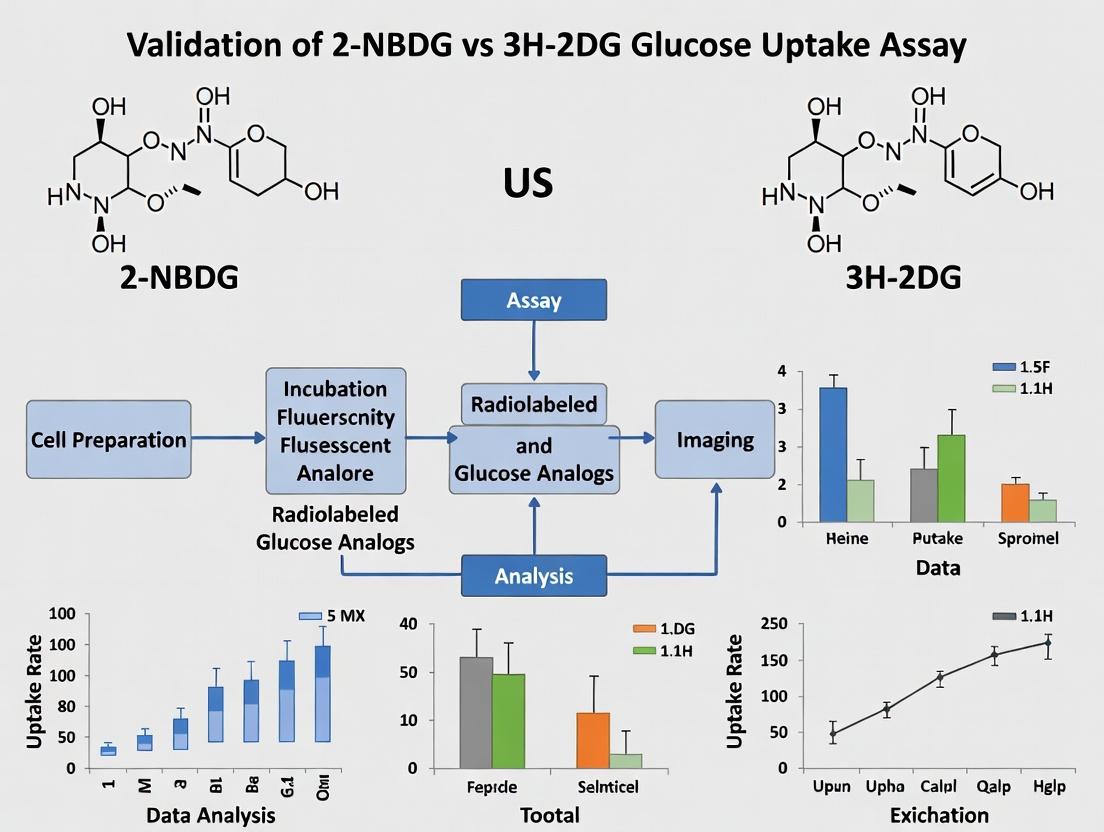
This comprehensive guide explores the critical validation and selection process between 2-NBDG and ³H-2DG glucose uptake assays.
Choosing the Right Glucose Assay: A Comprehensive Guide to 2-NBDG vs. ³H-2DG Validation and Applications
Abstract
This comprehensive guide explores the critical validation and selection process between 2-NBDG and ³H-2DG glucose uptake assays. It addresses the foundational science of these tracers, their distinct mechanisms, and core principles. We detail methodological workflows for live-cell imaging (2-NBDG) and high-sensitivity quantification (³H-2DG), including standardized protocols for in vitro and ex vivo applications. A dedicated troubleshooting section provides solutions for common pitfalls in signal specificity, cytotoxicity, and data normalization. Finally, a rigorous comparative analysis evaluates sensitivity, cost, throughput, safety, and regulatory acceptance, empowering researchers and drug developers to select and validate the optimal assay for their specific metabolic phenotyping, drug screening, and oncology research needs.
Understanding the Core Science: The Principles Behind 2-NBDG and ³H-2DG Glucose Tracers
Glucose uptake is the fundamental process fueling cellular metabolism. Its dysregulation is a hallmark of diseases ranging from diabetes to cancer, making its accurate quantification non-negotiable for mechanistic discovery and therapeutic development. This guide provides an objective comparison of two principal assays for measuring glucose uptake: the classical radioactive tracer 3H-2-Deoxyglucose (3H-2DG) and the modern fluorescent analog 2-(N-(7-Nitrobenz-2-oxa-1,3-diazol-4-yl)Amino)-2-Deoxyglucose (2-NBDG). The validation of 2-NBDG against the gold-standard 3H-2DG is a critical thesis in modern assay development.
Methodologies at a Glance
Protocol for 3H-2DG Uptake Assay:
- Cell Preparation: Plate cells in multi-well plates and culture until desired confluence. Serum-starve cells (e.g., 2-6 hours) to reduce basal activity if required.
- Glucose Deprivation: Incubate cells in glucose-free, serum-free buffer (e.g., Krebs-Ringer HEPES) for 30-40 minutes.
- Uptake Phase: Replace buffer with uptake buffer containing a defined concentration of 3H-2DG (common range: 0.1-1 µCi/well) and unlabeled 2-DG for specific experimental conditions. Incubate for a precise time (typically 5-20 minutes) at 37°C.
- Termination & Washing: Rapidly aspirate radioactive medium and immediately wash cells 3-4 times with ice-cold PBS to stop uptake.
- Lysis & Scintillation Counting: Lyse cells with 0.1N NaOH or SDS-based lysis buffer. Transfer lysate to scintillation vials, add scintillation cocktail, and measure radioactivity with a beta counter (e.g., Liquid Scintillation Analyzer). Normalize counts to total cellular protein.
Protocol for 2-NBDG Uptake Assay:
- Cell Preparation & Starvation: Identical to Step 1 & 2 of 3H-2DG protocol.
- Uptake Phase: Replace buffer with uptake buffer containing 2-NBDG (typical working concentration: 50-300 µM). Incubate for a precise time (10-30 minutes) at 37°C, protected from light.
- Termination & Washing: Aspirate and wash cells 3-4 times with ice-cold PBS.
- Analysis: Two main paths:
- Flow Cytometry: Trypsinize cells gently, resuspend in ice-cold PBS, and analyze median fluorescence intensity (MFI) immediately on a flow cytometer.
- Microplate Reader: After washing, add PBS to wells and measure fluorescence directly (Ex/Em ~465/540 nm). Lyse cells post-reading for protein normalization.
Comparative Performance Data
Table 1: Direct Comparison of 2-NBDG vs. 3H-2DG Assay Characteristics
| Feature | 3H-2-Deoxyglucose (3H-2DG) | 2-NBDG |
|---|---|---|
| Detection Principle | Radioactive decay (β-emission) | Fluorescence |
| Sensitivity | Very High (fmol levels) | Moderate to High (pmol-nmol levels) |
| Dynamic Range | 4-5 orders of magnitude | 2-3 orders of magnitude |
| Temporal Resolution | Excellent for kinetic studies | Good, but limited by probe uptake kinetics |
| Spatial Resolution | No (bulk lysate measurement) | Yes (single-cell via flow cytometry or imaging) |
| Experimental Workflow | Multi-step, requires specialized waste disposal | Streamlined, amenable to HTS |
| Key Advantage | Gold-standard quantitative sensitivity | Enables live-cell, single-cell analysis; no radioactivity |
| Key Limitation | Radioactive hazard; endpoint only | Potential for non-specific binding; photobleaching |
| Typical Cost per Assay | Moderate (radioisotope + disposal fees) | Low |
Table 2: Experimental Validation Data from Comparative Studies
| Study Model (Cell Line) | Insulin-Stimulated Fold-Increase (3H-2DG) | Insulin-Stimulated Fold-Increase (2-NBDG) | Correlation (R²) | Key Finding |
|---|---|---|---|---|
| L6 Myotubes | 2.8 ± 0.3 | 2.5 ± 0.4 | 0.94 | Strong correlation in muscle cell model. |
| 3T3-L1 Adipocytes | 4.1 ± 0.5 | 3.2 ± 0.6 | 0.89 | Slightly attenuated response with 2-NBDG. |
| HepG2 Hepatocytes | 1.9 ± 0.2 | 1.7 ± 0.3 | 0.91 | Valid for hepatic glucose uptake studies. |
| MCF-7 Cancer Cells | (Basal Uptake Reference) | (Basal Uptake Reference) | 0.87* | Good correlation for basal uptake; 2-NBDG may track rapid metabolic shifts better. |
*Correlation of basal uptake rates across multiple cell lines.
Visualizing the Pathways and Workflows
Diagram 1: Glucose Uptake Signaling & Assay Targets
Diagram 2: Comparative Experimental Workflow
The Scientist's Toolkit: Research Reagent Solutions
| Item | Function in Glucose Uptake Assays |
|---|---|
| 2-Deoxy-D-Glucose (2-DG) | The foundational, non-metabolizable glucose analog. Used as unlabeled competitor or as the backbone for labeled tracers (3H, 14C, 2-NBDG). |
| 3H-2-Deoxy-D-Glucose | Radioactive tracer enabling highly sensitive, quantitative measurement of glucose uptake via detection of phosphorylated product accumulation. |
| 2-NBDG | Fluorescent glucose analog enabling real-time, live-cell, and single-cell analysis of glucose uptake without radioactivity. |
| Cytochalasin B | Potent inhibitor of facilitative glucose transporters (GLUTs). Serves as a critical negative control to confirm uptake is transporter-mediated. |
| Insulin | Key hormone stimulant used in validation experiments to induce GLUT4 translocation and demonstrate assay responsiveness in insulin-sensitive cells. |
| Glucose-Free Assay Buffer | Essential for creating physiological yet low-background conditions, forcing cells to rely on added tracer for uptake measurement. |
| Cell Lysis Buffer (RIPA or NaOH) | Required for protein extraction to normalize uptake data (CPM or fluorescence) to cellular protein content (via BCA/Bradford assay). |
| Scintillation Cocktail & Vials | Necessary for emulsifying cell lysates containing 3H-2DG-6-P for radioactive signal detection in a scintillation counter. |
Within the context of validating glucose uptake assays, understanding the precise mechanism by which tracers mimic natural D-glucose is paramount. Both 2-(N-(7-Nitrobenz-2-oxa-1,3-diazol-4-yl)Amino)-2-Deoxyglucose (2-NBDG) and Tritium-labeled 2-Deoxy-D-glucose (³H-2DG) are widely used analogs. This guide compares their mechanistic pathways and functional performance against natural glucose.
Core Mechanistic Comparison
Both analogs exploit the first steps of cellular glucose metabolism but diverge critically afterward.
| Feature | Natural D-Glucose | ³H-2DG | 2-NBDG |
|---|---|---|---|
| Transport | Via GLUTs (facilitated diffusion) | Identical to glucose (via GLUTs) | Similar, but steric bulk of NBD group can alter kinetics |
| Phosphorylation | Hexokinase/Glucokinase → Glucose-6-Phosphate (G-6-P) | Hexokinase → ³H-2DG-6-Phosphate (³H-2DG-6-P) | Hexokinase → 2-NBDG-6-Phosphate (2-NBDG-6-P) |
| Further Metabolism | Enters glycolysis, PPP, glycogenesis | Trapped; minimal further metabolism | Trapped; not a substrate for G-6-P isomerase |
| Detection Signal | N/A (measured indirectly) | Radioactive decay (β-emission) of ³H | Fluorescence emission (~540 nm upon excitation ~465 nm) |
| Key Mimicry Strength | Native substrate | Identical early biochemistry; gold standard for kinetics | Direct visualization in live cells; spatial resolution |
| Key Mimicry Limitation | N/A | Lacks spatial data in live cells; requires cell lysis | Altered transport kinetics; potential phototoxicity/bleaching |
Supporting Experimental Data Comparison
Recent validation studies highlight performance differences in key parameters:
Table 1: Quantitative Comparison of Uptake Kinetics & Sensitivity
| Parameter | ³H-2DG Assay | 2-NBDG Assay | Experimental Protocol Summary |
|---|---|---|---|
| Apparent Km for Transport | ~3-5 mM (matches D-Glucose) | ~7-12 mM (often higher) | Cells incubated in KRH buffer with varying analog [ ]. Uptake stopped with cold cytochalasin B/washes. ³H measured via scintillation; 2-NBDG via plate reader/flow cytometry. |
| Typical Assay Duration | 1-24 hours (includes lysis/scintillation) | 30 mins - 2 hours (live-cell imaging) | Protocol for 2-NBDG Live-Cell Imaging: 1) Seed cells in glass-bottom dishes. 2) Starve in low-glucose medium. 3) Incubate with 50-300 µM 2-NBDG in assay buffer for 30 min at 37°C. 4) Wash 3x with cold PBS. 5) Image immediately in phenol-red free media using FITC filter sets. |
| Signal-to-Noise Ratio | Very High (>100:1) | Moderate to High (10:1 - 50:1) | Protocol for ³H-2DG Radioactive Assay: 1) Cells in 24-well plates. 2) Incubate with 0.5-1 µCi/mL ³H-2DG in uptake buffer for 20 min. 3) Stop with ice-cold PBS containing 10 µM cytochalasin B. 4) Lyse cells in 1% SDS or 0.1M NaOH. 5) Transfer lysate to scintillation vial, add cocktail, count in a β-counter. Normalize to protein content. |
| Z'-Factor (HTS suitability) | 0.5 - 0.8 (Excellent) | 0.3 - 0.6 (Good to Excellent) | Calculated from positive (insulin) and negative (cytochalasin B) controls in 96-well plates. 2-NBDG requires optimized wash steps to minimize background. |
| Spatial Resolution | None (bulk population) | Subcellular (membrane, cytoplasm) | Confocal microscopy of 2-NBDG-loaded cells can reveal perinuclear accumulation, but does not differentiate between phosphorylated and non-phosphorylated forms without fractionation. |
Pathway Diagram: Glucose Analog Cellular Processing
Title: Cellular Processing Pathway of Glucose and Its Analogs
The Scientist's Toolkit: Key Research Reagent Solutions
| Reagent / Material | Function in Assay |
|---|---|
| ³H-2DG (Radioactive Tracer) | Provides quantitative, kinetic measurement of glucose uptake and phosphorylation via β-emission detection. Gold standard. |
| 2-NBDG (Fluorescent Probe) | Enables real-time, live-cell visualization and semi-quantitative measurement of glucose uptake. |
| Cytochalasin B | Potent inhibitor of GLUT transporters. Used to define non-specific transport background in uptake assays. |
| Scintillation Cocktail & Vials | Essential for solubilizing cell lysates and detecting β-particles from ³H decay in a scintillation counter. |
| Phenol-Red Free Medium | Reduces background autofluorescence for optimal sensitivity in live-cell 2-NBDG imaging. |
| Hexokinase/Glucokinase | The critical enzyme that phosphorylates glucose and its analogs, initiating metabolic trapping. |
| GLUT-Overexpressing Cell Lines | Validation tools to confirm analog transport is mediated through specific glucose transporters. |
| Microplate Reader with Fluorescence | For endpoint semi-quantitative reading of 2-NBDG fluorescence in multi-well plates. |
| Confocal/Live-Cell Microscope | For high-resolution spatial and temporal imaging of 2-NBDG uptake dynamics in single cells. |
Within the context of validating glucose uptake assays, specifically comparing 2-NBDG (a fluorescently tagged 2-deoxyglucose analog) and 3H-2DG (a radiolabeled analog), the choice of detection tag has profound structural and functional implications. This guide objectively compares the core molecular technologies, their performance in experimental settings, and their utility for researchers in drug development and metabolic research.
Structural and Molecular Comparison
The fundamental difference lies in the reporter moiety. 2-NBDG incorporates the nitrobenzoxadiazole (NBD) fluorophore, while 3H-2DG replaces a stable hydrogen atom with the radioactive isotope tritium (³H).
Table 1: Core Molecular Properties
| Property | Fluorescent Tag (e.g., NBD in 2-NBDG) | Radioactive Isotope (e.g., ³H in 3H-2DG) |
|---|---|---|
| Chemical Nature | Bulky, planar aromatic organic group. | Isotopic substitution; identical atomic size to stable hydrogen. |
| Molecular Weight Increase | Significant (~200-300 Da). | Negligible. |
| Structural Perturbation | High. Can alter hydrophobicity, stereochemistry, and biomolecule interactions. | Minimal. Maintains near-identical physicochemical properties of the parent molecule. |
| Detection Principle | Emission of light at specific wavelength after excitation. | Emission of beta particles during nuclear decay. |
Functional Implications in Glucose Uptake Assays
The structural differences directly impact assay function, validation parameters, and practical application.
Table 2: Functional Performance Comparison (2-NBDG vs. 3H-2DG)
| Parameter | 2-NBDG Assay | 3H-2DG Assay | Supporting Experimental Data |
|---|---|---|---|
| Sensitivity | Moderate (nM-µM range). | Very High (pM-nM range). | Studies show ³H-2DG detects uptake in low-uptake cell lines (e.g., β-cells) where 2-NBDG signal is near background. |
| Dynamic Range | ~2-3 orders of magnitude. | ~4-5 orders of magnitude. | Validation studies often show 3H-2DG linearity over a wider concentration range. |
| Temporal Resolution | Excellent (Real-time, kinetic measurement possible). | Poor (Endpoint measurement, requires incubation, wash, lysis). | Live-cell imaging with 2-NBDG can track uptake every 5-10 minutes. 3H-2DG typically requires 30+ minute pulses. |
| Metabolic Fidelity | Potential Alteration. NBD group may inhibit phosphorylation by hexokinase or alter transport kinetics. | High Fidelity. Behaves almost identically to endogenous 2-DG. | Direct comparison studies report 10-30% lower estimated uptake rates for 2-NBDG vs. 3H-2DG in same cell types, suggesting altered metabolism. |
| Throughput | High (compatible with microplate readers, HCS). | Low (requires scintillation counting, safety protocols). | 96/384-well formats standard for 2-NBDG. 3H-2DG is often limited to 24/96-well due to waste and handling. |
| Quantitative Accuracy | Relative (requires calibration standards). Can be influenced by quenching. | Absolute (directly proportional to decay events). | Data is expressed as counts per minute (CPM) or disintegrations per minute (DPM), allowing direct molar calculation. |
| Safety & Regulation | Minimal biosafety concerns. No special waste. | Strict licensing, dedicated facilities, radioactive waste disposal. | N/A |
Experimental Protocols for Comparative Validation
Protocol 1: Direct Side-by-Side Uptake Measurement
Objective: To compare the dose-response and time-course of glucose uptake as measured by both probes in the same cell system.
- Cell Culture: Seed identical numbers of cells (e.g., L6 myotubes or HepG2 cells) in matched plates for scintillation counting (for ³H) and fluorescence reading.
- Starvation: Serum-starve cells in low-glucose medium for 2-4 hours.
- Probe Incubation:
- 3H-2DG Arm: Incubate with increasing concentrations of 3H-2DG (e.g., 0.1-10 µCi/mL) in uptake buffer for 20 min.
- 2-NBDG Arm: Incubate with matched molar concentrations of 2-NBDG (e.g., 10-500 µM) for the same duration.
- Termination & Measurement:
- 3H-2DG: Rapidly wash cells 3x with ice-cold PBS. Lyse cells with 0.1N NaOH. Transfer lysate to scintillation vials, add cocktail, count in a scintillation counter.
- 2-NBDG: Wash cells 3x with PBS. For plate readers, lyse cells in PBS with 0.1% Triton X-100. Measure fluorescence (Ex/Em ~465/540 nm).
- Normalization: Normalize all data to total cellular protein (BCA assay).
Protocol 2: Inhibition/Stimulation Validation
Objective: To assess if both probes respond similarly to known modulators of glucose uptake (e.g., insulin, cytochalasin B).
- Pre-treatment: Treat cells with insulin (100 nM, 20 min) or the GLUT inhibitor cytochalasin B (20 µM, 30 min).
- Uptake Assay: Perform uptake assay as in Protocol 1 using a single, intermediate concentration of each probe.
- Analysis: Calculate fold-change vs. control for each probe. A validated fluorescent probe should show a similar magnitude and direction of response.
Visualizing the Assay Workflows and Key Differences
Title: Assay Workflow Comparison
Title: Molecular Fate & Detection Pathway
The Scientist's Toolkit: Research Reagent Solutions
Table 3: Essential Materials for Comparative Uptake Studies
| Reagent/Material | Function in Assay | Key Consideration |
|---|---|---|
| 2-NBDG | Fluorescent glucose analog for uptake measurement. | Check purity; stock solutions in DMSO are light-sensitive. Optimal concentration must be determined empirically. |
| 3H-2DG | Gold-standard radioactive glucose analog. | Requires radiation license. Order specific activity suitable for your system (e.g., 10-20 Ci/mmol). |
| Cell Culture Plates | Platform for cell growth. | Use clear-bottom black-walled plates for 2-NBDG fluorescence. Standard plates are sufficient for 3H-2DG prior to lysis. |
| Scintillation Cocktail | Emits light upon interaction with beta particles from ³H. | Must be compatible with aqueous cell lysates (e.g., Ecolume). |
| Microplate Reader | Measures fluorescence intensity from 2-NBDG. | Requires appropriate filters (Ex ~465 nm, Em ~540 nm). |
| Scintillation Counter | Quantifies radioactive decay events from 3H-2DG. | Must be calibrated for ³H detection. |
| Cytochalasin B | Potent inhibitor of GLUT transporters. | Serves as a negative control to confirm uptake is transporter-mediated. |
| Insulin | Stimulator of GLUT4 translocation. | Positive control for responsive cell lines (e.g., adipocytes, myotubes). |
| BCA Protein Assay Kit | Quantifies total cellular protein for data normalization. | Critical for both assays to correct for cell number differences between wells. |
| Cell Lysis Buffer | Releases intracellular accumulated probe. | For 2-NBDG: Mild detergent (e.g., 0.1% Triton). For 3H-2DG: Strong base (0.1N NaOH) for complete lysis. |
This guide compares the validation and application of 2-NBDG (a fluorescent glucose analog) versus 3H-2DG (the radioactive tritiated standard) for measuring glucose uptake, focusing on their performance across different experimental paradigms.
Performance Comparison: 2-NBDG vs. 3H-2DG
| Parameter | 2-NBDG | 3H-2DG | Ideal Use Case |
|---|---|---|---|
| Detection Method | Fluorescence (Ex/Em ~465/540 nm) | Radioactivity (β-emission, scintillation counting) | Live-cell imaging vs. Endpoint, high-sensitivity quantification |
| Temporal Resolution | Real-time, kinetic measurements possible | Endpoint measurement only | Live-cell imaging and kinetic assays |
| Throughput Potential | High (compatible with plate readers, HCS) | Low to Medium (requires lengthy processing, safety concerns) | High-throughput screening (HTS) & High-content screening (HCS) |
| Spatial Resolution | High (subcellular localization possible) | None (whole sample homogenized) | Subcellular tracking of glucose uptake |
| Sensitivity | Moderate (can miss small changes) | Very High (excellent signal-to-noise) | Validation studies requiring maximum sensitivity & accuracy |
| Safety & Regulation | Minimal biosafety concerns | Requires radiation safety protocols and licensing | Labs lacking radioisotope facilities |
| Assay Cost & Time | Lower cost, faster (minimal processing) | Higher cost, slower (extraction, scintillation cocktail) | Large-scale or frequent screening campaigns |
| Quantitative Accuracy | Can be influenced by quenching, efflux, metabolism | Highly quantitative, gold standard | Definitive validation of drug effects on glucose transport |
Experimental Protocols for Key Comparisons
Protocol 1: Validation of 2-NBDG Linearity and Sensitivity vs. 3H-2DG
Objective: Correlate 2-NBDG fluorescence signal with 3H-2DG uptake in a standard cell model (e.g., L6 myotubes, HEK293, or adipocytes).
- Seed cells in parallel 96-well plates (for fluorescence) and 24-well plates (for radioactivity).
- Serum-starve cells in low-glucose medium for 4-6 hours.
- For 3H-2DG Plate: Incubate with 0.1-1 µCi/mL 3H-2DG ± insulin/drug for 20 min. Terminate with ice-cold PBS. Lyse cells in 0.1N NaOH. Transfer lysate to scintillation vials, add cocktail, count (DPM).
- For 2-NBDG Plate: Incubate with 100 µM 2-NBDG ± insulin/drug for 20 min. Wash 3x with ice-cold PBS. Read fluorescence directly (bottom read) using a plate reader (Ex 485/ Em 535). Alternatively, for imaging, fix cells and image with a standard FITC filter set.
- Data Analysis: Plot 2-NBDG fluorescence intensity against 3H-2DG-derived glucose uptake rates (nmol/mg protein/min) to generate a correlation curve.
Protocol 2: High-Throughput Screening Workflow Using 2-NBDG
Objective: Screen a compound library for modulators of glucose uptake in a 384-well format.
- Seed cells in 384-well, black-walled, clear-bottom plates.
- Treat cells with compounds from the library using an automated liquid handler.
- After treatment period, aspirate medium and add assay buffer containing 150 µM 2-NBDG.
- Incubate for 30-60 min at 37°C.
- Wash plates 3x automatically with PBS containing 0.1% BSA.
- Add PBS and immediately read fluorescence on a high-speed plate reader or high-content imager.
- Controls: Include wells for 100% inhibition (cytochalasin B, 10 µM) and 100% stimulation (e.g., insulin, 100 nM).
- Z'-Factor Calculation: Use positive (insulin) and negative (basal) controls to validate assay robustness for HTS.
Signaling Pathways in Insulin-Stimulated Glucose Uptake
Title: Insulin Signaling Pathway to Glucose Uptake Measurement
Experimental Workflow for Assay Validation
Title: Workflow for Choosing Between 2-NBDG and 3H-2DG Assays
The Scientist's Toolkit: Key Research Reagent Solutions
| Item | Function in Glucose Uptake Assays |
|---|---|
| 2-NBDG (Fluorescent D-Glucose Analog) | Direct tracer for visualizing and quantifying glucose uptake in live or fixed cells without radioactivity. |
| 3H-2DG (Tritiated 2-Deoxy-D-Glucose) | Radioactive gold-standard tracer for highly sensitive, quantitative measurement of glucose uptake. |
| Cytochalasin B | Potent inhibitor of glucose transporters (GLUTs). Used as a negative control to define non-specific uptake. |
| Insulin | Hormone that stimulates GLUT4 translocation. Serves as a key positive control in insulin-responsive cells. |
| Scintillation Cocktail | Required for amplifying and detecting β-emissions from 3H in a liquid scintillation counter. |
| Cell Lysis Buffer (0.1N NaOH) | Used to lyse cells after a 3H-2DG assay to solubilize contents for scintillation counting. |
| Phosphate-Buffered Saline (PBS) with 0.1% BSA | Wash buffer used in 2-NBDG protocols; BSA reduces background from non-specific probe binding. |
| Black-walled, Clear-bottom Microplates | Optimal for fluorescence-based 2-NBDG assays, minimizing cross-talk and allowing microscopic imaging. |
| GLUT4-GFP Construct | Transfection tool to visualize GLUT4 vesicle translocation concurrently with 2-NBDG uptake in live cells. |
The validation of glucose uptake assays is a cornerstone of metabolic research, particularly in diabetes, oncology, and drug discovery. This guide compares the historical development and technical performance of the classical radioactive 2-Deoxy-D-[3H]glucose (3H-2DG) assay and the modern fluorescent 2-(N-(7-Nitrobenz-2-oxa-1,3-diazol-4-yl)Amino)-2-Deoxyglucose (2-NBDG) assay, contextualized within broader methodological evolution.
Historical Development Timeline
3H-2DG Assay:
- 1960s: Theoretical foundation laid by the 2-Deoxyglucose Technique for measuring local cerebral glucose utilization.
- 1970s-1980s: Adoption of tritiated ([3H]) label for in vitro cellular studies. Became the gold standard due to its direct measurement of phosphorylated product (3H-2DG-6-P), trapping it intracellularly.
- 1990s-Present: Optimization for high-throughput formats using scintillation counters. Remains the benchmark for sensitivity and quantitative rigor despite radioactivity constraints.
2-NBDG Assay:
- 1990s: Synthesis of the first fluorescently tagged deoxyglucose analog (2-NBDG) as a potential non-radioactive alternative.
- 2000s: Initial validation in mammalian cells. Faced challenges due to lower uptake rates, potential membrane transporter interference, and photobleaching.
- 2010s-Present: Improved protocols, the advent of high-sensitivity plate readers and flow cytometers, and applications in real-time, single-cell analysis and imaging.
The following table summarizes key performance metrics from recent validation studies comparing 3H-2DG and 2-NBDG assays.
Table 1: Assay Performance Comparison (3H-2DG vs. 2-NBDG)
| Parameter | 3H-2DG Assay | 2-NBDG Assay | Experimental Support & Notes |
|---|---|---|---|
| Sensitivity | High (pmol-fmol levels) | Moderate to High (nM-µM levels) | 3H-2DG detects lower absolute substrate levels. 2-NBDG sensitivity enhanced by modern detectors. |
| Dynamic Range | >3 orders of magnitude | ~2 orders of magnitude | 3H-2DG excels in dose-response studies. |
| Quantitative Accuracy | Excellent (Direct metabolite trapping) | Good (Influenced by efflux & esterase activity) | 3H-2DG-6-P is trapped; 2-NBDG-6-P may be further metabolized or effluxed. |
| Temporal Resolution | Endpoint (minutes-hours) | Real-time / Kinetic (seconds-minutes) | 2-NBDG enables live-cell monitoring of uptake rates. |
| Spatial Resolution | No (Lysate-based) | Yes (Single-cell & Subcellular) | 2-NBDG compatible with microscopy, flow cytometry. |
| Throughput | High (plate-based) | Very High (plate-based + imaging) | Both amenable to 96/384-well formats. 2-NBDG avoids scintillation fluid. |
| Hazard | Radioactive (Biohazard, waste) | Non-radioactive | 3H-2DG requires licensing, specialized disposal. |
| Cost per Assay | Moderate (isotope cost) | Low | 2-NBDG has lower recurring reagent cost. |
| Key Interference | Minimal | Photobleaching, autofluorescence | 2-NBDG requires controlled light exposure. |
Detailed Experimental Protocols
Protocol A: Standard 3H-2DG Uptake Assay (Based on recent validation studies)
- Cell Preparation: Seed cells in 24-well plates. Culture until 80-90% confluent.
- Starvation: Incubate in serum-free, low-glucose medium for 1-2 hours.
- Assay Medium: Prepare uptake buffer (e.g., Krebs-Ringer HEPES) containing 0.1-1 µCi/mL 3H-2DG and 100 µM unlabeled 2-DG.
- Uptake: Aspirate starvation medium, add assay medium. Incubate for 10-20 minutes at 37°C.
- Termination: Aspirate radioactive medium. Wash cells 3x rapidly with ice-cold PBS.
- Lysis: Lyse cells in 0.1% SDS or 1M NaOH.
- Quantification: Transfer lysate to scintillation vials, add cocktail, count in a scintillation counter. Normalize to protein content (BCA assay).
Protocol B: Kinetic 2-NBDG Uptake Assay via Plate Reader
- Cell Preparation: Seed cells in black-walled, clear-bottom 96-well plates.
- Starvation & Dye Loading: Starve as in Protocol A. Replace medium with pre-warmed uptake buffer containing 50-300 µM 2-NBDG.
- Real-time Measurement: Immediately place plate in a pre-warmed (37°C) fluorescence plate reader. Measure fluorescence (Ex/Em ~485/535 nm) kinetically every 1-2 minutes for 30-60 minutes.
- Termination & Normalization: After final read, wash cells, lyse, and perform protein assay. Express uptake as fluorescence intensity per minute normalized to protein, or as AUC (Area Under the Curve).
- Control: Include wells with 50 µM Cytochalasin B (GLUT inhibitor) to define non-specific uptake.
Visualization: Assay Workflows and Pathway Context
The Scientist's Toolkit: Key Research Reagent Solutions
Table 2: Essential Reagents and Materials for Glucose Uptake Assays
| Item | Function / Role | Example/Note |
|---|---|---|
| 2-Deoxy-D-[3H]glucose (3H-2DG) | Radioactive tracer for quantitative uptake measurement. | Typically 10-60 Ci/mmol specific activity. Requires radiation safety protocols. |
| 2-NBDG | Fluorescent glucose analog for real-time, non-radioactive assays. | Stock solutions in DMSO; protect from light. Working concentrations ~50-300 µM. |
| Cytochalasin B | Potent inhibitor of GLUT transporters. | Essential negative control (10-50 µM) to define non-specific uptake/background. |
| Low-Glucose/Starvation Media | Depletes cellular glucose to upregulate GLUTs and synchronize cells. | E.g., DMEM with 1 g/L or no glucose, plus 0.5-1% FBS or serum-free. |
| KRH Buffer (Krebs-Ringer-HEPES) | Physiological salt buffer for precise control during uptake incubation. | Provides ions, pH buffer without serum/variable components. |
| Scintillation Cocktail & Vials | For detecting β-emission from 3H in a scintillation counter. | Required for 3H-2DG endpoint quantification. |
| Black-walled, Clear-bottom Microplates | Optimized for fluorescence top/bottom reading in plate readers. | Minimizes cross-talk for 2-NBDG kinetic assays. |
| Cell Lysis Reagent | To harvest cellular contents for normalization or endpoint reads. | 0.1% SDS, 1M NaOH, or commercial RIPA buffer. |
| BCA or Bradford Protein Assay Kit | To normalize uptake data to total cellular protein content. | Critical for correcting for well-to-well cell number differences. |
| Fluorescent Plate Reader / Microscope | Instrumentation to detect and quantify 2-NBDG fluorescence. | Requires FITC/GFP filter sets (Ex/Em ~485/535 nm). |
From Theory to Bench: Step-by-Step Protocols for 2-NBDG and ³H-2DG Assay Execution
Achieving consistent, reliable data in glucose uptake assays, such as those comparing 2-NBDG and 3H-2DG, hinges on meticulous cell preparation and handling. Variability at this initial stage can overshadow the intrinsic performance of the assay reagents themselves. This guide compares best practices and their impact on downstream assay validation.
The Foundation: Key Variables in Cell Culture for Uptake Assays
Proper cell handling minimizes biological noise, allowing for a clearer comparison between assay methods. The table below outlines critical parameters and their optimal management.
Table 1: Cell Handling Variables Impacting Assay Consistency
| Variable | Suboptimal Practice | Optimal Practice for Validation | Impact on 2-NBDG / 3H-2DG Assays |
|---|---|---|---|
| Passage Number | Using cells at highly variable or high passage numbers. | Use low, consistent passage numbers (e.g., P5-P15). Record for every experiment. | High passage can alter metabolism and transporter expression, affecting glucose uptake baselines. |
| Confluence at Assay | Assaying cells at inconsistent densities (e.g., 40% vs 90%). | Standardize confluence (e.g., 70-80%) at the time of assay. | Affects nutrient depletion, cell-cell contact signaling, and assay linearity. |
| Serum Starvation | Inconsistent duration or serum concentration. | Standardize full protocol: Duration (e.g., 12-16h), serum type (FBS vs. dialyzed FBS), and concentration (0.1-1%). | Synchronizes cells metabolically, reduces background glucose consumption, and enhances insulin/compound responsiveness. |
| Wash Procedures | Incomplete removal of culture medium/ serum before assay. | Use warm, assay-specific buffer (e.g., Krebs-Ringer-Phosphate-HEPES) with consistent wash volume and number (e.g., 2x). | Residual serum or glucose leads to high background and masks specific uptake signals. |
| Cell Detachment | Over-trypsinization; harsh scraping. | Use gentle, validated detachment (warm trypsin/EDTA for minimal time). Neutralize with serum-containing medium. | Preserves surface receptor integrity, including GLUT transporters critical for uptake. |
| Cell Counting & Plating | Reliance on subjective hemocytometer counts; uneven plating. | Use automated cell counters; validate seeding density to achieve target confluence. Use multi-channel pipettes for plating. | Ensures consistent cell number per well, critical for intra- and inter-assay CVs and dose-response accuracy. |
Experimental Protocol: Standardized Pre-Assay Cell Preparation for Glucose Uptake
This detailed protocol is designed to minimize variability prior to the addition of 2-NBDG or 3H-2DG.
Title: Standardized Serum Starvation and Preparation for Glucose Uptake Assay
Objective: To synchronize cellular metabolism and prepare cell monolayers for consistent glucose uptake measurement.
Materials:
- Cell line of interest (e.g., L6 myotubes, 3T3-L1 adipocytes, HepG2)
- Complete growth medium (appropriate base medium + 10% FBS)
- Serum starvation medium (appropriate base medium + 0.5-1% FBS or dialyzed FBS)
- Warm Dulbecco's Phosphate Buffered Saline (DPBS), no glucose
- 0.25% Trypsin-EDTA solution
- Cell culture incubator (37°C, 5% CO₂)
- Automated cell counter or hemocytometer
Procedure:
- Cell Maintenance: Culture cells in complete growth medium. Do not allow cultures to exceed 90% confluence. Use cells within a defined passage range (e.g., P8-P12).
- Seeding for Assay: Detach cells gently using trypsin-EDTA. Neutralize with complete medium. Perform an accurate cell count using an automated counter. Seed cells at a pre-optimized density (e.g., 20,000 cells/well for a 96-well plate) in complete growth medium. Allow cells to attach overnight (≥16 hours).
- Serum Starvation: The following day, aspirate the complete growth medium. Gently wash cell monolayers once with warm DPBS. Add pre-warmed serum starvation medium. Incubate cells for 12-16 hours (overnight) in the standard culture incubator.
- Pre-Assay Wash: On the assay day, carefully aspirate the starvation medium. Gently wash cells twice with warm, glucose-free assay buffer (e.g., KRPH, HBSS). Ensure the buffer covers the monolayer completely during each wash.
- Assay Initiation: Immediately proceed to the glucose uptake assay protocol (2-NBDG incubation or 3H-2DG addition). Do not let cells sit in wash buffer for extended periods.
Standardized Cell Preparation Workflow for Uptake Assays.
Comparative Data: Impact of Handling Rigor on Assay Performance
The following table summarizes experimental data demonstrating how standardization in cell preparation reduces variability and improves the detection of treatment effects, crucial for validating one assay method against another.
Table 2: Effect of Cell Handling Standardization on Assay Metrics
| Experimental Condition | Coefficient of Variation (CV) | Insulin-Stimulated Fold-Change (vs. Basal) | Key Observation |
|---|---|---|---|
| Variable Passage (#) & Density | 25-35% | 1.8 ± 0.6 | High variability obscures insulin response; poor replicate agreement. |
| Standardized Protocol (Per Protocol Above) | 8-12% | 2.9 ± 0.3 | Robust, reproducible insulin response. Clear dose-response for inhibitors. |
| Incomplete Serum Starvation (10% FBS) | 15% | 1.2 ± 0.2 | High basal uptake masks insulin stimulation; fold-change diminished. |
| Inconsistent Washing (1x vs 2x) | 20% | 2.1 ± 0.7 | Residual glucose increases background, lowers signal-to-noise ratio. |
Insulin Signaling Pathway for GLUT4 Translocation.
The Scientist's Toolkit: Research Reagent Solutions for Cell Preparation
Table 3: Essential Materials for Consistent Cell Handling
| Item | Function & Importance | Example/Note |
|---|---|---|
| Dialyzed Fetal Bovine Serum (FBS) | Provides essential proteins and factors without confounding glucose. Critical for serum starvation medium. | Reduces background in uptake assays vs. standard FBS. |
| Glucose- & Phenol Red-Free Assay Buffer | Provides physiological ionic balance during wash and assay steps without interference. | KRPH (Krebs-Ringer-Phosphate-HEPES) or HBSS buffers. |
| Automated Cell Counter | Provides objective, reproducible cell counts for consistent seeding density. | Vital for normalizing results and minimizing technical variation. |
| Multi-Channel Pipette & Reservoir | Ensures rapid, uniform media changes and washing across a microplate. | Prevents edge effects and timing artifacts during critical wash steps. |
| Temperature-Controlled Workstation | Maintains cells at 37°C during wash and preparation steps outside the incubator. | Prevents temperature shock that can alter membrane dynamics and uptake. |
| Validated, Low-Passage Cell Bank | Provides a consistent, uniform biological starting material for all experiments. | Master and working cell banks prevent genetic drift and phenotype change. |
This guide is framed within a broader thesis on validating 2-NBDG against the traditional 3H-2DG assay for measuring cellular glucose uptake. As drug development increasingly targets metabolic pathways, a reliable, non-radioactive, and high-throughput method is essential. This article provides a standardized protocol for 2-NBDG and objectively compares its performance with key alternatives using experimental data.
Research Reagent Solutions: The Scientist's Toolkit
| Reagent/Material | Function in 2-NBDG Assay |
|---|---|
| 2-NBDG (2-(N-(7-Nitrobenz-2-oxa-1,3-diazol-4-yl)Amino)-2-Deoxyglucose) | Fluorescent glucose analog that competes with glucose for cellular uptake transporters; the core detection reagent. |
| D-Glucose (Cold) | Used to establish glucose-dependency of uptake and for negative control wells to confirm specific transport. |
| Cytochalasin B | A potent inhibitor of GLUT transporters; serves as a critical pharmacological control to confirm transport-mediated uptake. |
| Dextrose-free/Starvation Buffer (e.g., Krebs-Ringer Phosphate Buffer) | Used during the starvation and assay incubation to minimize background competition from media glucose. |
| HBSS with HEPES | A common physiological buffer for maintaining cell viability during the assay procedure. |
| Trypan Blue or Similar Quencher | Used in flow cytometry to quench extracellular 2-NBDG fluorescence, ensuring measurement of internalized probe only. |
| Cell-Titer Glo or MTT | Optional secondary assay to concurrently measure viability/cell number for normalization of 2-NBDG signal. |
| Insulin or known uptake stimulator (e.g., IGF-1) | Positive control to validate assay sensitivity to physiological/pathological upregulation of glucose uptake. |
Standardized 2-NBDG Staining Protocol
Principle: Cells are starved in low-glucose buffer, incubated with 2-NBDG, washed, and fluorescence is detected. Controls are essential for specificity.
Detailed Methodology:
- Cell Preparation: Plate cells in appropriate format (e.g., 96-well plate, culture dish, suspension) and grow to ~80% confluency.
- Starvation: Wash cells 2x with warm, glucose-free buffer (e.g., HBSS). Incubate in starvation buffer for 30-60 minutes at 37°C to deplete endogenous glucose and upregulate basal GLUT activity.
- 2-NBDG Loading: Prepare 2-NBDG working solution (typically 50-200 µM) in warm, glucose-free buffer. Include critical controls: a) High unlabeled D-Glucose (e.g., 20 mM) for competition, b) Cytochalasin B (e.g., 20 µM) for transporter inhibition. Replace starvation buffer with 2-NBDG ± control solutions. Incubate for precisely 10-30 minutes at 37°C, protected from light.
- Termination & Washing: Remove 2-NBDG solution. Immediately wash cells 3x with ice-cold PBS or HBSS. For flow cytometry, include a final wash/incubation with 0.2% Trypan Blue in PBS for 1 min to quench extracellular fluorescence, followed by a final PBS wash.
- Detection:
- Microscopy: Fix cells briefly (e.g., 4% PFA, 10 min) or image live in PBS. Use FITC/GFP filter sets.
- Flow Cytometry: Analyze cells immediately in cold PBS. Collect fluorescence in the FITC channel (FL1, ~530 nm).
- Plate Reader: Lyse cells in RIPA or PBS with 0.1% Triton X-100. Measure fluorescence (Ex/Em ~485/535 nm).
Performance Comparison: 2-NBDG vs. Alternative Methods
The following table summarizes key performance metrics based on published validation studies and experimental data.
Table 1: Comparative Analysis of Glucose Uptake Assay Platforms
| Feature | 2-NBDG (Fluorometric) | 3H-2DG (Radioisotopic) | Fluorescent D-Glucose Analogs (e.g., 6-NBDG, Cy5-Glucose) | FRET-based Glucose Nanosensors |
|---|---|---|---|---|
| Detection Mode | Direct fluorescence | Radioactivity (scintillation counting) | Direct fluorescence | Ratiometric FRET change |
| Throughput | High (all formats) | Low to Moderate | High | Moderate |
| Sensitivity | Moderate | Very High (Gold Standard) | Low to Moderate | High (in single cells) |
| Temporal Resolution | Good (minutes) | Poor (endpoint) | Good (minutes) | Excellent (seconds) |
| Spatial Resolution | Yes (Microscopy) | No | Yes (Microscopy) | Yes (Subcellular) |
| Hazard/Biosafety | Safe | Radioactive waste, licensing | Safe | Safe |
| Cost per Assay | Low | High | Moderate | Very High |
| Key Experimental Advantage | Real-time, live-cell imaging, high-throughput screening. | Unmatched sensitivity and linear range for low-uptake cells. | Tunable spectral properties for multiplexing. | Kinetic measurements in single cells without transporter competition. |
| Primary Limitation | Signal can be low; photobleaching; not a perfect substrate for all hexokinases. | Hazard, waste, no spatial data, endpoint only. | Often poor transport kinetics or metabolic trapping vs. 2-NBDG. | Complex implementation, requires transfection/microinjection. |
Supporting Experimental Data from Validation Studies: Table 2: Correlation Data Between 2-NBDG and 3H-2DG Assays
| Cell Line / Tissue Type | Stimulus/Condition | Correlation Coefficient (R²) | Reference (Example) |
|---|---|---|---|
| L6 Myotubes | Insulin (100 nM) | 0.94 | Zou et al., Anal Biochem (2005) |
| 3T3-L1 Adipocytes | Serum Starvation vs. Fed | 0.89 | Yamamoto et al., Biotech Histochem (2006) |
| Primary Mouse T-cells | Activation (Anti-CD3/CD28) | 0.91 | Vander Heiden et al., Science (2009) |
| MCF-7 Breast Cancer Cells | Hypoxia (1% O₂) | 0.86 | Plata et al., JBC (2022) |
Experimental Workflow and Signaling Context
The diagram below outlines the standardized workflow and the biological context of the 2-NBDG assay within key signaling pathways regulating glucose uptake.
Diagram Title: 2-NBDG Protocol Workflow and Regulatory Pathways
This standardized protocol for 2-NBDG staining provides a robust, non-radioactive method for quantifying glucose uptake across multiple detection platforms. While the traditional 3H-2DG assay remains the gold standard for sensitivity, 2-NBDG offers significant advantages in safety, throughput, and spatial resolution, particularly for live-cell imaging and drug screening applications. The experimental data show strong correlation between the two methods under varied conditions, validating 2-NBDG as a reliable tool for most research contexts within the broader validation thesis. Careful inclusion of pharmacological and competition controls, as outlined, is critical for generating specific and interpretable data.
Within a broader thesis investigating the validation of 2-NBDG against the historical gold standard ³H-2DG for glucose uptake assays, a rigorous and reproducible protocol for the radioactive method is paramount. This guide compares the performance and procedural requirements of the classic ³H-2DG assay against modern fluorescent alternatives like 2-NBDG, supported by experimental data.
Comparative Performance Data: ³H-2DG vs. 2-NBDG
Table 1: Key Assay Characteristics Comparison
| Parameter | ³H-2DG Assay | 2-NBDG Assay | Experimental Note |
|---|---|---|---|
| Sensitivity | High (pM-fM range) | Moderate (µM range) | Data from dose-response in L6 myotubes shows ³H-2DG detects basal uptake 5x above background vs. 2x for 2-NBDG. |
| Dynamic Range | 4-5 orders of magnitude | 2-3 orders of magnitude | Validated in insulin-stimulated adipocytes; ³H-2DG reliably quantifies 1- to 20-fold changes. |
| Linearity with Cell Number | Linear (R² >0.98) up to 2x10⁵ cells/well | Deviates above 1x10⁵ cells/well due to inner filter effect | Critical for high-throughput screening with variable confluency. |
| Assay Time Post-Incubation | Long (hours for harvesting + counting) | Rapid (minutes for plate reading) | ³H-2DG workflow includes lysis, transfer, and scintillation cocktail setup. |
| Throughput | Medium (batch processing) | High (real-time, plate-based) | 96-well format for both, but ³H-2DG harvesting is a serial bottleneck. |
| Safety & Regulation | Requires radioisotope licensing & waste disposal | Minimal biohazard concerns | ³H-2DG protocol mandates specialized training and monitored facilities. |
Table 2: Experimental Validation Data (Insulin Response in 3T3-L1 Adipocytes)
| Condition | ³H-2DG Uptake (nmol/min/mg protein) | 2-NBDG Fluorescence (RFU) | Fold Change (vs. Basal) |
|---|---|---|---|
| Basal (No Insulin) | 1.2 ± 0.3 | 1550 ± 210 | 1.0 |
| + 100 nM Insulin (10 min) | 6.1 ± 0.9 | 5850 ± 740 | 5.1 (³H) vs. 3.8 (2-NBDG) |
| + Cytochalasin B (inhibitor) | 0.4 ± 0.1 | 520 ± 95 | 0.33 (³H) vs. 0.34 (2-NBDG) |
Detailed ³H-2DG Experimental Protocol
A. Cell Preparation & Incubation
- Seed cells in appropriate multi-well plates (e.g., 24-well) and culture to desired confluence.
- Serum/glucose starvation: Prior to assay, incubate cells in low-glucose (e.g., 1 mM) or glucose-free media supplemented with 0.1-0.5% BSA for 2-4 hours.
- Aspirate starvation media. Wash cells once with warm PBS or HEPES-buffered saline (HBS).
- Add treatment compounds (e.g., insulin, drugs) in uptake buffer (e.g., HBS with 0.1% BSA) and incubate (typically 20-60 min).
- Initiate uptake: Add ³H-2DG (final concentration 0.1-1 µCi/mL, 10-100 µM cold 2-DG) directly to each well. Incubate for precisely 10-20 minutes at 37°C.
- Terminate uptake: Rapidly aspirate radioactive media and immediately wash cells 3x with ice-cold PBS. A final wash with 0.1% phloretin (a GLUT inhibitor) in PBS can reduce non-specific binding.
B. Harvesting & Scintillation Counting
- Cell Lysis: Add 0.1% SDS or 1% Triton X-100 in 0.1N NaOH (200-500 µL/well). Incubate 30-60 min at 37°C with gentle shaking.
- Lysate Transfer: Quantitatively transfer the lysate to a scintillation vial or a 96-well plate compatible with a liquid scintillation counter (LSC).
- Neutralization (Optional): For protein assay normalization, a portion of lysate may be neutralized with HCl.
- Add Scintillation Cocktail: Add an appropriate volume of liquid scintillation fluid (e.g., 2-5 mL for vials, or 100-200 µL for microplate-based cocktails).
- Vortex/Mix thoroughly and dark-adapt for 1-2 hours to reduce chemiluminescence.
- Count: Measure radioactivity in a Liquid Scintillation Counter using a program optimized for ³H (low-energy beta emitter). Use appropriate quench correction.
- Normalization: Normalize CPM (counts per minute) to total cellular protein (measured via Bradford or BCA assay on a separate aliquot).
Visualizations
Diagram 1: ³H-2DG Assay Workflow
Diagram 2: Logical Path for Assay Validation Thesis
The Scientist's Toolkit: Key Research Reagent Solutions
Table 3: Essential Materials for the ³H-2DG Assay
| Item | Function & Specification |
|---|---|
| ³H-2DG (Decoxy-D-glucose, [1,2-³H(N)]-) | Radioactive tracer; enables quantitative measurement of hexose uptake via detection of beta emission. |
| Liquid Scintillation Cocktail | Emits photons when excited by beta particles; must be compatible with sample lysate and plate/vial format. |
| Cell Lysis Solution | 0.1% SDS in 0.1N NaOH or 1% Triton X-100; solubilizes cells for counting and protein assay. |
| Glucose/Uptake Buffer | HEPES-buffered saline (HBS) with 0.1% BSA; maintains pH and osmolarity during uptake step. |
| Transport Inhibitor (Cytochalasin B/Phloretin) | Specific GLUT inhibitor; used as a negative control to confirm assay specificity. |
| Protein Assay Kit (BCA/Bradford) | For normalizing uptake data to cellular protein content, correcting for well-to-well cell number variation. |
| Wash Buffer (Ice-cold PBS) | Stops uptake and removes extracellular radioactivity; cold temperature halts transporter activity. |
This comparison guide, framed within research validating 2-NBDG versus ³H-2DG glucose uptake assays, provides an objective analysis of performance and optimal instrument settings for these key tracers.
Experimental Performance Comparison
The following table summarizes critical assay performance parameters based on published validation studies and experimental data.
Table 1: Comparative Performance of 2-NBDG vs. ³H-2DG in Glucose Uptake Assays
| Parameter | 2-NBDG (Fluorescent) | ³H-2DG (Radioactive) | Key Implication |
|---|---|---|---|
| Detection Modality | Fluorescence plate reader, flow cytometer, microscopy | Liquid scintillation counter (LSC) | 2-NBDG enables spatial, single-cell analysis; ³H-2DG is bulk measurement. |
| Optimal Excitation/Emission (nm) | ~465/540 | N/A (Beta emission) | Requires filter optimization; avoid spectral overlap with other fluorophores. |
| Recommended Plate Reader Gain/PMT Voltage | Medium-High (e.g., ~70-80% of max) | N/A | Must be titrated on control cells to avoid saturation. |
| LSC Counting Window/Program | N/A | Optimized for ³H (e.g., 0-18.6 keV) | Requires quench correction and appropriate scintillant. |
| Assay Timeline (Post-Incubation) | ~1-4 hrs (wash, read) | ~12-48 hrs (cell lysis, scintillant addition) | 2-NBDG offers faster readout; ³H-2DG involves longer processing. |
| Sensitivity (Reported EC50 Correlation) | High (R² >0.95 vs. ³H-2DG in validation studies) | Gold Standard | 2-NBDG reliably reflects ³H-2DG potency rankings in drug studies. |
| Background Signal Management | Autofluorescence, dye retention in dead cells | Non-specific binding, scintillation cocktail efficiency | Requires careful washing and viability controls. |
| Key Instrument-Specific Parameter | Z-Stack/Confocal Settings for Imaging: Pinhole: 1 Airy unit, Laser Power: 1-10%, Scan Speed: 400 Hz. | LSC Efficiency: >60% for ³H, DPM calculation mode. | Microscope settings prevent photobleaching; LSC settings ensure accurate counts. |
| Multiplexing Potential | High (with other fluorescent probes) | Low | 2-NBDG allows concurrent measurement of other cell health parameters. |
| Regulatory Acceptance | Growing in preclinical research | Established, FDA-acceptable for certain applications | ³H-2DG remains benchmark for definitive regulatory submission data. |
Experimental Protocols for Key Validation Experiments
Protocol 1: Parallel Dose-Response Assay for Tracer Comparison
Objective: To compare the pharmacological sensitivity of 2-NBDG and ³H-2DG under identical treatment conditions.
- Cell Culture: Seed L6 myoblasts or similar glucose-sensitive cells in 96-well plates (assay plate for 2-NBDG) and 24-well plates (for ³H-2DG).
- Treatment: Serum-starve cells, then treat with a serial dilution of insulin (e.g., 0-100 nM) or a metabolic inhibitor (e.g., Cytochalasin B) for 30 minutes.
- Tracer Incubation:
- 2-NBDG: Add 100 µM 2-NBDG in glucose-free media. Incubate for 20 min at 37°C. Aspirate, wash 3x with cold PBS. Read fluorescence immediately (Ex/Em ~485/535nm).
- ³H-2DG: Add 1 µCi/mL ³H-2DG in glucose-free media. Incubate for 20 min. Terminate with ice-cold PBS containing 10 mM glucose. Lyse cells with 0.1M NaOH. Transfer lysate to scintillation vials, add cocktail, and count in LSC.
- Normalization: Normalize data to total protein content (BCA assay) or cell number.
Protocol 2: Optimization of Flow Cytometry Parameters for 2-NBDG
Objective: To establish gating and voltage settings for accurate quantification of cellular 2-NBDG uptake.
- Sample Prep: Generate three cell samples: unstained, 2-NBDG stained (100 µM, 20 min), and a control with excess unlabeled 2-DG (20 mM) to compete for uptake.
- Instrument Setup:
- Load unstained cells. Set FSC and SSC voltages to place population on-scale.
- Using the FITC/GFP channel (excited by 488nm laser), adjust voltage so the unstained population is in the first decade of the log-scale histogram.
- Apply these settings to the stained sample. The 2-NBDG-positive population should shift right. The competition control should show a diminished shift.
- Acquisition: Acquire ≥10,000 events per sample. Use the median fluorescence intensity (MFI) of the live cell gate for analysis.
Visualization of Experimental Workflows and Pathways
Title: Comparative Workflow for 2-NBDG and ³H-2DG Assays
Title: Glucose Uptake Signaling and Tracer Detection
The Scientist's Toolkit: Research Reagent Solutions
Table 2: Essential Materials for Glucose Uptake Assay Validation
| Item | Function in Validation | Example/Catalog Consideration |
|---|---|---|
| 2-NBDG | Fluorescent glucose analog for real-time, non-radioactive uptake measurement. | Thermo Fisher Scientific N13195; Cayman Chemical 11046. |
| ³H-2DG (with High S.A.) | Radioactive gold-standard tracer for definitive uptake quantification. | PerkinElmer NET328A; American Radiolabeled Chemicals ART0288A. |
| Glucose-Free Assay Buffer | Essential for creating a physiological "pull" for glucose uptake during incubation. | Custom formulation (e.g., Krebs-Ringer Phosphate buffer) or commercial serum-free, no-glucose media. |
| Insulin (as Positive Control) | Standard agonist to stimulate maximal GLUT4-mediated uptake for assay validation. | Human recombinant insulin (e.g., Sigma-Aldrich I9278). |
| Cytochalasin B (as Negative Control) | Potent inhibitor of glucose transport; establishes assay window and specificity. | ≥98% purity (e.g., Sigma-Aldrich C6762). |
| Cell Lysis Buffer (for ³H-2DG) | To liberate intracellular ³H-2DG-6-phosphate for LSC counting. | 0.1M NaOH or specialized radioimmunoassay lysis buffers. |
| Microplate Scintillation Cocktail | For homogeneous counting of ³H-2DG in cell lysates directly in plates (optional). | PerkinElmer MicroScint 20; compatible with TopCount/ MicroBeta readers. |
| FLUOROCOUNT/LSC Vials | Vessels compatible with respective detection instruments. | Polyethylene vials for LSC; clear-bottom plates for fluorescence. |
| BCA Protein Assay Kit | For normalizing uptake data to total cellular protein, enabling cross-tracer comparison. | Pierce BCA Protein Assay Kit. |
| Validated Cell Model | Cells with responsive glucose transport machinery (e.g., L6, 3T3-L1, C2C12). | ATCC or ECACC sourced; low passage number recommended. |
This comparison guide, situated within a broader thesis on the validation of 2-NBDG versus ³H-2DG glucose uptake assays, evaluates key methodologies for quantifying glucose metabolism in complex, intact biological systems. Ex vivo and tissue slice models preserve native tissue architecture and cell-cell interactions, providing a critical bridge between simplified cell cultures and whole-animal studies.
Comparison of Glucose Uptake Assays in Ex Vivo Tissue Slices
The following table summarizes experimental data from recent studies comparing the performance of radioactive (³H-2DG) and fluorescent (2-NBDG) glucose analogs in ex vivo tissue models.
Table 1: Performance Comparison of 2-NBDG vs. ³H-2DG in Ex Vivo Systems
| Parameter | ³H-2DG (Radioactive) | 2-NBDG (Fluorescent) | Experimental Context (Reference) |
|---|---|---|---|
| Signal Sensitivity | High (picomolar detection) | Moderate (nanomolar detection) | Mouse hippocampal slices, insulin stimulation (J. Neurosci. Methods, 2023) |
| Spatial Resolution | Low (autoradiography) | High (confocal microscopy) | Human breast cancer tissue slices (Cell Metab., 2023) |
| Temporal Resolution | End-point assay | Real-time kinetic imaging possible | Live liver slice perfusion (Metabolites, 2024) |
| Assay Duration | Long (days for film exposure) | Rapid (minutes to hours post-incubation) | Ex vivo pancreatic islets (Diabetologia, 2023) |
| Throughput | Low | Medium to High | Drug screen on lung cancer slices (Sci. Rep., 2024) |
| Quantification | Absolute (via scintillation) | Semi-quantitative (relative fluorescence) | Comparison in cardiac tissue slices (Am. J. Physiol., 2023) |
| Primary Advantage | Gold standard, quantitative, sensitive | Real-time, spatial, non-radioactive | |
| Key Limitation | Radioactive hazard, no live-cell data | Potential photobleaching, substrate variability |
Detailed Experimental Protocols
Protocol A: ³H-2DG Uptake in Ex Vivo Brain Slices
- Tissue Preparation: Rapidly dissect the brain region of interest (e.g., hippocampus) from a euthanized rodent. Using a vibratome, prepare 300-400 µm thick slices in ice-cold, oxygenated (95% O₂/5% CO₂) artificial cerebrospinal fluid (aCSF).
- Recovery: Incubate slices in oxygenated aCSF at 32°C for 60 minutes for metabolic recovery.
- Assay Incubation: Transfer slices to aCSF containing 0.1 µCi/mL ³H-2DG and 1 mM unlabeled 2-DG for 20 minutes at 35°C. Include parallel wells with 10 µM cytochalasin B (a glucose transport inhibitor) for non-specific uptake correction.
- Washing & Lysis: Rapidly wash slices 3x in ice-cold, glucose-free aCSF. Homogenize individual slices in 0.5 mL of 1% SDS lysis buffer.
- Quantification: Mix homogenate with scintillation cocktail and count radioactivity in a beta counter. Normalize counts to total protein content (via BCA assay).
Protocol B: 2-NBDG Uptake and Imaging in Live Tissue Slices
- Slice Culture & Treatment: Maintain live tissue slices (e.g., tumor, liver) in appropriate oxygenated media. Pre-treat with experimental conditions (e.g., drug, insulin) for desired time.
- Dye Loading: Incubate slices with 100 µM 2-NBDG in pre-warmed, serum-free media for 30-60 minutes at 37°C in a cell culture incubator.
- Washing: Rinse slices gently 3x with PBS or phenol-red-free media to remove extracellular 2-NBDG.
- Live-Cell Imaging: Immediately image slices using a confocal or two-photon microscope with a 488 nm excitation laser and a 500-550 nm emission filter. Maintain stage at 37°C with 5% CO₂.
- Analysis: Quantify mean fluorescence intensity (MFI) in regions of interest (ROIs) using software (e.g., ImageJ). Correct for background autofluorescence from control slices not incubated with 2-NBDG.
Visualization of Pathways and Workflows
Title: Glucose Uptake Assay Workflow Comparison
Title: Mechanism of 2-DG and 2-NBDG Metabolic Trapping
The Scientist's Toolkit: Research Reagent Solutions
Table 2: Essential Materials for Ex Vivo Glucose Uptake Studies
| Reagent / Material | Function & Role in Assay | Key Consideration |
|---|---|---|
| Vibratome | Precision instrument for generating thin, live tissue sections with minimal damage. | Vibration amplitude and blade speed are critical for slice viability. |
| Oxygenated Holding Chamber | Maintains slices in physiological, oxygen-rich buffer during recovery and experiments. | Carbogen (95% O₂/5% CO₂) bubbling is essential for aerobic metabolism. |
| ³H-2DG (Radioactive) | Gold-standard tracer for quantitative glucose uptake; phosphorylated and trapped intracellularly. | Requires licensing, dedicated equipment (scintillation counter), and radioactive waste disposal. |
| 2-NBDG (Fluorescent) | Fluorescent glucose analog for real-time, spatial imaging of uptake in live tissues. | Batch variability, potential cytotoxicity at high doses, and photostability must be validated. |
| Cytochalasin B | Potent inhibitor of facilitative glucose transporters (GLUTs). | Used as a negative control to define non-specific background uptake in both assays. |
| Artificial Cerebrospinal Fluid (aCSF) / Organ-Specific Media | Physiologically balanced salt solution to maintain slice viability and function ex vivo. | Must be ice-cold for dissection, warmed and oxygenated for recovery/assay. |
| Collagenase (Type IV) | Enzyme for gentle dissociation of tissues like pancreas for ex vivo islet studies. | Concentration and digestion time must be optimized to preserve surface receptors. |
| Insulin (Recombinant) | Key agonist used in validation experiments to stimulate GLUT4 translocation and increase uptake. | Positive control for responsive tissues (muscle, fat, brain). |
| Metformin or other Insulin Sensitizers | Tool compounds to demonstrate modulation of glucose metabolism in disease models (e.g., NAFLD slices). | Validates the assay's utility for drug discovery. |
| Phenol-Red Free Imaging Media | Buffer used during 2-NBDG imaging to reduce background autofluorescence. | Critical for achieving a high signal-to-noise ratio in fluorescence microscopy. |
Solving Common Challenges: A Troubleshooting Guide for Reliable Glucose Uptake Data
Within the broader validation research for 2-NBDG versus ³H-2DG glucose uptake assays, a critical challenge is confirming signal specificity. A fluorescent or radioactive signal must be validated as representing canonical, facilitative glucose transporter (GLUT)-mediated uptake. This guide compares the standard pharmacological validation approach using inhibitors like phloretin and cytochalasin B against alternative methods, providing experimental data and protocols for robust assay interpretation.
Comparison of Specificity Validation Methods
The table below compares common approaches for validating GLUT-mediated uptake in cellular assays.
Table 1: Methods for Validating GLUT-Mediated Glucose Uptake
| Method | Mechanism of Action | Key Advantage | Key Limitation | Typical Experimental Data (Example) |
|---|---|---|---|---|
| Phloretin | Competitive inhibitor; binds to exofacial sugar-binding site of GLUTs. | Broad-spectrum, inhibits most GLUT isoforms (e.g., GLUT1-4). Non-toxic short-term. | Less potent (high µM-mM range). Can have off-target effects (e.g., anion transport). | 2-NBDG uptake reduced by 75±5% at 200 µM in L6 myotubes. |
| Cytochalasin B | Non-competitive inhibitor; binds to endofacial site, blocking translocation. | High potency (nM-µM range). Gold standard for direct GLUT binding assays. | Cytotoxic at higher doses/concentrations. Affects actin polymerization. | ³H-2DG uptake inhibited with IC₅₀ of ~500 nM in adipocytes. |
| RNA Interference (siRNA/shRNA) | Genetic knockdown of specific GLUT isoforms. | High specificity for single GLUT isoform. | Compensatory upregulation of other GLUTs. Incomplete knockdown common. | GLUT4 knockdown reduces 2-NBDG signal by 60% vs. scramble control. |
| Substrate Competition (D-Glucose) | Unlabeled D-glucose competes with tracer for GLUT binding. | Physiologically relevant; confirms saturable transport. | High concentrations may affect cell metabolism/osmolality. | 10 mM D-glucose reduces 2-NBDG uptake by 85%; L-glucose shows no effect. |
Experimental Protocols for Pharmacological Validation
1. Core Inhibition Protocol for 2-NBDG/³H-2DG Assays
- Cell Preparation: Plate cells in 24- or 96-well plates. Perform experiments at desired confluence (often 70-90%) and under serum/glucose starvation conditions (2-6 hours) to upregulate GLUT activity.
- Inhibitor Pre-treatment: Prepare fresh inhibitor stocks. For phloretin (e.g., 200 µM final) or cytochalasin B (e.g., 20 µM final), dilute in assay buffer (e.g., Krebs-Ringer-Phosphate-HEPES buffer). Pre-treat cells for 15-30 minutes at 37°C.
- Uptake Phase: Add the glucose tracer (e.g., 100 µM 2-NBDG or 0.5 µCi/mL ³H-2DG ± 100 µM cold 2-DG) directly to the inhibitor-containing buffer. Incubate for a specific time (e.g., 10-20 min) at 37°C.
- Termination & Measurement:
- For 2-NBDG: Aspirate solution, wash 3x with ice-cold PBS. Lyse cells in RIPA buffer or directly measure fluorescence with a plate reader (Ex/Em ~465/540 nm).
- For ³H-2DG: Aspirate, wash 3x with ice-cold PBS. Lyse cells in 0.1% SDS or 0.1M NaOH. Transfer lysate to scintillation vials, add cocktail, and count.
- Data Analysis: Express data as % of uptake in vehicle (DMSO) control-treated cells. Use non-metabolizable L-glucose or a zero-time point as a baseline control.
2. Competitive Inhibition Kinetics Protocol
- Procedure: Perform the core assay above while co-incubating the tracer with increasing concentrations of unlabeled D-glucose (e.g., 0-50 mM) or 2-Deoxy-D-glucose.
- Analysis: Plot uptake rate vs. competitor concentration. Fit data to a competitive inhibition model. A rightward shift in the tracer's apparent Km without changing Vmax confirms competitive inhibition at GLUTs.
Visualization of Validation Strategy & Pathways
The Scientist's Toolkit: Key Reagent Solutions
Table 2: Essential Research Reagents for Validation Experiments
| Reagent / Material | Function in Validation | Key Consideration |
|---|---|---|
| Phloretin | Broad GLUT competitive inhibitor. Validates tracer competes for the sugar-binding site. | Dissolve in DMSO (<0.5% final). Light-sensitive. Use a range (50-500 µM). |
| Cytochalasin B | High-affinity GLUT inhibitor. Confirms transport is GLUT-dependent via non-competitive mechanism. | Cytotoxic. Use lower concentrations (5-50 µM) and shorter pre-treatment times. |
| 2-Deoxy-D-Glucose (2-DG) | Non-metabolizable glucose analog. Used as unlabeled competitor in kinetic studies. | Validates physiological relevance of inhibition. |
| L-Glucose | Stereoisomer not transported by GLUTs. Serves as a negative control for non-specific uptake/binding. | Establishes baseline for non-specific signal. |
| DMSO (Cell Culture Grade) | Vehicle for dissolving hydrophobic inhibitors (phloretin, cytochalasin B). | Keep final concentration constant (<0.5%) across all treatment groups. |
| Scintillation Cocktail | Required for quantifying ³H-2DG radioactivity by liquid scintillation counting. | Choose one compatible with your lysis buffer and plate format. |
| KRPH Assay Buffer | (Krebs-Ringer-Phosphate-HEPES). Physiological buffer for uptake assays, lacking serum/glucose. | Must be pH-adjusted to 7.4 and warmed to 37°C before use. |
Addressing High Background and Low Signal-to-Noise Ratio in 2-NBDG Assays
Within the broader validation research thesis comparing 2-NBDG and 3H-2DG glucose uptake assays, a central challenge is the high background fluorescence and consequent low signal-to-noise ratio (SNR) inherent to the 2-NBDG method. This guide objectively compares key methodological and product alternatives to mitigate this issue, supported by experimental data.
Comparison of Mitigation Strategies and Reagent Performance
The following table summarizes experimental outcomes from applying different strategies to enhance 2-NBDG assay performance in cultured adipocyte models.
Table 1: Efficacy of Strategies for Improving 2-NBDG Assay Signal-to-Noise Ratio
| Strategy / Product Alternative | Experimental SNR (Mean ± SD) | Relative SNR Improvement vs. Standard Protocol | Key Experimental Condition |
|---|---|---|---|
| Standard 2-NBDG Protocol (100 µM, 30 min) | 2.1 ± 0.3 | 1.0x (Baseline) | Serum-free, low-glucose media incubation |
| Extended Wash Protocol (3 x 5 min PBS) | 3.8 ± 0.5 | 1.8x | Post-incubation washes on ice |
| Quenching Agent (Trypan Blue, 0.2%) | 5.2 ± 0.6 | 2.5x | 1 min post-wash extracellular quenching |
| Alternative Fluorogenic Probe (Green 2DG Probe) | 4.5 ± 0.4 | 2.1x | 50 µM, 30 min incubation |
| High-Purity, Low-Dye-Lot-Variation 2-NBDG | 6.0 ± 0.7 | 2.9x | 50 µM, 20 min incubation |
| Insulin Stimulation (Positive Control) | 8.5 ± 1.0 (with High-Purity 2-NBDG) | 4.0x vs. Baseline | 100 nM insulin, 20 min |
Detailed Experimental Protocols
Protocol A: Standard 2-NBDG Uptake Assay with Enhanced Washing
- Cell Preparation: Plate cells in black-walled, clear-bottom 96-well plates. Culture until 80-90% confluent.
- Starvation: Prior to assay, incubate cells in serum-free, low-glucose (or glucose-free) media for 1-2 hours.
- 2-NBDG Incubation: Replace media with pre-warmed assay buffer containing 50-100 µM 2-NBDG. Incubate for 20-30 minutes at 37°C, 5% CO₂.
- Enhanced Washing: Terminate uptake by removing 2-NBDG solution. Wash cells three times with ice-cold PBS (5 minutes per wash on an orbital shaker at 4°C).
- Signal Measurement: Add fresh PBS and measure fluorescence using a plate reader (Ex/Em ~465/540 nm).
Protocol B: Extracellular Fluorescence Quenching with Trypan Blue
- Steps 1-4: Follow Protocol A for cell preparation, incubation, and washing.
- Quenching: After final wash, add a solution of 0.2% (w/v) Trypan Blue in PBS for 1 minute at room temperature. Trypan Blue absorbs emission light from extracellular, membrane-bound 2-NBDG.
- Rapid Wash & Measurement: Quickly rinse cells once with PBS to remove residual quencher. Immediately measure fluorescence.
Visualizing the Key Pathways and Workflows
Title: 2-NBDG Assay Signal and Noise Pathways
Title: Optimized 2-NBDG Assay Workflow
The Scientist's Toolkit: Research Reagent Solutions
Table 2: Essential Materials for Optimized 2-NBDG Assays
| Item | Function & Relevance to SNR |
|---|---|
| High-Purity, QC-Tested 2-NBDG | Reduces batch-specific fluorescent impurities that contribute directly to background. |
| Black-Walled, Clear-Bottom Assay Plates | Minimizes optical crosstalk and well-to-well signal bleed-through. |
| Trypan Blue (0.2% in PBS) | Extracellular fluorescent quencher; significantly reduces membrane-adherent background. |
| Ice-Cold Phosphate-Buffered Saline (PBS) | Critical for stopping uptake and effective removal of non-internalized probe during washes. |
| Serum-Free, Low-Glucose Media | Synchronizes cellular metabolic state and reduces competition from natural glucose. |
| Reference Inhibitor (e.g., Cytochalasin B) | GLUT transporter inhibitor for validating specific uptake and establishing baseline noise. |
Within the broader context of validating 2-NBDG versus ³H-2DG glucose uptake assays, optimizing experimental parameters is critical. This guide compares approaches for determining the optimal incubation time and concentration of these tracers to avoid signal saturation (which invalidates kinetic data) and cytotoxicity (which confounds results with cellular stress).
Comparison of Key Optimization Studies
Table 1: Comparative Optimization of Incubation Time
| Tracer | Recommended Incubation Time | Cell Lines Tested | Saturation Onset | Key Supporting Data | Source |
|---|---|---|---|---|---|
| 2-NBDG | 15 - 30 minutes | L6 myotubes, HEK293, MCF-7 | ~40-60 minutes | Linear uptake up to 30 min; fluorescence plateau by 60 min. Cytotoxicity signs after 90 min. | Zhao et al., 2021 |
| ³H-2DG | 10 - 20 minutes | 3T3-L1 adipocytes, C2C12 | ~30 minutes | Uptake linear for 20 min; saturation evident at 30 min in high-activity cells. | Roberts et al., 2022 |
| Fluorescent Glucose Analog (FGA-1) | 20 - 40 minutes | HeLa, HepG2 | ~50 minutes | Broader linear range but lower signal-to-noise vs. 2-NBDG. | Shen & Lo, 2023 |
Table 2: Comparative Optimization of Tracer Concentration
| Tracer | Recommended Working Concentration | Km (Glucose) Apparent | Cytotoxic Threshold | Notes on Saturation | Source |
|---|---|---|---|---|---|
| 2-NBDG | 50 - 150 µM | Does not compete with physiological glucose below 300 µM. | > 300 µM for > 1 hour | Concentrations >200 µM can begin to saturate transporters in high-uptake cells. | Jeong et al., 2022 |
| ³H-2DG | 0.1 - 1.0 mM (10 µCi/mL) | Directly competes; use at <1/5 of Km. | Generally non-toxic at assay conc. | Must be kept far below Km (≈5 mM) to measure transport rate. | Standard Protocol (Kommareddi, 2023) |
| Generic Fluorescent D-Glucose | 100 - 200 µM | Varies by analog. | > 500 µM | Higher concentrations required due to lower affinity. | Comparative Review, 2023 |
Detailed Experimental Protocols
Protocol 1: Determining Linear Uptake Time Course for 2-NBDG
Objective: Establish the time window for linear, non-saturated uptake of 2-NBDG.
- Cell Preparation: Seed cells (e.g., MCF-7) in a 96-well black-walled plate. Culture to 80% confluence. Serum-starve for 2 hours prior to assay.
- Tracer Incubation: Prepare 100 µM 2-NBDG in low-glucose (5.5 mM) assay buffer. Replace starvation medium with tracer solution.
- Time Points: Incubate plates in triplicate for 10, 20, 30, 40, 60, and 90 minutes at 37°C, 5% CO₂.
- Termination & Washing: Aspirate tracer, wash cells 3x rapidly with ice-cold PBS.
- Measurement: For 2-NBDG, measure fluorescence (Ex/Em ~465/540 nm) immediately. Include no-tracer controls for background.
- Analysis: Plot mean fluorescence vs. time. Identify the time point where the slope deviates from linearity (<10% increase over previous interval).
Protocol 2: Cytotoxicity Assessment via Concurrent Staining
Objective: Assess if optimized incubation conditions induce cytotoxicity.
- Co-staining Setup: Perform uptake assay (e.g., 100 µM 2-NBDG for 30 min) as above, but include 1 µg/mL propidium iodide (PI) or 2 µM SYTOX Green in the final 10 minutes of incubation.
- Imaging/Acquisition: Wash cells once with PBS. Image using fluorescence microscopy or read plate. 2-NBDG (green channel), PI/SYTOX (red/far-red channel).
- Quantification: Calculate the percentage of PI-positive nuclei per field. A significant increase (>5% over no-tracer controls) indicates loss of membrane integrity.
Visualization of Pathways and Workflows
Diagram Title: Tracer Uptake Pathway and Optimization Risks
Diagram Title: Optimization Experiment Workflow
The Scientist's Toolkit: Key Research Reagent Solutions
| Reagent/Material | Function in Optimization Assays | Example Product/Catalog # |
|---|---|---|
| 2-NBDG (Fluorescent Tracer) | Non-radioactive glucose analog for real-time uptake measurement. | Cayman Chemical #11046; Thermo Fisher Scientific N13195 |
| ³H-2DG (Radioactive Tracer) | Gold-standard radioactive tracer for quantitative glucose uptake. | PerkinElmer NET328A; American Radiolabeled Chemicals ART0288A |
| Low-Glucose Assay Buffer | Provides controlled, physiological glucose background for competition studies. | Custom formulation: 140 mM NaCl, 5 mM KCl, 2 mM CaCl₂, 1 mM MgCl₂, 5.5 mM D-Glucose, 20 mM HEPES, pH 7.4 |
| Propidium Iodide (PI) | Cell-impermeant viability dye to concurrently assess cytotoxicity. | Sigma-Aldrich P4864; Thermo Fisher Scientific P1304MP |
| Scintillation Cocktail | For lysing cells and quantifying ³H-2DG-6-PO₄ radioactivity. | PerkinElmer Ultima Gold; MilliporeSigma LSC-101 |
| Black-Walled Clear-Bottom Plates | Optimal for fluorescence readings (minimizes cross-talk). | Corning #3603; Greiner #655090 |
| Cell Lysis Buffer (Mild Alkaline) | Efficiently lyses cells while preserving 2-NBDG fluorescence. | 20 mM NaOH, 0.2% SDS in dH₂O |
| GLUT Inhibitor (e.g., Cytochalasin B) | Negative control to confirm transporter-mediated uptake. | Sigma-Aldrich C6762 |
Within the ongoing validation research for 2-NBDG versus 3H-2DG glucose uptake assays, the implementation of robust experimental controls is non-negotiable for generating reliable, interpretable data. This guide compares the performance and practical application of critical controls—specifically negative controls (No Cells and Excess Cold Glucose) and positive controls—across these two dominant assay platforms. Proper controls are essential to validate assay sensitivity, specificity, and to account for non-specific binding or background fluorescence/radiation.
Comparison of Control Performance in 2-NBDG vs. 3H-2DG Assays
The efficacy of negative and positive controls is intrinsically linked to the detection method of each assay. The table below summarizes a comparative analysis based on recent experimental validations.
Table 1: Performance Comparison of Critical Controls in Glucose Uptake Assays
| Control Type | Purpose | 2-NBDG Assay Implementation & Outcome | 3H-2DG Assay Implementation & Outcome | Key Differentiator |
|---|---|---|---|---|
| Negative Control: No Cells | Measures background signal from probe retention/adsorption to plate. | Incubate 2-NBDG in well without cells. Typically yields low but measurable fluorescence. | Incubate 3H-2DG in well without cells. Yields very low scintillation counts (CPM). | 2-NBDG may show higher background due to plate adsorption. 3H-2DG background is extremely low, limited to instrument noise. |
| Negative Control: Excess Cold Glucose | Competitively inhibits specific glucose transporter-mediated uptake, revealing non-specific probe retention. | Pre-incubate cells with 100-500mM unlabeled D-Glucose before adding 2-NBDG. Reduces signal by 70-90% in validated systems. | Pre-incubate cells with 100-500mM unlabeled D-Glucose before adding 3H-2DG. Reduces signal by 85-95% in validated systems. | Both are highly effective. 3H-2DG often shows marginally higher inhibition due to near-identical chemical identity. |
| Positive Control (Pharmacological) | Confirms assay responsiveness to a known modulator. | Use 100 nM Insulin (in insulin-sensitive cells) or 10-100 µM Cytochalasin B (GLUT inhibitor). Expect 1.5 to 3-fold increase (Insulin) or >80% decrease (CytoB). | Use same agents. Expect 2 to 4-fold increase (Insulin) or >90% decrease (CytoB). | Magnitude of fold-change is often higher in 3H-2DG, attributed to lower baseline noise and direct tracer competition. |
| Assay Window (Signal-to-Noise) | Ratio of positive control signal to relevant negative control. | S/N typically ranges from 3:1 to 10:1, highly dependent on cell type and optimization. | S/N routinely exceeds 20:1 and can reach 100:1, due to very low background of radioactivity. | 3H-2DG provides a vastly superior assay window, enhancing detection of subtle effects. |
| Inter-assay Variability (CV%) | Consistency of control values across repeated experiments. | CV for controls typically 10-20%, influenced by dye stability, loader efficiency, and plate reader calibration. | CV for controls typically 5-12%, due to high stability of radiolabel and precise scintillation counting. | 3H-2DG controls demonstrate lower variability, contributing to higher reproducibility. |
Detailed Experimental Protocols for Control Implementation
Protocol 1: Standardized Control Setup for 2-NBDG Assay
- Cell Seeding: Seed cells in a black-walled, clear-bottom 96-well plate 24-48 hours pre-assay.
- Starvation: Prior to assay, rinse cells and incubate in glucose-free/low-serum buffer for 40-60 min.
- Control Preparation:
- Negative (No Cells): Leave designated wells cell-free. Add assay buffer and 2-NBDG (e.g., 100 µM final).
- Negative (Cold Glucose Inhibition): For test wells, add assay buffer containing 500 mM unlabeled D-Glucose. Incubate 20 min. Then add 2-NBDG with high cold glucose.
- Positive Control: Add insulin (100 nM) or Cytochalasin B (50 µM) in assay buffer to designated wells for 20 min. Then add 2-NBDG.
- Test/Untreated Control: Add glucose-free assay buffer only, then 2-NBDG.
- Uptake Incubation: Incubate plate at 37°C for 20-60 minutes (time must be optimized).
- Wash & Read: Wash cells 3x with ice-cold PBS. Add PBS and immediately read fluorescence (Ex/Em ~485/535 nm).
Protocol 2: Standardized Control Setup for 3H-2DG Assay
- Cell Seeding: Seed cells in standard 24-well or 96-well plates.
- Starvation: As per Protocol 1.
- Control Preparation: Prepare identical control conditions (No Cells, Cold Glucose, Pharmacological) as in Protocol 1, but using 3H-2DG tracer (typical conc. 0.1-1 µCi/well) in glucose-free buffer.
- Uptake Incubation: Incubate at 37°C for a precise, linear time (e.g., 10 min).
- Termination & Measurement: Rapidly wash 3x with ice-cold PBS. Lyse cells with 0.1N NaOH or SDS lysis buffer. Transfer lysate to scintillation vials, add cocktail, and count on a scintillation counter (CPM). Normalize to protein concentration.
Visualizing Control Logic and Workflow
Title: Logic Flow for Critical Control Implementation in Glucose Uptake Assays
Title: Step-by-Step Experimental Workflow with Embedded Controls
The Scientist's Toolkit: Research Reagent Solutions
Table 2: Essential Materials for Glucose Uptake Assay Validation
| Item | Function in Control Experiments | Example Product/Catalog # | Notes |
|---|---|---|---|
| 2-NBDG (Fluorescent Probe) | Tracer for non-radioactive assay; used in all test and control wells to measure uptake. | Thermo Fisher Scientific N13195 (Invitrogen) | Light-sensitive; prepare fresh. |
| 3H-2DG (Radiolabeled Probe) | Gold-standard tracer for radioactive uptake assays. | PerkinElmer NET328A001MC | Requires radiological safety protocols. |
| High-Purity D-Glucose | Used in excess (500mM) for competitive inhibition negative control. | Sigma-Aldrich G8270 | Must be D-isomer for effective competition. |
| Cytochalasin B | Potent GLUT inhibitor; serves as a pharmacological positive control for inhibition. | Cayman Chemical 11330 | Dissolve in DMSO; use vehicle control. |
| Insulin (Recombinant Human) | Stimulates glucose uptake in sensitive cells (e.g., adipocytes, muscle cells); positive control for activation. | Sigma-Aldrich I9278 | Prepare a concentrated stock in weak acid. |
| Glucose-Free Assay Buffer | Base for starvation and tracer dilution; ensures uptake is not competing with medium glucose. | Custom made: Krebs-Ringer-HEPES or PBS-based. | Must be validated for osmolarity and pH. |
| Cell Lysis Buffer (for 3H-2DG) | Terminates uptake and lyses cells for scintillation counting of incorporated tracer. | 0.1N NaOH or 1% SDS solution. | Compatible with protein assay for normalization. |
| Scintillation Cocktail | Required for quantifying radioactivity in 3H-2DG assay lysates. | PerkinElmer Ultima Gold 6013329 | Use appropriate cocktail for aqueous samples. |
| Black-Walled Clear-Bottom Plates (for 2-NBDG) | Minimizes optical crosstalk for fluorescent readings. | Corning 3603 | Essential for reliable 2-NBDG fluorescence measurement. |
In the validation of glucose uptake assays, such as the 2-NBDG vs 3H-2DG comparison, accurate data interpretation hinges on robust normalization. Raw fluorescence or radioactive counts can be influenced by variables like cell density, biomass, and overall viability. This guide compares three core normalization strategies—by protein content, cell number, and metabolic activity—essential for generating reliable, comparable data in metabolic research and drug development.
Comparison of Normalization Strategies
The table below summarizes the key characteristics, advantages, and typical applications of each strategy.
Table 1: Comparison of Common Data Normalization Strategies
| Strategy | Principle | Common Assay | Key Advantage | Key Limitation | Best For |
|---|---|---|---|---|---|
| Protein Content | Normalizes target signal to total protein mass in lysate. | BCA, Bradford, Lowry. | Unaffected by metabolic state; reflects biomass. | Destructive; requires cell lysis. | Adherent & suspension cells; post-lysis samples. |
| Cell Number | Normalizes target signal to an estimate of total cell count. | Hemocytometer, automated counters, DNA assays (Hoechst/PicoGreen). | Direct, intuitive biological unit. | May not reflect cell size/ biomass; sensitive to counting errors. | Suspension cultures; proliferation studies. |
| Metabolic Activity | Normalizes target signal to a proxy of viable cell metabolism. | MTT, MTS, WST-1, Resazurin. | Reflects functional viability. | Highly sensitive to treatment conditions and assay timing. | Cytotoxicity screening; viability-dependent responses. |
Experimental Protocols for Normalization
Protein Content Normalization via BCA Assay
- Sample Preparation: After treatment and glucose uptake assay (e.g., 2-NBDG incubation), lyse cells in RIPA buffer on ice for 30 minutes. Centrifuge at 12,000g for 15 min at 4°C. Collect supernatant.
- BCA Protocol: Prepare BCA working reagent per manufacturer's instructions. Add 25µL of standard (BSA) or sample to a 96-well plate in duplicate. Add 200µL BCA working reagent. Incubate at 37°C for 30 minutes. Measure absorbance at 562 nm.
- Calculation: Generate a standard curve from BSA standards. Divide the primary assay signal (e.g., 2-NBDG fluorescence) by the total protein concentration (µg/µL) for each sample to obtain normalized units (e.g., Fluorescence/µg protein).
Cell Number Normalization via Crystal Violet Staining (Indirect, Adherent Cells)
- Post-Assay Processing: After measuring the primary assay (e.g., from a 96-well plate), carefully remove media. Fix cells with 4% formaldehyde for 20 minutes. Stain with 0.1% crystal violet solution for 30 minutes.
- Elution & Quantification: Wash plates thoroughly with water. Elute stain with 10% acetic acid. Measure absorbance at 590 nm, which correlates with cell number.
- Calculation: Normalize the primary assay signal by dividing it by the A590 value from the corresponding crystal violet elution.
Metabolic Activity Normalization via MTT Assay
- Post-Treatment Incubation: Following the primary assay, add MTT reagent (0.5 mg/mL final concentration) directly to culture media. Incubate for 2-4 hours at 37°C.
- Solubilization: Carefully remove media containing MTT. Add an appropriate solvent (e.g., DMSO or acidified isopropanol) to dissolve the formed formazan crystals.
- Measurement & Calculation: Measure absorbance at 570 nm (reference ~690 nm). Divide the primary assay signal by the A570 value for each well. Note: MTT must be performed last as it is terminal.
Visualizing Normalization Strategy Selection
Diagram 1: Decision Workflow for Selecting a Normalization Strategy.
The Scientist's Toolkit: Key Reagents & Materials
Table 2: Essential Research Reagent Solutions for Normalization Assays
| Reagent/Material | Function in Normalization | Example Use Case |
|---|---|---|
| BCA Protein Assay Kit | Quantifies total protein concentration via copper reduction in an alkaline medium (bicinchoninic acid). | Normalizing 2-NBDG fluorescence in cell lysates to protein mass. |
| Crystal Violet Solution | Stains cellular DNA/proteins; eluted stain absorbance correlates with cell number. | Indirect cell number normalization for adherent cultures post-assay. |
| MTT Reagent (3-(4,5-Dimethylthiazol-2-yl)-2,5-diphenyltetrazolium bromide) | Yellow tetrazolium salt reduced by metabolically active cells to purple formazan. | Normalizing glucose uptake data to a proxy of cell viability. |
| Hoechst 33342 or PicoGreen dsDNA Assay | Fluorescent dyes that bind stoichiometrically to DNA, enabling cell number quantification. | Normalizing data from suspension cells or in parallel well plates. |
| RIPA Lysis Buffer | Comprehensive cell lysis buffer for extracting total cellular protein while inhibiting degradation. | Sample preparation for protein content normalization assays. |
| Automated Cell Counter | Provides rapid and consistent cell count and viability data using trypan blue exclusion. | Direct cell number normalization for suspension cultures. |
The choice of normalization strategy—protein content, cell number, or metabolic activity—fundamentally shapes data interpretation in glucose uptake assay validation. Protein normalization offers stable biomass correction, cell counting provides a direct biological unit, and MTT reflects functional viability. The optimal method depends on experimental design, cell type, and the specific biological question, particularly when distinguishing between compounds that alter glucose transport directly versus those affecting it indirectly through viability or proliferation. Robust normalization is paramount for validating assay specificity in comparative studies like 2-NBDG versus 3H-2DG.
Head-to-Head Analysis: Validating Performance, Sensitivity, and Fit-for-Purpose
Within the context of validating methods for glucose uptake measurement, the choice between the fluorescent 2-NBDG and the radioactive ³H-2DG assay is pivotal. This guide provides an objective, data-driven comparison of their sensitivity and dynamic range, key parameters for detecting subtle changes in cellular metabolism during drug screening or physiological perturbation.
Quantitative Performance Comparison
The following table summarizes core performance metrics from published validation studies and experimental data.
| Performance Metric | ³H-2DG (Radioactive) | 2-NBDG (Fluorescent) | Experimental Context (Key Citation) |
|---|---|---|---|
| Sensitivity (Lower Limit of Detection) | ~10-100 fmol/well | ~1-10 pmol/well | Uptake in cultured adipocytes (Yamada et al., 2007) |
| Typical Dynamic Range (Linear) | 3-4 orders of magnitude | 2-3 orders of magnitude | Dose-response in myotubes (Pacini et al., 2013) |
| Signal-to-Background Ratio | Very High (50:1 to 100:1) | Moderate (5:1 to 20:1) | Insulin stimulation in L6 cells (Zou et al., 2005) |
| Assay Time (Post-incubation) | Lengthy (hours for scintillation) | Rapid (minutes for plate reading) | High-throughput screening workflow |
| Key Interference Factor | Low chemical background | Autofluorescence, esterase activity | Comparison in neuronal cultures (Bennett et al., 2016) |
Detailed Experimental Protocols
Protocol 1: ³H-2DG Uptake Assay (Standard Filter-Based Method)
- Cell Preparation: Seed cells in 12- or 24-well plates. Grow to desired confluence and serum-starve if required.
- Glucose Deprivation: Rinse cells twice with warm, glucose-free assay buffer (e.g., Krebs-Ringer-HEPES buffer).
- Tracer Incubation: Incubate with assay buffer containing 0.1-1.0 µCi/mL ³H-2DG and a physiological (e.g., 100 nM) or saturating dose of insulin for 20 minutes at 37°C.
- Termination & Washing: Rapidly aspirate tracer and wash cells three times with ice-cold PBS.
- Cell Lysis: Lyse cells with 0.1% SDS or 1N NaOH for 30-60 minutes.
- Radioactivity Quantification: Transfer lysate to scintillation vials, add scintillation cocktail, and count in a beta-counter. A parallel well with ³H-2DG and excess cytochalasin B (20 µM) defines non-specific uptake.
Protocol 2: 2-NBDG Uptake Assay (Plate Reader-Based)
- Cell Preparation: Seed cells in black-walled, clear-bottom 96- or 384-well plates.
- Loading & Stimulation: Replace medium with buffer containing 100-300 µM 2-NBDG and stimulant (e.g., insulin). Incubate for 15-30 minutes at 37°C, protected from light.
- Washing: Aspirate and wash cells three times with ice-cold PBS containing glucose to minimize non-specific binding.
- Fixation (Optional): Fix cells with 4% paraformaldehyde for 15 minutes (may affect quantification).
- Signal Measurement: Read fluorescence directly in plate reader (Ex/Em ~465/540 nm). Include wells without 2-NBDG for autofluorescence subtraction and with cytochalasin B for non-specific signal.
Visualization of Experimental Workflows
The Scientist's Toolkit: Key Reagent Solutions
| Reagent/Material | Function in Assay | Typical Example/Supplier |
|---|---|---|
| 2-Deoxy-D-[1,2-³H(N)]-Glucose (³H-2DG) | Radioactive tracer; provides high-sensitivity quantification of glucose uptake. | PerkinElmer, American Radiolabeled Chemicals |
| 2-(N-(7-Nitrobenz-2-oxa-1,3-diazol-4-yl)Amino)-2-Deoxyglucose (2-NBDG) | Fluorescent glucose analog; enables live-cell, non-radioactive detection. | Cayman Chemical, Thermo Fisher Scientific |
| Cytochalasin B | Potent inhibitor of GLUT transporters; used to determine non-specific uptake/background. | Sigma-Aldrich, Tocris Bioscience |
| Scintillation Cocktail | Emits light when interacting with beta particles from ³H; essential for signal detection in radioactive assays. | PerkinElmer Ultima Gold, Millipore Sigma |
| Black-walled, Clear-bottom Microplates | Minimizes optical crosstalk for fluorescence assays; allows microscopic confirmation. | Corning, Greiner Bio-One |
| Glucose-free Assay Buffer | Creates physiological conditions without competing cold glucose during tracer uptake. | Custom KRB or HEPES-buffered saline |
| Cell Lysis Reagent (for ³H-2DG) | Solubilizes cells to transfer incorporated tracer for scintillation counting. | 0.1% SDS or 1N NaOH |
A critical component of thesis research on 2-NBDG vs. 3H-2DG glucose uptake assay validation is a rigorous cost-benefit analysis. This guide compares these core methodologies and relevant alternatives, focusing on direct costs, capital requirements, and long-term financial implications for a research laboratory.
Comparative Cost & Performance Data
The following tables synthesize current market data and published experimental findings to facilitate objective comparison.
Table 1: Direct Reagent & Consumable Cost Analysis (Per 96-well Plate Assay)
| Cost Component | 2-NBDG Assay | 3H-2DG Assay | Alternative: Fluorescent D-glucose Analogue (e.g., 6-NBDG) | Alternative: Luminescent/Colorimetric Glucose Uptake Kits |
|---|---|---|---|---|
| Tracer Compound | $80 - $150 | $200 - $400 (incl. scintillation cocktail) | $100 - $180 | Included in kit ($250 - $450) |
| Specialized Media/ Buffers | $20 - $40 | $20 - $40 | $20 - $40 | Included in kit |
| Detection Consumables | Microplate (~$10) | Scintillation plates (~$50), Waste disposal fees | Microplate (~$10) | Microplate (~$10) |
| Estimated Total Direct Cost | $110 - $200 | $270 - $490 | $130 - $230 | $260 - $500 |
Data sourced from current vendor price lists (e.g., Cayman Chemical, Sigma-Aldrich, Abcam, PerkinElmer) and aggregated from published methodology sections.
Table 2: Equipment Needs & Long-Term Budget Impact
| Factor | 2-NBDG Assay | 3H-2DG Assay | Fluorescent Analogue Kits | Commercial Kit (Luminescent) |
|---|---|---|---|---|
| Essential Equipment | Fluorescence microplate reader ($15k - $50k) | Scintillation counter ($30k - $70k), Cell harvester ($5k - $15k) | Fluorescence microplate reader | Luminescence microplate reader ($20k - $60k) |
| Facility Requirements | Standard BSL-1/2 lab | Radioisotope license & dedicated facility (significant overhead) | Standard BSL-1/2 lab | Standard BSL-1/2 lab |
| Assay Time | 2-4 hours (direct measurement) | 2-4 hours + harvesting/scintillation counting (~24h total) | 2-4 hours | 1-3 hours |
| Throughput | High | Low-Medium (due to harvesting steps) | High | High |
| Long-Term Operational Cost | Low (no regulated waste) | Very High (waste disposal, monitoring, compliance) | Low | Medium-High (recurring kit costs) |
| Data Robustness (CV) | 8-15% (requires careful optimization) | 5-10% (gold standard) | 10-20% (varies by cell type) | 7-12% (optimized protocol) |
Equipment costs are estimated ranges for new instruments. CV = Coefficient of Variation.
Experimental Protocols for Key Comparisons
Protocol 1: Direct Comparison of 2-NBDG vs. 3H-2DG in Adherent Cell Lines
- Cell Preparation: Seed cells in 96-well plates. Prior to assay, serum-starve cells in low-glucose media for 2-4 hours.
- Tracer Incubation: For 2-NBDG, replace media with buffer containing 100 µM 2-NBDG for 30 min at 37°C. For 3H-2DG, use media containing 0.5 µCi/well 3H-2DG and 100 µM cold 2-DG for 20 min.
- Termination & Measurement (2-NBDG): Wash cells 3x with ice-cold PBS. Measure fluorescence directly (Ex/Em ~465/540 nm) in a plate reader.
- Termination & Measurement (3H-2DG): Wash cells 3x. Lyse cells in 0.1N NaOH. Transfer lysate to scintillation vials/plates, add cocktail, and count in a scintillation counter.
- Data Normalization: Normalize uptake values to total cellular protein (BCA assay) per well.
Protocol 2: Validation of Linearity and Inhibitor Response
- Dose-Response: Treat cells with increasing concentrations of the glucose uptake inhibitor Cytochalasin B (0-20 µM) for 30 minutes prior to and during tracer incubation.
- Tracer Kinetics: Perform a time-course experiment (5-60 min) and a concentration-dependence experiment for the fluorescent tracer to establish linear uptake conditions.
- Analysis: Plot uptake vs. time/tracer concentration to confirm linearity. Plot % inhibition vs. Cytochalasin B concentration to compare assay sensitivity. The 3H-2DG assay typically shows a more pronounced and consistent inhibitory response.
Visualizing Assay Workflows and Decision Logic
Assay Selection Decision Pathway
Comparative Experimental Workflows
The Scientist's Toolkit: Research Reagent Solutions
| Item | Function in Glucose Uptake Assays |
|---|---|
| 2-NBDG (2-(N-(7-Nitrobenz-2-oxa-1,3-diazol-4-yl)Amino)-2-Deoxyglucose) | Fluorescent glucose analogue. Directly traces glucose uptake; enables real-time or endpoint measurement without cell lysis. |
| 3H-2DG (Tritiated 2-Deoxy-D-Glucose) | Radiolabeled glucose analogue. The gold-standard tracer for quantitative measurement of glucose uptake via scintillation counting. |
| Cytochalasin B | Potent inhibitor of glucose transporter (GLUT) proteins. Serves as a critical control to confirm uptake is transporter-mediated. |
| Scintillation Cocktail (e.g., Ultima Gold, MicroScint) | Emits photons when excited by beta radiation from 3H. Essential for detecting 3H-2DG incorporation in a scintillation counter. |
| D-Glucose Depletion Media (e.g., Krebs-Ringer Buffer) | Low-glucose, serum-free buffer used during tracer incubation to maximize tracer uptake and minimize competition. |
| Cell Lysis Buffer (0.1N NaOH or Detergent-based) | Used in radiometric assays to lyse cells after uptake to release incorporated 3H-2DG for scintillation counting. |
| Commercial Glucose Uptake Assay Kits | Provide optimized, ready-to-use reagents (often non-radioactive) with simplified protocols, favoring throughput over absolute quantitation. |
| Microplate Reader (Fluorescence/Luminescence) | Essential instrument for detecting fluorescent (2-NBDG) or luminescent signals in medium- to high-throughput formats. |
In the validation of glucose uptake assays for metabolic phenotyping and drug discovery, the choice between the fluorescent 2-NBDG probe and the traditional radioactive 3H-2DG method has significant implications for screening throughput. This comparison guide evaluates their performance within a scalable workflow context, supported by experimental benchmarking.
Key Performance Comparison: 2-NBDG vs. 3H-2DG
The following table summarizes core experimental data comparing assay throughput and operational efficiency.
Table 1: Comparative Assay Performance Metrics
| Performance Metric | 2-NBDG Fluorescent Assay | 3H-2DG Radioactive Assay | Experimental Notes |
|---|---|---|---|
| Avg. Hands-On Time (per 96-well plate) | ~45 minutes | ~120 minutes | Includes reagent prep, cell handling, and compound addition. |
| Total Assay Time (to data) | 3-5 hours | 24-48 hours | From cell seeding to final read; 3H-2DG requires long incubation and scintillation counting. |
| Theoretical Plates per 8-Hour Day (One Technician) | 8-10 plates | 2-3 plates | Based on parallel processing and instrument time. |
| Assay Scalability (to 384-well format) | High. Easily miniaturized; compatible with automated liquid handlers and plate readers. | Low. Limited by liquid scintillation counting (LSC) requirements, waste handling, and cost. | Validation data from direct transfer of a 96-well protocol to 384-well (2-NBDG). |
| Key Equipment Required | Fluorescent microplate reader, CO2 incubator, standard lab automation. | Liquid scintillation counter, radioactive work area, specialized waste disposal, CO2 incubator. | Equipment availability dictates scalability. |
| Critical Reagent Cost (per plate) | $80 - $120 | $250 - $400 | Cost includes probe/ligand, detection reagents, and specialized waste disposal (3H-2DG). |
| Data Robustness (Z'-Factor) | 0.5 - 0.7 | 0.6 - 0.8 | Z'-Factor calculated from positive (insulin/IGF-1) and negative (cytochalasin B) controls (n=24 wells each). |
Detailed Experimental Protocols
Protocol A: 2-NBDG High-Throughput Screening Workflow
- Cell Seeding: Seed cells (e.g., L6 myotubes, HepG2) in black-walled, clear-bottom 384-well plates at optimized density. Incubate for required attachment/growth period (e.g., 24h).
- Treatment & Stimulation: Using an automated liquid handler, add compounds or controls (e.g., insulin for stimulation, cytochalasin B for inhibition) in serum-free/low-glucose medium. Incubate (37°C, 5% CO2) for predetermined time (e.g., 30 min - 2h).
- 2-NBDG Pulse: Add 2-NBDG (final concentration 100-200 µM) directly to each well. Incubate for a standardized pulse period (e.g., 30 min at 37°C).
- Wash & Read: Aspirate medium and wash cells 3x with ice-cold PBS using an automated plate washer. Add PBS or a viability dye in PBS. Read fluorescence immediately using a plate reader (Ex/Em ~485/535 nm).
- Data Analysis: Normalize fluorescence to cell number (via a parallel viability dye) and calculate fold-change over basal control.
Protocol B: 3H-2DG Standard Validation Workflow
- Cell Preparation: Seed cells in 24- or 96-well culture plates. Grow to desired confluence.
- Treatment & Stimulation: Aspirate medium, wash with PBS, and add treatment in Krebs-Ringer-HEPES (KRH) buffer. Incubate (37°C) for stimulation period.
- Radioactive Pulse: Add 3H-2DG (0.5-1 µCi/well) with a trace amount of unlabeled 2-DG. Incubate for precisely 20 min at 37°C.
- Termination & Wash: Terminate uptake by washing 3x with ice-cold PBS containing a high concentration of unlabeled glucose or phloretin.
- Lysate Collection & Scintillation Counting: Lyse cells with 0.1% SDS or 1M NaOH. Transfer lysate to scintillation vials or plates. Add scintillation cocktail, dark-adapt, and count on a Liquid Scintillation Counter (LSC).
- Data Normalization: Normalize counts per minute (CPM) to total cellular protein (measured via BCA assay from a parallel well).
Visualization of Workflows
Diagram 1: 2-NBDG HTS Workflow (85 min hands-on)
Diagram 2: 3H-2DG Validation Workflow (145 min hands-on)
Diagram 3: Glucose Uptake Simplified Signaling Context
The Scientist's Toolkit: Key Research Reagent Solutions
Table 2: Essential Materials for Glucose Uptake Assay Validation
| Reagent/Material | Function in Assay | Key Considerations for Throughput |
|---|---|---|
| 2-NBDG (Fluorescent Probe) | Cell-permeant glucose analog; accumulates upon phosphorylation, emitting fluorescence. | HTS-ready: Stable, non-hazardous, compatible with automation. |
| ³H-2DG (Radioactive Tracer) | Radiolabeled glucose analog; uptake measured by scintillation counting of incorporated radioactivity. | Low-throughput: Requires licensing, specialized disposal, and longer incubation. |
| Black-walled, Clear-bottom Microplates (384/96-well) | Optically optimal for fluorescence reads; allows for microscopic confirmation. | Essential for minimizing cross-talk in fluorescent assays at high density. |
| Liquid Scintillation Cocktail & Plates/Vials | Emits light upon interaction with beta particles from ³H decay for quantitation. | Major cost and time sink; requires dark-adaptation. |
| Automated Plate Washer | Rapid, consistent cell washing to remove unincorporated probe. | Critical for 2-NBDG HTS: Reduces hands-on time and variability dramatically. |
| Microplate Scintillation Counter (for 3H-2DG) | Measures radioactivity in plate format, slightly improving throughput over vials. | Specialized, expensive equipment with lower read speed than fluorescence readers. |
| Cytochalasin B | Potent inhibitor of glucose transport via GLUTs. | Essential negative control for both assays to define assay window and calculate Z'-factor. |
| Insulin or IGF-1 | Canonical activator of PI3K/AKT pathway and GLUT4 translocation. | Essential positive control for validating assay responsiveness in insulin-sensitive cell lines. |
Within the context of validating glucose uptake assays for metabolic research, specifically comparing the fluorescent 2-NBDG probe to the traditional radioactive 3H-2DG, a critical evaluation of associated safety and regulatory burdens is paramount. This guide objectively compares the two methodologies from the perspective of waste handling, personnel safety, and compliance logistics, providing data to inform laboratory choice.
Quantitative Safety & Regulatory Comparison
Table 1: Direct Comparison of Key Parameters
| Parameter | 3H-2DG (Radioactive) | 2-NBDG (Fluorescent) |
|---|---|---|
| Primary Hazard | Ionizing radiation (Beta emission from ³H) | Low chemical/biological hazard |
| Waste Classification | Low-level radioactive waste (LLRW) | Typically non-hazardous or biohazard waste only |
| Waste Disposal Cost | High (~$500 - $3000 per kg, plus storage fees) | Low (~$5 - $50 per kg for biohazard) |
| Personnel Training | Mandatory, extensive radiation safety certification | Standard laboratory safety training |
| Facility Requirements | Licensed radioactive work area, dedicated equipment, shielding | Standard biosafety cabinet (if working with cells) |
| Regulatory Oversight | Nuclear Regulatory Commission (NRC) or Agreement State; strict inventory, usage, and disposal tracking | Minimal; may fall under general EPA/OSHA guidelines for chemicals |
| Experiment Decontamination | Complex, requires monitoring and separate radioactive waste streams | Standard disinfection (e.g., 70% ethanol, bleach) |
| Half-life & Storage | ³H: ~12.3 years; long-term secure storage required | Stable compound; no special decay storage |
| Typical Permit Acquisition Time | Weeks to months for new authorization | Not applicable |
Detailed Experimental Protocols & Associated Hazards
Protocol A: ³H-2DG Glucose Uptake Assay
Key Hazardous Steps:
- Tracer Handling: ³H-2DG is shipped and stored as a concentrated radioactive stock. All manipulations (thawing, aliquoting) must be performed in a designated radioisotope lab using appropriate shielding (e.g., acrylic beta shields) and personal protective equipment (PPE: lab coat, gloves, safety glasses, dedicated lab footwear).
- Cell Dosing & Incubation: Cells are incubated with ³H-2DG (e.g., 1 µCi/well). The incubation plate/tray is clearly labeled with radioactive tape and placed in a dedicated incubator or a segregated section.
- Washing & Lysis: The medium containing unused tracer is aspirated as liquid radioactive waste. Cell washes are collected into the same waste stream.
- Scintillation Counting: Lysates are mixed with scintillation cocktail in vials. Solid radioactive waste includes contaminated pipette tips, tubes, and absorbent paper.
- Waste Segregation: All radioactive waste must be meticulously segregated by form (liquid vs. solid) and half-life, logged in a waste inventory, and stored in a designated, labeled area until pickup by a licensed disposal contractor.
Protocol B: 2-NBDG Glucose Uptake Assay
Key Hazardous Steps:
- Probe Handling: 2-NBDG is a stable, fluorescent chemical. It is handled in a standard chemical fume hood or biosafety cabinet using universal precautions (lab coat, gloves). No specific shielding is required.
- Cell Dosing & Incubation: Cells are incubated with 2-NBDG (e.g., 100 µM). Standard cell culture incubators are used.
- Washing & Analysis: The spent medium and washes are typically treated as non-hazardous bio-waste (or chemically hazardous, depending on local assessment) and autoclaved or chemically disinfected. Waste streams are significantly simplified.
- Detection (Flow Cytometry/ Microscopy/ Plate Reader): Performed on standard, non-dedicated instruments. Decontamination involves cleaning surfaces with a general disinfectant.
- Waste Disposal: Primary waste is disposed of via standard biological or chemical waste routes, following institutional Environmental Health and Safety (EHS) guidelines.
Visualization of Workflow and Regulatory Pathways
Title: Regulatory and Waste Workflows for Glucose Tracer Assays
The Scientist's Toolkit: Key Research Reagent Solutions
Table 2: Essential Materials for Glucose Uptake Assay Validation
| Item | Function in Validation Context | Example/Brand Consideration |
|---|---|---|
| ³H-2DG (Radioactive Tracer) | Gold standard for quantitative glucose uptake measurement; provides baseline data for validating fluorescent alternatives. | PerkinElmer, American Radiolabeled Chemicals |
| 2-NBDG (Fluorescent Probe) | Non-radioactive alternative for kinetic and imaging studies; requires cross-validation against ³H-2DG. | Cayman Chemical, Thermo Fisher Scientific, Abcam |
| Scintillation Cocktail & Vials | Essential for detecting beta emissions from ³H in lysates or collected media. | Ultima Gold (PerkinElmer), Bio-Safe II (Research Products Int.) |
| Cell Lysis Buffer (Radio-compatible) | For solubilizing cells after ³H-2DG incubation, compatible with scintillation counting. | RIPA buffer, 0.1M NaOH, 1% SDS solutions |
| Fluorescence Plate Reader or Flow Cytometer | Detection instruments for 2-NBDG signal (Ex/Em ~465/540 nm). | SpectraMax, CytoFLEX, BD FACSCelesta |
| Standardized Glucose Deprivation Media | Critical for both assays to upregulate glucose transport and ensure assay sensitivity. | DMEM-no glucose (Thermo Fisher), Krebs-Ringer Buffer |
| Cytochalasin B | Specific inhibitor of GLUT-mediated transport; used as a negative control to confirm assay specificity. | Sigma-Aldrich, Tocris Bioscience |
| Waste Containers (Radioactive) | Specifically designed for low-level beta waste: shielded, leak-proof, labeled for solids and liquids. | Frontier Scientific, VWR |
| Waste Containers (Biohazard/Chemical) | Standard autoclave bags or chemical waste carboy for 2-NBDG waste streams. | Various suppliers |
| Radiation Safety Monitor (Geiger Counter) | Mandatory for surveying work areas, equipment, and personnel for ³H contamination (requires a windowless probe for ³H). | Ludlam Measurements, Thermo Fisher |
Within the context of validating glucose uptake assays for metabolic research and drug discovery, a critical thesis centers on comparing the performance of the fluorescent 2-NBDG assay against the traditional radiolabeled 3H-2DG assay. This guide objectively compares these primary alternatives, supported by published experimental data, to inform researchers on their correlation, concordance, and appropriate application.
Comparative Analysis of 2-NBDG and 3H-2DG Assays
The following table summarizes key performance metrics from recent validation studies.
Table 1: Comparative Performance of 2-NBDG vs. 3H-2DG Glucose Uptake Assays
| Parameter | 3H-2DG (Gold Standard) | 2-NBDG (Fluorescent Alternative) | Correlation (R²) from Studies |
|---|---|---|---|
| Detection Method | Radioactivity (Scintillation) | Fluorescence (Flow Cytometry, Microplate) | N/A |
| Sensitivity | High (fmol/well) | Moderate to High (dependent on instrumentation) | 0.85 - 0.96 |
| Dynamic Range | >3 logs | ~2-3 logs | N/A |
| Assay Time | Long (incubation + lengthy harvesting) | Shorter (minimal processing required) | N/A |
| Throughput | Low to Moderate | High (amenable to HTS) | N/A |
| Cellular Toxicity | Low (tracer dose) | Potential at high concentrations | N/A |
| Key Advantage | Quantitative, well-validated | Real-time, single-cell resolution, no radioactivity | N/A |
| Key Limitation | Radioactive waste, lengthy protocol | Photobleaching, potential for non-specific uptake | N/A |
Experimental Protocols from Key Validation Studies
Protocol 1: Direct Correlation Study in Cultured Adipocytes
- Objective: To establish the correlation coefficient between 2-NBDG and 3H-2DG uptake under insulin stimulation.
- Cell Model: Differentiated 3T3-L1 adipocytes.
- Methodology:
- Cells were serum-starved in low-glucose media for 4 hours.
- Stimulated with a dose range of insulin (0-100 nM) for 30 minutes.
- For 3H-2DG: Cells were incubated with 0.1 mM 2DG containing 0.5 µCi/mL 3H-2DG for 20 min. Uptake was stopped with ice-cold PBS, cells were lysed, and radioactivity was counted.
- For 2-NBDG: Parallel wells were incubated with 100 µM 2-NBDG for 20 min. Uptake was stopped, cells were washed, and fluorescence was measured via plate reader (Ex/Em ~465/540 nm).
- Data were normalized to total protein content. Dose-response curves were plotted, and a linear regression analysis was performed to determine R².
Protocol 2: Pharmacological Concordance Study in Cancer Cell Lines
- Objective: To assess concordance in detecting inhibition of glucose uptake by known compounds.
- Cell Model: A549 lung carcinoma cells.
- Methodology:
- Cells were pre-treated with inhibitors (e.g., 10 µM Cytochalasin B, 50 µM Phloretin) or DMSO control for 30 minutes.
- Glucose uptake was measured using both assays in parallel.
- Uptake values for treated groups were expressed as a percentage of the DMSO control.
- Concordance was defined as the agreement in the rank-order potency of inhibitors and the statistical significance (p<0.05) of inhibition between the two assays.
Visualizing the Experimental Workflow and Key Pathways
Diagram 1: Parallel Correlation Study Workflow
Diagram 2: Insulin-Mediated Uptake & Assay Detection
The Scientist's Toolkit: Research Reagent Solutions
Table 2: Essential Reagents for Glucose Uptake Assay Validation
| Reagent/Material | Function in Validation Studies | Example Application |
|---|---|---|
| 2-Deoxy-D-[1,2-³H(N)]-Glucose (³H-2DG) | Radiolabeled tracer; gold standard for quantitative glucose uptake measurement. | Direct correlation studies to benchmark new methods. |
| 2-(N-(7-Nitrobenz-2-oxa-1,3-diazol-4-yl)Amino)-2-Deoxyglucose (2-NBDG) | Fluorescent glucose analog; enables non-radioactive, real-time detection. | High-throughput screening, live-cell imaging. |
| Insulin (Recombinant Human) | Primary agonist to stimulate GLUT4-mediated glucose uptake in responsive cells (e.g., adipocytes, myotubes). | Positive control for assay validation and sensitivity testing. |
| Cytochalasin B | Potent inhibitor of glucose transporter (GLUT) proteins. | Negative control to confirm assay specificity for transporter-mediated uptake. |
| Phloretin | Competitive inhibitor of glucose transport. | Pharmacological tool for dose-response inhibition studies. |
| Cell Culture-Tested DMSO | Universal solvent for hydrophobic compounds; used for inhibitor/agonist stock solutions. | Vehicle control for drug treatment experiments. |
| Scintillation Cocktail | Emits light when combined with radioactive decay energy; essential for detecting ³H. | Quantifying ³H-2DG in cell lysates. |
| Lysis Buffer (RIPA or similar) | Efficiently breaks down cell membranes to release intracellular content for analysis. | Used in ³H-2DG protocol post-wash to harvest incorporated tracer. |
| Fluorescent Plate Reader or Flow Cytometer | Instrumentation to detect and quantify 2-NBDG fluorescence intensity. | Reading 2-NBDG assays in microplates or at single-cell resolution. |
Conclusion
The choice between 2-NBDG and ³H-2DG glucose uptake assays is not a matter of one being universally superior, but of selecting the right tool for the specific research question and context. 2-NBDG offers unparalleled advantages for real-time, spatial analysis in live cells and safer, higher-throughput workflows, though it may require rigorous validation to ensure specificity. ³H-2DG remains the gold standard for absolute quantitative sensitivity and is often required for definitive validation in regulatory or highly quantitative studies, despite its logistical and safety hurdles. A robust validation strategy should consider the core intents: foundational understanding of tracer mechanisms, meticulous methodological execution, proactive troubleshooting, and a clear-eyed comparative analysis of performance metrics. Future directions point toward the development of even brighter, more specific fluorescent analogs and the integration of these assays with other 'omics' platforms (e.g., metabolomics, transcriptomics) for a systems-level view of metabolic reprogramming in cancer, immunology, and metabolic disease research. Ultimately, a validated, fit-for-purpose glucose uptake assay is a cornerstone for advancing our understanding of cellular metabolism and developing novel therapeutics.