EIT Instrumentation & Electrodes: A Technical Guide for Biomedical Researchers and Drug Development
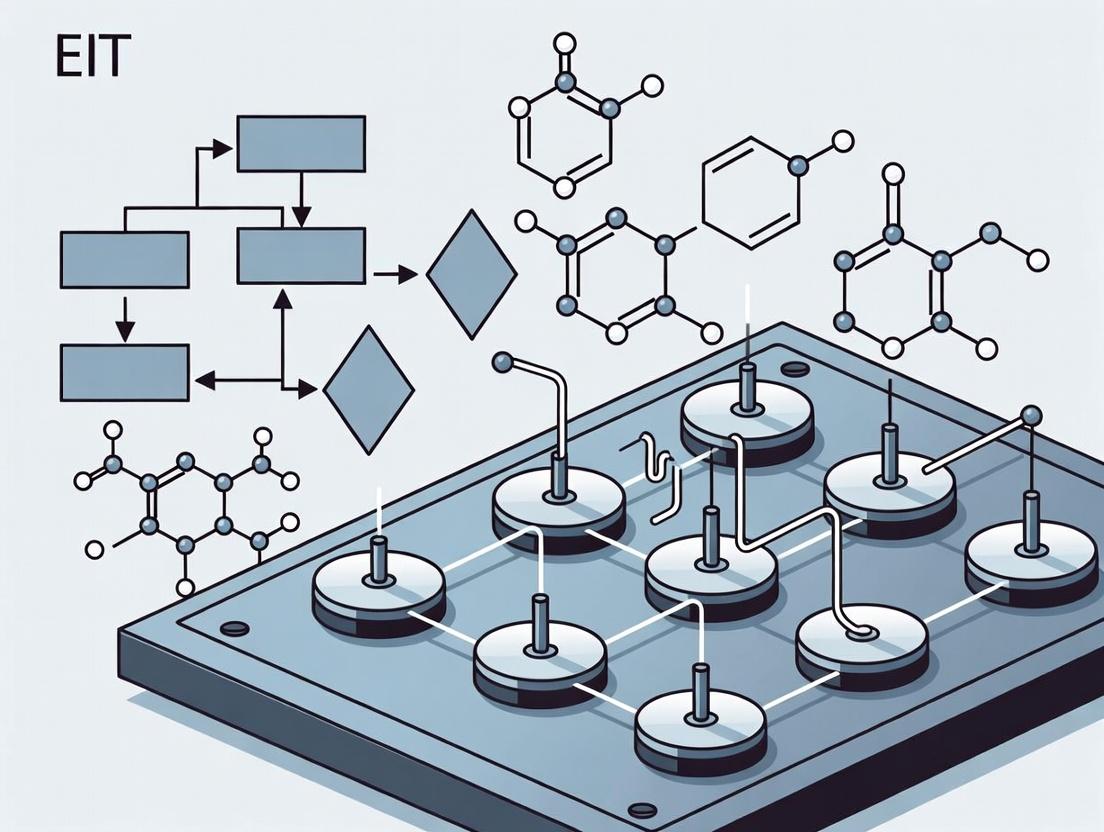
This article provides a comprehensive technical overview of Electrical Impedance Tomography (EIT) instrumentation and electrode systems for biomedical researchers, scientists, and drug development professionals.
EIT Instrumentation & Electrodes: A Technical Guide for Biomedical Researchers and Drug Development
Abstract
This article provides a comprehensive technical overview of Electrical Impedance Tomography (EIT) instrumentation and electrode systems for biomedical researchers, scientists, and drug development professionals. We explore the core principles governing EIT hardware, from signal generation to image reconstruction. We detail state-of-the-art methodologies and applications in preclinical and clinical settings, including tissue engineering and therapeutic monitoring. The guide offers practical solutions for common electrode and instrumentation challenges, such as skin contact impedance and motion artifacts. Finally, we compare EIT with other imaging modalities, validate its performance metrics, and discuss its role as a functional imaging tool in modern biomedical research pipelines.
Core Principles: Understanding EIT Hardware and Electrode Fundamentals
Within the broader thesis on advancing EIT instrumentation and electrode interfaces, this whitepaper dissects the core signal chain. The fidelity of EIT reconstructions is fundamentally limited by the performance of each link in this chain, from programmable current sources to differential voltage measurement. Optimizing this pathway is critical for applications in pulmonary monitoring, cancer detection, and drug development efficacy studies.
The EIT Signal Chain: A Stage-by-Stage Analysis
The EIT signal chain is a synchronous, multi-channel system designed to mitigate noise and extract minute impedance variations.
Diagram 1: EIT Signal Chain Block Diagram
Stage 1: Current Injection
- Function: Injects a known, stable, sinusoidal current (typically 50 kHz – 1 MHz, 100 µA – 5 mA) between a pair of electrodes.
- Key Components: Voltage-Controlled Current Source (VCCS) or Howland pump. Performance is measured by output impedance (>1 MΩ) and compliance voltage.
- Electrode Interface: The electrode-skin impedance directly loads the source, potentially causing signal attenuation and distortion. Research focuses on dry, textile, or hydrogel electrodes to stabilize this interface.
Stage 2: Voltage Measurement
- Function: Measures the resultant differential voltages between adjacent electrode pairs (adjacent drive) or all other pairs (multiple drive).
- Key Components:
- Multiplexers: High-speed, low-channel-resistance (<100 Ω) analog switches. Their capacitance can limit bandwidth.
- Instrumentation Amplifier (IA): Must have high input impedance (>100 MΩ), low noise (<10 nV/√Hz), and excellent Common-Mode Rejection Ratio (CMRR > 100 dB at the drive frequency).
- Filters: Band-pass filtering removes out-of-band noise; notch filters may suppress mains interference (50/60 Hz).
Stage 3: Signal Demodulation & Digitization
- Function: Extracts the amplitude and phase (or real/imaginary components) of the measured voltage signal.
- Methodology: Often performed via synchronous demodulation (e.g., with an analog multiplier or digital lock-in amplifier) before or after ADC conversion.
Table 1: Typical Performance Specifications for EIT Signal Chain Components
| Component | Key Parameter | Target Specification | Impact on Image Quality |
|---|---|---|---|
| Current Source | Output Impedance | >1 MΩ @ 100 kHz | Maintains current uniformity despite varying skin contact impedance. |
| Total Harmonic Distortion (THD) | < -80 dB | Prevents spectral contamination and measurement errors. | |
| Multiplexer | On-Resistance | < 50 Ω | Minimizes signal attenuation and thermal noise. |
| Channel Capacitance | < 50 pF | Preserves high-frequency signal integrity. | |
| IA & Front-End | Input Impedance | > 100 MΩ | Minimizes loading of the measured voltage signal. |
| CMRR | > 100 dB @ f_drive | Rejects common-mode voltage from the body and injection source. | |
| Input-Referred Noise | < 10 nV/√Hz @ f_drive | Determines the minimum detectable impedance change. | |
| ADC | Effective Number of Bits (ENOB) | > 16 bits | Provides dynamic range for both large baseline and small impedance changes. |
| Sampling Rate | > 10 × f_drive | Allows for accurate digital demodulation and oversampling. |
Experimental Protocol: Characterizing Electrode-Skin Interface Impedance
A core experiment in electrode research quantifies the interface impedance, which directly affects the signal chain's performance.
Objective: To measure the magnitude and phase of the electrode-skin impedance across a frequency range (e.g., 10 Hz – 1 MHz).
Materials & Setup:
- Two-electrode or three-electrode (with reference) setup on a skin phantom or human subject.
- Biopotential or electrochemical impedance analyzer (e.g., Keysight E4990A, ADI AD5940).
- Ag/AgCl hydrogel electrodes (reference) and the test electrodes (e.g., dry, textile, microneedle).
Procedure:
- Apply electrodes to the test site with standardized pressure and skin preparation.
- Connect the impedance analyzer to the electrode pair.
- Program a logarithmic frequency sweep from 10 Hz to 1 MHz with a constant, small-amplitude AC test signal (e.g., 1 mV RMS to remain in linear region).
- For each frequency point, record the impedance magnitude (|Z|) and phase (θ).
- Repeat across multiple subjects/sites to establish mean and variance.
- Fit data to an equivalent circuit model (e.g., [Rs(Cdl Rct)]) to extract parameters like double-layer capacitance (Cdl) and charge-transfer resistance (R_ct).
Table 2: Research Reagent & Materials Toolkit for EIT Electrode Characterization
| Item | Function/Description | Example Product/Model |
|---|---|---|
| Impedance Analyzer | Precisely measures complex impedance across a wide frequency range. | Keysight E4990A, Zurich Instruments MF-IA |
| Biopotential Simulator/Phantom | Provides a known, stable electrical model of tissue for system calibration. | CTS (Constant Tissue Simulator), Agar-Saline Phantoms |
| Electrode Gel (Reference) | Provides stable, low-impedance interface for control measurements. | Parker Labs Signa Gel, 0.9% Saline Solution |
| Skin Prep Solution | Standardizes skin surface conditions to reduce impedance variance. | NuPrep Skin Prep Gel |
| Equivalent Circuit Modeling SW | Fits impedance spectra to physical interface models. | ZView, EC-Lab, pyimpspec |
| High-Performance Data Acq. | Multichannel, synchronous voltage measurement for custom EIT systems. | National Instruments PXIe-4464 |
Advanced Considerations: Synchronization & Noise Mitigation
The integrity of the measured voltage is paramount.
Diagram 2: Key Noise Sources & Mitigation Pathways
- Synchronous Timing: The ADC sampling clock, current source waveform generation, and demodulation reference must be phase-locked to a single master clock to avoid drift and phase errors.
- Active Guarding/Shielding: A driven-right-leg circuit or active shields around measurement cables reduce parasitic capacitance and improve CMRR.
The EIT signal chain is a carefully engineered pipeline where each component's non-ideality contributes to overall system error. Research in instrumentation must rigorously characterize each stage, particularly the electrode interface, using standardized experimental protocols. Advancements in high-impedance current sources, low-noise multiplexed front-ends, and integrated digital demodulation are pivotal for translating EIT into a reliable tool for quantitative physiological monitoring and drug development research.
This whitepaper, framed within a broader thesis on Electrical Impedance Tomography (EIT) instrumentation and electrode research, provides an in-depth technical examination of the physics governing the electrode-electrolyte interface (EEI). This interface is the critical, non-ideal element in all bioimpedance sensing modalities, including EIT, impedance cytometry, and biosensing. Understanding its electrical behavior—modeled by the electrochemical double layer (EDL) and charge transfer kinetics—is fundamental for designing sensitive, stable, and accurate biomedical instrumentation for researchers and drug development professionals.
In bioimpedance sensing, we aim to measure the passive electrical properties (impedance) of biological tissues or cellular suspensions. However, the measurement is invariably mediated by electrodes placed in contact with an ionic solution (electrolyte). At this junction, current conduction transitions from electrons in the metal to ions in the electrolyte. This transition is not perfect and gives rise to a complex, frequency-dependent interface impedance that can dominate and distort the desired biological signal.
Fundamental Physics & Models
The Electrochemical Double Layer (EDL)
When a metal electrode is immersed in an electrolyte, a spontaneous charge separation occurs. Ions in the solution arrange to screen the charge on the metal surface, forming two layers: the inner Helmholtz plane (IHP) of specifically adsorbed ions and the outer Helmholtz plane (OHP), leading to the diffuse Gouy-Chapman layer. This structure acts as a capacitor, known as the double-layer capacitance ((C_{dl})).
Faradaic and Non-Faradaic Processes
- Non-Faradaic (Capacitive): Charge is stored/displaced at the interface without electron transfer across it. This is the dominant process for "polarizable" or "blocking" electrodes (e.g., Platinum, Gold in certain potentials).
- Faradaic: Involves actual reduction-oxidation (redox) reactions, where electrons cross the interface. This is described by the Butler-Volmer equation and introduces a charge transfer resistance ((R{ct})) in parallel with (C{dl}).
The Equivalent Circuit: The Randles Model
The electrical behavior of the EEI is classically represented by the Randles Circuit (and its many variants). This lumped-element model is indispensable for interpreting impedance spectra (e.g., from Electrochemical Impedance Spectroscopy - EIS).
Table 1: Components of the Standard Randles Circuit Model
| Component | Symbol | Physical Origin | Frequency Dependence |
|---|---|---|---|
| Solution Resistance | (R_{sol}) | Ionic conductivity of bulk electrolyte. | None (ideal resistor). |
| Double-Layer Capacitance | (C_{dl}) | Charge separation at the Helmholtz/diffuse layer. | Acts as short circuit at high frequencies, open at low. |
| Charge Transfer Resistance | (R_{ct}) | Kinetic barrier to Faradaic redox reactions. | None (ideal resistor). |
| Warburg Impedance | (Z_{W}) | Mass-transfer limitation of reactants/products. | (Z_W = \sigma \omega^{-1/2} (1-j)); dominates at low frequency. |
Experimental Protocols for Interface Characterization
Protocol 1: Electrochemical Impedance Spectroscopy (EIS) of a Planar Gold Electrode in PBS
Objective: To measure and extract the parameters ((Rs), (C{dl}), (R_{ct})) of the electrode-electrolyte interface.
Materials & Setup:
- Potentiostat/Galvanostat with EIS capability (e.g., GAMRY, Autolab, or custom EIT front-end).
- Three-Electrode Cell: Working Electrode (WE): 2 mm diameter gold disk; Counter Electrode (CE): Platinum wire; Reference Electrode (RE): Ag/AgCl (3M KCl).
- Electrolyte: 1x Phosphate Buffered Saline (PBS), pH 7.4, at 25°C.
- Software: For data acquisition and fitting (e.g., GAMRY Echem Analyst, ZView).
Procedure:
- Electrode Preparation: Clean the gold WE by sequential polishing with 1.0 µm and 0.3 µm alumina slurry, followed by sonication in DI water and ethanol. Electrochemically clean via cyclic voltammetry (CV) in 0.5 M H₂SO₄ from -0.2 V to 1.5 V (vs. Ag/AgCl) until a stable CV profile is obtained.
- Cell Assembly: Fill electrochemical cell with 10 mL PBS. Insert the WE, CE, and RE, ensuring the RE is positioned close to the WE via a Luggin capillary.
- Open Circuit Potential (OCP) Measurement: Monitor the WE potential vs. RE for 300 seconds to establish a stable (E_{ocp}).
- EIS Measurement: At (E_{ocp}), apply a sinusoidal AC potential perturbation with amplitude of 10 mV rms. Sweep frequency from 100 kHz to 0.1 Hz, logging 10 points per decade. Ensure the system is in a linear, steady-state at each frequency.
- Data Analysis: Plot Nyquist and Bode plots. Use complex non-linear least squares (CNLS) fitting to fit the Randles model to the acquired data, extracting (Rs), (C{dl}), (R_{ct}), and possibly a constant phase element (CPE) parameter 'α'.
Implications for EIT Instrumentation & Electrode Design
In EIT, where multiple electrodes measure a volume, the interface impedance ((Z{interface})) is in series with the tissue impedance ((Z{tissue})). At low frequencies, (Z{interface}) can be magnitudes larger and more variable than (Z{tissue}), corrupting the image.
Key Design Strategies:
- High Frequency Operation: EIT systems often operate >10 kHz to bypass the high impedance of (C_{dl}).
- Electrode Material & Geometry: Using high-surface-area materials (e.g., sintered Ag/AgCl, porous platinum) increases (C_{dl}), lowering impedance. Geometry must be optimized for current injection and sensitivity.
- Current vs. Voltage Drive: A constant-current source is preferred as it maintains a known current across a variable interface impedance, whereas a voltage source results in an unpredictable current division between (Z{interface}) and (Z{tissue}).
- Modulation & Demodulation: Precision synchronous demodulation is required to extract the small voltage signals across the tissue from the large common-mode voltages at the electrode interfaces.
Table 2: Recent Quantitative Data on Common Bioelectrode Interface Impedance (1 kHz, PBS, 25°C)
| Electrode Material | Geometric Area | Measured Impedance | Z | (kΩ) | Dominant Interface Component | Notes |
|---|---|---|---|---|---|---|
| Gold (smooth) | 0.03 cm² | 12.5 ± 1.8 | (C_{dl}) (~20 µF/cm²) | High impedance, polarizable. | ||
| Platinum Black | 0.03 cm² | 0.8 ± 0.2 | (C_{dl}) (~500 µF/cm²) | High surface area reduces impedance. | ||
| Ag/AgCl (sintered) | 0.03 cm² | 1.5 ± 0.3 | (R_{ct}) (reversible reaction) | Non-polarizable, stable DC potential. | ||
| Stainless Steel 316L | 0.03 cm² | 9.5 ± 2.1 | Mixed ((C{dl}) + (R{ct})) | Prone to corrosion, variable. |
The Scientist's Toolkit: Research Reagent Solutions
Table 3: Essential Materials for EEI & Bioimpedance Research
| Item / Reagent | Function & Relevance |
|---|---|
| Potentiostat/Galvanostat with EIS | Core instrument for applying controlled potentials/currents and measuring precise impedance spectra across a wide frequency range. |
| Ag/AgCl Reference Electrode | Provides a stable, known electrochemical potential against which the working electrode potential is measured and controlled. |
| Phosphate Buffered Saline (PBS) | Standard physiologically-relevant ionic strength electrolyte (0.15 M) for simulating biological fluids and establishing baseline interface behavior. |
| Redox Couples (e.g., [Fe(CN)₆]³⁻/⁴⁻) | Used to introduce a well-defined, reversible Faradaic reaction to study charge transfer kinetics ((R_{ct})) and diffusion (Warburg). |
| Alumina Polishing Suspension (0.3 µm) | For reproducibly cleaning and refreshing the surface of solid metal electrodes (Au, Pt) prior to experiments. |
| Constant Phase Element (CPE) Models | Software-based circuit models used to fit non-ideal capacitive behavior ((C_{dl}) often acts as a CPE due to surface roughness/heterogeneity). |
| Electrodeposition Kit (for Pt Black) | Materials (e.g., H₂PtCl₆ solution) and protocols for electroplating a porous platinum layer to increase effective surface area and lower impedance. |
| Electrode Encapsulation Epoxy (e.g., FDA-81) | For defining precise electrode geometric areas and insulating the back/sides of electrodes during in-vitro testing. |
The physics of the electrode-electrolyte interface is not merely an academic detail; it is the foundational constraint that shapes the design, performance, and interpretation of all bioimpedance sensing systems, from single-cell analysis to whole-body EIT. For researchers advancing EIT instrumentation and electrode technology, a rigorous, quantitative understanding of the EEI—enabled by models like Randles circuit and characterization via EIS—is essential. It guides the selection of materials, operational parameters, and signal processing strategies to ensure that the measured impedance accurately reflects the target biology, thereby enabling more reliable data for drug development and physiological research.
The fidelity and stability of Electrical Impedance Tomography (EIT) instrumentation are critically dependent on the electrode-skin interface. Within broader EIT research, electrode selection is not merely a practical consideration but a foundational element determining signal-to-noise ratio, long-term stability, and applicability in dynamic or wearable settings. This whitepaper provides a comparative technical analysis of four principal electrode material categories—Ag/AgCl, Gold, Stainless Steel, and Flexible/Textile Electrodes—framed within the rigorous demands of EIT instrumentation and biomedical sensing research.
Fundamental Principles & Electrode-Electrolyte Interface
Each electrode material forms a unique interface with the electrolyte (e.g., skin, gel). The half-cell potential, impedance, and polarization behavior are governed by the charge transfer and ionic double-layer formation. Ag/AgCl provides a stable, non-polarizable interface due to reversible Ag/Cl⁻ reactions. In contrast, Gold and Stainless Steel are polarizable, acting as capacitors, which leads to potential drift under DC conditions but can offer lower interface impedance at specific AC frequencies relevant to EIT.
Comparative Material Analysis
Table 1: Core Electrical and Physical Properties of Electrode Materials
| Property | Ag/AgCl (Wet Gel) | Gold (Dry/Sputtered) | Stainless Steel (Dry) | Flexible/Textile (Conductive Polymer) |
|---|---|---|---|---|
| Half-Cell Potential (mV) | ~220 (Stable, reversible) | ~Variable (Polarizable) | ~Variable (Polarizable) | Highly Variable (Composite-dependent) |
| Interface Impedance @ 10Hz (Ω·cm²) | 1-10 kΩ | 10-50 kΩ | 50-200 kΩ | 5-100 kΩ (Highly pressure/ moisture-dependent) |
| Polarization Type | Non-polarizable (Reversible) | Polarizable (Capacitive) | Polarizable (Capacitive) | Often Polarizable |
| Long-term Stability (hrs) | 24-48 (Gel dries) | 8-12 (Oxidation, motion artifact) | 4-8 (Corrosion, artifact) | 24+ (Mechanical fatigue failure) |
| Common EIT Frequency Range | 10 kHz - 1 MHz | 50 kHz - 500 kHz | 100 kHz - 1 MHz | 10 kHz - 250 kHz (Susceptible to motion noise) |
| Key Advantage | Stable DC potential, Low noise | Excellent conductivity, Biocompatibility | Durability, Low cost | Comfort, Conformability, Wearability |
| Primary Disadvantage | Gel dry-out, Skin irritation | High cost, Motion artifact susceptibility | High impedance, Corrosion potential | High impedance variability, Washability |
Table 2: Application Suitability in EIT & Biomedical Research
| Application Context | Recommended Electrode Type | Rationale & Key Considerations |
|---|---|---|
| High-Fidelity, Short-Term Lab EIT | Ag/AgCl with hydrogel | Gold standard for stable contact impedance; reproducible baseline. |
| High-Density Arrays, Neuroimaging | Gold-plated or sintered Ag/AgCl | Fine spatial resolution, compatible with EEG/EIT multimodal setups. |
| Long-Term Ambulatory Monitoring | Flexible/Textile (Ag/AgCl-coated yarn) | Conformability and subject compliance over hours/days; trade-off in signal stability. |
| Low-Cost, Disposable Screening | Stainless Steel (316L) | Adequate for single-use, mid-frequency EIT applications. |
| Chronic, Implantable Sensors | Gold or Platinum-Iridium | Biostability and minimal corrosion; not primary for skin-surface EIT. |
Experimental Protocols for Electrode Characterization in EIT Research
Protocol: Electrode-Skin Interface Impedance Spectroscopy
Objective: To measure and compare the complex impedance spectrum of each electrode type on human skin in vivo. Materials: See "The Scientist's Toolkit" (Section 6). Method:
- Site Preparation: Abrade the ventral forearm with fine-grit paste, clean with 70% ethanol, and allow to dry.
- Electrode Placement: Apply electrodes of each type in a 4-wire configuration, with a 2 cm inter-electrode distance.
- Instrument Setup: Connect to a potentiostat/impedance analyzer (e.g., Ganny Interface 1010E). A reference Ag/AgCl electrode is placed 5 cm away.
- Measurement: Apply a sinusoidal voltage of 10 mV RMS across a frequency range of 1 Hz to 1 MHz. Record magnitude |Z| and phase (θ).
- Data Analysis: Fit data to equivalent circuit models (e.g., Randles circuit) to extract parameters like solution resistance (Rₛ), charge transfer resistance (Rₜ), and constant phase element (CPE).
Protocol: Motion Artifact Susceptibility Testing
Objective: Quantify signal drift and noise generation under simulated movement. Method:
- Mount electrodes on a motorized stage attached to a skin phantom with electrical properties mimicking human tissue.
- Acquire continuous EIT data at 50 kHz using a research EIT system (e.g., Swisstom Pioneer).
- Subject the stage to controlled, cyclical lateral displacement (0.5-2 mm amplitude, 0.1-1 Hz).
- Calculate the Motion Artifact Power (MAP) as the integrated power in the frequency band of movement, normalized to the baseline signal power.
Signaling Pathways and Experimental Workflows
Title: Electrode Material Evaluation Workflow for EIT Research
Title: Signal Pathway from Electrode Material to EIT Interface Quality
The Scientist's Toolkit: Key Research Reagent Solutions
Table 3: Essential Materials for Electrode-EIT Research
| Item | Function in Research | Example Product / Specification |
|---|---|---|
| Hydrogel Electrolyte | Provides stable ionic interface between skin and Ag/AgCl electrode; reduces impedance. | SignaGel Electrode Gel (Parker Laboratories). High chloride concentration for stability. |
| Skin Abrasion Gel | Lightly removes stratum corneum to reduce contact impedance variability. | NuPrep Skin Prep Gel (Weaver and Co.). |
| Conductive Adhesive | Secures electrodes, maintains electrical contact during movement. | ARcare 9265 (Adhesives Research). Conductive acrylic adhesive. |
| Tissue Phantom | Calibrates EIT systems; provides reproducible electrical properties. | Agar-based phantom with NaCl and surfactant for ~100-500 Ω·cm resistivity. |
| Electrode Impedance Analyzer | Measures complex impedance spectrum of electrode-skin interface. | Ganny Instruments Interface 1010E Potentiostat with EIS capability. |
| Flexible Substrate | Base material for fabricating custom textile/flexible electrodes. | Polyimide (Kapton) or stretchable thermoplastic polyurethane (TPU) film. |
| Conductive Ink/Yarn | Creates flexible electrode traces or textile electrodes. | Dupont PE872 Silver/Silver Chloride ink or Shieldex conductive yarn. |
| Reference Electrode | Provides stable potential for half-cell measurements in benchtop tests. | BASi RE-5B Ag/AgCl Reference Electrode with Vycor frit. |
This guide details the core instrumentation components for Electrical Impedance Tomography (EIT), framed within the broader thesis of advancing EIT instrumentation and electrode research for biomedical applications. The precision and integration of these components directly impact the quality of impedance data, which is critical for researchers and drug development professionals investigating tissue properties, drug delivery, and cellular responses in real-time.
Core Component Analysis
The performance of an EIT system hinges on four key hardware elements. Their specifications dictate the system's accuracy, speed, and suitability for in-vivo or in-vitro studies.
Table 1: Key Specifications of Core EIT Instrumentation Components
| Component | Critical Parameter | Typical Target Specification for Bio-EIT | Impact on Measurement |
|---|---|---|---|
| Current Source | Output Impedance | >1 MΩ at 10 kHz - 1 MHz | High output impedance ensures current injection is independent of contact impedance. |
| Frequency Range | 10 kHz - 1 MHz (for biomedical) | Determines tissue penetration depth and cellular response sensitivity. | |
| Stability & Accuracy | <0.1% variation over 8 hours | Essential for detecting subtle, long-term impedance changes in experiments. | |
| Voltmeter / Differential Amplifier | Common-Mode Rejection Ratio (CMRR) | >100 dB at measurement frequency | Rejects common noise, crucial in high-impedance electrode environments. |
| Input Impedance | >10 GΩ in parallel with <5 pF | Minimizes signal loading and distortion from high electrode-skin impedance. | |
| Bandwidth | DC to >1 MHz | Must accommodate the fundamental and harmonic frequencies of the injected current. | |
| Multiplexer | Switching Speed | <100 µs (settling to 0.01%) | Limits maximum frame rate in multi-electrode EIT systems. |
| Channel Crosstalk | <-80 dB at 500 kHz | Prevents signal bleed between adjacent measurement channels. | |
| On-Resistance | <100 Ω, stable with signal | Low, stable resistance to avoid signal attenuation and non-linearities. | |
| Data Acquisition System (DAQ) | Analog-to-Digital Converter (ADC) Resolution | 16-24 bits | Determizes dynamic range and ability to resolve small voltage changes. |
| Simultaneous Sampling | Required for multi-channel voltmeters | Eliminates phase error between channels; critical for accurate impedance calculation. | |
| Sampling Rate | >10x the current frequency (Nyquist criterion) | Must be high enough to accurately digitize the voltage waveform. |
Integrated System Workflow & Protocol
A typical EIT experiment for tissue culture monitoring involves a specific sequence orchestrated by these components.
Experimental Protocol: Real-Time Impedance Monitoring of a 3D Tissue Culture
- Objective: To monitor the changes in the complex impedance of a 3D tissue culture model in response to a drug candidate over 72 hours.
- Setup: A multi-electrode array (e.g., 16-electrode setup) surrounds a perfused tissue culture chamber. The system is housed in a temperature-controlled (37°C) Faraday cage.
- Procedure:
- System Calibration: Prior to culture introduction, perform open, short, and known load calibration measurements across all electrode pairs and frequencies.
- Baseline Acquisition: Introduce culture medium and acquire baseline impedance data for 1 hour to ensure stability.
- Pattern Application: The multiplexer, under DAQ control, sequentially connects the current source to adjacent electrode pairs (adjacent-drive pattern).
- Signal Injection: For each drive pair, the current source injects a constant, low-amplitude (e.g., 100 µA RMS), multi-frequency sinusoidal current.
- Voltage Measurement: For each current injection, the multiplexer connects all non-driving electrodes to high-impedance differential voltmeters (often part of a simultaneous-sampling DAQ). Voltages are measured synchronously.
- Data Acquisition: The DAQ digitizes all voltage measurements. This constitutes one frame. A full set of injections for all drive pairs constitutes one scan.
- Intervention & Monitoring: At time T=0, introduce the drug candidate to the perfusion medium. Repeat scans at a defined interval (e.g., every 10 minutes) for 72 hours.
- Data Processing: Reconstruct impedance distributions or calculate average impedance changes for the region of interest using off-line algorithms.
Diagram Title: EIT Data Acquisition Cycle for Tissue Monitoring
The Scientist's Toolkit: Essential Research Reagents & Materials
Table 2: Key Reagents and Materials for EIT Cell/Tissue Studies
| Item | Function in EIT Research | Example Product / Specification |
|---|---|---|
| Multi-Electrode Array (MEA) | Provides the physical interface for current injection and voltage sensing on 2D cell layers or 3D tissues. | 16-64 electrode MEA, often with gold or platinum electrode sites. |
| Electrode Gel / Electrolyte | Ensures stable, low-impedance electrical contact between electrodes and biological sample (e.g., skin, tissue culture). | Sterile, conductive hydrogel (e.g., 0.9% saline-based) for in-vitro; clinical ECG gel for in-vivo. |
| Perfusion System with Media | Maintains tissue viability during long-term experiments and enables controlled introduction of drug compounds. | Peristaltic pump, temperature-controlled chamber, and standard culture media (e.g., DMEM). |
| Calibration Phantoms | Known impedance structures used to validate system performance and reconstruction algorithms. | Saline tank with precise insulating inclusions; agar phantoms with varying ionic concentrations. |
| Reference Electrodes | Provide a stable reference potential for voltage measurements in electrochemical or detailed bioimpedance setups. | Ag/AgCl pellet or wire electrodes. |
| Shielding & Grounding Kit | Minimizes interference from external electromagnetic sources (e.g., line noise, equipment). | Copper mesh tape, Faraday cage enclosure, single-point ground connection. |
Advanced Considerations: Signaling Pathways in Instrument Design
The interaction between components creates an electrical "signal pathway" where noise and non-idealities can be introduced. Understanding this pathway is key to system optimization.
Diagram Title: Signal Pathway in a Single EIT Measurement
The synergistic design of high-performance current sources, voltmeters, multiplexers, and data acquisition systems forms the foundation of reliable EIT instrumentation. For researchers in drug development, optimizing these components according to the specifications and protocols outlined enables the capture of high-fidelity, time-series impedance data. This data is crucial for validating hypotheses related to tissue pathophysiology, drug efficacy, and toxicology within the evolving paradigm of EIT-based biomarkers. Future work in this thesis will focus on integrated circuit (IC) implementations and advanced electrode materials to push the boundaries of spatial resolution and functional imaging.
Electrical Impedance Tomography (EIT) is a non-invasive imaging modality that reconstructs the internal conductivity distribution of a subject by applying electrical currents and measuring boundary voltages. Within biomedical applications (Bio-EIT), the choice of operational frequency is a fundamental design parameter, critically influencing the quality and type of physiological and pathological information obtained. This guide, situated within a broader thesis on advancing EIT instrumentation and novel electrode interfaces, provides a technical framework for researchers to select between broadband (frequency-sweep), single-frequency, and multi-frequency strategies. The decision hinges on the target application, the biophysical properties of interest (e.g., cell viability, membrane integrity, extracellular/intracellular fluid shifts), and instrumental constraints.
Core Concepts: Bioimpedance and Frequency Dispersion
Biological tissues exhibit frequency-dependent impedance, known as dispersion, due to polarization effects at cellular interfaces. This is classically modeled by the β-dispersion (kHz-MHz range), primarily reflecting cell membrane capacitance and intracellular properties.
- Single-Frequency EIT: Operates at one fixed frequency, typically between 10 kHz and 1 MHz. It assumes a relatively stable conductivity map for that specific frequency, suitable for monitoring dynamic processes like lung ventilation or gastric emptying where temporal resolution is paramount.
- Multi-Frequency EIT (MF-EIT): Uses a discrete set of frequencies (e.g., 5-10) within a range. It aims to extract spectrally distinct information, enabling differentiation of tissue types or states (e.g., ischemic vs. healthy tissue) based on their dispersion characteristics.
- Broadband EIT: Employs a continuous sweep or a very dense set of frequencies across a wide spectrum (e.g., 1 kHz to 10 MHz). This strategy seeks to fully characterize the impedance spectrum at each image pixel, facilitating advanced modeling and extraction of specific physiological parameters.
Comparative Analysis of Strategies
The table below summarizes the key technical and application-oriented characteristics of each strategy.
Table 1: Comparison of Frequency Strategies in Bio-EIT
| Feature | Single-Frequency EIT | Multi-Frequency EIT (MF-EIT) | Broadband EIT |
|---|---|---|---|
| Typical Range | 10 kHz – 1 MHz (fixed) | 2-8 Frequencies, e.g., 50 kHz, 100 kHz, 500 kHz, 1 MHz | Sweep from ~1 kHz to >10 MHz |
| Primary Goal | High-speed imaging of conductivity changes | Tissue characterization via discrete dispersion | Complete spectral analysis & parameter extraction |
| Data Complexity | Low | Moderate | High |
| Inverse Problem | Simpler, one parameter per pixel | Coupled or sequential, few parameters per pixel | Complex, requires spectral model fitting |
| Hardware Speed | Very Fast (simple waveforms) | Moderate (requires switching/generation) | Slow (due to sweep time) |
| Spectral Info | None | Discrete samples | Continuous function |
| Key Applications | Real-time lung imaging, perfusion monitoring | Cancer detection, brain stroke differentiation, cell culture monitoring | Cytosolic conductivity estimation, detailed biophysical modeling |
| Main Challenge | Contrast ambiguity (what causes change?) | Optimal frequency selection, reconstruction coupling | Model mismatch, long data acquisition, SNR at extremes |
Table 2: Example Measured Tissue Impedance Properties (Relative Magnitude & Characteristic Frequency)
| Tissue Type | Low-f Conductivity (S/m) ~10 kHz | High-f Conductivity (S/m) ~1 MHz | Characteristic β-Dispersion Frequency | Notes |
|---|---|---|---|---|
| Skeletal Muscle | 0.05 - 0.1 | 0.3 - 0.6 | ~50 - 200 kHz | Highly anisotropic, varies with contraction |
| Myocardium | 0.08 - 0.12 | 0.3 - 0.5 | ~50 - 150 kHz | Similar dispersion to muscle, critical for ischemia |
| Lung (Inflated) | 0.05 - 0.1 | 0.1 - 0.2 | Broad | Massive change with air content (ventilation) |
| Liver | 0.03 - 0.05 | 0.1 - 0.15 | ~80 - 200 kHz | Altered in fibrosis, fatty liver disease |
| Blood | 0.6 - 0.7 | 0.6 - 0.7 | Minimal (No β) | Highly conductive, nearly resistive |
Experimental Protocols
Protocol for MF-EIT Tissue Differentiation Study
This protocol outlines a common ex vivo or preclinical in vivo study to differentiate tissue types.
- System Setup: Utilize a voltage- or current-controlled MF-EIT system capable of generating sinusoidal currents at pre-defined frequencies (e.g., 10, 50, 100, 500 kHz, 1 MHz).
- Electrode Configuration: Apply a planar array or circumferential belt of electrodes (e.g., 16-32 Ag/AgCl electrodes) around the target region (e.g., limb, organ).
- Data Acquisition: For each frequency:
- Apply adjacent or opposite current injection patterns.
- Measure all corresponding boundary voltage differentials.
- Record phase and magnitude (or real/imaginary components).
- Reconstruction: Reconstruct separate conductivity images for each frequency using a normalized difference method (e.g., temporal or dual-frequency).
- Analysis: Calculate the Frequency-Difference Image (FDI) or the Weighted Frequency-Difference Image to highlight areas with strong dispersion, indicative of specific tissue states (e.g., tumor vs. normal).
Protocol for Broadband Cytosolic Conductivity Estimation
This protocol is used in specialized bioimpedance spectroscopy (BIS) and research EIT systems.
- Broadband Stimulation: Apply a current sweep logarithmically from 1 kHz to 10 MHz, using a constant amplitude or a chirp signal.
- Synchronous Measurement: Acquire voltage data with a high-speed, phase-sensitive digital acquisition system (e.g., NI PXIe).
- Model Fitting (per pixel/voxel):
- For each pixel's recovered impedance spectrum, fit a Cole-Cole model or a Double-Shell Suspension Model.
- The Cole model: ( Z = R∞ + (R0 - R∞) / [1 + (jωτ)^α] ), where ( R0 ) is extracellular resistance, ( R_∞ ) is high-frequency limit, and τ is related to membrane time constant.
- Extract intracellular (cytosolic) conductivity from the fitted model parameters using known structural assumptions.
- Image Mapping: Generate parametric images of derived quantities like intracellular conductivity or membrane capacitance.
Visualization of Key Concepts
Decision Flow for Bio-EIT Frequency Strategy Selection
MF-EIT Experimental Workflow for Tissue Characterization
The Scientist's Toolkit: Key Research Reagent Solutions
Table 3: Essential Materials for Bio-EIT Frequency Research
| Item | Function & Relevance to Frequency Strategies |
|---|---|
| Ag/AgCl Electrode Gel | Standard electrode interface. Reduces polarization impedance, critical for accurate measurements at low frequencies (<50 kHz) in all strategies. |
| Electrode-Skin Impedance Model Phantoms | Calibration phantoms with known, tunable RC circuits. Essential for validating system performance across frequency bands and de-embedding electrode effects. |
| Sodium Chloride (NaCl) & Agar | For creating simple conductive phantoms with stable, predictable conductivity. Base material for constructing heterogeneous phantoms for method validation. |
| Polyvinylpyrrolidone (PVP) or Cellulose | Used to create phantoms with controlled dispersive (Cole-Cole) properties, mimicking tissue β-dispersion for MF- and Broadband-EIT calibration. |
| Conductive Polymer Electrodes (e.g., PEDOT:PSS) | Emerging research material. Offers lower impedance and better charge injection than Ag/AgCl over broad frequencies, potentially improving SNR. |
| Insulating Microbeads (e.g., Sephadex) | In suspension phantoms, they mimic cells, allowing controlled variation of intracellular volume fraction for validating biophysical models in broadband EIT. |
| Dielectric Spectroscopy Kit | (e.g., commercial LCR meter with probe). Used to ex vivo measure reference impedance spectra of tissue samples, providing ground truth for EIT image interpretation. |
Implementation & Use Cases: Methodologies for Preclinical and Clinical EIT
Electrode Array Design and Placement Strategies for Thoracic, Cerebral, and Breast EIT
1. Introduction
This whitepaper, framed within a broader thesis on Electrical Impedance Tomography (EIT) instrumentation and electrode research, provides an in-depth technical guide on application-specific electrode design and placement. Optimal strategies are critical for maximizing signal quality, spatial resolution, and clinical relevance in thoracic, cerebral, and breast EIT.
2. Thoracic EIT for Pulmonary and Cardiac Monitoring
Thoracic EIT visualizes ventilation and perfusion dynamics. Electrode arrays must account for complex anatomical structures and organ movement.
2.1 Array Design & Placement Protocol
- Position: One plane of electrodes placed around the thorax at the 4th-6th intercostal space (parasternal line to mid-axillary line). A second plane may be added for 3D imaging.
- Protocol: 1) Identify the intended plane (e.g., 5th ICS). 2) Mark electrode positions equidistantly (typically 16 or 32). 3) Clean skin and apply adhesive electrode belts or individual Ag/AgCl electrodes. 4) For belt systems, ensure uniform tension.
- Key Challenge: Variability in thoracic circumference and organ position necessitates adaptive or subject-specific plans.
2.2 Key Quantitative Parameters for Thoracic Arrays Table 1: Standard Parameters for Thoracic EIT Electrode Arrays
| Parameter | Typical Value / Specification | Rationale |
|---|---|---|
| Number of Electrodes | 16, 32, or 64 | 16 is clinical standard; 32/64 enhance resolution for research. |
| Electrode Material | Ag/AgCl, Stainless Steel | Ag/AgCl offers stable skin-contact impedance. |
| Electrode Size (Area) | 10 - 35 mm² | Larger electrodes reduce contact impedance but blur spatial precision. |
| Inter-Electrode Spacing | Equidistant (~5-8 cm for 16-electrode) | Ensures uniform current injection density. |
| Placement Plane | 4th to 6th Intercostal Space | Captures largest lung cross-section. |
| Reference Electrode | Often on abdomen | Provides a stable voltage reference. |
3. Cerebral EIT for Neuromonitoring
Cerebral EIT targets intracranial hemorrhage, ischemia, or epileptic activity. The skull's high impedance presents a major challenge.
3.1 Array Design & Placement Protocol
- Position: Electrodes are placed according to the international 10-20 EEG system, focusing on the region of interest (e.g., C3, C4, P3, P4 for parietal coverage).
- Protocol: 1) Measure and mark 10-20 system locations. 2) Abrade skin and apply high-conductivity electrolyte gel. 3) Secure electrodes with headgear or adhesive. 4) Ensure impedances are <5 kΩ at 50 Hz.
- Key Challenge: Skull attenuation requires high-precision placement and sophisticated reconstruction algorithms to infer internal impedance changes.
3.2 Key Quantitative Parameters for Cerebral Arrays Table 2: Standard Parameters for Cerebral EIT Electrode Arrays
| Parameter | Typical Value / Specification | Rationale |
|---|---|---|
| Number of Electrodes | 32, 64, or 128 | High density required to overcome skull's low conductivity. |
| Electrode Material | Ag/AgCl | Essential for stable, low-impedance contact over long periods. |
| Electrode Type | Cup electrodes with gel | Facilitates secure attachment and gel application. |
| Contact Impedance Target | < 5 kΩ | Critical for maximizing signal-to-noise ratio. |
| Placement System | International 10-20 or 10-10 | Ensures reproducible anatomical registration. |
| Reference Electrode | Often on mastoid or earlobe | Electrically quiet location. |
4. Breast EIT for Cancer Detection
Breast EIT aims to differentiate malignant from benign tissue based on dielectric properties. Electrode contact must be gentle yet consistent.
4.1 Array Design & Placement Protocol
- Position: Electrodes are arranged in a circular pattern on a planar or slightly curved surface that compresses the breast. Arrays may be integrated into a mammography-like plate.
- Protocol: 1) Patient lies prone with breast placed through an aperture. 2) The array is gently apposed to the breast surface. 3) Ultrasound gel ensures uniform coupling. 4) Pressure is standardized to minimize deformation-induced artifact.
- Key Challenge: Achieving uniform contact pressure across a compliant, variable-shaped organ.
4.2 Key Quantitative Parameters for Breast Arrays Table 3: Standard Parameters for Breast EIT Electrode Arrays
| Parameter | Typical Value / Specification | Rationale |
|---|---|---|
| Number of Electrodes | 64, 96, or 256 | High count needed for high-resolution imaging of small lesions. |
| Electrode Configuration | Planar or cup-shaped array | Conforms to breast anatomy. |
| Electrode Material | Gold-plated or Stainless Steel | Biocompatible, suitable for repeated use with gel. |
| Coupling Medium | Ultrasound Gel | Ensures consistent electrical contact without pressure artifacts. |
| Measurement Mode | Often Multi-Frequency (MF-EIT) | Exploits spectral differences in tissue conductivity. |
| Co-registration | With MRI or Mammography | Essential for validating EIT findings. |
5. The Scientist's Toolkit: Essential Research Reagents & Materials
Table 4: Key Research Reagent Solutions for EIT Electrode Studies
| Item | Function in Research |
|---|---|
| Ag/AgCl Electrode Gel (e.g., SigmaGel) | Provides stable, hydrating ionic interface between skin and electrode, crucial for maintaining low contact impedance. |
| Abrasive Skin Prep Gel (e.g., NuPrep) | Gently removes stratum corneum to significantly reduce and stabilize skin-electrode impedance, vital for cerebral EIT. |
| Conductive Adhesive Hydrogel (e.g., ARcare 90445) | Used for securing electrodes in long-term monitoring, combines adhesion with electrical conductivity. |
| Phantom Materials (Agarose, NaCl, KCl, Vegetable Oil) | Used to create tissue-simulating phantoms with known conductivity properties for validating array performance. |
| 3D-Printable Conductive Filament (e.g., Carbon-filled PLA) | Enables rapid prototyping of custom, anatomically shaped electrode array holders and substrates. |
| High-Precision Impedance Analyzer (e.g., Keysight E4990A) | Bench-top validation of electrode contact impedance and characterization of materials across frequency. |
6. Experimental Protocol: Comparative Evaluation of Electrode Arrays
Objective: To evaluate the performance of different electrode arrays (e.g., 16 vs. 32 electrode) on a thoracic phantom.
- Phantom Fabrication: Create a cylindrical agarose phantom (1.5% agar, 0.9% NaCl) with embedded insulating and conductive targets.
- Array Mounting: Mount electrode belts of both designs at the same axial plane on the phantom.
- Data Acquisition: Connect to a calibrated EIT system (e.g., Swisstom Pioneer, or lab-built). Apply adjacent current injection pattern and collect voltage data at 50 kHz.
- Image Reconstruction: Reconstruct images using a standardized algorithm (e.g., Gauss-Newton with Tikhonov regularization) on a consistent finite element model mesh.
- Analysis: Quantify performance via Contrast-to-Noise Ratio (CNR) and Position Error of reconstructed targets.
7. Visualization: Experimental Workflow for EIT Array Validation
EIT Array Validation Workflow
8. Conclusion
Optimal electrode array design and placement are fundamentally application-dependent. Thoracic EIT prioritizes reproducible circumferential contact, cerebral EIT demands high-density skull coverage with ultra-low impedance, and breast EIT requires high-resolution planar arrays with compliant coupling. Standardized experimental protocols and quantitative performance metrics, as outlined, are essential for advancing EIT instrumentation within rigorous research frameworks. Future work in the parent thesis will focus on novel, adaptive electrode materials and multi-modal array designs to further enhance these applications.
This whitepaper details technical protocols for long-term and ambulatory Electrical Impedance Tomography (EIT), developed within the framework of a doctoral thesis on advanced EIT instrumentation and dry electrode design. The shift from short-term clinical monitoring to continuous, patient-friendly, longitudinal data capture presents significant challenges in electrode-skin interface stability and wearable system integration, which are critical for applications in chronic disease management and pharmaceutical trial outcome measurement.
Electrode Fixation Protocols
Securing a stable electrode-skin interface for >24 hours is paramount. The primary failure modes are drying of conductive media, mechanical motion artifact, and skin irritation.
Electrode Assembly & Skin Preparation
- Electrode Choice: Flexible, breathable Ag/AgCl hydrogel electrodes (e.g., Kendall H124SG) are standard. For >72h monitoring, dry electrode arrays fabricated on polyimide or textile substrates are recommended.
- Skin Preparation: Shave if necessary. Clean skin with 70% isopropyl alcohol wipes. Gently abrade the stratum corneum using 3M Red Dot Skin Prep or fine-grit medical abrasive paper until slight erythema appears, then re-clean.
- Interface Medium: For hydrogel electrodes, standard gel suffices. For long-term dry electrode contact, a viscous, non-drying liquid conductive medium (e.g., Spectra 360 Electrode Gel) is applied minimally to reduce dry-out.
- Fixation Method: A layered approach is essential:
- Primary Adhesion: Apply electrode/hydrogel.
- Mechanical Stabilization: Overlay with a rigid or semi-rigid polymer ring (e.g., 3D-printed PLA) around the electrode to decouple lateral skin stretch from the contact point.
- Secondary Fixation: Cover the entire assembly with a transparent, breathable, waterproof surgical film dressing (e.g., Tegaderm or OpSite). Ensure edges are sealed.
- Strain Relief: Secure cabling to the skin with adhesive cable clips several centimeters from the electrode, forming a service loop to prevent tugging.
Quantitative Performance Metrics for Fixation Methods
Data from recent studies comparing fixation methods over 48 hours are summarized below.
Table 1: Electrode-Skin Interface (ESI) Impedance Stability Over 48 Hours
| Fixation Protocol | Initial Impedance at 10 kHz (kΩ) | Impedance at 48h (kΩ) | % Change | Motion Artifact SNR (dB) |
|---|---|---|---|---|
| Hydrogel + Standard Tape | 2.1 ± 0.5 | 15.3 ± 8.7 | +629% | 18.5 ± 3.2 |
| Hydrogel + Breathable Film | 2.3 ± 0.4 | 5.2 ± 2.1 | +126% | 24.1 ± 4.1 |
| Dry Electrode + Stabilizing Ring + Film | 22.5 ± 6.0 | 28.4 ± 9.5 | +26% | 29.7 ± 5.3 |
| Textile Electrode Integrated Garment | 35.0 ± 12.0 | 38.1 ± 10.2 | +9% | 26.8 ± 4.8 |
Experimental Protocol 1: Long-Term ESI Impedance Test
- Objective: Quantify the stability of electrode-skin impedance.
- Setup: Apply electrodes per protocol on the lower thoracic region of 10 volunteers. Connect to an impedance analyzer (e.g., AD5941 evaluation board).
- Procedure: Measure impedance magnitude and phase at 1, 10, 50, and 100 kHz at time zero (T0) and every 6 hours for 48 hours. Subjects maintain a normal activity log.
- Analysis: Calculate mean and standard deviation for each time point. Perform a repeated-measures ANOVA to compare fixation protocols.
Ambulatory EIT System Integration
The core challenge is integrating a high-precision, multi-channel current source and voltage measurement system into a compact, low-power, wearable form factor.
System Architecture Protocol
- Front-End ASIC: Utilize a dedicated EIT analog front-end (AFE) chip such as the TI ADS1298-family AFE (optimized for bio-impedance) or custom ASICs (e.g., Swiss Center for Electronics and Microtechnology CSEM’s dedicated EIT chip). These integrate current drivers, multiplexers, and programmable gain amplifiers.
- Digital Core: A low-power microcontroller (e.g., ARM Cortex-M4) manages data acquisition, timing, and demodulation. An FPGA is used for higher channel counts (>32) for real-time image reconstruction.
- Data Transmission: Implement Bluetooth Low Energy 5.2 (BLE) for continuous streaming to a mobile gateway or onboard SD card logging for high-fidelity data.
- Power Management: Use a 3.7V Li-Po battery (≥1000mAh) with a high-efficiency switched-mode power supply (SMPS) generating clean ±2.5V rails for analog circuitry. Estimated power budget: <250mW for continuous 50-frame/second imaging on 16 electrodes.
Table 2: Ambulatory EIT System Specifications & Performance Targets
| Parameter | Target Specification | Rationale |
|---|---|---|
| Channels | 16 to 32 | Thoracic imaging requires 16+ electrodes for adequate resolution. |
| Current Source | 1 mA pk-pk, 50-500 kHz | Safety (IEC 60601), depth penetration, and avoiding physiological artifacts. |
| CMRR | >100 dB at 50/60 Hz | Critical for rejecting ambient powerline interference. |
| Input Impedance | >100 MΩ | Minimizes signal loss due to variable electrode impedance. |
| Frame Rate | 10-100 fps | Capturing respiratory (0.2-1 Hz) and cardiac (1-2 Hz) dynamics. |
| Data Output | BLE + onboard storage (16 GB) | Real-time monitoring and backup of raw data for analysis. |
Experimental Protocol for System Validation
- Objective: Validate system performance against a clinical-grade stationary EIT device (e.g., Dräger PulmoVista 500).
- Phantom Setup: Use a saline tank phantom with known insulating and conductive targets.
- Procedure: Simultaneously collect EIT data from the ambulatory system and the reference system under identical electrode geometry. Introduce dynamic changes (target movement, conductivity change).
- Analysis: Compare time-series data for a single channel (correlation coefficient >0.98). Reconstruct images and calculate the Root Mean Square Error (RMSE) of target position and conductivity contrast.
Signaling Pathways & System Workflow
Diagram 1: Ambulatory EIT Data Acquisition & Processing Pathway
The Scientist's Toolkit: Key Research Reagents & Materials
Table 3: Essential Materials for Long-Term Ambulatory EIT Research
| Item | Function & Rationale |
|---|---|
| Ag/AgCl Hydrogel Electrodes (e.g., Kendall H124SG) | Gold-standard wet electrode providing stable, low-impedance contact. Baseline for comparison studies. |
| Flexible Substrate Dry Electrodes (e.g., Screen-printed Ag/AgCl on Polyimide) | Enables integration into garments and long-term use without gel dry-out. Key research focus for chronic monitoring. |
| Breathable Transparent Film Dressing (e.g., 3M Tegaderm) | Critical for securing electrodes, protecting from moisture, and allowing skin inspection for irritation. |
| Skin Abrasion System (e.g., 3M Red Dot Prep Pad or NuPrep Gel) | Reduces stratum corneum resistance, ensuring low initial impedance crucial for signal quality. |
| High-Viscosity Conductive Gel (e.g., Spectra 360) | Long-lasting interface for dry electrodes; minimizes migration and dry-out compared to standard gels. |
| Programmable Impedance Analyzer (e.g., AD5941 Eval Board) | For precise, frequent measurement of electrode-skin interface impedance to quantify fixation stability. |
| Modular EIT Development Kit (e.g., Swisstom Pioneer Set) | Accelerates prototyping of wearable systems by providing a validated, research-ready hardware platform. |
| Anthropomorphic Thorax Phantom (e.g., 3D-printed with conductive compartments) | Essential for controlled, reproducible testing of system performance and image reconstruction algorithms. |
Robust long-term and ambulatory EIT monitoring requires a co-optimized approach combining rigorous, layered electrode fixation protocols with deeply integrated, low-power instrumentation. The experimental protocols and specifications detailed herein provide a framework for researchers to advance the field beyond the lab, enabling high-fidelity physiological monitoring in real-world settings for clinical research and therapeutic development. This work forms a cornerstone of the broader thesis, demonstrating that instrumentation and electrode design are inseparable in the pursuit of translatable biomedical monitoring technology.
Electrical Impedance Tomography (EIT) is a non-invasive, radiation-free imaging modality that reconstructs internal conductivity distributions by measuring surface potentials from injected currents. Within the broader thesis on advancing EIT instrumentation and electrode research, this whitepaper explores its critical applications in modern preclinical drug development. Innovations in high-density electrode arrays, multi-frequency EIT (MF-EIT), and miniaturized systems are enabling real-time, longitudinal monitoring of disease models and microphysiological systems, providing quantitative functional data complementary to traditional anatomical imaging.
EIT in Pulmonary Edema Assessment
Pulmonary edema, a key endpoint in cardiotoxicity and inflammatory lung injury studies, alters lung conductivity due to fluid accumulation. EIT tracks regional lung impedance changes, offering a dynamic measure of drug efficacy.
Core Mechanism and Signaling Pathways
Edema formation involves complex signaling, often culminating in increased vascular endothelial permeability. A canonical pathway relevant to drug intervention is the VEGF/Inflammation-mediated pathway.
Diagram Title: Signaling Pathway from Injury to EIT-Detectable Edema
Experimental Protocol: Rodent Model of Drug-Induced Edema
Objective: To evaluate the protective effect of a novel therapeutic (Drug X) on chemotherapeutic agent (e.g., Doxorubicin)-induced pulmonary edema.
- Animal Preparation: Anesthetize and intubate rodent (rat/mouse). Place in supine position.
- EIT Electrode Placement: Attach a 16-electrode miniature EIT belt circumferentially around the thorax at the level of the axilla. Use conductive gel. Electrode contact impedance must be <5 kΩ.
- Baseline Acquisition: Acquire 5 minutes of baseline EIT data at 1 frame/sec using a commercially available small-animal EIT system (e.g., Scimpulse, FMMU EIT system). Apply a current of 1 mA RMS at 50 kHz.
- Induction of Edema: Administer Doxorubicin (20 mg/kg, i.p.) to induce cardiotoxic pulmonary edema.
- Therapeutic Intervention: Administer Drug X (dose, i.v.) or vehicle to treatment/control groups 1-hour post-injury.
- EIT Monitoring: Record EIT data continuously for 60 minutes post-intervention, then at 6, 24, and 48 hours.
- Image Reconstruction & Analysis: Use a GREIT or Gauss-Newton reconstruction algorithm on a finite element model (FEM) of the rodent thorax. Calculate the global lung impedance (GLI) or regional impedance distribution over time. Extract the impedance change slope (ΔZ/min) during the acute phase and the area under the impedance-time curve (AUC) for the 48-hour period.
- Terminal Validation: Perform bronchoalveolar lavage (BAL) for protein concentration and wet/dry lung weight ratio.
Table 1: Efficacy of Candidate Drug in Mitigating Doxorubicin-Induced Pulmonary Edema (Representative Data)
| Parameter | Vehicle Control Group (n=8) | Drug X Treated Group (n=8) | p-value | EIT Correlation (r) |
|---|---|---|---|---|
| EIT: ΔGLI at 60 min (%) | -32.5 ± 4.2 | -18.1 ± 3.7 | <0.001 | - |
| EIT: Impedance Recovery AUC | 1452 ± 210 | 2250 ± 185 | <0.001 | - |
| Wet/Dry Weight Ratio | 6.8 ± 0.5 | 5.1 ± 0.4 | <0.01 | 0.91 |
| BAL Protein (μg/mL) | 450 ± 65 | 210 ± 45 | <0.001 | 0.87 |
EIT in Monitoring Tumor Response
EIT, especially MF-EIT (or Bioimpedance Spectroscopy), can detect changes in tumor cellularity, membrane integrity, and necrosis following oncologic drug treatment, as these factors alter passive electrical properties.
Experimental Protocol: Subcutaneous Tumor Response Monitoring
Objective: To assess early response of a subcutaneous xenograft tumor to a chemotherapeutic agent using MF-EIT.
- Tumor Model: Establish human carcinoma xenografts (e.g., MDA-MB-231) in the flank of immunodeficient mice.
- Electrode Configuration: Implement a customized 8-electrode needle array arranged circumferentially around the tumor mass. Electrodes are inserted percutaneously to a depth of 3-4 mm.
- Baseline Scan: When tumors reach ~200 mm³, acquire baseline MF-EIT data. Scan frequencies from 10 kHz to 1 MHz (10-20 points logarithmically spaced).
- Drug Administration: Administer chemotherapeutic (e.g., Doxorubicin, 5 mg/kg) or vehicle control.
- Longitudinal Scanning: Perform MF-EIT scans at 24, 48, 72, and 168 hours post-treatment. Maintain consistent animal positioning and anesthesia.
- Data Analysis: Fit frequency-dependent impedance data to the Cole-Cole model to extract parameters: extracellular resistance (Re), intracellular resistance (Ri), and cell membrane capacitance (Cm). Reconstruct conductivity maps at low (10 kHz, extracellular fluid) and high (1 MHz, total tissue) frequencies.
- Correlation with Histology: Terminate subsets at each timepoint. Correlate EIT-derived parameters with histology (H&E for necrosis, Ki67 for proliferation).
Table 2: MF-EIT Parameters Following Chemotherapy in a Xenograft Model
| Time Post-Treatment | ΔRe (%) | ΔRi (%) | ΔCm (%) | Correlated Histologic Change |
|---|---|---|---|---|
| 24 hours | +15 ± 5 | -5 ± 3 | -20 ± 7 | Early apoptosis, membrane disruption |
| 72 hours | +40 ± 8 | -25 ± 6 | -35 ± 9 | Massive necrosis, loss of cell structure |
| 168 hours | +10 ± 6 | -50 ± 10* | N/A | Tumor regression, fibrotic tissue (*low cell density) |
EIT Integration with Organ-on-a-Chip (OoC) Models
OoC models require non-invasive, label-free, and continuous readouts. Miniaturized EIT systems with micro-electrodes integrated into chip architecture can monitor barrier function, cell layer integrity, and 3D tissue construct contraction in real-time.
Application: Lung Alveolus-on-a-Chip Barrier Integrity
Workflow: An EIT-integrated OoC to test drug-induced barrier toxicity.
Diagram Title: Workflow for EIT-Integrated Organ-on-a-Chip Assay
Experimental Protocol: EIT-OoC for Barrier Function Assay
- Chip Fabrication: Microfabricate a polydimethylsiloxane (PDMS) chip with two parallel microchannels separated by a porous membrane. Integrate 8 platinum microelectrodes (4 on each side of the membrane) into the channel walls.
- Cell Culture: Seed human pulmonary alveolar epithelial cells on one side of the membrane and microvascular endothelial cells on the opposite side. Culture under flow for 5-7 days to form a tight barrier.
- Baseline Impedance Measurement: Use an impedance analyzer or custom EIT system to measure trans-epithelial electrical resistance (TEER) via adjacent electrodes and full EIT scans across all electrode pairs at 10-100 kHz.
- Compound Testing: Introduce the test drug (e.g., a known toxicant like bleomycin or a novel compound) into the endothelial channel at a physiologically relevant concentration.
- Continuous Monitoring: Acquire EIT data every 30 seconds for 24-72 hours. Reconstruct 2D conductivity maps of the membrane region.
- Endpoint Analysis: Calculate the time-point of 50% impedance drop (T50) and the spatial heterogeneity index of conductivity change as indicators of barrier disruption potency.
The Scientist's Toolkit: Key Research Reagent Solutions
Table 3: Essential Materials for EIT in Preclinical Drug Development
| Item | Function & Rationale |
|---|---|
| High-Density Flexible EIT Electrode Belts | Conform to rodent thorax or tumor surface; ensure consistent electrode-skin contact for reproducible measurements. |
| Biocompatible Microelectrodes (Pt, Au) | Integrated into OoC devices; provide stable, non-fouling interfaces for long-term impedance measurement in cell culture media. |
| Conductive Electrode Gel (e.g., SignaGel) | Reduces contact impedance at the skin-electrode interface in rodent studies; prevents motion artifact. |
| Small-Animal EIT Instrumentation | Hardware capable of safe current injection (50-1000 µA) and sensitive voltage measurement (µV resolution) at frequencies from 1 kHz to 2 MHz. |
| Finite Element Method (FEM) Mesh | Anatomically accurate computational model of the subject (rodent thorax, tumor, OoC geometry) for accurate image reconstruction. |
| Cole-Cole Model Fitting Software | Extracts biophysical parameters (Re, Ri, Cm) from multi-frequency impedance data, relating them to tissue physiology. |
| Standardized Injury/Disease Inducers | e.g., Doxorubicin (cardiotoxic edema), Lipopolysaccharide (inflammatory edema), Bleomycin (pulmonary fibrosis). Provide consistent positive controls for EIT signal validation. |
Within the broader thesis on advancing Electrical Impedance Tomography (EIT) instrumentation and novel electrode designs, this whitepaper details the translation of these hardware innovations into three advanced, functional applications. Modern high-performance, multi-frequency EIT systems, coupled with stable, low-impedance electrodes, enable dynamic imaging of physiological and cellular processes. This guide provides an in-depth technical analysis of applying fEIT for neuroimaging, pulmonary function mapping, and real-time in vitro monitoring.
Functional EIT (fEIT) for Brain Activity Monitoring
Functional EIT is a high-temporal-resolution modality for imaging impedance changes related to neuronal activity, primarily due to neurovascular coupling (increased cerebral blood volume/flow) and ion flux during activation.
Core Principles & Instrumentation Requirements
Impedance changes during cortical activation are minute (0.1% to 0.01%). Detection mandates:
- High-Precision EIT System: >120 dB dynamic range, >1 kS/s sampling rate per channel.
- Low-Noise Electrodes: Thesis research on hydrogel or micro-needle arrays is critical to maintain <1 kΩ interface impedance and minimize motion artifact.
- Multi-Frequency Operation: Distinguish capacitive components related to cell membrane activity.
Key Experimental Protocol: Rodent Somatosensory Evoked Response
Objective: To map the impedance response in the barrel cortex following whisker stimulation.
Methodology:
- Animal Preparation & Electrode Array: Anesthetize rat. A 32-electrode planar array (e.g., 8x4, 1mm spacing) is placed on the thinned skull over the barrel cortex. Electrodes are filled with conductive gel.
- EIT Data Acquisition: Using a calibrated 32-channel EIT system (e.g., Swisstom Pioneer or custom thesis-built system). Apply 50 kHz carrier frequency current (1.5 mA p-p). Collect baseline data at 100 frames/second for 60s.
- Stimulation Paradigm: Deliver a 2s train of mechanical whisker deflection (5Hz). Continue EIT acquisition for 120s post-stimulus onset.
- Data Processing & Image Reconstruction:
- Reference Subtraction: ΔZ = Z(t) - Z(ref), where Z(ref) is the average of the 10s pre-stimulus baseline.
- Image Reconstruction: Use time-difference reconstruction on a 2D finite element model (FEM) of the layered head.
- Statistical Filtering: Apply a z-score filter (threshold >2.5) to identify significant activation foci.
Typical Quantitative Outcomes:
| Parameter | Value Range | Notes |
|---|---|---|
| Peak Impedance Change (ΔZ) | -0.15% to -0.05% | Negative change due to increased conductivity from blood volume. |
| Response Onset Latency | 1.0 - 2.0 s | Post-stimulus, reflects hemodynamic delay. |
| Time to Peak | 3.0 - 5.0 s | |
| Spatial Resolution (FWHM) | 1 - 2 mm | Dependent on electrode density and reconstruction algorithm. |
Diagram Title: fEIT Neuroimaging Signaling & Data Pathway
The Scientist's Toolkit: Key Reagents & Materials for fEIT Neuroimaging
| Item | Function |
|---|---|
| High-Conductivity Electrolyte Gel (e.g., SignaGel) | Ensures stable, low-impedance interface between electrode and skin/skull. |
| Skull-Thinning Drill & Etchant (Phosphoric Acid Gel) | Creates a translucent, high-resistance window for cortical EIT measurement in rodents. |
| Isoflurane/Oxygen Anesthesia System | Maintains stable physiological state during acute experiments. |
| Precision Mechanical or Piezo Whisker Stimulator | Provides calibrated, repeatable somatosensory stimuli. |
| Tetramethylammonium chloride (TMA+) | Ionic tracer for validating impedance changes related to extracellular volume (invasively). |
Ventilation/Perfusion (V/Q) Mapping in Acute Lung Injury
EIT uniquely provides real-time, bedside regional maps of ventilation (V) and perfusion (Q) distributions, critical for managing ventilator-induced lung injury (VILI) and ARDS.
Core Principles
- Ventilation (V): Measured via impedance changes during the respiratory cycle (tidal variation). Correlates with air content.
- Perfusion (Q): Measured via impedance changes synchronized with the cardiac cycle, often enhanced with a bolus of hypertonic saline (a conductive contrast agent).
Key Experimental Protocol: V/Q Mismatch in Porcine ARDS Model
Objective: To quantify regional V/Q ratios before and after lung injury and recruitment maneuvers.
Methodology:
- Subject & Electrode Setup: Anesthetized, ventilated pig. A 32-electrode chest belt is placed at the 5th intercostal space.
- Baseline Measurement:
- Ventilation (V): EIT data acquired over 2 minutes of stable ventilation. Tidal variation (ΔZV) is extracted per pixel via gating to the ventilator.
- Perfusion (Q): A 10mL bolus of 5% NaCl is injected centrally. The first-pass kinetics of the impedance drop is analyzed per pixel (ΔZQ).
- Injury Induction: Implement a lavage or surfactant depletion model to establish ARDS.
- Post-Injury & Recruitment: Repeat V and Q measurements. Apply a stepwise Positive End-Expiratory Pressure (PEEP) recruitment maneuver, measuring V/Q at each step.
- Analysis: Calculate V/Q ratio per image pixel (or region of interest). Generate functional images of V/Q mismatch.
Typical Quantitative Outcomes (Porcine Model):
| Parameter | Healthy Lung | ARDS Lung | Post-Recruitment (Optimal PEEP) |
|---|---|---|---|
| Global Inhomogeneity Index (V) | 0.25 - 0.35 | 0.55 - 0.75 | 0.30 - 0.45 |
| Perfusion to Dependent Zone (%) | ~60% | >75% | ~65% |
| Percentage of Lung with V/Q < 0.5 | <10% | 30 - 50% | 15 - 25% |
| Center of Ventilation (CoV) Index | 0.45 - 0.55 | 0.65 - 0.80 | 0.50 - 0.60 |
Diagram Title: EIT Ventilation-Perfusion Mapping Workflow
The Scientist's Toolkit: Key Reagents & Materials for V/Q EIT
| Item | Function |
|---|---|
| 32-Electrode Thoracic EIT Belt (Stretchable) | Provides conformal contact for long-term monitoring on variable anatomy. |
| 5-10% Hypertonic Saline Solution | Injectable conductive contrast agent for first-pass perfusion imaging. |
| Clinical Ventilator with RS232 Output | Allows precise synchronization of ventilator phases (insp/exp) with EIT data. |
| Electrode Contact Impedance Monitor | Integrated system feature to verify electrode-skin contact quality pre-measurement. |
| PEEP/Oxygen Titration Protocol | Standardized clinical protocol for lung recruitment and therapy guidance. |
Real-Time Cell Culture Monitoring in Bioreactors
EIT enables non-invasive, label-free monitoring of cell growth, viability, and behavior in 3D cultures or bioreactors, pivotal for bioprocessing and drug screening.
Core Principles
As cells attach, proliferate, or differentiate, they alter the ionic environment and restrict extracellular current flow, increasing the overall impedance, particularly at higher frequencies where membrane capacitive effects are pronounced.
Key Experimental Protocol: 3D Tumor Spheroid Drug Response
Objective: To monitor the real-time response of a cancer spheroid to a chemotherapeutic agent in a custom EIT-integrated bioreactor.
Methodology:
- Bioreactor & Electrode Setup: Use a cylindrical chamber with 16 circumferential gold-plated electrodes. A single 500μm diameter tumor spheroid is placed in the center within a collagen matrix.
- Baseline Acquisition: Acquire multi-frequency EIT data (1 kHz - 1 MHz) every 15 minutes for 12 hours to establish growth/impedance baseline.
- Intervention: At t=12h, perfuse the bioreactor with medium containing the chemotherapeutic (e.g., Doxorubicin, 10μM).
- Continuous Monitoring: Continue EIT acquisition for 48-72 hours post-intervention.
- Data Analysis:
- Fit frequency data to a Cole-Cole model for parameters (R∞, R1, α, C).
- Track changes in the cytocorrection factor (derived from low-frequency impedance) as a proxy for viable cell volume.
- Image the spatial distribution of parameter changes to detect non-uniform cell death.
Typical Quantitative Outcomes (HeLa Spheroid Model):
| Parameter | Pre-Growth (t=0h) | Pre-Treatment (t=12h) | 24h Post-Treatment |
|---|---|---|---|
| Low-f Impedance Magnitude (100 Hz) | 250 Ω | 320 Ω | 275 Ω |
| High-f Impedance Magnitude (1 MHz) | 150 Ω | 180 Ω | 170 Ω |
| Cole-Cole Parameter ΔR1 | 0 Ω | +70 Ω | +25 Ω |
| Calculated Cytocorrection Factor | 0.10 | 0.35 | 0.18 |
| Impedance Phase Peak Freq. Shift | 50 kHz | 35 kHz | 45 kHz |
Diagram Title: EIT Cell Culture Monitoring & Analysis Protocol
The Scientist's Toolkit: Key Reagents & Materials for EIT Cell Monitoring
| Item | Function |
|---|---|
| Custom EIT-Integrated Bioreactor | Features embedded micro-electrodes compatible with sterile culture. |
| Matrigel or Collagen I Matrix | Provides a 3D, physiologically relevant extracellular matrix for spheroid embedding. |
| Temperature/CO2 Controller for Stage | Maintains optimal physiological conditions (37°C, 5% CO2) during live imaging. |
| Standard Cell Viability Assay Kit (e.g., Calcein-AM/PI) | End-point validation to correlate impedance changes with live/dead cell counts. |
| Known Cytotoxic Agent (e.g., Staurosporine) | Positive control for inducing rapid, uniform apoptosis in impedance assays. |
The advancement of EIT into these functional applications is intrinsically linked to progress in instrumentation and electrode technology—the core of the associated thesis. High-frame-rate, multi-frequency systems with excellent signal integrity enable the detection of subtle, dynamic impedance signals. Concurrently, innovative electrode designs (flexible, dry, micro-scale) improve spatial resolution, patient comfort, and long-term stability. By standardizing protocols and quantitative analysis as outlined, EIT can transition from a promising research tool to a robust modality for functional imaging in neuroscience, critical care, and pharmaceutical development.
This whitepaper, framed within a broader thesis on Electrical Impedance Tomography (EIT) instrumentation and electrode research, provides a technical guide for integrating EIT with complementary modalities. The fusion of EIT with MRI, EEG, and mechanical ventilators creates synergistic systems that overcome individual limitations, offering unprecedented insights into physiological and pathophysiological processes critical for researchers and drug development.
MRI-EIT Integration
Core Principle & Instrumentation
MRI-EIT combines the high spatial resolution of soft tissue imaging from MRI with the high temporal resolution and functional sensitivity of EIT. The primary challenge is ensuring electromagnetic compatibility. EIT current injection (typically 10 kHz – 1 MHz, < 5 mA) must not interfere with MRI's sensitive RF reception (~64-300 MHz for 1.5-7T systems), and the static (B0) and gradient magnetic fields must not induce artifacts in EIT voltage measurements.
Table 1: Key Parameters for Integrated MRI-EIT Systems
| Parameter | MRI Component | EIT Component | Integration Constraint |
|---|---|---|---|
| Frequency | 63.87 MHz (1.5T) | 10 kHz - 1 MHz | EIT frequency must avoid MRI RF harmonics. |
| Current/Voltage | RF pulses (kW peak) | 1-5 mA, < 10 Vpp | EIT current must be synchronized to MRI dead times. |
| Temporal Resolution | 100 ms - 2 s per image | 10-50 frames/sec | EIT provides inter-MRI-frame data. |
| Electrode Material | Non-ferromagnetic (e.g., Ag/AgCl, Carbon) | Same, with long, shielded leads | Leads must be MRI-safe (no heating, no artifacts). |
| Synchronization | Trigger pulse from MRI scanner | EIT data acquisition card | EIT measures during MRI quiescent periods. |
Experimental Protocol: Concurrent MRI-EIT for Stroke Monitoring
Aim: To validate EIT-derived conductivity changes against MRI-derived diffusion-weighted imaging (DWI) in a preclinical focal ischemia model. Materials: Animal model, MRI-compatible 16-electrode EIT ring, dual-head MRI-EIT syringe pump for contrast, 3T MRI scanner with research interface, shielded EIT system with optical isolation. Procedure:
- Animal Preparation & Electrode Placement: Anesthetize and position subject in MRI coil. Place MRI-compatible EIT electrode belt around the cranial or thoracic region of interest.
- System Synchronization: Connect the MRI scanner's trigger output to the sync-in port of the EIT data acquisition system.
- Baseline Acquisition: Acquire concurrent data:
- MRI: T2-weighted, DWI, and MR Electrical Properties Tomography (MREPT) sequences.
- EIT: Collect 100 frames/sec at 50 kHz during the silent periods between MRI sequence repetitions.
- Induction of Ischemia: Using a controlled occlusion method (e.g., filament, pharmacological).
- Time-Series Monitoring: Run repeated, synchronized MRI sequences (e.g., DWI every 2 min) with continuous EIT data acquisition for 60-90 minutes.
- Data Fusion: Co-register EIT and MRI anatomical images using electrode markers visible in both modalities. Correlate temporal changes in EIT conductivity with apparent diffusion coefficient (ADC) maps from DWI.
Title: Concurrent MRI-EIT Experimental Workflow for Stroke Monitoring
EEG-EIT Integration
Core Principle & Instrumentation
EEG-EIT leverages the same scalp electrodes to perform simultaneous electroencephalography and electrical impedance tomography. This allows correlation of neuronal electrical activity (EEG, μV-range, 0.5-70 Hz) with impedance changes related to blood flow, edema, or cellular swelling (EIT, mV-range, kHz carriers). The key is designing a front-end that can separate the weak, slow EEG signals from the applied EIT currents and measure the resulting impedance.
Table 2: EEG-EIT System Specifications and Challenges
| Aspect | EEG | EIT | Integration Solution |
|---|---|---|---|
| Signal Amplitude | 10 - 200 μV | 1 - 100 mV (injected voltage) | High dynamic range ADC; active guarding. |
| Frequency Band | 0.5 - 70 Hz | Carrier: 10-250 kHz, Modulation: <100 Hz | Band-pass filters & demodulation circuits. |
| Electrode Interface | High impedance, Ag/AgCl paste | Low impedance, stable contact | Optimized hydrogel or paste; 4-terminal measurement. |
| Primary Noise | 50/60 Hz, motion artifact | Skin-electrode impedance drift | Driven-right-leg (EEG) & synchronous demodulation (EIT). |
| Output | Neural oscillation power | Conductivity change (Δσ) images | Temporal correlation of Δσ with EEG band power. |
Experimental Protocol: Simultaneous EEG-EIT for Seizure Detection
Aim: To detect and localize impedance changes associated with epileptiform activity in a rodent model. Materials: Animal model, 32-channel integrated EEG-EIT headstage, specialized amplifier (e.g., with kHz carrier rejection and EEG gain), tethered or wireless system, pentylenetetrazol (PTZ) or similar. Procedure:
- Electrode Implantation/Scalp Preparation: Place array of sintered Ag/AgCl or gold-plated electrodes in standardized positions (e.g., modified 10-20 system). Ensure contact impedance < 5 kΩ at 10 Hz.
- Calibration: Perform EIT calibration with a known phantom. Set EEG gains and apply common-mode rejection.
- Baseline Recording: Acquire 5 minutes of simultaneous data:
- EEG: Sample at 2 kHz, bandpass filter 0.5-500 Hz.
- EIT: Apply 50 kHz, 1 mA peak-to-peak current sequentially between electrode pairs. Sample carrier signals at 500 kHz. Demodulate to obtain amplitude and phase for each channel.
- Seizure Induction: Administer sub-convulsive dose of PTZ (e.g., 35 mg/kg i.p.).
- Continuous Monitoring: Record simultaneous EEG-EIT for 30 minutes.
- Analysis: Detect EEG seizure spikes. For each spike, compute the EIT difference image (post-spike vs pre-spike baseline) using a time-difference reconstruction algorithm.
Title: EEG-EIT Integrated Signal Acquisition Pathway
Ventilator Synchronized EIT
Core Principle & Instrumentation
Synchronizing EIT with a mechanical ventilator tags each impedance frame with the phase of the respiratory cycle (e.g., start of inspiration, end expiration). This is critical for separating tidal ventilation from perfusion-related impedance changes, generating functional EIT images of ventilation/perfusion (V/Q) mismatch, and guiding protective lung ventilation strategies in critical care.
Table 3: Ventilator-EIT Synchronization Parameters & Outcomes
| Parameter | Typical Setting | EIT Synchronization Use | Clinical/Research Output |
|---|---|---|---|
| Trigger Signal | 5V TTL pulse at start of inspiration | Tags EIT frame # for cycle averaging | Precise phase-locked imaging. |
| Respiratory Rate | 10-30 breaths/min | Divides data into individual breaths | Breath-by-breath ΔZ analysis. |
| Tidal Volume | 6-8 mL/kg (clinical) | Correlates with global ΔZ amplitude | Regional compliance calculation. |
| PEEP Level | 5-15 cm H₂O | Captures impedance at end-expiration | Assessment of recruitment/derecruitment. |
| EIT Frame Rate | 20-50 fps | Multiple frames per breath cycle | Dynamic regional time-constant maps. |
Experimental Protocol: EIT for Regional Ventilation Optimization
Aim: To identify optimal PEEP by quantifying regional lung compliance and overdistension. Materials: Intubated subject (animal or human), 32-electrode thoracic EIT belt, clinical ventilator with analog/digital trigger output, bedside EIT monitor with synchronization port. Procedure:
- Setup: Place EIT electrode belt around the thorax at the 5th-6th intercostal space. Connect ventilator's trigger output to the EIT device's sync input.
- PEEP Titration Protocol: a. Set ventilator to volume-controlled mode with fixed tidal volume (e.g., 6 mL/kg). b. Start at high PEEP (e.g., 15 cm H₂O). Stabilize for 2-3 minutes. c. Record 60 seconds of synchronized EIT data. Note airway pressures. d. Decrease PEEP in steps of 2 cm H₂O. Repeat step (c) at each level down to zero PEEP (ZEEP).
- Data Processing: a. Using trigger signals, sort all EIT frames into inspiration and expiration phases. b. For each PEEP level, generate a functional tidal image by subtracting end-expiration from end-inspiration impedance. c. Calculate regional compliance: Divide the regional impedance change (ΔZ) by the global driving pressure (Plateau pressure - PEEP). d. Calculate overdistension index: Identify pixels where ΔZ decreases with increasing PEEP (indicating reduced compliance due to overstretch).
- Optimal PEEP Determination: Identify the PEEP level that maximizes recruitment (increased compliance in dependent regions) while minimizing the overdistension index in non-dependent regions.
Title: Ventilator-Synchronized EIT Data Processing Logic
The Scientist's Toolkit: Key Research Reagent Solutions
Table 4: Essential Materials for Integrated EIT Research
| Item Name | Supplier Examples | Function in Integrated EIT Research |
|---|---|---|
| MRI-Compatible Electrodes (Ag/AgCl-Cloth) | Magventure, MRI Equip, Cephalon A/S | Provide conductive interface for EIT while being safe (non-ferromagnetic, no heating) and causing minimal artifact in MRI scans. |
| Electrophysiology Paste/Gel (High Conductivity) | SignaGel, Elefix, SuperVisc | Ensures stable, low-impedance contact for EEG-EIT; reduces motion artifact. Some are compatible with MRI. |
| Integrated EEG-EIT Amplifier/Headstage | OpenEIT, Ripple, Tucker-Davis Tech | Specialized hardware that combines high-input impedance EEG amplifiers with kHz current sources and voltmeters for simultaneous acquisition. |
| Optical Isolation Unit for MRI-EIT | Custom builds, ADUM series isolators | Prevents dangerous ground loops and protects the subject by isolating the EIT electronics from the MRI room. |
| Ventilator Interface Module (Digital/Analog) | Dräger, Hamilton Medical, custom | Provides a standardized (e.g., TTL) trigger signal from the ventilator to the EIT device for precise synchronization. |
| Calibration Phantoms (Geometric, Tissue-Mimicking) | CIRS, Shelley Medical, custom 3D-print | Used to validate system performance, test reconstruction algorithms, and ensure accuracy before in-vivo studies. Materials mimic tissue conductivity (0.1 - 1 S/m). |
| Multi-Parameter Physiological Monitor | ADInstruments, BIOPAC | Records complementary signals (ECG, blood pressure, O₂ saturation) synchronized with EIT data for comprehensive physiological correlation. |
Solving Practical Challenges: Electrode Contact, Noise, and Artifact Mitigation
Within Electrical Impedance Tomography (EIT) instrumentation and electrode research, a central challenge is the mitigation of signal degradation at the electrode-skin interface. High and unstable electrode-skin impedance contributes to increased noise, motion artifacts, and reduced signal-to-noise ratio (SNR), ultimately compromising the fidelity of thoracic or mammographic EIT images and the accuracy of derived physiological parameters. This technical guide details the critical factors—electrolyte gel selection, skin preparation, and hydration techniques—that directly govern this impedance. Optimizing these factors is paramount for advancing EIT system performance in clinical monitoring and pharmaceutical research, where detecting subtle, drug-induced cardiopulmonary changes requires exceptionally clean bioimpedance signals.
Electrolyte Gel Selection
The conductive gel bridges the metallic electrode and the skin, and its composition critically determines the initial contact impedance and its stability over time.
Key Gel Properties:
- Ionic Conductivity: Higher ion concentration (typically Cl⁻, Na⁺, K⁺) lowers resistive impedance.
- Viscosity & Adhesion: Affects mechanical stability and longevity of contact, reducing motion artifacts.
- Hydration Capacity: Gels with humectants (e.g., glycerol) maintain skin hydration under the electrode.
- Skin Irritation Potential: Critical for long-term monitoring; chloride-based gels are standard but can be drying.
Comparative Gel Performance Data:
Table 1: Typical Electrode-Skin Impedance Magnitude |Z| at 10 Hz for Different Gel Types on Abraded Skin (Mean ± SD, n=5)
| Gel Type | Key Composition | Z | (kΩ) | Stability (Δ | Z | over 2 hrs) | Primary Use Case | |
|---|---|---|---|---|---|---|---|---|
| Wet Gel (Ag/AgCl) | High Cl⁻, High Viscosity | 15.2 ± 3.1 | < 5% | Gold-standard for ECG/EIT, short-term | ||||
| Hydrogel | Polymeric, Moderate Cl⁻, Glycerol | 22.5 ± 4.8 | 10-15% | Long-term monitoring, lower irritation | ||||
| Solid Gel | Dry Polymer, Minimal Moisture | 85.0 ± 12.3 | > 50% (if dry) | Pre-gelled electrodes, convenience | ||||
| Liquid Gel | High Cl⁻, Low Viscosity | 12.8 ± 2.5 | High (evaporation) | EEG, requires containment |
Skin Preparation & Hydration Techniques
Skin stratum corneum is the primary barrier and source of impedance. Its state must be controlled.
Standardized Skin Preparation Protocol:
- Site Selection: Identify area (e.g., chest for thoracic EIT) free of obvious lesions, hair, or scars.
- Cleansing: Wipe area with 70% isopropyl alcohol-soaked gauze in a circular motion for 30 seconds. Allow to evaporate fully.
- Abrasion (Controlled): Using a proprietary skin preparation gel (e.g., NuPrep) or fine-grit (p200-400) abrasive pad, gently abrade the skin in a circular pattern for ≤5 seconds until slight erythema is observed. Do not break the skin.
- Residual Removal: Wipe area thoroughly with sterile water or saline-soaked gauze to remove abraded cells and residual abrasive.
- Drying: Pat area dry with a clean, lint-free cloth. The site is now ready for gel and electrode application.
Hydration Techniques:
- Passive Hydration: Applying gel and allowing a 5-10 minute equilibration period before measurement allows for stratum corneum uptake of water and ions, typically reducing impedance by 40-60%.
- Active Hydration: Covering the gelled electrode with an occlusive dressing for 15-30 minutes prior to data acquisition can further reduce impedance, but risks over-hydration and signal drift.
Experimental Protocol for Impedance vs. Time:
- Objective: Quantify the effect of preparation and hydration on electrode-skin impedance over time.
- Setup: Use a 2-electrode or 4-electrode impedance analyzer (e.g., Keysight E4990A) with Ag/AgCl electrodes.
- Procedure:
- Measure baseline impedance (5 Hz - 10 kHz) on unprepared skin.
- Perform standardized skin preparation (Steps 2-5 above).
- Apply a fixed volume (0.5 mL) of test gel.
- Immediately place electrode and record impedance at time t=0.
- Continuously or intermittently record impedance spectrum at t=1, 2, 5, 10, 30, 60 minutes.
- Plot |Z| at 10 Hz vs. time for comparison.
Table 2: Impact of Preparation on Electrode-Skin Impedance |Z| at 10 Hz (Mean ± SD, kΩ)
| Skin State | Dry Gel | Wet Gel | Hydrogel |
|---|---|---|---|
| Unprepared | 350.0 ± 75.2 | 305.5 ± 65.8 | 320.4 ± 70.1 |
| Cleaned Only | 200.1 ± 45.3 | 51.2 ± 11.0 | 89.5 ± 20.1 |
| Cleaned + Abraded | 85.0 ± 12.3 | 12.8 ± 2.5 | 22.5 ± 4.8 |
| Abrasion + 10 min Hydration | 40.2 ± 8.9 | 8.1 ± 1.5 | 15.3 ± 3.2 |
The Scientist's Toolkit: Research Reagent Solutions
Table 3: Essential Materials for Electrode-Skin Interface Research
| Item | Function & Rationale |
|---|---|
| Ag/AgCl Electrodes (disposable or reusable) | Reference electrode material; non-polarizable, provides stable half-cell potential, minimizing contact noise. |
| Electrolyte Gels (Wet, Hydro, Solid) | Provides ionic conduction pathway. Comparative testing is essential for protocol optimization. |
| Skin Abrasion Gel (e.g., NuPrep) | Standardized, mild abrasive for consistent, controlled reduction of stratum corneum resistance. |
| Disposable Abrasive Pads (p400 grit) | Alternative to gel for controlled, mechanical removal of dead skin cells. |
| Impedance Analyzer (Frequency Response Analyzer) | Measures complex impedance spectrum (e.g., 1 Hz to 1 MHz) to characterize interface resistive and capacitive properties. |
| Electrode Adhesive Rings/Overlays | Secures electrode, defines skin contact area precisely, and can provide an occlusive seal for hydration studies. |
| High-Purity Isopropyl Alcohol (70%) | Removes skin oils, sweat, and dead cells, lowering impedance and improving gel adhesion. |
| Lint-Free Wipes | For cleaning and drying without leaving fibers that increase impedance. |
In EIT instrumentation, the interface is integral to the measurement system. Minimizing electrode-skin impedance directly reduces the susceptibility to noise and the severity of common-mode voltage effects. A stable, low-impedance interface ensures that measured voltage changes more accurately reflect underlying tissue impedance changes rather than unstable contact properties. For drug development professionals, this translates to enhanced capability to detect subtle, drug-induced cardiopulmonary edema or bronchoconstriction via EIT. A rigorous, standardized approach combining abraded skin preparation with a high-chloride wet gel and a brief hydration period represents the current best practice for minimizing and stabilizing electrode-skin impedance in research-grade EIT applications.
Visualizations
Diagram 1: Workflow for Minimizing Electrode-Skin Impedance
Diagram 2: Key Factors Impact on EIT System Performance
Electrical Impedance Tomography (EIT) is a non-invasive imaging modality with growing applications in pulmonary monitoring, brain imaging, and preclinical drug development. The fidelity of EIT data is paramount, as minute impedance changes must be resolved to track physiological processes. A core challenge in advancing EIT instrumentation and electrode design is the mitigation of pervasive noise sources, which can obscure signals of interest and compromise quantitative analysis. This whitepaper addresses three critical noise sources—50/60 Hz mains interference, motion artifacts, and cable movement—within the context of a broader thesis aimed at developing high-precision, robust EIT systems for translational research.
Noise Source Analysis and Quantitative Data
The following table summarizes the characteristics, typical magnitudes, and primary mitigation strategies for each noise source, based on current literature and experimental findings.
Table 1: Common Noise Sources in EIT Instrumentation
| Noise Source | Frequency Range | Typical Amplitude (in EIT) | Primary Cause | Impact on Measurement |
|---|---|---|---|---|
| 50/60 Hz Interference | 50/60 Hz & harmonics | 1-10 mV (can saturate front-end) | Capacitive/inductive coupling from mains power; Ground loops. | Obscures low-frequency physiological signals (<100 Hz); Introduces fixed-pattern noise. |
| Motion Artifacts | DC - 10 Hz | Up to 20% of baseline impedance | Electrode-skin interface disruption; Thoracic/body movement. | Masks true impedance changes (e.g., ventilation, perfusion); Causes baseline drift. |
| Cable Movement (Microphonics) | 1-100 Hz | Variable, often sporadic | Triboelectric effects in cables; Capacitance modulation. | Introduces stochastic, large-amplitude transients; Reduces signal-to-noise ratio (SNR). |
Detailed Experimental Protocols for Noise Characterization
Protocol: Quantifying 50/60 Hz Coupling in a Test Setup
Objective: To measure the degree of mains interference in a simulated EIT electrode array. Materials: EIT phantom (agarose/saline), 16-electrode array, research-grade EIT system (e.g., KHU Mark2.5, Swisstom Pioneer), shielded enclosure, spectrum analyzer. Methodology:
- Place the electrode array on the phantom within a non-shielded environment.
- Acquire baseline impedance data at 100 kHz with a drive current of 1 mA RMS.
- Perform a frequency sweep from 10 Hz to 1 MHz, recording the voltage spectrum at the receive electrodes.
- Repeat the measurement inside a Faraday cage or with active electrode shielding enabled.
- Data Analysis: Calculate the power spectral density (PSD). The ratio of signal power at 50/60 Hz (and harmonics) to the power at the drive frequency provides a quantitative coupling metric.
Protocol: Inducing and Measuring Motion Artifacts
Objective: To characterize artifact magnitude from controlled electrode displacement. Materials: Tissue-simulating phantom, hydrogel electrodes, robotic micromanipulator, motion tracking system, high-impedance EIT data acquisition system. Methodology:
- Secure electrodes to the phantom surface.
- Establish a stable impedance baseline.
- Program the micromanipulator to induce lateral shear (0.5-2 mm) or vertical lift (0.1-0.5 mm) at a known electrode.
- Synchronize EIT data acquisition with motion tracking.
- Data Analysis: Correlate the magnitude of step-change or drift in reconstructed impedance with the measured physical displacement. Compute the artifact sensitivity (ΔΩ/mm).
Protocol: Cable Microphonics Assessment
Objective: To evaluate noise generated by specific cable movements. Materials: Standard ribbon cables vs. driven shield/low-noise cables, mechanical shaker, EIT system. Methodology:
- Connect cables to a passive resistor network mimicking electrode-skin impedances.
- Acquire data with cables in a static, secured position as a control.
- Subject cables to controlled vibration (1-50 Hz) using a shaker or repetitive manual movement.
- Record time-series data and note transient spikes.
- Data Analysis: Compare the root-mean-square (RMS) noise and peak transient amplitude between cable types and movement conditions.
Mitigation Strategies and The Scientist's Toolkit
Table 2: Research Reagent Solutions & Essential Materials for Noise Mitigation
| Item | Function in Noise Mitigation | Example/Specification |
|---|---|---|
| Driven-Shield/Guard Cables | Reduces capacitive coupling and microphonics by actively buffering the shield voltage to the signal voltage. | Coaxial cable with shield driven by a low-impedance output of the front-end amplifier. |
| High-Quality Hydrogel Electrodes | Minimizes motion artifacts by providing a stable, conformal interface with consistent contact impedance. | Ag/AgCl hydrogel electrodes (e.g., COVIDIEN H124SG). |
| Active Electrode Guarding | Neutralizes parasitic capacitance from electrode cables by surrounding the signal line with a guard held at the same AC potential. | Integrated in custom EIT front-end ASICs. |
| Synchronous Demodulation | Rejects out-of-band noise, particularly 50/60 Hz, by measuring only the signal component at the precise drive frequency and phase. | Essential in most digital lock-in amplifier-based EIT systems. |
| Adaptive Digital Filters (e.g., LMS) | Dynamically cancels motion-induced baseline wander and periodic interference in post-processing. | Implementable in real-time on FPGA or post-acquisition in software (e.g., using MATLAB's adaptfilt.lms). |
| Faraday Cage | Provides a fundamental physical barrier against external electromagnetic fields. | Mesh copper enclosure for benchtop phantom studies. |
| Structured Electrode Garments | Limits relative motion between electrodes and skin/subject in in-vivo studies. | Elastic belts or vests with integrated electrode mounts. |
Visualization of Noise Mitigation Workflows
Title: EIT Noise Source and Mitigation Strategy Map
Title: General Protocol for Noise Characterization
Addressing 50/60 Hz interference, motion artifacts, and cable microphonics is not merely a signal processing exercise but a fundamental requirement in the design of next-generation EIT instrumentation and electrodes. Effective mitigation necessitates a holistic approach combining hardware innovation (e.g., driven-shield cables, advanced electrode materials), acquisition strategies (synchronous demodulation), and post-processing techniques. For researchers and drug development professionals, rigorous characterization using standardized protocols—as outlined herein—is critical to validate novel EIT applications, ensuring that observed impedance changes reflect true physiological or pharmacological responses rather than instrumental artifacts. This work forms a cornerstone of the broader thesis that robust, low-noise EIT systems are essential for unlocking the modality's full potential in quantitative, translational science.
Electrical Impedance Tomography (EIT) is a non-invasive imaging modality that reconstructs internal conductivity distributions by measuring boundary voltages from an electrode array. Within the broader thesis of advancing EIT instrumentation, electrode integrity is the critical, non-negotiable foundation for data fidelity. Degraded electrodes introduce systematic error, corrupting the inverse problem solution and rendering physiological or material process data unreliable. This guide details the signs, root causes, and evidence-based maintenance protocols essential for research rigor in EIT and related electrophysiological applications.
Signs and Symptoms of Electrode Degradation
Recognizing degradation early is paramount. Symptoms manifest in both qualitative observations and quantitative data shifts.
Qualitative/Visual Signs:
- Discoloration: Tarnishing, dark spots, or uneven coating.
- Delamination: Peeling of conductive coating (e.g., Ag/AgCl) from substrate.
- Cracking/Fracture: Visible micro-cracks in the electrode material or insulating sheath.
- Corrosion Deposits: Green/blue deposits (copper salts) or rust (iron oxides).
- Hydrogel Drying: For adhesive electrodes, loss of moisture and adhesion.
Quantitative Electrical Signs:
- Increased Electrode-Skin Impedance (ESI): A primary indicator. A significant rise from baseline (e.g., >10 kΩ at 10 Hz) suggests compromised interface.
- Increased Inter-Electrode Impedance Variance: Reduced consistency across an array.
- Elevated Baseline Noise: Drift and increased amplitude in time-series data.
- Distorted Voltage Waveforms: Non-linearity in current injection/voltage measurement cycles.
- Reduced Signal-to-Noise Ratio (SNR): In measured EIT boundary data.
Table 1: Quantitative Thresholds for Electrode Degradation Indicators
| Indicator | Healthy Range | Degradation Warning | Critical Failure | Measurement Frequency |
|---|---|---|---|---|
| Single Electrode Impedance (10 Hz) | 50 Ω - 5 kΩ* | 5 kΩ - 50 kΩ | > 50 kΩ | Pre- and post-session |
| Array Impedance Variance (CV) | < 15% | 15% - 30% | > 30% | Pre-session |
| Baseline Noise (Peak-to-Peak) | < 1% of signal | 1% - 5% of signal | > 5% of signal | Continuous monitoring |
| DC Offset Voltage | < ±10 mV | ±10 mV - ±100 mV | > ±100 mV | Pre-session |
*Highly application-dependent; baseline must be established.
Primary Causes and Mechanisms of Failure
Degradation mechanisms are interrelated and often accelerate one another.
3.1. Electrochemical Corrosion The most pervasive cause. During EIT current injection (typically 1-10 mA, 10-500 kHz), electrodes behave as polarized or partially polarized interfaces.
- Mechanism: Reversible redox reactions can become irreversible due to material imperfections, DC bias, or high current density. For Ag/AgCl electrodes, this includes AgCl layer reduction or oxidation, leading to Cl- depletion and formation of poorly conductive silver oxides.
- Accelerated by: Non-uniform current distribution, low-quality plating, and conductive gel with incompatible ion concentrations.
3.2. Mechanical Stress and Delamination
- Cyclic Flexing: In wearable or long-term monitoring EIT belts, cyclic bending fatigues conductive traces.
- Abrasion: Physical cleaning or subject movement wears thin coatings.
- Adhesive Failure: Strain on cables mechanically separates the electrode from the substrate.
3.3. Chemical Contamination & Gel Interactions
- Chloride Ion Depletion: Ag/AgCl electrodes require stable Cl- concentration. Gels with low or variable Cl- cause potential drift.
- Protein Fouling: In long-term bio-impedance, proteins adsorb onto the surface, forming an insulating layer.
- Drying or Phase Separation: Hydrogel electrolytes lose water, increasing impedance and causing ion concentration gradients.
3.4. Manufacturing Defects & Material Aging
- Micro-defects: Pinholes in plated layers become sites for localized corrosion.
- Polymer Substrate Degradation: Oxidation of PDMS or PU from UV exposure or bodily fluids.
- Sintering: Metallic particles in printed electrodes coalesce over time, reducing effective surface area.
Experimental Protocols for Assessment
Protocol 1: Pre-Experiment Electrode Array Impedance Profiling Objective: Establish baseline impedance and variance across all electrodes. Materials: EIT instrument, impedance analyzer (or EIT system itself), test fixture with known resistive load, saline phantom (0.9% NaCl). Method:
- Connect the electrode array to the EIT system via the test fixture.
- Immerse array in a homogeneous saline phantom at controlled temperature (e.g., 22°C).
- Using a single-frequency (e.g., 50 kHz) or swept-frequency protocol, measure the series impedance between each adjacent electrode pair (e.g., 16 electrodes = 16 measurements).
- Calculate mean impedance and coefficient of variation (CV) for the array.
- Acceptance Criterion: CV < 15% and all values within ±20% of mean. Log results for time-series tracking.
Protocol 2: Cyclic Voltammetry (CV) for Surface Characterization Objective: Quantify electrochemical surface area and detect corrosion products. Materials: Potentiostat, three-electrode setup (test electrode as Working, Pt mesh as Counter, Ag/AgCl in saturated KCl as Reference), phosphate-buffered saline (PBS) electrolyte. Method:
- Immerse electrodes in PBS. Connect in three-electrode configuration.
- Run a CV scan at a moderate rate (e.g., 50 mV/s) over a potential window safe for the material (e.g., -0.3 V to +0.5 V vs. Ag/AgCl for Ag/AgCl).
- Integrate the area under the reduction or oxidation peak to calculate effective surface area.
- Compare to a new electrode. A >20% reduction in area indicates significant degradation. The appearance of new peaks indicates corrosion product formation.
Protocol 3: Accelerated Aging Test Objective: Predict electrode shelf-life and long-term stability. Materials: Environmental chamber, impedance analyzer. Method:
- Place electrodes in a climate chamber at elevated temperature and humidity (e.g., 40°C, 75% RH).
- Periodically remove samples (e.g., at 24h, 48h, 1 week) and perform impedance profiling (Protocol 1).
- Use the Arrhenius equation or similar models to extrapolate degradation rates to standard storage conditions.
Maintenance and Prevention Protocols
Table 2: Standardized Maintenance Protocol for Research Electrodes
| Stage | Action | Frequency | Goal |
|---|---|---|---|
| Pre-Use | Visual inspection; Impedance profiling (Protocol 1). | Every experiment | Establish baseline, reject faulty elements. |
| Cleaning | Rinse with deionized water; gently wipe with isopropyl alcohol (check compatibility); air dry. | After each use on phantom; after subject use. | Remove salts, gels, biological contaminants. |
| Storage | Store in sealed bag with humidity buffer; for Ag/AgCl, store in dark. | Long-term. | Prevent corrosion, drying, UV degradation. |
| Reconditioning | For Ag/AgCl: Immerse in fresh 0.9% NaCl solution for 1-2 hours. | When impedance drifts >20% from baseline. | Replenish chloride layer, rehydrate surface. |
| Calibration | Perform system calibration with array on a known phantom. | Daily or pre-session. | Separate electrode drift from system drift. |
| Documentation | Log impedance history, cleaning cycles, subject use, failures. | Continuous. | Build predictive failure model, audit data quality. |
The Scientist's Toolkit: Key Research Reagent Solutions
Table 3: Essential Materials for Electrode Research & Maintenance
| Item | Function & Specification | Research Purpose |
|---|---|---|
| KCl Saturated Ag/AgCl Reference Electrode | Provides stable, known reference potential in electrochemical tests. | Critical for CV and Electrochemical Impedance Spectroscopy (EIS) characterization. |
| Phosphate Buffered Saline (PBS), 0.01M | Standard, physiologically-relevant electrolyte for in vitro testing. | Provides consistent ionic environment for baseline electrochemical measurements. |
| Electrode Gel (e.g., 0.9% NaCl in hydroxyethyl cellulose) | Standardizes skin-electrode interface for in vivo studies. | Reduces variability in human/animal subject studies; contains essential Cl- for Ag/AgCl. |
| Isopropyl Alcohol (IPA), 70% | Solvent for removing oils and non-polar contaminants. | Cleaning electrode surfaces without damaging most conductive polymers or metals. |
| Soft Abrasive Pad (Non-metallic) | Gently removes protein fouling or oxide layers. | Surface reconditioning for reusable electrodes (use with extreme caution). |
| Humidity Control Packs (e.g., silica gel) | Maintains low humidity in storage containers. | Prevents moisture-induced corrosion and delamination during storage. |
| Homogeneous Saline Phantom (0.9% NaCl in Agar) | Stable, reproducible test medium. | For pre-session array impedance profiling and system calibration. |
Visualizations
Diagram 1: Primary Electrode Degradation Pathways Leading to Data Failure
Diagram 2: Pre-Experimental Electrode Quality Assurance Workflow
Within the broader thesis on advancing Electrical Impedance Tomography (EIT) instrumentation and electrode design, a central challenge is the systematic optimization of Signal-to-Noise Ratio (SNR). This in-depth guide analyzes the critical, interdependent trade-offs between three primary design parameters: electrode size, inter-electrode spacing, and current injection amplitude. Optimal SNR is paramount for achieving the spatial resolution and sensitivity required for applications in biomedical research and pre-clinical drug development.
EIT is a non-invasive imaging modality that reconstructs the internal conductivity distribution of a subject by applying small alternating currents and measuring resulting boundary voltages. In research contexts—from monitoring lung function to detecting tumors—the fidelity of the reconstructed image is fundamentally limited by the SNR of the voltage measurements. This guide deconstructs the physical and instrumental relationships governing SNR, providing a framework for researchers to tailor electrode configurations to specific experimental models.
Theoretical Foundations & Trade-off Relationships
The measured voltage (V) in an EIT system is influenced by the design parameters. The SNR can be modeled as:
[ SNR \propto \frac{I \cdot f(geometry, \sigma)}{\sqrt{4kB T \Delta f R + V{n,amp}^2}} ]
Where (I) is the current amplitude, the numerator represents the signal as a function of geometry (size, spacing) and conductivity (\sigma), and the denominator encompasses thermal (Johnson) noise and amplifier voltage noise.
The interdependence of parameters creates a complex optimization landscape:
- Electrode Size: Larger electrodes reduce contact impedance, decreasing thermal noise and improving current injection uniformity but reduce spatial resolution and can short-circuit superficial conductivity gradients.
- Electrode Spacing: Closer spacing increases sensitivity to superficial layers and signal magnitude but reduces penetration depth. Wider spacing improves depth sensitivity but reduces the absolute measured voltage.
- Current Amplitude: Increasing (I) linearly increases signal, but is bounded by safety limits (e.g., IEC 60601 for medical devices) and the onset of non-linear electrochemical effects at the electrode-electrolyte interface.
Table 1: Qualitative Trade-off Matrix of EIT Electrode Parameters
| Parameter | Increase Effect on Signal | Effect on Noise/Artifact | Primary Constraint |
|---|---|---|---|
| Electrode Size | Increases (lower contact Z) | Decreases thermal noise; Increases area for motion artifact | Loss of spatial resolution |
| Electrode Spacing | Decreases for deep targets | N/A | Reduced sensitivity to superficial layers |
| Current Amplitude | Linear Increase | Can increase non-linear distortion | Patient safety, electrolysis |
Experimental Protocols for Parameter Optimization
Protocol: Characterizing Contact Impedance vs. Electrode Size
Objective: Quantify the relationship between electrode surface area and interface impedance. Materials: Electrode array (varying diameters: 2mm, 5mm, 10mm Ag/AgCl), tissue phantom (0.9% saline-agar gel), Impedance Analyzer (e.g., Zurich Instruments MFIA), data acquisition software. Method:
- Fabricate agar phantom with consistent ionic conductivity (~0.2 S/m).
- Apply electrodes with conductive gel to ensure uniform contact.
- Using a two-terminal setup, sweep frequency from 10 kHz to 1 MHz at a constant voltage (e.g., 10 mV RMS).
- Record impedance magnitude and phase for each electrode size.
- Plot impedance vs. area; expected trend follows (Z_c \propto 1/Area).
Protocol: Mapping Sensitivity Field vs. Spacing
Objective: Visualize the sensitivity distribution for different electrode spacings. Materials: 16-electrode ring array (adjustable spacing), FEM simulation software (COMSOL, EIDORS), saline tank. Method:
- Construct a finite element model of a circular domain with electrode contacts.
- Define adjacent current injection patterns for "adjacent" (1-spacing) and "skip-4" patterns.
- Solve the forward model to compute the lead field and sensitivity matrix (S).
- Plot the sensitivity distribution for a single current injection pair on a 2D cross-section. Closer spacing shows a shallow, focused lobe; wider spacing shows a deeper, broader lobe.
Protocol: Determining Maximum Linearity Current
Objective: Identify the current amplitude threshold for non-linear electrode behavior. Materials: Two identical Ag/AgCl electrodes, potentiostat, phosphate-buffered saline (PBS). Method:
- Immerse electrodes in PBS at a fixed distance.
- Apply a sinusoidal current, sweeping amplitude from 10 µA to 1 mA at a fixed frequency (e.g., 50 kHz).
- Measure the voltage waveform across the electrodes using an oscilloscope.
- Compute Total Harmonic Distortion (THD) via FFT of the voltage signal.
- Define the linearity threshold as the current where THD exceeds 1%.
Data Synthesis & Quantitative Guidelines
Recent experimental studies provide quantitative boundaries for these trade-offs. The following table synthesizes data from phantom and simulation studies relevant to biomedical EIT.
Table 2: Quantitative Data Summary from Recent Studies (Phantom & Simulation)
| Parameter Range | Optimal Context | Measured SNR Impact | Citation Key |
|---|---|---|---|
| Size: 5-10mm diameter | Thoracic EIT (adult) | Contact Z reduced by ~60% (10mm vs 2mm), SNR gain ~8 dB | Xu et al., 2022 |
| Spacing: 5-20% of circumference | Adjacent pattern, 16-electrode | Sensitivity depth ~30% of radius for adjacent, ~70% for skip-4 | Adler & Boyle, 2017 |
| Current: 0.5-5 mA (peak-peak) at 50-100 kHz | Safe in-vivo application | Doubling current from 1 to 2 mA yields ~6 dB SNR increase | IEC 60601-1, 2020 |
| Frequency: 50 kHz - 1 MHz | Minimizing polarization | Optimal SNR often at 100-200 kHz for Ag/AgCl | Khan & Adler, 2023 |
Visualizing Relationships and Workflows
Title: Core Trade-offs in EIT SNR Optimization
Title: EIT Electrode Design and Validation Workflow
The Scientist's Toolkit: Key Research Reagent Solutions
Table 3: Essential Materials for EIT Electrode & Phantom Research
| Item | Function & Rationale |
|---|---|
| Ag/AgCl Pellet Electrodes | Provides a stable, non-polarizable interface, minimizing voltage drift and noise. Essential for DC or low-frequency EIT. |
| Conductive Adhesive Hydrogel | Ensures stable, low-impedance contact to skin or tissue phantoms, reducing motion artifact. |
| Agar-NaCl/Saline Phantom | A stable, reproducible medium with tunable conductivity for validating electrode performance and reconstruction algorithms. |
| Ionic Gel (e.g., KCl gel) | Used for wet electrode contact, maintains ionic pathway, crucial for in-vitro cell culture or tissue studies. |
| Electrode Impedance Test Fixture | A standardized cell or setup to precisely measure contact impedance across frequencies. |
| Multi-frequency EIT System (e.g., Swisstom Pioneer, KHU Mark2) | Research-grade hardware allowing programmable control of current, frequency, and pattern for method validation. |
| FEM Software (EIDORS, COMSOL) | Models sensitivity fields and predicts voltage measurements for given geometries, critical for understanding trade-offs. |
Optimizing SNR in EIT is not a single-parameter adjustment but a multivariate balancing act. This guide establishes that a holistic approach, grounded in an understanding of the fundamental trade-offs between electrode size, spacing, and current amplitude, is essential. For the broader thesis on EIT instrumentation, these principles inform the development of next-generation, application-specific electrode arrays capable of delivering the high-fidelity data required for robust scientific discovery and translational drug development research.
In Electrical Impedance Tomography (EIT) research, particularly concerning instrumentation and electrode development, rigorous calibration and standardized test objects (phantoms) are fundamental. They form the critical link between theoretical models, hardware performance, and reproducible biological measurement. This guide details the protocols and materials necessary to validate EIT systems, ensuring data accuracy essential for applications in preclinical research and drug development.
Core Calibration Procedures for EIT Systems
Calibration in EIT aims to characterize and correct for systematic errors inherent in the measurement hardware (current sources, voltmeters, multiplexers) and electrode interfaces.
Impedance Spectrum Calibration (Open/Short/Load)
This procedure corrects for systematic errors at the instrument's measurement ports.
Experimental Protocol:
- Setup: Connect the EIT instrument's measurement channels to a precision calibration module.
- Open Measurement: Measure the complex voltage with all channels terminated in an open circuit (high-impedance). This characterizes stray capacitance and open-circuit gain.
- Short Measurement: Measure the complex voltage with all channels terminated in a short circuit (0Ω). This characterizes offset errors and short-circuit impedance.
- Load Measurement: Measure the complex voltage with all channels connected to a known, stable reference resistor (e.g., 100Ω, 1kΩ) across a relevant frequency range (e.g., 10 kHz to 1 MHz). This characterizes the system's transfer function.
- Calculation: Use the obtained data to compute 12-term error coefficients (forward/reverse directivity, source match, reflection tracking, etc.) for a two-port network model of each channel pair.
- Application: Apply these coefficients as a correction to all subsequent biological measurements.
Electrode-Skin/Interface Impedance Characterization
Critical for electrode research, this assesses the stability and quality of the electrode contact.
Experimental Protocol:
- Setup: Place electrodes of the material/design under test on a standardized saline solution or conductive gel with controlled conductivity (e.g., 0.9% NaCl, σ = 1.5 S/m).
- Measurement: Using an impedance analyzer or the EIT system itself in a two-electrode mode, apply a small AC current signal (typically < 1 mA, frequency sweep from 1 kHz to 1 MHz) across a pair of electrodes.
- Data Acquisition: Record the magnitude and phase of the impedance. Repeat for multiple electrode pairs and over time (e.g., 60 minutes) to assess drift.
- Analysis: Fit the data to an equivalent circuit model (e.g., Constant Phase Element (CPE) in parallel with a charge-transfer resistance, in series with solution resistance) to extract parameters like interface capacitance and polarization impedance.
Table 1: Typical Calibration Parameters and Tolerances
| Parameter | Target Value | Acceptable Tolerance | Measurement Frequency |
|---|---|---|---|
| Reference Resistor | 100 Ω | ±0.1% | DC & AC (10kHz-1MHz) |
| System Gain Error | 1.000 | < ±0.5% | 50 kHz |
| Phase Error | 0.0° | < ±0.5° | 50 kHz |
| Channel Crosstalk | - | < -80 dB | 50 kHz |
| Electrode-Skin Impedance (Magnitude) | 50 - 500 Ω | Variation < 10% over 1 hr | 50 kHz |
Design and Use of Test Phantoms
Phantoms provide a known, stable ground truth for validating image reconstruction algorithms and system performance.
Homogeneous Saline Phantom
Used for basic system function testing and time-difference imaging validation.
Protocol for Construction and Use:
- Materials: Non-conductive tank, potassium chloride (KCl) or sodium chloride (NaCl), deionized water, heating/stirring plate, conductivity meter.
- Construction: Prepare a 0.9% saline solution with KCl for stable conductivity. Measure and adjust conductivity to a target (e.g., 0.2 S/m) at a controlled temperature (e.g., 22°C). Pour into tank.
- Validation: Mount electrodes equidistantly around the tank. Acquire EIT data. The reconstructed image should show minimal variation (< 5%) in conductivity distribution.
Inclusion Phantom
Used to assess spatial resolution and contrast-to-noise ratio.
Protocol for Construction and Use:
- Materials: As above, plus non-conductive (or conductive) objects of known size and shape (e.g., acrylic rods, balloons filled with agar of different conductivity).
- Construction: Suspend an inclusion of contrasting conductivity (e.g., an insulating rod or a conductive agar ball) in the center of the homogeneous saline tank.
- Validation: Image the phantom. Measure the reconstructed size and contrast of the inclusion. Compare to known geometry.
Table 2: Common EIT Phantom Formulations
| Phantom Type | Base Material | Conductivity Adjuster | Stabilizing Agent | Key Use Case |
|---|---|---|---|---|
| Liquid Saline | Deionized Water | KCl or NaCl | - | System calibration, basic tests |
| Agar Gel | Deionized Water | KCl or NaCl | Agar Powder (1-3%) | Static anatomical phantoms |
| Carrageenan Gel | Deionized Water | KCl or NaCl | κ-Carrageenan (1-2%) | Elastic, lung mechanics phantoms |
| Polyaniline Gel | Deionized Water/Gel | Polyaniline Particles | Gelatin/Agar | Dynamic contrast change studies |
EIT Calibration and Validation Workflow
Protocol for a Full System Validation Experiment
This integrated protocol combines calibration and phantom testing.
Title: Comprehensive EIT System Performance Characterization Protocol
Workflow:
- Pre-calibration: Perform open/short/load calibration on all electrode channel combinations. Store error coefficients.
- Homogeneous Phantom Test: Measure a saline phantom. Apply calibration coefficients. Reconstruct image. Calculate signal-to-noise ratio (SNR) and homogeneity.
- Inclusion Phantom Test: Measure an inclusion phantom. Reconstruct image. Calculate contrast-to-noise ratio (CNR) and spatial resolution (e.g., via point spread function).
- Temporal Stability Test: Collect data from a stable phantom over 60 minutes. Plot impedance drift for each channel.
- Report: Generate a validation report with all quantitative metrics.
System Validation Protocol Steps
The Scientist's Toolkit: Essential Research Reagents & Materials
Table 3: Key Reagents and Materials for EIT Calibration & Phantom Research
| Item | Function | Specification/Example |
|---|---|---|
| Precision Resistors | Calibration loads for open/short/load. Provide known impedance reference. | Metal film, 0.1% tolerance, 100Ω & 1kΩ, non-inductive. |
| Potassium Chloride (KCl) | Preferred electrolyte for saline phantoms. Provides stable, temperature-dependent conductivity. | Analytical grade, used to make 0.9% w/v (≈ 0.15 M) solution. |
| Agar or κ-Carrageenan | Gelling agent for solid/elastic phantoms. Mimics tissue structure and allows shape retention. | Bacteriological grade agar (1-3%) or κ-Carrageenan (1-2%). |
| Conductivity Meter | Measures bulk conductivity of phantom solutions for precise formulation. | Calibrated with standard KCl solutions, range 0.01-2 S/m. |
| Electrode Gel (ECG/Gel) | Standardized interface for electrode-skin impedance tests. Ensures reproducible contact. | Hypoallergenic, chloride-based, conductivity ~1.5 S/m. |
| Polymetric Insulating Objects | Inclusions for resolution phantoms (non-conductive targets). | Acrylic rods/spheres of precise diameters (5mm-30mm). |
| Conductive Agar | Material for conductive inclusions in contrast phantoms. | Agar gel with adjusted KCl concentration for target conductivity. |
| Impedance Analyzer | Gold-standard for validating EIT system's impedance measurements. | Keyence IM3570 or Solartron 1260A, 4-terminal measurement. |
Benchmarking EIT: Performance Validation and Comparison to Gold-Standard Modalities
This technical whitepaper, framed within a broader thesis on Electrical Impedance Tomography (EIT) instrumentation and electrodes research, provides an in-depth analysis of three core quantitative validation metrics. The development of advanced EIT systems for applications in biomedical imaging, particularly for drug development and physiological monitoring, necessitates rigorous performance characterization. This guide details standardized methodologies for assessing Spatial Resolution (SR), Contrast-to-Noise Ratio (CNR), and Temporal Fidelity (TF), serving as a critical resource for researchers and scientists in the field.
EIT is a non-invasive imaging modality that reconstructs the internal conductivity distribution of a subject by applying currents and measuring boundary voltages. The performance of any EIT system, especially novel electrode designs and instrumentation platforms under investigation in our thesis work, must be quantitatively validated. These metrics—SR, CNR, and TF—form the triad for evaluating image quality, detection sensitivity, and dynamic response, directly impacting the utility of EIT in monitoring pharmacological interventions or disease progression.
Spatial Resolution (SR)
Spatial Resolution defines the ability of an EIT system to distinguish two closely spaced objects. It is often characterized by the Point Spread Function (PSF) or the ability to resolve targets in a standardized phantom.
Experimental Protocol: Slit Target Method
This protocol quantifies SR using a phantom with insulated targets.
Materials:
- EIT System & Data Acquisition Unit.
- Saline Tank (Background conductivity: ~0.9 S/m, mimicking soft tissue).
- Cylindrical Insulating Targets (e.g., plastic rods) of varying diameters (e.g., 5mm, 10mm, 15mm).
- Precision Positioning System.
- Electrode Array (16-32 electrodes, as per the system under test).
Procedure:
- Fill the tank with homogeneous saline. Acquire reference voltage data, V_ref.
- Place a single insulating target at the center of the tank. Acquire new voltage data, V_target.
- Reconstruct the conductivity difference image (∆σ).
- Measure the Full Width at Half Maximum (FWHM) of the reconstructed target's profile in both radial and tangential directions.
- Repeat steps 2-4, moving the target towards the boundary in 5mm increments.
- Repeat with targets of different diameters.
Data Analysis: The SR is reported as the FWHM (in mm) of the reconstructed target profile. A smaller FWHM indicates better resolution. SR is strongly position-dependent, degrading from center to periphery.
Table 1: Example Spatial Resolution Data (for a 16-Electrode Adjacent Pattern System)
| Target Position (Fraction of Radius) | Radial FWHM (mm) | Tangential FWHM (mm) |
|---|---|---|
| Center (0.0) | 22.5 | 23.1 |
| 0.25 | 18.7 | 21.4 |
| 0.50 | 15.2 | 19.8 |
| 0.75 | 12.3 | 16.5 |
| Boundary (1.0) | 8.9 | N/A |
Workflow for Spatial Resolution Measurement
Contrast-to-Noise Ratio (CNR)
CNR measures the ability to distinguish a region of interest (ROI) from a background region, relative to image noise. It is critical for assessing detectability of conductivity contrasts, such as a tumor or a ventilated lung region.
Experimental Protocol: Contrast Target Insertion
This protocol uses a phantom with a target of known conductivity contrast.
Materials:
- EIT System.
- Saline Tank (Background conductivity, σ_b).
- Conductive/Resistive Target (σt, with known ∆σ = |σt - σ_b|).
- Electrode Array.
Procedure:
- Acquire data with homogeneous background (σ_b). Reconstruct n baseline images.
- Introduce a target with contrasting conductivity (σ_t) at a fixed position. Acquire data and reconstruct n contrast images.
- Define two ROIs in the reconstructed images: one over the target (ROIt) and one in the homogeneous background (ROIb).
- For each of the n image pairs, calculate CNR using the standard formula.
Data Analysis: CNR is calculated as: CNR = |μt - μb| / √(0.5 * (σt² + σb²)), where μ is the mean pixel value and σ is the standard deviation within each ROI. Results are averaged over n trials.
Table 2: Example CNR Data for Different Contrast Levels
| True Contrast ∆σ (S/m) | Mean μ_t (a.u.) | Mean μ_b (a.u.) | Mean CNR |
|---|---|---|---|
| +0.20 | 0.185 | -0.012 | 4.32 |
| +0.10 | 0.092 | -0.008 | 2.15 |
| -0.10 | -0.088 | 0.005 | 1.98 |
| -0.20 | -0.178 | 0.010 | 3.89 |
Contrast-to-Noise Ratio (CNR) Calculation Process
Temporal Fidelity (TF)
Temporal Fidelity assesses the system's accuracy in tracking time-varying conductivity changes. It is paramount for monitoring dynamic processes like cardiac cycles or perfusion.
Experimental Protocol: Dynamic Impedance Change Simulation
This protocol uses a time-varying phantom to simulate physiological changes.
Materials:
- EIT System with calibrated temporal response.
- Dynamic Phantom (e.g., a sub-tank with oscillating piston or a resistor network with programmable switches).
- Function Generator (to drive the dynamic change).
- Synchronization Unit.
Procedure:
- Synchronize the EIT measurement clock with the function generator driving the dynamic phantom.
- Program the phantom to produce a known, repeatable time-varying conductivity change (e.g., a square wave, sine wave, or step function).
- Record EIT data at the system's maximum frame rate over multiple cycles.
- Reconstruct a time-series of images. Extract the mean conductivity value within the dynamic region over time.
Data Analysis: Key metrics include:
- Step Response: Rise time (10%-90%), overshoot (%).
- Frequency Response: Bandwidth (at -3dB drop in amplitude).
- Linearity: Correlation between input signal amplitude and reconstructed amplitude across frequencies.
Table 3: Example Temporal Fidelity Metrics for a Step Change
| Metric | Value |
|---|---|
| Rise Time (10% - 90%) | 45 ms |
| Settling Time (to ±5%) | 120 ms |
| Overshoot | 8.2% |
| Steady-State Error | 1.5% |
| Max Frame Rate (Theoretical) | 50 fps |
Temporal Fidelity Validation Chain
The Scientist's Toolkit: Essential Research Reagents & Materials
Table 4: Key Materials for EIT Metric Validation Experiments
| Item & Purpose | Example Product/Specification | Function in Validation |
|---|---|---|
| Calibrated Saline Solution | 0.9% NaCl w/w, Conductivity: ~1.5 S/m at 25°C. May include agar (1-2%) for gel phantoms. | Provides a stable, homogeneous, and biologically relevant background medium for phantom experiments. |
| Conductive/Insulating Targets | Plastic rods (Ø 5-20mm), agar spheres with varying NaCl concentration, metallic objects. | Creates known spatial contrasts (∆σ) for SR and CNR measurements. |
| Dynamic Phantom System | Programmable resistor mesh network; or mechanical phantom with oscillating/rotating elements. | Generates precise, reproducible time-varying conductivity changes to assess Temporal Fidelity. |
| High-Precision Electrode Array | Self-adhesive Ag/AgCl ECG electrodes; or custom gold-plated electrodes with defined contact geometry. | Ensures stable, repeatable boundary contact. Electrode design is a primary variable in the overarching thesis research. |
| Data Acquisition & Synchronization Unit | National Instruments PXIe system; or custom EIT front-end with programmable injection/measurement patterns and sync triggers. | Acquires boundary voltage data with high precision and synchronizes measurements with phantom dynamics for TF. |
| Image Reconstruction & Analysis Software | EIDORS (Electrical Impedance Tomography and Diffuse Optical Tomography Reconstruction Software) with custom scripts in MATLAB/Python. | Implements reconstruction algorithms to generate images from voltage data and performs quantitative analysis (FWHM, CNR, time-series analysis). |
The rigorous quantification of Spatial Resolution, Contrast-to-Noise Ratio, and Temporal Fidelity is non-negotiable for advancing EIT instrumentation and electrode research. The standardized protocols and metrics outlined here provide a framework for directly comparing novel systems, optimizing electrode design and measurement strategies, and establishing performance benchmarks. This enables researchers and drug development professionals to critically evaluate EIT's suitability for specific applications, from monitoring regional lung ventilation to assessing tumor response to therapy.
This analysis is framed within a broader thesis focused on advancing Electrical Impedance Tomography (EIT) instrumentation and novel electrode designs. The objective is to position EIT's unique value proposition—functional, portable, and low-cost imaging—against established structural and molecular modalities, thereby justifying continued research investment to overcome its primary limitation: spatial resolution.
Comparative Technical Analysis of Modalities
Core Principles & Functional Data
- EIT: Reconstructs internal conductivity/permittivity distribution by injecting safe, alternating currents (typically 10 kHz - 1 MHz) and measuring boundary voltages. Provides dynamic, functional data on physiological processes (e.g., lung ventilation, perfusion, gastric emptying, brain activity).
- CT (Computed Tomography): Uses rotating X-ray beams to measure tissue attenuation, providing high-resolution anatomical (structural) images.
- MRI (Magnetic Resonance Imaging): Utilizes strong magnetic fields and radio waves to excite hydrogen nuclei, detecting signals for detailed anatomical and some functional (e.g., fMRI, diffusion) imaging.
- PET (Positron Emission Tomography): Detects gamma rays from injected radiotracers to visualize metabolic and molecular processes (e.g., glucose metabolism, receptor density).
Quantitative Comparison Table
Table 1: Key Technical and Operational Parameters of Medical Imaging Modalities
| Parameter | EIT | CT | MRI | PET |
|---|---|---|---|---|
| Spatial Resolution | 5 - 15% of diameter (e.g., 1-2 cm) | 0.5 - 1.0 mm | 0.5 - 2.0 mm (clinical) | 4 - 7 mm (clinical) |
| Temporal Resolution | 10 - 100 ms (real-time) | ~1 s | Seconds to minutes | Minutes |
| Functional Imaging | Excellent (Direct electrical properties) | Poor (Indirect) | Good (fMRI, diffusion) | Excellent (Molecular) |
| Portability | High (Bedside, wearable systems) | Very Low | Very Low | Very Low |
| Approx. System Cost | $10k - $50k | $100k - $500k+ | $500k - $1.5M+ | $1M - $2M+ |
| Approx. Scan Cost | Low | Medium | High | Very High |
| Ionizing Radiation | No | Yes | No | Yes |
| Primary Contrast | Electrical Conductivity/Permittivity | Electron Density | Proton Density, Relaxation Times | Radiotracer Concentration |
| Key Clinical/Research Use | Lung vent., epilepsy foci, breast screening | Trauma, oncology, anatomy | Soft tissue, neurology, musculoskeletal | Oncology, cardiology, neurology |
Experimental Protocols for Key EIT Advancements
Protocol 1: Evaluating a Novel High-Density Electrode Array for Thoracic EIT
- Objective: To assess improvement in spatial resolution and signal-to-noise ratio (SNR) using a 64-electrode array vs. a standard 32-electrode array.
- Materials: 64-channel EIT system (e.g., Swisstom Pioneer), novel 64-electrode belt (Ag/AgCl, 10 mm spacing), phantom with conductivity targets (5-30 mm diameter), saline tank.
- Method:
- Place standard 32-electrode and novel 64-electrode arrays on identical cylindrical phantom.
- Perform sequential current injection (e.g., adjacent pattern) at 50 kHz, 1 mA RMS.
- Record boundary voltage data for all independent measurement frames.
- Reconstruct images using the same FEM mesh and reconstruction algorithm (e.g., Gauss-Newton with Tikhonov regularization).
- Quantify: a) Resolution: Minimum distinguishable target separation distance. b) SNR: Mean target contrast-to-noise ratio (CNR). c) Image Error: Relative difference of reconstructed vs. known conductivity.
- Analysis: Compare metrics between arrays using paired t-tests (p<0.05). Relate findings to electrode density and sensitivity field characteristics.
Protocol 2: In-Vivo Validation of EIT for Regional Lung Perfusion Monitoring
- Objective: To correlate dynamic EIT impedance changes with contrast-enhanced CT angiography in a porcine model of pulmonary embolism.
- Materials: 32-electrode EIT system, animal ventilator, CT scanner, iodinated contrast agent, physiological monitors.
- Method:
- Anesthetize and intubate subject. Place EIT electrode belt around thorax at 5th intercostal space.
- Acquire baseline EIT data (50 kHz) and CT angiogram.
- Induce a controlled pulmonary embolism (e.g., autologous clot injection).
- Continuously acquire EIT data at 20 fps throughout intervention.
- Post-embolism, repeat CT angiography.
- Coregister EIT and CT images using anatomical landmarks.
- Segment lung regions in EIT (functional) and CT (anatomical). Calculate regional impedance-time curves post-embolism.
- Analysis: Calculate correlation coefficient between the loss of perfusion on CT and the reduction in pulsatile impedance variation in the corresponding EIT region. Determine sensitivity/specificity of EIT for detecting segmental perfusion deficits.
Visualizations
EIT Data Acquisition and Image Reconstruction Workflow
Research Pathways for EIT Resolution Improvement
The Scientist's Toolkit: Key Research Reagent Solutions
Table 2: Essential Materials for Advanced EIT Research
| Item | Function & Rationale |
|---|---|
| Ag/AgCl Electrode Pellets | Standard for low half-cell potential and stable skin contact. Essential for reproducible voltage measurements. |
| Conductive Hydrogel | Reduces electrode-skin impedance, stabilizes contact, and minimizes motion artifact in physiological monitoring. |
| Flexible PCB Substrate | Enables fabrication of custom, high-density, conformable electrode arrays for complex anatomies (e.g., chest, head). |
| Tank Phantoms with Agar/Saline | Calibrated conductivity phantoms with embedded targets are critical for system validation and algorithm testing. |
| FEM Mesh Generator Software (e.g., Netgen, Gmsh) | Creates the computational domain for the forward model, which is foundational for accurate image reconstruction. |
| Multi-Frequency EIT System (e.g., 10 kHz - 1 MHz) | Enables spectroscopic EIT (sEIT), separating contributions from different tissues (e.g., intra/extra-cellular fluid). |
| 3D Optical Motion Capture System | Tracks electrode positions on moving subjects (e.g., breathing), allowing for motion-compensated reconstruction. |
| Biocompatible Silicone Encapsulant | Protects delicate electrode wiring and electronics in wearable, long-term monitoring EIT systems. |
1. Introduction
Within the broader thesis on advancing Electrical Impedance Tomography (EIT) instrumentation and electrode design, a critical research pillar is the rigorous validation of reconstructed impedance changes. EIT provides dynamic, non-invasive images of internal impedance distributions, but its clinical and preclinical translation hinges on definitively linking these signals to underlying physiological or pathophysiological processes. This whitepaper details a framework for cross-validation studies, where EIT-derived metrics are systematically correlated against established, high-fidelity "gold standard" measurements. Such studies are paramount for drug development professionals assessing organ function, researchers quantifying disease models, and scientists refining EIT algorithms and hardware.
2. Core Physiological Targets & Gold Standards
EIT applications primarily target ventilation, perfusion, and edema. The table below summarizes common correlates.
Table 1: Primary EIT Applications and Corresponding Gold Standards
| EIT Target Process | Typical EIT Metric | Physiological Gold Standard | Typical Correlation Metric (R Value Range) |
|---|---|---|---|
| Regional Ventilation | Delta impedance (ΔZ) or tidal variation | Quantitative CT, Xenon-CT, or Electromagnetic Plethysmography (EIT belt) | 0.75 - 0.95 (strongly depends on region size) |
| Perfusion (Pulmonary) | Impedance change from bolus injection (ICG) | Dynamic Contrast-Enhanced CT/MRI, Perfusion SPECT | 0.65 - 0.85 (challenged by cardiac motion) |
| Perfusion (Cerebral) | Impedance change during autoregulation tests | Transcranial Doppler (Middle Cerebral Artery Velocity), NIRS | 0.70 - 0.90 (temporal correlation) |
| Lung Edema / Fluid Status | Absolute impedance (Z) or baseline shift | Gravimetric Analysis (post-mortem), Extravascular Lung Water Index (EVLWI) | 0.80 - 0.95 (in controlled animal models) |
| Gastric Emptying | Rate of impedance change post-meal | Scintigraphy (radioactive meal) | 0.85 - 0.98 (for liquid meals) |
3. Detailed Experimental Protocols for Key Studies
3.1 Protocol: Validating Regional Ventilation in a Preclinical ARDS Model
- Objective: Correlate EIT-derived tidal impedance variation with quantitative CT analysis in a porcine model of Acute Respiratory Distress Syndrome (ARDS).
- EIT Setup: 32-electrode thoracic belt, adjacent drive pattern, 50 frames/sec. Calculate regional tidal variation (TV~EIT~) for each image pixel.
- Gold Standard Acquisition: Under stable respiratory mechanics, perform an end-expiratory breath-hold and acquire a high-resolution CT scan. Repeat at end-inspiration. Use lung segmentation software to calculate regional air content change (ΔHU) between scans, matched to EIT pixels.
- Cross-Validation: Co-register EIT and CT image grids. Perform linear regression between TV~EIT~ and ΔHU for all lung regions. Report slope, intercept, and Pearson's R for each animal and globally.
3.2 Protocol: Correlating Cerebral EIT with Transcranial Doppler (TCD) during Autoregulation
- Objective: Validate EIT-based cerebral impedance changes as a surrogate for cerebral blood flow velocity (CBFV) during blood pressure manipulations.
- Setup: Apply 16-electrode EIT headband (focused on one hemisphere). Simultaneously, place TCD probe on the temporal window to measure MCA velocity.
- Intervention: Use infusion of vasoactive drugs (e.g., phenylephrine, sodium nitroprusside) to induce slow changes in mean arterial pressure (MAP).
- Data Analysis: For both EIT (average impedance in a region of interest) and TCD (CBFV), calculate the moving correlation coefficient (Mx) with MAP over 10-second windows. Compare the "time of loss of autoregulation" thresholds identified by EIT-Mx and TCD-Mx using Bland-Altman analysis.
4. Visualization of Experimental & Analytical Workflows
Diagram 1: Preclinical validation and analytical workflow for EIT.
5. The Scientist's Toolkit: Key Research Reagent Solutions
Table 2: Essential Materials for EIT Cross-Validation Studies
| Item / Reagent | Function in Experiment | Example Product / Specification |
|---|---|---|
| High-Fidelity EIT System | Acquires raw voltage data; requires high SNR and temporal stability. | Swisstom BB2, Draeger PulmoVista 500, or custom research systems (e.g., KHU Mark2.5). |
| Bio-compatible Electrode Gel | Ensures stable, low-impedance contact between electrode and skin/tissue. | SignaGel (for human skin), Spectra 360 (high conductivity). |
| Indocyanine Green (ICG) | IV-injected contrast agent for EIT-based perfusion imaging. Validates against optical or CT perfusion. | Diagnogreen, reconstituted per manufacturer protocol. |
| Vasoactive Pharmacological Agents | To induce controlled physiological changes (BP, perfusion) for dynamic correlation. | Phenylephrine (α1-agonist), Sodium Nitroprusside (NO donor). |
| Reference Gold Standard Device | Provides the validated measurement for correlation. | Transcranial Doppler System, Perfusion SPECT/CT Scanner, Quantitative CT Analysis Software. |
| Motion Compensation Software/Sensors | Critical for separating physiological impedance changes from motion artifact. | 3D camera systems (e.g., Microsoft Kinect) or accelerometers integrated into electrode belts. |
| Phantom Materials | For initial system validation and calibration. | Saline-agar phantoms with insulating/conducting inclusions, 3D-printed anatomical phantoms. |
6. Challenges & Future Directions
Key challenges include motion artifact co-registration, the lack of a true gold standard for some processes (e.g., regional perfusion), and the variability introduced by electrode placement and contact impedance—a core focus of the overarching instrumentation thesis. Future studies must employ multi-modal validation frameworks, often combining several gold standards, and leverage machine learning to establish robust, multi-parametric correlations between complex EIT data streams and physiological states, ultimately strengthening EIT's role in quantitative, bedside monitoring for drug efficacy and safety trials.
This whitepaper addresses a critical pillar of the broader thesis on advancing Electrical Impedance Tomography (EIT) instrumentation and electrode research. While hardware and sensor development are fundamental, their true efficacy is only realized through standardized, reproducible testing. The variability in EIT system performance, data acquisition protocols, and image reconstruction algorithms currently hinders meaningful cross-study comparison and slows clinical translation. This document argues that comprehensive standardization, centered on validated physical and digital phantoms, is the necessary bridge between innovative instrumentation research and reliable clinical application in areas such as lung monitoring, brain imaging, and cancer detection.
The Standardization Landscape: Current Efforts and Quantitative Benchmarks
Recent collaborative efforts have aimed to establish common ground rules for EIT research. The table below summarizes key initiatives and their proposed quantitative performance metrics.
Table 1: Key EIT Standardization Initiatives and Proposed Metrics
| Initiative / Consortium | Primary Focus | Key Proposed Performance Metrics | Target Application |
|---|---|---|---|
| GREIT Consensus (Adler et al., 2009) | Image Reconstruction Algorithm | Figure of Merit (FoM): Position Error (PE) < 10 mm, Resolution (RES) < 15 mm, Shape Deformation (SD) < 0.2, Amplitude Response (AR) 0.8-1.2, Ringing (RNG) < 0.2. | Thoracic imaging |
| EIT Community & TF7 of ICEBI | Protocol & Data Interchange | Data Format: Standard *.eit files (HDF5-based). Test Protocols: Defined for saline tank phantoms. | General research |
| EIT-based Lung Ventilation Monitoring (Clinical Guideline Proposals) | Clinical Data Acquisition | Tidal Impedance Variation (ΔZ): Report in absolute ohms. Center of Ventilation (CoV): Calculation method. | ICU lung monitoring |
| Recent Code & Phantom Sharing (e.g., EIDORS, PyEIT) | Open-source Algorithms & Models | Code Reproducibility: Requires exact mesh & parameters. Digital Phantom Library: Inclusion of anatomically realistic models. | Algorithm validation |
Phantoms: The Cornerstone of Reproducibility
Phantoms provide the controlled environment necessary to validate instrumentation, compare algorithms, and ensure reproducibility.
Physical Phantom Construction & Protocols
A. Saline Tank with Insulating/Conductive Targets
- Purpose: Test basic system performance, spatial resolution, and noise characteristics.
- Detailed Protocol:
- Tank Construction: Use a cylindrical tank (typical diameter: 30 cm) filled with 0.9% NaCl saline solution (conductivity ~1.6 S/m at 20°C).
- Electrode Array: Attach 16-32 equally spaced stainless steel or Ag/AgCl electrodes to the inner perimeter.
- Targets: Use insulating (plastic) and conductive (metal or agar with higher NaCl concentration) rods of varying diameters (10-30 mm).
- Data Acquisition: Place target at known coordinates (e.g., radius = 50% of tank radius, angle = 90°). Apply a standardized current injection pattern (e.g., adjacent, opposite). Measure voltage data across all receive pairs. Repeat for multiple target positions and sizes.
- Analysis: Reconstruct images. Calculate metrics from Table 1 (PE, RES, SD) for each configuration.
B. Layered Thoracic Phantom
- Purpose: Validate performance for specific clinical applications (lung ventilation/perfusion).
- Detailed Protocol:
- Construction: Create a torso-shaped container. Use conductive agarose gel (∼0.2 S/m) to mimic thoracic background. Embed two low-conductivity bags (filled with air or non-conductive foam, ∼0 S/m) as "lungs." A central conductive cylinder (∼0.6 S/m) simulates the heart/mediastinum.
- Dynamic Testing: Use a syringe pump or respirator to periodically inflate/deflate the "lungs" (simulating tidal volume). For perfusion simulation, inject a small bolus of slightly more conductive saline into the "cardiac" region.
- Data Acquisition: Collect time-series EIT data during dynamic changes.
- Analysis: Calculate tidal impedance change (ΔZ) and generate time-difference images. Track the propagation of the conductive bolus.
Digital Phantoms and Simulation Workflows
Digital phantoms are essential for algorithm development and in-silico testing.
Table 2: Hierarchy of Digital Phantoms for EIT
| Phantom Type | Description | Primary Use Case | Example Conductivity Values (σ) |
|---|---|---|---|
| Analytical (Forward Model) | Simple geometric shapes (circle, ellipse) with exact mathematical solutions. | Initial algorithm debugging, teaching. | Background: 1 S/m, Target: 2 S/m or 0.5 S/m. |
| 2D/3D Finite Element (FE) Mesh | Pixelated or meshed domains with assigned σ values. | Standardized testing (GREIT), reconstruction algorithm comparison. | (See Table 1 GREIT metrics) |
| Anatomically Realistic FE Mesh | Derived from CT/MRI scans (e.g., from the Visible Human Project). | Evaluating clinical algorithm performance, simulation of specific pathologies. | Lung: 0.05-0.3 S/m, Heart: 0.6-0.8 S/m, Muscle: 0.1-0.5 S/m, Bone: 0.01-0.06 S/m. |
Digital Phantom Simulation Protocol:
- Mesh Generation: Create a 2D/3D finite element mesh of the domain (e.g., circle, torso shape) using tools like Gmsh or NETGEN.
- Conductivity Assignment: Assign σ values to elements to create a ground truth configuration (σ_true).
- Forward Solution: Using the complete electrode model (CEM), compute the simulated boundary voltage data (V_sim) for a defined current injection pattern:
V_sim = Forward_Solver(σ_true, Mesh, Electrode_Positions, Current_Pattern). - Noise Addition (Optional): Add Gaussian noise to V_sim to mimic real measurement conditions (e.g., 80 dB signal-to-noise ratio).
- Inverse Solution: Feed Vsim into the image reconstruction algorithm under test to produce an estimated conductivity distribution (σrecon).
- Quantitative Analysis: Compare σrecon with σtrue using the metrics in Table 1.
Diagram 1: EIT Validation Workflow via Phantoms
The Scientist's Toolkit: Essential Research Reagent Solutions
Table 3: Key Materials and Reagents for EIT Phantom Research
| Item | Function / Description | Key Considerations |
|---|---|---|
| NaCl (Sodium Chloride) | Creates saline background with tunable conductivity (σ ∝ concentration). | Use analytical grade. Temperature control is critical (σ varies ~2%/°C). |
| Agar or Agarose Powder | Gelling agent for creating stable, shapeable conductive phantoms. | Concentration affects mechanical stability and slightly alters σ. |
| Graphite Powder / Carbon Black | Conductive additive to increase σ of gels beyond NaCl limits. | Can create inhomogeneities; requires thorough mixing. |
| Polyvinyl Alcohol (PVA) Hydrogel | Material for creating durable, reusable, cryogel phantoms with stable electrical properties. | Requires freeze-thaw cycling; excellent long-term stability. |
| KCl (Potassium Chloride) | Electrolyte for electrode gel in Ag/AgCl electrodes, reduces polarization. | Standard for skin-contact electrodes. |
| Conductive Electrode Gel (Medical Grade) | Ensures stable, low-impedance contact between electrodes and phantom/skin. | Homogeneity and hydration stability are key for reproducible contact impedance. |
| Insulating Rods (PVC, Acrylic) | Create non-conductive inclusions in tank phantoms. | Precise, known dimensions required for metric calculation. |
| Conductive Inclusions (e.g., Agar Pellets) | Create conductive targets with defined σ. | Can be formulated with different NaCl/graphite concentrations. |
| Finite Element Software (EIDORS, COMSOL, ANSYS) | Platform for generating digital phantoms and solving forward/inverse problems. | Model accuracy (CEM vs. PEM) significantly impacts results. |
| Standardized Data Format (.eit) | Container (based on HDF5) for raw voltages, electrode positions, mesh, and metadata. | Essential for sharing and reproducing results. |
Pathway to Clinical Translation: A Standardized Framework
A clear, phantom-validated pathway is required to move an EIT innovation from the lab to the clinic.
Diagram 2: EIT Translation Pathway with Standardized Gates
For the broader thesis on EIT instrumentation and electrodes to achieve maximum impact, its findings must be embedded within a rigorous framework of standardization. This guide has detailed how physical and digital phantoms, coupled with quantitative metrics and open protocols, form the essential infrastructure for reproducible research. By adopting these practices, researchers can transform promising technological advances into reliable, comparable, and ultimately clinically translatable EIT solutions, accelerating progress from the lab bench to the patient bedside.
Within the broader research thesis on advancing Electrical Impedance Tomography (EIT) instrumentation and novel electrode designs, this whitepaper delineates the technology's core value proposition. EIT represents a paradigm shift in physiological monitoring, deriving its unique utility from the synergistic combination of four attributes: functional imaging, bedside applicability, non-ionizing radiation, and low operational cost. This guide provides a technical deep dive into the instrumentation principles and experimental methodologies that underpin these advantages, catering to researchers and drug development professionals seeking to validate and deploy continuous monitoring solutions.
Core Technical Principles and Value Proposition Framework
EIT estimates the internal conductivity distribution of a subject by applying small alternating currents through surface electrodes and measuring the resulting boundary voltages. The inverse problem is solved to reconstruct images of impedance changes, which are correlated with physiological function.
The value proposition is built upon four foundational pillars:
- Functional: Images physiological processes (ventilation, perfusion, gastric emptying) through dynamic impedance changes, unlike anatomical imaging.
- Bedside: Compact, portable hardware enables continuous monitoring in ICU, operating theatre, or even ambulatory settings.
- Non-Ionizing: Uses harmless micro-ampere level currents, permitting unlimited longitudinal studies without radiation risk.
- Low-Cost: No expensive consumables or radiation sources; primarily requires electrodes and data acquisition hardware.
Table 1: Quantitative Comparison of EIT with Alternative Monitoring Modalities
| Modality | Functional/Bedside/Non-Ionizing/Low-Cost | Spatial Resolution | Temporal Resolution | Approx. Cost per Hour (USD) | Primary Clinical/Research Use |
|---|---|---|---|---|---|
| EIT | Yes / Yes / Yes / Yes | Low (10-20% of FOV) | Very High (1-50 fps) | 5 - 50 | Lung ventilation, perfusion, GI motility, brain activity |
| CT | No / No / No / No | Very High (~1 mm) | Low (seconds) | 200 - 500 | Anatomical diagnosis, tumor staging |
| MRI | Yes / No / Yes / No | High (~1-2 mm) | Low (minutes) | 500 - 1000 | Functional & anatomical imaging |
| PET | Yes / No / No / No | Moderate (~4-5 mm) | Low (minutes) | 800 - 1200 | Metabolic and molecular imaging |
| Pulse Oximetry | Yes / Yes / Yes / Yes | N/A (Global) | High | 1 - 10 | Blood oxygen saturation (SpO2) |
| Electrical Cardiography | Yes / Yes / Yes / Yes | N/A (Global) | High | 1 - 10 | Heart rate and rhythm |
Detailed Experimental Protocols for Core Applications
Protocol: Lung Ventilation Monitoring for Drug Efficacy Studies
Objective: To assess regional lung function changes in response to a bronchodilator using EIT. Materials: 32-electrode EIT system, electrode belt, current source (<5 mA RMS, 50-500 kHz), voltage measurement system, phantom for calibration, spirometer.
- Subject Preparation & Electrode Placement: Place a 16 or 32-electrode elastic belt around the subject's thorax at the 5th-6th intercostal space. Clean skin and apply conductive gel to ensure impedance <2 kΩ at 100 kHz.
- System Calibration: Perform calibration on a saline phantom with known conductivity to determine system transfer impedance.
- Baseline Data Acquisition: With subject in semi-recumbent position, acquire EIT data at 10-20 frames per second for 5 minutes during quiet breathing. Simultaneously record spirometry.
- Intervention: Administer standard dose of bronchodilator (e.g., Salbutamol) via metered-dose inhaler.
- Post-Intervention Monitoring: Continue EIT data acquisition for 15-20 minutes.
- Data Processing: Reconstruct images using a finite element model (FEM) of the thorax. Calculate regional impedance time curves for defined Regions of Interest (ROIs).
- Analysis: Compute key parameters:
- Global Tidal Variation (TV): Peak-to-trough impedance change over entire lung region.
- Center of Ventilation (CoV): Vertical distribution of ventilation.
- Regional Ventilation Delay (RVD): Time delay of impedance curve in each ROI relative to the global curve.
Protocol: Gastric Motility Assessment
Objective: To non-invasively monitor gastric emptying and contraction patterns. Materials: 16-electrode EIT system, abdominal electrode array, nutrient drink.
- Pre-Test: Subject fasts for >6 hours.
- Electrode Array Placement: Arrange 16 electrodes in two circular rows around the upper abdomen.
- Baseline Acquisition: Record 10 minutes of fasting-state EIT data.
- Test Meal: Ingest a standardized nutrient drink (e.g., 400 mL, 300 kcal).
- Post-Prandial Monitoring: Acquire EIT data continuously for 60-90 minutes. Subject remains still.
- Signal Processing: Apply bandpass filtering (0.05-0.15 Hz for slow waves; 0.15-0.3 Hz for contractions). Use Principal Component Analysis (PCA) to isolate gastric signals from respiratory and cardiac artifacts.
- Analysis: Calculate gastric emptying time (time for impedance to return to 50% of maximum post-meal change) and quantify peristaltic contraction frequency and amplitude.
The Scientist's Toolkit: Key Research Reagent Solutions
Table 2: Essential Materials for EIT Instrumentation & Electrode Research
| Item | Function in Research | Key Considerations |
|---|---|---|
| Multi-Frequency EIT System (e.g., Swisstom BB2, Draeger PulmoVista) | Primary data acquisition. Enables spectroscopy (EITS) for tissue characterization. | Frequency range (10 kHz - 1 MHz), parallel measurement capability, signal-to-noise ratio (>80 dB). |
| Ag/AgCl Electrodes with Hydrogel | Standard for skin contact. Provide stable half-cell potential and low contact impedance. | Gel chloride concentration, adhesion longevity, skin preparation protocol. |
| Flexible Printed Circuit Board (PCB) Electrode Arrays | Enables custom, high-density, and reproducible electrode geometries for novel applications (e.g., brain, limb). | Substrate flexibility (PI), trace conductivity, ink biocompatibility (Ag/AgCl ink). |
| Tissue-Equivalent Calibration Phantoms | System validation and accuracy assessment. Mimic human tissue conductivity. | Agar or gelatin-based with NaCl (conductivity) and alcohol or graphite (permittivity). |
| Finite Element Method (FEM) Software (e.g., COMSOL, EIDORS) | Creates numerical models for image reconstruction and simulation of forward problems. | Mesh density, incorporation of a priori anatomical data (e.g., from MRI). |
| Biocompatible Conductive Adhesives/Hydrogels | For long-term wearable monitoring. Maintains electrode-skin interface stability. | Ionic vs. electronic conductivity, hydration loss rate, skin irritation testing. |
Visualization of EIT Workflow and Signal Pathways
Title: EIT Data Acquisition and Image Reconstruction Workflow
Title: Physiological Signal to EIT Image Pathway
Conclusion
EIT instrumentation and electrode technology represent a powerful, functional imaging paradigm uniquely suited for continuous, bedside, and non-invasive monitoring—a critical need in both translational research and clinical drug development. Mastering the foundational principles enables robust system design, while methodological expertise unlocks applications from preclinical models to integrated clinical workflows. Proactive troubleshooting of electrode contact and noise is essential for data fidelity. Although EIT's spatial resolution is lower than anatomical modalities, its validation against gold standards confirms its unique value in capturing dynamic physiological processes. Future directions hinge on the development of smarter, wearable electrode arrays, standardized protocols, and advanced reconstruction algorithms leveraging machine learning. For researchers and drug developers, EIT offers a versatile tool to monitor therapeutic efficacy, disease progression, and organ function in real-time, bridging the gap between laboratory findings and patient outcomes.