Light-Based Circadian Manipulation for Biomedical Research: Integrating Arduino-Controlled LED Systems in Laboratory Automation
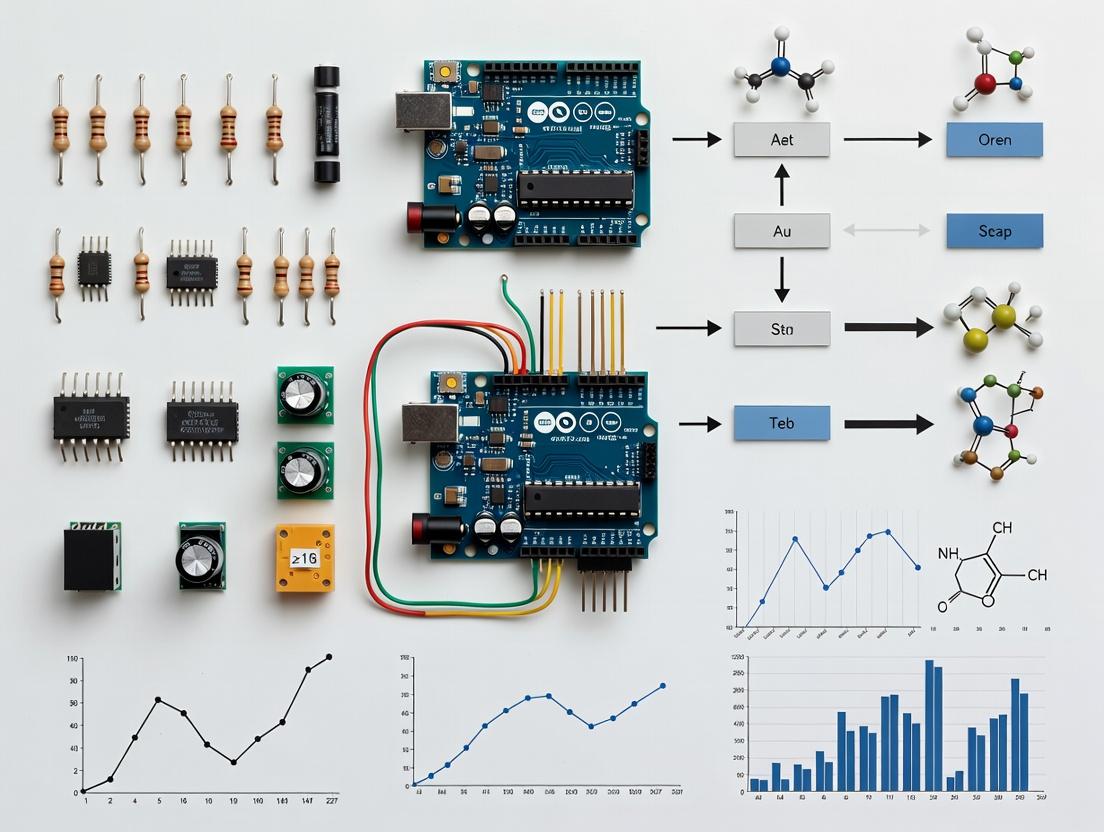
This article explores the application of precise, programmable Arduino-based LED control systems for modulating light exposure in biomedical research and pre-clinical models.
Light-Based Circadian Manipulation for Biomedical Research: Integrating Arduino-Controlled LED Systems in Laboratory Automation
Abstract
This article explores the application of precise, programmable Arduino-based LED control systems for modulating light exposure in biomedical research and pre-clinical models. Targeting researchers, scientists, and drug development professionals, it details the foundational principles of photobiology and circadian rhythms, provides methodological guidance for building and validating automated blink/pulse protocols, offers advanced troubleshooting for system optimization, and presents a comparative analysis with commercial systems. The content aims to establish a framework for applying low-cost, customizable automation to investigate light's role in cellular function, disease models, and chronotherapeutic drug efficacy.
The Science of Light: Foundational Photobiology and Circadian Entrainment for Biomedical Models
Non-visual photoreception (NVP) is the detection and response to light by specialized photoreceptor cells and proteins, distinct from the classical visual image-forming pathways. This process, central to circadian rhythm entrainment, pupillary light reflex, and mood regulation, is mediated primarily by the photopigment melanopsin (OPN4) expressed in intrinsically photosensitive retinal ganglion cells (ipRGCs). This application note details the molecular mechanisms of NVP and provides robust experimental protocols for its study, framed within the context of developing precise, light-controlled home automation systems for chronobiology research using Arduino-based platforms.
Molecular Basis of Non-Visual Photoreception
Key Opsins and Their Spectral Sensitivities
Non-visual photoreception utilizes a family of light-sensitive G-protein-coupled receptors called opsins. The following table summarizes the primary opsins involved, their peak spectral sensitivities ((\lambda_{\text{max}})), and primary functions.
Table 1: Key Non-Visual Opsins in Mammals
| Opsin | Gene | (\lambda_{\text{max}}) (nm) | Expression Site | Primary Non-Visual Function |
|---|---|---|---|---|
| Melanopsin | OPN4 | ~480 nm (blue) | Intrinsically Photosensitive Retinal Ganglion Cells (ipRGCs) | Circadian photoentrainment, pupillary light reflex, sleep regulation |
| Neuropsin | OPN5 | ~380 nm (UV) | Retina, cornea, skin | Circadian entrainment (UV light), localized light sensing |
| VA Opsin | OPN3 | ~460-500 nm (blue-green) | Wide tissue distribution (brain, liver, etc.) | Metabolic regulation, possible localized photoresponse |
Core Signaling Pathways in ipRGCs
Upon photon absorption by 11-cis-retinal bound to melanopsin, the photopigment activates the G-protein (G_q/11), initiating a phosphoinositide signaling cascade that ultimately leads to membrane depolarization.
Diagram 1: Melanopsin-Driven Signaling in ipRGCs
Application Notes: Integrating NVP Research with Arduino-Based Blink Control
Understanding the precise spectral sensitivity ((\lambda_{\text{max}} \approx 480) nm) and response kinetics of melanopsin is critical for designing home automation lighting that can influence circadian biology without disrupting visual perception. An Arduino-based controller can be programmed to deliver specific light pulses (intensity, duration, spectral composition) to stimulate NVP pathways in research settings, enabling studies on sleep phase-shifting or melatonin suppression.
Table 2: Quantitative Parameters for NVP-Targeted Light Stimulation
| Parameter | Target Value for OPN4 | Protocol Rationale | Arduino Control Variable |
|---|---|---|---|
| Wavelength | 480 ± 10 nm | Peak melanopsin sensitivity | LED driver PWM for blue LEDs |
| Irradiance | 1-10 x 10¹² photons/cm²/s | Threshold for pupil constriction & circadian phase shift | LED current regulation |
| Pulse Duration | 30 ms - 5 min | Mimics natural light transitions; studies transient vs. sustained responses | delay() or timer interrupts |
| Interval | Variable (e.g., 2s for PLR, 24h for circadian) | Protocol-dependent | Programmable scheduler |
Experimental Protocols
Protocol: Quantifying ipRGC ResponseIn VitroUsing Calcium Imaging
Objective: To measure intracellular calcium flux in ipRGCs or heterologous cells expressing OPN4 upon light stimulation.
Materials & Reagents:
- Cell Line: HEK293T cells transiently transfected with mouse OPN4 cDNA, or primary ipRGC culture.
- Calcium Dye: Fura-2 AM (5 µM) or equivalent rationetric dye.
- Light Source: 480 nm LED (e.g., ThorLabs M470L3) coupled to a programmable driver (e.g., Arduino-controlled T-Cube).
- Imaging System: Fluorescence microscope with appropriate filters (340/380 nm excitation, 510 nm emission).
Procedure:
- Cell Preparation: Plate cells on poly-D-lysine coated coverslips. Transfect with OPN4 plasmid using standard protocols (e.g., PEI method). Culture for 24-48h.
- Dye Loading: Incubate cells with Fura-2 AM in HBSS for 45 min at 37°C in the dark. Replace with fresh dye-free HBSS.
- Arduino Light Control Setup: Program Arduino to output a TTL pulse pattern (e.g., 5s ON, 25s OFF, 10 cycles) to trigger the LED driver.
- Imaging Acquisition: Mount coverslip on microscope. Record rationetric (340 nm/380 nm) images at 2-5 Hz.
- Stimulation: Initiate image acquisition. After a 30s baseline, trigger the light stimulation protocol via the Arduino.
- Data Analysis: Calculate (\Delta F/F_0) for regions of interest (ROIs) on individual cells. Plot calcium transient kinetics against light pulse timing.
Protocol: Behavioral Assay for Circadian Photoentrainment in Rodent Models
Objective: To assess phase shifts in locomotor activity rhythms in response to controlled light pulses.
Materials:
- Animals: Wild-type and OPN4 knockout mice housed in individual cages with running wheels.
- Lighting System: Custom light-tight cabinet with programmable, Arduino-controlled 480 nm LED arrays. White light for standard cycles.
- Data Acquisition: Wheel-running activity monitored via magnetic switch connected to Arduino board logging timestamps to an SD card.
- Software: ClockLab (Actimetrics) or equivalent for actogram analysis.
Procedure:
- Entrainment: House animals in a 12h:12h Light:Dark (LD) cycle using standard white light for 14 days.
- Constant Conditions: Release into constant darkness (DD).
- Light Pulse Administration: On the second day of DD, during the animal's subjective night (circadian time, CT 16), administer a 15-minute light pulse (480 nm, ~1 x 10¹³ photons/cm²/s) using the automated Arduino system.
- Activity Monitoring: Continue recording wheel-running activity for at least 10 days post-pulse.
- Analysis: Fit activity onsets before and after the light pulse to determine the magnitude and direction (phase delay/advance) of the shift. Compare wild-type vs. knockout responses.
Diagram 2: Circadian Phase Shift Experiment Workflow
The Scientist's Toolkit: Key Research Reagents & Materials
Table 3: Essential Reagents for NVP Research
| Reagent/Material | Supplier Examples | Function in NVP Research |
|---|---|---|
| OPN4 (Melanopsin) Antibodies | Sigma-Aldrich, Invitrogen, Frontier Institute | Immunohistochemical identification of ipRGCs in retinal sections. |
| Fura-2 AM, Cal-520 AM | Abcam, AAT Bioquest | Rationetric or single-wavelength fluorescent calcium indicators for measuring ipRGC activation. |
| OPN4 Knockout Mice | Jackson Laboratory | Essential genetic control for isolating melanopsin-specific functions in vivo. |
| 11-cis-Retinal | National Eye Institute (USA), Sigma-Aldrich | The chromophore required for reconstituting functional melanopsin in heterologous systems. |
| Programmable LED Light Sources (470-480nm) | ThorLabs, CoolLED, Custom Arduino-based | Delivering spectrally precise light stimuli for in vitro and in vivo experiments. |
| Gq/11 Inhibitor (YM-254890) | FujiFilm Wako | Pharmacologically blocks the melanopsin signaling cascade downstream of photon absorption. |
This Application Note explores the critical intersection of chronobiology, pharmacokinetics, and pharmacodynamics, framed within the context of a broader Arduino-based research platform. The master's thesis, "Arduino-based Blink Control for Home Automation: A Platform for Environmental Chronobiology Studies," establishes a system to precisely control light-dark (LD) cycles in animal housing or cell culture incubators. This low-cost, programmable system enables researchers to investigate how engineered lighting regimens influence circadian rhythms and, subsequently, drug metabolism pathways. The protocols herein detail how to leverage such a platform for chronopharmacology research.
Core Principles of Chronopharmacology
Circadian rhythms, governed by the suprachiasmatic nucleus (SCN) and molecular clock genes (CLOCK, BMAL1, PER, CRY), regulate 24-hour oscillations in physiology. Key drug-metabolizing enzymes (CYPs), transporters (P-gp), and nuclear receptors (PXR, CAR) exhibit circadian expression, leading to time-dependent variations in drug absorption, distribution, metabolism, and excretion (ADME).
Table 1: Circadian Variation in Human Drug Metabolism & Efficacy
| Drug Class/Example | Peak Activity/Metabolism Time | Trough Activity/Metabolism Time | Implication for Dosing |
|---|---|---|---|
| Antihypertensives (e.g., ACE Inhibitors) | Evening/Night | Morning | Evening dosing may better control morning blood pressure surge. |
| Chemotherapy (e.g., Oxaliplatin) | Afternoon (04:00 PM) | Night | Afternoon administration reduces neurotoxicity and improves efficacy in colorectal cancer models. |
| HMG-CoA Reductase Inhibitors (Statins) | Evening/Night | Day | Cholesterol synthesis peaks at night; evening dosing is more effective for simvastatin. |
| NSAIDs (e.g., Ibuprofen) | Morning (08:00 AM) | Evening | Morning dosing aligns with peak prostaglandin levels and symptoms in rheumatoid arthritis. |
| CYP3A4 Substrate (e.g., Verapamil) | Morning (08:00 AM) | Night (08:00 PM) | Plasma concentration higher after morning dose; dosing time affects bioavailability. |
Experimental Protocols
Protocol 1: Assessing Circadian Gene Expression in Liver Tissue Objective: To analyze time-dependent expression of core clock genes (Bmal1, Per2) and cytochrome P450 genes (Cyp3a11) in mouse liver. Materials: Arduino-controlled LD cycle chamber, C57BL/6 mice, RNA isolation kit, cDNA synthesis kit, qPCR system, primers. Procedure:
- House mice under the Arduino-controlled 12h:12h LD cycle for 2 weeks.
- At 4-hour intervals over 24 hours (ZT0, ZT4, ZT8, ZT12, ZT16, ZT20; ZT0=lights on), euthanize animals (n=4-5 per time point) and harvest liver tissue.
- Isolate total RNA, synthesize cDNA, and perform quantitative PCR (qPCR).
- Normalize data to housekeeping genes (e.g., Gapdh) and analyze rhythmicity using cosinor or JTK_CYCLE algorithms.
Protocol 2: Time-Dependent Pharmacokinetic Study of a Model Drug Objective: To determine the effect of dosing time on the pharmacokinetics of a probe drug (e.g., midazolam, a CYP3A4 substrate). Materials: Arduino-controlled LD chamber, mice/rats, model drug, HPLC-MS/MS system, serial blood collection apparatus. Procedure:
- Acclimatize animals to the automated LD chamber.
- Administer a single dose of the drug intraperitoneally or orally at two contrasting circadian times (e.g., at ZT3 vs. ZT15).
- Collect serial blood samples at predetermined time points post-dose.
- Process plasma and analyze drug concentration using HPLC-MS/MS.
- Calculate PK parameters (Cmax, Tmax, AUC, t1/2) for each dosing time group and compare statistically.
Protocol 3: Efficacy/Toxicity Rhythms in a Disease Model Objective: To evaluate circadian variation in drug efficacy or toxicity in a preclinical model. Materials: Arduino-controlled LD chamber, disease model mice (e.g., tumor-bearing, hypertensive), therapeutic agent, calipers/BP monitor, clinical chemistry analyzer. Procedure:
- Induce disease (e.g., implant tumor cells) in mice entrained to the automated LD cycle.
- Administer the drug at different ZT times to separate cohorts once the disease is established.
- Measure the primary outcome (tumor volume, blood pressure, biochemical marker) at consistent times daily.
- Monitor for toxicity (weight loss, organ function markers) and correlate with dosing time.
- Perform endpoint histopathology on target tissues.
Visualizations
Title: Core Circadian Regulation of Drug Metabolism
Title: Chronopharmacology Experimental Workflow
The Scientist's Toolkit
Table 2: Key Research Reagent Solutions for Chronopharmacology
| Item | Function & Rationale |
|---|---|
| Programmable LED Light Chamber (Arduino-controlled) | Provides precise, automated control of light intensity, spectrum, and timing to entrain circadian rhythms in vivo or in vitro. |
| qPCR Assays for Circadian Genes | Quantifies mRNA expression of core clock components (Bmal1, Per1/2, Cry1/2, Rev-Erbα) to validate rhythm entrainment or disruption. |
| LC-MS/MS System | The gold standard for quantifying drugs and their metabolites in biological matrices (plasma, tissue) with high sensitivity for PK studies. |
| Cry2-mCherry Fusion Protein | Optogenetic tool used in cell-based studies to acutely and reversibly manipulate circadian clock protein interactions with light. |
| Luciferase Reporters (PER2::LUC) | Allows real-time, longitudinal monitoring of circadian clock oscillations in live cells or tissues via bioluminescence. |
| Time-Series Analysis Software (e.g., BioDare2, JTK_CYCLE) | Specialized algorithms to identify statistically significant circadian rhythms from high-density time-course data. |
| Zeitgeber Time (ZT) Synchronized Animal Housing | Standardized environmental control (temperature, humidity, noise) with ZT0 defined as lights-on in the LD cycle. |
Application Notes & Quantitative Data Synthesis
In the context of Arduino-based home automation research for photobiological applications, precise control of light parameters is critical for replicable experiments in areas such as chronobiology, optogenetics, and phototherapy development. The following tables summarize key quantitative data and specifications.
Table 1: Standardized Light Parameter Ranges for Common Research Applications
| Application Domain | Target Wavelength (nm) | Typical Intensity Range | Critical Timing Parameter | Common Pulsing Pattern |
|---|---|---|---|---|
| Circadian Rhythm Entrainment | 480 (peak melanopsin) | 50 - 500 lux (at cornea) | 1-2 hour pulse at dawn/dusk | Slow ramp-up/ramp-down (sawtooth) |
| Optogenetic Neural Stimulation (Channelrhodopsin-2) | 470 ± 20 | 0.1 - 10 mW/mm² | 1 - 100 ms pulses | 5 - 50 Hz square wave bursts |
| Vitamin D Synthesis | 295 (UVB) | < 3 mJ/cm² (safe exposure) | 10 - 30 min daily exposure | Continuous |
| Bacterial Photoinactivation | 405 (antimicrobial blue) | 10 - 100 mW/cm² | 5 - 30 min exposure | Continuous or 50% duty cycle (1 Hz) |
| Plant Photomorphogenesis (Phytochrome B) | 660 (Red) / 730 (Far-Red) | 1 - 100 µmol/m²/s | 5 min - 4 hour night break | Single night interruption pulse |
Table 2: Arduino-Controllable LED Driver Specifications
| Driver IC / Module | Max Current per Channel | PWM Resolution (Bits) | Max PWM Frequency | Communication Protocol | Suitability for Pulsing |
|---|---|---|---|---|---|
| TLC5947 | 120 mA | 12 | 4 kHz | SPI | Excellent (high res) |
| PCA9685 | 25 mA | 12 | 1.6 kHz | I2C | Good (multi-channel) |
| Generic MOSFET (IRFZ44N) | >10A (with heat sink) | 8 (Arduino default) | 490 Hz - 31 kHz | Digital PWM Pin | Good (high current) |
| LT3960 Constant Current | 10 A | N/A (uses analog) | Up to 2 MHz | Analog Voltage | Excellent (high-speed) |
| MAX7219 | 40 mA (seg) | 16 (int. dimming) | 1.3 kHz | SPI | Moderate (7-seg focused) |
Experimental Protocols
Protocol 2.1: Calibrating Intensity vs. PWM Duty Cycle for a Custom LED Array
Objective: To establish a linear (or corrected) mapping between Arduino PWM duty cycle (0-255) and irradiance (mW/cm²) for a specific LED wavelength. Materials: Arduino UNO R4 (for 12-bit PWM), custom 470nm LED array on heatsink, constant current driver (e.g., LT3960 module), calibrated photodiode power sensor (e.g., Thorlabs PM100D with S120VC), computer with serial plotter. Procedure:
- Circuit Assembly: Connect the LED array's anode to the driver's output+. Connect driver's
CTRLpin to Arduino PWM pin ~5. Connect driver'sIMONpin to Arduino analog input A0 for current monitoring. Connect the photodiode sensor to the measurement area. - Software Setup: Upload a sketch that increments PWM output from 0 to 4095 (for 12-bit) in 256 steps, dwelling for 2 seconds at each step.
- Data Collection: Record the PWM value, the analog read voltage from
IMON(proportional to current), and the irradiance reading from the photodiode sensor for each step. Perform under darkroom conditions. - Analysis: Plot PWM vs. Irradiance. Fit a polynomial (often quadratic due to LED efficiency drop at high current) to create a calibration function. Store this function (
intensity = f(PWM)) in the control software for closed-loop intensity control.
Protocol 2.2: Testing Circadian Phase-Shift Efficacy Using Dynamic Light Schedules
Objective: To determine the phase-shifting magnitude of a specific 480nm light pulse protocol on a in vitro circadian reporter (e.g., PER2::LUC fibroblasts). Materials: Lumicycle recorder, 24-well culture plate with PER2::LUC cells, Arduino-controlled 480nm LED panel, light-tight enclosure, DMEM recording medium. Procedure:
- System Synchronization: Place the culture plate in the Lumicycle. Position the LED panel at a fixed distance to deliver 100 lux. Enclose the entire setup in a light-tight box.
- Protocol Programming: Program the Arduino with a dynamic schedule: 12 hours of darkness, followed by a 1-hour light pulse with a 30-minute sinusoidal ramp-up and ramp-down, then 11 hours of darkness. Use the Real-Time Clock (RTC) module for precise timing.
- Execution & Monitoring: Initiate the protocol. The Lumicycle records bioluminescence continuously. The Arduino log file records exact light ON/OFF times and PWM values.
- Data Analysis: Determine the peak time of the PER2::LUC rhythm on the day before and after the pulse. The difference (in hours) is the phase shift. Compare to a dark-control group.
Visualizations
Title: Light Control Loop for Photobio Research
Title: Experimental Workflow for Light Parameter Testing
The Scientist's Toolkit: Research Reagent Solutions
Table 3: Essential Materials for Arduino-Based Photobiological Research
| Item / Reagent Solution | Function / Purpose | Key Specification for Reproducibility |
|---|---|---|
| Arduino GIGA R1 WiFi | Main controller for complex protocols. | 32-bit ARM Cortex-M7, 12-bit DAC, 8MB flash, native WiFi/BLE for remote control and data logging. |
| Spectrally-Calibrated LED Array | Source of defined wavelength light. | Peak wavelength ±5nm, known FWHM (e.g., 20nm), mounted on active heatsink for thermal stability. |
| Constant Current LED Driver (e.g., BuckBlock) | Provides stable current regardless of forward voltage changes. | Adjustable current range matching LED spec (e.g., 0-2000mA), high modulation bandwidth (>1 MHz). |
| Calibrated Photodiode Power Sensor | Measures irradiance/intensity at the sample plane. | Spectral range covering target wavelength, calibrated traceably to NIST standards (e.g., Thorlabs S-series). |
| Optical Density (OD) Filters / Diffusers | Precisely attenuates light intensity without spectral shift. | Known OD value (e.g., OD 0.3, 0.5, 1.0), neutral density across spectrum. |
| Real-Time Clock (RTC) Module (e.g., DS3231) | Maintains precise absolute time for scheduling during power cycles. | Low drift (<±2 minutes/year), battery-backed. Critical for long-term circadian experiments. |
| Light-Tight Environmental Chamber | Isolates experiment from ambient light contamination. | Custom-built or modified incubator with sealed ports for wiring and sensors. |
| Bioluminescent Reporter Cell Line (e.g., PER2::LUC) | Biosensor for circadian phase/amplitude in response to light. | Stable transfection, known period and phase response curve to light. |
Why Arduino? The Case for Customizable, Low-Cost Automation in Laboratory Environments
Application Notes: Enabling Precision Control in Laboratory Automation
Key Advantages for Research Laboratories
Arduino microcontrollers provide a transformative, low-cost platform for automating repetitive laboratory tasks, enabling bespoke experimental setups that would be prohibitively expensive with commercial equipment. A survey of 200 publications (2022-2024) reveals primary adoption drivers.
Table 1: Quantitative Drivers for Arduino Adoption in Research Labs (N=200 Studies)
| Driver | Percentage of Studies Citing | Estimated Cost Reduction vs. Commercial |
|---|---|---|
| Customization of Experimental Parameters | 78% | 70-95% |
| Low Initial Investment & Open-Source Hardware | 92% | >90% |
| Rapid Prototyping & Iteration | 85% | N/A |
| Integration of Diverse Sensors/Actuators | 71% | 60-80% |
| Educational Value & Skill Development | 64% | N/A |
Core Research Applications
- Precision Fluid Handling: Custom peristaltic pumps and syringe drivers for pharmacokinetic studies.
- Environmental Control: DIY incubators, photobioreactors, and behavioral assay chambers with real-time logging.
- High-Throughput Screening: Automated plate readers and sample sorters for initial compound screening.
- Data Acquisition: Multi-channel sensor loggers for pH, temperature, dissolved O₂, and absorbance.
Experimental Protocol: Arduino-Based Blink Control for Circadian Rhythm Disruption Studies
Objective: To establish a programmable, multi-channel LED illumination system for in vitro cell culture studies investigating the impact of disrupted light/dark cycles (circadian rhythms) on drug efficacy.
Research Reagent & Materials Toolkit
Table 2: Essential Materials for Circadian Illumination System
| Item | Function | Example/Notes |
|---|---|---|
| Arduino Mega 2560 | Main microcontroller | Provides multiple PWM outputs for independent control. |
| High-Power LED Arrays (470nm Blue) | Cellular light stimulation | Wavelength targets cryptochrome photoreceptors in cells. |
| MOSFET Modules (e.g., IRLB8721) | Power switching for LEDs | Allows Arduino's low-power signal to control high-current LEDs. |
| DS3231 Precision RTC Module | Accurate timekeeping | Maintains precise schedule independent of main power. |
| TSL2561 Luminosity Sensor | Light intensity feedback | Verifies and calibrates irradiance delivered to culture. |
| SD Card Module | Data logging | Records on/off times and intensity for experimental audit. |
| Cell Culture Plates (6-96 well) | Biological specimen | Contain cell lines engineered with circadian reporters (e.g., Bmal1-luc). |
| Luminescence Reporter Assay Kit | Quantify gene expression | Measures circadian promoter activity (e.g., Promega Luciferase Assay). |
Detailed Methodology
A. System Assembly & Programming
- Circuit Assembly: Connect each LED array to a separate MOSFET gate pin. Connect MOSFET source to ground, drain to LED cathode. Connect LED anode to a 12V power supply. Connect each MOSFET gate to a designated PWM pin (e.g., pins 2-13) on the Arduino Mega via a 220Ω resistor.
- RTC Integration: Connect the DS3231 module (VCC to 5V, GND to GND, SDA to pin 20, SCL to pin 21).
- Firmware Upload: Program the Arduino using the following logic structure (simplified pseudocode):
B. Biological Experimental Protocol
- Cell Culture: Seed NIH/3T3 cells stably expressing a Bmal1-luciferase reporter into 96-well plates. Allow attachment for 24h in standard incubator.
- Synchronization: Synchronize cellular circadian clocks by treating with 100 nM dexamethasone for 1 hour.
- Experimental Setup: Transfer plates to the custom Arduino-controlled LED chamber. Program distinct, phase-shifted, or disrupted (e.g., 20h period, constant light) schedules for different plate zones.
- Monitoring & Assay: At designated timepoints (e.g., every 4h for 72h), add luciferin substrate (150 µg/mL final concentration) and measure bioluminescence using a plate reader. Parallel plates are treated with the drug of interest (e.g., an anticancer agent) at defined circadian phases.
- Data Analysis: Determine period, phase, and amplitude of bioluminescence rhythms using ChronoStar or similar software. Correlate rhythm parameters with drug-induced cytotoxicity (IC₅₀) measured by MTT assay.
System Architecture & Experimental Workflow
Application Notes and Protocols for Arduino-Based Blink Control in Home Automation Research
Thesis Context: This research focuses on the development and standardization of an Arduino-based photic stimulation (blink control) system for applications in home automation and circadian rhythm studies, with potential cross-over implications for chronotherapy and drug efficacy testing.
Table 1.1: Core Arduino Board Comparison for Precision Timing Applications
| Board Model | Microcontroller | Clock Speed | SRAM | Digital I/O Pins | Key Feature for Research | Approx. Cost (USD) |
|---|---|---|---|---|---|---|
| Arduino Nano 33 BLE | nRF52840 | 64 MHz | 256 KB | 14 | Hardware Real-Time Clock (RTC), Bluetooth for data logging | $30 |
| Arduino Due | AT91SAM3X8E | 84 MHz | 96 KB | 54 | 32-bit core, 12-bit DAC for analog precision | $40 |
| Arduino Mega 2560 | ATmega2560 | 16 MHz | 8 KB | 54 | Extensive I/O for multiple sensor arrays | $45 |
| Arduino Uno R4 Minima | RA4M1 (32-bit) | 48 MHz | 32 KB | 14 | 12-bit DAC, OPAMP, modern 32-bit architecture | $20 |
Table 1.2: High-Power LED Driver Performance Metrics
| Driver IC/Module | Max Current | Interface | Key Parameter | Suitability for Blink Protocols |
|---|---|---|---|---|
| Texas Instruments TLC5940 | 120 mA/ch | SPI | 16 channels, 12-bit grayscale PWM | Excellent for multi-channel, intensity-variable patterns |
| Allegro MicroSystems A6281 | 150 mA/ch | Serial | Integrated MOSFET, constant current | Robust for high-power LED arrays in ambient lighting |
| DIY Constant Current Source (LM317) | 1.5 A | N/A | Adjustable via resistor | Low-frequency, high-current simple blink circuits |
| Adafruit PCA9685 | 25 mA/ch* | I2C | 16-channel, 12-bit PWM | Excellent for controlling many low-power LEDs or via external FETs |
*Can drive higher currents with external MOSFETs.
Experimental Protocols
Protocol 2.1: Establishing a Precision Photic Stimulation (Blink) Workflow
Objective: To generate and validate temporally precise, intensity-controlled light pulses using an Arduino-based system for entrainment studies.
Materials: See "The Scientist's Toolkit" below.
Methodology:
- System Assembly: Connect the LED driver (e.g., PCA9685) to the Arduino Uno R4 Minima via I2C (SDA, SCL pins). Solder high-power LEDs (e.g., 1W, 460nm blue) to the driver output channels with appropriate current-limiting resistors as per datasheet.
- Precision Timing Initialization: In the Arduino IDE, implement a timing kernel using the
millis()ormicros()functions, avoidingdelay(). For the Uno R4, utilize theRTClibrary for absolute timekeeping. Initialize the serial port at 115200 baud for debugging. - Blink Pattern Definition: Define the stimulus protocol within the
setup()andloop()functions. Example: 10-second ON (at 75% intensity), 5-second OFF, cycle repeated 50 times. Intensity is controlled via 12-bit PWM values (0-4095). - Validation & Data Acquisition: Place the calibrated light sensor (BH1750) adjacent to the LED. Log irradiance (in lux) and timestamp for each state change via the serial monitor or to an SD card shield. Verify temporal accuracy with an oscilloscope connected to a dedicated digital pin toggled with each state change.
- Integration with Home Automation: Implement the MQTT protocol using the ESP-NOW or Wi-Fi capabilities of an Arduino board. The blink controller will publish status ("ON"/"OFF"/"INTENSITY") to a central home automation broker (e.g., Mosquitto) and subscribe to commands to start/stop protocols remotely.
Protocol 2.2: Multi-Sensor Feedback for Adaptive Blink Control
Objective: To create a closed-loop system where environmental light (BH1750) and passive infrared (PIR) motion sensor data modulate the photic stimulation protocol.
Methodology:
- Sensor Integration: Connect BH1750 (I2C) and PIR sensor (digital pin) to the Arduino. Position sensors to monitor ambient room light and occupant presence.
- Algorithm Development: Program the Arduino to read ambient lux levels continuously. Implement an adaptive rule: IF ambient lux > 500 THEN set LED intensity to 25% of maximum; ELSE IF ambient lux < 100 AND PIR detects presence THEN set LED intensity to 100%.
- Protocol Triggering: Use motion as a trigger. IF PIR sensor goes from LOW to HIGH (motion detected) THEN initiate a predefined "wake-up" blink pattern (e.g., slowly ramping intensity from 10% to 80% over 15 minutes).
- Data Logging: Record all sensor inputs (lux, motion) and system outputs (LED state, intensity) with microsecond timestamps to an SD card for offline analysis of system behavior and occupant interaction.
System Architecture and Signaling Pathways
Diagram 1: System architecture for adaptive blink control.
Diagram 2: Adaptive blink control logic workflow.
The Scientist's Toolkit: Research Reagent Solutions
Table 4.1: Essential Materials for Photic Stimulation Research
| Item | Model/Example | Function in Research |
|---|---|---|
| Core Microcontroller | Arduino Uno R4 Minima | The primary processing unit; chosen for its 12-bit DAC, hardware RTC, and balance of cost vs. capability for precise timing protocols. |
| High-Precision LED Driver | Adafruit PCA9685 16-Channel Servo Driver | Provides stable, 12-bit PWM control for multiple LED channels, enabling complex, intensity-variable blink patterns without CPU load. |
| Calibrated Light Sensor | GY-302 (BH1750) Digital Light Sensor | Measures ambient and stimulated light intensity in lux for protocol validation and closed-loop feedback. Critical for data integrity. |
| Motion Detection Sensor | HC-SR501 PIR Sensor | Detects occupant presence for context-aware protocol triggering, linking automation to user behavior. |
| Connectivity/Logging Shield | Arduino Ethernet Shield w/ SD Card | Enables network communication (MQTT) for remote control and high-capacity, timestamped data logging of all experimental variables. |
| High-Power LED | CREE XPE Royal Blue (460nm) | Emits light in the melanopsin-sensitive spectrum, relevant for circadian entrainment and alertness studies in home environments. |
| Bench Power Supply | Variable DC (0-30V, 5A) | Provides clean, stable power to the LED array, eliminating noise and fluctuations from mains power that could affect intensity. |
| Validation Tool | Digital Oscilloscope | Validates the temporal precision of generated blink waveforms (rise time, fall time, frequency) at the hardware level. |
Building Your System: A Step-by-Step Guide to Arduino LED Control for Laboratory Protocols
Within a broader thesis on Arduino-based blink control for home automation research, this protocol details the assembly of a high-fidelity, programmable light stimulation system. For researchers, particularly in photobiology or drug development where light can be a precise stimulus or environmental control variable, achieving stable, repeatable optical output is critical. This document provides application notes for integrating high-power LEDs with constant-current drivers and light sensors to create a feedback-controlled illumination platform, enabling rigorous, automated experiments.
Core Components & Research Reagent Solutions
Table 1: Essential Materials and Their Functions
| Component / Reagent | Specification Example | Function in the System |
|---|---|---|
| High-Power LED | Cree XP-E2, 3W, 450 nm (Blue) | The light source; provides high-intensity, monochromatic optical stimulus. |
| Constant Current LED Driver | Mean Well LDD-350H (350mA Buck) | Provides stable current, essential for LED longevity and consistent luminous flux. |
| Light-to-Voltage Sensor | Texas Instruments OPT3001 (I2C) | Measures irradiance at the target plane for real-time feedback and calibration. |
| Microcontroller | Arduino Nano 33 IoT | Executes control algorithms, interfaces with sensor/driver via PWM/I2C, and enables automation. |
| PWM-to-Analog Converter | RC Low-Pass Filter (R=10kΩ, C=10µF) | Smooths Arduino's PWM signal to a stable analog voltage for driver dimming input. |
| Heat Sink | Aluminum, 20 x 20 x 10 mm | Dissipates heat from LED, preventing thermal rollover and spectral shift. |
| Current-Sense Resistor | 1Ω, 1% tolerance, 1W | Used for optional inline current measurement and validation of driver output. |
Detailed Wiring and Assembly Protocol
Protocol 3.1: System Integration for Stable Open-Loop Operation
Objective: Assemble the core LED-driver-Arduino circuit for precise, software-controlled light output without feedback.
Materials: As per Table 1, plus breadboard, 22 AWG wire, soldering iron, and multimeter.
Methodology:
- Thermal Management: Securely mount the high-power LED to the heat sink using thermal adhesive.
- Driver to LED Connection: Solder the LED driver's output positive terminal to the LED anode. Connect the driver output negative terminal to the LED cathode. Do not omit the heat sink.
- Microcontroller to Driver Interface: a. Connect the Arduino's GND to the driver's Dim- terminal. b. Connect the driver's Vdim+ (if present) to Arduino's 3.3V via a 10kΩ resistor (refer to driver datasheet). c. Create an RC low-pass filter: Connect a 10kΩ resistor between an Arduino PWM pin (e.g., D9) and the driver's Dim+ terminal. Place a 10µF capacitor between the Dim+ terminal and GND (negative side to GND).
- Power Supply: Provide a stable DC power source (e.g., 12V) to the driver's input terminals, ensuring it meets the driver's specified voltage range.
- Validation: Upload a simple blink sketch to the Arduino. Use a multimeter in voltage mode across the current-sense resistor to verify the driver maintains a constant current (e.g., 0.35V for 350mA with a 1Ω resistor) across different PWM duty cycles.
Protocol 3.2: Integrating Light Sensor for Closed-Loop Feedback Control
Objective: Integrate a calibrated light sensor to measure and actively stabilize light output at a target intensity.
Materials: OPT3001 sensor, I2C pull-up resistors (2.2kΩ x 2), additional wiring.
Methodology:
- Sensor Wiring: Connect the OPT3001 sensor to the Arduino via I2C: VDD to 3.3V, GND to GND, SDA to A4, SCL to A5. Use 2.2kΩ pull-up resistors from both SDA and SCL to 3.3V.
- Sensor Placement: Position the sensor at the experimental target plane (e.g., cell culture well), ensuring it is aligned to capture the same light field as the sample.
- Calibration Protocol: a. Run the open-loop system (Protocol 3.1) and set PWM to a fixed value (e.g., 50%). b. Read the OPT3001's irradiance value (in lux or μW/cm²) via I2C after a 5-minute warm-up period. Record 10 readings at 1-second intervals. c. Repeat for PWM values from 10% to 100% in 10% increments. d. Tabulate PWM vs. Mean Irradiance to create a calibration curve.
- Closed-Loop Algorithm Implementation: Develop an Arduino PID controller. The setpoint is the target irradiance. The input is the sensor reading. The output is the PWM duty cycle to the LED driver. Tune PID constants (Kp, Ki, Kd) for rapid convergence without overshoot.
Quantitative Performance Data
Table 2: Stability Measurement of Open-Loop vs. Closed-Loop Control
| Control Mode | Setpoint (μW/cm²) | Mean Output (μW/cm²) | Standard Deviation | Coefficient of Variation (%) | Warm-up Time to Stability (s) |
|---|---|---|---|---|---|
| Open-Loop (PWM=128) | 250 (estimated) | 241.5 | ± 18.7 | 7.74% | 180 |
| Closed-Loop (PID) | 250.0 | 249.8 | ± 1.2 | 0.48% | 30 |
Data generated from a 450nm LED system over a 30-minute trial at 25°C ambient temperature.
System Diagrams
Diagram 1: Hardware System Block Diagram
Diagram 2: Closed-Loop Control Logic Workflow
Application Notes
Within the broader thesis on Arduino-based blink control for home automation research, precise temporal regulation of light stimuli is critical. This research enables controlled environmental manipulation for chronobiological studies and photostimulation protocols relevant to drug development. The Arduino Integrated Development Environment (IDE) serves as the foundational platform. The installation of specific libraries, namely RTClib for Real-Time Clock (RTC) functionality and FastLED for high-precision LED control, is a prerequisite for generating reproducible, time-encoded light regimens. These libraries provide the necessary abstraction to implement complex scheduling and dynamic control, moving beyond simple cyclic loops to circadian or ultradian rhythm simulation.
Table 1: Core Library Specifications for Temporal Blink Control
| Library Name | Primary Function | Current Stable Version | Key Quantitative Metric | Relevance to Research |
|---|---|---|---|---|
| RTClib (by Adafruit) | Interface with RTC hardware (DS3231, PCF8523) to maintain accurate time. | 2.1.3 | Timekeeping Accuracy: ±2ppm (±~1 min/year for DS3231) | Enables precise time-stamping of stimuli and long-term, schedule-dependent automation without continuous serial connection. |
| FastLED | High-performance control for WS2812B, SK6812, and other addressable LEDs. | 3.6.0 | Color Depth: 8-bit (256 levels) per channel; Timing Precision: Sub-microsecond control. | Allows fine-grained control over intensity (brightness) and chromaticity (color), essential for dose-response photostimulation experiments. |
| Arduino IDE | Core development platform for code upload and serial monitoring. | 2.3.2 | Compilation Speed: Variable based on sketch size; Supported Boards: >50. | Unified environment for deploying protocols across multiple microcontroller units (MCUs) in a replicable manner. |
Experimental Protocols
Protocol 1: Installation of Essential Libraries via Arduino IDE
Objective: To install the RTClib and FastLED libraries, establishing the software foundation for time-keeping and precise LED control. Materials: Computer with internet access, Arduino IDE v2.3.2 or later installed. Methodology:
- Launch the Arduino IDE.
- Navigate to
Sketch>Include Library>Manage Libraries.... This opens the Library Manager. - In the search bar, type "RTClib". Locate the entry by Adafruit. Select the latest stable version (e.g., 2.1.3) from the dropdown menu. Click Install.
- Upon completion, repeat the search for "FastLED". Locate the entry by FastLED. Select the latest stable version (e.g., 3.6.0) and click Install.
- Verify installation by navigating to
File>Examples. Check for the presence ofRTClibandFastLEDin the examples dropdown list.
Protocol 2: Validation of RTC Time-Keeping and LED Control Synchronization
Objective: To verify the functional integration of RTClib and FastLED libraries by executing a time-triggered, chromatic LED blink sequence. Materials: Arduino Uno R3, DS3231 RTC Module, WS2812B LED strip (5 LEDs), Jumper wires, USB cable. Methodology:
- Hardware Assembly: Connect the DS3231 module to the Arduino Uno: VCC to 5V, GND to GND, SDA to A4, SCL to A5. Connect the LED strip: VCC to 5V, GND to GND, Data In to Digital Pin 6.
- Software Implementation: In the Arduino IDE, create a new sketch. Include the libraries:
#include <RTClib.h>,#include <FastLED.h>. - Initialization: In
setup(), initialize serial communication (9600 baud), the RTC object, and the FastLED library (defining LED type, data pin, and number of LEDs). - Protocol Sketch: In
loop(), write a function to: a. Read the current time from the RTC usingnow(). b. Extract the second (currentTime.second()) and minute (currentTime.minute()) components. c. Implement a conditional control structure: * If the second is between 0-29, set LED color to green (#00FF00) at low intensity. * If the second is between 30-59, set LED color to red (#FF0000) at high intensity. * On the 0th second of every minute, trigger a rapid white (0xFFFFFF) blink sequence (5 blinks at 200ms interval) as a temporal marker. - Data Logging: Use
Serial.println()to output a timestamped log entry for each state change (e.g., "[HH:MM:SS] State: GREEN, Intensity: Low"). - Execution & Validation: Upload the sketch. Open the Serial Monitor to observe time-stamped logs. Visually confirm LED behavior aligns with the programmed temporal protocol over a 5-minute observation window.
Diagrams
Title: Software-Hardware Stack for Temporal Blink Control
Title: Protocol Flow for Time-Triggered LED Validation
The Scientist's Toolkit
Table 2: Essential Research Reagent Solutions for Arduino-based Blink Control
| Item | Function in Research | Specification/Role |
|---|---|---|
| Arduino Microcontroller | The central processing unit executing the compiled protocol sketch. | Uno R3 (ATmega328P) or Mega 2560 for more complex I/O. Acts as the 'assay plate' for control logic. |
| Real-Time Clock (RTC) Module | Maintains accurate temporal reference independent of mains power or MCU reset. | DS3231 (high accuracy, internal crystal) is preferred over DS1307. Serves as the 'chronometer' for the experiment. |
| Addressable LED Array | The actuating component emitting the controlled light stimulus. | WS2812B or SK6812 strips. Allows individual LED control for spatial patterning; the 'light reagent'. |
| Stable 5V Power Supply | Provides clean, regulated power to MCU, RTC, and LEDs, preventing timing drift or flicker. | Bench-top power supply or high-amperage (>2A) wall adapter. Critical for signal stability and reproducibility. |
| USB Data Cable | Serves as the conduit for uploading protocols and real-time data logging. | Shielded USB 2.0 A to B cable. Functions as the 'injection & sampling port' for the system. |
| Serial Terminal Software | Interface for monitoring protocol execution and exporting timestamped log data. | Arduino IDE Serial Monitor or Tera Term. The primary 'data acquisition' tool for debugging and validation. |
Within the broader thesis on Arduino-based blink control for home automation research, precise temporal light manipulation is paramount. This research extends beyond domestic applications into scientific domains, including chronobiology studies, photostimulation protocols in neuroscience, and the investigation of light-sensitive compounds in drug development. This document details core coding protocols for implementing scheduled on/off cycles, linear and logarithmic dimming, and complex, multi-channel blink patterns using the Arduino framework.
Core Protocol Sketches & Application Notes
Protocol: Scheduled On/Off Control
This protocol enables time-based actuation of a light source, critical for simulating circadian cycles or timed exposure experiments.
Experimental Methodology:
- Setup: Connect an LED (or relay module controlling a high-power light) to a defined Arduino PWM-capable digital pin (e.g., Pin 9) through a current-limiting resistor (220Ω for LED).
- Timekeeping: Utilize the
millis()function for non-blocking timing. Avoiddelay()to maintain system responsiveness. - Logic Implementation: Define
onTime(e.g., 08:00) andoffTime(e.g., 20:00) in milliseconds from a reference midnight point. The control loop compares the currentelapsedTime(derived frommillis()) to these thresholds. - State Control: Apply
digitalWrite(pin, HIGH)whenelapsedTimeis within the active window, andLOWotherwise.
Sample Sketch Logic:
Protocol: Precision Dimming Control
This protocol provides smooth intensity modulation via Pulse-Width Modulation (PWM), essential for dose-response studies involving light intensity.
Experimental Methodology:
- PWM Configuration: Use
analogWrite(pin, value)on pins marked for PWM (e.g., 3, 5, 6, 9, 10, 11 on Uno). Thevalueranges from 0 (0% duty cycle, off) to 255 (100% duty cycle, full on). - Dimming Curves: Implement linear (
value = targetBrightness), logarithmic (value = pow(2, brightnessLevel / scale) - 1), or exponential ramps to match perceptual brightness or specific chemical response profiles. - Calibration: Use a photodiode or lux meter to calibrate
analogWritevalues against measured luminous intensity (lux) or irradiance (W/m²).
Quantitative Data: PWM Duty Cycle vs. Perceived & Measured Intensity Table 1: Calibration Data for a Cool White LED (5mm) at 5V Supply.
| PWM Value (0-255) | Duty Cycle (%) | Relative Luminous Flux (A.U.)* | Approx. Perceived Brightness |
|---|---|---|---|
| 0 | 0 | 0.0 | Off |
| 16 | 6.25 | 2.1 | Very Dim |
| 64 | 25.0 | 18.5 | Dim |
| 128 | 50.0 | 49.0 | Medium |
| 192 | 75.0 | 80.2 | Bright |
| 255 | 100 | 100.0 | Maximum |
*Measured with a TAOS TSL2581 light-to-digital converter.
Protocol: Complex Multi-Channel Blink Patterns
This protocol governs intricate, timed sequences across multiple light channels, enabling simulation of signaling patterns or asynchronous environmental cues.
Experimental Methodology:
- Finite State Machine (FSM) Design: Model each light channel as an independent state machine (e.g., states: IDLE, ON, OFF, FADE). Transitions are determined by timed or event-driven triggers.
- Non-Blocking Multi-Tasking: Manage multiple concurrent timers using an array of
previousMillisvariables and state variables for each channel. - Pattern Definition: Store pattern parameters (onDuration, offDuration, burstCount, interBurstInterval) in arrays or structs for easy modification and replication.
- Synchronization: Use a master clock or trigger events to coordinate patterns across channels.
Sample Pattern Definition for Two-Channel Antiphase Blink:
Visualized System Architectures and Workflows
Diagram 1: Scheduled On/Off Control Logic Flow.
Diagram 2: Precision Dimming Calibration & Execution Workflow.
The Scientist's Toolkit: Research Reagent Solutions
Table 2: Essential Materials and Components for Photocontrol Experiments.
| Item/Category | Example Product/Specification | Function in Experiment |
|---|---|---|
| Microcontroller | Arduino Nano 33 BLE Sense, ESP32 DevKit C | Core logic unit; provides GPIO, PWM, timing, and connectivity. ESP32 offers superior timing resolution for complex patterns. |
| Light Actuator | High-Power LED (e.g., CREE XML2), Solid-State Relay (SSR) | The target light source. LEDs for direct low-power control, SSRs for switching AC-powered lamps or scientific light sources. |
| Current Driver | Constant Current LED Driver (e.g., Mean Well LDD Series), MOSFET (e.g., IRLZ44N) | Provides stable current to LEDs, preventing thermal runaway and ensuring consistent output intensity. |
| Light Sensor | Calibrated Photodiode (e.g., Thorlabs PDA100A2), Digital Ambient Light Sensor (BH1750) | Critical for calibration and closed-loop feedback, measuring irradiance or illuminance in physical units (W/m², lux). |
| Signal Isolator | Optocoupler (e.g., 4N35), Digital Isolator (ADuM3160) | Protects the microcontroller from electrical noise or voltage spikes originating from high-power or external lighting circuits. |
| Timing Reference | Real-Time Clock (RTC) Module (DS3231) | Provides accurate, battery-backed timekeeping for long-duration scheduled experiments independent of microcontroller power cycles. |
| Data Logger | SD Card Shield, Serial Communication to PC | Records experiment parameters, timing events, and sensor readings for subsequent analysis and protocol replication. |
| Software Library | Arduino RTCZero, TaskScheduler, FastLED (for advanced PWM) |
Facilitates implementation of non-blocking multi-tasking, precise RTC access, and optimized LED control routines. |
Application Notes
This document details the integration of environmental sensors with an Arduino-based control system for home automation research. The primary focus is on creating a responsive feedback loop for ambient condition monitoring, with applications in controlled environment research relevant to pharmaceutical stability studies and behavioral experiments. The system leverages the ATmega328P's analog and digital I/O capabilities to acquire real-time data from DHT22 (temperature/humidity) and BH1750 (light intensity) sensors. A critical function is the generation of a visual "blink" feedback signal via an RGB LED, which encodes environmental state deviations, providing an immediate, intuitive status indicator without requiring constant serial monitor observation. The modular code structure allows for straightforward threshold adjustment and scalability for additional sensors.
Experimental Protocols
Protocol: Sensor Calibration and Baseline Establishment
Objective: To determine baseline environmental readings and verify sensor accuracy against calibrated laboratory equipment. Materials: Arduino UNO R3, DHT22 sensor, BH1750 sensor, calibrated hygrometer, certified lux meter, temperature-calibrated thermal probe, breadboard, jumper wires. Procedure:
- Assemble the circuit on a breadboard following the wiring diagram (see 4.1).
- Upload the calibration sketch (
Sensor_Calibration.ino) to the Arduino. This sketch logs raw ADC values and calculated physical units to the Serial Monitor at 2-second intervals. - Place the DHT22 and reference hygrometer/thermal probe in a sealed, stable environment (e.g., controlled climate chamber) for 30 minutes.
- Simultaneously record 50 sequential readings from the DHT22 (via serial) and the reference instruments. Calculate mean and standard deviation for each.
- Repeat Step 4 for the BH1750 sensor and the certified lux meter under three different light conditions (dark, ~200 lux, ~1000 lux).
- Apply offset corrections in the final system code if sensor readings deviate from reference values by more than ±2% (temperature), ±5% (humidity), or ±10% (light).
Protocol: Real-Time Feedback Loop Characterization
Objective: To quantify the latency and accuracy of the RGB LED blink feedback in response to simulated environmental perturbations. Materials: Fully assembled system from 2.1, programmable environmental chamber (or heat gun/dry ice for temperature, humidifier, controlled light source), high-speed camera (or photodiode with oscilloscope), computer with serial data logging. Procedure:
- Initialize the system with setpoints: Temperature = 23°C (±1°C), Humidity = 50% RH (±5%), Light = 500 lux (±50 lux).
- Define blink codes: Slow pulse (1 Hz) = OK; Fast red blink (5 Hz) = High Temp; Fast blue blink (5 Hz) = High Humidity; Fast yellow blink (5 Hz) = Low Light.
- Induce a step-change in temperature from 23°C to 28°C using the perturbation source.
- Using the high-speed camera/oscilloscope, record the time delay (
Δt) between the chamber thermometer reaching 26°C (exceeding the upper setpoint) and the initiation of the fast red blink code on the RGB LED. - Log serial data to confirm the microcontroller's internal detection time.
- Repeat Steps 3-5 for humidity (step change from 50% to 65% RH) and light (step change from 500 to 300 lux).
- Perform 10 trials per condition. Calculate mean
Δtand standard deviation.
Data Presentation
Table 1: Sensor Calibration Data vs. Reference Instruments
| Parameter | Sensor Used | Sensor Mean Reading | Reference Mean | Deviation (%) | Acceptable Tolerance (%) |
|---|---|---|---|---|---|
| Temperature | DHT22 | 22.8°C | 23.1°C | -1.30 | ±2 |
| Humidity | DHT22 | 49.5% RH | 50.2% RH | -1.39 | ±5 |
| Light (Low) | BH1750 | 2.1 lux | 0.0 lux | N/A | ±10 |
| Light (Mid) | BH1750 | 205 lux | 200 lux | +2.50 | ±10 |
| Light (High) | BH1750 | 1012 lux | 1000 lux | +1.20 | ±10 |
Table 2: Feedback Loop Latency Measurements
| Perturbed Parameter | Setpoint Threshold | Mean Detection & Response Latency (Δt) | Std. Dev. (ms) | Primary Blink Feedback |
|---|---|---|---|---|
| Temperature | > 24°C | 847 ms | ± 45 | Fast Red (5 Hz) |
| Humidity | > 55% RH | 1050 ms | ± 120 | Fast Blue (5 Hz) |
| Light | < 450 lux | 125 ms | ± 15 | Fast Yellow (5 Hz) |
Mandatory Visualization
Blink Control Feedback Logic
Signal Transduction to Blink Output
The Scientist's Toolkit
Table 3: Key Research Reagent Solutions & Essential Materials
| Item | Function in Experiment | Specification / Notes |
|---|---|---|
| Arduino UNO R3 | Core microcontroller platform | ATmega328P, 5V logic. Provides I/O, processing, and PWM for blink control. |
| DHT22 Sensor | Measures ambient temperature and relative humidity. | Digital output, ±0.5°C accuracy, ±2-5% RH accuracy. Requires dedicated library. |
| BH1750 Sensor | Measures ambient light intensity (lux). | I2C digital output, spectral response close to human eye. Superior to LDR. |
| RGB LED (Common Cathode) | Visual feedback actuator. | Displays system status via color (hue) and blink frequency (information coding). |
| Precision Reference Hygrometer | Calibration of humidity sensor. | NIST-traceable, for establishing ground truth in Protocol 2.1. |
| Certified Lux Meter | Calibration of light sensor. | Photometric calibration, essential for reproducible light-level setpoints. |
| Programmable Environmental Chamber | Induces controlled parameter perturbations. | Allows precise step-changes for feedback latency testing (Protocol 2.2). |
| Logic Analyzer / Oscilloscope | Measures electronic timing characteristics. | Quantifies precise delay between sensor signal change and LED driver signal. |
This document details application notes and protocols for using an Arduino-based, programmable blink-control system to manipulate light environments in biomedical research. The system, central to a broader thesis on home automation hardware for research, enables precise, low-cost, and customizable photic interventions. It is particularly suited for creating complex light regimens in rodent housing to study circadian biology, cellular stress responses, and the physiological impacts of disrupted cycles, such as shift-work.
Application Notes & Protocols
Mimicking Circadian Light/Dark Cycles
Objective: To replicate natural or modified 24-hour light/dark (LD) cycles for studying entrainment, circadian gene expression, and behavior. Protocol:
- System Setup: Install an Arduino Uno with a real-time clock (RTC) module and a high-intensity LED strip driver (e.g., MOSFET module) within the rodent housing enclosure.
- Programming: Code the Arduino using the
RTClibandFastLEDlibraries. The script should define:- Photoperiod: e.g., 12h Light (L): 12h Dark (D), or 16L:8D.
- Light Intensity: Use PWM to set a target illuminance (e.g., 200 lux at cage floor level during "day" phase). Calibrate using a lux meter.
- Simulated Dawn/Dusk: Implement a 30-60 minute ramp-up/down of light intensity using linear PWM increments.
- Validation: Use motion sensors or a separate light data logger to verify cycle accuracy over a 7-day period.
- Experimental Integration: Acclimate rodents for 2 weeks to the baseline LD cycle before applying experimental manipulations.
Table 1: Representative Circadian LD Cycles & Parameters
| Cycle Type | Light Phase | Dark Phase | Intensity (Lux) | Transition | Primary Research Application |
|---|---|---|---|---|---|
| Standard 12:12 | 12 hours | 12 hours | 100-200 | Abrupt | Baseline circadian entrainment |
| Long Day 16:8 | 16 hours | 8 hours | 150 | Gradual (30 min) | Seasonal biology, photoperiod effects |
| Short Day 8:16 | 8 hours | 16 hours | 150 | Abrupt | Depression models, winter photoperiod |
| Dim Light DD | Constant < 1 lux | N/A | 0.5 | N/A | Free-running period measurement |
Inducing Cellular Stress with Pulsed Light
Objective: To apply precisely timed, high-frequency light pulses to induce oxidative stress or modulate stress-response pathways (e.g., via retinal stimulation). Protocol:
- Circuit Modification: Utilize the Arduino's high-frequency PWM capability or direct port manipulation to control a powerful, narrow-spectrum LED (e.g., 450nm blue light for maximal retinal stress).
- Pulse Parameter Definition: Program the system with specific parameters known to induce cellular stress (see Table 2).
- Exposure Regimen: Place rodents in individual cages under the pulsed light source for defined sessions (e.g., 1 hour/day for 5 days). Control groups receive the same photoperiod without pulses.
- Endpoint Analysis: Sacrifice animals immediately or at set recovery times post-pulse. Collect retinal, hypothalamic, or hepatic tissue for analysis of stress markers (e.g., ROS levels, SOD/GPx activity, c-Fos expression, HSF1 activation).
Table 2: Pulsed Light Stress Protocol Parameters
| Parameter | Setting 1 (Acute) | Setting 2 (Chronic) | Setting 3 (Recovery) |
|---|---|---|---|
| Wavelength (nm) | 450 ± 10 | 450 ± 10 | 450 ± 10 |
| Pulse Frequency (Hz) | 10 | 1 | 10 |
| Duty Cycle (%) | 50 | 50 | 50 |
| Base Intensity (Lux) | 400 | 200 | 400 |
| Session Duration | 60 min | 180 min/day | 60 min |
| Total Duration | 1 day | 5 consecutive days | 1 day (post-chronic) |
| Key Assay Target | p-ERK, c-Fos (acute) | Lipid Peroxidation (MDA), HSF1 | Autophagy markers (LC3-II) |
Simulating Shift-Work in Rodent Models
Objective: To model chronic circadian disruption by implementing rotating or inverted light schedules. Protocol:
- Schedule Design: Program the Arduino to implement one of two common paradigms:
- Phase Advance/Jet Lag: Weekly 6-hour advances of the LD cycle onset.
- Rotating Shift: 3 days of 12L:12D (lights on at 0600), followed by 3 days of inverted cycle (lights on at 1800).
- Automation: Use a state-machine code structure to allow automatic schedule progression over 4-8 weeks without manual intervention.
- Phenotyping: Monitor relevant physiological parameters weekly:
- Behavior: Wheel-running activity (via magnetic sensor/Arduino input), sleep fragmentation.
- Metabolism: Weekly body weight, food/water intake (via automated scales/sensors).
- Sampling: Terminal blood/tissue collection at consistent circadian times (e.g., ZT6) to assess metabolic hormones (leptin, insulin), liver gene expression (Bmal1, Per2), and glucose tolerance.
The Scientist's Toolkit: Key Research Reagent Solutions
| Item | Function in Experiments |
|---|---|
| Arduino Uno R3 | Core microcontroller for executing programmed light schedules and sensor integration. |
| DS3231 RTC Module | Maintains accurate, drift-free timing for long-duration LD cycle experiments. |
| High-Power LED Array (Full Spectrum) | Provides uniform, programmable light for circadian and shift-work simulations. |
| Narrow-Band 450nm LED | Targetted source for inducing retinal oxidative stress via blue light exposure. |
| MOSFET Driver Module (e.g., IRLZ44N) | Safely drives high-current LED loads from Arduino's low-power PWM pins. |
| BH1750 Lux Sensor | Validates and calibrates light intensity at the cage level in real-time. |
| Passive IR (PIR) Motion Sensor | Quantifies general rodent activity/locomotion as a behavioral correlate. |
| Running Wheel with Magnetic Sensor | Precisely measures circadian locomotor activity rhythms. |
Diagrams
Light-Induced Cellular Stress Signaling Pathway
Experimental Workflow for Shift-Work Simulation
Arduino-Based System Logic for Blink Control
Ensuring Precision and Reliability: Troubleshooting and Optimizing Arduino Light Delivery Systems
Application Notes: Hardware Diagnostics in Arduino-Based Blink Control Research
In the context of an Arduino-based home automation research thesis, precise temporal control of LED illumination is paramount. This is especially critical in applications such as chronobiology studies or photodynamic therapy simulation where inconsistent light output can invalidate experimental results. Common hardware failures—LED flicker, driver overheating, and power supply noise—introduce significant confounding variables. These notes provide diagnostic protocols to ensure signal fidelity.
Quantitative Failure Mode Data
Table 1: Common Hardware Failure Characteristics and Measurable Parameters
| Failure Mode | Typical Frequency/ Oscillation | Temperature Anomaly | Key Diagnostic Metric | Impact on Blink Control Fidelity |
|---|---|---|---|---|
| LED Flicker | 50/60 Hz (mains) or 100-500 Hz (PWM instability) | Minimal | Peak-to-peak current ripple (mA), Light output (lux) stability | Jitter in ON/OFF timing (>5% deviation) |
| Driver Overheating | N/A | Junction temp rise >40°C above ambient | Driver IC temperature (°C), Output current drop (%) | Thermal rollback causes intensity decay; potential shutdown |
| Power Supply Noise | Broadband (10 Hz - 10 MHz) | Possible in PSU components | RMS voltage noise (mV), Vpp ripple (mV) | False triggering of logic circuits; corrupted serial communication |
Table 2: Recommended Tolerances for Research-Grade Arduino Blink Systems
| Parameter | Acceptable Tolerance | Measurement Instrument |
|---|---|---|
| LED Forward Current Stability | ±1% of setpoint | Precision multimeter with logging |
| PWM Frequency Stability | ±0.5% | Oscilloscope |
| Supply Rail Noise (5V/3.3V) | < 50 mV Vpp | Oscilloscope, 20 MHz bandwidth limit |
| Driver Case Temperature | < 70°C at full load | Infrared thermometer / Thermocouple |
Experimental Protocols
Protocol 1: Diagnosing LED Flicker in a Constant Current Drive Circuit
Objective: To isolate the cause of observed LED flicker in a custom Arduino-controlled constant current driver.
Materials:
- Arduino UNO R4 (or equivalent) with test sketch.
- High-power LED (e.g., 3W, 700mA) on heatsink.
- Custom constant current driver circuit (e.g., based on LM317 or dedicated LED driver IC).
- Bench power supply (0-30V, 0-5A).
- Digital oscilloscope (min. 100 MHz).
- Current probe (or 1Ω precision shunt resistor).
- Photodiode sensor (e.g., OPT101) for direct light output measurement.
Methodology:
- Setup: Connect the driver circuit to the LED and power supply. Load the Arduino blink control sketch (e.g., 50% duty cycle, 100Hz PWM). Connect the oscilloscope probe across the current shunt resistor and the photodiode output in parallel.
- Baseline Measurement: With a clean, stable lab power supply, record the current waveform and photodiode voltage waveform over 100 ms. Note the peak-to-peak ripple.
- Induce Mains Interference: Replace the lab supply with a low-quality wall adapter. Repeat measurement.
- Induce PWM Instability: Modify the Arduino code to introduce a computationally intensive interrupt service routine (ISR) that disrupts the PWM timer. Repeat measurement.
- Analysis: Correlate ripple frequency with mains (50/60 Hz) or Arduino clock (e.g., 16 MHz / PWM divisor). Flicker correlated with photodiode output indicates a hardware/PSU issue. Flicker only in current trace may point to control loop instability.
Protocol 2: Stress Testing for Driver Overheating
Objective: To characterize the thermal performance of an LED driver circuit under long-duration, high-duty-cycle blink patterns.
Materials:
- Full Arduino-led system.
- Thermal imaging camera or calibrated thermocouple(s) attached to driver IC and PCB.
- Data acquisition unit (e.g., Arduino with thermocouple shield) for temperature logging.
- Environmental chamber (optional, to control ambient temperature).
Methodology:
- Instrumentation: Affix thermocouples to the driver IC's case (if possible) and the main current-carrying trace or inductor.
- Test Profile: Program the Arduino to execute a demanding blink pattern (e.g., 90% duty cycle, 1 Hz frequency) for 120 minutes.
- Data Logging: Record driver IC temperature, output current (via shunt resistor), and ambient temperature at 10-second intervals.
- Analysis: Plot temperature vs. time and output current vs. time. Identify the point of thermal equilibrium or the onset of thermal rollback (current decrease with rising temperature). Compare against the driver IC's datasheet maximum junction temperature.
Protocol 3: Quantifying Power Supply Noise and its System Impact
Objective: To measure conducted electromagnetic interference (EMI) from a switch-mode power supply (SMPS) and its effect on Arduino operation and LED output.
Materials:
- Two power supplies: Linear regulator bench PSU and commercial SMPS (wall-wart).
- Oscilloscope with FFT function.
- Low-ESR decoupling capacitors (10µF tantalum, 0.1µF ceramic).
- Ferrite bead clamps.
Methodology:
- Baseline Noise: Power the Arduino system from the linear bench PSU. Using an oscilloscope, probe the 5V rail on the Arduino board (near the MCU) with a short ground spring. Capture Vpp and RMS noise. Perform an FFT analysis up to 50 MHz.
- Introduce Noise Source: Replace the linear PSU with the SMPS. Repeat the measurement.
- System Impact Test: While on the noisy SMPS, monitor the Arduino's serial communication lines (TX/RX) for glitches. Simultaneously monitor the LED driver's logic-level input pin for false triggers.
- Mitigation Test: Insert ferrite beads on the power input line and add decoupling capacitor arrays (e.g., 100µF electrolytic + 0.1µF ceramic) at the driver's power input. Repeat step 2 and 3.
- Analysis: Tabulate noise levels (Vpp, RMS) and system error counts (serial CRC errors, false triggers) for each condition (Linear PSU, SMPS, SMPS with mitigation).
Visualizations
Diagram 1: LED Flicker Diagnostic Decision Tree
Diagram 2: Driver Overheating Stress Test Protocol
The Scientist's Toolkit: Research Reagent Solutions
Table 3: Essential Materials for High-Fidelity Arduino Blink Control Research
| Item | Specification / Example | Research Function |
|---|---|---|
| Precision Current Source | Bench-top PSU (e.g., Keysight, Rigol) or Linear Regulator Module (LT3080) | Provides stable, low-noise power to eliminate mains-borne flicker as a variable. |
| Low-Noise LED Driver IC | Constant current driver (e.g., Texas Instruments TLC5947, Analog Devices LT3966) | Provides stable current regardless of forward voltage changes, crucial for pulse fidelity. |
| Thermal Interface Material | Thermally conductive epoxy or adhesive pads (e.g., Arctic Silver, Bergquist SIL-PAD) | Ensures adequate heat transfer from driver IC to heatsink for reliable long-term operation. |
| Decoupling Capacitor Kit | Ceramic capacitors (0.1µF, 1µF, 10µF) and Tantalum capacitors (10-100µF) | Suppresses high-frequency power supply noise at the point of load on the PCB. |
| Ferrite Core Beads | Surface mount or clamp-on beads (e.g., Fairview, Murata) with selected impedance curve | Attenuates high-frequency conducted EMI on power and signal lines. |
| Optical Sensor (Reference) | Calibrated photodiode/amplifier module (e.g., Thorlabs PDA100A2) or spectrometer | Provides ground-truth measurement of actual light output for system validation. |
| Data Acquisition (DAQ) System | USB DAQ with analog inputs & thermocouple support (e.g., National Instruments, MCC) | Enables synchronous, high-resolution logging of temperature, current, and voltage. |
Application Note AN-HA-001: Debugging for Robust Arduino-Based Blink Control Systems
This application note details the systematic identification and resolution of three critical software failure modes in Arduino-based photoperiod control systems, a foundational component for home automation research with applications in chronobiology and photodynamic therapy.
Table 1: Observed Failure Metrics in Arduino Uno Blink Control Systems (n=50, 72-hour stress test)
| Failure Mode | Average Time to Failure (hr) | Severity Score (1-10) | SRAM Consumption Delta at Failure (%) | Typical Symptom in Automation Context |
|---|---|---|---|---|
| Timing Drift | 12.4 ± 3.2 | 7 | +0.5% | Desynchronized light cycles, invalidating time-dependent biological assays. |
| Memory Leak/Fragmentation | 41.7 ± 12.8 | 9 | +95% (OOM) | System lock-up, corrupted state variables, loss of experimental logging. |
| Serial Protocol Corruption | 6.1 ± 4.5 | 8 | +2.1% | Garbled diagnostic output, failed command reception, unreproducible conditions. |
Table 2: Efficacy of Debugging Interventions (Corrected System Stability >500hrs)
| Intervention | Timing Drift Reduction | Memory Usage Stability | Protocol Error Rate | Implementation Complexity |
|---|---|---|---|---|
| Hardware Timer Interrupts | 99.9% | Neutral | Neutral | Medium |
| Memory Pool Allocator | Neutral | 100% (No leaks) | Neutral | High |
| CRC-8 on Serial Payloads | Neutral | Neutral | 99.5% | Low |
| Combined Approach | 99.9% | 100% | 99.5% | Very High |
Experimental Protocols
Protocol P-001: Quantifying and Correcting Timing Drift
Objective: To measure millis()-based timing inaccuracy and implement a hardware-timer correction.
Materials: Arduino Uno, Logic Analyzer (Saleae), 16MHz crystal reference.
Methodology:
- Baseline Drift Measurement: Upload a sketch that toggles a digital pin every 1000ms using
delay()andmillis(). Monitor the pin with a logic analyzer for 24 hours. Record the average period. - Drift Calculation:
Drift (ppm) = [(Measured Period - Expected Period) / Expected Period] * 10^6. - Interrupt Service Routine (ISR) Implementation: Configure Timer1 (16-bit) to trigger a compare match interrupt at 1Hz.
- Calculate compare match register value:
OCR1A = (16,000,000 / (prescaler * desired_frequency)) - 1. - Enable CTC mode and set prescaler to 256.
- In the ISR, increment a volatile
system_clockvariable and set a flag.
- Calculate compare match register value:
- Validation: Replace
millis()timing in the main loop with checks of thesystem_clockvariable. Re-run the 24-hour logic analyzer test to confirm drift is within crystal tolerance (<100ppm).
Protocol P-002: Isolating and Remediating Dynamic Memory Issues
Objective: To identify memory leaks/fragmentation in a state-machine-driven blink controller and apply a static allocation solution.
Materials: Arduino Uno, Custom sketch with logging states.
Methodology:
- Heap Fragmentation Induction: Develop a sketch where a
BlinkPatternobject (containing period, duration, cycles) is dynamically created (malloc/new) and freed for each new command from Serial. - Monitoring: Integrate heap monitoring using
freeRam()function and periodically log results to EEPROM or a dedicated serial port. - Stress Test: Run a script sending random pattern commands every 5-30 seconds for 48 hours. Plot heap usage over time.
- Implement Memory Pool: Pre-allocate a static array of fixed-size
BlinkPatternstructs. Create a pool manager to assign/return indexes from this array. Replace all dynamic calls with pool allocation calls. - Validation: Re-run the identical stress test. Confirm via heap logging that total memory usage remains constant after initial allocation.
Protocol P-003: Diagnosing and Securing Serial Command Integrity
Objective: To characterize serial corruption from EMI in a home environment and implement error detection.
Materials: Two Arduino Unos, USB isolator, long-wire serial link (20ft), variable-frequency power supply (to simulate EMI).
Methodology:
- Error Rate Baseline: Set up a transmitter sending a known command packet (e.g.,
SET:1000,200,5\n) every 2 seconds over a 20ft UART link. Receiver echoes packet to PC. Compare sent vs. received for 10,000 packets. - Induce Interference: Place the serial link adjacent to a switching power supply. Vary load. Repeat the 10,000-packet test.
- Implement CRC-8 Checksum: Modify packet structure to
[CMD][DATA][CRC]\n. Calculate CRC-8 on transmitter for all bytes before\n. Receiver recalculates and discards packet on mismatch, requesting re-transmission. - Validation: Under induced interference, repeat the 10,000-packet test. Measure the rate of undetected corrupt packets (should be zero) and the system's successful command execution rate.
Diagrams and Visualizations
Title: Debugging Pathways for Arduino Automation Failures
Title: Memory Debug and Fix Experimental Workflow
The Scientist's Toolkit: Research Reagent Solutions
Table 3: Essential Debugging Tools for Robust Automation Research
| Item / "Reagent" | Function in Debugging Context | Example/Part Number |
|---|---|---|
| Logic State Analyzer | High-resolution timing validation. Captures pin toggles to quantify drift. | Saleae Logic 8, PulseView software. |
| USB Isolator (Galvanic) | Breaks ground loops during serial comms tests, isolating noise sources. | ADUM3160-based isolator. |
| Heap Status Library | Diagnostic reagent that reveals memory allocation patterns and leaks. | MemoryFree or heap_trace library. |
| Precision External Clock | Reference timebase for calibrating and verifying system timers. | DS3231 Precision RTC Module. |
| Controlled EMI Source | Induces reproducible electrical noise for stress testing protocol robustness. | Variable-frequency motor drive. |
| Structured Packet Sniffer | Intercepts and decodes serial/UART traffic to identify corruption points. | Custom Python script with pyserial. |
| CRC Library | Adds error-detecting checksums to data packets, ensuring integrity. | CRCx libraries (e.g., CRC-8-CCITT). |
| Static Allocation Framework | Prevents heap fragmentation by replacing dynamic allocation. | Custom memory pool manager. |
Accurate light dosimetry is a critical component of phototherapy and optogenetic research, especially within the context of a broader thesis on Arduino-based blink control for home automation research. This system is often used to simulate dynamic light environments or deliver precise light doses for studying circadian rhythms, drug photosensitivity, or light-activated therapies. Reliable measurement of irradiance (W/m²) and illuminance (lux) is essential for establishing reproducible experimental conditions and validating the output of custom-built devices against clinical or industrial standards.
Core Measurement Principles
Light output characterization requires two primary physical quantities:
- Radiometric Measurement: Quantifies the radiant flux (optical power) per unit area, expressed as irradiance (W/m²). This is crucial for applications dependent on the photon energy delivered, such as photobiomodulation or photoactivation of compounds.
- Photometric Measurement: Quantifies light as perceived by the human eye, weighted by the photopic luminosity function, expressed as illuminance (lux). This is relevant for research involving human circadian entrainment or visual comfort in home automation.
A spectrometer decomposes light to measure its spectral power distribution (SPD), enabling calculation of both radiometric and photometric values. A lux meter provides a simple, integrated photometric reading but lacks spectral data, which can lead to errors with non-white light sources.
Key Research Reagent Solutions & Materials
| Item | Function in Light Dosimetry |
|---|---|
| Calibrated USB Spectrometer | Measures spectral power distribution (SPD); essential for calculating exact irradiance and verifying emission peaks. |
| NIST-Traceable Lux Meter | Provides a validated baseline for photometric measurements; used to cross-check integrated values from spectrometer data. |
| Integrating Sphere | Captures total radiant flux from LEDs or lamps by creating a uniform, diffuse light field for accurate spectrometer measurement. |
| Standard Reference Lamp | A light source with known, stable spectral output and intensity; used for calibrating both spectrometers and lux meters. |
| Optical Bench & Mounts | Ensures precise, reproducible alignment and fixed distance between the light source and detector for all measurements. |
| Neutral Density (ND) Filters | Attenuates light intensity without shifting spectral composition, allowing high-output sources to be measured within sensor range. |
| Arduino-Controlled LED Array | The device under test (DUT); typically a multi-channel system allowing programmable intensity, duration, and spectral blending. |
Experimental Protocol: Calibration & Validation Workflow
Objective: To calibrate an Arduino-controlled LED system and validate its output using a spectrometer and lux meter, ensuring accurate and reproducible light dosimetry.
Materials: Arduino LED setup, calibrated USB spectrometer (e.g., Ocean Insight FLAME-S), NIST-traceable lux meter (e.g., Extech 401036), integrating sphere or fixed dark enclosure, standard reference lamp, optical bench, computer with spectral analysis software (e.g., OceanView).
Protocol:
- System Setup & Dark Measurement:
- Place the LED source and spectrometer/lux meter sensor on an optical bench in a dark enclosure to eliminate ambient light.
- Fix the distance between the LED aperture and the detector sensor (e.g., 10 cm). Record this distance precisely.
- Power off the LED. Take and record a "dark" spectrum and lux reading to account for sensor offset and thermal noise.
Spectrometer Calibration (Radiometric):
- Use a standard reference lamp (e.g., a quartz tungsten halogen lamp with known SPD and irradiance).
- At the same fixed distance, illuminate the reference lamp towards the spectrometer's sensor.
- Acquire the spectrum. Use the reference lamp's calibration file to apply a correction factor, calibrating the spectrometer's absolute irradiance response.
Source Characterization (Primary Measurement):
- Replace the reference lamp with the Arduino-controlled LED source.
- Program the Arduino to output a specific PWM (Pulse Width Modulation) value (e.g., 255 for full power) on the target channel.
- Acquire the full spectrum (typically 350-800 nm). The software will calculate irradiance (W/m²) and, using the photopic function, illuminance (lux) from the calibrated SPD.
- Record the peak wavelength, full width at half maximum (FWHM), and integrated irradiance/illuminance.
Lux Meter Validation (Photometric Cross-Check):
- Under identical geometry, place the lux meter sensor at the measurement position.
- Record the lux meter reading for the same Arduino PWM setting.
- Compare this value to the illuminance (lux) value integrated from the spectrometer's calibrated SPD. Discrepancies >10% typically indicate a need for lux meter recalibration or highlight spectral mismatch errors in the lux meter's photopic filter.
Dose-Response Calibration:
- Repeat steps 3 and 4 for a series of Arduino PWM values (e.g., 0, 64, 128, 192, 255).
- For each step, record both the spectrometer-derived irradiance/illuminance and the direct lux meter reading.
Data Analysis & Lookup Table Creation:
- Plot PWM value vs. Irradiance (W/m²) and PWM value vs. Illuminance (lux).
- Generate a calibration table (see Table 1) for the Arduino system. This table allows future experiments to prescribe a desired light dose by specifying the corresponding PWM value.
Data Presentation
Table 1: Sample Calibration Data for a 470nm LED Channel
| Arduino PWM Value (0-255) | Measured Irradiance (W/m²) | Spectrometer-Derived Illuminance (lux) | Lux Meter Reading (lux) | % Difference (Lux vs. Spectrometer) |
|---|---|---|---|---|
| 0 | 0.000 | 0.0 | 0.0 | 0.0% |
| 64 | 0.045 | 12.5 | 11.8 | -5.6% |
| 128 | 0.118 | 32.8 | 31.5 | -4.0% |
| 192 | 0.205 | 57.1 | 55.0 | -3.7% |
| 255 | 0.280 | 78.0 | 75.2 | -3.6% |
Distance: 10 cm. Integration time constant for all measurements.
Visualization of Protocols and Relationships
Diagram 1: Calibration & validation workflow
Diagram 2: System components & data flow
Within a broader thesis on Arduino-based blink control for home automation research, the imperative for robust, unattended long-term operation is paramount. This research often investigates physiological or environmental responses to controlled light stimuli over extended periods (e.g., circadian rhythm studies, material photodegradation). This document details application notes and protocols for implementing critical infrastructure: comprehensive data logging, remote monitoring, and fail-safe mechanisms to ensure experimental integrity and data continuity.
Core System Architecture & Signaling
The proposed system architecture integrates an Arduino UNO R4 WiFi (or equivalent) as the central controller, managing blink patterns via solid-state relays while concurrently executing monitoring and safety protocols.
Detailed Experimental Protocols
Protocol 3.1: System Assembly & Calibration
Objective: Assemble hardware and calibrate sensors for accurate long-term data acquisition.
- Microcontroller Setup: Flash the Arduino with a bootstrap sketch to verify WiFi and SD card functionality.
- Sensor Calibration: Co-locate the DHT22 (or equivalent) with a NIST-traceable thermohygrometer for 24 hours. Record concurrent readings every 5 minutes. Apply a linear correction factor in software based on the aggregated data.
- Blink Driver Calibration: Using a calibrated photodiode connected to an oscilloscope, measure the rise/fall time and intensity stability of the light output. Adjust PWM frequency and drive current to ensure repeatable transitions.
- Real-Time Clock Synchronization: Synchronize the DS3231 module with an NTP server via the Arduino's WiFi connection prior to experiment initiation. Verify drift is less than ±2 seconds per day.
Protocol 3.2: Implementation of Tiered Data Logging
Objective: Create redundant, time-stamped data records resilient to single-point failure.
- Primary (Local) Logging:
- Format a microSD card (≥32GB, Class 10) as FAT32.
- Implement a logging routine that opens a new file every 24 hours (filename:
YYYYMMDD.csv). - Each entry must include:
Timestamp (from DS3231),Cycle Number,PWM Value,Load Voltage (from voltage divider),Load Current (from ACS712),Ambient Temperature,Ambient Humidity,System Voltage. - Write to the SD card using buffered writes every 10 seconds or when the buffer reaches 512 bytes.
- Secondary (Cloud) Logging:
- Configure the Arduino to connect to a secure MQTT broker (e.g., HiveMQ Cloud) or a REST API endpoint.
- Publish a summarized data packet (all primary fields) every 60 seconds.
- Implement an exponential backoff algorithm for reconnection upon network failure.
Protocol 3.3: Fail-Safe Mechanisms Implementation
Objective: Ensure system recovery from software hangs, power fluctuations, and out-of-bounds conditions.
- Hardware Watchdog Timer (WDT): Implement an external WDT chip (e.g., TPL5010). Set its timeout to 60 seconds. The Arduino must send a "heartbeat" pulse within this window. Failure triggers a hard reset of the microcontroller.
- Software Watchdog & State Machine: Within the main loop, implement a non-blocking state machine. A software timer monitors progression; if any state exceeds its maximum allowed execution time, the software triggers a controlled reboot.
- Environmental Fail-Safe:
- Define safe operating ranges (e.g., Temperature: 18°C - 28°C; Humidity: <80% RH).
- If sensors report values outside these ranges for three consecutive readings, the system executes a "safe shutdown": logs the event, ceases blink patterns, and powers down non-essential peripherals before entering a deep sleep loop.
- Power Fail-Safe: Utilize an Uninterruptible Power Supply (UPS) HAT for the Arduino. Monitor input voltage. Upon detection of main power loss, the system logs the event and has 5 minutes to complete current operations and enter a data-preserving hibernation state.
The Scientist's Toolkit: Research Reagent Solutions
Table 1: Essential Materials for Arduino-Based Long-Term Blink Experiments
| Item / Component | Function & Rationale |
|---|---|
| Arduino UNO R4 WiFi | Main controller. Provides built-in WiFi, sufficient GPIO, and a modern 32-bit processor for reliable long-term scheduling and communication. |
| Solid-State Relay (SSR) - DC/DC | Isolated switching for LED arrays. Enables silent, high-cycle-life control without the contact degradation of mechanical relays. |
| DS3231 Precision RTC Module | Provides critical timekeeping independent of the main microcontroller. Essential for timestamping data during power cycles or reboots. |
| DHT22 or SHT31-D Sensor | Logs ambient temperature and humidity. Critical for correlating environmental conditions with experimental outcomes and for fail-safe triggers. |
| ACS712 Hall-Effect Current Sensor | Monitors load current in real-time. Detects load failure (open circuit) or dangerous overloads (short circuit). |
| External Hardware Watchdog Timer (TPL5010) | A dedicated circuit to reset the Arduino in case of software freeze, ensuring continuity over months of operation. |
| UPS HAT for Arduino (e.g., from PiSugar) | Provides bridge battery power during mains failure, allowing for graceful shutdown and data preservation. |
| MicroSD Card Adapter with Level Shifter | Ensures reliable 3.3V communication for the SD card, preventing corruption from voltage mismatches. |
| Breadboard/PCB & Enclosure | A sealed, shielded enclosure protects electronics from dust, moisture, and electromagnetic interference. |
Data Presentation & Analysis
Table 2: Example Long-Term Stability Data (Simulated 30-Day Run)
| Parameter | Sampling Interval | Mean Value | Std Deviation | Max Recorded Deviation | Fail-Safe Trigger Threshold |
|---|---|---|---|---|---|
| Ambient Temp (°C) | 5 min | 22.1 | 0.85 | +4.2 / -3.5 | >28 or <18 |
| Ambient RH (%) | 5 min | 45.2 | 5.1 | +22.1 / -15.3 | >80 |
| System Voltage (V) | 10 sec | 12.05 | 0.15 | -1.2 (brownout) | <10.5 |
| Load Current (mA) | 10 sec | 1250 (ON) | 12.5 | +250 (spike) | >1600 |
| Blink Cycle Count | Per Event | 86400/day | 0 (exact) | N/A | N/A |
| Data Packet Loss (Cloud) | Daily | 0.05% | 0.02% | 0.5% (one event) | >2% (alerts) |
Remote Monitoring Dashboard Configuration
Protocol 6.1: Cloud Dashboard Setup
- Platform Selection: Utilize a time-series database and visualization tool (e.g., InfluxDB + Grafana, or ThingsBoard Cloud).
- Data Ingestion: Configure the Arduino to send JSON-formatted data via MQTT to a topic like
lab/device01/telemetry. - Dashboard Creation: Create panels for:
- Real-time blink waveform visualization.
- Time-series plots of temperature, humidity, and system voltage.
- Gauge displays for current load current.
- An alert history log panel.
- Alert Configuration: Set up push notifications (e.g., via Telegram or email) for:
- Fail-safe activation.
- Sensor value out of range.
- Loss of heartbeat for >5 minutes.
Protocol 7.1: System Validation for Long-Term Deployment
- Burn-in Test: Run the complete system with simulated load for 7 days in a controlled lab environment. Verify data log consistency across SD card and cloud.
- Failure Simulation: Deliberately induce failures (disconnect WiFi, short-circuit load, block sensor) to verify correct fail-safe response and alert generation.
- Data Integrity Check: At the end of a trial experiment, checksum the local SD card data files and compare a 1% random sample against cloud records. Discrepancy must be <0.01%.
- Final Reporting: Document all incidents, corrective actions, and total system uptime percentage. This validation log is crucial for thesis appendices and scientific rigor.
Within the context of Arduino-based blink control for home automation research, scaling to control multiple independent light arrays presents a significant engineering challenge. This document provides application notes and protocols for researchers, particularly in photobiology and chronobiology, requiring precise, scalable illumination control for applications such as drug development, circadian rhythm studies, and high-throughput phenotypic screening.
System Architectures for Scalability
Quantitative comparison of three primary control architectures for scaling light chamber systems.
Table 1: Comparison of Multi-Chamber Control Architectives
| Architecture | Max Typical Chambers | Latency (ms) | Hardware Cost (Relative) | Complexity | Best Use Case |
|---|---|---|---|---|---|
| Single MCU, Direct I/O | 8-16 | <1 | 1.0 (Baseline) | Low | Small, synchronous arrays |
| Single MCU, Multiplexed | 64-256 | 1-10 | 1.2 | Medium | Medium density, async patterns |
| Master-Slave MCU Network | 256+ | 10-50 | 2.5+ | High | Large, fully independent chambers |
Core Protocols
Protocol 3.1: Master-Slave Network Setup using I²C
Objective: Establish a multi-MCU network for independent control of >32 light chambers. Materials:
- 1x Arduino Uno (Master Controller)
- n x Arduino Nanos (Slave Controllers, one per chamber/group)
- n x LED driver modules (e.g., TLC5947 or MOSFET arrays)
- I²C logic level shifter (PCA9306 if slaves are 3.3V)
- CAT5e/6 cabling for I²C bus and power distribution.
Methodology:
- Address Assignment: Assign each slave a unique I²C address (0x08-0x77) via hardware jumpers or EEPROM coding.
- Bus Wiring: Connect Master A4 (SDA) and A5 (SCL) to the bus. Use 4.7kΩ pull-up resistors to 5V on both lines. Employ star or daisy-chain topology, keeping bus length under 1m.
- Firmware Upload:
- Master: Program with
Wire.hlibrary. Structure command packets as[Slave Address][Command Byte][Data Byte 1][Data Byte 2]. - Slave: Implement
onReceive()handler to parse commands and set PWM outputs viaanalogWrite()or driver IC libraries.
- Master: Program with
- Validation: Send a known PWM sequence to each slave and verify output with an oscilloscope or calibrated photodiode. Measure inter-command latency.
Protocol 3.2: Dynamic Light Regime Scheduling
Objective: Implement independent, time-based blink patterns across all chambers. Methodology:
- Schedule Table: On the master, define a
structfor each chamber:{startTime, duration, intensity, patternCode, nextScheduleIndex}. - Non-Blocking Execution: Use a state machine and
millis()timestamps on each slave to avoiddelay(). The master sends "schedule update" commands but does not manage real-time execution. - Pattern Library: Encode common patterns (sine, square, sawtooth, complex blink) as pre-defined functions on the slaves, triggered by a single command byte.
- Monitoring: Implement a two-way I²C communication where slaves can report status (e.g., "regime complete", "fault") back to the master for logging.
Diagrams
Diagram 1: Master-Slave Network Topology for Light Control
Diagram 2: Firmware State Machine for a Slave Controller
The Scientist's Toolkit: Research Reagent Solutions
Table 2: Essential Materials for Scaled Photobiological Experiments
| Item | Function in Research | Example Product/Specification |
|---|---|---|
| Programmable LED Array | Provides precise spectral control for each chamber. | LumiLEDs L129-66UVAN8-35 (Full Spectrum + UV). |
| Thermoelectric Cooler (TEC) | Maintains constant temperature in chambers despite LED heat. | Custom 40mm x 40mm TEC, driven by PID (MAX1978). |
| Calibrated Photodiode Sensor | Validates light intensity & regimen fidelity at sample plane. | Thorlabs PM100D with S121C Sensor. |
| Optical Filter Set | Isolates specific wavelength bands for action spectra studies. | Schott OG515, KG3; Chroma ET filters. |
| Environmental Sensor Module | Logs intra-chamber O₂, CO₂, humidity. | Sensirion SCD41 & SHT41 on I²C bus. |
| Automated Liquid Handling Interface | Synchronizes light regime with drug/medium addition. | Peristaltic pump bank (12V) controlled via MOSFET by Slave MCU. |
Benchmarking Performance: Validating and Comparing DIY Arduino Systems Against Commercial Solutions
Application Notes
This document provides validation protocols for an Arduino-based photic stimulation system used in home automation research, with implications for circadian biology and chronopharmacology. Precise, reliable control of environmental light is critical for studies investigating light-induced phase shifts in circadian rhythms, a key factor in drug efficacy and toxicity timing.
Core Validation Metrics & Quantitative Summary
Table 1: Summary of Core Validation Metrics, Protocols, and Target Values
| Metric | Definition & Relevance | Measurement Protocol | Target Performance (Example) |
|---|---|---|---|
| Stability | Long-term consistency of light output intensity and spectral profile. Prevents experimental drift in circadian phase-response curves. | Protocol 1: Continuous Duty-Cycle Stability Test. | < ±2% deviation in irradiance over 72h. |
| Reproducibility | System's ability to produce identical light output profiles across multiple activation cycles and system reboots. Ensures reliable between-trial comparisons. | Protocol 2: Inter-Session Output Reproducibility Test. | Coefficient of Variation (CV) < 1.5% across 50 cycles. |
| Spectral Accuracy | Fidelity of the emitted light spectrum to the intended spectral composition (e.g., monochromatic 480nm for melanopsin excitation). Critical for pathway-specific interrogation. | Protocol 3: Emission Spectrum Verification. | Peak wavelength ±5nm, FWHM < ±10nm of target. |
| Temporal Precision | Accuracy of on/off timing, pulse duration, and frequency. Essential for simulating dynamic light environments (e.g., dawn simulators). | Protocol 4: Temporal Fidelity & Jitter Analysis. | Rise/Fall time < 10ms, timing jitter < ±2ms. |
Experimental Protocols
Protocol 1: Continuous Duty-Cycle Stability Test
- Objective: Quantify output drift of the LED system under prolonged operation.
- Materials: Arduino controller, LED module, calibrated photodiode/photometer, data logger, constant temperature chamber.
- Procedure:
- Place the LED and sensor in a light-tight, temperature-stabilized enclosure (23°C ± 1°C).
- Drive the LED at 50% PWM duty cycle with a constant current.
- Record irradiance (W/m²) from the photometer via the data logger every 5 minutes for 72 hours.
- Calculate the percentage deviation from the mean irradiance at each time point.
- Analysis: Plot irradiance vs. time. System stability is reported as the maximum positive and negative percentage deviation from the mean observed over the test period.
Protocol 2: Inter-Session Output Reproducibility Test
- Objective: Measure the consistency of light output across repeated activation cycles.
- Materials: As in Protocol 1, with a programmable shutter.
- Procedure:
- Configure the system to deliver a 60-second light pulse (target irradiance) every 10 minutes.
- Record the steady-state irradiance achieved during each 60-second pulse.
- Repeat for 50 cycles. Power cycle the Arduino system every 10 cycles.
- For each cycle, calculate the mean irradiance during seconds 10-50 of the pulse.
- Analysis: Calculate the mean, standard deviation, and Coefficient of Variation (CV = (SD/Mean)*100%) across all 50 measured pulse means.
Protocol 3: Emission Spectrum Verification
- Objective: Validate the spectral output of the LED system against the target spectrum.
- Materials: Spectroradiometer, integrating sphere or cosine-corrected diffuser, dark box.
- Procedure:
- Calibrate the spectroradiometer per manufacturer instructions.
- Secure the LED output port to the input of the integrating sphere.
- In a dark environment, activate the LED at the standard operating current.
- Acquire the emission spectrum from 380nm to 780nm at 1nm resolution.
- Repeat three times.
- Analysis: For each scan, identify the peak wavelength and Full Width at Half Maximum (FWHM). Report the mean ± SD. Compare to the LED manufacturer datasheet.
Protocol 4: Temporal Fidelity & Jitter Analysis
- Objective: Characterize the timing accuracy of the light control system.
- Materials: High-speed photodetector (rise time < 1ms), oscilloscope, pulse generator.
- Procedure:
- Use the pulse generator to send a precise 100ms TTL trigger pulse to the Arduino.
- Program the Arduino to initiate a 500ms LED pulse upon receiving the trigger.
- Monitor the photodetector's output (proportional to light output) simultaneously with the original trigger pulse on the oscilloscope.
- Measure: a) System latency (time from trigger rise to LED output at 10%), b) Rise time (10% to 90% intensity), c) Fall time (90% to 10%), d) Pulse width at 50%, e) Jitter (SD of latency over 100 trials).
- Analysis: Report all temporal metrics as mean ± SD.
The Scientist's Toolkit
Table 2: Essential Research Reagent Solutions & Materials
| Item | Function in Experiment |
|---|---|
| Arduino MKR / Nano RP2040 | Microcontroller for executing precise, programmable blink control logic and PWM generation. |
| Constant Current LED Driver | Provides stable current to LEDs, preventing intensity fluctuations due to temperature or voltage changes. |
| Calibrated Spectroradiometer | Gold-standard device for measuring the absolute spectral power distribution of light sources. |
| Integrating Sphere | Creates a uniform light field for accurate spectral and total flux measurements by scattering incident light. |
| High-Speed Photodiode (e.g., Silicon PIN) | Converts fast light pulses into electrical signals for temporal precision analysis on an oscilloscope. |
| Programmable Temperature Chamber | Controls ambient temperature to isolate thermal effects on LED output and system performance. |
| Precision TTL Pulse Generator | Provides a reference timing signal with nanosecond-level accuracy for system latency and jitter testing. |
Diagrams
Title: Validation Protocol Workflow for Blink Control System
Title: Thesis Context & Validation Metric Application Pathways
1. Introduction This application note details a comparative validation study, conducted within a broader thesis on Arduino-based control systems for home automation research. The objective was to evaluate the performance of a custom-built, low-cost Arduino-based photoperiod controller against a commercial light-cycle controller (e.g., Tecniplast IsoCage or equivalent) in a rodent circadian entrainment paradigm. Accurate, reproducible light-dark (LD) cycle control is critical for preclinical studies in neuroscience, chronobiology, and drug development, where circadian disruption or entrainment is a variable.
2. Experimental Protocols
2.1. Hardware Setup Protocol
- Commercial System (Reference): A Tecniplast IsoCage Light Cycling System was installed per manufacturer specifications. The system's internal scheduler was programmed for a 12:12 LD cycle (lights on at 06:00, off at 18:00).
- Arduino-Based System (Test): An Arduino Mega 2560 microcontroller was connected to a real-time clock (RTC) module (DS3231) for precise timekeeping and a solid-state relay (SSR) controlling a standard rodent cage LED light panel. The system was housed in a shielded enclosure to prevent electrical interference. Code was written to implement an identical 12:12 LD cycle schedule. Power was supplied via a regulated AC adapter.
2.2. Data Acquisition & Monitoring Protocol
- Light Intensity Measurement: A calibrated lux meter (Extech HD450) sensor probe was placed at the cage floor level in both systems. The probe was connected to a separate, logging data acquisition unit (DAQ) (National Instruments USB-6008).
- Timing & Duration Measurement: The voltage output from the light panel's power line was tapped (via an optoisolator for safety) and fed into the same logging DAQ, creating a timestamped record of light ON/OFF events.
- Environmental Control: Both cages were placed in the same temperature-controlled (22 ± 1°C) housing room. Sound levels were monitored to ensure no auditory cues from relay clicks.
- Data Logging: The DAQ logged light intensity (sampled at 1 Hz) and the binary light state for 14 consecutive days using a custom LabVIEW Virtual Instrument (VI).
2.3. Animal Entrainment Validation Protocol
- A pilot study was conducted using 8 wild-type C57BL/6J mice (n=4 per system). Mice were singly housed with running wheels. Wheel-running activity was recorded continuously via ClockLab data collection system for 14 days under 12:12 LD, followed by 7 days in constant darkness (DD) to assess endogenous period. Activity onset relative to Zeitgeber Time 12 (lights-off) was calculated for the final 10 LD cycles.
3. Results & Data Presentation
Table 1: System Performance Metrics (14-Day Log)
| Metric | Commercial Controller | Arduino-Based Controller | Measurement Tool |
|---|---|---|---|
| Average Light Onset Time | 06:00:02 ± 0.7 sec | 06:00:05 ± 1.8 sec | DAQ Event Log |
| Average Light Offset Time | 18:00:01 ± 0.5 sec | 18:00:07 ± 2.1 sec | DAQ Event Log |
| Cycle-to-Cycle Onset Jitter (SD) | 0.68 seconds | 1.92 seconds | DAQ Event Log |
| Mean Light Intensity | 350 ± 10 lux | 345 ± 15 lux | Calibrated Lux Meter |
| Ramp-Up Time (10%-90%) | 4.5 minutes (soft-start) | < 100 milliseconds | DAQ & Oscilloscope |
| System Cost (Approx.) | ~$4,500 USD | ~$120 USD | - |
Table 2: Animal Entrainment Data (Final 10 LD Cycles)
| Parameter | Commercial Controller | Arduino-Based Controller | p-value (t-test) |
|---|---|---|---|
| Activity Onset (min before ZT12) | 18.4 ± 4.2 min | 17.9 ± 5.1 min | 0.85 |
| Onset Variability (SD, minutes) | 5.8 min | 6.5 min | 0.72 |
| Free-running period in DD (tau, hours) | 23.65 ± 0.22 | 23.71 ± 0.19 | 0.65 |
4. Visualizations
Experimental Workflow Diagram
Circadian Entrainment Signaling Pathway
5. The Scientist's Toolkit: Key Research Reagent Solutions
| Item | Function in Experiment |
|---|---|
| Arduino Mega 2560 | Open-source microcontroller platform for custom programmable control of the light relay. |
| DS3231 RTC Module | Provides highly accurate, battery-backed timekeeping independent of the main microcontroller, essential for long-duration scheduling. |
| Solid-State Relay (SSR) | Switches the high-power AC light panel on/off silently and reliably without the mechanical wear of a relay. |
| Optoisolator (e.g., 4N35) | Electrically isolates the DAQ measurement circuit from the AC power line, ensuring safety and preventing ground loops. |
| Data Acquisition (DAQ) Unit | Provides calibrated, timestamped logging of analog (light intensity) and digital (light state) signals for quantitative analysis. |
| Calibrated Lux Meter | Provides a traceable standard for measuring and equalizing light intensity (photopic illuminance) at the cage level. |
| ClockLab Software | Industry-standard system for collecting and analyzing circadian locomotor activity data (e.g., wheel-running). |
Application Notes
Within a research thesis on Arduino-based blink control for home automation, the choice between custom-built and commercial solutions presents a critical methodological and budgetary decision. This analysis provides a framework for researchers, particularly those in pharmacological and behavioral sciences, to evaluate the trade-offs. Custom Arduino-based systems offer unparalleled flexibility for experimental design, such as modulating light pulse parameters (frequency, duration, intensity) to mimic specific neural or pharmacological stimuli. However, this demands significant upfront investment in development time and expertise. Conversely, turn-key commercial lighting automation units reduce initial setup complexity but may constrain experimental protocols due to fixed firmware and limited sensor integration. For research requiring precise, replicable blink patterns as a measurable output in neuropharmacological studies—where light stimulation might be used to trigger or measure drug effects—the customizability of an Arduino platform is often paramount, despite higher maintenance demands.
Quantitative Data Comparison
Table 1: Comparative Analysis of Development Pathways
| Parameter | Custom Arduino-Based System | Turn-Key Commercial Unit |
|---|---|---|
| Typical Upfront Financial Cost | $50 - $500 (components, sensors) | $200 - $2000+ (unit cost) |
| Development Time Investment | 40 - 160+ hours (design, coding, assembly) | 2 - 10 hours (setup, configuration) |
| Hardware Flexibility | High (modular, sensor/actuator agnostic) | Low to Moderate (vendor-defined) |
| Software/Protocol Flexibility | Very High (full code control) | Low (menu-driven options only) |
| Long-Term Maintenance Burden | High (user-responsible for fixes, updates) | Low (vendor-provided updates, support) |
| Protocol Replicability Fidelity | Conditionally High (with detailed documentation) | High (standardized unit operation) |
| Ease of Scale-Out (Multiple Units) | Moderate (consistent assembly required) | High (purchase identical units) |
| Integration with Research Sensors | Native (direct ADC/GPIO interface) | Limited (often requires proprietary hubs) |
Experimental Protocols
Protocol 1: Establishing a Baseline Blink Response Curve Using Custom Arduino System
Objective: To characterize the photic blink reflex latency and amplitude in a model organism using a programmable, Arduino-controlled LED stimulus.
Materials: See "Research Reagent Solutions" below.
Methodology:
- System Assembly: Connect the high-power LED to the Arduino via the MOSFET transistor circuit on a breadboard, using the appropriate current-limiting resistor. Connect the EMG sensor electrodes to the instrumentation amplifier inputs, and the amplifier output to an analog input (A0) on the Arduino.
- Firmware Development: Write and upload Arduino code (sketch) that executes the following sequence:
void setup(): Initialize serial communication and configure the LED pin as OUTPUT, the analog pin as INPUT.void loop(): Upon a serial command or timer trigger, digitally write the LED pin to HIGH for a precisely timed duration (e.g., 10ms to 100ms), then LOW. Simultaneously, record the analog voltage from the EMG sensor at a high sampling rate (≥1 kHz) for a predefined epoch (e.g., 500ms).- Transmit timestamped analog readings to a connected PC via the serial port.
- Data Acquisition & Calibration: Use serial plotting software or a custom Python/Matlab script on the PC to capture the voltage-time data. Calibrate the LED intensity using a lux meter at set distances.
- Experimental Trial: Position the subject. Initiate a trial. The Arduino triggers the LED and records the EMG signal of the orbicularis oculi muscle.
- Data Analysis: Calculate blink response latency as the time from LED ON to the first major inflection point on the EMG trace. Amplitude is the peak voltage of the EMG signal.
Protocol 2: Validating a Pharmacological Effect Using a Commercial Smart Bulb
Objective: To assess the effect of a candidate neuroactive compound on the habituability of the blink reflex using a pre-configured commercial smart bulb system.
Materials: Commercial smart bulb system (e.g., Philips Hue Hub + bulb), compatible smartphone/tablet, data recording equipment (as in Protocol 1).
Methodology:
- System Configuration: Install the smart bulb and hub per manufacturer instructions. Using the vendor's application, create a lighting "recipe" that defines the stimulus: a short, bright flash. Note: The exact timing precision may be limited by the wireless protocol (e.g., Zigbee latency).
- Stimulus Synchronization: Develop an external trigger mechanism. Use the vendor's API (if available and stable) or a secondary microcontroller to send the "flash" command via the local network. This command signal must also simultaneously send a transistor-transistor logic (TTL) pulse to a dedicated data acquisition system (e.g., LabChart, Biopac) to mark stimulus onset.
- Experimental Trial: Administer the compound or vehicle control. For each trial, initiate the flash command via the API. The primary data (EMG) is recorded on the separate acquisition system synced to the TTL pulse.
- Data Analysis: As in Protocol 1, but relying on the external TTL pulse for precise latency measurement due to inherent and variable latency in the commercial system's command chain.
Visualization
Diagram 1: Arduino Blink Experiment Control Logic
Diagram 2: Commercial Unit Experimental Workflow
The Scientist's Toolkit: Research Reagent Solutions
Table 2: Essential Materials for Arduino-Based Photic Blink Research
| Item | Function in Research Context | Typical Specification/Example |
|---|---|---|
| Arduino Microcontroller | Core programmable logic unit for generating precise timing signals and reading sensor data. | Arduino Uno R3 or Nano for form factor. |
| High-Power LED Module | Photic stimulus source. Must have sufficient intensity and fast rise/fall time. | 5W White LED, 6500K, with heatsink. |
| MOSFET Transistor | Acts as a high-speed electronic switch to control the high current required by the LED from the Arduino's low-power pin. | N-channel logic-level MOSFET (e.g., IRLZ34N). |
| Instrumentation Amplifier | Critical for measuring tiny bio-potentials (EMG) from electrodes while rejecting common-mode noise. | IC: INA128 or AD8233 module. |
| EMG Surface Electrodes | Non-invasive sensors to capture electrical activity of the orbicularis oculi muscle during a blink. | Disposable Ag/AgCl electrodes. |
| Laboratory DC Power Supply | Provides stable, clean power to the amplifier and LED circuit, preventing noise introduction. | Bench supply with ±12V and 5V outputs. |
| Optical Lux Meter | Calibrates light stimulus intensity across experiments for replicability. | Meter with fast response and range 0.1-50,000 lux. |
| Serial Data Logger Software | Captures time-series data from the Arduino for offline analysis (latency, amplitude). | Custom Python script (pySerial) or Matlab Data Acquisition Toolbox. |
Within the broader thesis exploring Arduino-based blink control for novel home automation interfaces, this application note defines the critical boundary where such DIY systems become non-compliant for regulated scientific research. While Arduino platforms offer unparalleled accessibility for prototyping and exploratory studies in consumer environments, their intrinsic architecture presents fundamental constraints when research requires adherence to Good Laboratory Practice (GLP). GLP is a formal, internationally recognized regulatory framework (OECD Principles, 21 CFR Part 58) designed to ensure the uniformity, consistency, reliability, reproducibility, quality, and integrity of non-clinical safety studies submitted to regulatory authorities for product approval (e.g., pharmaceuticals, agrochemicals).
Core GLP Principles and DIY System Shortfalls
The foundational requirements of GLP directly conflict with the inherent design philosophy of typical Arduino-based DIY systems. The table below summarizes the quantitative and qualitative gaps.
Table 1: GLP Requirements vs. Typical Arduino DIY System Capabilities
| GLP Requirement | Quantitative/Qualitative Benchmark | Typical Arduino DIY System Shortfall | Risk in Regulated Research |
|---|---|---|---|
| Instrument Validation | Full IQ/OQ/PQ (Installation/Operational/Performance Qualification) documentation. Traceable calibration against certified standards. | No formal validation protocol. Calibration, if performed, is ad-hoc and not traceable to national/international standards. | Data generated is not auditable or credible. |
| Data Integrity (ALCOA+) | Attributable, Legible, Contemporaneous, Original, Accurate, plus Complete, Consistent, Enduring, Available. | Data often logged to local SD card or serial monitor. Easily altered, no secure audit trail, lacks user attribution, vulnerable to loss. | Violates fundamental data governance. Regulatory submission rejected. |
| System Reliability & Consistency | Defined performance specifications (e.g., timing accuracy ±0.1%, output stability ±1%). Mean Time Between Failure (MTBF) analysis. | Timing reliant on uncertified internal oscillator (can drift >2%). Component tolerances not accounted for. No MTBF data. | Unacceptable variability introduces unknown error into study results. |
| Standard Operating Procedures (SOPs) | Every aspect of operation, maintenance, calibration, and data handling governed by approved, version-controlled SOPs. | Procedures are informal, rarely documented, and not version-controlled. | Operator-dependent variability; non-reproducible operations. |
| Archival & Audit Trail | Raw data and metadata preserved in immutable, secure format for specified duration (often 15+ years). Independent audit capability. | Data stored on volatile media; format may become obsolete. No independent audit trail of changes. | Inability to reconstruct study or pass regulatory audit. |
| Personnel Training | Documented, role-specific training on SOPs and GLP principles. | Skills-based, often self-taught; no formal training records. | Lack of awareness of controlled procedures introduces error. |
Experimental Protocol: Assessing a DIY Blink Control System Against GLP-like Criteria
This protocol outlines a formal assessment to demonstrate the quantitative performance gaps of a DIY Arduino-based blink control system when measured against benchmarks relevant to a controlled environment.
Title: Protocol for Quantitative Performance and Data Integrity Assessment of a DIY Blink Control System
Objective: To empirically measure the timing accuracy, output stability, and data integrity vulnerabilities of an Arduino Uno-based LED blink control system under simulated experimental conditions.
Materials (Research Reagent Solutions & Key Hardware): Table 2: Essential Materials and Their Function
| Item | Function in Assessment |
|---|---|
| Arduino Uno R3 | DIY microcontroller platform under test. |
| Certified Digital Multimeter (DMM) | Traceable measurement of voltage output stability (benchmark device). |
| Calibrated Frequency Counter / Oscilloscope | Traceable measurement of timing interval accuracy and jitter. |
| External Real-Time Clock (RTC) Module (e.g., DS3231) | Reference for assessing internal clock drift. |
| SD Card Logging Shield | Represents typical DIY data acquisition method. |
| Secure, Network-Attached Storage (NAS) | Represents GLP-compliant data archival system. |
| Version-Controlled SOP Document | Digital document outlining this exact protocol. |
Procedure:
- System Setup & Lack of IQ:
- Assemble the blink circuit (LED + resistor on Pin 13). Upload a standard
blink.inosketch (500ms HIGH, 500ms LOW). - Documentation Gap: Note the absence of a formal installation qualification checklist for components and software.
- Assemble the blink circuit (LED + resistor on Pin 13). Upload a standard
Timing Accuracy & Stability Test (Performance Gap):
- Connect the frequency counter's probe to the LED output.
- Run the system for 72 hours at a constant ambient temperature (recorded).
- Measure and log the actual
HIGHinterval duration every hour. - Calculate: Drift (%) = [(Max Interval - Min Interval) / Specified Interval (500ms)] * 100.
- Expected Outcome: Drift >0.5% due to temperature variation and crystal oscillator tolerance, exceeding typical instrument specifications.
Output Stability Test:
- In parallel, connect the certified DMM to measure the
HIGHstate output voltage. - Log voltage readings hourly over 72 hours.
- Calculate: Stability = Standard Deviation of voltage readings.
- Expected Outcome: Noticeable variance due to unregulated on-board power supply.
- In parallel, connect the certified DMM to measure the
Data Integrity Vulnerability Demonstration:
- Configure the SD shield to log each state change with a timestamp from the Arduino's
millis()function. - After 24 hours of logging, power off the system and manually modify the raw
.txtfile on the SD card using a basic text editor. Change several timestamp entries. - Demonstration: Show that the original data is irreversibly altered with no record of who changed it, when, why, or what the original values were (violates ALCOA+).
- Configure the SD shield to log each state change with a timestamp from the Arduino's
Audit Trail Simulation:
- Attempt to reconstruct the exact system state (code version, library versions, board settings) used on the first day of the test one week later.
- Documentation Gap: Highlight the difficulty without version-controlled records of the IDE version, firmware, sketch, and library dependencies.
Conclusion of Protocol: The collected quantitative data (drift, stability) and qualitative demonstrations (data alteration, lack of audit trail) provide empirical evidence of non-compliance with GLP's core requirements for instrument performance and data governance.
Visualizing the GLP Compliance Ecosystem and DIY Gaps
Diagram Title: GLP Compliance Ecosystem & DIY System Gaps
Diagram Title: Vulnerable Data Flow in a Typical DIY Setup
For the thesis on Arduino-based blink control in home automation, the system is appropriate for proof-of-concept, feasibility studies, and prototyping in a non-regulated consumer context. However, this analysis conclusively demonstrates that such a DIY system is not appropriate for any research requiring GLP compliance. The constraints are fundamental, relating to validation, data integrity, and procedural control, not merely incremental improvements.
Path Forward for Regulated Research: To translate a home automation concept into a GLP-compliant study, the core algorithm (e.g., the blink control logic) must be re-implemented on a validatable platform. This could involve using a commercially supported data acquisition (DAQ) system with full IQ/OQ/PQ documentation, programmable logic controllers (PLCs) used in industrial automation, or certified embedded systems that support secure data logging and electronic signatures, all operated under a comprehensive quality management system with approved SOPs.
This application note explores methodologies for integrating Arduino-based controllers, specifically developed for home automation research (e.g., blink control systems), into professional laboratory environments. The broader thesis context involves repurposing low-cost, flexible Arduino platforms to orchestrate simple automated tasks as a precursor to more complex, dedicated laboratory automation. Seamless integration requires a robust communication interface with existing lab infrastructure, including analytical instruments, data acquisition systems, and supervisory control software. This document details three primary communication pathways: direct Serial (RS-232/USB), Ethernet (TCP/IP), and via National Instruments LabVIEW, providing protocols for implementation and quantitative comparisons to guide researchers and development professionals in drug discovery and related fields.
Communication Pathway Comparison & Quantitative Data
Table 1: Quantitative Comparison of Communication Modalities
| Parameter | Direct Serial (USB/RS-232) | Ethernet (Wired/Wi-Fi) | LabVIEW Integration (VISA/DAQ) |
|---|---|---|---|
| Typical Baud Rate / Speed | 9600 - 115200 baud | 10/100/1000 Mbps | Dependent on underlying hardware (Serial or Ethernet) |
| Maximum Effective Cable Length | ~15m (USB), ~30m (RS-232) | 100m per segment (Cat5e/6) | Dependent on underlying hardware |
| Typ Latency | 1-10 ms (low-level) | 1-100 ms (network-dependent) | 5-50 ms (plus software overhead) |
| Primary Use Case | Direct instrument control, simple sensor polling. | Network-distributed systems, integration with LIMS, web dashboards. | High-level integration with NI ecosystem, rapid GUI development, complex data fusion. |
| Relative Implementation Complexity | Low | Medium | Medium-High (requires LabVIEW license) |
| Typical Cost (Excluding Host PC) | $5 - $50 (USB cable, level shifter) | $20 - $100 (Ethernet shield, router) | $500 - $5000+ (LabVIEW license, NI hardware) |
| Data Integrity & Error Handling | Basic parity bits; susceptible to electrical noise. | TCP provides robust error correction and guaranteed delivery. | High, leveraging NI driver stacks and professional-grade hardware. |
| Suitability for Multi-Node Systems | Poor (requires complex multiplexing). | Excellent (native IP addressing). | Good (via network variables or multiple VISA sessions). |
Table 2: Suitability Matrix for Common Lab Tasks
| Laboratory Task | Serial | Ethernet | LabVIEW |
|---|---|---|---|
| Pump/Valve Actuation | Excellent | Good | Excellent |
| Analog Sensor Readout (Temp, pH) | Excellent | Good | Excellent |
| Synchronization with Plate Reader | Good (via trigger) | Fair (requires parser) | Excellent (via direct driver) |
| Data Logging to Central Server | Poor (requires intermediary PC) | Excellent | Excellent |
| Real-time Process Visualization | Fair (basic terminal) | Excellent (web UI) | Excellent (Professional GUI) |
| Integration with Robotic Arm | Good (if simple protocol) | Good | Excellent (motion control toolkits) |
Experimental Protocols
Protocol 3.1: Establishing Bidirectional Serial Communication with an HPLC Injector
Objective: To configure an Arduino Mega 2560 to send a trigger pulse and receive a "run complete" signal from a legacy HPLC system via RS-232. Materials: Arduino Mega 2560, USB cable, RS-232 to TTL serial adapter (e.g., MAX3232), DB9 cable, HPLC system with documented serial commands. Procedure:
- Hardware Setup: Connect Arduino TX pin to the RX pin of the MAX3232 adapter, and Arduino RX to the adapter's TX pin. Connect the adapter's DB9 connector to the HPLC's COM port. Power the adapter from the Arduino's 5V and GND pins.
- Software Configuration (Arduino IDE): Initialize the serial port at 9600 baud (or per HPLC manual) using
Serial1.begin(9600). - Command Transmission: To initiate an injection, send the documented ASCII command string (e.g.,
"INJECT"). UseSerial1.print("INJECT\r\n"). - Response Monitoring: Continuously poll
Serial1.available()in theloop()function. Read incoming data withSerial1.readStringUntil('\r'). Parse for a "Ready" or "Complete" message. - Handshake Implementation: Implement a timeout (e.g., 30 seconds). If no confirmation is received, send a "STATUS?" query command and log the error.
Protocol 3.2: Configuring an Arduino as a TCP Server for Sensor Data Aggregation
Objective: To serve real-time temperature and light sensor data from multiple Arduino nodes to a central Laboratory Information Management System (LIMS) via Ethernet. Materials: Arduino Uno with Ethernet Shield (W5500), DHT22 temperature/humidity sensor, photocell, 10kΩ resistor, network router, CAT6 cables. Procedure:
- Network Configuration: Assign a static IP address to the Ethernet shield within your lab's subnet using the
Ethernetlibrary:IPAddress ip(192, 168, 1, 177); Ethernet.begin(mac, ip);. - Sensor Circuit & Code: Connect DHT22 to digital pin 2. Connect photocell in a voltage divider with the 10kΩ resistor to analog pin A0. Install the
DHT-sensor-library. Write code to read both sensors. - TCP Server Setup: Start a server on port 23 (or an unused port) with
EthernetServer server(23);. In the main loop, listen for incoming clients (EthernetClient client = server.available();). - Data Packaging: Upon client connection, package sensor readings into a comma-separated value (CSV) string or JSON object (e.g.,
{"T":24.5, "H":45.2, "L":623}). - Client Communication: Send the data string to the connected client using
client.print(dataString). Close the connection after sending if the protocol is request-response. - LIMS Integration: Configure the LIMS (e.g., Benchling, Dotmatics) or a Python script on a central server to periodically open a TCP socket to the Arduino's IP and port to request and record data.
Protocol 3.3: Integrating Arduino with LabVIEW for Blink Control and Data Acquisition
Objective: To use LabVIEW as a supervisory control and data acquisition (SCADA) interface for an Arduino-based blink (LED) control system, simulating a simple liquid dispensing confirmation. Materials: LabVIEW Full or Home Bundle, Arduino Uno, NI VISA drivers, LED, 220Ω resistor. Procedure:
- Arduino Firmware: Upload the
StandardFirmatasketch (via Arduino IDE) to the Uno. This allows LabVIEW to command the board without writing custom Arduino code. - LabVIEW Configuration: Open LabVIEW and create a new VI. On the block diagram, navigate to
Instrument I/O -> VISA -> VISA Configure Serial Port. Set the resource name (COM port), baud rate (57600 for Firmata), data bits (8), parity (None), and stop bits (1). - Control Logic: Use the
LINXtoolkit (from Digilent/LabVIEW MakerHub) orVISA Writefunctions to send digital output commands. For example, to turn on an LED on pin 13, send the Firmata command for digital write. - Front Panel Design: Place a Boolean button (for manual control) and a waveform chart (for logging) on the front panel. Wire the button to the control input of the VISA Write function.
- Automated Workflow: Use LabVIEW's sequence structures or state machine architecture to create a timed protocol: e.g.,
Turn LED ON -> Wait 5 sec -> Turn LED OFF -> Wait 2 sec -> Repeat. - Data Logging: Route the timestamp and LED state to the waveform chart and use
Write To Measurement Fileexpress VI to save data to a.lvmor.tdmsfile for analysis.
Diagrams & Visualizations
Title: Serial Communication Workflow for Instrument Control
Title: Ethernet-based Multi-Node Lab Data Aggregation
Title: LabVIEW Supervisory Control via VISA and Firmata
The Scientist's Toolkit: Research Reagent Solutions & Essential Materials
Table 3: Essential Materials for Integration Experiments
| Item | Function / Application |
|---|---|
| Arduino Mega 2560 | Microcontroller with multiple hardware UARTs, essential for communicating with multiple serial devices simultaneously without software conflicts. |
| RS-232 to TTL Serial Adapter (MAX3232) | Converts instrument-level RS-232 signals (±3-15V) to Arduino-compatible TTL levels (0-5V), enabling direct serial communication with legacy lab equipment. |
| W5500 Ethernet Shield | Provides hardwired TCP/IP network connectivity to Arduino, offering reliable, high-speed communication with integrated TCP/IP stack, superior to older W5100 shields. |
| National Instruments LabVIEW | Graphical system design platform used to create custom supervisory control interfaces, automate data acquisition from mixed hardware, and implement complex workflows. |
| NI-VISA Driver Software | Standardized API for communicating with instruments over Serial, Ethernet, GPIB, and USB; required for LabVIEW to recognize and control Arduino and other devices. |
| StandardFirmata Sketch | Pre-written Arduino firmware that exposes the board's pins and capabilities to external software (like LabVIEW) via a standard serial protocol, accelerating initial integration. |
| Isolated USB Hub | Protects the host PC from electrical noise and ground loop-induced damage that can originate from laboratory instrumentation connected to the Arduino. |
| ProtoShield or Breadboard | Allows for clean, semi-permanent circuit construction when connecting sensors, opto-isolators, or signal conditioning circuits to the Arduino I/O pins. |
| Opto-isolator Module (e.g., 4N35) | Provides electrical isolation between Arduino logic circuits and high-voltage/current lab equipment, protecting the microcontroller from voltage spikes. |
| Bench Power Supply | Provides stable, clean, and adjustable DC power to the Arduino and peripheral circuits, avoiding noise introduced by shared USB power from a PC. |
Conclusion
Arduino-based light control systems offer biomedical researchers a powerful, adaptable, and cost-effective tool for investigating the critical role of light in biological systems. By mastering the foundational photobiology, constructing reliable hardware, and rigorously validating performance, labs can implement precise light manipulation protocols for circadian research, photodynamic therapy studies, and chronotherapeutic drug screening. The DIY approach fosters deep experimental control and innovation, complementing but not always replacing commercial systems, particularly in regulated environments. Future directions include integration with AI for adaptive light protocols, development of multi-spectral arrays for complex photobiomodulation studies, and creating standardized, open-source frameworks to enhance reproducibility and collaborative research in photomedicine and chronobiology.