Navigating the FDA's Early Feasibility Studies (EFS) Pathway: A Strategic Guide for Medical Device Innovators
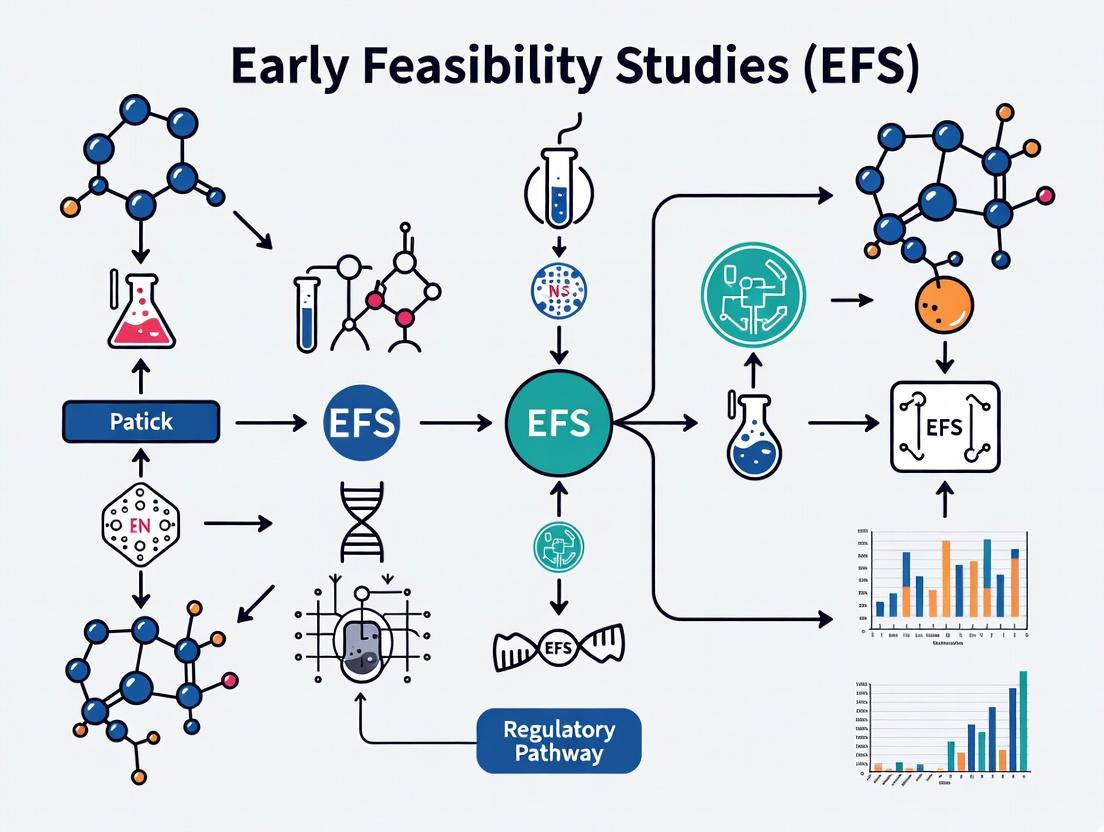
This comprehensive guide demystifies the FDA's Early Feasibility Studies (EFS) regulatory pathway for medical device researchers, scientists, and drug development professionals.
Navigating the FDA's Early Feasibility Studies (EFS) Pathway: A Strategic Guide for Medical Device Innovators
Abstract
This comprehensive guide demystifies the FDA's Early Feasibility Studies (EFS) regulatory pathway for medical device researchers, scientists, and drug development professionals. It explores the foundational principles, strategic applications, and regulatory nuances of the EFS program, designed to expedite the clinical evaluation of breakthrough technologies. The article provides actionable insights for study design, addresses common challenges, compares the EFS pathway with traditional routes, and outlines best practices for successful implementation. This serves as an essential roadmap for leveraging EFS to accelerate innovation while ensuring patient safety and regulatory compliance.
What is the EFS Pathway? Defining FDA's Gateway for Early-Stage Innovation
The FDA's Early Feasibility Study Program Explained
The U.S. Food and Drug Administration’s (FDA) Early Feasibility Study (EFS) program is a regulatory pathway designed to facilitate the early clinical evaluation of innovative medical devices within the United States. This program is particularly critical for researchers, scientists, and drug development professionals working on first-in-human or early-stage device concepts, often where significant clinical or non-clinical data may be limited. The EFS pathway is framed within the broader thesis of regulatory science research, aiming to balance patient safety with the need for iterative device development based on early human experience.
Core Principles
- Iterative Development: Allows for modifications to the device or study protocol based on early clinical insights.
- Risk-Benefit Framework: Emphasizes a total product life cycle approach to risk management.
- Early Interaction: Encourages proactive communication with the FDA’s Center for Devices and Radiological Health (CDRH) through the Q-Submission (Pre-Submission) process.
Eligibility Criteria for an EFS
An investigation is considered an EFS if it meets all of the following criteria:
- Involves a significant or non-significant risk device.
- Is used for a new intended use or incorporates new technology.
- Has limited existing clinical/non-clinical data to support an Investigational Device Exemption (IDE) for a traditional feasibility or pivotal study.
- The primary objective is to assess device functionality and initial clinical safety, not to demonstrate effectiveness.
The following table summarizes key quantitative data points related to the EFS program, based on recent FDA reports and publications.
Table 1: EFS Program Metrics and Submission Data (Representative)
| Metric | 2022 Fiscal Year Data | 2023 Fiscal Year Data (Projected/Trend) | Notes |
|---|---|---|---|
| Total EFS IDE Submissions Received | ~80-100 submissions | Similar or increasing trend | Includes original and supplemental IDEs. |
| EFS IDE Approval Rate | High (>85%) | Consistently High | Reflects impact of pre-submission interactions. |
| Median Time to FDA Decision (EFS IDE) | ~ 30 calendar days | ~ 30 calendar days | For "Decision" (Approvable or Approve with Conditions) letters. |
| Percentage Utilizing Pre-Submission | >70% | >70% | Critical for successful EFS program navigation. |
| Common Device Areas | Cardiovascular, Neurological, Orthopedic | Cardiovascular, Digital Health, Robotic | Cardiovascular remains dominant. |
Detailed Protocol: Navigating the EFS Regulatory Pathway
This protocol outlines the stepwise methodology for researchers to prepare and submit an EFS application to the FDA.
Protocol Title: Regulatory Pathway Protocol for an Early Feasibility Study (EFS) IDE Submission
Objective
To obtain FDA approval for an Investigational Device Exemption (IDE) to initiate an Early Feasibility Study of a novel medical device in human subjects within the United States.
Materials and Reagents (The Scientist's Toolkit: Regulatory & Research Materials)
Table 2: Key Research Reagent Solutions & Materials for EFS Preparation
| Item/Reagent | Function in EFS Context | Brief Explanation |
|---|---|---|
| FDA Guidance Documents | Regulatory Framework Definition | Provide the rules and recommendations for EFS design (e.g., "Early Feasibility Studies Guidance"). |
| Pre-Submission (Q-Sub) | Strategic Planning Tool | A formal process to obtain FDA feedback on proposed study design, bench/animal testing, and data requirements prior to IDE submission. |
| Risk Assessment File | Safety Justification | A dynamic document identifying potential device risks, mitigations (from design & testing), and the overall risk-benefit analysis. |
| Benchtop Performance Data | Preliminary Safety & Function Evidence | Data from engineering tests (e.g., durability, software validation, material safety) supporting initial human use. |
| Animal Study Data (if applicable) | Biological Safety Evidence | Data from a limited animal study to assess biological response and key functional parameters in a relevant model. |
| Clinical Protocol Draft | Study Blueprint | Detailed document outlining study objectives, patient selection, procedures, endpoints, and statistical plan. |
| Investigator's Brochure | Investigator Reference | Compilation of all known device information, including manufacturing, non-clinical studies, and potential risks. |
| eCopy of IDE Application | Submission Medium | The electronic submission package containing all required modules for FDA review, formatted per FDA specifications. |
Methodology
Step 1: Pre-Submission Planning & Interaction
- Eligibility Assessment: Confirm the device/intended use meets EFS criteria (see 1.2).
- Schedule Pre-Submission Meeting: Request a Q-Submission meeting with the FDA. Prepare a focused agenda and specific questions regarding the proposed EFS.
- Develop Preliminary Data Package: Prepare a summary of available benchtop data and any animal data, along with a draft clinical protocol synopsis for FDA review.
Step 2: Non-Clinical Testing Plan Execution
- Bench Testing: Conduct tests to address basic safety, reliability, and functionality. The scope is tailored based on FDA feedback from the pre-sub.
- Animal Study (if needed): Design a limited, focused animal study to answer specific safety questions that cannot be adequately addressed by bench testing alone. The study should use the final or near-final device design.
Step 3: IDE Application Assembly
- Complete all IDE Sections:
- Administrative Information: Sponsor, investigators, IRB.
- Device Description & Manufacturing Information.
- Previous Investigations Report: Summarize all prior bench and animal study data.
- Investigational Plan: Finalized clinical protocol, monitoring procedures, risk analysis.
- Investigator Agreement & CVs.
- IRB Approval (can follow FDA approval for significant risk devices).
- Informed Consent Document.
- Highlight EFS Justification: Clearly articulate in the cover letter and investigational plan why the study qualifies as an EFS and how the risk-benefit profile is acceptable.
Step 4: Submission, Review, and Study Initiation
- Submit via CDRH Portal: Upload the eCopy of the IDE application.
- FDA Review Cycle: The FDA has 30 days to issue a decision. Be prepared to respond quickly to any requests for additional information.
- Address Conditions: If an "Approve with Conditions" letter is received, address all stipulated conditions prior to initiating the study.
- IRB Approval: Obtain final IRB approval.
- Study Initiation: Enroll the first subject. Plan for frequent, iterative data review.
Data Analysis and Iteration
- Safety Endpoint Monitoring: Pre-specified plans for reviewing safety data (e.g., after 1st, 3rd, 5th subjects).
- Protocol Amendment Process: Have a plan for modifying the device or protocol based on early learning, utilizing IDE supplements as required.
Visualizations
Early Feasibility Studies (EFS), as a formalized regulatory pathway in the United States, represent a critical innovation in medical device development. This pathway enables the collection of preliminary clinical data on a novel device within a small cohort to assess its safety and device functionality for a new intended use. Understanding its evolution from a limited pilot program to a mainstream option is essential for researchers and development professionals seeking to accelerate translational research within a structured regulatory framework.
Application Notes: Key Historical Milestones and Quantitative Adoption
The EFS pathway was institutionalized by the U.S. Food and Drug Administration (FDA) to balance the need for innovation with patient safety. The following table summarizes pivotal milestones and quantitative data on its adoption, illustrating its transition to a mainstream pathway.
Table 1: Evolution and Adoption of the FDA EFS Program (2013-2023)
| Year | Key Regulatory Milestone | Quantitative Metric (Cumulative/Annual) | Significance for Mainstream Acceptance |
|---|---|---|---|
| 2013 | Pilot Program Initiation (for certain cardiovascular devices) | ~10-15 initial submissions (estimated) | Established foundational framework and review processes. |
| 2015 | Draft Guidance Issued: "FDA Decisions for Investigational Device Exemption (IDE) Clinical Studies" | Formalization of criteria for "first in human" and "early feasibility" studies. | Provided clarity, increasing sponsor confidence. |
| 2017 | Program Expanded beyond cardiovascular devices to all device types. | EFS comprised ~15% of all IDEs (source: FDA presentations). | Demonstrated utility across therapeutic areas, broadening appeal. |
| 2019-2021 | Final Guidance & Global Harmonization (e.g., alignment with ISO 14155:2020). | Over 200 total EFS IDEs submitted since inception (FDA data). | Maturity of process and international alignment solidified its role. |
| 2022-2023 | Mainstream Integration into Development Plans. | EFS submissions represent ~20-25% of all original IDEs annually. | Established as a standard, frequently considered option in early development strategy. |
Detailed Experimental Protocols for EFS-Endpoint Studies
The core of an EFS lies in its focused clinical investigation. The following protocol outlines a generalized methodology for a typical early feasibility study of an implantable neurostimulation device for a new neurological indication.
Protocol: Early Feasibility Study for a Novel Implantable Neurostimulator
1.0 Objective: To obtain preliminary safety and device functionality data for the Novel Alpha Neurostimulator in managing refractory Condition Y in up to 10 subjects over a 3-month acute follow-up period.
2.0 Study Design:
- Design: Prospective, single-arm, non-randomized, multi-center study.
- Endpoint Classification: Safety and performance.
- Primary Safety Endpoint: Incidence of Serious Adverse Device Effects (SADEs) through 30 days post-implant.
- Primary Performance Endpoint: Technical success of system implantation and activation at the time of procedure.
3.0 Subject Selection Criteria:
- Key Inclusions: Diagnosis of refractory Condition Y for >2 years; failed at least 2 standard pharmacological therapies; medically stable.
- Key Exclusions: Contraindications for MRI, active infection, or concurrent participation in another drug/device study.
4.0 Experimental Methodology:
- 4.1 Pre-Implant Baseline Assessment: Complete neurological evaluation, disease-specific quality of life questionnaire (QoL-Y), and baseline brain imaging (MRI).
- 4.2 Implant Procedure:
- Device implantation performed in a sterile operating room.
- Lead placement guided by real-time fluoroscopy and electrophysiological recording to confirm target engagement.
- Intra-operative lead impedance and stimulation threshold testing performed to verify system integrity and capture.
- Definition of Technical Success: Successful placement of all system components (generator, leads) and achievement of electrophysiological capture without intra-operative complications requiring abort.
- 4.3 Post-Implant Follow-Up:
- Discharge & 1 Week: Wound check, device interrogation for system integrity.
- 30-Day & 90-Day Visits: Comprehensive device interrogation (battery status, impedance, lead stability). Standardized adverse event assessment. Repeat QoL-Y questionnaire. Stimulation parameters optimized based on patient response and side effects.
5.0 Statistical Considerations:
- Sample Size: Justified on the basis of feasibility (typically 5-15 subjects), not statistical hypothesis testing.
- Analysis: Descriptive statistics for all endpoints. Continuous data presented as mean ± SD or median (range). Categorical data as counts and percentages. All SADEs will be listed individually with causality assessment.
Visualizations
Diagram 1: Evolution of the EFS Regulatory Pathway
Diagram 2: Generic EFS Clinical Study Workflow
The Scientist's Toolkit: Key Research Reagent Solutions for EFS
Table 2: Essential Materials for Preclinical & Correlative EFS Studies
| Item / Reagent | Function in EFS Context | Example / Notes |
|---|---|---|
| GLP-Grade Test Article | The finished, sterilized investigational device used in the study. Must be manufactured under controlled conditions. | Novel Alpha Neurostimulator, Lot # with full traceability. |
| Biocompatibility Testing Suite (ISO 10993) | To satisfy safety prerequisites for human exposure. | Materials for cytotoxicity, sensitization, and implantation tests. |
| Anatomically Accurate Anatomical Models | For surgical technique development and training prior to first-in-human use. | 3D-printed patient-specific phantom or cadaveric model. |
| Clinical Outcome Assessment (COA) Instruments | To quantify device impact on patient-centric endpoints like symptoms or function. | Validated questionnaire, e.g., QoL-Y scale; digital symptom diary. |
| Device-Specific Test System | For intra-operative and follow-up functional verification of the device. | Custom clinical programmer/analyzer for impedance check and stimulation. |
| Electronic Data Capture (EDC) System | For secure, compliant, and real-time collection of clinical trial data. | 21 CFR Part 11 compliant platform for case report forms. |
| Biobanking Kits | For collection and preservation of correlative biological samples (if applicable). | PAXgene tubes for RNA, serum collection tubes. |
This document details the application of 21 CFR Part 812 (Investigational Device Exemptions) and the FDA’s 2013 final guidance “Investigational Device Exemptions (IDEs) for Early Feasibility Medical Device Clinical Studies, Including Certain First in Human (FIH) Studies.” These form the cornerstone for designing and executing Early Feasibility Studies (EFS) in the U.S., a critical regulatory pathway for innovative medical device development where initial clinical experience is needed to inform device design.
Foundational Regulatory Data Comparison
Table 1: Key Requirements Comparison: Traditional IDE vs. EFS/2013 Guidance Pathway
| Regulatory Aspect | Traditional IDE Pathway (Pre-2013) | EFS Pathway (Per 2013 Guidance) | Quantitative Impact (Typical) |
|---|---|---|---|
| Premarket Data Requirements | Extensive non-clinical testing required; “significant doubt” clause often invoked. | Acceptance of preliminary, non-clinical data with a plan to mitigate residual risk in clinic. | Non-clinical test volume reduced by ~30-50% for initial submission. |
| Study Size | Larger sample sizes to demonstrate safety & effectiveness. | Small cohort sizes; focused on initial clinical assessment. | Initial cohort often 5-15 subjects vs. 50+ for pivotal. |
| Investigator & Site Criteria | Requires extensive prior experience with the device type. | Allows investigators with relevant medical skill but less specific device experience. | Broader pool of eligible principal investigators. |
| IRB Review Type | Typically full committee review for significant risk devices. | Allows for local IRB review contingent on FDA approval of the IDE. | Streamlined review process at institution level. |
| Reporting Timelines (Adverse Events) | 5-day reporting for unanticipated adverse device effects. | Same 5-day reporting, but enhanced sponsor-investigator interaction expected. | No change in timeline, but frequency of communication increases. |
Table 2: EFS Submission Document Core Elements
| Document Element | Description | Required per 21 CFR 812? | Enhanced Focus per 2013 Guidance |
|---|---|---|---|
| Investigational Plan | Protocol, risk analysis, monitoring procedures. | Yes (812.25) | Emphasis on iterative design, early clinical objectives. |
| Report of Prior Investigations | Non-clinical and any prior clinical data. | Yes (812.27) | Preliminary bench/animal data acceptable with justified rationale. |
| Device Description & Manufacturing | Design, materials, methods, facilities, controls. | Yes (812.20(b)) | Less detailed initial manufacturing info; scales with study phase. |
| Labeling | Investigational device labeling. | Yes (812.5) | Must clearly state “CAUTION – Investigational Device.” |
| Informed Consent Documents | All patient-facing consent materials. | Yes (812.20(b)) | Must clearly communicate early feasibility nature & higher uncertainty. |
| IRB Information | Certification of IRB review & approval. | Yes (812.20(b)) | Confirmation of IRB’s ability to review after FDA approval. |
Application Notes & Experimental Protocols
Application Note 1: Designing an EFS Protocol Under 21 CFR 812.25
Objective: To create a protocol that satisfies regulatory requirements while preserving flexibility for iterative learning. Protocol:
- Define Primary & Secondary Objectives: Limit primary objectives to assessment of device function and initial clinical safety (e.g., procedural success, absence of major complications at 30 days). Secondary objectives may inform design modifications.
- Subject Selection Criteria: Define a narrow, homogenous population where the benefit-risk is most favorable. Include explicit exclusion criteria for higher vulnerability.
- Study Procedures & Endpoints:
- Detail the implant procedure, peri-operative care, and follow-up schedule.
- Specify objective performance criteria (e.g., device deploys correctly, measurable physiological effect) and safety endpoints (e.g., rate of serious adverse events).
- Stopping Rules & Risk Mitigation: Define clear thresholds (e.g., ≥2 device-related major adverse events in first 5 subjects) triggering a mandatory pause for assessment.
- Data Management & Monitoring Plan: Outline frequent data review (e.g., after each subject) by a sponsor-based committee. Plan for real-time data capture to inform iterative changes.
Application Note 2: Compiling the “Report of Prior Investigations” for an EFS
Objective: To present preliminary non-clinical data that justifies the initial clinical study. Protocol:
- Bench Testing Summary:
- Perform essential function, durability, and reliability testing. Sample sizes may be smaller than for final validation.
- Document all testing in a traceable matrix linking user needs, design inputs, and the test results.
- Example Method – In Vitro Fatigue Testing: Mount the device subset in a simulated-use fixture within a physiological solution bath (37°C). Apply cyclic loading equivalent to 10x the intended service life (e.g., 400 million cycles for a cardiac device). Inspect for fracture, wear, or degradation at interval inspections.
- Animal Study Summary:
- Conduct a pilot animal study in a relevant model (e.g., porcine for cardiovascular).
- Focus on proof-of-concept and identification of major failure modes.
- Example Method – In Vivo Proof-of-Concept Implant: Under general anesthesia and aseptic technique, perform a surgical approach to expose the target anatomy. Deploy the investigational device using the proposed clinical technique. Monitor acute performance (e.g., hemodynamic measurements, angiography). Sacrifice at a terminal endpoint (e.g., 30 days) for histopathological analysis of device-tissue interaction.
- Risk Analysis: Update the risk management file (per ISO 14971) to identify all residual risks addressed by the clinical protocol’s mitigation strategies.
Diagrams
The Scientist's Toolkit: EFS Regulatory & Study Materials
Table 3: Key Research Reagent Solutions for EFS Pre-Clinical Package
| Item | Function in EFS Context | Example/Notes |
|---|---|---|
| ISO 10993 Biocompatibility Test Suite | Assesses potential toxicity from device materials. | For EFS, a limited set (Cytotoxicity, Sensitization, Irritation) may be acceptable prior to FIH, with full suite planned later. |
| Finite Element Analysis (FEA) Software | Computer simulation of device mechanical performance under stress. | Used to identify high-strain areas prone to fracture, informing design and guiding focused bench testing. |
| Anatomical Bench Model (Biomechanical Simulator) | Provides a realistic in vitro environment for device deployment and function testing. | Crucial for demonstrating user technique and device interaction with simulated anatomy (e.g., pulsatile heart model). |
| Good Laboratory Practice (GLP) Contract Research Organization (CRO) | Conducts standardized animal studies for regulatory acceptance. | While early pilot studies may be non-GLP, a GLP animal study is often required in the EFS IDE submission. |
| Electronic Data Capture (EDC) System | Capters clinical data in real-time for rapid review. | Essential for timely interim analysis and safety monitoring as required by the EFS monitoring plan. |
| Risk Management File Software | Maintains traceable records of hazard analysis, mitigations, and residual risk. | Required per ISO 14971 and referenced extensively in the IDE “Report of Prior Investigations.” |
Application Notes: EFS as a Catalyst for Early Clinical Innovation
Early Feasibility Studies (EFS), governed by regulatory frameworks like the US FDA's program, are designed to allow for early clinical investigation of significant risk devices in a limited patient population. This pathway is critical for accelerating innovation by collecting preliminary data on device functionality and clinical management, thereby addressing unmet needs in patient populations with limited treatment options.
Table 1: Key Regulatory Milestones and Data Requirements for EFS
| Regulatory Milestone | Primary Objective | Typical Cohort Size (Range) | Key Data Outputs |
|---|---|---|---|
| Pre-Submission (Q-Sub) | Align on study design & risk mitigations | N/A | Study protocol, preclinical data summary, risk analysis |
| IDE Approval for EFS | Initial clinical safety & device performance | 5 - 20 patients | Safety endpoint rates, preliminary performance metrics |
| Transition to Pivotal Study | Confirm safety & effectiveness in larger cohort | 50 - 300+ patients | Primary effectiveness endpoint success, final safety profile |
The core advantage of the EFS pathway is its iterative nature, allowing for device modification based on early clinical learnings before committing to larger, more definitive studies. This is particularly valuable for novel technologies targeting complex conditions like advanced heart failure, refractory hypertension, or rare neurological disorders.
Experimental Protocols for EFS Supportive Studies
Protocol 2.1: In Vitro Hemocompatibility and Durability Testing for Cardiovascular Implants
Objective: To assess thrombogenic potential and mechanical integrity of a novel intravascular device under simulated physiological conditions. Materials: See "The Scientist's Toolkit" below. Methodology:
- Conditioning: Mount the test device in a pulse duplicator system filled with sterile, anticoagulated human blood or blood analog fluid.
- Hemolysis Testing: Circulate fluid at 5 L/min, 120 bpm, 120/80 mmHg for 6 hours. Sample fluid at 0, 1, 3, and 6 hours.
- Analysis: Centrifuge samples at 2,500 g for 15 min. Measure free hemoglobin in plasma via spectrophotometry (λ=540 nm). Calculate Normalized Index of Hemolysis (NIH) per ASTM F1841.
- Thrombus Adhesion: Post-test, rinse device and visually score thrombus formation per ISO 10993-4.
- Fatigue Analysis: Subject device to 400 million cycles (equivalent to 10 years). Inspect for fracture, wear, or degradation via SEM.
Protocol 2.2: Large Animal Model (Porcine) Acute Safety and Performance
Objective: To evaluate initial device deployment, anchoring, and acute physiological response in a relevant in vivo model. Methodology:
- Animal Prep: Anesthetize and instrument a swine (60-80 kg). Administer heparin to maintain ACT >250 sec.
- Device Deployment: Under fluoroscopic guidance, deliver and deploy the implantable device at the target anatomical site (e.g., left atrial appendage, renal artery).
- Acute Performance Metrics: Continuously monitor for 4 hours post-deployment. Record hemodynamics, capture angiography/IVUS/OCT images to assess positioning, patency, and apposition.
- Terminal Endpoints: Euthanize animal. Perform necropsy, explant device with surrounding tissue for histopathological analysis of acute injury, inflammation, and thrombosis.
Protocol 2.3: First-in-Human (EFS) Implant Procedure and 30-Day Monitoring
Objective: To obtain initial clinical data on device safety and performance in a limited patient cohort. Methodology:
- Patient Selection: Enroll up to 10 subjects meeting strict inclusion/exclusion criteria (no standard therapy options, high unmet need).
- Implant Procedure: Perform under standard clinical care in a hybrid OR/cath lab. Document procedure time, contrast volume, any intraoperative complications or device modifications required.
- In-Hospital Monitoring: Monitor for 48-72 hours for adverse events (AEs). Perform predischarge imaging (TTE, CT, or angiography).
- 30-Day Follow-Up: Schedule clinic visits at 7 and 30 days. Assess primary safety endpoint (rate of Major Adverse Events). Collect performance data via patient-reported outcomes and repeat imaging.
Visualizations
Title: EFS Regulatory Pathway from Concept to Approval
Title: Typical EFS Clinical Study Workflow and Gates
The Scientist's Toolkit: Key Research Reagent Solutions
Table 2: Essential Materials for EFS Supportive Testing
| Item / Reagent | Supplier Examples | Function in Protocol |
|---|---|---|
| Pulse Duplicator System | Vivitro Labs, BDC Laboratories | Simulates physiologic pressure/flow for in vitro hemodynamic and durability testing. |
| Anti-coagulated Human Blood | BioIVT, Versiti | Provides biologically relevant medium for hemocompatibility testing. |
| Sheep or Porcine Model | Sinclair Bio, Marshall BioResources | Provides anatomically relevant in vivo model for acute and chronic GLP safety studies. |
| Optical Coherence Tomography (OCT) System & Catheter | Abbott (ILUMIEN), Philips | Delivers high-resolution intravascular imaging to assess device apposition and vascular response. |
| ELISA Kits (Troponin, IL-6, PF4) | R&D Systems, Abcam | Quantifies biomarkers of myocardial injury, inflammation, and platelet activation from serum/plasma. |
| Scanning Electron Microscope (SEM) | Thermo Fisher, Zeiss | Provides micron-level imaging of device surfaces pre- and post-testing for wear and thrombus analysis. |
| Electronic Data Capture (EDC) System | Medidata Rave, Veeva | Securely manages and curates clinical trial data from EFS for regulatory submission. |
Within the framework of research on the Early Feasibility Study (EFS) regulatory pathway, identifying suitable medical devices is paramount. The U.S. Food and Drug Administration (FDA) established the EFS pathway to allow for the limited clinical study of certain significant risk devices prior to finalizing their design, typically when no approved alternative treatment exists and the device represents a potential breakthrough for patients with serious conditions. This application note provides detailed protocols and criteria for researchers and development professionals to systematically evaluate and identify ideal candidate devices for this innovative regulatory approach.
Key Eligibility Criteria for EFS
Based on current FDA guidance and recent approvals, devices must meet specific criteria to qualify for an EFS under an Investigational Device Exemption (IDE).
Table 1: Quantitative Eligibility Criteria for EFS Pathway
| Criterion Category | Specific Requirement | Typical Quantitative Metric |
|---|---|---|
| Patient Population | Serious or life-threatening condition | Life expectancy < 2 years without treatment; NYHA Class IV; mRS score ≥ 4 |
| Treatment Alternatives | No viable alternatives | Zero approved PMA/HDE devices for indication; Standard therapy failure rate > 50% |
| Device Maturity | Early development stage | Non-clinical (bench/animal) validation complete; Initial design not yet finalized for pivotal study |
| Risk-Benefit Profile | Preliminary evidence of safety | Anticipated serious adverse event rate < 30%; Potential for clinically meaningful effectiveness > 15% |
| Study Design | Limited initial exposure | First-in-human (FIH) study; Proposed enrollment typically 10-20 patients at initial site(s) |
Experimental Protocol: Pre-Submission Feasibility Assessment
This protocol outlines a systematic methodology for evaluating a device's suitability for the EFS pathway prior to formal regulatory submission.
Protocol Title: In vitro and Preclinical Composite Assessment for EFS Candidacy
Objective: To generate the necessary non-clinical evidence to support an EFS IDE application by evaluating device safety, function, and preliminary performance.
Materials & Methods:
- Unmet Need Analysis:
- Conduct a systematic literature review and registry data analysis to quantify the morbidity/mortality rates of the target disease.
- Perform a detailed competitive landscape analysis of approved (PMA, HDE) and cleared (510(k)) devices to formally establish the absence of comparable alternatives.
Benchtop Performance & Reliability Testing:
- Perform accelerated lifetime testing per ISO 5840/ISO 14708 standards relevant to the device type (e.g., cardiovascular, neurological).
- Establish failure mode thresholds. Device must demonstrate a reliability of >85% survival probability at 3x the intended acute use duration or 6 months for chronic implants.
Preclinical Animal Model Study:
- Utilize an anatomically and physiologically relevant large animal model (e.g., porcine for cardiovascular, ovine for orthopedic).
- Implant the device (n≥5) and monitor for a pre-defined acute endpoint (e.g., 30-90 days).
- Endpoints include histopathology, device integrity assessment, and physiological response measurement.
Risk Assessment & Mitigation Planning:
- Conduct a formal Failure Mode and Effects Analysis (FMEA) per ISO 14971.
- Develop specific mitigation strategies for each major identified risk (e.g., design revisions, procedural safeguards, monitoring plans) to be implemented in the proposed EFS clinical protocol.
Data Analysis: Compile results into a Gap Analysis Table comparing generated data against FDA EFS expectations. A candidate is deemed suitable if all major gaps are addressable prior to IDE submission.
The Scientist's Toolkit: Key Research Reagent Solutions
Table 2: Essential Materials for EFS Candidacy Evaluation
| Item | Function in EFS Assessment |
|---|---|
| ISO Standard Test Fixtures (e.g., mock circulatory loops, durability testers) | Provides standardized, reproducible benchtop environment to simulate physiological conditions and assess device performance and reliability. |
| Relevant Large Animal Models (e.g., Yorkshire swine, Dorset sheep) | Essential for in vivo assessment of device safety, handling, and preliminary biocompatibility in a translational model prior to first-in-human study. |
| Histopathology Staining Kits (H&E, Masson's Trichrome, CD31 IHC) | For post-explant tissue analysis to evaluate local inflammatory response, fibrosis, endothelialization, and device-tissue integration. |
| Medical Device FMEA Software (e.g., ReliaSoft, QA-FMEA) | Facilitates systematic, standardized risk analysis required for IDE application, ensuring identification and prioritization of potential failure modes. |
| Clinical Registry Data Access (e.g., NCDR, STS, INTERMACS) | Critical for quantifying the unmet medical need and establishing baseline outcomes for the target patient population to justify EFS necessity. |
Visualizing the EFS Candidate Identification Workflow
Diagram Title: EFS Candidate Identification Decision Pathway
Visualizing the EFS Regulatory & Development Thesis Context
Diagram Title: Thesis Pillars on EFS Pathway Research
Identifying ideal candidates for the EFS pathway requires a rigorous, evidence-driven assessment centered on patient need, device readiness, and risk mitigation. By adhering to the structured eligibility criteria and experimental protocols outlined herein, researchers can effectively navigate the pre-submission process, generate compelling data for FDA review, and advance breakthrough technologies to patients with serious conditions more efficiently. This systematic approach forms a critical pillar within the broader research thesis on optimizing the EFS regulatory pathway.
Application Notes and Protocols
Context: These notes are developed within the framework of a thesis investigating the EFS regulatory pathway as a mechanism for accelerating translational medicine while establishing robust early-stage evidence generation. The principles guide the design and execution of studies for novel, high-risk medical devices.
Principle 1: Iterative, Risk-Proportionate Design
- Core Protocol: Employ a Bayesian adaptive design for dose/parameter finding. Begin with a computer-simulated cohort using a validated physiological model. Subsequent patient cohorts are enrolled based on real-time analysis of primary safety endpoints (e.g., serious adverse device effects) and performance metrics.
- Key Experiment: Progressive Exposure Expansion.
- Methodology: A single-arm, multi-stage study where the intervention's intensity or duration is increased incrementally across pre-defined stages.
- Stage 1 (N=3): Minimal exposure in the least vulnerable anatomical site.
- Interim Analysis: Full safety review by an independent Data Monitoring Committee (DMC). Performance data is compared against a predefined performance goal derived from historical control data.
- Stage 2 (N=5): Exposure expanded to full intended duration/target site if Stage 1 meets all safety stopping rules and demonstrates signal of performance.
- Final Analysis: Combined safety and performance analysis for all treated subjects (N=8).
- Methodology: A single-arm, multi-stage study where the intervention's intensity or duration is increased incrementally across pre-defined stages.
Principle 2: Comprehensive Early Human Phenotyping
- Core Protocol: Implement a multi-modal biomarker collection schedule aligned with proposed mechanism of action (MOA). This includes dynamic functional assessments, imaging, and molecular profiling.
- Key Experiment: Multi-Omic Mechanistic Interrogation.
- Methodology: For a bioabsorbable stent with anti-inflammatory coating, serial biospecimen collection is mandated.
- Timepoints: Pre-implant, 24h, 30 days, 90 days post-implant.
- Assays:
- Proteomics: Multiplex cytokine panel (Luminex) from serum.
- Transcriptomics: RNA-Seq on peripheral blood mononuclear cells (PBMCs).
- Metabolomics: LC-MS on plasma.
- Data Integration: Biomarker trajectories are correlated with imaging outcomes (OCT for endothelialization) and clinical endpoints (repeat revascularization).
- Methodology: For a bioabsorbable stent with anti-inflammatory coating, serial biospecimen collection is mandated.
Principle 3: Proactive and Dynamic Risk Management
- Core Protocol: Utilize a Real-Time Safety Analytics Dashboard. All adverse events are coded using MedDRA and plotted on a cumulative occurrence chart with pre-specified alert thresholds.
- Key Experiment: Sentinel Site & Triggered Audit Protocol.
- Methodology:
- Sentinel Site Selection: Designate the first three enrolling sites as "Sentinels." Data from these sites undergoes 100% source data verification before subsequent site initiation.
- Safety Triggers: A single unanticipated serious adverse device effect (USADE) triggers an immediate, focused audit at the reporting site and a hold on further enrollments at all sites pending DMC review.
- Performance Triggers: Failure to meet the performance goal in two consecutive subjects triggers a manufacturing and implant procedure audit.
- Methodology:
Principle 4: Integrated Ethical Patient Partnership
- Core Protocol: Integrate a Patient Advisory Panel (PAP) into the study governance structure. The PAP reviews informed consent documents, patient-reported outcome (PRO) measures, and the feasibility of follow-up requirements.
- Key Experiment: Longitudinal PRO and Quality of Life (QoL) Tracking.
- Methodology: Deploy a mixed-methods assessment.
- Quantitative: Validated disease-specific PRO instrument administered via electronic diary at baseline, weekly for Month 1, then monthly to study end. Compliance is monitored.
- Qualitative: Structured interviews conducted at 30 and 90 days post-procedure to capture unmeasured benefits/burdens. Interviews are transcribed, de-identified, and analyzed for thematic content.
- Methodology: Deploy a mixed-methods assessment.
Principle 5: Pre-Defined Translational Milestones
- Core Protocol: Establish "Go/No-Go" decision gates for progression to pivotal study. Milestones are based on composite scores of safety, performance, and mechanistic understanding.
- Key Experiment: Milestone Attainment Analysis.
- Methodology: At study completion, an independent Clinical Events Committee (CEC) adjudicates all primary endpoint data. The sponsor's pre-specified Statistical Analysis Plan outlines the composite success criteria.
Table 1: Quantitative Summary of EFS Principle Implementation Metrics
| Principle | Primary Metric | Target Threshold (Example) | Data Source |
|---|---|---|---|
| Iterative Design | Serious Adverse Event Rate | <15% at 30 days | CEC Adjudication |
| Early Phenotyping | Mechanistic Biomarker Signal Detection | ≥2 log-fold change in target pathway (p<0.01) | Core Lab Assays |
| Proactive Risk Mgmt | Time to USADE Detection & Reporting | <24 hours from site awareness | Safety Dashboard Logs |
| Ethical Partnership | Patient Retention & PRO Compliance | >85% completion at primary endpoint | ePRO System Reports |
| Translational Milestones | Composite Performance Score | ≥75% score vs. Performance Goal | Final Study Report |
The Scientist's Toolkit: Key Research Reagent Solutions for EFS Mechanistic Studies
| Item | Function in EFS Context |
|---|---|
| Luminex xMAP Multiplex Assay Kits | Simultaneous quantification of dozens of cytokines/chemokines from low-volume serum/plasma samples, enabling comprehensive immune profiling. |
| Next-Generation Sequencing (NGS) Library Prep Kits | For transcriptomic (RNA-Seq) or epigenomic analysis of patient-derived cells, uncovering MOA and identifying predictive biomarkers. |
| Validated Phospho-Specific Antibody Panels | For flow cytometry or immunohistochemistry to monitor activation states of specific signaling pathways in tissue biopsies. |
| Stable Isotope-Labeled Metabolites | Internal standards for precise LC-MS/MS-based metabolomic profiling, tracking metabolic shifts in response to therapy. |
| Digital Pathology & Image Analysis Software | Enables quantitative, reproducible analysis of histology slides (e.g., for tissue integration, cellular response) from exploratory endpoints. |
Title: Adaptive EFS Progressive Exposure Workflow
Title: EFS Multi-Omic Mechanistic Signaling Pathway
Title: EFS Governance & Decision-Making Relationships
Building Your EFS Strategy: A Step-by-Step Application and Study Design Blueprint
Application Notes on the Q-Submission Program
Within the context of Early Feasibility Studies (EFS) regulatory pathway research, proactive engagement with the U.S. Food and Drug Administration (FDA) via the Q-Submission (Q-Sub) program is a critical strategic component. The program provides a formal mechanism for sponsors to obtain FDA feedback prior to submitting a marketing application or a significant Investigational Device Exemption (IDE) submission, such as one for an EFS.
Key Q-Submission Types for EFS Pathway:
- Pre-Submission (Pre-Sub): The most common and relevant type for novel device development. It allows for structured feedback on specific questions regarding device design, preclinical testing, clinical study design (including EFS protocols), and data analysis plans.
- Submission Issue Requests: For resolving issues after a formal submission (e.g., IDE) has been submitted.
- Informational Meetings: For discussing general topics without seeking specific feedback on a planned submission.
- Study Risk Determinations: To determine whether a planned clinical study constitutes a Significant Risk or Non-Significant Risk device investigation.
Quantitative Data on Q-Submission Trends (FDA FY 2023)
Table 1: CDRH Q-Submission Program Metrics (FY 2023)
| Metric | Value | Notes / Context |
|---|---|---|
| Total Q-Subs Received | 2,864 | Reflects sustained high demand for FDA interaction. |
| Pre-Subs as % of Total | ~85% | The dominant type of interaction requested. |
| Average FDA Response Time | 77 calendar days | For complete, scheduled Pre-Subs; measured from meeting date to written feedback. |
| Performance to 70-Day Goal | 74% of responses met goal | FDA goal is to provide feedback within 70 calendar days post-meeting. |
| Most Common Pre-Sub Topics | 1. Clinical | Followed by Biocompatibility, Software, and Non-Clinical. |
Protocols for Engaging with the Q-Submission Process
Protocol 1: Preparing and Submitting a Pre-Submission Request
Objective: To formally request and obtain written FDA feedback on specific questions related to device development, mitigating regulatory risk for subsequent EFS or pivotal study submissions.
Methodology:
- Internal Alignment: Develop a clear, concise, and focused set of questions. Limit to the most critical, unresolved issues where FDA guidance is essential (e.g., acceptability of a novel surrogate endpoint for an EFS primary outcome, animal model validation).
- Draft Pre-Sub Package: Assemble a complete package:
- Cover Letter: Specify "Pre-Submission" and requested meeting format (e.g., teleconference, in-person, written feedback only).
- Proposed Agenda & Questions: List questions in order of priority. Allocate requested time per question.
- Device Description & Indication for Use: Provide clear context.
- Brief Summary of Known or Potential Risks: Contextualize safety considerations.
- Supporting Data/Information: Include just enough relevant preliminary data (bench, animal) to frame each question. Avoid exhaustive data dumps.
- Regulatory Background: Reference previous interactions or submissions.
- Submit via FDA Portal: Upload the complete package through the FDA's CDRH Customer Collaboration Portal (CCP).
- FDA Acceptance & Scheduling: The FDA will assign a tracking number and notify of acceptance. A meeting date is typically scheduled 60-90 days after submission acceptance.
- Meeting Preparation: Prepare a brief slide deck mirroring the submitted questions. Designate a primary speaker and note-taker. Rehearse to respect time allocations.
Protocol 2: Conducting an Effective Pre-Submission Meeting
Objective: To maximize the utility of the interactive meeting with the FDA review team to clarify feedback and align on future paths.
Methodology:
- Pre-Meeting: Distribute a one-page executive summary to the FDA team 5 days prior, highlighting the top 3 questions.
- Meeting Execution:
- Introduction (5 mins): Introduce team, restate device and study context (EFS focus).
- Question-Driven Discussion: Adhere strictly to the submitted agenda. Present brief background (<3 mins) for each question before seeking FDA perspective.
- Active Listening & Clarification: Focus on understanding the rationale behind FDA feedback. Ask clarifying questions (e.g., "What specific data would address the concern you raised?").
- Real-Time Note Verification: Consider politely summarizing key points back to the FDA to confirm understanding (e.g., "So, if we provide additional histopathology data from the chronic animal model, that would be acceptable for the EFS submission?").
- Post-Meeting: The FDA will provide official written minutes within 30 days of the meeting. These minutes constitute the official record of feedback. Compare internal notes against these minutes.
Protocol 3: Integrating Q-Sub Feedback into the EFS Regulatory Strategy
Objective: To formally document and implement FDA feedback into the device development plan and subsequent regulatory submissions.
Methodology:
- Feedback Gap Analysis: Create a table comparing each original Pre-Sub question against the FDA's written feedback. Categorize responses as: Alignment, Conditional Alignment (with specific requirements), or Non-Alignment.
- Action Plan Development: For each item of feedback, define a specific action (e.g., "Perform ISO 10993-10 irritation study using rabbit model," "Revise EFS statistical plan to use Bayesian adaptive design").
- Submission Referencing: In the subsequent EFS IDE Submission, include a dedicated section (e.g., "Previous FDA Interactions"). Attach the Pre-Submission package and the FDA's written minutes as appendices. Explicitly describe how the feedback was addressed in the current submission design.
Diagrams
Title: Q-Sub Process Flow for EFS Planning
Title: Pre-Sub Package Key Components
The Scientist's Toolkit: Q-Submission & EFS Preparation
Table 2: Essential Research Reagent Solutions for EFS & Q-Sub Support
| Item / Solution | Function in Context of EFS/Q-Sub |
|---|---|
| FDA Guidance Documents (e.g., EFS Guidance, Q-Sub Guidance) | Provide the regulatory framework and FDA's current thinking on study design and interaction formats. Essential for framing appropriate questions. |
| CDRH Customer Collaboration Portal (CCP) | The mandatory electronic submission platform for all Q-Submission requests. Mastery is required for successful submission. |
| Clinical Trial Design Software (e.g., for Bayesian Adaptive Designs) | Enables the simulation and proposal of novel, efficient trial designs often discussed in Pre-Subs for EFS, providing data to support questions. |
| Electronic Document Management System (eDMS) | Critical for version control of the Pre-Sub package, supporting data, and tracking the integration of FDA feedback into the master development file. |
| Risk Management File (per ISO 14971) | The source for the "Brief Summary of Risks" required in a Pre-Sub. Demonstrates a systematic approach to safety, a key review focus. |
| Biocompatibility Testing Matrix | A planned testing strategy aligned with ISO 10993-1. Used to justify and seek feedback on necessary biological safety data for the EFS. |
| Animal Model Validation Protocol | For novel devices, the scientific rationale and validation data for the chosen animal model is a frequent Pre-Sub topic to justify translational relevance. |
| Statistical Analysis Plan (SAP) Template | A detailed SAP for the proposed EFS is often a central component of Pre-Sub questions regarding endpoints and analysis methods. |
Application Notes: Key Components for an IDE for an Early Feasibility Study (EFS)
An IDE application for an EFS must strategically balance regulatory requirements with the iterative, learning-focused nature of early clinical investigation. The following notes detail critical considerations.
Table 1: Core Quantitative Data & Comparisons for EFS IDE Planning
| Aspect | Traditional Pivotal Study IDE | EFS-Specific IDE Considerations | Typical EFS Enrollment (Range) |
|---|---|---|---|
| Primary Objective | Collect definitive safety & effectiveness data for marketing approval (PMA). | Demonstrate initial clinical safety & device functionality to inform device design. | 10 to 40 subjects. |
| Statistical Plan | Formal hypothesis testing with pre-specified power and alpha. | Descriptive statistics, Bayesian analysis, or performance goals with wide confidence intervals. | Not powered for statistical significance. |
| Non-Clinical Testing | Extensive bench/animal data to fully validate final design. | Focused testing on critical performance and safety questions; often iterative. | Bench & animal data sufficient for limited human exposure. |
| Success Criteria | Pre-specified safety & effectiveness endpoints for regulatory decision. | Procedural success, absence of major adverse events, and proof of principle. | Learning objectives vs. definitive endpoints. |
| Monitoring Plan | Rigorous, frequent site monitoring & independent Data Monitoring Committee (DMC). | Intensive, real-time sponsor oversight; often a sponsor-empaneled DMC. | High frequency of data review (e.g., after each implant). |
Key Protocol Elements for an EFS:
- Rationale: Justify the need for early clinical data (e.g., device novelty, lack of a valid animal model).
- Risk Analysis: A detailed benefit-risk assessment acknowledging higher uncertainty and outlining robust risk mitigation strategies (e.g., patient selection criteria, specialized operator training, contingency plans).
- Stopping Rules: Explicit criteria for pausing or terminating the study based on early safety signals.
- Device Modification Plan: A predefined pathway for reporting and implementing minor design changes based on early learning, as allowed under the IDE.
Experimental Protocols for Supporting Preclinical Data
A robust EFS IDE relies on targeted, hypothesis-driven non-clinical testing.
Protocol 1: In Vivo Acute Performance & Safety Assessment Objective: To evaluate the initial functional performance and acute safety profile of the investigational device in a relevant animal model. Methodology:
- Animal Model & Preparation: Select an appropriate animal model (e.g., swine for cardiovascular devices). Anesthetize and prepare the surgical site per approved IACUC protocol.
- Device Implantation/Application: Under direct visualization or image-guidance, deploy or apply the investigational device according to the Instructions for Use (IFU). Document any deviations.
- Real-Time Monitoring: Continuously monitor vital signs and key physiological parameters (e.g., ECG, blood pressure, oxygen saturation) throughout the procedure.
- Terminal Endpoint Assessment: At a pre-defined endpoint (e.g., 4-6 hours post-procedure), conduct a gross necropsy. Explant the device and adjacent tissue.
- Primary Data Collection: Record procedural success, device functionality, and any immediate adverse events. Collect tissue samples for histopathological analysis (see Protocol 2).
Protocol 2: Histopathological Analysis of Device-Tissue Interaction Objective: To characterize the local tissue response and identify any acute injury caused by the device. Methodology:
- Tissue Fixation: Immediately immerse explanted tissue segments in 10% neutral buffered formalin for a minimum of 48 hours.
- Processing & Embedding: Process fixed tissues through a graded ethanol series, clear with xylene, and embed in paraffin wax.
- Sectioning & Staining: Section blocks at 5µm thickness. Stain slides with Hematoxylin and Eosin (H&E).
- Blinded Evaluation: A board-certified veterinary pathologist, blinded to the treatment groups, evaluates slides.
- Scoring System: Score for inflammation, necrosis, hemorrhage, and thrombosis using a semi-quantitative scale (e.g., 0=None, 1=Minimal, 2=Mild, 3=Moderate, 4=Severe). Document findings with photomicrographs.
Visualizations
IDE Review Decision Pathway
EFS Preclinical Data Synthesis Workflow
The Scientist's Toolkit: Key Research Reagent Solutions
Table 2: Essential Materials for EFS-Supporting Preclinical Studies
| Item / Reagent | Function in EFS Context | Key Consideration |
|---|---|---|
| Anatomical Bench Model | Simulates human anatomy for procedural practice and device sizing validation prior to animal or human use. | Must be sufficiently representative of intended patient population anatomy (e.g., calcified vs. non-calcified). |
| Good Laboratory Practice (GLP)-Compliant Test Facility | Conducts pivotal non-clinical safety studies required to support the IDE's risk assessment. | Essential for studies intended to provide definitive safety evidence for FDA review. |
| Formalin-Fixed Paraffin-Embedded (FFPE) Tissue Blocks | Preserves explanted tissue for detailed histopathological evaluation of device-tissue interaction. | Standardized fixation protocol is critical for consistent, interpretable results across samples. |
| Digital Pathslide Analysis Software | Enables quantitative assessment of tissue response (e.g., inflammation area, thrombus size) from histology slides. | Supports objective, reproducible data for the preclinical report, enhancing credibility. |
| Clinical Grade Device Prototypes | Devices manufactured under a quality system (e.g., design controls) used in the animal study. | Bridges the "bench-to-bedside" gap; data is more predictive of human use than from rough prototypes. |
| Data Monitoring Committee (DMC) Charter Template | Formal document outlining roles, responsibilities, and procedures for the independent study monitor. | A critical risk mitigation tool for patient safety in EFS; often expected by FDA for novel, high-risk devices. |
Early Feasibility Studies (EFS) represent a critical regulatory pathway under FDA’s Investigational Device Exemption (IDE) regulations, designed to allow for limited clinical evaluation of a significant risk device early in its development. The core challenge in EFS protocol design is balancing the necessary flexibility to adapt to early, often uncertain, clinical insights with the rigorous scientific and ethical standards required for human subject research. This document provides application notes and detailed experimental protocols, framed within broader regulatory pathway research, to guide researchers and drug/device development professionals in navigating this balance.
The EFS pathway is governed by specific FDA criteria, primarily under 21 CFR 812. The table below summarizes key regulatory parameters and recent submission trends.
Table 1: EFS Regulatory Criteria & Recent Submission Data (2018-2023)
| Parameter | Description | Quantitative Data / Trend |
|---|---|---|
| Primary Objective | Early assessment of device safety and/or device functionality in a small cohort. | Not applicable. |
| Eligibility | Device must be for a serious condition; no comparable treatment option exists; development cannot proceed without early clinical data. | ~90% of approved EFS IDEs meet all three criteria. |
| Typical Cohort Size | Initial enrollment for first-in-human or early-stage study. | Median: 10 subjects (Range: 3-30). |
| Safety Endpoints | Incidence of serious adverse events (SAEs), device deficiencies. | Target performance: SAE rate <20-30% in initial cohort to justify continuation. |
| Pivotal Study Success Correlation | Likelihood of subsequent pivotal study success after EFS. | Studies with a formal EFS phase show a 15-20% higher subsequent PMA/510(k) success rate vs. direct-to-pivotal approaches (estimated). |
| FDA Review Timeline (for IDE) | Time from submission to approval to proceed. | Median: 30 calendar days for EFS-specific IDE (vs. 90+ days for traditional IDE). |
Core Protocol Design Elements: Balancing Flexibility & Rigor
Table 2: Protocol Design Trade-Offs
| Design Element | Flexible Approach | Rigorous Approach | Recommended Hybrid Strategy |
|---|---|---|---|
| Primary Endpoint | Composite or functional assessment (e.g., “technical success”). | Single, clinically validated surrogate or hard clinical endpoint. | Staged Endpoints: Define a feasibility success criterion (technical) for the EFS, leading to a clinical endpoint for the subsequent study. |
| Sample Size & Powering | Not statistically powered; based on practical feasibility. | Powered for a safety endpoint or precision of estimate. | Adaptive Sizing: Pre-specified rules for cohort expansion (e.g., if 0-1 SAEs in first 10 pts, enroll next 10). |
| Eligibility Criteria | Broader to facilitate enrollment and assess general performance. | Narrow to control variability and isolate device effect. | Core Criteria + Exploratory Cohorts: Define minimal essential criteria, with protocol amendment plan for expansion to broader populations. |
| Statistical Analysis Plan | Descriptive statistics only (means, counts, %). | Pre-specified hypothesis testing with alpha control. | Bayesian Methods: Use Bayesian models (e.g., beta-binomial for SAE rates) to quantify evidence for safety/performance, allowing for iterative learning. |
| Stopping Rules | Clinical judgment-based. | Formal, statistically based boundaries (e.g., using Simon’s two-stage). | Safety Thresholds: Pre-define clear safety stopping rules (e.g., >2 SAEs in first 5 patients) while retaining flexibility for non-safety pauses. |
Detailed Experimental Protocol: A Hybrid EFS Design for a Novel Neuromodulation Device
Protocol Title: Early Feasibility Study of the [Device Name] for Treatment of Refractory Focal Epilepsy.
4.1. Study Schema & Workflow
Diagram Title: Adaptive EFS Workflow with Safety Gate
4.2. Primary Endpoint Assessment Methodology
- Endpoint: “Technical Success” at 30-days post-activation. Defined as a composite of: (1) Successful device implantation and system integrity, (2) Ability to program device to target neural structure (verified via imaging), and (3) No device-related Serious Adverse Events (SAEs).
- Procedure:
- Post-Operative Day 7: Confirm incision healing. Perform device interrogation via programmer; record impedance values for all leads (expected range: 300-1500 Ω).
- Day 30 (±3): Conduct in-clinic session.
- Step A (Imaging): Perform low-dose CT scan co-registered with pre-op MRI to confirm lead location within 2mm of target.
- Step B (Stimulation Test): Deliver pre-specified test stimulation (e.g., 1.0mA, 60µs, 130Hz) for 30 seconds. Patient records any sensory or motor phenomena.
- Step C (SAE Adjudication): An independent Clinical Events Committee (CEC) reviews all adverse events to date for relatedness to the device/procedure.
- Success Criterion: All three components (Integrity, Targeting, No related SAE) must be met.
4.3. Bayesian Safety Monitoring Protocol
- Objective: To quantitatively assess whether the observed SAE rate is acceptable against a pre-defined performance goal.
- Model: Beta-Binomial conjugate model. A weakly informative prior distribution (Beta(α=1, β=3)) is chosen, representing a skeptical view that the true SAE rate could be as high as 25%.
- Data Likelihood: The observed number of SAEs (y) in N patients is modeled as Binomial(N, θ), where θ is the true SAE rate.
- Posterior Computation: After observing y SAEs in N patients, the posterior distribution for θ is Beta(α + y, β + N - y).
- Decision Rule: At the final analysis, if the posterior probability that θ < 0.15 exceeds 80% (i.e., P(θ < 0.15 | Data) > 0.80), the safety criterion is met for proceeding to pivotal study design.
- Interim Analysis: The same calculation is performed after Cohort A (N=5) to inform the go/no-go decision for enrolling Cohort B.
The Scientist's Toolkit: Key Research Reagent Solutions
Table 3: Essential Materials for EFS Clinical & Correlative Studies
| Item / Reagent | Vendor Examples (Illustrative) | Function in EFS Context |
|---|---|---|
| Programmable Neurostimulator & Leads | Medtronic, Boston Scientific, Abbott | The investigational device. Provides therapeutic stimulation; programmability allows dose-ranging within the EFS. |
| Clinical-Grade Electrophysiology Recorder | Natus, Nihon Kohden | To capture local field potentials (LFPs) or EEG for biomarker discovery, linking device effect to physiological response. |
| Digital Biomarker Platform (ePRO/eCOA) | Medidata, YPrime, ClinCapture | Enables real-world, high-frequency patient-reported outcome (PRO) data collection with high compliance, enriching sparse clinic visits. |
| Biorepository Kits (Blood, DNA) | Thermo Fisher, BioReference Labs | Standardized collection of biospecimens for exploratory pharmacogenomic or biomarker analysis tied to safety/response. |
| Imaging Analysis Software (MRI/CT) | Mayo Clinic, Slicer, Siemens syngo.via | For quantitative assessment of device placement, target engagement, and structural changes. Critical for technical success endpoint. |
| Statistical Computing Environment | R (brms, rstan), SAS, JMP | To implement Bayesian adaptive designs, generate predictive probabilities, and perform interim analyses as per the monitoring plan. |
Key Signaling Pathways for Mechanistic Correlates
For device studies with biological action, assessing pathway engagement is crucial.
Diagram Title: Mechanistic Pathway & EFS Biomarker Measurement Points
Risk Mitigation and Patient Safety Plans for First-in-Human Studies
First-in-Human (FIH) studies represent a critical transition from preclinical research to clinical investigation, carrying inherent risks. Within the Early Feasibility Studies (EFS) regulatory pathway, these initial clinical trials are conducted to assess device safety and performance to inform later-stage studies. The EFS framework, as outlined by the FDA and other global regulators, emphasizes a risk-based approach, requiring robust mitigation strategies to protect participant safety while gathering preliminary data on device function. This application note details the essential components of risk mitigation and patient safety plans tailored for FIH studies under the EFS paradigm.
Core Components of a Risk Mitigation and Safety Plan
Table 1: Essential Elements of a FIH Safety Plan
| Plan Component | Description | Key Deliverables |
|---|---|---|
| Preclinical Data Package | Comprehensive summary of all non-clinical testing (bench, animal). Justifies the starting dose/device settings and identifies potential risks. | Integrated Summary Report; Toxicokinetics report; Safety Margin Calculation. |
| Starting Dose/Setting Rationale | A scientifically defended rationale for the initial human exposure, based on No Observed Adverse Effect Level (NOAEL) or Minimum Anticipated Biological Effect Level (MABEL). | Justification Memo with clear safety factor application. |
| Dose Escalation/De-escalation Protocol | A predefined, conservative plan for modifying exposure based on observed safety data. | Step-by-step algorithm; Stopping rules for each cohort. |
| Safety Monitoring Plan | Detailed procedures for clinical and laboratory safety monitoring, including the timing and methods for assessing adverse events. | Monitoring Schedule; SAE Reporting Workflow; Data Safety Monitoring Board (DSMB) Charter. |
| Stopping Rules | Objective, pre-specified criteria for pausing or terminating the study, an individual cohort, or a participant's dosing. | List of Grade and/or Event-specific rules. |
| Rescue/Remediation Procedures | Protocols for managing anticipated and unanticipated adverse events, including device removal or reversal agents. | Emergency Procedure Manual; Training Materials for site staff. |
Experimental Protocols for Key Preclinical Safety Assays
Protocol 2.1: In Vitro Cytokine Release Syndrome (CRS) Risk Assessment Objective: To screen for potential CRS risk of biologic therapeutics using a human peripheral blood mononuclear cell (PBMC) assay. Materials: Cryopreserved human PBMCs from at least 5 donors, test article, control articles (negative vehicle, positive control e.g., anti-CD28 superagonist), cell culture media, cytokine detection multiplex kit (IL-6, IL-1β, IFN-γ, TNF-α). Procedure:
- Thaw and rest PBMCs overnight.
- Plate cells at 1x10^5 cells/well in a 96-well plate.
- Add test/article controls in triplicate across a concentration range (e.g., 0.001–10 µg/mL).
- Incubate for 24-48 hours at 37°C, 5% CO₂.
- Collect supernatant and quantify cytokine levels via multiplex immunoassay.
- Data Analysis: Calculate fold-change over vehicle control. A ≥2-fold increase in key cytokines (IL-6, TNF-α) at clinically relevant concentrations triggers a high-risk designation, necessitating a modified MABEL approach and intensive FIH monitoring.
Protocol 2.2: Tissue Cross-Reactivity (TCR) Study Objective: To identify unintended binding of a biologic (e.g., monoclonal antibody) to human tissues, informing organ-specific toxicity risk. Materials: Test and control antibodies, frozen sections of human tissue panel (minimum 32 tissues), immunohistochemistry (IHC) detection system, autostainer. Procedure:
- Cut frozen tissue sections at 5-8 µm thickness.
- Fix sections in acetone or formalin.
- Perform IHC staining per optimized protocol: block endogenous peroxidase, apply primary antibody (test/isotype control), apply labeled secondary antibody, apply chromogen (DAB), counterstain.
- A board-certified pathologist reviews slides for specific, unexpected off-target binding.
- Risk Mitigation: Any significant off-target binding informs exclusion criteria (e.g., excluding patients with specific tissue comorbidities) and directs targeted monitoring in the FIH study.
Visualizing the FIH Risk Assessment and Mitigation Workflow
Title: FIH Risk Management Process Flow
Title: DSMB-Led Dose Escalation Decision Pathway
The Scientist's Toolkit: Key Research Reagent Solutions
Table 2: Essential Reagents for Preclinical Safety Assessment
| Reagent/Tool | Provider Examples | Function in FIH Risk Assessment |
|---|---|---|
| Cryopreserved Human PBMCs | STEMCELL Tech, HemaCare, AllCells | Provides a physiologically relevant human immune cell source for in vitro safety assays (e.g., cytokine release, immunogenicity screening). |
| Human Tissue Microarrays (TMA) | US Biomax, OriGene, TissueArray | Contains formalin-fixed paraffin-embedded sections from multiple donors/organs on one slide for efficient tissue cross-reactivity screening. |
| Multiplex Cytokine Panels | Meso Scale Discovery (MSD), R&D Systems, Luminex | Allows simultaneous quantification of dozens of cytokines/chemokines from small sample volumes, crucial for profiling immune responses. |
| hERG Assay Kits | Eurofins, Charles River | Standardized kits to test for compound inhibition of the hERG potassium channel, a key predictor of cardiac arrhythmia (QT prolongation) risk. |
| G-CSF Mobilized CD34+ Cells | Lonza, MT-Biomark | Used in in vitro progenitor cell colony-forming unit (CFU) assays to assess potential myelosuppressive toxicity of oncology candidates. |
| Recombinant Human Enzymes (CYPs) | Corning, Thermo Fisher | Essential for conducting definitive in vitro drug-drug interaction studies to predict metabolic clearance and interaction risks. |
Data-Driven Safety Planning: Key Metrics and Benchmarks
Table 3: Quantitative Benchmarks for FIH Study Design
| Parameter | Typical Benchmark/Range | Rationale & Implication |
|---|---|---|
| Safety Factor (SF) | 10 (Small Molecule) to >100 (High-Risk Biologic) | Applied to NOAEL or MABEL to determine starting dose. Higher SF indicates greater uncertainty or risk. |
| Cohort Size | 1 → 2 → 4 → 6 (Sentinel Dosing) | Minimizes initial exposure; expansion based on review of safety data from prior cohort. |
| Dosing Interval | ≥ 5 half-lives between subjects (Sentinel) | Ensures adequate observation for acute toxicity before next subject is dosed. |
| PK Sampling Points | Intensive: 10-18 timepoints over 2-5 half-lives | Critical for characterizing exposure and defining safe dosage ranges. |
| SAE Reporting Timeline | ≤ 24 hours to Sponsor; ≤ 7 days to Regulator (FDA) | Mandatory regulatory requirement for expedited reporting of serious, unexpected events. |
| DSMB Review Frequency | After each cohort & before dose escalation | Ensures independent, unblinded safety oversight. |
Selecting Clinical Investigators and Sites for Early-Stage Trials
Within the Early Feasibility Study (EFS) regulatory pathway, the selection of clinical investigators and sites is a critical determinant of success. EFS, designed to obtain preliminary safety and device performance data in a small cohort, demands sites and Principal Investigators (PIs) capable of navigating significant uncertainty, managing complex prototype technologies, and providing high-fidelity, exploratory data. This protocol outlines a systematic, evidence-based approach to selection, framed within the thesis that rigorous site selection is a foundational component of EFS regulatory strategy, directly impacting data quality, patient safety, and subsequent regulatory interactions.
Application Notes: Core Selection Criteria
Quantitative Site & PI Assessment Metrics The following tables summarize key quantitative and categorical data essential for objective evaluation.
Table 1: Quantitative Metrics for Site Selection
| Metric Category | Target Benchmark (EFS-Specific) | Data Source |
|---|---|---|
| Regulatory Compliance | Zero critical findings in last 2 FDA inspections. | FDA Form 483s, Warning Letters, Bioresearch Monitoring (BIMO) reports. |
| EFS/Phase I Experience | ≥2 completed EFS or First-in-Human (FIH) studies in related therapeutic area in past 5 years. | ClinicalTrials.gov, published literature, sponsor references. |
| Subject Enrollment & Retention | ≥90% enrollment rate vs. target; ≥85% retention for study duration in past complex early trials. | Historical trial reports from sponsor/CRO. |
| Protocol Deviation Rate | <5% major protocol deviations in past early-stage trials. | Quality assurance audit reports. |
| Data Query Rate & Resolution | <2 queries per eCRF page; >95% resolved within 5 business days. | Clinical data management metrics. |
| Institutional Review Board (IRB) Turnaround | Mean time to approval for non-routine submissions <30 days. | Direct inquiry to site/IRB administrator. |
Table 2: Principal Investigator (PI) & Team Qualification Assessment
| Assessment Dimension | Essential Criteria for EFS | Verification Method |
|---|---|---|
| PI Expertise | Documented expertise in therapeutic area & early-stage trial methodology; authorship on relevant EFS/FIH publications. | CV, PubMed search, protocol review. |
| Direct Involvement | Commitment to dedicate ≥20% professional time to the EFS; named sub-I team with defined roles. | Face-to-face interview, delegation of duties log review. |
| Training & Certification | Current GCP, PI responsibility, and relevant device/procedure training certifications. | Certificate audit. |
| Investigator-initiated Trial (IIT) Experience | Experience as sponsor-investigator is a strong positive indicator of regulatory understanding. | Direct questioning, IIT registry search. |
| Available Infrastructure | Dedicated, physically contiguous early-phase unit with protocol-mandated equipment & emergency support. | Pre-study visit checklist & validation. |
Experimental Protocols
Protocol 1: Systematic Site Feasibility Assessment Objective: To empirically evaluate and rank potential investigative sites against EFS-specific requirements. Materials: Standardized feasibility questionnaire, site regulatory inspection database access, ClinicalTrials.gov API, interview guides. Methodology: 1. Long-list Generation: Identify 20-30 potential sites via databases (e.g., CITI, regulatory submission histories), key opinion leader (KOL) recommendations, and literature review. 2. Desktop Feasibility: a. Distribute standardized electronic questionnaire capturing metrics in Table 1 & 2. b. Cross-reference PI and site via FDA's "Inspection Classification Database" and "Warning Letters" archive for compliance history. c. Query ClinicalTrials.gov for the site's/PI's historical and active trials, focusing on phase, status, and completion rates. 3. Quantitative Scoring: Apply a weighted scoring algorithm (e.g., 40% regulatory/compliance, 30% EFS experience, 20% enrollment/retention history, 10% resource score) to the desktop data. Select the top 5-8 sites for Step 4. 4. Pre-Study Site Visit (PSSV) & Co-monitoring: a. Conduct a 1-day PSSV using a detailed checklist derived from the selection criteria. b. Include a "mock protocol review" session where the site team walks through critical procedures. c. For top candidates, request to accompany a monitor during a routine visit for an ongoing early-phase study (with consent) to observe site processes in real-time. 5. Final Selection & Risk Assessment: Compile scores from all stages. The final selection must be ratified by a cross-functional team (Clinical, Regulatory, Biometrics, Quality). Document a risk mitigation plan for any identified gaps at the selected site.
Protocol 2: In Vitro Validation of Site Laboratory Proficiency Objective: To objectively assess the analytical performance of a site's laboratory for a critical, trial-specific biomarker assay. Materials: Pre-characterized, blinded sample panel with known analyte concentrations (high, medium, low, negative); approved assay protocol; data reporting template. Methodology: 1. Panel Preparation: Prepare a panel of 10-15 blinded samples. Include replicates and known outliers. Ship under appropriate conditions to the site lab and two reference labs. 2. Parallel Testing: The site lab and reference labs perform the assay according to the trial's protocol within a defined window. 3. Data Analysis: Collect results and perform statistical comparison. a. Calculate precision (coefficient of variation, CV% for replicates). b. Calculate accuracy (percentage recovery vs. known value). c. Perform linear regression analysis (site vs. reference lab results). Target R² > 0.95. 4. Acceptance Criteria: Site lab data must meet pre-defined criteria (e.g., CV < 15%, recovery 85-115%, R² > 0.95) to be approved for the trial. Results are included in the site selection dossier.
Visualization: Site Selection Workflow & Stakeholder Network
Diagram 1: EFS Site Selection Decision Workflow (97 chars)
Diagram 2: Key Stakeholder Network for an EFS Investigator (100 chars)
The Scientist's Toolkit: Research Reagent Solutions for Site Assessment
Table 3: Essential Tools for Site Selection Due Diligence
| Tool / Reagent | Function in Selection Process | Example / Provider |
|---|---|---|
| Regulatory Inspection Databases | Provides objective data on site/PI compliance history and risk profile. | FDA Inspection Classification Database, EMA Clinical Trials Register. |
| Clinical Trial Registries | Verifies site/PI experience with specific phases, modalities, and therapeutic areas. | ClinicalTrials.gov, WHO ICTRP, sponsor internal databases. |
| Standardized Feasibility Questionnaire (eSQ) | Ensures consistent, quantitative data collection from all candidate sites for objective comparison. | Electronic form (e.g., Veeva SiteVault, Medidata Site Engagement) with EFS-specific questions. |
| Site Risk Assessment Matrix | A weighted scoring template to translate qualitative and quantitative data into a selection ranking. | Custom spreadsheet incorporating GCP, operational, and technical risk factors. |
| Blinded Proficiency Testing Panels | Validates the technical competency of a site's laboratory for a critical, trial-specific assay (see Protocol 2). | Commercially available from CRM providers (e.g., NIST, SeraCare) or custom-made by sponsor. |
| Remote Site Activation Platforms | Facilitates document collection, training, and tracking pre-activation, especially for remote or hybrid monitoring models. | Veeva Vault eTMF/CTMS, Oracle Siebel Clinical, Florence eBinders. |
Navigating Institutional Review Board (IRB) Review for EFS Protocols
Within the regulatory pathway research for Early Feasibility Studies (EFS), obtaining IRB approval is a critical, non-negotiable gate. This process ensures the ethical integrity and participant safety of studies that, by definition, involve first-in-human use of a significant risk medical device where preliminary clinical safety and device functionality are the primary endpoints. Effective navigation requires understanding unique EFS risks, regulatory alignments, and precise protocol documentation.
Key IRB Considerations for EFS Protocols
| Consideration | Description & Quantitative Data (Typical Range/Requirement) | IRB Submission Implication |
|---|---|---|
| Risk-Benefit Profile | EFS involves higher unknown risks vs. traditional studies. Benefit is primarily knowledge generation for future patients. | Protocol must detail a robust risk mitigation plan and justification for the initial human exposure. |
| Informed Consent Process | Consent complexity is high. FDA guidance emphasizes understanding of the device's novelty, potential lack of benefit, and alternative treatments. | Consent documents must be exceptionally clear, using an 8th-grade reading level (≤ Grade 8 Flesch-Kincaid score). Anticipate iterative revisions. |
| Investigator & Site Qualifications | Requirement for specialized surgical/implant expertise and experience with innovative procedures. | Submission must include detailed CVs and documentation of site’s emergency support capabilities and prior EFS/IDE experience. |
| Data Monitoring | Mandated independent oversight. | Protocol must specify the structure and charter of the Data Monitoring Committee (DMC), including stopping rules. |
| Stopping Rules & Pause Provisions | FDA recommends predefined thresholds for serious adverse events. | Clear, objective criteria (e.g., "Study pauses if 2 of first 15 subjects experience a major device-related AE") must be tabulated in protocol. |
| Continuing Review | Ongoing safety review is intensive. | Plan for frequent reporting (e.g., after every 3-5 subjects) to the IRB and DMC, not just annual review. |
Detailed Protocol: IRB Submission Package Preparation & Management
Objective: To systematically prepare, submit, and manage an IRB application for an Early Feasibility Study under an FDA Investigational Device Exemption (IDE), ensuring ethical compliance and participant safety.
Materials:
- Regulatory Documents: Finalized EFS Protocol, FDA IDE Letter (may be "Approved" or "Approved with Conditions"), Investigator's Brochure.
- Informed Consent Documents: Main consent form, any supplemental educational materials (e.g., pictograms, videos).
- Site & Personnel Documentation: Form FDA 1572 (for drug-device combos) or Statement of Investigator, Investigator CVs and training certificates, IRB-approved patient recruitment materials.
- Supporting Documentation: Data Monitoring Committee (DMC) Charter, Case Report Forms (CRF) templates, Serious Adverse Event (SAE) reporting plan.
Methodology:
- Pre-Submission Alignment: Schedule a pre-submission meeting with the IRB to present the EFS concept, highlight novel risks, and discuss consent strategies. This is distinct from FDA pre-submission.
- Document Finalization: Integrate all FDA-IDE stipulated conditions into the protocol and informed consent document (ICD). Ensure consistency across protocol, ICD, and Investigator’s Brochure.
- Application Assembly: Complete all IRB-specific forms. Write detailed responses emphasizing the EFS justification (e.g., "This study is necessary to inform the design of the future pivotal study and cannot be conducted in an animal model due to...").
- Consent Process Design: Develop a multi-step consent process script. Include a "cooling-off" period and a plan for re-consent if significant new safety information emerges.
- Submission & Communication: Submit the complete package. Proactively communicate the FDA-IDE status to the IRB. Be prepared for a full-board, convened review given the significant risk designation.
- Responsive Revision: Address IRB queries promptly and thoroughly. Document all changes and justifications. Pre-emptively prepare for common requests (e.g., simpler consent language, additional safety monitoring details).
- Post-Approval Management: Upon approval, establish a process for rapid reporting of Unanticipated Adverse Device Effects (UADEs) to both the IRB and FDA as per 21 CFR 812.150(b). Schedule the first continuing review 6 months post-initial approval.
The Scientist's Toolkit: Key Research Reagent Solutions for EFS Protocol Development
| Item | Function in EFS IRB Process |
|---|---|
| FDA IDE Guidance (2013) | Foundational document outlining the expectations for EFS design, including the "least burdensome" approach and acceptable uncertainty. |
| ISO 14155:2020 (Clinical investigation of medical devices) | International standard for GCP for devices; often cited by IRBs as a benchmark for protocol design and conduct. |
| Consent Form Readability Analyzer | Software/tool (e.g., Hemingway App) to validate that consent documents meet the ≤8th grade reading level requirement. |
| Templates: DMC Charter | Pre-formatted template ensuring all required elements (voting procedures, stopping rules, confidentiality) are addressed for IRB review. |
| Risk Matrix Template | Visual grid for mapping potential device failures to patient harms, used to justify monitoring plans in the protocol. |
| SAE/UADE Reporting SOP | Internal Standard Operating Procedure defining timelines and responsibilities for reporting adverse events to IRB and FDA. |
Visualizations
EFS IRB & FDA IDE Parallel Review Pathway
Core Components of an EFS Protocol for IRB Review
Overcoming Common Hurdles: Best Practices for EFS Challenges and Success
Within the Early Feasibility Study (EFS) regulatory pathway, a paradigm shift towards iterative, patient-centric innovation is evident. EFS programs, intended for first-in-human studies of significant risk devices where non-clinical data is inherently limited, operate under a framework of managed uncertainty. The research thesis posits that structured strategies for handling incomplete non-clinical data are critical for successful EFS submissions and de-risking early clinical development. This document outlines practical protocols and analytical approaches to support this thesis.
Table 1: Analysis of FDA EFS Program Submissions & Outcomes (2015-2023)
| Metric | Value | Implication for Non-Clinical Strategy |
|---|---|---|
| Total EFS Submissions (IDEs) | ~550 | Demonstrates active use of the pathway. |
| Average Review Cycle Time | ~30 Days | Supports rapid iteration based on early data. |
| Major Deficiency Rate* | ~25% | Highlights need for robust justification of data gaps. |
| Top Deficiency Category | Non-Clinical Testing (32%) | Directly underscores the challenge of incomplete data. |
| Most Common Device Types | Cardiovascular, Neurological | High-risk areas where predictive models are crucial. |
| Success Rate with Comprehensive Risk Mitigation Plan | >90% | Emphasizes strategy over data completeness alone. |
Sources: FDA Annual Reports, Medical Device Innovation Consortium (MDIC) EFS Case Studies.
Core Strategic Protocols
Protocol A: In Silico Modeling & Simulation to Bridge Data Gaps
Objective: To computationally predict device performance, durability, or hemodynamic effects when comprehensive bench testing is infeasible.
Detailed Methodology:
- Model Creation: Develop a Finite Element Analysis (FEA) or Computational Fluid Dynamics (CFD) model using anatomical data from representative patient imaging (CT/MRI). Software: ANSYS, Simulia Abaqus, or open-source alternatives (FEBio).
- Material Property Assignment: Apply published material properties from peer-reviewed literature or analogous, well-characterized materials. Document all assumptions.
- Boundary Condition Definition: Simulate worst-case physiological loads (pressure, flow, cyclic fatigue) based on ISO standards (e.g., ISO 5840 for cardiac valves).
- Validation & Verification: Perform limited bench tests on critical sub-components or simplified geometries to calibrate and validate the computational model. Use a correlation threshold of ≥85% for key parameters (e.g., stress, strain, flow velocity).
- Sensitivity Analysis: Systematically vary input parameters (e.g., material stiffness, wall thickness) within physiological ranges to identify the most sensitive factors and define the worst-case scenario for risk assessment.
- Reporting: Generate a comprehensive report detailing model assumptions, validation results, sensitivity analysis, and final predictive outcomes linked to specific clinical risks.
Diagram 1: In Silico Validation Workflow
Protocol B: Leveraging Substantial Equivalence with a Gap Analysis Matrix
Objective: To justify the use of non-clinical data from a predicate (legacy) device while transparently managing differences (the "gaps").
Detailed Methodology:
- Predicate Selection: Identify a legally marketed predicate device with comprehensive non-clinical and clinical data. Document its technological characteristics.
- Comparative Table Creation: Create a side-by-side table comparing the novel and predicate devices across dimensions: materials, design, mechanics, physiological environment, and intended use.
- Risk-Based Gap Analysis: For each identified difference, assess:
- Potential Impact: High/Medium/Low on safety and performance.
- Mitigating Evidence: Available data (e.g., component testing, literature on new material biocompatibility).
- Data Gap: Specific missing information due to the difference.
- Mitigation Strategy: Proposed action (targeted bench test, in silico model, heightened clinical monitoring protocol).
- Integrated Summary: Compile analysis into a justification matrix for regulatory submission, demonstrating that residual uncertainties are identified, bounded, and managed within the EFS risk framework.
Diagram 2: Substantial Equivalence Gap Logic
The Scientist's Toolkit: Research Reagent Solutions
Table 2: Essential Materials for EFS Non-Clinical Strategy Execution
| Item / Solution | Function & Application in Managing Uncertainty |
|---|---|
| Anatomically Accurate Phantom (3D Printed) | Provides a physiologically representative test bed for limited in vitro performance validation of implants or delivery systems. Material can mimic tissue mechanics. |
| In Vitro Pulse Duplicator System | Simulates cardiovascular hemodynamics for blood-contacting devices. Crucial for generating limited, high-fidelity validation data for computational models. |
| ISO 10993-18 Compliant Material Extract Kits | Enables standardized chemical characterization of device materials, a key requirement to address biological safety gaps when full biocompatibility testing is deferred. |
| High-Fidelity Animal Tissue Models (e.g., porcine heart) | Used in acute explant studies to assess device-tissue interaction, deployment, and immediate performance in a complex biological environment. |
| Data Acquisition System (DAQ) with Strain Gauges/Flow Sensors | Instrumentation to collect high-resolution mechanical performance data from limited bench tests for model validation. |
| Statistical Tolerance Limit Analysis Software (e.g., JMP, Minitab) | Analyzes small or highly variable datasets to predict performance boundaries with a defined confidence level, supporting predictions based on incomplete data. |
| Literature Database Access (e.g., PubMed, Engineering Village) | Critical source for material property data, predicate device performance, and clinical adverse event rates to inform risk assumptions. |
Within the regulatory science of Early Feasibility Studies (EFS) for medical devices, adaptive study design is a paradigm that permits planned modifications to the study protocol based on interim analysis of accumulating data. This approach is critical for iterative device development, where initial human experience guides rapid refinements.
Application Notes: Adaptive Design in EFS
The U.S. FDA's EFS program provides a pathway for limited clinical investigation of a significant risk device in a small cohort to assess its initial clinical safety and device functionality. Adaptive design is integrated into this pathway to efficiently answer feasibility questions while managing risk.
- Primary Objective: To evaluate initial clinical safety and device performance while allowing for iterative device or procedural modifications.
- Key Regulatory Reference: FDA's "Adaptive Designs for Medical Device Clinical Studies" Guidance (2016) and "Early Feasibility Medical Device Clinical Studies: Program Considerations" Guidance (2022). These documents outline principles for incorporating adaptive elements without compromising study integrity.
- Core Adaptive Features in EFS:
- Stopping Rules: Predefined criteria for pausing or terminating the study based on early safety signals (e.g., a threshold rate of serious adverse events).
- Sample Size Re-estimation: Adjustment of the planned enrollment based on interim analysis of variability or effect size.
- Adaptive Enrollment: Modifying patient inclusion/exclusion criteria based on interim outcomes to better target the intended population.
- Iterative Device Modification: Planned pauses for protocol-specified device modifications (e.g., software update, component change) based on performance data, followed by continued enrollment.
Table 1: Summary of Quantitative Benchmarks from Recent EFS with Adaptive Elements
| Study Feature | Typical Range in EFS (Based on Recent Data) | Example from a Neurostimulator EFS (2023) | Rationale for Adaptive Framework |
|---|---|---|---|
| Initial Cohort Size | 5 to 20 subjects | 10 subjects | Provides initial signal; basis for sample size re-estimation. |
| Primary Safety Endpoint | Incidence of Serious Adverse Device Effects (SADEs) at 30 days | SADEs at 30 days post-implant | Predefined stopping rule triggered if >30% experience SADE. |
| Interim Analysis Point | After 25-50% of initial cohort completes primary endpoint | After first 5 subjects (50%) | Data review for safety, performance, and sample size re-calculation. |
| Allowed Device Iterations | 1-3 pre-planned, protocol-specified modifications | 1 software algorithm update, 1 lead design refinement | Modifications must be specified in initial protocol with clear triggers. |
| Total Study Duration | 12 to 24 months | 18 months | Accommodates pauses for modification and regulatory review cycles. |
Experimental Protocols
Protocol 1: Interim Analysis for Safety & Sample Size Re-estimation
Objective: To perform a pre-planned interim analysis assessing the initial safety profile and variability of the primary performance endpoint, and to determine if the initial sample size projection remains valid.
Materials: Interim locked database, statistical analysis software (e.g., R, SAS), pre-specified statistical plan.
Methodology:
- Trigger: Enroll and complete primary endpoint follow-up for exactly 50% of the initially planned sample size (e.g., 5 of 10 subjects).
- Data Lock: Freeze the interim dataset. An independent statistician (blinded to treatment arm, if applicable) performs the analysis.
- Safety Review: Calculate the observed incidence of protocol-defined Serious Adverse Device Effects (SADEs). Compare to the pre-defined stopping rule (e.g., "stop if >2 SADEs occur in first 5 subjects").
- Variability Assessment: For the primary continuous performance endpoint (e.g., percent reduction in symptom score), calculate the observed standard deviation.
- Sample Size Re-estimation: Using the observed variability, re-calculate the sample size required to achieve the study's power (e.g., 80%) for the pre-specified performance goal. The maximum allowable sample size increase (cap) must be pre-defined (e.g., no more than double the original sample size).
- Decision: The Data Monitoring Committee (DMC) reviews the analysis. Recommendations may be: (A) Continue as planned, (B) Stop for safety/futility, (C) Continue with modified sample size (N=X).
Protocol 2: Iterative Device Modification Cycle
Objective: To implement a planned, protocol-specified modification to the investigational device based on interim performance data.
Materials: Engineering change order documentation, bench validation test protocols, updated Investigator's Brochure, regulatory submission documents.
Methodology:
- Modification Trigger: A pre-defined performance trigger is met (e.g., "if device accuracy metric is below Y% in 3 of the first 5 subjects, initiate Modification A").
- Pause Enrollment: Halt new subject enrollment. Complete follow-up for already-enrolled subjects.
- Design & Bench Testing: Implement the specified modification. Perform complete bench verification and validation testing to ensure the modified device meets all updated design specifications.
- Regulatory Submission: Submit a "Progress Report" for an IDE or a "Clinical Study Application Amendment" (CSA) in other jurisdictions. Include all bench data, updated risk analysis, and rationale.
- Regulatory/IRB Approval: Await approval from the reviewing regulatory body and IRB/EC.
- Resume Enrollment: After approval, resume enrollment under the amended protocol. Data from pre- and post-modification subjects may be analyzed separately for learning and then potentially pooled for final analysis, as pre-specified.
Visualizations
Diagram Title: Adaptive EFS Decision Pathway for Protocol Modifications
Diagram Title: Iterative Development Loop in EFS
The Scientist's Toolkit: Essential Research Reagents & Materials
Table 2: Key Materials for Managing Adaptive EFS
| Item | Function in Adaptive EFS Context |
|---|---|
| Statistical Analysis Plan (SAP) Appendix for Adaptations | Pre-specifies all adaptive elements (stopping rules, re-estimation formulas, modification triggers) to maintain trial integrity and regulatory acceptance. |
| Independent Data Monitoring Committee (DMC) Charter | Defines the role, composition, and operating procedures of the independent group reviewing interim data to make adaptation recommendations. |
| Electronic Data Capture (EDC) System with Interim Lock Capability | Enables clean data extraction for interim analysis while the study is ongoing, ensuring data integrity. |
| Version-Controlled Device History File (DHF) | Tracks all device modifications (hardware, software, labeling) with clear linkages to the clinical protocol version and subject cohorts. |
| Regulatory Submission Templates (IDE Progress Report, CSA Amendment) | Standardized formats for efficiently communicating protocol modifications and iterative device changes to regulators and ethics boards. |
| Pre-specified Performance Goal & Bayesian Predictive Probability Models | Quantitative benchmarks and statistical models used to assess if the study is on track to meet its objectives, informing adaptation decisions. |
Addressing FDA Requests for Additional Information (RAI) Effectively
Within the EFS regulatory pathway, RAIs represent a critical juncture. An EFS is initiated to assess device safety and performance for a small patient cohort where no alternative therapy exists. A timely, comprehensive, and scientifically rigorous response to an FDA RAI is paramount to maintaining momentum, as delays can impact patient access to potentially life-saving technology. This document provides structured protocols for managing and responding to RAIs, with a focus on the unique evidentiary requirements of EFS submissions.
Quantitative Analysis of RAI Trends in EFS Submissions
Recent data highlights common areas of inquiry from FDA during the review of EFS applications.
Table 1: Common RAI Categories in EFS Submissions (Based on Recent Fiscal Year Data)
| RAI Category | Approximate Frequency in EFS (%) | Typical FDA Division(s) | Primary Concern |
|---|---|---|---|
| Clinical Protocol Design | 35% | CDRH (ODE), CBER (OTAT) | Eligibility criteria, endpoints, monitoring plans, statistical justification. |
| Risk Mitigation & Patient Safety | 28% | CDRH (ODE), CBER (OTAT) | Justification of first-in-human use, DSMB charter, stopping rules. |
| Device Manufacturing & QC | 20% | CDRH (DHT, DOED) | Early-stage manufacturing controls, material biocompatibility, sterility. |
| Non-Clinical Bench Data | 12% | CDRH (DHT) | Device reliability, durability, in vitro performance verification. |
| Informed Consent Process | 5% | CDRH (ODE) | Clarity on investigational nature, potential risks, alternative options. |
Application Note: Protocol for Generating a Comprehensive RAI Response
Phase 1: Triage & Project Initiation
- Assemble Cross-Functional Team: Within 24 hours of RAI receipt, convene key personnel: Regulatory Lead, Clinical Scientist, Principal Investigator, Biostatistician, and Quality Assurance.
- Conduct Gap Analysis: Map each RAI question to source documents (original submission, ISO standards, internal test reports). Classify questions as:
- Factual: Requiring direct data presentation.
- Analytical: Requiring re-analysis of existing data.
- Novel: Requiring new analysis or experimentation.
Phase 2: Strategic Response Development
- Drafting: For each question, employ the "Q&A + Rationale + Evidence" model.
- Restate Question: Ensure alignment.
- Provide Direct Answer: Lead with a clear, concise "yes/no" or factual statement.
- Offer Scientific Rationale: Justify the answer within the EFS context (e.g., small cohort, limited prior data).
- Present Supporting Evidence: Reference specific data, page/line numbers, and attach clear annexes.
- Internal Review & Quality Check: Implement a two-step review: technical review by subject matter experts, followed by a editorial/consistency review by the Regulatory Lead.
Phase 3: Submission & Follow-up
- Compile Final Response: Use FDA's preferred electronic format (e.g., eCopy). Include a comprehensive table of contents and a summary of changes if amendments to the protocol are included.
- Submit & Confirm: Transmit via appropriate channel (e.g., ESG) and obtain delivery confirmation.
- Prepare for Follow-up: Designate a point of contact for any immediate FDA follow-up questions post-submission.
Detailed Experimental Protocol: Addressing a Typical Non-Clinical RAI
Scenario: FDA requests additional analysis on device durability to justify the proposed EFS implant duration.
Protocol Title: Accelerated Wear Testing and Post-Test Analysis for EFS Device Durability Assessment
Objective: To simulate in vivo loading conditions over the proposed implant period and characterize any material or performance degradation.
Methodology:
- Sample Preparation (n=6 minimum): Prepare finished, sterilized devices. Assign three for testing, three as static controls.
- Accelerated Testing Parameters:
- Test System: Multi-station hydraulic or pneumatic simulator.
- Loading Profile: Define based on anticipated anatomical loads (e.g., 1200 N axial load for a cardiovascular device).
- Frequency: 10 Hz.
- Cycle Count: Calculate based on proposed implant duration (e.g., 2 years = ~10 million cycles). Use accelerated factor (e.g., 10x) to reach 100 million test cycles.
- Test Environment: Submerged in phosphate-buffered saline (PBS) at 37°C ± 2°C.
- Interim Inspection Points: Pause testing at 25%, 50%, 75%, and 100% of target cycles. Perform visual inspection (per ASTM F2081) and dimensional checks.
- Post-Test Analysis:
- Functional Performance: Test key mechanical functions (e.g., deployment force, locking mechanism strength) and compare to pre-test specs.
- Material Characterization:
- SEM Imaging: Scan critical wear zones (e.g., hinge points, bearing surfaces) for pitting, cracking, or debris generation.
- Energy-Dispersive X-ray Spectroscopy (EDS): Analyze wear zones for elemental composition changes.
- Gravimetric Analysis: Measure mass loss of test samples vs. controls.
- Data Analysis & Reporting:
- Plot performance metrics (e.g., deployment force) vs. cycle count.
- Present SEM/EDS images with annotated findings.
- Conclude on predicted in vivo performance over the EFS period, linking results to the proposed risk mitigation in the clinical protocol.
The Scientist's Toolkit: Research Reagent Solutions for RAI Response
Table 2: Essential Materials for Non-Clinical RAI Response Experiments
| Item | Function in RAI Response Context | Example/Vendor |
|---|---|---|
| Multi-Axial Biomechanical Simulator | Recreates in vivo physiological loads (tension, compression, torsion) for accelerated durability testing. | Bose ElectroForce, MTS Bionix. |
| Phosphate-Buffered Saline (PBS) | Provides a physiologically relevant ionic environment for in vitro soak and durability testing. | Thermo Fisher, Sigma-Aldrich. |
| Scanning Electron Microscope (SEM) | Enables high-resolution imaging of device surfaces post-testing to identify micro-scale wear, corrosion, or fatigue. | Zeiss, Thermo Fisher Scios. |
| Static Control Samples | Critical reference samples stored in identical environmental conditions (but not mechanically loaded) to isolate effects of wear from material degradation. | Internal manufacturing. |
| Statistical Analysis Software | Required to re-analyze existing data per FDA request, often requiring more granular or different statistical tests. | SAS JMP, GraphPad Prism. |
Visualizing the RAI Response Workflow and EFS Context
Diagram Title: EFS RAI Response Management Workflow
Diagram Title: Synthesizing Evidence from Multiple RAI Sources
Data Collection and Monitoring in Small, Early-Stage Cohorts
Within the Early Feasibility Study (EFS) regulatory pathway, the initial investigation of a novel medical product in a small, early-stage cohort is a critical step. These studies, often involving fewer than 30 subjects, aim to gather preliminary data on safety and device functionality to inform later-phase trials. The constrained sample size necessitates exceptionally rigorous and deliberate data collection and monitoring strategies to maximize informational yield while ensuring participant safety and data integrity. This document outlines application notes and protocols for this high-stakes research context.
Data collection in early cohorts under an EFS framework is multimodal, focusing on safety, initial performance, and mechanistic insight. The following table categorizes and quantifies typical data streams.
Table 1: Primary Data Types for Early-Stage Cohort Monitoring
| Data Category | Specific Metrics | Typical Collection Frequency | Quantitative Benchmark (Example Ranges) |
|---|---|---|---|
| Safety & Tolerability | Adverse Events (AEs), Serious AEs (SAEs) | Continuous monitoring, documented at each visit | AE rate: 0-50%; SAE rate: 0-10% (cohort-dependent) |
| Device/Intervention Performance | Technical Success, Usability Scores | Intra-procedural, Post-procedure | Technical success rate: ≥ 80% (EFS goal) |
| Physiological & Functional | Target Engagement Biomarkers, Functional Capacity Scores | Baseline, Day 1, Week 4, Week 12 | e.g., 20% mean change from baseline in biomarker X; Effect size (Cohen's d): 0.5 - 1.2 |
| Patient-Reported Outcomes (PROs) | Quality of Life (QoL) surveys, Symptom Diaries | Weekly or Bi-weekly | Minimal Clinically Important Difference (MCID) threshold varies by instrument |
| Imaging & Digital Biomarkers | MRI volumetry, Actigraphy data | Baseline, Key timepoints (e.g., Week 12) | e.g., <5% variability in imaging segmentation across timepoints |
Experimental Protocols
Protocol 3.1: Serial High-Sensitivity Biomarker Collection and Analysis
Objective: To quantify target engagement and early biological response using low-volume, high-frequency blood sampling. Materials: See Scientist's Toolkit (Section 5). Procedure:
- Pre-Sampling: Consent participant for serial micro-sampling. Calibrate point-of-care (POC) devices. Label all collection tubes.
- Sample Collection (at t=0, 1h, 4h, 24h post-intervention): a. Perform finger-stick or venipuncture using a micro-sampler (e.g., 50-100 µL). b. Immediately aliquot into: - 10 µL for instant POC analysis (e.g., inflammatory marker cartridge). - 40 µL into EDTA tube for plasma proteomics (flash freeze in dry ice). - 50 µL into RNA stabilizer tube (store at 4°C for <24h, then -80°C).
- Processing: Centrifuge plasma tubes at 1500xg for 10 min at 4°C. Aliquot supernatant into 2x 10 µL low-bind tubes. Freeze all samples at -80°C within 60 minutes.
- Analysis: Batch analyze using multiplex immunoassay (e.g., Olink) or targeted LC-MS/MS. Normalize data to baseline (t=0) values. Apply longitudinal mixed-effects model.
Protocol 3.2: Structured Adverse Event Monitoring and Causality Assessment
Objective: To systematically capture, grade, and assess relatedness of all AEs in real-time. Procedure:
- Daily Monitoring (Days 0-7): Participant receives automated daily e-Diary prompt. Clinician reviews any flagged responses within 12 hours.
- Weekly Telehealth Check (Weeks 1-4): Structured 15-minute interview using a standardized questionnaire (CTCAE v6.0 core items).
- Causality Adjudication: Any AE ≥ Grade 2 is reviewed within 48 hours by a 3-member internal adjudication committee (blinded to intervention arm if applicable). Use a standardized algorithm (e.g., WHO-UMC system) to assign probability (Unrelated/Unlikely/Possible/Probable/Definite).
- Data Entry: Enter adjudicated AE with term (MedDRA LLT), grade, relatedness, and action taken into the EDC system. Generate real-time safety dashboard alert for any SAE or pattern of related AEs.
Visualizations
Title: EFS Cohort Data Flow & Monitoring
Title: Mechanistic Biomarker Signaling Pathway
The Scientist's Toolkit
Table 2: Key Research Reagent Solutions for Early Cohort Studies
| Item | Function | Example Product/Catalog |
|---|---|---|
| Liquid Biopsy Collection Tubes | Stabilizes cell-free DNA/RNA from blood for longitudinal genomic analysis. | Streck cfDNA BCT tubes, PAXgene Blood RNA tubes. |
| Ultra-Sensitive Immunoassay Kits | Quantifies low-abundance proteins (e.g., cytokines, phosphorylated targets) from micro-samples. | Olink Explore, Quanterix Simoa HD-1. |
| Electronic Clinical Outcome Assessment (eCOA) Platform | Enables real-time, compliant collection of PROs and symptom diaries on participant devices. | Medidata Rave eCOA, Clinion eCOA. |
| Integrated EDC & Safety System | Single platform for case report form (CRF) data capture, AE reporting, and monitoring dashboards. | Veeva Vault EDC, Oracle Clinical. |
| Portable Digital Biomarker Sensors | Continuously monitors physiological parameters (actigraphy, heart rate, glucose) in ambulatory setting. | ActiGraph wGT3X-BT, Dexcom G7 CGM. |
| Sample Tracking & Logistics Software | Manages chain of custody, storage conditions, and aliquot lifecycle for precious biospecimens. | OpenSpecimen, FreezerPro. |
Early Feasibility Studies (EFS) under regulatory pathways like the FDA's are designed for initial clinical evaluation of a novel medical device in a small cohort to assess basic safety and device functionality. Successful EFS outcomes necessitate a strategic transition to more definitive studies. This document provides detailed application notes and protocols for planning this transition within the broader thesis of EFS regulatory research, focusing on the expansion of clinical, manufacturing, and analytical frameworks.
Table 1: Comparative Framework for Study Transition Planning
| Parameter | Early Feasibility Study (EFS) | Traditional/Pivotal Study | Transition Planning Consideration |
|---|---|---|---|
| Primary Objective | Proof of principle, initial safety, device functionality | Demonstration of safety and effectiveness for regulatory approval | Shift from exploratory to hypothesis-testing endpoints. |
| Sample Size | Typically 10-30 subjects | Statistically powered, often 100+ subjects | Formal sample size calculation based on EFS data. |
| Study Duration | Short-term (e.g., 30-day follow-up) | Longer-term aligned with clinical use (e.g., 1-5 years) | Protocol for extended follow-up of EFS cohort and new subjects. |
| Control Group | Often not required; may use historical controls | Concurrent control (e.g., sham, standard of care) required | Selection and justification of control methodology. |
| Endpoint Type | Surrogate, physiological, feasibility endpoints | Primary: Clinically validated effectiveness endpoints. Secondary: Safety. | Identification and validation of primary and secondary endpoints. |
| Manufacturing | Pilot-scale, non-commercial design. Design freeze not required. | Commercial-scale, consistent processes under Quality System (QS). | Implementation of Design Controls, process validation, and supply chain scaling. |
| Statistical Plan | Descriptive statistics, confidence intervals. | Pre-specified, detailed analysis plan for primary endpoint. | Development of a formal statistical analysis plan (SAP). |
Experimental Protocols for Transition Evidence Generation
Protocol 1: Analytical Bench Performance Bridging Study
Objective: To demonstrate equivalence or superiority of the final, commercially intended device design to the EFS design used in the initial study.
Materials: EFS device design (v1.0), final commercial design (v2.0), relevant simulated use model or benchtop test fixture, measurement instrumentation (e.g., force gauges, flow meters, data loggers).
Methodology:
- Define Critical Performance Attributes (CPAs): Based on EFS data and device mechanism of action, list quantifiable parameters (e.g., deployment force, flow rate, electrical output, sealing pressure).
- Develop Simulated Use Test Models: Create in vitro models that replicate the clinical use conditions encountered in the EFS.
- Execute Comparative Testing: Test both device designs (n≥10 per design) under identical conditions using the defined CPAs.
- Statistical Analysis: Perform appropriate statistical tests (e.g., T-test, non-parametric equivalence test) to compare CPA results between designs. Pre-defined equivalence margins must be justified.
Protocol 2: Extended Follow-up of EFS Cohort
Objective: To collect long-term safety and performance data from the original EFS subjects to inform the safety profile of the pivotal study.
Materials: Approved protocol amendment, patient-informed consent forms, clinical follow-up procedures (e.g., imaging, lab tests, clinical assessment forms).
Methodology:
- Protocol Development: Amend the original EFS protocol to include extended follow-up visits, aligning with the planned intervals for the pivotal study.
- Informed Consent: Re-consent all available EFS subjects for participation in the extended follow-up phase.
- Data Collection: Systematically collect adverse event data, device performance status, and exploratory effectiveness endpoints at pre-scheduled intervals.
- Data Integration: Analyze long-term data to support the safety assessment and endpoint definitions for the pivotal study.
Visualizing the Transition Workflow and Regulatory Strategy
Diagram Title: Strategic Pathway from EFS to Pivotal Studies
Diagram Title: Evidence Integration for the Pivotal Dossier
The Scientist's Toolkit: Key Research Reagent Solutions for Transition Studies
Table 2: Essential Materials for Transition Evidence Generation
| Item | Function in Transition Planning |
|---|---|
| Anatomically Accurate Bench Model | Provides a simulated use environment for comparative device testing (Protocol 1). Must replicate critical anatomy/interaction from EFS. |
| Validated Assay Kits (e.g., ELISA, Biomarker) | For quantifying biological response markers in stored or new patient samples, bridging EFS exploratory data to pivotal study biomarkers. |
| Standardized Clinical Outcome Assessment (COA) | Validated questionnaires or performance tests to replace EFS exploratory endpoints with regulatory-grade endpoints. |
| Quality Management System (QMS) Software | Essential for implementing design controls, documenting design history, and managing supplier data for manufacturing scaling. |
| Statistical Analysis Software (e.g., SAS, R) | Required for formal sample size calculations, developing the Statistical Analysis Plan (SAP), and analyzing bridging study data. |
| Stability Testing Chambers | To initiate real-time and accelerated aging studies on the final device design to support shelf-life claims for the commercial product. |
Within the regulatory framework for medical device innovation, the Early Feasibility Study (EFS) pathway serves as a critical mechanism for collecting preliminary clinical data on first-of-a-kind devices in a small cohort. This article, framed within a broader thesis on EFS regulatory research, synthesizes lessons from recent submissions to the U.S. Food and Drug Administration (FDA). We analyze quantitative outcomes and provide structured protocols to guide researchers and development professionals in designing robust, approvable EFS protocols.
Quantitative Analysis of Recent EFS Outcomes
Analysis of publicly available data and FDA summaries reveals key metrics influencing EFS success.
Table 1: Comparative Analysis of EFS Submission Outcomes (2021-2024)
| Metric | Successful Submissions (n=12) | Challenging/Deferred Submissions (n=8) |
|---|---|---|
| Pre-Submission Interactions | 3.2 (avg. number) | 1.1 (avg. number) |
| Time to FDA Approval (Days) | 78.5 (mean) | 152+ (mean, incomplete) |
| Primary Deficiency Categories | N/A | Non-clinical Testing (62.5%), Clinical Protocol Design (50%), CMC (37.5%) |
| Subject Enrollment Target | 8.5 (median) | 15 (median) |
| Pivotal Study Planned Post-EFS | 100% | 87.5% |
Table 2: Top Non-Clinical Testing Gaps Cited in EFS Holds
| Testing Area | Frequency in Deferred Submissions | Common Shortfall |
|---|---|---|
| Biocompatibility | 75% | Incomplete assessment per ISO 10993-1:2018 flow |
| Animal Model Validation | 62.5% | Inadequate justification of model translatability |
| Device Reliability | 50% | Lack of real-world use condition testing |
| Software Verification | 37.5% | Insufficient documentation of algorithm development |
Detailed Experimental Protocols for EFS Readiness
Protocol 1: Comprehensive Preclinical Biocompatibility Evaluation
Objective: To generate data satisfying ISO 10993-1:2018 requirements for an EFS submission for a permanent implantable neural interface. Materials: See "Scientist's Toolkit" below. Methodology:
- Material Characterization: Perform FTIR, DSC, and SEM-EDX on final device components to confirm chemical identity and surface properties. Document any processing aids.
- Risk Assessment: Conduct a thorough biological evaluation risk assessment (BERA) per ISO 10993-1, considering the device's nature, body contact duration, and material history.
- Test Matrix Execution:
- Cytotoxicity (ISO 10993-5): Perform both MEM Elution and Direct Contact assays using L929 mouse fibroblast cells. Extract device materials in both serum-supplemented and non-supplemented media at 37°C for 24±2 hours. Assess cell viability via MTT assay after 24-hour exposure. Record viability percentages.
- Sensitization (ISO 10993-10): Employ the GPMT (Guinea Pig Maximization Test). Induce with intradermal and topical application of the extract with Freund's Complete Adjuvant. Challenge after 2 weeks. Evaluate erythema and edema.
- Irritation/Intracutaneous Reactivity (ISO 10993-10): Inject saline and sesame oil extracts of the device intracutaneously into New Zealand White rabbits. Score injection sites at 24, 48, and 72 hours for erythema, eschar, and edema.
- Systemic Toxicity (ISO 10993-11): Conduct an acute systemic toxicity test. Administer saline and polyethylene glycol 400 extracts intravenously and intraperitoneally to mice. Monitor for weight loss, signs of toxicity, and mortality over 72 hours.
- Implantation (ISO 10993-6): Implant material samples into paravertebral muscle of rabbits for 1, 4, 12, and 26 weeks. Perform histopathological evaluation of the implant site, scoring for inflammation, fibrosis, and tissue integration.
- Data Compilation: Summarize all results in a final report, linking test outcomes to the BERA and justifying any waivers for unnecessary endpoints.
Protocol 2: AcuteIn VivoProof-of-Concept Study
Objective: To demonstrate preliminary device safety and functional performance in a translational animal model to support EFS clinical protocol design. Materials: See "Scientist's Toolkit" below. Methodology:
- Model Justification: Select a porcine model for cardiovascular device testing based on anatomical and physiological comparability. Justify sample size (n=5) based on achieving functional endpoint trends, not statistical significance.
- Surgical Implantation: Under general anesthesia and sterile conditions, gain vascular access and deploy the investigational device to the target anatomical site (e.g., pulmonary artery) using the intended clinical delivery system under fluoroscopic guidance.
- Acute Functional Assessment:
- Continuously monitor hemodynamics (pressure, ECG) for 4 hours post-deployment.
- Perform angiography at 0, 1, and 4 hours to assess device position and patency.
- Use intravascular imaging (OCT or IVUS) post-procedure to evaluate device apposition and acute vessel interaction.
- Terminal Endpoints: Euthanize animals at 4 hours. Perform gross necropsy. Excise the target anatomical site en bloc. Fix in 10% neutral buffered formalin for 48 hours.
- Histopathological Processing: Section tissue to visualize device-tissue interface. Stain with H&E and Movat's Pentachrome. Analyze for acute injury (dissection, thrombosis, perforation).
Signaling Pathways & Workflow Visualizations
EFS Regulatory Submission Decision Pathway
ISO 10993-1 Biocompatibility Testing Workflow
The Scientist's Toolkit: Key Research Reagent Solutions
Table 3: Essential Materials for EFS Supporting Studies
| Item | Function & Application | Key Consideration for EFS |
|---|---|---|
| L929 Mouse Fibroblast Cell Line (ATCC CCL-1) | Standardized cell model for ISO 10993-5 cytotoxicity testing. | Use low passage numbers for consistent reactivity. Essential for preliminary material screening. |
| New Zealand White Rabbit | In vivo model for intracutaneous reactivity and implantation tests per ISO 10993-10 & -6. | Justify animal model choice based on tissue similarity to human clinical site. |
| Freund's Complete Adjuvant | Immunopotentiator used in the Guinea Pig Maximization Test for sensitization assessment. | Handling requires specific biosafety protocols due to its inflammatory nature. |
| Movats Pentachrome Stain | Special histological stain differentiating collagen, elastin, proteoglycans, and muscle. | Critical for evaluating tissue integration and healing around implants in animal studies. |
| Benchtop Flow Loop System | In vitro hemodynamic simulator for cardiovascular device reliability testing. | Must replicate intended use conditions (e.g., pulsatile flow, pressure) to satisfy FDA "worst-case" analysis. |
| Clinical-Grade Device Prototypes | Final design, final finish devices used for all summative testing. | Testing must be performed on devices manufactured under design-controlled, near-pivotal quality systems. |
EFS vs. Traditional Pathways: Evaluating Impact, Evidence, and Strategic Choice
Within the thesis on Early Feasibility Studies (EFS) regulatory pathway research, a critical examination of three distinct clinical development strategies is paramount. This analysis compares the Early Feasibility Study (EFS) pathway (U.S. FDA), the Traditional Feasibility pathway, and the Direct-to-Pivotal pathway. EFS focuses on early clinical assessment of innovative devices to inform design, while Traditional Feasibility typically evaluates near-final designs for safety and performance. The Direct-to-Pivotal approach bypasses dedicated feasibility studies, moving directly from first-in-human to confirmatory trials. Understanding their protocols, data outputs, and regulatory implications is essential for optimizing drug and device development.
Comparative Data Analysis
Table 1: Pathway Characteristics and Regulatory Metrics
| Parameter | Early Feasibility Study (EFS) | Traditional Feasibility Study | Direct-to-Pivotal Pathway |
|---|---|---|---|
| Primary Objective | Initial clinical assessment for device concept refinement; proof-of-principle. | Gather safety & performance data on a nearly finalized device to inform pivotal design. | Simultaneously establish initial safety and confirm efficacy/effectiveness in one study. |
| Typical Sample Size | 10-20 subjects. | 20-150 patients. | ≥ 300 patients (pivotal portion). |
| Device Maturity | Early prototype, significant design iterations expected. | Substantially finalized design, minor iterations possible. | Finalized, validated design; no major changes allowed. |
| FDA Submission | Investigational Device Exemption (IDE) with "EFS" designation; may have less non-clinical data. | Full IDE application with comprehensive non-clinical data. | IDE for a pivotal study, requiring complete non-clinical and manufacturing data. |
| Key Regulatory Guidance | FDA Guidance: "Early Feasibility Studies (EFS)" (2013). | FDA Guidance: "IDE" (2022) and relevant device-specific guidance. | FDA Guidance: "Pivotal Study Design" and "Adaptive Designs" (2019). |
| Success Rate to Pivotal (Estimated) | ~60-70% proceed to further study after iteration. | ~80-85% proceed to pivotal. | Highly variable; high risk if early clinical experience is limited. |
| Median Time to Study Start (from Planning) | 6-8 months (streamlined review). | 8-12 months. | 12-18 months (due to extensive upfront data needs). |
Table 2: Quantitative Outcomes from Recent Studies (2019-2024)
| Outcome Measure | EFS Pathway | Traditional Feasibility | Direct-to-Pivotal |
|---|---|---|---|
| Major Adverse Event Rate | 5-15% (expected, informs redesign). | 3-8% (must be acceptably low). | Must be ≤ pre-specified performance goal (e.g., <5%). |
| Protocol Deviation Rate | 25-40% (due to learning/iteration). | 10-20%. | <10% (rigorous control required). |
| Average Design Changes Post-Study | 3-5 major iterations. | 0-2 minor iterations. | 0 (not permitted). |
| Total Cost to Pivotal Start | $5M - $15M (including iterative development). | $10M - $25M. | $20M - $50M+ (large trial cost upfront). |
| Patient Engagement Feedback Quality | High (open-ended assessment). | Moderate (focused on specific metrics). | Low (focused on rigid endpoints). |
Experimental Protocols
Protocol 1: Core Protocol for an EFS Cardiac Device Study
- Objective: To assess initial device safety and capture user feedback on implant procedure and device function.
- Design: Prospective, single-arm, multi-center, non-randomized.
- Subjects: n=15, patients with indicated condition refractory to medical therapy.
- Key Assessments:
- Primary Endpoint: Device- or procedure-related serious adverse events through 30 days.
- Secondary Endpoints: User (physician) questionnaire on delivery system handling (5-point Likert scale); qualitative patient symptom diary; preliminary device performance metrics (e.g., electrical thresholds).
- Methodology:
- Pre-Implant: Complete CT/MRI for anatomical screening per protocol.
- Implant Procedure: Perform under standard clinical conditions. Designated "Learning Cases" (first 3 per site) include a clinical engineer to record observations.
- Data Collection: Intra-procedural metrics (procedure time, attempts) recorded. Post-procedure, implanting physician completes a 10-item usability survey.
- Follow-up: Clinical assessments at 24hrs, 7 days, 30 days, and 3 months. Includes device interrogation and patient interview.
- Data Review: An independent Data Monitoring Committee (DMC) reviews safety data after 5th and 10th subjects. A Design Review Committee (DRC) analyzes all feedback after 10 subjects to recommend design changes.
Protocol 2: Protocol for a Direct-to-Pivotal Adaptive Trial
- Objective: To evaluate the safety and effectiveness of a novel drug-eluting stent compared to a standard-of-care stent.
- Design: Prospective, randomized, controlled, double-blind, adaptive, multi-center.
- Subjects: n=1,200 (1:1 randomization). Adaptive Feature: A pre-planned interim analysis for sample size re-estimation.
- Key Assessments:
- Primary Effectiveness Endpoint: Target Lesion Failure (TLF) at 12 months.
- Primary Safety Endpoint: Major Adverse Cardiac Events (MACE) at 30 days.
- Methodology:
- Randomization: Centralized, interactive web-response system (IWRS) stratified by site and diabetic status.
- Blinding: Use of identical-looking stents and blinded clinical event adjudication committee.
- Interim Analysis: Conducted by an independent statistician when 50% of subjects reach 12-month follow-up. The DMC reviews efficacy (Bayesian predictive probability) and futility. Only the DMC can recommend early stopping or sample size increase (cap: +300 subjects).
- Final Analysis: Intent-to-Treat (ITT) and Per-Protocol (PP) analyses for primary endpoints. Superiority testing with pre-specified alpha of 0.05.
Visualization Diagrams
Diagram 1: EFS Iterative Design Feedback Loop
Diagram 2: Clinical Development Pathway Decision Logic
The Scientist's Toolkit: Research Reagent Solutions
Table 3: Essential Materials for Feasibility Study Analysis
| Item / Reagent Solution | Function in Research Context |
|---|---|
| Electronic Data Capture (EDC) System | Secure, 21 CFR Part 11-compliant platform for real-time clinical data collection, management, and monitoring. Essential for all pathways. |
| Clinical Event Adjudication Committee (CEC) Charter | Document defining the independent committee's procedures for blinded, standardized endpoint assessment. Critical for pivotal data integrity. |
| Statistical Analysis Plan (SAP) Template | Pre-specified, detailed plan for data analysis. For adaptive Direct-to-Pivotal trials, includes interim analysis rules and stopping boundaries. |
| Usability & Human Factors Testing Suite | Standardized protocols and equipment (e.g., simulators, task lists) to collect quantitative user feedback, especially vital in EFS. |
| Biomarker Assay Kits (Validated) | For exploratory endpoint analysis in feasibility studies (e.g., serum biomarkers of device-induced injury or drug PD effects). |
| Digital Patient-Reported Outcome (PRO) Tools | Mobile/web apps for collecting high-quality, real-time patient experience data, increasingly used in all pathways for patient-centric design. |
| Tissue/Blood Biobanking Protocol | Standardized SOPs for collection, processing, and storage of samples for future exploratory research from study subjects. |
| Risk-Based Monitoring (RBM) Software | Tools to focus clinical monitoring efforts on highest-risk data and sites, improving efficiency of large pivotal trials. |
Early Feasibility Studies (EFS) provide a mechanism for early clinical evaluation of certain medical devices to inform final design and assess initial safety and performance. Within the broader thesis on EFS regulatory pathways, quantifying the acceleration potential is critical for strategic planning. This application note details methodologies for quantifying time savings and provides experimental protocols for generating supportive preclinical data, essential for justifying an EFS submission.
Quantifying Regulatory Time Acceleration: Comparative Analysis
Data from recent FDA reports and retrospective cohort analyses indicate a significant reduction in the time to first-in-human (FIH) studies when utilizing the EFS pathway compared to the traditional Investigational Device Exemption (IDE) pathway for eligible devices.
Table 1: Comparative Timeline Analysis: EFS vs. Traditional IDE Pathway
| Phase/Milestone | Traditional IDE Pathway (Median Months) | EFS Pathway (Median Months) | Acceleration (Months) | Key Driver of Acceleration |
|---|---|---|---|---|
| Pre-submission & IDE Preparation | 14.2 | 8.5 | 5.7 | Reduced preclinical data requirements; FDA Q-Submission feedback cycle. |
| FDA Review Clock | 30 days (Acknowledgement) + ~90-180 days (Review) | 30 days (Determination) | ~3-5 | Statutorily limited to 30-day review for EFS determination. |
| Time to FIH Enrollment | 24.1 | 10.3 | 13.8 | Combined effect of streamlined preparation and rapid review. |
| Total Time to FIH Data | ~28-32 | ~12-15 | ~16-17 | Full pathway efficiency. |
Experimental Protocols for EFS-Supportive Preclinical Studies
The following protocols are designed to generate the "preliminical clinical testing" data required for EFS submissions, focusing on safety and device functionality.
Protocol:In VitroHemocompatibility and Thrombogenicity Assessment
Objective: To evaluate the thrombogenic potential of blood-contacting device materials per ISO 10993-4. Materials:
- Test device/material and negative/positive control materials.
- Fresh, healthy human whole blood (anti-coagulated with sodium citrate).
- Chandler loop system or static incubation chambers.
- ELISA kits for β-thromboglobulin (β-TG) and Platelet Factor 4 (PF4).
- Scanning Electron Microscope (SEM).
Methodology:
- Surface Preparation: Sterilize test and control material coupons. Pre-incubate in phosphate-buffered saline (PBS).
- Blood Incubation: Fill Chandler loops with blood and test material. Rotate at 10-12 rpm for 60 minutes at 37°C.
- Sample Analysis:
- Platelet Activation: Centrifuge blood to obtain platelet-poor plasma. Quantify β-TG and PF4 release via ELISA.
- Thrombus Formation: Fix material samples in glutaraldehyde, dehydrate, and sputter-coat for SEM imaging. Quantify platelet adhesion and fibrin network formation.
- Data Interpretation: Compare platelet activation markers and thrombus morphology to controls. Significant deviation from biocompatible negative controls indicates thrombogenic risk.
Protocol: AcuteIn VivoSafety and Functionality in a Porcine Model
Objective: To assess initial device safety, deployment, and acute performance in a relevant anatomical model. Materials:
- Large White or Yorkshire swine (n≥3).
- Test device, delivery system, and sterile surgical kit.
- Angiography system (C-arm).
- Heparin, standard anesthetic agents.
- Histopathology supplies (10% neutral buffered formalin, processing, H&E stain).
Methodology:
- Preoperative: Anesthetize and heparinize animal. Perform baseline angiography.
- Device Deployment: Using fluoroscopic guidance, deploy the test device at the intended anatomical site (e.g., specific heart valve, vascular segment).
- Acute Monitoring: Monitor for 4-6 hours post-deployment. Assess device function via angiography, echocardiography, or hemodynamic measurements. Monitor for acute adverse events (embolization, vessel injury, arrhythmia).
- Termination and Necropsy: Euthanize animal at study endpoint. Explant target organ and device. Photograph and fix tissue in formalin.
- Histopathology: Process tissue, section to include device-tissue interface, and stain with H&E. Analyze for acute injury (inflammation, necrosis, perforation).
Visualizations
Diagram 1: EFS vs Traditional Pathway Timeline Flow
Diagram 2: Core Preclinical Protocols for EFS
The Scientist's Toolkit: Key Research Reagent Solutions
Table 2: Essential Materials for EFS-Supportive Preclinical Testing
| Item | Function in EFS Context | Example/Note |
|---|---|---|
| Chandler Loop System | Creates a dynamic, in vitro model of blood flow over test materials to assess thrombogenicity under shear stress. | Essential for ISO 10993-4 compliant hemocompatibility testing. |
| Human Whole Blood (Fresh) | Provides physiologically relevant cellular and protein components for in vitro hematological safety testing. | Must be sourced ethically and used within 4-8 hours of draw. |
| β-TG & PF4 ELISA Kits | Quantify platelet-specific protein release, providing a quantitative measure of platelet activation by device materials. | Key biomarkers for ISO-compliant testing. |
| Large Animal Model (Swine) | Provides anatomically and physiologically relevant model for acute device safety and functional assessment. | Required for most cardiovascular and orthopedic EFS submissions. |
| Clinical-Grade Angiography / Imaging System | Enables real-time, image-guided device deployment and acute functional assessment in vivo. | Verifies device deliverability and initial performance. |
| Histopathology Processing Suite | Enables microscopic evaluation of the acute device-tissue interface for injury, inflammation, or necrosis. | Critical for in vivo safety endpoint; H&E stain is minimum requirement. |
Within the regulatory framework for medical products, Early Feasibility Studies (EFS) represent a critical initial clinical investigation stage for devices, with analogous pathways like Phase 1/2a trials for drugs. The primary objective is to gather preliminary evidence on safety and device functionality/initial efficacy in a small, targeted patient population. The standard of proof required at this stage is intentionally lower than that required for pivotal trials leading to market approval. This document outlines the hierarchy of evidence standards and provides practical protocols for evidence generation aligned with an EFS pathway, focusing on the "proof of concept" and "reasonable assurance of safety" benchmarks.
The Hierarchy of Standards of Proof
Evidence generation in therapeutic development progresses through increasingly rigorous standards of proof. The following table summarizes these key standards, their associated development phases, and their regulatory/practical objectives.
Table 1: Standards of Proof in Therapeutic Development
| Standard of Proof | Typical Phase | Primary Objective | Burden of Evidence | Statistical Threshold (Typical) |
|---|---|---|---|---|
| Scientific Plausibility | Pre-Clinical (in vitro/in vivo) | Establish biologic rationale and initial safety profile. | Mechanistic data, PK/PD modeling, toxicology. | Descriptive statistics, effect size estimation. |
| Proof of Concept (PoC) | Early Feasibility Study (EFS) / Phase 1/2a | Demonstrate initial clinical signal of intended effect and assess safety in a small cohort. | Preliminary clinical safety & performance data. | Point estimates with wide confidence intervals; often no p-value requirement. |
| Substantial Evidence | Pivotal Study (Phase 3 / PMA) | Provide definitive evidence of safety and effectiveness for market approval. | Adequate and well-controlled investigations. | Pre-specified primary endpoints with statistical significance (e.g., p<0.05, 95% CI excluding null). |
| Reasonable Certainty / Assurance | Risk-Benefit Assessment (Regulatory Decision) | Conclude benefits outweigh risks for the intended population. | Integrated analysis of all evidence, including risk mitigation. | Holistic review of all clinical and non-clinical data. |
Detailed Experimental Protocols for EFS-Level Evidence
Protocol 3.1: First-in-Human / Early Feasibility Study for a Novel Neurostimulation Device
Objective: To generate initial clinical proof of concept for safety and performance of a novel implantable neurostimulator for refractory pain.
Primary Standard of Proof: Proof of Concept / Reasonable Assurance of Safety.
Design: Open-label, single-arm, multi-center study with adaptive enrollment (N=10-15).
Key Endpoints:
- Safety: Incidence of Serious Adverse Device Effects (SADEs) at 30 days post-implant.
- Performance/PoC: Mean change in Visual Analog Scale (VAS) pain score from baseline to 30 days.
Methodology:
- Screening & Consent: Subjects with refractory chronic regional pain syndrome (CRPS) are screened against strict inclusion/exclusion criteria. Informed consent, highlighting the feasibility nature of the study, is obtained.
- Baseline Assessment: Document baseline VAS pain score (7-day diary), neurological exam, and quality-of-life (QoL) metric (e.g., EQ-5D).
- Implant Procedure: Device is implanted per standardized surgical protocol. Intraoperative impedance and stimulation threshold testing are performed.
- Initial Activation & Programming: At 7-10 days post-op, device is activated. Stimulation parameters are titrated to achieve comfortable paresthesia overlapping the pain region.
- Follow-up Schedule: Clinic visits at post-op Day 1, Week 1, Week 4, and Month 3. Assessments include:
- VAS pain score diary.
- Neurological and wound exams.
- Device interrogation (system integrity, parameters, usage data).
- Adverse event monitoring.
- Data Analysis Plan:
- Safety: SADE rate will be presented descriptively with 95% confidence interval (exact binomial). A benchmark from historical controls may be used for context.
- Performance/PoC: The mean change in VAS score will be calculated with a 95% CI. A pre-specified success criterion (e.g., "mean reduction of ≥20% from baseline") will be used to declare PoC. No inferential p-value for superiority is required, but the CI will be examined for signal direction and precision.
Protocol 3.2: Biomarker-Driven Phase 1b Oncology Trial
Objective: To assess safety, pharmacokinetics (PK), and pharmacodynamic (PD) proof of concept for a novel small-molecule kinase inhibitor.
Primary Standard of Proof: Proof of Concept (via target engagement and early efficacy signal).
Design: Open-label, dose-escalation and cohort expansion in a defined genetic subset (e.g., BRAF V600E mutant solid tumors).
Key Endpoints:
- Safety: Dose-Limiting Toxicities (DLTs), MTD/RP2D determination.
- PK: AUC, Cmax, Tmax, half-life.
- PD/PoC: Inhibition of target phosphorylation in paired tumor biopsies (>50% inhibition from baseline).
- Efficacy Signal: Objective Response Rate (ORR) per RECIST 1.1 in expansion cohort.
Methodology:
- Dose Escalation (3+3 design): Sequential cohorts receive ascending doses. DLTs are monitored during the first 28-day cycle.
- Pharmacokinetic Sampling: Intensive plasma sampling on Cycle 1 Day 1 and Day 15 to characterize PK profile.
- Pharmacodynamic Biopsies: Optional pre-treatment and on-treatment (C1D15) tumor biopsies are obtained for consented patients in the expansion cohort. Tissue is analyzed via:
- Immunohistochemistry (IHC): For phospho-protein target and downstream markers.
- Western Blot: Quantification of target pathway inhibition.
- Efficacy Assessment: Tumor imaging (CT/MRI) is performed at baseline and every 8 weeks. Responses are confirmed per RECIST 1.1.
- Analysis Plan:
- MTD/RP2D is determined descriptively.
- PK parameters are summarized using non-compartmental analysis.
- PD response is defined as a binary endpoint (inhibitor vs. non-inhibitor) based on pre-specified threshold. The proportion of patients achieving PD response is calculated with a 95% CI.
- ORR in the expansion cohort is presented with a 95% CI. A signal of activity (e.g., any confirmed response) may be considered sufficient for PoC to justify a Phase 2 study.
Visualizations
Title: Hierarchy of Evidence Standards in Therapeutic Development
Title: Early Feasibility Study (EFS) Core Workflow & Assessments
The Scientist's Toolkit: Research Reagent Solutions for EFS/Phase 1 Proof-of-Concept Studies
Table 2: Essential Research Materials for EFS/Phase 1-Level Evidence Generation
| Item / Solution | Function in Evidence Generation | Example Application in Protocols Above |
|---|---|---|
| Validated Clinical Outcome Assessment (COA) | Provides quantitative, reliable measurement of patient-centric endpoints (symptoms, function, QoL). | Visual Analog Scale (VAS) for pain intensity in Neurostimulation EFS (Protocol 3.1). |
| Pharmacodynamic (PD) Biomarker Assay Kit | Measures target engagement or biological response to therapy, providing mechanistic PoC. | Phospho-specific IHC or Western Blot kits to assess kinase target inhibition in tumor biopsies (Protocol 3.2). |
| Liquid Chromatography-Mass Spectrometry (LC-MS) System | Enables precise quantification of drug concentrations in biological matrices for robust PK analysis. | Measuring plasma concentrations of the kinase inhibitor to calculate AUC, Cmax, and half-life (Protocol 3.2). |
| Programmer/Interrogator for Investigational Device | Essential for device functionality checks, data retrieval (therapy delivery logs), and safety monitoring. | Interrogating the neurostimulator for lead impedance, stimulation history, and battery status (Protocol 3.1). |
| Standardized Biospecimen Collection Kit | Ensures consistent, high-quality pre- and on-treatment samples for biomarker analysis. | Kits containing specific fixatives or stabilizers for paired tumor biopsies in the oncology trial (Protocol 3.2). |
| Electronic Data Capture (EDC) & Clinical Trial Management System (CTMS) | Maintains data integrity, facilitates real-time safety monitoring, and streamlines data analysis. | Used across all protocols for capturing case report form (CRF) data, managing site activities, and locking final datasets. |
Early Feasibility Studies (EFS) and global early-access programs (e.g., Expanded Access, Compassionate Use, Named Patient) aim to provide innovative therapeutic options to patients with unmet medical needs. Harmonizing these pathways is critical for accelerating global drug development. This document provides application notes and protocols for navigating this complex interface within a broader EFS regulatory research framework.
Comparative Analysis of Key Regulatory Pathways
Table 1: Comparative Overview of EFS & Early-Access Pathways (2024 Data)
| Jurisdiction / Pathway | Primary Regulatory Body | Key Eligibility Criteria | Typical Timeline to Initiate (Median Days) | % of Applications Requiring Major Revision* | Required Evidence Level (Pre-clinical/Clinical) |
|---|---|---|---|---|---|
| USA - EFS (IDE) | FDA (CDRH/CBER) | First-in-human or early US experience; addresses unmet need; preliminary risk assessment. | 90-120 | 35% | Substantial bench/animal data; early clinical data possible. |
| USA - Expanded Access (Single Patient) | FDA (CDER/CBER) | Serious/life-threatening condition; no comparable alternatives; potential benefit > risk. | 1-7 (for emergency) | 15% | Some clinical data (e.g., Phase 2/3). |
| EU - EFS-like (Art. 62(1) / 74(1)) | National CA (e.g., BfArM, ANSM) | "Necessity" clause; innovative device; treatment of chronic/severely disabling disease. | 60-90 | 40% | Complete technical file; limited clinical data. |
| EU - Compassionate Use (Reg 726/2004) | EMA & National CAs | Serious/life-threatening disease; no authorized alternative; cannot enter clinical trial. | 30-60 | 25% | Ongoing or completed pivotal trials. |
| Japan - Early/PMA | MHLW/PMDA | High unmet medical need; disease severity; appropriateness of design. | 120-150 | 45% | Pre-clinical & early clinical (often ex-Japan). |
| UK - Innovative Devices EFS | MHRA | Life-threatening/ debilitating condition; no alternative; justified design. | 30 (expedited review) | 20% | Bench & pre-clinical data. |
| Australia - SAS Category B | TGA | Serious condition; evidence of potential efficacy; acceptable risk profile. | 7-28 | 18% | Emerging or established clinical evidence. |
*Data synthesized from recent agency reports (2023-2024) and industry surveys.
Protocol: Integrated Regulatory Strategy for Concurrent EFS/Early-Access Planning
Protocol Title: Strategic Framework for Synchronized EFS and Global Early-Access Program Submissions.
Objective: To establish a synchronized workflow for preparing and submitting regulatory packages for an Early Feasibility Study (EFS) and parallel pre-/post-EFS early-access requests in multiple jurisdictions.
Materials & Reagents:
- Regulatory Intelligence Database (e.g., Cortellis, Navigator): For tracking evolving guidelines.
- Document Management System (e.g., Veeva Vault): Centralized, version-controlled document repository.
- Electronic Common Technical Document (eCTD) Publishing Software.
- Risk-Benefit Framework Template (aligned with ISO 14971/ICH E6 R3).
Procedure:
Phase 1: Pre-Submission Strategy (Months -6 to -3)
- Constitute Global Regulatory Team: Include representatives from Regulatory Affairs, Clinical Development, Medical Affairs, and Pharmacovigilance from target regions (US, EU, Japan, UK).
- Conduct Gap Analysis: Using Table 1 as a baseline, perform a live search for the latest national guidance documents on EFS and compassionate use. Map specific requirements for data, manufacturing, and patient monitoring.
- Develop Core Submission Dossier: Create master documents with region-specific appendices:
- Master Clinical Investigation Plan (CIP): Detail EFS protocol with explicit annexes outlining criteria for transitioning a patient from the EFS to a continued-access or early-access pathway.
- Unified Risk-Benefit Analysis: A living document quantifying anticipated risks, mitigation strategies, and monitoring plans acceptable across jurisdictions.
- Master Investigator's Brochure: Includes all available non-clinical and clinical data.
Phase 2: Submission & Interaction (Months -3 to 0)
- Request Parallel Pre-Submission Meetings: Simultaneously schedule meetings with FDA (Q-Submission), EMA (Innovation Task Force), and PMDA (Consultation) to present the integrated strategy.
- Submit Modular Applications:
- Submit the EFS application (e.g., IDE in US, CTA in EU) as the primary dossier.
- In parallel, submit a "Shadow" Expanded Access/Compassionate Use framework to the same agency. This framework pre-defines the patient eligibility, safety reporting, and supply chain logistics that would be triggered upon meeting certain milestones (e.g., primary EFS endpoint safety signal).
- Implement a Global Safety Signal Management Plan: Establish a single, global safety database and a 24/7 pharmacovigilance call center to service both EFS and early-access patients, ensuring uniform data collection per ICH E2A/E2B.
Phase 3: Study Execution & Transition (Months 0 onward)
- Activate Early-Access Pathways: Upon successful review of pre-defined EFS safety data (e.g., 30-day post-procedure for first 10 patients), formally activate the pre-negotiated early-access pathway in participating countries.
- Harmonized Data Collection: Use identical Case Report Forms (CRFs) and Patient-Reported Outcome (PRO) instruments for both EFS and early-access patients to enable pooled safety analysis.
- Annual Harmonized Reporting: Submit a single, consolidated "Annual Report" covering both EFS progress and early-access experience to all relevant agencies, highlighting cross-pathway safety and efficacy insights.
Visualization: Strategic Workflow and Pathway Relationships
Diagram 1: Integrated EFS-Early Access Regulatory Workflow
Diagram 2: EFS & Early-Access Pathway Interactions
The Scientist's Toolkit: Essential Research Reagents & Materials
Table 2: Key Reagent Solutions for EFS/Early-Access Research & Development
| Item / Reagent | Category | Primary Function in EFS/Early-Access Context |
|---|---|---|
| Program-Specific Antigen (PSA) | Biologic Reference Standard | Used as a positive control in analytical assays (e.g., ELISA, potency) to ensure consistency of the investigational product across small-scale EFS and expanded access batches. |
| Genome-Edited Cell Line | Cellular Model | Provides a consistent, disease-relevant in vitro model for ongoing safety and mechanism-of-action studies, supporting both initial EFS application and safety arguments for expanded access. |
| Cloud-Based ELN & LIMS | Software/Data Management | Enforces standardized data capture (GxP-compliant) across multiple, often global, manufacturing sites and clinical centers involved in concurrent EFS and access programs. |
| Synthetic Process-Related Impurities | Chemical Reference Standard | Critical for developing and validating sensitive assays to monitor impurity profiles, ensuring product comparability as manufacturing scales from EFS to larger access-program supply. |
| Multi-Panel Cytokine/Chemokine Assay Kit | Diagnostic/Assay Kit | Enables standardized immune monitoring of patients in both EFS and early-access settings, allowing for pooled safety signal detection across pathways. |
| Stable Isotope-Labeled Peptide | Mass Spec Internal Standard | Essential for Pharmacokinetic (PK) and Pharmacodynamic (PD) assay standardization, ensuring data from EFS patients is directly comparable to data from early-access patients. |
| Good Manufacturing Practice (GMP)-Grade Culture Media | Raw Material/Reagent | Supports the manufacture of both clinical trial material (for EFS) and potentially the "intermediate" product for continued access protocols, under a consistent quality system. |
Within the broader thesis on the Early Feasibility Studies (EFS) regulatory pathway, evaluating program effectiveness is paramount for both regulators and sponsors. EFS programs, designed to evaluate the safety and preliminary performance of significant risk medical devices in a small number of subjects, require specific, multi-faceted metrics to assess their success in accelerating innovation while protecting human subjects.
Key Performance Indicators (KPIs) and Quantitative Data
The effectiveness of the EFS pathway is measured through a combination of regulatory, clinical, and developmental metrics.
Table 1: Primary EFS Program Success Metrics (FDA & Industry Perspective)
| Metric Category | Specific Metric | FDA Benchmark/Target | Industry Benchmark/Target | Data Source/Calculation Method |
|---|---|---|---|---|
| Regulatory Efficiency | Time to EFS IDE Approval | Median ~30 days | < 60 days | CDRH Time to Decision Reports; (Submission Date - Approval Date) |
| Pre-Submission Utilization Rate | >80% of EFS programs use Q-Sub | >90% | FDA Internal Tracking; Sponsor Surveys | |
| Clinical Progress | Rate of Progression to Pivotal Study | ~70% | >60% | FDA Telemetry; Sponsor Annual Reports |
| Serious Adverse Event (SAE) Rate in EFS | Protocol-specific; as low as reasonably achievable | <20% (highly variable by device type) | Clinical Study Reports; (Number of SAEs / Total Subjects) | |
| Innovation Impact | First-in-Human (FIH) US vs. OUS Lead | Target: Increase US FIH | Goal: Conduct FIH in US | FDA EFS Program Counts; Geographic site of first implantation |
| Novel Technology Assessment Success | Qualitative assessment of design iteration | Successful prototype refinement | Design History File; Pre- to Post-EFS Design Changes |
Table 2: Comparative Study Milestone Timelines (Traditional vs. EFS Pathway)
| Development Milestone | Traditional Pathway (Median Months) | EFS Pathway (Median Months) | Time Delta (Months) |
|---|---|---|---|
| Preclinical Completion to IDE Approval | 6.5 | 2.5 | +4.0 |
| IDE Approval to First Patient In | 3.0 | 1.5 | +1.5 |
| First Patient In to Pivotal Study Start | 24.0 | 18.0 | +6.0 |
| Total Time (Preclinical to Pivotal Start) | ~33.5 | ~22.0 | +11.5 |
Experimental Protocols for Key EFS Assessments
Protocol 1: Assessing Safety Signal in EFS
Objective: To systematically identify, adjudicate, and report adverse events to calculate safety metrics. Methodology:
- Event Capture: All untoward medical occurrences are recorded from subject enrollment through study exit. Use standardized Case Report Forms (eCRF preferred).
- Adjudication: An independent Clinical Events Committee (CEC) reviews blinded event data against pre-specified definitions to classify:
- Device-Relatedness (Unrelated, Possibly, Probably, Definitely)
- Severity (Mild, Moderate, Severe, Life-threatening, Fatal)
- Analysis: Calculate incidence rates: (Number of subjects with event / Total subjects at risk) * 100. Time-to-event analysis (Kaplan-Meier) may be used for significant events.
- Benefit-Risk Profile: The Principal Investigator and Sponsor qualitatively weigh aggregate safety signals against observed preliminary effectiveness.
Protocol 2: Measuring Progression to Pivotal Study
Objective: To quantitatively determine the rate at which EFS devices advance to traditional pivotal studies. Methodology:
- Cohort Definition: Identify all devices with a final EFS study report submitted to FDA within a defined period (e.g., FY2018-FY2020).
- Tracking: Monitor public databases (ClinicalTrials.gov), FDA PMA/IDE databases, and sponsor press releases for 3-5 years post-EFS completion.
- Classification: Categorize outcomes as:
- Progressed: Pivotal IDE submitted/substantially equivalent device cleared.
- Terminated: Development halted (with reason, if known).
- Iterating: Additional early-stage study (new EFS or feasibility) initiated.
- Unknown: No public activity.
- Calculation: Progression Rate = (Number Progressed / Total Cohort) * 100.
Visualizations
EFS Success Metric Framework
EFS Safety Adjudication Workflow
The Scientist's Toolkit: Key Research Reagent Solutions
Table 3: Essential Materials for EFS Data Collection & Analysis
| Item/Category | Function in EFS Context | Example/Notes |
|---|---|---|
| Electronic Data Capture (EDC) System | Secure, real-time capture of clinical endpoint and safety data. Enables remote monitoring. | Medidata Rave, Veeva Vault EDC. Must be 21 CFR Part 11 compliant. |
| Clinical Events Committee (CEC) Charter & Manual | Standardizes independent, blinded adjudication of safety events, critical for unbiased safety metrics. | Defines membership, procedures, and event definitions. |
| Standardized Case Report Forms (CRFs) | Ensures consistent collection of all protocol-specified data points across investigational sites. | Customized for the specific device but aligned with ISO 14155 principles. |
| Benefit-Risk Assessment Framework | Structured tool to qualitatively and semi-quantitatively weigh safety signals against preliminary performance. | FDA's BRAT framework or ISO 14971:2019 guidance can be adapted. |
| Interactive Review Template (IRT) | Facilitates efficient FDA review by organizing submission data (non-clinical, clinical, statistical). | Provided by FDA CDRH; used for IDE submissions. |
| Design History File (DHF) Software | Tracks all design changes and iterations informed by EFS human experience data. | Siemens Teamcenter, Arena PLM. Links EFS findings to design controls. |
Application Notes
Integration of AI/ML SaMD in Early Feasibility Studies
The Early Feasibility Study (EFS) pathway, as defined by the U.S. FDA (2013, updated 2021), provides a regulatory mechanism to collect preliminary clinical data on significant-risk medical devices to inform device development. For AI/ML-based Software as a Medical Device (SaMD) and digital health technologies, the EFS pathway is critical for the early assessment of algorithm performance, usability, and clinical utility in a real-world environment. This accelerates iterative learning and algorithm refinement.
Key Advantages:
- Early Clinical Interaction: Allows developers to test prototype algorithms with limited functionality in a small, controlled patient population.
- Risk Mitigation: Identifies failure modes, data quality issues, and human factors challenges early in the development lifecycle.
- Proof of Concept: Generates preliminary clinical evidence for novel digital endpoints (e.g., gait analysis via wearable sensors, tremor quantification) that may serve as primary endpoints in later pivotal studies.
Protocol Design Considerations for AI/ML EFS
Designing an EFS for an AI/ML-based device requires unique protocol elements beyond traditional medical device studies.
- Data Pipeline Specification: The protocol must detail data acquisition, preprocessing, encryption, transmission, and storage. This includes handling missing data and defining "ground truth" clinical adjudication processes for training and validation.
- Algorithm Lock & Versioning: A strict plan for algorithm version control must be established. While iterative changes are expected, a "locked" version used for the primary analysis must be predefined, with all changes documented.
- Performance Monitoring Plan: Continuous monitoring of algorithm performance metrics (e.g., sensitivity, specificity, drift) against the clinical reference standard is required.
Table 1: Quantitative Outcomes from Recent Digital Health EFS (2022-2024)
| Study Focus | Device Type | Sample Size (N) | Primary Endpoint | Success Metric | Key Finding |
|---|---|---|---|---|---|
| Heart Failure Decompensation Prediction | Wearable Patch + ML Algorithm | 42 | Prediction of impending ADHF events | Sensitivity: 78% (95% CI: 65-88) | Algorithm flagged events median of 6.5 days prior to clinical presentation. |
| Neurological Disorder Digital Phenotyping | Smartwatch + Gait Analysis Model | 31 | Correlation of digital gait score with UPDRS-III | Pearson's r = 0.81 (p<0.001) | Validated a novel digital motor score for use in subsequent pivotal trial. |
| Post-Operative Remote Monitoring | PPG-based SaMD for Vital Signs | 55 | Agreement with standard monitors (MAP) | Mean Absolute Error: 4.2 mm Hg | Established feasibility for hospital-at-home deployment. |
| AI-Based Diabetic Retinopathy Detection | Smartphone Camera + Cloud AI | 128 | Diagnostic accuracy vs. Specialist Grading | AUC: 0.94 (0.90-0.97) | Demonstrated utility in a low-resource primary care setting. |
Experimental Protocols
Protocol 1: EFS for a Novel AI-Based Cardiac Arrhythmia Detector (Wearable ECG)
Objective: To assess the preliminary clinical performance and usability of a novel convolutional neural network (CNN) algorithm for detecting atrial fibrillation (AF) from a single-lead, investigational wearable ECG patch.
Methodology:
- Study Design: Prospective, single-arm, open-label EFS at up to 5 centers.
- Subjects: N=50 adult patients scheduled for elective cardioversion for persistent AF or undergoing electrophysiology study.
- Procedure:
- The investigational wearable ECG patch is applied to the subject's chest.
- Simultaneous recording is obtained from the investigational device and a FDA-cleared 12-lead Holter monitor (reference standard) for a minimum of 24 hours.
- During the recording period, subjects undergo their planned procedure (cardioversion or EP study), providing definitive transition points between AF and normal sinus rhythm (NSR).
- Data Analysis:
- Primary Performance Analysis: The continuous ECG data from the investigational device is processed by the locked version 1.2 of the CNN algorithm. The per-minute rhythm classification (AF vs. Non-AF) is compared to the adjudicated rhythm from the synchronized 12-lead Holter data. Sensitivity, Specificity, and Positive Predictive Value (PPV) will be calculated with 95% confidence intervals.
- Usability Assessment: Subjects and clinical staff complete a System Usability Scale (SUS) questionnaire regarding device wearability, comfort, and the clinician interface.
Table 2: Research Reagent Solutions & Essential Materials
| Item | Function | Example/Provider |
|---|---|---|
| Investigational Wearable ECG Patch | Acquires raw single-lead ECG signal for algorithm input. | Prototype Device (e.g., MCOT-like investigational device) |
| Reference Standard Holter Monitor | Provides gold-standard, multi-lead ECG data for adjudication. | e.g., Philips DigiTrak XT Holter |
| Clinical Adjudication Software | Allows cardiologist to review & label reference ECG data (AF/NSR/Other). | e.g., MUSE Cardiac Management System |
| Secure, HIPAA-compliant Cloud Storage | Host for encrypted, de-identified ECG waveform data files. | e.g., AWS HealthLake, Google Cloud Healthcare API |
| Algorithm Training/Validation Server | Isolated environment for running the locked algorithm on test data. | e.g., NVIDIA DGX Station with Docker containers |
| System Usability Scale (SUS) | Validated questionnaire to assess perceived usability of the hardware and software. | Publicly available standard tool |
Protocol 2: EFS for a Sensor-Based Digital Motor Score in Parkinson's Disease
Objective: To validate a digital motor score (DMS) derived from inertial measurement unit (IMU) data against the clinician-administered Movement Disorder Society-Unified Parkinson's Disease Rating Scale Part III (MDS-UPDRS-III).
Methodology:
- Study Design: Cross-sectional, correlational EFS at a single movement disorder clinic.
- Subjects: N=30 patients with a confirmed diagnosis of Parkinson's Disease across a spectrum of disease severity (Hoehn & Yahr stages I-IV).
- Procedure:
- Subjects wear IMU sensors (wrist, ankle, trunk) during a standardized clinical assessment.
- A trained neurologist performs and videos the MDS-UPDRS-III assessment in real-time.
- Sensor data is streamed via Bluetooth to a tablet and timestamp-synchronized with the video recording.
- Data Analysis:
- Feature Extraction: A predefined signal processing pipeline extracts features (e.g., amplitude, frequency, regularity) from the IMU data for specific motor tasks (rest tremor, postural tremor, gait, bradykinesia).
- Digital Score Generation: A locked random forest regression model maps the extracted features to a predicted sub-score for each corresponding UPDRS item.
- Correlation Analysis: The total DMS (sum of predicted sub-scores) is correlated with the total clinician-administered MDS-UPDRS-III score using Pearson's correlation coefficient. Bland-Altman analysis will assess agreement.
Mandatory Visualizations
Title: AI/ML Device EFS Workflow from IDE to Pivotal Study
Title: Data Pipeline for AI/ML Analysis in an EFS
Conclusion
The FDA's Early Feasibility Studies pathway represents a transformative, risk-based regulatory framework that is critical for accelerating the development of pioneering medical technologies. By understanding its foundational principles (Intent 1), meticulously planning the application and study design (Intent 2), proactively troubleshooting common challenges (Intent 3), and strategically comparing it to traditional routes (Intent 4), development teams can effectively leverage EFS to gain early clinical insights, iterate designs efficiently, and ultimately bring life-saving devices to patients faster. The future of medtech innovation hinges on the strategic use of such flexible pathways, especially for complex fields like AI-driven diagnostics, neuromodulation, and novel biomaterials. Success demands a collaborative mindset, early and transparent engagement with regulatory bodies, and a steadfast commitment to patient safety throughout the iterative learning process.