Quantifying Recovery: How the GAITRite System Transforms Ankle Fracture Assessment in Clinical Research and Trials
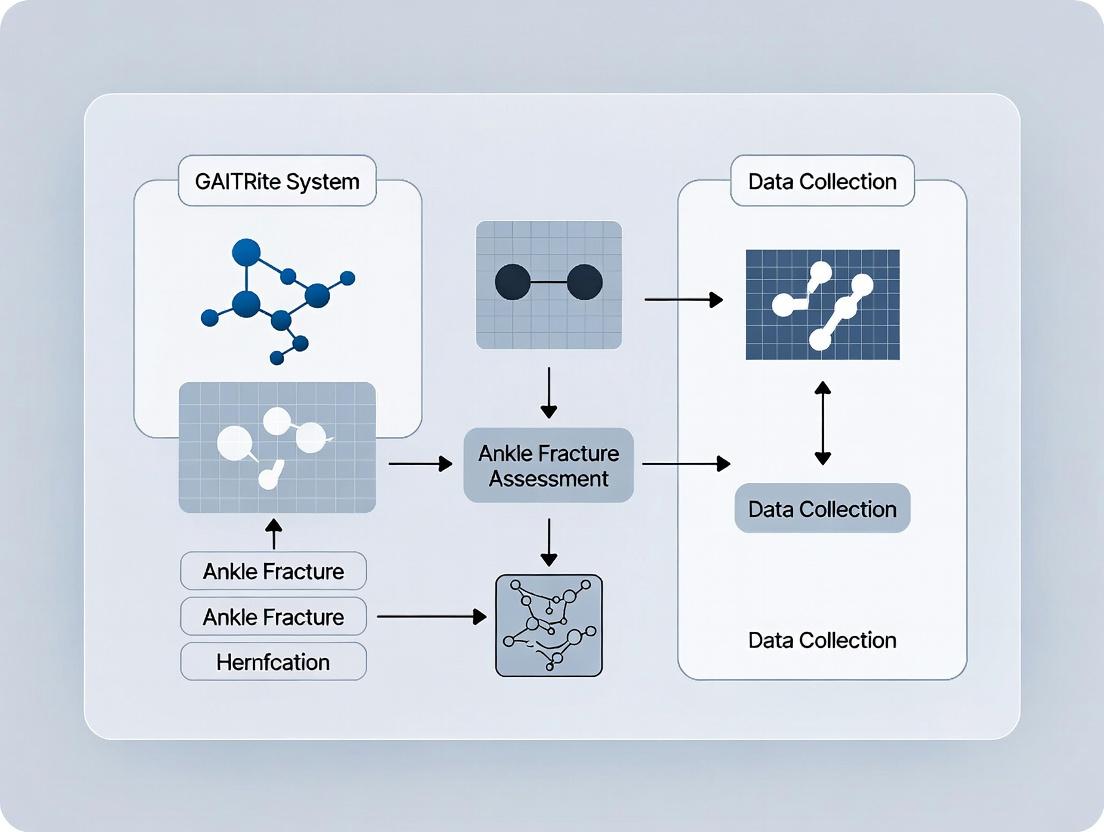
This article provides a comprehensive guide for researchers and drug development professionals on utilizing the GAITRite electronic walkway system for objective assessment of functional recovery following ankle fracture.
Quantifying Recovery: How the GAITRite System Transforms Ankle Fracture Assessment in Clinical Research and Trials
Abstract
This article provides a comprehensive guide for researchers and drug development professionals on utilizing the GAITRite electronic walkway system for objective assessment of functional recovery following ankle fracture. We explore the foundational biomechanical parameters measured by GAITRite, detail methodological protocols for implementation in longitudinal studies and clinical trials, address common troubleshooting and data optimization challenges, and validate its efficacy through comparative analysis with traditional outcome measures. The synthesis demonstrates GAITRite's role as a sensitive, quantitative tool for enhancing endpoint analysis in orthopedic rehabilitation research and therapeutic development.
Understanding GAITRite: The Biomechanical Basis for Quantifying Post-Fracture Gait
The GAITRite system is an instrumented walkway designed for the quantitative assessment of spatial and temporal gait parameters. In the context of a broader thesis on ankle fracture assessment research, it provides an objective, reliable, and sensitive tool for evaluating functional recovery, treatment efficacy, and rehabilitation progress. This document details the technology, its operational principles, and specific application protocols for clinical and research settings.
Technology and Operational Principles
The GAITRite walkway consists of a roll-up mat embedded with a grid of pressure-activated sensors. Its core operational principle involves the detection of footfalls as a subject walks across the active area. The system's software calculates gait parameters by analyzing the geometry and chronology of the activated sensor switches.
- Sensor Grid: The walkway contains a high-density grid of pressure sensors (typically 16 sensors per 0.1 m²).
- Data Acquisition: As a subject walks across the mat, the sensors activated by each footfall transmit spatial and temporal data to a connected computer in real-time.
- Software Analysis: Proprietary algorithms identify individual footfalls, calculate parameters for each step and stride, and generate an overall gait report.
Application Notes for Ankle Fracture Research
Quantitative gait analysis is crucial for moving beyond subjective or impairment-based measures (like range of motion) to assess true functional recovery post-ankle fracture. The GAITRite system can detect subtle asymmetries and deficits that may persist even after clinical healing.
Key Measurable Parameters Relevant to Ankle Fracture:
- Temporal Parameters: Step time, stride time, swing time, stance time, single/double limb support time. Asymmetry in stance time is a key indicator of limb loading aversion.
- Spatial Parameters: Step length, stride length, base of support (step width). Reduced step length on the affected side is a common compensatory pattern.
- Derived Parameters: Velocity, cadence, and gait symmetry indices (e.g., ratio of affected to unaffected side parameters).
Table 1: Typical Gait Parameter Changes in Acute Ankle Fracture vs. Healthy Controls
| Parameter | Healthy Control (Mean ± SD) | Acute Ankle Fracture (Affected Limb) | Functional Implication |
|---|---|---|---|
| Velocity (cm/s) | 140.2 ± 16.5 | Significantly Reduced (~60-80 cm/s) | Overall functional limitation |
| Cadence (steps/min) | 112.3 ± 9.1 | Reduced or Unchanged | Altered walking strategy |
| Affected Stance Time (% of gait cycle) | ~60% | Increased (>62%) | Pain/instability during weight-bearing |
| Step Length Asymmetry (Ratio) | 1.00 ± 0.03 | >1.05 or <0.95 | Compensatory shortening on affected side |
| Step Width (cm) | 8.5 ± 3.2 | Often Increased | Seeking stability during gait |
Experimental Protocols
Protocol 1: Baseline and Longitudinal Assessment Post-Operative Fixation
Objective: To quantify the trajectory of functional gait recovery following surgical fixation of an ankle fracture. Materials: GAITRite walkway, calibration kit, secure computer, standardized walkway with clear approach and departure zones. Subject Preparation: Explain protocol, obtain informed consent. Ensure subject wears comfortable, flat shoes or performs test barefoot per protocol standardization. Procedure:
- Position the GAITRite mat flat on a level surface with a minimum of 2 meters of clear walkway at both ends.
- Instruct the subject to stand at the start of the approach zone.
- On the command "walk at your normal, comfortable speed," the subject initiates walking, crosses the entire mat, and stops after the departure zone.
- Repeat for a minimum of 3 complete passes to account for intra-subject variability. Allow rest between trials if needed.
- Schedule assessment sessions at standardized post-operative time points: 2 weeks (if weight-bearing permitted), 6 weeks, 12 weeks, 6 months, and 1 year. Data Analysis: Export raw data. Calculate mean values for each parameter across all valid trials per session. Primary outcomes: Walking velocity, step length asymmetry index, and affected single limb support time. Perform longitudinal statistical analysis (e.g., repeated measures ANOVA).
Protocol 2: Dual-Task Gait Assessment
Objective: To evaluate higher-level functional mobility and cognitive-motor interference during recovery, which may reveal subtle deficits. Materials: As per Protocol 1, plus a standardized cognitive task (e.g., serial subtraction by 3s from a random number). Procedure:
- First, perform a single-task gait assessment as described in Protocol 1 (3 passes). This is the motor-only condition.
- Next, perform a cognitive-only condition: Subject sits and performs the serial subtraction task for 60 seconds. Record number of correct/incorrect responses.
- Finally, perform the dual-task condition: Instruct the subject to walk across the mat at a comfortable pace while simultaneously performing the serial subtraction task aloud. Conduct 3 passes.
Data Analysis: Calculate Dual-Task Cost (DTC) for gait velocity and cognitive accuracy:
DTC (%) = [(Single-task - Dual-task) / Single-task] * 100Higher DTC for velocity indicates greater cognitive-motor interference, suggesting a less automated, more effortful gait pattern.
Visualization of Gait Analysis Workflow
Title: Gait Assessment Experimental Workflow
The Scientist's Toolkit: Research Reagent Solutions
Table 2: Essential Materials for GAITRite-Based Ankle Fracture Research
| Item | Function & Relevance |
|---|---|
| GAITRite Classic/Platinum Walkway | Core instrument. The active sensor mat acquires raw spatial-temporal footfall data. Must be regularly calibrated. |
| GAITRite Software Suite (Current Version) | Processes sensor data, calculates gait parameters, and manages patient databases. Essential for data extraction. |
| Standardized Footwear (e.g., Lab Slippers) | Controls for the confounding effect of different shoe types on gait parameters. |
| Calibration Kit (Roller & Kit) | Validates the accuracy of sensor activation and spatial measurements. Mandatory for protocol integrity. |
| Cones & Measuring Tape | Marks standardized approach and departure distances (e.g., 2 meters each) to ensure constant acceleration/deceleration zones. |
| Dual-Task Cognitive Task Materials | Standardized stimuli (e.g., number lists for serial subtraction) to assess cognitive-motor interference objectively. |
| Data Export & Statistical Software (e.g., SPSS, R) | For advanced statistical analysis of longitudinal data, asymmetry indices, and dual-task costs. |
Within the broader thesis on the application of the GAITRite system for ankle fracture assessment research, this document provides detailed application notes and protocols. The primary objective is to outline the methodologies for quantifying key gait parameters—velocity, cadence, stance time, and pressure distribution—that serve as critical biomarkers for evaluating functional recovery post-ankle fracture. These parameters offer objective, quantitative measures to assess treatment efficacy, monitor rehabilitation progress, and inform clinical decision-making in both research and therapeutic development contexts.
Table 1: Normative vs. Impaired Gait Parameters Post-Ankle Fracture
| Gait Parameter | Healthy Adult Normative Value (Mean ± SD) | Acute Ankle Fracture (6-8 weeks post-op) | Late Stage Recovery (6 months) | Measurement Unit | Key Implication |
|---|---|---|---|---|---|
| Gait Velocity | 1.34 ± 0.23 m/s | 0.65 ± 0.18 m/s | 1.10 ± 0.22 m/s | Meters/second | Primary indicator of overall functional limitation. |
| Cadence | 110 ± 8 steps/min | 85 ± 12 steps/min | 102 ± 10 steps/min | Steps/minute | Reflects rhythm and confidence in weight-bearing. |
| Affected Limb Stance Time (% of Gait Cycle) | 60 ± 2 % | >70 % (or significantly asymmetrical) | ~62 ± 3 % | Percentage | Marker of weight-bearing asymmetry and pain avoidance. |
| Peak Pressure (Forefoot) | 250-350 kPa* | Reduced, shifted to contralateral limb or heel | Approaching symmetry, may remain reduced | Kilopascals | Indicates altered propulsion strategy and loading tolerance. |
| Pressure-Time Integral | Subject-specific | Increased in midfoot/heel on affected side | Normalizing distribution | kPa*s | Reflects compensatory strategies and guarding behavior. |
Note: Pressure values are highly system and population-specific; GAITRite provides relative distribution data.
Experimental Protocols
Protocol 1: GAITRite System Setup & Calibration for Temporal-Spatial Analysis
Objective: To ensure accurate and reproducible measurement of gait velocity, cadence, and stance time. Materials: GAITRite electronic walkway system (active area ≥ 4m), connection cables, GAITRite software suite, stable mounting surface, calibration kit.
- Environmental Setup: Place the GAITRite walkway on a hard, level surface in a quiet laboratory corridor. Ensure a minimum of 2 meters of clear, unobstructed walkway at both ends for acceleration and deceleration.
- System Connection: Connect the walkway to a dedicated computer via the provided interface cable. Launch the GAITRite Gait Analysis software.
- Calibration: Perform a full system calibration using the manufacturer's protocol. This typically involves activating all sensors to check for dead zones and verifying the dimensional accuracy of the active area.
- Trial Parameters: In the software, define a new session. Set the patient demographic fields. For gait event detection, use the default settings for healthy adults, but select the "Pathology" filter to adjust sensitivity for slower, asymmetric gait patterns.
- Data Acquisition: Instruct the participant to walk at their self-selected, comfortable speed from the start mark, across the entire walkway, to the end mark. A minimum of 6 valid passes (footfalls fully within active area) should be recorded. Allow rest between trials to prevent fatigue.
Protocol 2: Integrated Pressure Distribution & Temporal-Spatial Assessment
Objective: To simultaneously capture footfall pressure patterns alongside core temporal-spatial parameters. Materials: GAITRite walkway (with pressure sensor grid), GAITRite software with pressure mapping module, disposable anti-slip foot covers (if required).
- Software Configuration: Enable the "Pressure Mapping" module within the GAITRite software. Set the sampling frequency to a minimum of 60 Hz to capture detailed foot pressure dynamics.
- Participant Preparation: Ensure the participant is wearing thin, comfortable socks or approved foot covers. No heavy-soled shoes are permitted.
- Walking Trial Execution: Conduct walking trials as per Protocol 1. The software will automatically synchronize the temporal-spatial data (step length, stance time, velocity, cadence) with the dynamic pressure bitmap for each footfall.
- Parameter Extraction: For each trial, export the following fused data:
- Temporal-Spatial: Velocity (m/s), Cadence (steps/min), Stance Time for each foot (% of gait cycle).
- Pressure Distribution: For the affected and unaffected limb: Peak Pressure (kPa) in 3-5 masked regions (heel, midfoot, forefoot); Center of Pressure (CoP) trajectory; and Pressure-Time Integral (kPa*s) per region.
- Analysis: Calculate asymmetry indices for stance time and peak forefoot pressure:
(Unaffected - Affected) / (Unaffected + Affected) * 100. A positive stance time asymmetry indicates longer weight-bearing on the unaffected side.
Protocol 3: Longitudinal Recovery Assessment Protocol
Objective: To track changes in gait parameters at defined intervals post-surgery/fracture. Materials: As per Protocols 1 & 2, plus a secure database for longitudinal data management.
- Time Points: Schedule assessments at: T1 (Baseline, 6-8 weeks post-op/immobilization), T2 (12 weeks), T3 (6 months), T4 (1 year). Standardize time-of-day and pre-assessment activity.
- Standardized Instruction: Use identical verbal instructions at each visit: "Walk at your comfortable, normal pace as if you were walking down the street."
- Data Collection: Execute 8 walking trials per session as per Protocol 2. The first two trials are considered acclimatization and are discarded.
- Data Aggregation: For each time point, calculate the mean and standard deviation for each key parameter (velocity, cadence, affected limb stance time %, forefoot peak pressure asymmetry) across the 6 analyzed trials.
- Statistical Tracking: Plot individual and group mean trajectories for each parameter over time. Recovery is indicated by velocity and cadence approaching normative values, stance time asymmetry approaching 0%, and pressure distribution normalizing.
The Scientist's Toolkit: Research Reagent Solutions
Table 2: Essential Materials for GAITRite-based Ankle Fracture Gait Research
| Item | Function/Application in Research |
|---|---|
| GAITRite Platinum System | The core instrument. The electronic walkway contains sensor pads to capture footfall timing and location, generating temporal-spatial parameters (velocity, cadence, stance time). |
| Pressure Mapping Upgrade Module | Adds the capability to measure relative foot pressure distribution during ambulation, essential for assessing loading asymmetry and propulsion deficits post-fracture. |
| GAITRite Gait Analysis Software Suite | Proprietary software for data acquisition, processing, and initial analysis. It automates the calculation of all standard gait variables from walkway data. |
| Disposable Anti-Slip Foot Covers | Maintains hygiene between participants and ensures consistent, minimal interface between the foot and the walkway sensors for accurate pressure measurement. |
| Standardized Walkway Environment | A dedicated, quiet space with controlled lighting and a consistent, firm substrate beneath the walkway. Critical for minimizing external variables. |
| Calibration Kit & Verification Mat | Used for routine system calibration to ensure spatial and temporal measurement accuracy, a fundamental requirement for longitudinal and multi-site studies. |
| Statistical Analysis Software (e.g., SPSS, R) | For advanced statistical comparison of gait parameters between groups (e.g., different surgical techniques) and across longitudinal time points. |
| Motion Capture Synchronization Kit (Optional) | Allows for simultaneous GAITRite and 3D motion capture data collection, enabling correlation of kinetic/kinematic abnormalities with specific gait parameter deviations. |
Visualizations
Gait Data Processing Workflow for Ankle Fracture
Logical Model of Gait Parameter Alteration Post-Fracture
The Pathophysiology of Ankle Fracture and Its Direct Impact on Locomotion
Ankle fractures are complex injuries involving the distal tibia, fibula, and talus, disrupting the congruent hinge of the tibiotalar joint. The primary pathophysiological sequence initiated by fracture is a cascade of inflammatory, biomechanical, and neuromuscular dysfunctions that directly impair locomotion. The initial traumatic energy causes bone failure, ligamentous injury, and periosteal disruption, leading to immediate hemorrhage and edema. This triggers a systemic inflammatory response, with local cytokine release (IL-1, IL-6, TNF-α) driving pain, swelling, and vasodilation. The resultant effusion within the rigid fascial compartments of the ankle impedes venous and lymphatic drainage, creating a positive feedback loop of swelling that further limits joint range of motion (ROM) and proprioceptive acuity.
Biomechanically, fracture displacement and subsequent surgical stabilization alter the anatomical geometry of the ankle mortise. Even minor articular step-offs (>1-2 mm) significantly increase peak contact pressures, precipitating post-traumatic osteoarthritis. Neuromuscularly, pain and swelling induce arthrogenic muscle inhibition (AMI), particularly in the ankle-stabilizing peroneal and tibialis anterior muscles, leading to rapid atrophy and loss of motor control. This triad of pain-inflammation, biomechanical alteration, and AMI forms the core pathophysiology that manifests as gait deviations: reduced stance phase duration on the injured limb, decreased cadence and velocity, and altered ground reaction forces (GRFs).
Table 1: Key Pathophysiological Events and Locomotor Impact
| Pathophysiological Event | Direct Biomechanical Consequence | Measurable Gait Parameter (via GAITRite) |
|---|---|---|
| Fracture & Periosteal Disruption | Immediate instability, pain | N/A (Pre-stabilization) |
| Inflammatory Edema & Effusion | Reduced ankle ROM (esp. dorsiflexion) | Decreased stride length, increased step time |
| Arthrogenic Muscle Inhibition | Weakness of dynamic stabilizers (e.g., peroneals) | Increased step width, decreased gait velocity |
| Altered Mortise Geometry | Abnormal joint loading & arthrokinematics | Asymmetric stance phase %, altered pressure distribution |
| Proprioceptive Deficit | Impaired dynamic balance & foot placement | Increased variability in step length, center of pressure path deviation |
Application Notes for GAITRite Assessment in Ankle Fracture Research
The GAITRite electronic walkway system provides objective, quantitative data critical for linking pathophysiology to functional outcome. Its temporal and spatial parameters are sensitive to the subtle deficits that persist long after clinical fracture healing.
- Pre-Operative vs. Post-Operative Baselines: Establish a pre-operative gait assessment where possible (e.g., in non-weight-bearing status via wheelchair pass or toe-touch) to quantify the baseline of dysfunction. Repeat at standard post-operative intervals (e.g., 6, 12, 26, 52 weeks).
- Parameter Selection Focus: Key parameters of interest include:
- Velocity & Cadence: Global indicators of functional limitation.
- Affected Side Stance Phase %: Direct measure of loading confidence.
- Step Length Symmetry (Ratio): Indicator of mechanical impairment and pain.
- Step Time Variability (Coefficient of Variation): Marker of dynamic balance and proprioceptive deficit.
- Heel-to-Heel Base of Support: Measure of stability strategy.
- Protocol Standardization: Control for walking speed (e.g., use of a metronome or self-selected pace instructions) in comparative analyses, as speed covaries with many spatial parameters.
Table 2: Typical GAITRite Parameter Deviations Post-Ankle Fracture
| Gait Parameter | Acute/Post-Op Phase (6-12 wks) | Sub-Chronic Phase (6 mos) | Chronic Phase (12+ mos) - Poor Outcome |
|---|---|---|---|
| Velocity (cm/s) | Severely reduced (40-60% of normal) | Mildly reduced (80-90%) | Remains reduced (<80%) |
| Stance % (Affected) | Markedly decreased | Approaching symmetry | May remain asymmetric |
| Step Length Ratio (Aff/Unaff) | < 0.85 | 0.90 - 1.0 | < 0.90 |
| Step Time Variability | Highly increased (>5%) | Moderately increased (3-5%) | May remain elevated |
| Base of Support | Increased | Normalizing | May be increased as compensatory strategy |
Experimental Protocols
Protocol 1: Longitudinal Gait Analysis Post-Surgical Fixation
Objective: To quantify the temporal recovery of gait symmetry and speed following open reduction internal fixation (ORIF) of unilateral ankle fracture. Population: Adults (18-65) with isolated unilateral Weber B/C ankle fracture status post ORIF. Equipment: GAITRite GOLD (active area 732x610 cm), standardized footwear. Procedure:
- Session Timeline: Assessments at 6 weeks (initial weight-bearing), 12 weeks, 26 weeks, and 52 weeks post-op.
- Walkway Setup: Place GAITRite mat in center of a clear, 10-meter walkway.
- Trial Structure: Participants perform 3 practice walks followed by 6 recorded passes at a self-selected comfortable speed. A standing start 2 meters before the mat ensures consistent velocity upon entry.
- Data Extraction: For each pass, extract: velocity, cadence, step length (right/left), step time, stance phase %, and base of support. Calculate symmetry indices for step length and stance time.
- Statistical Analysis: Use repeated-measures ANOVA to compare parameters across time points. Paired t-tests between limbs at each interval.
Protocol 2: Correlation of Edema/Pain with Gait Parameters
Objective: To determine the relationship between clinical markers (edema, pain) and objective gait deficits in the acute post-injury phase. Population: As in Protocol 1, at the 6-week post-op assessment. Equipment: GAITRite system, volumetric water displacement tank for leg edema, Visual Analog Scale (VAS) for pain. Procedure:
- Clinical Measures: Record resting VAS (0-100mm). Measure bilateral lower leg volume via water displacement pre-gait test.
- Gait Assessment: Conduct GAITRite walking trials as per Protocol 1.
- Data Integration: Calculate limb volume difference (affected - unaffected). Correlate this difference and VAS score with key gait parameters (velocity, affected step length, stance %) using Pearson's correlation coefficient.
Visualizations
Title: Ankle Fracture Pathophysiology to Gait Deviation Pathway
Title: Longitudinal Gait Analysis Study Workflow
The Scientist's Toolkit: Research Reagent Solutions
Table 3: Essential Materials for Ankle Fracture Gait Research
| Item / Solution | Function in Research | Example / Specification |
|---|---|---|
| GAITRite Electronic Walkway System | Primary quantitative gait data acquisition. Captures spatiotemporal parameters via activated pressure sensors. | GAITRite GOLD (active area 732x610 cm). Sampling rate: 80-120 Hz. |
| Volumetric Measurement Tank | Objective quantification of lower limb edema, a key pathophysiological variable correlating with function. | Water displacement volumeter with graduated overflow collection. |
| Visual Analog Scale (VAS) | Standardized subjective measurement of pain intensity, a confounder of gait performance. | 100 mm line anchored by "No pain" (0) and "Worst imaginable pain" (100). |
| Standardized Footwear | Controls for the variable effect of different shoe types on gait parameters across testing sessions. | Neutral, low-heel, lace-up clinic shoes (e.g., canvas sneakers). |
| 3D Motion Capture System (Supplementary) | Provides detailed kinematic analysis of joint angles (ankle, knee, hip) to complement GAITRite data. | Vicon, OptiTrack systems with reflective marker sets. |
| Force Platforms | Measures vertical, anterior-posterior, and medial-lateral Ground Reaction Forces (GRFs) for advanced analysis. | Embedded in walkway, synchronized with GAITRite and motion capture. |
| Statistical Analysis Software | For processing longitudinal gait data, calculating symmetry indices, and performing inferential statistics. | SPSS, R, or Python (with Pandas, SciPy, statsmodels). |
In post-operative ankle fracture rehabilitation research, the transition from subjective clinician scores (e.g., Olerud-Molander Ankle Score, American Orthopaedic Foot & Ankle Society score) to objective, instrumented gait analysis is critical. Subjective scores, while convenient, are plagued by inter-rater variability, recall bias, and ceiling effects. They lack the sensitivity to detect subtle, biomechanically significant deficits during functional tasks like walking. Quantitative gait analysis, particularly using pressure-sensitive walkways like the GAITRite system, provides high-resolution, continuous data on spatial-temporal parameters (STPs) that are direct indicators of functional recovery, biomechanical compensation, and asymmetries. This application note details protocols and data supporting the supremacy of objective metrics for robust, reproducible research outcomes.
Application Notes & Protocols
Protocol 1: Quantitative Gait Data Acquisition for Ankle Fracture Recovery
Objective: To obtain reproducible, objective STPs from patients recovering from surgical fixation of unilateral ankle fractures.
Materials:
- GAITRite Gold/Classic system (8.3m active area)
- Calibration kit
- Standardized footwear (neutral, low-top)
- Marked 3-meter acceleration/deceleration zone
- Dedicated data acquisition laptop with GAITRite software
Procedure:
- System Setup & Calibration: Unroll and connect the GAITRite walkway mat. Perform a full system calibration as per manufacturer specifications using the calibration grid.
- Participant Preparation: Participant dons standardized footwear. Explain the protocol: "Walk at your comfortable, normal walking speed from the start mark, over the mat, to the end mark."
- Familiarization: Allow 2-3 practice walks to mitigate novelty effects.
- Data Acquisition: Record a minimum of 6 valid walking trials. A trial is valid if the participant maintains a consistent speed (±5%) and contacts the mat without targeting steps.
- Data Export: For each trial, export raw data for: Velocity (cm/s), Cadence (steps/min), Step Length (cm) [affected and unaffected limbs], Stride Length (cm), Step Time (s), Stride Time (s), Single Limb Support Time (s) [affected and unaffected], and Base of Support (cm).
Protocol 2: Comparative Analysis Against Subjective Scores
Objective: To correlate quantitative STPs with traditional subjective clinical scores at fixed post-operative time points (e.g., 6, 12, 26 weeks).
Procedure:
- Cohort & Time Points: Recruit a cohort (n≥30) of unilateral ankle fracture patients. Schedule assessments at 6, 12, and 26 weeks post-op.
- Subjective Assessment: A blinded clinician administers the Olerud-Molander Ankle Score (OMAS) and the AOFAS Hindfoot Score.
- Objective Assessment: Immediately following the subjective scoring, perform quantitative gait analysis per Protocol 1.
- Data Processing: Calculate limb symmetry index (LSI) for key parameters: LSI = (Affected Limb Value / Unaffected Limb Value) * 100%.
- Statistical Analysis: Perform Pearson/Spearman correlation analysis between subjective score totals/domains and key objective metrics (e.g., Velocity, Affected Step Length, Affected Single Support LSI).
Data Presentation
Table 1: Representative Gait Parameters at 12 Weeks Post-Op vs. Healthy Controls
| Parameter | Ankle Fracture Cohort (Mean ± SD) | Healthy Control Cohort (Mean ± SD) | p-value (t-test) | Effect Size (Cohen's d) |
|---|---|---|---|---|
| Velocity (cm/s) | 98.2 ± 18.5 | 132.4 ± 10.1 | <0.001 | 2.28 |
| Cadence (steps/min) | 102.5 ± 12.8 | 115.3 ± 8.4 | <0.001 | 1.18 |
| Affected Step Length (cm) | 54.7 ± 8.2 | 67.1 ± 4.9 | <0.001 | 1.80 |
| Step Length LSI (%) | 92.1 ± 6.5 | 99.5 ± 1.5 | <0.001 | 1.61 |
| Affected Single Support (% Gait Cycle) | 31.2 ± 4.1 | 38.5 ± 1.8 | <0.001 | 2.23 |
| Single Support LSI (%) | 88.7 ± 8.3 | 99.8 ± 1.2 | <0.001 | 1.84 |
Table 2: Correlation of Subjective Scores with Objective Gait Metrics (12 Weeks)
| Subjective Score | Gait Metric | Correlation Coefficient (r) | p-value |
|---|---|---|---|
| OMAS Total (0-100) | Velocity | 0.65 | <0.001 |
| OMAS Total | Step Length LSI | 0.58 | <0.001 |
| AOFAS Pain Subscore | Affected Single Support | 0.52 | 0.002 |
| AOFAS Function Subscore | Velocity | 0.70 | <0.001 |
| OMAS Total | Cadence | 0.41 | 0.023 |
Mandatory Visualizations
Diagram 1: Ankle Fracture Gait Study Workflow
Diagram 2: Subjective vs Objective Assessment
The Scientist's Toolkit: Research Reagent Solutions
Table 3: Essential Materials for Quantitative Gait Research in Ankle Fractures
| Item | Function in Research |
|---|---|
| GAITRite System | Gold-standard pressure-sensitive walkway for automated, high-resolution capture of spatial-temporal gait parameters. |
| Standardized Footwear | Controls for the confounding effect of shoe type on gait mechanics (e.g., heel height, stiffness). |
| Calibration Grid | Ensures spatial measurement accuracy of the system is maintained for valid longitudinal data collection. |
| Limb Symmetry Index (LSI) | A derived, normalized metric (Affected/Unaffected * 100%) crucial for quantifying gait asymmetry independent of patient-specific factors. |
| 3D Motion Capture System (Optional) | When used concurrently with GAITRite, provides comprehensive kinematic and kinetic data (joint angles, moments) to explain underlying causes of STP changes. |
| Statistical Software (R, Python, SPSS) | For advanced analysis of longitudinal gait data, correlation with scores, and calculation of minimal clinically important differences (MCID) for STPs. |
Current Standards and Gaps in Ankle Fracture Outcome Assessment
Within the context of a broader thesis on leveraging the GAITRite system for advanced ankle fracture assessment, a critical examination of current outcome metrics is essential. This document provides application notes and protocols for researchers and clinicians focused on improving the rigor and clinical relevance of ankle fracture research.
Current Standards in Outcome Assessment
The assessment of ankle fracture recovery integrates patient-reported outcome measures (PROMs), clinician-based scoring, and objective functional tests. The most commonly utilized tools are summarized below.
Table 1: Standardized Outcome Measures in Ankle Fracture Research
| Domain | Tool Name | Description | Scoring Range | Key Strengths | Primary Weaknesses |
|---|---|---|---|---|---|
| Patient-Reported | Olerud-Molander Ankle Score (OMAS) | Disease-specific questionnaire on function and pain. | 0-100 (100=best) | Validated, widely accepted. | Floor/celling effects, mixes pain & function. |
| Foot and Ankle Ability Measure (FAAM) | Assesses physical function in daily & sports activities. | 0-100% | Reliable, responsive to change. | Less specific to fracture population. | |
| SF-36 / EQ-5D | Generic health-related quality of life. | Varies | Allows comparison across conditions. | Not sensitive to ankle-specific changes. | |
| Clinician-Reported | American Orthopaedic Foot & Ankle Society (AOFAS) Scale | Combines subjective patient feedback with objective clinical assessment. | 0-100 | Comprehensive clinical picture. | Lacks validation, subjective clinician input. |
| Radiographic Union Score | Assesses fracture healing on X-ray (e.g., cortical bridging, callus). | Variable (e.g., 0-12) | Objective measure of structural healing. | Poor inter-observer reliability, weak correlation with function. | |
| Performance-Based | Single-Leg Heel Raise Test | Measures endurance and calf strength. | Count of repetitions | Simple, clinically accessible. | Not sensitive in early phases, requires minimal pain. |
| Timed Up and Go (TUG) | Assesses basic mobility and balance. | Time in seconds | Quick, correlates with fall risk. | Not ankle-specific. |
Identified Critical Gaps
Despite these standards, significant gaps limit the development of targeted therapies and high-fidelity recovery prediction:
- Lack of High-Resolution Functional Data: PROMs and simple performance tests lack the granularity to detect subtle, early functional deficits in gait kinetics, kinematics, and balance.
- Disconnect Between Structure and Function: Radiographic healing often does not correlate with a patient's functional ability or gait normalization.
- Insufficient Dynamic Balance Assessment: Current tools fail to adequately quantify the specific proprioceptive and postural control deficits post-ankle fracture.
- Variable Return-to-Activity Metrics: No standardized, objective protocol exists to guide return to sport or demanding occupational tasks.
Proposed Protocol: Integrating the GAITRite System for Advanced Assessment
To address these gaps, the following protocol leverages the GAITRite electronic walkway system to obtain objective, quantitative gait data.
Protocol Title: Quantitative Gait Analysis Post-Ankle Fracture Using the GAITRite System
Objective: To quantitatively assess spatiotemporal gait parameters in patients recovering from operatively treated unilateral ankle fractures and compare them to age-matched healthy controls.
Materials & Reagents: Table 2: Research Reagent Solutions & Essential Materials
| Item | Function/Description |
|---|---|
| GAITRite Platinum System | Portable electronic walkway with sensor pads to capture spatiotemporal gait parameters (step length, velocity, cadence, pressure). Core instrument for objective functional data. |
| Standardized Walking Course | A clear, straight pathway (>10m) with the GAITRite mat embedded in the middle to allow for acceleration and deceleration. |
| Secure Footwear | Standardized, laboratory-approved shoes to control for footwear variation. |
| Safety Rails/Support | To prevent falls during testing, if necessary, though use is recorded as an exclusion from analysis. |
| Data Acquisition Software (GAITRite Gold) | Proprietary software for capturing, visualizing, and initially processing raw gait data. |
| Statistical Analysis Software (e.g., SPSS, R) | For advanced statistical comparison of gait parameters between injured, contralateral, and control limbs. |
Detailed Methodology:
- Participant Preparation: Explain the protocol. Have participant don standardized shoes.
- System Calibration: Turn on the GAITRite system and initialize the software according to manufacturer specifications. Verify the walkway area is clear.
- Trial Execution:
- Instruct the participant to stand at the start of the walkway.
- On the command "Go," the participant walks at their self-selected, comfortable speed along the walkway, ensuring at least three complete footfalls are captured on the active mat.
- A minimum of six valid passes are recorded.
- Repeat for fast-paced walking.
- Data Collection: The software automatically calculates key parameters for each trial: Velocity (cm/s), Cadence (steps/min), Affected/Unaffected Step Length (cm), Stance Time (%), and Coefficient of Variation (%) for each parameter.
- Data Analysis:
- Average parameters across valid trials for self-selected and fast-paced walking.
- Perform paired t-tests (or non-parametric equivalent) between the affected and contralateral limbs.
- Perform independent t-tests between the patient group and matched controls.
- Correlate key gait parameters (e.g., velocity, step length symmetry) with PROM scores (e.g., OMAS) using Pearson or Spearman correlation.
Experimental Workflow Visualization
Title: GAITRite Ankle Fracture Assessment Workflow
Pathway from Impairment to Functional Deficit
Title: Pathway Linking Ankle Fracture Impairments to Gait Deficits
The integration of objective, instrumented gait analysis via the GAITRite system directly addresses the critical gaps in current ankle fracture outcome assessment. The provided protocols offer a standardized methodology for researchers to quantify functional recovery with high precision, moving beyond subjective scores and enabling more sensitive evaluation of therapeutic interventions in both clinical and drug development settings.
Protocol in Practice: Implementing GAITRite in Ankle Fracture Research and Clinical Trials
Introduction This protocol, framed within a thesis on the GAITRite system for ankle fracture assessment, details the design and execution of a longitudinal study to quantify gait recovery from acute ankle fracture through full functional restoration. The study aims to establish objective, temporal biomechanical biomarkers using instrumented gait analysis, providing a robust framework for evaluating rehabilitation efficacy and potential therapeutic interventions.
1.0 Core Study Design & Timeline The study employs a repeated-measures, observational cohort design to track gait parameter evolution.
Table 1: Longitudinal Study Timeline and Assessment Milestones
| Phase | Time Post-Injury/Surgery | Clinical Correlate | Primary Gait Assessment Goal |
|---|---|---|---|
| Acute/Immobilization | 2 Weeks | Cast/brace immobilization, non-weight bearing. | Establish severe deficit baseline. |
| Early Rehabilitation | 6 Weeks | Transition to weight-bearing, boot/brace use. | Quantify initial loading recovery. |
| Mid-Term Recovery | 12 Weeks | Full weight-bearing, active physiotherapy. | Measure dynamic symmetry improvement. |
| Functional Recovery | 6 Months | Return to daily activities, light sport. | Assess near-normal gait restoration. |
| Full Recovery/Outcome | 12 Months | Expected full medical discharge. | Define long-term residual deficits. |
2.0 Participant Protocol
- Inclusion: Adults (18-65) with isolated, unilateral closed ankle fracture (e.g., Weber B/C) requiring surgical fixation (ORIF).
- Exclusion: Pre-existing neurological, musculoskeletal, or systemic conditions affecting gait; bilateral injuries; open fractures; inability to comply with follow-up.
- Recruitment & Consent: Obtain IRB-approved informed consent during initial orthopedic consultation.
3.0 Detailed Gait Assessment Protocol using the GAITRite System 3.1 Setup & Calibration:
- Position the GAITRite walkway (model: Platinum, 8m length) on a flat, hard surface within a dedicated gait lab.
- Perform system calibration according to manufacturer specifications prior to each data collection session.
- Mark a consistent 2-meter non-recording acceleration zone at the start and a 2-meter deceleration zone at the end of the mat.
3.2 Data Collection Procedure:
- Participant Preparation: Fit participant with standardized laboratory footwear. Apply reflective markers for optional synchronous motion capture (if used).
- Trial Definition: Each trial consists of the participant walking at a self-selected, comfortable speed from the start zone, across the mat, into the deceleration zone.
- Trial Execution: A minimum of six valid trials are collected per session. A trial is valid if the participant maintains a consistent speed, does not stumble, and contacts only the walkway surface.
- Instructions: Use the standardized command: "Walk at your normal, comfortable pace to the end of the room."
- Rest: Allow 60 seconds of seated rest between trials to prevent fatigue.
4.0 Key Outcome Variables & Data Processing Raw data from the GAITRite system is extracted using the GAITRite GOLD software suite. The following parameters are calculated per trial and averaged across valid trials for each session.
Table 2: Primary Spatiotemporal Gait Parameters for Analysis
| Parameter | Definition | Clinical Relevance in Ankle Fracture |
|---|---|---|
| Velocity (cm/s) | Distance traveled per unit time. | Global indicator of functional recovery. |
| Cadence (steps/min) | Number of steps per minute. | Rhythm and stepping capacity. |
| Step Length (cm) | Heel strike of one foot to heel strike of the contralateral foot. | Measure of impaired propulsion and loading confidence. |
| Step Length Symmetry (%) | (Unaffected step length / Affected step length) * 100. | Gold-standard for gait asymmetry; target = 100%. |
| Stance Time (% of Gait Cycle) | Percentage of gait cycle with foot in contact with ground. | Increased on affected side indicates pain/instability. |
| Stance Time Symmetry (%) | (Affected stance % / Unaffected stance %) * 100. | Quantifies temporal asymmetry; target = 100%. |
| Gait Stability Ratio | (Double support time / Single limb support time). | Higher ratio indicates cautious, unstable gait. |
5.0 Complementary Clinical & Patient-Reported Outcomes Gait data must be contextualized with standardized measures collected at each visit.
Table 3: Adjunct Assessment Schedule
| Assessment Tool | Type | Collection Timepoints | Purpose |
|---|---|---|---|
| Visual Analog Scale (VAS) for Pain | Patient-Reported | Every visit | Correlate pain with gait deviations. |
| American Orthopaedic Foot & Ankle Society (AOFAS) Scale | Clinician-Reported | 6w, 12w, 6m, 12m | Assess clinical function. |
| Range of Motion (ROM) - Dorsiflexion/Plantarflexion | Physical Exam | Every visit | Quantify mechanical impairment. |
6.0 Data Analysis Plan
- Statistical Approach: Linear Mixed-Effects Models (LMEM) to analyze longitudinal changes, with time as a fixed effect and subject as a random effect.
- Primary Comparison: Within-subject changes across all five timepoints.
- Symmetry Analysis: Paired t-tests between affected and unaffected limbs at each timepoint.
- Correlation: Pearson's correlation between key gait parameters (e.g., velocity, step symmetry) and AOFAS/VAS scores.
The Scientist's Toolkit: Essential Research Reagents & Materials
| Item / Solution | Function & Application in Study |
|---|---|
| GAITRite Platinum Walkway System | The core instrument for capturing spatiotemporal gait parameters via activated pressure sensors. |
| Standardized Laboratory Footwear | Controls for the confounding variable of different shoe types on gait mechanics. |
| Synchronized Motion Capture System (e.g., Vicon) | Optional for comprehensive 3D kinematic analysis of joint angles alongside GAITRite data. |
| Force Plate(s) (Embedded) | For measuring vertical ground reaction forces (vGRF) to assess loading asymmetry, if system is equipped. |
| Clinical Assessment Forms (AOFAS, VAS) | Standardized tools to collect concurrent clinical and patient-reported data. |
| Data Processing Software (GAITRite GOLD, SPSS/R) | For data extraction, cleaning, and advanced statistical analysis. |
7.0 Experimental Workflow Visualization
Longitudinal Gait Study Workflow from Screening to Analysis
8.0 Gait Parameter Recovery Pathway Logic
Logical Pathway from Injury Through Gait Recovery
This document provides detailed application notes and protocols for standardized gait analysis using the GAITRite system, specifically framed within a broader research thesis investigating functional recovery following ankle fracture. The objective is to establish a rigorous, reproducible methodology for collecting spatiotemporal gait parameters (e.g., velocity, cadence, step length, single limb support time) that can serve as sensitive, quantitative outcome measures in longitudinal studies, clinical trials for orthobiologics or analgesics, and comparative surgical research.
Patient Preparation and Instructions
Objective: To minimize inter-session variability by standardizing patient state and attire. Protocol:
- Screening: Confirm patient eligibility (e.g., post-operative week, weight-bearing status, ability to walk 10 meters without assistive device as per study protocol). Document any pain (using VAS) prior to testing.
- Pre-Test Instructions (Provided 24h prior):
- Wear comfortable, form-fitting clothing (e.g., shorts, leggings).
- Wear the standardized walking shoes provided for the study, or your own low-heeled, closed-toe shoes with non-marking soles. No sandals or slippers.
- Avoid strenuous exercise for 2 hours prior to testing.
- Take prescribed pain medication as normally scheduled; note time of last dose.
- On-Site Instructions (Verbal):
- "You will walk at your comfortable, normal walking pace across this walkway."
- "Start walking several steps before the mat and continue several steps past it. Do not slow down or target your steps specifically onto the mat."
- "We will perform several practice walks followed by recorded trials."
- "You may rest between trials as needed."
Walkway Setup and System Calibration
Objective: To ensure accurate spatial and temporal data capture. Protocol:
- Location: A quiet, well-lit, climate-controlled laboratory with a minimum 10-meter straight, flat, unobstructed path.
- GAITRite Walkway Configuration:
- Unroll the active mat (standard length: 4.88m) on a hard, flat surface (e.g., linoleum). Secure edges with anti-slip tape.
- Ensure a minimum of 3 meters of clear, unobstructed walkway at both the start and end of the mat for acceleration and deceleration.
- Connect the mat to the acquisition hub and computer running GAITRite software (v4.7 or later).
- Calibration & Verification:
- Perform electronic system check via software.
- Verify spatial accuracy using the manufacturer's calibration tool (a rigid rod with known spacing between foot strike pads).
- Record ambient environmental conditions (Temperature, Humidity) in the lab log.
Data Collection Session Protocol
Objective: To collect a robust, representative sample of gait data. Protocol:
- Patient Acclimatization: Allow patient to wear test shoes and walk in the lab for 2 minutes.
- Practice Trials: Conduct 2-3 practice walks across the entire walkway (mat + approach zones).
- Data Collection Trials:
- Patient starts with toes behind a marked line 3 meters from the mat edge.
- On investigator's verbal cue ("Walk now"), the patient begins walking.
- A minimum of 6 valid passes are recorded. A pass is valid if:
- The patient maintains a steady, consistent pace.
- No external interruptions occur.
- All footfalls are fully captured within the active mat area.
- The patient turns around outside the acceleration/deceleration zone for the return pass.
- A 30-second rest is provided between passes. The session is paused if the patient reports pain (VAS >5/10).
- Data Output: For each trial, the software calculates a suite of parameters. The mean of the 6 trials for each parameter is used for analysis.
Table 1: Core Spatiotemporal Gait Parameters Collected for Ankle Fracture Assessment
| Parameter | Definition | Typical Unit | Relevance in Ankle Fracture Research |
|---|---|---|---|
| Velocity | Distance traveled per unit time. | cm/s | Primary indicator of overall functional limitation. |
| Cadence | Number of steps per minute. | steps/min | Reflects rhythm and comfort. |
| Step Length (Aff/Unaff) | Distance from heel strike of one foot to heel strike of the opposite foot. | cm | Asymmetry indicates favoring of the uninjured limb. |
| Stride Length | Distance from heel strike of one foot to the next heel strike of the same foot. | cm | Measure of overall propulsion capability. |
| Single Limb Support (SLS) Time (Aff) | Time spent on the fractured ankle during one gait cycle. | % of Gait Cycle | Direct measure of weight-bearing tolerance and stability. |
| Step Time (Aff/Unaff) | Time elapsed from one heel strike to the next of the opposite foot. | s | Asymmetry indicates temporal impairment. |
| Base of Support | Mediolateral distance between heel centers of two consecutive footfalls. | cm | Indicator of dynamic balance; often increased post-fracture. |
Experimental Workflow Diagram
The Researcher's Toolkit: Essential Materials & Reagents
Table 2: Key Research Reagent Solutions and Materials for Gait Analysis Studies
| Item | Function/Application |
|---|---|
| GAITRite Electronic Walkway | The core instrument. A pressure-sensitive mat that captures footfall data to compute spatiotemporal gait parameters. |
| Standardized Laboratory Footwear | Neutral, low-heel walking shoes provided to all participants to control for footwear variable. |
| Calibration Verification Tool | Manufacturer-provided device to validate the spatial accuracy of the walkway sensors. |
| Anti-Slip Tape | Secures walkway edges to the floor, preventing movement and ensuring participant safety. |
| Visual Analog Scale (VAS) for Pain | A 10cm line scale used to quantify patient-reported pain before and after testing sessions. |
| Measurement Tape & Floor Marking Tape | To measure and mark the 3-meter acceleration/deceleration zones precisely. |
| Data Collection Form (Digital or Paper) | Standardized form for recording participant ID, session conditions, trial validity, and pain scores. |
| Statistical Software (e.g., SPSS, R) | For performing paired t-tests, ANOVA, or correlation analyses on pre/post-operative or group gait data. |
Selecting Primary and Secondary Gait Endpoints for Clinical Trials (e.g., Symmetry Indices, Functional Ambulation Profile)
Within the broader thesis focusing on the GAITRite system for ankle fracture assessment research, the selection of appropriate gait endpoints is critical for quantifying functional recovery. This document provides application notes and protocols for defining primary and secondary endpoints in clinical trials, leveraging the GAITRite's spatial-temporal output to derive validated, sensitive metrics.
Key Gait Endpoints: Definitions and Quantitative Benchmarks
The following table summarizes candidate primary and secondary endpoints derived from GAITRite data, along with normative and impaired reference values pertinent to ankle fracture populations.
Table 1: Candidate Gait Endpoints for Ankle Fracture Trials
| Endpoint Category | Specific Metric | Description | Normative Value (Mean ± SD) | Typical Ankle Fracture Impaired Value | Proposed Role in Trial |
|---|---|---|---|---|---|
| Primary Endpoint (Functional) | Functional Ambulation Profile (FAP) Score | A composite, normalized score (0-100) integrating multiple spatial-temporal parameters. | 95.2 ± 3.8 | 65 - 80 | Primary - Global measure of gait quality. |
| Primary Endpoint (Symmetry) | Step Length Symmetry Index (SI) | Ratio: (Affected - Unaffected) / (Affected + Unaffected) x 100 |
-2% to +2% | 10% - 25% | Primary - Direct measure of bilateral impairment. |
| Secondary Endpoint (Temporal) | Stance Time Symmetry Index (SI) | As above, for stance time. | -1% to +1% | 8% - 20% | Secondary - Reflects weight-bearing asymmetry. |
| Secondary Endpoint (Spatial) | Velocity (cm/s) | Walking speed over the walkway length. | 132.1 ± 17.2 cm/s | 70 - 100 cm/s | Secondary - Strongly correlates with function. |
| Secondary Endpoint (Spatial) | Stride Length (cm) | Distance between heel points of two consecutive footfalls. | 146.2 ± 15.1 cm | 110 - 130 cm | Secondary - Indicator of confidence and mobility. |
Detailed Experimental Protocols
Protocol 3.1: GAITRite Data Acquisition for Endpoint Calculation
- Objective: To collect standardized, high-fidelity spatial-temporal gait data.
- Materials: GAITRite electronic walkway system (standard 8m length), calibration kit, proprietary software, non-slip floor surface, standardized footwear (if required by protocol).
- Procedure:
- System Setup & Calibration: Unroll and connect the GAITRite walkway to a dedicated laptop. Execute the "Zero Calibration" procedure as per manufacturer instructions to ensure sensor mat accuracy.
- Participant Preparation: Explain the protocol. Ensure participant wears comfortable clothing and appropriate footwear. Mark the "affected" limb per case report form.
- Familiarization: Allow 1-2 practice walks at a comfortable, self-selected speed.
- Data Collection: Instruct the participant to start walking 2 meters before the mat and continue 2 meters after to ensure constant speed. Record a minimum of 5 valid walking trials. A trial is valid if the participant walks without external assistance (unless defined otherwise) and without stopping.
- Data Export: For each trial, export the raw "Cycle Report" containing parameters for every individual step and stride.
Protocol 3.2: Calculation of Symmetry Indices and Functional Ambulation Profile
- Objective: To compute standardized endpoint values from raw GAITRite data.
- Input Data: Raw "Cycle Report" from Protocol 3.1.
- Procedure for Symmetry Indices (SI):
- For each valid trial, average the step length (or stance time) for the affected limb and the unaffected limb separately.
- Apply the formula: SI (%) = [(ValueAffected - ValueUnaffected) / (0.5 * (ValueAffected + ValueUnaffected))] x 100. Note: Alternative formula as in Table 1 is also acceptable but must be consistent.
- Calculate the mean SI across all trials for the participant at that visit.
- Procedure for Functional Ambulation Profile (FAP):
- The GAITRite software automatically calculates the FAP score per trial using its proprietary algorithm, which typically incorporates velocity, cadence, stride length, base of support, and toe in/out angles, normalized to a healthy population database.
- Record the FAP score for each valid trial.
- Calculate the mean FAP score across all trials for the participant at that visit.
Visualized Workflows and Relationships
Title: Gait Endpoint Workflow for Ankle Fracture Trial
Title: FAP Score Composition Logic
The Scientist's Toolkit: Research Reagent Solutions
Table 2: Essential Materials for GAITRite-based Gait Analysis Trials
| Item / Solution | Function / Role in Research |
|---|---|
| GAITRite Electronic Walkway | The core instrument; an instrumented mat with pressure sensors that capture footfall data during ambulation to generate spatial-temporal parameters. |
| GAITRite Software Suite (Latest Version) | Proprietary software for data acquisition, visualization, and initial processing. Essential for calculating metrics like the FAP score. |
| Standardized Calibration Kit | Ensures measurement accuracy across sites and over time by zeroing the system's sensors, critical for multi-center trial consistency. |
| Protocol-Specific Footwear | Standardizes the foot-sensor interface. Can be hospital socks, neutral sandals, or the patient's own shoes, but must be consistent within a trial. |
| Data Export & Management Platform | Secure system (e.g., validated SQL database) for storing raw cycle reports and calculated endpoints, ensuring audit trail and data integrity for regulatory submission. |
| Statistical Analysis Software (e.g., SAS, R) | Pre-specified programs for analyzing primary/secondary endpoints, including mixed models for repeated measures to assess treatment effect over time. |
Integrating GAITRite Data with Patient-Reported Outcomes (PROs) and Imaging
Within ankle fracture assessment research, the GAITRite electronic walkway provides objective, quantitative spatiotemporal gait parameters. Integrating this biomechanical data with patient-reported outcomes (PROs) and structural imaging data creates a comprehensive, multi-dimensional model of functional recovery. This holistic approach is critical for researchers and drug development professionals evaluating therapeutic interventions, where efficacy must be measured across patient experience, physical function, and anatomical integrity.
Data Integration Framework & Rationale
The convergence of these three data modalities addresses distinct but complementary aspects of patient status post-ankle fracture.
Table 1: Multi-Modal Data Integration Framework for Ankle Fracture Assessment
| Data Modality | Example Metrics (Ankle Fracture Context) | Primary Insight Provided | Typical Collection Timepoints |
|---|---|---|---|
| GAITRite Biomechanics | Velocity (cm/s), Cadence (steps/min), Affected Step Length (cm), Step Length Symmetry Ratio, Stance Time (% of gait cycle) | Objective, quantifiable functional performance and gait deviation. | 6, 12, 24, 52 weeks post-operation. |
| Patient-Reported Outcomes (PROs) | FAAM (Foot and Ankle Ability Measure) ADL/Sports subscales, PROMIS Physical Function, Pain VAS. | Patient's perceived burden, pain, and capability in daily life. | Baseline (pre-injury recall), 6, 12, 24, 52 weeks. |
| Structural Imaging | CT: Fracture union, articular step-off (mm). MRI: Osteochondral lesion presence, synovitis. | Anatomical integrity, healing status, and complications. | Pre-op, immediate post-op (baseline), 6, 24-52 weeks. |
Table 2: Hypothesized Correlations Between Data Modalities in Recovery
| GAITRite Parameter | Correlated PRO Domain | Correlated Imaging Feature | Research Implication |
|---|---|---|---|
| Gait Velocity | FAAM ADL, PROMIS PF | Fracture union, articular congruity | Primary efficacy endpoint for mobility restoration. |
| Step Length Symmetry | FAAM Sports, Pain VAS | Persistent synovitis, osteoarthritis onset | Marker of asymmetric loading and pain avoidance. |
| Affected Single Limb Stance % | Balance confidence, FAAM ADL | Syndesmotic integrity, malleolar healing | Indicator of stability and weight-bearing tolerance. |
Detailed Application Notes and Protocols
Protocol: Synchronized Multi-Modal Data Collection
Objective: To collect GAITRite, PRO, and imaging data in a temporally coordinated manner for longitudinal analysis.
- Screening & Consent: Identify patients with unilateral closed ankle fractures (e.g., AO/OTA 44-B) scheduled for operative fixation. Obtain informed consent.
- Baseline PRO & Imaging: Administer PRO questionnaires (FAAM, PROMIS PF, Pain VAS) referencing pre-injury status. Obtain pre-operative CT scan.
- Post-Operative Timepoint Schedule (e.g., 12 weeks): a. Imaging: Schedule follow-up CT or MRI per clinical protocol. b. PRO Administration: Patient completes PROs in clinic before functional testing to avoid performance bias. c. GAITRite Testing: * Setup: Calibrate the GAITRite walkway (16+ feet active area) per manufacturer specs. Use a standardized starting point. * Trial: Patient walks at self-selected speed. Discard first trial as acclimatization. Record 3-5 valid passes. Use a clear-path, uninterrupted protocol. * Data Export: Export raw step-by-step data and session summary to .CSV.
- Data Consolidation: Create a master database linking Patient ID, Timepoint, GAITRite parameters (mean values from valid trials), PRO scores, and key imaging findings.
Protocol: Integrated Data Analysis for Biomarker Discovery
Objective: To identify composite biomarkers of recovery by statistically modeling relationships between modalities.
- Data Pre-processing:
- Z-score normalize GAITRite parameters and PRO scores within the cohort at each timepoint.
- Dichotomize imaging outcomes (e.g., "union" vs "non-union"; "articular step-off <2mm" vs "≥2mm").
- Correlation & Regression Analysis:
- Perform Pearson/Spearman correlations between key GAITRite variables (velocity, symmetry ratio) and PRO scores.
- Conduct multiple linear regression with PRO score as dependent variable and GAITRite parameters + imaging findings as independent variables.
- Group-Based Trajectory Modeling:
- Use latent class analysis to identify subgroups of patients with distinct longitudinal trajectories across all three data types (e.g., "Rapid Integrative Recovery" vs "Slow Biomechanical Recovery").
- Predictive Modeling:
- Use machine learning (e.g., Random Forest) with early post-op (6-week) GAITRite and PRO data to predict later (24-week) imaging outcomes or PRO scores.
Visualized Workflows and Pathways
Diagram 1: Multi-Modal Data Integration Workflow
Diagram 2: Proposed Pathophysiological Pathways Post-Fracture
The Scientist's Toolkit: Research Reagent Solutions
Table 3: Essential Materials for Integrated GAITRite-PRO-Imaging Research
| Item / Solution | Vendor Examples | Function in Research Context |
|---|---|---|
| GAITRite Portable Walkway System | GAITRite (CIR Systems), Protokinetics | Gold-standard for objective spatiotemporal gait data acquisition in a clinical setting. |
| Validated PRO Instruments | FAAM (Orthopedic Tool), PROMIS (NIH) | Quantifies patient-perceived function, pain, and quality of life; critical for regulatory endpoints. |
| Image Analysis Software | Horos (OSS), 3D Slicer, Mimics (Materialise) | Enables quantification of imaging data (e.g., fracture gap volume, articular alignment) for correlation. |
| Statistical Computing Environment | R (RStudio), Python (SciPy, scikit-learn) | Performs integrated statistical modeling, trajectory analysis, and machine learning. |
| Clinical Data Management System (CDMS) | REDCap, Castor EDC | Securely hosts and links de-identified patient data from all three modalities for longitudinal analysis. |
| Standardized Gait Testing Protocol Document | Institutional SOP | Ensures reproducibility and minimizes inter-operator variability in GAITRite data collection. |
This protocol is framed within a broader thesis research program investigating the utility of the GAITRite system for objective, functional assessment of recovery following surgical fixation of ankle fractures. The primary thesis posits that quantitative gait analysis, via temporal-spatial parameters measured by GAITRite, provides a superior, patient-centric efficacy endpoint for trials aiming to accelerate fracture healing compared to traditional radiographic readouts alone. This Phase III trial protocol integrates GAITRite assessment as a co-primary endpoint to validate this hypothesis in the context of a novel osteoanabolic agent, "OsteoVance."
Trial Design & Objectives
Design: Multicenter, randomized, double-blind, placebo-controlled, parallel-group study. Participants: N=600 patients with acute, unilateral closed ankle fractures (AO/OTA 44) requiring open reduction and internal fixation (ORIF). Intervention: OsteoVance (Recombinant Human Parathyroid Hormone fragment, 40µg) vs. Placebo, daily subcutaneous injection for 12 weeks, initiated within 48 hours post-surgery.
Primary Objectives:
- To determine the efficacy of OsteoVance in reducing the time to radiographic healing (RUST Score ≥10) compared to placebo.
- To determine the efficacy of OsteoVance in accelerating the time to functional healing, defined as recovery of >95% of pre-injury gait velocity as measured by the GAITRite system, compared to placebo.
Secondary Objectives: Include pain reduction, rate of hardware failure, return to work, and safety.
Application Notes & Detailed Protocols
GAITRite Functional Assessment Protocol
Objective: To obtain quantitative, reproducible gait data as a functional proxy for fracture healing. Equipment: GAITRite GOLD 26’ walkway system (active area: 7.01m x 0.89m), connected to a dedicated laptop running GAITRite Software (v.4.7+). Setup: The walkway is positioned in a quiet, well-lit hospital corridor. No markings or cues are placed on the floor.
Procedure:
- Baseline Assessment (Pre-injury): Within 24 hours pre-surgery, patients perform two practice walks followed by three recorded walks at their self-selected comfortable speed. The average gait velocity (cm/sec) from these three walks is recorded as the Pre-Injury Baseline Velocity (PIBV).
- Post-Operative Serial Assessments: Conducted at Weeks 2, 4, 6, 8, 12, 16, and 20.
- Patient walks wearing their standard postoperative shoe.
- Instruction: "Walk at your comfortable, normal pace across the walkway until you pass the end."
- Three successful passes are recorded. A pass is successful if the patient maintains a consistent pace without stopping.
- The software automatically calculates temporal-spatial parameters.
- Data Export & Analysis: For each visit, the average gait velocity is calculated. Functional Recovery (%) is computed as: (Average Visit Velocity / PIBV) * 100.
Radiographic Assessment Protocol (RUST Score)
Objective: To provide a standardized, quantitative measure of cortical bridging. Method: Anteroposterior and lateral radiographs of the ankle are obtained at Weeks 2, 6, 12, 16, and 20. Scoring: Two independent, blinded musculoskeletal radiologists score each of the four cortices (anterior, posterior, medial, lateral) visible on two views:
- 1 point: No visible callus or fracture line unclear.
- 2 points: Callus present but fracture line visible.
- 3 points: Bridging callus with fracture line not visible. Total RUST Score: Sum of scores for all four cortices (range 4-12). Healing is defined as RUST ≥10.
Serum Biomarker Protocol (PINP & CTX)
Objective: To monitor systemic osteoanabolic response and bone turnover. Sample Collection: Fasting morning blood draws at Baseline, and Weeks 2, 6, 12. Analysis: Serum is analyzed in a central laboratory using established electrochemiluminescence immunoassays (ECLIA) for:
- Procollagen Type I N-terminal Propeptide (PINP): Bone formation marker.
- C-terminal Telopeptide of Type I Collagen (CTX): Bone resorption marker.
Data Presentation
Table 1: Primary Efficacy Endpoint Definitions & Assessment Schedule
| Endpoint | Definition of Success | Assessment Timepoints |
|---|---|---|
| Radiographic Healing | First visit where RUST Score ≥10 is confirmed by both readers | W2, W6, W12, W16, W20 |
| Functional Healing | First visit where Functional Recovery >95% of PIBV | W2, W4, W6, W8, W12, W16, W20 |
Table 2: Expected Key Outcome Metrics (Hypothetical Data)
| Parameter | OsteoVance Group (Predicted Mean) | Placebo Group (Predicted Mean) | p-value (Predicted) |
|---|---|---|---|
| Time to Radiographic Healing (Weeks) | 10.2 | 13.8 | <0.001 |
| Time to Functional Healing (Weeks) | 8.5 | 12.1 | <0.001 |
| Δ in PINP at Week 12 (µg/L) | +45.2 | +3.1 | <0.001 |
| Return to Work (Days) | 77 | 102 | 0.003 |
Signaling Pathway & Workflow Visualizations
Title: OsteoVance's Anabolic Signaling Pathway
Title: Phase III Trial Workflow
The Scientist's Toolkit: Key Research Reagent Solutions
Table 3: Essential Materials for Fracture Healing Acceleration Trials
| Item / Reagent | Function in Protocol | Example Vendor/Cat. No. |
|---|---|---|
| GAITRite GOLD Walkway | Gold-standard instrument for quantitative temporal-spatial gait analysis. Provides primary functional endpoint data (velocity, cadence, step length). | GAITRite (CIR Systems), Model GOLD-26' |
| RUST Score Atlas | Standardized reference images for scoring cortical healing on radiographs. Ensures inter-rater reliability for primary radiographic endpoint. | Published by Litrenta et al., J Orthop Trauma, 2015 |
| Elecsys PINP Assay | Validated, automated ECLIA for precise quantification of serum PINP, a key bone formation biomarker for pharmacodynamic monitoring. | Roche Diagnostics, Cat. No. 06357631 |
| Elecsys β-CrossLaps (CTX) Assay | Validated, automated ECLIA for precise quantification of serum CTX, a key bone resorption biomarker. | Roche Diagnostics, Cat. No. 07052971 |
| OsteoVance / Placebo | The investigational medicinal product (IMP) and its matched placebo. Critical for maintaining blinding. Requires GMP manufacturing. | Manufactured under IMPD |
| Secure Data Capture Platform | Electronic data capture (EDC) system for centralized, real-time collection of case report form (CRF) data, including GAITRite exports and RUST scores. | Medidata RAVE, Veeva Vault CDMS |
Refining Data Quality: Troubleshooting Common GAITRite Challenges in a Clinical Setting
Application Notes
Subject variability is a critical challenge in the objective assessment of functional recovery post-ankle fracture using the GAITRite system. Pain, fatigue, and learning effects introduce significant intra- and inter-subject variance that can confound the interpretation of spatiotemporal gait parameters (e.g., velocity, cadence, step length, single support time). This document provides protocols to identify, quantify, and mitigate these sources of variability within a clinical research framework, ensuring more reliable and valid outcomes for clinical trials and therapeutic development.
The following table summarizes key metrics and their reported susceptibility to pain, fatigue, and learning effects, based on current literature in orthopedic and neurological gait analysis.
Table 1: Impact of Variability Sources on Key GAITRite Parameters
| Gait Parameter | Pain (Acute/Post-Op) | Fatigue (Muscular/Central) | Learning Effect (Test Familiarity) | Typical Magnitude of Change |
|---|---|---|---|---|
| Walking Velocity (cm/s) | Decrease | Decrease | Increase (plateaus after 3-5 trials) | Pain: 15-30% reduction; Fatigue: 10-20% reduction; Learning: 5-10% increase. |
| Cadence (steps/min) | Decrease | Variable | Minimal after 2nd trial | Pain: 10-25% reduction. |
| Affected Limb Step Length (cm) | Decrease | Decrease | Slight Increase | Pain: 20-40% reduction on affected side. |
| Affected Single Support (% gait cycle) | Decrease | Decrease | Minimal | Pain: Up to 50% reduction in severe cases. |
| Step Length Symmetry | Decreased Symmetry | Decreased Symmetry | Improves slightly | Pain: Ratio can deviate >0.15 from unity. |
| Stride Time Variability (CV%) | Increase | Increase | Decrease | Fatigue: CV% can increase by 2-5 percentage points. |
Experimental Protocols for Isolating Variability
Protocol 2.1: Disentangling Learning Effects from Therapeutic Effect
Objective: To establish a stable baseline by characterizing and controlling for the learning effect associated with repeated GAITRite testing. Materials: GAITRite system, standardized walkway, safety harness (if needed), visual markers for start/stop points. Procedure:
- Subject Preparation: Explain the procedure. Attach safety harness if fall risk is present.
- Baseline Acclimatization: Allow the subject to walk on the walkway (non-recording) twice to familiarize with the environment.
- Serial Testing Block: Instruct the subject to walk at their self-selected, comfortable speed. Record 6 consecutive walking trials with a seated rest interval of 60 seconds between each trial.
- Data Analysis: Plot velocity and cadence against trial number (1-6). Use linear regression or paired t-tests (Trial 1 vs. Trial 3, Trial 1 vs. Trial 6) to identify the point of performance plateau.
- Outcome: Discard initial trials (typically 1-2) where a statistically significant increase in velocity is observed. Define the mean of the subsequent stable trials (e.g., Trials 3-6) as the "learned baseline" for that session.
Protocol 2.2: Assessing Pain-Mediated Gait Adaptation
Objective: To quantify the direct impact of pain on gait parameters, both spontaneously reported and induced via functional task. Materials: GAITRite system, Visual Analog Scale (VAS) for pain, standard chair, timed task protocol (e.g., 2-minute heel raises). Procedure:
- Pre-Task Assessment: Record subject's resting pain (VAS). Perform GAITRite assessment per Protocol 2.1 (using learned baseline protocol).
- Pain Induction/Monitoring: Have the subject perform a standardized, sub-maximal functional task (e.g., standing heel raises, 2-minute walk in corridor). Immediately after, record pain (VAS).
- Post-Task Assessment: Within 60 seconds of task completion, repeat the GAITRite assessment (2 trials, no re-acclimatization).
- Data Analysis: Correlate the change in key parameters (velocity, single support on affected limb) with the change in VAS score. Use repeated-measures ANOVA to compare pre- and post-task gait.
Protocol 2.3: Quantifying Fatigue Effects on Gait Stability
Objective: To evaluate the development of gait deterioration due to muscular and general fatigue. Materials: GAITRite system, Borg Rating of Perceived Exertion (RPE) Scale, heart rate monitor, standardized fatiguing protocol (e.g., repeated sit-to-stand, treadmill walk). Procedure:
- Baseline: Record RPE, heart rate. Perform GAITRite learned baseline assessment (Protocol 2.1).
- Fatiguing Protocol: Administer a validated, incremental fatiguing task. Example: 6-Minute Walk Test (6MWT) on a marked corridor, or repeated sit-to-stand cycles at 20 cycles/minute until RPE ≥ 15.
- Immediate Post-Fatigue Assessment: At 1-minute post-fatigue, record RPE/HR and conduct a single GAITRite walk trial.
- Recovery Monitoring: Repeat single GAITRite trials at 5, 10, and 15 minutes post-fatigue, recording RPE/HR each time.
- Data Analysis: Primary outcome is stride time variability (Coefficient of Variation, CV%). Secondary outcomes are velocity and symmetry indices. Plot recovery curves for each parameter.
The Scientist's Toolkit: Research Reagent Solutions
Table 2: Essential Materials for Managing Subject Variability in Gait Analysis
| Item / Solution | Function & Rationale |
|---|---|
| GAITRite Platinum System | Gold-standard instrumented walkway for precise, reliable measurement of spatiotemporal gait parameters without wearable sensors. |
| Visual Analog Scale (VAS) & Numeric Rating Scale (NRS) | Validated tools for quantifying subjective pain intensity before, during, and after gait assessment. Critical for covariate analysis. |
| Borg Rating of Perceived Exertion (RPE) Scale | Standardized measure of a subject's physical exertion and fatigue level, used to standardize fatigue induction and monitor recovery. |
| Wireless Heart Rate Monitor | Provides an objective physiological correlate of fatigue (heart rate elevation and recovery kinetics) alongside RPE. |
| Standardized Fatigue Induction Protocol | A pre-defined, reproducible physical task (e.g., 6MWT, repeated sit-to-stand) to systematically induce fatigue in a controlled manner. |
| Safety Harness & Overhead Track | Mitigates fall risk during gait assessment in frail or post-operative populations, reducing anxiety-induced gait alterations. |
| Standardized Environmental Controls | Controlled lighting, quiet space, consistent walkway placement, and stable temperature to minimize environmental variability. |
| Digital Metronome & Paced Auditory Cues | Optional tool to assess the effect of external pacing on gait variability and to control for self-selected speed changes between sessions. |
Visualizations
Title: Subject Variability Impact and Mitigation Path
Title: Integrated Protocol for Isolating Pain and Fatigue
Application Notes
Within ankle fracture rehabilitation research using the GAITRite system, data accuracy is paramount for generating valid, reproducible outcomes. This protocol details the tripartite framework of calibration, environmental control, and software configuration necessary for high-fidelity temporal and spatial gait parameter acquisition.
1. Calibration: The GAITRite system requires regular electronic and spatial calibration. Electronic calibration verifies the sensor mat's pressure sensitivity, while spatial calibration ensures the physical dimensions of the active area are correctly mapped within the software. For longitudinal studies, a pre-data-collection calibration protocol is non-negotiable.
2. Environmental Control: Uncontrolled environmental variables introduce significant error variance. Key factors include lighting (to prevent sensor interference), ambient temperature (which can affect sensor electronics), and a consistent, flat, obstacle-free walkway surface extending at least 2 meters beyond the mat edges for acceleration and deceleration.
3. Software Settings: Accurate parameter extraction depends on correct software configuration. This includes setting the subject's demographic data (affects normative comparisons), defining the valid data capture region, and configuring the software's gait event detection algorithm thresholds (e.g., heel-strike/toe-off sensitivity).
The synergy of these three elements directly impacts the reliability of key outcome measures—such as stride length, velocity, cadence, and single-limb support time—used to assess functional recovery post-ankle fracture.
Protocols
Protocol 1: Daily System Calibration and Verification
Objective: To perform and document the calibration of the GAITRite system prior to each data collection session.
Materials:
- GAITRite electronic walkway system (hardware & software)
- Calibration kit (manufacturer-supplied)
- Standardized calibration rod (36-inch / 91.44 cm)
- Spirit level
- Calibration log sheet (digital or physical)
Methodology:
- System Warm-up: Power on the GAITRite system and connected computer. Allow 15 minutes for sensor and electronic stabilization.
- Surface Verification: Use a spirit level to confirm the walkway lies on a perfectly flat surface (< 1° inclination).
- Spatial Calibration:
- Launch the GAITRite software and access the calibration utility.
- Place the standardized calibration rod at a known diagonal on the active walkway area.
- Follow software prompts to map the rod's physical length to the sensor grid. The software should report an accuracy of within ±0.5%.
- Repeat the calibration at a different location on the mat.
- Electronic Verification:
- Using the manufacturer's calibration kit, apply a known weight to designated test points on the walkway.
- Verify the software registers the pressure within the specified tolerance (typically ±5% of the applied weight).
- Documentation: Record the date, time, calibration results (measured length, pressure readings), and any deviations in the calibration log. Only proceed with data collection upon successful verification.
Protocol 2: Controlled Data Collection Environment Setup
Objective: To standardize the physical testing environment to minimize external variables.
Methodology:
- Location: Use a dedicated, quiet laboratory space with minimal foot traffic.
- Lighting: Maintain consistent, diffuse overhead lighting. Avoid direct sunlight or strobe lights, which can interfere with the mat's optical sensor system.
- Walkway Setup:
- Position the GAITRite mat on a hard, flat surface (e.g., linoleum, low-pile carpet over concrete).
- Secure the mat's edges with non-slip tape to prevent movement.
- Extend a plain, uniform-colored runner material of the same height for a minimum of 2 meters at both ends of the mat to form the total walkway.
- Ambient Conditions: Monitor and record room temperature (maintain 20-24°C) and humidity (40-60% RH) at the start of each session.
- Subject Preparation: Standardize subject footwear (hospital socks or lab-provided neutral footwear) and attire. Clearly mark the start and end lines on the extended walkway.
Protocol 3: Software Configuration for Ankle Fracture Trials
Objective: To configure the GAITRite software for optimal capture of gait deviations typical in ankle fracture populations.
Methodology:
- Subject Profile: Enter accurate demographic data (height, weight, age, injured limb) for each subject. This informs normalized parameters and laterality calculations.
- Trial Parameters:
- Set the software to capture a minimum of 3 complete footfalls per foot for a valid trial.
- Define the "Valid Data Capture Area" to exclude the first and last sensor rows at the mat's edges to avoid edge-effect artifacts.
- Gait Event Detection Tuning:
- For the ankle fracture population, initial contact may be altered (e.g., flat-foot or toe-first). Adjust the "Gait Event Threshold" sensitivity (typically from the default 10 lbs to a lower value, e.g., 5 lbs) to reliably detect lighter or irregular foot strikes. This must be documented and kept consistent across all subjects in a given study.
- Data Export Settings: Pre-configure the export template to include all relevant spatial-temporal parameters, ensuring raw coordinate data is also saved for potential re-analysis.
Data Tables
Table 1: Impact of Calibration Drift on Key Spatial Gait Parameters (Simulated Data)
| Calibration Error | Mean Stride Length (cm) | Mean Stride Length Error (%) | Velocity (cm/s) Error (%) |
|---|---|---|---|
| Optimal (0%) | 145.2 | Reference | Reference |
| -2% | 142.3 | -2.0 | -2.1 |
| +5% | 152.5 | +5.0 | +4.9 |
Table 2: Effect of Environmental Variables on Gait Parameter Variability (Coefficient of Variation %)
| Condition | Velocity | Cadence | Affected Limb Single Support Time |
|---|---|---|---|
| Controlled Lab | 3.2% | 2.1% | 4.5% |
| Variable Lighting | 6.7% | 4.8% | 9.2% |
| Insufficient Walk-up | 8.1% | 3.9% | 10.5% |
Visualizations
Gait Data Accuracy Assurance Workflow
GAITRite Daily Calibration Decision Tree
The Scientist's Toolkit
Table 3: Essential Research Reagent Solutions for GAITRite-Based Gait Analysis
| Item | Function in Research | Specification/Role |
|---|---|---|
| GAITRite Calibration Rod | Provides known spatial reference for mapping sensor grid coordinates to physical distance. | 36-inch (91.44 cm) standardized rod; accuracy traceable to NIST standards. |
| Electronic Calibration Weights | Verifies pressure sensor linearity and response across the active mat area. | Set of known weights (e.g., 5, 10, 25 lbs); used for periodic electronic verification. |
| Standardized Walkway Surface | Creates a consistent, continuous path for natural gait initiation and termination. | Non-slip, uniform-thickness runner extending ≥2m beyond mat ends. |
| Neutral Laboratory Footwear | Controls for the variable mechanical influence of personal footwear on gait parameters. | Low-profile, flexible socks or standard sneakers in various sizes. |
| Environmental Logger | Quantifies and records ambient conditions that may affect sensor electronics or subject comfort. | Digital thermometer/hygrometer with continuous logging capability. |
| Gait Event Threshold Protocol | Defines the software sensitivity for detecting foot-strike and toe-off in pathologic gait. | Study-specific documentation of the adjusted sensitivity setting (e.g., 5 lbs threshold). |
| Demographic Data Template | Ensures consistent entry of subject metadata critical for normalized analyses and filtering. | Pre-formatted digital form for height, weight, age, injury side, assistive device use. |
Handling Incomplete Steps and Turnaround Footfalls in the Data Stream.
Application Notes and Protocols
Within the research context of employing the GAITRite electronic walkway system for the longitudinal assessment of functional recovery post-ankle fracture, data integrity is paramount. A significant challenge arises from the contamination of the raw footfall data stream with incomplete steps and turnaround footfalls, which occur when a patient initiates or terminates a walk or changes direction on the mat. These artifacts, if not systematically identified and handled, introduce substantial error into spatial-temporal (ST) gait parameter calculations (e.g., stride length, velocity, step time), compromising the validity of research outcomes for clinical trials or biomechanical studies.
1. Identification and Classification of Artifacts
- Incomplete Steps: Defined as the first or last footprint in a recorded walk cycle where either the preceding or subsequent contralateral footfall is absent. This results in an inability to calculate a complete step or stride.
- Turnaround Footfalls: Defined as any footfall where the angle of progression deviates by more than ±30 degrees from the primary walking axis, typically clustered at the beginning and end of a walkway recording as the patient turns.
Table 1: Quantitative Impact of Artifacts on ST Parameters
| Gait Parameter | Clean Data Mean (SD) | Data with Artifacts Mean (SD) | Percentage Error Introduced |
|---|---|---|---|
| Velocity (cm/s) | 112.3 (15.7) | 98.5 (24.1) | -12.3% |
| Stride Length (cm) | 132.8 (10.4) | 121.5 (18.6) | -8.5% |
| Cadence (steps/min) | 108.2 (9.5) | 105.7 (12.3) | -2.3% |
| Step Time Variability (ms) | 24.5 (8.2) | 67.3 (22.4) | +174.7% |
2. Protocol for Automated Artifact Filtering
- Pre-processing Requirement: Export raw footfall coordinates, timing, and pressure data from the GAITRite software (e.g., *.TXT or *.MAT format).
- Algorithmic Filtering Workflow:
- Axis Calculation: Determine the primary walking axis using a robust linear fit on the heel-point coordinates of all footfalls, excluding outliers.
- Turnaround Identification: Flag any footfall where the vector between two consecutive footfalls from the same foot deviates >30° from the primary axis.
- Walkway Boundary Trim: Define active walkway boundaries (typically 30cm from each physical edge). Remove footfalls outside these boundaries.
- Incomplete Step Removal: For each foot, identify sequences of footfalls. Remove the first and last footfall of each sequence, as they lack a contralateral pair to form a complete step cycle.
- Continuity Check: Ensure at least three consecutive, clean footfalls per foot remain to calculate a valid stride. Discard shorter sequences.
Data Cleaning Workflow for GAITRite Footfall Data.
3. Validation Protocol
- Objective: To verify the filter algorithm's performance against manual scoring by trained human raters.
- Materials: 50 raw GAITRite recordings from ankle fracture patients at 6-week follow-up.
- Method:
- Two independent raters manually label all artifact footfalls in the dataset, establishing a "gold standard" via consensus.
- Apply the automated filtering protocol (Section 2) to the same dataset.
- Compare algorithm output to the gold standard using confusion matrix statistics (Sensitivity, Specificity, Precision).
- Analysis: Calculate inter-rater reliability (Cohen's Kappa) and algorithm accuracy metrics.
Table 2: Validation Results: Algorithm vs. Manual Rating
| Metric | Score | Interpretation |
|---|---|---|
| Sensitivity | 98.7% | Algorithm correctly identifies 98.7% of true artifacts. |
| Specificity | 99.9% | Algorithm correctly retains 99.9% of valid footfalls. |
| Precision | 99.2% | Of flagged artifacts, 99.2% are true artifacts. |
| Inter-Rater Reliability (Kappa) | 0.94 | Near-perfect agreement between human raters. |
4. The Scientist's Toolkit: Research Reagent Solutions
Table 3: Essential Materials for GAITRite Data Processing Research
| Item / Solution | Function in Research |
|---|---|
| GAITRite Platinum System | Primary data acquisition hardware; provides raw spatial-temporal footfall coordinates and pressure data. |
| GAITRite Software (v4.7+) | Proprietary platform for initial data collection, simple cleanup, and export of raw footfall files. |
| Custom Script Library (Python/R) | For implementing automated filtering protocols, batch processing, and advanced statistical analysis. |
| Statistical Software (e.g., SPSS, SAS) | For performing inferential statistics (ANOVA, mixed models) on cleaned, aggregate gait parameters. |
| Visualization Tool (Matplotlib/ggplot2) | To generate time-series plots of individual patient recovery and group mean comparisons. |
| Reference Gait Database | Normative, age-matched ST parameter values for comparison with the ankle fracture cohort. |
Logical Impact of Data Stream Artifacts on Gait Analysis.
1. Introduction Within the context of ankle fracture rehabilitation research utilizing the GAITRite electronic walkway system, rigorous statistical planning is paramount. This document outlines protocols for determining sample size, establishing test-retest reliability, and minimizing measurement noise to ensure robust detection of treatment effects in clinical trials.
2. Sample Size Determination for GAITRite-Based Endpoints Adequate sample size is critical for powering studies to detect clinically meaningful changes in gait parameters post-ankle fracture.
Table 1: Sample Size Estimates for Common GAITRite Primary Endpoints
| Gait Parameter | Mean Change (MCID*) | Assumed SD | Alpha | Power | Sample Size per Group (Two-tailed t-test) |
|---|---|---|---|---|---|
| Velocity (cm/s) | 10.0 | 15.0 | 0.05 | 0.80 | 36 |
| Affected Step Length (cm) | 5.0 | 8.0 | 0.05 | 0.80 | 21 |
| Single Limb Support (% Gait Cycle) | 3.0 | 4.5 | 0.05 | 0.80 | 18 |
| MCID: Minimal Clinically Important Difference. Values are examples based on literature and pilot data. SD: Standard Deviation. |
Protocol 2.1: A Priori Sample Size Calculation
- Identify Primary Endpoint: Select a key GAITRite variable (e.g., gait velocity).
- Define Effect Size: Determine the MCID from published literature or pilot studies on ankle fracture populations.
- Estimate Variability: Obtain the expected standard deviation for the parameter from prior data.
- Set Statistical Parameters: Alpha (α) typically = 0.05. Power (1-β) typically ≥ 0.80.
- Choose Test: Select statistical test (e.g., independent t-test for group comparison).
- Calculate: Use software (G*Power, R, PASS) with inputs from steps 2-5 to compute required sample size per group. Account for expected dropout (e.g., inflate by 15%).
3. Assessing Test-Retest Reliability of GAITRite Measurements High reliability ensures that observed changes are due to intervention, not measurement error.
Table 2: Interpretation of Reliability Statistics for GAITRite Parameters
| Statistic | Threshold for Excellent Reliability | Recommended Use Case |
|---|---|---|
| Intraclass Correlation Coefficient (ICC(3,1)) | > 0.90 | Consistency of measurements across sessions. |
| Standard Error of Measurement (SEM) | SEM = SD * √(1-ICC) | Absolute measure of error in original units. |
| Minimal Detectable Change (MDC95) | MDC95 = 1.96 * √2 * SEM | Smallest real change beyond measurement error. |
| Bland-Altman Limits of Agreement | Visual assessment of bias and proportional error. | |
| SD = pooled standard deviation from test sessions. |
Protocol 3.1: Test-Retest Reliability Study for an Ankle Fracture Cohort
- Participant Recruitment: Recruit a stable cohort (n≥20) at a specific recovery timepoint (e.g., 6-weeks post-weight-bearing).
- Testing Sessions: Conduct two GAITRite assessment sessions 3-7 days apart, maintaining identical setup, time of day, and instructions.
- Familiarization: Allow one practice walk per session before data collection.
- Data Collection: Record 3-5 valid walks at a self-selected speed per session. Export key spatial-temporal parameters.
- Statistical Analysis:
- Calculate ICC(3,1) and 95% confidence intervals for each parameter using a mean-rating, consistency, two-way mixed-effects model.
- Compute SEM and MDC95.
- Perform Bland-Altman analysis plotting mean vs. difference between sessions.
4. Protocols for Minimizing Measurement Noise Controlling extraneous variability increases signal-to-noise ratio.
Protocol 4.1: Standardized GAITRite Assessment for Ankle Fracture
- Environment: Quiet, well-lit, long straight path (≥6m) with the GAITRite mat centered.
- System Setup: Calibrate system daily. Ensure clean, flat, secured mat surface.
- Participant Preparation: Standardized footwear (hospital socks or clinic shoes). Remove bulky bandages if safe.
- Instruction Script: "Walk at your comfortable, normal pace. Start walking before the mat and continue after it, without stopping."
- Trial Execution: Allow 2 practice walks. Record ≥3 valid trials (steady-state walking, no assistive devices unless standardized).
- Data Quality Check: Review trial for alignment and consistent velocity (<10% variation between trials). Discard outliers.
Protocol 4.2: Controlling Covariates in Analysis
- Record Covariates: Document age, BMI, pain level (VAS), time since fracture, concomitant injuries, and use of analgesics.
- Statistical Adjustment: Use analysis of covariance (ANCOVA) to adjust for influential covariates (e.g., baseline pain) when comparing groups.
Statistical Workflow for Robust Gait Analysis
The Scientist's Toolkit: Research Reagent Solutions for GAITRite Studies
| Item / Solution | Function in Research |
|---|---|
| GAITRite Platinum System | Gold-standard electronic walkway for capturing spatial-temporal gait parameters (step length, velocity, cycle time) with high precision. |
| GaitNET Software Suite | Proprietary software for data acquisition, trial validation, and automated export of gait metrics. Essential for raw data processing. |
| Standardized Footwear Kit | Clinic-approved, neutral shoes or gripper socks to control for footwear's confounding effect on gait parameters. |
| Visual Analog Scale (VAS) Rulers | Validated tool for quantifying participant pain levels immediately before walking, a critical covariate. |
| Digital Metronome & Cones | Optional tools for controlling walking speed (cadence) during familiarization or for standardized speed trials. |
| Statistical Software (R, SPSS, PASS) | For performing power analysis, calculating ICC/SEM/MDC, and conducting ANCOVA to adjust for covariates. |
| Calibration Kit | Manufacturer-provided tools for daily system calibration to ensure measurement accuracy over time. |
Application Notes
In ankle fracture rehabilitation research using the GAITRite system, heterogeneous cohorts present a significant analytical challenge. Variability in patient height and age directly impacts spatiotemporal gait parameters, confounding the isolation of pathology-specific deviations. Normalization is therefore not merely statistical convenience but a biological necessity for accurate functional assessment.
Key Quantitative Data on Gait Parameter Relationships:
Table 1: Primary Gait Parameters and Their Correlation with Height & Age
| Gait Parameter | Primary Correlation | Typical Adjustment Method | Reported R² Value (Range) |
|---|---|---|---|
| Stride Length | Positive with Height | Ratio to Leg Length or Height | 0.65 - 0.85 |
| Cadence | Negative with Age | Linear Regression Residuals | 0.30 - 0.55 |
| Gait Speed | Negative with Age | Multivariate Linear Model | 0.40 - 0.70 |
| Step Width | Weak Positive with Age | Often Unadjusted | < 0.20 |
| Single Support Time | Negative with Age/Height | Allometric Scaling | 0.25 - 0.50 |
Table 2: Common Normalization Formulas for Spatiotemporal Gait Data
| Method | Formula | Application Context |
|---|---|---|
| Ratio Scaling | P_normalized = P / H (Height) | Stride Length, Step Length |
| Allometric Scaling | P_normalized = P / (H^β) [β often ~1.0] | Velocity, Temporal Parameters |
| Z-score by Age Cohort | PZ = (P - μage) / σ_age | Cadence, Speed in broad populations |
| Regression Residuals | Presidual = Pobserved - P_predicted(model) | Multivariate adjustment (Age, Height, BMI) |
Experimental Protocols
Protocol 1: Establishing Cohort-Specific Normalization Baselines
- Recruitment: Recruit a healthy reference cohort (n≥50) stratified by age (decades: 20-30, 30-40, etc.) and sex, with no history of neurological or musculoskeletal pathology.
- Data Acquisition: Using the GAITRite system, collect gait data at self-selected comfortable speed. Minimum of three valid passes. Record barefoot height and age.
- Model Construction: For each parameter (e.g., velocity), perform multiple linear regression:
Parameter = β₀ + β₁*Height + β₂*Age + ε. - Validation: Apply the derived model to a separate validation group from the healthy cohort. Compare normalized values (residuals) across age/height groups using ANOVA to confirm the removal of significant differences.
Protocol 2: Applying Normalization in an Ankle Fracture Study
- Baseline Assessment: Collect pre-operative or early post-operative gait data from ankle fracture patients. Record height and age.
- Normalization: Calculate normalized gait parameters for each patient using the regression models or ratio methods derived from the healthy reference cohort (Protocol 1). Use the residual values (difference between observed and predicted healthy value) as the primary outcome measure.
- Analysis: Compare normalized parameters (residuals) between fracture severity groups or against a zero value (representing healthy norm). Track changes in normalized parameters across rehabilitation timepoints.
- Interpretation: A positive residual for gait speed indicates performance better than the healthy norm for that patient's age/height, while a negative residual indicates a deficit attributable to pathology beyond demographic factors.
Mandatory Visualization
Title: Gait Data Normalization Workflow for Pathology Isolation
Title: Key Factors Influencing Common Gait Parameters
The Scientist's Toolkit
Table 3: Essential Research Reagent Solutions for Gait Normalization Studies
| Item / Solution | Function / Rationale |
|---|---|
| GAITRite Electronic Walkway System | Gold-standard for objective spatiotemporal gait parameter extraction. |
| Healthy Control Cohort Database | Essential for building demographic prediction models; requires ongoing recruitment. |
| Statistical Software (R, Python) | For performing multiple regression, allometric scaling, and residual calculation. |
| Anthropometric Measurement Kit | Accurate stadiometer and scales for precise height/weight data. |
| Data Harmonization Protocol | Standardized SOP for testing conditions (e.g., barefoot, self-selected speed). |
| Digital Data Management Platform | Secure, structured database linking gait trials, covariate data, and derived normalized metrics. |
Evidence and Efficacy: Validating GAITRite Against Traditional Ankle Fracture Metrics
1. Introduction and Application Notes
This document outlines the application of the GAITRite electronic walkway system within a broader thesis research program focused on objective functional assessment following ankle fracture. While established patient-reported outcome measures (PROMs) like the American Orthopaedic Foot & Ankle Society (AOFAS) scale, the Olerud-Molander Ankle Score (OMAS), and the Foot and Ankle Ability Measure (FAAM) are clinical standards, they are subjective in nature. Instrumented gait analysis provides quantifiable, biomechanical data that can serve as a complementary objective endpoint.
The primary application is to establish statistically robust correlations between temporospatial gait parameters and these clinical scores. This validation can:
- Provide researchers with objective biomarkers for recovery.
- Enhance the sensitivity of clinical trials in orthopedics and drug development for musculoskeletal healing.
- Offer a more granular understanding of how specific gait deficits (e.g., asymmetry, reduced velocity) relate to patient-reported function and pain.
2. Key Gait Parameters and Clinical Scores: Quantitative Data Summary
Table 1: Key Temporospatial Gait Parameters from GAITRite System
| Parameter | Definition | Typical Unit | Clinical Relevance in Ankle Fracture |
|---|---|---|---|
| Gait Velocity | Distance traveled per unit time. | cm/s | Overall functional performance, confidence. |
| Cadence | Number of steps per minute. | steps/min | Rhythmicity and coordination. |
| Step Length (Affected/Unaffected) | Distance between heel strike of one foot and the next heel strike of the opposite foot. | cm | Asymmetry indicates limping or pain avoidance. |
| Step Time (Affected/Unaffected) | Time duration for a single step. | s | Asymmetry indicates impaired weight-bearing. |
| Single Limb Support (SLS) % | Percentage of the gait cycle spent on one limb. | % | Direct measure of weight-bearing capacity and stability. |
| Stance Phase % | Percentage of gait cycle with foot in contact with the ground. | % | Increased % on unaffected side indicates off-loading. |
Table 2: Established Clinical Ankle Scores
| Score (Acronym) | Full Name | Scale | Domains Assessed | Key Feature |
|---|---|---|---|---|
| AOFAS | American Orthopaedic Foot & Ankle Society Ankle-Hindfoot Scale | 0-100 points | Pain, Function, Alignment | Physician-administered; includes objective physical exam elements. |
| OMAS | Olerud-Molander Ankle Score | 0-100 points | Pain, Stiffness, Swelling, Stair climbing, Running, Jumping, Squatting, Supports, Activities of Daily Living | Patient-reported; specific to post-traumatic ankle recovery. |
| FAAM | Foot and Ankle Ability Measure | ADL: 0-100% Sports: 0-100% | Activities of Daily Living (ADL) & Sports | Patient-reported; high responsiveness to change; separate ADL and Sports subscales. |
3. Experimental Protocols
Protocol 1: Integrated Gait & Clinical Assessment Session Aim: To collect synchronized gait and clinical score data from participants (e.g., 6-months post-operative ankle fracture).
- Participant Preparation: Obtain informed consent. Attach reflective markers if used with complementary motion capture. Allow participant to acclimatize to the lab environment.
- Clinical Score Administration:
- AOFAS: A trained clinician performs the assessment, evaluating pain, function, and alignment.
- OMAS & FAAM: Participant completes self-administered questionnaires in a quiet room.
- GAITRite Gait Acquisition:
- System Setup: Unfold and connect the GAITRite walkway (e.g., 8m length). Launch GAITRite software and create a new participant file.
- Calibration: Perform system calibration as per manufacturer specifications.
- Walking Trials: Instruct participant to walk at their self-selected, comfortable speed across the walkway. Include 2-3 practice walks. Record a minimum of 6 valid passes (successive gait cycles) with clean footfalls entirely on the walkway.
- Instruction Standardization: Use the script: "Walk at your normal, comfortable pace to the end of the walkway, as if walking down the street."
- Data Export: Export raw temporospatial data for all passes to a CSV file for subsequent analysis.
Protocol 2: Data Processing and Correlation Analysis Aim: To calculate key parameters and determine correlations with clinical scores.
- Data Cleaning: Import CSV data into statistical software (e.g., R, SPSS, Python/pandas). Average parameters across all valid passes for each participant. Calculate asymmetry indices where relevant [ (Unaffected - Affected) / (0.5*(Unaffected+Affected)) ].
- Parameter Selection: Define primary (e.g., Gait Velocity, SLS asymmetry) and secondary (e.g., Cadence, Step Length) outcome parameters.
- Statistical Correlation:
- Test data for normality (Shapiro-Wilk test).
- For normally distributed data, use Pearson's correlation coefficient (r). For non-parametric data, use Spearman's rank correlation coefficient (ρ).
- Perform correlations between each selected gait parameter and each clinical score (AOFAS Total, OMAS Total, FAAM ADL, FAAM Sports).
- Interpretation: Interpret r or ρ values: >0.7 strong, 0.5-0.7 moderate, 0.3-0.5 weak, <0.3 little/no correlation. Report p-values with significance set at p < 0.05.
4. Visualizations
Title: Integrated Gait Analysis & Correlation Workflow
Title: Example Correlations Between Gait & Clinical Scores
5. The Scientist's Toolkit: Research Reagent Solutions
Table 3: Essential Materials for GAITRite-Based Correlation Studies
| Item / Solution | Function / Rationale |
|---|---|
| GAITRite Electronic Walkway System | The core instrument for capturing temporospatial gait parameters via activated sensor pads. Provides high reliability and validity. |
| GAITRite Gold Software | Proprietary software for system control, data collection, and initial processing of gait parameters. |
| Statistical Software Suite (e.g., R, SPSS, Python with pandas & SciPy) | Critical for advanced data cleaning, calculation of derived parameters (asymmetry), and performing correlation/regression analyses. |
| Standardized Clinical Score Forms | Validated paper or digital versions of the AOFAS, OMAS, and FAAM questionnaires to ensure data consistency. |
| Digital Data Management Platform (e.g., REDCap, LabArchives) | Securely manages and links participant demographic data, clinical scores, and exported GAITRite data files, ensuring GDPR/HIPAA compliance. |
| Calibration Kit / Accessories | Manufacturer-provided tools to ensure the GAITRite walkway is providing accurate spatial measurements before each data collection session. |
Within the context of ankle fracture rehabilitation and drug development research, the GAITRite Electronic Walkway System provides a paradigm shift in functional outcome assessment. Standard clinical tools (e.g., AOFAS Scale, Olerud-Molander Score, basic timed walk tests) often plateau in sensitivity once gross healing is achieved, failing to capture residual, clinically significant deficits. This document details protocols leveraging the GAITRite system to quantify these subtle deviations in gait biomechanics, offering high-resolution endpoints for clinical trials and mechanistic studies.
Table 1: Comparison of Assessment Tool Sensitivity in Post-Operative Ankle Fracture Patients (12-Week Follow-Up)
| Assessment Tool | Metric | Detected Deficit (%) | p-value vs. Control | GAITRite Equivalent/Correlative Metric |
|---|---|---|---|---|
| AOFAS Score | Total Score | 15% | 0.07 | N/A (Subjective) |
| 40-Meter Walk Test | Gait Speed | 8% | 0.15 | Velocity (cm/s) |
| Static Balance (Single Leg) | Time | 22% | 0.04 | Step Length CV (%) |
| GAITRite System | Step Time Symmetry | 42% | 0.003 | Step Time (s) L/R Ratio |
| GAITRite System | Forceful Swing (Peak Pressure) | 38% | 0.008 | Toe-Off Pressure (N/cm²) |
| GAITRite System | Stride Length CV | 35% | 0.01 | Coefficient of Variation (%) |
Table 2: GAITRite Kinetic & Spatiotemporal Parameters Demonstrating Subtle Deficits
| Parameter | Control Group (Mean ± SD) | Ankle Fracture Group (Mean ± SD) | Effect Size (Cohen's d) | Minimum Clinically Important Difference (MCID) |
|---|---|---|---|---|
| Velocity (cm/s) | 132.5 ± 10.2 | 121.8 ± 12.4* | 0.91 | 10.0 cm/s |
| Affected Step Length (cm) | 68.3 ± 3.1 | 62.7 ± 4.8 | 1.37 | 3.5 cm |
| Step Time Symmetry Ratio | 1.01 ± 0.03 | 1.15 ± 0.09* | 2.00 | 0.08 |
| Single Limb Support (% Gait Cycle) | 39.2 ± 1.5 | 35.8 ± 2.3* | 1.73 | 2.0% |
| Toe-Off Pressure (N/cm²) | 32.4 ± 5.1 | 25.1 ± 6.2 | 1.27 | 4.5 N/cm² |
| Stride Length CV (%) | 1.8 ± 0.5 | 3.9 ± 1.4* | 2.03 | 1.0% |
- p<0.05, * p<0.01, ** p<0.001
Experimental Protocols
Protocol 3.1: High-Resolution Gait Acquisition for Subtle Deficit Detection
Objective: To capture spatiotemporal and pressure parameters during uninterrupted, self-selected walking. Materials: GAITRite Platinum (8m) system, calibration kit, secure laptop with GAITRite software, controlled-temperature lab (22°C ± 1°C). Procedure:
- System Calibration: Power on system and software. Perform a full sensor grid calibration using the manufacturer's protocol prior to first participant.
- Participant Preparation: Participant wears standardized, neutral laboratory footwear. Reflective markers placed on lateral malleoli and 5th metatarsal heads for optional video sync.
- Habituation: Allow participant to walk the length of the walkway 3 times without data collection.
- Data Collection: Instruct participant to walk at their comfortable, habitual speed from a start point 2m before the mat to a stop point 2m after. No verbal cueing during trials.
- Trial Execution: Record a minimum of 12 complete footfalls per foot (approx. 6-8 valid passes). Ensure uninterrupted strides on the active area.
- Data Export: Export raw data for all trials in .TXT format. Export processed summary report (PDF) for immediate review.
Protocol 3.2: Dual-Task Gait Protocol
Objective: To amplify subtle deficits via cognitive load. Materials: GAITRite system, audio headset, serial subtraction task list (e.g., subtract 7 from 100). Procedure:
- Perform Protocol 3.1 as a baseline (single-task condition).
- Dual-Task Condition: Instruct participant to perform the serial subtraction task aloud while walking. Use the same walking protocol.
- Analysis: Calculate dual-task cost (DTC) for each key parameter: DTC (%) = [(Dual-task value - Single-task value) / Single-task value] * 100.
Protocol 3.3: Pharmacodynamic Assessment Protocol for Analgesic/Anti-Neuropathic Drugs
Objective: To quantify drug effects on gait quality beyond pain scores. Materials: GAITRite system, VAS pain scale, investigational drug/placebo, pharmacokinetic sampling kit. Procedure:
- Pre-dose baseline gait assessment (Protocol 3.1) and VAS recording.
- Administer drug/placebo in double-blind fashion.
- Conduct gait assessments + VAS at Tmax (peak plasma concentration), and at 2Tmax.
- Primary Endpoint: Change from baseline in Step Time Symmetry and Stride Length CV at T_max.
- Correlation: Correlate gait parameter changes with PK levels and VAS scores.
Visualizations
Title: Gait Deficit Detection Workflow
Title: Pathway from Injury to GAITRite Metrics
The Scientist's Toolkit: Research Reagent Solutions
Table 3: Essential Materials for High-Resolution Gait Analysis Research
| Item | Function in Research | Example/Specification |
|---|---|---|
| GAITRite Platinum System | Primary data acquisition tool for spatiotemporal and pressure parameters. | 8m active area, 16 sensors/cm², 120 Hz sampling. |
| Standardized Laboratory Footwear | Controls for footwear variable that significantly alters gait parameters. | Neutral, flat-soled shoe (e.g., canvas slip-on). |
| Wireless Reflective Marker Set | Enables synchronization with 3D motion capture for integrated biomechanics. | Lightweight, <20mm diameter. |
| Dedicated Gait Laboratory Space | Provides controlled, consistent environment for longitudinal measurements. | Minimum 12m x 3m path, controlled lighting/temperature. |
| Cognitive Load Task Bank | For dual-task paradigm protocols to stress gait control systems. | Serial subtraction (7s, 3s), word generation, auditory stroop. |
| Gait Data Analysis Software Suite | For advanced, batch processing of raw GAITRite data and statistical analysis. | Custom MATLAB/Python scripts, SPSS/R for statistics. |
| Portable Pressure-Sensitive Insole | Validates and extends findings from walkway to over-ground community walking. | High-frequency (<100Hz) Bluetooth insoles (e.g., F-Scan). |
This application note, framed within a thesis investigating the GAITRite electronic walkway system for assessing functional recovery post-ankle fracture, compares three principal objective gait measurement technologies. The research aims to establish validated, clinically-feasible protocols for quantifying gait parameters critical to rehabilitation and pharmaceutical intervention outcomes.
Table 1: Core Technology Specifications & Applications
| Feature | GAITRite Electronic Walkway | Wearable Inertial Sensors (e.g., IMUs) | Laboratory-Based 3D Motion Capture (e.g., Vicon, Qualisys) |
|---|---|---|---|
| Primary Measurement | Spatiotemporal parameters (time-distance). | Inertial kinematics (acceleration, angular velocity); derived spatiotemporal & some kinematic data. | Full-body 3D kinematics (joint angles) and kinetics (forces) via inverse dynamics. |
| Key Output Parameters | Velocity, cadence, step length, stride length, stance/swing/cycle times, single/double support times. | Step count, cadence, limb orientation, trunk acceleration, derived gait phases, some joint angles. | 3D joint angles (sagittal, coronal, transverse), joint moments and powers, ground reaction forces. |
| Typical Environment | Clinic, laboratory, or hospital corridor. | Any environment (lab, clinic, community, home). | Controlled laboratory with force plates. |
| Setup & Calibration Time | Minimal (<5 mins). | Moderate (sensor placement, calibration poses: 10-15 mins). | Extensive (system calibration, marker placement: 30-60 mins). |
| Subject Constraint | Minimal; natural walking encouraged. | Low (lightweight sensors). | High (marker suits, confined to capture volume). |
| Cost | Moderate ($$). | Low to Moderate ($ - $$). | High ($$$). |
| Ideal for Ankle Fracture Research | High-volume, rapid spatiotemporal assessment during follow-up visits. | Continuous, longitudinal monitoring in free-living conditions; balance assessment. | Deep biomechanical analysis of joint loading and movement quality under controlled conditions. |
Table 2: Quantitative Performance Comparison for Key Gait Parameters
| Parameter | GAITRite (Typical Accuracy) | Wearable Sensors (Typical Accuracy) | 3D Motion Capture (Gold Standard Accuracy) |
|---|---|---|---|
| Walking Speed (m/s) | High (<2% error vs. manual timing) | Moderate to High (1-3% error vs. reference) | Very High (derived from kinematic data) |
| Step Length (cm) | High (Reliability ICC >0.90) | Moderate (ICC 0.80-0.95, depends on algorithm) | Very High (sub-centimeter marker resolution) |
| Cadence (steps/min) | Very High (ICC >0.95) | Very High (ICC >0.95) | Very High (derived from kinematic data) |
| Stance Phase (%) | High (based on footfall timing) | Moderate (based on inertial detection algorithms) | Very High (from force plate + kinematic data) |
| Ankle Dorsiflexion Angle (°) | Not Measured | Low-Moderate (accuracy degrades with soft tissue artifact) | Very High (skin marker/cluster-based, <3° error) |
| Data Output Context | Limited to walkway path (4-8 steps typical). | Continuous, real-world context. | A few strides within a lab, with full biomechanical context. |
Experimental Protocols
Protocol 1: GAITRite Assessment for Ankle Fracture Recovery
Objective: To quantify spatiotemporal gait asymmetry and velocity during outpatient visits. Materials: GAITRite walkway (active area ≥4.6m), computer with GAITRite software, safety cones. Procedure:
- Place the walkway on a hard, flat surface with a clear 2-meter approach and departure space.
- Calibrate the system according to manufacturer specifications using the calibration mat.
- Instruct the participant to walk at their self-selected comfortable speed from the start point, over the walkway, to the end point.
- Perform six valid trials. A trial is valid if the participant maintains a consistent speed and does not target the walkway.
- The software automatically extracts parameters for each footfall. Export raw and processed data.
- Key Analysis: Calculate symmetry indices (e.g., for step length, stance time) between the injured and uninjured limbs. Track changes in walking speed and cadence across visits.
Protocol 2: Multi-Sensor Wearable System Gait & Balance Assessment
Objective: To evaluate gait quality and dynamic balance in a clinical setting using inertial measurement units (IMUs). Materials: 5x IMU sensors (e.g., APDM Opal, Delsys Trigno), synchronization hub, computer with analysis software (e.g., Mobility Lab). Sensor Placement:
- Lateral forefoot of each shoe (or shank).
- Lateral aspect of each thigh (mid-femur).
- Sacrum (L5/S1). Procedure:
- Turn on and synchronize all sensors via the hub. Record participant metadata in software.
- Securely attach sensors to the participant using adhesive pads or straps.
- Perform a 5-minute standing calibration with the participant in a quiet stance.
- Walking Task: Participant walks for 2 minutes back and forth along a 20m hallway.
- Balance Tasks (BESS modified): a) Double-leg stance, b) Single-leg stance (injured/uninjured), c) Tandem stance. 30 seconds each, eyes open on firm surface.
- Data is streamed or logged. Process using validated algorithms to extract spatiotemporal gait parameters, harmonic ratios (trunk stability), and sway metrics.
Protocol 3: Comprehensive 3D Gait Analysis (Gold Standard)
Objective: To perform a full biomechanical analysis of ankle kinematics and kinetics during gait. Materials: 8+ camera 3D motion capture system, 2 force plates embedded in walkway, reflective marker set (e.g., Plug-in-Gait), calibration tools, processing software (Vicon Nexus, Visual3D). Procedure:
- Apply retroreflective markers to anatomical landmarks per the chosen biomechanical model (e.g., pelvis, thighs, shanks, feet, trunk).
- Perform a static calibration trial with the participant standing in the capture volume to define anatomical coordinate systems.
- Dynamic Calibration: Capture a functional hip joint center trial (circumduction) and/or knee flexion trials for optimal axis definition.
- Walking Trials: Instruct the participant to walk at a self-selected speed, striking each force plate cleanly with a single foot. Collect a minimum of five successful trials per side.
- Process data: a) Label trajectories, b) Filter (low-pass, 6-10Hz), c) Compute inverse kinematics to derive joint angles, d) Compute inverse dynamics using force plate data to derive joint moments and powers.
- Ankle-Specific Analysis: Focus on sagittal plane ankle angle (dorsiflexion/plantarflexion) and ankle power generation (push-off power) in the injured vs. uninjured limb.
Visualization Diagrams
Diagram 1: Technology Selection Logic Flow
Diagram 2: 3D Motion Capture Protocol Workflow
The Scientist's Toolkit: Essential Research Reagents & Materials
| Item/Category | Example Product/Specification | Function in Ankle Fracture Gait Research |
|---|---|---|
| Electronic Walkway | GAITRite Platinum (8.3m active area) | Gold standard for efficient, reliable measurement of spatiotemporal gait parameters in a controlled path. |
| Inertial Measurement Unit (IMU) | APDM Opal (Accel., Gyro., Mag.) | Enables capture of kinematic data and derived gait metrics outside the lab for real-world assessment. |
| Wireless sEMG System | Delsys Trigno (IMU + EMG) | Synchronously measures muscle activation (e.g., tibialis anterior, gastrocnemius) alongside movement. |
| 3D Motion Capture System | Vicon Vero, Qualisys Miqus | Provides high-accuracy, full-body kinematic data for detailed biomechanical modeling of ankle motion. |
| Force Platform | AMTI OR6, Kistler 9260AA6 | Measures ground reaction forces and center of pressure; essential for calculating joint kinetics (moments). |
| Biomechanical Modeling Software | Visual3D (C-Motion), OpenSim | Processes raw motion capture and force data to compute joint angles, moments, powers, and muscle forces. |
| Gait Data Analysis Suite | GAITRite GOLD, Mobility Lab (APDM) | Proprietary software for automated processing, visualization, and reporting of technology-specific gait data. |
| Standardized Clinical Scales | Lower Extremity Functional Scale (LEFS), FAAM | Provides patient-reported outcome measures (PROMs) to correlate with objective gait data. |
| Calibration Tools | Vicon L-Frame & Wand, GAITRite Calibration Mat | Ensures spatial accuracy and measurement validity for motion capture and walkway systems. |
Within the context of a broader thesis on utilizing the GAITRite system for ankle fracture assessment research, demonstrating the instrument's responsiveness to change over time is a critical psychometric property. This review synthesizes key validation studies that have quantitatively established the GAITRite system's ability to detect clinically meaningful changes in gait parameters, which is essential for tracking recovery in ankle fracture patients and evaluating therapeutic interventions in clinical trials.
The following table summarizes seminal and recent studies that have investigated the responsiveness of the GAITRite system in populations relevant to ankle fracture recovery and other orthopedic/mobility impairments.
Table 1: Key Studies Demonstrating GAITRite Responsiveness to Change
| Study (Population) | Design & Intervention | Key Responsiveness Parameters Measured | Effect Size / Statistics | Implication for Ankle Fracture Research |
|---|---|---|---|---|
| Benedetti et al. (2018) - Post-TKA | Longitudinal; Pre-op, 3, 6 months post-TKA | Gait speed, Cadence, Step Length, Stance Time | SRM*: Gait Speed = 1.38 (Large); Cadence = 0.95 (Moderate) | Demonstrates capacity to track recovery phases; Gait speed is a highly responsive outcome. |
| Watson et al. (2020) - Elderly Fallers | Pre-Post; 12-week balance training program | Velocity, Step Length Variability, Double Support Time | Cohen's d: Velocity = 0.81; Step Length Var. = 0.92 (Large) | Supports use for detecting improvements from rehabilitation targeting gait stability. |
| Kessler et al. (2022) - Ankle Osteoarthritis | Longitudinal; Pre- and 1-year post-ankle arthroplasty | Walking Speed, Step Length (Affected Side), Stride Length | Standardized Response Mean (SRM) > 0.8 for all spatial parameters | Direct evidence of sensitivity to change in ankle-specific pathology and surgical outcome. |
| Systematic Review by Marsh et al. (2021) | Meta-analysis of 15 rehab studies (Stroke, MS, Ortho) | Gait Speed, Cadence, Symmetry Indices | Pooled SRM for Gait Speed: 0.77 (Moderate to Large) | Confirms gait speed from electronic walkways as a gold-standard responsive measure in rehabilitation. |
*SRM: Standardized Response Mean (Mean Change / SD of Change). Thresholds: ~0.2 (Small), ~0.5 (Moderate), ~0.8 (Large).
Detailed Experimental Protocols
Protocol 3.1: Longitudinal Assessment of Post-Operative Recovery (Adapted from Kessler et al., 2022)
Aim: To evaluate the responsiveness of GAITRite-derived parameters in tracking functional recovery following ankle fracture operative fixation.
Materials:
- GAITRite Platinum system (active area: 7.01m)
- Calibration kit
- Dedicated laptop with GAITRite software (v4.5+)
- Standardized walking course with 3-meter acceleration/deceleration zones.
- Stopwatch.
- Patient-Reported Outcome Measure (e.g., Lower Extremity Functional Scale - LEFS).
Procedure:
- Baseline Assessment (Time T0): Conducted 1-week post-surgery (weight-bearing as tolerated).
- Follow-up Assessments: Conducted at 6 weeks (T1), 12 weeks (T2), and 26 weeks (T3) post-surgery.
- GAITRite Testing Setup: a. Place the GAITRite walkway mat on a hard, level surface. b. Ensure the walkway is connected to the laptop and launch the software. Perform a pre-session calibration check. c. Mark start and stop lines 3 meters from each end of the active mat area.
- Walking Trial Protocol: a. Instruct the participant: "Walk at your comfortable, normal pace from the start line, past the stop line. Do not target the mat; walk naturally." b. Each participant performs a minimum of 6 valid passes (3 in each direction to mitigate limb dominance and turning bias). c. Allow 30-60 seconds of seated rest between passes.
- Data Collection & Processing: a. Software automatically captures spatial-temporal parameters for each pass. b. Export raw data for all trials. For analysis, exclude the first and last step on the mat from each pass. c. For each parameter (e.g., velocity, step length asymmetry, affected side stance time), calculate the mean value across all valid steps from all passes for the session.
- Statistical Analysis for Responsiveness: a. Calculate Within-Subject Change: Δ = T1 - T0, T2 - T0, T3 - T0. b. Calculate responsiveness statistics: * Standardized Response Mean (SRM) = Mean(Δ) / Standard Deviation(Δ). * Cohen's d (Effect Size) = Mean(Δ) / Pooled Standard Deviation (baseline & follow-up). c. Correlate Δ in key gait parameters (e.g., velocity) with Δ in the LEFS score using Pearson's r to assess concurrent validity of change.
Protocol 3.2: Pre-Post Intervention Responsiveness in a Clinical Trial Context
Aim: To detect treatment-induced changes in gait during a pharmaceutical or device intervention study for ankle fracture patients.
Materials: (As in Protocol 3.1, plus intervention-specific materials). Procedure:
- Randomization & Blinding: Participants are randomized to Intervention or Control (standard care) group. Assessors should be blinded to group assignment.
- Pre-Intervention Assessment (Week 0): Perform GAITRite testing as per steps 3-5 in Protocol 3.1.
- Intervention Period: Conduct the therapeutic intervention per trial protocol (e.g., 8 weeks).
- Post-Intervention Assessment (Week 9): Repeat identical GAITRite testing.
- Data Analysis: a. Perform a Group (Intervention vs Control) x Time (Pre vs Post) mixed-model ANOVA on primary gait outcomes (e.g., gait speed). b. A significant interaction effect indicates the intervention group changed differently over time than the control group. c. Calculate Between-Group Effect Size for the change: (Mean Δ Intervention - Mean Δ Control) / Pooled SD of baseline scores.
Visualizations
Title: Longitudinal GAITRite Responsiveness Study Workflow
Title: Key Statistical Metrics for Assessing Responsiveness
The Scientist's Toolkit: Research Reagent Solutions
Table 2: Essential Materials for GAITRite Responsiveness Research
| Item | Function in Research | Key Specifications / Notes |
|---|---|---|
| GAITRite Platinum System | Primary data acquisition tool. Measures spatial-temporal gait parameters via pressure-activated sensors. | Ensure active length (e.g., 7.01m) is sufficient for steady-state walking. Regular calibration is critical. |
| GAITRite Software Suite | Controls the system, captures raw data, performs initial step detection, and exports data for analysis. | Latest version required for compatibility and feature access (e.g., GaitSymmetry Index). |
| Standardized Walking Course | Controls for acceleration and deceleration, ensuring only steady-state gait is analyzed on the mat. | Should include 3-meter lead-in and lead-out zones on a uniform, non-slip surface. |
| Validated Patient-Reported Outcome (PRO) | Provides the patient's perspective on function and pain for concurrent validity of change analysis. | LEFS or FAAM are region-specific for ankle. Correlate ΔPRO with ΔGAITRite metrics. |
| Statistical Software (e.g., R, SPSS) | To calculate responsiveness metrics (SRM, Effect Size) and perform inferential group analyses (ANOVA). | Scripts should be pre-registered for clinical trials to ensure reproducibility. |
| Data Management Platform | Securely stores and manages longitudinal gait data, patient demographics, and clinical scores. | Must be HIPAA/GCP-compliant for clinical research. Enables clean data export for analysis. |
| Standard Operating Procedure (SOP) Document | Ensures consistency in testing protocol across all study timepoints and assessors, reducing measurement error. | Must detail setup, instructions, number of trials, rest periods, and data handling procedures. |
This application note, framed within a broader thesis on the GAITRite system for ankle fracture rehabilitation assessment, details a cost-benefit analysis (CBA) framework for research institutions. The focus is on quantifying trade-offs between experimental throughput, measurement precision, and overall return on investment (ROI), particularly in biomechanical and clinical outcomes research.
Table 1: Comparative Analysis of Gait Assessment Methodologies
| Methodology | Initial Capital Cost ($) | Per-Session Operational Cost ($) | Time per Assessment (min) | Spatial Precision (mm) | Temporal Precision (ms) | Key Measurable Parameters |
|---|---|---|---|---|---|---|
| GAITRite Electronic Walkway | 15,000 - 25,000 | 5 - 10 | 5 - 10 | 1.27 | 3 - 5 | Velocity, Cadence, Step Length, Stance Time, Pressure |
| 3D Motion Capture (Lab-based) | 80,000 - 200,000+ | 50 - 150 | 30 - 60 | <1 | <1 | Full kinematic & kinetic joint angles, moments |
| Manual Stopwatch & Tape Measure | < 100 | < 1 | 10 - 15 | 10 - 50 | 100 - 500 | Timed Walk, Step Count, Stride Length (est.) |
| Wearable Inertial Sensors | 5,000 - 20,000 | 10 - 30 | 10 - 20 | 5 - 20 | 10 - 20 | Trunk Acceleration, Step Regularity, Approx. Spatio-temporal |
Table 2: ROI Projection for a Mid-Size Research Study (n=50 participants)
| Cost Component | GAITRite System | 3D Motion Capture | Wearable Sensors |
|---|---|---|---|
| Capital Equipment | $20,000 | $140,000 | $12,000 |
| Annual Maintenance | $2,000 | $15,000 | $1,200 |
| Personnel Cost per Session | $25 (Tech) | $75 (Tech + Analyst) | $30 (Tech) |
| Total Study Cost (Data Collection) | $23,250 | $152,750 | $14,700 |
| Potential Grant Funding Range | $50,000 - $150,000 | $100,000 - $500,000 | $40,000 - $200,000 |
| Estimated ROI (over 3 years, 4 studies) | 180% - 300% | 80% - 200% | 200% - 350% |
| Key ROI Drivers | High throughput, low per-subject cost, ease of use | High-precision data, publication prestige | Flexibility, ambulatory assessment |
Experimental Protocols
Protocol 1: Baseline & Post-Intervention Gait Assessment using GAITRite for Ankle Fracture Recovery
Objective: To quantify changes in spatiotemporal gait parameters following a rehabilitative intervention. Materials: GAITRite walkway system (8.3m), calibration kit, secure laptop with GAITRite software, safety cones, standardized footwear (if required). Procedure:
- System Setup & Calibration: Unroll and connect the GAITRite walkway to the laptop. Launch software and perform a full system calibration as per manufacturer's instructions.
- Participant Preparation: Explain the protocol. Have participant wear standardized, comfortable footwear. Allow a 2-minute familiarization walk on the walkway.
- Baseline Measurement: Instruct the participant to walk at their self-selected, comfortable speed from a standing start 2 meters before the mat, across the entire mat, to 2 meters beyond. Repeat for 6 valid passes. A valid pass is continuous, unassisted walking without targeting the mat.
- Intervention: Administer the designated rehabilitative intervention (e.g., physical therapy regimen, pharmaceutical treatment).
- Post-Intervention Measurement: After the prescribed period (e.g., 6 weeks), repeat Step 3 identically.
- Data Extraction: Use GAITRite software to extract mean values for key parameters: gait velocity (cm/s), cadence (steps/min), step length (cm) for affected/unaffected limbs, single limb support time (% of gait cycle) on the affected limb, and step length asymmetry.
Protocol 2: Validation of GAITRite against Gold-Standard 3D Motion Capture
Objective: To establish concurrent validity and quantify precision/error margins for ROI calculation. Materials: GAITRite system, 8-camera 3D motion capture system, force plates, reflective marker set (Plug-in-Gait), synchronization unit. Procedure:
- Integrated System Setup: Position the GAITRite walkway over and in alignment with embedded force plates in the motion capture lab. Synchronize the GAITRite and motion capture data acquisition clocks via a hardware trigger or software command.
- Marker Placement: Apply reflective markers to the participant according to the Plug-in-Gait model.
- Simultaneous Data Collection: Have the participant perform walking trials as in Protocol 1. Collect data from both systems simultaneously for each trial.
- Data Processing: From 3D data, calculate spatiotemporal parameters (e.g., step time from heel marker trajectories, step length from 3D kinematics). From GAITRite, export the same parameters.
- Statistical Comparison: Perform intraclass correlation coefficients (ICC), Bland-Altman analysis, and linear regression to determine agreement. The mean difference (bias) and limits of agreement define the measurement error, a critical input for precision-adjusted ROI models.
Signaling Pathways & Workflow Visualizations
Diagram 1: GAITRite Data to Clinical Decision Workflow
Diagram 2: CBA Decision Logic for Research Equipment
The Scientist's Toolkit: Research Reagent Solutions
Table 3: Essential Materials for GAITRite-based Ankle Fracture Research
| Item | Function & Rationale |
|---|---|
| GAITRite Gait Analysis System | Core instrument. An electronic walkway with pressure sensors that captures spatiotemporal gait parameters (step length, time, velocity, pressure) as a subject walks across it. Essential for quantitative, objective functional assessment. |
| Standardized Footwear (e.g., Clinic Slippers) | Controls for the confounding variable of shoe type, which can significantly affect gait parameters, especially in an injured population. |
| Calibration Rod & Kit | Ensures spatial measurement accuracy is maintained over time. Regular calibration is critical for longitudinal study validity and precision. |
| Portable Safety Cones/Markers | Defines the walkway path for consistent start/stop points beyond the active mat area, ensuring capture of steady-state gait. |
| Secure Laptop with GAITRite Software | For system operation, real-time data visualization, and export of raw and processed data for statistical analysis. |
| Data Sync Unit (for multi-system studies) | Hardware to synchronize GAITRite data with other systems (e.g., EMG, motion capture), enabling multi-modal analysis and validation protocols. |
| Participant Database Software (REDCap/ etc.) | Manages patient/participant metadata, links clinical info (e.g., fracture type, days post-op) to gait data files for robust statistical modeling. |
| Statistical Analysis Package (R, SPSS, Python) | For performing advanced analyses (ANOVA, regression, biomechanical trajectory analysis) to translate raw gait metrics into research findings on efficacy and recovery. |
Conclusion
The GAITRite system offers an unparalleled, objective window into the functional sequelae of ankle fracture, providing researchers and drug developers with sensitive, quantitative endpoints that are critical for robust trial design and outcome measurement. By moving beyond subjective scales to precise biomechanical data—covering velocity, symmetry, and pressure—GAITRite enables the detection of nuanced recovery patterns and treatment effects. Future directions should focus on the development of standardized, consensus-driven gait assessment protocols for multi-center trials, the integration of artificial intelligence for predictive analytics on recovery trajectories, and the exploration of GAITRite-derived biomarkers for regulatory endpoints. Its adoption promises to elevate the precision of orthopedic research, accelerate the development of novel therapeutics, and ultimately improve personalized rehabilitation strategies for patients.