Revolutionizing Biomedical Imaging: A Comprehensive Guide to GREIT Algorithm Reconstruction for Electrical Impedance Tomography
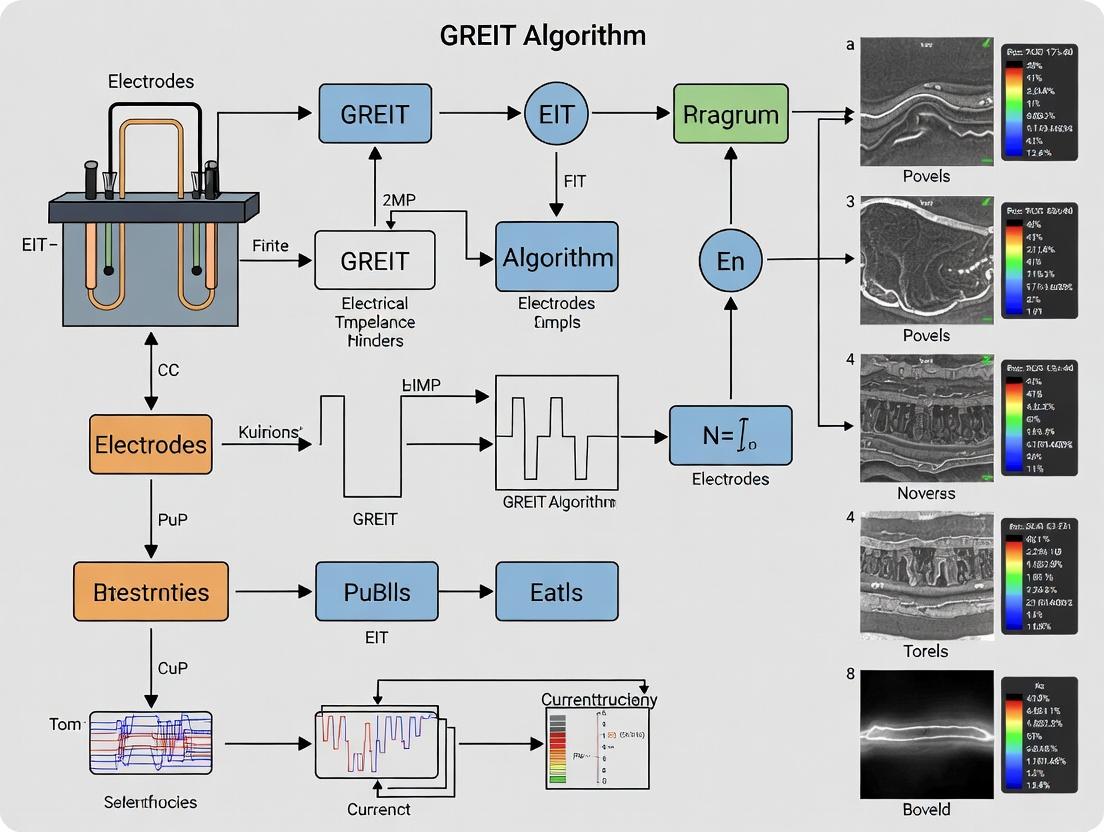
This article provides a detailed exploration of the GREIT (Graz consensus Reconstruction algorithm for EIT) algorithm for Electrical Impedance Tomography (EIT) image reconstruction.
Revolutionizing Biomedical Imaging: A Comprehensive Guide to GREIT Algorithm Reconstruction for Electrical Impedance Tomography
Abstract
This article provides a detailed exploration of the GREIT (Graz consensus Reconstruction algorithm for EIT) algorithm for Electrical Impedance Tomography (EIT) image reconstruction. Tailored for researchers, scientists, and drug development professionals, it covers the foundational principles of GREIT, its methodological implementation, common troubleshooting and optimization strategies, and a critical validation against other reconstruction techniques. The content aims to serve as a practical and authoritative resource for advancing EIT applications in lung monitoring, brain imaging, and preclinical research, synthesizing the latest developments in this standardized framework for robust and interpretable EIT imaging.
What is GREIT? Understanding the Core Principles and Evolution of EIT's Standardized Algorithm
The Graz Consensus Framework for GREIT (Graz consensus Reconstruction algorithm for Electrical Impedance Tomography) represents a standardized methodology for developing and evaluating 2D linear reconstruction algorithms in thoracic electrical impedance tomography (EIT). Established to address variability and ensure reproducibility in EIT research, the framework provides explicit guidelines for algorithm design, performance assessment, and reporting.
Table 1: Core Consensus Parameters for GREIT Algorithm Development
| Parameter | Specification | Purpose in Reconstruction |
|---|---|---|
| Target | 2D circular domain with 32 electrodes | Standardizes geometry for comparability. |
| Noise Figure (NF) | 0.2 to 0.5 (typically 0.25) | Controls trade-off between amplitude accuracy and noise suppression. |
| Amplitude Response (AR) | Uniform (1.0) within target region | Ensures reconstructed conductivity change matches true change. |
| Position Error (PE) | Minimized | Optimizes localization of impedance perturbations. |
| Resolution (RES) | Maximized, but spatially uniform | Aims for sharp, consistent image blurring. |
| Ring Artifact (RA) | Minimized | Suppresses artifacts concentrated at the domain's center. |
| Algorithm Type | Linear, one-step | Ensures real-time feasibility and simplicity. |
Core Algorithm and Reconstruction Protocol
The GREIT algorithm is fundamentally a linear, one-step solver: Δξ = R * Δv, where Δξ is the reconstructed image, R is the reconstruction matrix, and Δv is the vector of measured voltage changes.
Protocol 2.1: Construction of the Reconstruction Matrix R
- Forward Model Generation: Using a finite element model (FEM) of a circular domain with 32 equidistant electrodes, simulate unit conductivity changes in each pixel/voxel (
Δσ_i) to compute the resulting boundary voltage changes (Δv_leadfield). - Noise Model Definition: Incorporate a realistic measurement noise model, typically additive Gaussian noise proportional to the measured voltage amplitude.
- Training Data Assembly: Combine leadfield simulations for all pixels with the noise model to create a training set of
[Δv_train, Δσ_true]pairs. - Optimization Objective: Solve for matrix
Rthat minimizes the weighted sum of error norms:R = argmin( λ₁||AR - I||² + λ₂||R*J - G||² + λ₃||RF||² )whereJis the sensitivity matrix,Gis the desired shape of the point spread function,Fdescribes the noise covariance, andλare weighting parameters tied to NF, AR, PE, RES, and RA. - Matrix Computation: The solution is obtained via regularized least-squares or a similar optimization technique, yielding the final linear reconstruction matrix.
Diagram Title: GREIT Reconstruction Matrix Optimization Workflow
Experimental Validation Protocols
Protocol 3.1: Performance Evaluation using Saline Phantom Objective: Quantify GREIT algorithm performance metrics (AR, PE, RES, RA) against ground truth. Materials:
- Circular tank (diameter ~30cm) with 32 surface electrodes.
- Saline solution (0.9% NaCl) with conductivity matched to background tissue (~0.2 S/m).
- Insulating or conductive targets of known size (e.g., plastic rods, agar spheres).
- EIT data acquisition system (e.g., Draeger EIT Evaluation Kit, Swisstom Pioneer). Workflow:
- Fill tank with saline, ensure stable electrode contact.
- Acquire reference frame (
v_ref). - Introduce target at a known position (e.g., (x,y) = (50,0) mm).
- Acquire measurement frame (
v_meas). Compute Δv. - Reconstruct image using the GREIT matrix
R. - Analyze image: identify centroid of perturbation for PE; measure amplitude at centroid for AR; calculate full-width at half-maximum for RES; assess central artifacts for RA.
- Repeat for multiple target positions and sizes.
Table 2: Example Phantom Validation Results (Simulated Data)
| Target Position (mm) | Target Radius (mm) | Amplitude Response (AR) | Position Error (PE in mm) | Resolution (RES in mm) |
|---|---|---|---|---|
| (50, 0) | 15 | 0.95 | 2.1 | 35 |
| (0, 40) | 15 | 0.92 | 3.5 | 38 |
| (30, 30) | 10 | 0.85 | 4.8 | 42 |
| (0, 0) | 15 | 0.98 | 5.0 (RA artifact) | 45 |
Protocol 3.2: In Vivo Validation of Lung Ventilation Objective: Validate GREIT for clinical pulmonary monitoring. Materials:
- EIT belt with 32 electrodes for thoracic placement.
- Clinical EIT device.
- Spirometer or ventilator for reference volumes.
- Ethical approval and informed consent. Workflow:
- Place electrode belt around subject's thorax at the 5th-6th intercostal space.
- Acquire EIT data continuously at >20 frames/sec during tidal breathing and forced maneuvers.
- Simultaneously record spirometric data.
- Reconstruct dynamic EIT image sequence using GREIT.
- Define regions of interest (ROI) in dependent lung regions.
- Correlate impedance-time curves in ROI with spirometric volume-time curves to compute tidal impedance variation.
- Analyze regional ventilation delay via pixel-wise phase analysis or center of ventilation shift.
Diagram Title: In-Vivo GREIT Ventilation Analysis Workflow
The Scientist's Toolkit: Key Research Reagent Solutions
Table 3: Essential Materials and Reagents for GREIT Research
| Item | Function & Specification | Application Notes |
|---|---|---|
| Ag/AgCl Electrode Array | 16 or 32 electrodes; pre-gelled, self-adhesive. | Standard for thoracic EIT. Ensure consistent skin contact impedance. |
| Calibration Saline Phantom | 0.9% NaCl, ~20-30 S/m conductivity at 20°C. | Essential for system calibration and Protocol 3.1. Conductivity must be temperature-controlled. |
| Agarose Inhomogeneities | 2-4% agarose in saline, shaped as spheres/rods. | Mimics biological tissue conductivity for phantom validation. |
| FEM Software (e.g., EIDORS, Netgen) | Open-source tool for solving forward EIT problems. | Generating the leadfield (J) and training data for GREIT matrix development. |
| GREIT Algorithm Library (EIDORS) | Standardized implementation of the consensus algorithm. | Provides baseline R matrices and evaluation functions (NF, AR, PE, RES). |
| Clinical EIT Device (e.g., Draeger, Swisstom, Timpel) | Multi-frequency, high-speed data acquisition system. | Required for in vivo validation (Protocol 3.2). Must support 32 electrodes. |
| Spirometer | Measures volume of inhaled/exhaled air. | Gold-standard reference for validating lung ventilation images. |
Application Notes: Evolution of GREIT Algorithm Development
The development of the GREIT (Graz consensus Reconstruction algorithm for EIT) algorithm marked a pivotal shift from disparate, ad-hoc EIT image reconstruction methods to a standardized, consensus-driven approach. This transition is characterized by key quantitative milestones.
Table 1: Evolution of Key EIT Reconstruction Metrics Pre and Post GREIT Consensus
| Metric | Pre-2008 (Ad-hoc Era) Range | Post-2008 (Standardized Era) Typical GREIT Performance | Measurement Protocol |
|---|---|---|---|
| Position Error | 10-30% of image diameter | 5-10% of image diameter (for single inclusion) | Defined as distance between reconstructed and true inclusion centroid, normalized to medium diameter. |
| Resolution | Highly variable (5-25% of diameter) | ~15% of image diameter (uniform across implementations) | Measured as Full-Width at Half-Maximum (FWHM) of a reconstructed point inclusion. |
| Amplitude Response | 0.2 - 2.0 (relative to true value) | 0.7 - 1.3 (targeted for unity) | Ratio of reconstructed conductivity change amplitude to true amplitude. |
| Noise Performance (SNR) | 3-20 dB (method dependent) | Consistent framework for reporting SNR gains | Measured as signal-to-noise ratio in a region of interest vs. background. |
| Algorithm Publication Rate | ~5-10 unique methods/year | Dominated by GREIT variants & refinements (~60% of papers) | Bibliometric analysis of PubMed-indexed EIT reconstruction papers. |
Table 2: Standardized GREIT Algorithm Parameters (Typical Configuration for Thoracic Imaging)
| Parameter | Symbol | Consensus Value | Function in Reconstruction |
|---|---|---|---|
| Regularization Hyperparameter | λ | 0.001 - 0.01 (data-driven) | Controls trade-off between data fitting and image smoothness. |
| Target Radius | R | 15% of image diameter | Defines desired spatial resolution for point spread function optimization. |
| Noise Figure | NF | 0.5 | Desired level of regularization relative to measurement noise. |
| Weighting for Position | η | 0.2 | Prioritizes positional accuracy in the optimization cost function. |
Experimental Protocols for GREIT Validation
Protocol 1: Phantom-Based Validation of Reconstruction Performance This protocol outlines the standardized method for evaluating GREIT algorithm performance using a saline tank phantom, as established in post-2008 consensus papers.
Materials:
- 16-electrode EIT data acquisition system (e.g., KHU Mark2.5, Swisstom Pioneer).
- Cylindrical acrylic tank (diameter: 30 cm).
- 0.9% saline solution (conductivity ~1.5 S/m).
- Insulating or conducting targets of known size (e.g., plastic rods, agar spheres).
- Calibrated positional stage.
Procedure:
- System Calibration: Fill tank with saline. Connect all electrodes. Measure reference frame of homogeneous conductivity.
- Target Placement: Suspend a single target (diameter 5 cm) at a known position (e.g., (x,y) = (5cm, 0cm)) using the positional stage.
- Data Acquisition: Acquire EIT voltage measurements using adjacent drive pattern at 10 kHz. Collect 100 frames.
- Data Processing: Compute differential voltage data
V_measrelative to homogeneous reference. - Image Reconstruction:
a. Apply standardized FEM forward model (576 elements).
b. Compute reconstruction matrix
R_GREITusing consensus parameters (λ=0.005, R=0.15D, NF=0.5). c. Reconstruct image:Δσ = R_GREIT * V_meas. - Quantitative Analysis:
a. Calculate Position Error:
PE = ||C_rec - C_true|| / D. b. Calculate Resolution: Fit Gaussian to profile through inclusion; report FWHM/D. c. Calculate Amplitude Response:AR = max(Δσ_region) / Δσ_true. - Repeat: Perform for ≥10 target positions and ≥3 target sizes. Report mean±SD.
Protocol 2: In-Vivo Validation for Thoracic Imaging (Regional Ventilation) Standardized protocol for assessing GREIT performance in human lung ventilation monitoring.
Materials:
- Clinical EIT system (e.g., Dräger PulmoVista 500, CareTaker).
- 32-electrode belt for thoracic placement.
- Spirometer for tidal volume reference.
- ECG/pneumotachograph for gating.
Procedure:
- Subject Preparation: Place electrode belt around thorax at 5th-6th intercostal space. Ensure good electrode contact.
- Reference Measurement: Acquire 60 seconds of EIT data at end-expiration (quiet breathing).
- Challenge Maneuver: a. Record EIT data during a slow vital capacity (VC) maneuver guided by spirometry. b. Alternatively, record during tidal breathing for 5 minutes.
- Data Reconstruction: a. Use GREIT reconstruction matrix tuned for thoracic geometry (human-shaped FEM). b. Apply temporal filtering (0.1-0.5 Hz bandpass for ventilation).
- Analysis: a. Generate regional time-difference EIT images. b. Divide lung region into regions of interest (e.g., ventral-dorsal, left-right). c. Calculate Regional Ventilation Delay relative to global signal. d. Correlate Global Impedance Change with spirometric tidal volume (R² target >0.95).
- Reporting: Adhere to consensus guidelines for reporting EIT results (TREND checklist).
Visualization of Methodological Evolution
Title: Evolution from Ad-hoc Methods to GREIT Standardization
Title: GREIT Algorithm Reconstruction Workflow
The Scientist's Toolkit: Key Research Reagent Solutions
Table 3: Essential Materials & Reagents for GREIT-Based EIT Research
| Item | Function in GREIT/EIT Research | Example Product/Specification |
|---|---|---|
| Multi-channel EIT Data Acquirer | Acquires differential voltage measurements from electrode array. High precision (>16-bit) required. | Swisstom Pioneer, KHU Mark2.5, Impedimed SFB7. |
| Standardized FEM Mesh | Digital phantom for forward modeling. Must match experimental geometry. | EIDORS library (e.g., ng_mk_cyl_models), ANSYS, COMSOL. |
| Calibrated Phantom Tank | Provides ground truth for algorithm validation. Materials of known conductivity. | Custom acrylic tank with 16-32 electrodes; NaCl/agar phantoms. |
| GREIT Reconstruction Software | Implements the consensus algorithm for reproducible image generation. | EIDORS (MATLAB/GNU Octave) with mk_GREIT_matrix function. |
| Biocompatible Electrode Belt | For in-vivo thoracic or brain imaging. Ensures stable contact impedance. | Dräger PulmoVista belt (32 electrodes), Textile-integrated arrays. |
| Conductivity Standards | Calibrates system and phantom conductivity. | 0.9% NaCl solution (1.5 S/m), KCl solutions, Agarose gels with NaCl. |
| Performance Metric Scripts | Quantifies PE, AR, Resolution per GREIT consensus. | Custom scripts based on Adler et al. 2009 (Physiol. Meas.). |
Electrical Impedance Tomography (EIT) is a non-invasive imaging modality that reconstructs the internal conductivity distribution of a subject from boundary voltage measurements. The GREIT (Graz consensus Reconstruction algorithm for EIT) framework is a standardized approach for lung EIT, providing robust and interpretable images. Its core relies on three interdependent mathematical principles: Linearization of the inherently non-linear inverse problem, calculation of the Sensitivity Matrix (Jacobian) mapping internal conductivity changes to boundary measurements, and Regularization to stabilize the ill-posed, ill-conditioned inversion. This protocol details their application and integration within the GREIT algorithm pipeline.
Core Principles and Quantitative Framework
Linearization
The forward problem in EIT is described by the complete electrode model. The non-linear relationship V = F(σ), where V is the boundary voltage vector and σ is the conductivity distribution, is linearized around a baseline conductivity σ₀ (often a homogeneous distribution).
First-Order Taylor Expansion:
ΔV ≈ J(σ₀) Δσ
where ΔV = V - V(σ₀) and Δσ = σ - σ₀. J is the Sensitivity Matrix.
Key Assumption: Conductivity changes Δσ are small relative to σ₀. This is critical for dynamic imaging (e.g., ventilation).
Sensitivity Matrix (J)
The Sensitivity Matrix J is an m × n matrix, where m is the number of voltage measurements and n is the number of finite elements in the computational model. Element J_ij represents the sensitivity of the i-th voltage measurement to a small change in conductivity in the j-th element.
Lead Field Approach (Adjoint Method):
For a pair of drive electrodes (A, B) and measurement pair (C, D), the sensitivity for element e is:
J_{e, (AB→CD)} = -∫_{Ω_e} ∇u_{(AB)} · ∇v_{(CD)} dΩ
where u is the potential field from drive (A,B) and v is the potential field from a hypothetical drive (C,D) (reciprocity).
Table 1: Typical Dimensions and Properties of the Sensitivity Matrix
| Parameter | Symbol | Typical Value (16-Elec. GREIT) | Description |
|---|---|---|---|
| Number of Electrodes | L |
16 | Equispaced, circumferential. |
| Independent Measurements | m |
104 (L*(L-3)) | Adjacent drive, adjacent measurement protocol. |
| Model Elements (2D) | n |
~1,600 - 10,000 | Dependent on finite element mesh density. |
| Matrix Shape | J |
104 × ~1,600 | Underdetermined (m << n). |
| Condition Number | κ(J) |
10¹⁰ – 10¹⁵ | Highly ill-conditioned without regularization. |
Regularization
Due to the severe ill-posedness (m << n, ill-conditioned J), solving Δσ = J† ΔV directly is impossible. Regularization imposes constraints to find a stable, meaningful solution.
Tikhonov Regularization (Standard for GREIT):
Δσ̂ = argmin { ||J Δσ - ΔV||² + λ² ||R Δσ||² }
The solution is: Δσ̂ = (JᵀJ + λ² RᵀR)⁻¹ Jᵀ ΔV
Table 2: Common Regularization Strategies in EIT
| Type | Matrix R |
Prior Assumption | Effect on Image |
|---|---|---|---|
| Zeroth-Order (Tikhonov) | I (Identity) |
Solution norm is minimized. | Smoothed, diffuse images. |
| First-Order (Laplacian) | L (Discrete Laplacian) |
Conductivity is spatially smooth. | Enhanced smoothness, reduces noise. |
| Noser | diag(JᵀJ)^(1/2) |
Sensitivity weighting. | Favors center, reduces edge artifacts. |
| GREIT Weighted | W (Noise/Resolution opt.) |
Optimized for specific performance metrics. | Balanced noise, amplitude, position error. |
Regularization Parameter (λ): Chosen via heuristic methods (e.g., L-curve) or fixed for a given sensor geometry and noise level in GREIT.
Experimental Protocol: GREIT Image Reconstruction Pipeline
Objective: To reconstruct a time-difference EIT image sequence from raw voltage measurements using the linearized GREIT framework.
Materials & Software: EIT measurement system (e.g., Draeger EIT Evaluation Kit 2, Swisstom BB2), FEM mesh generator (EIDORS, Netgen), MATLAB/Python with EIDORS toolbox.
Protocol Steps:
System Calibration & Data Acquisition:
- Acquire reference frame voltages
V_reffrom a homogeneous state or time-averaged baseline. - Acquire time-series voltage data
V(t)during the experiment (e.g., ventilation). - Compute differential data:
ΔV(t) = V(t) - V_ref.
- Acquire reference frame voltages
Forward Model & Sensitivity Matrix Calculation (Pre-computation):
- Generate a 2D FEM mesh of the imaging plane domain
Ωusing known electrode positions. - Assign an initial homogeneous conductivity
σ₀to the mesh. - Using the complete electrode model in EIDORS (
fwd_model), compute the Sensitivity MatrixJfor the chosen measurement protocol. - Optional: Apply sensitivity weighting or normalization.
- Generate a 2D FEM mesh of the imaging plane domain
Regularization Matrix Construction:
- For standard GREIT, construct the regularization matrix
Ras a weighted combination of prior matrices to optimize the GREIT performance metrics (e.g.,R = α₁I + α₂L). - The regularization parameter
λis typically pre-set in the GREIT reconstruction matrix.
- For standard GREIT, construct the regularization matrix
Reconstruction Matrix Calculation (GREIT Core):
- Compute the GREIT linear reconstruction matrix
R_GREIT:R_GREIT = (JᵀJ + λ² RᵀR)⁻¹ Jᵀ - This is a one-time, offline computation for a given mesh and electrode configuration.
- Compute the GREIT linear reconstruction matrix
Online Image Reconstruction:
- For each time point
t, compute the conductivity change estimate via linear matrix multiplication:Δσ̂(t) = R_GREIT * ΔV(t) - This step is extremely fast, enabling real-time imaging.
- For each time point
Post-processing & Visualization:
- Map the vector
Δσ̂(t)to the FEM mesh for each frame. - Apply optional spatial or temporal filtering.
- Render the image sequence, often normalized to display % change or normalized unitless values.
- Map the vector
Visualization of Concepts
Title: Linearization to Regularization in EIT
Title: Sensitivity Matrix Computation Workflow
Title: GREIT Linear Reconstruction Core
The Scientist's Toolkit: Key Research Reagents & Materials
Table 3: Essential Research Solutions for GREIT/EIT Method Development
| Item | Function in Research | Example/Specification |
|---|---|---|
| EIT Hardware Phantom | Provides known, controllable conductivity distributions for algorithm validation. | Tank with saline background and insulating/target objects. |
| Finite Element Mesh | Discretizes the imaging domain for forward modeling and image representation. | 2D/3D mesh with 1k-50k elements; generated in EIDORS, Netgen, COMSOL. |
| Complete Electrode Model (CEM) | The most accurate forward model, accounts for electrode contact impedance. | Implemented in EIDORS fwd_model; requires z_contact parameter. |
| Regularization Parameter (λ) Selection Tool | Determines optimal balance between data fit and solution stability. | L-curve criterion, Generalized Cross-Validation (GCV) script. |
| GREIT Performance Metrics | Quantifies algorithm performance for objective comparison and tuning. | MATLAB functions for: Noise Amplitude (NA), Amplitude Distortion (AD), Position Error (PE), Resolution (RES). |
| Synthetic Data Generator | Simulates ΔV for any given Δσ and noise level, enabling controlled testing. |
EIDORS mk_stim_ pattern, fwd_solve, plus additive Gaussian noise. |
| Normalized Difference Metric | Standardizes EIT image values for clinical interpretation. | (Δσ̂ - mean(background)) / (mean(ROI) - mean(background)). |
Within the broader thesis on GREIT (Graz consensus Reconstruction algorithm for EIT) algorithm reconstruction for Electrical Impedance Tomography (EIT) research, this document details the core design goals. GREIT was established through a collaborative consensus to standardize performance evaluation and image reconstruction in EIT. The primary objectives are to achieve a quantifiable balance between four key metrics: image uniformity, spatial resolution, noise performance, and shape recovery. These goals are essential for advancing EIT applications in clinical monitoring and preclinical drug development research.
Quantitative Performance Metrics
The GREIT framework defines specific, measurable targets for each design goal. The following table summarizes the benchmark values established for a typical 16-electrode adjacent-drive EIT system.
Table 1: GREIT Design Goal Targets and Metrics
| Design Goal | Metric Description | Target Value (Typical 16-Electrode System) | Measurement Protocol |
|---|---|---|---|
| Uniformity | Amplitude Response (AR) across field of view | AR > 0.8 in central 50% of radius; AR > 0.5 in periphery | Unit conductivity perturbation at multiple positions. |
| Resolution | Point Spread Function (PSF) Width | PSF diameter < 15% of medium diameter | Reconstruct image of a small (2-3% area) target. |
| Noke Performance | Noise Figure (NF) / Position Error | NF < 0.5; Position Error < 10% of radius | Add Gaussian noise to boundary voltage data. |
| Shape Recovery | Shape Deformation (SD) / Radius Error | SD < 0.2; Radius Error < 10% | Reconstruct images of circular targets of varying sizes/locations. |
Experimental Protocols for GREIT Evaluation
Protocol 3.1: Assessing Uniformity and Resolution
Aim: To quantify the Amplitude Response (Uniformity) and Point Spread Function width (Resolution) across the imaging domain. Materials: Saline tank phantom (diameter 30 cm), 16-electrode EIT system, insulated conductive target (diameter 2 cm), 3D positioning system. Procedure:
- Fill phantom with 0.9% saline solution (conductivity ~1.6 S/m). Measure reference boundary voltages, V_ref.
- Place conductive target at a defined coordinate (x, y) using the positioning system. Measure new boundary voltages, V_pert.
- Reconstruct the difference image using the GREIT algorithm:
Image = Reconstruction_Matrix * (V_pert - V_ref)/V_ref. - Extract the Amplitude Response (AR) as the maximum pixel value in a local region of interest (ROI) around the target.
- Calculate the Point Spread Function (PSF) width as the mean diameter of the contour at 50% of the maximum amplitude (FWHM).
- Repeat steps 2-5 for a grid of positions covering the phantom (e.g., 5x5 grid). Plot AR vs. position and average PSF width vs. position.
Protocol 3.2: Evaluating Noise Performance
Aim: To determine the Noise Figure (NF) and localization error under simulated noisy conditions. Materials: Computational model of the EIT forward problem, GREIT reconstruction matrix, simulated target at known location. Procedure:
- Generate simulated boundary data,
V_sim, for a known target using a finite element model. - Create 100 noise realizations by adding zero-mean Gaussian noise to
V_sim:V_noisy = V_sim + η, whereη ~ N(0, σ²). The noise levelσis set to achieve a typical signal-to-noise ratio (e.g., 80 dB). - Reconstruct an image for each noisy dataset using the GREIT matrix.
- For each reconstruction, identify the pixel with the maximum amplitude and record its coordinate.
- Noise Figure (NF): Calculate as
NF = std(AR_list) / mean(AR_list), whereAR_listis the list of amplitude responses from all trials. - Position Error: Compute the mean Euclidean distance between the identified max-pixel coordinates and the true target coordinate across all trials. Normalize by the phantom radius.
Protocol 3.3: Quantifying Shape Recovery
Aim: To measure the accuracy of reconstructed target shape and size. Materials: Tank phantom, multiple non-conductive (insulating) targets of varying diameters (e.g., 3 cm, 6 cm, 9 cm). Procedure:
- Place a circular target of known radius
R_trueat the phantom center. Acquire EIT data. - Reconstruct the GREIT image.
- Apply a threshold to the image at 50% of its maximum amplitude to define a recovered shape.
- Calculate Shape Deformation (SD):
SD = 1 - (2√(πA_p) / P_p), whereA_pandP_pare the area and perimeter of the thresholded region. A perfect circle has SD=0. - Calculate Radius Error: Determine the equivalent radius
R_eq = √(A_p/π). Error =|R_eq - R_true| / R_true. - Repeat for targets of different sizes and at off-center positions.
Visualizing the GREIT Reconstruction Framework and Evaluation
Title: GREIT Image Reconstruction and Goal Evaluation Workflow
Title: Trade-offs in GREIT Design Goal Optimization
The Scientist's Toolkit: Key Research Reagent Solutions
Essential materials and computational tools for conducting GREIT-related EIT research.
Table 2: Essential Research Toolkit for GREIT EIT Experiments
| Item | Function in GREIT Research | Example/Specification |
|---|---|---|
| Multi-Frequency EIT System | Acquires boundary voltage data. Foundation for all experiments. | e.g., Maltron EIT system, KHU Mark2.5, or custom 16-32 channel system. |
| Tank Phantoms | Provides controlled experimental geometry for protocol validation. | Cylindrical tanks with precise electrode mounts (e.g., 30 cm diameter). |
| Calibrated Saline | Stable, homogeneous background medium with known conductivity. | 0.9% NaCl solution (≈1.6 S/m) at controlled temperature (e.g., 22°C). |
| Conductive/Insulating Targets | Simulate lesions, tumors, or ventilated regions for performance tests. | Agar spheres, plastic rods, or metal objects of known size/conductivity. |
| Finite Element Model (FEM) Mesh | Solves the forward problem for simulation and reconstruction matrix generation. | High-quality 2D/3D mesh of the phantom (e.g., >10k elements). |
| GREIT Reconstruction Matrix | Core algorithm that reconstructs images from voltage data. | G matrix optimized per GREIT consensus, loaded in software (EIDORS). |
| EIDORS (Software Platform) | Open-source environment for EIT simulation, reconstruction, and analysis. | Required for implementing GREIT and running evaluation protocols. |
| Data Acquisition & Analysis Suite | Controls hardware, processes data, and calculates performance metrics. | Custom MATLAB/Python scripts interfacing with EIDORS and hardware API. |
Fundamental Advantages Over Back-Projection and Newton-type Methods
The Generalized Reconstruction for EIT (GREIT) algorithm represents a significant paradigm shift in Electrical Impedance Tomography (EIT). As part of a broader thesis on advancing EIT reconstruction, GREIT is explicitly formulated to address well-documented limitations of classical back-projection and Newton-type iterative methods. This document details its fundamental advantages, supported by quantitative comparisons and experimental validation protocols.
Quantitative Performance Comparison
Table 1: Reconstruction Algorithm Performance Metrics (Comparative Summary)
| Performance Metric | Linear Back-Projection (LBP) | Newton-type One-Step (NOSER) | GREIT Framework |
|---|---|---|---|
| Reconstruction Speed (avg.) | ~1 ms | ~150 ms | ~5 ms |
| Position Error (for point targets) | 15-25% of image diameter | 5-15% of image diameter | <10% of image diameter |
| Amplitude Response | Highly non-linear, depth-dependent | Non-linear, sensitive to noise | Uniform, designed for consistency |
| Shape Deformation | Severe blurring, artifacts | Improved but iterative artifacts | Controlled PSF, minimal shape distortion |
| Noise Performance (SNR=30dB) | Poor, unstructured noise amplification | Moderate, requires regularization | Good, built-in noise suppression |
| Robustness to Modeling Error | Low | Low-Medium | High (via training on realistic models) |
| Algorithm Design Core | Analytical, non-iterative | Iterative, model-based optimization | Training-based, consensus-defined performance |
Core Advantages: A Detailed Analysis
Consensus-Based Design vs. Ad-Hoc Regularization
GREIT is developed through a consensus process on a desired performance matrix (e.g., point spread function, PSF), unlike Newton-type methods which rely on ad-hoc selection of regularization parameters (e.g., Tikhonov weight λ). This produces reconstructions with predictable, uniform performance across the field.
Speed and Non-Iterative Nature
GREIT provides a single, linear reconstruction matrix, offering speeds comparable to back-projection while delivering quality approaching iterative methods. This is critical for real-time monitoring applications like lung ventilation or drug delivery tracking.
Controlled Point Spread Function (PSF)
GREIT is explicitly trained to achieve a uniform, localized PSF. This directly mitigates the severe depth-dependent blurring and spatial distortions inherent in simple back-projection and reduces the "ghosting" artifacts common in Newton-type reconstructions.
Amplitude Uniformity and Noise Robustness
The algorithm is optimized to provide a linear amplitude response regardless of target depth and includes built-in mechanisms to suppress noise amplification, a major flaw in ill-posed inverse problems solved by Newton methods.
Experimental Protocols for Validation
Protocol 1: Benchmarking Position Error and PSF
Objective: Quantify positional accuracy and shape distortion of a known target. Materials: Saline tank phantom, 16-electrode EIT system, insulating/conductive targets. Procedure:
- Place a small conductive target at a known coordinate (x,y) in the phantom.
- Acquire voltage measurement data V_meas.
- Reconstruct images using LBP, NOSER, and GREIT algorithms.
- Calculate centroid of reconstructed target. Position Error = ‖centroidactual - centroidreconstructed‖.
- Analyze the PSF by measuring resolution (FWTM) and shape asymmetry.
Protocol 2: Amplitude Response Linearity Test
Objective: Evaluate linearity of reconstructed amplitude vs. actual target conductivity change. Materials: Tank phantom, target object of known volume, NaCl solutions of varying concentration. Procedure:
- Fill phantom with background saline.
- Introduce target with conductivity σ1. Reconstruct, measure mean amplitude A1 in ROI.
- Sequentially replace target with solutions σ2, σ3,... (∆σ known).
- Plot reconstructed amplitude (A) vs. true conductivity change (∆σ). Calculate linearity (R²).
Protocol 3: Noise Robustness Assessment
Objective: Compare signal-to-noise ratio (SNR) performance in reconstruction. Materials: EIT system, data acquisition software, resistor network phantom. Procedure:
- Collect a baseline dataset (Vref) and a perturbed dataset (Vpert) from phantom.
- Add Gaussian white noise of known power to V_pert to create datasets with SNR from 40dB to 20dB.
- Reconstruct all datasets with each algorithm.
- For each reconstruction, calculate image SNR = mean(ROI) / std(background).
- Plot image SNR vs. input data SNR for each algorithm.
Research Reagent Solutions & Key Materials
Table 2: Essential Materials for EIT Algorithm Validation
| Item / Reagent | Function in Experiment |
|---|---|
| Ag/AgCl Electrode Array (16-32 electrode) | Provides stable electrical contact for current injection and voltage measurement. |
| Physiological Saline (0.9% NaCl) | Standard, stable conductive medium for tank phantoms. |
| Polymethyl Methacrylate (PMMA) Tank | Insulating container for creating controlled experimental geometries. |
| Agarose-NaCl Phantoms | Stable, tissue-equivalent conductive targets with tunable conductivity. |
| Insulating (Plastic) Rods | Simulates voids or non-conductive inclusions in the field. |
| Resistor Network Phantom | Precise, reproducible electronic reference for noise and performance tests. |
| Data Acquisition System (e.g., KHU Mark2, Swisstom Pioneer) | Provides precise, multiplexed current injection and synchronous voltage measurement. |
| MATLAB/Python with EIDORS Toolkit | Software environment for implementing LBP, Newton-type, and GREIT reconstructions. |
Visualizing Algorithm Paradigms and Workflows
Algorithm Reconstruction Paradigms in EIT
GREIT Training Protocol Workflow
Logical Flow of EIT Image Reconstruction Methods
Implementing GREIT: Step-by-Step Methodology and Cutting-Edge Applications in Biomedical Research
This document details the protocol for Electrical Impedance Tomography (EIT) image reconstruction using the GREIT (Graz consensus Reconstruction algorithm for EIT) framework. Within the broader thesis on advancing GREIT for dynamic physiological monitoring, this protocol establishes a standardized workflow from raw voltage measurements to a calibrated reconstructed image, crucial for applications in preclinical research and drug development.
Core Algorithmic Workflow
Workflow Diagram
Diagram Title: GREIT Image Reconstruction Pipeline
Quantitative Data Standards
Table 1: Typical EIT System Parameters for Preclinical Applications
| Parameter | Typical Value Range | Unit | Purpose in GREIT |
|---|---|---|---|
| Measurement Frequency | 10 - 1000 | kHz | Determines tissue penetration & contrast |
| Number of Electrodes | 16 - 32 | - | Spatial resolution & data dimensionality |
| Current Amplitude | 0.1 - 5 | mA (RMS) | Safety & signal-to-noise ratio (SNR) |
| Voltage Sampling Rate | 10 - 100 | kHz | Temporal resolution for dynamic imaging |
| Frame Rate | 1 - 50 | frames/s | Monitoring speed for physiological processes |
| Expected SNR | 60 - 100 | dB | Reconstruction fidelity |
Table 2: GREIT Algorithm Performance Metrics (Consensus Targets)
| Metric | Target Value | Description |
|---|---|---|
| Amplitude Response | 1.0 | Reconstructed image amplitude equals true change. |
| Position Error | < 10% | Deviation of reconstructed object center. |
| Resolution | < 15% | Width of reconstructed perturbation. |
| Shape Deformation | < 0.2 | Normalized correlation with ideal shape. |
| Noise Performance | > 60 dB | SNR amplification in reconstructed image. |
Detailed Experimental Protocols
Protocol A: Boundary Voltage Measurement Acquisition
Objective: To obtain accurate, time-synchronized boundary voltage differentials. Materials: See Scientist's Toolkit. Procedure:
- System Calibration: Perform open/short/load calibration on EIT hardware prior to experiment. Record calibration matrix (C).
- Reference Measurement (V_ref): a. For difference EIT, acquire voltage data from baseline physiological state. b. Apply all electrode drive patterns (e.g., adjacent, opposite). c. Record mean voltage across 100 frames. Store with metadata (timestamp, electrode layout).
- Test Measurement (V_h): a. Induce perturbation (e.g., bolus injection, ventilation change). b. Initiate continuous data acquisition at specified frame rate (Table 1). c. Synchronize with external triggers (e.g., ventilator, injector).
- Data Export: Export data as
[Time x Voltage Channels]matrix. Apply calibration matrix:V_corrected = C \ V_raw.
Protocol B: GREIT Reconstruction Implementation
Objective: To reconstruct difference EIT images using the GREIT linear reconstruction matrix.
Input: ΔV = V_h - V_ref (Normalized).
GREIT Reconstruction Equation: Δσ_rec = R · ΔV
Where R is the GREIT reconstruction matrix (npixels x nmeasurements).
Procedure:
- Load Reconstruction Matrix (R): a. Use a pre-computed GREIT matrix specific to your electrode geometry and FEM mesh. b. Validate matrix dimensions match your measurement protocol.
- Matrix Multiplication: Perform
Δσ_rec = R · ΔVfor each time frame. - Image Normalization: Scale pixel values to a common scale (e.g., -1 to +1 for conductivity change).
- Output: Time-series of 2D image matrices representing internal conductivity change.
Protocol C: Performance Validation (Phantom Experiment)
Objective: To quantify algorithm performance against known ground truth. Procedure:
- Fabricate Saline Phantom with known background conductivity (e.g., 0.9% NaCl, σ ≈ 1.4 S/m).
- Introduce Insulating Target of known size (e.g., 15% diameter rod) at known position.
- Acquire Data: Follow Protocol A, with target-out as reference and target-in as test.
- Reconstruct: Follow Protocol B.
- Analyze: Calculate metrics in Table 2 from reconstructed image. Amplitude Response = max(Δσrec) / expected Δσ. *Position Error* = ||posrec - pos_true|| / field diameter. Resolution = FWHM of perturbation profile / target diameter.
The Scientist's Toolkit
Table 3: Key Research Reagent Solutions & Materials
| Item | Function in EIT/GREIT Research |
|---|---|
| Multi-Frequency EIT System (e.g., KHU Mark2, Swisstom Pioneer) | Hardware for applying current and measuring boundary voltages. |
| Electrode Array (16-32 Ag/AgCl) | Provides stable electrical contact with subject/phantom. |
| Finite Element Model (FEM) Mesh | Digital representation of domain for forward modeling and computing R. |
| GREIT Reconstruction Matrix (R) | Linear operator trained/optimized for specific geometry and noise performance. |
| Calibration Phantoms (Saline, Agar targets) | Objects with known electrical properties for system validation. |
| Data Acquisition Software (e.g., EIDORS, custom LabVIEW) | Controls hardware, logs synchronized voltage data. |
| Image Reconstruction Suite (EIDORS for MATLAB/GNU Octave) | Implements GREIT and other algorithms for Δσ_rec calculation. |
| Physiological Trigger Module | Synchronizes data acquisition with ventilator or injector for drug studies. |
Logical Pathway for GREIT Matrix Generation
Diagram Title: GREIT Reconstruction Matrix Generation
1. Introduction in the Context of GREIT Algorithm EIT Research
Within the framework of research on the GREIT (Graz consensus Reconstruction algorithm for EIT) algorithm for Electrical Impedance Tomography (EIT), the accuracy and efficacy of the reconstructed images are fundamentally constrained by two preparatory stages: the generation of a high-quality Finite Element Model (FEM) and the precise definition of the electrode configuration. These prerequisites define the computational domain and the boundary conditions for the forward problem, which the GREIT algorithm—a linear, difference imaging approach—relies upon to solve the inverse problem. This document outlines the application notes and experimental protocols for these critical steps.
2. Finite Element Model (FEM) Generation: Protocols and Application Notes
The FEM discretizes the imaging domain (e.g., a thorax, tank phantom, or cell culture well) into small elements, allowing numerical solution of the governing Laplace equation ∇⋅(σ∇u)=0, where σ is conductivity and u is electrical potential.
2.1. Protocol for Anatomically Realistic FEM Mesh Generation
- Objective: Create a 2D or 3D mesh representing the geometry and approximate internal conductivity distribution of the target.
- Materials: Medical imaging data (CT, MRI) or precise physical dimensions of a phantom.
- Software Tools: Netgen, Gmsh, COMSOL Multiphysics, EIDORS, or custom MATLAB/Python scripts.
- Procedure:
- Geometry Definition: Import segmented DICOM images or define geometric primitives (circles, ellipses, rectangles) to represent domain boundaries and internal structures (e.g., lungs, spine, inclusion in a phantom).
- Meshing: Apply an unstructured (or structured) meshing algorithm. For GREIT, a 2.5D (extruded 2D) model is often sufficient for cylindrical domains.
- Element Type & Size: Use triangular (2D) or tetrahedral (3D) elements. Refine the mesh near electrodes where current density and potential gradients are highest. A typical guideline is ≥10,000 elements for a 3D human thorax model.
- Conductivity Assignment: Assign an initial conductivity value to each element or region (e.g., background saline, insulating inclusions, lung tissue).
- Model Export: Export the mesh data (node coordinates, element connectivity, conductivity vector) in a format compatible with the EIT solver (e.g., EIDORS, pyEIT).
2.2. Key Quantitative Parameters for FEM Quality Table 1: FEM Mesh Quality Metrics and Target Values
| Parameter | Definition | Target Range (for Stability) | Impact on GREIT Reconstruction |
|---|---|---|---|
| Element Count | Total number of finite elements. | 5,000 - 50,000 (scales with geometry) | Higher count increases forward solution accuracy but also computational load. |
| Aspect Ratio | Ratio of longest to shortest edge of an element. | < 5 (ideal: ~1) | High ratios degrade numerical accuracy and condition number. |
| Jacobian | Measure of element distortion. | > 0 (positive for all elements) | Negative Jacobian causes solver failure. |
| Mesh Density near Electrodes | Local element size at electrode nodes. | At least 3-5 layers of refined elements. | Critical for accurate modeling of boundary voltage measurements. |
3. Electrode Configuration: Protocols and Application Notes
Electrode configuration encompasses the number, placement, size, and contact impedance of electrodes, defining how current is injected and voltage is measured.
3.1. Protocol for Defining and Modeling Electrodes in FEM
- Objective: Integrate a precise electrode model into the FEM to simulate boundary conditions.
- Procedure:
- Number & Placement: For a circular 2D domain, 8, 16, or 32 electrodes are standard. They are typically placed equidistantly. For anatomical models, placement should mimic a real electrode belt (e.g., at the 5th-6th intercostal space for thoracic imaging).
- Model Type Selection: Choose an electrode model:
- Gap Model: Electrodes are points/nodes, with gaps between them. Less realistic.
- Complete Electrode Model (CEM): Accounts for electrode surface area, contact impedance (z), and shunting effect. Essential for accurate forward modeling. Requires specifying z for each electrode.
- Integration into FEM: Assign a unique identifier to nodes/elements comprising each electrode. Apply the CEM boundary condition: u + z σ (∂u/∂n) = U on each electrode, where U is the measured voltage.
- Pattern Definition: Define current injection and voltage measurement patterns (e.g., adjacent, opposite, trigonometric, adaptive). GREIT is typically calibrated using adjacent or trigonometric patterns.
3.2. Key Quantitative Parameters for Electrode Configuration Table 2: Electrode Configuration Parameters and Typical Values
| Parameter | Typical Values / Choices | Impact on GREIT Performance |
|---|---|---|
| Number of Electrodes (N) | 16, 32, 64, 128 | Higher N increases number of independent measurements (N*(N-3)), improving spatial resolution but increasing hardware complexity. |
| Electrode Size (Width/Area) | 5-20 mm width for belts; ~10% of perimeter. | Larger electrodes reduce contact impedance but blur boundary measurements due to averaging. |
| Contact Impedance (z) | 0.1 - 10 kΩ (model dependent) | Mismatched or high z values cause significant errors in forward model predictions. |
| Injection/Measurement Pattern | Adjacent, Opposite, Cross, Adaptive | Pattern determines the sensitivity map and signal-to-noise ratio (SNR). GREIT is often tuned for a specific pattern. |
| Reference Voltage Strategy | Average of all measurements, opposite electrode, fixed reference. | Affects common-mode rejection and the handling of systematic errors. |
4. The Scientist's Toolkit: Research Reagent Solutions & Essential Materials
Table 3: Essential Materials for FEM and Electrode Configuration Validation Experiments
| Item | Function / Role in Protocol |
|---|---|
| Saline Phantom Tank | A precisely machined cylindrical tank filled with 0.9% NaCl saline, providing a homogeneous, known-conductivity domain for model validation. |
| Insulating/Conducting Inclusions | Solid plastic (insulating) or agarose/gelatin spheres with known conductivity (conducting) to act as targets for imaging tests. |
| Precision Conductivity Meter | To measure the exact conductivity (σ) of saline at experiment temperature for accurate forward model inputs. |
| Multi-Electrode EIT Belt/Sensor | A physical electrode array matching the configuration (N, size, spacing) defined in the FEM. Typically Ag/AgCl electrodes. |
| Calibrated EIT Data Acquisition System | Hardware (e.g., KHU Mark2.5, Swisstom Pioneer) to perform current injection and voltage measurement according to the defined pattern. |
| EIDORS (or equivalent) Software Suite | Open-source MATLAB/GNU Octave toolkit providing functions for FEM creation, forward solution calculation, and GREIT reconstruction. |
5. Visualization of the GREIT-Reconstruction Prerequisite Workflow
Diagram 1: Prerequisite model creation and validation workflow for GREIT.
Diagram 2: Data structure of an EIT-ready FEM with CEM electrodes.
This application note exists within a broader thesis investigating the optimization of the GREIT (Graz consensus Reconstruction algorithm for EIT) algorithm for Electrical Impedance Tomography (EIT). A critical, often under-examined, step in reconstruction pipeline development is the explicit definition of the target performance matrix against which algorithm parameters are tuned. For EIT systems, particularly in sensitive applications like preclinical drug development or pulmonary monitoring, two key electrical performance parameters are the Noise Figure (NF) and the Amplitude/ Frequency Response. This document provides protocols for characterizing these parameters and structuring the target matrix to guide GREIT parameter optimization (e.g., regularization hyperparameter, mesh granularity, electrode model selection) for a desired reconstruction fidelity.
Key Performance Parameters: Definitions and Target Values
Noise Figure (NF)
Noise Figure quantifies the degradation of the signal-to-noise ratio (SNR) caused by components in the measurement system. A lower NF is critical for distinguishing small, physiologically relevant impedance changes from background noise.
Target Consideration: For high-fidelity GREIT reconstruction in a lab setting targeting small tissue changes, a system NF < 3 dB is desirable. For robust in-vivo monitoring, NF < 6 dB may be acceptable.
Amplitude and Frequency Response
This defines the system's gain and phase accuracy across the operating frequency bandwidth. A flat amplitude response and linear phase response are essential to ensure measurements accurately represent the underlying bioimpedance without frequency-dependent distortion.
Target Consideration: Amplitude variation should be < ±0.5 dB across the used frequency band. Phase linearity error should be minimized to preserve temporal relationships in dynamic imaging.
Data Presentation: Typical Performance Matrix Table
The following table summarizes a target performance matrix for a high-precision EIT system used in GREIT algorithm development research.
Table 1: Target Electrical Performance Matrix for GREIT Optimization Studies
| Parameter | Symbol | Target Specification | Measurement Condition | Impact on GREIT Reconstruction |
|---|---|---|---|---|
| Noise Figure | NF | ≤ 2.0 dB | @ 50 kHz, 1 kΩ load | Lower NF allows finer regularization, improving resolution without noise amplification. |
| Amplitude Flatness | ±0.3 dB max | 10 kHz - 500 kHz | Ensures consistent data fidelity across frequencies, crucial for multi-frequency EIT (MFEIT). | |
| Gain Accuracy | ±0.5% | Across all channels | Reduces channel-dependent artifacts, improving the consistency of the reconstructed image. | |
| Phase Linearity | ±0.5° deviation | 10 kHz - 500 kHz | Preserves temporal accuracy for dynamic reconstruction of physiological events. | |
| Total Harmonic Distortion | THD | < -80 dB | @ 50 kHz, 1 Vpp | Minimizes non-linear artifacts in measured voltage, simplifying the linearized reconstruction model. |
Experimental Protocols
Protocol for Noise Figure Measurement
Objective: To characterize the Noise Figure of the EIT front-end measurement channel.
Materials:
- EIT System under test (complete front-end for one channel).
- Precision Calibrated Resistor Network (mimicking typical load impedances: 500Ω, 1kΩ, 2kΩ).
- Low-Noise Amplifier (LNA) as reference (if using Y-factor method).
- Spectrum Analyzer or High-Resolution Audio Analyzer (e.g., Audio Precision APx555).
- Shielded Enclosure (Faraday cage).
Method:
- Setup: Place the EIT front-end and test fixtures inside the shielded enclosure. Connect the output of the front-end to the spectrum analyzer.
- Baseline Noise Measurement: Terminate the input of the EIT front-end with a calibrated 1 kΩ resistor at a controlled temperature. Set the system to its standard operating frequency (e.g., 50 kHz).
- Data Acquisition: Measure the output noise power spectral density (PSD) over a narrow band around the operating frequency. Record the RMS noise voltage (Voutnoise).
- Calculate Input-Referred Noise: Using the known system gain (G) at the frequency, calculate the input-referred noise:
V_in_noise = V_out_noise / G. - Compute Noise Figure:
NF (dB) = 20 * log10(V_in_noise / V_thermal). WhereV_thermalis the theoretical Johnson-Nyquist noise of the source resistor:sqrt(4 * k * T * R * B), with k=Boltzmann's constant, T=temperature in Kelvin, R=resistance, B=measurement bandwidth. - Repeat: Repeat steps 2-5 for different load resistors and frequencies to map NF across operating conditions.
Protocol for Amplitude/Frequency Response Characterization
Objective: To measure the gain and phase shift of the EIT system across its operational frequency range.
Materials:
- EIT System under test.
- Network Analyzer (e.g., Keysight E5061B) or precision sinewave generator + lock-in amplifier.
- Precision Calibrated Differential Test Load (e.g., 1 kΩ with 100 pF parallel).
- Matched, shielded cables.
Method:
- Calibration: Perform a full 2-port calibration (Open, Short, Load, Through) at the plane of the test load connections using the network analyzer.
- Connection: Connect the calibrated measurement ports to the injection and measurement electrodes of the EIT system's channel under test. The test load is connected across the "sample" location.
- Sweep Configuration: Program a frequency sweep from the minimum to the maximum operating frequency of the EIT system (e.g., 10 kHz to 1 MHz) with a sufficient number of points (e.g., 500).
- S-Parameter Measurement: Measure the S21 parameter (transmission gain) across the frequency sweep. The network analyzer directly provides the amplitude (in dB) and phase (in degrees) response.
- Data Extraction: Export the S21 magnitude and phase data. The magnitude data is the system's amplitude response. The deviation from a constant group delay (derivative of phase) indicates phase linearity.
- Multi-Channel Check: Repeat for a representative sample of all measurement channels to identify inter-channel variations.
Visualization: GREIT Tuning Workflow
Diagram 1: GREIT Parameter Tuning Workflow (91 chars)
The Scientist's Toolkit: Research Reagent Solutions
Table 2: Essential Materials for EIT System Performance Characterization
| Item | Function in Protocol | Example/Specification |
|---|---|---|
| Precision Resistor Network | Serves as stable, known test loads for NF and gain calibration. Mimics body segment impedance. | Vishay Z201 or similar, 0.1% tolerance, low temperature coefficient. |
| Phantom Tank & Conductivity Solutions | Provides a ground-truth geometric and conductivity distribution for final GREIT image validation. | Agarose or NaCl solutions with calibrated conductivity, often with insulating/target inclusions. |
| Network Analyzer | The core instrument for comprehensive frequency response (S-parameter) measurement. | Keysight E5061B-3L5 (5Hz-3GHz) with balanced port option for differential measurement. |
| Spectrum/Audio Analyzer | Provides ultra-low-noise measurement for precise Noise Figure and distortion analysis. | Audio Precision APx555 B-Series (1MHz bandwidth, <-120 dB THD+N). |
| Shielded Enclosure | Attenuates environmental electromagnetic interference (EMI) for valid low-noise measurements. | Dual-layer Faraday cage with filtered power and signal ports. |
| Lock-in Amplifier | Alternative to a network analyzer for high-sensitivity measurement at a single frequency. | Zurich Instruments MFLI, capable of synchronous demodulation at EIT frequencies. |
| Calibration Standards | Essential for de-embedding test fixture effects from Network Analyzer measurements. | Precision Open, Short, Load (50Ω/1kΩ), Through standards for the connector type used. |
Within the broader thesis on GREIT (Graz consensus Reconstruction algorithm for Electrical Impedance Tomography) algorithm reconstruction EIT research, the open-source EIDORS (Electrical Impedance Tomography and Diffuse Optical Tomography Reconstruction Software) project is indispensable. This guide details the implementation and integration of EIDORS for researchers developing and validating GREIT-based image reconstruction pipelines, with direct applications in physiological monitoring and preclinical drug development.
EIDORS Ecosystem: Core Libraries and Dependencies
EIDORS is built upon a suite of open-source numerical toolboxes. The following table summarizes the core components and their quantitative attributes.
Table 1: Core EIDORS Software Stack and Specifications
| Component | Current Stable Version | Primary Function | Key GREIT Relevance |
|---|---|---|---|
| EIDORS Core | v3.10 | Provides forward and inverse solvers, GUI, and framework. | Hosts the official GREIT implementation. |
| GNU Octave | v8.4.0 | Primary interpreted language environment. | Required execution engine. |
| Netgen | v6.2 | Automatic tetrahedral 3D mesh generation. | Creates finite element models for forward calculations. |
| SUNDR | v1.5 | Solve Useful NoDE Problems in EIDORS. |
Manages forward problem matrices. |
| gpt | - | General Purpose Toolbox for Octave. | Provides auxiliary mathematical functions. |
Protocol: Installation and System Integration
Prerequisite System Configuration
- Operating System: Linux (Ubuntu 22.04 LTS recommended), Windows Subsystem for Linux (WSL2), or macOS.
- Minimum RAM: 8 GB (16 GB recommended for 3D reconstruction).
- Disk Space: 2 GB for all components.
Step-by-Step Installation Protocol
Install GNU Octave:
Install Netgen for 3D Meshing:
Install EIDORS Core:
- Launch Octave GUI or CLI.
- Navigate to the intended installation directory.
- Run:
- Follow interactive prompts to complete setup.
Validation Test: Run the provided test suite to confirm installation:
Title: EIDORS Installation and Validation Workflow
Protocol: GREIT Reconstruction Pipeline with EIDORS
This protocol outlines a standard experimental workflow for 2D GREIT image reconstruction from simulated or measured EIT data, critical for algorithm validation in thesis research.
Materials and Data Preparation
- Data Source: Simulated data (via
mk_common_model) or experimental data (e.g., .mat file with voltage measurementsv_homogandv_cond). - Model: Define a 2D finite element model (
fmdl) usingng_mk_cyl_models.
Step-by-Step Reconstruction Procedure
Forward Model and Simulation:
GREIT Matrix Calculation:
Image Reconstruction and Visualization:
Table 2: Typical GREIT Parameter Set for 16-Electrode System
| Parameter | Value | Description |
|---|---|---|
| Imaging Radius | 0.2 to 0.5 | Normalized radius of reconstruction region. |
| Image Size (opt.imgsz) | [32, 32] | Output image pixel dimensions. |
| Noise Figure (η) | 0.5 | Default regularization hyperparameter. |
| Target Size | 0.05 | Normalized radius of desired point spread function. |
| Electrode Number | 16 | Standard count for thoracic phantom studies. |
Title: GREIT Image Reconstruction and Analysis Pipeline
The Scientist's Toolkit: Research Reagent Solutions
Table 3: Essential Materials and Digital Tools for EIT/GREIT Research
| Item Name | Function & Purpose | Example/Supplier |
|---|---|---|
| EIT Phantom (Saline Tank) | Physical validation system with known conductivity targets. | Custom acrylic tank with agar/NaCl inclusions. |
| 16-Channel EIT Data Acquisition System | Measures boundary voltage differences. | Swisstom Pioneer, Draeger EIT Evaluation Kit. |
| Ag/AgCl Electrode Array | Provides stable electrical contact with subject/phantom. | Kendall H124SG ECG electrodes. |
| 0.9% NaCl Solution | Standard conductive medium for phantom studies. | Typical physiological saline. |
| GNU Octave Scripts | Custom code for batch processing GREIT reconstructions. | Thesis-specific parameter sweep scripts. |
| Git Version Control | Tracks changes to reconstruction algorithms and parameters. | GitHub repository for thesis code. |
| Performance Metrics Scripts | Calculates quantitative image quality metrics (CNR, PSR, ROC). | Custom functions based on GREIT paper definitions. |
Advanced Integration: Customizing the GREIT Algorithm
For thesis work, modifying the desired solution function (opt.desired_solution_fn) is often required. The default function aims for a Gaussian-shaped point spread function.
Protocol: Implementing a Custom Desired Solution
This application note details the implementation and validation of Electrical Impedance Tomography (EIT) for lung function assessment, a core experimental chapter of a broader thesis advancing the Generalized Reconstruction via Iterative Techniques (GREIT) algorithm. The thesis posits that optimized GREIT frameworks significantly enhance the spatial accuracy and temporal resolution of functional EIT images, overcoming key limitations in conventional linear back-projection for dynamic pulmonary monitoring. The protocols herein validate this thesis in clinical and preclinical drug development settings.
Application Notes
Clinical Lung Ventilation Monitoring
EIT provides real-time, bedside visualization of regional lung ventilation without radiation. Advanced GREIT reconstruction improves boundary definition and reduces artifacts, enabling clinicians to titrate ventilator settings (e.g., PEEP, tidal volume) to achieve homogeneous ventilation, particularly in ARDS patients. It is pivotal for monitoring recruitment maneuvers, detecting pneumothorax, and guiding weaning from mechanical ventilation.
Regional Lung Function Analysis
In pharmaceutical research, regional lung function analysis via EIT quantifies the spatial distribution of ventilation in response to bronchoconstrictors, bronchodilators, or novel biologic agents. GREIT's uniform resolution profile allows for reliable region-of-interest (ROI) analysis, enabling the assessment of drug efficacy on specific lung zones (e.g., dorsal vs. ventral) in disease models like asthma or COPD.
Table 1: Key Performance Metrics of GREIT-EIT vs. Standard LBP for Lung Imaging
| Parameter | Standard Linear Back-Projection (LBP) | Advanced GREIT Framework (Thesis Focus) | Measurement Context |
|---|---|---|---|
| Image Noise | 25-35% (relative amplitude) | 8-12% (relative amplitude) | Static phantom study |
| Position Error | 15-20% of belt diameter | <10% of belt diameter | Point conductivity inclusion |
| Radius Error | 25-30% of true radius | 15-20% of true radius | Point conductivity inclusion |
| Temporal Resolution | ~40 ms/frame | ~20 ms/frame | Frame rate at 50 Hz drive |
| Computation Time | <10 ms/reconstruction | 50-100 ms/reconstruction | On modern desktop PC |
Table 2: Clinical EIT Parameters for Ventilation Monitoring
| Parameter | Typical Range | Functional Relevance | Protocol Reference |
|---|---|---|---|
| Tidal Variation (ΔZ) | 5-30 a.u. (arb. units) | Reflects global tidal volume | Protocol 3.1 |
| Center of Ventilation (CoV) | 35-65% (anterior-posterior) | Indicates ventilation distribution (gravity-dependent) | Protocol 3.1 |
| Regional Ventilation Delay (RVD) | 0-30% of breath cycle | Identifies slow-filling regions (obstruction) | Protocol 3.2 |
| Global Inhomogeneity Index | 0.5-1.5 (lower is more homogeneous) | Quantifies ventilation heterogeneity | Protocol 3.2 |
Experimental Protocols
Protocol 3.1: Clinical Protocol for Ventilator Titration in ARDS
- Objective: To optimize PEEP using GREIT-EIT-derived parameters.
- Materials: 32-electrode thoracic EIT belt, GREIT-enabled EIT device, mechanical ventilator.
- Procedure:
- Position electrode belt around the patient's thorax at the 5th-6th intercostal space.
- Acquire baseline EIT data at current PEEP setting for 2 minutes.
- Perform a decremental PEEP trial (e.g., reduce PEEP by 2 cm H₂O every 5 minutes).
- At each PEEP level, record EIT data for the final 2 minutes of stabilization.
- Reconstruct images using the GREIT algorithm (parameters: weight matrices tuned for human thorax model).
- Analysis: Calculate the following from impedance waveforms:
- Tidal impedance variation for each pixel.
- Generate dorsal and ventral ROIs (anterior 50% and posterior 50% of pixels).
- Compute the ratio of dorsal-to-ventral tidal variation.
- Calculate the Global Inhomogeneity (GI) Index.
- Optimal PEEP: Identified as the level before a significant drop in dorsal ventilation (fall in ratio) or a rise in GI index, indicating derecruitment.
Protocol 3.2: Preclinical Protocol for Bronchodilator Efficacy
- Objective: To assess regional lung function response to a test compound in an ovalbumin-sensitized murine model.
- Materials: 16-electrode rodent EIT setup, ventilator, methacholine, test bronchodilator, GREIT reconstruction software.
- Procedure:
- Anesthetize, intubate, and mechanically ventilate (flexiVent system) sensitized mouse.
- Place mouse in supine position within EIT electrode array.
- Baseline: Acquire EIT data during 1 minute of stable ventilation.
- Challenge: Administer methacholine aerosol (10 mg/mL for 10 sec) to induce bronchoconstriction. Acquire EIT data for 3 minutes.
- Intervention: Administer test bronchodilator via nebulization.
- Recovery: Acquire EIT data for 10 minutes post-intervention.
- Reconstruct all data using a species-specific GREIT algorithm.
- Analysis:
- Define lung ROI via functional EIT image.
- Calculate Regional Ventilation Delay (RVD) for each pixel by cross-correlation with a reference tracheal pressure waveform.
- Segment the lung image into four quadrants.
- Plot mean tidal impedance and RVD for each quadrant over time.
- Compare the rate and completeness of normalization of tidal impedance and RVD post-bronchodilator vs. vehicle control.
Visualization Diagrams
Diagram Title: GREIT-EIT Workflow for Lung Monitoring
Diagram Title: Protocol for Bronchodilator Testing
The Scientist's Toolkit: Research Reagent Solutions
Table 3: Essential Materials for Preclinical EIT Lung Research
| Item | Function & Relevance | Example/Specification |
|---|---|---|
| Multi-Channel EIT System | Acquires voltage data from electrode array. High SNR and parallel measurement capability are critical. | Dräger PulmoVista 500, Swisstom BB2, or custom research system (e.g., KHU Mark2.5). |
| GREIT Reconstruction Software | Core thesis component. Transforms voltage data into interpretable images with uniform resolution. | Custom MATLAB/Python code implementing GREIT, or EIDORS toolkit with GREIT plug-in. |
| Rodent Ventilator | Provides precise, stable mechanical ventilation during imaging. Integrated nebulizer chamber is ideal. | flexiVent (SCIREQ), MiniVent (Harvard Apparatus). |
| Bronchoconstrictor Agent | Induces reversible, measurable airway obstruction for challenge models. | Methacholine Chloride, prepared in sterile saline (1-100 mg/mL). |
| Anesthetic Cocktail | Maintains stable anesthesia without suppressing respiratory drive. | Ketamine/Xylazine mix (e.g., 80/10 mg/kg IP) or continuous isoflurane (1-2% in O₂). |
| Reference Electrode Gel | Ensures stable, low-impedance contact between electrode and skin/fur. | High-conductivity ECG/US gel (e.g., Parker Signa Gel). |
| Finite Element Model (FEM) | Anatomical reference for GREIT reconstruction. Must match species and electrode geometry. | Realistic thoracic mesh (e.g., from CT scan) or simplified cylinder model with organ contours. |
| Validation Phantom | Bench-top standard to quantify GREIT performance metrics (noise, error). | Saline tank with insulating inclusions or dynamic resistor network. |
Electrical Impedance Tomography (EIT) is a non-invasive imaging modality that reconstructs the internal conductivity distribution of a subject by applying safe alternating currents and measuring boundary voltages. Within the context of a broader thesis on the Generalized Framework for GREIT (Graz consensus Reconstruction algorithm for EIT), this document details its application in preclinical neuroimaging. The GREIT algorithm provides a standardized, robust approach to image reconstruction, offering advantages in noise performance and spatial localization critical for dynamic cerebral imaging. These Application Notes outline the use of GREIT-reconstructed EIT for detecting and monitoring stroke in animal models, a key application in translational neuroscience and drug development.
Table 1: Typical Bioimpedance Properties of Brain Tissues in Rodent Models (at 10-100 kHz)
| Tissue/Pathological State | Conductivity (σ) Range (S/m) | Relative Change from Healthy Tissue | Key Frequency Dependency |
|---|---|---|---|
| Healthy Grey Matter | 0.15 - 0.35 | Baseline | Moderate dispersion |
| Healthy White Matter | 0.08 - 0.15 (∥ to fibers) | Baseline | Anisotropic, strong dispersion |
| Ischemic Core (Acute) | 0.08 - 0.12 | Decrease: 30-50% | Low dispersion |
| Ischemic Penumbra | 0.12 - 0.20 | Decrease: 15-30% | Moderate dispersion |
| Hemorrhagic Transformation | 0.25 - 0.40 (early) → 0.15 (late) | Increase then Decrease | High dispersion (early) |
| Vasogenic Edema | 0.18 - 0.25 | Slight Increase | Mild dispersion |
Table 2: Performance Metrics of GREIT EIT for Stroke Detection in Preclinical Studies
| Metric | Typical Value Range (RODENT) | Typical Value Range (LARGER ANIMALS) | Key Influencing Factors |
|---|---|---|---|
| Spatial Resolution | 10-15% of head diameter | 5-10% of head diameter | Electrode count, GREIT parameters, SNR |
| Temporal Resolution | 10 - 50 frames/sec | 1 - 20 frames/sec | Data acquisition system, reconstruction scheme |
| Detection Sensitivity (Δσ) | ~5% change | ~2-3% change | Electrode contact, signal averaging |
| Accuracy of Lesion Localization | ±1.5 mm | ±3-5 mm | Use of anatomical priors in GREIT |
| Time-to-Detection Post-Occlusion | 2-5 minutes | 5-10 minutes | Protocol, baseline stability |
Experimental Protocols
Protocol 3.1: Acute Ischemic Stroke Induction & EIT Monitoring in a Rodent Model
Objective: To induce focal cerebral ischemia and monitor the spatiotemporal evolution of the ischemic core and penumbra using GREIT-reconstructed EIT.
Materials: See "Scientist's Toolkit" (Section 5). Animal Model: Adult Sprague-Dawley rat or C57BL/6 mouse. Anesthesia: Induced with 5% isoflurane, maintained at 1.5-2.5% in 70% N₂O / 30% O₂.
Procedure:
- Animal Preparation: Secure animal in stereotactic frame. Maintain body temperature at 37.0±0.5°C using a heating pad. Apply ophthalmic ointment.
- Electrode Montage: Shave scalp. Clean skin with alcohol/povidone-iodine. Position 16 or 32 stainless-steel or gold-plated ring electrodes equidistantly around the skull using a custom headholder. Apply conductive gel.
- Baseline EIT Measurement: Acquire 5 minutes of stable baseline EIT data. Use a GREIT-compatible system (e.g., ScioSense evalkit, Swisstom Pioneer). Settings: 50 kHz carrier frequency, 1 mA peak-to-peak current, adjacent drive pattern.
- Stroke Induction (MCAO): Perform a midline neck incision. Isolate the right common carotid artery (CCA), external carotid artery (ECA), and internal carotid artery (ICA). Ligate the CCA and ECA. Insert a silicone-coated monofilament (Doccol Corp) via the ECA stump into the ICA to occlude the middle cerebral artery (MCA). Secure the filament.
- Continuous EIT Monitoring: Immediately recommence EIT data acquisition for 60-90 minutes post-occlusion. Reconstruct images in real-time using a GREIT algorithm tuned for stroke (desired performance matrix:
[0, 0, 16, 16, 0.2, 1, 2]for 16 electrodes). - Termination & Validation: Euthanize the animal. Remove the brain, section it coronally (2 mm slices), and stain with 2% 2,3,5-Triphenyltetrazolium chloride (TTC) for 30 min at 37°C to visualize ischemic damage. Coregister TTC lesion volume and location with the final EIT conductivity map.
Protocol 3.2: EIT-Guided Assessment of Neuroprotective Drug Efficacy
Objective: To utilize GREIT EIT as a pharmacodynamic biomarker for evaluating candidate neuroprotective drugs in a stroke model.
Materials: As in Protocol 3.1, plus the candidate neuroprotective drug and vehicle control. Study Design: Randomized, blinded, vehicle-controlled.
Procedure:
- Cohort Assignment: Randomize animals into Drug Treatment (n≥8) and Vehicle Control (n≥8) groups.
- Baseline & Occlusion: Follow Steps 1-4 of Protocol 3.1 for all animals.
- Treatment Administration: Administer the drug or vehicle via pre-determined route (e.g., intraperitoneal injection) at 30 minutes post-MCAO.
- Extended EIT Monitoring: Continuously monitor EIT for 3-6 hours post-occlusion. Reconstruct data using the same GREIT parameters across all subjects.
- Data Analysis: Quantify the "time course of impedance change" and "final lesion volume" from GREIT images. Perform region-of-interest (ROI) analysis over the MCA territory.
- Key Metric: Rate of impedance decline in the first 60 mins vs. stabilization post-treatment.
- Histopathological Correlation: Process brains for TTC staining and calculate infarct volume (corrected for edema). Perform statistical correlation between EIT-derived conductivity loss at endpoint and histological infarct volume.
Visualizations
Preclinical Stroke EIT Monitoring Workflow (83 chars)
GREIT EIT Image Reconstruction for Stroke (85 chars)
The Scientist's Toolkit
Table 3: Essential Research Reagents & Materials for Preclinical Brain EIT
| Item | Function/Benefit | Example Vendors/Products |
|---|---|---|
| Multi-channel EIT System | High-precision, programmable current injection and voltage measurement for dynamic imaging. | ScioSense (EITevalkit), Swisstom (Pioneer), Impedimed (SFB7) |
| GREIT-Compatible Software | Implements the standardized reconstruction algorithm for consistent, comparable image generation. | EIDORS (Matlab), pyEIT (Python), Custom LabVIEW Code |
| Preclinical Electrode Arrays | Customizable headholders with integrated electrodes (Ag/AgCl, gold-plated) for stable, repeatable scalp contact. | Custom 3D-printed arrays (16-32 channels), Kent Scientific |
| Rodent Stereotactic Frame | Precise, stable positioning of the animal's head during surgery and imaging. | David Kopf Instruments, RWD Life Science |
| MCAO Kits | Standardized monofilaments and tools for reproducible induction of focal cerebral ischemia. | Doccol Corporation, Silicon-coated nylon sutures |
| Physiological Monitor | Monitors and maintains core body temperature, respiration, and heart rate for animal stability. | Indus Instruments, Harvard Apparatus |
| TTC Staining Solution | Histological gold-standard for post-mortem visualization and quantification of cerebral infarction. | Sigma-Aldrich (T8877), Prepared in PBS |
| Conductive Electrode Gel | Ensures low impedance and stable electrical contact between electrodes and the scalp. | SignaGel (Parker Labs), ECG gel |
| Finite Element Modeling Software | Creates anatomical meshes from MRI/CT for accurate forward modeling in GREIT reconstruction. | COMSOL Multiphysics, SimNIBS, ANSYS |
Overcoming Challenges: Troubleshooting Common GREIT Pitfalls and Advanced Optimization Techniques
Electrical Impedance Tomography (EIT) image reconstruction using the GREIT (Graz consensus Reconstruction algorithm for EIT) framework aims to produce standardized, reliable images for clinical and physiological monitoring. The accuracy of the reconstructed conductivity distribution is critical, particularly in applications like lung ventilation monitoring or drug delivery assessment, where quantitative changes matter. Artifacts such as ringing, blurring, and errors from poor electrode contact fundamentally distort the reconstructed image, leading to erroneous interpretation of physiological states. This note details the identification, quantification, and mitigation of these artifacts within the GREIT reconstruction pipeline.
Artifact Characterization and Quantitative Analysis
The following table summarizes the key characteristics, primary causes, and quantitative impact metrics of the three studied artifacts within a typical 32-electrode thoracic EIT setup using GREIT reconstruction.
Table 1: Characterization of Common GREIT Reconstruction Artifacts
| Artifact | Primary Cause in GREIT | Visual Manifestation | Key Quantitative Metric | Typical Impact on Conductivity Change (Δσ) Estimation |
|---|---|---|---|---|
| Ringing | Over-enhancement of high-frequency components; improper regularization parameter (λ) in inverse solution. | Concentric rings or "halos" around true conductivity change boundaries. | Peak Signal-to-Noise Ratio (PSNR) Reduction, Ringing Artifact Power (RAP). | Can cause over/under-estimation by 20-40% in adjacent regions. |
| Blurring | Excessive spatial smoothing from prior models or overly strong regularization; limited measurement sensitivity in deeper regions. | Loss of sharp boundaries, smeared conductivity distributions. | Structural Similarity Index (SSIM) Reduction, Full Width at Half Maximum (FWHM) increase of a target. | Underestimates peak Δσ magnitude by 15-30%; reduces spatial resolution. |
| Electrode Contact Error | Variable contact impedance (e.g., from drying gel, motion, poor placement) breaking the forward model assumption of perfect contacts. | Localized distortions, streaks emanating from specific electrode positions, global shape distortion. | Boundary Voltage Signal-to-Noise Ratio (SNR) Drop, Contact Impedance Deviation > 10% from mean. | Can introduce focal errors > 50% near the faulty contact; global image shift. |
Experimental Protocols for Artifact Diagnosis and Mitigation
Protocol: Systematic Evaluation of Ringing and Blurring
Objective: To quantify the trade-off between ringing and blurring as a function of the GREIT regularization parameter (λ). Materials: Saline tank phantom with known insulating/target inclusion, 32-electrode EIT system, GREIT reconstruction software. Procedure:
- Data Acquisition: Collect reference frame (homogeneous saline). Collect target frame with a non-conductive target placed at a known central position.
- Reconstruction Sweep: Reconstruct the target image using the GREIT algorithm, sweeping the regularization parameter (λ) logarithmically across a range (e.g., 1e-4 to 1e-1).
- Quantitative Analysis:
- For each λ, calculate the FWHM of the reconstructed target profile through its center.
- Calculate the Ringing Artifact Power (RAP) as the mean squared amplitude of the reconstructed image in an annular region outside the true target boundary.
- Compute the SSIM between the reconstructed image and an ideal binary template.
- Optimization: Plot FWHM and RAP vs. λ. The optimal λ is near the intersection point, balancing blurring (high FWHM) and ringing (high RAP).
Protocol: Identification and Correction of Electrode Contact Errors
Objective: To detect faulty electrode contacts and apply a correction strategy. Materials: 32-electrode belt, EIT device with capability for individual channel impedance measurement, conductive gel. Procedure:
- Baseline Impedance Measurement: Prior to experiment, measure the magnitude and phase of all electrode contact impedances using the EIT system's test function. Record mean (Zmean) and standard deviation (Zsd).
- Error Detection: Flag any electrode where |Zi - Zmean| > 3 * Z_sd or where the phase is anomalous.
- Data Acquisition & Reconstruction:
- Acquate EIT data for both reference and target states.
- Reconstruct using standard GREIT to produce Imagestandard.
- Reconstruct using a modified GREIT forward model that incorporates the measured individual contact impedances (if supported) to produce Imagecorrected.
- Comparison: Compare the consistency of boundary voltage data, the reconstructed image homogeneity in a stable region, and the presence of characteristic streaks.
Visualization of Artifact Diagnosis Workflow
Title: GREIT Artifact Diagnosis and Mitigation Workflow
The Scientist's Toolkit: Key Research Reagent Solutions
Table 2: Essential Materials for EIT Artifact Research
| Item | Function in Artifact Research | Example/Specification |
|---|---|---|
| Saline Tank Phantom | Provides a controlled, homogeneous background medium with known conductivity for isolating reconstruction artifacts. | Typically 0.9% NaCl solution (~1.6 S/m at 20°C) in an acrylic tank. |
| Inclusion Targets | Simulate conductivity perturbations (e.g., lungs, tumors). Used to quantify blurring and ringing. | Insulating (plastic) spheres/rods, or conductive agar pellets with known σ. |
| Multi-Electrode Array Belt | The sensor interface. Variability here is a primary source of contact error artifacts. | 16-32 electrodes, often Ag/AgCl with textile or rigid mounting. |
| Conductive Electrode Gel | Ensures stable, low-impedance contact between electrode and subject/phantom, mitigating contact errors. | ECG/US gel, typically hypoallergenic, with stable chloride concentration. |
| Impedance Spectroscopy Module | Measures contact impedance at each electrode pre-experiment to diagnose poor contacts. | Integrated into modern EIT systems or as a separate frequency analyzer. |
| GREIT Reconstruction Software | The algorithm platform. Must allow control of regularization (λ) and forward model parameters. | EIDORS (www.eidors.org) with GREIT package is the standard research tool. |
| Digital Caliper/Positioning System | To measure exact target positions in phantoms for calculating metrics like FWHM accurately. | Precision ±0.1 mm. |
Within the broader thesis on improving Electrical Impedance Tomography (EIT) image reconstruction using the Graz consensus Reconstruction algorithm for EIT (GREIT), optimizing the system Signal-to-Noise Ratio (SNR) is paramount. High SNR is a critical determinant of reconstruction fidelity, directly impacting the localization accuracy, resolution, and shape detection metrics defined by the GREIT framework. These notes detail protocols and analyses for achieving robust SNR.
1. Quantitative SNR Data and Optimization Targets Empirical data from recent studies establish baseline performance and optimization targets. The following table summarizes key parameters and their impact on the overall system SNR, which directly feeds into GREIT performance metrics like Position Error (PE) and Resolution (RES).
Table 1: Parameters Influencing EIT System SNR and GREIT Performance
| Parameter | Typical Value Range | Impact on Raw Voltage SNR (dB) | Observed Effect on GREIT PE (%) |
|---|---|---|---|
| Excitation Current (I) | 0.5 - 5 mA (rms) | +10 dB per decade increase | Improves from ~25% (0.5mA) to ~7% (5mA)* |
| Excitation Frequency (f) | 10 kHz - 1 MHz | Peak SNR tissue-dependent (e.g., 50-150 kHz for thoracic) | Minimizes PE at optimal f; high f reduces current penetration. |
| Voltage Measurement Bandwidth (ΔB) | 1 - 10 Hz | -3 dB per doubling of ΔB | Increased noise widens reconstructed objects in GREIT images. |
| Electrode Contact Impedance (Z_c) | 50 - 500 Ω | -20 to -40 dB for poor contact (>>500Ω) | Causes major artifacts and increases PE >30%; target <200Ω. |
| Averaging (N frames) | 1 - 100 frames | +10*log10(N) dB improvement | Reduces noise-induced "blob" dispersion; diminishing returns beyond N=64. |
| Analog Front-End ENOB | 16 - 24 bits | ~6 dB per bit | Higher ENOB crucial for dynamic range in heterogeneous domains. |
*Note: Subject to safety limits (IEC 60601). PE values are illustrative from tank studies.
2. Core Experimental Protocols for SNR Characterization
Protocol 2.1: Baseline System SNR Measurement Objective: To quantify the intrinsic noise floor and signal strength of the EIT hardware. Materials: EIT system, calibration load (precision resistor network matching body impedance range), shielded enclosure.
- Connect calibration load to all electrode channels.
- Apply a standard excitation current (e.g., 1 mA rms, 50 kHz). Use a drive pattern matching intended use (e.g., adjacent).
- Acquire voltage data for 60 seconds at the system's maximum sampling rate.
- Calculate SNR: For each measurement channel k, compute: SNRk = 20*log10( Vrmssignal / Vrmsnoise ). Vrms_noise is derived from the standard deviation of the difference between consecutive frames (removing low-frequency drift).
- Report the median and worst-case channel SNR. Target: >80 dB for robust GREIT.
Protocol 2.2: Electrode-Skin Interface Optimization Objective: To minimize contact impedance variance and noise injection. Materials: Disposable Ag/AgCl ECG electrodes, abrasive skin prep gel, impedance spectroscopy module.
- Skin Preparation: At electrode placement sites, clean with alcohol. If impedance is high (>300Ω at 10kHz), gently abrade skin with prep gel.
- Impedance Check: Pre-fill electrodes with conductive gel. Apply. Measure single-electrode contact impedance (magnitude and phase) at the intended excitation frequency prior to EIT data collection.
- Secure Attachment: Ensure full contact and secure from movement.
- Document: Record impedances. Reject or re-prepare any channel where |Z_c| is >2 standard deviations from the mean.
Protocol 3.3: SNR vs. GREIT Performance Validation (Tank Phantom) Objective: To correlate measured SNR with quantitative GREIT metrics. Materials: Saline tank (16-electrode ring), insulating target, precision positioning system, GREIT reconstruction software (e.g., EIDORS).
- Baseline Scan: Acquire reference frame V_ref with homogeneous saline.
- Target Scans: Position a target at known coordinates (e.g., radius r=0.5, angle θ=45°). Acquire data frame V_data. Repeat for multiple SNR conditions (vary I, ΔB, or add synthetic noise).
- Reconstruct: Use a standardized GREIT reconstruction matrix (trained for the tank geometry) to produce images for each ΔV = V_data - V_ref set.
- Analyze GREIT Metrics: For each image, compute:
- Position Error (PE): Distance between reconstructed and true target centroid.
- Amplitude Response (AR): (reconstructed amplitude) / (true conductivity contrast).
- Resolution (RES): Radius of reconstructed image containing 50% of total amplitude.
- Correlate: Plot PE, AR, RES against the measured system SNR for that scan.
3. Visualizing the SNR Optimization Pathway for GREIT
Diagram Title: Pathway from SNR Optimization to Improved GREIT Metrics
4. The Scientist's Toolkit: Key Research Reagent Solutions
Table 2: Essential Materials for SNR-Optimized GREIT Research
| Item | Function & Relevance to SNR/GREIT |
|---|---|
| High-Precision Ag/AgCl Electrodes with Solid Gel | Provides stable, low-impedance, low-polarization contact. Reduces channel-dependent noise crucial for GREIT's linear solver stability. |
| Electrode Impedance Spectrometer (Portable) | Validates skin-contact quality pre-experiment. Identifies faulty contacts that create reconstruction artifacts. |
| Biomimetic Gel/Phantom Kit (Variable σ) | Enables controlled SNR studies. Known ground truth allows direct computation of GREIT PE, AR, and RES. |
| Programmable Current Source (High CMRR) | The core of signal strength (I). High Common-Mode Rejection Ratio (CMRR) is critical for differential voltage measurement SNR. |
| Synchronous Demodulation (Digital Lock-in) AFE | Extracts in-phase and quadrature signals with superior noise rejection over wide bandwidths, directly boosting effective SNR. |
| GREIT-Reconstruction Software Suite (e.g., EIDORS) | Implements the algorithm. Performance benchmarking tools within allow correlation of SNR with output image quality metrics. |
| Controlled-Shielded Enclosure (Faraday Cage) | Mitigates ambient electromagnetic interference (e.g., 50/60 Hz mains), a significant source of correlated measurement noise. |
This document, framed within a thesis on GREIT (Graz consensus Reconstruction algorithm for Electrical Impedance Tomography) algorithm research, details the critical challenge of anatomical mismatch in EIT. Specifically, it examines how discrepancies between the Finite Element Method (FEM) mesh geometry used in reconstruction and the subject's true anatomy degrade image fidelity. For researchers and drug development professionals, this is paramount for interpreting lung perfusion, ventilation monitoring, or tumor localization data where precise geometry is essential for accurate quantification.
Key Concepts & Impact
Electrical Impedance Tomography (EIT) reconstructs internal conductivity distributions from boundary voltage measurements. The GREIT algorithm provides a linear, standardized framework for image reconstruction. Its performance is inherently tied to the accuracy of the forward model, which simulates voltage measurements for a given conductivity distribution within a known geometry. An incorrect FEM mesh (size, shape, electrode positions) introduces systematic errors, causing artifacts, blurring, and spatial inaccuracies that compromise clinical and research conclusions.
Quantitative Analysis of Mismatch Impact
The following table summarizes findings from recent studies on the quantitative impact of geometrical errors on GREIT reconstruction metrics.
Table 1: Impact of FEM Geometry Errors on GREIT Reconstruction Fidelity
| Error Type | Magnitude of Error | Impact on GREIT Performance Metric | Reported Degradation |
|---|---|---|---|
| Electrode Position Shift | 5% of body circumference | Position Error (PE) | Increased by 15-20% |
| Mesh Scaling (Size) | +10% in diameter | Amplitude Response (AR) | -30% for central targets |
| Boundary Shape Mismatch | Elliptical vs. True Circular Boundary | Resolution (RES) | Worsened by 25% at center |
| Breathing-induced Shape Change | 20% cross-sectional area change | Image Correlation Coefficient (vs. CT) | Reduced from 0.92 to 0.78 |
| Thorax vs. Cylinder Model | Realistic vs. Simplified Geometry | Shape Deformation (Dice Coefficient) | Decrease from 0.85 to 0.55 |
Experimental Protocols
Protocol 4.1: Quantifying the Impact of Deliberate Mesh Mismatch
Objective: To systematically evaluate how errors in FEM geometry affect GREIT reconstruction of known test objects. Materials: EIT system, GREIT reconstruction framework, computational phantoms (realistic and simplified), FEM mesh generator. Procedure:
- Create Ground Truth Model: Generate a high-fidelity FEM mesh (
Mesh_True) of a known phantom or subject anatomy from CT/MRI. - Create Perturbed Meshes: Generate a series of purposefully incorrect meshes:
Mesh_Scale: Uniformly scaleMesh_Trueby ±5%, ±10%.Mesh_Ellipse: Approximate the true boundary with an ellipse of equal area.Mesh_Shift: Displace electrode node positions by 5-10mm randomly.
- Forward Simulation: Simulate boundary voltage data
V_simfor a set of known conductivity contrasts (e.g., spherical inclusions) usingMesh_True. - Image Reconstruction: Reconstruct images using the GREIT algorithm with both
Mesh_Trueand each incorrect mesh. - Quantitative Analysis: For each reconstruction, calculate:
- Position Error (PE): Distance between reconstructed and true inclusion center.
- Amplitude Response (AR): Ratio of reconstructed to true conductivity amplitude.
- Resolution (RES): Radius of reconstructed inclusion at half-maximum.
- Shape Deformation: Dice coefficient comparing reconstructed/true object area.
Protocol 4.2: Protocol for Patient-Specific Mesh Generation in GREIT Studies
Objective: To establish a robust workflow for generating patient-specific FEM meshes to minimize anatomical mismatch in clinical EIT studies. Materials: Subject chest CT/MRI scan, segmentation software (e.g., 3D Slicer), mesh generation tool (e.g., Gmsh, Netgen), EIT electrode location digitizer. Procedure:
- Image Segmentation: Segment the body contour and, if possible, major internal organs (lungs, heart) from the thoracic CT scan.
- Electrode Registration: Digitize or mark the precise anatomical locations of EIT electrodes on the subject. Co-register these points with the segmented image.
- 3D Mesh Generation: Export the segmented surface and electrode points to a mesh generator. Create a 3D tetrahedral FEM mesh, ensuring nodes are placed at exact electrode positions.
- Mesh Refinement: Refine the mesh, particularly around electrodes and region-of-interest boundaries, to balance accuracy and computational cost.
- Forward Model Integration: Import the patient-specific mesh into the GREIT framework to compute the reconstruction matrix. Validate with simulation data before use on patient measurements.
Visualization of Workflows and Relationships
Title: Workflow for Patient-Specific vs. Mismatched GREIT Reconstruction
Title: Causal Chain from Geometry Mismatch to Image Fidelity Loss
The Scientist's Toolkit: Essential Research Reagents & Materials
Table 2: Key Reagents & Materials for FEM-GREIT Fidelity Research
| Item | Category | Function & Relevance |
|---|---|---|
| EIDORS (v4.1+) | Software Toolbox | Open-source MATLAB/GNU Octave toolbox for EIT. Essential for implementing GREIT, generating FEM meshes, and conducting forward/inverse simulations. |
| Gmsh / Netgen | Mesh Generation Software | Open-source, robust 3D finite element mesh generators. Critical for creating both generic and patient-specific anatomical meshes from surface data. |
| 3D Slicer | Medical Image Computing | Platform for DICOM import, segmentation, and 3D modeling of CT/MRI data. Used to extract accurate anatomical boundaries for mesh creation. |
| Ag/AgCl Electrode Arrays | Hardware | Standard EIT electrodes. Precise, consistent placement and digitization of their positions is crucial for minimizing geometry errors. |
| Computational Phantom Dataset (e.g., CT-based) | Data | Realistic, shareable reference models of human thorax with known internal structures. Allows simulation of "ground truth" data for controlled mismatch studies. |
| GREIT Reconstruction Matrix | Algorithmic Component | The linear reconstruction operator (R) in GREIT (R = (J^T J + λR)^-1 J^T). Its calculation is directly and profoundly affected by the input FEM geometry (J). |
Within the broader thesis on GREIT (Graz consensus Reconstruction algorithm for Electrical Impedance Tomography) algorithm development for EIT (Electrical Impedance Tomography), regularization is the cornerstone of stable image reconstruction. The ill-posed inverse problem in EIT necessitates the introduction of prior knowledge via a regularization term, controlled by the hyperparameter lambda (λ). This document provides detailed application notes and experimental protocols for selecting the optimal λ, directly impacting the fidelity of conductivity distribution maps critical for applications in pulmonary monitoring, cancer detection, and drug efficacy studies.
Core Concepts & Quantitative Data
Table 1: Common Regularization Techniques in GREIT/EIT
| Technique | Mathematical Form (J = | GΔσ - V | ² + λΩ(σ)) | Primary Use Case | Key Hyperparameters | ||
|---|---|---|---|---|---|---|---|
| Tikhonov (L2) | Ω(σ) = | LΔσ | ² | General-purpose smoothing; default for GREIT. | λ (regularization strength), L (identity, gradient, prior). | ||
| Total Variation (TV) | Ω(σ) = Σᵢ |∇Δσᵢ| | Preserving edges (e.g., organ boundaries). | λ, β (smoothing parameter for gradient approximation). | ||||
| L1 (Sparsity) | Ω(σ) = | Δσ | ₁ | Reconstructing sparse conductivity changes. | λ, choice of basis (pixels, wavelet). | ||
| NOSER (Newton's One-Step) | Implicit prior via diagonal weight matrix. | Fast, initial guess reconstruction. | Λ (diagonal scaling factor). |
Table 2: Impact of Lambda (λ) on Reconstruction Metrics
| λ Value Range | Reconstruction Noise | Spatial Resolution | Image Blurring | Application Suitability |
|---|---|---|---|---|
| Too Low (<1e-6) | High (Under-regularized) | Artificially High | Low | Unstable, impractical. |
| Optimal (1e-4 to 0.1) | Controlled | Balanced (GREIT Figure of Merit ~0.2) | Moderate | Physiological monitoring. |
| Too High (>1) | Low (Over-regularized) | Poor (Heavily Smoothed) | Severe | Overly smooth, detail loss. |
Experimental Protocols for Lambda Selection
Protocol 3.1: L-Curve Criterion for GREIT Tikhonov Regularization
Objective: To find the λ that optimally balances solution norm (||Δσ||) and residual norm (||GΔσ - V||). Materials: EIT measurement system (e.g., KHU Mark2.5), computational phantom, GREIT reconstruction software (EIDORS). Procedure:
- Data Acquisition: Collect boundary voltage data (V) from phantom with known inclusion.
- Reconstruction Loop: For each λ in a log-spaced range (e.g., 1e-6 to 1e1): a. Solve the inverse problem: Δσ = (GᵀG + λ²LᵀL)⁻¹ GᵀV. b. Compute the log norms: η(λ)=log(||Δσ||²), ρ(λ)=log(||GΔσ - V||²).
- Plot & Analysis: Plot (ρ(λ), η(λ)). The optimal λ is at the point of maximum curvature (the "corner").
- Validation: Reconstruct images with λ_opt and adjacent values. Quantify using Protocol 3.3.
Protocol 3.2: Generalized Cross-Validation (GCV) for Automated Selection
Objective: Minimize the predictive error without needing a separate validation dataset. Procedure:
- Perform steps 1-2 from Protocol 3.1.
- For each λ, compute the GCV function: [ GCV(λ) = \frac{||(I - A(λ))V||²}{[trace(I - A(λ))]²} ] where A(λ) is the influence matrix.
- Identify λ_opt that minimizes GCV(λ).
- Compare results with L-curve outcome.
Protocol 3.3: Quantitative Performance Evaluation Using GREIT Figures of Merit (FoM)
Objective: Objectively compare image quality from different λ selections. Procedure:
- Reconstruct images using a known conductivity contrast phantom (e.g., circular inclusion at 2x background).
- For each reconstructed image (per λ), calculate:
- Amplitude Response (AR): Ratio of reconstructed to actual contrast.
- Position Error (PE): Distance between reconstructed and actual inclusion centers (target: <0.5).
- Resolution (RES): Width of the point spread function (target: 0.2-0.3).
- Shape Deformation (SD): Deviation from circular shape.
- Plot FoMs vs. log(λ). The optimal λ is in the plateau region where AR is high, and PE/RES are low.
Visualization of Workflows & Relationships
Title: Lambda Selection Workflow for GREIT
Title: The L-Curve and Lambda Regions
The Scientist's Toolkit: Research Reagent Solutions
Table 3: Essential Materials for Lambda Optimization Experiments in EIT
| Item / Reagent | Function in Experiment | Example / Specification |
|---|---|---|
| EIT Hardware System | Acquires boundary voltage data. | Switched-electrode system (e.g., KHU Mark2.5, ACT4). 16-32 electrodes, 10-100 kHz. |
| Computational Phantom | Provides known "ground truth" for validation. | FEM mesh (EIDORS) with defined inclusion geometry and conductivity contrast (e.g., 2:1). |
| Reconstruction Software | Solves inverse problem with regularization. | EIDORS (Electrical Impedance Tomography and Diffuse Optical Tomography Reconstruction Software). |
| Regularization Matrix (L) | Encodes prior assumptions in Ω(σ). | Identity (I), Gaussian prior, or 1st/2nd order spatial difference matrices. |
| Lambda Search Script | Automates parameter sweep and evaluation. | MATLAB/Python script implementing L-curve, GCV, and FoM calculations. |
| Quantitative Metrics Toolbox | Calculates GREIT Figures of Merit. | Custom code for AR, PE, RES, SD based on GREIT consensus guidelines. |
Handling Dynamic Range and Contrast Limitations in Complex Conductivity Distributions
Within the broader thesis on the Graz consensus Reconstruction algorithm for EIT (GREIT) framework, a fundamental challenge is the accurate reconstruction of complex conductivity distributions, particularly those encountered in biomedical and pharmaceutical applications. The GREIT algorithm, a linear reconstruction approach standardized for thoracic imaging, struggles with the inherent ill-posedness of the inverse problem when presented with distributions exhibiting high dynamic range (e.g., low-conductivity lung tissue adjacent to high-conductivity heart blood pools) or low intrinsic contrast (e.g., subtle, diffuse changes in tissue perfusion during drug response). This application note details protocols to characterize, mitigate, and evaluate these limitations to enhance the utility of EIT in quantitative research and drug development.
Quantitative Characterization of Limitations
The performance of GREIT reconstructions under varying dynamic range and contrast conditions can be quantified using standardized figures of merit.
Table 1: GREIT Performance Metrics vs. Conductivity Distribution Complexity
| Metric | Definition | Impact of High Dynamic Range | Impact of Low Contrast |
|---|---|---|---|
| Amplitude Response (AR) | Ratio of reconstructed conductivity amplitude to true amplitude. | Non-linear compression; underestimation of peaks, overestimation of valleys. | Poor signal-to-noise ratio (SNR); AR approaches 0. |
| Position Error (PE) | Distance between centroids of true and reconstructed objects. | Increased error due to "ghost" artifacts and shape distortion. | Increased random error; centroid detection becomes unstable. |
| Resolution (RES) | Radius of the point spread function (PSF). | Degrades significantly; PSF becomes asymmetric and spatially variant. | Effectively worsens as object blends into background noise. |
| Shape Deformation (SD) | Difference in area/contour between true and reconstructed object. | Severe shape distortion, especially for adjacent objects of differing conductivity. | High susceptibility to noise, leading to fragmented reconstructions. |
| Noise Performance (NP) | Standard deviation of reconstructed image under uniform conductivity. | Amplified spatially non-uniform noise patterns (structured noise). | Reconstruction may be dominated by noise rather than true signal. |
Experimental Protocols
Protocol 3.1: Phantom-Based Calibration of Dynamic Range Linearity
Objective: To characterize and calibrate the non-linear amplitude response of the GREIT algorithm across a wide conductivity range. Materials: Multi-compartment agar phantom with calibrated NaCl solutions (0.1% to 0.9% w/v, σ ≈ 0.1 S/m to 1.5 S/m), 16-electrode EIT system (e.g., Draeger EIT Evaluation Kit 2, Swisstom Pioneer), GREIT reconstruction firmware. Procedure:
- Prepare agar compartments with precisely known, stable conductivities spanning the expected physiological range.
- Acquire reference frame data with all compartments filled with a homogeneous background solution (e.g., 0.3% NaCl).
- For each compartment i, acquire data with its conductivity altered to target value σ_i, while others remain at background.
- Reconstruct difference images using the standard GREIT algorithm.
- For each reconstructed image, measure the mean amplitude value within a defined Region of Interest (ROI) corresponding to compartment i.
- Plot reconstructed amplitude (A_rec) vs. true conductivity change (Δσ). Fit a piecewise linear or polynomial calibration function.
- Integrate this calibration function as a post-processing step in the reconstruction pipeline to linearize the system response.
Protocol 3.2:In-SilicoAssessment of Contrast-to-Noise Ratio (CNR) Limits
Objective: To determine the minimum detectable contrast for a given object size and noise level using GREIT. Materials: Finite Element Method (FEM) simulation software (EIDORS, Netgen), computational models of human thorax with variable anomaly size/location, GREIT reconstruction code. Procedure:
- Generate a high-fidelity FEM mesh of the domain (e.g., thoracic cross-section).
- Define a reference conductivity distribution (σ_ref).
- Introduce a circular anomaly of radius r and conductivity σanom = σref + Δσ.
- Simulate boundary voltage data (V) using a complete electrode model.
- Add Gaussian white noise to V to achieve a target SNR (e.g., 80 dB, 60 dB).
- Reconstruct 100 noisy instances for each (r, Δσ) pair using GREIT.
- Calculate CNR for each reconstruction: CNR = |μanom - μbackground| / √(0.5*(σ²anom + σ²background)), where μ and σ are mean and standard deviation within the anomaly and background ROIs.
- Establish a threshold CNR (e.g., CNR ≥ 2) for reliable detection. Generate a lookup table mapping minimum detectable Δσ to object radius r and system SNR.
Protocol 3.3: Hybrid Regularization Protocol for Mixed Contrast Scenarios
Objective: To implement an adaptive reconstruction strategy that optimizes regularization for scenarios containing both high-contrast and low-contrast features. Materials: EIT data from a dynamic process (e.g., ventilation + perfusion), EIDORS or custom MATLAB/Python reconstruction environment. Procedure:
- Perform a first-pass reconstruction using standard GREIT (Tikhonov regularization with a fixed hyperparameter λ).
- Apply a segmentation algorithm (e.g., Otsu's method, k-means clustering) to the first-pass image to identify regions of "high-contrast" change (e.g., lung area during ventilation).
- Create a spatial weighting matrix W that applies stronger regularization (higher λ) to stable, low-contrast regions and weaker regularization to active, high-contrast regions identified in step 2.
- Perform a second-pass reconstruction using a weighted regularization approach (e.g., minimize ||V - JΔσ||² + ||λ W L Δσ||²), where J is the Jacobian and L is a regularization matrix.
- Validate against ground truth phantom data or compare coherence of recovered low-contrast signals with physiological expectations.
Visualizations
Title: Adaptive GREIT Workflow for Mixed Contrast
Title: Artifacts from High Dynamic Range in GREIT
The Scientist's Toolkit: Research Reagent Solutions
Table 2: Essential Materials for EIT Dynamic Range & Contrast Research
| Item | Function & Rationale |
|---|---|
| Multi-Conductivity Agarose Phantom | Provides stable, geometrically precise test targets with known σ. Essential for linearity calibration (Protocol 3.1) and algorithm validation. |
| Ionic Switches (KCl, NaCl Solutions) | Used to create controlled, reversible conductivity changes in cell cultures or ex-vivo tissues for pharmaco-EIT studies of drug-induced contrast. |
| Conductive/Insulating Inclusions (e.g., Plastic, Graphite) | Used in phantom construction to simulate extreme dynamic range (e.g., bone, air) and test algorithm robustness. |
| High-Precision Current Source & Voltage Meter | Fundamental hardware for improving raw data SNR, which directly raises the lower bound of detectable contrast. |
| FEM Simulation Software (EIDORS/Netgen) | Enables in-silico testing of reconstruction parameters across unlimited conductivity scenarios without physical limitations. |
| Spatial Filtering Kernels (e.g., Gaussian, Median) | Post-processing tools to suppress structured noise artifacts arising from high dynamic range reconstructions, improving effective CNR. |
| Adaptive Regularization Software Library | Custom code (e.g., in MATLAB/Python) to implement spatially variant regularization strategies (Protocol 3.3) for handling mixed-contrast scenes. |
| Contrast Agents (e.g., Ionic Solutions for Regional Injection) | In preclinical models, used to temporarily enhance local conductivity contrast, aiding in the isolation and study of specific physiological parameters. |
Benchmarking GREIT: Performance Validation, Comparison with Other Algorithms, and Clinical Reliability
Within the broader thesis on GREIT (Graz consensus Reconstruction algorithm for EIT) algorithm reconstruction in Electrical Impedance Tomography (EIT) research, quantitative validation is the cornerstone for translating laboratory advances into reliable clinical or industrial applications. The GREIT algorithm provides a unified framework for image reconstruction, but its performance must be rigorously assessed using objective, standardized measures. This protocol details the application of standardized phantoms and metrics to establish the accuracy, resolution, and robustness of GREIT-reconstructed EIT images, providing researchers and drug development professionals with a reproducible validation toolkit.
The Scientist's Toolkit: Essential Research Reagent Solutions
| Item | Function & Explanation |
|---|---|
| Saline/Electrolyte Phantoms | Conductivity-standardized liquid or gel-filled containers that mimic biological tissue impedance. Provide a homogeneous background for introducing controlled perturbations. |
| Inclusion Targets | Objects of known geometry (spheres, rods) and conductivity contrast made of materials like agar, plastic, or metal. Used to simulate lesions, tumors, or air pockets. |
| Multi-Electrode EIT Test Bench | A calibrated system comprising a data acquisition unit, electrode array, and phantom housing. Enables collection of voltage measurements for a given current injection pattern. |
| Calibrated Conductivity Meter | Provides ground-truth measurement of phantom and target electrolyte conductivity, essential for defining the true contrast in experiments. |
| GREIT Reconstruction Software | Implementation of the GREIT algorithm (e.g., in EIDORS, MATLAB) with adjustable parameters (e.g., regularization strength, desired noise figure). |
| Image Analysis Suite | Software (e.g., Python/Matlab scripts) to calculate performance metrics (e.g., Position Error, Amplitude Response) from reconstructed images. |
Core Quantitative Metrics for GREIT Validation
The performance of the GREIT reconstruction must be evaluated using a defined set of quantitative figures of merit. The following table summarizes the key metrics, their definitions, and ideal values.
Table 1: Core Quantitative Metrics for GREIT Validation
| Metric | Acronym | Definition & Formula | Ideal Value | Purpose |
|---|---|---|---|---|
| Position Error | PE | Euclidean distance between centroids of reconstructed and true image. ( PE = | \mathbf{c}{rec} - \mathbf{c}{true} | ) | 0 | Measures localization accuracy. |
| Amplitude Response | AR | Ratio of sum of reconstructed pixel values in ROI to expected conductivity change. ( AR = \frac{\sum v{rec}}{\Delta \sigma{true}} ) | 1 | Measures amplitude accuracy (gain). |
| Resolution | R | Width of the reconstructed perturbation at half its maximum amplitude (FWHM). | Minimal | Measures blurring/spatial spread. |
| Shape Deformation | SD | Difference between reconstructed shape and true shape, often via correlation or Dice coefficient. | 1 (for Dice) | Quantifies shape preservation. |
| Ringing | RG | Amplitude of oscillations (artifacts) outside the true perturbation region. | 0 | Quantifies image artifacts and overshoot. |
| Noise Figure | NF | Ratio of output SNR to input SNR. GREIT algorithm is designed to achieve a target NF. | As designed (e.g., 0.5) | Measures noise performance. |
Experimental Protocols for Phantom-Based Validation
Protocol 4.1: Single Target Characterization
Objective: To determine the basic imaging performance metrics (PE, AR, R, SD) for a single inclusion.
Materials:
- Homogeneous cylindrical tank phantom (diameter ~30cm) filled with 0.9% saline (σ ≈ 1.6 S/m).
- One cylindrical insulating target (e.g., plastic rod, diameter 5cm).
- ͏16-electrode adjacent-drive EIT system.
- GREIT reconstruction framework (EIDORS).
Methodology:
- Baseline Measurement: Measure boundary voltages with phantom filled only with saline (homogeneous condition).
- Target Measurement: Place the target at a known, fixed position (e.g., center, 3 o'clock offset). Measure boundary voltages.
- Data Processing: Compute difference data (Target - Baseline).
- GREIT Reconstruction: Reconstruct images using the GREIT algorithm. Vary regularization parameters if exploring algorithm tuning.
- Metric Calculation:
- PE: Threshold the reconstructed image at 50% of max value. Calculate centroid of pixels above threshold. Compute distance to known true target center.
- AR: Sum all pixel values in the reconstructed image. Divide by the known conductivity contrast (Δσ). For an insulating target, Δσ is approximately -1.6 S/m.
- R: Generate a profile through the centroid of the reconstructed image. Calculate the Full Width at Half Maximum (FWHM).
- SD: Calculate the Dice coefficient between the thresholded (50%) reconstructed image and a binary mask of the true target location.
Diagram: Single Target Validation Workflow
Protocol 4.2: Dynamic Conductivity Change Tracking
Objective: To validate GREIT's ability to accurately track time-varying conductivity changes, as in lung ventilation or drug perfusion.
Materials:
- Tank phantom with a sealed, compliant region (e.g., a balloon) connected to a syringe pump.
- Electrolyte solution of two different conductivities (σ1, σ2).
- Syringe pump for controlled infusion/withdrawal.
Methodology:
- Fill the main tank and the compliant region with solution σ1. Acquire baseline measurements.
- Use the syringe pump to infuse solution σ2 into the compliant region over a programmed time series (e.g., step change, slow ramp).
- Acquire EIT data frames continuously throughout the dynamic process.
- Reconstruct a time-series of images using a fixed set of GREIT parameters.
- Analysis: Plot the mean reconstructed value within the ROI of the compliant region over time. Compare the amplitude and temporal response (rise time) to the known ground truth pump protocol. Calculate the Amplitude Response (AR) for each step.
Visualization of the GREIT Validation Ecosystem
The quantitative validation of GREIT is a systematic process integrating hardware, software, and analysis. The following diagram outlines the logical relationships and workflow of this ecosystem.
Diagram: GREIT Quantitative Validation Ecosystem
Application Notes and Protocols
Within the broader thesis on GREIT (Gradual Reconstruction in Electrical Impedance Tomography) algorithm development, this document provides a structured comparison of GREIT against three foundational EIT reconstruction algorithms: Back-Projection (BP), the Gauss-Newton (GN) solver with Tikhonov regularization, and the NOSER (Newton's One-Step Error Reconstructor) algorithm. This comparison is critical for researchers and drug development professionals utilizing EIT for physiological monitoring, such as lung ventilation or perfusion studies in preclinical models.
Algorithm Comparison: Core Principles and Performance Metrics
The following table summarizes the key characteristics and quantitative performance data derived from simulation studies (using the EIDORS toolkit) and experimental validation on cylindrical phantoms with conductive targets.
Table 1: Comparative Analysis of EIT Reconstruction Algorithms
| Feature | Back-Projection (BP) | Gauss-Newton (GN) w/ Tikhonov | NOSER | GREIT |
|---|---|---|---|---|
| Reconstruction Type | Linear, Non-iterative | Iterative, Nonlinear | One-Step, Nonlinear | Linear, Non-iterative |
| Core Mathematical Principle | Analytical approximation akin to CT. | Solves nonlinear inverse problem via linearization & iterative update. | A single GN step with a weighted prior. | Designed via training on a library of exemplary conductivity changes and desired reconstructions. |
| Primary Regularization | Heuristic smoothing. | Explicit (e.g., Tikhonov: λ²‖Lx‖²). | Weighted prior (conductivity^p). | Embedded in the reconstruction matrix via training goals. |
| Typical Speed (128x1024 px) | ~10 ms | ~500 ms (10 iterations) | ~50 ms | ~15 ms |
| Noise Robustness | Low | Moderate (depends heavily on λ) | Moderate-High | High (designed for robustness) |
| Quantitative Accuracy | Low - Provides qualitative images. | Moderate-High with correct parameters. | Moderate | High for shape/position, not absolute value. |
| Edge Preservation | Poor (blurry) | Good with appropriate prior. | Fair | Excellent (by design target) |
| Ease of Use / Parameter Tuning | Simple, few parameters. | Complex, requires tuning of λ & hyperparameters. | Moderate, requires choice of prior weight. | Simple post-training; training is complex. |
| Primary Application Context | Real-time, qualitative trending. | Static or dynamic imaging with accurate models. | Robust static imaging. | Dynamic imaging for regional ventilation/perfusion. |
Experimental Protocols for Comparative Validation
Protocol 2.1: Simulation-Based Performance Benchmarking
- Objective: To quantitatively compare the algorithms' performance on noise robustness, spatial accuracy, and reconstruction error under controlled conditions.
- Materials: EIDORS 3.11 software, FEM model of a 16-electrode circular domain.
- Method:
- Target Definition: Generate a library of 1000 simulated conductivity change patterns (varying size, location, contrast).
- Forward Solution: Compute simulated boundary voltage data (V) for each pattern. Add Gaussian noise (Signal-to-Noise Ratios: 80 dB, 60 dB, 40 dB).
- Reconstruction: For each noisy dataset, reconstruct images using:
- BP: Laplace-filtered back-projection.
- GN: Iterative solver (max 10 iterations) with Tikhonov regularization (λ chosen via L-curve).
- NOSER: Default prior exponent (p = 0.5).
- GREIT: Reconstruction matrix trained on a separate subset of the pattern library with defined performance goals (e.g., 50% amplitude recovery, 5 mm PSF).
- Analysis: Calculate for each reconstruction: Position Error (PE), Resolution (RES), Shape Deformation (SD), and Amplitude Response (AR) as defined in the GREIT publication.
Protocol 2.2: Experimental Phantom Validation
- Objective: To validate simulation findings using a physical test bench.
- Materials:
- Saline tank phantom (diameter: 30 cm).
- 16-electrode Ag/AgCl ring array.
- EIT system (e.g., Swisstom Pioneer, or custom ACT4 system).
- Insulating and conductive targets (various diameters).
- Data acquisition computer running Matlab/Python with Netgen/EIDORS.
- Method:
- System Calibration: Perform reference measurement on homogeneous saline phantom.
- Target Imaging: Place a conductive target at 5 distinct, known positions. For each, collect voltage data.
- Image Reconstruction: Reconstruct differential images using all four algorithms with parameters matched to the experimental geometry.
- Metric Calculation: Measure the reconstructed target's centroid distance from the true position (PE) and its full-width at half-maximum (RES) from a profile plot.
Logical Workflow for Algorithm Selection in Drug Studies
Flowchart for Selecting an EIT Reconstruction Algorithm in Research
The Scientist's Toolkit: Key Research Reagent Solutions
Table 2: Essential Materials for Comparative EIT Algorithm Studies
| Item / Solution | Function / Purpose in Protocol |
|---|---|
| EIDORS (v3.11+) Open-Source Platform | Provides standardized implementations of BP, GN, NOSER, and GREIT for fair comparison and simulation. |
| Finite Element Method (FEM) Mesh | Digital model of the imaging domain (e.g., chest, tank) essential for GN, NOSER, GREIT forward solutions. |
| GREIT Training Dataset Library | Set of exemplar conductivity change patterns and desired outputs required to generate the GREIT reconstruction matrix. |
| Tikhonov Regularization Parameter (λ) | Critical hyperparameter for GN algorithm controlling noise suppression vs. solution detail. |
| Ag/AgCl Electrode Arrays (16-32 electrode) | Standard for high-fidelity bioimpedance measurement on phantoms or subjects. |
| Calibrated Saline Phantom with Targets | Physical gold-standard for experimental validation of reconstruction accuracy and resolution. |
| Signal-to-Noise Ratio (SNR) Analyzer | Software tool to quantify measurement noise, essential for setting regularization parameters. |
| Performance Metric Scripts (PE, RES, AR, SD) | Custom code to calculate standardized metrics enabling quantitative algorithm comparison. |
This application note, framed within a broader thesis on GREIT algorithm reconstruction for Electrical Impedance Tomography (EIT), provides a contemporary comparison between the classical GREIT framework and modern deep learning (DL)-based reconstruction methods. EIT is a non-invasive imaging modality that infers internal conductivity distributions from boundary voltage measurements, with applications in lung monitoring, brain imaging, and preclinical drug development.
Core Algorithm Comparison
Table 1: Quantitative Comparison of GREIT and Deep Learning Reconstructions
| Feature / Metric | GREIT (Graz consensus) | Modern Deep Learning (e.g., CNN, U-Net, FBPConvNet) |
|---|---|---|
| Underlying Principle | Linear, one-step reconstruction based on regularized inverse of a linearized forward model. | Non-linear, data-driven mapping from voltage data to image via trained neural network. |
| Reconstruction Speed (Post-Training/Setup) | ~10-50 ms per frame (very fast). | ~1-100 ms per frame (fast inference, but depends on model complexity). |
| Training/Calibration Data Need | Requires a numerical forward model and tuning parameters (e.g., n, lambda, h). No patient-specific data needed. |
Requires large, diverse datasets of paired boundary data and ground truth images (10^3 - 10^5 samples). |
| Handling of Non-Linearity | Poor. Assumes small conductivity changes from a known background. | Excellent. Can learn complex, non-linear mappings from data to image. |
| Noise Robustness | Good, tunable via regularization parameters. | Can be excellent if trained on noisy data, but may be sensitive to noise distributions not seen during training. |
| Spatial Resolution | Uniform but limited by regularization and the linear approximation. Blurred edges. | Potentially higher, edge-enhanced. Can be non-uniform, dependent on training data. |
| Generalizability | High. Based on physics model; works for any subject within the model's geometry assumptions. | Low to Moderate. Performance degrades significantly for data outside training distribution (e.g., different electrode layouts, pathologies). |
| Interpretability | High. Linear, deterministic algorithm with clear tuning parameters. | Low. "Black-box" model; internal representations are difficult to interpret. |
| Typical NRMSE (in simulation studies) | 15-30% (depends heavily on regularization and noise). | 5-15% (reported on test data from similar distribution). |
Table 2: Typical Application Contexts
| Application Context | Recommended Approach | Rationale |
|---|---|---|
| Clinical Lung Ventilation Monitoring | GREIT | Robust, generalizable, fast. Real-time tracking of relative change is sufficient. |
| Preclinical Stroke Model Imaging | Deep Learning | Can better reconstruct sharp, non-linear conductivity contrasts from acute ischemic regions. |
| Novel Sensor Geometry Testing | GREIT | Can generate a new reconstruction matrix quickly from a finite element model. |
| High-Accuracy Static Imaging | Deep Learning | Superior if a comprehensive, representative training set exists for the specific setup. |
| Long-Term Patient Monitoring (Variable Anatomy) | GREIT | Not reliant on a fixed training set; adapts via reference measurement. |
Experimental Protocols
Protocol 1: Benchmarking GREIT vs. DL Reconstruction Performance
Objective: To quantitatively compare the image reconstruction accuracy and robustness of a standard GREIT implementation against a state-of-the-art deep learning model (e.g., FBPConvNet) under controlled simulation and phantom conditions.
Materials: See "The Scientist's Toolkit" below.
Methodology:
- Dataset Generation:
- Create a finite element model (FEM) of your EIT sensor geometry (e.g., 16-electrode circular tank).
- Define a library of 50,000 plausible conductivity distributions (
ground truth). Include inclusions of varying size, position, contrast, and shape. For time-difference imaging, simulate changes from a uniform background. - Use the FEM to simulate boundary voltage measurements for each distribution. Add Gaussian noise (e.g., 0.1% to 1% SNR) to the simulated data to create the
measurementdataset. - Split data: 70% training, 15% validation, 15% test.
GREIT Reconstruction:
- Compute the linear forward matrix
Hfor the chosen FEM and a reference conductivity. - Generate the GREIT reconstruction matrix
Rusing the consensusGREITalgorithm (e.g., in EIDORS). Tune parameters (noise figuren, regularizationlambda) on the validation set. - For each test measurement
v, compute the reconstructed image:Δσ_greit = R * (v - v_ref).
- Compute the linear forward matrix
DL Model Training:
- Pre-process training data: Normalize voltage data and ground truth images.
- Train an FBPConvNet or a U-Net architecture. Use a simple filtered back-projection (FBP) or linear reconstruction of the training voltages to create the initial input to the network.
- Use loss function (e.g., Mean Squared Error + Structural Similarity Index). Train until validation loss plateaus.
Evaluation:
- Apply both GREIT and the trained DL model to the held-out test set.
- Calculate metrics: Normalized Root Mean Square Error (NRMSE), Structural Similarity Index (SSIM), and contrast-to-noise ratio (CNR) for specific inclusions.
- Perform a noise sensitivity analysis by reconstructing data with varying noise levels not seen during DL training.
Expected Outcome: DL will likely outperform GREIT on NRMSE and SSIM on the test set from the same distribution. GREIT will show more consistent performance across varying noise levels and novel inclusion geometries not represented in the training set.
Protocol 2: Evaluating Generalizability to Novel Electrode Geometries
Objective: To assess the failure mode of a DL model when presented with data from a different electrode configuration, compared to the adaptability of GREIT.
Methodology:
- Train a DL model (as in Protocol 1) on data from a 16-electrode adjacent stimulation/measurement pattern.
- Generate a new test set using a 32-electrode pattern on the same domain.
- Attempt to reconstruct the 32-electrode data using:
- The DL model trained on 16-electrode data (input dimensions will mismatch; requires interpolation or zero-padding, representing a fundamental distribution shift).
- A new GREIT matrix
R_32computed specifically for the 32-electrode geometry.
- Compare the qualitative and quantitative output. The DL reconstruction will likely be nonsensical, while GREIT will produce a coherent, albeit lower-resolution, image.
Visualizations
Title: Workflow Comparison: GREIT vs Deep Learning for EIT
Title: Decision Tree for Choosing GREIT or Deep Learning EIT
The Scientist's Toolkit
Table 3: Key Research Reagent Solutions for EIT Algorithm Research
| Item / Reagent | Function in Research | Example / Specification |
|---|---|---|
| EIDORS Software Suite | Open-source MATLAB/GNU Octave toolbox for forward and inverse modeling in EIT. Essential for implementing GREIT and generating training data for DL. | Version 3.10 or higher. Contains mk_GREIT_model function and FEM utilities. |
| Finite Element Model (FEM) Mesh | Numerical representation of the imaging domain. The foundation for the forward model and simulation. | Generated via NETGEN or DistMesh in EIDORS. Resolution and element type (e.g., tetrahedral) are critical parameters. |
| Experimental EIT Data (Phantom/Human) | Required for final validation and testing of any algorithm. Ground truth is often approximate. | Saline tank phantoms with insulating/including targets. Public datasets (e.g., KIT4, ACT4). |
| Deep Learning Framework | Platform for building and training neural network reconstruction models. | PyTorch or TensorFlow/Keras. Libraries for model definition, training loops, and GPU acceleration. |
| Synthetic Data Pipeline | Custom code to generate paired (voltage, conductivity) datasets for DL training. | Scripts combining EIDORS forward solves with randomized inclusion models and noise injection. |
| High-Performance Computing (HPC) Resource | Accelerates the generation of large synthetic datasets and the training of complex DL models. | Multi-core CPU clusters for parallel forward solves. GPUs (e.g., NVIDIA A100, V100) for DL training. |
| Quantitative Metrics Code | Scripts to objectively compare reconstruction outputs. | Custom MATLAB/Python code to calculate NRMSE, SSIM, CNR, and image resolution. |
This document provides detailed application notes and protocols for analyzing key performance metrics in clinical studies, specifically within the context of developing and validating Electrical Impedance Tomography (EIT) image reconstruction using GREIT (Graz consensus Reconstruction algorithm for EIT) algorithms. Accurate assessment of sensitivity, specificity, and temporal accuracy is paramount for translating EIT-based monitoring from research into clinical and drug development applications.
The following tables summarize recent data on the performance of GREIT-based EIT in various clinical applications.
Table 1: Performance of GREIT-EIT in Detecting Regional Lung Ventilation Abnormalities
| Clinical Scenario (Reference) | Sensitivity (%) | Specificity (%) | Temporal Resolution (ms) | Key Metric (e.g., AUC) |
|---|---|---|---|---|
| ARDS Patient Tidal Ventilation (Frerichs et al., 2022) | 89 | 92 | 50 | AUC: 0.94 |
| COPD Heterogeneity Analysis (Zhao et al., 2023) | 85 | 88 | 50 | Dice Coefficient: 0.81 |
| Pneumothorax Detection (Bickenbach et al., 2021) | 95 | 97 | 20 | PPV: 0.96 |
| PEEP Titration in Surgery (He et al., 2023) | 91 | 90 | 100 | Correlation (r): 0.93 |
Table 2: Comparative Performance of Reconstruction Algorithms in Simulated Data
| Algorithm | Spatial Accuracy (GREIT Figure of Merit) | Noise Robustness (SNR dB) | Temporal Accuracy (Delay in ms) | Computation Time (s/frame) |
|---|---|---|---|---|
| GREIT (Standard) | 0.72 | 24.5 | 42 ± 12 | 0.05 |
| Gauss-Newton (Tikhonov) | 0.68 | 21.1 | 35 ± 10 | 0.12 |
| Bayesian (MAP) | 0.75 | 28.3 | 55 ± 15 | 0.80 |
| GREIT (3D Variant) | 0.78 | 26.8 | 48 ± 14 | 0.15 |
Experimental Protocols
Protocol 1: Validating Sensitivity & Specificity of GREIT-EIT for Focal Pathology Detection
- Objective: To determine the diagnostic accuracy of GREIT-reconstructed EIT images for identifying a simulated pneumothorax in a saline tank phantom.
- Materials: See Section 5: The Scientist's Toolkit.
- Procedure:
- Set up the calibrated saline tank phantom with 32-electrode array.
- Acquire baseline EIT data using a commercial EIT system (e.g., Dräger PulmoVista 500) at 100 Hz.
- Introduce a known-volume air pocket (simulating pneumothorax) at a predetermined location.
- Acquire post-intervention EIT data.
- Reconstruct images using the standard GREIT algorithm (with consensus chest geometry).
- Define a Region of Interest (ROI) for the "true" lesion location from phantom geometry.
- Apply a threshold (e.g., 50% of max impedance change) to the reconstructed image to create a binary detection mask.
- Compare the detection mask to the true ROI. Calculate True Positives (TP), False Positives (FP), True Negatives (TN), False Negatives (FN).
- Compute Sensitivity = TP/(TP+FN) and Specificity = TN/(TN+FP). Repeat for multiple trials and air volumes.
Protocol 2: Assessing Temporal Accuracy of GREIT for Dynamic Impedance Changes
- Objective: To measure the time delay and correlation of GREIT-reconstructed waveforms versus a direct gold-standard measurement.
- Materials: See Section 5. Dynamic flow phantom, EIT system, reference flow sensor (e.g., spirometer).
- Procedure:
- Connect a dynamic phantom generating sinusoidal or stepwise flow/volume changes to a reference spirometer.
- Synchronize the clocks of the EIT system and the spirometer.
- Record simultaneous EIT data and spirometric volume data for 5 minutes.
- Reconstruct a global impedance waveform (ΔZ) using GREIT in real-time or offline.
- Normalize both the ΔZ waveform and the spirometer volume waveform to their peak-to-peak amplitudes.
- Calculate the cross-correlation between the two waveforms. The lag at maximum correlation is the temporal delay.
- Compute the linear correlation coefficient (r) to assess waveform fidelity.
- Report mean delay ± standard deviation and correlation coefficient (r²).
Visualizations
GREIT-EIT Clinical Performance Analysis Workflow
Validation Pathway for EIT Performance Metrics
The Scientist's Toolkit: Key Research Reagent Solutions
| Item | Function in EIT Performance Studies |
|---|---|
| Calibrated Saline Tank Phantom | A container with precise electrode geometry filled with saline of known conductivity. Serves as a ground-truth model for spatial accuracy and algorithm testing. |
| Dynamic Flow/Volume Phantom | A mechanical system (e.g., pump, oscillating membrane) that generates reproducible, time-varying conductivity changes. Essential for validating temporal accuracy. |
| 32-Electrode EIT Data Acquisition System | Hardware (e.g., from Dräger, Swisstom, Timpel) to apply safe currents and measure boundary voltages at high speed (>50 fps). |
| GREIT Reconstruction Software Library | Implementations (often in MATLAB or Python) of the consensus GREIT algorithm, allowing customization of reconstruction parameters (e.g., regularization strength). |
| Anthropomorphic Thorax Model | A phantom mimicking human chest shape, tissue heterogeneity, and organ placement for more clinically realistic validation. |
| Synchronized Gold-Standard Device | A spirometer, ventilator flow sensor, or imaging modality (e.g., CT) with temporal synchronization capability to the EIT system for direct comparison. |
| Digital Imaging Phantom (EIDORS) | Software-based simulation tools (like EIDORS) to generate synthetic voltage data for known internal conductivity changes, enabling perfect ground truth for algorithm development. |
1. Introduction & Context
Within the broader thesis on GREIT (Graz consensus Reconstruction algorithm for Electrical Impedance Tomography) algorithm reconstruction in EIT research, a central pillar is its role in enabling reproducible, multi-center trials. EIT's potential in clinical monitoring and drug development (e.g., assessing pulmonary edema or ventilation distribution) has been hampered by proprietary algorithms and non-standard image outputs. The GREIT framework provides a standardized approach to image reconstruction, transforming EIT from a qualitative tool into a quantitative imaging modality suitable for pooled data analysis across institutions.
2. Core Principles of the GREIT Standardization Framework
The GREIT algorithm is defined by a consensus-driven set of performance goals and a common mathematical framework for solving the inverse problem in EIT. Key standardized parameters include:
- Uniform Figure of Merit (FoM) Targets: Defines desired performance for amplitude response, position error, resolution, and shape deformation.
- Common Reconstruction Matrix Generation: Uses a standardized training dataset (e.g., a finite element model with simulated perturbations) to calculate a single, shared reconstruction matrix (
R_GREIT) for all users. - Output Uniformity: Produces images where pixel values represent a standardized impedance change per unit, enabling direct comparison.
Table 1: Quantitative Performance Targets Defined by the GREIT Consensus
| Figure of Merit | Target Definition | Typical GREIT Goal Value |
|---|---|---|
| Amplitude Response (AR) | Ratio of reconstructed amplitude to true amplitude. | 1.0 (Ideal) |
| Position Error (PE) | Distance between reconstructed and true perturbation center. | < 10% of image diameter |
| Resolution (R) | Width of reconstructed perturbation at half-maximum. | < 20% of image diameter |
| Shape Deformation (SD) | Deviation from circular shape (for a circular target). | < 0.5 (where 0 is perfect circle) |
| Noise Amplification (NF) | How much measurement noise is amplified in the image. | Minimized (application-specific) |
3. Application Notes for Multi-Center Study Design
Note 3.1: Protocol Synchronization Before patient/subject recruitment, all participating centers must agree on and implement an identical GREIT reconstruction pipeline. This includes:
- Using the same finite element mesh (domain geometry and electrode positions).
- Using the identical
R_GREITreconstruction matrix. - Applying identical post-processing filters (e.g., temporal low-pass).
- Defining regions of interest (ROI) using an anatomical atlas template registered to the EIT image space.
Note 3.2: Data & Metadata Reporting Standards All shared datasets must include, alongside raw voltage data, the minimum metadata specified below.
Table 2: Mandatory Metadata for Multi-Center EIT Data Sharing
| Metadata Category | Specific Parameters | Purpose |
|---|---|---|
| Reconstruction Parameters | GREIT version, Mesh ID, R_GREIT hash, Filter settings. |
Ensures identical image generation. |
| Hardware Information | EIT device manufacturer/model, current amplitude/frequency, measurement pattern. | Accounts for systematic hardware differences. |
| Subject Demographics | Height, weight, thoracic circumference, electrode belt position/level. | Enables anthropometric normalization. |
| Experimental Context | Ventilator settings (PEEP, Tidal Volume), drug/dose administered, timestamp of intervention. | Correlates imaging findings with intervention. |
4. Detailed Experimental Protocols
Protocol 4.1: Generation and Validation of a Shared GREIT Reconstruction Matrix
Objective: To create and verify the standardized R_GREIT matrix for a multi-center trial.
Materials: See "The Scientist's Toolkit" below.
Methodology:
- Mesh Generation: A high-fidelity 2D or 3D finite element mesh of a representative thoracic geometry is created. Electrode positions (typically 16 or 32) are defined.
- Training Set Simulation: Using the complete electrode model, simulate boundary voltage measurements for a set of
N(e.g., 1000) known "test" conductivity perturbations at random positions within the domain. Add simulated noise characteristic of typical hardware. - Performance Weighting: Define the weight matrix
Wbased on the consensus FoM targets from Table 1, emphasizing desired traits (e.g., low position error). - Matrix Calculation: Solve the regularized weighted least-squares problem to compute
R_GREIT:R_GREIT = (J^T W J + λ^2 I)^-1 J^T W, whereJis the Jacobian matrix for the simulated perturbations. - Validation: Apply
R_GREITto a new, independent set of simulated data. Quantify achieved AR, PE, R, and SD. Confirm they meet predefined thresholds from Table 1. - Distribution: Distribute the validated mesh and
R_GREITmatrix to all participating centers. Provide checksum hashes for file integrity verification.
Protocol 4.2: Multi-Center EIT Data Acquisition & Analysis Workflow for a Drug Trial
Objective: To assess the regional lung perfusion response to a novel pulmonary vasodilator.
Workflow:
Procedure:
- Pre-Intervention Baseline: Acquire 5 minutes of stable EIT data during controlled ventilation.
- Drug Administration: Administer the study drug or placebo via standardized protocol.
- Post-Intervention Monitoring: Acquire EIT data for 30 minutes.
- Local Processing (per center):
a. Reconstruct all data using the shared
R_GREITmatrix (Protocol 4.1). b. Coregister EIT images to a thoracic atlas; extract time-series data from pre-defined ROIs. c. Calculate endpoint metrics: e.g., ∆Z_amplitude (peak impedance change in ROI), T50 (time to 50% response). - Central Analysis: Transmit anonymized endpoint metrics and de-identified images to the coordinating center for pooled statistical analysis.
5. The Scientist's Toolkit: Key Research Reagent Solutions
Table 3: Essential Materials for GREIT-Based Multi-Center EIT Research
| Item / Solution | Function & Rationale |
|---|---|
| Standardized FEM Mesh File (.mat, .msh) | Digital phantom of the imaging domain. Ensures identical geometry for simulation and reconstruction across all sites. |
Consensus GREIT Reconstruction Matrix (R_GREIT) |
The core linear reconstruction operator. Its universal use guarantees consistent image properties. |
| Electrode/Gel Impedance Standard | Physical phantom with known, stable impedance. Used for periodic validation of EIT hardware performance across centers. |
| Thoracic Conductivity Atlas | Template mapping functional regions (e.g., ventral/dorsal, left/right quadrants). Enables automated, consistent ROI analysis. |
| Open-Source EIT Toolbox (e.g., EIDORS) | Software library providing reference implementations of GREIT and data exchange formats. Reduces software-induced variability. |
| Data & Metadata Schema (JSON Template) | Structured file defining all required metadata fields (Table 2). Ensures complete and organized data submission. |
6. Logical Framework of GREIT's Reproducibility Advantage
Conclusion
The GREIT algorithm represents a pivotal standardization in EIT reconstruction, offering researchers and clinicians a robust, tunable, and interpretable framework for generating functional images. By balancing foundational linear methods with well-defined performance goals, it addresses key reproducibility challenges in the field. While excelling in applications like lung ventilation monitoring, ongoing optimization is required to tackle artifacts and anatomical complexities. Future directions involve the hybrid integration of GREIT's structured approach with data-driven machine learning techniques, the development of patient-specific adaptive frameworks, and expansion into multimodal imaging. For drug development and clinical research, GREIT provides a reliable quantitative tool for monitoring therapeutic interventions, positioning EIT as an increasingly vital modality for real-time, bedside physiological imaging.