The Medicine of the Future
How Implants and Transplants are Becoming Smarter, Gentler, and Custom-Made
The era of one-size-fits-all medical hardware is over.
Imagine a pacemaker that dissolves harmlessly into the body after its work is done, a knee implant that texts your doctor if it detects inflammation, or a liver graft engineered from your own cells, eliminating the lifelong need for anti-rejection drugs. This is not science fiction; it is the rapidly approaching future of medicine. Driven by breakthroughs in artificial intelligence, advanced materials, and bioengineering, the fields of implants and transplants are undergoing a revolution, making interventions safer, more personalized, and more effective than ever before.
Smarter Parts: The Rise of Intelligent Implants
For decades, medical implants have been passive devices—metal joints, screws, and pins that provide structural support but offer no feedback. The future lies in making these devices "smart."
AI and Robotics in Surgery
The journey begins in the operating room. Artificial intelligence is now capable of transforming standard medical scans into precise 3D anatomical models in minutes, a task that once took specialists weeks of manual work 1 . Furthermore, AI can now use simple X-rays to generate accurate 3D models, reducing patient radiation exposure and cost 1 . These digital blueprints allow surgeons to plan procedures with unprecedented accuracy. During surgery, robotic-assisted systems act on these plans, executing complex procedures like knee and hip replacements with sub-millimeter precision, which leads to better implant alignment and faster recovery 1 8 .
Implants That Talk to Your Doctor
Once inside the body, the next generation of implants is designed to communicate. Smart implants are embedded with tiny sensors that continuously monitor a patient's progress. For example, a smart knee implant can collect post-operative data on range of motion, alignment, and step count 1 . This information is transmitted remotely to surgeons, allowing them to track healing and identify potential complications without invasive procedures. Companies like Zimmer Biomet are already pioneering this technology with devices like the Persona IQ smart knee implant 1 .
Gentler Solutions: Biodegradable Implants and Bioengineered Transplants
The ultimate goal of medical intervention is to restore the body's natural function and then step aside. This philosophy is driving innovation in implants that dissolve and organs that are grown.
The Disappearing Act of Biodegradable Implants
Why undergo a second surgery to remove a temporary implant if you don't have to? Biodegradable implants are sustainable, biocompatible solutions that perform their function and then safely dissolve inside the body 7 . They eliminate the need for removal surgeries, reduce long-term complication risks, and can even release bioactive substances that stimulate tissue repair 7 .
These implants are made from advanced alloys and polymers. For instance, magnesium (Mg) and zinc (Zn) alloys are used in cardiovascular stents and bone repair, while polymers like poly(lactic-co-glycolic acid) (PLGA) are common in scaffolds that support tissue healing 7 . The market for these biodegradable devices is projected to grow significantly, potentially reaching $16.35 billion by 2035 1 .
Biodegradable Implants Market Growth
Common Materials in Biodegradable Implants
| Material Type | Example Compositions | Primary Application Domains |
|---|---|---|
| Alloys | Mg, Zn, Fe, Zn–Mg–Cu 7 | Bone fixation, cardiovascular stents |
| Natural Polymers | Silk fibroin, gelatin, chitosan 7 9 | Soft tissue repair, nerve regeneration |
| Synthetic Polymers | PLGA, Polycaprolactone (PCL) 7 9 | Bone scaffolds, drug delivery systems |
Perfusion Systems
For now, technology is helping us use donated organs more effectively. Organ perfusion systems are mechanical devices that keep donated hearts, lungs, and livers viable outside the body for longer periods. This allows surgeons to repair and restore organs that would otherwise be deemed unsafe for transplant, significantly expanding the donor pool 5 .
The Promise of 3D Bioprinting
The holy grail of transplant medicine is the ability to grow new, custom-made organs. Researchers are making steady progress using 3D bioprinting, a technique that layers living cells, biocompatible materials, and growth factors to build three-dimensional tissue structures 6 . While still in development, this technology has the potential to create patient-specific organ grafts that the body won't reject because they're built from the patient's own cells 5 . Experts estimate a research timeline of 5 to 10 years to potentially bring bioengineered organs to patients 5 .
A Deep Dive into the Future: The AI-Powered Bioprinter
A key challenge in 3D bioprinting has been quality control—ensuring that each printed tissue is structurally perfect. A 2025 study from MIT published in the journal Device offers a groundbreaking solution 6 .
The Experiment: Teaching a Bioprinter to See
The research team developed a novel, low-cost monitoring system that gives a bioprinter a form of "machine vision" to check its own work in real-time 6 .
Methodology: Step-by-Step
Printing with Vision
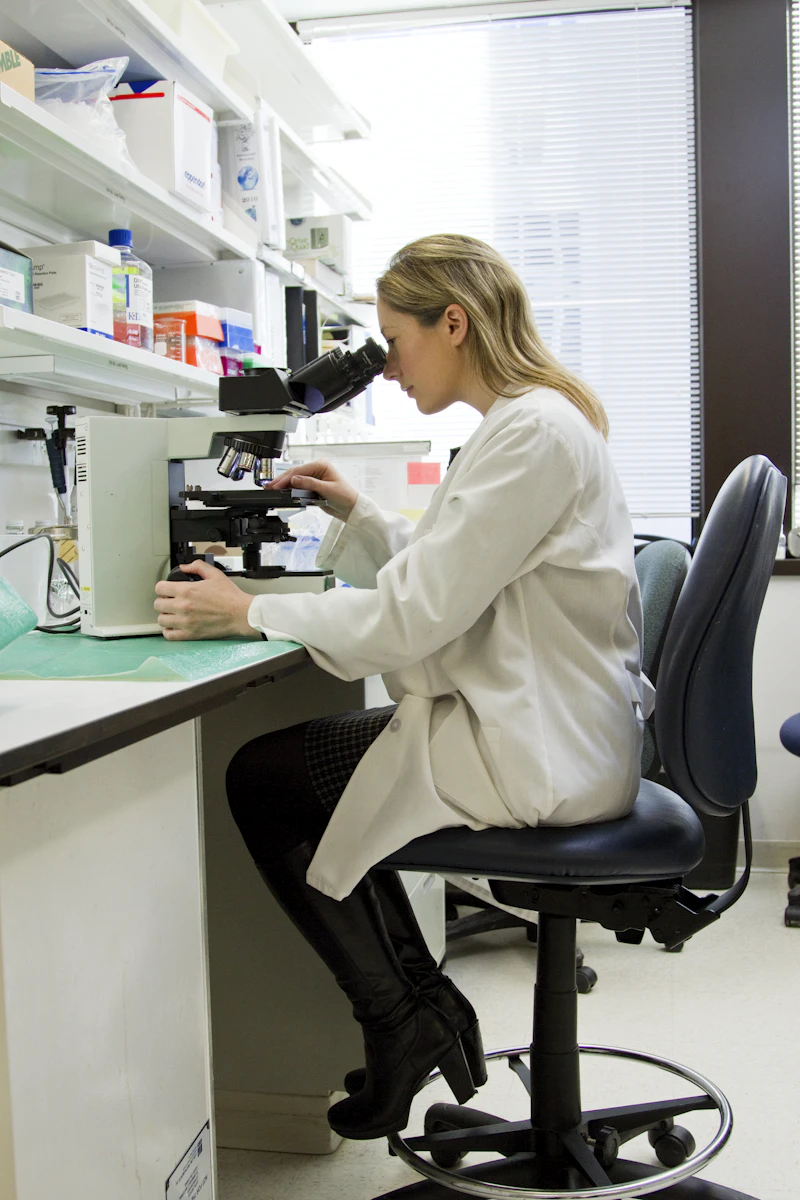
The team integrated a compact digital microscope, costing less than $500, onto a standard 3D bioprinter. This microscope was positioned to capture high-resolution images of the bio-ink (a gel containing living cells) as it was deposited layer-by-layer 6 .
AI Analysis
As each layer was printed, the system instantly compared the captured image to the intended digital design 6 .
Defect Detection
An AI-based image analysis pipeline identified common printing defects, such as depositing too much or too little bio-ink 6 .
Process Optimization
By rapidly identifying these errors, the system allowed researchers to pinpoint the optimal printing parameters (like pressure and speed) for different materials, ensuring a perfect print every time 6 .
3D Bioprinting Process

Modern 3D bioprinter in laboratory setting
Preparation of bio-ink containing living cells
Engineered tissue structures
Results and Analysis
This integration of AI and bioprinting is more than just a quality check. It is the foundation for intelligent process control. The system reduced material waste and ensured greater reproducibility and consistency in the fabricated tissues 6 . This level of precision is critical for creating reliable tissue models for drug testing and, eventually, safe implantable organs. The research team plans to immediately use this technology to fabricate complex scaffolds for cultivating liver organoids and other microphysiological systems 6 .
Key Reagents and Materials in the 3D Bioprinting Experiment 6
| Research Tool | Function in the Experiment |
|---|---|
| Bio-inks | A gel-like substance containing living cells and biocompatible materials that serves as the "ink" for printing tissue structures. |
| Digital Microscope | The "eye" of the system; captures high-resolution, layer-by-layer images of the print for real-time analysis. |
| AI Image Analysis Pipeline | The "brain" of the system; rapidly compares captured images to the digital design to identify printing defects. |
| Standard 3D Bioprinter | A modified commercial printer that deposits bio-ink layer-by-layer to build the 3D tissue structure. |
The Surgeon's New Toolkit: AI and Predictive Medicine
The innovation continues long after the surgery is complete. Artificial intelligence is becoming an indispensable partner in long-term patient care.
In transplant medicine, AI is being used to predict organ failure earlier and to better manage the complex post-transplant regimen of immunosuppressive drugs 5 . Researchers are working on AI tools that can analyze patient data to predict how an individual's body will react to these medications, potentially eliminating the need for routine invasive biopsies and blood draws 5 .
The Expanding Role of AI in Medicine
| Application | How AI is Used | Impact on Patient Care |
|---|---|---|
| Surgical Planning | Creates 3D anatomical models from CT/MRI scans or even X-rays 1 . | Enhances precision, reduces surgery time, and improves personalization. |
| Smart Implants | Analyzes data from embedded sensors (e.g., range of motion, load) 1 . | Enables remote monitoring of recovery and early detection of complications. |
| Transplant Medicine | Predicts organ rejection and optimizes immunosuppressive drug doses 5 . | Aims to prevent rejection and reduce the need for invasive monitoring procedures. |
Early Disease Detection
Advanced algorithms are already in use for early disease detection. For example, AI in implantable heart monitors can more accurately detect abnormal rhythms, while other algorithms can analyze heart data to identify early signs of treatable heart disease before the patient even experiences symptoms 4 .
Personalized Treatment Plans
AI systems can analyze vast datasets of patient outcomes to recommend personalized treatment protocols based on individual characteristics, genetics, and lifestyle factors, leading to more effective interventions with fewer side effects.
Conclusion: A More Personal, Less Invasive Tomorrow
The trajectory of modern medicine is clear. We are moving away from static, generic hardware and towards a future where medical interventions are dynamic, personalized, and seamlessly integrated with the body. From smart implants that provide real-time health updates, to biodegradable devices that vanish after mending our bones, to the profound possibility of 3D-bioprinted organs—these advances are poised to redefine life for millions of patients. The convergence of biology and technology is not just creating new parts for the human body; it is building a brighter, healthier future for all.