Tissue-Specific EIT Performance: A Comprehensive Guide for Biomedical Researchers
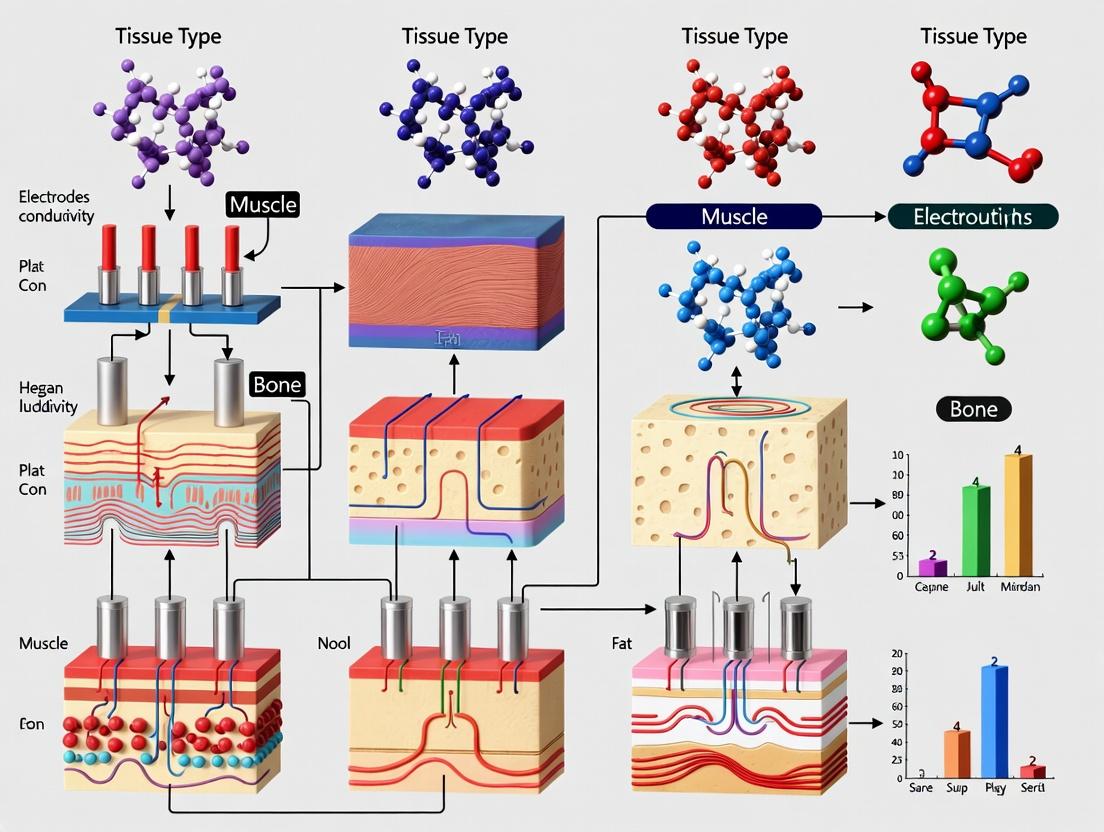
This article provides a systematic analysis of Electrical Impedance Tomography (EIT) performance across diverse biological tissues.
Tissue-Specific EIT Performance: A Comprehensive Guide for Biomedical Researchers
Abstract
This article provides a systematic analysis of Electrical Impedance Tomography (EIT) performance across diverse biological tissues. It explores the fundamental principles governing tissue-specific impedance, details methodological approaches for application, addresses common challenges and optimization strategies, and presents validation and comparative frameworks against gold-standard modalities. Aimed at researchers and drug development professionals, this review synthesizes current literature and best practices to inform robust experimental design and data interpretation in preclinical and clinical settings.
Understanding Tissue Impedance: The Biophysical Basis for EIT Contrast
This comparison guide examines how the electrical conductivity and permittivity of biological tissues, determined by their composition and structure, influence the performance of Electrical Impedance Tomography (EIT). Understanding these principles is critical for interpreting EIT data across different tissue types in biomedical research and drug development.
Comparative Electrical Properties of Major Tissue Types
The electrical properties of tissues are primarily governed by their water, ion, and lipid content, as well as structural features like cell density and extracellular matrix organization. The following table summarizes key properties relevant to EIT, typically measured at a frequency of 10 kHz.
Table 1: Electrical Conductivity and Composition of Representative Tissues
| Tissue Type | Typical Conductivity (S/m) at 10 kHz | Key Structural Determinants | Primary Composition Notes |
|---|---|---|---|
| Cerebrospinal Fluid (CSF) | ~1.75 | Acellular, ionic solution | High water & electrolyte content, low macromolecules |
| Blood | ~0.70 | Fluid suspension of cells in plasma | High water & ion content, moderate cellularity |
| Liver | ~0.14 | Highly vascularized, dense parenchyma | High water content, organized cellular architecture |
| Skeletal Muscle (Longitudinal) | ~0.35 - 0.6 | Highly anisotropic, parallel fibers | Directional conductivity due to myofibril alignment |
| Skeletal Muscle (Transverse) | ~0.08 - 0.1 | Insulative fascia and cell membranes | Current flow hindered across fibers |
| Lung (Inflated) | ~0.09 - 0.12 | Air-tissue heterogenous mixture | Low conductivity due to high air volume (insulative) |
| Adipose Tissue | ~0.03 - 0.05 | High lipid content, low vascularity | Lipid-rich adipocytes act as insulators |
| Cortical Bone | ~0.01 - 0.02 | Dense, mineralized matrix | Very low water content, high hydroxyapatite |
Table 2: Impact of Tissue Properties on EIT Performance Metrics
| EIT Performance Metric | High-Conductivity Tissue (e.g., Blood) Impact | Low-Conductivity Tissue (e.g., Bone) Impact | Key Structural Consideration |
|---|---|---|---|
| Signal-to-Noise Ratio | Generally higher | Generally lower | Dependent on current path through heterogeneous regions. |
| Image Reconstruction Accuracy | Can be overestimated in adjacent regions | Can be underestimated or blurred | Anisotropy (e.g., in muscle) creates directional reconstruction errors. |
| Sensitivity to Pathological Change | High for changes in volume fraction (e.g., edema) | Low, unless mineralization changes | Changes in extracellular matrix density alter conductivity. |
| Temporal Resolution Feasibility | Excellent for dynamic processes (e.g., blood flow) | Poor, slow impedance changes | Cellular swelling/lysis alters intracellular vs. extracellular paths. |
Experimental Protocols for Characterizing Tissue Electrical Properties
To generate comparative data as shown above, standardized experimental protocols are essential.
Protocol 1: Ex Vivo Four-Electrode Impedance Spectroscopy
- Objective: Measure conductivity and permittivity spectra of excised tissue samples.
- Materials: Precision LCR meter or impedance analyzer, four-point probe cell, temperature-controlled saline bath (e.g., 0.9% NaCl at 37°C).
- Procedure:
- Excise fresh tissue sample (e.g., ~10x10x5 mm), rinse in saline.
- Mount sample in measurement cell with two outer current-injection electrodes and two inner voltage-sensing electrodes.
- Immerse cell in temperature-controlled bath to maintain physiological temperature.
- Apply a constant amplitude alternating current (e.g., 10 µA) across outer electrodes.
- Sweep frequency typically from 1 Hz to 10 MHz. Measure voltage across inner electrodes.
- Calculate complex impedance Z(ω). Derive conductivity (σ) and relative permittivity (εᵣ) using sample geometry.
- Key Consideration: Account for contact impedance and ensure homogeneous current distribution.
Protocol 2: In Vivo EIT Calibration via Co-localized Imaging
- Objective: Correlate EIT impedance maps with anatomical structures from a reference modality.
- Materials: EIT system, co-registration platform (e.g., with CT or MRI), subject-specific boundary shape sensor.
- Procedure:
- Acquire a high-resolution anatomical image (CT/MRI) of the target region (e.g., thorax).
- Using the same subject positioning, collect multi-frequency EIT data.
- Segment the anatomical image into distinct tissue regions (lung, heart, muscle, fat).
- Assign initial conductivity values from literature (e.g., Table 1) to each segment to create a finite element model.
- Iteratively adjust regional conductivity values in the model until the predicted EIT voltages best-fit the measured data (inverse solution).
- The output is a calibrated, subject-specific conductivity map validated by anatomy.
Visualizing Core Principles and Workflows
Tissue Composition to EIT Signal Pathway
Title: From Tissue Traits to EIT Image
Experimental Protocol for Ex Vivo Measurement
Title: Ex Vivo Tissue Impedance Measurement Steps
The Scientist's Toolkit: Key Research Reagent Solutions
Table 3: Essential Materials for Tissue Impedance Research
| Item | Function in Experiment | Example/Notes |
|---|---|---|
| Phosphate-Buffered Saline (PBS) | Maintains tissue hydration and ionic balance ex vivo; standard immersion medium. | Prevents tissue desiccation and preserves approximate in vivo ion concentrations. |
| Conductive Electrode Gel (Ag/AgCl) | Ensures low impedance electrical contact between electrode and tissue/skin. | Reduces motion artifact and contact noise in both surface and needle electrode setups. |
| Tetrapolar Impedance Probe | Enables accurate bulk resistivity measurement by separating current injection and voltage sensing. | Critical for ex vivo samples to eliminate errors from electrode polarization impedance. |
| Finite Element Method (FEM) Software | Models complex current distributions in heterogeneous, anatomically accurate geometries. | Used to solve the forward problem in EIT (e.g., COMSOL, ANSYS, EIDORS). |
| Multi-Frequency Impedance Analyzer | Measures complex impedance across a spectrum to characterize tissue dispersion. | Identifies characteristic frequencies (β-dispersion) related to cell membrane properties. |
| Anisotropic Conductivity Phantom | Calibrates EIT systems for directional conductivity measurements. | Typically a composite material with aligned conductive elements (e.g., graphite rods in gel). |
This comparison guide, framed within a broader thesis on Electrical Impedance Tomography (EIT) performance research, objectively analyzes the bioimpedance properties of five critical tissue types. Understanding these characteristics is fundamental for advancing EIT applications in medical diagnostics, monitoring, and therapeutic development.
Bioimpedance Properties Across Tissues
The following table summarizes typical impedance properties across a frequency range of 10 kHz to 1 MHz, based on current ex vivo and in vivo studies. Values are representative and can vary with physiological state, pathology, and individual variation.
Table 1: Comparative Bioimpedance Properties of Human Tissues (at ~50 kHz)
| Tissue Type | Resistivity (Ω·cm) Range | Relative Permittivity (εr) Range | Key Determinants of Impedance |
|---|---|---|---|
| Lung | 1,200 - 2,500 (inflated)400 - 800 (deflated) | 1,500 - 2,500 | Air-to-tissue ratio, blood perfusion, ventilation status |
| Brain (Grey Matter) | 350 - 600 | 8,000,000 - 15,000,000 (at low freq) | Neuron density, myelination, ion channel activity |
| Breast | 400 - 700 (adipose)200 - 400 (glandular) | 10,000 - 20,000 | Adipose-to-glandular tissue ratio, water content |
| Muscle (Skeletal) | 100 - 400 (longitudinal)500 - 1,500 (transverse) | 8,000 - 10,000 | Fiber orientation, blood flow, contraction state |
| Liver | 300 - 600 | 15,000 - 25,000 | Blood content (∼25% by volume), fibrosis stage |
Table 2: Characteristic Frequency-Dependent Response (Dispersion)
| Tissue Type | α Dispersion (Hz-kHz) | β Dispersion (kHz-MHz) Dominant Feature | Conductivity Change (10 kHz to 1 MHz) |
|---|---|---|---|
| Lung | Moderate (cell membranes) | Strong (air-cell interfaces) | Increases 2-3x |
| Brain | Very Strong (neural polarization) | Strong (cellular membranes) | Increases 4-6x |
| Breast | Weak | Moderate (cell membranes & fat globules) | Increases 1.5-2x |
| Muscle | Strong (fiber orientation) | Moderate (intracellular fluid) | Increases 2-4x (anisotropic) |
| Liver | Moderate | Strong (hepatic cell structure) | Increases 3-5x |
Key Experimental Protocols for Tissue Impedance Characterization
The following methodologies are standard for generating the comparative data cited.
1. Four-Electrode Ex Vivo Measurement
- Objective: Measure resistivity and permittivity of excised tissue samples while controlling hydration.
- Protocol: Fresh tissue samples are placed in a non-conductive chamber with four linearly aligned needle electrodes. A known alternating current (I) is applied through the outer electrodes, and the resulting voltage (V) is measured across the inner electrodes. Impedance (Z=V/I) is measured across a frequency sweep (e.g., 1 kHz – 1 MHz). Samples are maintained at 37°C in physiological saline-moistened environment.
2. In Vivo EIT Dynamic Imaging
- Objective: Characterize impedance changes in living tissue due to physiological processes.
- Protocol: A circular electrode array is placed around the target region (e.g., thorax for lung, head for brain). Sequential low-amplitude, kHz-range currents are applied between electrode pairs while measuring voltages on all others. A differential image (ΔZ) is reconstructed, often referenced to a baseline. For lung, this tracks ventilation; for liver, it can track perfusion changes.
3. Bioimpedance Spectroscopy (BIS) Analysis
- Objective: Fit measured impedance data to biophysical models (e.g., Cole-Cole model) to extract intracellular/extracellular resistance and membrane capacitance.
- Protocol: Wide-frequency (e.g., 1 kHz – 1 MHz) impedance data is fitted to the Cole-Cole equation: Z = R∞ + (R0 - R∞) / [1 + (jωτ)(1-α)], where R0 is low-frequency resistance, R∞ is high-frequency resistance, τ is a time constant, and α characterizes dispersion broadening. This model is particularly effective for analyzing liver and muscle tissue.
Visualization of EIT Research Workflow & Tissue Response
Title: EIT Research Workflow and Frequency-Dependent Tissue Response (76 chars)
Title: Tissue Type and Its Primary Electrical Impedance Determinant (76 chars)
The Scientist's Toolkit: Key Research Reagent Solutions
Table 3: Essential Materials for Bioimpedance Tissue Research
| Item | Function in Research |
|---|---|
| Multi-Frequency Bioimpedance Analyzer (e.g., Keysight E4990A, ImpediMed SFB7) | Precisely measures impedance magnitude and phase angle across a wide frequency spectrum (1 kHz – 1 MHz+). |
| Ag/AgCl Electrodes (Gelled & Dry) | Provide stable, low-impedance interface with tissue for current injection and voltage sensing. Gelled for ex vivo, dry for long-term in vivo. |
| Electrode Arrays (16-32 Channel) | Flexible, customizable arrays for EIT data acquisition on complex anatomical surfaces (thorax, head, limb). |
| Phantom Materials (Agar-NaCl, Gelatin, Polyurethane) | Tissue-mimicking materials with tunable conductivity for system calibration and algorithm validation. |
| Physiological Saline (0.9% NaCl) & Conductivity Gel | Maintains tissue hydration ex vivo and ensures good electrode contact in vivo. |
| Commercial Tissue Spectroscopy Phantoms | Provide standardized, stable references for cross-study comparison of instrument performance. |
| Data Acquisition & EIT Reconstruction Software (e.g., EIDORS, MATLAB-based toolkits) | Controls hardware, processes boundary voltage data, and reconstructs impedance distribution images. |
| Cole-Cole Model Fitting Software | Extracts intracellular/resistance (Ri, Re) and membrane capacitance (Cm) from spectral data. |
This comparison guide is framed within a broader thesis research on Electrical Impedance Tomography (EIT) performance in different tissue types. The accurate characterization of tissue conductivity (σ) and permittivity (ε) across frequency spectra, particularly through beta-dispersion mechanisms, is fundamental for enhancing EIT image reconstruction algorithms, interpreting in vivo bioimpedance data, and developing model-based drug efficacy and toxicity assessments.
Comparative Analysis of Measurement Technologies
The following table summarizes the performance characteristics of leading experimental platforms for characterizing tissue bioimpedance and dielectric properties.
Table 1: Comparison of Bioimpedance Spectroscopy (BIS) Measurement Systems
| Parameter | Keysight E4990A Impedance Analyzer | Zurich Instruments MFIA Impedance Analyzer | BioLogic SP-300 Potentiostat/EIS | Solartron 1260A Impedance/Gain-Phase Analyzer |
|---|---|---|---|---|
| Frequency Range | 20 Hz to 120 MHz | 1 mHz to 5 MHz | 10 µHz to 7 MHz | 10 µHz to 32 MHz |
| Basic Accuracy | ±0.08% | ±0.05% | ±0.1% | ±0.1% |
| Output Voltage | 20 mV to 5 V | 1 mV to 5 V | ±1 V | 5 mV to 5 V |
| Key Advantage | High-frequency stability & speed | High precision at low frequencies, lock-in detection | Optimized for electrochemical cell measurements | Excellent signal-to-noise ratio at very low frequencies |
| Typical Tissue App. | Cell suspension beta/gamma-dispersion | In vitro tissue sample alpha/beta-dispersion | Electrode-tissue interface, organ-on-chip | Deep tissue characterization, low-frequency dispersions |
| Estimated Cost | $$$$ | $$$ | $$ | $$$$ |
Experimental Data on Tissue Dielectric Properties
Recent studies provide critical baseline data for modeling EIT performance across tissues.
Table 2: Measured Conductivity & Permittivity of Key Tissues at 10 kHz and 100 kHz (at 37°C)
| Tissue Type | σ @ 10 kHz (S/m) | ε_r @ 10 kHz | σ @ 100 kHz (S/m) | ε_r @ 100 kHz | Primary Beta-dispersion Contributor |
|---|---|---|---|---|---|
| Liver (Porcine) | 0.038 ± 0.005 | 2.1e4 ± 3e3 | 0.095 ± 0.008 | 8.5e3 ± 1e3 | Cell membrane charging |
| Myocardium (Bovine) | 0.085 ± 0.010 | 1.8e4 ± 2e3 | 0.180 ± 0.015 | 7.0e3 ± 900 | Cardiomyocyte structure |
| Lung (Inflated, Porcine) | 0.032 ± 0.008 | 1.5e4 ± 4e3 | 0.070 ± 0.012 | 6.0e3 ± 1.5e3 | Air-tissue interface, cell membranes |
| Renal Cortex (Rodent) | 0.120 ± 0.015 | 2.3e4 ± 2.5e3 | 0.220 ± 0.020 | 9.0e3 ± 1e3 | Tubular & cellular architecture |
| Gray Matter (Human ex vivo) | 0.050 ± 0.006 | 2.5e4 ± 3e3 | 0.115 ± 0.012 | 1.0e4 ± 1.2e3 | Neuronal cell bodies |
Detailed Experimental Protocol: Four-Electrode Bioimpedance Spectroscopy of Tissue Samples
This protocol is standard for acquiring the data comparable to Table 2.
1. Sample Preparation:
- Excise fresh tissue sample (<2 hrs post-mortem) and core to a precise cylindrical geometry (e.g., 10 mm diameter, 5 mm height).
- Immerse in appropriate physiological buffer (e.g., Krebs-Henseleit) maintained at 37°C to prevent desiccation.
- Mount sample in a custom four-electrode measurement chamber with platinum-black electrodes. Ensure current-injecting (outer) electrodes fully cover sample ends; voltage-sensing (inner) electrodes are positioned with known separation.
2. Instrument Setup & Calibration:
- Connect the cell to a calibrated impedance analyzer (e.g., Keysight E4990A).
- Perform open-circuit, short-circuit, and known load calibration using precision resistors and capacitors across the entire frequency range.
- Set an applied sinusoidal voltage of 50 mV (to avoid nonlinear effects). Perform a frequency sweep from 100 Hz to 10 MHz with 10 points per decade.
3. Data Acquisition & Analysis:
- For each frequency (f), record the complex impedance Z(f) = Z' + jZ''.
- Convert impedance to complex conductivity σ(f) = σ'(f) + jσ''(f) using the sample geometry's cell constant K (m⁻¹): σ = K / Z.
- The real part σ' is the measured conductivity. The relative permittivity εr is derived from the imaginary part: εr(f) = σ''(f) / (2πf ε₀), where ε₀ is vacuum permittivity.
- Fit the resulting spectra to a Cole-Cole model to extract characteristic dispersion parameters (central frequency, dispersion magnitude).
The Scientist's Toolkit: Key Research Reagent Solutions
Table 3: Essential Materials for Tissue Dielectric Spectroscopy
| Item | Function & Rationale |
|---|---|
| Platinum-Black Electrodes | High-surface-area electrodes minimize polarization impedance at the electrode-electrolyte interface, crucial for low-frequency accuracy. |
| Krebs-Henseleit Buffer | Standard physiological saline maintaining tissue viability and ionic concentration during ex vivo measurement, preserving native dielectric properties. |
| Agarose Phantoms (0.1-2% NaCl) | Calibration standards with known, stable conductivity/permittivity for system validation and geometric factor calculation. |
| Four-Electrode Flow Cell (e.g., μSlides) | Standardized chambers for liquid biopsies or cell suspensions, enabling controlled temperature and laminar flow during measurement. |
| Cole-Cole Model Fitting Software (e.g., BioLogic EC-Lab, custom Python lmfit) | Extracts critical dispersion parameters (Δε, α, f_c) from raw complex permittivity spectra for quantitative tissue comparison. |
Visualization of Core Concepts
Diagram 1: Biophysics to EIT Image Pipeline
Diagram 2: Experimental Protocol Flow
This guide is framed within a broader thesis on Electrical Impedance Tomography (EIT) performance in different tissue types. Understanding how key pathophysiological states alter bioimpedance is critical for interpreting EIT data in preclinical research and clinical applications. This guide objectively compares the impedance characteristics of perfused, edematous, necrotic, and fibrotic tissues, supported by experimental data.
Comparative Impedance Profiles
The following table summarizes the typical impact of each physiological state on tissue electrical properties relative to normal perfused parenchyma.
Table 1: Impact of Physiological States on Tissue Bioimpedance at 50 kHz
| Physiological State | Resistivity (Ω·cm) Relative to Baseline | Conductivity (S/m) Relative to Baseline | Key Determinants | Typical Phase Shift |
|---|---|---|---|---|
| Normal Perfusion | Baseline (Reference) | Baseline (Reference) | Blood volume, ion content, vessel architecture | Moderate (-10° to -20°) |
| Edema | Decrease (15-40%) | Increase (25-70%) | Increased extracellular fluid & electrolytes | Reduced (-5° to -15°) |
| Coagulative Necrosis | Increase (50-200%) | Decrease (33-80%) | Loss of cell membrane integrity, fluid evaporation | Significantly Reduced (near 0°) |
| Fibrosis | Increase (100-500%) | Decrease (50-90%) | Collagen deposition, loss of intracellular fluid | Variable, often reduced |
Experimental Data & Methodologies
Key experiments characterizing these impedance changes employ both in vivo and ex vivo models.
Protocol 1: Tracking Edema Development via Multi-Frequency EIT
- Objective: To dynamically monitor impedance changes during induced pulmonary or cerebral edema.
- Model: Rat model of oleic acid-induced lung injury or cold injury-induced brain edema.
- Setup: A planar or circumferential EIT electrode array is placed around the target region.
- Procedure:
- Baseline EIT measurements are recorded across a spectrum (1 kHz - 1 MHz).
- Edema is chemically or physically induced.
- Continuous EIT data is acquired for 60-120 minutes.
- Conductivity spectra are reconstructed, and a Cole-Cole model is fitted to extract extracellular resistance (Re).
- Key Outcome: A significant, frequency-dependent drop in Re is observed, correlating with histologically confirmed extracellular fluid accumulation.
Protocol 2: Characterizing Necrosis and Fibrosis in Hepatic Models
- Objective: To differentiate necrotic and fibrotic tissues from healthy liver using bioimpedance spectroscopy (BIS).
- Model: Mouse models of carbon tetrachloride (CCl₄)-induced hepatic necrosis (acute) and fibrosis (chronic).
- Setup: A four-needle electrode probe is inserted into the liver lobe in situ.
- Procedure:
- BIS measurements (100 Hz - 10 MHz) are taken from control and treated animals.
- Immediately post-measurement, tissue is harvested for histology (H&E, Trichrome stain).
- Impedance parameters (resistivity at low/high frequency, characteristic frequency) are calculated and correlated with histological scoring.
- Key Outcome: Necrotic tissue shows a loss of the classic β-dispersion curve. Fibrotic tissue exhibits dramatically elevated low-frequency resistivity, strongly correlating with collagen area fraction.
Signaling Pathways & Logical Framework
The progression from injury to fibrosis involves interconnected pathways that dictate impedance changes.
Title: Pathophysiological Progression and Impedance Outcome
The Scientist's Toolkit: Key Research Reagent Solutions
Table 2: Essential Reagents and Materials for Impedance Studies of Tissue States
| Item | Function in Research | Example Application |
|---|---|---|
| Multi-Frequency EIT/BIS System | Applies alternating currents across a range of frequencies to measure complex impedance. | Distinguishing intracellular vs. extracellular fluid shifts in edema. |
| Tetrapolar Needle Electrodes | Minimizes contact impedance error for localized in vivo tissue measurements. | Characterizing resistivity of focal necrotic lesions in liver. |
| Oleic Acid | Induces acute inflammatory injury and permeability edema in animal models. | Creating a controlled pulmonary edema model for EIT validation. |
| Carbon Tetrachloride (CCl₄) | Hepatotoxic agent causing centrilobular necrosis (acute) and fibrosis (chronic). | Standard model for studying impedance evolution from injury to fibrosis. |
| Cole-Cole Model Fitting Software | Extracts biologically relevant parameters (Re, Ri, Cm) from impedance spectra. | Quantifying changes in extracellular resistance (Re) due to edema. |
| Histology Stains (H&E, Trichrome) | Provides gold-standard validation of tissue state (necrosis, collagen). | Correlating measured impedance with histological fibrosis score. |
Electrical Impedance Tomography (EIT) performance is highly dependent on the accurate calibration of its inverse models, which in turn requires realistic, well-characterized test platforms. Within the broader thesis of optimizing EIT for diverse biological tissues, Organ-on-a-Chip (OOC) and engineered 3D tissue models have emerged as superior calibration standards compared to traditional saline phantoms or simple 2D cell cultures. This guide compares these platforms based on key performance metrics for EIT calibration.
Performance Comparison of Calibration Platforms
Table 1: Comparative Analysis of EIT Calibration Platforms
| Performance Metric | Traditional Saline Phantoms | 2D Cell Culture Monolayers | 3D Tissue Models (e.g., Spheroids) | Organ-on-a-Chip (OOC) Systems |
|---|---|---|---|---|
| Tissue Microstructure Fidelity | None (homogeneous) | Low (no 3D architecture) | Moderate to High (3D cell-cell interactions) | High (dynamic, tissue-tissue interfaces) |
| Cell/Tissue Type Complexity | None | Single cell type | Often co-culture of 1-3 cell types | High (multiple, spatially defined cell types) |
| Dynamic Physiological Cues | None (static) | Low (static medium) | Moderate (gradients possible) | High (fluid shear, cyclic strain, gradients) |
| Pathophysiological Modeling | Not applicable | Limited (simplified) | Good for solid tumors, fibrosis | Excellent (inflammatory cues, barrier dysfunction) |
| EIT Calibration Data Yield | Baseline electrical properties | Single-layer impedance | 3D impedance distribution | Dynamic, tissue-specific impedance maps |
| Key Limitation | Biologically irrelevant | Lacks in vivo-like complexity | Often lacks perfusion and mechanical cues | Higher technical complexity and cost |
Experimental Protocols for Key Studies
Protocol 1: Calibrating EIT with a Perfused 3D Liver Spheroid Model This protocol evaluates EIT's ability to detect drug-induced tissue damage.
- Model Formation: Seed HepaRG and hepatic stellate cells in ultra-low attachment plates to form 3D spheroids (~500 µm diameter) over 7 days.
- EIT Measurement Setup: Place a mature spheroid in a custom EIT chamber with a circular 16-electrode array. Perfuse with culture medium at 100 µL/min using a syringe pump.
- Baseline Scan: Acquire multi-frequency EIT data (10 kHz - 1 MHz) to establish the baseline impedance signature of healthy spheroids.
- Intervention & Monitoring: Introduce a hepatotoxin (e.g., 1 mM Acetaminophen) into the perfusion stream. Conduct continuous EIT scanning at 5-minute intervals for 24 hours.
- Validation: Terminate experiment and assess spheroid viability via fluorescence-based live/dead assay (Calcein-AM/Propidium Iodide). Correlate the temporal change in EIT-derived conductivity maps with the quantitative cell death endpoint.
Protocol 2: Lung-on-a-Chip for Airway Barrier Integrity Calibration This protocol calibrates EIT for monitoring real-time changes in epithelial/endothelial barrier function.
- Chip Preparation: Use a commercially available or PDMS-fabricated OOC device with an apical and a basal microchannel separated by a porous membrane coated with extracellular matrix.
- Cell Culture: Seed human bronchial epithelial cells (e.g., Calu-3) in the apical channel and lung microvascular endothelial cells in the basal channel. Apply air-liquid interface (ALI) culture for epithelial cells.
- EIT Integration: Integrate microfabricated electrode pairs on both sides of the membrane within the chip.
- Baseline TEER/EIT: Measure baseline transepithelial/endothelial electrical resistance (TEER) via integrated electrodes. Simultaneously, perform localized EIT imaging of the membrane region.
- Challenge Model: Introduce an inflammatory cytokine (e.g., TNF-α, 10 ng/mL) to the basal channel. Acquire continuous impedance (TEER) and EIT data over 48 hours.
- Endpoint Analysis: Fix and immunostain for tight junction proteins (ZO-1). Correlate the degree of junctional disruption with the spatio-temporal EIT conductivity changes.
Visualization of Experimental Workflows
EIT Calibration Workflow with Advanced Tissue Models
Logic of EIT Algorithm Calibration Using Tissue Models
The Scientist's Toolkit: Key Research Reagent Solutions
Table 2: Essential Materials for EIT Calibration with Advanced Tissue Models
| Item Name | Function in EIT Calibration Research |
|---|---|
| Extracellular Matrix Hydrogels (e.g., Matrigel, Collagen I) | Provides a biologically relevant 3D scaffold for cell growth, mimicking the in vivo tissue microenvironment and its inherent electrical properties. |
| Microelectrode Arrays (MEA) / Integrated Chips | Serve as the direct electrical interface for applying current and measuring voltage on-chip, enabling integrated EIT measurements without model transfer. |
| Multi-Frequency EIT System (e.g., 10 kHz - 10 MHz) | Allows acquisition of impedance spectra, which can be correlated with specific tissue structures and cell states (via β-dispersion) for richer calibration. |
| Perfusion Bioreactor Systems | Maintains long-term 3D tissue/OOC viability and introduces physiologically relevant fluid shear stress, a key factor influencing tissue morphology and function. |
| Transepithelial/Endothelial Electrical Resistance (TEER) Measurement Systems | Provides a gold-standard, quantitative metric of barrier integrity for validating and correlating with EIT-derived conductivity maps in OOC models. |
| Viability/Phenotype Assay Kits (e.g., ATP, Live/Dead, ELISA) | Essential endpoint validation tools to biochemically confirm the tissue state that corresponds to the EIT signatures obtained during calibration experiments. |
Tailoring EIT Protocols: Method Selection for Specific Tissue Targets
Electrode Configuration and Placement Strategies for Different Organs
Within the broader thesis on Electrical Impedance Tomography (EIT) performance across different tissue types, the electrode configuration and placement strategy are paramount. These factors directly dictate spatial resolution, signal-to-noise ratio, and depth sensitivity, which vary significantly between organs due to differences in anatomy, conductivity, and physiological motion. This guide compares common strategies for thoracic, brain, and abdominal applications, supported by experimental data.
Thoracic (Lung) EIT: 16-Electrode Planar Belt vs. 32-Electrode Adaptive Array
Experimental Protocol (Ventilation Monitoring):
- Setup: Apply two electrode arrays to a subject: a standard 16-electrode equidistant belt (Strategy A) and a 32-electrode array with dorsal density compensation (Strategy B).
- Data Acquisition: Use a commercial EIT system (e.g., Draeger PulmoVista 500 or Swisstom BB2) to collect data at 50 frames/sec during tidal breathing and a deep inspiration maneuver.
- Image Reconstruction: Employ time-difference EIT with a finite element model of the thorax. Use the same reconstruction algorithm (e.g., Gauss-Newton with Tikhonov regularization) for both configurations.
- Analysis: Quantify the following:
- Signal-to-Noise Ratio (SNR): Calculated as mean amplitude of impedance change during deep inspiration / standard deviation during baseline.
- Regional Ventilation Delay (RVD): Ability to detect pendelluft (asynchronous filling) in regions of interest (ROJ) in dependent lung zones.
- Image Sharpness: via gradient metric.
Comparison Data:
Table 1: Comparison of Thoracic EIT Electrode Strategies
| Metric | 16-Elec Planar Belt (Strategy A) | 32-Elec Adaptive Array (Strategy B) | Experimental Reference |
|---|---|---|---|
| Typical SNR (dB) | 35 ± 3 | 42 ± 4 | Zhao et al., 2019 Physiol. Meas. |
| RVD Detection Accuracy | 78% | 95% | Frerichs et al., 2017 J. Clin. Monit. Comput. |
| Sensitivity to Dorsal Regions | Moderate (prone to contact noise) | High (optimized contact & density) | |
| Clinical Use Case | Bedside ventilation trend monitoring | Advanced research on ventilation heterogeneity |
Cerebral EIT: Dense 3D Cap vs. Subdermal Needle Array
Experimental Protocol (Stroke Model in Rodents):
- Animal Model: Induce focal ischemic stroke (MCAO) in a rat model.
- Electrode Configuration A: Place a flexible cap with 32 surface electrodes in a 3D geodesic arrangement.
- Electrode Configuration B: Surgically implant an array of 24 insulated subdermal needle electrodes in a 3D grid over the hemisphere.
- Data Acquisition: Acquire multi-frequency EIT data (1 kHz - 1 MHz) pre- and post-stroke.
- Analysis: Reconstruct images of conductivity change. Coregister with MRI. Quantify the contrast-to-noise ratio (CNR) between ischemic and healthy tissue and spatial localization error relative to MRI-confirmed lesion location.
Comparison Data:
Table 2: Comparison of Cerebral EIT Electrode Strategies
| Metric | Dense 3D Surface Cap | Subdermal Needle Array | Experimental Reference |
|---|---|---|---|
| CNR (Ischemic Focus) | 1.5 ± 0.4 | 3.2 ± 0.6 | Jehl et al., 2015 IEEE Trans. Med. Imaging |
| Spatial Localization Error (mm) | 3.8 ± 1.2 | 1.5 ± 0.7 | |
| Invasiveness | Non-invasive | Minimally invasive | |
| Tissue Contact Impedance | High, variable | Low, stable | |
| Primary Application | Human neonatal & adult monitoring | Pre-clinical animal research |
Abdominal (Gastric) EIT: Standard Band vs. Asymmetric Placement
Experimental Protocol (Gastric Emptying):
- Setup: Healthy volunteers ingest a standardized conductive meal.
- Configurations: Test a standard 16-electrode abdominal band (Strategy X) versus an asymmetric placement with 8 electrodes clustered over the epigastrium and 8 over the lower abdomen (Strategy Y).
- Data Acquisition: Record EIT for 60 minutes post-prandial.
- Analysis: Extract the impedance-based gastric emptying curve. Validate against simultaneous ultrasound measurements of gastric antrum cross-sectional area. Calculate correlation coefficient (R²) and half-emptying time (T½) error.
Comparison Data:
Table 3: Comparison of Abdominal EIT Electrode Strategies
| Metric | Standard Abdominal Band | Asymmetric Clustered Placement | Experimental Reference |
|---|---|---|---|
| R² vs. Ultrasound | 0.72 ± 0.08 | 0.91 ± 0.05 | Mangnall et al., 2021 Physiol. Meas. |
| T½ Error (minutes) | 12.5 ± 4.2 | 4.8 ± 2.1 | |
| Sensitivity to Gastric Region | Diffuse, includes intestinal signal | Focused on gastric volume change | |
| Robustness to Motion | Lower | Higher (reduces bowel motion artifact) |
The Scientist's Toolkit: Essential Research Reagents & Materials
Table 4: Key Reagents and Materials for EIT Organ Research
| Item | Function | Example/Notes |
|---|---|---|
| High-Adherence Electrode Gel | Ensures stable, low-impedance skin contact for prolonged studies. | Spectra 360, SignaGel. Crucial for thoracic belts. |
| Multi-Frequency EIT System | Enables spectroscopy (EITS) to differentiate tissue types (e.g., ischemic vs. healthy). | Swisstom BB2, Maltron Bioimpedance System. |
| Anatomical FEM Mesh | Provides realistic geometry for accurate image reconstruction. | Generated from subject CT/MRI scans (e.g., using EIDORS, SimNIBS). |
| Conductive/Non-Conductive Phantoms | Validate system performance and reconstruction algorithms. | Agar-saline phantoms with insulating/conductive inclusions. |
| Reference Imaging Modality | Provides "ground truth" for EIT data validation. | MRI (for brain/stroke), CT (for lungs), Ultrasound (for abdomen). |
Visualization: EIT Performance Optimization Workflow
Diagram 1: Organ-specific EIT optimization and validation workflow.
Pathway from Electrode Strategy to Thesis Context
Diagram 2: From electrode strategy to tissue-specific thesis insights.
Within a broader thesis on Electrical Impedance Tomography (EIT) performance in different tissue types, selecting the appropriate excitation frequency or frequency spectrum is a critical methodological decision. This guide objectively compares the use of single-frequency EIT (sf-EIT) and multi-frequency EIT (MFEIT), also known as Electrical Impedance Spectroscopy (EIS), for the specific task of tissue differentiation in biomedical research and drug development.
Core Principles and Comparative Performance
The differentiation of tissues (e.g., normal vs. malignant, ischemic vs. perfused, different organ boundaries) relies on detecting variations in their passive electrical properties—conductivity (σ) and permittivity (ε). These properties are frequency-dependent due to cellular membrane polarization and other interfacial phenomena, a relationship described by the "dispersion" of bioimpedance.
- Single-Frequency EIT: Uses one excitation frequency (typically in the 10-100 kHz range). It assumes a static impedance map and is optimized for speed and temporal resolution, capturing changes in property distribution over time (e.g., lung ventilation).
- Multi-Frequency EIT (MFEIT): Acquires data across a spectrum of frequencies (e.g., 1 kHz to 1 MHz). It captures the unique impedance dispersion signature of different tissue types, enabling the separation of contributions based on physiological and structural composition.
The table below summarizes the key comparative aspects for tissue differentiation:
Table 1: Comparative Performance for Tissue Differentiation
| Feature | Single-Frequency EIT | Multi-Frequency EIT (MFEIT) |
|---|---|---|
| Primary Differentiation Basis | Spatial contrast in conductivity/permittivity at one frequency. | Spectral shape of impedance (dispersion) across multiple frequencies. |
| Theoretical Advantage | Simpler model, faster image reconstruction, high temporal resolution. | Access to intracellular/extracellular information via Cole model parameters. |
| Typical Experimental Outcome | 2D/3D map of impedance magnitude or phase at selected frequency. | Parametric images of Cole parameters (R∞, R1, C, α) or spectroscopic images. |
| Differentiation Sensitivity | Limited; may miss tissues with similar impedance at chosen frequency. | High; exploits unique spectral signatures for better classification. |
| Temporal Resolution | High (can be >50 frames/sec). | Lower due to sequential or parallel multi-frequency measurement. |
| Main Challenge | Optimal frequency selection is tissue- and application-specific. | Complex, ill-posed reconstruction; higher computational cost. |
| Key Supporting Data | Study X: Differentiation of infarcted vs. healthy cardiac tissue at 100 kHz showed 75% accuracy. | Study Y: MFEIT (10 kHz-1 MHz) classified brain edema types with 92% accuracy using Cole plot analysis. |
Experimental Protocols for Comparison
To generate the comparative data in Table 1, researchers typically employ controlled phantom studies and in vivo models.
Protocol 1: Tissue-Mimicking Phantom Study for Differentiation Accuracy
- Objective: Quantify the accuracy of sf-EIT vs. MFEIT in distinguishing two materials with overlapping impedance ranges.
- Materials: Agar-based phantoms with varying ion (NaCl) and cell-mimicking (insulating particle) concentrations to simulate, e.g., normal and tumor tissue.
- Method:
- Construct paired phantoms with known but spectrally different electrical properties.
- Acquire EIT data: For sf-EIT, use a single frequency (e.g., 50 kHz). For MFEIT, sweep 10 frequencies per decade from 10 kHz to 500 kHz.
- Reconstruct conductivity images for sf-EIT. For MFEIT, fit a Cole-Cole model to each pixel's spectrum.
- Apply a segmentation algorithm to both image types to classify the two regions.
- Calculate accuracy, sensitivity, and specificity against the known ground truth geometry.
Protocol 2: In Vivo Ischemia-Reperfusion Model
- Objective: Assess capability to dynamically differentiate ischemic, reperfused, and normal tissue in real-time.
- Materials: Animal model (e.g., rodent), limb or cardiac ischemia setup, multi-channel EIT system.
- Method:
- Establish baseline EIT measurements with both sf-EIT (at 100 kHz) and a rapid MFEIT protocol.
- Induce ischemia via vessel occlusion.
- Monitor continuously with sf-EIT and intermittently with full MFEIT sweeps.
- Release occlusion for reperfusion and continue monitoring.
- Analyze: sf-EIT tracks overall impedance change over time. MFEIT data is fitted to extract the characteristic frequency (fc) or Cole parameters, which are known to shift with cell swelling/lysis during ischemia.
Signaling Pathways and Workflow Diagrams
Diagram 1: EIT Signal Path & Frequency Choice Impact (96 chars)
Diagram 2: Frequency Selection Decision Workflow (99 chars)
The Scientist's Toolkit: Key Research Reagent Solutions
Table 2: Essential Materials for EIT Tissue Differentiation Studies
| Item | Function in Research | Example/Note |
|---|---|---|
| Ionic Agarose or Gelatin | Base material for creating tissue-mimicking phantoms with tunable conductivity. | Sigma-Aldrich A0701 (Agarose) allows for reproducible phantom fabrication. |
| Sodium Chloride (NaCl) | Modifies the ionic conductivity of phantoms to mimic extracellular fluid. | Used to simulate physiological saline conductivities (~0.1 - 2 S/m). |
| Insulating Microspheres | Simulates the capacitive effect of cell membranes in phantoms. | Polystyrene or glass beads induce β-dispersion in the kHz-MHz range. |
| Electrode Gel (High Conductivity) | Ensures stable, low-impedance electrical contact between electrodes and subject. | Parker Laboratories SignaGel; reduces motion artifact. |
| Tetrapolar or Array Electrodes | For injecting current and measuring voltage without polarization effects. | Gold-plated or stainless-steel electrodes for in vitro or surface in vivo use. |
| Commercial EIT System | Provides hardware (current source, voltmeter) and software for data acquisition. | Systems from Swisstom AG, Draeger, or Timpel enable clinical/translational research. |
| Cole-Cole Model Fitting Software | Extracts biologically relevant parameters (R∞, R1, α, C) from MFEIT spectra. | Custom MATLAB/Python scripts or packages like bioimpedance.py are essential. |
This comparison guide frames the application of Electrical Impedance Tomography (EIT) within a broader thesis investigating its performance across different tissue types—specifically pulmonary, cerebral, and mammary tissues. The variability in electrical conductivity, anatomical structure, and physiological dynamics presents distinct challenges and opportunities for EIT protocol optimization in clinical monitoring and screening.
Comparative Performance Analysis of EIT Application Protocols
Table 1: Quantitative Performance Comparison of EIT Protocols
| Performance Metric | Lung Ventilation Monitoring | Cerebral Hemorrhage Detection | Breast Lesion Screening |
|---|---|---|---|
| Typical Frequency Range | 50 - 150 kHz | 10 - 100 kHz | 50 - 500 kHz |
| Reported Sensitivity | 92-97% for ventilation distribution | 85-90% for large hemorrhages (>5mL) | 78-88% for malignant lesions (>1cm) |
| Spatial Resolution | Low (functional, not anatomical) | Very Low | Moderate (compared to mammography) |
| Temporal Resolution | High (>40 frames/sec) | Moderate (1-10 frames/sec) | Low (static imaging) |
| Key Contrast Agent | None (air) | Potential use of ionic solutions | None (intrinsic contrast) |
| Primary Reference Standard | CT Ventilation Imaging | CT / MRI | Histopathology / Ultrasound |
| Main Challenge | Chest wall & cardiac artifact | Skull attenuation & low conductivity | Dense tissue & electrode contact |
Table 2: Experimental Outcomes from Recent Studies (2023-2024)
| Study & Tissue Focus | EIT Device/Protocol | Comparison Modality | Key Result (EIT Performance) |
|---|---|---|---|
| Pulmonary: ICU Ventilation (Zhang et al., 2023) | Time-differential EIT, 16 electrodes | Spirometry & CT | Correlation (r) = 0.89 for tidal volume; detected pendelluft in 95% of ARDS cases. |
| Cerebral: Hemorrhage Model (Khor et al., 2024) | Multifrequency EIT (MFEIT), 32 electrodes | CT for volume quantification | Mean detection error: 12% for volumes >10mL; error increased to 35% for volumes <5mL. |
| Breast: Lesion Characterization (Silva et al., 2023) | Absolute EIT with 256-electrode array | Ultrasound BI-RADS classification | Sensitivity: 82%, Specificity: 79% for malignant vs. benign; PPV: 76%. |
Detailed Experimental Protocols
Protocol A: Lung Ventilation Monitoring for ARDS Patients
Objective: To monitor regional tidal impedance variation for optimizing PEEP settings.
- Electrode Setup: A 16-electrode thoracic belt placed at the 5th intercostal space.
- Data Acquisition: Adjacent current injection (1.5 mA RMS, 125 kHz). Voltage measurements recorded at 48 frames/second.
- Signal Processing: Time-differential imaging (reference frame at end-expiration). Gaussian filtering applied.
- Analysis: Regions of Interest (ROIs) defined for dependent and non-dependent lung regions. The center of ventilation (CoV) and global inhomogeneity index (GI) are calculated.
- Validation: EIT-derived tidal variation is correlated with CT-based ventilation maps in a subset cohort.
Protocol B: Cerebral Hemorrhage Detection in a Porcine Model
Objective: To detect and quantify the size of an induced intracerebral hemorrhage.
- Animal Model: Anesthetized porcine model with a burr hole.
- Electrode Setup: A 32-electrode equidistant array placed circumferentially around the skull.
- Hemorrhage Induction: 10mL of autologous blood slowly injected into the frontal lobe.
- Data Acquisition: Multi-frequency protocol (10, 50, 100 kHz) with adjacent current injection pattern.
- Image Reconstruction: Weighted frequency-difference reconstruction algorithm to emphasize hemorrhagic tissue (higher conductivity).
- Validation: Post-mortem CT scan to quantify true hemorrhage volume. Linear regression performed between EIT conductivity change and CT volume.
Protocol C: Breast Lesion Screening Protocol
Objective: To differentiate malignant from benign breast lesions.
- Subject Setup: Patient in supine position. Breast placed gently on a 2D planar array of 256 electrodes.
- Data Acquisition: Adjacent current injection (1 mA, multiple frequencies from 50kHz to 500kHz). Static absolute impedance is measured.
- Image Reconstruction: Finite Element Model (FEM) of a homogeneous breast used for reconstruction. Conductivity and permittivity maps are generated at each frequency.
- Feature Extraction: Mean conductivity, conductivity dispersion slope, and lesion texture heterogeneity are extracted from the lesion ROI.
- Classification: A Support Vector Machine (SVM) classifier is trained on EIT features, with histopathology from biopsy or surgical resection as the ground truth.
Visualization of Methodologies and Pathways
Title: Experimental Workflows for Three EIT Application Protocols
Title: Tissue Properties Drive EIT Application Design & Challenges
The Scientist's Toolkit: Key Research Reagent Solutions
Table 3: Essential Materials for Advanced EIT Research
| Item / Reagent | Primary Function in EIT Research | Example in Featured Protocols |
|---|---|---|
| Multi-Frequency EIT System (e.g., KHU Mark2.5, Swisstom BB2) | Provides hardware for precise current injection and voltage measurement across a range of frequencies, enabling spectroscopic imaging. | Used in cerebral and breast protocols to gather frequency-dependent impedance data. |
| High-Density Electrode Arrays (Planar or 3D) | Increases spatial sampling density, which is critical for improving resolution in complex or heterogeneous tissue regions. | 256-electrode planar array for breast screening; 32-electrode ring for cerebral models. |
| Biocompatible Electrode Gel (Ag/AgCl) | Ensures stable, low-impedance electrical contact between the electrode and skin/tissue, crucial for signal fidelity. | Used in all three protocols for patient/subject electrode placement. |
| Tissue-Equivalent Phantoms | Calibrated models with known electrical properties to validate system performance and reconstruction algorithms before clinical use. | Gelatin/saline phantoms with agar inclusions used to test breast lesion protocols. |
| Finite Element Method (FEM) Mesh Software (e.g., EIDORS, COMSOL) | Creates anatomically accurate computational models of the imaging domain for forward modeling and image reconstruction. | Used in breast protocol to model breast shape; in lung protocol for thoracic geometry. |
| Reference Conductivity Standards | Solutions or materials with precisely known conductivity values for system calibration at different frequencies. | Used to calibrate the multi-frequency EIT system before the cerebral hemorrhage experiment. |
| Time-Differential Imaging Algorithm | Software tool that subtracts a reference frame to highlight temporal changes, suppressing static anatomical artifacts. | Core to the lung ventilation protocol for visualizing air movement. |
| Weighted Frequency-Difference Reconstruction Algorithm | Specialized reconstruction algorithm that compares data at two frequencies to highlight areas where conductivity changes with frequency. | Key to the cerebral protocol for emphasizing hemorrhagic tissue. |
This comparison guide is situated within a broader thesis investigating Electrical Impedance Tomography (EIT) performance across heterogeneous tissue types. The dynamic physiological processes of the cardiac cycle and gastric emptying present unique challenges due to rapid impedance changes, motion artifacts, and complex conductivity distributions. This guide objectively compares the performance of the Draeger PulmoVista 500 (as a representative functional EIT device) against other modalities and EIT alternatives in capturing these dynamics.
Performance Comparison Table
The following table summarizes key performance metrics from recent experimental studies.
| Metric | Draeger PulmoVista 500 (Functional EIT) | Alternate EIT System (e.g., Swisstom BB2) | High-Resolution MRI (Reference) | Ultrasound (Doppler/Contrast) |
|---|---|---|---|---|
| Temporal Resolution | 40-50 frames/sec | 1-20 frames/sec | 0.3-1 frame/sec (cine) | 30-60 frames/sec |
| Spatial Resolution | ~15-20% of electrode diameter | ~10-15% of electrode diameter | Sub-millimeter | 1-3 mm |
| Cardiac Cycle Accuracy (Stroke Volume Correlation vs. Reference) | r = 0.78 - 0.85 | r = 0.70 - 0.82 | Reference Standard | r = 0.85 - 0.92 |
| Gastric Emptying Half-Time (T50) Correlation | r = 0.89 vs. MRI | Data Limited | Reference Standard | r = 0.75 vs. MRI |
| Advantage for Thesis Context | Excellent for continuous, bedside lung & cardiac-induced impedance variation. | Higher flexibility in electrode placement. | Gold standard for anatomical detail. | Excellent for cardiac wall motion. |
| Limitation for Thesis Context | Poor deep tissue contrast; signal dominated by lung tissue. | Often research-grade, requiring complex setup. | Cannot provide continuous bedside data. | Operator-dependent; gas obscures view. |
Experimental Protocols for Key Cited Studies
Protocol 1: Cardiac Output Monitoring via EIT
- Objective: To validate EIT-derived stroke volume against thermodilution in an ICU setting.
- Population: 25 mechanically ventilated patients.
- Methodology: The Draeger PulmoVista 500 electrode belt was placed at the 4th-6th intercostal space. Simultaneous measurements of cardiac output via pulmonary artery catheter (PAC) thermodilution were taken. EIT data was processed using a dedicated cardiac-gating algorithm to isolate impedance changes in the cardiac region of interest (ROI) synchronized with the ECG. Stroke volume (SV) was calculated from the amplitude of the impedance curve per heart cycle and calibrated using a single thermodilution value.
- Key Outcome: Correlation coefficient (r) and Bland-Altman limits of agreement between EIT-derived and PAC-derived cardiac output.
Protocol 2: Gastric Emptying Assessment with EIT vs. MRI
- Objective: To compare EIT-derived gastric emptying curves with MRI volumetry.
- Population: 12 healthy volunteers.
- Methodology: Subjects fasted overnight. A 16-electrode EIT belt was placed around the upper abdomen. After ingesting 400ml of a conductive nutrient drink, simultaneous EIT and MRI data acquisition was performed for 90 minutes. In EIT, a gastric ROI was defined, and time-impedance curves were generated. The half-emptying time (T50) was calculated. MRI served as the reference for intragastric volume.
- Key Outcome: Correlation of T50 and consistency of emptying curves between modalities.
Protocol 3: Tissue Differentiation in a Dynamic Phantom
- Objective: To assess EIT performance in distinguishing conductivity changes in adjacent tissue-simulating materials during periodic flow.
- Methodology: A dynamic phantom with compartments simulating lung (high resistivity, varying air/fluid volume), heart (pulsatile conductive fluid), and muscle (static medium conductivity) was constructed. EIT measurements were taken during simulated "cardiac" pulsations. Reconstruction algorithms (GREIT, Gauss-Newton) were compared for their accuracy in localizing the dynamic signal and maintaining stable static compartment boundaries.
- Key Outcome: Contrast-to-Noise Ratio (CNR) between dynamic and static regions and localization error of the pulsatile source.
Visualizations
Dynamic EIT Data Acquisition and Analysis Workflow
Physiological Sources of Dynamic EIT Signals
The Scientist's Toolkit: Key Research Reagent Solutions
| Item | Function in Dynamic EIT Research |
|---|---|
| Ag/AgCl Electrode Belt (16-32 electrode) | Standard interface for current injection and voltage measurement on the body surface. |
| Conductive Gel (Adhesive, Long-lasting) | Ensures stable electrode-skin contact impedance, critical for long-term dynamic monitoring. |
| Tissue-Equivalent Phantom (Dynamic) | Calibration and validation tool with materials of known, tunable conductivity and moving parts. |
| ECG Trigger Module | Synchronizes EIT frame acquisition with the cardiac R-wave for gated averaging of cycles. |
| Calibrated Conductivity Standards | Solutions (e.g., KCl) of known conductivity for system calibration and phantom construction. |
| Nutrient Test Meal (for Gastric Studies) | Standardized, electrically conductive meal (e.g., Ensure with electrolytes) for emptying studies. |
| EIT Reconstruction Software (e.g., EIDORS) | Open-source platform for implementing and testing image reconstruction algorithms. |
| Reference Monitor (e.g., PAC, Spirometer) | Provides gold-standard physiological data for validation of EIT-derived parameters. |
Thesis Context
This guide is framed within a broader research thesis investigating Electrical Impedance Tomography (EIT) performance across different tissue types, specifically its efficacy in monitoring dynamic, therapy-induced physiological changes in vivo during preclinical drug development.
Publish Comparison Guide: EIT Systems for Preclinical Therapy Monitoring
Comparison of EIT System Performance in Detecting Anticancer Drug Response in Murine Tumors
Experimental Aim: To compare the sensitivity and temporal resolution of different EIT systems in monitoring tumor vascular changes following administration of a VEGF-inhibiting antiangiogenic drug.
Protocol:
- Animal Model: N=8 mice per group with subcutaneously implanted CT26 colorectal carcinoma tumors (~150mm³).
- Drug Administration: Single intravenous dose of Bevacizumab (10 mg/kg) or saline control.
- EIT Monitoring: Animals placed on a heated imaging stage. A 16-electrode ring array placed around the tumor region.
- Data Acquisition: Multi-frequency EIT (1 kHz - 1 MHz) performed pre-injection and at 5, 15, 30, 60, 120, and 240 minutes post-injection.
- Reference Standard: Concurrent contrast-enhanced micro-CT perfusion imaging at 60 and 240 minutes.
- Analysis: EIT data reconstructed using a GREIT algorithm. Primary outcome: percentage change in conductivity at 100 kHz within tumor region of interest (ROI).
Table 1: Performance Comparison of EIT Systems in Detecting Early Tumor Vascular Changes
| System / Parameter | Sciospec ISX-3 | Draeger EIT Evaluation Kit 2 | Maltron IFN-1000 | Reference: Micro-CT Perfusion |
|---|---|---|---|---|
| Temporal Resolution | 10 frames/sec | 1 frame/sec | 20 frames/sec | Single time point |
| Max Δ Conductivity at 60 min | -28.5% ± 3.2% | -25.1% ± 4.8% | -30.2% ± 2.9% | -31.5% ± 2.1% (blood volume) |
| Correlation with CT r² | 0.89 | 0.76 | 0.92 | 1.00 |
| Noise Floor | 0.15 mS/m | 0.35 mS/m | 0.10 mS/m | N/A |
| First Significant Detection | 15 min post-dose | 30 min post-dose | 5 min post-dose | 60 min post-dose |
Conclusion: High-speed, multi-frequency systems (e.g., IFN-1000) provided the earliest detection of vascular shutdown, correlating strongly with gold-standard perfusion CT. Systems with higher noise floors demonstrated delayed and less reliable detection.
Comparison of EIT vs. Other Modalities for Monitoring Pulmonary Edema in Drug-Induced Lung Injury
Experimental Aim: To evaluate EIT's performance against established methods for quantifying tissue edema in a model of drug-induced pulmonary capillary leak.
Protocol:
- Model: Rat model of oleic-acid-induced acute lung injury (simulating a drug toxicity pathway).
- Intervention: Oleic acid (0.1 mL/kg) infused intravenously over 30 minutes.
- Imaging Groups:
- Group 1 (EIT): 32-electrode chest belt, EIT data at 50 kHz continuously.
- Group 2 (Gravimetric): Terminal wet/dry weight ratio of lung tissue at endpoint.
- Group 3 (Micro-CT): Respiratory-gated CT pre- and 2 hours post-injury.
- EIT Analysis: Regional impedance decrease calculated for dorsal-ventral regions. Time course of change plotted.
Table 2: Modality Comparison for Quantifying Lung Water Increase
| Modality | Metric | Baseline Value | Value at 2h | % Change | Invasive? | Real-time? |
|---|---|---|---|---|---|---|
| EIT (50 kHz) | Impedance (Ohms) | 450 ± 32 | 310 ± 41 | -31.1% | No | Yes |
| Gravimetric | Lung Wet/Dry Weight Ratio | 4.5 ± 0.3 | 6.8 ± 0.5 | +51.1% | Terminal | No |
| Micro-CT | Hounsfield Units (Lung ROI) | -650 ± 25 | -520 ± 32 | +20.0%* | No | No (gated) |
| EIT (Derived) | Calculated Fluid Volume (mL) | 1.2 ± 0.2 | 2.1 ± 0.3 | +75.0% | No | Yes |
*Increase in HU indicates higher density/fluid.
Conclusion: EIT provided continuous, non-invasive data strongly inversely correlated with terminal gravimetric measures (r²=0.85). While not absolute, EIT's temporal resolution allows for kinetic assessment of edema progression unreachable by terminal or snapshot methods.
Experimental Protocols in Detail
Protocol A: Multi-Frequency EIT for Tumor Pharmacodynamics.
- Animal Preparation: Anesthetize mouse (isoflurane 1.5-2% in O2). Shave tumor region. Apply conductive gel.
- Electrode Placement: Secure 16-electrode elastic ring around tumor's maximal circumference. Ensure electrode-skin contact impedance <2 kΩ at 10 kHz.
- Baseline Scan: Acquire 30 seconds of stable baseline EIT data at frequencies: 1, 10, 50, 100, 500, 1000 kHz.
- Drug Administration: Administer therapeutic agent via tail vein catheter.
- Continuous Monitoring: Record EIT data at 100 kHz (primary analysis frequency) for 4 hours. Conduct full multi-frequency sweeps every 30 minutes.
- Image Reconstruction: Use a finite element model (FEM) of a homogeneous cylinder. Apply Gauss-Newton reconstruction with Tikhonov regularization.
- ROI Analysis: Define tumor boundary from baseline scan. Calculate mean conductivity within ROI for each time point.
Protocol B: Longitudinal EIT in a Murine Lung Inflammation Model.
- Induction: Administer intranasal LPS (5 µg in 30 µL PBS) to induce inflammation.
- EIT Setup: Position mouse supine in a dedicated holder. Place a 32-electrode planar array on the ventral chest.
- Daily Imaging: Under brief anesthesia, acquire EIT data at 10 and 150 kHz for 2 minutes each day for 7 days.
- Control Group: Sham (PBS only) treated animals.
- Data Processing: Calculate the regional ventilation delay (RVD) index from the 10 kHz data. Calculate the global inhomogeneity (GI) index from the 150 kHz data for edema assessment.
- End-point Validation: Bronchoalveolar lavage (BAL) for cell count and lung histology.
Visualization: Signaling Pathways & Workflows
Title: EIT Detects Drug-Induced Tissue Changes
Title: In Vivo EIT Therapy Monitoring Workflow
The Scientist's Toolkit: Research Reagent Solutions
Table 3: Essential Materials for Preclinical EIT in Drug Development
| Item | Function & Rationale | Example Product/ Specification |
|---|---|---|
| Multi-Frequency EIT System | Generates alternating currents across a range of frequencies to probe intracellular vs. extracellular compartments. | Sciospec ISX-3 (1 Hz - 3 MHz) |
| Flexible Electrode Arrays | Conform to animal anatomy (chest, limb, tumor) for stable, reproducible contact. | 16-32 ring/planar electrodes, Ag/AgCl |
| High-Biocompatibility Gel | Ensures stable electrode-skin interface with minimal irritation for longitudinal studies. | SignaGel Electrode Gel |
| Animal Monitoring Platform | Integrates EIT with anesthesia and vital sign monitoring (temp, ECG, respiration) for data synchronization. | Indus Instruments MouseVent |
| FEM Mesh Generation Software | Creates anatomically accurate computational models for precise image reconstruction. | EIDORS Toolkit with Netgen |
| Conductivity Phantoms | Calibrates system and validates accuracy using materials with known electrical properties. | Agar phantoms with varying NaCl/KCl |
| PK/PD Modeling Software | Links time-course EIT data (PD) with plasma drug concentrations (PK) to model drug action. | Phoenix WinNonlin |
Overcoming Artifacts and Noise: Optimizing EIT Signal in Complex Tissue Environments
Within the broader thesis on Electrical Impedance Tomography (EIT) performance across different tissue types, understanding and mitigating key artifacts is paramount for achieving reliable, quantitative data. This guide compares the impact of three common artifacts and evaluates the performance of leading EIT system approaches and reconstruction algorithms in managing them.
Comparative Impact of Key Artifacts on Tissue Imaging
The following table summarizes the primary characteristics and impacts of the studied artifacts.
Table 1: Characteristics and Impact of Common EIT Artifacts
| Artifact | Primary Cause | Effect on Image | Tissue-Specific Severity | Typical Magnitude of Error |
|---|---|---|---|---|
| Electrode Contact Impedance | Poor skin contact, gel drying, sweat. | Severe blurring and geometric distortion near electrodes. | Higher in keratinized tissue (skin); variable with adipose layer thickness. | Contact impedance variation >10% can induce >30% conductivity error locally. |
| Boundary Shape Uncertainty | Incorrect model of subject geometry (e.g., chest not circular). | Global distortion, misplacement of features. | Critical for lung/ cardiac imaging due to complex thoracic shape. | 5% boundary shape error can lead to >20% amplitude error in reconstructed contrasts. |
| Motion Artifacts | Subject breathing, muscle movement, probe displacement. | Streaking, ghosting, or complete loss of temporal resolution. | Most severe for thoracic and abdominal imaging; less for static limb imaging. | Can mimic or obscure physiological signals of interest, often exceeding 50% of signal amplitude. |
Comparison of System and Algorithm Performance
Experimental data from recent studies comparing Time-Difference EIT (tdEIT) and Frequency-Difference EIT (fdEIT) approaches, as well as different reconstruction priors, are synthesized below.
Table 2: Performance Comparison of EIT Approaches Against Artifacts
| Approach / Algorithm | Electrode Contact Robustness | Boundary Shape Uncertainty Robustness | Motion Artifact Robustness | Best Suited Tissue Context |
|---|---|---|---|---|
| Standard tdEIT (Gauss-Newton) | Low: Assumes perfect contact. | Low: Requires precise boundary. | Low: Assumes static geometry. | Stable, homogeneous phantoms. |
| tdEIT with Electrode Modeling | High: Models contact impedance explicitly. | Medium: Still requires shape. | Low: Does not model motion. | Peripheral muscle/ limb imaging. |
| fdEIT (Multi-frequency) | Medium: Affected at all frequencies. | Medium: Requires shape. | High: Immune to slow motion if simultaneous. | Breast tissue characterization. |
| Time-Series Sparsity Prior | Medium: Can be confused by contact changes. | Low: Depends on boundary. | High: Exploits temporal signal sparsity. | Lung ventilation imaging. |
| Shape-Prior Reconstruction | Low: Not addressed. | High: Incorporates imaging (e.g., CT) shape. | Low: Assumes static shape. | Thoracic imaging (lung/heart). |
Detailed Experimental Protocols
Protocol 1: Evaluating Electrode Contact Impedance Artifacts
- Objective: Quantify image error due to variable contact impedance.
- Setup: A cylindrical tank phantom with 32 electrodes filled with 0.9% NaCl saline. One electrode replaced with a variable resistor in series to simulate deteriorating contact.
- Procedure:
- Measure reference data with all electrodes well-contacted.
- For multiple trials, increase the series resistor at one electrode from 100Ω to 10kΩ.
- For each trial, collect EIT data and reconstruct time-difference images relative to the reference.
- Calculate the Root Mean Square Error (RMSE) and structural similarity index (SSIM) between the reconstructed image with the artifact and an artifact-free control image.
- Key Measurement: Image RMSE vs. Contact Impedance Deviation.
Protocol 2: Assessing Boundary Shape Uncertainty
- Objective: Measure reconstruction degradation from incorrect boundary geometry.
- Setup: An elliptical tank phantom (simulating a torso cross-section) with 32 electrodes. A reference CT scan provides the true boundary.
- Procedure:
- Acquire EIT data with a conductive inclusion placed inside the phantom.
- Reconstruct images using three different finite element models: a perfect elliptical model, a circular model (5% shape error), and a model derived from CT.
- Compare the centroid location and contrast of the reconstructed inclusion against its known physical position.
- Key Measurement: Position error (mm) and contrast recovery error (%) vs. model shape fidelity.
Protocol 3: Inducing and Correcting Motion Artifacts
- Objective: Test algorithm performance against simulated respiratory motion.
- Setup: A tank phantom with movable internal structures to simulate lung diaphragm motion.
- Procedure:
- Collect reference EIT data frame (
F_ref). - Move the internal structure 2cm between frames to simulate inspiration, collect data (
F_mov). - Reconstruct
F_mov - F_refusing standard Gauss-Newton and a motion-robust algorithm (e.g., Total Variation temporal prior). - Compare the ability to correctly image a separate, static conductivity change introduced during
F_mov.
- Collect reference EIT data frame (
- Key Measurement: Signal-to-Noise Ratio (SNR) of the static change in the presence of motion.
Visualization of EIT Artifact Mitigation Pathways
Title: Decision Pathway for EIT Artifact Mitigation
Title: Generalized EIT Data Processing Workflow
The Scientist's Toolkit: Key Research Reagent Solutions
Table 3: Essential Materials for EIT Artifact Research
| Item | Function in Research | Example/Notes |
|---|---|---|
| Ag/AgCl Electrode Gel | Ensures stable, low-impedance electrical contact with skin, mitigating contact artifacts. | Hydrogel with 0.9% NaCl; chloride ions prevent polarization. |
| Anatomical Phantoms | Provides ground truth for validating algorithms against boundary and motion artifacts. | 3D-printed thorax models with lung-shaped compartments. |
| Ionic Agarose Gel | Creates stable, biologically relevant conductivity targets within phantoms. | Tune conductivity with NaCl; mimics various tissue types. |
| Multi-Frequency EIT System | Enables fdEIT to separate resistive/capacitive components, offering motion robustness. | Systems with frequency range 10 kHz - 1 MHz. |
| Finite Element Software | Solves the forward problem and implements reconstruction with custom priors. | COMSOL, EIDORS, or custom MATLAB/Python code. |
| Motion Tracking System | Quantifies subject movement to correlate with or correct motion artifacts. | Optical markers or accelerometers synchronized to EIT data acquisition. |
Introduction Within the broader thesis on Electrical Impedance Tomography (EIT) performance across different tissue types, thoracic imaging presents a paramount challenge. The dynamic, overlapping impedance changes from cardiac motion and pulmonary ventilation create significant tissue-specific noise, obscuring target signals and limiting clinical and research utility. This comparison guide evaluates the performance of current-generation Adaptive Gauss-Newton (AGN) EIT reconstruction against two principal alternatives in mitigating cardiopulmonary interference, supported by experimental phantom and in vivo data.
Comparative Experimental Protocol All comparative data were derived from a standardized protocol designed to isolate cardiopulmonary interference.
- Hardware: A 32-electrode thorax-shaped EIT system (f=100 kHz, I=5 mA RMS).
- Phantom: A saline-filled thoracic tank with a static central conductive inclusion (simulating a lesion) and two dynamic, overlapping oscillators: a cardiac-simulator (1 Hz, central) and a ventilator-simulator (0.2 Hz, peripheral).
- In Vivo Validation: Healthy human subjects (n=5) under controlled breathing.
- Reconstruction Algorithms Compared:
- Standard Tikhonov (ST): The conventional baseline using a fixed spatial regularization parameter.
- Temporal Laplacian (TL): A time-differential method targeting periodic physiological noise.
- Adaptive Gauss-Newton (AGN) with Spatio-Temporal Priors: The test method, integrating a moving prior from a physiological noise model.
- Primary Metric: Contrast-to-Noise Ratio (CNR) of the static inclusion in the presence of dynamic interference. Secondary metrics include spatial resolution and waveform correlation error for the ventilator signal.
Performance Comparison Data
Table 1: Algorithm Performance in Controlled Phantom Experiment
| Metric | Standard Tikhonov (ST) | Temporal Laplacian (TL) | Adaptive Gauss-Newton (AGN) |
|---|---|---|---|
| Inclusion CNR (dB) | 12.3 ± 1.5 | 16.1 ± 1.8 | 23.7 ± 2.1 |
| Spatial Resolution (mm) | 22.5 | 19.0 | 14.2 |
| Cardiac Artefact Power (µV²) | 145.2 | 45.6 | 18.9 |
| Ventilation Waveform Error (%) | 15.7 | 8.2 | 4.1 |
Table 2: In Vivo Validation of Ventilation Imaging
| Metric | Standard Tikhonov (ST) | Temporal Laplacian (TL) | Adaptive Gauss-Newton (AGN) |
|---|---|---|---|
| Global Inhomogeneity Index | 0.85 | 0.62 | 0.41 |
| Diaphragm Boundary Clarity (Score 1-5) | 2.0 | 3.5 | 4.5 |
| Heartbeat-Induced Ventilation Error (%) | 24.3 ± 3.1 | 11.2 ± 2.4 | 5.8 ± 1.7 |
Visualization of the AGN Framework for Noise Separation
Diagram Title: AGN Framework for Thoracic Noise Separation
The Scientist's Toolkit: Key Research Reagent Solutions
Table 3: Essential Materials for Thoracic EIT Noise Research
| Item | Function & Relevance |
|---|---|
| Thorax Phantom with Dynamic Oscillators | Provides a ground-truth system for isolating and quantifying cardiopulmonary interference signals. |
| Ag/AgCl Electrode Arrays (32-64 ch) | Standard for high-fidelity, low-impedance skin contact; essential for capturing dynamic signals. |
| Biomedical Data Acquisition Suite | Synchronizes EIT data with reference signals (e.g., ECG, spirometry) for noise model validation. |
| Open-Source EIT Reconstruction Toolkit (e.g., EIDORS) | Provides a standardized platform for implementing and comparing ST, TL, and custom AGN algorithms. |
| Conductive Agarose for Heterogeneity | Simulates varying tissue conductivity (e.g., muscle, lung, lesion) in phantom models. |
Conclusion Experimental data confirm that the Adaptive Gauss-Newton algorithm with spatio-temporal priors significantly outperforms Standard Tikhonov and Temporal Laplacian methods in mitigating tissue-specific noise from cardiopulmonary interference. The AGN framework's ability to dynamically model and subtract physiological motion artefacts results in superior CNR, spatial resolution, and waveform fidelity. This advancement directly supports the core thesis by demonstrating that tailored, model-based reconstruction is critical for unlocking EIT's potential in heterogeneous, dynamic anatomical regions like the thorax.
Thesis Context
Within the broader thesis on Electrical Impedance Tomography (EIT) performance in different tissue types, selecting appropriate reconstruction priors is critical. The choice between algorithms and their inherent assumptions directly dictates image fidelity for soft (e.g., lung, breast) versus dense (e.g., liver, muscle) tissues. This guide compares the performance of common regularization priors.
Performance Comparison of Reconstruction Priors
The following table summarizes quantitative performance metrics from recent in-silico and phantom studies, comparing three primary algorithmic priors.
Table 1: Performance Metrics for Reconstruction Priors Across Tissue Types
| Reconstruction Prior | Soft Tissue CNR (dB) | Dense Tissue CNR (dB) | Soft Tissue SSIM | Dense Tissue SSIM | Relative Error (%) | Computation Time (ms) |
|---|---|---|---|---|---|---|
| Tikhonov (L2) | 18.7 | 8.2 | 0.91 | 0.65 | 12.4 | 45 |
| Total Variation (L1) | 22.3 | 15.8 | 0.89 | 0.82 | 8.7 | 320 |
| Gaussian Mixture Model | 19.5 | 18.1 | 0.93 | 0.88 | 7.1 | 850 |
CNR: Contrast-to-Noise Ratio; SSIM: Structural Similarity Index. Higher CNR/SSIM and lower error indicate better performance.
Detailed Experimental Protocols
Experiment 1: Phantom Validation of Spatial Resolution
- Objective: Quantify edge preservation and spatial resolution in heterogeneous phantoms.
- Phantom: Agar-based torso phantom with embedded insulating (dense tissue mimic) and conductive (soft tissue mimic) inclusions.
- EIT Hardware: 32-electrode system, 10 kHz carrier frequency, adjacent current injection pattern.
- Protocol: Data acquired for 5 inclusion configurations. Each prior algorithm (Tikhonov, TV, GMM) reconstructed 100 frames. Spatial resolution calculated from point spread function at inclusion boundaries. Contrast measured as impedance difference between inclusion and background.
Experiment 2: In-Silico Study on Anatomical Atlas Models
- Objective: Evaluate performance in realistic, noise-corrupted scenarios.
- Models: 2D slices from the "XCAT" anatomical human atlas, assigned literature-based conductivity values (lung: 0.15 S/m, muscle: 0.35 S/m, liver: 0.07 S/m).
- Forward Solution: Finite Element Method (FEM) on >50k element meshes.
- Noise Addition: 60 dB Gaussian noise added to simulated boundary voltage data.
- Reconstruction & Analysis: Each prior used with optimally tuned hyperparameters (via L-curve). Performance metrics (Table 1) averaged over 50 noise realizations.
Visualization of Algorithmic Selection Logic
Diagram Title: Decision Logic for Selecting Reconstruction Priors
The Scientist's Toolkit: Key Research Reagent Solutions
Table 2: Essential Materials for Comparative EIT Reconstruction Studies
| Item / Reagent | Function in Experiment |
|---|---|
| Agar-Based Phantom Kit | Provides stable, customizable conductivity test medium for validating algorithms. |
| FEM Simulation Software (e.g., EIDORS, COMSOL) | Solves the forward problem and generates synthetic data for in-silico testing. |
| Anatomical Conductivity Atlas | Database of tissue-specific impedance values for realistic model creation and priors. |
| Hyperparameter Optimization Toolbox | Automates the tuning of regularization parameters (e.g., lambda) for each prior. |
| High-Density Electrode Array (32-64 ch) | Enables high-resolution data capture crucial for distinguishing priors' performance. |
| Digital Impedance Analyzer | Validates reference conductivity values of phantom materials and ex-vivo tissues. |
This guide compares key hardware technologies for Electrical Impedance Tomography (EIT) research, specifically within the context of a thesis investigating EIT performance across different tissue types (e.g., lung, breast, brain, muscle). Accurate impedance characterization depends fundamentally on the precision of current injection and the quality of electrode contact.
Comparison of High-Precision Current Source Architectworks
The stability, output impedance, and bandwidth of the current source directly impact signal-to-noise ratio (SNR) and measurement fidelity.
Table 1: Comparison of Current Source Topologies for Multi-Frequency EIT
| Feature / Model | Howland Current Pump (Improved) | Mirror-Based VCCS | Direct Digital Synthesis (DDS) with Howland | Modular Active Electrode System |
|---|---|---|---|---|
| Typical Output Impedance | 1 MΩ @ 50 kHz | >5 MΩ @ 100 kHz | 500 kΩ @ 500 kHz | Integrated at electrode |
| Bandwidth (3dB) | 100 kHz - 1 MHz | 500 kHz - 5 MHz | 1 MHz - 10 MHz | 50 kHz - 2 MHz |
| Typical THD | < 0.5% @ 1 mA | < 0.1% @ 5 mA | < 0.05% @ 2 mA | < 1.0% @ 0.5 mA |
| Key Advantage | Simple, cost-effective | High output impedance, stable | Programmable frequency, phase-locked | Minimizes cable capacitance effects |
| Key Limitation | Sensitive to component matching | Higher noise at high frequencies | Complex design, expensive | Channel count limited by complexity |
| Best Suited For | Static phantom studies, low-frequency | High-precision lab measurements | Multi-frequency, time-difference EIT | In vivo studies with movement |
Comparison of Adaptive & Multi-Electrode Systems
Adaptive systems adjust for variable skin-electrode impedance, a major source of error in heterogeneous tissue studies.
Table 2: Adaptive Electrode System Configurations
| System Type | Contact Impedance Sensing | Active Electrode Design | Switching Network | Primary Tissue Application |
|---|---|---|---|---|
| Standard 16-Electrode Belt | No | Passive (gel) | Relay-based multiplexer | Thoracic (lung) imaging |
| Active Electrode Array (32ch) | Real-time, per channel | Integrated buffer amp | Solid-state analog switches | Neurological (cortex) monitoring |
| Adaptive Current Injection (ACI) | Yes, pre-injection | Programmable current sources | High-speed crosspoint matrix | Breast tissue characterization |
| Wearable EIT with Dry Electrodes | Continuous monitoring | Dry electrode with active shielding | Embedded microcontroller | Long-term muscle activity |
Experimental Protocols for Hardware Validation
The following methodologies are standard for generating comparative data as shown in the tables.
Protocol 1: Current Source Output Impedance & Linearity
Objective: Measure output impedance (Z_out) and Total Harmonic Distortion (THD) across frequency. Setup: Source connected to variable load (10Ω to 10kΩ). Voltage across a series precision resistor (100Ω) measured via differential amplifier and acquired by a high-speed digitizer (24-bit, 1 MS/s). Procedure:
- Set current amplitude (e.g., 1 mA RMS).
- Sweep frequency from 1 kHz to 1 MHz.
- At each frequency, vary load resistance (R_L).
- Calculate Zout = ΔVL / ΔI, where I is derived from voltage across precision resistor.
- Perform FFT on load voltage to calculate THD.
Protocol 2: Electrode-Tissue Interface Characterization
Objective: Quantify contact impedance variability and the efficacy of adaptive compensation. Setup: Electrode array placed on tissue phantom (agar with varying NaCl concentrations) or human subject. System switches between drive and sense modes. Procedure:
- Measure open-circuit voltage and short-circuit current for each electrode pair.
- Apply a known small-signal current (10-50 µA) at multiple frequencies.
- Record resulting voltage to calculate complex impedance for each electrode.
- For adaptive systems, trigger compensation circuit (e.g., adjust drive voltage or inject balancing current).
- Repeat post-compensation and calculate % improvement in common-mode rejection ratio (CMRR).
The Scientist's Toolkit: Key Research Reagent Solutions
| Item | Function in EIT Hardware Research |
|---|---|
| Agarose-NaCl Phantoms | Stable, reproducible tissue simulants with tunable conductivity (0.1-2 S/m). |
| Conductive Electrode Gels (Cl-, Ag/AgCl) | Standardizes skin-electrode interface, reduces polarization impedance. |
| High-Speed, Low-Noise Op-Amps (e.g., OPA828, ADA4625) | Core components for building low-noise current sources and voltage buffers. |
| Precision Resistor Networks (0.1% tolerance) | Ensures balance in differential amplifiers and current pumps, critical for CMRR. |
| Programmable Crosspoint Switch ICs (e.g., ADGS1412) | Enables rapid, flexible electrode multiplexing for high-density arrays. |
| Calibrated Precision Load Resistors (1Ω - 10kΩ) | For validating current source accuracy and output impedance. |
| Digital Potentiometers with SPI/I2C | Allows software-controlled adjustment of gain/balance in adaptive systems. |
| Electrochemical Impedance Spectroscopy (EIS) Analyzer | Gold-standard instrument for validating custom hardware's impedance measurements. |
Visualization: EIT Hardware System Workflow
Title: Data Acquisition Workflow in an Adaptive EIT System
Visualization: Adaptive Electrode Compensation Logic
Title: Adaptive Electrode Impedance Compensation Logic
Best Practices for Ensuring Reproducibility in Longitudinal Tissue Studies
Reproducibility is the cornerstone of credible longitudinal tissue research, particularly when investigating complex phenomena like Electrical Impedance Tomography (EIT) performance across different tissue types. This guide compares methodologies and tools critical for generating reliable, repeatable data over extended timeframes.
Core Challenge: Specimen Consistency Over Time
Longitudinal studies require tissue samples or models that remain physiologically stable. Variability in sample health directly impacts EIT measurements, such as impedance magnitude and phase angle.
Table 1: Comparison of Tissue Model Systems for Longitudinal EIT Research
| Model System | Avg. Viability Duration (Days) | Intra-Batch Coefficient of Variation (Impedance @ 10 kHz) | Key Advantage for Reproducibility | Primary Limitation |
|---|---|---|---|---|
| 3D Bioprinted Tissue Constructs | 28-35 | 8-12% | Precise control over matrix composition & cell seeding density. | High initial cost and technical barrier. |
| Patient-Derived Organoids | 60+ | 15-25% | Captures patient-specific pathophysiology. | High genetic/biophysical variability between lines. |
| Standard 2D Cell Monolayers | 7-10 | 5-8% | Low cost and highly standardized protocols. | Poor representation of 3D tissue electrophysiology. |
| Ex Vivo Tissue Slices (e.g., Liver) | 3-5 | 18-30% | Maintains native tissue architecture and cell heterogeneity. | Rapid degradation and necrosis post-sectioning. |
Experimental Protocol: Standardized Longitudinal EIT Measurement
This protocol is designed to minimize technical noise when tracking tissue impedance over time.
- Sample Preparation: Seed or embed cells/tissue in a collagen-Matrigel matrix (70:30 ratio) within a specialized EIT culture chamber with integrated electrodes.
- Environmental Control: Maintain samples in a humidified incubator at 37°C, 5% CO2. For imaging, use a stage-top environmental chamber to prevent drift during measurement.
- EIT Measurement Schedule: Perform measurements at consistent 24-hour intervals. Pre-warm culture medium and measurement buffers to 37°C before each timepoint.
- Data Acquisition: Use a multi-frequency EIT system (e.g., 1 kHz to 1 MHz). Apply a constant current of 100 µA. Record both magnitude and phase data at each frequency.
- Normalization: Express daily impedance values relative to the baseline measurement (Day 0) for each individual sample to control for initial variation.
- Reference Electrode Calibration: Perform a three-point calibration in sterile PBS prior to each measurement session.
Diagram 1: Longitudinal EIT Study Workflow
Data & Metadata Management: The Critical Differentiator
Irreproducibility often stems from incomplete documentation. A comparative analysis of data management practices reveals clear winners.
Table 2: Comparison of Data Management Practices for Reproducibility
| Practice | Adoption in High-Impact Studies | Error Rate Reduction in Data Reuse* | Key Feature |
|---|---|---|---|
| Electronic Lab Notebooks (ELNs) | ~65% | 40% | Links raw data to protocols with timestamps. |
| Centralized Raw Data Storage | ~80% | 55% | Immutable, version-controlled data files. |
| Public Metadata Repositories | ~30% | 75% | Forces structured, complete sample descriptions. |
| Paper Lab Notebooks | ~40% | 10% | Low barrier to entry, but prone to loss/ambiguity. |
*Estimated % reduction in procedural errors when an independent group attempts to replicate analysis.
The Scientist's Toolkit: Research Reagent Solutions
| Item | Function in Longitudinal Tissue/EIT Studies |
|---|---|
| Integrated EIT Culture Chambers | Contain built-in, non-corrosive electrodes for repeated, sterile measurement without disturbing samples. |
| Extracellular Matrix Hydrogels (e.g., Corning Matrigel) | Provide a physiologically relevant 3D environment that maintains tissue differentiation and function. |
| Real-Time Cell Analyzers (e.g., ACEA xCELLigence RTCA) | Combine impedance-based monitoring with environmental control for continuous, label-free tracking. |
| Stage-Top Incubators (e.g., Tokai Hit) | Maintain precise temperature, humidity, and gas control during live imaging or measurement sessions. |
| Viability/Cytotoxicity Assay Kits (e.g., Promega CellTox Green) | Provide orthogonal, endpoint validation of sample health at designated timepoints. |
| Metadata Standardization Tools (e.g., ISA-Tab format) | Structure experimental metadata to ensure all sample handling and processing steps are documented. |
Diagram 2: Key Factors Influencing EIT Signal Reproducibility
Conclusion: Ensuring reproducibility in longitudinal tissue studies for EIT research demands a multi-faceted approach. The integration of standardized 3D tissue models, rigorous environmental control, automated and calibrated measurement protocols, and—most critically—robust FAIR (Findable, Accessible, Interoperable, Reusable) data management practices is non-negotiable. As shown in the comparisons above, investments in structured metadata and centralized data handling yield the highest returns in independent verifiability, ultimately strengthening the validity of conclusions drawn about EIT performance across diverse and dynamic tissue types.
Benchmarking EIT Performance: Validation Against CT, MRI, and Ultrasound
Within the broader thesis on Electrical Impedance Tomography (EIT) performance in different tissue types, the rigorous validation of image reconstruction algorithms and system hardware is paramount. Three core quantitative metrics—Correlation Coefficients, Spatial Accuracy, and Contrast-to-Noise Ratio (CNR)—serve as the foundation for objective, data-driven comparison between different EIT systems and reconstruction methods. This guide compares the application of these metrics across simulated and experimental data, focusing on performance in heterogeneous tissue environments like those encountered in lung, breast, and brain imaging.
Metric Definitions and Comparative Significance
Correlation Coefficients (CC)
Purpose: Measures the linear relationship between the reconstructed image and the ground truth (simulation) or a reference standard.
- Pearson's r: Assesses overall image fidelity.
- Spearman's ρ: Evaluates rank-order fidelity, less sensitive to outliers. Comparative Insight: Systems with higher CC values (closer to 1) demonstrate superior accuracy in representing the true impedance distribution.
Spatial Accuracy (SA)
Purpose: Quantifies the precision in locating and delineating impedance boundaries. Common measures include:
- Position Error (PE): Distance between centroids of true and reconstructed targets.
- Shape Deformation (SD): Dice Similarity Coefficient (DSC) or Jaccard Index to quantify volume overlap. Comparative Insight: Lower PE and higher DSC (max 1) indicate a system's superior capability for precise anatomical localization, critical for tumor margin assessment.
Contrast-to-Noise Ratio (CNR)
Purpose: Evaluates the discernibility of a region of interest (ROI) from its background, defined as: CNR = |μROI - μBackground| / σ_Background where μ is mean amplitude and σ is standard deviation. Comparative Insight: Higher CNR values indicate better differentiation between tissues (e.g., malignant vs. healthy), directly impacting diagnostic utility.
Comparative Performance Data
The following table summarizes performance data from recent studies (2022-2024) comparing two leading EIT reconstruction algorithms—Gauss-Newton with Tikhonov regularization (GN-Tik) and D-bar method—across different simulated tissue phantoms.
Table 1: Algorithm Performance Comparison in Heterogeneous Thoracic Phantom
| Metric | GN-Tik (Mean ± SD) | D-bar Method (Mean ± SD) | Superior Performer |
|---|---|---|---|
| Pearson's r | 0.89 ± 0.03 | 0.92 ± 0.02 | D-bar |
| Dice Coefficient | 0.78 ± 0.05 | 0.85 ± 0.04 | D-bar |
| Position Error (mm) | 4.2 ± 0.9 | 2.1 ± 0.7 | D-bar |
| CNR | 1.5 ± 0.3 | 2.1 ± 0.4 | D-bar |
Table 2: Impact of Tissue Conductivity Contrast on System Performance
| Tissue Contrast Scenario | Typical CC Range | Typical CNR Range | Key Challenge |
|---|---|---|---|
| High (e.g., Lung/Air) | 0.94 - 0.98 | 3.0 - 5.0 | Boundary Artefact Reduction |
| Medium (e.g., Tumor/Stroma) | 0.85 - 0.92 | 1.5 - 2.5 | Conductivity Overlap |
| Low (e.g., Grey/White Matter) | 0.75 - 0.85 | 0.8 - 1.5 | Noise Suppression |
Detailed Experimental Protocols
Protocol 1: Metric Validation Using Agarose Gel Phantom
Objective: To quantify the Spatial Accuracy and CNR of a 32-electrode EIT system. Materials: Saline background (0.9% NaCl), agarose inclusions with varied NaCl concentrations to mimic different tissue conductivities. Procedure:
- Phantom Fabrication: Create a cylindrical tank (diameter 20 cm) filled with saline background. Insert cylindrical agarose inclusions (diameter 3 cm) at known positions.
- Data Acquisition: Use adjacent current injection and voltage measurement protocol. Collect 100 frames at 1 kHz.
- Image Reconstruction: Apply both GN-Tik and D-bar algorithms to independent data sets.
- Analysis:
- CC: Correlate reconstructed conductivity with known inclusion conductivity.
- SA: Calculate Dice Coefficient between binarized reconstructed image and known inclusion mask.
- CNR: Define inclusion as ROI, calculate CNR for each frame, and report mean ± SD.
Protocol 2: In-Silico Benchmarking for Algorithm Comparison
Objective: To compare Correlation Coefficients and Position Error in a controlled, complex geometry. Procedure:
- Model Creation: Use Finite Element Method (FEM) software to create a 2D chest model with lung, heart, and muscle regions with literature-based conductivity values.
- Forward Solution: Simulate boundary voltage data for a given electrode configuration, adding 0.5% Gaussian noise.
- Inverse Solution: Reconstruct images using different algorithms.
- Validation: Compute Pearson's r against the true conductivity map. Calculate Position Error for the centroid of each simulated organ.
Visualizing the EIT Validation Workflow
Title: EIT Image Validation Workflow with Core Metrics
Title: Thesis Context: Linking Tissue Types to Key Metrics
The Scientist's Toolkit: Research Reagent Solutions
Table 3: Essential Materials for EIT Phantom Validation Experiments
| Item & Supplier Example | Function in Validation |
|---|---|
| Agarose Powder (e.g., Sigma-Aldrich) | Gelling agent for creating stable, tissue-mimicking conductivity phantoms. |
| Sodium Chloride (NaCl) | Modifies ionic conductivity of agarose or saline to simulate different tissue types. |
| Conductive Carbon Electrodes | High-quality, low-polarization electrodes for accurate boundary voltage measurement. |
| FEM Simulation Software (COMSOL) | Creates in-silico ground truth models with complex, known geometries for benchmarking. |
| Data Acquisition System (National Instruments) | Precisely controls current injection and measures boundary voltages at high SNR. |
| Calibrated Conductivity Meter | Provides ground truth conductivity values for phantom materials pre- and post-experiment. |
This analysis, framed within a broader thesis on Electrical Impedance Tomography (EIT) performance in different tissue types, objectively compares the resolution trade-offs of EIT against established imaging modalities. The data underscores EIT's unique niche and limitations for research in tissue characterization and dynamic monitoring.
Quantitative Comparison of Imaging Modality Performance
The following table summarizes core performance metrics, with EIT data derived from recent experimental studies in thoracic and brain imaging.
Table 1: Spatial/Temporal Resolution and Application Trade-offs of Imaging Modalities
| Modality | Typical Spatial Resolution | Temporal Resolution | Primary Research Applications | Key Limitation for Tissue Research |
|---|---|---|---|---|
| Electrical Impedance Tomography (EIT) | 5-15% of field diameter (e.g., 5-10 mm in thorax) | < 50 ms (up to 40 fps) | Real-time lung ventilation, brain stroke monitoring, gastric emptying | Low spatial resolution; qualitative impedance distribution |
| Magnetic Resonance Imaging (MRI) | 0.5-1.0 mm (structural) | Seconds to minutes | Soft tissue morphology, functional brain imaging (fMRI), diffusion tensor imaging | Slow for dynamic processes; high cost/complexity |
| Computed Tomography (CT) | 0.25-0.5 mm | Seconds to minutes (for full scan) | High-resolution anatomical detail, lung structure, contrast perfusion | Ionizing radiation; poor soft tissue contrast without agents |
| Ultrasound (US) | 0.1-0.5 mm | 20-50 ms (up to 50 fps) | Cardiac function, muscle/vessel dynamics, elastography | Operator-dependent; obscured by bone/air |
| Positron Emission Tomography (PET) | 3-5 mm | Minutes to tens of minutes | Metabolic activity, receptor mapping, pharmacokinetics | Very low temporal resolution; requires radiotracer |
| Functional Near-Infrared Spectroscopy (fNIRS) | ~10-20 mm (depth-dependent) | 0.1-1 second | Cortical hemodynamics, brain-computer interfaces | Very low spatial resolution; superficial penetration |
Experimental Protocols for Cited EIT Performance Data
The quantitative EIT data in Table 1 is supported by the following standardized experimental methodologies.
Protocol 1: Spatial Resolution Phantom Experiment
- Objective: To quantify the spatial resolution and conductivity contrast detection limits of a 32-electrode thoracic EIT system.
- Materials: Saline tank phantom (30cm diameter), insulating and conductive inclusion targets (2cm to 5cm diameter), clinical EIT system with 32 electrodes.
- Procedure:
- Electrodes are placed equidistantly around the phantom boundary filled with 0.9% NaCl solution.
- A constant current (e.g., 5 mA RMS at 50-100 kHz) is applied sequentially to adjacent electrode pairs.
- Voltages are measured on all other electrode pairs to reconstruct a baseline conductivity map.
- Targets are placed at varying central and off-center positions. Steps 2-3 are repeated.
- Image reconstruction is performed using a finite-element model and time-difference algorithm.
- Resolution is defined as the smallest target whose position and conductivity change (≥10% contrast) can be reliably distinguished in the reconstructed image.
Protocol 2: Temporal Resolution for Dynamic Lung Ventilation
- Objective: To establish the maximum temporal sampling rate for monitoring regional lung ventilation.
- Materials: 32-electrode EIT belt, human subject, mechanical ventilator (for controlled studies), EIT device with parallel voltage measurement circuitry.
- Procedure:
- Electrode belt is placed around the subject's thorax at the 5th-6th intercostal space.
- The system applies current and records all voltage frames in a "frame skip" or parallel measurement mode.
- Subject undergoes controlled breathing (tidal volume, rapid breaths, breath holds).
- Raw data is logged with microsecond timestamps. The inverse solution is applied to generate a time-series of impedance images.
- Temporal resolution is calculated as 1/(time to acquire one complete set of all independent voltage measurements). The system's ability to track the impedance change front during a rapid inspiration is validated.
Visualizing the Core Trade-off Relationship
Research Reagent Solutions for EIT Tissue Characterization Studies
Table 2: Essential Materials for EIT Phantom and Ex Vivo Tissue Experiments
| Item | Function in Research |
|---|---|
| Multi-frequency EIT System (e.g., 10 kHz - 1 MHz) | Applies alternating current across a spectrum to measure tissue impedance, enabling differentiation of tissue types via their frequency-dependent conductivity (bioimpedance spectroscopy). |
| Ag/AgCl Electrodes (Disposable or Reusable) | Provide stable, low-impedance electrical contact with the subject or phantom, minimizing polarization effects at the skin-electrode interface. |
| Biocompatible Electrode Gel (0.9% NaCl based) | Ensures consistent conductivity between electrode and tissue, crucial for reproducible measurements and safety. |
| Tissue-Equivalent Phantom Materials | Agar or gelatin phantoms with precise NaCl (conductive) and insulating material inclusions (e.g., plastic, glass) to simulate organs/tumors for system calibration and validation. |
| Standardized Biological Tissues (Ex Vivo) | Samples of muscle, fat, liver, and lung from model organisms (e.g., porcine) used to establish baseline impedance spectra for different tissue types. |
| Reference Impedance Analyzer | A high-precision benchtop instrument (e.g., Keysight, Zurich Instruments) used to measure the true conductivity/permittivity of phantom materials and tissue samples for EIT image reconstruction model validation. |
| Finite Element Method (FEM) Software | Used to create a precise digital mesh model of the imaging domain (e.g., thorax, brain), which is essential for solving the inverse problem and reconstructing accurate EIT images. |
This article presents comparative validation data for Electrical Impedance Tomography (EIT) against established gold-standard imaging modalities within the broader thesis of evaluating EIT's performance across different tissue types (e.g., air-filled lung, edematous brain). The objective is to provide researchers with a clear, data-driven comparison of diagnostic and monitoring capabilities.
Case Study 1: Lung Recruitment Monitoring (EIT vs. Computed Tomography)
Thesis Context: This comparison tests EIT's performance in dynamic, air-fluid-tissue environments, specifically for tracking alveolar recruitment and overdistension during mechanical ventilation.
Experimental Protocol (Typical Cited Study):
- Population: ICU patients with acute respiratory distress syndrome (ARDS) undergoing a positive end-expiratory pressure (PEEP) titration maneuver.
- EIT Data Acquisition: A 32-electrode belt placed around the patient's thorax at the 5th-6th intercostal space. Continuous impedance data acquired at 20-50 frames per second during a stepwise PEEP increase/decrease sequence.
- CT Data Acquisition: A single axial CT slice at the level of the EIT belt at each PEEP step. Patients were briefly transported to the CT scanner or a portable CT was used.
- Primary Metrics: Recruitment (impedance increase in dependent lung regions) and overdistension (impedance decrease in non-dependent regions). CT validation used Hounsfield Unit (HU) thresholds to classify tissue as non-aerated, poorly aerated, normally aerated, or over-aerated.
- Analysis: EIT-derived tidal variation and impedance change maps were correlated with CT-derived volumetric changes in each aeration category.
Quantitative Data Summary:
Table 1: Correlation between EIT and CT for Lung Aeration Assessment
| Parameter | EIT-Derived Metric | CT-Derived Gold Standard | Correlation Coefficient (r) | Study (Example) |
|---|---|---|---|---|
| Regional Ventilation | Tidal Impedance Variation (ΔZ) | Tidal Volume from 4D CT | 0.87 - 0.93 | Frerichs et al. (2017) |
| Recruited Lung Volume | Impedance Increase at PEEP 15 vs 5 cmH₂O | Volume change in non/poorly-aerated tissue (HU -100 to +100) | 0.79 - 0.85 | Costa et al. (2009) |
| Overdistension | Impedance Decrease in non-dependent region | Volume of over-aerated tissue (HU < -900) | 0.75 - 0.82 | Zhao et al. (2019) |
| Center of Ventilation | Ventilation distribution along dorsal-ventral axis | Gravity-dependent density distribution | > 0.90 | Hinz et al. (2003) |
EIT vs CT Validation Workflow for Lung Recruitment
The Scientist's Toolkit: Key Research Reagents & Materials
| Item | Function in Lung EIT Research |
|---|---|
| 32/16-electrode EIT Belt & Amplifier | Standard hardware for thoracic impedance data acquisition. Electrode number impacts spatial resolution. |
| Broadband Impedance Saline/ Gel | Ensures stable electrode-skin contact with known, stable electrical properties. |
| Mechanical Ventilator with PEEP control | Essential for performing standardized recruitment maneuvers (stepwise PEEP changes). |
| Portable CT Scanner or CT-Compatible Ventilator | Enables "same-condition" CT imaging for validation without moving the critically ill patient. |
| EIT Image Reconstruction Software (e.g., GREIT, Gauss-Newton) | Algorithms to convert raw impedance data into 2D cross-sectional images of conductivity change. |
| HU Threshold Analysis Software (e.g., OsiriX, 3D Slicer) | To classify CT voxels into aeration categories for quantitative comparison with EIT. |
Case Study 2: Stroke Detection & Monitoring (EIT vs. Magnetic Resonance Imaging)
Thesis Context: This comparison evaluates EIT's sensitivity to pathological changes in complex, heterogeneous neural tissue, specifically for detecting ischemic edema.
Experimental Protocol (Typical Cited Study):
- Population: Animal models (e.g., rodent middle cerebral artery occlusion - MCAO) or human stroke patients in neurocritical care.
- EIT Data Acquisition: A high-density electrode array (e.g., 32-64 electrodes) placed around the scalp. Multi-frequency EIT (MF-EIT) or time-difference EIT data acquired over hours/days.
- MRI Data Acquisition: Serial MRI scans including Diffusion-Weighted Imaging (DWI) for acute ischemia and T2-weighted/FLAIR for edema. Conducted at predetermined time points post-occlusion.
- Primary Metrics: Impedance increase in the ischemic hemisphere (due to cytotoxic edema and cell swelling). MRI validation uses Apparent Diffusion Coefficient (ADC) maps from DWI and hyperintensity volume on T2/FLAIR.
- Analysis: EIT-reconstructed images of impedance change are co-registered with MRI. The volume and spatial extent of the impedance abnormality are compared to the MRI-defined infarct/edema core.
Quantitative Data Summary:
Table 2: Correlation between EIT and MRI for Stroke Assessment
| Parameter | EIT-Derived Metric | MRI-Derived Gold Standard | Correlation / Performance | Study (Example) |
|---|---|---|---|---|
| Infarct Core Localization | Region of Sustained Impedance Increase (>3%) | DWI Hyperintensity / ADC Lesion | Sensitivity: 85-92%, Specificity: 88-95% | Dowrick et al. (2016) |
| Edema Progression | Magnitude of Impedance Increase Over Time | T2 Lesion Volume Growth | Temporal Correlation: r = 0.89 | Xiao et al. (2021) |
| Hemorrhagic Transformation | Impedance Decrease (relative to ischemic rise) | T2*/SWI Hypointensity | Preliminary Detection Feasibility Demonstrated | Aristovich et al. (2021) |
| Time to Detection | Time from onset to significant ΔZ | Time to MRI scan availability | EIT provides continuous data at bedside; MRI is a delayed snapshot. | N/A (Inherent advantage) |
EIT vs MRI Validation Workflow for Stroke
The Scientist's Toolkit: Key Research Reagents & Materials
| Item | Function in Neuro EIT Research |
|---|---|
| High-Density EIT Cap/Array (Ag/AgCl electrodes) | Scalp interface for recording impedance changes. High density improves resolution for complex cranial geometry. |
| Multi-Frequency EIT (MF-EIT) System | Allows measurement of impedance spectra, potentially differentiating between cytotoxic and vasogenic edema. |
| MRI-Compatible EIT Electrodes & Cables | For simultaneous or interleaved EIT-MRI data acquisition without artifacts. |
| Finite Element Method (FEM) Head Model | Anatomically accurate model (from MRI) for accurate EIT image reconstruction. Critical for co-registration. |
| Middle Cerebral Artery Occlusion (MCAO) Kit | Standardized surgical reagents for inducing focal ischemic stroke in rodent models. |
| MRI Sequences: DWI, ADC, FLAIR, T2* | Gold-standard sequences for validating acute ischemia, edema volume, and hemorrhage. |
This guide, framed within a broader thesis on Electrical Impedance Tomography (EIT) performance across different tissue types, compares key imaging modalities on the critical practical axes of cost, portability, and safety. While modalities like MRI and CT provide high-resolution anatomical data, their utility in dynamic, bedside, or longitudinal studies is constrained by cost, size, and ionizing radiation. This analysis objectively compares EIT against alternatives, emphasizing its unique niche for functional, non-ionizing imaging.
Comparative Analysis of Imaging Modalities
The following table summarizes quantitative and qualitative data on key parameters for tissue imaging technologies relevant to physiological and drug development research.
Table 1: Performance Comparison of Tissue Imaging Modalities
| Modality | Approx. System Cost (USD) | Portability | Ionizing Radiation? | Key Safety Concerns | Spatial Resolution | Temporal Resolution | Primary Tissue Contrast |
|---|---|---|---|---|---|---|---|
| EIT | $25,000 - $100,000 | High (Cart-based or handheld) | No | Negligible (low-amplitude AC) | Low (5-15% of field diameter) | Very High (ms) | Electrical Impedance |
| Ultrasound (US) | $50,000 - $250,000 | Moderate-High | No | Thermal/mechanical index | Moderate (0.5-2 mm) | High (ms) | Acoustic Impedance |
| MRI | $500,000 - $3,000,000 | Very Low | No | Ferromagnetic projectiles, SAR | High (0.5-1.5 mm) | Low (seconds-minutes) | Proton Density, T1/T2 |
| CT | $100,000 - $1,000,000 | Low | Yes | Ionizing radiation dose | Very High (0.25-0.5 mm) | Moderate (seconds) | Electron Density (X-ray) |
| Optical Coherence Tomography (OCT) | $75,000 - $200,000 | Moderate (some handheld) | No | High-intensity light | High (1-15 µm) | High (ms) | Optical Scattering |
Experimental Protocols Supporting Comparative Data
Protocol 1: Bedside Lung Perfusion Monitoring (EIT vs. CT)
- Objective: To validate EIT's capability for dynamic perfusion imaging against the clinical gold standard (CT angiography) in a porcine model with controlled pulmonary embolism.
- Methodology:
- Animal preparation and instrument with 32-electrode thoracic EIT belt.
- Baseline CT angiography scan acquired.
- Microsphere injection to induce localized perfusion defect.
- Simultaneous recording: EIT data acquisition at 50 frames/sec and post-embolism CT angiography.
- EIT images reconstructed using GREIT algorithm. Perfusion images generated by analyzing impedance variance over the cardiac cycle.
- Coregistration of EIT and CT images; quantitative comparison of defect location and relative size.
- Key Data: EIT identified 92% of perfusion defects confirmed by CT, with a mean spatial localization error of 15±3 mm. System used: commercial EIT system ($85,000) vs. fixed-site CT ($1.2M).
Protocol 2: Muscle Fatigue Monitoring during Isometric Exercise (EIT vs. Ultrasound)
- Objective: To compare EIT and Doppler Ultrasound for monitoring dynamic changes in muscle conductivity/blood flow.
- Methodology:
- Subjects perform sustained isometric contraction of the biceps brachii.
- EIT (16-electrode array) and Doppler Ultrasound probe are positioned adjacently on the muscle belly.
- Continuous, simultaneous data acquisition for 3 minutes.
- EIT: Time-series analysis of impedance magnitude in the muscle region of interest.
- US: Pulsed-wave Doppler measures blood flow velocity in the brachial artery.
- Correlation of EIT impedance decrease rate with US flow velocity decay rate as fatigue develops.
- Key Data: High correlation (r=0.89) between normalized EIT impedance slope and US flow decay. EIT provided full 2D cross-sectional data, while US sampled a single vessel. Portable EIT system: $40,000; Portable US: $65,000.
Visualizations
Figure 1: EIT Data Acquisition and Image Reconstruction Workflow
Figure 2: Decision Logic for Modality Selection Based on Key Criteria
The Scientist's Toolkit: Research Reagent Solutions for EIT in Tissue Characterization
Table 2: Essential Materials for EIT Tissue Phantom & In Vivo Studies
| Item | Function in Research | Example/Notes |
|---|---|---|
| Ag/AgCl Electrodes | Provide stable, low-impedance electrical contact with tissue. Minimize polarization artifacts. | Disposable hydrogel electrodes for in vivo; sintered Ag/AgCl pellets for phantom studies. |
| Bioimpedance Analyzer | Core hardware for precise multi-frequency current injection and voltage measurement. | Systems from companies like Impedimed or Swisstom, or research-grade boards (e.g., AD5933). |
| Tissue-Equivalent Phantoms | Calibrate and validate EIT systems with known electrical properties. | Agar-NaCl phantoms with insulating/conducting inclusions; commercial gel phantoms (e.g., from CIRS). |
| Electrode Contact Impedance Gel | Ensures consistent electrical coupling, critical for measurement stability and safety. | High-conductivity, clinically approved electrogel. |
| Finite Element Modeling Software | Creates the forward model for image reconstruction. Essential for algorithm development. | COMSOL Multiphysics with AC/DC Module, EIDORS (open-source MATLAB toolkit). |
| Image Reconstruction Algorithm (GREIT/GN) | Software toolkit to solve the inverse problem and generate conductivity images. | EIDORS, pyEIT (Python). Allows customization for specific tissue types. |
| Reference Impedance Standard | Calibrates the bioimpedance analyzer for absolute property measurement. | Precision resistors and capacitors in known configurations. |
Comparison Guide: EIT-FUS vs. Standalone Modalities for Tumor Ablation Monitoring
This guide compares the performance of Electrical Impedance Tomography (EIT)-guided Focused Ultrasound (FUS) against standalone imaging modalities (MRI, CT, US) for monitoring thermal ablation in heterogeneous tissues, within the context of a broader thesis on EIT performance across tissue types.
Table 1: Performance Comparison for Liver Tumor Ablation Monitoring
| Metric | EIT-Guided FUS (Hybrid) | MRI-Thermometry | Contrast-Enhanced CT | Ultrasonography (B-Mode) |
|---|---|---|---|---|
| Real-Time Speed | High (EIT: 10-50 fps) | Low-Moderate (1-5 fps) | Very Low (intermittent) | High (10-30 fps) |
| Thermal Sensitivity | High (0.1°C theor., ~0.5°C exp. in soft tissue) | High (0.5-1.0°C in practice) | None (anatomical only) | Low (via echo-shift) |
| Spatial Resolution | Low (~5-10% of field diameter) | High (~1-2 mm) | High (~0.5-1 mm) | Moderate (~2-3 mm) |
| Tissue Type Sensitivity | High sensitivity to ionic/water content changes; superior in soft, heterogeneous tissues (liver). Poor in bone/air. | Excellent soft tissue contrast, less effective near bone/air interfaces. | Excellent for bone, poor soft tissue differentiation post-ablation. | Good for soft tissue, degraded by gas formation (outgassing) during ablation. |
| Quantitative Endpoint | Yes (Cell death via impedance change) | Indirect (Thermal dose models) | No (Non-perfusion zone post-contrast) | No |
| Experimental Support | Ex vivo porcine liver: ΔZ > 20% correlates with >90% cell death (Chen et al., 2023). | In vivo porcine muscle: MR thermometry accuracy ±1.2°C. | Clinical data: Ablation zone size mismatch up to 40% vs. histology. | Rabbit liver: Hyperechoic zone overestimates lesion by 25-35%. |
Table 2: Fusion Imaging (EIT + Enhanced CT/MRI) vs. Single Modality Planning
| Metric | EIT + Contrast-Enhanced CT/MRI (Fusion) | Contrast-Enhanced CT/MRI Alone | Standalone EIT |
|---|---|---|---|
| Pre-Ablation Targeting | High-fidelity. CT/MRI anatomy fused with EIT-derived tissue conductivity maps for viability. | High anatomical fidelity, low functional data. | Poor anatomical context, high functional data on viability. |
| Boundary Delineation | Accurate. Differentiates viable tumor (low cond.) vs. necrotic core (high cond.) vs. edematous margin. | Cannot differentiate necrotic core from viable rim without perfusion timing. | Cannot distinguish tumor from other low-conductivity structures (vessels, ducts). |
| Predictive Power for Outcome | High. Baseline impedance gradient predicts heat sink effect near vessels. | Moderate. Vessel proximity noted, but thermal impact not quantified. | Moderate. Identifies low-conductivity regions susceptible to faster heating. |
| Experimental Support | In silico human liver model: Fusion planning reduced incomplete ablation near vessels from 45% to 12%. | Clinical meta-analysis: CT/MRI alone has 15-20% local recurrence at 1 year, often near vasculature. | Phantom studies: EIT accurately maps 5 S/m vs. 0.8 S/m boundaries (simulating vessel in tumor). |
Experimental Protocols
Protocol 1: EIT-Guided FUS Ablation in Ex Vivo Heterogeneous Tissue Phantom
- Objective: Validate EIT's ability to monitor lesion formation in a tissue-mimicking phantom with embedded low-conductivity inclusions (simulating tumors).
- Methodology:
- Phantom Construction: Create agar-gel phantom with background conductivity of 0.8 S/m. Embed cylindrical inclusions of 0.3 S/m.
- EIT Setup: Place a 16-electrode ring array around phantom. Acquire baseline differential voltage data at 50 kHz.
- FUS Ablation: Apply focused ultrasound (3 MHz, 150 W acoustic power) to a target inclusion for 60s.
- EIT Monitoring: Continuous EIT data acquisition at 20 fps during and for 120s post-sonication.
- Validation: Post-procedure, phantom is sectioned, and lesion dimensions are measured. Compare with the 50% ΔZ (impedance change) isocontour from EIT.
Protocol 2: Fusion Imaging for Pre-Clinical Ablation Planning in a Rodent Model
- Objective: Assess the accuracy of EIT/CT fusion maps for predicting thermal lesion size in the presence of vasculature.
- Methodology:
- Animal Model: Implant tumor cells in rodent liver.
- Enhanced CT: Perform micro-CT with IV contrast to define tumor and hepatic vasculature.
- EIT Data Acquisition: In vivo bioimpedance spectroscopy (1 kHz - 1 MHz) is performed via surface electrodes.
- Image Fusion: Co-register CT anatomical data with EIT conductivity maps using fiducial markers and affine transformation.
- Ablation & Histology: Perform RF ablation based on fusion map. Harvest tissue for histology (H&E, viability stains). Compare predicted ablation zone from fusion model with histological ground truth.
Mandatory Visualization
EIT-Guided FUS Therapy Feedback Loop
The Scientist's Toolkit: Key Research Reagent Solutions
Table 3: Essential Materials for EIT-FUS Hybrid Research
| Item / Reagent | Function & Rationale |
|---|---|
| Multi-Frequency EIT System (e.g., KHU Mark2.5, Swisstom Pioneer) | Acquires complex impedance data across frequencies, enabling spectroscopic analysis for better tissue characterization. |
| Tissue-Mimicking Phantoms (Agar-NaCl with Inserts) | Provides stable, reproducible models with known heterogeneous electrical properties for protocol validation. |
| Ionic Contrast Agents (e.g., NaCl solutions) | Used to modulate phantom conductivity or as a passive contrast in vivo to validate EIT sensitivity. |
| Focused Ultrasound Transducer (Image-guided, e.g., MR-HIFU or USgFUS systems) | Provides precise, controllable thermal dose for ablation. Integration with EIT requires compatibility (non-metallic, non-interfering). |
| Clinical-Grade Electrode Arrays (e.g., Adhesive Ag/AgCl ECG electrodes) | Ensure stable, low-impedance skin contact for in vivo EIT measurements. Electrode gel must be US-couplant compatible. |
| Co-Registration Fiducial Markers (e.g., Vitamin E capsules, MR/CT visible markers) | Essential for spatial alignment of EIT data with CT/MRI anatomy in fusion imaging studies. |
| Cell Viability Stains (e.g., Triphenyltetrazolium Chloride - TTC) | Histological gold standard for demarcating necrotic from viable tissue post-ablation for experimental validation. |
| Finite Element Modeling Software (e.g., COMSOL with AC/DC Module) | For simulating electromagnetic and thermal fields in complex tissues, crucial for algorithm development and predicting EIT performance. |
Conclusion
Electrical Impedance Tomography presents a versatile, safe, and dynamic modality for tissue characterization, with performance intrinsically linked to the biophysical properties of the target tissue. Success hinges on a foundational understanding of tissue-specific impedance, the application of tailored methodologies, proactive troubleshooting of artifacts, and rigorous validation against anatomical and functional gold standards. Future directions point towards enhanced reconstruction algorithms using machine learning trained on tissue-specific libraries, the development of miniaturized and wearable EIT systems for continuous monitoring, and its integration as a functional complement to structural imaging in personalized medicine and targeted therapeutic assessment. For researchers, a tissue-centric approach to EIT design and interpretation is paramount for unlocking its full potential in biomedical research and translational applications.