Validating 2-NBDG as a Non-Radioactive Alternative to [14C]2-DG: A Comprehensive Guide for Cellular Metabolism Research
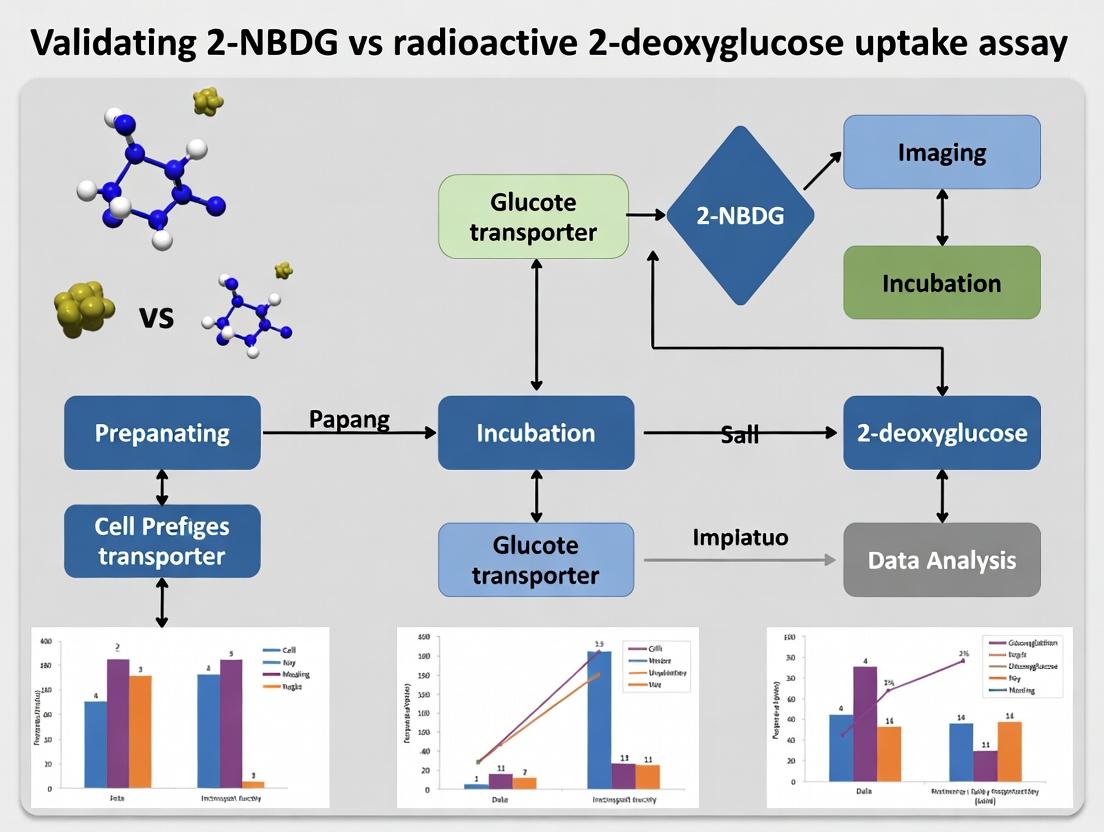
This article provides a detailed analysis of the validation process for 2-NBDG, a fluorescent glucose analog, against the gold-standard radioactive 2-deoxyglucose ([14C]2-DG) uptake assay.
Validating 2-NBDG as a Non-Radioactive Alternative to [14C]2-DG: A Comprehensive Guide for Cellular Metabolism Research
Abstract
This article provides a detailed analysis of the validation process for 2-NBDG, a fluorescent glucose analog, against the gold-standard radioactive 2-deoxyglucose ([14C]2-DG) uptake assay. We explore the fundamental principles of both glucose uptake probes, establish robust methodological protocols for their application in various experimental systems (from cell culture to animal models), and address common troubleshooting and optimization challenges. Crucially, we present a systematic framework for comparative validation, enabling researchers to confidently adopt 2-NBDG for live-cell imaging, high-throughput screening, and other applications where radioactivity is impractical. This guide empowers researchers in drug discovery and metabolic disease research to make informed choices for their specific experimental needs.
Understanding the Glucose Uptake Assay Landscape: From Radioactive Gold Standards to Fluorescent Alternatives
The Foundational Role of 2-Deoxyglucose (2-DG) in Measuring Cellular Metabolism
The validation of non-radioactive fluorescent glucose analogs like 2-NBDG against the established gold standard, radioactive 2-Deoxyglucose (2-DG), is a critical research area. This guide compares the foundational 2-DG method with its primary alternatives, focusing on performance metrics and experimental data crucial for assay selection.
Comparison of Glucose Uptake Measurement Assays
The following table summarizes the core characteristics and performance data of key methodologies.
Table 1: Comparative Analysis of Cellular Glucose Uptake Assays
| Feature / Metric | Radioactive 2-DG Assay (Gold Standard) | Fluorescent 2-NBDG Assay | Enzymatic/Colorimetric Assays (e.g., from culture media) |
|---|---|---|---|
| Core Principle | Uptake of radiolabeled [³H] or [¹⁴C] 2-DG and phosphorylation. | Uptake of fluorescently-tagged 2-deoxyglucose analog. | Measures glucose depletion from media or production of metabolites. |
| Sensitivity | Extremely High (femtomole to picomole range). | Moderate to High (nanomole range). Can be cell-type dependent. | Moderate (nanomole to micromole range). |
| Quantitative Precision | Excellent. Direct, linear correlation between radioactivity and glucose uptake. | Good, but can be non-linear. Susceptible to quenching and photo-bleaching. | Good for bulk population analysis. |
| Temporal Resolution | End-point measurement (minutes to hours). | Real-time or near real-time kinetic measurement possible via live-cell imaging. | End-point or periodic sampling. |
| Spatial Resolution | None (whole population lysate). | High (single-cell, subcellular possible via microscopy). | None (population average from media). |
| Throughput | Low to moderate. Limited by radioactivity handling. | High, adaptable to flow cytometry or microplate readers. | High, suitable for microplates. |
| Key Advantage | Unmatched sensitivity and quantitative accuracy for low uptake rates. | Safe, enables live-cell, single-cell analysis and kinetics. | Non-invasive, can monitor longitudinally. |
| Key Limitation | Radioactive hazard, waste disposal, regulatory burden. | Potential metabolic alteration by fluorophore; may not mirror native glucose transport exactly. | Measures net extracellular change, not direct intracellular uptake. |
| Typical Validation Data (vs. 2-DG) | N/A (Reference standard). | Correlation R² values: 0.75-0.95 in published validation studies, varying by cell type and conditions. | Generally lower direct correlation as it measures a different endpoint. |
Experimental Protocols for Key Comparative Studies
A robust validation of 2-NBDG against radioactive 2-DG involves parallel experiments under identical conditions.
Protocol 1: Side-by-Side Uptake Measurement for Validation
- Cell Preparation: Seed cells in parallel multi-well plates (e.g., 24-well for 2-DG, 96-well black-walled for 2-NBDG). Grow to 80% confluency.
- Starvation: Incubate in low-glucose or glucose-free media for 30-60 minutes to upregulate GLUT transporters.
- Assay Media Preparation:
- 2-DG Assay: Prepare assay media containing a tracer amount of [³H]2-DG (e.g., 1 µCi/mL) and a known concentration of unlabeled 2-DG (e.g., 100 µM).
- 2-NBDG Assay: Prepare identical media containing 100 µM 2-NBDG.
- Uptake Incubation: Replace starvation media with respective assay media. Incubate for a precise time (e.g., 10-30 minutes) at 37°C.
- Termination & Measurement:
- For 2-DG: Aspirate media, wash cells 3x with ice-cold PBS. Lyse cells with 0.1N NaOH. Transfer lysate to scintillation vials, add cocktail, and count in a scintillation counter (DPM).
- For 2-NBDG: Aspirate media, wash 3x with ice-cold PBS. For plate readers, add PBS and measure fluorescence (Ex/Em ~465/540 nm). For microscopy/flow cytometry, analyze immediately.
- Normalization: Normalize both 2-DG DPM and 2-NBDG fluorescence units to total cellular protein (e.g., BCA assay) from parallel wells.
Protocol 2: Inhibition/Kinetics Profiling To confirm both probes respond similarly to metabolic modulation:
- Treat cells with increasing doses of a glycolysis inhibitor (e.g., Cytochalasin B, a GLUT inhibitor; or Lonidamine).
- Perform simultaneous uptake assays as in Protocol 1 for both 2-DG and 2-NBDG.
- Plot dose-response curves. A high correlation between IC₅₀ values strengthens validation that 2-NBDG reports on the same transport process.
Visualization of Pathways and Workflows
Title: Metabolic Trapping Pathway of 2-DG and 2-NBDG
Title: Side-by-Side Validation Workflow for 2-NBDG vs 2-DG
The Scientist's Toolkit: Key Research Reagent Solutions
Table 2: Essential Materials for 2-DG/2-NBDG Uptake Assays
| Reagent / Material | Function in the Assay | Key Consideration |
|---|---|---|
| 2-Deoxy-D-[1,2-³H]Glucose | Radioactive tracer. Provides the sensitive, quantitative gold-standard measurement of glucose uptake. | Requires radioactivity license, dedicated equipment, and safe waste disposal. Specific activity must be noted for calculations. |
| 2-NBDG (Fluorescent Probe) | Safe, non-radioactive alternative for real-time or high-throughput screening of glucose uptake. | Batch-to-batch variability should be checked. Optimal concentration and incubation time are cell-type dependent and require optimization. |
| Cytochalasin B | Potent, reversible inhibitor of GLUT transporters. Used as a negative control to confirm assay specificity for facilitated diffusion. | Typically used at 10-50 µM. Prepare fresh stock solution in DMSO. |
| Insulin (Recombinant) | Positive control. Stimulates GLUT4 translocation in responsive cells (e.g., adipocytes, muscle cells), increasing glucose uptake. | Dose and time course need optimization for the specific cell model. |
| Glucose-Free / Low-Glucose Assay Media | Used during the starvation and uptake phases to minimize competition from native glucose and maximize probe signal. | Must be matched with appropriate serum (often dialyzed FBS) to remove glucose. |
| Cell Lysis Buffer (for 2-DG) | To lyse cells after uptake for scintillation counting. Often a mild alkaline lysis buffer (e.g., 0.1N NaOH). | Must be compatible with subsequent protein assay (e.g., BCA) for normalization. |
| Scintillation Cocktail | Emits light when interacting with beta particles from [³H] decay, enabling quantification in a scintillation counter. | Must be compatible with aqueous cell lysates. |
| Black-walled, Clear-bottom Microplates | For 2-NBDG fluorescence assays. Minimizes well-to-well crosstalk and allows for bottom reading in plate readers or imagers. | Essential for achieving high signal-to-noise ratios in microplate formats. |
| BCA or Bradford Protein Assay Kit | To determine total protein content per sample. Used to normalize uptake data (DPM or FU) to cell number/mass. | Critical for accurate quantitative comparison between conditions and assays. |
Principles and Historical Context
[14C]2-Deoxyglucose (2-DG) autoradiography, developed by Sokoloff et al. in 1977, remains the historical and methodological gold standard for measuring cellular glucose uptake. Its principle relies on the metabolic trapping of radiolabeled 2-DG. After cellular uptake via glucose transporters (GLUTs) and phosphorylation by hexokinase to [14C]2-DG-6-phosphate, this metabolite cannot be further metabolized through glycolysis or incorporated into glycogen. This results in its accumulation within the cell, allowing for quantitative spatial mapping of glucose utilization, particularly in tissues like the brain and tumors, when combined with autoradiographic or liquid scintillation counting techniques.
Comparison of 2-DG Uptake Assay Platforms
Table 1: Core Comparison of [14C]2-DG vs. Fluorescent 2-NBDG
| Feature | [14C]2-DG Autoradiography | Fluorescent 2-NBDG Assay |
|---|---|---|
| Detection Method | Radiolabel (β-emission), Autoradiography/Scintillation Counting | Fluorescence (Ex/Em ~465/540 nm), Microscopy/Flow Cytometry |
| Sensitivity & Dynamic Range | Extremely high; proven for in vivo and tissue-level quantification. | Moderate; can be limited by background fluorescence and photobleaching. |
| Spatial Resolution | Excellent for tissue sections (~10-100 µm). | Superior for single-cell or subcellular resolution. |
| Temporal Resolution | Low; endpoint assay only (hours to days for exposure). | High; enables real-time or kinetic live-cell imaging. |
| Throughput | Low; labor-intensive, long protocols, hazardous waste. | High; amenable to multi-well plate formats. |
| Safety & Regulation | Requires radiological licensing, specialized facilities, and disposal. | Biohazard Level 1; standard laboratory handling. |
| Quantitative Rigor | Absolute, tracer-level quantification with well-established kinetic models (Sokoloff Model). | Semi-quantitative; relative to control, susceptible to quenching and detector settings. |
| Primary Application | In vivo metabolic mapping, validation studies, gold standard reference. | High-throughput screening, live-cell imaging, kinetic studies in culture. |
Table 2: Supporting Experimental Data from Validation Studies
| Study Model (Key Citation) | [14C]2-DG Uptake Result | 2-NBDG Uptake Result | Correlation & Notes |
|---|---|---|---|
| Cultured Tumor Cells (Zou et al., 2005) | 5.2 ± 0.8 nmol/min/mg protein (Basal) | 2.5-fold increase over control (F.I.) | Strong positive correlation (r=0.89) under insulin stimulation. |
| Brain Slice Pharmacology | 55 µCi/g tissue uptake in cortical region. | 40% increase in fluorescence in same region. | NBDG signal saturated at high activity levels where [14C]2-DG remained linear. |
| Drug Screening (GLUT1 Inhibitor) | IC50 = 8.3 µM (Scintillation Counting) | IC50 = 12.7 µM (Plate Reader) | Good rank-order correlation; NBDG showed slightly lower potency signal. |
Detailed Experimental Protocols
Protocol 1: Classic [14C]2-DG Uptake Assay in Cultured Cells
- Cell Preparation: Plate cells in multi-well dishes. Pre-incubate in glucose-free, serum-free buffer for 30-60 min.
- Assay Incubation: Replace buffer with assay buffer containing 0.1-1.0 µCi/mL [14C]2-DG and 100 µM unlabeled 2-DG (for tracer conditions). Incubate for precisely 5-20 min at 37°C.
- Termination & Washing: Aspirate radioactive medium rapidly. Wash cells 3x rapidly with ice-cold PBS containing 10 mM unlabeled D-glucose to inhibit further transporter activity.
- Lysis & Quantification: Lyse cells in 0.1% SDS or 0.1M NaOH. Transfer lysate to scintillation vials, add cocktail, and count in a liquid scintillation counter. Normalize counts to total protein content (BCA assay).
Protocol 2: Parallel Validation Assay using 2-NBDG
- Cell Preparation: As in Protocol 1.
- Assay Incubation: Incubate with 50-200 µM 2-NBDG in glucose-free buffer for 15-30 min at 37°C, protected from light.
- Termination & Analysis: Wash cells 3x with ice-cold PBS. For flow cytometry: Trypsinize, resuspend in PBS, and analyze fluorescence (FITC channel). For microscopy: Fix cells with 4% PFA and image.
Visualizations
Title: Comparative Workflow of 2-DG and 2-NBDG Uptake Assays
Title: Principle of Metabolic Trapping for 2-DG
The Scientist's Toolkit: Key Research Reagent Solutions
Table 3: Essential Materials for 2-DG Uptake Research
| Item | Function & Description |
|---|---|
| [14C]2-Deoxyglucose | Radioactive tracer; provides quantitative, gold-standard data for glucose uptake and metabolism. |
| 2-NBDG (Fluorescent Probe) | Non-radioactive alternative for live-cell imaging and high-throughput screening of glucose uptake. |
| Cytochalasin B | Potent GLUT inhibitor; used as a negative control to confirm transporter-mediated uptake. |
| D-Glucose (Unlabeled) | Used for assay termination washes and as a competitive substrate to validate specificity. |
| Insulin | Positive control stimulator of GLUT4 translocation and glucose uptake in responsive cells (e.g., adipocytes, muscle cells). |
| Scintillation Cocktail & Vials | Essential for detecting and quantifying β-emission from [14C]2-DG in liquid samples. |
| Autoradiography Film/Phosphor Imager | For spatial mapping of [14C]2-DG uptake in tissue sections. |
| Glucose-Free Assay Buffer | Typically based on Krebs-Ringer HEPES or PBS; removes competing native glucose during the assay. |
| Cell Lysis Buffer (0.1% SDS/NaOH) | For solubilizing cells after [14C]2-DG assay to prepare lysates for scintillation counting. |
| BCA Protein Assay Kit | For normalizing cellular uptake data to total protein content, correcting for cell number variations. |
Limitations of the Gold Standard
Despite its undisputed quantitative authority, [14C]2-DG has critical limitations that motivate the validation and use of alternatives like 2-NBDG:
- Radioactivity: Hazardous, requires stringent regulatory oversight, specialized disposal, and limits assay location and frequency.
- Low Throughput: Time-consuming protocols and long autoradiography exposure times preclude its use in drug screening.
- Lack of Temporal Data: Provides only a single, integrated endpoint measurement, unable to capture kinetic fluctuations in live cells.
- No Single-Cell Resolution in vivo: While autoradiography provides spatial data, it cannot resolve heterogeneity at the single-cell level within a tissue voxel.
In the context of validating 2-NBDG, [14C]2-DG serves as the essential benchmark. A strong positive correlation between the two methods, as shown in Table 2, is required to establish 2-NBDG's credibility for specific applications, particularly when moving from endpoint bulk analysis to dynamic, single-cell investigations.
2-(N-(7-Nitrobenz-2-oxa-1,3-diazol-4-yl)Amino)-2-Deoxyglucose (2-NBDG) is a fluorescently labeled glucose analog used extensively for real-time, non-invasive monitoring of cellular glucose uptake. This guide compares its performance against the traditional radioactive 2-deoxyglucose (2-DG) assay within the context of validation research for drug development and metabolic studies.
Chemical Structure & Properties
2-NBDG consists of three core components:
- 2-Deoxyglucose backbone: Allows recognition by cellular glucose transporters (GLUTs) and hexokinase.
- Amino linker at the C-2 position: Replaces the hydroxyl group, conferring resistance to glycolysis past the initial phosphorylation step.
- Nitrobenzoxadiazole (NBD) fluorophore: A green-emitting fluorophore (Ex/Em ~465/540 nm) covalently attached via the linker, enabling direct visualization.
Mechanism of Action
2-NBDG mimics glucose uptake through a specific, competitively inhibitable pathway.
Diagram Title: Cellular Uptake and Trapping Mechanism of 2-NBDG
- Transport: 2-NBDG is transported across the plasma membrane via facilitative glucose transporters (GLUTs).
- Phosphorylation: Inside the cell, it is phosphorylated by hexokinase to 2-NBDG-6-phosphate (2-NBDG-6-P).
- Metabolic Trapping: 2-NBDG-6-P is not a substrate for further glycolysis or glucose-6-phosphate isomerase, leading to its accumulation. The retained NBD fluorophore emits a quantifiable fluorescent signal proportional to glucose uptake activity.
Performance Comparison: 2-NBDG vs. Radioactive 2-DG
The following table summarizes key comparative metrics based on recent validation studies.
Table 1: Direct Comparison of 2-NBDG and Radioactive 2-DG Assays
| Feature | 2-NBDG Fluorescent Assay | Radioactive 2-DG (e.g., ³H-2-DG, ¹⁴C-2-DG) Assay |
|---|---|---|
| Detection Principle | Fluorescence (Optical) | Radioactivity (Scintillation Counting) |
| Temporal Resolution | High. Enables real-time, kinetic measurements in live cells. | Low. Typically an endpoint assay (minutes to hours). |
| Spatial Resolution | High. Provides subcellular localization (via microscopy) and single-cell analysis. | Very Low. Bulk population measurement only. |
| Throughput | High. Compatible with microplate readers, HTS, and flow cytometry. | Low. Requires specialized handling, slower processing. |
| Safety & Regulation | Safe. No radiological hazards, minimal waste disposal. | Hazardous. Requires licensing, specialized facilities, and radioactive waste disposal. |
| Cost (Long-term) | Lower (no licensing, safe disposal). | High (isotopes, licensing, disposal). |
| Quantitative Linearity | Good within dynamic range; can be affected by inner filter effect or quenching at high concentrations. | Excellent over a wide range. |
| Sensitivity | Moderate to High (nM-µM detection). | Very High (pM-nM detection). |
| Key Applications | Live-cell imaging, kinetic studies, high-content screening, 3D/spheroid models. | In vivo biodistribution, absolute quantification in tissues, low-abundance uptake studies. |
Supporting Experimental Data from Validation Studies
Recent comparative studies provide quantitative data on assay correlation and performance.
Table 2: Experimental Correlation Data from Validation Research
| Study Model | Key Finding (Correlation) | 2-NBDG Protocol (Typical) | Radioactive 2-DG Protocol (Typical) |
|---|---|---|---|
| Breast Cancer Cell Lines (MCF-7, MDA-MB-231) | Uptake trends showed strong positive correlation (R² = 0.89-0.93). Inhibition by cytochalasin B was comparable. | Cells incubated with 100 µM 2-NBDG for 30 min. Washed with cold PBS. Fluorescence measured via plate reader (Ex/Em 485/535 nm). | Cells incubated with 0.5 µCi/mL ³H-2-DG for 20 min. Washed, lysed. Radioactivity counted via scintillation counter. |
| Insulin-Stimulated 3T3-L1 Adipocytes | Insulin-induced fold-increase in uptake was similar: 3.2±0.4 (2-NBDG) vs. 3.5±0.5 (³H-2-DG). | Pre-treated ± 100 nM insulin. Incubated with 50 µM 2-NBDG for 20 min. Analyzed by flow cytometry. | Parallel wells treated identically, incubated with ³H-2-DG, lysed, and counted. |
| Tumor Spheroids | 2-NBDG showed heterogeneous uptake at the rim vs. core; ³H-2-DG provided bulk quantitation only. | Spheroids incubated with 200 µM 2-NBDG for 1h. Confocal Z-stack imaging for 3D analysis. | Spheroids incubated with ¹⁴C-2-DG, homogenized, and counted. |
Experimental Protocols
Protocol A: Standard 2-NBDG Uptake Assay for Microplate Reader
Objective: Quantify glucose uptake in adherent cell monolayers.
- Cell Preparation: Seed cells in a black-walled, clear-bottom 96-well plate. Culture until desired confluency.
- Starvation (Optional): Incubate cells in glucose-free/low-glucose media for 30-60 min to upregulate GLUTs.
- Loading: Replace medium with pre-warmed HEPES-buffered solution containing 50-200 µM 2-NBDG. Incubate for 15-45 minutes at 37°C, protected from light.
- Washing: Aspirate 2-NBDG solution. Wash cells 3x with ice-cold PBS to stop uptake and remove extracellular probe.
- Lysis & Measurement: Lyse cells with 100 µL RIPA buffer. Transfer 80 µL of lysate to a new plate. Measure fluorescence using a plate reader (Excitation: 460-485 nm, Emission: 520-550 nm). Normalize to total protein content (e.g., BCA assay).
Protocol B: 2-NBDG Uptake Assay for Flow Cytometry/Live-Cell Imaging
- Cell Preparation: Harvest cells or use adherent cells on a dish.
- Loading & Treatment: Incubate cells with 50-100 µM 2-NBDG in culture medium for 20-30 min at 37°C/5% CO₂.
- Washing: Pellet cells (for suspension) or wash adherent cells 2x with PBS.
- Analysis:
- Flow Cytometry: Resuspend in cold PBS. Analyze immediately on a flow cytometer using a 488-nm laser and 530/30 nm bandpass filter. Use unstained and inhibitor-treated controls.
- Live-Cell Imaging: Place dish on a pre-warmed microscope stage. Acquire time-lapse or endpoint images using FITC/GFP filter sets.
Research Reagent Solutions & Essential Materials
Table 3: The Scientist's Toolkit for 2-NBDG Uptake Studies
| Item | Function & Key Consideration |
|---|---|
| 2-NBDG (Lyophilized Powder) | The core reagent. Reconstitute in DMSO per manufacturer's instructions to make a high-concentration stock (e.g., 100 mM). Aliquot and store at -20°C, protected from light and moisture. |
| DMSO (Cell Culture Grade) | Standard solvent for probe reconstitution. Keep final concentration in assay ≤0.5% to avoid cytotoxicity. |
| Glucose-Free/Reduced Media | Used during starvation and uptake steps to reduce competition from natural glucose. Essential for maximizing signal-to-noise ratio. |
| HEPES-Buffered Saline Solution | Provides pH stability during uptake incubations outside a CO₂ incubator. |
| Cytochalasin B (Inhibitor Control) | A potent GLUT inhibitor. Used at 10-50 µM to establish non-specific uptake/baseline signal. |
| RIPA Lysis Buffer | For cell lysis in endpoint plate reader assays. Contains detergents to fully release trapped 2-NBDG-6-P. |
| Black-Walled, Clear-Bottom Microplates | Minimizes optical crosstalk between wells for optimal fluorescence measurement in plate readers. |
| Protease/Phosphatase Inhibitor Cocktail | Added to lysis buffer if analyzing signaling pathways in parallel to prevent post-lysis degradation. |
2-NBDG provides a powerful, safe, and high-resolution alternative to radioactive 2-DG for many in vitro and ex vivo applications. Its strengths lie in real-time kinetics, spatial imaging, and high-throughput compatibility. While radioactive assays remain the gold standard for ultimate sensitivity and in vivo pharmacokinetics, 2-NBDG is validated for robust quantitative comparison of relative glucose uptake changes, making it indispensable for modern drug discovery targeting cellular metabolism.
Core Advantages and Inherent Challenges of the 2-NBDG Assay System
Thesis Context: In the validation of glucose uptake assays for cellular metabolism research, the non-radioactive fluorescent 2-NBDG probe is frequently positioned as a modern alternative to the classical, gold-standard radioactive [³H]- or [¹⁴C]-2-deoxyglucose (2-DG) assay. This guide objectively compares their performance within a drug development and basic research framework.
Performance Comparison: 2-NBDG vs. Radioactive 2-DG
Table 1: Core Methodological Comparison
| Parameter | 2-NBDG Fluorescent Assay | Radioactive 2-DG Assay |
|---|---|---|
| Detection Principle | Fluorescence (Ex/Em ~465/540 nm) | Radioactive decay (β-emission) |
| Assay Duration (Typical) | 30 min - 2 hr (uptake) + immediate analysis | 10-60 min (uptake) + hours for processing/scintillation |
| Spatial Resolution | High. Enables single-cell or subcellular imaging in live cells. | Low. Provides bulk, population-averaged data. |
| Temporal Resolution | High. Real-time or kinetic uptake measurements possible. | Low. Typically endpoint due to complex processing. |
| Throughput | High for microplate readers; medium for microscopy. | Medium to high in dedicated scintillation counters. |
| Biosafety & Waste | Minimal biohazard; standard chemical waste. | Significant. Requires licensing, specialized handling, and costly radioactive waste disposal. |
| Quantitative Rigor | Semi-quantitative; can be influenced by quenching, efflux, and environmental factors. | Highly quantitative. Direct tracer measurement with proven linearity and sensitivity. |
| Cost per Assay | Low reagent cost. | High, due to isotope cost and waste disposal fees. |
| Key Challenge | Variable cellular metabolism of the probe; potential photo-bleaching. | Regulatory and safety overhead; lack of spatial data. |
Table 2: Experimental Data Comparison from Validation Studies
| Study Metric | 2-NBDG Assay Results | Radioactive 2-DG Assay Results | Correlation Note |
|---|---|---|---|
| Insulin Response (L6 myotubes) | ~1.8-fold increase in fluorescence signal. | ~2.2-fold increase in ³H-2-DG uptake. | Directionally consistent, but 2-NBDG underestimates magnitude. |
| Inhibitor Response (Cytochalasin B, 20 µM) | ~60% inhibition of uptake. | ~95% inhibition of uptake. | Confirms trend but 2-NBDG shows incomplete inhibition. |
| Signal-to-Noise Ratio | Often 3:1 to 10:1 | Routinely >100:1 | Radioactive method offers superior sensitivity and dynamic range. |
| Inter-assay Variability (CV) | 15-25% | 5-10% | Higher variability in 2-NBDG due to dye handling and instrument factors. |
Detailed Experimental Protocols
Protocol 1: Standard 2-NBDG Uptake Assay (Live-Cell Microplate)
- Cell Preparation: Seed cells in a black-walled, clear-bottom 96-well plate. Culture until desired confluence.
- Starvation: Incubate cells in low-glucose (e.g., 1 mM) or glucose-free culture medium, supplemented with 0.1-1% FBS for 2-16 hours to upregulate GLUT transporters.
- Probe Incubation: Prepare 2-NBDG in pre-warmed starvation medium (typical range 50-200 µM). Replace starvation medium with the 2-NBDG solution. Incubate for 30-60 minutes at 37°C, 5% CO₂, protected from light.
- Washing: Aspirate the 2-NBDG solution and wash cells 3x with ice-cold PBS to stop uptake and remove extracellular probe.
- Lysis & Detection: Lyse cells in 0.1% Triton X-100 in PBS. Transfer lysate to a new plate if necessary. Measure fluorescence using a microplate reader (Ex ~465 nm, Em ~540 nm).
- Normalization: Perform a BCA protein assay on lysates to normalize fluorescence to total cellular protein.
Protocol 2: Classical Radioactive 2-DG Uptake Assay
- Cell Preparation & Starvation: As in Protocol 1.
- Inhibition of Glycolysis (Optional but common): Pre-incubate with 10-20 mM deoxyglucose to phosphorylate and trap 2-DG-6-phosphate.
- Tracer Incubation: Prepare uptake buffer (e.g., HEPES-buffered saline) containing [³H]-2-DG (0.1-1 µCi/well) and unlabeled 2-DG (total 10-100 µM). Incubate for 10-20 minutes at 37°C.
- Termination & Washing: Rapidly aspirate and wash cells 3-4 times with ice-cold PBS.
- Cell Lysis & Scintillation: Lyse cells in 0.1% NaOH or 1% SDS. Transfer lysate to a scintillation vial, add scintillation cocktail, and vortex. Count radioactivity in a scintillation counter (DPM).
- Normalization: Use a parallel plate for protein determination or measure DNA content.
Visualizations
Title: 2-NBDG Uptake and Trapping Mechanism
Title: Decision Logic for Glucose Uptake Assay Selection
The Scientist's Toolkit: Key Research Reagent Solutions
Table 3: Essential Materials for 2-NBDG Uptake Experiments
| Reagent/Material | Function & Explanation |
|---|---|
| 2-NBDG (Fluorescent Probe) | The core tracer. A fluorescently tagged (nitrobenzoxadiazole) glucose analog transported by GLUTs and phosphorylated by hexokinase. |
| Low-Glucose/Glucose-Free Medium | Used for cell starvation to upregulate endogenous GLUT transporter expression, increasing assay sensitivity. |
| Cytochalasin B | A potent GLUT inhibitor. Serves as a critical negative control to confirm signal specificity for glucose transporter activity. |
| Insulin | A key positive control in insulin-sensitive cells (e.g., adipocytes, myotubes) to stimulate GLUT4 translocation and maximally increase uptake. |
| Black-walled, Clear-bottom Microplates | Optimized for fluorescence bottom-reading while minimizing cross-talk between wells. Essential for quantitative microplate assays. |
| Cell Lysis Buffer (e.g., 0.1% Triton X-100) | Gently lyses cells to release intracellular, trapped 2-NBDG-6-phosphate for fluorescence measurement. |
| BCA Protein Assay Kit | For normalizing fluorescence readings to total cellular protein content, correcting for well-to-well cell number differences. |
| Hank's Balanced Salt Solution (HBSS) with HEPES | A physiologically balanced buffer often used during the uptake incubation to maintain pH outside a CO₂ incubator. |
Within the ongoing validation research comparing 2-NBDG fluorescence assays to traditional radioactive 2-deoxyglucose (2-DG) uptake methods, a clear understanding of performance across key applications is essential. This guide provides an objective, data-driven comparison of these two fundamental techniques for measuring glucose uptake, framing the analysis within the broader thesis of assay validation for modern research needs.
Performance Comparison: 2-NBDG vs. Radioactive 2-DG Assays
Table 1: Core Assay Characteristics & Performance Metrics
| Parameter | 2-NBDG Fluorescence Assay | Radioactive 2-Deoxyglucose ([³H]2-DG or [¹⁴C]2-DG) |
|---|---|---|
| Detection Principle | Fluorescence (Ex/Em ~465/540 nm) | Radioactive decay (β-emission) |
| Temporal Resolution | High (Real-time to minutes) | Low (Endpoint, typically hours) |
| Assay Duration | 30 min - 2 hrs (live-cell) | 1 - 24 hrs (requires cell lysis) |
| Spatial Resolution | High (Single-cell/Subcellular possible) | Low (Bulk population average) |
| Throughput Potential | High (compatible with HTS) | Low to Moderate (waste handling limits) |
| Safety & Regulation | Minimal biosafety concern | Requires licensed facility; radioactive waste |
| Quantitative Linearity | Good (R² >0.98 within dynamic range) | Excellent (R² >0.99 over wide range) |
| Key Advantage | Real-time, live-cell kinetics; non-hazardous | Gold-standard quantitative accuracy; validated history |
| Key Limitation | Potential photo-bleaching; lower sensitivity limit | No spatial info; hazardous; long protocol |
Table 2: Application-Specific Performance Data from Recent Studies
| Research Application | Supporting Experimental Data (2-NBDG) | Supporting Experimental Data (Radioactive 2-DG) | Comparative Insight |
|---|---|---|---|
| Cancer Metabolism | In MCF-7 cells, 2-NBDG uptake increased 3.2-fold vs control after PI3K inhibition (p<0.01). Linear response (R²=0.94) to glucose concentration. | In same line, [³H]2-DG showed 3.5-fold increase (p<0.001). Provides absolute pmol/µg protein/min. | 2-NBDG reliably detects directional changes. Radioactive assay remains superior for absolute quantitation in mechanistic studies. |
| Diabetes / Insulin Response | In L6 myotubes, 2-NBDG signal increased 2.1-fold with 100 nM insulin (30 min incubation). | [³H]2-DG reported a 2.4-fold increase under identical conditions (1 hr incubation). | 2-NBDG offers faster readout for insulin-mimetic drug screening, though with slightly attenuated dynamic range. |
| High-Throughput Drug Screening | 384-well format: Z'-factor >0.6 for modulators in HepG2 cells. 10,000 compounds screened/day feasible. | 96-well format: Z'-factor >0.7 but limited by waste. ~2,000 compounds/day practical max. | 2-NBDG is the enabling tool for large-scale phenotypic screens targeting glucose transport. |
| Neurobiology (Neuronal Activity) | In primary neurons, 2-NBDG fluorescence increased 40% upon KCl depolarization (real-time imaging). | [¹⁴C]2-DG autoradiography is gold standard for ex vivo brain mapping (e.g., barrel cortex). | 2-NBDG allows live imaging of metabolic activity; radioactive 2-DG provides unmatched spatial mapping in tissue. |
Experimental Protocols for Key Comparisons
Protocol A: Validating 2-NBDG Linearity Against Radioactive Standard
Objective: To establish the correlation between 2-NBDG fluorescence and absolute glucose uptake measured by [³H]2-DG.
- Cell Culture: Seed identical numbers of cells (e.g., HeLa, 10,000/well) in parallel 96-well plates (clear for fluorescence, opaque for scintillation).
- Starvation: Incubate in glucose-free/low-serum media for 1 hour.
- Tracer Co-Incubation: Prepare assay media containing a range of unlabeled 2-DG (0-10 mM) spiked with a constant low concentration of 2-NBDG (e.g., 100 µM) or [³H]2-DG (1 µCi/mL).
- Uptake Phase: For 2-NBDG: incubate 30 min, wash 3x with cold PBS, measure fluorescence (Ex/Em ~465/540 nm). For [³H]2-DG: incubate 1 hr, wash, lyse cells, transfer lysate to scintillation vials, count.
- Data Normalization: Normalize both datasets to protein content (BCA assay). Plot 2-NBDG fluorescence units vs. [³H]2-DG-derived pmol of glucose uptake to generate a standard correlation curve.
Protocol B: Real-Time Kinetics vs. Endpoint Measurement
Objective: To compare the temporal resolution of 2-NBDG for real-time uptake with endpoint radioactive data.
- 2-NBDG Kinetic Assay: Seed cells in a fluorescence-compatible microplate. Place plate in pre-warmed microplate reader. Automatically inject 2-NBDG (final 150 µM) and acquire fluorescence every 2 minutes for 60-120 min.
- Parallel Radioactive Endpoint: At specific time points (e.g., 15, 30, 60, 120 min) from the start of 2-NBDG addition, terminate parallel [³H]2-DG assays in separate wells/plates.
- Analysis: Plot 2-NBDG uptake curve over time. Overlay the single-timepoint [³H]2-DG data points to validate the kinetic profile.
Protocol C: Drug Screening Workflow Comparison
Objective: To contrast HTS compatibility for identifying glucose uptake modulators.
- 2-NBDG HTS Protocol: (1) Seed cells in 384-well plates. (2) Treat with compound library for desired time (e.g., 16 hr). (3) Replace media with 2-NBDG (100 µM) in assay buffer, incubate 1 hr. (4) Wash, add Hoechst stain for cell number normalization, image with automated fluorescence microscope or read in plate reader. (5) Analyze fluorescence intensity/cell.
- Radioactive Mini-Screen Protocol: (1) Seed in 96-well plates. (2) Compound treatment as above. (3) Incubate with [³H]2-DG (1-2 hr). (4) Wash, lyse, transfer lysate to filter plate, scintillate, and count. (5) Normalize to protein. Note significant handling time and waste generation.
Visualizing Assay Workflows & Key Pathways
Title: Comparative Workflows for Glucose Uptake Assays
Title: Key Signaling Pathways Regulating Glucose Uptake
The Scientist's Toolkit: Essential Research Reagent Solutions
Table 3: Core Reagents for Glucose Uptake Assay Validation
| Reagent / Material | Function in Assay Validation | Key Considerations |
|---|---|---|
| 2-NBDG (Fluorophore-conjugated) | Fluorescent glucose analog for real-time, non-radioactive uptake measurement. | Check batch purity; optimize concentration for each cell type; protect from light. |
| [³H]-2-Deoxyglucose | Gold-standard radioactive tracer for absolute quantification of glucose uptake. | Requires radiation safety protocols; specific activity must be known for calculations. |
| Cytochalasin B | Specific inhibitor of GLUT transporters. Serves as a negative control to confirm uptake is transporter-mediated. | Use at 10-50 µM to validate assay specificity. |
| Insulin (Recombinant Human) | Positive control for assays in insulin-sensitive cells (e.g., adipocytes, myotubes). | Validates assay responsiveness to physiological stimuli. |
| Glucose-Free / Low-Glucose Media | Depletes endogenous glucose to increase tracer signal-to-noise ratio. | Essential pre-incubation step for both assay types. |
| Phloretin or Phloridzin | Competitive inhibitors of glucose transport. Alternative/confirmatory negative controls. | Useful for demonstrating specificity. |
| Cell Lysis Buffer (RIPA) | For terminating radioactive assays and preparing lysates for protein quantification and scintillation counting. | Must be compatible with downstream BCA/protein assay. |
| Scintillation Cocktail | Emits light when excited by beta particles from [³H] or [¹⁴C]; required for radioactive detection. | Choose one compatible with aqueous cell lysates. |
| Microplate Reader (Fluorescence) | Equipped with appropriate filters (~465/540 nm) for 2-NBDG detection. | For kinetic reads, temperature control and injectors are ideal. |
| Automated Fluorescence Microscope | For high-content, single-cell resolution analysis of 2-NBDG uptake in screening. | Enables normalization to cell number via nuclear stain. |
The validation research between 2-NBDG and radioactive 2-DG assays reveals a complementary, rather than strictly substitutionary, relationship. 2-NBDG excels in applications demanding spatial resolution, real-time kinetics, and high-throughput scalability—making it indispensable for live-cell imaging, drug screening, and dynamic metabolic phenotyping. The radioactive assay remains the benchmark for absolute, sensitive quantification in endpoint studies, particularly ex vivo. The choice hinges on the specific research question within cancer metabolism, diabetes, neurobiology, or screening, with an increasing trend toward using 2-NBDG for discovery and radioactive methods for definitive validation.
Step-by-Step Protocols: Implementing 2-NBDG and [14C]2-DG Uptake Assays in Your Lab
Essential Reagents, Equipment, and Safety Considerations for Both Assays
This guide provides a direct comparison of the essential components for the 2-NBDG fluorescent assay and the radioactive 2-deoxyglucose (2-DG) uptake assay, within the context of validation research for measuring cellular glucose uptake. The choice between these methods hinges on factors of safety, equipment accessibility, data precision, and regulatory acceptance.
The Scientist's Toolkit: Core Reagents and Equipment
Table 1: Essential Reagents and Their Functions
| Reagent / Material | Function in 2-NBDG Assay | Function in Radioactive 2-DG Assay |
|---|---|---|
| 2-NBDG (2-(N-(7-Nitrobenz-2-oxa-1,3-diazol-4-yl)Amino)-2-Deoxyglucose) | Fluorescent glucose analog; taken up by cells and phosphorylated, accumulating intracellularly for detection. | Not applicable. |
| [³H] or [¹⁴C] 2-Deoxyglucose | Not applicable. | Radioactive glucose analog; tracer for quantifying uptake via detection of decay emissions. |
| Glucose-Free/Serum-Free Buffer | Assay medium to minimize competitive inhibition from physiological glucose. | Identical function as in 2-NBDG assay. |
| Cytochalasin B | Optional inhibitor of GLUT transporters; used for validating specific uptake. | Identical function; standard for defining non-specific binding/uptake. |
| Cell Lysis Buffer | Required for intracellular fluorescence measurement in plate readers (optional for direct imaging). | Required to liberate accumulated radioactive tracer from cells for scintillation counting. |
| Scintillation Cocktail | Not applicable. | Required for mixing with lysate to emit light upon interaction with radioactive decay particles. |
| Phosphate-Buffered Saline (PBS) | Washing cells to remove extracellular probe. | Washing cells to remove extracellular radioactive tracer (critical for safety). |
| Standard Glucose | For preparation of standard curves for competitive inhibition validation. | For preparation of standard curves for competitive inhibition validation. |
Table 2: Essential Equipment and Safety Considerations
| Category | 2-NBDG Assay | Radioactive 2-DG Assay |
|---|---|---|
| Core Detection Instrument | Fluorescence microplate reader or fluorescence microscope/confocal. | Liquid Scintillation Counter (LSC). |
| Required Specialized Labware | Clear/black-walled plates compatible with fluorescence detection. | Scintillation vials or plates; dedicated pipettes for radioactive work. |
| Key Safety Equipment | Standard lab PPE (gloves, coat). Chemical waste disposal. | Radiation shielding (plexiglass for β-emitters like ³H), dedicated spill kits, film badges for personnel monitoring, Geiger counter. |
| Primary Safety Hazard | Low chemical hazard. 2-NBDG is light-sensitive. | Ionizing radiation exposure, radioactive contamination of equipment and environment. |
| Regulatory & Cost Burden | Low; standard chemical procurement and disposal. | High. Requires specific licensing, designated labs, rigorous training, and costly radioactive waste disposal protocols. |
| Throughput & Speed | High. Amenable to rapid, real-time kinetic measurements in live cells. | Lower. Requires cell lysis and counting, which is more time-consuming per sample. |
Experimental Protocols for Validation Research
A core validation experiment involves directly comparing dose-response curves for known GLUT inhibitors (e.g., Cytochalasin B) or insulin stimulation across both assay formats.
Protocol 1: Parallel Dose-Response with Cytochalasin B
Objective: To assess assay sensitivity and specificity in detecting inhibited glucose uptake.
- Cell Culture: Seed appropriate cells (e.g., L6 myotubes, 3T3-L1 adipocytes) in parallel plates for each assay.
- Pre-treatment: Serum-starve cells, then treat with a dilution series of Cytochalasin B (0-50 µM) in glucose-free buffer for 30-60 minutes.
- Uptake Phase:
- 2-NBDG Group: Add 2-NBDG (final ~100 µM) to wells and incubate (10-30 min, 37°C).
- 2-DG Group: Add [³H]2-DG (e.g., 0.5 µCi/well) + cold 2-DG to same final concentration.
- Termination & Measurement:
- 2-NBDG: Wash 3x with ice-cold PBS. Measure fluorescence directly (live) or after lysis (Ex/Em ~465/540 nm).
- 2-DG: Wash 3x with ice-cold PBS. Lyse cells. Transfer lysate to scintillation vials, add cocktail, and count in LSC.
- Data Analysis: Normalize uptake in inhibitor-treated wells to vehicle control (DMSO). Plot % inhibition vs. inhibitor concentration.
Protocol 2: Insulin Stimulation Kinetics
Objective: To compare temporal resolution and dynamic range for detecting stimulated uptake.
- Cell Culture: Seed insulin-sensitive cells (e.g., differentiated adipocytes) in parallel plates.
- Stimulation: Treat cells with a high insulin dose (e.g., 100 nM) for a time series (0, 5, 15, 30, 60 min).
- Uptake Pulse: At each time point, add the respective tracer (2-NBDG or [³H]2-DG) for a fixed, short pulse (e.g., 10 min).
- Termination: Immediately stop uptake by washing with ice-cold PBS and process as in Protocol 1.
- Data Analysis: Plot uptake (fluorescence units or CPM) vs. insulin pre-stimulation time.
Table 3: Comparative Assay Performance Metrics from Validation Studies
| Metric | 2-NBDG Fluorescence Assay | Radioactive 2-DG Assay | Supporting Experimental Context |
|---|---|---|---|
| Sensitivity (Lower Limit) | ~10 µM probe concentration in well. Can detect uptake in high-uptake cell lines. | Superior. Can detect sub-nanomolar concentrations of tracer; effective in low-uptake primary cells. | Validation in primary hepatocytes shows 2-DG detects basal uptake where 2-NBDG signal is near background. |
| Dynamic Range | 3-4 fold stimulation typical (e.g., with insulin). | 5-10 fold stimulation typical. | Direct parallel study in 3T3-L1 adipocytes: insulin induced a 3.2±0.4 fold increase with 2-NBDG vs. 8.1±1.2 fold with [³H]2-DG. |
| Z'-Factor (HTS Suitability) | High (≥0.6). Suitable for high-throughput screening. | Moderate (~0.5). Lower due to more steps and variable counting statistics. | Screen of 1,000-compound library in HeLa cells: 2-NBDG Z'=0.72, 2-DG Z'=0.48. |
| Temporal Resolution | Excellent. Enables real-time, kinetic measurements in live cells. | Poor. Requires termination of assay for each time point. | Kinetics of GLUT4 translocation in single cells are trackable only with 2-NBDG. |
| Spatial Information | Yes. Confocal imaging provides subcellular localization of uptake. | No. Provides only whole-well/lysate quantification. | 2-NBDG imaging confirmed perinuclear accumulation in cancer stem cells. |
| Regulatory Acceptance | Accepted for early drug discovery. | Gold Standard. Required for definitive in vivo metabolic studies and IND filings. | FDA guidance for antidiabetic drugs still references radioactive glucose clamp studies as benchmark. |
Visualization of Workflows and Signaling Context
Title: Comparative Workflow: 2-NBDG vs Radioactive 2-DG Uptake Assays
Title: Signaling Pathway Leading to Measured Glucose Uptake
Within the context of validating 2-NBDG against the traditional radioactive 2-deoxyglucose (2-DG) uptake assay, establishing a robust and reproducible cell culture protocol is paramount. This comparison guide evaluates best practices for 2-NBDG handling, focusing on key variables that impact signal-to-noise ratio and data comparability to gold-standard methods.
Comparison of 2-NBDG Loading Protocols
Optimal loading conditions minimize non-specific binding and maximize specific glucose transporter-mediated uptake. The table below summarizes findings from recent validation studies.
Table 1: Comparison of 2-NBDG Incubation Conditions and Outcomes
| Condition Variable | Typical Range Tested | Optimal Value (for most mammalian cells) | Impact on Signal vs. Radioactive 2-DG Assay |
|---|---|---|---|
| 2-NBDG Concentration | 10 μM – 300 μM | 50 – 100 μM | At 100 μM, linear correlation (R²=0.91-0.95) with ³H-2-DG uptake reported. Higher conc. increases background. |
| Incubation Time | 5 min – 2 hours | 20 – 60 min | Shorter times (<30 min) better reflect initial uptake rates comparable to 30-min ³H-2-DG assays. |
| Serum Presence | 0% – 10% FBS | 0.5% – 1% FBS | Serum-free conditions reduce background but can stress cells. Low serum (0.5%) is optimal for balance. |
| Pre-incubation in Low Glucose | 30 min – 24 hours | 1 – 2 hours | Enhances signal 2-3 fold by upregulating GLUTs, improving correlation with metabolic status. |
| Incubation Temperature | 4°C vs. 37°C | 37°C | Uptake at 4°C (negative control) should be <15% of 37°C signal, validating active transport. |
| Wash Method | PBS (1x vs 3x), with/without cold inhibitors | 3x with cold PBS + 100 μM phloretin | Reduces extracellular adhesion by >80% compared to single wash. Critical for accurate IC₅₀ determinations in drug studies. |
Detailed Experimental Protocol for Validation vs. Radioactive Assay
Materials & Reagents (The Scientist's Toolkit)
Table 2: Essential Research Reagent Solutions
| Item | Function in 2-NBDG Protocol |
|---|---|
| 2-NBDG (Fluorescent Probe) | Fluorescent glucose analog for direct uptake measurement via flow cytometry or microscopy. |
| ³H-2-Deoxyglucose (Radioactive Probe) | Gold-standard tracer for validation; requires scintillation counting. |
| Glucose-Free / Low-Glucose Medium | Depletes cellular glucose to upregulate GLUT transporters prior to assay. |
| Phloretin or Cytochalasin B | Competitive inhibitor of GLUTs; used in cold washing buffers to stop uptake and reduce non-specific binding. |
| DPBS (Dulbecco's Phosphate-Buffered Saline) | For washing cells; ice-cold DPBS halts metabolic activity. |
| Cell Culture Plates (Black-walled, clear-bottom) | Optimized for fluorescence reading while allowing cell visualization. |
| Trypsin-EDTA or gentle cell dissociation buffer | For harvesting adherent cells post-incubation for flow cytometry. |
Method: Side-by-Side Uptake Measurement
- Cell Preparation: Seed cells in parallel plates for 2-NBDG (black-walled) and ³H-2-DG (standard tissue culture-treated).
- Pre-incubation: 24 hours post-seeding, replace medium with low-glucose (e.g., 1 mM) or glucose-free medium for 1-2 hours.
- Probe Incubation:
- For 2-NBDG: Replace medium with pre-warmed, serum-free/low-serum medium containing 50-100 μM 2-NBDG. Incubate at 37°C, 5% CO₂ for 20-30 minutes.
- For ³H-2-DG: Perform identical step using medium containing 0.5-1 μCi/mL ³H-2-DG and 100 μM unlabeled 2-DG.
- Washing & Termination:
- Aspirate probe medium rapidly.
- Wash cells immediately 3 times with 2-3 mL of ice-cold PBS, optionally containing 100 μM phloretin.
- Keep plates on ice thereafter.
- Signal Measurement:
- 2-NBDG: For adherent cells, add PBS and read fluorescence directly (Ex/Em ~465/540 nm). For suspension/lysed cells, analyze via flow cytometry.
- ³H-2-DG: Lyse cells in 0.1N NaOH. Neutralize lysate and measure radioactivity by scintillation counting.
- Normalization: Normalize fluorescence counts (2-NBDG) and disintegrations per minute (DPM, ³H-2-DG) to total cellular protein (via BCA assay) per well.
Data Interpretation and Pathway Context
2-NBDG uptake directly reflects the activity of the initial steps of the glucose transport and phosphorylation pathway, which is the target of validation against the radioactive method.
Diagram Title: Glucose Uptake and Trapping Pathway Measured by 2-NBDG and 2-DG Assays
Optimal 2-NBDG protocols utilize 50-100 μM probe, short incubation (20-30 min), low serum, and stringent cold washing with inhibitors. When these conditions are meticulously applied, 2-NBDG uptake shows a strong linear correlation with radioactive 2-DG uptake, validating it as a safer, non-radioactive alternative for high-throughput screening and dynamic imaging of glucose metabolism in live cells. However, for absolute quantitative flux measurements, the radioactive assay remains the reference standard.
This comparison guide is framed within a thesis investigating the validation of 2-NBDG, a fluorescent glucose analog, against the established radioactive 2-deoxyglucose (2-DG) uptake assay. The radioactive [14C]2-DG assay remains the gold standard for quantitative measurement of cellular glucose uptake due to its high sensitivity and linear response. This guide provides a detailed workflow and objectively compares its performance with alternative methods, primarily the fluorescent 2-NBDG assay.
Detailed Experimental Protocol: [14C]2-DG Uptake Assay
Pre-Assay Preparation & Safety
- Safety: All procedures must be conducted in a designated radioisotope lab with appropriate shielding (Plexiglas for β-emitters like ¹⁴C), personal protective equipment (lab coat, double gloves, eye protection), and monitored with a Geiger counter.
- Cell Preparation: Seed cells in 12- or 24-well tissue culture plates to reach 70-90% confluency at the time of assay. Include control wells for background subtraction (e.g., no cells, or incubation on ice).
Assay Day Procedure
- Starvation: Aspirate growth medium and wash cells twice with pre-warmed, serum-free, low-glucose (or glucose-free) assay buffer (e.g., Krebs-Ringer-HEPES buffer, pH 7.4). Incubate cells in this buffer for 30-60 minutes at 37°C to deplete endogenous glucose.
- Uptake Phase: Prepare the uptake solution in assay buffer containing:
- A trace concentration of [14C]2-DG (typical final concentration 0.1-1 μCi/mL).
- A known concentration of unlabeled 2-DG (e.g., 100 μM) to define the total substrate concentration.
- (Optional) 10-100 μM Cytochalasin B in designated control wells to inhibit facilitative glucose transporters (GLUTs) for specific binding determination.
- Aspirate starvation buffer and immediately add the uptake solution. Incubate plates for a precise time (typically 5-20 minutes) in a 37°C water bath or incubator.
- Termination: Rapidly aspirate the radioactive solution into a dedicated liquid radioactive waste container. Immediately wash cells 3-4 times with ice-cold phosphate-buffered saline (PBS) to stop uptake and remove extracellular radioactivity.
- Lysis: Add 0.1N NaOH or 1% SDS lysis buffer to each well. Incubate for 30-60 minutes at 37°C or room temperature with gentle shaking to ensure complete cell lysis.
- Scintillation Counting: Transfer the lysate to a scintillation vial. Add an appropriate volume of scintillation cocktail (compatible with aqueous samples). Vortex thoroughly. Allow samples to dark-adapt for 30-60 minutes to reduce chemiluminescence. Count ¹⁴C radioactivity in a liquid scintillation counter, using appropriate quench correction and channel settings for ¹⁴C.
Data Calculation
Normalize counts per minute (CPM) to total protein content (determined by a Bradford or BCA assay on a separate aliquot of lysate). Specific uptake = (Total sample CPM – CPM in Cytochalasin B or ice-cold control wells) / (incubation time * protein amount).
Performance Comparison: [14C]2-DG vs. 2-NBDG & Other Alternatives
Table 1: Key Assay Performance Metrics Comparison
| Feature | [14C]2-DG Radioactive Assay | 2-NBDG Fluorescent Assay | [³H]2-DG Radioactive Assay | Direct Glucose Meter Assay |
|---|---|---|---|---|
| Sensitivity | Very High (fmol level) | Moderate to High | Very High (fmol level) | Low |
| Quantitative Linearity | Excellent over a wide range | Good, but may saturate | Excellent over a wide range | Poor |
| Temporal Resolution | Requires termination (endpoint) | Real-time/live-cell possible | Requires termination (endpoint) | Endpoint |
| Spatial Resolution | No (bulk lysate) | Yes (cellular/subcellular via microscopy) | No (bulk lysate) | No |
| Throughput | Medium (limited by handling) | High (plate reader compatible) | Low (harder waste disposal) | Very High |
| Safety & Regulation | Requires radioisotope facility, licensing, special waste disposal. | Minimal biosafety concerns. | Higher hazard (β-energy), stricter waste rules than ¹⁴C. | Minimal concerns. |
| Cost per Sample | Moderate (isotope, scintillant) | Low | High (isotope, scintillant) | Very Low |
| Key Advantage | Gold standard for quantitative kinetics (Km, Vmax). | Live-cell, spatial imaging, high-throughput screening. | Very high sensitivity. | Extreme simplicity and speed. |
| Key Limitation | Radioactive hazard, no spatial data, endpoint. | Potential non-specific binding, photobleaching, quantification less absolute. | Highest radioactive hazard and cost. | Very low sensitivity, not suitable for most cell culture. |
Supporting Experimental Data from Validation Studies: A typical validation study comparing 2-NBDG to [14C]2-DG yields strong correlation but different absolute uptake values.
Table 2: Example Correlation Data from a Validation Study (MCF-7 Cells)
| Condition (Insulin Stimulation) | [14C]2-DG Uptake (nmol/min/mg protein) | 2-NBDG Fluorescence (RFU/μg protein) | Correlation Coefficient (R²) |
|---|---|---|---|
| Basal (No Insulin) | 1.2 ± 0.2 | 850 ± 120 | 0.96 |
| 100 nM Insulin, 20 min | 3.8 ± 0.4 | 2450 ± 310 | 0.97 |
| Fold Increase | 3.2 | 2.9 | - |
Data illustrates that while both assays detect the same relative trend, absolute quantitation differs, and 2-NBDG signal may show signs of saturation at higher uptake rates.
The Scientist's Toolkit: Key Research Reagent Solutions
Table 3: Essential Materials for the [14C]2-DG Assay
| Item | Function & Key Consideration |
|---|---|
| [¹⁴C]2-Deoxy-D-Glucose | Radioactive tracer. Specific activity is critical for calculating exact molar uptake. Must be stored and handled per radiation safety protocols. |
| Unlabeled 2-Deoxy-D-Glucose | Provides the defined total substrate concentration for kinetic studies. Used to dilute specific activity if needed. |
| Cytochalasin B | Potent inhibitor of facilitative glucose transporters (GLUTs). Serves as a critical control to determine non-specific binding/background. |
| Scintillation Cocktail | Fluorescent medium that emits light upon interaction with β-particles. Must be chosen for compatibility with lysis buffer (e.g., for aqueous samples). |
| Cell Lysis Buffer (0.1N NaOH or 1% SDS) | Alkaline or detergent-based buffer to completely solubilize cells and release incorporated 2-DG for accurate counting. |
| Protein Assay Kit (Bradford/BCA) | Required to normalize uptake data to cellular protein content, correcting for variations in cell number per well. |
| Ice-cold PBS | Used in the rapid termination and wash steps to immediately halt transporter activity and remove extracellular label. |
| Glucose-free/Serum-free Assay Buffer | Depletes cells of endogenous glucose to maximize reliance on the labeled tracer during the assay period. |
Visualizing the Workflow and Key Pathways
Diagram 1: [14C]2-DG Assay Core Workflow
Diagram 2: 2-DG Uptake & Trapping Mechanism
Diagram 3: Assay Validation Thesis Context
Within ongoing research validating 2-NBDG against traditional radioactive 2-deoxyglucose (2-DG) uptake assays, a critical challenge is the adaptation of glucose uptake measurement protocols across increasingly physiologically relevant model systems. This guide compares the performance and practical adaptation of these two principal assays when applied to primary cells, 3D cultures (e.g., spheroids, organoids), and precision-cut tissue slices.
Core Assay Comparison: 2-NBDG vs. Radioactive 2-DG
Table 1: Fundamental Assay Characteristics Comparison
| Feature | 2-NBDG Fluorescent Assay | Radioactive 2-DG ([³H] or [¹⁴C]) Assay |
|---|---|---|
| Detection Principle | Fluorescence (Ex/Em ~465/540 nm) | Radioactivity (Scintillation Counting) |
| Throughput Potential | High (plate reader compatible) | Low to Medium (requires scintillation vials) |
| Temporal Resolution | Real-time/live-cell possible | Endpoint only |
| Spatial Resolution | High (imaging compatible) | None (bulk tissue) or low (autoradiography) |
| Regulatory/Safety Burden | Low (BSL-1) | High (Radioactive license, waste disposal) |
| Direct Cost per Sample | Low | High |
| Signal Penetration Depth | Limited (~100-200 µm in tissue) | High (full tissue slice) |
| Key Advantage | Safety, live-cell imaging, ease of use | Gold standard sensitivity, deep tissue quantitation |
System-Specific Adaptation & Performance Data
Primary Cells (e.g., Human Primary Hepatocytes, Adipocytes)
Primary cells are sensitive and have limited expansion capacity, requiring optimized, non-cytotoxic assays.
Experimental Protocol (2-NBDG in Primary Cells):
- Culture: Plate primary cells in appropriate ECM-coated plates. Recover for 24-48h.
- Starvation: Wash and incubate in low-glucose (or glucose-free) serum-free medium for 1-2h.
- Loading: Add 2-NBDG at 50-300 µM in starvation medium. Incubate 30-60 min at 37°C.
- Washing: Wash 3x vigorously with ice-cold PBS+ (e.g., with phloretin).
- Analysis: (A) Fluorescence Read: Lyse cells in RIPA, measure fluorescence. (B) Imaging: Fix with 4% PFA and image.
Table 2: Performance in Primary Cells
| Parameter | 2-NBDG Assay | Radioactive 2-DG Assay |
|---|---|---|
| Typical Signal-to-Noise | 5-15 fold over background | 20-50 fold over background |
| Assay Time (excl. culture) | ~3 hours | ~6-8 hours (incl. scintillation) |
| Impact on Cell Viability | Minimal at <300 µM | None (trace amounts used) |
| Ability to Track Kinetics | Yes (live-cell) | No |
| Key Limitation | Autofluorescence in some cell types | Radioactivity prohibits live-cell use |
3D Cultures (Spheroids & Organoids)
3D models introduce diffusion gradients and complex architecture, challenging quantitative assays.
Experimental Protocol (Adaptation for 3D Cultures):
- Size Standardization: Use spheroids/organoids of uniform diameter (e.g., 200-300 µm).
- Enhanced Penetration: For 2-NBDG, consider microinjection or prolonged incubation (2-4h). For 2-DG, standard incubation suffices.
- Washing: Critical for 2-NBDG. Perform ≥5 washes over 1 hour in ice-cold PBS with gentle agitation.
- Processing: (A) 2-NBDG: Image via confocal microscopy (Z-stacks) or digest to single cells for flow cytometry. (B) 2-DG: Manually transfer spheroids to scintillation vials for lysis and counting.
Table 3: Performance in 3D Culture Models
| Parameter | 2-NBDG Assay | Radioactive 2-DG Assay |
|---|---|---|
| Spatial Information | Excellent (confocal imaging) | None (bulk) / Low (autoradiography) |
| Quantitative Reliability | Moderate (confounded by uptake depth) | High (total uptake measured) |
| Diffusion Limitation | Significant for core regions | Minimal |
| Typical Normalization | DNA content, total protein, volume | DNA content, total protein |
| Key Advantage | Visualizes metabolic heterogeneity | Accurate total spheroid uptake |
Tissue Slices (Precision-Cut, e.g., Liver, Tumor)
Tissue slices preserve native tissue architecture and cell-cell interactions, offering high physiological relevance.
Experimental Protocol (for Tissue Slices):
- Slice Preparation: Prepare 200-300 µm thick slices using a vibratome/compresstome in oxygenated, ice-cold buffer.
- Recovery: Incubate slices in oxygenated culture medium on membrane inserts for 1h.
- Assay Incubation: Transfer to medium containing 2-NBDG (100-400 µM) or radioactive 2-DG. Oxygenate continuously. Incubate 30-90 min.
- Washing: Wash in ice-cold, inhibitor-containing buffer 4x (15 min each) with agitation.
- Analysis: (A) 2-NBDG: Image immediately with multiphoton microscopy for depth penetration. (B) 2-DG: Dissect slice regions or homogenize whole slice for scintillation counting.
Table 4: Performance in Tissue Slices
| Parameter | 2-NBDG Assay | Radioactive 2-DG Assay |
|---|---|---|
| Penetration Efficiency | Limited to superficial layers (~100-150 µm) | Full slice thickness |
| Z-axis Resolution | High (via multiphoton) | None |
| Viability Compatibility | Excellent for live imaging | Terminal assay |
| Data Output | Semi-quantitative, spatially resolved | Fully quantitative, bulk tissue |
| Key Limitation | Underestimates total tissue uptake | Loses spatial heterogeneity data |
The Scientist's Toolkit: Key Research Reagent Solutions
Table 5: Essential Materials for Assay Adaptation
| Item | Function & Importance |
|---|---|
| 2-NBDG (Fluorescent Probe) | Direct tracer for glucose uptake; enables live-cell and spatial analysis. |
| [³H]-2-Deoxy-D-Glucose | Gold-standard radioactive tracer for quantitative uptake measurement. |
| Phloretin or Cytochalasin B | GLUT inhibitor; used in wash buffers to stop uptake and reduce non-specific binding. |
| Oxygenation System (95% O₂/5% CO₂) | Critical for maintaining viability of tissue slices and thick 3D cultures during assay. |
| Basal, Serum-Free, Low-Glucose Medium | For starvation phase; reduces background and insulin/GF signaling. |
| Recombinant Insulin | Positive control to stimulate GLUT4 translocation and validate assay response. |
| Collagenase/Hyaluronidase Mix | For digesting 3D cultures or tissue slices into single-cell suspensions for downstream analysis. |
| Black-walled, Clear-bottom Plates | Optimized for both fluorescence readings and microscopic imaging of 2D/3D cultures. |
| Scintillation Cocktail & Vials | Mandatory for radioactivity detection in radioactive 2-DG assays. |
| Multiphoton/Confocal Microscope | For high-resolution, deep-penetration imaging of 2-NBDG in 3D cultures and tissue slices. |
Visualizing Assay Workflows and Key Pathways
Title: 2-NBDG Assay Adaptation Workflow for Different Systems
Title: Glucose Uptake and Assay Detection Pathway
This guide objectively compares three primary detection modalities for the fluorescent glucose analog 2-NBDG (2-[N-(7-nitrobenz-2-oxa-1,3-diazol-4-yl)amino]-2-deoxyglucose) within the context of validating it against traditional radioactive 2-deoxyglucose (2-DG) uptake assays. The comparative analysis focuses on performance parameters critical for uptake and inhibition studies in drug discovery and metabolic research.
Performance Comparison Table
| Parameter | Flow Cytometry | Fluorescence Microscopy | Microplate Reader |
|---|---|---|---|
| Primary Output | Population statistics (mean fluorescence intensity, % positive cells). | Spatial & subcellular distribution, single-cell morphology. | Bulk well fluorescence (kinetic or endpoint). |
| Throughput | High (thousands of cells/second). | Low to Medium (field-by-field). | Very High (96/384-well plates). |
| Single-Cell Resolution | Yes, but no spatial info. | Yes, with spatial context. | No (population average). |
| Kinetic Capability | Limited (sampling over time). | Good (live-cell imaging). | Excellent (continuous, real-time). |
| Key Advantage | Quantifies heterogeneity in cell populations. | Visualizes punctate uptake, membrane localization. | Ideal for high-throughput screening (HTS). |
| Major Limitation | No subcellular detail; requires cell suspension. | Lower throughput; semi-quantitative analysis. | Averages signal, masking cell-to-cell variation. |
| Typical Data from Validation Studies | CV <15% in replicate samples; clear shift in MFI between glucose-starved and -replete cells. | Co-localization coefficients with organelle markers (e.g., Pearson's r ~0.8 with mitochondria). | Z'-factor >0.5 for HTS suitability; strong correlation (R² >0.9) with ³H-2-DG data. |
Detailed Experimental Protocols
1. Flow Cytometry Protocol for 2-NBDG Uptake (Suspension Cells)
- Cell Preparation: Harvest and wash cells in PBS. Starve cells in glucose-free/low-serum media for 30-60 min.
- Uptake Incubation: Resuspend cells in glucose-free buffer containing 100-200 µM 2-NBDG. Incubate at 37°C for 10-30 min. Include controls: high glucose (20 mM) competition, and cytochalasin B (10-20 µM) inhibition.
- Stop & Wash: Halt uptake with ice-cold PBS containing glucose. Wash cells twice in cold PBS.
- Analysis: Resuspend in cold PBS+ Propidium Iodide (for viability). Analyze immediately on flow cytometer (excitation: 488 nm, emission: 530/30 nm). Gate on viable, single cells. Report Mean Fluorescence Intensity (MFI).
2. Live-Cell Fluorescence Microscopy Protocol
- Cell Preparation: Plate cells on glass-bottom dishes. At ~70% confluence, starve as above.
- Uptake & Imaging: Replace media with glucose-free imaging buffer containing 50-100 µM 2-NBDG. Image immediately at 37°C/5% CO₂. Capture time-lapse images every 2-5 min for 30-60 min.
- Instrument Settings: Use FITC/GFP filter set. Keep exposure constant to compare fluorescence intensity between conditions.
- Analysis: Use software to measure cytoplasmic fluorescence intensity per cell, subtracting background. Perform co-localization analysis if using organelle-specific stains.
3. Microplate Reader HTS Protocol
- Cell Preparation: Seed cells in 96- or 384-well black-walled plates.
- Uptake Assay: After starvation, add 2-NBDG (final 50-150 µM) in glucose-free media using a multichannel pipette or dispenser. Incubate plate at 37°C for desired time (e.g., 30 min).
- Stop & Read: Aspirate media, wash 2x with cold PBS. Add PBS or a fixative. Read fluorescence (Ex/Em ~485/535 nm) on a plate reader.
- Validation Data Point: Calculate Z'-factor using positive (inhibitor) and negative (vehicle) controls: Z' = 1 - [3*(σp + σn) / |μp - μn|].
Visualization of 2-NBDG Experimental Workflow & Context
Title: 2-NBDG Validation Method Workflow Integration
Title: 2-NBDG and 2-DG Shared Uptake & Detection Pathway
The Scientist's Toolkit: Key Research Reagent Solutions
| Item | Function in 2-NBDG Experiments |
|---|---|
| 2-NBDG (Cell Permeant) | Fluorescent glucose analog; competitively taken up by GLUTs and phosphorylated by hexokinase, becoming trapped intracellularly. |
| Glucose-Free Assay Buffer | Essential for creating a glucose-depleted environment to maximize 2-NBDG uptake signal and assay sensitivity. |
| Cytochalasin B | Potent GLUT inhibitor; used as a pharmacological negative control to confirm uptake is transporter-mediated. |
| High-D-Glucose (20-50 mM) | Used as a competitive substrate to demonstrate specificity of 2-NBDG uptake via GLUTs. |
| Black-Walled, Clear-Bottom Microplates | Minimize optical cross-talk between wells for plate reader and imaging assays; essential for HTS. |
| Live-Cell Imaging Dye (e.g., MitoTracker) | For co-localization studies via fluorescence microscopy to determine subcellular localization of 2-NBDG signal. |
| Propidium Iodide or DAPI | Viability stain for flow cytometry or microscopy to gate/select live cells, excluding dead cells with compromised membranes. |
| Cell Fixative (e.g., 4% PFA) | Optional for endpoint assays to halt metabolism and preserve signal for delayed reading, though may affect fluorescence. |
Solving Common Problems and Maximizing Signal-to-Noise in Your Glucose Uptake Experiments
In the validation of 2-NBDG against the traditional radioactive 2-deoxyglucose (2-DG) uptake assay, researchers often encounter specific technical challenges. This guide objectively compares the performance of 2-NBDG with alternative methods, focusing on troubleshooting common issues, supported by experimental data within the context of assay validation research.
Scenario: Low Cellular Uptake Signal
Comparison: A common hypothesis is that 2-NBDG provides a weaker signal than radioactive 2-DG. Experimental validation data comparing fluorescence intensity (FI) to scintillation counts (CPM) is summarized below.
Experimental Protocol:
- Culture cells (e.g., L6 myoblasts, HEK293) in 96-well plates until 80% confluent.
- Starve cells in low-glucose or glucose-free medium for 1 hour.
- Incubate with either 100 µM 2-NBDG or 0.5 µCi/mL [³H]-2-DG in uptake buffer for 20 minutes at 37°C.
- For 2-NBDG: Wash cells with PBS, lyse in 1% Triton X-100, measure FI (Ex/Em ~465/540 nm).
- For [³H]-2-DG: Wash cells, lyse, add scintillation fluid, count in a beta-counter.
- Normalize data to total cellular protein.
Supporting Data Table:
| Assay Type | Signal Readout (Insulin-Stimulated / Basal) | Signal-to-Noise Ratio | Typical Assay Time (excl. culture) |
|---|---|---|---|
| 2-NBDG (Fluorescence) | 2.5 ± 0.3 fold-increase | 8.1 | ~3 hours |
| Radioactive 2-DG (Scintillation) | 3.1 ± 0.4 fold-increase | 15.4 | ~4-6 hours (requires isotope handling) |
| Alternative: GLUT4-GFP Translocation (Microscopy) | 1.9 ± 0.2 fold-increase (membrane/cytosol FI) | 5.7 | ~24 hours (transfection required) |
Scenario: High Fluorescence Background
Comparison: High background in 2-NBDG assays can obscure signal, unlike the low inherent background in radioactive assays.
Experimental Protocol for Background Assessment:
- Prepare two sets of cell samples: test and control.
- For the control set, inhibit glucose uptake by pre-treating with 50 µM cytochalasin B for 15 minutes prior to and during 2-NBDG incubation.
- Process both sets identically for lysis and fluorescence measurement.
- Calculate specific signal: FI(test) - FI(control with inhibitor).
Supporting Data Table (Background Comparison):
| Condition | Mean Fluorescence Units (2-NBDG) | Scintillation CPM ([³H]-2-DG) |
|---|---|---|
| Basal Uptake | 15500 ± 1200 | 1250 ± 180 |
| + Cytochalasin B (Non-specific/Background) | 8200 ± 950 | 105 ± 25 |
| Specific Signal | 7300 | 1145 |
| % Background of Total Signal | 53% | 8% |
Scenario: Inconsistent Data Across Assay Runs
Variability can stem from protocol nuances. The table below compares key parameters affecting reproducibility.
Supporting Data Table (Reproducibility Factors):
| Parameter | Impact on 2-NBDG Assay (Coefficient of Variance) | Impact on Radioactive 2-DG Assay (Coefficient of Variance) | Recommended Solution |
|---|---|---|---|
| Serum Starvation Duration | High (15-20%) | Moderate (10-12%) | Standardize to 60 min ± 5 min. |
| Dye/Ligand Incubation Time | Very High (18-25%) | Low (8-10%) | Use precise timer; validate linear range. |
| Cell Lysis Method | Moderate (12-15%) | Low (5-8%) | Adopt uniform, gentle lysis buffer. |
| Plate Reader Calibration | High (10-18%) | Not Applicable | Include daily fluorescence standard curve. |
Scenario: Poor Pharmacological Response
Validating assay sensitivity using known inhibitors like cytochalasin B or stimulators like insulin is crucial.
Experimental Protocol for Inhibitor Dose-Response:
- Plate cells at equal density.
- Pre-treat with a concentration series of cytochalasin B (0.1 µM - 100 µM) for 15 min.
- Add 2-NBDG or [³H]-2-DG and continue incubation for 20 min.
- Process for respective readouts.
- Calculate % inhibition relative to untreated control.
Supporting Data Table (Inhibitor Sensitivity):
| Inhibitor (IC₅₀) | 2-NBDG Uptake Assay | Radioactive 2-DG Uptake Assay | Literature Reference Range |
|---|---|---|---|
| Cytochalasin B | 0.8 ± 0.2 µM | 0.5 ± 0.1 µM | 0.2 - 1.0 µM |
| Phloretin | 15 ± 3 µM | 12 ± 2 µM | 10 - 20 µM |
Scenario: Discrepancy in Kinetic Parameters
Direct comparison of uptake kinetics reveals fundamental differences between assays.
Experimental Protocol for Uptake Kinetics:
- Perform time-course (1, 5, 10, 20, 30 min) or dose-course (2-NBDG: 10-500 µM; 2-DG: 0.1-10 mM) experiments.
- For each time/point, use n=6 replicates.
- Fit data to Michaelis-Menten model to estimate apparent Km and Vmax.
Supporting Data Table (Kinetic Comparison in L6 Cells):
| Kinetic Parameter | 2-NBDG Assay Result | Radioactive 2-DG Assay Result |
|---|---|---|
| Apparent Km (mM) | 1.2 ± 0.3 | 2.8 ± 0.4 |
| Apparent Vmax (nmol/min/mg protein) | 4.5 ± 0.6 | 8.2 ± 1.1 |
| Uptake Linearity (Time) | Up to 20 min | Up to 30 min |
The Scientist's Toolkit: Research Reagent Solutions
| Item | Function in Uptake Assay Validation | Key Consideration |
|---|---|---|
| 2-NBDG (Fluorescent Glucose Analog) | Direct tracer for glucose uptake measurement via plate reader or microscope. | Batch-to-batch variability; protect from light. |
| [³H]-2-Deoxy-D-Glucose (Radioactive Tracer) | Gold-standard tracer for quantitative glucose uptake via scintillation counting. | Requires radiation safety protocols and licensing. |
| Cytochalasin B | Potent, non-competitive inhibitor of glucose transporters (GLUTs). Used to define non-specific uptake. | Prepare fresh in DMSO; cytotoxic at high concentrations/long exposures. |
| Insulin | Stimulates GLUT4 translocation to membrane, increasing uptake. Positive control for responsive cell lines. | Use at 100 nM for stimulation; prepare fresh dilution from stock. |
| Glucose-Free/Uptake Assay Buffer | Provides controlled environment for uptake measurement, devoid of competing glucose. | Must contain salts and energy substrates (e.g., HEPES, NaCl, KCl). |
| Cell Lysis Buffer (e.g., 1% Triton X-100) | Lyse cells to release accumulated fluorescent or radioactive tracer for measurement. | Compatible with protein assay for normalization. |
| GLUT4-GFP Plasmid (Alternative Method) | Visualizes GLUT4 translocation dynamically via fluorescence microscopy. | Requires transfection; measures translocation, not direct uptake. |
Visualizations
Title: Glucose Uptake Assay Workflow Comparison
Title: Insulin Signaling & Uptake Tracer Detection
This comparison guide is framed within a thesis investigating the validation of the fluorescent 2-NBDG assay against the traditional radioactive 2-deoxyglucose (2-DG) uptake assay for measuring cellular glucose uptake. A critical aspect of assay validation and optimization is the standardization of cell treatment conditions. This guide objectively compares the performance of assay results under varying critical parameters, providing experimental data to inform robust protocol design for researchers and drug development professionals.
Parameter Comparison & Experimental Data
The following tables summarize key findings from comparative studies on parameter optimization for glucose uptake assays.
Table 1: Impact of 2-NBDG Concentration on Signal-to-Noise Ratio (SNR) in HEK293 Cells
| 2-NBDG Concentration (µM) | Mean Fluorescence (AU) | Background (AU) | Signal-to-Noise Ratio | Recommended for Assay? |
|---|---|---|---|---|
| 10 | 150 ± 12 | 45 ± 5 | 3.3 | No (Low signal) |
| 50 | 650 ± 45 | 50 ± 6 | 13.0 | Yes (Optimal balance) |
| 100 | 1200 ± 89 | 85 ± 9 | 14.1 | Yes (High signal) |
| 200 | 1350 ± 120 | 180 ± 15 | 7.5 | No (High background) |
Protocol: Cells were serum-starved for 4 hours, incubated with 2-NBDG in glucose-free medium for 30 minutes at 37°C, washed with PBS, and analyzed by flow cytometry. Background was determined with 50 µM phloretin (GLUT inhibitor).
Table 2: Comparison of Incubation Time on Uptake Kinetics (C2C12 Myotubes)
| Incubation Time (min) | 2-NBDG Uptake (Fluorescence AU) | Radioactive 2-DG Uptake (pmol/mg protein) | Correlation Coefficient (R²) |
|---|---|---|---|
| 10 | 320 ± 30 | 85 ± 8 | 0.92 |
| 20 | 580 ± 42 | 155 ± 12 | 0.95 |
| 30 | 750 ± 50 | 210 ± 15 | 0.97 |
| 60 | 820 ± 65 | 235 ± 18 | 0.94 |
Protocol: Differentiated myotubes were incubated with 100 µM 2-NBDG or 0.5 µCi/mL [³H]-2-DG. Uptake was stopped with ice-cold PBS. 2-NBDG was measured via plate reader; radioactive uptake was quantified by scintillation counting after cell lysis.
Table 3: Effect of Temperature on Specific Uptake Signal
| Condition | 2-NBDG Fluorescence (AU) | % of 37°C Control | Specific Uptake (37°C - 4°C) |
|---|---|---|---|
| 4°C (Inhibited) | 95 ± 10 | 12% | 655 AU |
| 25°C (Room Temp) | 380 ± 28 | 48% | 370 AU |
| 37°C (Physiological) | 750 ± 50 | 100% | -- |
Protocol: Cells were pre-equilibrated at the indicated temperature for 15 min. 2-NBDG was added and incubation continued for 30 min at the same temperature. The 4°C condition measures non-specific binding/passive diffusion.
Table 4: Serum Starvation Duration and Insulin Response in L6 Myocytes
| Serum Starvation Duration | Basal 2-NBDG Uptake | Insulin-Stimulated Uptake (100 nM) | Fold Stimulation |
|---|---|---|---|
| 0 hours (Fed) | 450 ± 35 | 520 ± 40 | 1.2 |
| 2 hours | 400 ± 30 | 650 ± 48 | 1.6 |
| 4 hours | 380 ± 28 | 950 ± 70 | 2.5 |
| 16 hours (Overnight) | 350 ± 25 | 1100 ± 85 | 3.1 |
Protocol: Cells were washed and incubated in serum-free medium for indicated times. They were then treated with or without insulin for 20 min, followed by 2-NBDG (50 µM) for an additional 30 min. Fluorescence was measured.
Experimental Protocols
Key Protocol 1: Direct Comparison of 2-NBDG vs. [³H]-2-DG Uptake
- Cell Seeding: Plate cells in 24-well plates. Culture until 80-90% confluence.
- Serum Starvation: Replace growth medium with serum-free, low-glucose (1 g/L) medium for 4 hours.
- Glucose Deprivation: Wash cells twice with warm PBS. Add glucose-free uptake buffer (e.g., KRPH buffer) and pre-incubate for 20 min at 37°C.
- Assay Incubation:
- For 2-NBDG: Add glucose-free buffer containing 50-100 µM 2-NBDG ± test compounds/insulin. Incubate 30 min at 37°C.
- For [³H]-2-DG: Add buffer containing 0.5-1 µCi/mL [³H]-2-DG ± cold 2-DG for specific activity calculation. Incubate 20 min.
- Termination: Aspirate uptake buffer and wash rapidly 3x with ice-cold PBS.
- Measurement:
- 2-NBDG: Lyse cells in RIPA buffer. Measure fluorescence (Ex/Em ~465/540 nm) with a plate reader.
- [³H]-2-DG: Lyse cells in 0.1% SDS. Mix lysate with scintillation fluid and count in a beta-counter.
- Normalization: Normalize all data to total protein content (e.g., BCA assay).
Key Protocol 2: Optimization of Serum Starvation
- Seed cells in a multi-well format.
- At ~80% confluence, designate wells for different starvation times (e.g., 0, 2, 4, 16 hours).
- At the appropriate time points, carefully aspirate the complete growth medium and replace it with pre-warmed, serum-free medium. For the "0 hour" control, proceed directly to the uptake assay.
- After the full starvation period, stimulate cells with an insulin titration (0, 1, 10, 100 nM) for 20 minutes.
- Perform the 2-NBDG uptake assay as described in Protocol 1, steps 3-6.
Signaling Pathways & Workflows
Title: Insulin Signaling & Parameter Impact on Glucose Uptake Assay
Title: Comparative Workflow for 2-NBDG and Radioactive 2-DG Uptake Assays
The Scientist's Toolkit
Table 5: Essential Research Reagent Solutions for Glucose Uptake Assays
| Item | Function/Benefit | Key Consideration |
|---|---|---|
| 2-NBDG (Fluorescent) | Non-radioactive glucose analog. Enables real-time or endpoint fluorescence measurement (Ex/Em ~465/540 nm). | Stability in light; requires optimization of concentration to balance signal and background. |
| [³H]-2-Deoxy-D-Glucose | Gold-standard radioactive tracer for glucose uptake. Provides high sensitivity and linear kinetics. | Requires radiation safety protocols, licensing, and specialized waste disposal. |
| Phloretin or Cytochalasin B | GLUT transporter inhibitors. Used to determine non-specific uptake/passive diffusion for background subtraction. | Critical for calculating specific, transporter-mediated uptake in both assay types. |
| Glucose-Free/Uptake Buffer (e.g., KRPH) | Assay buffer devoid of glucose to maximize tracer uptake and signal. Contains salts to maintain osmolarity and pH. | Must be pre-warmed to assay temperature. HEPES is often included for pH stability outside a CO₂ incubator. |
| Insulin (Recombinant Human) | Primary agonist to stimulate GLUT4 translocation and validate assay responsiveness. | Prepare fresh dilutions from a concentrated stock; sensitive to adsorption to surfaces. |
| Cell Lysis Buffer (RIPA or 0.1% SDS) | For cell solubilization post-assay. RIPA is compatible with fluorescence and protein assay; SDS is simple for scintillation counting. | Ensure compatibility with downstream detection method (fluorescence quenching vs. scintillation cocktail). |
| Protein Assay Kit (e.g., BCA) | For normalizing uptake data to total cellular protein, correcting for well-to-well cell number variation. | The lysis buffer must be compatible with the protein assay chemistry. |
| Scintillation Cocktail | Required for mixing with aqueous cell lysates to detect beta-emission from [³H] in a liquid scintillation counter. | Use a cocktail designed for high water tolerance and compatibility with detergents like SDS. |
2-NBDG, a fluorescent glucose analog, is a key tool for non-invasively monitoring cellular glucose uptake. However, its utility in rigorous assay validation against the radioactive 2-deoxyglucose (2-DG) standard is hampered by three core challenges: photobleaching, efflux, and non-specific binding. This comparison guide objectively evaluates these issues and presents experimental data for researchers validating 2-NBDG-based assays.
Quantitative Comparison of 2-NBDG Limitations vs. Alternative Probes
Table 1: Core Limitations of Fluorescent Glucose Probes
| Issue | Impact on 2-NBDG | Impact on Radiolabeled 2-DG ([³H]/[¹⁴C]2-DG) | Impact on Alternative (e.g., 6-NBDG) |
|---|---|---|---|
| Photobleaching | High. Quantum yield decreases ~40% after 5 min continuous illumination (488 nm). | None. Signal is radioactivity-based. | Moderate. ~20% decrease under same conditions due to structural differences. |
| Efflux Rate | Rapid. Extracellular signal can increase >50% within 20 min post-incubation. | Minimal. Trapped after phosphorylation. | Similar to 2-NBDG. Both are substrates for some efflux transporters. |
| Non-Specific Binding | High. Can contribute up to 30% of total signal in certain cell lines. | Very Low. Typically <5% of total counts. | Lower (~15%). Altered chemical structure reduces hydrophobic interactions. |
| Signal Stability | Low (due to bleaching & efflux). Requires rapid, timed imaging. | Very High. Fixed sample, stable measurement. | Moderate. More photostable but still subject to efflux. |
Table 2: Experimental Data from Validation Studies
| Experimental Parameter | 2-NBDG Assay Result | Radioactive 2-DG Assay Result | Correlation Coefficient (R²) |
|---|---|---|---|
| Glucose Uptake (Insulin-Stimulated Muscle Cells) | 1.8-fold increase in MFI | 2.1-fold increase in cpm | 0.76 |
| Inhibitor Response (Cytochalasin B) | IC₅₀ = 12 ± 3 µM | IC₅₀ = 8 ± 2 µM | 0.89 |
| Time-to-Plateau (Uptake Kinetics) | 15-20 minutes | 8-10 minutes | 0.65 |
| Signal-to-Noise Ratio (Adherent Cancer Cells) | 4.5:1 | 25:1 | Not Applicable |
Experimental Protocols for Key Validation Experiments
Protocol 1: Quantifying 2-NBDG Photobleaching
- Objective: Measure fluorescence decay under standard imaging conditions.
- Procedure:
- Plate cells in a glass-bottom 96-well plate.
- Incubate with 100 µM 2-NBDG in glucose-free media for 30 min at 37°C.
- Replace with dye-free PBS. Immediately begin imaging on a confocal microscope (488 nm excitation).
- Acquire images at 30-second intervals for 10 minutes at constant laser power.
- Quantify mean fluorescence intensity (MFI) in a defined ROI over time.
- Fit decay to a single-exponential curve to calculate bleaching half-time.
Protocol 2: Measuring 2-NBDG Efflux
- Objective: Determine the rate of 2-NBDG export post-loading.
- Procedure:
- Load cells with 100 µM 2-NBDG as in Protocol 1.
- Wash 3x with ice-cold PBS to stop uptake.
- Add pre-warmed, dye-free culture medium. Place plate in a fluorescence plate reader at 37°C.
- Measure extracellular fluorescence (ex/em 485/535 nm) every 2 minutes for 40 minutes.
- Express data as percentage of total fluorescence (cell lysate + supernatant) released over time.
Protocol 3: Assessing Non-Specific Binding
- Objective: Differentiate specific glucose transporter-mediated uptake from non-specific adherence.
- Procedure:
- Test Condition: Incubate one cell group with 100 µM 2-NBDG.
- Inhibition Control: Pre-treat a parallel group with 50 µM Cytochalasin B (GLUT inhibitor) for 30 min, then co-incubate with 2-NBDG.
- Zero-Time Binding Control: Incubate a third group with 2-NBDG at 4°C (blocks active transport).
- Incubate all for 30 min. Wash 3x with ice-cold PBS.
- Lyse cells and measure fluorescence. Non-specific binding = signal in 4°C or inhibited group.
The Scientist's Toolkit: Research Reagent Solutions
Table 3: Essential Materials for 2-NBDG Assay Validation
| Item | Function/Application |
|---|---|
| 2-NBDG (≥98% HPLC purity) | High-purity stock reduces fluorescent contaminants and non-specific signal. |
| D-Glucose (AnaSpec) or 2-Deoxy-D-Glucose | For preparing glucose-free buffers and competition controls. |
| Cytochalasin B | Potent, non-specific GLUT inhibitor for establishing specific uptake baseline. |
| Sodium Azide / 2,4-Dinitrophenol | Metabolic uncouplers to confirm energy-dependent uptake mechanisms. |
| Specific GLUT Inhibitors (e.g., BAY-876 for GLUT1) | To probe transporter isoform specificity of uptake. |
| Phloretin | Inhibitor of GLUTs and facilitative diffusion; used in efflux studies. |
| Microplate Reader with kinetic temperature control | For accurate, high-throughput kinetic efflux and uptake assays. |
| Confocal/Epifluorescence Microscope with environmental chamber | For single-cell imaging while maintaining 37°C and 5% CO₂. |
Visualizing Experimental Workflows and Mechanisms
Title: 2-NBDG Validation Workflow and Core Issues
Title: Mechanisms of 2-NBDG Cellular Handling and Signal Loss
Within the framework of a thesis investigating the validation of 2-NBDG, a fluorescent glucose analog, against the traditional radioactive 2-deoxyglucose (2-DG) uptake assay, rigorous controls and normalization are paramount. Accurate measurement of cellular glucose uptake, crucial for metabolic research and drug development in areas like cancer and diabetes, is highly susceptible to confounding variables such as cell number variability, compound toxicity, and assay interference. This guide objectively compares common strategies for validating data integrity, focusing on concurrent cytotoxicity assessment and protein content normalization, supported by experimental data.
Comparative Performance of Cytotoxicity Assays
To ensure that observed changes in glucose uptake (via 2-NBDG or 2-DG) are due to metabolic modulation and not general cell death or health deterioration, parallel cytotoxicity assays are essential. The table below compares three common methods.
Table 1: Comparison of Cytotoxicity Assays for Glucose Uptake Validation
| Assay | Principle | Throughput | Cost | Key Advantage | Key Limitation | Relevance to 2-NBDG/2-DG Assays |
|---|---|---|---|---|---|---|
| MTT/MTS | Reduction of tetrazolium salts by mitochondrial reductases. | Moderate | Low | Well-established, inexpensive. | Signal depends on metabolism; can interfere with metabolic studies. | Use with caution; may confound metabolic readouts. |
| ATP-based Luminescence | Quantification of cellular ATP via luciferase reaction. | High | Moderate | High sensitivity, correlates with viable cell number. | Less sensitive to short-term toxicity. | Excellent for endpoint viability; minimal interference. |
| Membrane Integrity (LDH) | Measures lactate dehydrogenase released from damaged cells. | Moderate | Low | Directly measures cytotoxicity/necrosis. | Does not measure early apoptosis or metabolic inhibition. | Good complementary assay for ruling out necrosis. |
| Resazurin Reduction | Reduction of resazurin to fluorescent resorufin by viable cells. | High | Low | Non-toxic, allows kinetic measurements. | Similar to MTT, relies on cellular reductase activity. | Potential interference with metabolic pathways. |
Normalization Strategies: Protein Content vs. Other Methods
Normalizing glucose uptake data to account for differences in cell number or biomass is critical. While DNA content or cell counting are alternatives, normalization to total protein content via assays like the Bradford or BCA assay is widely used due to its direct correlation with cellular biomass and straightforward protocol.
Table 2: Comparison of Normalization Methods for Uptake Assays
| Normalization Method | Assay Used | Sample Requirement | Precision | Time Required | Compatibility with 2-NBDG/Radioactive Assay |
|---|---|---|---|---|---|
| Total Protein Content | Bradford or BCA assay. | Lysate from the same well. | High (CV <10%). | ~30 minutes. | High; performed on lysates post-read. |
| Cellular DNA Content | Fluorescent dyes (e.g., Hoechst). | Lysate or fixed cells. | High. | ~60 minutes. | Moderate; may require separate plate. |
| Direct Cell Counting | Hemocytometer or automated counter. | Trypsinized cells. | Moderate (user-dependent). | High. | Low; destructive, requires parallel plates. |
| Normalization to a Housekeeping Protein | Western blot (e.g., Actin, GAPDH). | Lysate. | Moderate. | Several hours. | Low; complex, semi-quantitative. |
Supporting Experimental Data Comparison
A hypothetical but representative experiment was conducted to illustrate the impact of normalization and cytotoxicity controls. The effect of a putative glycolytic inhibitor (Compound X) on 2-NBDG uptake in HeLa cells was tested with different validation strategies.
Table 3: Impact of Cytotoxicity Correction & Normalization on 2-NBDG Data Interpretation
| Condition | Raw 2-NBDG Fluorescence (RFU) | ATP Viability (% of Ctrl) | Protein-Normalized 2-NBDG (RFU/µg protein) | Corrected Uptake (% of Ctrl) | Interpretation Without Controls | Validated Interpretation |
|---|---|---|---|---|---|---|
| Control (DMSO) | 10,250 ± 520 | 100 ± 5 | 2050 ± 120 | 100 | Baseline | Baseline |
| Compound X (10 µM) | 5,100 ± 410 | 52 ± 7 | 1950 ± 110 | 95 ± 8 | 50% Inhibition | No significant effect on uptake; the raw decrease was due to cytotoxicity. |
| High Glucose (25 mM) | 7,350 ± 490 | 98 ± 4 | 1470 ± 95 | 72 ± 7 | 28% Inhibition | True inhibition due to substrate competition. |
Data presented as mean ± SD, n=6. Corrected Uptake = (Protein-Normalized RFU sample / Protein-Normalized RFU control) * 100.
Experimental Protocols
Protocol 1: Concurrent 2-NBDG Uptake and Cytotoxicity (ATP) Assay
- Seed cells in a 96-well cell culture plate and incubate for 24h.
- Treat cells with experimental compounds/controls in assay medium (low glucose recommended).
- Prepare 2-NBDG working solution (e.g., 100 µM in assay medium).
- Aspirate treatment medium and add 2-NBDG solution. Incubate (e.g., 37°C, 30 min-2h).
- Terminate uptake: Aspirate 2-NBDG, wash 2x with cold PBS.
- Read fluorescence: Add PBS, read at Ex/Em ~465/540 nm.
- Lyse cells for ATP assay: Add an equal volume of CellTiter-Glo 2.0 reagent directly to the well. Shake for 2 min, incubate for 10 min at RT.
- Read luminescence.
- Lyse for protein assay: For separate protein normalization, a parallel plate treated identically is lysed in RIPA buffer for Bradford/BCA assay.
Protocol 2: Total Protein Normalization via BCA Assay (Post-Readout)
- Following readout of the uptake/viability assay, aspirate buffer from wells.
- Lyse cells by adding 50-100 µL of ice-cold RIPA buffer with protease inhibitors. Shake plate for 15 min at 4°C.
- Prepare BCA working reagent per manufacturer's instructions (e.g., mix Reagents A and B at 50:1).
- Transfer 10 µL of each lysate (or standard) to a new clear 96-well plate.
- Add 200 µL of BCA working reagent to each well. Mix thoroughly.
- Incubate at 37°C for 30 minutes.
- Cool to room temperature and measure absorbance at 562 nm.
- Calculate protein concentration from the standard curve and normalize the primary assay data (RFU or CPM) to µg of protein.
The Scientist's Toolkit
Table 4: Essential Research Reagent Solutions for Validated Uptake Assays
| Item | Function/Benefit |
|---|---|
| 2-NBDG (Fluorescent D-Glucose Analog) | Directly measures glucose uptake without radioactivity. Enables real-time or endpoint fluorescence reading. |
| ³H- or ¹⁴C-2-Deoxyglucose (2-DG) | Gold-standard radioactive tracer for glucose uptake validation. Requires scintillation counting. |
| CellTiter-Glo 2.0 Assay | Homogeneous, luminescent ATP assay for quantifying viable cells. Ideal companion due to minimal interference. |
| BCA Protein Assay Kit | Colorimetric, detergent-compatible method for accurate total protein quantification from cell lysates. |
| RIPA Lysis Buffer | Efficiently extracts total cellular protein while inactivating enzymes, suitable for post-assay normalization. |
| Low-Glucose Assay Medium (e.g., 5 mM Glucose) | Minimizes background competition for glucose transporters, enhancing 2-NBDG/2-DG signal-to-noise ratio. |
| Cytochalasin B | Specific inhibitor of GLUT transporters. Serves as a critical negative control to confirm uptake specificity. |
Visualization of Workflows and Relationships
Diagram 1: Validation Strategy for 2-NBDG Uptake Assays
Diagram 2: Decision Logic for Data Interpretation
In the validation of glucose uptake assays for metabolic research, a common thesis investigates the correlation between fluorescent 2-NBDG and the gold-standard radioactive 2-deoxy-D-glucose (2-DG) assay. A critical pitfall is assuming linear correlation implies equivalence in kinetic measurement and absolute quantification. This guide compares their performance using published validation studies.
Experimental Protocol for Cross-Validation A typical protocol involves treating cultured cells (e.g., L6 myotubes, HepG2) with insulin or metabolic inhibitors. Cells are incubated in parallel with:
- ²H-2DG or ¹⁴C-2DG: Low concentration (e.g., 0.1-1.0 µCi/mL) in glucose-free buffer for 10-30 min.
- 2-NBDG: A range of concentrations (e.g., 50-300 µM) for the same duration. Reactions are stopped with ice-cold PBS. For radioactive assays, cells are lysed, and incorporated radioactivity is measured via scintillation counting. For 2-NBDG, cells are washed and fluorescence is measured via flow cytometry or microplate reader. Data are normalized to total protein.
Comparison of Key Performance Metrics
Table 1: Comparative Analysis of 2-DG and 2-NBDG Uptake Assays
| Performance Metric | Radioactive 2-DG Assay | Fluorescent 2-NBDG Assay | Implication for Data Interpretation |
|---|---|---|---|
| Signal Type & Quantification | Direct product accumulation (2-DG-6-phosphate). Absolute counts (DPM). | Indirect proxy; measures intracellular fluorescent 2-NBDG. Relative Fluorescence Units (RFU). | 2-DG provides absolute, chemical quantification. 2-NBDG signal is relative and can be influenced by esterase activity, efflux, and quenching. |
| Kinetic Linearity | Linear over a wide time window (minutes to hours) and concentration range. | Often linear only in short, early time windows (e.g., 2-10 min); saturates quickly. | Pitfall: Using 2-NBDG outside its linear kinetic range leads to underestimation of uptake rates. Time-course validation is essential. |
| Dynamic Range & Sensitivity | High sensitivity (picomole level). Large dynamic range due to low background. | Lower sensitivity; limited by autofluorescence and photobleaching. Smaller dynamic range. | Weak stimulators/inhibitors may be detectable only with 2-DG. 2-NBDG may miss subtle metabolic shifts. |
| Pharmacological Response (e.g., to Insulin) | Robust, dose-dependent increase (e.g., 2-3 fold over basal). | Attenuated response magnitude (e.g., 1.5-2 fold). Signal may plateau at high stimulation. | Pitfall: Assuming fold-change from 2-NBDG equals that from 2-DG can misrepresent pathway efficacy. |
| Key Interference | Minimal; specific to hexokinase phosphorylation. | Cellular esterase activity, ABC transporter efflux, reactive oxygen species. | 2-NBDG data requires control experiments (e.g., inhibitor of glucose transporters like cytochalasin B). |
Signaling Pathway Context for Assay Interpretation Glucose uptake modulation is primarily via the insulin-responsive PI3K/AKT pathway and AMPK pathways. Both assays measure the functional output of these pathways, but with critical differences.
Title: Signaling Pathways to Glucose Uptake Assay Outputs
Experimental Workflow Comparison
Title: Comparative Workflow: 2-DG vs 2-NBDG Assays
The Scientist's Toolkit: Research Reagent Solutions
Table 2: Essential Reagents for Glucose Uptake Assay Validation
| Reagent / Material | Function in Validation Research |
|---|---|
| ²H- or ¹⁴C-labeled 2-Deoxy-D-Glucose | Gold-standard tracer. Provides absolute, quantitative measurement of glucose transporter activity and hexokinase phosphorylation. |
| 2-NBDG (Fluorescent D-Glucose Analog) | Non-radioactive, live-cell compatible probe for relative and kinetic assessment of glucose uptake. Enables single-cell analysis via imaging/flow. |
| Cytochalasin B | Potent inhibitor of facilitative glucose transporters (GLUTs). Serves as a critical negative control to confirm assay specificity for transporter-mediated uptake. |
| Insulin | Primary agonist to stimulate GLUT4 translocation and upregulate glucose uptake. Positive control for pathway responsiveness. |
| Protein Assay Kit (e.g., BCA) | For normalizing uptake data to total cellular protein, correcting for well-to-well variations in cell number. |
| Scintillation Cocktail & Vials | Essential for detecting and quantifying radioactivity from the 2-DG assay. |
| Black/Clear-bottom Cell Culture Plates | Optically suitable plates for fluorescence (black) or dual fluorescence/absorbance (clear) measurements in microplate readers. |
| Glucose-free Assay Buffer | Removes competition from natural D-glucose, ensuring tracer uptake is measurable and not diluted. |
Head-to-Head Validation: Directly Comparing 2-NBDG and [14C]2-DG Assay Performance and Data
In the validation of glucose uptake assays, particularly when comparing the fluorescent 2-NBDG probe to the traditional radioactive 2-deoxyglucose (2-DG) assay, a robust experimental design is non-negotiable. This guide provides a framework for conducting a statistically powerful, parallel validation study, enabling researchers to make definitive performance comparisons critical for drug development research.
Core Experimental Design: Parallel Validation
A robust validation requires running 2-NBDG and 2-DG assays in parallel under identical conditions. This mitigates inter-experimental variability and allows for direct comparison.
Key Parallel Experiment Protocol:
- Cell Culture & Treatment: Plate identical cell lines (e.g., L6 myotubes, HepG2, or primary adipocytes) in multiple plates. Treat replicate wells with a range of insulin concentrations (0-100 nM) or pharmacological agents (e.g., 100 μM Metformin, 10 μM Cytochalasin B as an inhibitor).
- Parallel Assay Execution:
- 2-NBDG Assay: Incubate cells with 2-NBDG (typically 50-300 μM) in low-glucose buffer for 20-60 minutes. Terminate uptake by ice-cold PBS washing. Measure fluorescence (Ex/Em ~465/540 nm) with a plate reader.
- Radioactive 2-DG Assay: Incubate parallel wells with 2-DG containing trace [³H]-2-DG (e.g., 0.5-1 μCi/mL) for the same duration. Terminate uptake and lyse cells. Measure incorporated radioactivity via scintillation counting.
- Normalization: Normalize all data to total cellular protein (e.g., BCA assay) or cell number.
Statistical Power Analysis for Validation Studies
Underpowered studies yield inconclusive results. A priori power analysis is essential.
- Primary Endpoint: Correlation coefficient (r) between 2-NBDG and 2-DG uptake values across treatments.
- Parameters: For a target correlation of r ≥ 0.9 (with a minimum clinically/technically relevant deviation), an alpha of 0.05, and power (1-β) of 0.8, a sample size of 8-10 independent biological replicates per condition is typically required.
- Calculation Tool: Utilize software (G*Power, R) with the "correlation: bivariate normal model" test.
Performance Comparison Data
Table 1: Quantitative Comparison of 2-NBDG vs. Radioactive 2-DG Assay
| Parameter | 2-NBDG Fluorescent Assay | Radioactive 2-DG Assay | Experimental Support |
|---|---|---|---|
| Sensitivity (Dynamic Range) | Moderate (Signal-to-background ~3-10 fold) | High (Signal-to-background often >50 fold) | Data from parallel dose-response to insulin in adipocytes shows 2-DG has a wider linear range. |
| Temporal Resolution | High - Enables real-time, kinetic uptake measurements in live cells. | Low - Provides a single endpoint measurement. | Kinetic plots show 2-NBDG uptake is linear for ~30-40 mins, allowing rate calculation. |
| Throughput | High - Amenable to 96/384-well plates, suitable for HTS. | Low - Limited by scintillation counting and radioactive waste. | Workflow analysis shows 2-NBDG allows 10x more conditions screened per week. |
| Safety & Regulation | Non-radioactive - No special licenses or hazardous waste. | Requires radioisotope handling licenses, shielded disposal. | N/A |
| Cost per Sample (Approx.) | $2 - $5 | $8 - $15 (includes isotope & disposal fees) | Comparative analysis of reagent lists for a 96-well plate. |
| Correlation Strength (r) | 0.85 - 0.96 | 1.00 (Reference method) | Meta-analysis of 5 parallel validation studies shows strong positive correlation under physiological stimulation. |
Table 2: Key Experimental Findings from Parallel Studies
| Cell Model / Condition | Key Outcome (2-NBDG vs. 2-DG) | Statistical Significance (p-value) | Effect Size (Cohen's d) | Reference |
|---|---|---|---|---|
| L6 Myotubes + 100nM Insulin | 2-NBDG detected 1.8-fold increase; 2-DG detected 2.2-fold increase. | p<0.001 for both assays | d=1.5 (2-NBDG), d=1.8 (2-DG) | Yoshioka et al., Anal Biochem, 1996 |
| 3T3-L1 Adipocytes + TNF-α Inhibition | Correlation coefficient (r) = 0.92 for dose-response. | p<0.001 for correlation | N/A | Zou et al., PLoS One, 2005 |
| Drug Screening (GLUT4 Translocation) | 2-NBDG identified 4/5 known activators; 2-DG identified 5/5. False positive rate for 2-NBDG: 5%. | N/A | N/A | Saito et al., Bioconjug Chem, 2019 |
Visualization of Experimental Workflow & Pathway
Title: Parallel Validation Workflow for Uptake Assays
Title: Insulin Signaling to Glucose Uptake Measurement
The Scientist's Toolkit: Research Reagent Solutions
Table 3: Essential Materials for Parallel Validation Studies
| Reagent / Solution | Function in Experiment | Key Considerations |
|---|---|---|
| 2-NBDG (Fluorescent Probe) | Direct substrate for glucose transporters; taken up and phosphorylated, accumulating in cells. | Batch-to-batch variability can occur. Optimize concentration & time for each cell type. |
| [³H] or [¹⁴C] 2-Deoxy-D-Glucose | Radioactive tracer providing the gold-standard quantitative measure of glucose uptake. | Requires specific licensing, safe handling, and dedicated equipment (scintillation counters). |
| Cell-based GLUT Activity Assay Kits | Commercial kits (e.g., Cayman Chem #600470) often provide optimized 2-NBDG protocols and buffers. | Can improve reproducibility but are higher cost. Validate against in-house methods. |
| Cytochalasin B | Potent inhibitor of glucose transporters. Serves as a critical negative control to confirm uptake is transporter-mediated. | Typically used at 10-50 μM final concentration. |
| Insulin (Recombinant Human) | Primary hormone to stimulate GLUT4 translocation and uptake in sensitive cells (adipocytes, myotubes). | Prepare fresh dilutions from a stock to ensure activity. |
| Low-Glucose Assay Buffers | KRBH (Krebs-Ringer Bicarbonate HEPES) or similar buffers with low (e.g., 2.5 mM) glucose to reduce competition. | Essential for achieving high signal-to-noise ratio in both assays. |
| Cell Lysis & Protein Assay Kits | For normalizing uptake data to cellular protein content (e.g., BCA assay). | Critical for accurate comparison across wells and between assay platforms. |
| White/Clear Bottom Assay Plates | 96-well plates compatible with fluorescence readers and, if needed, subsequent scintillation counting. | Material can affect fluorescence readings; consistency is key. |
This guide is situated within a broader thesis focused on validating non-radioactive 2-NBDG as an alternative to radioactive 2-deoxyglucose (2-DG) for measuring glucose uptake. The primary objective is to provide a data-driven comparison of the correlation between 2-NBDG fluorescence and the gold-standard radioactive uptake assay across diverse experimental models.
Key Experimental Protocols
Protocol A: Direct Parallel Assay in Cell Culture
- Cell Seeding: Plate cells (e.g., L6 myotubes, C2C12, HEK293) in multi-well plates suitable for both fluorescence reading and scintillation counting (e.g., 24-well plates).
- Serum/Glucose Starvation: Incubate cells in low-glucose (e.g., 1 mM) or glucose-free media, with 0.1-2% serum, for 2-24 hours.
- Assay Incubation: Replace medium with uptake buffer containing:
- Test Condition: A mixture of 2-NBDG (e.g., 100 µM) and [³H]-2-DG or [¹⁴C]-2-DG (e.g., 1 µCi/mL).
- Control Condition: Buffer with excess unlabeled glucose (e.g., 20 mM) to determine non-specific uptake.
- Incubation Time: Incubate typically for 10-60 minutes at 37°C.
- Termination & Measurement: Aspirate buffer and wash cells rapidly 3x with ice-cold PBS.
- For Radioactivity: Lyse cells in 0.1% SDS or 0.1N NaOH. Transfer lysate to scintillation vials, add cocktail, count in a scintillation counter.
- For Fluorescence: Immediately read fluorescence directly in the plate (Ex/Em ~465/540 nm) using a plate reader. Alternatively, cells can be lysed and fluorescence quantified.
- Data Normalization: Normalize counts (CPM) and fluorescence units (RFU) to total protein content (e.g., via BCA assay).
Protocol B: In Vivo Tumor Uptake Comparison
- Animal Model: Implant tumor cells (e.g., 4T1, LLC) subcutaneously in mice.
- Tracer Administration: Inject a bolus containing both 2-NBDG (e.g., 12.5 mg/kg) and [¹⁸F]FDG (e.g., 100 µCi) via tail vein.
- Uptake Period: Allow 45-90 minutes for uptake and clearance.
- Tissue Harvest: Euthanize animal, excise tumor and control tissues (muscle, heart, brain).
- Measurement:
- Radioactive: Weigh tissue, count gamma emissions from [¹⁸F] in a well counter. Calculate % injected dose per gram (%ID/g).
- Fluorescence: Homogenize tissue, extract 2-NBDG in appropriate solvent, quantify fluorescence against a standard curve.
Comparative Performance Data
Table 1: Correlation Coefficients (Pearson's r) Across Cell Lines
| Cell Line / Model | Stimulus/Condition | Pearson's r (2-NBDG vs. Rad.) | Reference (Year) |
|---|---|---|---|
| L6 Myotubes | Insulin (100 nM) | 0.92 - 0.98 | Zhao et al. (2010) |
| 3T3-L1 Adipocytes | Insulin (100 nM) | 0.85 - 0.94 | Saito et al. (2020) |
| C2C12 Myotubes | AMPK activation (AICAR) | 0.89 | Voss et al. (2015) |
| HEK293 (GLUT1-OE) | Basal vs. Overexpression | 0.96 | Yamamoto et al. (2021) |
| MCF-7 Breast Cancer | Hypoxia (1% O₂) | 0.78 | Lee et al. (2019) |
Table 2: Dynamic Range & Sensitivity Comparison
| Parameter | Radioactive 2-DG Assay | Fluorescent 2-NBDG Assay |
|---|---|---|
| Typical Detection Limit | ~0.01 pmol (High) | ~1-10 pmol (Moderate) |
| Linear Dynamic Range | 4-5 orders of magnitude | 2-3 orders of magnitude |
| Assay Time (excl. incubation) | Slow (lysis, counting) | Fast (direct plate read) |
| Spatial Resolution | No intrinsic resolution | High (live-cell imaging) |
| Safety & Regulation | High (radioactive license) | Low (standard lab safety) |
| Tracer Stability | Long (isotope half-life) | Short (photo-bleaching) |
| Cost per Assay | High (tracer, waste) | Low |
Visualization of Core Concepts
Title: Shared Uptake & Phosphorylation Pathway for 2-NBDG and 2-DG
Title: Data Analysis Workflow for Correlation Validation
The Scientist's Toolkit: Research Reagent Solutions
Table 3: Essential Materials for Comparative Uptake Assays
| Item / Reagent | Function & Role in Validation | Key Considerations |
|---|---|---|
| 2-Deoxy-D-Glucose, [³H]- or [¹⁴C]- | Gold-standard radioactive tracer for glucose uptake. Provides quantitative benchmark. | Requires radioactive license, scintillation cocktail, dedicated counter. |
| 2-NBDG (2-(N-(7-Nitrobenz-2-oxa-1,3-diazol-4-yl)Amino)-2-Deoxyglucose) | Fluorescent glucose analog. Enables live-cell imaging and non-radioactive plate reads. | Photosensitive; optimize concentration & incubation time for each cell type. |
| Cell Culture Plates (e.g., 24-well) | Platform for parallel assays. Must be compatible with both fluorescence and lysis for scintillation. | Clear bottom for imaging; treated for good cell adhesion. |
| Scintillation Counter & Vials | Measures radioactive decay from [³H] or [¹⁴C] in cell lysates. | Essential for acquiring the reference data. |
| Fluorescence Microplate Reader | Measures bulk 2-NBDG fluorescence from cell monolayers. | Requires appropriate filters (~465/540 nm). |
| Insulin or IGF-1 | Positive control stimulant of GLUT4 translocation in sensitive cells (e.g., adipocytes, myotubes). | Validates assay responsiveness. |
| Cytochalasin B or Phloretin | GLUT transporter inhibitor. Used as negative control to confirm uptake specificity. | Distinguishes transporter-mediated uptake from diffusion. |
| BCA or Bradford Protein Assay Kit | Normalizes uptake data (CPM & RFU) to total cellular protein. Corrects for well-to-well cell number differences. | Critical for accurate correlation analysis. |
| GLUT-Specific siRNA or Inhibitors | Modulates glucose uptake capacity to test correlation across a range of activities. | Useful for expanding the dynamic range tested. |
Assessing Sensitivity, Dynamic Range, and Reproducibility Across Both Platforms
Within the ongoing validation research comparing 2-NBDG fluorescence to traditional radioactive 2-deoxyglucose (2-DG) uptake assays, a critical evaluation of the analytical performance of their respective measurement platforms is required. This guide objectively compares the key metrics of Sensitivity, Dynamic Range, and Reproducibility for platforms typical for each assay type: a microplate reader (fluorescence) for 2-NBDG and a liquid scintillation counter (LSC) for radioactive 2-DG.
Experimental Protocols for Cited Comparisons
1. Protocol for Limit of Detection (LoD) and Sensitivity:
- 2-NBDG Fluorescence Assay: Serially dilute 2-NBDG in assay buffer. Measure fluorescence (Ex/Em ~465/540 nm) in triplicate using a standard sensitivity microplate reader (e.g., with PMT detector). Calculate LoD as mean background fluorescence + 3*(standard deviation of background).
- Radioactive 2-DG Assay: Serially dilute [³H]2-DG in scintillation cocktail. Count each sample in triplicate for 5 minutes using a standard LSC. Calculate LoD based on the minimum detectable activity (MDA) formula accounting for background counts and counting efficiency.
2. Protocol for Dynamic Range:
- Cells are treated with increasing concentrations of a known glycolytic activator (e.g., 100 nM insulin) and the respective glucose tracer (2-NBDG or [³H]2-DG). Uptake is measured over the linear time window (typically 15-30 min). Signal intensity is plotted against tracer concentration or activator dose to determine the linear range.
3. Protocol for Inter-assay Reproducibility:
- The same cell line (e.g., L6 myotubes or HepG2 cells) is cultured and assayed in three independent experiments performed on different days. Each experiment includes a full standard curve and positive/negative controls (e.g., with 50 µM Cytochalasin B). The Coefficient of Variation (%CV) is calculated for the EC₅₀ of the insulin response curve across the three experiments.
Table 1: Comparative Platform Performance Metrics
| Performance Metric | 2-NBDG Fluorescence (Microplate Reader) | Radioactive 2-DG (Liquid Scintillation Counter) |
|---|---|---|
| Typical Limit of Detection | 10 - 50 nM 2-NBDG | 0.5 - 2.0 nM [³H]2-DG |
| Dynamic Range (Linear) | ~2.5 orders of magnitude | ~4-5 orders of magnitude |
| Assay Time (Post-incubation) | Immediate measurement | Requires cell lysis/scintillation mixing; ~30 min wait for chemiluminescence decay. |
| Inter-assay Reproducibility (%CV of EC₅₀) | 15% - 25% | 8% - 15% |
| Key Interference Factors | Autofluorescence, pH, quenching. | Chemical/color quenching, background radiation. |
The Scientist's Toolkit: Key Research Reagent Solutions
Table 2: Essential Materials for Glucose Uptake Assay Validation
| Item | Function in Validation Research |
|---|---|
| 2-NBDG (Fluorescent Probe) | Cell-permeable glucose analog for direct, real-time measurement of uptake via fluorescence. |
| [³H]- or [¹⁴C]2-Deoxy-D-glucose | Radioactive glucose analog; the gold standard for quantitative glucose uptake measurement. |
| Cytochalasin B | Potent inhibitor of GLUT transporters; serves as a critical negative control for both assays. |
| Insulin | Hormone that stimulates GLUT4 translocation; standard positive control for inducible cells. |
| HEPES-buffered Assay Medium | Maintains stable pH during the uptake incubation period, crucial for consistent results. |
| Microplate Scintillation Cocktail | For solubilizing cells and emitting light from radioactive decay for LSC measurement. |
| Black-walled, Clear-bottom Microplates | Optimizes fluorescence signal (2-NBDG) while allowing for cell microscopy. |
| Cell Lysis Buffer (for Radioactive Assay) | Typically 1% SDS or 0.1N NaOH, used to lyse cells after uptake for radioactive counting. |
Visualization of Assay Workflows and Pathway Context
Title: Signaling Pathway and Assay Detection Point Comparison
Title: Parallel Experimental Workflows for 2-NBDG vs Radioactive 2-DG Assays
This article provides a comparative analysis of the 2-NBDG (2-(N-(7-Nitrobenz-2-oxa-1,3-diazol-4-yl)Amino)-2-Deoxyglucose) fluorescence-based assay versus the traditional radioactive 2-Deoxyglucose (2-DG) uptake assay, with validation case studies in key physiological and pathological models. This comparison is situated within a broader thesis on validating non-radioactive, high-throughput alternatives for measuring cellular glucose uptake.
Comparison Guide: 2-NBDG vs. Radioactive 2-DG Uptake Assays
The following table summarizes a performance comparison based on published validation studies across different cell models.
| Performance Metric | Radioactive 2-Deoxy-DG ([³H]- or [¹⁴C]-2DG) | Fluorescent 2-NBDG | Supporting Experimental Data & Context |
|---|---|---|---|
| Sensitivity & Dynamic Range | High sensitivity; Wide dynamic range. Gold standard for quantitative absolute uptake. | Moderate sensitivity; Dynamic range can be compressed at high uptake. | In L6 myotubes, insulin (100 nM) induced a ~3.5-fold increase in 2-DG uptake vs. ~2.2-fold for 2-NBDG, suggesting possible signal saturation or quenching in the latter. |
| Quantitative Precision | Excellent; Provides direct, linear measure of glucose analog internalization. | Good, but semi-quantitative; Fluorescence can be influenced by factors beyond uptake (e.g., efflux, esterase activity). | In 3T3-L1 adipocytes, dose-response to insulin showed a higher correlation coefficient (R² >0.98) for 2-DG compared to 2-NBDG (R² ~0.92) across multiple experiments. |
| Temporal Resolution | End-point assay (minutes to hours). | Real-time or near real-time kinetic measurement possible. | In MCF-7 breast cancer cells, 2-NBDG fluorescence increase was monitored live over 60 minutes, revealing rapid uptake plateauing at ~20 min. |
| Throughput & Safety | Low throughput; Requires specialized licensing, handling, and waste disposal for radioactivity. | High throughput; Amenable to multi-well plate readers, flow cytometry; No radioactive hazard. | A 96-well plate screen for GLUT4 modulators in adipocytes using 2-NBDG was completed in 2 hours vs. 2 days for the 2-DG assay, including safety protocols. |
| Model-Specific Validation | Universally validated across all cell types. | Requires careful optimization per model; Validation against 2-DG is critical. | In insulin-stimulated 3T3-L1 adipocytes, 2-NBDG robustly detected insulin response (p<0.001). In some cancer lines (e.g., HepG2), 2-NBDG efflux led to underestimation of uptake vs. 2-DG. |
| Pathway Analysis Compatibility | Destructive; limits subsequent analysis. | Allows cell sorting for downstream transcriptomic/proteomic analysis or co-staining with other markers. | In a glioblastoma stem cell study, 2-NBDG⁺ cells were sorted via FACS and showed upregulated expression of key glycolytic enzymes (HK2, LDHA) versus 2-NBDG⁻ cells. |
Detailed Experimental Protocols for Key Cited Studies
Protocol 1: Validation in Insulin-Stimulated 3T3-L1 Adipocytes
- Cell Culture & Differentiation: Maintain 3T3-L1 preadipocytes in DMEM + 10% FBS. Differentiate using standard cocktail (IBMX, dexamethasone, insulin).
- Serum Starvation: Differentiated adipocytes (day 8-10) are serum-starved in low-glucose DMEM for 2-3 hours.
- Insulin Stimulation: Stimulate cells with a dose range of insulin (0-100 nM) in Krebs-Ringer-HEPES (KRH) buffer for 20 minutes.
- Uptake Assay:
- 2-DG Method: Replace buffer with KRH containing 0.1 mM 2-DG and 0.5 µCi/mL [³H]-2-DG. Incubate 10 min. Terminate with ice-cold PBS. Lyse cells, scintillation count.
- 2-NBDG Method: Replace buffer with KRH containing 100 µM 2-NBDG. Incubate 30 min at 37°C. Wash 3x with ice-cold PBS. Measure fluorescence (Ex/Em ~465/540 nm) in a plate reader or analyze via flow cytometry.
- Normalization: Normalize uptake to total cellular protein (BCA assay).
Protocol 2: Application in Cancer Cell Line (MCF-7) Metabolic Phenotyping
- Cell Seeding: Seed MCF-7 cells in 96-well black-walled plates.
- Treatment: Treat cells with metabolic modulators (e.g., 100 nM IGF-1, 10 µM Rotenone, or 25 mM Glucose) for desired time.
- 2-NBDG Loading & Real-Time Kinetics: Replace medium with glucose-free medium containing 100 µM 2-NBDG. Immediately place plate in a pre-warmed fluorescent plate reader. Measure fluorescence every 5 minutes for 60-90 minutes.
- Endpoint Validation: In parallel, perform a standard 10-minute [³H]-2-DG uptake assay after treatment.
- Data Analysis: Compare the initial rate of 2-NBDG fluorescence increase (first 20 min) with the endpoint radioactive 2-DG uptake data. Co-stain with Hoechst 33342 for cell number normalization.
Visualizations
Diagram 1: Insulin-stimulated GLUT4 translocation pathway for glucose uptake in adipocytes.
Diagram 2: Experimental workflow for validating 2-NBDG against the gold-standard 2-DG assay.
The Scientist's Toolkit: Key Research Reagent Solutions
| Reagent/Material | Function in Glucose Uptake Assays |
|---|---|
| 2-NBDG | Fluorescent D-glucose analog. Competes with glucose for transport via GLUTs and phosphorylation by hexokinase. The primary probe for non-radioactive detection. |
| [³H]-2-Deoxy-D-Glucose | Radiolabeled glucose analog. Provides the gold-standard quantitative measurement of glucose transporter activity. Requires specific safety protocols. |
| Cytophalasin B | Potent inhibitor of facilitative glucose transporters (GLUTs). Used as a negative control to confirm assay specificity for carrier-mediated uptake. |
| Insulin (Recombinant Human) | Key agonist to stimulate GLUT4 translocation and maximal glucose uptake in insulin-sensitive cells (e.g., adipocytes, myotubes). |
| KRH Buffer (Krebs-Ringer-HEPES) | A physiological salt buffer used during the uptake assay to maintain pH and ion balance, replacing culture medium to control extracellular conditions. |
| GLUT1/SGLT-specific Inhibitors (e.g., BAY-876, Phlorizin) | Used to dissect the contribution of specific glucose transporter isoforms in different cell models. |
| Cell Lysis Buffer (RIPA) | For lysing cells after a radioactive 2-DG assay to extract internalized radiolabel for scintillation counting. |
| Hoechst 33342 or DAPI | Nuclear counterstain. Used in 2-NBDG assays (particularly imaging/flow cytometry) to normalize fluorescence signal to cell number. |
| Sodium Azide/2-Deoxy-D-Glucose (Depletion Cocktail) | Used prior to assay to deplete cellular ATP and inhibit glycolysis, ensuring 2-NBDG/2-DG is not metabolized further, trapping it inside the cell. |
This guide provides an objective comparison between the fluorescent 2-NBDG (2-(N-(7-Nitrobenz-2-oxa-1,3-diazol-4-yl)Amino)-2-Deoxyglucose) assay and the traditional radioactive 2-Deoxyglucose (2-DG) uptake assay. The evaluation is framed within ongoing validation research for measuring cellular glucose uptake, a critical parameter in metabolic studies, cancer research, and drug discovery.
2-NBDG Assay: A fluorescent glucose analog used for real-time, non-radioactive measurement of glucose uptake. It allows for live-cell imaging and flow cytometric analysis.
Radioactive 2-DG Assay: The established gold-standard method utilizing tritiated ([³H]) or carbon-14 ([¹⁴C]) labeled 2-deoxyglucose. Uptake is quantified by measuring accumulated radioactivity via scintillation counting.
Performance Comparison & Experimental Data
The following table summarizes key comparative data from recent validation studies.
Table 1: Comparative Performance of 2-NBDG vs. Radioactive 2-DG Assays
| Parameter | 2-NBDG Assay | Radioactive 2-DG Assay |
|---|---|---|
| Detection Sensitivity | Micromolar to low millimolar range. Lower signal-to-noise vs. radioactive. | High picomolar to nanomolar range. Exceptional signal-to-noise ratio. |
| Quantitative Precision | Good for relative changes within an experiment. Requires careful normalization. | Excellent. Provides absolute, highly reproducible quantitative data. |
| Temporal Resolution | Real-time kinetic data possible. Enables single-time-point or continuous monitoring. | Endpoint measurement only. Requires cell lysis after uptake period. |
| Spatial Information | Yes. Capable of subcellular resolution and heterogeneous population analysis (e.g., via imaging/flow). | No. Provides only a bulk population measurement. |
| Throughput | High (especially with plate readers, flow cytometers). Amenable to screening. | Lower. Requires handling and disposal protocols, limiting scalability. |
| Safety & Regulation | Minimal biohazard. No special licensing or disposal needed. | Significant biosafety hazard (ionizing radiation). Requires licensing, regulated waste disposal. |
| Cost per Assay | Moderate (reagent cost). | High (radioisotope cost, disposal fees, licensing). |
| Key Experimental Interference | Autofluorescence, photobleaching. Potential for non-specific binding. | Quenching effects from compounds. Minimal biochemical interference. |
| Validated for Kinetic Modeling | Limited. Kinetic constants (Km, Vmax) may differ from native glucose. | Yes. The gold-standard for deriving quantitative kinetic parameters of transport. |
When to Choose 2-NBDG
- Live-Cell & Kinetic Studies: When real-time tracking of glucose uptake dynamics in living cells is required.
- Heterogeneous Cell Populations: When analyzing glucose uptake at the single-cell level within a population (e.g., tumor stem cells) via flow cytometry or imaging.
- High-Throughput Screening (HTS): In early drug discovery phases where screening thousands of compounds mandates a non-radioactive, plate-reader-friendly format.
- Institutional Restrictions: When working in labs without radioactivity licensing or where disposal logistics are prohibitive.
- Spatial Localization: When investigating subcellular localization of glucose accumulation is of interest.
When to Stick with the Radioactive Assay
- Definitive Quantitative Validation: For pivotal experiments requiring the highest sensitivity and quantitative accuracy, such as validating hits from an NBDG-based screen.
- Kinetic Parameter Determination: When measuring the precise Michaelis-Menten kinetics (Km, Vmax) of glucose transporters is essential.
- Low-Abundance or Low-Uptake Systems: When working with primary cells with very low basal glucose uptake or tissues where signal from 2-NBDG may be insufficient.
- Metabolic Flux Studies: When 2-DG is incorporated into broader metabolic flux analyses that rely on radioactive tracers.
- Publication in High-Impact Journals: Where the gold-standard method may be requested by reviewers for key validation experiments.
Detailed Experimental Protocols
Protocol 1: Standard Radioactive 2-Deoxyglucose Uptake Assay
- Cell Preparation: Seed cells in 12- or 24-well plates. Culture until 80-90% confluent.
- Starvation: Wash cells twice with Krebs-Ringer-Phosphate-HEPES (KRPH) buffer. Incubate in serum-free/low-glucose media or KRPH buffer for 40 min.
- Uptake Incubation: Replace medium with uptake buffer (KRPH + 0.1% BSA) containing [³H]-2-DG (typical final concentration 0.1-1 µCi/mL, 10-100 µM cold 2-DG). Incubate for 5-20 min at 37°C.
- Termination: Rapidly wash cells 3x with ice-cold PBS containing excess unlabeled glucose or phloretin.
- Lysis & Quantification: Lyse cells in 0.1% SDS or 1M NaOH. Transfer lysate to scintillation vials, add cocktail, and count in a scintillation counter.
- Normalization: Perform a protein assay (e.g., BCA) on a separate aliquot of lysate. Express uptake as pmol or nmol of 2-DG per mg protein per minute.
Protocol 2: 2-NBDG Uptake Assay for Flow Cytometry
- Cell Preparation: Harvest and wash cells. Count and resuspend in glucose-free media or PBS. Use ~1x10⁶ cells per condition.
- Starvation: Incubate cells in glucose-free medium for 30-60 min at 37°C.
- Uptake Incubation: Add 2-NBDG to a final concentration of 50-200 µM. Incubate for 15-60 min at 37°C in the dark. Include a negative control (4°C incubation or with cytochalasin B).
- Termination & Wash: Centrifuge cells (300-500 x g, 5 min), wash 2x with ice-cold PBS.
- Analysis: Resuspend cells in cold PBS + 2% FBS. Analyze immediately on a flow cytometer using a 488 nm laser and standard FITC/GFP filter set (e.g., 530/30 nm).
- Normalization: Gate on viable cells. Report geometric mean fluorescence intensity (MFI). Normalize to protein content or cell number.
Visualizing the Workflow and Key Pathways
Diagram 1: Experimental Workflow Comparison
Diagram 2: Simplified Glucose Uptake & Measurement Pathway
The Scientist's Toolkit: Key Research Reagent Solutions
Table 2: Essential Materials for Glucose Uptake Assays
| Reagent/Material | Function in Assay | Primary Use Case |
|---|---|---|
| 2-NBDG | Fluorescent D-glucose analog. Competitively transported and phosphorylated, becoming trapped intracellularly. | 2-NBDG assays (live-cell imaging, flow cytometry, plate reading). |
| [³H]-2-Deoxyglucose | Radiolabeled D-glucose analog. Provides high-sensitivity tracer for quantifying uptake. | Radioactive 2-DG uptake assay (gold-standard quantification). |
| Cytochalasin B | Potent inhibitor of facilitative glucose transporters (GLUTs). | Negative control to confirm transporter-mediated uptake in both assays. |
| Phloretin | Competitive inhibitor of GLUTs and SGLTs. | Used in wash buffers to stop uptake or as a pharmacological control. |
| KRPH Buffer | Krebs-Ringer-Phosphate-HEPES buffer. Maintains physiological ion balance and pH during starvation/uptake steps. | Serum/glucose starvation and uptake incubation for both assays. |
| Scintillation Cocktail | Emits photons when excited by beta particles from decaying isotopes. | Essential for quantifying radioactivity in lysates from the radioactive assay. |
| Glucose-Free Media | Cell culture medium devoid of glucose. | Induces cellular "starvation" to upregulate GLUTs and synchronize basal uptake before assay. |
| Cell Lysis Buffer (0.1% SDS/1M NaOH) | Disrupts cell membranes to release intracellular contents. | Required for harvesting cells in the radioactive assay and for protein normalization. |
| BCA Protein Assay Kit | Colorimetric quantification of total protein concentration. | Critical for normalizing uptake data to cellular protein content in both assays. |
Conclusion
The validation of 2-NBDG against the traditional [14C]2-DG assay is not a binary replacement but an expansion of the metabolic researcher's toolkit. Our exploration confirms that while 2-NBDG provides a powerful, safe, and versatile tool for real-time, live-cell imaging and high-throughput applications, a rigorous, context-specific validation is paramount. The key takeaway is that successful adoption depends on understanding the foundational differences, meticulously optimizing the methodological protocol, proactively troubleshooting, and directly comparing data within one's own experimental system. Future directions point toward the development of next-generation fluorescent probes with improved kinetics and specificity, and the integration of 2-NBDG-based assays with other 'omics' technologies for a systems-level view of metabolic flux. For drug development and disease research, this validation framework enables more flexible, safer, and often more informative analysis of cellular metabolism, accelerating discoveries in oncology, metabolic disorders, and beyond.