When 2-NBDG Uptake Persists: Troubleshooting Glucose Transporter Blocker Failure in Research Assays
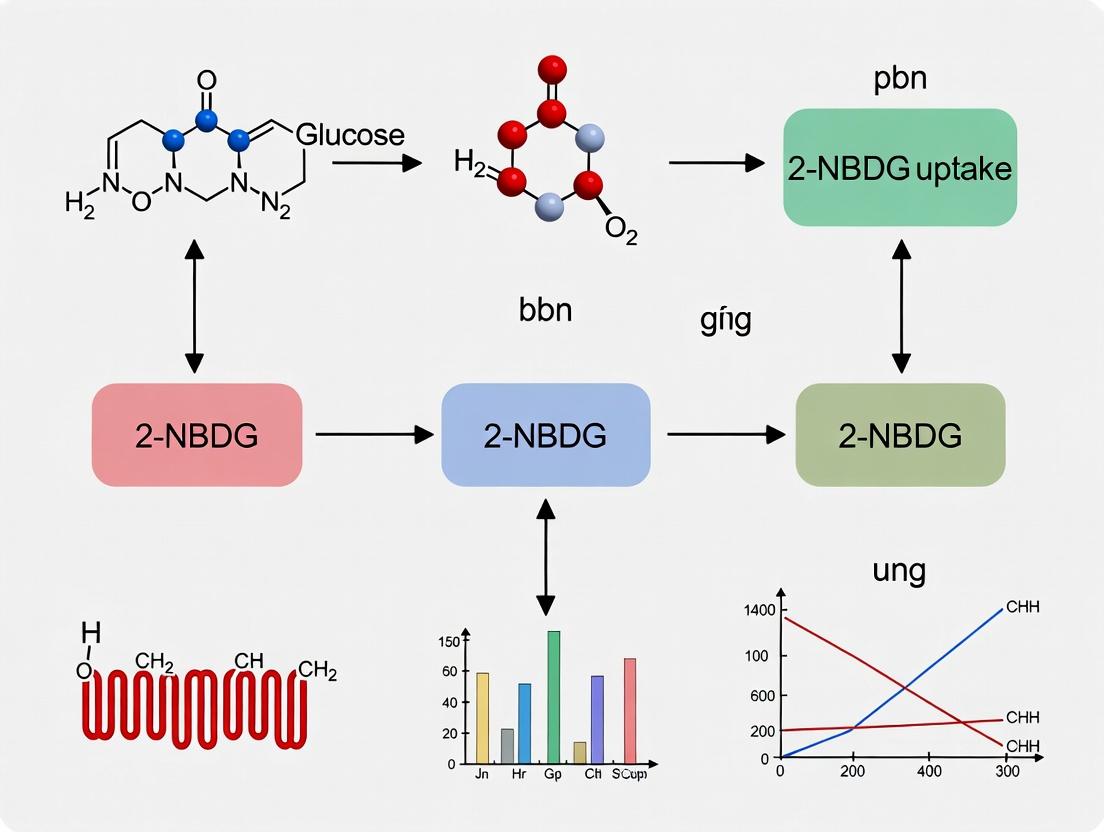
This article provides a comprehensive guide for researchers troubleshooting unexpected 2-NBDG uptake in the presence of classical glucose transporter (GLUT) inhibitors like cytochalasin B or phloretin.
When 2-NBDG Uptake Persists: Troubleshooting Glucose Transporter Blocker Failure in Research Assays
Abstract
This article provides a comprehensive guide for researchers troubleshooting unexpected 2-NBDG uptake in the presence of classical glucose transporter (GLUT) inhibitors like cytochalasin B or phloretin. We explore the foundational science behind 2-NBDG transport mechanisms, detail robust methodological protocols, offer a step-by-step troubleshooting framework, and validate findings through comparative analysis with alternative tracers like FDG and 2-DG. Aimed at scientists in metabolism, oncology, and drug development, this resource bridges theoretical knowledge with practical solutions to ensure accurate interpretation of cellular glucose uptake assays.
Unraveling the Puzzle: Why 2-NBDG Uptake Sometimes Defies GLUT Inhibition
Technical Support Center
FAQs
Q1: My experiment shows robust 2-NBDG uptake even in the presence of high concentrations of classic GLUT inhibitors like cytochalasin B. Does this mean 2-NBDG is not a valid glucose uptake tracer? A: Not necessarily. 2-NBDG is transported into cells, but its uptake mechanism can differ from native D-glucose. Research indicates that while 2-NBDG is a substrate for some GLUT isoforms (e.g., GLUT1, GLUT3), its transport kinetics and inhibitor sensitivity can be distinct. Your observation of non-inhibited uptake may suggest:
- Alternative Transport Pathways: Uptake may be mediated by a different, cytochalasin B-insensitive transporter (e.g., sodium-dependent glucose transporters, SGLTs, in certain cell types).
- Passive Diffusion: At higher concentrations, a component of cellular accumulation may be via passive diffusion, especially in cells with perturbed membranes.
- Non-Specific Binding: Ensure thorough washing steps to remove extracellular, non-specifically bound probe. Recommended Action: Perform a competition experiment with excess unlabeled D-glucose. True, transporter-mediated uptake should be competitively inhibited. Also, test inhibitors for other transporter families (e.g., phlorizin for SGLTs).
Q2: The fluorescence signal from my 2-NBDG experiment is very weak. What are the primary troubleshooting steps? A: Weak signal can stem from several issues. Follow this checklist:
- Probe Stability & Storage: 2-NBDG is light-sensitive and can degrade. Store aliquots at ≤ -20°C, protected from light, and avoid freeze-thaw cycles.
- Loading Concentration & Time: Optimize for your cell type. Typical concentrations range from 50-300 µM, and incubation times from 10-60 minutes. Start with 100 µM for 30 minutes.
- Wash Steps: Use ice-cold, glucose-free buffer (e.g., PBS or HBSS) for washing to immediately halt transport and remove background fluorescence. Perform at least three rapid washes.
- Microscope/FACS Settings: Confirm your instrument's laser/filter set is appropriate for 2-NBDG (Ex/Em ~465/540 nm). Ensure detector gain/PMT voltage is adequately set.
- Cell Health & Confluence: Ensure cells are healthy and at an appropriate confluence (typically 70-90%). Starve cells in low-glucose or glucose-free media for 15-30 minutes prior to loading to upregulate glucose transporters.
Q3: I observe high non-specific background or punctate intracellular staining. What could be the cause? A: Punctate staining often indicates probe sequestration in organelles or non-specific binding.
- Lysosomal Trapping: 2-NBDG, once phosphorylated by hexokinase, can accumulate in acidic compartments. Use inhibitors like chloroquine to test this.
- Incomplete Washing: Extend washing steps or include a brief, mild acid wash (e.g., pH 4.0 buffer) to remove surface-bound probe (validate it doesn't harm your cells).
- Metabolic Fate: Remember that 2-NBDG-6-P is not a significant glycolytic substrate and accumulates. The pattern may reflect metabolic activity. Recommended Action: Include a control with a high dose of unlabeled D-glucose (e.g., 20 mM) to identify specific vs. non-specific signal. Image over time to see if puncta form dynamically.
Q4: How can I validate that my 2-NBDG assay is reporting on glucose transporter activity in the context of transporter blocker research? A: To frame results within a thesis on "2-NBDG uptake not inhibited by glucose transporter blockers," you must design rigorous controls.
- Positive Control for Blockers: Use a radiolabeled glucose uptake assay (e.g., 3H-2-DG) in parallel to confirm your pharmacological blockers (e.g., cytochalasin B, WZB117) are effective on canonical glucose transport in your specific cell model.
- 2-NBDG Specificity Control: Always run a paired condition with a large excess (10-20x) of unlabeled D-glucose to define the "competable" fraction of 2-NBDG uptake.
- Kinetic Analysis: Perform a time- and concentration-dependent uptake assay for 2-NBDG in the presence/absence of blockers. Differences in kinetics can reveal alternative uptake mechanisms.
Key Experimental Protocols
Protocol 1: Validating Transport Specificity in the Presence of Transport Blockers Purpose: To distinguish between GLUT-mediated and non-GLUT-mediated uptake components of 2-NBDG. Materials: Cell culture, 2-NBDG stock (in DMSO or buffer), Cytochalasin B (GLUT inhibitor), Phlorizin (SGLT inhibitor), D-Glucose (for competition), glucose-free assay buffer, fluorescence plate reader/microscope. Steps:
- Seed cells in a 96-well black-walled plate and culture to desired confluence.
- Serum/glucose starve cells for 30 min in glucose-free buffer.
- Pre-treatment (15 min): Add pre-warmed buffer containing: a) Vehicle control, b) Cytochalasin B (e.g., 50 µM), c) Phlorizin (e.g., 0.5 mM), d) Excess D-Glucose (20 mM).
- Loading (30 min): Add 2-NBDG (final conc. 100 µM) directly into each well without removing pre-treatment solutions. Maintain treatments.
- Wash: Rapidly wash cells 3x with large volumes of ice-cold PBS.
- Read: Add ice-cold PBS to wells and measure fluorescence (Ex/Em ~485/535 nm).
- Data Analysis: Normalize fluorescence to vehicle control (100%). Calculate the % inhibition for each condition.
Protocol 2: Parallel 2-NBDG and 2-Deoxy-D-Glucose (2-DG) Uptake Assay Purpose: Directly compare the inhibitor sensitivity of 2-NBDG to the gold-standard, non-fluorescent analog 2-DG. Materials: As above, plus a commercial 2-DG Uptake Assay Kit (Colorimetric/Fluorometric). Steps:
- Prepare identical cell plates for the 2-NBDG assay (Protocol 1) and the 2-DG assay.
- Treat and stimulate both plates in parallel with the same reagents, buffers, and timelines.
- Run the 2-DG assay per manufacturer's instructions (typically involving a detection enzyme mix post-uptake).
- Analyze data. Plot % uptake (relative to control) for both 2-NBDG and 2-DG under each inhibitor condition. Discrepancies highlight mechanistic differences in probe uptake.
Data Presentation
Table 1: Comparison of Key Glucose Analog Transport Properties
| Property | 2-Deoxy-D-Glucose (2-DG) | 2-(N-(7-Nitrobenz-2-oxa-1,3-diazol-4-yl)Amino)-2-Deoxyglucose (2-NBDG) |
|---|---|---|
| Detection Method | Radioactive (³H), Colorimetric | Intrinsic Fluorescence |
| Primary Use | Quantitative uptake measurement, ex vivo | Real-time, live-cell imaging |
| Transport Kinetics (Km) | Similar to D-Glucose (~1-5 mM, varies by cell) | Generally higher (~3-8 mM), cell-type dependent |
| Sensitivity to Cytochalasin B | High (can inhibit >80%) | Variable, often partial (0-50% inhibition reported) |
| Competition by D-Glucose | Yes (highly competable) | Yes (defines specific component) |
| Metabolic Fate | Phosphorylated (by Hexokinase), not metabolized further | Phosphorylated, trapped; may be slowly metabolized |
| Key Advantage | Gold standard for quantitation | Spatial & temporal dynamics in living cells |
| Key Limitation | Endpoint assay, no spatial info | Quantitative rigor can be lower; potential for non-specific signal |
Table 2: Troubleshooting Common 2-NBDG Signal Issues
| Symptom | Possible Cause | Recommended Solution |
|---|---|---|
| Weak or No Signal | 1. Degraded probe2. Incorrect instrument settings3. Insufficient loading time | 1. Use fresh aliquot, check storage.2. Verify Ex/Em filters (465/540 nm).3. Increase concentration (up to 300 µM) or time. |
| High Background | 1. Incomplete washing2. Extracellular probe binding | 1. Increase wash volume/frequency; use ice-cold buffer.2. Include a mild acid wash step or add BSA to wash buffer. |
| Punctate/Non-uniform Staining | 1. Lysosomal trapping2. Cellular stress/toxicity | 1. Co-incubate with lysosomal acidification inhibitor (e.g., chloroquine).2. Check cell health; reduce probe concentration/loading time. |
| Uptake not inhibited by Cytochalasin B | 1. Non-GLUT mediated uptake2. Passive diffusion component | 1. Test SGLT inhibitors (phlorizin).2. Perform 4°C control to assess energy-dependent uptake. |
The Scientist's Toolkit: Key Research Reagent Solutions
| Item | Function/Description |
|---|---|
| 2-NBDG (High Purity) | The core fluorescent glucose analog. Select a vendor providing HPLC-certified purity >95%. |
| Cytochalasin B | A classic, potent inhibitor of facilitative GLUT transporters. Used to test GLUT dependence of uptake. |
| Phlorizin | A potent inhibitor of sodium-glucose linked transporters (SGLTs). Used to test for SGLT-mediated 2-NBDG uptake. |
| 2-Deoxy-D-Glucose (2-DG) | Non-fluorescent metabolic analog. Essential for parallel validation assays. |
| 2-DG Uptake Assay Kit | Commercial kit (colorimetric/fluorometric) for quantitative, parallel measurement of canonical glucose uptake. |
| Glucose-Free Assay Buffer | Buffer (e.g., HBSS, KRB) without glucose, used for starvation and uptake steps to maximize signal-to-noise. |
| Chloroquine Diphosphate | Lysosomotropic agent used to inhibit lysosomal acidification and test for probe sequestration in organelles. |
| D-Glucose (100mM Stock) | Used in excess (10-20 mM) as a competitive agent to define the specific component of 2-NBDG uptake. |
Visualizations
Title: Potential 2-NBDG Uptake Paths Despite GLUT Block
Title: Core 2-NBDG Uptake Assay Workflow
Technical Support Center: Troubleshooting 2-NBDG Uptake Experiments
FAQs & Troubleshooting Guides
Q1: In our experiments, 2-NBDG uptake into our cell line is not inhibited by canonical GLUT blockers like cytochalasin B or phloretin. What could explain this observation?
A1: This is a common issue indicating a deviation from the expected canonical pathway. Potential explanations include:
- Non-GLUT-Mediated Uptake: 2-NBDG may enter cells via passive diffusion or through alternative transporters (e.g., sodium-dependent transporters like SGLTs) in your specific cell model.
- Insufficient Blocker Concentration/Exposure: The pharmacological blockade may be incomplete. Verify your inhibitor concentrations and pre-incubation times.
- GLUT Isoform Specificity: Your cells may express GLUT isoforms with lower affinity for the specific blocker used. Cytochalasin B has varying affinity for different GLUTs.
- Rapid Metabolic Trapping: Once phosphorylated by hexokinase, 2-NBDG-6P is trapped intracellularly. Uptake measurements may reflect this trapped pool, not initial membrane transport, which could mask transporter-specific inhibition.
- Experimental Artifact: High levels of background fluorescence or non-specific binding can obscure the inhibitor-sensitive component.
Recommended Action: Follow the Diagnostic Workflow for Non-Inhibitable 2-NBDG Uptake (see diagram below).
Q2: What are the essential controls to validate that our 2-NBDG assay is specifically measuring GLUT-mediated transport?
A2:
- Negative Control: Measure uptake in the presence of a high concentration (e.g., 20-100 mM) of D-glucose. This competitively inhibits 2-NBDG uptake via GLUTs.
- Pharmacological Control: Use a panel of transport inhibitors (see table below).
- Zero-Time/4°C Control: Incubate cells with 2-NBDG at 4°C or for "zero" time. This establishes baseline non-specific binding/membrane association.
- L-Glucose Control: Use the non-metabolizable, passively diffusing enantiomer L-glucose (or 2-NBDLG) to assess contribution of passive diffusion.
- Sugar Specificity Control: Test inhibition by other metabolizable (mannose) and non-metabolizable (3-O-Methylglucose) sugars.
Q3: We suspect non-canonical uptake via SGLTs. How can we test this pharmacologically?
A3: Perform an inhibition experiment using a specific SGLT inhibitor such as phlorizin. Key protocol:
- Pre-incubate cells with 0.1-0.5 mM phlorizin in sodium-containing buffer for 20 minutes.
- Perform the 2-NBDG uptake assay in the continued presence of phlorizin.
- Critical Parallel Test: Repeat the assay in a sodium-free buffer (replace NaCl with equimolar choline chloride or NMDG-Cl). SGLT activity is sodium-dependent. Inhibition by phlorizin and by sodium depletion confirms SGLT involvement.
Diagnostic Workflow for Non-Inhibitable 2-NBDG Uptake
Key Experimental Protocol: Inhibitor Panel for 2-NBDG Uptake Characterization
Objective: To pharmacologically dissect the mechanism of 2-NBDG uptake in cells. Procedure:
- Plate cells in black-walled, clear-bottom 96-well plates and culture to desired confluence.
- Serum-starve cells in a low-glucose or glucose-free buffer for 1-2 hours before assay to upregulate basal GLUT activity.
- Pre-incubate with inhibitors for 20-30 minutes at 37°C in uptake buffer (e.g., Hanks' Balanced Salt Solution, HBSS).
- Cytochalasin B: 10-50 µM
- Phloretin: 100-400 µM
- Phlorizin: 100-500 µM (for SGLT)
- High D-Glucose: 50 mM (competitive control)
- Vehicle Control: DMSO (≤0.5% final)
- Uptake Phase: Add 2-NBDG (final conc. typically 50-200 µM) directly to the inhibitor-containing buffer. Incubate for 5-15 minutes (time course must be established for your system).
- Termination: Rapidly aspirate solution and wash cells 3x with ice-cold PBS.
- Measurement: Lyse cells in 1% Triton X-100 in PBS. Measure fluorescence in a plate reader (Ex/Em ~465/540 nm). Normalize to total protein content.
| Inhibitor | Primary Target(s) | Typical Working Concentration | Expected Inhibition of Canonical GLUT Transport | Key Consideration |
|---|---|---|---|---|
| Cytochalasin B | GLUT1, 2, 3, 4 (binds to cytoplasmic face) | 10 – 50 µM | >70% | Non-specific at higher conc.; affects actin. |
| Phloretin | Broad GLUT inhibitor (binds exofacial site) | 100 – 400 µM | >80% | Also inhibits anion transport; light-sensitive. |
| WZB117 | GLUT1-specific inhibitor | 10 – 100 µM | 40-80% (GLUT1-specific) | Used to probe GLUT1 contribution. |
| High D-Glucose | All GLUTs (competitive substrate) | 20 – 100 mM | >90% | Best positive control for GLUT-specificity. |
| Phlorizin | SGLT1/2 inhibitor | 100 – 500 µM | 0% (for GLUTs) | Use to rule out sodium-dependent co-transport. |
Canonical GLUT Transport vs. Pharmacological Blockade Pathway
The Scientist's Toolkit: Research Reagent Solutions
| Reagent / Material | Function in 2-NBDG Uptake Assays | Key Notes |
|---|---|---|
| 2-NBDG (2-(N-(7-Nitrobenz-2-oxa-1,3-diazol-4-yl)Amino)-2-Deoxyglucose) | Fluorescent glucose analog used to visualize and quantify glucose uptake. | Not perfectly equivalent to D-glucose. Susceptible to photobleaching. |
| Cytochalasin B | Potent, broad-spectrum GLUT inhibitor. Binds to the intracellular side of the transporter. | Stock in DMSO. Critical control for canonical pathway. Toxic with long exposure. |
| D-Glucose (High Purity) | Used at high concentration (50 mM) as a competitive inhibitor to establish GLUT-specific uptake component. | Essential positive control for transport specificity. |
| L-Glucose or 2-NBDLG | Non-metabolizable enantiomer used to assess the contribution of passive diffusion/fluid-phase endocytosis to total uptake. | Critical negative control for transport specificity. |
| Phlorizin | Specific inhibitor of Sodium-Glucose Linked Transporters (SGLTs). Used to rule out sodium-dependent uptake mechanisms. | Stock in DMSO. Use in sodium-containing vs. sodium-free buffer. |
| Black-walled, Clear-bottom Microplates | Optimal plate type for fluorescence measurements. Minimizes cross-talk and background. | Essential for reliable, quantitative readouts. |
| HBSS (Hanks' Balanced Salt Solution) | Physiological buffer for uptake assays. Can be modified to be glucose-free or sodium-free. | Standardizes extracellular conditions during the assay. |
| Cell Lysis Buffer (e.g., 1% Triton X-100) | Lyse cells to release intracellular fluorescent 2-NBDG-6-phosphate for plate reading. | Ensures uniform measurement of trapped fluorophore. |
Technical Support Center: 2-NBDG Uptake Troubleshooting
Frequently Asked Questions (FAQs)
Q1: My experiment shows significant cellular 2-NBDG uptake even after applying potent GLUT inhibitors like cytochalasin B or phloretin. What does this mean? A1: This strongly indicates the involvement of non-GLUT mediated uptake pathways. Your results point to the "Key Suspects": Sodium-Glucose Linked Transporters (SGLTs), passive diffusion (especially at high 2-NBDG concentrations), or fluid-phase/pinocytotic endocytosis. A systematic inhibitor panel is required to diagnose the dominant mechanism.
Q2: How can I experimentally distinguish between SGLT-mediated uptake and passive diffusion of 2-NBDG? A2: Perform a two-pronged experiment: 1) Ion Dependence: Replace extracellular sodium with choline or NMDG. SGLT activity is sodium-dependent, so uptake will drop sharply. Passive diffusion is ion-independent. 2) Kinetics: Conduct a concentration-dependent uptake assay (e.g., 10 µM to 1 mM). SGLTs will show saturable kinetics, while passive diffusion appears linear and non-saturable.
Q3: What are the best pharmacological tools to inhibit endocytic uptake of 2-NBDG? A3: Use low-temperature incubation (4°C) to halt all active endocytosis. For more specific inhibition, use dynamin inhibitors (e.g., Dynasore, 80 µM) or disrupt clathrin with Pitstop compounds. Note: These can have off-target effects; include appropriate vehicle controls.
Q4: At what 2-NBDG concentration does passive diffusion become a major confounding factor? A4: Published data suggests that above 100 µM, passive diffusion can contribute significantly to total cellular fluorescence. For studies focusing on transporter-mediated uptake, it is recommended to use 2-NBDG at concentrations ≤ 50 µM.
Q5: How do I confirm that my detected fluorescence is from intracellular 2-NBDG and not membrane-bound probe? A5: Include a rigorous wash step with ice-cold PBS containing a competitive inhibitor of GLUTs/SGLTs (e.g., 500 mM D-glucose) to displace membrane-bound probe. Alternatively, use trypan blue (0.2%) as a fluorescence quencher for extracellular dye.
Troubleshooting Guides
Issue: High Background/Uptake in Negative Controls.
- Check 1: Verify 2-NBDG concentration. High concentrations (>100 µM) promote passive diffusion.
- Check 2: Confirm inhibitor solubility and stability. Cytochalasin B is light-sensitive; prepare fresh in DMSO.
- Check 3: Ensure sodium-free buffer is correctly formulated and pH-adjusted.
- Action Protocol: Run a concentration curve (10, 50, 100, 250 µM 2-NBDG) with and without sodium. Plot uptake vs. concentration to identify linear (diffusive) vs. saturable (transporter) components.
Issue: Inconsistent Inhibition Results Across Cell Lines.
- Check 1: Screen for SGLT expression (primarily SGLT1, SGLT2) in your cell line via RT-PCR or western blot. Some epithelial, cancer, or engineered lines express SGLTs.
- Check 2: Assess metabolic state. High cell confluence or low glucose media can upregulate alternative uptake mechanisms.
- Action Protocol: Treat cells with 1 mM phlorizin (broad SGLT inhibitor) for 30 min prior to and during 2-NBDG incubation. Compare inhibition to cytochalasin B (GLUT-specific).
Issue: Differentiating Endocytosis from Transporter Uptake.
- Check 1: Perform a temperature shift assay. Incubate cells with 2-NBDG at 4°C (blocks endocytosis and most transporters) and 37°C.
- Check 2: Use a chemical endocytosis inhibitor panel.
- Action Protocol:
- Pre-treat cells at 37°C for 30 min with: a) Dynasore (80 µM), b) Methyl-β-cyclodextrin (5 mM, disrupts lipid rafts), c) Control vehicle.
- Add 2-NBDG (recommended 50 µM) and incubate for 15-60 min.
- Image live or lyse for fluorescence measurement.
- Significant reduction in conditions (a) and/or (b) indicates endocytic contribution.
Table 1: Inhibitor Profiles for Key Uptake Suspects
| Mechanism | Key Inhibitor/Intervention | Typical Working Concentration | Expected % Inhibition of 2-NBDG Uptake* | Important Controls |
|---|---|---|---|---|
| GLUTs | Cytochalasin B | 20 µM | 70-90% | DMSO vehicle |
| GLUTs | Phloretin | 200 µM | 60-85% | Ethanol vehicle |
| SGLTs | Phlorizin | 1 mM | 0-50% (Cell-type dependent) | Check solubility |
| SGLTs | Sodium Depletion | N/A (Choline Cl replacement) | Varies widely | Osmolarity/pH match |
| Endocytosis | Low Temperature (4°C) | N/A | 50-100% of active component | Pre-chill all buffers |
| Endocytosis | Dynasore | 80 µM | 30-70% of endocytic component | DMSO vehicle, cytotoxicity check |
| Passive Diffusion | High [D-Glucose] | 500 mM (in wash buffer) | Minimal (displaces surface binding) | Used in quenching steps |
*Percent inhibition is relative to untreated control uptake and highly dependent on cell type, 2-NBDG concentration, and incubation time.
Table 2: Diagnostic Experimental Outcomes
| Experimental Condition | Uptake Primarily via GLUTs | Uptake Primarily via SGLTs | Uptake via Endocytosis | Uptake via Passive Diffusion |
|---|---|---|---|---|
| + Cytochalasin B | Strongly ↓ | Unchanged | Unchanged | Unchanged |
| + Phlorizin | Unchanged | Strongly ↓ | Unchanged | Unchanged |
| Incubation at 4°C | Strongly ↓ | Strongly ↓ | Strongly ↓ | Unchanged or Slightly ↓ |
| Sodium-Free Buffer | Unchanged | Strongly ↓ | Unchanged | Unchanged |
| Uptake vs. [2-NBDG] Plot | Saturatable (Michaelis-Menten) | Saturatable (Michaelis-Menten) | Saturatable (can appear linear) | Linear, Non-Saturable |
Experimental Protocols
Protocol 1: Distinguishing Transporter vs. Endocytic Uptake (Temperature & Inhibitor Assay)
- Seed cells in 24-well or 96-well black-walled plates.
- Pre-treatment (30 min): For test wells, add pre-warmed media containing: a) 20 µM Cytochalasin B, b) 80 µM Dynasore, c) Combined Cytochalasin B + Dynasore, d) Vehicle control. Include a separate plate for 4°C condition.
- 2-NBDG Incubation: Replace media with Krebs-Ringer buffer containing 50 µM 2-NBDG and the respective inhibitors. Incubate for 30 min at 37°C (or 4°C for cold plate).
- Wash: Aspirate and wash 3x with ice-cold PBS containing 500 mM D-glucose to displace surface-bound probe.
- Lysis & Measurement: Lyse cells in RIPA buffer. Measure fluorescence (Ex/Em ~465/540 nm) and normalize to total protein (BCA assay).
Protocol 2: Sodium-Dependence Assay for SGLT Activity
- Prepare Buffers: Create two Krebs-Ringer-HEPES buffers: one with 140 mM NaCl (+Na⁺) and one with 140 mM NMDG-Cl (-Na⁺). Adjust pH to 7.4.
- Deprivation: Wash cells 2x with the respective sodium-free or sodium-containing buffer.
- Pre-incubate (15 min): Incubate cells in the final assay buffers (+/- Na⁺).
- Uptake: Add 2-NBDG (10-100 µM) in the same buffers. Incubate 15 min at 37°C.
- Quench & Analyze: Wash 3x with ice-cold, inhibitor-containing PBS, lyse, and measure as in Protocol 1.
The Scientist's Toolkit: Research Reagent Solutions
| Item / Reagent | Function / Role in Troubleshooting |
|---|---|
| 2-NBDG (2-[N-(7-Nitrobenz-2-oxa-1,3-diazol-4-yl)Amino]-2-Deoxy-D-Glucose) | Fluorescent D-glucose analog. Primary probe for tracking glucose uptake. |
| Cytochalasin B | Potent, broad-spectrum inhibitor of facilitative GLUT transporters. First-line tool to block GLUT-mediated uptake. |
| Phlorizin | Competitive inhibitor of Sodium-Glucose Linked Transporters (SGLTs). Diagnostic tool for sodium-dependent uptake. |
| Dynasore | Cell-permeable inhibitor of dynamin GTPase activity. Blocks clathrin- and caveolin-mediated endocytosis. |
| Methyl-β-Cyclodextrin | Cholesterol-depleting agent. Disrupts lipid rafts and inhibits raft-dependent endocytosis pathways. |
| Phloretin | Alternative GLUT inhibitor (less specific than cytochalasin B). Useful for confirmatory inhibition studies. |
| Sodium-Free Buffers (NMDG-Cl or Choline-Cl) | Replaces NaCl to create sodium-depleted extracellular environment. Critical for testing SGLT dependence. |
| Trypan Blue (0.2%) | Fluorescence quencher. Used post-incubation to quench extracellular 2-NBDG signal, confirming intracellular localization. |
Visualizations
Diagram 1: Diagnostic flowchart for non-GLUT 2-NBDG uptake
Diagram 2: General 2-NBDG uptake assay workflow
Technical Support Center: 2-NBDG Uptake & Transporter Specificity Troubleshooting
Frequently Asked Questions (FAQs)
Q1: My experiment shows significant 2-NBDG uptake even in the presence of high concentrations of classical GLUT inhibitors like cytochalasin B or phloretin. Does this mean 2-NBDG is not a valid glucose uptake probe? A: Not necessarily. 2-NBDG's structure (2-[N-(7-nitrobenz-2-oxa-1,3-diazol-4-yl)amino]-2-deoxy-D-glucose) differs from native glucose. The large, fluorescent NBD moiety can alter transporter affinity and allow entry through pathways with lower specificity, such as passive diffusion or other solute carriers (e.g., sodium-dependent transporters in certain cell types). Your observation is a key focus of current research.
Q2: Which glucose transporters are most and least likely to transport 2-NBDG based on current literature? A: Based on recent studies (2023-2024), the affinity varies significantly.
Table 1: Reported 2-NBDG Affinity for Key Glucose Transporters
| Transporter | Type | Reported 2-NBDG Transport Efficiency | Key Structural Consideration |
|---|---|---|---|
| GLUT1 | Facilitative diffusion | Moderate to High | Tolerates NBD modification but kinetics differ from D-glucose. |
| GLUT4 | Insulin-responsive | Moderate | Uptake can be insulin-stimulated, but inhibitor sensitivity is reduced vs. native glucose. |
| GLUT3 | Facilitative (neuronal) | High | High basal affinity for hexoses may accommodate the probe. |
| SGLT1 | Sodium-dependent | Low/Controversial | Steric hindrance from NBD group typically prohibits uptake, but some reports note minor activity. |
| SGLT2 | Sodium-dependent | Very Low | Structure is generally incompatible with the bulky fluorescent tag. |
| Passive Diffusion | N/A | Context-Dependent (Low/Moderate) | Can be significant in plasma membrane with high probe concentration. |
Q3: How can I experimentally confirm that my observed 2-NBDG uptake is specifically through facilitative glucose transporters (GLUTs)? A: Employ a multi-pronged inhibitory and competitive protocol. See the detailed protocol below.
Q4: What are the best controls for a 2-NBDG uptake assay to account for non-specific binding and background fluorescence? A: Essential controls include: 1) Cells incubated at 4°C to arrest active transport, 2) Cells treated with a high dose of unlabeled D-glucose (e.g., 100x molar excess), 3) Cells treated with a combination of GLUT and SGLT inhibitors, 4) A "no-cells" background well.
Troubleshooting Guides
Issue: High, non-inhibitable background fluorescence in 2-NBDG assays.
- Potential Cause 1: Non-specific binding of 2-NBDG to the cell surface or plate well.
- Solution: Implement rigorous wash steps with ice-cold PBS or a stop solution containing phloretin. Include the 4°C control.
- Potential Cause 2: Passive diffusion dominates uptake in your cell model.
- Solution: Perform a time-course and concentration-dependence experiment. Passive diffusion is often linear with time and concentration, while carrier-mediated transport saturates.
- Potential Cause 3: Intracellular metabolism of 2-NBDG to other fluorescent products (e.g., 2-NBDG-6-phosphate) that are trapped but not related to initial transport.
- Solution: Use HPLC or TLC to check for metabolite formation. Consider using a non-metabolizable analog if transport only is being studied.
Issue: Inconsistent 2-NBDG uptake readings between replicates.
- Potential Cause: Variable cell confluency or health affecting transporter expression.
- Solution: Standardize seeding density and time. Confirm monolayer integrity. Use a viability dye (e.g., propidium iodide) to gate out dead cells in flow cytometry assays. Normalize 2-NBDG fluorescence to total protein content or cell number.
Experimental Protocol: Validating Transporter Specificity for 2-NBDG Uptake
Title: Protocol for Distinguishing GLUT-Mediated vs. Non-Specific 2-NBDG Uptake.
Objective: To delineate the contribution of classical GLUT pathways to total cellular 2-NBDG internalization.
Materials (Research Reagent Solutions):
- 2-NBDG Stock Solution: (1-10 mM in DMSO or buffer). Function: Fluorescent glucose analog for uptake visualization/quantification.
- Cytochalasin B Stock: (10-50 mM in DMSO). Function: Potent, broad-spectrum inhibitor of facilitative GLUTs.
- Phloretin Stock: (100-500 mM in DMSO or Ethanol). Function: Inhibitor of GLUTs and passive glucose permeability.
- D-Glucose (Unlabeled) Solution: (1M in buffer). Function: Competitive substrate for glucose transporters.
- Phlore tin Stock: (100 mM in DMSO). Function: Specific inhibitor of SGLT transporters (negative control for GLUT activity).
- Assay Buffer: (e.g., Hanks' Balanced Salt Solution, HBSS). Function: Physiologic buffer for incubation steps.
- Ice-cold PBS: Function: Stop solution and wash buffer to halt transport activity.
Methodology:
- Cell Preparation: Seed cells in a 24- or 96-well plate to reach 80-90% confluency at assay time.
- Pre-treatment (30 min): Replace medium with assay buffer containing one of the following:
- Condition A (Control): Buffer only.
- Condition B (GLUT Inhibition): Buffer + 50 µM Cytochalasin B.
- Condition C (GLUT Inhibition + SGLT Inhibition): Buffer + 50 µM Cytochalasin B + 100 µM Phloridzin.
- Condition D (Competition): Buffer + 50 mM unlabeled D-Glucose.
- Condition E (4°C Control): Buffer only, plate moved to 4°C.
- 2-NBDG Uptake (10-30 min): Add 2-NBDG to a final concentration of 50-200 µM directly to each well. Incubate at 37°C (except Condition E).
- Termination: Aspirate solution rapidly. Wash cells 3x with ice-cold PBS.
- Analysis:
- For fluorescence plate readers: Lyse cells in RIPA buffer or 1% Triton X-100. Measure fluorescence (Ex/Em ~465/540 nm). Normalize to total protein.
- For flow cytometry: Trypsinize cells, resuspend in ice-cold PBS, and analyze immediately.
- Interpretation: Compare uptake in inhibitor/competitor conditions (B-D) to Control (A). Residual uptake in Conditions B & C suggests non-GLUT, non-SGLT mediated entry (e.g., passive diffusion).
Pathway & Workflow Diagrams
Diagram Title: 2-NBDG Uptake Troubleshooting Decision Tree
Diagram Title: Potential Cellular Uptake Pathways for 2-NBDG
Troubleshooting Guides and FAQs
FAQ 1: Why do I observe significant 2-NBDG uptake in my cells despite pre-treatment with classic GLUT inhibitors like cytochalasin B or phloretin?
- Answer: Blocker-insensitive 2-NBDG uptake is a documented phenomenon. Potential causes and verification steps include:
- Non-GLUT Mediated Uptake: Uptake may occur via fluid-phase endocytosis (macropinocytosis) or other non-specific mechanisms. Perform a parallel assay with a non-metabolizable, fluorescent dextran (e.g., Texas Red-dextran) to quantify endocytic contribution.
- Inhibitor Efficacy: Verify inhibitor concentration, solubility, and pre-incubation time. For cytochalasin B, ensure DMSO concentration is controlled (<0.1% v/v).
- 2-NBDG Purity & Isomers: Commercial 2-NBDG is a mixture of D- and L-isomers. The L-isomer is taken up independently of GLUTs. Use HPLC-purified D-2-NBDG for specific GLUT-mediated uptake studies.
- Cell Type-Specific Pathways: Some cancer cell lines (e.g., certain glioblastomas) exhibit overexpression of sodium-glucose co-transporters (SGLTs), which are insensitive to cytochalasin B. Test sensitivity to an SGLT inhibitor like phlorizin.
FAQ 2: My positive control (e.g., insulin-stimulated adipocytes) shows expected inhibition, but my experimental cell line does not. How do I proceed?
- Answer: This suggests a cell-intrinsic mechanism. Follow this experimental decision tree:
FAQ 3: How can I accurately quantify and normalize the blocker-insensitive component of uptake?
- Answer: Use a standardized protocol with internal controls. Run the following conditions in parallel and normalize all values to total cellular protein.
Table 1: Experimental Conditions for Quantifying Insensitive Uptake
| Condition | 2-NBDG | Inhibitor(s) | Purpose | Expected Outcome vs. Control |
|---|---|---|---|---|
| A. Baseline Control | 50-100 µM | None | Total uptake | 100% |
| B. GLUT Inhibition | 50-100 µM | Cytochalasin B (20 µM) | GLUT-specific component | 20-70% inhibition (cell-type dependent) |
| C. Endocytosis Control | 50-100 µM | Latrunculin A (5 µM) or 4°C incubation | Macro-pinocytosis contribution | Varies widely |
| D. Dual Block | 50-100 µM | Cytochalasin B + Phlorizin (500 µM) | Residual non-specific uptake | Defines true "insensitive" baseline |
| E. Dextran Control | Texas Red-Dextran (50 µg/mL) | Optional | Direct endocytosis measure | Quantifies fluid-phase uptake |
Protocol:
- Plate cells in 96-well black-walled plates.
- Pre-incubate with appropriate inhibitors or vehicle for 30-45 min in serum-free, low-glucose media.
- Add 2-NBDG (and inhibitors) for the uptake period (typically 30 min).
- Wash 3x with ice-cold PBS.
- Measure fluorescence (Ex/Em ~465/540 nm).
- Lyse cells for protein assay (e.g., BCA). Express data as Fluorescence Intensity / µg protein.
The Scientist's Toolkit: Key Research Reagent Solutions
Table 2: Essential Reagents for Investigating Blocker-Insensitive 2-NBDG Uptake
| Reagent | Function/Explanation | Example Vendor/ Catalog Consideration |
|---|---|---|
| D-2-NBDG (HPLC purified) | The active D-isomer for studying specific glucose transporter-mediated uptake. Eliminates signal from L-isomer uptake. | Cayman Chemical, #600870 |
| Cytochalasin B | Potent, broad-spectrum inhibitor of facilitative GLUT transporters (GLUT1-4). Standard for defining GLUT-sensitive uptake. | Sigma-Aldrich, #C6762 |
| Phloretin | Alternative GLUT inhibitor; also inhibits SGLT1 at high concentrations. Useful for comparative inhibition studies. | Tocris, #2326 |
| Phlorizin | Specific inhibitor of Sodium-Glucose Linked Transporters (SGLTs). Used to test for SGLT-mediated uptake components. | Sigma-Aldrich, #P3449 |
| Latrunculin A | Actin polymerization inhibitor. Suppresses macropinocytosis, allowing assessment of endocytic contribution. | Abcam, #ab144290 |
| Texas Red- or FITC-Dextran (70 kDa) | Fluid-phase endocytosis marker. Run in parallel to directly measure and subtract pinocytotic uptake. | Thermo Fisher, D1864 / D1821 |
| 2-Deoxy-D-Glucose (2-DG) | Non-fluorescent competitive substrate for GLUTs and hexokinase. Validates specificity of 2-NBDG uptake pathway. | Sigma-Aldrich, #D8375 |
Experimental Protocol: Validating the Uptake Mechanism
Title: Three-Pronged Assay for Mechanism Identification
Objective: To systematically determine the primary mechanism of observed blocker-insensitive 2-NBDG uptake in a novel cell line.
Detailed Methodology:
- Cell Preparation: Seed cells to achieve 80% confluency at assay time.
- Prong 1 - Endocytosis:
- Prepare serum-free uptake media containing 100 µM 2-NBDG and 50 µg/mL Texas Red-Dextran (70kDa).
- Wash cells, add media, and incubate at 37°C and 4°C (inhibits endocytosis) for 30 minutes.
- Wash, lyse, and measure fluorescence in both channels. Plot 2-NBDG vs. TR-Dextran signal for each cell lysate.
- Prong 2 - Transporter Pharmacology:
- Pre-incubate cells for 45 min in serum-free media with: Vehicle (0.1% DMSO), 20 µM Cytochalasin B, 500 µM Phlorizin, or both inhibitors.
- Add 100 µM 2-NBDG (maintaining inhibitors) for 30 min.
- Wash, lyse, and measure fluorescence. Normalize to protein.
- Prong 3 - Metabolic Dependence:
- For ATP depletion: Pre-incubate cells for 1 hour with 10 mM sodium azide and 50 mM 2-Deoxy-D-Glucose in glucose-free media.
- For Na⁺-dependence: Replace NaCl in uptake buffer with equimolar Choline Chloride.
- Perform 2-NBDG uptake assay in these modified buffers.
- Analysis: Integrate results from all three prongs to assign the dominant uptake mechanism.
Best Practices for Reliable 2-NBDG Uptake and Inhibition Assays
Technical Support Center: Troubleshooting 2-NBDG Uptake Assays
Introduction This support center is designed within the context of a thesis investigating anomalous 2-NBDG (2-[N-(7-nitrobenz-2-oxa-1,3-diazol-4-yl)amino]-2-deoxy-D-glucose) uptake that persists despite the application of canonical glucose transporter (GLUT) inhibitors. It provides targeted troubleshooting for protocol optimization to resolve confounding experimental results.
Troubleshooting Guides & FAQs
Q1: Despite using cytochalasin B, my cells still show significant 2-NBDG fluorescence. What could be wrong? A: This core issue suggests non-specific uptake or protocol artifacts. Follow this diagnostic checklist:
- Verify Inhibitor Integrity & Concentration: Ensure cytochalasin B (or phloretin) is freshly prepared in DMSO and used at standard inhibitory concentrations (e.g., 20-50 µM for cytochalasin B). Pre-incubate cells with inhibitor for 20-30 minutes before adding 2-NBDG.
- Confirm Glucose Deprivation: Residual high glucose (>5 mM) in the assay buffer competes with 2-NBDG but not with the inhibitor's binding. This can paradoxically make inhibitor effects seem less potent. Use a no-glucose or low-glucose (1-2 mM) buffer during the uptake phase.
- Check for Organic Anion Transporter (OAT) Activity: 2-NBDG is a substrate for some OATs. Its uptake in the presence of GLUT blockers may be mediated by these transporters. Include a control with probenecid (a common OAT inhibitor) at 1-5 mM.
- Assess Passive Diffusion & Pinocytosis: At high concentrations, 2-NBDG may enter via fluid-phase pinocytosis or passive diffusion. Perform an incubation at 4°C. Uptake at 4°C should be minimal; significant signal indicates substantial non-specific membrane association or pinocytosis.
Q2: My background fluorescence is too high, obscuring specific signal. How can I optimize the wash steps? A: High background is often due to incomplete removal of extracellular 2-NBDG.
- Optimized Wash Protocol:
- Ice-cold PBS Wash: Immediately after incubation, place cells on ice. Aspirate medium and wash 3x with large volumes (e.g., 2 mL per well in a 6-well plate) of ice-cold phosphate-buffered saline (PBS). The cold temperature halts transporter activity.
- Include Competitive Substrate: Add 10-20 mM D-glucose to the ice-cold PBS wash buffer. This will displace any 2-NBDG loosely bound to extracellular transporter domains.
- Centrifugation for Suspension Cells: For suspension cells, wash by centrifugation (300-500 x g, 3-4 min at 4°C) and carefully aspirate supernatant.
- Control: Always include a "0°C control" (incubation on ice) to quantify and subtract background, non-specific binding.
Q3: What is the optimal concentration and incubation time for 2-NBDG to measure initial uptake rates? A: To measure linear, initial uptake rates and avoid saturation:
- Recommended Parameters: Use a low µM concentration (typically 10-100 µM) and a short incubation time (5-15 minutes). This minimizes contributions from passive diffusion, metabolism, and efflux.
- Must-Do Optimization: You must perform a time course and concentration curve for your specific cell type. Uptake kinetics vary dramatically between cell lines.
Table 1: Optimization Parameters for 2-NBDG Uptake Assay
| Parameter | Recommended Starting Point | Purpose & Optimization Note |
|---|---|---|
| 2-NBDG Concentration | 50 µM | Use low µM range to approximate physiological glucose uptake kinetics and stay within detector linear range. |
| Incubation Time | 10 minutes | Must be within linear phase of uptake. Perform a 0, 5, 10, 20, 30 min time course. |
| Assay Temperature | 37°C (Test) vs. 4°C (Control) | The difference (37°C - 4°C) represents specific, temperature-dependent uptake. |
| Pre-incubation Buffer | Glucose-free, serum-free medium | Depletes intracellular glucose stores to upregulate basal GLUT activity. |
| Uptase Buffer | Hanks' Balanced Salt Solution (HBSS) with 1 mM glucose | Provides ionic balance and minimal competition. |
| Key Inhibitor (Cytochalasin B) | 50 µM, 30 min pre-incubation | Standard GLUT inhibitor control. Confirm solubility and stock stability. |
| OAT Inhibitor (Probenecid) | 2.5 mM, co-incubated with 2-NBDG | Control for non-GLUT mediated uptake routes. |
Q4: How should I handle and prepare my cell samples to ensure consistent results? A: Detailed Cell Preparation Protocol:
- Seeding: Seed cells at a consistent, sub-confluent density (e.g., 70-80%) 24-48 hours before assay to ensure active, logarithmic growth.
- Serum & Glucose Starvation: 2-4 hours before assay, replace growth medium with glucose-free, serum-free medium. This synchronizes metabolic state and upregulates surface GLUTs.
- Inhibitor Pre-treatment: Add prepared inhibitors (or vehicle control) directly to the starvation medium for the final 30 minutes of starvation.
- Uptake Initiation: Gently replace medium with pre-warmed (37°C) uptake buffer (e.g., HBSS) containing 2-NBDG ± inhibitors. Avoid disturbing the cell monolayer.
- Termination & Washing: At precise time points, rapidly aspirate uptake buffer and follow the ice-cold wash protocol (Q2).
- Analysis: For fluorescence plate readers, lyse cells in a mild detergent (e.g., 1% Triton X-100 in PBS). Measure fluorescence (Ex/Em ~465/540 nm). Normalize to total protein content.
The Scientist's Toolkit: Key Reagent Solutions
Table 2: Essential Materials for 2-NBDG Uptake Studies
| Reagent/Material | Function & Critical Notes |
|---|---|
| 2-NBDG | Fluorescent D-glucose analog. Aliquot and protect from light. Reconstitute in DMSO or buffer as per manufacturer. |
| Cytochalasin B | Potent, non-competitive GLUT inhibitor. Light-sensitive. Prepare fresh stock in DMSO. |
| Phloretin | Competitive GLUT inhibitor. Alternative to cytochalasin B. Prepare in ethanol or DMSO. |
| Probenecid | Organic anion transporter (OAT) inhibitor. Used to identify non-GLUT uptake pathways. Soluble in NaOH, then buffer. |
| Glucose-free Assay Buffer (e.g., HBSS) | Provides physiological ion balance without glucose competition. Must be pre-warmed to 37°C. |
| Ice-cold PBS with D-Glucose | Critical wash buffer to stop uptake and displace surface-bound 2-NBDG. |
| Cell Lysis Buffer (1% Triton X-100) | For plate-reader assays, releases intracellular 2-NBDG for quantification. |
| BCA Protein Assay Kit | For normalization of fluorescence signal to total cellular protein, correcting for well-to-well cell number variance. |
Experimental Visualizations
Diagram 1: 2-NBDG Uptake & Inhibition Pathways
Diagram 2: Troubleshooting Experimental Workflow
Troubleshooting Guides & FAQs
Q1: I am using Cytochalasin B (CytoB) to inhibit glucose transporters (GLUTs) in my 2-NBDG uptake assay, but I see no inhibition. What are the common causes? A1: Common causes include: 1) Incorrect concentration: Typical working concentrations for CytoB are 10-50 µM. Lower concentrations may be insufficient. 2) Insufficient pre-incubation: Cells should typically be pre-incubated with CytoB for 15-30 minutes at 37°C prior to adding 2-NBDG. 3) Solvent interference: CytoB is commonly dissolved in DMSO. Ensure the final DMSO concentration does not exceed 0.5% (v/v), as higher amounts can be toxic or alter membrane fluidity. 4) Off-target uptake: 2-NBDG uptake may occur via non-GLUT mediated pathways or passive diffusion in your specific cell type. 5) Blocker instability: Prepare fresh stock solutions and protect from light.
Q2: Phloretin also fails to inhibit 2-NBDG uptake in my experiment. What should I check regarding its preparation and use? A2: Verify the following: 1) Solubility and stock preparation: Phloretin has limited aqueous solubility. Prepare a concentrated stock (e.g., 100-200 mM) in high-quality DMSO or ethanol. Vortex and sonicate to ensure complete dissolution. 2) Working concentration: Effective concentrations typically range from 50-200 µM. 3) Pre-incubation time: A minimum of 10-20 minutes pre-incubation is recommended. 4) pH sensitivity: Phloretin's activity can be pH-dependent. Ensure your assay buffer is within physiological pH (7.2-7.4). 5) Potential for non-specific effects: At high concentrations (>200 µM), phloretin can affect membrane integrity. Include a vehicle control with the same final solvent concentration.
Q3: What are the recommended concentrations and pre-incubation times for other common GLUT inhibitors? A3: See Table 1 below.
Q4: My positive control (e.g., high unlabeled D-glucose) inhibits 2-NBDG uptake, but pharmacological blockers do not. What does this indicate? A4: This suggests that 2-NBDG uptake is likely GLUT-mediated (since it's competed by D-glucose) but the specific pharmacological agent is ineffective under your conditions. Re-evaluate: 1) Blocker potency: Some GLUT isoforms have differential sensitivity to blockers. Research the predominant GLUT isoforms expressed in your cell model. 2) Experimental conditions: Temperature (uptake should be performed at 37°C, not on ice), assay buffer composition, and cell confluency can all impact blocker efficacy. 3) Inhibitor stability and storage: Store stock aliquots at -20°C or -80°C, protected from light and moisture. Avoid repeated freeze-thaw cycles.
Q5: How do I design a proper control experiment when testing these blockers? A5: Include the following controls in every experiment:
- Vehicle Control: Cells treated with the solvent (DMSO, ethanol) at the same final concentration used for the blocker.
- Negative Control: Cells incubated with a large excess of unlabeled D-glucose (e.g., 100 mM) to confirm specific, competitive GLUT-mediated uptake.
- Baseline Control: Cells incubated with 2-NBDG alone (no blocker, no excess glucose).
- Cytotoxicity Control: Perform a viability assay (e.g., Trypan Blue, MTT) paralleling your blocker treatment conditions to rule out non-specific inhibition due to cell death.
Q6: The solubility of these blockers is challenging. What are the best practices for preparing stock solutions? A6:
- Cytochalasin B: Dissolve in DMSO to make a 5-10 mM stock. It can also be dissolved in ethanol.
- Phloretin: Dissolve in DMSO or absolute ethanol to make a 100-200 mM stock. Gentle warming (37°C water bath) and sonication may be required.
- General Rule: Always add the concentrated stock solution to the pre-warmed assay buffer while vortexing to prevent precipitation. If cloudiness occurs, the blocker may have precipitated out of solution.
Data Tables
Table 1: Common Glucose Transporter Blockers: Concentrations, Solubility, and Protocol
| Blocker Name | Primary Target(s) | Typical Stock Solvent | Common Stock Concentration | Typical Working Concentration | Recommended Pre-Incubation Time | Key Considerations |
|---|---|---|---|---|---|---|
| Cytochalasin B | Broad GLUT inhibitor (binds to glucose-binding site) | DMSO, Ethanol | 5-10 mM | 10 - 50 µM | 15 - 30 min | Light-sensitive. Can inhibit actin polymerization at higher concentrations. |
| Phloretin | Broad GLUT inhibitor (binds to external site) | DMSO, Ethanol | 100-200 mM | 50 - 200 µM | 10 - 20 min | pH-sensitive. Can act as a non-specific membrane perturbant at high [ ]. |
| WZB117 | GLUT1 inhibitor | DMSO | 50-100 mM | 10 - 100 µM | 30 - 60 min | Requires longer pre-incubation for full effect. Check solubility in final buffer. |
| BAY-876 | Potent, selective GLUT1 inhibitor | DMSO | 10-50 mM | 1 - 100 nM | 60+ min | Highly potent. Use low nanomolar range to avoid off-target effects. |
| Fasentin | GLUT1 inhibitor | DMSO | 50-100 mM | 50 - 200 µM | 30 - 60 min | Also reported to sensitize cells to apoptosis. |
Table 2: Troubleshooting 2-NBDG Uptake Not Inhibited by Blockers
| Problem | Potential Cause | Suggested Solution |
|---|---|---|
| No inhibition with any blocker | 1. Non-GLUT mediated uptake (passive diffusion, other transporters).2. Cell line expresses insensitive GLUT isoforms.3. Blocker stocks degraded or prepared incorrectly. | 1. Run a temperature-dependence assay (4°C vs 37°C).2. Perform qPCR/western blot to characterize GLUT expression profile.3. Prepare fresh stocks from powder; verify solubility. |
| Inhibition only by excess D-glucose, not pharmacological blockers | 1. Insufficient blocker concentration or pre-incubation time.2. Assay conditions (buffer, pH) inactivate blocker.3. Intracellular metabolism or sequestration of blocker. | 1. Perform a dose-response curve with extended pre-incubation (e.g., 60 min).2. Review literature for optimal buffer for your specific blocker.3. Consider using a different inhibitor class. |
| High variability in blocked vs. unblocked signal | 1. Inconsistent cell number/health.2. Blocker not uniformly mixed in assay well.3. Edge effects in microplate. | 1. Normalize 2-NBDG fluorescence to cell number (e.g., via DNA stain).2. Ensure thorough mixing after adding blocker.3. Avoid using outer wells of plate; use them for buffer blanks. |
Experimental Protocols
Protocol 1: Standard 2-NBDG Uptake Assay with Blocker Pre-incubation
- Cell Preparation: Seed cells in a 96-well black-walled, clear-bottom plate. Culture until desired confluency (typically 70-90%).
- Starvation (Optional but recommended): Wash cells twice with warm, serum-free, low-glucose (or glucose-free) culture medium or PBS. Incubate in this medium for 30-60 min at 37°C to reduce basal glucose uptake.
- Blocker Pre-incubation: Prepare working concentrations of blockers in warm uptake buffer (e.g., Krebs-Ringer-Phosphate-HEPES (KRPH) buffer, pH 7.4). Remove starvation medium and add 80 µL/well of blocker or vehicle control solution. Incubate plate at 37°C for the recommended time (see Table 1).
- 2-NBDG Uptake: Without washing, add 20 µL/well of 2-NBDG prepared in warm uptake buffer to achieve a final concentration (typically 50-200 µM). For negative control, add 2-NBDG mixed with a high concentration of unlabeled D-glucose (e.g., 100 mM final). Incubate at 37°C for 5-30 min (time-course may be required).
- Termination & Wash: Rapidly aspirate the 2-NBDG solution. Wash cells 3x quickly with ice-cold PBS to stop uptake and remove extracellular 2-NBDG.
- Measurement & Normalization: Add 100 µL of PBS or lysis buffer to each well. Measure fluorescence (Ex/Em ~465/540 nm) using a plate reader. Normalize fluorescence to total protein content (e.g., BCA assay on lysates) or cell number.
Protocol 2: Validation of Blocker Stock Potency
- Prepare fresh blocker stock solutions from powder as per Table 1.
- In a parallel experiment, treat a well-characterized cell line (e.g., L6 myotubes, HEK293) known to have robust, GLUT-mediated 2-NBDG uptake with your blocker stocks using Protocol 1.
- Compare the percentage inhibition achieved with your stocks to the inhibition reported in recent literature for the same cell line. If inhibition is significantly lower, the stock may be compromised.
Diagrams
Troubleshooting Flow for Failed Blocker Inhibition
Key Experimental Workflow for 2-NBDG Blocker Studies
Mechanism of 2-NBDG Uptake and Blocker Action
The Scientist's Toolkit: Research Reagent Solutions
| Item | Function / Role in Experiment |
|---|---|
| 2-NBDG (2-(N-(7-Nitrobenz-2-oxa-1,3-diazol-4-yl)Amino)-2-Deoxyglucose) | Fluorescent glucose analog used to visualize and quantify glucose uptake in live cells. |
| Cytochalasin B | Potent, broad-spectrum GLUT inhibitor. Binds to the glucose-binding site on the intracellular side of the transporter. Essential positive control inhibitor. |
| Phloretin | Broad-spectrum GLUT inhibitor. Binds to an external site on the transporter, inhibiting glucose binding and translocation. Useful as a second, mechanistically distinct control. |
| D-Glucose (unlabeled) | Used at high concentration (e.g., 100 mM) as a competitive substrate to confirm the specificity of 2-NBDG uptake via GLUTs. Serves as the definitive negative control. |
| Dimethyl Sulfoxide (DMSO), anhydrous | High-quality solvent for dissolving hydrophobic blocker compounds (CytoB, Phloretin, etc.). Must be used at minimal final concentration (<0.5%) to avoid cytotoxicity. |
| Glucose-Free/Uptake Assay Buffer (e.g., KRPH) | Provides a controlled ionic and pH environment for uptake assays, devoid of competing glucose. |
| Black-walled, Clear-bottom 96-well Plates | Optimized for fluorescence bottom-reading while minimizing cross-talk between wells. |
| Multichannel Pipette & Reservoir | Enables rapid, uniform medium changes and washing steps, critical for reproducible uptake kinetics. |
| Microplate Fluorescence Reader | Equipped with appropriate filters (Ex ~465 nm, Em ~540 nm) for quantifying intracellular 2-NBDG. |
| Cell Viability Assay Kit (e.g., MTT, Resazurin) | To run in parallel and confirm that observed inhibition is not an artifact of blocker-induced cytotoxicity. |
Technical Support & Troubleshooting Hub
This support center provides solutions for common issues encountered in 2-NBDG glucose uptake assays, specifically within the context of troubleshooting experiments where 2-NBDG uptake is not inhibited by known glucose transporter (GLUT) blockers.
Frequently Asked Questions (FAQs)
Q1: In our experiments, 2-NBDG uptake in cells remains high even after pre-treatment with potent GLUT inhibitors like Cytochalasin B or Phloretin. What are the primary control experiments to verify if the signal is specific?
A1: The first step is to establish rigorous specificity controls.
- D-Glucose Competition Control: Co-incubate cells with 2-NBDG and a high concentration (e.g., 100 mM) of unlabeled D-glucose. A specific 2-NBDG uptake signal should be competitively inhibited by >70-80%.
- Zero-Blanker Control: Incubate cells at 4°C or with a metabolic poison (e.g., 10 mM Sodium Azide + 50 mM 2-Deoxy-D-glucose). This establishes the non-active, passive diffusion baseline. Subtract this value from all experimental readings.
- L-Glucose Negative Control: Use the non-metabolizable, non-transported stereoisomer L-glucose as an osmotic control to rule out signal from fluid-phase endocytosis or non-specific binding.
If uptake persists despite these controls, the signal may be non-specific or entering via non-GLUT pathways.
Q2: What technical factors can lead to non-specific 2-NBDG fluorescence, confounding inhibitor studies?
A2:
- Dye Concentration Too High: Excessive 2-NBDG leads to saturation and non-specific binding. Titrate the concentration (typical range 50-300 µM).
- Insufficient Washing: Residual extracellular dye causes high background. Implement rigorous, cold PBS washing steps (3-4x).
- Cell Autofluorescence: Some cell lines have high native fluorescence at similar wavelengths. Always include an unstained cell control.
- Inhibitor Solubility/Stability: Verify your GLUT blocker is properly solubilized (use DMSO/ethanol controls) and is stable under assay conditions (pH, temperature).
- Fixation Artifacts: If fixing cells, 2-NBDG can leak. Use paraformaldehyde and avoid permeabilization.
Q3: Our D-glucose competition control shows only partial inhibition (~50%). Does this invalidate the experiment?
A3: Not necessarily, but it requires interpretation. Partial competition suggests:
- A significant portion of the 2-NBDG signal is specific and transporter-mediated.
- The remaining signal may be due to the issues in Q2, or indicate uptake through alternative, non-GLUT pathways (e.g., passive diffusion in highly permeable cells, or via other solute carriers). Refer to your Zero-Blanker (4°C) value to quantify the non-active component.
Q4: How should we quantitatively analyze data from these key control experiments?
A4: Normalize all data appropriately and present in a clear comparative table. Use this formula for % Inhibition:
% Inhibition = [1 - (Signal with Inhibitor - Zero-Blanker) / (Signal without Inhibitor - Zero-Blanker)] * 100
| Control Experiment | Purpose | Typical Experimental Condition | Expected Result for Valid Specific Uptake | Acceptable Range |
|---|---|---|---|---|
| Zero-Blanker (Baseline) | Measure non-active uptake/passive diffusion & binding. | Incubation at 4°C or with metabolic poisons. | Lowest fluorescence signal. Used as background subtraction. | N/A (Absolute baseline) |
| D-Glucose Competition | Test specificity for glucose transporters. | Co-incubate with 100 mM unlabeled D-glucose. | >70-90% inhibition of 2-NBDG signal. | Inhibition ≥ 70% |
| L-Glucose Control | Osmotic/steric control for non-specific effects. | Co-incubate with 100 mM unlabeled L-glucose. | Minimal inhibition (<20%). | Inhibition ≤ 20% |
| GLUT Inhibitor (e.g., Cytochalasin B) | Pharmacological blockade of GLUTs. | Pre-treat with inhibitor (e.g., 50 µM Cyto B). | High inhibition, correlating with D-glucose competition. | Variable by cell type. |
| Unstained Cells | Measure cellular autofluorescence. | No 2-NBDG added. | Low, consistent fluorescence signal. | Must be ≤ 30% of experimental signal. |
Detailed Experimental Protocols
Protocol 1: Establishing the Zero-Blanker and D-Glucose Competition Controls
- Cell Preparation: Seed cells in a 96-well black-walled, clear-bottom plate. Culture until 70-90% confluent.
- Starvation (Optional but recommended): Incubate in glucose-free/low-glucose media for 30-60 min prior to assay.
- Control Preparation:
- Group A (Experimental): Glucose-free/assay buffer only.
- Group B (Zero-Blanker): Pre-chill cells on ice. Use ice-cold buffer. Add 10 mM Sodium Azide + 50 mM 2-Deoxy-D-glucose to buffer.
- Group C (D-Glucose Competition): Add 100 mM unlabeled D-Glucose to the buffer.
- Group D (L-Glucose Control): Add 100 mM unlabeled L-Glucose to the buffer.
- 2-NBDG Incubation: Add 2-NBDG to a final concentration of 100 µM to all wells (except unstained control). Incubate for 30 minutes (Group B/Zero-Blanker stays on ice).
- Washing: Aspirate media. Wash cells 3 times with large volumes of ice-cold PBS.
- Measurement: Add PBS to wells. Measure fluorescence using a plate reader (Ex/Em ~485/535 nm).
- Data Calculation: Subtract the mean fluorescence of Group B (Zero-Blanker) from all other groups. Calculate % Inhibition as shown in FAQ A4.
Protocol 2: Integrated Inhibitor Testing Workflow
Title: 2-NBDG Uptake Assay with Essential Controls Workflow
Signaling Pathway Context for Troubleshooting
Title: Troubleshooting 2-NBDG Uptake Despite GLUT Blockade
The Scientist's Toolkit: Key Research Reagent Solutions
| Item | Function & Role in Troubleshooting |
|---|---|
| 2-NBDG (2-(N-(7-Nitrobenz-2-oxa-1,3-diazol-4-yl)Amino)-2-Deoxyglucose) | Fluorescent D-glucose analog. Titrate concentration to avoid non-specific saturation. |
| D-Glucose (Unlabeled) | The natural substrate. Used at high concentration (100 mM) for the essential competition control to establish assay specificity. |
| L-Glucose | Non-transportable stereoisomer. Serves as a critical osmotic and steric control to identify non-specific signal. |
| Cytochalasin B or Phloretin | Classic pharmacological GLUT inhibitors. Used to validate the GLUT-mediated component of uptake. Check solubility (DMSO stock) and stability. |
| Sodium Azide & 2-Deoxy-D-Glucose | Metabolic poisons. Used in combination to deplete ATP and create the "Zero-Blanker" control for non-active uptake. |
| Ice-Cold Phosphate Buffered Saline (PBS) | For rigorous washing to remove extracellular 2-NBDG, a major source of high background. |
| Black-Walled, Clear-Bottom Microplates | Optimizes signal-to-noise ratio for fluorescence plate reading by minimizing cross-talk between wells. |
| Glucose-Free Assay Buffer/Media | Essential for starvation period to upregulate GLUTs and increase assay sensitivity before adding 2-NBDG. |
Troubleshooting Guides & FAQs
Q1: Why do I get different quantification results for 2-NBDG uptake between flow cytometry and microscopy? A: This is a common pitfall stemming from the fundamental differences between the techniques.
- Flow Cytometry: Measures total fluorescence intensity per cell in suspension, providing a population average but losing spatial information. Cell clumping or debris can skew results.
- Fluorescence Microscopy: Measures intensity in individual cells while preserving spatial context (e.g., subcellular localization). However, it is susceptible to photobleaching, out-of-focus light, and user bias in ROI selection.
- Precaution: Always use the same calibration standards (e.g., beads with known fluorescence) for both instruments. For microscopy, employ z-stack imaging and deconvolution, and use automated, threshold-based ROI analysis to minimize bias.
Q2: My flow cytometry data for 2-NBDG shows high background and poor signal-to-noise. What could be wrong? A: High background often arises from inadequate washing or non-specific binding.
- Troubleshooting Steps:
- Increase Wash Stringency: Perform three washes with ice-cold PBS (with 0.1% BSA can help reduce sticking) after the 2-NBDG incubation step.
- Include Controls: Always run an unstained cell control and a control with a known glucose transport inhibitor (like Cytochalasin B) to define your negative population.
- Check Instrument Calibration: Ensure your flow cytometer's lasers and detectors are aligned and calibrated daily with standard beads.
- Voltage Settings: Adjust PMT voltages so your negative population peak is in the first decade of the logarithmic scale.
Q3: In microscopy, my 2-NBDG signal fades too quickly. How do I prevent photobleaching? A: 2-NBDG is susceptible to photobleaching. Implement these precautions:
- Use an anti-fade mounting medium for fixed samples.
- For live-cell imaging, reduce light exposure: lower lamp power or laser intensity, use a neutral density filter, increase camera binning, and limit the number of exposures.
- Use a microscope equipped with an environmental chamber to maintain cells at 37°C and 5% CO₂ without inducing stress from alternative methods.
Q4: I am investigating 2-NBDG uptake not inhibited by glucose transporter blockers. How do I validate if my observation is real or an artifact? A: This is a critical control within the thesis context. Follow this protocol to rule out artifacts:
- Confirm Blocker Efficacy: Use a positive control (e.g., Radiolabeled 2-DG uptake) to verify your pharmacological inhibitors (GLUT1/4 blockers) are functional under your experimental conditions.
- Pathway Specificity: Test for non-specific uptake via fluid-phase endocytosis using inhibitors like Dynasore or by lowering the incubation temperature to 4°C.
- Metabolic Fate: Remember 2-NBDG is phosphorylated but not further metabolized. Ensure your lysis buffer contains phosphatase inhibitors if measuring accumulated 2-NBDG-phosphate.
- Dual-Method Correlation: Quantify the "non-inhibited" fraction using both flow cytometry and microscopy. A consistent finding across both methods strengthens your conclusion.
Experimental Protocol: Validating Non-Inhibited 2-NBDG Uptake
Objective: To quantify and verify 2-NBDG uptake in the presence of canonical glucose transporter inhibitors.
Materials:
- Cell line of interest
- 2-NBDG (Cayman Chemical #11046)
- GLUT Inhibitor (e.g., Cytochalasin B, BAY-876)
- Dynasore (endocytosis inhibitor)
- Ice-cold PBS (with 0.1% BSA)
- Flow cytometry buffer (PBS, 2% FBS)
- 4% Paraformaldehyde (PFA) fixative (for microscopy)
- Anti-fade mounting medium with DAPI
Procedure:
- Cell Preparation: Seed cells in appropriate plates (flow cytometry: suspension or detached adherent cells; microscopy: glass-bottom dishes).
- Pre-treatment (30-60 min): Treat cells with:
- Group A: Vehicle control (DMSO).
- Group B: High-dose GLUT inhibitor (e.g., 50 µM Cytochalasin B).
- Group C: GLUT inhibitor + endocytosis inhibitor (e.g., 80 µM Dynasore).
- Group D: Incubate at 4°C.
- 2-NBDG Uptake Assay:
- Replace medium with pre-warmed medium containing 100 µM 2-NBDG. Maintain the same inhibitor conditions.
- Incubate for 30 minutes at 37°C, 5% CO₂.
- Termination & Washing:
- Aspirate the 2-NBDG medium.
- Wash cells three times vigorously with ice-cold PBS/0.1% BSA.
- Analysis:
- For Flow Cytometry: Detach cells (using gentle enzyme-free method if needed), resuspend in ice-cold flow buffer, and analyze immediately on the flow cytometer (Ex/Em: 465/540 nm). Acquire ≥10,000 events.
- For Fluorescence Microscopy: Fix cells with 4% PFA for 15 min at RT. Wash, mount with anti-fade/DAPI medium. Image using a FITC/GFP filter set with identical exposure settings across all conditions.
Table 1: Comparison of Flow Cytometry vs. Fluorescence Microscopy for 2-NBDG Quantification
| Parameter | Flow Cytometry | Fluorescence Microscopy |
|---|---|---|
| Primary Output | Population-based, single-cell fluorescence intensity (histogram/statistics). | Spatial, single-cell or subcellular fluorescence intensity from a field of view. |
| Throughput | High (1000s of cells/sec). | Low to Medium (10s-100s of cells per field). |
| Spatial Information | None. | High (can resolve membrane vs. cytoplasmic signal). |
| Key Pitfall | Cannot distinguish live from dead/debris without a viability dye; population averaging. | Photobleaching; out-of-focus light; subjective region-of-interest (ROI) selection. |
| Essential Precautions | Use viability dye (PI/7-AAD); calibrate with beads daily; gate singlets. | Use anti-fade reagent; take z-stacks; use consistent, automated ROI analysis; deconvolve images. |
| Best for 2-NBDG Thesis | Rapid screening of the "non-inhibited" fraction across large cell populations. | Confirming the subcellular localization of the "non-inhibited" uptake (e.g., punctate endocytic structures). |
Table 2: Troubleshooting 2-NBDG Uptake Not Inhibited by Blockers
| Observation | Potential Artifact Cause | Validation Experiment |
|---|---|---|
| High residual signal with GLUT inhibitors. | Ineffective inhibitor concentration/duration; non-specific binding; fluid-phase endocytosis. | Dose-response with inhibitor; use radiolabeled 2-DG control; inhibit endocytosis with Dynasore or low temp. |
| Inconsistent results between techniques. | Different gating/ROI strategies; photobleaching in microscopy; poor flow cytometry washing. | Standardize analysis (e.g., use top 20% of signal); control for photobleaching; increase wash steps. |
| Signal localized in vesicles despite inhibition. | Uptake mediated exclusively by endocytosis. | Co-stain with endosomal markers (e.g., EEA1, Rab5); use specific endocytosis inhibitors. |
Diagrams
The Scientist's Toolkit: Research Reagent Solutions
| Reagent/Material | Function & Relevance to 2-NBDG Experiments |
|---|---|
| 2-NBDG (Cayman #11046) | Fluorescent D-glucose analog used to monitor glucose uptake. Critical to confirm its stability and avoid repeated freeze-thaw cycles. |
| Cytochalasin B | Potent, non-specific inhibitor of GLUT transporters. Used as a positive control to block facilitated diffusion of 2-NBDG. |
| BAY-876 | Potent and selective GLUT1 inhibitor. Useful for dissecting the contribution of specific GLUT isoforms to total cellular uptake. |
| Dynasore | Cell-permeable inhibitor of dynamin, blocking clathrin-mediated endocytosis. Essential to test for endocytic contributions to "non-inhibited" 2-NBDG uptake. |
| Fluorescent Beads (e.g., Spherotech) | Used for daily calibration of flow cytometer PMT voltages and for standardizing fluorescence intensity units between experiments and instruments. |
| Propidium Iodide (PI) / 7-AAD | Viability dyes for flow cytometry. Crucial for gating out dead cells that exhibit high non-specific 2-NBDG binding. |
| Anti-fade Mounting Medium (e.g., with DAPI) | Preserves fluorescence signal during microscopy. Prevents rapid photobleaching of 2-NBDG during image acquisition and storage. |
| Phosphatase Inhibitor Cocktail | Added to cell lysis buffers if quantifying phosphorylated 2-NBDG. Prevents dephosphorylation of 2-NBDG-6-phosphate, ensuring accurate measurement of accumulated product. |
Technical Support Center: 2-NBDG Uptake Assay Troubleshooting
Frequently Asked Questions (FAQs) & Troubleshooting Guides
Q1: In my cancer cell assay, I observe significant 2-NBDG uptake even after pre-treatment with classic GLUT inhibitors like cytochalasin B or phloretin. What could explain this lack of inhibition?
A: This is a core issue in the field. The lack of inhibition by canonical GLUT blockers suggests alternative uptake mechanisms are at play. Current literature indicates several possibilities:
- Non-GLUT Mediated Uptake: 2-NBDG may enter cells via passive diffusion or fluid-phase endocytosis, especially at high concentrations or in cells with high metabolic/endocytic activity.
- Ineffective Inhibitor Concentration/Duration: The inhibitor may not be used at a sufficient concentration or pre-incubation time for the specific cell line.
- Compensatory Transporter Upregulation: Inhibition of one GLUT isoform may upregulate another, less-sensitive isoform.
- Artifact from Efflux Inhibition: Some "GLUT inhibitors" also affect efflux mechanisms, leading to net accumulation of 2-NBDG that mimics uninhibited uptake. Validation with a radiolabeled 2-DG uptake assay is critical.
Q2: How can I distinguish between specific GLUT-mediated uptake and non-specific background signal in neuronal activity studies?
A: Implement a multi-pronged validation protocol:
- Cold Competition: Co-incubate with a high excess (e.g., 10-20 mM) of unlabeled D-glucose. Specific uptake should be competitively inhibited. Use L-glucose as a negative osmotic control.
- Kinetic Analysis: Perform a time-course and concentration-dependence assay. Non-specific uptake often shows less saturable kinetics compared to carrier-mediated transport.
- Pharmacological Profile: Test a panel of inhibitors targeting different GLUT isoforms (e.g., STF-31 for GLUT1, BAY-876 for GLUT1/GLUT3) in addition to broad-spectrum agents.
- Genetic Knockdown/CRISPR: Correlate 2-NBDG signal reduction with specific GLUT (e.g., GLUT1, GLUT3) knockdown in your neuronal model.
Q3: For high-throughput drug screening, my 2-NBDG assay shows high well-to-well variability. How can I improve robustness?
A: High variability often stems from technical inconsistencies.
- Cell Seeding: Use an automated cell counter and seeder to ensure uniform monolayers.
- Glucose Deprivation: Standardize the duration and media composition of the starvation step. Complete removal of glucose can stress cells; consider using low glucose (e.g., 1 mM) media.
- Dye Handling: Protect 2-NBDG from light at all steps. Aliquot and freeze stock solutions to avoid freeze-thaw degradation.
- Plate Reader Calibration: Ensure the plate reader's temperature and CO₂ control are active during the reading phase for live-cell assays. Use internal reference dyes if possible.
Q4: What are the best practices for normalizing 2-NBDG fluorescence data in drug screening assays?
A: Normalization is critical for correcting for cell number and viability. A recommended workflow is:
- Cell Number Normalization: Use a concurrent, non-interfering nuclear stain (e.g., Hoechst 33342) or a post-assay protein quantification assay (e.g., SRB).
- Viability Normalization: Include a metabolic viability dye (e.g., Resazurin) in a separate well from the same treatment condition. Express 2-NBDG uptake as a ratio of fluorescence intensity (2-NBDG / Normalization Signal).
- Controls: Always include per-plate controls: High glucose control, inhibitor control (e.g., cytochalasin B), and a no-glucose/low-glucose baseline.
Key Experimental Protocols
Protocol 1: Validating GLUT-Specificity of 2-NBDG Uptake
- Seed cells in a black-walled, clear-bottom 96-well plate.
- Starve cells in low-glucose (1 mM) or glucose-free medium (supplemented with glutamine) for 1 hour.
- Pre-incubate with inhibitors (e.g., 50 µM Cytochalasin B, 100 µM Phloretin) or vehicle control in starvation medium for 20 minutes.
- Load with 2-NBDG (final conc. 100-300 µM) in the continued presence of inhibitor/vehicle for 20-60 minutes. Include wells with 20 mM unlabeled D-glucose for competition.
- Wash 3x with ice-cold PBS.
- Immediately read fluorescence (Ex/Em ~465/540 nm) on a plate reader. Include a plate for normalization stain (e.g., Hoechst, Ex/Em ~350/461 nm).
Protocol 2: Time-Course Kinetics Assay
- Prepare cells as in Protocol 1, steps 1-2.
- Replace medium with pre-warmed medium containing 2-NBDG (e.g., 100 µM).
- Using a multi-well plate reader with kinetic capabilities, measure fluorescence every 5 minutes for 60-120 minutes, maintaining 37°C and 5% CO₂.
- Fit the initial linear phase (typically first 20-30 min) to calculate the rate of uptake. Perform at multiple 2-NBDG concentrations to derive Km and Vmax.
Table 1: Common GLUT Inhibitors and Their Effects on 2-NBDG Uptake in Various Cell Lines
| Inhibitor | Target GLUT(s) | Typical Working Concentration | Reported Effect on 2-NBDG Uptake (Cell Type) | Key Consideration |
|---|---|---|---|---|
| Cytochalasin B | Broad spectrum (GLUT1-4) | 10 - 50 µM | 30-70% inhibition (HeLa, MCF-7). Often incomplete. | Also inhibits actin polymerization; use DMSO vehicle control. |
| Phloretin | Broad spectrum | 100 - 200 µM | 40-80% inhibition (C2C12, Neurons). Varies widely. | Non-specific; affects membrane fluidity and other transporters. |
| STF-31 | GLUT1 | 1 - 10 µM | ~50% inhibition (GLUT1-dependent cancer cells). | More selective; useful for isoform-specific role assessment. |
| BAY-876 | GLUT1 (high affinity) | 10 - 100 nM | Potent inhibition in high-GLUT1 cells. Minimal in low-GLUT1. | State-of-the-art selective inhibitor for validating GLUT1 role. |
| WZB117 | GLUT1 | 10 - 50 µM | Contested efficacy; reports range from strong to weak inhibition. | Potency and specificity are debated in recent literature. |
Table 2: Recommended Normalization Strategies for Different Assay Formats
| Assay Format | Primary Readout | Recommended Normalization Method | Rationale |
|---|---|---|---|
| End-point, Fixed Cells | 2-NBDG Fluorescence | Post-stain with Hoechst 33342 (DNA) or DAPI. | Corrects for cell number after fixation. Simple and robust. |
| Live-cell, Kinetic | Fluorescence over time | Concurrent label with CellTrace Far Red or similar. | Corrects for cell number in real-time without spectral overlap. |
| High-Throughput Screening | Single time-point fluorescence | Separate well for resazurin reduction or post-assay SRB protein stain. | Decouples viability/cell mass measurement from 2-NBDG signal. |
The Scientist's Toolkit: Research Reagent Solutions
Table 3: Essential Materials for 2-NBDG Uptake Assays
| Item | Function & Explanation |
|---|---|
| 2-NBDG (2-[N-(7-Nitrobenz-2-oxa-1,3-diazol-4-yl)Amino]-2-Deoxy-D-Glucose) | Fluorescent D-glucose analog. Serves as the direct reporter of hexose uptake. Light-sensitive. |
| Cytochalasin B | Fungal metabolite that binds to the glucose-binding site of many GLUT proteins. A first-line pharmacological tool to test for GLUT-dependence. |
| D-Glucose (unlabeled) | Used in excess (10-20 mM) as a competitive substrate in control experiments to demonstrate specificity of 2-NBDG uptake. |
| Hoechst 33342 | Cell-permeable nuclear stain. Used for post-assay normalization to cell number, especially in fixed-cell protocols. |
| Glucose-Free/ Low-Glucose Culture Medium | Essential for "starvation" step to upregulate GLUTs and reduce background competition from ambient glucose. |
| Black-Walled, Clear-Bottom Microplates | Optimizes fluorescence signal while allowing for microscopic inspection or confluence checks. Minimizes cross-talk. |
| BAY-876 | Highly potent and selective GLUT1 inhibitor. Critical for dissecting the contribution of GLUT1 versus other isoforms or non-specific uptake. |
| [³H]-2-Deoxy-D-Glucose (2-DG) | Radiolabeled gold-standard tracer. Mandatory for validating 2-NBDG data, as it confirms pharmacological profiles are not an artifact of the fluorescent probe. |
Visualizations
Diagram 1: 2-NBDG Uptake Validation Workflow
Diagram 2: Key Pathways in Cancer Cell 2-NBDG Uptake
Step-by-Step Diagnostic Guide for Resolving Uninhibited 2-NBDG Signal
Troubleshooting Guides & FAQs
Q1: My experiment shows 2-NBDG uptake is not inhibited despite using a known GLUT1 inhibitor like Cytochalasin B. What are the first checks? A1: Begin by systematically verifying the potency, stability, and concentration of your transporter blocker.
- Potency Check: Test your inhibitor batch on a positive control cell line with known, high GLUT1 dependency (e.g., some cancer cell lines). Use a reference inhibitor from a fresh source for comparison.
- Stability Check: Review the chemical stability data sheet for your inhibitor. Cytochalasin B, for instance, is light-sensitive and degrades in DMSO over time if improperly stored. Ensure aliquots were stored at recommended temperatures (-20°C or -80°C) and protected from light.
- Concentration Verification: Recalculate your stock and working solution dilutions. Confirm the final assay concentration is within the established effective range (typically 10-50 µM for Cytochalasin B). Consider using a spectrophotometer to check the concentration of your stock solution if possible.
Q2: How can I verify if my glucose transporter blocker has degraded during storage? A2:
- Visual Inspection: Check for discoloration or precipitation.
- Functional Bioassay: Perform a dose-response curve with your stored aliquot versus a newly purchased reference standard in a control experiment. A rightward shift in the IC50 curve indicates loss of potency.
- Analytical Methods: If available, use HPLC or LC-MS to assess compound purity. A degraded sample will show additional peaks.
Q3: What are common pitfalls in preparing working inhibitor solutions that lead to incorrect effective concentrations? A3:
- DMSO Percentage: The final concentration of the solvent (e.g., DMSO) in your assay must be kept constant and below toxic levels (typically ≤0.1-0.5%). Varying DMSO concentrations can affect cell health and confound results.
- Serial Dilution Errors: Use proper serial dilution technique with calibrated pipettes. Avoid preparing intermediate dilutions in buffers where the compound may not be fully stable.
- Pre-incubation: Some blockers require pre-incubation with cells for 15-30 minutes before adding 2-NBDG to ensure proper target engagement. Check the literature for your specific inhibitor.
Experimental Protocols
Protocol 1: Validating Blocker Potency with a Positive Control Purpose: To confirm the biological activity of your glucose transporter inhibitor stock. Materials: Positive control cells (e.g., HT-29 or MCF-7), test inhibitor aliquot, reference inhibitor, 2-NBDG, assay buffer. Procedure:
- Seed positive control cells in a 96-well plate and culture overnight.
- Prepare serial dilutions of your test inhibitor and a fresh reference inhibitor in assay buffer, keeping DMSO constant.
- Aspirate cell media and add inhibitor solutions. Include vehicle (DMSO) and no-inhibitor controls.
- Pre-incubate for 30 minutes at 37°C.
- Add 2-NBDG (final concentration ~100 µM) and incubate for an additional 20-60 minutes.
- Wash cells 3x with ice-cold PBS. Measure fluorescence (Ex/Em ~465/540 nm).
- Calculate % inhibition relative to vehicle control for both inhibitors and generate dose-response curves.
Protocol 2: Testing Chemical Stability of an Inhibitor Stock Purpose: To assess if storage conditions have compromised the inhibitor. Materials: Stored inhibitor aliquot, fresh DMSO, UV-Vis spectrophotometer (if compound has a known absorbance spectrum). Procedure (Spectrophotometric Check for Compounds with Known λ_max):
- Dilute a small volume of your stored stock and a freshly prepared stock of the same nominal concentration in the appropriate solvent.
- Measure the absorbance spectrum from 230 nm to 500 nm.
- Compare the absorbance at the characteristic peak (λ_max) and the overall spectral profile. A significant decrease in peak absorbance or change in profile suggests degradation.
- Note: This method is compound-specific. Consult literature for your inhibitor's spectral properties.
Table 1: Common Glucose Transporter Blockers and Key Parameters
| Inhibitor Name | Primary Target(s) | Typical Working Conc. Range | Stock Solvent | Stability Considerations | Reference IC50 (GLUT1) |
|---|---|---|---|---|---|
| Cytochalasin B | GLUT1, GLUT4 | 10 - 50 µM | DMSO | Light-sensitive. Aliquot, store at -20°C or below, protect from light. | ~0.5 - 5 µM (cell-based) |
| WZB117 | GLUT1 | 10 - 100 µM | DMSO | Stable at -20°C for months. | ~1 - 10 µM |
| BAY-876 | GLUT1 | 10 - 100 nM | DMSO | Aliquot and store at -80°C for long-term stability. | ~2 nM |
| Phloretin | GLUTs, SGLTs | 50 - 200 µM | Ethanol or DMSO | Antioxidant; prepare fresh solution recommended. | ~20 µM (GLUT1) |
| STF-31 | GLUT1 | 1 - 10 µM | DMSO | Store at -20°C. | ~1 µM |
Table 2: Troubleshooting Checklist for Uninhibited 2-NBDG Uptake
| Check Category | Specific Action | Expected Outcome if Problem Exists |
|---|---|---|
| Blocker Identity & Potency | Run dose-response with positive control cells. | Shifted or flattened dose-response curve. |
| Blocker Stability | Compare old vs. new stock in same experiment. | Old stock shows reduced inhibition. |
| Concentration Accuracy | Recalculate & prepare fresh dilution series. | Inhibition restored at correct concentration. |
| Assay Conditions | Verify pre-incubation time/temperature. | Uptake inhibition is time/temp dependent. |
| Cellular Context | Check target receptor expression (GLUT1 western blot). | Low or absent target expression. |
| 2-NBDG Specificity | Use a high-dose unlabeled D-glucose (20-30 mM) control. | 2-NBDG uptake should be competitively inhibited. |
Visualizations
Diagram 1: Experimental Workflow for Blocker Verification
Diagram 2: Key Signaling Pathways for 2-NBDG Uptake Inhibition
The Scientist's Toolkit: Research Reagent Solutions
Table 3: Essential Materials for Blocker Verification Experiments
| Reagent / Material | Function in Verification Protocol | Key Considerations |
|---|---|---|
| Validated Positive Control Cell Line (e.g., HT-29, MCF-7) | Cells with high, documented GLUT1 expression. Serves as a sensitive biosensor for inhibitor potency. | Regularly check expression levels via Western blot. Maintain consistent culture conditions. |
| Reference Standard Inhibitor | A freshly purchased or thoroughly characterized batch of the inhibitor (e.g., Cytochalasin B). Provides a benchmark for comparison. | Store according to manufacturer's specifications. Use for periodic potency validation. |
| Anhydrous, Sterile DMSO | Primary solvent for preparing concentrated stock solutions of hydrophobic inhibitors. | Use high-purity grade. Keep dry to prevent compound hydrolysis. Aliquot to avoid freeze-thaw cycles. |
| Calibrated Micro-pipettes & Tips | For accurate serial dilution of inhibitor stocks to generate precise dose-response curves. | Perform regular calibration checks. Use reverse pipetting for viscous solvents like DMSO. |
| Multi-well Fluorescence Plate Reader | To quantify intracellular 2-NBDG fluorescence as a readout of glucose uptake inhibition. | Ensure correct filters (Ex/Em ~465/540 nm). Perform path-length correction if needed. |
| Cell Lysis Buffer (RIPA) | For lysing positive control cells to perform GLUT1 Western blots, confirming target presence. | Include fresh protease inhibitors. Validate with a positive control antibody (e.g., β-Actin). |
Technical Support Center: Troubleshooting 2-NBDG Uptake Assay Discrepancies
FAQs & Troubleshooting Guides
Q1: My 2-NBDG uptake assay shows no inhibition when using known GLUT inhibitors (e.g., Cytochalasin B, Phloretin), but a follow-up 3H-2-DG assay confirms inhibition. What are the primary causes? A: This core discrepancy often stems from the fundamental differences between the probes.
- 2-NBDG Specificity: 2-NBDG is not a pure GLUT substrate. It can enter cells via passive diffusion or other solute carriers, especially at high concentrations (>100 µM) or in cell lines with low GLUT expression. This non-specific uptake masks GLUT-specific inhibition.
- Inhibitor Efficacy: Some GLUT inhibitors have different potencies against 2-NBDG versus 2-DG. Verify literature for your specific inhibitor.
- Assay Conditions: Fluorescence quenching, medium components (e.g., serum, phenol red), and cellular esterase activity converting 2-NBDG to 2-NBDG-6-phosphate can all interfere with the fluorescent signal, leading to false negatives for inhibition.
Q2: How do I validate that my 2-NBDG signal is reporting GLUT-specific uptake? A: Perform a competitive inhibition assay with excess cold D-Glucose.
- Pre-incubate cells with assay buffer containing a high concentration (e.g., 20-100 mM) of non-radioactive D-Glucose for 15-30 minutes.
- Add 2-NBDG (at a low, optimal concentration, typically 50-100 µM) in the continued presence of cold glucose and incubate as per your protocol.
- Measure uptake. A significant reduction (>70%) in 2-NBDG fluorescence indicates that the majority of uptake is via a specific, competitively inhibitable pathway (i.e., GLUTs). If inhibition is minimal, your 2-NBDG signal is dominated by non-specific uptake.
Q3: What is the definitive gold-standard protocol to confirm GLUT inhibition after observing a 2-NBDG discrepancy? A: The radiolabeled [3H]-2-Deoxy-D-Glucose (2-DG) Uptake Assay is the gold standard.
Experimental Protocol: 3H-2-DG Uptake Assay Objective: To quantitatively measure GLUT-mediated glucose uptake in cultured cells. Materials: See "Research Reagent Solutions" table. Procedure:
- Cell Preparation: Seed cells in 24-well plates to reach 80-90% confluence. Use a minimum of 3-4 replicate wells per condition.
- Serum/Glucose Starvation: 2-4 hours before assay, replace growth medium with a low-glucose (1-5 mM) or glucose-free assay buffer (e.g., Krebs-Ringer-Phosphate-HEPES (KRPH) buffer, pH 7.4) to upregulate basal GLUT activity.
- Inhibitor Pre-treatment: Pre-incubate cells with your GLUT inhibitor (e.g., 50 µM Cytochalasin B) or vehicle control in assay buffer for 20-30 minutes at 37°C.
- Uptake Phase: Prepare the uptake solution: assay buffer containing a trace amount of [3H]-2-DG (0.5-1 µCi/well) and a low, physiological concentration of cold 2-DG (e.g., 100 µM). Rapidly aspirate the pre-treatment buffer and add the uptake solution. Incubate for a short, defined time (e.g., 5-10 minutes) at 37°C. Note: Time must be optimized to ensure uptake is linear.
- Termination & Lysis: Quickly aspirate uptake solution and immediately wash cells 3x with ice-cold PBS. Lyse cells with 0.1% SDS or 1M NaOH for 30-60 minutes.
- Scintillation Counting: Transfer lysate to scintillation vials, add scintillation fluid, and count radioactivity (Disintegrations Per Minute, DPM) using a liquid scintillation counter.
- Normalization: Perform a protein assay (e.g., BCA) on a separate set of identically treated wells. Express uptake as pmol or nmol of 2-DG per mg of protein per minute.
Q4: How should I interpret and compare data from 2-NBDG and 3H-2-DG assays? A: Use the 3H-2-DG data as the validated truth. Compare the percentage inhibition calculated from both assays. See the summary table below.
Table 1: Comparative Analysis of 2-NBDG vs. 3H-2-DG Uptake Assay Outcomes
| Experimental Condition | 2-NBDG Fluorescence Signal | 3H-2-DG Radioactive Signal (DPM) | Interpretation & Action |
|---|---|---|---|
| Vehicle Control | High | High | Baseline uptake established. |
| GLUT Inhibitor (Cyto B) | Unchanged or slightly reduced | Strongly Reduced (>70%) | Classic Discrepancy: 2-NBDG signal is non-specific. Optimize 2-NBDG conc., use glucose competition, or switch to 3H-2-DG. |
| Excess Cold D-Glucose | Strongly Reduced | Strongly Reduced | Confirms GLUT-specific component for both probes. 2-NBDG assay may be usable under these optimized conditions. |
| Sodium Control (for SGLT) | Unchanged | Unchanged | Uptake is sodium-independent, confirming GLUT-mediated transport. |
Research Reagent Solutions
| Reagent / Material | Function in GLUT Inhibition Assay | Example & Notes |
|---|---|---|
| [³H]-2-Deoxy-D-Glucose | Gold-standard tracer for quantifying glucose uptake via GLUTs and subsequent hexokinase phosphorylation. | PerkinElmer, ART-0113; Use ~0.5-1 µCi/well. |
| Cytochalasin B | Potent, non-competitive GLUT inhibitor (binds to the glucose exit site). Used as a positive control for complete inhibition. | Sigma, C6762; Typical working conc. 10-50 µM. |
| Phloretin | Competitive GLUT inhibitor (binds to the external glucose site). | Sigma, P7912; Typical working conc. 100-200 µM. |
| 2-Deoxy-D-Glucose (cold) | Non-metabolizable glucose analog. Used to define total substrate concentration in 3H-2-DG assay. | Sigma, D6134; Used at 100 µM for physiological uptake measurement. |
| D-Glucose | Natural substrate for competitive inhibition experiments to validate specificity. | For 100x stock solution (e.g., 1M) in assay buffer. |
| Glucose/Sugar-Free Assay Buffer | Creates a consistent, defined environment to measure transport, removing variables from growth media. | Krebs-Ringer-Phosphate-HEPES (KRPH) or Hanks' Balanced Salt Solution (HBSS), pH 7.4. |
| Scintillation Cocktail | Emits light when mixed with radioactive samples for detection in a scintillation counter. | Ultima Gold, Sigma MSDS-11957. |
| Cell Lysis Buffer | Solubilizes cells to extract incorporated radioactivity for counting. | 0.1% SDS in water or 1M NaOH. |
| Protein Assay Kit | Normalizes uptake data to cellular protein content, correcting for well-to-well cell number differences. | Pierce BCA Protein Assay Kit. |
Title: Troubleshooting Path for 2-NBDG Inhibition Discrepancy
Title: Specific vs. Non-Specific Uptake Pathways for 2-DG and 2-NBDG
Troubleshooting Guides & FAQs
Q1: In our 2-NBDG uptake experiment, we observe no inhibition when using classical GLUT inhibitors like cytochalasin B or phloretin. What could be the primary cause of this? A: The most common cause is non-specific cellular uptake or sequestration of 2-NBDG. 2-NBDG is a fluorescent D-glucose analog, but its bulkier fluorophore can lead to uptake via endocytosis or passive diffusion, bypassing specific GLUT transporters. Your assay may be measuring this non-specific component. The critical first step is to perform a competition assay with high-dose (e.g., 10-100 mM) non-fluorescent D-glucose. True GLUT-mediated uptake should be significantly inhibited under these conditions.
Q2: How should we design and interpret the high-dose D-glucose competition experiment to definitively confirm transport-mediated uptake? A: The experiment requires parallel treatment groups. Treat cells with your standard concentration of 2-NBDG (e.g., 100 µM) in the presence or absence of a high concentration of D-glucose (e.g., 50 mM) for the same incubation period. After washing and measurement, calculate the percentage inhibition. A reduction in 2-NBDG signal by >70% typically confirms a substantial GLUT-mediated component. If inhibition is low (<30%), your signal is likely dominated by non-specific mechanisms.
Q3: What are the critical control conditions for the high-dose D-glucose competition assay? A: Essential controls are:
- Vehicle Control: Cells incubated with 2-NBDG only.
- High-Dose D-Glucose Competition: Cells co-incubated with 2-NBDG + high-dose D-glucose.
- Osmolarity Control: Cells incubated with 2-NBDG + an osmotically equivalent concentration of a non-competing sugar (e.g., L-glucose or mannitol). This rules out effects due to changes in osmolarity.
- Zero-Time/4°C Control: Cells incubated with 2-NBDG on ice or immediately washed. This establishes background fluorescence.
Q4: We performed the competition assay and saw only ~40% inhibition with 50 mM D-glucose. Does this mean the uptake is partially non-specific? A: Yes, partial inhibition suggests a mixed mechanism. A significant portion of the 2-NBDG uptake is likely occurring via GLUTs (the inhibited fraction), while the remaining signal (60%) may be due to non-specific binding, passive diffusion, or uptake into intracellular compartments not accessible to the competing D-glucose. Further troubleshooting should focus on optimizing wash steps (using ice-cold PBS, potentially with phloretin) and confirming assay linearity over time.
Q5: Could issues with our cell model explain the lack of inhibition by both specific blockers and D-glucose? A: Absolutely. Consider:
- GLUT Saturation: If your 2-NBDG concentration is too high (in the mM range), it may already be saturating the transporters, making competition ineffective. Use lower, tracer concentrations (50-200 µM).
- Altered Metabolism: In some cancer or highly glycolytic cells, metabolic trapping of 2-NBDG-6-phosphate is so rapid and irreversible that extracellular competition becomes less effective over longer incubations. Shorten the incubation time (e.g., 10-30 minutes).
- Wrong Transporter Expression: Verify the expression profile of GLUT isoforms (GLUT1, GLUT3, GLUT4) in your specific cell line via Western blot. Your cells might rely on a low-affinity, high-capacity transporter.
Data Presentation
Table 1: Expected Outcomes of 2-NBDG Uptake Under Different Inhibitory Conditions
| Experimental Condition | Expected 2-NBDG Fluorescence vs. Control | Interpretation |
|---|---|---|
| Control (2-NBDG only) | 100% | Baseline uptake. |
| + Cytochalasin B (50 µM) | 10% - 40% | Strong inhibition confirms classical GLUT1/3/4 mediation. |
| + Phloretin (100 µM) | 20% - 60% | Inhibition confirms GLUT involvement. |
| + High-Dose D-Glucose (50 mM) | < 30% | Gold-standard confirmation of specific, competitive transport. |
| + High-Dose L-Glucose (50 mM) | 90% - 110% | No inhibition; confirms stereospecificity. |
| Incubation at 4°C | 5% - 15% | Establishes energy-dependent/transport component. |
Table 2: Optimization Parameters for the Competition Assay
| Parameter | Recommended Range | Purpose |
|---|---|---|
| 2-NBDG Concentration | 50 – 200 µM | Tracer, sub-saturating level. |
| D-Glucose Competition Concentration | 10 – 100 mM | Must vastly exceed 2-NBDG concentration (500-1000x). |
| Co-Incubation Time | 10 – 30 minutes | Minimizes non-specific accumulation. |
| Wash Buffer | Ice-cold PBS (pH 7.4) | Halts transport activity, reduces non-specific binding. |
| Key Control | 50 mM L-Glucose or Mannitol | Controls for osmolarity effects. |
Experimental Protocols
Protocol: High-Dose D-Glucose Competition Assay for 2-NBDG Uptake Specificity
Objective: To distinguish GLUT-mediated 2-NBDG uptake from non-specific cellular accumulation.
Materials:
- Cell culture plates (e.g., 24-well plate)
- 2-NBDG stock solution (in DMSO or buffer)
- D-Glucose stock solution (1M in assay buffer)
- L-Glucose or D-Mannitol stock solution (1M, for osmolarity control)
- Assay Buffer: Krebs-Ringer-Phosphate-HEPES (KRPH) or PBS with 0.1% BSA.
- Ice-cold Wash Buffer: PBS.
- Fluorescence plate reader or microscope.
Method:
- Cell Preparation: Seed cells in a 24-well plate and culture until desired confluence. Serum-starve if required (e.g., 2-4 hours for insulin-responsive cells).
- Solution Preparation: Prepare working solutions in pre-warmed (37°C) Assay Buffer:
- Group A (Control): 100 µM 2-NBDG.
- Group B (Competition): 100 µM 2-NBDG + 50 mM D-Glucose.
- Group C (Osmolarity Control): 100 µM 2-NBDG + 50 mM L-Glucose.
- Uptake Phase: Aspirate cell culture medium. Wash cells once with Assay Buffer.
- Add 250 µL of the pre-warmed solutions from Step 2 to respective wells.
- Incubate plate at 37°C for 20 minutes.
- Termination: Quickly aspirate the uptake solution. Immediately wash cells three times with 500 µL of Ice-cold Wash Buffer.
- Lysis & Measurement: Lyse cells in 200 µL of RIPA buffer or 0.1% SDS. Transfer lysate to a microplate. Measure fluorescence (Ex/Em ~465/540 nm). Normalize to protein concentration.
- Analysis: Calculate % Inhibition:
[1 - (Fluorescence_B / Fluorescence_A)] * 100%.
Mandatory Visualization
(Diagram 1 Title: Logic Flow for Interpreting the Glucose Competition Assay)
(Diagram 2 Title: Troubleshooting Workflow for Non-Inhibitable 2-NBDG Uptake)
The Scientist's Toolkit
Table 3: Key Research Reagent Solutions for Glucose Uptake Specificity Testing
| Reagent / Material | Function / Purpose | Key Consideration |
|---|---|---|
| 2-NBDG (2-(N-(7-Nitrobenz-2-oxa-1,3-diazol-4-yl)Amino)-2-Deoxyglucose) | Fluorescent D-glucose analog used to visualize and quantify cellular glucose uptake. | Prone to non-specific uptake; requires validation via competition. |
| High-Purity D-Glucose (≥99.5%) | The natural substrate used at high doses (10-100 mM) to competitively inhibit 2-NBDG transport via GLUTs. | Critical for confirming specificity. Must be sterile and prepared fresh in assay buffer. |
| L-Glucose or D-Mannitol | Stereoisomer (L-Glucose) or inert sugar alcohol used at equal molarity to D-glucose as an osmolarity control. | Rules out false-positive inhibition due to hyperosmotic stress. |
| Cytochalasin B | Potent, non-competitive inhibitor of facilitative GLUTs (binds to the intracellular side). | Positive control inhibitor. Use DMSO vehicle control. |
| Phloretin | Competitive inhibitor of GLUTs (binds to the exofacial site). | Another positive control. Less specific than cytochalasin B. |
| Ice-Cold Phosphate-Buffered Saline (PBS) | Wash buffer used to rapidly terminate the uptake reaction. | The low temperature arrests all active transport and diffusion processes. |
| KRPH Buffer (with 0.1% BSA) | Physiological assay buffer (Krebs-Ringer-Phosphate-HEPES) for uptake experiments. BSA reduces non-specific binding. | Maintains pH, ion balance, and cell viability during incubation. |
Technical Support Center
Frequently Asked Questions (FAQs)
Q1: Our 2-NBDG uptake assay shows no inhibition with classic GLUT blockers like cytochalasin B or phloretin. What could be happening? A1: This strongly suggests the involvement of alternative uptake pathways. The primary suspects are Sodium-Glucose Linked Transporters (SGLTs) or a fluid-phase/pinocytic endocytic mechanism. Proceed to validate by testing SGLT-specific inhibitors (e.g., phlorizin) and endocytosis inhibitors.
Q2: How do we definitively distinguish between SGLT-mediated uptake and endocytic uptake of 2-NBDG? A2: The key differentiator is sodium dependence. SGLT activity is strictly dependent on extracellular Na⁺. Perform the uptake assay in sodium-free buffer (replaced with choline chloride or NMDG). A significant reduction in uptake indicates SGLT contribution. Persistent uptake in Na⁺-free conditions points toward endocytosis.
Q3: Which endocytosis inhibitors are most appropriate, and what are their pitfalls? A3:
- Dynasore: Inhibits dynamin, affecting clathrin-mediated and other endocytic pathways. Can have off-target effects on metabolism.
- Chlorpromazine: Disrupts clathrin-coated pit formation. Cytotoxic at high concentrations or with prolonged incubation.
- Temperature Block: Incubating cells at 4°C universally inhibits endocytosis. This is a strong control but also affects all energy-dependent processes.
- Pitfall: Many inhibitors are non-specific and toxic. Always include viability assays and use multiple complementary inhibitors.
Q4: What are the recommended controls for these alternative route experiments? A4:
- Positive Control for Inhibition: Use a high concentration of unlabeled D-glucose (e.g., 500 mM) to compete for all specific transport mechanisms.
- Negative Uptake Control: Use L-glucose, which is not a substrate for specific transporters.
- Viability Control: Perform an MTT or Calcein-AM assay alongside inhibition experiments.
- Specificity Control: Test the inhibitors on a known GLUT-dependent cell line to confirm they don't non-specifically affect GLUTs.
Troubleshooting Guides
Issue: High background fluorescence persists even with all inhibitors.
- Check 1: Verify 2-NBDG stability. Degraded product can lead to non-specific binding.
- Check 2: Measure fluorescence in the supernatant. High signal may indicate dye precipitation or adhesion to the plate.
- Check 3: Include a "No-Cell" control to assess plate-binding background.
- Solution: Centrifuge the 2-NBDG stock solution before use. Increase wash stringency (e.g., use ice-cold PBS with 0.1% BSA). Consider using a fluorescent microscope to visualize localization.
Issue: Results between sodium replacement and pharmacological inhibition are contradictory.
- Check 1: Confirm the osmolarity and pH of the sodium-free buffer are identical to the standard buffer.
- Check 2: Validate the activity of your SGLT inhibitor (phlorizin) using a known SGLT-expressing cell line (e.g., SGLT1-transfected HEK293 cells).
- Check 3: Check the timeline. Endocytic uptake may be time-dependent; ensure your assay duration is appropriate (typically 30-60 mins).
- Solution: Perform a combined experiment: test phlorizin in both Na⁺-containing and Na⁺-free buffers. The inhibitor should have no additional effect in Na⁺-free conditions if the effect is solely SGLT-mediated.
Experimental Protocols
Protocol 1: Sodium Dependence Assay for SGLT Contribution
Objective: To determine if 2-NBDG uptake is mediated by sodium-dependent co-transporters (SGLTs). Method:
- Prepare two uptake buffers: Buffer A (Na⁺-Rich): 140 mM NaCl, 5 mM KCl, 2 mM CaCl₂, 1 mM MgCl₂, 10 mM HEPES, pH 7.4. Buffer B (Na⁺-Free): Replace 140 mM NaCl with 140 mM Choline Chloride or N-Methyl-D-Glucamine (NMDG) chloride.
- Culture cells in a 96-well black-walled plate. On the day of the experiment, wash cells 3x with pre-warmed (37°C) respective buffers.
- Incubate cells in Buffer A or B for 15 minutes at 37°C.
- Add 2-NBDG (final conc. 100-200 µM) prepared in the respective buffers. Incubate for 30 minutes at 37°C.
- Terminate uptake by rapid washing 4x with large volumes of ice-cold PBS.
- Lyse cells in 1% Triton X-100 in PBS. Measure fluorescence (Ex/Em ~465/540 nm) and normalize to total protein.
Protocol 2: Pharmacological Profiling of Uptake Pathways
Objective: To pharmacologically dissect contributions from GLUTs, SGLTs, and endocytosis. Method:
- Plate cells as above. Pre-treat cells for 30 minutes with inhibitors from the table below, prepared in standard uptake buffer (Buffer A).
- Add 2-NBDG directly to the inhibitor-containing medium. Incubate for 30 minutes at 37°C. For the 4°C endocytosis block, pre-incubate cells and perform the entire 2-NBDG uptake step in a 4°C cold room.
- Wash, lyse, and measure as in Protocol 1. Express data as % of untreated control fluorescence.
Data Presentation
Table 1: Inhibitor Profiles for 2-NBDG Uptake Pathways
| Inhibitor/Treatment | Target Mechanism | Expected Effect if Pathway is Active | Typical Working Concentration |
|---|---|---|---|
| Cytochalasin B | GLUTs (broad) | No Inhibition (<10% reduction) | 50 µM |
| Phloretin | GLUTs (broad) | No Inhibition (<10% reduction) | 200 µM |
| Phlorizin | SGLTs (competitive) | Significant Inhibition (>50%) | 500 µM |
| Sodium-Free Buffer | SGLTs (removes co-substrate) | Significant Inhibition (>70%) | N/A |
| Dynasore | Dynamin-dependent Endocytosis | Partial Inhibition (30-70%) | 80 µM |
| Chlorpromazine | Clathrin-mediated Endocytosis | Partial Inhibition (20-60%) | 30 µM |
| Incubation at 4°C | All energy-dependent endocytosis | Near-Complete Inhibition (>90%) | N/A |
| High D-Glucose (500 mM) | All specific transporters | Complete or Near-Complete Inhibition | 500 mM |
Table 2: Example Experimental Results (Hypothetical Data)
| Condition | Mean Fluorescence (AU) | Std. Dev. | % of Control | Interpretation |
|---|---|---|---|---|
| Control (2-NBDG only) | 10,000 | 750 | 100% | Baseline uptake |
| + Cytochalasin B | 9,800 | 620 | 98% | GLUTs not involved |
| + Phlorizin | 4,200 | 410 | 42% | SGLT contribution present |
| Na⁺-Free Buffer | 2,900 | 350 | 29% | Strong SGLT/Na⁺ dependence |
| Na⁺-Free + Phlorizin | 2,700 | 300 | 27% | Confirms SGLT is Na⁺-dependent |
| + Dynasore (37°C) | 6,500 | 550 | 65% | Endocytic contribution present |
| 4°C Incubation | 1,100 | 200 | 11% | Uptake is largely energy-dependent |
Mandatory Visualization
Title: Diagnostic Flowchart for 2-NBDG Uptake Mechanism
Title: Generic 2-NBDG Uptake Assay Workflow
The Scientist's Toolkit: Research Reagent Solutions
| Item | Function/Benefit | Example/Note |
|---|---|---|
| 2-NBDG (2-(N-(7-Nitrobenz-2-oxa-1,3-diazol-4-yl)Amino)-2-Deoxyglucose) | Fluorescent D-glucose analog for direct visualization and quantification of cellular glucose uptake. | Check purity; susceptible to photobleaching. |
| Phlorizin (Dihydrate) | Potent, competitive SGLT-specific inhibitor. Key tool for distinguishing SGLT from GLUT activity. | Prepare fresh in DMSO or ethanol. |
| Cytochalasin B | Broad-spectrum inhibitor of facilitative glucose transporters (GLUTs). Serves as a negative control in this context. | Toxic; handle with care. |
| Dynasore | Cell-permeable inhibitor of dynamin GTPase activity, blocking clathrin-coated vesicle formation. | Use DMSO stock; can affect mitochondrial function. |
| Chlorpromazine Hydrochloride | Disrupts clathrin-coated pit formation by translocating clathrin and AP2 to endosomal compartments. | Light-sensitive; cytotoxic at high doses. |
| Choline Chloride or NMDG Chloride | Sodium substitute for preparing isotonic, sodium-free buffers to test Na⁺-dependence of uptake. | Osmolarity must be carefully matched. |
| HEPES Buffer | Effective buffering agent for maintaining physiological pH during uptake assays outside a CO₂ incubator. | Use at 10-25 mM concentration. |
| Black-walled, Clear-bottom 96-well Plates | Optimized for fluorescence assays, minimizing cross-talk between wells while allowing microscopic inspection. | Essential for HTS applications. |
| BCA or Bradford Protein Assay Kit | For normalizing fluorescence readings to total cellular protein, correcting for cell number variations. | Perform on separate aliquots of lysate. |
Troubleshooting Guides & FAQs
Auto-Fluorescence
Q1: My control cells (no 2-NBDG treatment) show high fluorescence in the same emission channel, confounding my uptake results. What could be the cause and how do I resolve it?
A: This is typically due to cellular auto-fluorescence from flavins (FAD, FMN) and NAD(P)H, which emit in the 450-550 nm range, overlapping with 2-NBDG. To address:
- Confirm Source: Image cells in the 2-NBDG channel prior to probe addition. If signal is present, it's auto-fluorescence.
- Mitigation Strategies:
- Use Quenchers: Add 0.1% trypan blue or 10mM pyruvate to the final wash buffer to quench extracellular and some intracellular auto-fluorescence.
- Optimize Media: Use phenol red-free and serum-free media during imaging, as serum and phenol red contribute to background.
- Spectral Unmixing: If your microscope has this capability, acquire a spectral signature of untreated cells and subtract it from the 2-NBDG signal.
- Shift Excitation: If possible, use a laser line at the far-red edge of 2-NBDG's excitation (e.g., 488 nm) to minimize co-excitation of auto-fluorophores.
Q2: I suspect my labware or buffer components are auto-fluorescent. How can I check?
A: Perform a plate/buffer scan. Pipette your experimental buffers into wells (without cells) and read in the fluorescence plate reader using your standard 2-NBDG settings (e.g., Ex/Em ~465/540 nm). Compare to water blanks. Plasticware can also be a source; consider using black-walled, clear-bottom plates for imaging to reduce cross-talk.
Probe Aggregation
Q3: My 2-NBDG stock solution appears cloudy or forms precipitates upon thawing. How does this affect my experiment and how should I handle it?
A: Aggregation causes non-uniform labeling, high local background, and inaccurate quantification of uptake.
- Protocol for Handling:
- Preparation: Warm the frozen 2-NBDG stock (in DMSO) to room temperature slowly, protected from light. Do not vortex.
- Visual Inspection: Hold the vial against a bright light. If cloudy or particulate, proceed.
- Sonication: Sonicate the vial in a water bath sonicator for 5-10 minutes at room temperature.
- Centrifugation: Briefly spin at 12,000-16,000 x g for 5 minutes to pellet any insoluble aggregates.
- Use Supernatant: Carefully transfer the clear supernatant to a new, sterile tube. Discard the pellet.
- Working Solution: Prepare the working solution in pre-warmed, serum-free buffer immediately before use. Do not store diluted probe.
Q4: I see punctate, speckled fluorescence inside cells instead of a diffuse cytosolic pattern. Is this aggregation?
A: Likely yes. While some punctate signal could indicate vesicular trapping, probe aggregation is a common culprit. To distinguish:
- Test in Solution: Image a drop of your working 2-NBDG solution on a slide. Speckles indicate aggregation.
- Co-localization: Stain cells with LysoTracker. If 2-NBDG speckles co-localize, it may be lysosomal sequestration (common for aged or aggregated probe).
- Solution: Always prepare fresh working solution from a properly sonicated and centrifuged stock. Consider filtering the working solution through a 0.2 µm syringe filter.
Non-Specific Binding
Q5: I observe strong 2-NBDG signal even in the presence of high concentrations of glucose transporter inhibitors (like cytochalasin B or phloretin). Does this prove the uptake is GLUT-independent?
A: Not necessarily. Persistent signal often indicates non-specific binding (NSB) to cellular components (membranes, proteins) or substrates (e.g., plate surface), rather than specific transporter-mediated uptake.
- Troubleshooting Protocol to Confirm NSB:
- Perform a "4°C Control": Incubate cells with 2-NBDG at 4°C for the duration of your experiment. At this temperature, active transport is negligible. Any signal is due to NSB or passive diffusion.
- Perform a "Competition Control": Incubate cells with a high concentration of unlabeled D-glucose (e.g., 100 mM) along with 2-NBDG. Specific uptake will be competed away.
- Quantify: Measure fluorescence from these controls. Signal persisting in the 4°C and high-competition conditions must be subtracted from your experimental readings to calculate specific, GLUT-mediated uptake.
Q6: How can I experimentally reduce non-specific binding of 2-NBDG during my assay?
A: Implement rigorous wash and blocking steps.
- Wash Buffer: Use ice-cold PBS containing a quenching agent (0.1% trypan blue) and/or a competitor (10-20 mM D-glucose).
- Blocking Step (pre-incubation): Prior to adding 2-NBDG, incubate cells for 20-30 minutes in serum-free, glucose-free media containing 0.1-1% BSA. This blocks sticky sites.
- Increase Wash Stringency: Perform three rapid washes with the ice-cold wash buffer after incubation, followed by one longer wash (5 minutes) on ice.
- Include Relevant Controls: Always run parallel wells for 4°C inhibition and mass competition to define NSB levels.
Table 1: Common Artifacts & Diagnostic Tests
| Artifact | Primary Symptom | Diagnostic Test | Recommended Solution |
|---|---|---|---|
| Auto-Fluorescence | High signal in no-probe controls | Image cells pre-addition; scan buffer alone | Use phenol-red free media; add pyruvate; employ spectral unmixing |
| Probe Aggregation | Punctate cellular staining; cloudy stock | Image working solution on slide; check stock clarity | Sonicate & centrifuge stock; filter working solution; use fresh aliquots |
| Non-Specific Binding | Signal persists at 4°C or with high glucose | Perform 4°C control & 100mM D-glucose competition | Use BSA blocking; ice-cold competitive wash buffers; subtract control values |
Table 2: Quantitative Impact of Troubleshooting Steps on Background Signal
| Step Introduced | Typical Reduction in Background Fluorescence* | Key Consideration |
|---|---|---|
| Serum-free, Phenol Red-free Media | 20-40% | May stress cells over prolonged periods |
| 10mM Pyruvate in Wash Buffer | 15-25% | Effective for metabolically active cells |
| 0.1% BSA Pre-incubation | 10-30% (for NSB) | Use fatty-acid free BSA to avoid metabolic effects |
| Ice-cold Wash with 20mM D-Glucose | 50-70% (for NSB) | Critical for measuring specific GLUT-mediated uptake |
| Sonication & Filtration of 2-NBDG | 25-50% (aggregate signal) | Essential for obtaining diffuse cytosolic staining |
*Reduction percentages are approximate and system-dependent.
Experimental Protocols
Protocol 1: Validating Specific 2-NBDG Uptake (Inhibition/Competition Assay)
Purpose: To distinguish specific GLUT-mediated 2-NBDG uptake from non-specific binding and auto-fluorescence. Materials: Cells, 2-NBDG stock, glucose transporter inhibitor (e.g., 50 µM Cytochalasin B), high D-glucose (100 mM), serum-free/phenol-red free imaging medium, ice-cold PBS with 20mM D-glucose. Procedure:
- Seed cells in a 96-well black-walled plate 24-48h prior.
- Pre-treatment (30 min): Prepare three conditions in pre-warmed serum-free medium: A) Control, B) + Inhibitor, C) + 100mM D-Glucose. Replace cell media with these solutions.
- 2-NBDG Load (30 min): Add 2-NBDG (final ~100 µM) directly to each well. Keep one set of control wells at 4°C.
- Wash: Quickly aspirate media and wash cells 3x with ice-cold PBS/20mM D-glucose.
- Image/Read: Add fresh ice-cold PBS. Immediately image with a FITC filter set or read in a plate reader (Ex/Em ~465/540 nm).
- Analysis: Specific uptake = (Signal at 37°C) - (Signal at 4°C or +100mM Glucose).
Protocol 2: Preparing Aggregate-Free 2-NBDG Working Solution
Purpose: To ensure a monodisperse probe solution for uniform cellular labeling. Materials: Frozen 2-NBDG aliquot (in DMSO), water bath sonicator, microcentrifuge, 0.2 µm syringe filter, serum-free buffer. Procedure:
- Thaw the 2-NBDG stock vial at RT, protected from light.
- Sonicate the vial for 10 minutes in a room-temperature water bath sonicator.
- Centrifuge the vial at 16,000 x g for 5 minutes at room temperature.
- Transfer the clear supernatant to a new tube.
- Dilute to the desired working concentration in pre-warmed serum-free buffer.
- (Optional but recommended) Filter the diluted working solution through a 0.2 µm syringe filter.
- Use immediately.
Diagrams
DOT Script for 2-NBDG Uptake & Artifact Pathways
DOT Script for Troubleshooting Experimental Workflow
The Scientist's Toolkit: Research Reagent Solutions
| Item | Function/Benefit | Example/Note |
|---|---|---|
| 2-NBDG (High Purity, >98%) | Fluorescent D-glucose analog for tracking glucose uptake. | Ensure supplier provides HPLC purity data. Store in small, single-use aliquots at -20°C in desiccator. |
| Cytochalasin B | Potent, non-specific glucose transporter (GLUT) inhibitor. Used as a positive control for inhibition. | Typically used at 10-50 µM. Prepare fresh in DMSO. Toxic. |
| Phloretin | Alternative GLUT inhibitor; acts as a competitive antagonist. | Used at 100-200 µM. Soluble in DMSO or ethanol. |
| D-Glucose (Cell Culture Grade) | For preparation of high-competition control (100mM) and competitive wash buffers (10-20mM). | Use anhydrous powder. Make stock in PBS or serum-free medium. |
| Fatty-Acid Free BSA | Blocks non-specific binding sites on cells and plate surfaces during pre-incubation and washes. | Use at 0.1-1% in serum-free medium. Fatty-acid free minimizes metabolic effects. |
| Trypan Blue (0.4%) | Fluorescence quencher for extracellular dye and surface-bound probe. Reduces background. | Add to final wash buffer at 0.1% dilution. |
| Sodium Pyruvate | Can reduce cellular auto-fluorescence by altering redox state (NAD(P)H/FAD ratio). | Add to culture or wash buffer at 10 mM. |
| Phenol Red-Free, Serum-Free Medium | Essential for imaging to reduce medium-derived background fluorescence. | Warm to 37°C and equilibrate to correct pH (7.4) in a CO2 incubator before use. |
| Black-walled, Clear-bottom Imaging Plates | Minimizes optical cross-talk between wells and provides optimal imaging conditions. | Coat plates if using adherent cells that require extracellular matrix. |
| 0.2 µm Syringe Filter (PES or cellulose acetate) | For final filtration of 2-NBDG working solution to remove microscopic aggregates. | Pre-wet filter with serum-free buffer before filtering probe solution. |
Beyond 2-NBDG: Validating Findings with Complementary Glucose Uptake Probes
Technical Support Center
Troubleshooting Guide & FAQs
Q1: In my 2-NBDG uptake experiments, I observe significant cellular fluorescence even after pre-treatment with classic GLUT inhibitors like cytochalasin B or phloretin. Does this mean 2-NBDG is not a valid tracer for glucose uptake?
A: Not necessarily. This common issue is precisely why cross-checking with radiolabeled 2-DG is critical. Persistent 2-NBDG signal despite GLUT inhibition can stem from:
- Non-specific cellular uptake/binding: 2-NBDG may partition into membranes or bind non-specifically to cellular components.
- Incomplete GLUT inhibition: Verify inhibitor concentration, incubation time, and solvent controls (e.g., DMSO).
- Background fluorescence artifacts: From media, serum, or plate readers.
- Potential non-GLUT-mediated uptake: A key research question your thesis may address.
Troubleshooting Steps:
- Perform a Radiolabeled 2-DG Uptake Assay in parallel on the same cell batch under identical treatment conditions (see Protocol 1 below).
- Correlate the data. If radiolabeled 2-DG uptake is inhibited but 2-NBDG signal is not, it strongly indicates the 2-NBDG signal is confounded by non-specific or non-transporter-mediated fluorescence.
- Include rigorous controls: Measure fluorescence in wells with cells immediately placed on ice after 2-NBDG addition (zero-time/4°C control) to assess non-specific binding. Subtract this value from all experimental readings.
Q2: How do I design a robust experiment to directly cross-validate my 2-NBDG results with the gold-standard 2-DG method?
A: Use a paired, split-sample experimental design. The core principle is to treat identical cell populations in parallel, differing only in the tracer used (2-NBDG vs. ³H-2-DG).
Protocol 1: Parallel 2-NBDG and ³H-2-DG Uptake Assay
- Day 1: Seed cells in two identical sets of multiwell plates (e.g., a clear-bottom black plate for fluorescence, a standard plate for radioactivity).
- Day 2: Apply your experimental treatments (e.g., GLUT inhibitors, stimulators, controls) to both plates.
- Tracer Uptake Phase:
- For 2-NBDG Plate: Follow your optimized protocol (e.g., incubate with 100-300 µM 2-NBDG in serum-free, low-glucose buffer for 30 min). Wash 3x with ice-cold PBS. Measure fluorescence.
- For ³H-2-DG Plate: Incubate with reaction buffer containing 0.1-1.0 µCi/mL ³H-2-DG and 100 µM unlabeled 2-DG for 10-20 min. Terminate by washing 3x with ice-cold PBS. Lyse cells with 0.1M NaOH/0.1% SDS. Transfer lysate to scintillation vials, add scintillation cocktail, and count (DPM).
- Data Normalization: Normalize both datasets to total protein content (e.g., BCA assay on a separate replicate plate) or cell count.
- Analysis: Plot treated conditions as a percentage of control uptake for both tracers. Calculate the correlation coefficient (e.g., Pearson's r) between the 2-NBDG and ³H-2-DG datasets.
Q3: What quantitative correlation should I expect between 2-NBDG and 2-DG uptake under standard conditions, and what does a poor correlation indicate?
A: The expected correlation depends on the biological model and the specificity of the signal. Under conditions where glucose uptake is primarily mediated by GLUTs, a strong positive correlation (r > 0.8) is expected. A poor correlation signals a need for investigation.
Table 1: Interpreting Correlation Data Between 2-NBDG and Radiolabeled 2-DG Uptake
| Correlation Result | Possible Interpretation | Recommended Action |
|---|---|---|
| Strong Positive Correlation (r > 0.8) | 2-NBDG fluorescence reliably reports on canonical, GLUT-mediated glucose uptake in your system. | 2-NBDG is validated for your specific experimental context. |
| Weak or No Correlation | 2-NBDG signal is influenced by factors unrelated to GLUT-mediated transport. | Investigate non-specific binding, fluorescent metabolites, or alternative uptake mechanisms. Essential for your thesis context. |
| Negative Correlation | An experimental artifact or unique biology (e.g., 2-NBDG itself perturbs transport). | Verify assay integrity, reagent stability, and cell health. Repeat cross-check. |
Q4: My thesis explores the hypothesis of "2-NBDG uptake not inhibited by glucose transporter blockers." How can the 2-DG cross-check specifically support this?
A: The radiolabeled 2-DG cross-check serves as the essential control to elevate your observation from an artifact to a novel finding.
- Establish the Baseline: First, confirm that in your control cells, 2-NBDG and 2-DG uptake correlate well. This validates the basic assay.
- Test the Hypothesis: Apply your GLUT blocker. The critical outcome is:
- If 2-DG uptake is inhibited BUT 2-NBDG is not, it provides robust evidence that 2-NBDG is entering the cell through a different, blocker-insensitive pathway. This supports your thesis.
- If neither is inhibited, your blocker may be ineffective in your cell type.
- If both are inhibited, your hypothesis is not supported under these conditions.
Protocol 2: Cross-Check for Blocker-Insensitive Uptake
- Treat cells ± GLUT blocker (e.g., 50 µM Cytochalasin B, 30 min).
- Split cells for parallel assays: Arm A: 2-NBDG uptake. Arm B: ³H-2-DG uptake.
- Express data as % of Uptake in Unblocked Control.
- Key Comparison: A statistically significant difference between the % inhibition of 2-DG vs. 2-NBDG uptake is the primary evidence for your thesis.
Table 2: Example Hypothetical Data Supporting the Thesis
| Condition | 2-NBDG Fluorescence (RFU/µg protein) | ³H-2-DG Uptake (DPM/µg protein) | % of Control Uptake |
|---|---|---|---|
| Control (No Blocker) | 10,000 ± 500 | 5,000 ± 300 | 100% |
| + Cytochalasin B | 9,200 ± 600 (92% ± 6%) | 1,500 ± 200 (30% ± 4%) | 92% vs. 30% |
Interpretation: The blocker potently inhibited canonical 2-DG uptake (70% inhibition) but had minimal effect on 2-NBDG signal, suggesting divergent uptake mechanisms.
Experimental Workflow Diagram
Diagram Title: Cross-Check Workflow for 2-NBDG Uptake Mechanism Studies
The Scientist's Toolkit: Key Research Reagent Solutions
Table 3: Essential Reagents for 2-NBDG/2-DG Cross-Correlation Studies
| Reagent / Material | Function / Purpose | Key Consideration |
|---|---|---|
| 2-NBDG (Fluorescent D-Glucose Analog) | Visual and quantitative tracer for glucose uptake assays. | Potential for non-specific uptake; requires validation against 2-DG. Photobleaching sensitive. |
| ³H-2-Deoxy-D-Glucose (Radiolabeled) | Gold-standard tracer for quantifying glucose uptake via scintillation counting. | Requires radiation safety protocols and licensing. Provides definitive transport measurement. |
| ¹⁴C-2-Deoxy-D-Glucose | Alternative radiolabeled tracer with longer half-life than ³H. | Lower specific activity; may require longer counting times. |
| Cytochalasin B | Potent, non-competitive inhibitor of facilitative GLUT transporters. | Positive control for GLUT inhibition. Use appropriate solvent (DMSO) controls. |
| Phloretin | Competitive inhibitor of GLUT1 and GLUT2. | Used to confirm GLUT-mediated uptake component. |
| D-Glucose (Unlabeled) | Used to create low-glucose/transport assay buffers and for competition assays. | Essential to deplete cellular glucose stores pre-assay. |
| Scintillation Cocktail | Emits light when mixed with radioactive samples for detection in a scintillation counter. | Must be compatible with your cell lysis solution (e.g., aqueous-based). |
| Cell Lysis Buffer (0.1M NaOH/0.1% SDS) | Efficiently lyses cells to release incorporated radiolabeled or fluorescent tracer for quantification. | Compatible with both scintillation counting and downstream protein (BCA) assays. |
| BCA or Bradford Protein Assay Kit | Normalizes uptake data (DPM or RFU) to total cellular protein content, correcting for well-to-well cell number variation. | Perform on separate replicate plates or a split aliquot of lysate. |
Troubleshooting Guides & FAQs
FAQ 1: Why is my 2-NBDG uptake experiment showing no inhibition despite using known GLUT inhibitors like cytochalasin B or phloretin?
- Answer: Persistent 2-NBDG uptake in the presence of classical GLUT blockers suggests alternative uptake mechanisms are at play. Key lessons from FDG-PET oncology studies indicate that in certain aggressive cancers, residual FDG uptake post-inhibition can occur via:
- Sodium-Glucose Linked Transporters (SGLTs): Certain carcinomas can aberrantly express SGLT1 or SGLT2, which are insensitive to cytochalasin B.
- Endocytosis/Pinocytosis: Bulk fluid-phase uptake, especially in highly metabolically active or vacuolated cells, can contribute significantly.
- Non-Specific Diffusion: At high tracer concentrations, passive diffusion may become non-negligible.
- Inhibitor Efficacy: Verify inhibitor concentration, solubility, pre-incubation time, and cell permeability. Cytochalasin B also affects actin polymerization, which may indirectly influence uptake.
FAQ 2: How can I validate if my observed 2-NBDG uptake is specifically via GLUTs?
- Answer: Implement a multi-pronged validation protocol inspired by FDG-PET competition studies.
- Saturation/Kinetics: Perform a Km/Vmax analysis. Compare the kinetics of 2-NBDG uptake with D-glucose inhibition across a range of concentrations.
- Specificity Competition: Use excess natural D-glucose (e.g., 100x molar excess) as a competitive inhibitor. Lack of competition strongly indicates a non-GLUT pathway.
- Pharmacological Profiling: Use a panel of inhibitors targeting different transporter families (see Table 1).
- Genetic Validation: Use siRNA/CRISPR knock-down of specific GLUT isoforms (e.g., GLUT1) and measure residual uptake.
FAQ 3: What are the critical controls for a reliable 2-NBDG inhibition assay?
- Answer:
- Positive Control: Cells with well-characterized, high GLUT1-dependent glucose uptake (e.g., certain cancer cell lines).
- Negative Control: Uptake at 4°C or in the presence of a metabolic poison (e.g., sodium azide) to define non-specific binding/passive diffusion.
- Vehicle Control: Account for solvent effects (e.g., DMSO) of inhibitors.
- Viability Control: Confirm inhibitors are not causing acute cytotoxicity during the assay window (e.g., via trypan blue exclusion).
- Osmolarity Control: Ensure adding high concentrations of competitive sugars does not create osmotic stress artifacts.
FAQ 4: How do I interpret discrepant results between FDG and 2-NBDG inhibition studies in the same model?
- Answer: Discrepancies highlight fundamental tracer differences. FDG is phosphorylated and trapped, reflecting hexokinase activity and transport. 2-NBDG is not metabolically trapped to the same degree and can efflux. A transporter inhibitor may reduce initial FDG uptake, but residual signal may reflect baseline phosphorylation of the intracellular pool. For 2-NBDG, lack of inhibition may point to differences in affinity for specific GLUT isoforms or the alternative pathways mentioned above. Parallel time-course experiments are essential.
Experimental Protocols
Protocol: Comprehensive Inhibitor Panel Screen for 2-NBDG Uptake
Objective: To systematically identify the primary transport mechanism responsible for 2-NBDG uptake in your experimental system.
Materials:
- Cell culture plate (96-well, black-walled, clear-bottom)
- Assay buffer (Hanks' Balanced Salt Solution, HBSS, with 10 mM HEPES, pH 7.4)
- 2-NBDG stock solution (in DMSO or buffer)
- Inhibitor stocks (see Table 1 for examples, prepare in appropriate solvent)
- Plate reader capable of fluorescence detection (Ex/Em ~465/540 nm)
Method:
- Cell Preparation: Seed cells in 96-well plate and culture to desired confluence (typically 80-90%). Serum-starve cells for 2-4 hours prior to assay to reduce basal metabolic activity.
- Inhibitor Pre-treatment: Aspirate media. Add assay buffer containing your selected inhibitor or vehicle control. Pre-incubate for 30 minutes at 37°C, 5% CO2.
- 2-NBDG Uptake Pulse: Without washing, add an equal volume of assay buffer containing 2x concentrated 2-NBDG (final concentration typically 100-200 µM). Incubate for precisely 10-20 minutes at 37°C.
- Termination & Wash: Quickly aspirate the uptake solution. Wash cells 3x rapidly with ice-cold PBS.
- Lysis & Measurement: Lyse cells in 100 µL of RIPA buffer or 0.1% SDS. Transfer 80 µL to a new plate if necessary. Measure fluorescence.
- Normalization: Normalize fluorescence to total protein content (via BCA assay on parallel wells or lysates).
Protocol: Competitive Inhibition Kinetics Assay
Objective: To determine the kinetic parameters (Km, Vmax) of 2-NBDG uptake and the nature of inhibition.
Method:
- Perform the standard uptake assay (steps 1, 3-5 above) across a range of 2-NBDG concentrations (e.g., 0, 50, 100, 200, 500, 1000 µM).
- Perform this concentration series under two conditions: (A) in assay buffer alone, and (B) in assay buffer containing a fixed, high concentration of D-glucose (e.g., 50 mM).
- Plot uptake rate (fluorescence/min/µg protein) vs. 2-NBDG concentration.
- Fit data to the Michaelis-Menten model (or a linear transformation like Eadie-Hofstee) to derive apparent Km and Vmax.
- A significant increase in apparent Km in the presence of D-glucose indicates competitive inhibition at the transporter level. A change in Vmax suggests non-competitive or alternative mechanisms.
Data Presentation
Table 1: Common Glucose Transport Inhibitors & Their Specificity
| Inhibitor | Primary Target(s) | Typical Working Concentration | Notes & Troubleshooting |
|---|---|---|---|
| Cytochalasin B | GLUT1-4 (broad) | 10 - 50 µM | Gold standard GLUT inhibitor. Check DMSO stock solubility. Also disrupts actin. |
| Phloretin | GLUT1, GLUT2, SGLT1 | 100 - 500 µM | Broad-spectrum, inhibits facilitative diffusion. Can be non-specific at high doses. |
| Phloridzin | SGLT1/2 (selective) | 100 - 400 µM | Used to test for SGLT involvement. Poor cell permeability; use in Xenopus oocyte or membrane assays. |
| BAY-876 | GLUT1 (highly selective) | 10 - 100 nM | Potent, cell-permeable modern inhibitor. Positive control for GLUT1-specific studies. |
| WZB117 | GLUT1 | 10 - 100 µM | Cited GLUT1 inhibitor, but some studies report off-target effects. Verify lot potency. |
| Excess D-Glucose | All glucose transporters | 10 - 100 mM | Competitive substrate. Lack of inhibition is a major red flag for non-GLUT uptake. |
Table 2: Interpretation of 2-NBDG Inhibition Profiles
| Experimental Observation | Possible Interpretation | Recommended Next Step |
|---|---|---|
| Uptake inhibited by Cytochalasin B & D-Glucose | Classical GLUT-mediated uptake. | Proceed to identify specific GLUT isoform (genetic knockdown). |
| Uptake inhibited by D-Glucose, NOT by Cytochalasin B | Possible SGLT-mediated or other cytochalasin-insensitive transport. | Test with Phloridzin. Check for SGLT mRNA/protein expression. |
| Uptake NOT inhibited by D-Glucose or Cytochalasin B | Non-specific, non-GLUT process (e.g., endocytosis, diffusion). | Perform 4°C control. Test inhibition with endocytosis blockers (e.g., dynasore, sucrose). |
| Partial inhibition by all agents | Mixed uptake mechanisms. | Perform kinetic analysis to deconvolute contributions. |
Mandatory Visualization
Title: 2-NBDG Cellular Uptake Mechanisms & Inhibitors
Title: 2-NBDG Inhibition Assay Workflow
The Scientist's Toolkit: Research Reagent Solutions
| Item | Function & Role in Troubleshooting |
|---|---|
| 2-NBDG (2-(N-(7-Nitrobenz-2-oxa-1,3-diazol-4-yl)Amino)-2-Deoxyglucose) | Fluorescent glucose analog. Critical: Verify purity, stock concentration, and protect from light. Check for lot-to-lot variability. |
| Cytochalasin B | Benchmark GLUT family inhibitor. Use: Positive control for GLUT-mediated uptake. Troubleshoot: Test multiple concentrations; ensure fresh DMSO stock. |
| Phloridzin | Selective SGLT inhibitor. Use: To probe for sodium-dependent glucose uptake. Note: Use in membrane vesicles or with long pre-incubation due to poor permeability. |
| BAY-876 | High-potency, selective GLUT1 inhibitor. Use: Excellent tool for isolating GLUT1-specific contribution in complex systems. |
| D-Glucose (unlabeled) | Natural substrate for competition. Use: High concentration (50-100 mM) is the most critical control for transporter specificity. |
| Dynasore | Cell-permeable inhibitor of dynamin. Use: To test the contribution of endocytosis/phagocytosis to 2-NBDG uptake. |
| Black-walled, clear-bottom 96-well plates | For fluorescence measurement. Minimizes cross-talk between wells compared to fully clear plates. |
| Hanks' Balanced Salt Solution (HBSS) with HEPES | Physiological buffer for uptake assays. Maintains pH outside a CO2 incubator. Add 0.1% BSA if needed to prevent non-specific binding. |
| RIPA Buffer or 0.1% SDS | Cell lysis buffer. Must be compatible with downstream fluorescence measurement and protein assay (BCA). |
Technical Support Center: Troubleshooting Guides and FAQs
Framing Context: This support content is developed within a research thesis investigating instances where cellular 2-NBDG uptake appears not to be inhibited by classical glucose transporter (GLUT) blockers (e.g., Cytochalasin B, Phloretin). This paradoxical result necessitates a deep understanding of probe specificity, cellular context, and potential artifacts.
FAQ 1: My 2-NBDG uptake signal is not inhibited by Cytochalasin B. Does this mean it's not entering via GLUTs? Answer: Not necessarily. This is a key research focus. Consider these possibilities:
- Non-GLUT Uptake: 2-NBDG may enter via fluid-phase pinocytosis or other non-specific routes, especially at high concentrations (>100 µM) or in certain cell types. This uptake is transporter-independent.
- Probe Metabolism/Sequestration: 2-NBDG can be phosphorylated by hexokinase but not further metabolized. Trapping as 2-NBDG-6-phosphate can create a strong fluorescent signal independent of ongoing transporter activity at the time of measurement.
- Inhibitor Inefficacy: Verify inhibitor concentration, pre-incubation time, and solvent controls (e.g., DMSO). Some cell lines require higher doses.
- GLUT Isoform Specificity: Cytochalasin B has varying affinity for different GLUTs. If an uncharacterized or low-affinity GLUT is dominant, inhibition may appear incomplete.
Experimental Protocol: Differentiating Transporter-Mediated vs. Passive Uptake
- Time & Concentration Course: Perform short (2-10 min) uptake assays across a range of 2-NBDG concentrations (e.g., 10-300 µM). Saturation kinetics suggest a transporter-mediated process.
- Competition with D-Glucose: Co-incubate with high, excess unlabeled D-glucose (e.g., 20-100 mM). Significant inhibition of 2-NBDG fluorescence suggests competitive transport via GLUTs.
- Temperature Dependence: Perform uptake at 4°C (inhibits active transport and pinocytosis) vs. 37°C. A residual signal at 4°C indicates significant passive diffusion or membrane binding.
- Inhibitor Panel: Test multiple inhibitors: Cytochalasin B (broad GLUT), Phloretin (GLUT1/2/4), or specific siRNA knockdowns.
FAQ 2: When should I choose 2-NBDG over 6-NBDG or a GLUT5-specific probe? Answer: The choice hinges on your biological question and the transporters expressed.
Table 1: Comparative Analysis of Fluorescent Glucose Analogs
| Feature | 2-NBDG | 6-NBDG | GLUT5 Probe (e.g., 2-NBDG-Fructose derivative) |
|---|---|---|---|
| Primary Transporters | GLUT1, GLUT2, GLUT3, GLUT4 (broad specificity) | Similar to 2-NBDG, but generally lower affinity | GLUT5 (fructose transporter) specifically |
| Key Strength | Widely used, benchmark for glucose uptake. | Potentially less metabolized, may better reflect initial uptake. | High specificity for fructose transport pathway. |
| Key Limitation | Can be phosphorylated & trapped, may reflect hexokinase activity. Lower specificity. | Lower cellular uptake intensity, less bright. | Does not measure glucose uptake; insensitive to D-glucose competition. |
| % Inhibition by 20 mM D-Glucose* (Typical) | 50-90% (GLUT-dependent cells) | 40-85% | <10% (but inhibited by fructose) |
| Typical Working Conc. | 10-100 µM | 50-200 µM | 10-50 µM |
| Metabolic Trapping | Yes (by hexokinase) | Minimal/No | Varies by design |
Note: Values are cell-type dependent. Data compiled from recent literature (2022-2024).
Experimental Protocol: Validating Probe Specificity in Your System
- qPCR/Western Blot: Profile expression of relevant GLUT isoforms (GLUT1-5) in your cell model.
- Substrate Competition: For 2/6-NBDG: inhibit with D-glucose. For GLUT5 probe: inhibit with D-fructose, not D-glucose.
- Isoform-Specific Modulation: Use pharmacological agents (e.g., KL-11743 for GLUT4) or genetic knockout/knockdown to correlate transporter loss with probe uptake reduction.
FAQ 3: I see high background or non-cellular fluorescence with 2-NBDG. How do I resolve this? Answer:
- Wash Thoroughly: Use ice-cold, glucose-free PBS or buffer with potential inhibitors (phloretin) to stop uptake and remove extracellular probe.
- Include Control Wells: Always have wells without cells (probe in media only) to quantify background adhesion to plate.
- Image Acquisition Settings: For microscopy, use identical exposure times between treatments. For flow cytometry, use a "no-probe" cell control to set autofluorescence baseline.
- Check Probe Stability: Aliquot and store stock solutions at -20°C or -80°C protected from light. Avoid freeze-thaw cycles.
The Scientist's Toolkit: Key Reagent Solutions
| Reagent | Function & Rationale |
|---|---|
| 2-NBDG (≥98% purity) | The core fluorescent D-glucose analog for uptake measurement. |
| Cytochalasin B | Broad-spectrum GLUT inhibitor; positive control for inhibitor studies. |
| Phloretin | Alternative GLUT inhibitor (GLUT1/2/4); helps confirm mechanism. |
| 2-Deoxy-D-Glucose (2-DG) | Non-fluorescent competitive substrate; validates physiological relevance of uptake. |
| D-Glucose (Cell Culture Grade) | For preparation of glucose-free buffers and competition assays. |
| DMSO (Cell Culture Grade) | Solvent for inhibitors; use at low final concentration (<0.5%). |
| HBSS or Glucose-Free Buffer | Uptake assay buffer to minimize metabolic competition from media glucose. |
Visualization: Experimental Workflow for Troubleshooting 2-NBDG Uptake
Diagram Title: 2-NBDG Uptake Inhibition Failure Troubleshooting Logic Tree
Troubleshooting Guide & FAQ
This technical support center addresses common challenges when using genetic knockdown/CRISPR to validate 2-NBDG uptake mechanisms, particularly when uptake is not inhibited by pharmacological glucose transporter blockers.
FAQ 1: After CRISPR-mediated knockout of GLUT1, my 2-NBDG uptake is still unchanged. What could be wrong?
- Answer: This suggests potential compensation by other GLUT isoforms or SGLTs.
- Check: Perform a comprehensive mRNA (qPCR) and protein (Western blot) analysis panel for other major GLUTs (GLUT2, GLUT3, GLUT4) and SGLT1/2. Off-target CRISPR effects can also upregulate other transporters.
- Solution: Implement a double or triple knockout strategy targeting the compensatory transporters identified in your panel.
FAQ 2: My shRNA-mediated knockdown shows >80% mRNA reduction, but 2-NBDG uptake remains high. Why?
- Answer: High residual protein turnover or assay sensitivity issues.
- Check: Confirm protein knockdown efficiency via Western blot. The half-life of the GLUT protein may be long. Also, verify the specificity of your 2-NBDG signal using a non-fluorescent competitive inhibitor (e.g., high-dose phloretin) in a parallel assay.
- Solution: Extend the time post-transfection before assay (e.g., 96-120 hours) or use CRISPR knockout for complete protein ablation. Ensure microscopy settings/flow cytometry voltages are not saturating.
FAQ 3: How do I control for non-specific cellular effects of prolonged transporter knockdown?
- Answer: Use inducible systems and monitor cell health.
- Check: Cell viability (trypan blue, MTT), proliferation rate, and general morphology. Compare to a non-targeting gRNA/siRNA control.
- Solution: Employ doxycycline-inducible CRISPRi or Cre-lox systems to minimize adaptive responses. Include a "rescue" experiment by re-expressing a CRISPR-resistant cDNA of the target transporter.
FAQ 4: 2-NBDG uptake is only partially reduced in my SGLT knockout cells. What does this mean?
- Answer: It indicates a contributory but non-essential role for that SGLT, or concurrent activity of facilitative GLUTs.
- Check: Repeat the uptake assay under sodium-free conditions (choline chloride substitution) to isolate SGLT-specific activity. Then test remaining uptake with the GLUT inhibitor phloretin.
- Solution: The data likely reveals a dual-mechanism uptake. Quantify the proportion of sodium-dependent vs. sodium-independent uptake in your system.
FAQ 5: My orthogonal validation results contradict my inhibitor data. Which should I trust?
- Answer: Genetic validation is generally more specific, but context matters.
- Check: Re-evaluate your pharmacological blocker conditions: concentration, pre-incubation time, solubility, and specificity (e.g., phloretin inhibits many GLUTs and SGLT1; STF-31 is GLUT1-specific).
- Solution: Trust the genetic data but use it to re-interpret the pharmacological data. The inconsistency itself is a key finding, suggesting off-target drug effects or the presence of an unsuspected, blocker-insensitive transporter.
Table 1: Common Genetic Tools for Glucose Transporter Validation
| Tool | Typical Efficiency | Time to Assay | Key Advantage | Primary Limitation |
|---|---|---|---|---|
| shRNA/siRNA | 70-90% mRNA knockdown | 48-72 hours | Rapid, titratable | Off-target effects, incomplete protein loss |
| CRISPR-Cas9 Knockout | >95% protein knockout | 96+ hours (clonal) | Complete, permanent | Clonal variation, time-consuming |
| CRISPRi (dCas9-KRAB) | 80-95% mRNA repression | 72-96 hours | Reversible, no DNA cleavage | Requires sustained dCas9 expression |
| Inducible Systems | Varies by core tool | +24-48h post-induction | Controls for adaptation/toxicity | Increased experimental complexity |
Table 2: Expected 2-NBDG Uptake Outcomes from Genetic Manipulation
| Target | Expected Uptake Change if Primary | Confounding Result & Interpretation |
|---|---|---|
| GLUT1 Knockout | >70% decrease | <30% decrease: Compensation by GLUT3/4 or SGLT uptake. |
| GLUT4 Knockout | Context-dependent (20-60% in insulin-sensitive cells) | No change in basal uptake: GLUT4 is sequestered intracellularly; validate with insulin stimulation. |
| SGLT1/2 Knockout | Decrease in sodium-dependent uptake only | Uptake unchanged in sodium buffer: Primary mechanism is GLUT-mediated. |
| Double KO (GLUT1/GLUT3) | >90% decrease in most cell lines | Residual uptake remains: Investigate SGLTs or less common GLUTs (e.g., GLUT8, GLUT12). |
Experimental Protocols
Protocol 1: Validating CRISPR Knockout for 2-NBDG Uptake Assay
- Design & Transfection: Design gRNAs against exon 1 of target GLUT/SGLT. Transfect cells with Cas9/gRNA ribonucleoprotein (RNP) complexes via nucleofection for high efficiency.
- Clonal Selection: 48h post-transfection, apply appropriate selection (e.g., puromycin). After 7 days, single-cell sort into 96-well plates. Expand clonal lines for 3-4 weeks.
- Genotype Validation: Ispute genomic DNA. Use T7 Endonuclease I assay or, preferably, Sanger sequence the target region. Confirm frameshift mutations leading to premature stop codons.
- Phenotype Validation: Perform Western blot on clonal lysates to confirm protein loss. Use qPCR to check for compensatory upregulation of other transporters.
- 2-NBDG Uptake Assay: Seed validated clones in a 96-well black-walled plate. At ~80% confluence, wash with PBS and incubate with 100 μM 2-NBDG in uptake buffer (with/without sodium, with/without inhibitors) for 30 min at 37°C. Wash 3x with ice-cold PBS. Measure fluorescence (Ex/Em ~465/540 nm) immediately. Normalize to total protein/cell count.
Protocol 2: Compensatory Transporter Expression Panel (qPCR)
- RNA Extraction: Extract total RNA from control and knockout cells (≥3 biological replicates) using a column-based kit with DNase I treatment.
- cDNA Synthesis: Use 1 μg RNA and a high-fidelity reverse transcriptase kit with oligo(dT) and random hexamer primers.
- qPCR Setup: Design primers for SLC2A1 (GLUT1), SLC2A3 (GLUT3), SLC2A4 (GLUT4), SLC5A1 (SGLT1), SLC5A2 (SGLT2), and stable reference genes (e.g., GAPDH, HPRT1). Use a SYBR Green master mix. Run in technical triplicates.
- Analysis: Calculate ΔΔCt values. A >2-fold increase in expression of a non-targeted transporter in knockout cells indicates compensatory upregulation.
Diagrams
Title: Orthogonal Validation Workflow for Unblockable 2-NBDG Uptake
Title: Glucose/2-NBDG Uptake Mechanisms via SGLTs and GLUTs
The Scientist's Toolkit
Table 3: Key Research Reagent Solutions for Orthogonal Validation
| Item | Function | Example/Catalog Consideration |
|---|---|---|
| Validated CRISPR gRNAs | Target-specific genomic cleavage. | Use from reputable source (e.g., Broad Institute GPP Portal, Synthego). Include non-targeting control. |
| Cas9 Nuclease (WT) | Executes double-strand break at gRNA target site. | Recombinant, high-purity, suitable for RNP formation. |
| Lipofectamine CRISPRMAX | Low-toxicity transfection reagent for RNP complexes. | Optimized for primary and difficult-to-transfect cells. |
| 2-NBDG (Fluorescent D-Glucose Analog) | Direct tracer for glucose uptake measurement. | High purity (>98%), aliquot to avoid freeze-thaw cycles. |
| Phloretin (Broad GLUT Inhibitor) | Pharmacological control to inhibit facilitative diffusion. | Prepare fresh in DMSO; use at 100-200 μM final concentration. |
| Phlorizin (SGLT Inhibitor) | Pharmacological control to inhibit sodium-coupled uptake. | Sodium-dependent; use at 100-500 μM. |
| Sodium-Free Uptake Buffer (Choline Chloride) | Isolates SGLT-specific uptake component. | Iso-osmotic replacement of NaCl with choline-Cl. |
| Anti-GLUT/SGLT Antibodies (Validated for KO) | Confirm protein knockdown/knockout. | Choose antibodies targeting extracellular or C-terminal domains, validated for loss-of-signal in KO samples. |
| ClonaCell or Limiting Dilution Plates | For isolation of single-cell knockout clones. | Essential for generating pure monoclonal populations post-CRISPR. |
Technical Support Center
Troubleshooting Guides & FAQs
Q1: During my 2-NBDG uptake assay, I am not seeing the expected inhibition when using classical GLUT inhibitors like cytochalasin B or phloretin. What could be the cause?
A: This is a common discrepancy. 2-NBDG, while a glucose analog, can enter cells via mechanisms beyond classical GLUT-mediated transport. Primary troubleshooting steps include:
- Verify Inhibitor Activity: Confirm your inhibitor stock is active and used at a standard concentration (e.g., 20-50 µM cytochalasin B) in a control experiment with a radiolabeled glucose like ³H-2-DG.
- Check Solvent Controls: Ensure the solvent (e.g., DMSO) for your inhibitor does not exceed 0.1% v/v, as higher concentrations can affect membrane fluidity and non-specific uptake.
- Assay for Passive Diffusion: Perform uptake assays at 4°C. If 2-NBDG uptake persists significantly at 4°C compared to 37°C, it suggests substantial passive diffusion or non-carrier-mediated entry.
- Investigate Alternative Transporters: Literature indicates 2-NBDG may be transported by sodium-glucose linked transporters (SGLTs) or other solute carriers. Consider adding a broad-spectrum SGLT inhibitor like phlorizin (100-500 µM) to your protocol.
Q2: My flow cytometry or fluorescence microscopy data for 2-NBDG shows high variability and background. How can I improve signal-to-noise ratio?
A: High background often stems from non-specific binding or inadequate washing.
- Optimize Wash Steps: After the uptake period, wash cells at least three times with ice-cold, glucose-free PBS or HBSS. Include a low concentration of phloretin (e.g., 50 µM) in the wash buffer to rapidly inhibit and "lock" GLUTs.
- Quench Extracellular Fluorescence: Add a small aliquot of trypan blue (0.2% w/v) to your final wash buffer. Trypan blue can quench extracellular 2-NBDG fluorescence without affecting intracellular signal.
- Control for Autofluorescence: Always include a "no 2-NBDG" control for each condition to establish baseline cellular autofluorescence, which should be subtracted.
- Standardize Incubation Time: 2-NBDG uptake is often linear for only 10-30 minutes. Establish a time course for your specific cell type and use a time point within the linear range.
Q3: How do I reconcile discrepant data between 2-NBDG assays and traditional 2-DG uptake or glucose consumption assays?
A: Discrepancies highlight the different biological parameters these tracers measure. Construct a coherent narrative by systematically comparing parameters in a controlled experiment.
Table 1: Comparative Analysis of Glucose Uptake Tracers
| Parameter | 2-NBDG (Fluorescent D-Glucose Analog) | ²-Deoxy-D-[³H]Glucose (2-DG, Radioactive) | Glucose Consumption (e.g., Assay Kit) |
|---|---|---|---|
| Primary Readout | Fluorescence Intensity (FI) | Radioactive Decay (CPM/DPM) | Depletion of glucose in medium |
| Measures | Cellular accumulation of analog | Phosphorylated analog accumulation (trapped) | Net extracellular glucose use (uptake & metabolism) |
| Key Advantage | Single-cell resolution, live-cell imaging | Gold standard for quantifiable uptake rate | Measures net metabolic flux |
| Key Limitation | Potential for non-GLUT transport; photobleaching | Requires radioactivity; no spatial data | Cannot distinguish uptake from efflux |
| Typical Inhibition by Cytochalasin B | Variable (0-60% inhibition) | High (70-95% inhibition) | Indirect measure, inhibition varies |
Protocol 1: Side-by-Side Validation of 2-NBDG vs. 2-DG Uptake Inhibition
- Plate Cells: Seed identical numbers of cells (e.g., HeLa or primary adipocytes) in two separate 24-well plates. Grow to 80% confluency.
- Pre-treatment: Starve cells in glucose-free, serum-free medium for 1 hour. Add inhibitors (e.g., Cytochalasin B 50 µM, Phlorizin 300 µM, or vehicle) for the final 20 minutes of starvation.
- Uptake Phase:
- Plate A (2-NBDG): Add 2-NBDG (final 100 µM) in glucose-free medium. Incubate for 15 minutes at 37°C.
- Plate B (2-DG): Add 2-DG spiked with ²-Deoxy-D-[³H]glucose (0.5 µCi/well) in glucose-free medium. Incubate for 10 minutes at 37°C.
- Termination & Measurement:
- 2-NBDG: Aspirate, wash 3x with ice-cold PBS+phloretin. Lyse cells with RIPA buffer. Measure fluorescence (Ex/Em ~465/540 nm) with a plate reader. Normalize to total protein.
- 2-DG: Aspirate, wash 3x with ice-cold PBS. Lyse cells with 0.1% SDS. Transfer lysate to scintillation vials, add cocktail, and count radioactivity. Normalize to total protein.
The Scientist's Toolkit: Research Reagent Solutions
Table 2: Essential Reagents for 2-NBDG Uptake & Inhibition Studies
| Reagent | Function / Purpose | Example Catalog # / Vendor |
|---|---|---|
| 2-NBDG (2-(N-(7-Nitrobenz-2-oxa-1,3-diazol-4-yl)Amino)-2-Deoxyglucose) | Fluorescent glucose analog for direct visualization and quantification of cellular glucose uptake. | N13195 (Thermo Fisher); 11046 (Cayman Chemical) |
| Cytochalasin B | Potent, broad-spectrum inhibitor of facilitative glucose transporters (GLUTs). Used as a positive control for GLUT-mediated inhibition. | C6762 (Sigma-Aldrich) |
| Phloretin | Inhibitor of GLUT1 and GLUT2; used to confirm GLUT-specific components of uptake. | P7912 (Sigma-Aldrich) |
| Phlorizin | Potent inhibitor of Sodium-Glucose Linked Transporters (SGLTs). Used to test for SGLT-mediated 2-NBDG uptake. | 274486 (MilliporeSigma) |
| ²-Deoxy-D-[1,2-³H]Glucose | Radiolabeled gold-standard tracer for quantitative glucose uptake assays; used for validation. | NET328A250UC (PerkinElmer) |
| Glucose/Sugar-Free Assay Buffer | Buffer (e.g., HBSS or KRB) without glucose to prevent competition during the uptake assay. | A2494201 (Thermo Fisher) |
| Trypan Blue Solution (0.4%) | Used at low concentration to quench extracellular 2-NBDG fluorescence, improving signal-to-noise. | T10282 (Thermo Fisher) |
Mandatory Visualizations
Title: 2-NBDG Cellular Uptake Pathways and Inhibition Points
Title: Logical Troubleshooting Workflow for Discrepant Tracer Data
Conclusion
Persistent 2-NBDG uptake despite GLUT blockade is not merely an assay failure but a critical investigative signal. It necessitates a systematic approach, beginning with rigorous validation of inhibitors and assays, and extending to the exploration of non-canonical uptake mechanisms. This phenomenon underscores the complexity of cellular nutrient transport and highlights the importance of using complementary tracers like radiolabeled 2-DG for definitive validation. For researchers, resolving this issue transforms a troubleshooting challenge into an opportunity for discovery—potentially revealing novel metabolic dependencies in cancer cells or alternative transport pathways in specialized tissues. Future directions should focus on developing next-generation, more specific fluorescent glucose analogs and standardized inhibitor protocols to enhance reproducibility across studies, ultimately strengthening the translational bridge from in vitro findings to in vivo metabolic imaging.